

The DOI matches its Crossref record; 49 of the 49 references it cites were found in a registry or an index.
Opposing activities of the Ras and Hippo pathways converge on regulation of YAP protein turnover
Open accessAbstract
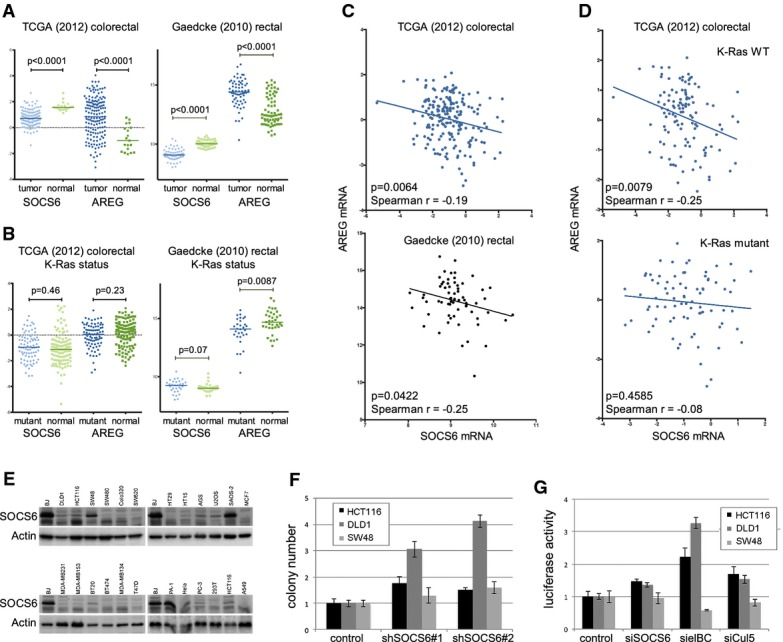
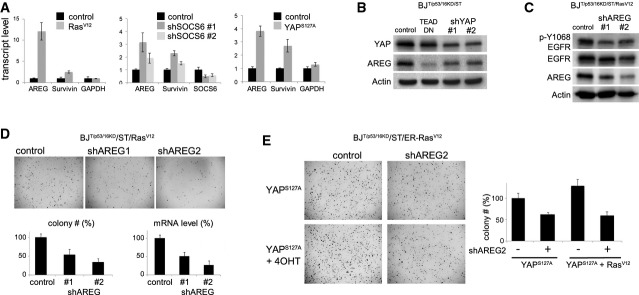
Cancer genomes accumulate numerous genetic and epigenetic modifications. Yet, human cellular transformation can be accomplished by a few genetically defined elements. These elements activate key pathways required to support replicative immortality and anchorage independent growth, a predictor of tumorigenesis in vivo. Here, we provide evidence that the Hippo tumor suppressor pathway is a key barrier to Ras-mediated cellular transformation. The Hippo pathway targets YAP1 for degradation via the βTrCP-SCF ubiquitin ligase complex. In contrast, the Ras pathway acts oppositely, to promote YAP1 stability through downregulation of the ubiquitin ligase complex substrate recognition factors SOCS5/6. Depletion of SOCS5/6 or upregulation of YAP1 can bypass the requirement for oncogenic Ras in anchorage independent growth in vitro and tumor formation in vivo. Through the YAP1 target, Amphiregulin, Ras activates the endogenous EGFR pathway, which is required for transformation. Thus, the oncogenic activity of Ras(V12) depends on its ability to counteract Hippo pathway activity, creating a positive feedback loop, which depends on stabilization of YAP1.
Overview
The claims and statistics of this paper haven’t been checked yet.
Run the check — free, no account needed. It reads the open-access text and checks the sources it cites.
Integrity signals
Registry
Cites
Statistics
Figures
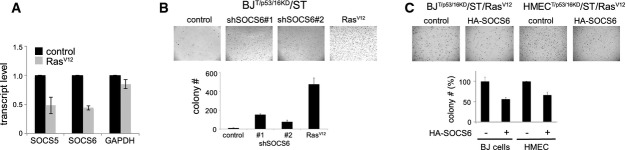
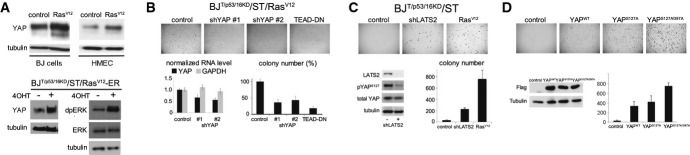
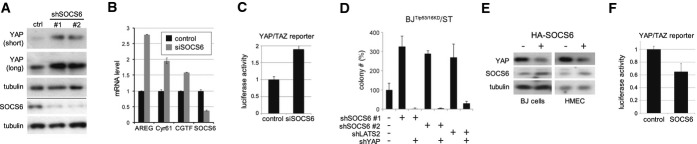
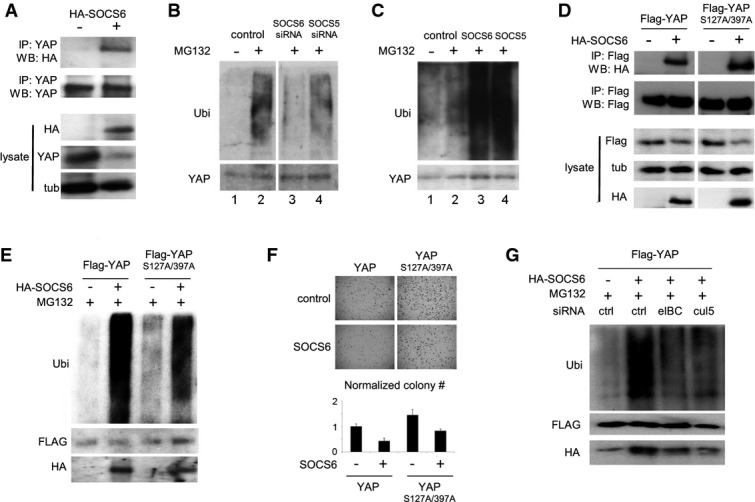
Verification
Claims the paper makes
The claims and statistics of this paper haven’t been checked yet.
Run the check — free, no account needed. It reads the open-access text and checks the sources it cites.
Claims other papers make about this one
Each is checked against this paper’s own text: does it say what the citing paper says it does?
The cited source says what the claim attributes to it.
In the citing paper
“The biological significance of our findings is validated by other studies that show formation of context-dependent Yki/YAP-mediated signalling loops as a bona fide mechanism for tumour growth (68,69).”
From A Tumour-Specific Molecular Network Promotes Tumour Growth in Drosophila by Enforcing a JNK-YKI Feedforward Loop (2023) · cites this paper as [69]
Self-check
Percentages, sums and reported differences re-computed from the paper’s own numbers.
The self-check needs the paper’s full text.
Citations
Cites
1 retracted
Wang, L., Shi, S., Guo, Z., Zhang, X., Han, S., Yang, A., Wen, W., & Zhu, Q. (2013) · PLoS ONE · doi:10.1371/journal.pone.0065539 · Cited by 272
RetractedComprehensive molecular characterization of human colon and rectal cancer
The Cancer Genome Atlas Network (2012) · Nature · doi:10.1038/nature11252 · Cited by 8,499
Role of YAP/TAZ in mechanotransduction
Dupont, S., Morsut, L., Aragona, M., Enzo, E., Giulitti, S., Cordenonsi, M., Zanconato, F., Le Digabel, J., Forcato, M., Bicciato, S., et al. (2011) · Nature · doi:10.1038/nature10137 · Cited by 5,979
Zhao, B., Wei, X., Li, W., Udan, R. S., Yang, Q., Kim, J., Xie, J., Ikenoue, T., Yu, J., Li, L., et al. (2007) · Genes & Development · doi:10.1101/gad.1602907 · Cited by 3,092
TEAD mediates YAP-dependent gene induction and growth control
Zhao, B., Ye, X., Yu, J., Li, L., Li, W., Li, S., Yu, J., Lin, J. D., Wang, C.-Y., Chinnaiyan, A. M., et al. (2008) · Genes & Development · doi:10.1101/gad.1664408 · Cited by 2,498
Elucidation of a universal size-control mechanism in Drosophila and mammals
Dong, J., Feldmann, G., Huang, J., Wu, S., Zhang, N., Comerford, S. A., Gayyed, M. F., Anders, R. A., Maitra, A., & Pan, D. (2007) · Cell · doi:10.1016/j.cell.2007.07.019 · Cited by 2,370
Creation of human tumour cells with defined genetic elements
Hahn, W. C., Counter, C. M., Lundberg, A. S., Beijersbergen, R. L., Brooks, M. W., & Weinberg, R. A. (1999) · Nature · doi:10.1038/22780 · Cited by 2,345
The Hippo Signaling Pathway in Development and Cancer
Pan, D. (2010) · Developmental Cell · doi:10.1016/j.devcel.2010.09.011 · Cited by 2,317
Unresponsiveness of colon cancer to BRAF(V600E) inhibition through feedback activation of EGFR
Prahallad, A., Sun, C., Huang, S., Di Nicolantonio, F., Salazar, R., Zecchin, D., Beijersbergen, R. L., Bardelli, A., & Bernards, R. (2012) · Nature · doi:10.1038/nature10868 · Cited by 2,051
The Hippo pathway and human cancer
Harvey, K. F., Zhang, X., & Thomas, D. M. (2013) · Nature reviews. Cancer · doi:10.1038/nrc3458 · Cited by 1,867
Identification of a Chromosome 18q Gene that Is Altered in Colorectal Cancers
Fearon, E. R., Cho, K. R., Nigro, J. M., Kern, S. E., Simons, J. W., Ruppert, J. M., Hamilton, S. R., Preisinger, A. C., Thomas, G., Kinzler, K. W., et al. (1990) · Science · doi:10.1126/science.2294591 · Cited by 1,760
Liu-Chittenden, Y., Huang, B., Shim, J. S., Chen, Q., Lee, S.-J., Anders, R. A., Liu, J. O., & Pan, D. (2012) · Genes & Development · doi:10.1101/gad.192856.112 · Cited by 1,452
Self-citationA coordinated phosphorylation by Lats and CK1 regulates YAP stability through SCF β-TRCP
Zhao, B., Li, L., Tumaneng, K., Wang, C.-Y., & Guan, K.-L. (2010) · Genes & Development · doi:10.1101/gad.1843810 · Cited by 1,418
A Genetic Screen Implicates miRNA-372 and miRNA-373 As Oncogenes in Testicular Germ Cell Tumors
Voorhoeve, P. M., le Sage, C., Schrier, M., Gillis, A., Stoop, H., Nagel, R., Liu, Y. P., van Duijse, J., Drost, J., Griekspoor, A., et al. (2006) · Cell · doi:10.1016/j.cell.2006.02.037 · Cited by 1,266
Self-citationHippo Pathway Inhibits Wnt Signaling to Restrain Cardiomyocyte Proliferation and Heart Size
Heallen, T. R., Zhang, M., Wang, J., Bonilla-Claudio, M., Klysik, E., Johnson, R. L., & Martin, J. F. (2011) · Science · doi:10.1126/science.1199010 · Cited by 1,092
Lei, Q., Zhang, H., Zhao, B., Zha, Z., Bai, F., Pei, X., Zhao, S., Xiong, Y., & Guan, K. (2008) · Molecular and Cellular Biology · doi:10.1128/mcb.01874-07 · Cited by 956
The two faces of Hippo: targeting the Hippo pathway for regenerative medicine and cancer treatment
Johnson, R. L., & Halder, G. A. (2013) · Nature Reviews Drug Discovery · doi:10.1038/nrd4161 · Cited by 920
Human breast cancer cells generated by oncogenic transformation of primary mammary epithelial cells
Elenbaas, B., Spirio, L., Koerner, F., Fleming, M. D., Zimonjic, D. B., Donaher, J. L., Popescu, N. C., Hahn, W. C., & Weinberg, R. A. (2001) · Genes & Development · doi:10.1101/gad.828901 · Cited by 878
Tumor Suppressor LATS1 Is a Negative Regulator of Oncogene YAP
Hao, Y., Chun, A., Cheung, K. J., Rashidi, B., & Yang, X. (2007) · Journal of Biological Chemistry · doi:10.1074/jbc.m709037200 · Cited by 802
KRAS and YAP1 Converge to Regulate EMT and Tumor Survival
Shao, D. D., Xue, W., Krall, E. B., Bhutkar, A., Piccioni, F., Wang, X., Schinzel, A. C., Sood, S., Rosenbluh, J., Kim, J. W., et al. (2014) · Cell · doi:10.1016/j.cell.2014.06.004 · Cited by 744
Yap1 Activation Enables Bypass of Oncogenic Kras Addiction in Pancreatic Cancer
Kapoor, A., Yao, W., Ying, H., Hua, S., Liewen, A., Wang, Q., Zhong, Y., Wu, C.-J., Sadanandam, A., Hu, B., et al. (2014) · Cell · doi:10.1016/j.cell.2014.06.003 · Cited by 716 · cited 1×
“The other study found that the YAP locus was amplified in K-Ras induced pancreatic tumors that were able to regrow following removal of K-Ras expression (Kapoor et al , 2014).”
Enumeration of the Simian Virus 40 Early Region Elements Necessary for Human Cell Transformation
Hahn, W. C., Dessain, S. K., Brooks, M. W., King, J. E., Elenbaas, B., Sabatini, D. M., DeCaprio, J. A., & Weinberg, R. A. (2002) · Molecular and Cellular Biology · doi:10.1128/mcb.22.7.2111-2123.2002 · Cited by 626
Strohmaier, H. M., Spruck, C., Kaiser, P., Won, K., Sangfelt, O., & Reed, S. I. (2001) · Nature · doi:10.1038/35095076 · Cited by 584
Liu, C.-Y., Zha, Z.-Y., Zhou, X., Zhang, H., Huang, W., Zhao, D., Li, T., Chan, S. W., Lim, C. J., Hong, W., et al. (2010) · Journal of Biological Chemistry · doi:10.1074/jbc.m110.152942 · Cited by 525
Roles of F-box proteins in cancer
Wang, Z. P., Liu, P., Inuzuka, H., & Wei, W. (2014) · Nature reviews. Cancer · doi:10.1038/nrc3700 · Cited by 522
Yin, F., Yu, J., Zheng, Y., Chen, Q., Zhang, N., & Pan, D. (2013) · Cell · doi:10.1016/j.cell.2013.08.025 · Cited by 520
Self-citationThe Hippo signaling pathway restricts the oncogenic potential of an intestinal regeneration programPreprint
Cai, J., Zhang, N., Zheng, Y., de Wilde, R. F., Maitra, A., & Pan, D. (2010) · Genes & Development · doi:10.1101/gad.1978810 · Cited by 491
Archipelago regulates Cyclin E levels in Drosophila and is mutated in human cancer cell lines
Moberg, K. H., Bell, D. W., Wahrer, D. C. R., Haber, D. A., & Hariharan, I. K. (2001) · Nature · doi:10.1038/35095068 · Cited by 438
Zhang, J., Ji, J., Yu, M., Overholtzer, M., Smolen, G. A., Wang, R., Brugge, J. S., Dyson, N. J., & Haber, D. A. (2009) · Nature Cell Biology · doi:10.1038/ncb1993 · Cited by 438
Fbxw7/Cdc4 is a p53-dependent, haploinsufficient tumour suppressor gene
Mao, J.-H., Perez-losada, J., Wu, D., DelRosario, R., Tsunematsu, R., Nakayama, K. I., Brown, K., Bryson, S., & Balmain, A. (2004) · Nature · doi:10.1038/nature03155 · Cited by 390
Role of protein ubiquitylation in regulating endocytosis of receptor tyrosine kinases
Marmor, M. D., & Yarden, Y. (2004) · Oncogene · doi:10.1038/sj.onc.1207390 · Cited by 382
Eser, S., Reiff, N., Messer, M., Seidler, B., Gottschalk, K., Dobler, M., Hieber, M., Arbeiter, A., Klein, S., Kong, B., et al. (2013) · Cancer Cell · doi:10.1016/j.ccr.2013.01.023 · Cited by 360
Regulation of Hippo Signaling by EGFR-MAPK Signaling through Ajuba Family Proteins
Reddy, B. V. V. G., & Irvine, K. D. (2013) · Developmental Cell · doi:10.1016/j.devcel.2013.01.020 · Cited by 271
Chen, Q., Khoury, M., & Chen, J. (2009) · Proceedings of the National Academy of Sciences · doi:10.1073/pnas.0912274106 · Cited by 271
Self-citationBarry, E. R., & Camargo, F. D. (2013) · Current Opinion in Cell Biology · doi:10.1016/j.ceb.2012.12.006 · Cited by 214
Young, A., Lou, D., & McCormick, F. (2013) · Cancer Discovery · doi:10.1158/2159-8290.cd-12-0231 · Cited by 211
The tumor-suppressive functions of the human INK4A locus
Voorhoeve, P. M., & Agami, R. (2003) · Cancer Cell · doi:10.1016/s1535-6108(03)00223-x · Cited by 194
Self-citationGaedcke, J., Grade, M., Jung, K., Camps, J., Jo, P., Emons, G., Gehoff, A., Sax, U., Schirmer, M., Becker, H., et al. (2010) · Genes Chromosomes and Cancer · doi:10.1002/gcc.20811 · Cited by 190
TAZ Expression as a Prognostic Indicator in Colorectal Cancer
Yuen, H., McCrudden, C. M., Huang, Y., Tham, J. M., Zhang, X., Zeng, Q., Zhang, S., & Hong, W. (2013) · PLoS ONE · doi:10.1371/journal.pone.0054211 · Cited by 162
Loss of FBXW7, a cell cycle regulating gene, in colorectal cancer: Clinical significance
Iwatsuki, M., Mimori, K., Ishii, H., Yokobori, T., Takatsuno, Y., Sato, T., Toh, H., Onoyama, I., Nakayama, K. I., Baba, H. A., et al. (2009) · International Journal of Cancer · doi:10.1002/ijc.24879 · Cited by 143
Mutant K-Ras Activation of the Proapoptotic MST2 Pathway Is Antagonized by Wild-Type K-Ras
Matallanas, D., Romano, D., Al‐Mulla, F., O’Neill, E. E., Al-Ali, W., Crespo, P., Doyle, B. J., Nixon, C., Sansom, O. J., Drosten, M., et al. (2011) · Molecular Cell · doi:10.1016/j.molcel.2011.10.016 · Cited by 133
The SOCS box—Adapting proteins for ubiquitination and proteasomal degradation
Linossi, E. M., & Nicholson, S. E. (2012) · IUBMB Life · doi:10.1002/iub.1011 · Cited by 122
Molecular determinants of anti-EGFR sensitivity and resistance in metastatic colorectal cancer
Fiore, F. D., Sesboüé, R., Michel, P., Sabourin, J., & Frébourg, T. (2010) · British Journal of Cancer · doi:10.1038/sj.bjc.6606008 · Cited by 76
Herranz, H., Hong, X., Hùng, N. T., Voorhoeve, P. M., & Cohen, S. M. (2012) · Genes & Development · doi:10.1101/gad.192021.112 · Cited by 74
Self-citationQiu, X., Zheng, J., Guo, X., Gao, X., Liu, H., Tu, Y., & Zhang, Y. (2013) · Molecular and Cellular Biochemistry · doi:10.1007/s11010-013-1599-5 · Cited by 68
Ubiquitylation in immune disorders and cancer: from molecular mechanisms to therapeutic implications
Fulda, S., Rajalingam, K., & Đikić, I. (2012) · EMBO Molecular Medicine · doi:10.1002/emmm.201100707 · Cited by 57
Expression of SOCSs in human prostate cancer and their association in prognosis
Zhu, J., Dai, Q.-S., Han, Z., He, H., Mo, R., Chen, G., Chen, Y., Wu, Y., Yang, S.-B., Jiang, F., et al. (2013) · Molecular and Cellular Biochemistry · doi:10.1007/s11010-013-1687-6 · Cited by 46
Immunopurification of Ago1 miRNPs selects for a distinct class of microRNA targets
Hong, X., Hammell, M., Ambros, V., & Cohen, S. M. (2009) · Proceedings of the National Academy of Sciences · doi:10.1073/pnas.0908149106 · Cited by 44
Self-citationAn update on targeting Hippo-YAP signaling in liver cancer
Liu, A. M., Xu, Z., & Luk, J. M. (2012) · Expert Opinion on Therapeutic Targets · doi:10.1517/14728222.2012.662958 · Cited by 32
Cited by
Sorted by citations
The Hippo Signaling Network and Its Biological Functions
Misra, J. R., & Irvine, K. D. (2018) · Annual Review of Genetics · doi:10.1146/annurev-genet-120417-031621 · Cited by 514
Glycogen accumulation and phase separation drives liver tumor initiation
Liu, Q., Li, J., Zhang, W., Xiao, C., Zhang, S., Nian, C., Li, J., Su, D., Chen, L., Zhao, Q. C., et al. (2021) · Cell · doi:10.1016/j.cell.2021.10.001 · Cited by 313
Self-citationHe, C., Mao, D., Hua, G., Lv, X., Chen, X., Angeletti, P. C., Dong, J., Remmenga, S. W., Rodabaugh, K. J., Zhou, J. R., et al. (2015) · EMBO Molecular Medicine · doi:10.15252/emmm.201404976 · Cited by 290
Song, S., Honjo, S., Jin, J., Chang, S.-S., Scott, A. W., Chen, Q., Kalhor, N., Correa, A. M., Hofstetter, W. L., Albarracin, C. T., et al. (2015) · Clinical Cancer Research · doi:10.1158/1078-0432.ccr-14-2191 · Cited by 278
Self-citationYAP-Induced PD-L1 Expression Drives Immune Evasion in BRAFi-Resistant Melanoma
Kim, M. H., Kim, C. G., Kim, S.-K., Shin, S. J., Choe, E. A., Park, S.-H., Shin, E.-C., & Kim, J. (2018) · Cancer Immunology Research · doi:10.1158/2326-6066.cir-17-0320 · Cited by 241
Metadata
- Authors
- Hong, X., Nguyen, H. T., Chen, Q., Zhang, R., Hagman, Z., Voorhoeve, P. M., & Cohen, S. M.
- Affiliations
- National University of Singapore (SG)
- Singapore-MIT Alliance for Research and Technology (SG)
- Stanford University (US)
- University of Copenhagen (DK)
- Corresponding author
- Cohen, Stephen M
- Venue
- The EMBO Journal
- Published
- 2014-09-01
- Volume
- 33
- Issue
- 21
- Pages
- 2447-2457
- ISSN
- 0261-4189 (ISSN-L)
- 1460-2075
- PMC
- PMC4283404
- OpenAlex
- W2153517086
- Cited by
- 121
- References
- 49
- Citations by year
- 2026: 2 · 2025: 4 · 2024: 7 · 2023: 12 · 2022: 4 · 2021: 15 · 2020: 12 · 2019: 10 · 2018: 13 · 2017: 15 · 2016: 18 · 2015: 8 · 2014: 1
- FWCI
- 6.97
- Type
- journal article
- Language
- en
- Open access
- hybrid
- doi.org
- Locations
- The EMBO Journal (publishedVersion, other-oa)
- Europe PMC (PubMed Central) (publishedVersion, cc-by)
- PubMed Central (publishedVersion, cc-by)
- PubMed (publishedVersion)
- Research at the University of Copenhagen (University of Copenhagen) (submittedVersion, cc-by)
- Funders
- NMRC (CBRG12nov010)
- Duke‐NUS Signature Research Program
- Ministry of Health (MOE2010‐T2‐2‐006)
- IMCB
- NovoNordisk Foundation Laureate Award
- Topics
- Life Sciences › Biochemistry, Genetics and Molecular Biology › Cell Biology › Hippo pathway signaling and YAP/TAZ
- Life Sciences › Biochemistry, Genetics and Molecular Biology › Molecular Biology › Protein Kinase Regulation and GTPase Signaling
- Life Sciences › Biochemistry, Genetics and Molecular Biology › Cell Biology › Microtubule and mitosis dynamics
- Keywords
- Ras signaling, Hippo signaling pathway, YAP, protein turnover, ubiquitin ligase, anchorage-independent growth, cell transformation, tumor suppressor, EGFR signaling, amphiregulin, positive feedback loop, oncogenic Ras
- MeSH terms
- Hippo Signaling Pathway, YAP-Signaling Proteins, Cell Transformation, Neoplastic, Humans, Phosphoproteins, Transcription Factors, Signal Transduction, Up-Regulation, Protein Serine-Threonine Kinases, ras Proteins, SKP Cullin F-Box Protein Ligases, beta-Transducin Repeat-Containing Proteins, Adaptor Proteins, Signal Transducing, Suppressor of Cytokine Signaling Proteins, Protein Stability, HEK293 Cells, ErbB Receptors
About these checks
Registry, retraction, Cites and statistics results are computed, not judged, with one exception: a printed reference that no index lists is read once by a model before it counts as a citation error. Claims are extracted by a model and kept only when their quote appears verbatim in the text; each cited source is then checked, with a model’s help, for whether it says what the claim relies on. Those verdicts can be wrong — read the claim’s quote and the cited source before relying on one.
Statistics and arithmetic are recomputed, not judged.
Confidence bands are shown only for fields calibrated on our annotated test set. None is calibrated yet, so no band is shown.
What counts as a claim ›How we measure confidence ›How we check this ›
Are you an author, or do you see a problem with this page? Request a review
