

Reprogramming immunosuppressive myeloid cells facilitates immunotherapy for colorectal cancer
Open accessThe DOI matches its Crossref record; 65 of the 66 references it cites were found in a registry or an index.
Abstract
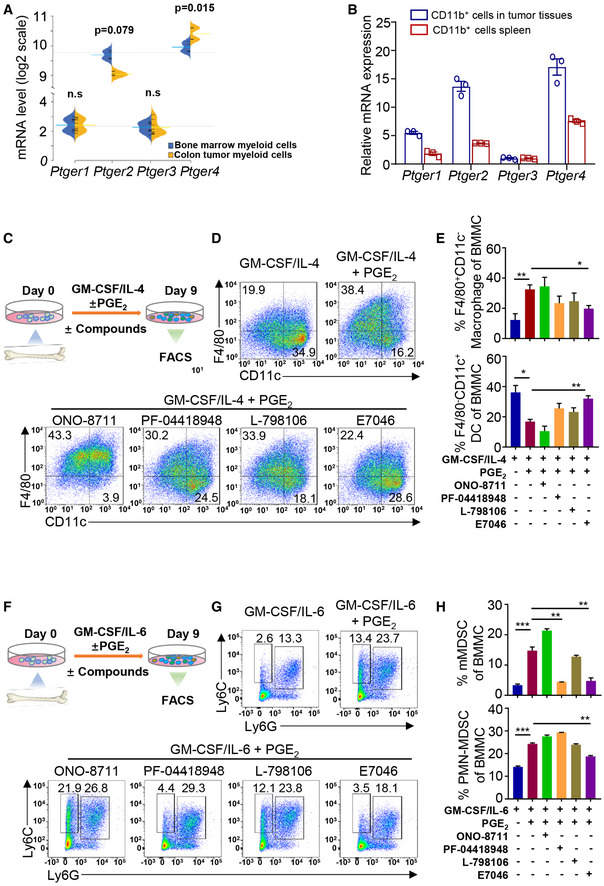
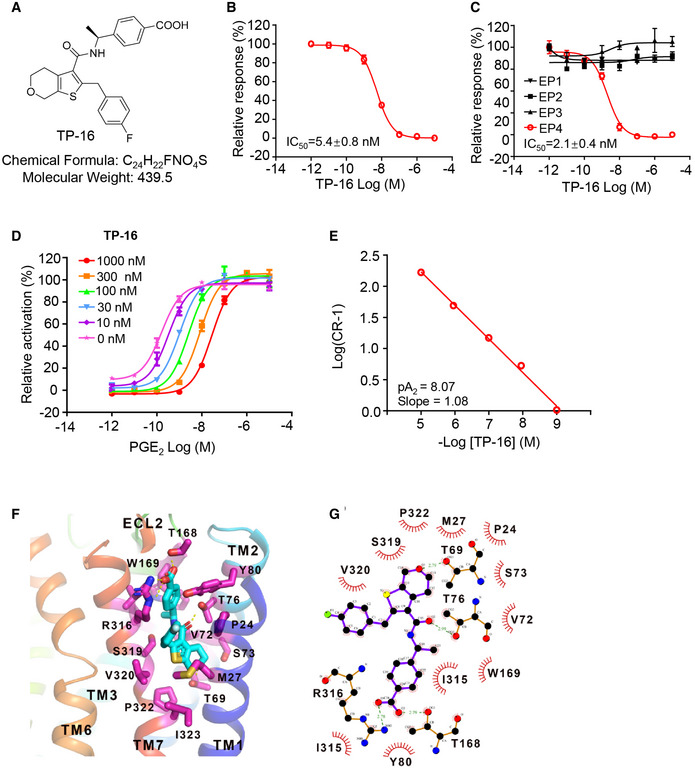
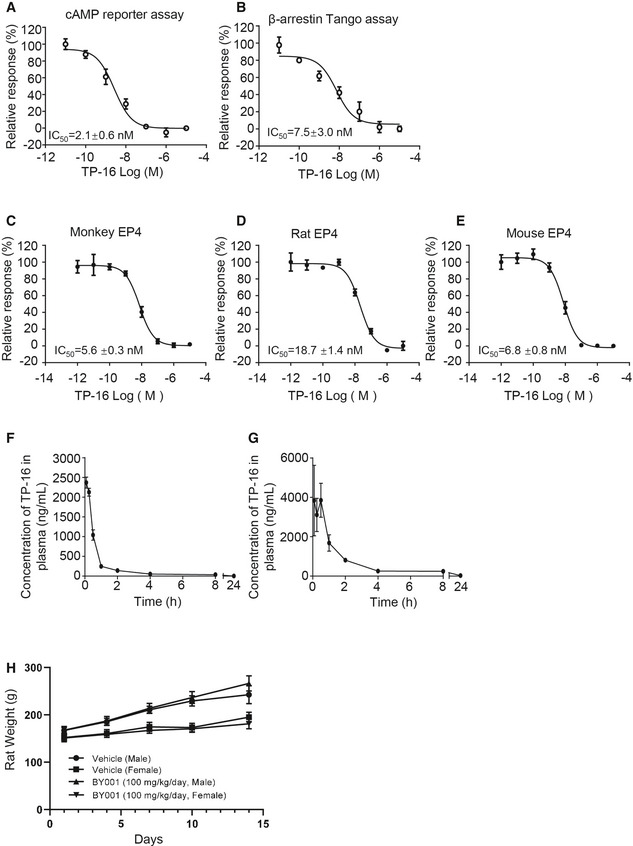
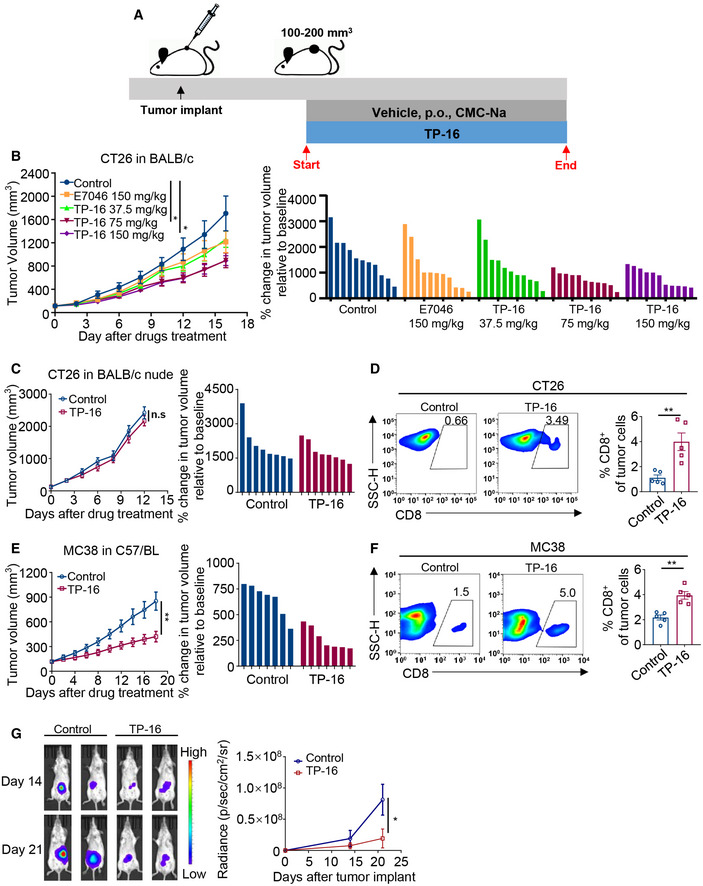
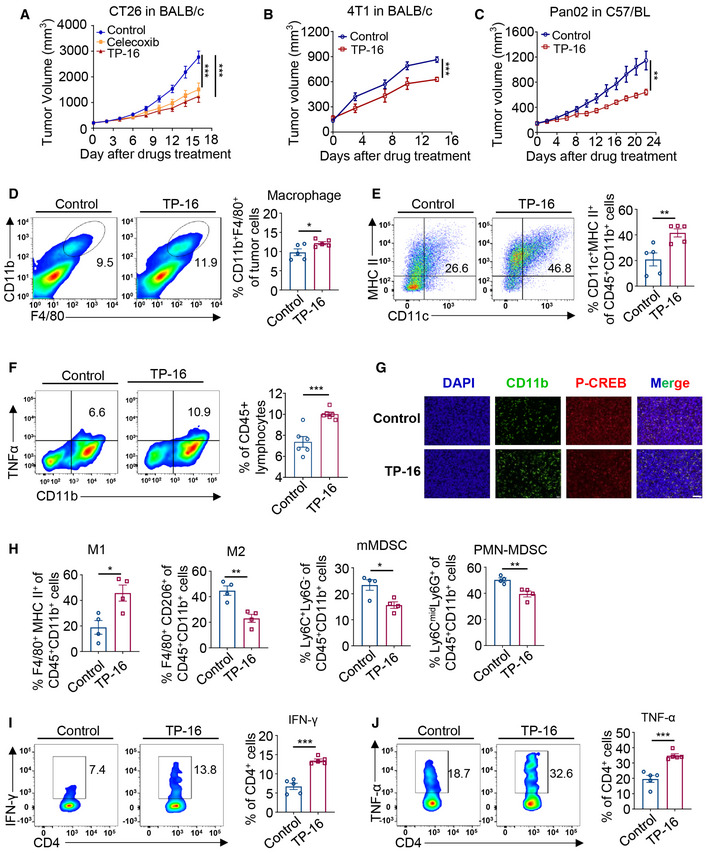
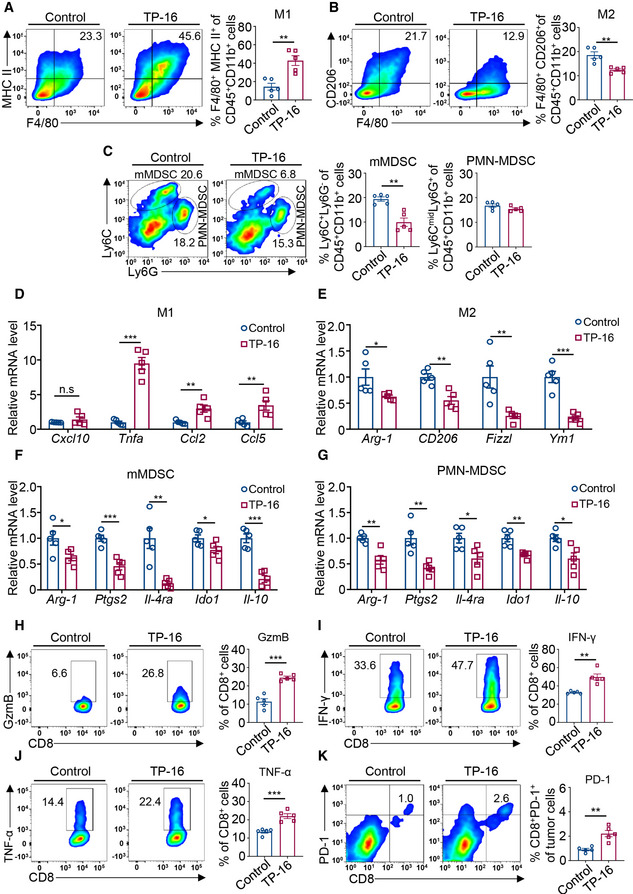
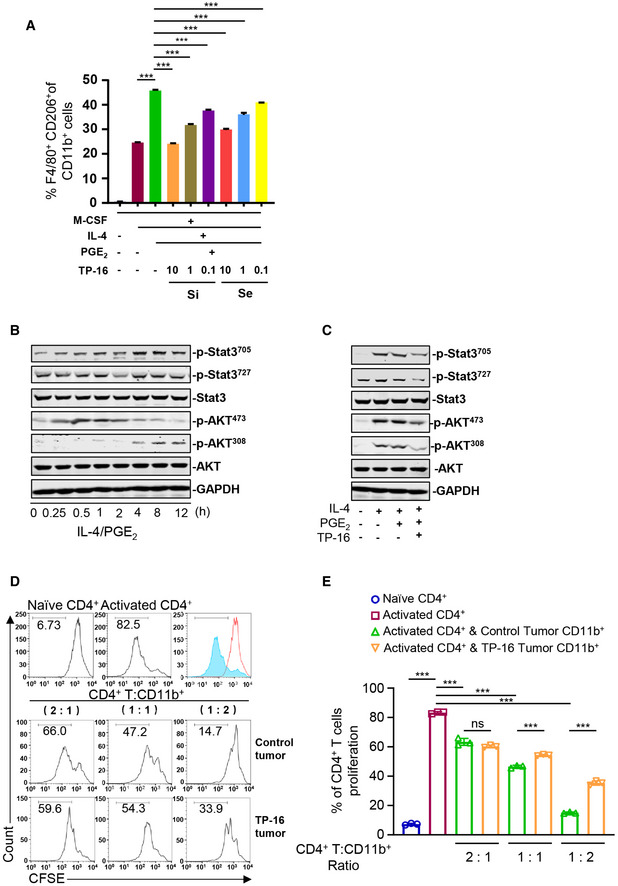
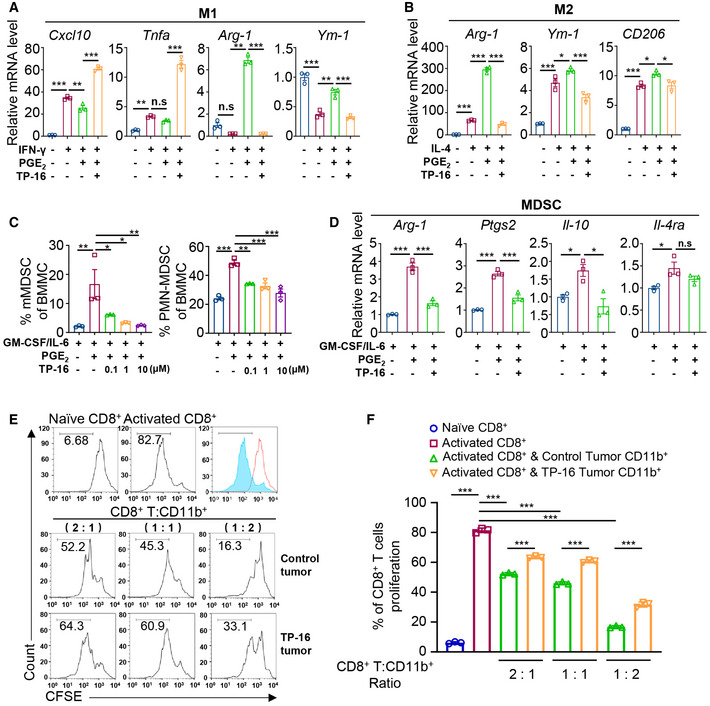
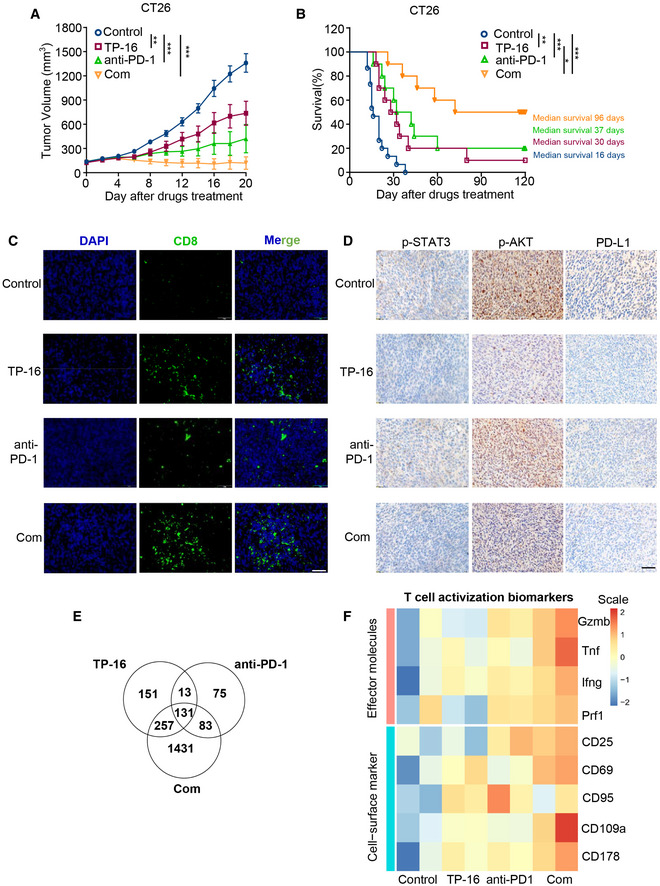
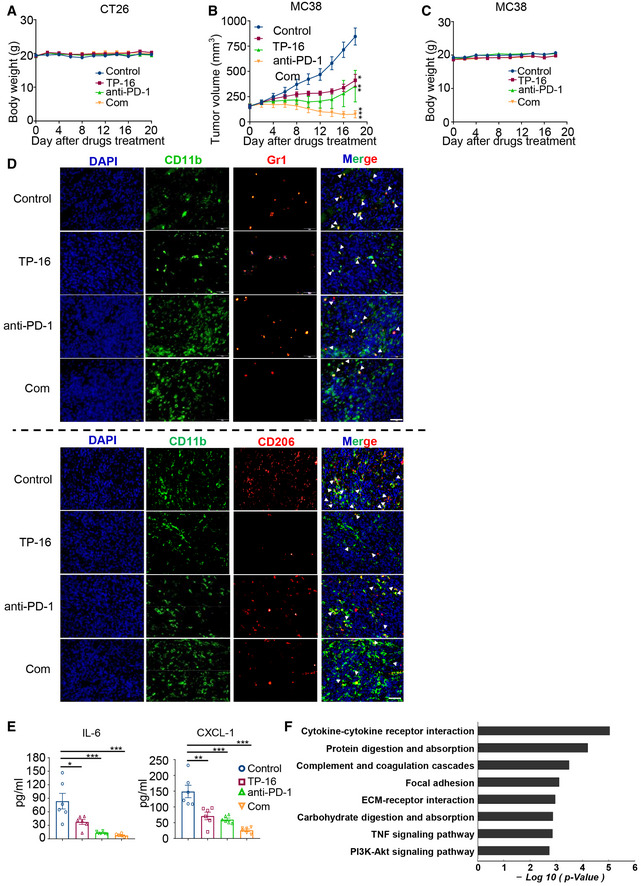
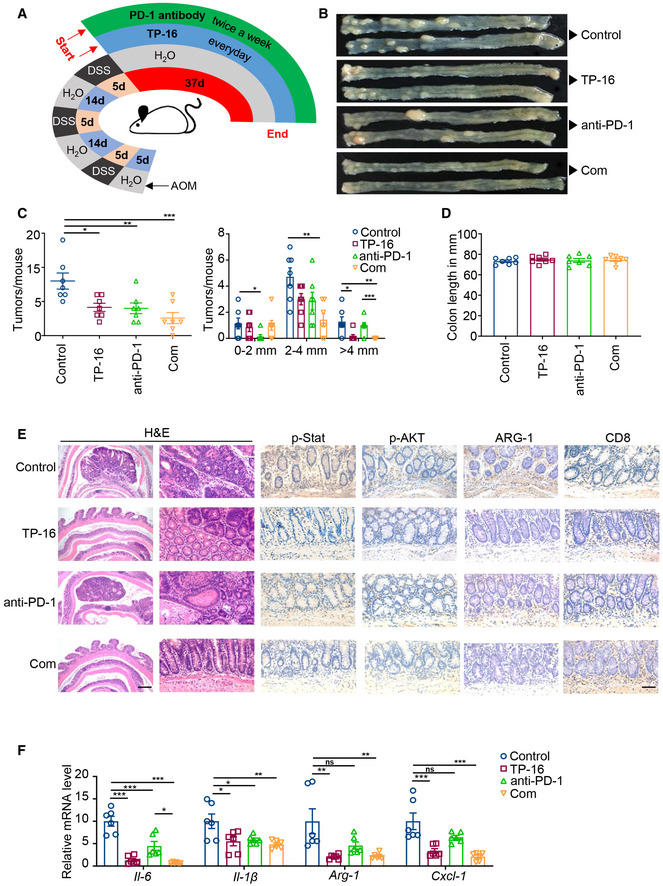
Immune checkpoint blockade (ICB) has a limited effect on colorectal cancer, underlining the requirement of co‐targeting the complementary mechanisms. Here, we identified prostaglandin E2 (PGE 2 ) receptor 4 (EP4) as the master regulator of immunosuppressive myeloid cells (IMCs), which are the major driver of resistance to ICB therapy. PGE 2 ‐bound EP4 promotes the differentiation of immunosuppressive M2 macrophages and myeloid‐derived suppressor cells (MDSCs) and reduces the expansion of immunostimulated M1 macrophages. To explore the immunotherapeutic role of EP4 signaling, we developed a novel and selective EP4 antagonist TP‐16. TP‐16 effectively blocked the function of IMCs and enhanced cytotoxic T‐cell‐mediated tumor elimination in vivo . Cell co‐culture experiments revealed that TP‐16 promoted T‐cell proliferation, which was impaired by tumor‐derived CD11b + myeloid cells. Notably, TP‐16 and anti‐PD‐1 combination therapy significantly impeded tumor progression and prolonged mice survival. We further demonstrated that TP‐16 increased responsiveness to anti‐PD‐1 therapy in an IMC‐related spontaneous colorectal cancer mouse model. In summary, this study demonstrates that inhibition of EP4‐expressing IMCs may offer a potential strategy for enhancing the efficacy of immunotherapy for colorectal cancer.
Overview
The claims and statistics of this paper haven’t been checked yet.
Free: it reads the open-access text and checks the first 5 claims that cite a source we can check. Create a free account to check every claim.
Integrity signals
Registry
Cites
Statistics
Figures
Verification
Claims the paper makes
The claims and statistics of this paper haven’t been checked yet.
Free: it reads the open-access text and checks the first 5 claims that cite a source we can check. Create a free account to check every claim.
Claims other papers make about this one
Each is checked against this paper’s own text: does it say what the citing paper says it does?
The cited source says what the claim attributes to it.
In the citing paper
“Additional preclinical studies showed that repolarizing TAMs enhanced T-cell-mediated anti-tumor immune response and improved the efficacy of ICIs in CRC tumors [234,235].”
From Mechanisms and Strategies to Overcome Drug Resistance in Colorectal Cancer (2025) · cites this paper as [234]
In the citing paper
“which enhanced T-cell-mediated anti-tumor immunity and improved the efficacy of anti-PD-1 [58].”
From Drug Resistance in Colorectal Cancer: From Mechanism to Clinic (2022) · cites this paper as [58]
In the citing paper
“TP-16 (EP4 antagonist) treatment polarized TAM from immunosuppressive M2 type to pro-inflammatory M1 type”
From Drug Resistance in Colorectal Cancer: From Mechanism to Clinic (2022) · cites this paper as [58]
In the citing paper
“Preclinical studies show that prostaglandin E2 (PGE2) receptor 4 (EP4), as the primary regulator of IMC, can mediate drug resistance by promoting the differentiation and proliferation of M2 TAM and MDSC [58].”
From Drug Resistance in Colorectal Cancer: From Mechanism to Clinic (2022) · cites this paper as [58]
Self-check
Percentages, sums and reported differences re-computed from the paper’s own numbers.
The self-check needs the paper’s full text.
Citations
Cites
Bray, F., Ferlay, J., Soerjomataram, I., Siegel, R. L., Torre, L. A., & Jemal, A. (2018) · CA: A Cancer Journal for Clinicians · doi:10.3322/caac.21492 · Cited by 84,109 · cited 1×
“In 2018, more than 1.8 million new cases and 881,000 deaths were reported worldwide (Bray et al, 2018).”
BackgroundInfluentialAutoDock4 and AutoDockTools4: Automated docking with selective receptor flexibility
Morris, G. M., Huey, R., Lindstrom, W., Sanner, M. F., Belew, R. K., Goodsell, D. S., & Olson, A. J. (2009) · Journal of Computational Chemistry · doi:10.1002/jcc.21256 · Cited by 25,486 · cited 1×
“To investigate the detailed interaction between EP4 and TP-16, in silico molecular docking was performed using AutoDock (Morris et al, 2009).”
MethodSiegel, R. L., Miller, K. D., & Jemal, A. (2019) · CA: A Cancer Journal for Clinicians · doi:10.3322/caac.21551 · Cited by 20,160 · cited 1×
“Colorectal cancer has a high incidence and mortality rate (Siegel et al, 2019).”
BackgroundColorectal cancer statistics, 2020
Siegel, R. L., Miller, K. D., Goding Sauer, A., Fedewa, S. A., Butterly, L. F., Anderson, J. C., Cercek, A., Smith, R. A., & Jemal, A. (2020) · CA: A Cancer Journal for Clinicians · doi:10.3322/caac.21601 · Cited by 4,880 · cited 1×
“The prognosis for patients with distantstage disease is dismal, with a 5-year relative survival rate of only 14% (Siegel et al, 2020).”
BackgroundImmune Checkpoint Blockade: A Common Denominator Approach to Cancer Therapy
Topalian, S. L., Drake, C. G., & Pardoll, D. M. (2015) · Cancer Cell · doi:10.1016/j.ccell.2015.03.001 · Cited by 4,229 · cited 1×
“For instance, anti-CTLA4 antibody was approved for metastatic melanoma, and anti-PD-(L)1 antibodies were approved for a wide range of cancer types, such as melanoma, lung cancer, and renal carcinoma (Topalian et al, 2015; Patel & Minn, 2018).”
BackgroundCoordinated regulation of myeloid cells by tumours
Gabrilovich, D. I., Ostrand-Rosenberg, S., & Bronte, V. (2012) · Nature Reviews Immunology · doi:10.1038/nri3175 · Cited by 3,544 · cited 2×
“IMCs mainly comprise tumor-associated macrophages (TAMs) and myeloid-derived suppressor cells (MDSCs) (Gabrilovich et al, 2012).”
BackgroundImmunosuppressive networks in the tumour environment and their therapeutic relevance
Zou, W. (2005) · Nature Reviews Cancer · doi:10.1038/nrc1586 · Cited by 2,057 · cited 1×
“Diverse regulatory mechanisms are exploited by cancer cells to establish a strong immunosuppressive tumor microenvironment that supports tumor growth, fuels tumor immune escape, and weakens immunotherapeutic efficacy (Zou, 2005; Fleming et al, 2018).”
BackgroundThe Nature of Myeloid-Derived Suppressor Cells in the Tumor Microenvironment
Kumar, V., Patel, S., Tcyganov, E., & Gabrilovich, D. I. (2016) · Trends in Immunology · doi:10.1016/j.it.2016.01.004 · Cited by 2,008 · cited 1×
“A high frequency of MDSCs is generally associated with poor disease progression and therapy resistance in colorectal cancer (Solito et al, 2011; Marvel & Gabrilovich, 2015; Kumar et al, 2016).”
BackgroundImmunotherapy in colorectal cancer: Rationale, challenges and potential
Ganesh, K., Stadler, Z. K., Cercek, A., Mendelsohn, R. B., Shia, J., Segal, N. H., & Diaz, L. A. (2019) · Nature Reviews Gastroenterology & Hepatology · doi:10.1038/s41575-019-0126-x · Cited by 1,954 · cited 1×
“Immune checkpoint blockade (ICB) has emerged as the standard therapy for many cancers due to its unprecedented and durable responses in patients with refractory cancers (Hoos, 2016; Ganesh et al, 2019).”
BackgroundBöttcher, J. P., Bonavita, E., Chakravarty, P., Blees, H., Cabeza-Cabrerizo, M., Sammicheli, S., Rogers, N. C., Sahai, E., Zelenay, S., & Reis e Sousa, C. (2018) · Cell · doi:10.1016/j.cell.2018.01.004 · Cited by 1,857 · cited 1×
“For instance, tumorderived PGE2 drives cancer progression by impairing natural killer cells and the conventional dendritic cell resulting in cancer immune evasion (Zelenay et al, 2015; Bottcher et al, 2018).”
Background
Cited by
The cancer metabolic reprogramming and immune response
Xia, L., Oyang, L., Lin, J., Tan, S., Han, Y., Wu, N., Yi, P., Tang, L., Pan, Q., Rao, S., et al. (2021) · Molecular Cancer · doi:10.1186/s12943-021-01316-8 · Cited by 1,312
Overcoming TGFβ-mediated immune evasion in cancer
Tauriello, D. V. F., Sancho, E., & Batlle, E. (2022) · Nature Reviews Cancer · doi:10.1038/s41568-021-00413-6 · Cited by 377
Gong, Z., Li, Q., Shi, J., Wei, J., Li, P., Chang, C.-H., Shultz, L. D., & Ren, G. (2022) · Immunity · doi:10.1016/j.immuni.2022.07.001 · Cited by 239
Cyclooxygenase-2-Prostaglandin E2 pathway: A key player in tumor-associated immune cells
Jin, K., Qian, C., Lin, J., & Liu, B. (2023) · Frontiers in Oncology · doi:10.3389/fonc.2023.1099811 · Cited by 182
“Emerging data from multiple solid tumor mouse models indicates that EP4 antagonists and PD1/PD-L1 blockade are effective in inhibiting primary tumor growth (49, 95, 96).”
BackgroundRegulatory cells and the effect of cancer immunotherapy
Iglesias-Escudero, M., Arias-González, N., & Martínez-Cáceres, E. (2023) · Molecular Cancer · doi:10.1186/s12943-023-01714-0 · Cited by 191
PGE2 activates EP4 in subchondral bone osteoclasts to regulate osteoarthritis
Jiang, W., Jin, Y., Zhang, S., Ding, Y., Huo, K., Yang, J., Zhao, L., Nian, B., Zhong, T. P., Lu, W., et al. (2022) · Bone Research · doi:10.1038/s41413-022-00201-4 · Cited by 160
Self-citationDrug Resistance in Colorectal Cancer: From Mechanism to Clinic
Wang, Q., Shen, X., Chen, G., & Du, J. (2022) · Cancers · doi:10.3390/cancers14122928 · Cited by 160
Thumkeo, D., Punyawatthananukool, S., Prasongtanakij, S., Matsuura, R., Arima, K., Nie, H., Yamamoto, R., Aoyama, N., Hamaguchi, H., Sugahara, S., et al. (2022) · Cell Reports · doi:10.1016/j.celrep.2022.110914 · Cited by 156
Liu, Y., Wong, C. C., Ding, Y., Gao, M., Wen, J., Lau, H. C.-H., Cheung, A. H. K., Huang, D., Huang, H., & Yu, J. Q. (2024) · Nature Microbiology · doi:10.1038/s41564-024-01695-w · Cited by 152
“Accumulating evidence has associated MDSCs with cancer progression and resistance to ICB therapy 17,24 .”
Metabolic modulation of immune checkpoints and novel therapeutic strategies in cancer
Wang, Y., Wang, Y., Ren, Y., Zhang, Q., Yi, P., & Cheng, C. (2022) · Seminars in Cancer Biology · doi:10.1016/j.semcancer.2022.02.010 · Cited by 153
Self-citationLv, Q., Zhang, Y., Gao, W., Wang, J., Hu, Y., Yang, H., Xie, Y., Lv, Y., Zhang, H., Wu, D., et al. (2024) · Pharmacological Research · doi:10.1016/j.phrs.2024.107126 · Cited by 110
Self-citationHe, J., Chai, X., Zhang, Q., Wang, Y., Wang, Y., Yang, X., Wu, J., Feng, B., Sun, J. P., Rui, W., et al. (2025) · Nature Immunology · doi:10.1038/s41590-024-02068-5 · Cited by 108
Self-citationLi, L., Xiong, W., Lin, F., Hou, J., Chen, G., Peng, T., He, Y., Wang, R., Xu, Q., & Huang, Y. (2023) · Journal of Experimental & Clinical Cancer Research · doi:10.1186/s13046-023-02688-z · Cited by 96
“Discussion Colorectal cancer is the third largest killer of tumors which is characteristic of “cold” tumors attributed to immunodepression and develops multiple metastases, especially, liver and lymph nodes [1, 45].”
BackgroundProstaglandin Pathways: Opportunities for Cancer Prevention and Therapy
Wang, Q., Morris, R. J., Bode, A. M., & Zhang, T. (2022) · Cancer Research · doi:10.1158/0008-5472.can-21-2297 · Cited by 93
“For example, a combination of a PD-L1 antibody and an EP4 antagonist enhances immunotherapeutic efficacy, suggesting that inhibiting EP4 expression might offer a potential strategy for increasing the efficacy of immunotherapy (117, 118).”
BackgroundThe COX-2–PGE2 Pathway Promotes Tumor Evasion in Colorectal Adenomas
Wei, J., Zhang, J., Wang, D., Cen, B., Lang, J. D., & DuBois, R. N. (2022) · Cancer Prevention Research · doi:10.1158/1940-6207.capr-21-0572 · Cited by 92
Celecoxib Augments Paclitaxel-Induced Immunogenic Cell Death in Triple-Negative Breast Cancer
Qian, X., Huang, Y., Ye, Z., Gao, B., Qian, Z., Ding, Y., Mao, Z., Du, Y., & Wang, W. (2024) · ACS Nano · doi:10.1021/acsnano.4c02947 · Cited by 83
Mechanisms and Strategies to Overcome Drug Resistance in Colorectal Cancer
Haynes, J., & Manogaran, P. (2025) · International Journal of Molecular Sciences · doi:10.3390/ijms26051988 · Cited by 82
“Additional preclinical studies showed that repolarizing TAMs enhanced T-cell-mediated anti-tumor immune response and improved the efficacy of ICIs in CRC tumors [234,235].”
Peng, S., Hu, P., Xiao, Y.-T., Lü, W., Guo, D., Hu, S., Xie, J., Wang, M., Yu, W., Yang, J., et al. (2022) · Clinical Cancer Research · doi:10.1158/1078-0432.ccr-21-0299 · Cited by 85
“91 nmol/L in cAMPaccumulation assay (47).”
Self-citationTang, Y., Kwiatkowski, D. J., & Henske, E. P. (2022) · Nature Communications · doi:10.1038/s41467-022-32673-7 · Cited by 72
Li, X., Zhong, J., Deng, X., Guo, X., Lu, Y., Lin, J., Huang, X., & Wang, C. (2021) · Frontiers in Immunology · doi:10.3389/fimmu.2021.754196 · Cited by 72
Ducarouge, B., Redavid, A. R., Victoor, C., Chira, R., Fonseca, A., Hervieu, M., Bergé, R., Lengrand, J., Vieugué, P., Neves, D., et al. (2023) · Cell Death and Differentiation · doi:10.1038/s41418-023-01209-x · Cited by 59
“MDSCs have already been reported to modulate the response to ICPI drugs [40, 47].”
BackgroundZhang, Y., Zhao, Y., Li, Q., & Wang, Y. (2021) · Frontiers in Immunology · doi:10.3389/fimmu.2021.685978 · Cited by 59
“TAMs are the main source of COX-2 in intestinal tumors; PGE2-bound EP4 promotes the differentiation of immunosuppressive M2 macrophages and reduces the expansion of immunostimulatory M1 macrophages (128).”
BackgroundInfluentialSelf-citationLiu, Y., Xie, H., & Shen, B. (2022) · Rheumatology · doi:10.1093/rheumatology/keac539 · Cited by 49
Zeng, W., Liu, H., Mao, Y., Jiang, S., Hao, Y., Zhang, Z., Wang, M., & Zong, Z. (2024) · International Journal of Oncology · doi:10.3892/ijo.2024.5673 · Cited by 49
“In particular, interactions with EP4 promote the differentiation of immunosuppressive M2 macrophages and MDSCs while diminishing the proliferation of immunostimulatory M1 macrophages (93).”
BackgroundTang, Y., Zhou, C., Li, Q., Cheng, X., Huang, T., Li, F., He, L., Zhang, B., & Tu, S. (2022) · OncoImmunology · doi:10.1080/2162402x.2022.2131084 · Cited by 47
Xie, Q., Liu, X., Liu, R., Pan, J., & Liang, J. (2024) · Molecular Cancer · doi:10.1186/s12943-024-02166-w · Cited by 49
Dong, C., Zhang, Y., Zeng, J., Chong, S., Liu, Y., Bian, Z., Fan, S., & Chen, X. (2024) · Communications Biology · doi:10.1038/s42003-024-06993-x · Cited by 46
“CRC is highly lethal due to distant metastases; 20% of CRC patients present with distant metastases at initial diagnosis and more than 30% of patients eventually develop metastases, with a 5-year survival rate of less than 20% 36 .”
Self-citationSystemic Interleukins’ Profile in Early and Advanced Colorectal Cancer
Czajka‐Francuz, P., Cisoń-Jurek, S., Czajka, A., Kozaczka, M., Wojnar, J., Chudek, J. T., & Francuz, T. (2021) · International Journal of Molecular Sciences · doi:10.3390/ijms23010124 · Cited by 42
“For example, the plasticity of pro-tumor or antitumor polarization lymphocytes T helper 1 (Th1), lymphocytes T helper 2 (Th2 cells), M1 and M2 macrophages, N1 and N2 neutrophils) gives the possibility of reprogramming of immunosuppressive TME and turning “cold” tumors into “hot” via TME targeting drugs [4].”
BackgroundClinical Application of Adaptive Immune Therapy in MSS Colorectal Cancer Patients
Wang, D., Zhang, H., Xiang, T., & Wang, G. (2021) · Frontiers in Immunology · doi:10.3389/fimmu.2021.762341 · Cited by 40
“Src homology 2 domain-containing tyrosine phosphatase 2 (Shp2) (71) and prostaglandin E2 (PGE2) receptor 4 (EP4) (72) are both potential strategies for enhancing”
BackgroundSelf-citationRole of Prostaglandin E2 in the Progression of Gastrointestinal Cancer
Wilson, D. J., & DuBois, R. N. (2022) · Cancer Prevention Research · doi:10.1158/1940-6207.capr-22-0038 · Cited by 41
Gu, J., Lv, X., Li, W., Li, G., He, X., Zhang, Y., Shi, L., & Zhang, X. (2023) · Frontiers in Immunology · doi:10.3389/fimmu.2023.1230681 · Cited by 37
“Recruited from immature myeloid cells by tumor-derived growth factors and in fl ammatory factors (20 – 22), MDSCs play important roles in modulating immune responses to promote CRC progression (20).”
BackgroundSelf-citationChen, F., Wu, Y.-L., Cheng, C., Hsiao, Y., Chi, J.-Y., Hung, L., Chang, C., Lai, M., & Wang, J. (2024) · Journal of Biomedical Science · doi:10.1186/s12929-023-00991-7 · Cited by 35
Immunoregulatory mechanisms of the arachidonic acid pathway in cancer
Tredicine, M., Mucci, M., Recchiuti, A., & Mattoscio, D. (2025) · FEBS Letters · doi:10.1002/1873-3468.70013 · Cited by 35
“The M2 polarization is promoted by the COX metabolite PGE 2 in squamous cell carcinoma [125], cervical [126], lung [127], and colorectal cancer [128], suggesting that the AA metabolism plays fundamental roles in determining macrophage fate and antitumor function.”
Myeloid-Derived Suppressor Cells as Key Players and Promising Therapy Targets in Prostate Cancer
Siemińska, I., & Baran, J. (2022) · Frontiers in Oncology · doi:10.3389/fonc.2022.862416 · Cited by 36
“With respect to their origin, MDSCs have been divided into two main subsets—monocytic (Mo-MDSCs) and granulocytic or polymorphonuclear (PMN-MDSCs).”
BackgroundInfluentialChaudhri, A., Bu, X., Wang, Y., Gomez, M., Torchia, J. A., Hua, P., Hung, S.-H., Davies, M. A., Lizee, G. A., von Andrian, U. H., et al. (2023) · Frontiers in Immunology · doi:10.3389/fimmu.2023.1237715 · Cited by 36
“Thus, combination therapies that block the generation and maintenance of immune suppressive myeloid populations are promising approaches to enhance clinical responses to anti-PD-1 therapy (5, 7, 8).”
BackgroundDong, J., Chai, X., Xue, Y., Shen, S., Chen, Z., Wang, Z., Yinwang, E., Wang, S., Chen, L., Wu, F., et al. (2024) · Small · doi:10.1002/smll.202309038 · Cited by 33
Immunotherapy in colorectal cancer
Agarwal, P., Le, D. T., & Boland, P. M. (2021) · Advances in cancer research · doi:10.1016/bs.acr.2021.03.002 · Cited by 35
Ahuja, S., & Zaheer, S. (2024) · Korean Journal of Clinical Oncology · doi:10.14216/kjco.24009 · Cited by 39
Zhou, M., Niu, H., Cui, D., Xu, M., Li, J., Huang, G., Zhou, M., Xiong, C., Liu, Y., Xu, X., et al. (2026) · Molecular Cancer · doi:10.1186/s12943-025-02557-7 · Cited by 33
“The tumor microenvironment significantly contributes to immune evasion through the secretion of immunosuppressive factors, including TGF-β [30], IL-10 [134], and PGE2 [135], as well as by functionally modulating tumor-associated immune cells including TAMs [136], Tregs [137], and MDSCs [138].”
Self-citationOstrand‐Rosenberg, S., Huecksteadt, T. P., & Sanders, K. A. (2023) · Cancers · doi:10.3390/cancers15041026 · Cited by 31
Metabolic mechanisms of immunotherapy resistance
Cabezón‐Gutiérrez, L., Palka-Kotlowska, M., Custodio‐Cabello, S., Chacón-Ovejero, B., & Pacheco-Barcía, V. (2025) · Exploration of Targeted Anti-tumor Therapy · doi:10.37349/etat.2025.1002297 · Cited by 28
Wu, D., Liu, X., Mu, J., Yang, J., Wu, F., & Zhou, H. (2022) · Biomolecules · doi:10.3390/biom12030392 · Cited by 29
“mice Reprogram IMCs, enhance tumor elimination [39]”
Self-citationCheng, Z., Wang, Y., Zhang, Y., Zhang, C., Wang, M., Wang, W., He, J., Wang, Y., Zhang, H., Zhang, Q., et al. (2023) · Journal of Medicinal Chemistry · doi:10.1021/acs.jmedchem.2c02058 · Cited by 28
Self-citationFrom the Colon to the Liver: How Gut Microbiota May Influence Colorectal Cancer Metastatic Potential
Mignini, I., Piccirilli, G., Galasso, L., Termite, F., Esposto, G., Ainora, M. E., Gasbarrini, A., & Zocco, M. A. (2024) · Journal of Clinical Medicine · doi:10.3390/jcm13020420 · Cited by 26
“MDSCs are directly recruited from immature myeloid cells by tumor-derived growth factors and inflammatory factors to modulate the immune response and promote CRC progression [80,81], and high levels of MDSCs have been associated with worse patient outcomes [82].”
BackgroundActivation of orphan receptor GPR132 induces cell differentiation in acute myeloid leukemia
Yi, C., He, J., Huang, D. F., Zhao, Y., Zhang, C., Zhang, C., Ye, X., Nussinov, R., Zheng, J., Huang, Y., et al. (2022) · Cell Death and Disease · doi:10.1038/s41419-022-05434-z · Cited by 24
“Tango assay Tango assay was performed as described in our previous study [21].”
MethodSelf-citationA method for predicting drugs that can boost the efficacy of immune checkpoint blockade
Xia, Y., Li, X., Bie, N., Pan, W., Miao, Y., Yang, M., Gao, Y., Chen, C., Liu, H., Gan, L., et al. (2024) · Nature Immunology · doi:10.1038/s41590-024-01789-x · Cited by 24
Nie, S.-C., Jing, Y., Lu, L., Ren, S.-S., Ji, G., & Xu, H.-C. (2024) · World Journal of Gastrointestinal Oncology · doi:10.4251/wjgo.v16.i5.1690 · Cited by 23
Self-citationYan, H., Shi, J., Dai, Y., Li, X., Wu, Y., Zhang, J., Gu, Z., Zhang, C., & Leng, J. (2022) · Cancer Cell International · doi:10.1186/s12935-022-02580-4 · Cited by 25
“In colorectal cancer, reprogramming MDSCs may have the potential to enhance the efficacy of therapeutic strategies [115].”
BackgroundEndothelial cell‐derived oxysterol ablation attenuates experimental autoimmune encephalomyelitis
Ruiz, F., Peter, B., Rebeaud, J., Vigne, S., Bressoud, V., Roumain, M., Wyss, T., Yersin, Y., Wagner, I., Kreutzfeldt, M., et al. (2023) · EMBO Reports · doi:10.15252/embr.202255328 · Cited by 22
The role of tumor immune microenvironment in chordoma: promising immunotherapy strategies
Xu, J., Shi, Q., Wang, B., Ji, T., Guo, W., Ren, T., & Tang, X. (2023) · Frontiers in Immunology · doi:10.3389/fimmu.2023.1257254 · Cited by 21
“Immunotherapy by targeting TIME and potentiating host anti-tumor immune responses has gradually become a hot topic in the field of cancer treatment and has been clinically applied in various types of tumors (10, 11).”
BackgroundZeng, R., Fang, M., Shen, A., Chai, X., Zhao, Y., Liu, M., Zhu, L., Rui, W., Feng, B., Hong, L., et al. (2024) · Journal of Medicinal Chemistry · doi:10.1021/acs.jmedchem.3c01905 · Cited by 20
Self-citationScaffold Hopping Strategy to Identify Prostanoid EP4 Receptor Antagonists for Cancer Immunotherapy
Wang, W., He, J., Yang, J., Zhang, C., Cheng, Z., Zhang, Y., Zhang, Q., Wang, P., Tang, S., Wang, X., et al. (2022) · Journal of Medicinal Chemistry · doi:10.1021/acs.jmedchem.2c00448 · Cited by 20
Self-citationNanomedicine Targeting Myeloid‐Derived Suppressor Cells Enhances Anti‐Tumor Immunity
Yang, E., & Sun, Z. (2024) · Advanced Healthcare Materials · doi:10.1002/adhm.202303294 · Cited by 25
Ren, S.-N., Zhang, Z.-Y., Guo, R.-J., Wang, D., Chen, F., Chen, X., & Fang, X. (2023) · World Journal of Gastroenterology · doi:10.3748/wjg.v29.i13.1911 · Cited by 22
Self-citationHe, J., Lin, X.-H., Meng, F., Zhao, Y., Wang, W., Zhang, Y., Chai, X., Zhang, Y., Yu, W., Yang, J., et al. (2022) · Molecules · doi:10.3390/molecules27041209 · Cited by 20
“We also established a general calcium flux assay [30] for prostaglandin E receptors”
BackgroundMethodInfluentialSelf-citationYeoh, Y., Low, T. Y., Abu, N., & Lee, P. Y. (2021) · PeerJ · doi:10.7717/peerj.12338 · Cited by 19
Cui, G. (2022) · Biomedicine & Pharmacotherapy · doi:10.1016/j.biopha.2022.112923 · Cited by 17
The Metabolism and Immune Environment in Diffuse Large B-Cell Lymphoma
Wu, J., Meng, F., Ran, D., Song, Y., Dang, Y., Lai, F., Yang, L., Deng, M., Song, Y., & Zhu, J. (2023) · Metabolites · doi:10.3390/metabo13060734 · Cited by 17
Tokumasu, M., Nishida, M., Kawaguchi, T., Kudo, I., Kotani, T., Takeda, K., Yoshida, T., & Udono, H. (2022) · International Immunology · doi:10.1093/intimm/dxac004 · Cited by 15
Zheng, R., Huang, C., Zhou, H., Zhao, L., Li, Q., Chen, G., Zhao, L., & Li, S. (2024) · Aggregate · doi:10.1002/agt2.610 · Cited by 14
Zhang, Y., Jiao, X., Wang, Y., Liu, S., Wang, Z., Chang, H., Li, Y., Yue, X., Gu, X., & Xu, R. (2025) · Cellular and Molecular Life Sciences · doi:10.1007/s00018-025-05800-y · Cited by 14
Self-citationDawidowicz, M., Kula, A., Mielcarska, S., Kiczmer, P., Skiba, H., Krygier, M., Chrabańska, M., Piecuch, J., Szrot, M., Robotycka, J., et al. (2023) · Cells · doi:10.3390/cells12060861 · Cited by 14
“The iTME targeted drugs could change the immunosuppressive environment of “cold tumours” to “hot” tumours and restore proper antitumour response [37].”
BackgroundDiscovery of Novel, Selective Prostaglandin EP4 Receptor Antagonists with Efficacy in Cancer Models
Das, D., Qiao, D., Liu, Z., Xie, L., Li, Y., Wang, J., Jia, J., Cao, Y., & Hong, J. (2023) · ACS Medicinal Chemistry Letters · doi:10.1021/acsmedchemlett.2c00495 · Cited by 12
Albano, F., Severini, F. L., Calice, G., Zoppoli, P., Falco, G., & Notarangelo, T. (2025) · Biochimica et Biophysica Acta (BBA) - Molecular Basis of Disease · doi:10.1016/j.bbadis.2025.167821 · Cited by 14
Tailored PGE2 Immunomodulation of moDCs by Nano-Encapsulated EP2/EP4 Antagonists
Bödder, J., Kok, L. M., Fauerbach, J. A., Flórez‐Grau, G., & de Vries, I. J. M. (2023) · International Journal of Molecular Sciences · doi:10.3390/ijms24021392 · Cited by 12
“PGE2 suppresses antitumoral immunity by inhibiting effector immune cells such as T- and NK cells and leading to the differentiation of suppressive immune cells [11,12].”
BackgroundXiong, W., Jia, L., Liang, J., Cai, Y., Chen, Y., Nie, Y., Jin, J., & Zhu, J. (2022) · International Immunopharmacology · doi:10.1016/j.intimp.2022.109102 · Cited by 12
Li, T., Liu, T., Zhao, Z., Pan, Y., Xu, X., Zhang, Y., Zhan, S., Zhou, S., Zhu, W., Guo, H., et al. (2022) · Frontiers in Immunology · doi:10.3389/fimmu.2022.911325 · Cited by 13
Self-citationThe myeloid cell biomarker EMR1 is ectopically expressed in colon cancer
Ali, H. A., Olsson, L., Lindmark, G. E., Hammarström, M., Hammarström, S., & Sitohy, B. (2021) · Tumor Biology · doi:10.3233/tub-200082 · Cited by 12
“Most interestingly, chemical inhibition of the prostaglandin E2 receptor 4 (EP4) induced a functional switch in myeloid cells from immunosuppression (CD206-positive) to immunostimulation and enhanced cytotoxic T cell activation in a mouse model of CC [24].”
BackgroundColorectal Cancer and Immunity: From the Wet Lab to Individuals
Pramil, É., Dillard, C., & Escargueil, A. E. (2021) · Cancers · doi:10.3390/cancers13071713 · Cited by 11
“Finally, this approach can favor the emergence of new drug combinations which can be exemplified by the development of the prostaglandin E2 receptor 4 inhibitor, called TP-16 [141].”
BackgroundInfluentialHarnessing Oxylipins and Inflammation Modulation for Prevention and Treatment of Colorectal Cancer
Gretschel, J., Hage, R. E., Wang, R., Chen, Y., Pietzner, A., Loew, A., Leineweber, C. G., Wördemann, J., Rohwer, N., Weylandt, K. H., et al. (2024) · International Journal of Molecular Sciences · doi:10.3390/ijms25105408 · Cited by 10
Masuda, Y., Nakayama, Y., Shimizu, R., Naito, K., Miyamoto, E., Tanaka, A., & Konishi, M. (2023) · Life Sciences · doi:10.1016/j.lfs.2023.121453 · Cited by 8
Perry, N. J. S., Jhanji, S., & Poulogiannis, G. (2024) · Anesthesia & Analgesia · doi:10.1213/ane.0000000000007328 · Cited by 7
“81 PGE 2 has also been shown to drive cancer-promoting T reg recruitment and activation in tumors, 82 promote the differentiation of tumor-associated macrophages into immunosuppressive M2 phenotypes, 83 and regulate PD-L1 expression in bone marrow-derived cells to suppress activated T lymphocytes.”
Muller, E. B., Kruse, B., & Böttcher, J. P. (2025) · Blood · doi:10.1182/blood.2025029806 · Cited by 9
Nishibata, T., Amino, N., Tanaka-Kado, R., Tsujimoto, S., Kawashima, T., Konagai, S., Suzuki, T., & Takeuchi, M. (2023) · BioMed Research International · doi:10.1155/2023/7133726 · Cited by 6
“These fi ndings are mostly consistent with recent reports on other EP4 antagonists [18, 19, 21, 22] except for the demonstration of a positive e ff ect when combined with radiotherapy.”
BackgroundResultCheng, Z., Zhang, Y., Du, L., Wang, W., Chai, X., He, M., Zhang, H., Wu, D., Lu, J., Zhang, S., et al. (2025) · Journal of Medicinal Chemistry · doi:10.1021/acs.jmedchem.4c02241 · Cited by 6
Self-citationKim, T. W., Whang, C., Kim, D. H., & Jon, S. (2024) · Advanced Therapeutics · doi:10.1002/adtp.202300321 · Cited by 6
Guo, B., Zheng, Y., Fan, Y., Yang, Y., Wang, Y., Qin, L., An, Y., Xu, X., Zhang, X., Sun, G., et al. (2024) · Neoplasia · doi:10.1016/j.neo.2024.101005 · Cited by 6
“Additionally, the PGE2-EP4 signaling axis promotes MDSCs differentiation [54].”
BackgroundHarnessing myeloid cell plasticity for cancer therapy
Sanseviero, E., Barry, S. T., & Gabrilovich, D. I. (2026) · Nature Cancer · doi:10.1038/s43018-026-01159-6 · Cited by 7
“While PGE 2 acts on multiple cell types 173 , it modulates tumor-infiltrating immune cells through EP2/EP4 signaling, including T cells 174 and monocytes/macrophages 175,176 .”
Hu, Z., Matsuo, H., Du, S., Battioni, C. B., Jassowicz, L., Carretero, R., Sator‐Schmitt, M., Zhao, X., Miao, B., Eris, C., et al. (2026) · Immunity · doi:10.1016/j.immuni.2026.06.006 · Cited by 5
Facts and Hopes on Neutralization of Protumor Inflammatory Mediators in Cancer Immunotherapy
Olivera, I., Luri‐Rey, C., Teijeira, Á., Eguren‐Santamaría, I., Gomis, G., Palencia, B., Berraondo, P., & Melero, I. (2023) · Clinical Cancer Research · doi:10.1158/1078-0432.ccr-22-3653 · Cited by 5
Guo, M., Hu, P., Xie, J., Tang, K., Hu, S., Sun, J., He, Y., Li, J., Lü, W., Liu, H., et al. (2023) · Genes & Diseases · doi:10.1016/j.gendis.2023.101164 · Cited by 5
“Tumor-bearing mice were randomly divided into groups, and YY001 (synthesized internally in the laboratory; its structure is described in our previous study 41 ) was dissolved in sterile water containing 0.5% carboxymethylcellulose.”
MethodInfluentialSelf-citationThe update of prostaglandin E2 receptor subtype 4 (EP4) in inflammatory diseases
Li, S., Wang, T., Niu, A., Du, Y., Zhou, D., Gao, L., Zhou, H., & Du, S. (2026) · Genes & Diseases · doi:10.1016/j.gendis.2026.102169 · Cited by 4
Jiang, Z., Xu, J., Zhang, S., Lan, H., & Bao, Y. (2023) · Journal of Cancer Research and Clinical Oncology · doi:10.1007/s00432-023-04957-y · Cited by 4
Zhang, Y., Yang, X., Cheng, Z., He, M., He, J., Wang, W., Quan, K., Ma, S., Wu, J., Chai, X., et al. (2026) · Cell Reports · doi:10.1016/j.celrep.2026.117450 · Cited by 4
Self-citationImmunosuppressive regulatory cells in cancer immunotherapy: restrain or modulate?
Wu, Y., Chen, D., Gao, Y., Xu, Q., Zhou, Y., Ni, Z., & Na, M. (2024) · Human Cell · doi:10.1007/s13577-024-01083-w · Cited by 3
“High concentrations of MDSCs were prominently associated with poor prognosis, cancer progression and poor responses to immunotherapies in patients with lung cancers [22], colorectal cancers [23], breast cancers [24] and haematological malignancies [25].”
Nie, S., Su, Y., Lu, L., Jing, Y., Jiang, Z., Xu, Y., Wu, T., Zhong, Y., Wu, H., Chen, J., et al. (2025) · Frontiers in Medicine · doi:10.3389/fmed.2025.1523913 · Cited by 5
Self-citationXiong, Y., Xiong, W., Wang, Y., He, C., Zhan, Y., Pan, L., Luo, L., & Song, R. (2025) · Scientific Reports · doi:10.1038/s41598-025-03712-2 · Cited by 2
Topi, G., Sjölander, A., & Satapathy, S. R. (2025) · BMC Cancer · doi:10.1186/s12885-025-14927-x · Cited by 2
“Over the past few years, extensive research on the COX-2/PGE 2 /EP4 signaling axis has led to the development of targeted therapies, such as COX inhibitors and EP2/4 inhibitors [8–10].”
Wang, Y., Abuduaini, N., Liu, W., Song, Y., Ke, Z., Wang, X., Jiao, W., Chen, S., Lin, X.-H., Yu, W., et al. (2024) · Genes & Diseases · doi:10.1016/j.gendis.2024.101356 · Cited by 2
Self-citationPrasongtanakij, S., Soontrapa, K., & Thumkeo, D. (2025) · European Journal of Cell Biology · doi:10.1016/j.ejcb.2025.151482 · Cited by 2
Discovery of EP4 antagonists with image-guided explainable deep learning workflow
Ma, P., Cheng, Z., Cheng, Z., Wang, Y., Chai, X., Feng, B., Xiang, H., Zeng, L., Liu, X., Li, P., et al. (2025) · National Science Open · doi:10.1360/nso/20240015 · Cited by 1
Self-citationLi, X., Fu, W., Le, H., Luo, R., Li, Y., Kou, X., He, T., Bai, L., Xu, Y., Cao, J., et al. (2026) · Bioactive Materials · doi:10.1016/j.bioactmat.2026.03.012 · Cited by 3
Xie, B., Yang, A., Wen, T., Xue, K., Yu, R., Zhang, Y., Wen, L., Li, H., Song, J., Hu, Y., et al. (2026) · European Journal of Medicinal Chemistry · doi:10.1016/j.ejmech.2026.119179 · Cited by 1
Self-citationBlayo, A., Hommet, G., Fer, M. J., Halter, C., Amalric, C., Cluzeau, P., Fraboulet, G., Mikidadi, S., Lotz, N., Tarlet, S., et al. (2026) · Journal of Medicinal Chemistry · doi:10.1021/acs.jmedchem.6c00863 · Cited by 1
Metabolite signaling promotes the recruitment of immunosuppressive cells to tumors
(2025) · Nature Immunology · doi:10.1038/s41590-025-02094-x · Cited by 1
Peng, S., Hu, P., Xiao, Y., Lü, W., Guo, D., Hu, S., Xie, J., Wang, M., Yu, W., Yang, J., et al. (2023) · doi:10.1158/1078-0432.c.6530916
Self-citationPeng, S., Hu, P., Xiao, Y., Lü, W., Guo, D., Hu, S., Xie, J., Wang, M., Yu, W., Yang, J., et al. (2023) · doi:10.1158/1078-0432.c.6530916.v1
Self-citationTowards inmunotherapeutic exploitation strategies of rotumor and antitumor cytokines
Olivera, I. (2023) · Depósito Académico Digital Universidad de Navarra (University of Navarra) · doi:10.15581/10171/69099 · Cited by 3
Research Progress on Immunosuppressive Cells in Colorectal Cancer
Aisaiti, A. (2025) · Theoretical and Natural Science · doi:10.54254/2753-8818/2025.au23400
Metadata
- Authors
- Lu, W., Yu, W., He, J., Liu, W., Yang, J., Lin, X., Zhang, Y., Wang, X., Jiang, W., Luo, J., Zhang, Q., Yang, H., Peng, S., Yi, Z., Ren, S., Chen, J., Siwko, S., Nussinov, R., Cheng, F., Zhang, H., & Liu, M.
- Affiliations
- East China Normal University (CN)
- Second Military Medical University (CN)
- Ningxia Medical University (CN)
- Texas A&M University (US)
- Tel Aviv University (IL)
- Cleveland Clinic (US)
- Corresponding author
- Zhang, Hankun
- Liu, Mingyao
- ORCID
- Venue
- EMBO Molecular Medicine
- Published
- 2020-12-07
- Volume
- 13
- Issue
- 1
- Pages
- e12798-e12798
- ISSN
- 1757-4676 (ISSN-L)
- 1757-4684
- PMC
- PMC7799360
- OpenAlex
- W3112267375
- Cited by
- 112
- References
- 66
- Citations by year
- 2026: 9 · 2025: 15 · 2024: 27 · 2023: 25 · 2022: 21 · 2021: 14 · 2020: 1
- FWCI
- 5.43
- Type
- journal article
- Language
- en
- Open access
- gold
- doi.org
- Licence
- cc-by
- creativecommons.org/licenses/by/4.0/ (tdm)
- creativecommons.org/licenses/by/4.0/ (vor)
- Locations
- EMBO Molecular Medicine (publishedVersion, cc-by)
- PubMed Central (publishedVersion, cc-by)
- PubMed (publishedVersion)
- DOAJ (DOAJ: Directory of Open Access Journals) (submittedVersion, cc-by-sa)
- Funders
- National Natural Science Foundation of China (81972828, 81830083, 21977032, 2020ZX09201‐003)
- Shanghai Municipal Education Commission (2017‐01‐07‐00‐05‐E00011)
- Shenzhen (KQTD2017081060226082)
- Shanghai Committee of Science and Technology (18431900500, 19ZR1473500, 18431900100)
- National Key R&D Program of China (2018YFA0507000)
- Topics
- Life Sciences › Immunology and Microbiology › Immunology › Immune cells in cancer
- Health Sciences › Medicine › Oncology › Cancer Immunotherapy and Biomarkers
- Life Sciences › Immunology and Microbiology › Immunology › Immunotherapy and Immune Responses
- Keywords
- colorectal cancer, EP4 receptor, prostaglandin E2, immunosuppressive myeloid cells, M2 macrophages, myeloid-derived suppressor cells, EP4 antagonist, immune checkpoint inhibitor resistance, anti-PD-1 combination therapy, T cell proliferation, tumor immunosuppression
- MeSH terms
- Myeloid-Derived Suppressor Cells, Animals, Immunotherapy, Colorectal Neoplasms, Myeloid Cells, Mice, Receptors, Prostaglandin E, EP4 Subtype
About these checks
Registry, retraction, Cites and statistics results are computed, not judged, with one exception: a printed reference that no index lists is read once by a model before it counts as a citation error. Claims are extracted by a model and kept only when their quote appears verbatim in the text; each cited source is then checked, with a model’s help, for whether it says what the claim relies on. Those verdicts can be wrong — read the claim’s quote and the cited source before relying on one.
Statistics and arithmetic are recomputed, not judged.
Confidence bands are shown only for fields calibrated on our annotated test set. None is calibrated yet, so no band is shown.
What counts as a claim ›How we measure confidence ›How we check this ›
Are you an author, or do you see a problem with this page? Request a review
Data sources
Bibliographic data: Semantic Scholar, OpenAlex, Crossref.
Contains information from the Semantic Scholar Academic Graph Datasets, made available under the ODC Attribution License (ODC-BY 1.0).
Semantic Scholar’s data is described in: Kinney, R., et al. (2023). The Semantic Scholar Open Data Platform. arXiv:2301.10140.
