

A 10-year analysis of thyrotoxic periodic paralysis in 135 patients: focus on symptomatology and precipitants
Open accessThe DOI matches its Crossref record; 49 of the 51 references it cites were found in a registry or an index; 7 of the 26 sources its claims cite were checked for support.
Abstract
BACKGROUND: A comprehensive analysis has not been performed on patients with thyrotoxic periodic paralysis (TPP) characterized by acute hypokalemia and paralysis in the setting of thyrotoxicosis. PURPOSE: The aim of this study was to analyze the detailed symptomatology of thyrotoxicosis and precipitating factors for the attack in a large cohort of TPP patients. PATIENTS AND METHODS: A prospective observational study enrolled patients with TPP consecutively over 10 years at an academic medical center. Clinical features, including signs/symptoms of thyrotoxicosis and precipitating factors, were analyzed. The Wayne's index was used to assess the severity of thyrotoxicosis at presentation. Patients who agreed to receive an oral glucose-loading test after recovery were evaluated. RESULTS: Among the 135 TPP patients (male:female, 130:5), 70% of paralytic attacks occurred in the morning, especially during the seasons of summer and fall. Two-thirds of patients did not have a known family or personal history of hyperthyroidism. Only 17% of TPP patients manifested overt signs/symptoms of thyrotoxicosis (Wayne's index >19). A clear precipitating factor, such as high carbohydrate load, acute upper respiratory tract infection, strenuous exercise, high-salt diet, or the use of steroids or bronchodilators, was identified in only 34% of TPP patients. A glucose load to stimulate insulin secretion induced acute hypokalemia (K(+)2.47±0.6 mmol/l) with reparalysis in only 18% (10/55) of TPP patients. CONCLUSIONS: Most TPP patients have only subtle clinical signs/symptoms of thyrotoxicosis and only a small fraction has clear precipitating factors. In addition to the effects of hyperinsulinemia, other insulin-independent mechanisms may participate in the pathogenesis of TPP.
Overview
CoChat Summary
TL;DR
In a 10-year prospective cohort of 135 thyrotoxic periodic paralysis (TPP) patients in Taiwan, most attacks occurred in the morning and in summer/fall, but only 17% had overt thyrotoxic signs/symptoms and only 34% had an identifiable precipitant. An oral glucose load provoked hypokalemia and paralysis in only 18% of tested patients, suggesting insulin-independent mechanisms contribute to TPP.
Key findings
- Among 135 TPP patients (male:female 130:5; mean age 30.6 years, 80% aged 20–40), 70% of paralytic attacks occurred in the morning (0400–1200 h), and attacks clustered in summer (35%) and fall (30%).
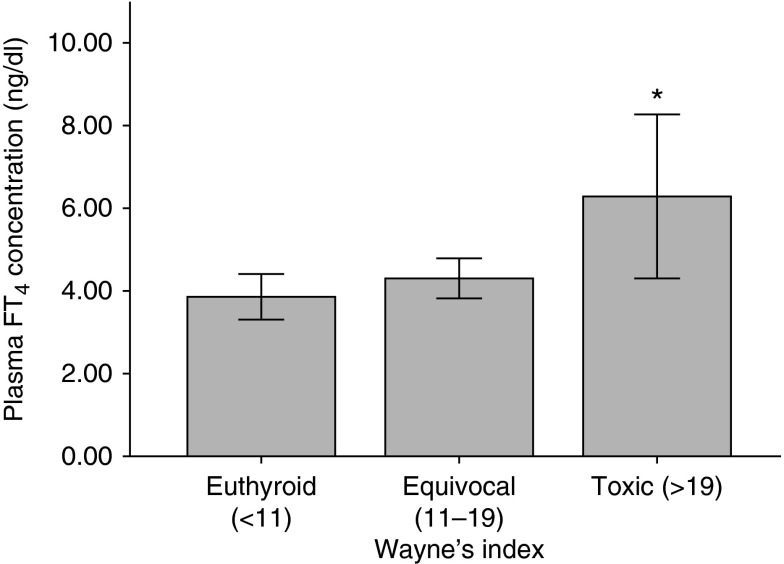
- Two-thirds had no known family or personal history of hyperthyroidism; by Wayne’s index, only 17% had overt thyrotoxicosis (>19), while 45% were equivocal (11–19) and 38% were euthyroid (<11).
- A clear precipitating factor was identified in only 34% (46/135): high carbohydrate ingestion 12%, acute upper respiratory infection 8%, strenuous exercise 7%, high-salt diet 3%, trauma 1%, corticosteroids 1%, and β-adrenergic bronchodilators 2%.
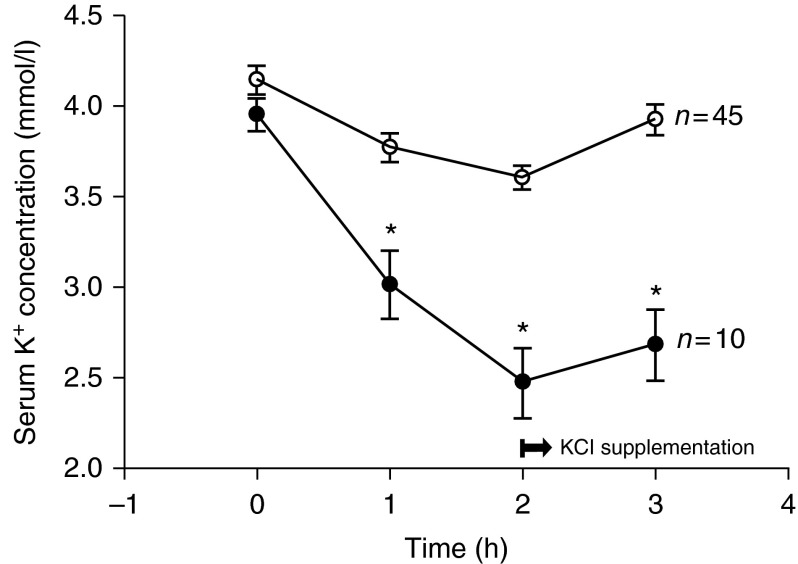
- Oral glucose loading after recovery induced acute hypokalemia (K+ 2.47±0.6 mmol/l) with reparalysis in only 18% (10/55); provoked and non-provoked patients had similar insulin responses, and no significant differences in gender, age, BMI, blood pressure, heart rate, precipitants, or biochemical studies including plasma insulin.
Methods
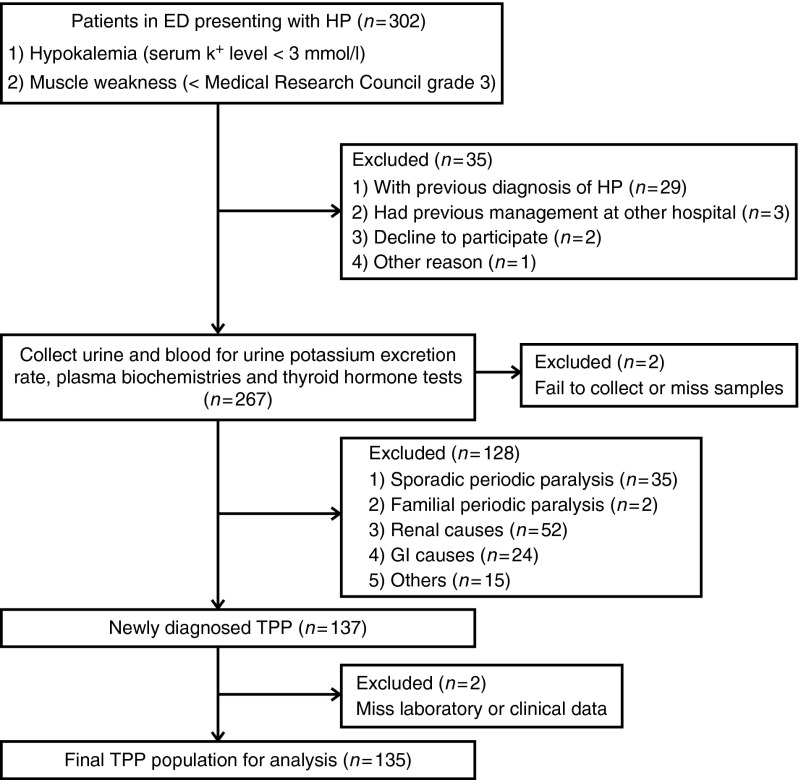
- Prospective observational study at Tri-Service General Hospital, Taiwan, from January 2002 to December 2012; of 302 patients presenting to the ED with acute hypokalemia and muscle paralysis, 135 TPP patients were enrolled. Diagnosis required low urine K+ excretion (transtubular potassium gradient <3) and thyrotoxicosis confirmed by low TSH and high T3/FT4.
- Clinical features, signs/symptoms of thyrotoxicosis, and precipitants were recorded; Wayne’s index quantified thyrotoxicosis severity. Precipitants were assessed by history, medical records, and single 24-h dietary recall.
- Fifty-five patients underwent an oral glucose-loading test (2 g/kg) 1 day after full recovery, with hourly blood sampling over 3 h, muscle strength and ECG monitoring, and KCl supplementation if hypokalemia/paralysis developed. Analyses used mean±s.d., one-way ANOVA, simple linear regression, unpaired Student’s t-test, and Mann–Whitney U test (SPSS 18.0).
Limitations
- The authors state they did not include thyrotoxic patients without paralysis as disease controls, and many predisposing factors could not be quantified—for example, carbohydrate intake amount was not quantified, though oral glucose tests were used to simulate high-carbohydrate diet effects.
- Evident from the text: this was a single-center observational study, and the glucose-loading test included only 55 of 135 patients, which may limit generalizability of the provocative-test findings.
- Evident from the text: precipitant assessment relied on patient recall, a single 24-h dietary recall, and available medical records, so underreporting or recall bias is possible.
Model-written summary. Check it against the paper before relying on it.
Integrity signals
Registry
Cites
Statistics
Figures
Verification
Claims the paper makes
7 Valid · 0 Not valid · 5 Not checked · 24 Own results and interpretations
The cited sources support only part of this claim — read each source’s verdict below.
In the paper
“According to previous reports, nearly 50% of TPP patients had only subtle signs/symptoms of thyrotoxicosis, albeit without systematic assessment (14, 15, 16, 36).”
§ A 10-year analysis of thyrotoxic periodic paralysis in 135 patients: focus on symptomatology and precipitants > Discussion
What the sources say
- Not checked — no full text of the sourcecites [14] Ober KP Thyrotoxic periodic paralysis in the United States: report of 7 cases and review of the literature Medicine 71 1992 109 120 10.1097/00005792-199205000-00001 1635436 source
- Not checked — no full text of the sourcecites [15] Kelley DE Gharib H Kennedy FP Duda RJ Jr McManis PG Thyrotoxic periodic paralysis: report of 10 cases and review of electromyographic findings Archives of Internal Medicine 149 1989 2597 2600 10.1001/archinte.1989.00390110139031 2818118 source
- Partly supportedcites [16] Goh SH Thyrotoxic periodic paralysis: reports of seven patients presenting with weakness in an Asian emergency department Emergency Medicine Journal 19 2002 78 79 10.1136/emj.19.1.78 11777887 PMC1725752 sourceExperimental — accuracy not yet measured
The Discussion reports that five of seven patients had no clinical signs or symptoms of thyrotoxicosis, supporting the point that TPP can present with few or no overt thyroid symptoms. It does not support the claimed figure of nearly 50%, and Patients and Methods says the patients were examined for signs and symptoms of thyroid overactivity, contrary to the suggestion that this report lacked assessment. (LLM, conf=0.87)
plain- Asserted: passes — The authors put it forward as true.
- Checkable: passes — It can be checked against evidence.
- Load-bearing: passes — The paper’s conclusions depend on it.
- Based: passes — The paper gives a reason why it holds.
The cited sources support only part of this claim — read each source’s verdict below.
In the paper
“The low frequency of high-carbohydrate-provoked TPP in our observation may be related to the westernization of the Asian diet with declining rice intake and increasing protein consumption (14, 22).”
§ A 10-year analysis of thyrotoxic periodic paralysis in 135 patients: focus on symptomatology and precipitants > Discussion
What the sources say
- Not checked — no full text of the sourcecites [14] Ober KP Thyrotoxic periodic paralysis in the United States: report of 7 cases and review of the literature Medicine 71 1992 109 120 10.1097/00005792-199205000-00001 1635436 source
- Partly supportedcites [22] McFadzean AJ Yeung R Periodic paralysis complicating thyrotoxicosis in Chinese BMJ 1 1967 451 455 10.1136/bmj.1.5538.451 6017520 PMC1840834 sourceExperimental — accuracy not yet measured
The Discussion (page not available in our copy) identifies high carbohydrate intake as a trigger for individual attacks and suggests that the rice diet’s low potassium-to-carbohydrate ratio may contribute. It does not discuss a westernizing Asian diet, declining rice intake, or increasing protein consumption as an explanation for the citing authors’ low frequency of carbohydrate-provoked attacks. (LLM, conf=0.86)
hedgedstates a possible cause- Asserted: passes — The authors put it forward as true.
- Checkable: passes — It can be checked against evidence.
- Load-bearing: passes — The paper’s conclusions depend on it.
- Based: passes — The paper gives a reason why it holds.
Every source the paper cites for this claim was checked and supports it.
In the paper
“The dual hits of increased intracellular K+ influx from activated Na+, K+-ATPase and decreased K+ efflux from defective Kir channels potentiates the serum hypokalemia that upsets membrane polarization and muscle excitability in TPP (46).”
§ A 10-year analysis of thyrotoxic periodic paralysis in 135 patients: focus on symptomatology and precipitants > Discussion
What the sources say
- Supportedcites [46] Lin SH Huang CL Mechanism of thyrotoxic periodic paralysis Journal of the American Society of Nephrology 23 2012 985 988 10.1681/ASN.2012010046 22460532 PMC3358768 source
In “Pathogenesis of Hypokalemia in TPP,” the paper describes increased Na+–K+ ATPase activity and reduced outward K+ movement through Kir channels as jointly driving hypokalemia. In “Muscle Paralysis Associated with Hypokalemia-Induced Paradoxical Depolarization in TPP,” it links reduced outward K+ current to paradoxical depolarization and muscle inexcitability. The supplied passages give section headings but no page numbers. (LLM, conf=0.94)
plainstates a cause- Asserted: passes — The authors put it forward as true.
- Checkable: passes — It can be checked against evidence.
- Load-bearing: unclear — It is unclear whether the paper’s conclusions depend on it.
- Based: passes — The paper gives a reason why it holds.
- Rests on 2 assumptions not shown here.
- Supported
Every source the paper cites for this claim was checked and supports it.
In the paper
“These findings also suggest that reduced basal muscular Kir current may also be an important mechanism of TPP (46).”
§ A 10-year analysis of thyrotoxic periodic paralysis in 135 patients: focus on symptomatology and precipitants > Discussion
What the sources say
- Supportedcites [46] Lin SH Huang CL Mechanism of thyrotoxic periodic paralysis Journal of the American Society of Nephrology 23 2012 985 988 10.1681/ASN.2012010046 22460532 PMC3358768 source
The passage under “Pathogenesis of Hypokalemia in TPP” reports decreased outward Kir current in muscle fibers of patients with TPP. It also explains that reduced outward K+ current can contribute to the membrane changes that cause paralysis, supporting the proposed mechanism. (LLM, conf=0.89)
hedgedstates a possible cause- Asserted: passes — The authors put it forward as true.
- Checkable: passes — It can be checked against evidence.
- Load-bearing: unclear — It is unclear whether the paper’s conclusions depend on it.
- Based: passes — The paper gives a reason why it holds.
- Supported
A result the paper reports from its own data — it cites no other source for it, so there is none to check. The quote shows it is in the paper.
In the paper
“The clinical characteristics and biochemical studies were also not statistically different between TPP patients with and without identifiable precipitating events.”
§ A 10-year analysis of thyrotoxic periodic paralysis in 135 patients: focus on symptomatology and precipitants > Results > Precipitating factors
plain- Asserted: passes — The authors put it forward as true.
- Checkable: passes — It can be checked against evidence.
- Load-bearing: unclear — It is unclear whether the paper’s conclusions depend on it.
- Based: passes — The paper gives a reason why it holds.
18 more claims
Create a free account to see all 36 claims and every source verdict.
- Probably not a substantial claim. 9
- It may state two separate claims as one. 7
Claims other papers make about this one
Each is checked against this paper’s own text: does it say what the citing paper says it does?
The source backs part of the claim, not all of it — or backs it for a different population, condition or comparison.
In the citing paper
“Thus, no additional factors besides hyperthyroidism are necessary in order for TPP to occur [12].”
From Thyrotoxic Periodic Paralysis With Hypokalemia: A Case Study (2023) · cites this paper as [12]
Experimental — accuracy not yet measuredThe source backs part of the claim, not all of it — or backs it for a different population, condition or comparison.
In the citing paper
“In a large study by Chang et al. [24] in 2013 one hundred and thirty five patients of TPP were followed up for 10 years.”
From Thyrotoxic Periodic Paralysis: Clinical Challenges (2014) · cites this paper as [24]
Experimental — accuracy not yet measuredThe cited source says what the claim attributes to it.
In the citing paper
“It typically affects Asian males between the ages of 20-40 [4, 5, 6].”
From A Case of Thyrotoxic Periodic Paralysis: "I Can't Move!" (2023) · cites this paper as [4]
The cited source says what the claim attributes to it.
In the citing paper
“However, a study by Chang et al. showed only 34% of patients had a precipitating factor.”
From Thyrotoxic Periodic Paralysis With Hypokalemia: A Case Study (2023) · cites this paper as [12]
In the citing paper
“Some reported precipitating factors of TPP include consumption of a high carbohydrate meal, corticosteroids, stress, a high sodium diet, alcohol, rest after exercise, and exposure to cold temperatures [12].”
From Thyrotoxic Periodic Paralysis With Hypokalemia: A Case Study (2023) · cites this paper as [12]
5 more claims about this paper
Create a free account to see every claim other papers make about this one.
Self-check
Percentages, sums and reported differences re-computed from the paper’s own numbers.
Each contradiction between two passages listed here was confirmed by an independent check.
Rated minor: it would not touch a result — a value no result rests on, a p-value that stays on the same side of the significance level, or a conflict that is clerical, resolved elsewhere in the paper, or outside its own findings.
In the paper
§ A 10-year analysis of thyrotoxic periodic paralysis in 135 patients: focus on symptomatology and precipitants > Results > Precipitating factors
“The identified precipitating events for TPP attacks were high carbohydrate ingestion (16/135, 12%), recent acute URI (11/135, 8%), strenuous exercise (10/135, 7%), high-salt diet (4/135, 3%), trauma (1/135, 1%), and use of corticosteroids (1/135, 1%) and β-adrenergic bronchodilators (3/135, 2%).”
§ A 10-year analysis of thyrotoxic periodic paralysis in 135 patients: focus on symptomatology and precipitants > Results > Precipitating factors
“Of these, most (41/46, 89%) had a single precipitant; five patients (5/46, 11%) had two coexisting precipitating events.”
Rated minor: it would not touch a result — a value no result rests on, a p-value that stays on the same side of the significance level, or a conflict that is clerical, resolved elsewhere in the paper, or outside its own findings.
In the paper
§ A 10-year analysis of thyrotoxic periodic paralysis in 135 patients: focus on symptomatology and precipitants > Subjects and methods > Subjects
“From January 2002 to December 2012, the patients presenting with hypokalemia (serum K+ concentration <3.0 mmol/l) and acute muscle weakness in the emergency department (ED) were visited, examined, and collected by at least an experienced nephrologist.”
§ A 10-year analysis of thyrotoxic periodic paralysis in 135 patients: focus on symptomatology and precipitants > Results > Patients' characteristics
“Over 10 years, there were 302 patients presenting with acute hypokalemia and muscle paralysis in our ED.”
Citations
Cites
Strength and cross‐sectional area of human skeletal muscle.
Maughan, R. J., Watson, J. S., & Weir, J. (1983) · The Journal of Physiology · doi:10.1113/jphysiol.1983.sp014658 · Cited by 750
Thyrotoxic Periodic Paralysis: A Diagnostic Challenge
Kung, A. W. C. (2006) · The Journal of Clinical Endocrinology & Metabolism · doi:10.1210/jc.2006-0356 · Cited by 371
Ryan, D. P., Dias da Silva, M. R., Soong, T. W., Fontaine, B., Donaldson, M. R., Kung, A. W. C., Jongjaroenprasert, W., Liang, M. C., Khoo, D. H. C., Cheah, J. S., et al. (2010) · Cell · doi:10.1016/j.cell.2009.12.024 · Cited by 311
Periodic paralysis complicating thyrotoxicosis in Chinese.
McFadzean, A. J., & Yeung, R. (1967) · BMJ · doi:10.1136/bmj.1.5538.451 · Cited by 303
Thyrotoxic Periodic Paralysis in the United States Report of 7 Cases and Review of the Literature
OBER, K. P. (1992) · Medicine · doi:10.1097/00005792-199205000-00001 · Cited by 289
Lin, S.-H. (2005) · Mayo Clinic Proceedings · doi:10.4065/80.1.99 · Cited by 254
Self-citationSTATISTICAL METHODS APPLIED TO THE CLINICAL DIAGNOSIS OF THYROTOXICOSIS
(1959) · QJM: An International Journal of Medicine · doi:10.1093/oxfordjournals.qjmed.a066842 · Cited by 215
THE ASSOCIATION OF PERIODIC PARALYSIS AND HYPERTHYROIDISM IN JAPAN
OKINAKA, S., SHIZUME, K., UNO, S., WATANABE, A., IRIE, M., NOGUCHI, A., KUMA, S., KUMA, K., & ITO, T. (1957) · The Journal of Clinical Endocrinology & Metabolism · doi:10.1210/jcem-17-12-1454 · Cited by 206
Mechanism of Thyrotoxic Periodic Paralysis
Lin, S.-H., & Huang, C.-L. (2012) · Journal of the American Society of Nephrology · doi:10.1681/asn.2012010046 · Cited by 174
Self-citationSex differences in sympathetic-adrenal medullary reactions induced by different stressors
Frankenhaeuser, M., Dunne, E., & Lundberg, U. (1976) · Psychopharmacology · doi:10.1007/bf00428693 · Cited by 173
Cited by
Graves' disease: Clinical manifestations, immune pathogenesis (cytokines and chemokines) and therapy
Antonelli, A., Fallahi, P., Elia, G., Ragusa, F., Paparo, S. R., Ruffilli, I., Patrizio, A., Gonnella, D., Giusti, C., Virili, C., et al. (2020) · Best Practice & Research Clinical Endocrinology & Metabolism · doi:10.1016/j.beem.2020.101388 · Cited by 190
Diagnosis and management of thyrotoxicosis
Vaidya, B., & Pearce, S. H. S. (2014) · BMJ · doi:10.1136/bmj.g5128 · Cited by 98
Thyrotoxic Periodic Paralysis: Clinical Challenges
Vijayakumar, A., Ashwath, G., & Thimmappa, D. (2014) · Journal of Thyroid Research · doi:10.1155/2014/649502 · Cited by 88
“Using theWayne’s index, a reliable quantitative score of hyperthyroid severity, it was found that only 17% of TPP patients had toxic thyrotoxicosis (score > 19), supporting the notion that most TPP patients have equivocal symptoms [24].”
RetractedMuscle channelopathies: recent advances in genetics, pathophysiology and therapy
Suetterlin, K., Männikkö, R., & Hanna, M. G. (2014) · Current Opinion in Neurology · doi:10.1097/wco.0000000000000127 · Cited by 73
Toxic and Endocrine Myopathies
Katzberg, H. D., & Kassardjian, C. D. (2016) · CONTINUUM Lifelong Learning in Neurology · doi:10.1212/con.0000000000000407 · Cited by 42
“Like other forms of periodic paralysis, thyrotoxic periodic paralysis is characterized by episodes of generalized proximal more than distal weakness, preserved level of alertness, and usually hypotonia and hyporeflexia.(7,8) Bulbar or respiratory weakness are much rarer manifestations.”
BackgroundInfluentialLin, C., Lin, C.-S., Lee, D.-J., Lee, C.-C., Chen, S.-J., Tsai, S.-H., Kuo, F.-C., Chau, T., & Lin, S.-H. (2021) · Journal of the Endocrine Society · doi:10.1210/jendso/bvab120 · Cited by 30
“However, TPP is frequently unrecognized or misdiagnosed because most TPP patients do not have overt symptoms and signs of hyperthyroidism [11].”
BackgroundSelf-citationThyrotoxic periodic paralysis: A case report and literature review
Patel, M., & Ladak, K. (2021) · Clinical Medicine & Research · doi:10.3121/cmr.2021.1610 · Cited by 27
Etiologic and Therapeutic Analysis in Patients with Hypokalemic Nonperiodic Paralysis
Sung, C., Cheng, C., Chiang, W., Chau, T., Hsu, Y., Yang, S.-S., & Lin, S. (2014) · The American Journal of Medicine · doi:10.1016/j.amjmed.2014.09.027 · Cited by 24
Self-citationThyrotoxic periodic paralysis: A retrospective, observational study from India
Verma, V., Kumar, Y., Kotwal, N., Upreti, V., Kumar, K. V. S. H., Singh, Y. P., & Menon, A. S. (2020) · The Indian Journal of Medical Research · doi:10.4103/ijmr.ijmr_335_18 · Cited by 24
Li, X., Yao, S., Xiang, Y., Zhang, X., Wu, X., Luo, L., Huang, H., Zhu, M., Wan, H., & Hong, D. (2015) · BMC Neurology · doi:10.1186/s12883-015-0290-8 · Cited by 19
“Although the mechanism of TPP remains largely uncertain, a few risk factors have been identified, such as carbohydrate loads and rest following exercise [7].”
BackgroundThyrotoxic Periodic Paralysis—A Misleading Challenge in the Emergency Department
Bilhă, Ş., Mitu, O., Teodoriu, L. C., Haba, M. Ș. C., & Preda, C. (2020) · Diagnostics · doi:10.3390/diagnostics10050316 · Cited by 21
“If thyrotoxicosis is confirmed, then measurement of thyroid antibodies including TRAb should be carried out, especially as Graves’ disease is the most common cause of TPP [1].”
BackgroundMethodResultInfluentialChang, R. Y. K., Lang, B. H., Chan, A. C. W., & Wong, K. P. (2014) · International Journal of Endocrinology · doi:10.1155/2014/949068 · Cited by 16
Affram, K. O., Reddy, T. L., & Osei, K. M. (2018) · American Journal of Case Reports · doi:10.12659/ajcr.911270 · Cited by 13
“However, triggers are usually required to induce the extent of hypokalemia required for TPP [30,31].”
BackgroundInfluentialOsteoarthropathien und Myopathien bei Schilddrüsenerkrankungen
Nehls, V. (2018) · DMW - Deutsche Medizinische Wochenschrift · doi:10.1055/s-0043-121381 · Cited by 14
“[19] Chang CC, Cheng CJ, Sung CC et al.”
BackgroundInfluentialJin, J., Hu, F., Li, M., Shang, S., Qin, X., Cao, H., & Dang, J. (2017) · Journal of Clinical Neurophysiology · doi:10.1097/wnp.0000000000000405 · Cited by 12
“12 The diagnosis criteria of primary PP were (1) an acute or episodic paralysis of the extremities often experienced early in the morning; (2) a paralytic attack that lasted from several hours to days; (3) the occurrence of complete recovery after attacks; (4) abnormal or normal serum potassium levels; (5) the episode…”
BackgroundQian, Y., Dai, Z., Zhu, C., Zhu, Y., & Wu, C. (2018) · The American Journal of Emergency Medicine · doi:10.1016/j.ajem.2018.11.010 · Cited by 11
“3% of which were Graves' disease) patients who develop acute TPP attacks, present with a mild clinical manifestation of thyrotoxicosis [4,6].”
BackgroundBONNAR, C. E., Brazil, J., Okiro, J. O., Giblin, L., Smyth, Y. M., O’Shea, P. M., & Finucane, F. M. (2021) · Endocrinology Diabetes and Metabolism Case Reports · doi:10.1530/edm-21-0060 · Cited by 11
Thyroxine-induced periodic paralysis: a rare complication of nutritional supplements
Cheema, M. A., Zain, M. A., Cheema, K., & Ullah, W. (2018) · BMJ Case Reports · doi:10.1136/bcr-2018-227946 · Cited by 9
Jung, S. Y., Song, K., Shin, J. I., Chae, H. W., Kim, H.-S., & Kwon, A. (2014) · Annals of Pediatric Endocrinology & Metabolism · doi:10.6065/apem.2014.19.3.169 · Cited by 11
Hakami, O. A., Ahmad, M. M., & Aljohani, N. J. (2016) · Clinical Medicine Insights Case Reports · doi:10.4137/ccrep.s34560 · Cited by 10
Aggarwal, A., Wadhwa, R., Pande, A. K., Sahu, M., Kapoor, D., & Khanna, R. (2019) · Indian Journal of Endocrinology and Metabolism · doi:10.4103/ijem.ijem_619_18 · Cited by 9
“Chang et al.[14] reported triggers in 34% patients, in a 10-year follow-up study of 135 patients.”
BackgroundThyrotoxic hypokalemic periodic paralysis triggered by dexamethasone administration
Polamaung, W., Kongkit, J., Yimnoi, P., Boonchaya-Anant, P., & Snabboon, T. (2020) · Acta Medica (Hradec Kralove, Czech Republic) · doi:10.14712/18059694.2020.24 · Cited by 9
Vanderpump, M. P. J. (2018) · Wiley eBooks · doi:10.1002/9781119374800.ch18 · Cited by 10
Thyrotoxic hypokalemic periodic paralysis in an African male: a case report
Belayneh, D. K., & Kellerth, T. (2014) · Clinical Case Reports · doi:10.1002/ccr3.165 · Cited by 8
“The attacks of muscle weakness usually occur during the night or early morning hours [14].”
BackgroundPeriodic paralysis with normokalemia in a patient with hyperthyroidism: A case report
Wang, P.-H., Liu, K., Wu, Y., & Yeh, I. (2018) · Medicine · doi:10.1097/md.0000000000013256 · Cited by 9
“The underlying hyperthyroidism is often subtle without typical symptoms such as palpitations, tremors, anxiety, and weight loss; this causes a difficulty in early diagnosis.([2]) Here, we reported a”
BackgroundA single-center retrospective study on the clinical features of thyrotoxic periodic paralysis
Yamada, K., Tanabe, A., Hashimoto, M., Ohsugi, M., Ueki, K., & Kajio, H. (2024) · PLoS ONE · doi:10.1371/journal.pone.0308076 · Cited by 8
Thyrotoxic Periodic Paralysis: An Under-Recognized Cause of Paralysis in Young Hispanic Men
Gulde, A., Zhang, S., & Hussain, I. (2023) · Journal of Emergency Medicine · doi:10.1016/j.jemermed.2022.10.023 · Cited by 8
Thyrotoxic periodic paralysis - a retrospective study from Southern India
Paul, J., Joseph, A., Jebasingh, F., More, A., Hephzibah, J., Cherian, K. E., Kapoor, N., Asha, H. S., & Thomas, N. (2024) · European Thyroid Journal · doi:10.1530/etj-24-0164 · Cited by 14
“In a prospective observational study from Taiwan, most of the patients with GD were treated with anti-thyroid medications and thyroidectomy, and oral radioactive iodine-131 ablation therapy was administered in a smaller group ( 10).”
InfluentialSteroids and thyrotoxicosis precipitate periodic paralysis
Ahamed, R., McCalley, S., & Sule, A. A. (2018) · Cureus · doi:10.7759/cureus.2106 · Cited by 7
“A very small proportion of patients actually have synchronous clinical features of thyrotoxicosis [2].”
BackgroundInfluentialThyrotoxic Periodic Paralysis: An Incidental Diagnosis!
Batch, J. T., Jahngir, M. U., & Rodriguez, I. (2020) · Cureus · doi:10.7759/cureus.7041 · Cited by 8
“The severity of acute muscle paralysis correlates with the severity of the hypokalemia [1].”
BackgroundInfluentialBanavathu, T., Tripathi, S., Sukhadiya, P., Ahari, K., Meena, D. S., & Garg, M. K. (2021) · Archives of Academic Emergency Medicine · doi:10.22037/aaem.v9i1.1083 · Cited by 7
“However, precipitating factors could not be identified in nearly 34% of the cases (11).”
BackgroundKarndumri, K., Thewjitcharoen, Y., Chatchomchuan, W., Porramatikul, S., Krittiyawong, S., Wanothayaroj, E., Butadej, S., Nakasatien, S., Rajatanavin, R., & Himathongkam, T. (2020) · Journal of Clinical & Translational Endocrinology · doi:10.1016/j.jcte.2020.100235 · Cited by 8
“In GD patients with TPP, many reports showed that TPP was a sole initial presentation and other thyrotoxic symptoms and signs could be overlooked [13,19].”
BackgroundOllivry, A., & Joubert, Z. (2023) · Journal of Endocrinology Metabolism and Diabetes of South Africa · doi:10.1080/16089677.2023.2170955 · Cited by 8
“Laboratory results include a very low serum potassium level without any acid-base disturbance.(21,22) Renal excretion of potassium is also low, thus excluding renal potassium wasting.”
BackgroundThe insulin-sensitivity sulphonylurea receptor variant is associated with thyrotoxic paralysis
Rolim, A. L., Lindsey, S. C., Kunii, I. S., Crispim, F., Moisés, R. S., Maciel, R. M. B., & Dias-da-Silva, M. R. (2014) · Journal of Molecular Endocrinology · doi:10.1530/jme-14-0083 · Cited by 5
“Indeed, attacks of muscle weakness may be triggered by the ingestion of sweet snacks, alcohol consumption, or after vigorous physical exercise (Chang et al. 2013).”
BackgroundMurashita, M., Wada, N., Baba, S., Sugawara, H., Miyoshi, A., & Obara, S. (2022) · Endocrinology Diabetes and Metabolism Case Reports · doi:10.1530/edm-22-0236 · Cited by 6
Thyrotoxic periodic paralysis presenting with quadriparesis and hyperreflexia
Hoshina, Y., Setterquist, H., McConnell, T. D., & Renner, D. R. (2023) · BMJ Case Reports · doi:10.1136/bcr-2023-256550 · Cited by 4
Graves Disease - A Comprehensive Review
Phagoora, J., Bakilwal, S., Arshia Hamzehpour, S., Kabariti, M., Munarov, J., Cho, H. Y., & Saini, S. (2024) · Physician s Journal of Medicine · doi:10.55070/137w7361 · Cited by 7
“This phenomenon is observed more frequently in individuals of Asian descent and is associated with factors such as alcohol consumption, intense physical activity, and an elevated carbohydrate diet [16].”
BackgroundMatsui, D., Mugikura, S., Goshima, T., Ishizuka, N., Jingushi, N., Uenishi, N., & Iwata, M. (2025) · Cureus · doi:10.7759/cureus.85551 · Cited by 9
“Clinically, TPP typically presents with acute proximal muscle weakness, especially in the lower limbs, and may progress to involve all four limbs and the respiratory muscles [4].”
Matta, A., Koppala, J., & Gossman, W. (2014) · BMJ Case Reports · doi:10.1136/bcr-2014-204198 · Cited by 4
Hung, S.-Y., Liu, W.-J., Wu, P., Yang, M., Wu, Y., & Lan, C. (2020) · Tzu Chi Medical Journal · doi:10.4103/tcmj.tcmj_248_19 · Cited by 4
“These precipitating factors can be identified in about one-third of patients [3].”
BackgroundInfluentialThyrotoxic periodic paralysis as an initial presentation of Graves’ disease in a Saudi patient
Alqahtani, S., & Aleithan, M. (2017) · BMJ Case Reports · doi:10.1136/bcr-2017-220224 · Cited by 5
Idham, M., & Prajitno, J. H. (2022) · Annals of Medicine and Surgery · doi:10.1016/j.amsu.2022.104925 · Cited by 9
Kung, A. W. C., & Cheung, C. L. (2011) · doi:10.1093/med/9780198870197.003.0055 · Cited by 9
Li, G. H., Tang, C.-M., Li, R., Ge, G. M., Kung, A. W. C., Tan, K. C. B., Cheung, E. Y., & Cheung, C. (2025) · European Thyroid Journal · doi:10.1530/etj-25-0220 · Cited by 6
“(14).”
Thyrotoxic periodic paralysis as the first presentation of Graves' disease: A case report
Al-Mashdali, A. F., Alfatih, M., Umer, W., & Deeb, Y. E. (2023) · Clinical Case Reports · doi:10.1002/ccr3.7188 · Cited by 2
Insulin-induced severe thyrotoxic periodic paralysis: A case report
Wang, Y., & Li, J. (2025) · World Journal of Clinical Cases · doi:10.12998/wjcc.v13.i7.101214 · Cited by 5
Graves’ Disease Presenting with Periodic Paralysis to the Emergency Department
Lan, N. S. R., & Fegan, P. G. (2018) · Case Reports in Endocrinology · doi:10.1155/2018/9763452 · Cited by 3
Don’t Trip Over the Trop: An Unusual Presentation of Thyrotoxic Periodic Paralysis
Al-Refaie, N., Appiah, S., Mandal, A. K. J., & Missouris, C. G. (2019) · The American Journal of Medicine · doi:10.1016/j.amjmed.2019.04.028 · Cited by 3
Scheive, M., Patel, N., & Saeed, Z. I. (2023) · Endocrinology Diabetes and Metabolism Case Reports · doi:10.1530/edm-22-0358 · Cited by 3
Thyrotoxic hypokalemic periodic paralysis as a rare manifestation of Graves disease
Гостимский, А. В., Матвеева, З. С., Af, R., Karpatsky, I. V., & Peredereev, S. S. (2019) · Grekov s Bulletin of Surgery · doi:10.24884/0042-4625-2019-178-2-62-64 · Cited by 2
“Изменяется трансмембранный потенциал, а процесс деполяризации мембраны удлиняется [6, 7].”
Thyrotoxic periodic paralysis in two sexagenarian men: A case report
Lu, A., & Lin, S. (2021) · Medicine · doi:10.1097/md.0000000000027795 · Cited by 2
“The affected patients are predominantly young men, with the peak incidence between 20 and 40years of age, which are compatible with the age-specific distribution of hyperthyroidism.([8,11]) One cases series reported 1 TPP patient aged more than 60years.”
BackgroundSelf-citationNeurologic Complications of Endocrine Disorders
Reda, H. M. (2023) · CONTINUUM Lifelong Learning in Neurology · doi:10.1212/con.0000000000001262 · Cited by 3
Exploring the enigma of thyrotoxic periodic paralysis: A complex interplay of hormones and muscles
Podimon, J., Rahim, S. A., Sarojiniamma, C., Philip, R., Dev, D. A., & Khadir, C. A. (2024) · Thyroid Research and Practice · doi:10.4103/trp.trp_10_24 · Cited by 3
Wei, K. S., Lim, A. N., & Cannon, S. M. (2024) · AACE Clinical Case Reports · doi:10.1016/j.aace.2024.11.002 · Cited by 3
Sierra, M. A., Muñoz-Castañeda, W. R. A., Tolsa, C., Lara, A. E., Medina, R., & Vega, C. (2019) · Revista de Fomento Social · doi:10.24875/rmn.m19000046 · Cited by 2
Graves' Disease and Periodic Paralysis
Mangaraj, S., Jena, D., Mishra, P. K., Choudhury, A. K., Mohanty, B. K., & Baliarsinha, A. K. (2015) · Journal of the ASEAN Federation of Endocrine Societies · doi:10.15605/jafes.030.02.06 · Cited by 1
Paz‐Ibarra, J., Sáenz-Bustamante, S., Ildefonso-Najarro, S. P., Portillo-Flores, K., Quispe-Flores, M. A., Dueñas, E. A. P., & Concepción‐Zavaleta, M. J. (2022) · PubMed Central · Cited by 6
A Case of Thyrotoxic Periodic Paralysis: "I Can't Move!"
Basnet, A., Goyal, N., Tiwari, K., Kansakar, S., & Gautam, S. (2023) · Cureus · doi:10.7759/cureus.34301 · Cited by 2
“It typically affects Asian males between the ages of 20-40 [4, 5, 6].”
BackgroundThyrotoxic Periodic Paralysis With Hypokalemia: A Case Study
Mebane, N. B., Khan, A., Bevinal, M., & Davis, E. (2023) · Cureus · doi:10.7759/cureus.40757 · Cited by 3
“Some reported precipitating factors of TPP include consumption of a high carbohydrate meal, corticosteroids, stress, a high sodium diet, alcohol, rest after exercise, and exposure to cold temperatures [12].”
BackgroundAcute Ascending Flaccid Paralysis in a Healthy 16-year-old
Penfold, M. P., Starnes, K., & Corredor, M. (2024) · Pediatrics in Review · doi:10.1542/pir.2021-005164 · Cited by 1
Glucocorticoid-induced Thyrotoxic Periodic Paralysis Following Lumbar Nerve Root Block
Uda, S., Shimizu, H., & Nishioka, H. (2025) · Internal Medicine · doi:10.2169/internalmedicine.5987-25 · Cited by 1
Thyrotoxic Periodic Paralysis in an Asian Male With Graves' Disease
Wardah, B. M., Ahmad, A., & Nuri, M. M. H. (2025) · Cureus · doi:10.7759/cureus.96063 · Cited by 1
Thyrotoxic Periodic Paralysis, β2-ADrenergic Bronchodilator, and Insulin—An Interesting Interplay
Senthilkumaran, S., Jena, N. N., Jayaraman, S., & Thirumalaikolundusubramanian, P. (2014) · Canadian Journal of Emergency Medicine · doi:10.2310/8000.2014.141448 · Cited by 1
“of hypokalemic periodic paralysis, which supports this observation.(4) Sympathetic stimulation of insulin release provides additional rationale for using nonselective b-blockers”
BackgroundThyrotoxic periodic paralysis. A case report
Ramazanov, G. R., Шевченко, Е. В., Akhmatkhanova, L. K.-B., & Petrikov, S. S. (2022) · Bulletin of the Medical Institute REAVIZ (REHABILITATION DOCTOR AND HEALTH) · doi:10.20340/vmi-rvz.2022.5.case.1 · Cited by 2
Atypical Normokalemic Case of Thyrotoxic Periodic Paralysis in a Pediatric Patient
Gadi, F., & Schueler, T. (2024) · Cureus · doi:10.7759/cureus.57467 · Cited by 2
“Typically, individuals experiencing TPP exhibit low levels of potassium during attacks ( 3 mmol/l) [1-3].”
BackgroundInfluentialThyrotoxic periodic paralysis complicated by carbimazole-associated myositis
Kanagaretnam, H., Parameshwaran, K., Ganda, K., & Seibel, M. J. (2024) · BMJ Case Reports · doi:10.1136/bcr-2024-260722 · Cited by 1
Isshak, R., Orhun, N., Rajab, I. M., Shober, D., & Michael, P. (2025) · AACE Endocrinology and Diabetes · doi:10.1016/j.aed.2025.02.005 · Cited by 1
Ventricular tachycardia secondary to thyrotoxic periodic paralysis: A case report
Torres, J. D., Marschall, A., Sanz, C. F., Rodíl, B. B., Carnevali, H. D. C., & Sánchez, D. M. (2021) · Journal of Electrocardiology · doi:10.1016/j.jelectrocard.2021.06.005 · Cited by 1
Retracted: Thyrotoxic Periodic Paralysis: Clinical Challenges
Research, J. O. T. (2021) · Journal of Thyroid Research · doi:10.1155/2021/7814159 · Cited by 4
Microorganisms in Pathogenesis and Management of Graves’ Disease
Ferrari, S. M., Guarneri, F., Fallahi, P., Antonelli, A., & Benvenga, S. (2022) · Springer eBooks · doi:10.1007/978-981-19-1946-6_14 · Cited by 1
Tirotoksicna periodicna paraliza
Savić, S., Beleslin, B. N., Ciric, S., Stojković, M., Lalić, T., Nišić, T., Stojanovic, M. M., Ćirić, J., & Žarković, M. (2013) · Medicinski glasnik Specijalna bolnica za bolesti stitaste zlezde i bolesti metabolizma Zlatibor · doi:10.5937/medgla1350035s
Parálisis hipocalémica tirotóxica. A propósito de un caso
Castillo, E. M. (2014) · Medicina de Familia SEMERGEN · doi:10.1016/j.semerg.2014.05.017
Cheng, C., & Lin, S. (2014) · Canadian Journal of Emergency Medicine · doi:10.2310/8000.2014.141452
Self-citationParálisis periódica hipopotasémica familiar asociada a tiroiditis autoinmune
Megías, M. C., Rodríguez, L. F., Ramos, J. M., et al. (2015) · Medicina Clínica · doi:10.1016/j.medcli.2015.10.022
Familial hypokalemic periodic paralysis associated with autoimmune thyroiditis
Megías, M. C., Rodríguez, L. F., Ramos, J. M., et al. (2016) · Medicina Clínica (English Edition) · doi:10.1016/j.medcle.2016.06.006
Türeotoksiline perioodiline paralüüs
Muldmaa, M., & Lindmäe, A. (2014) · Ajakirjad. Journals by UT · doi:10.15157/ea.v0i0.11662
“Kui kaaliumi sisaldus veres on normaliseerunud, lihasnõrkus kaob (3).”
BackgroundInfluentialGutch, M., Shakya, S., Bhattacharjee, A., Manjari, D., & Pushkar, D. (2016) · MAMC Journal of Medical Sciences · doi:10.4103/2394-7438.191694
Hypokalemic thyrotoxic periodic paralysis in a young Serbian male
Ristić, P., Dragovic, T., Kikovic, S., Ristić, D., Zdravkovic, M. D., Hinić, S., Durmić, T., & Hajdukovic, Z. (2018) · Vojnosanitetski pregled · doi:10.2298/vsp161130064r
Ventricular Fibrillation due to Severe Hypokalemia in a Patient with Thyrotoxic Periodic Paralysis
Usluoğulları, C. A., Önal, E. D., Balkan, F., İzdeş, Ş., Ersoy, R., Çakır, B., Hipokalemik, T., Paralizili, P., Hastada, B., Tetiklediği, H., et al. (2015)
Thyrotoxic Periodic Paralysis Presenting with Hypokalemia: A Case Report
Aseri, Z. A. A. (2020) · American Journal of Biomedical Science & Research · doi:10.34297/ajbsr.2020.09.001438
“TTP and hypokalemia can be the initial presentation of thyrotoxicosis and Graves’ disease [4-6].”
BackgroundThyrotoxic Periodic Paralysis- An Uncommon Disease in the Western World: A Case Report
Samad, S., Samuel Joshua, M., & Popilevsky, F. (2021) · International Journal of Critical Care and Emergency Medicine · doi:10.23937/2474-3674/1510117
Weight Loss-Based Nutraceuticals: A Rare Cause of Thyrotoxicosis and Thyrotoxic Periodic Paralysis
Shuster, S., Vlasschaert, C., & Awad, S. (2021) · Canadian Journal of General Internal Medicine · doi:10.22374/cjgim.v16i2.470
Thyrotoxic Hypokalemic Periodic Paralysis: case report
Valadão, A. F., de Oliveira, N. F., de Oliveira, A. A., Cajaíba, L. L., Neto, R. P. D. C., & de Carvalho, N. D. (2021) · Revista Médica de Minas Gerais · doi:10.5935/2238-3182.20210040
An Unusual Presentation of Thyrotoxicosis: Leg Weakness and Hypokalemia in a 21‐Year‐Old Male
Campana, M. S., Riofrio, M., Jadav, R. S., & Rozenek, M. (2021) · Case Reports in Endocrinology · doi:10.1155/2021/1776538
“Most patients have decreased or absent deep tendon reflex, which is discordant to other forms of hyperthyroidism [3, 10].”
DECREMENTAL RESPONSE ON PROLONGED EXERCISE TEST IN A PATIENT WITH THYROTOXIC PERIODIC PARALYSIS
Ostwal, P., & Alshaheen, M. (2022) · MNJ (Malang Neurology Journal) · doi:10.21776/ub.mnj.2022.008.01.13
Chng, C. L. (2018) · Springer eBooks · doi:10.1007/978-981-10-1124-5_2
Suetterlin, K., & Hanna, M. G. (2016) · doi:10.1002/9781118777329.ch116
Frequency of Hyperthyroidism in Hypokalemic Periodic Paralysis
Lakho, M. A., Magsi, A. G., Lakho, S., Ali, M. M., Bhanbhro, F. I., & Magsi, S. A. (2022) · Pakistan Journal of Medical and Health Sciences · doi:10.53350/pjmhs22166353
Tênis de Campo como projeto social
Bellinazo, R. G., Engers, P. B., & Ilha, P. V. (2022) · Research Society and Development · doi:10.33448/rsd-v11i9.32035 · Cited by 5
Thyrotoxic Periodic Paralysis: A case report
Nadeem, S., Aziz, A., & Ali, D. (2022) · Journal of Clinical and Translational Endocrinology Case Reports · doi:10.1016/j.jecr.2022.100122 · Cited by 1
Thyrotoxic Periodic Paralysis in the Post-COVID Era: A Case Report with Literature Review
Gandhi, C., & Ghosh, M. (2022) · Canadian Journal of Medicine · doi:10.33844/cjm.2022.6023
“While the weakness is usually rapidly reversible with potassium replacement, it can be distressing for patients and can cause cardiopulmonary collapse if untreated [1, 3].”
BackgroundThyrotoxic periodic paralysis mimicking hypokalemic periodic paralysis
Chaudhari, V., Chauhan, H., & Panchal, M. (2022) · International Journal of Medicine · doi:10.14419/ijm.v10i1.32035
RECCURENT THYROTOXIC HYPOKALEMIC PERIODIC PARALYSIS: LAPORAN KASUS
Suputra, I. G. L. R. D., & Asmara, I. D. P. G. W. (2023) · Jurnal Medika Malahayati · doi:10.33024/jmm.v7i1.9393
“Keluhan takikardia dapat menjadi pembeda dengan kelumpuhan pada FHPP (Chang et al., 2013).”
BackgroundThyrotoxic Periodic Paralysis after Surgery: A Case Report and Literature Review
Wouters, C., Willems, M., Mullens, A., & Meersman, A. (2023) · Emergency Medicine - Open Journal · doi:10.17140/emoj-9-172
Leal, J. L. V., Gómez-Otálvaro, M. A., & Cardozo, A. (2024) · Revista de Educaci�n e Investigaci�n en Emergencias · doi:10.24875/reie.22000094
“La edad de inicio oscila entre los 20 y los 40 años en el 80% de los casos, diferenciándose de la parálisis hipopotasémica perió-dica familiar, la cual inicia más temprano y se asocia con mutaciones genéticas, con herencia autosómica dominante 10,12 .”
Elkholi, A., Haider, A., & Ali, M. M. (2024) · Journal of Medical and Health Studies · doi:10.32996/jmhs.2024.5.2.15
“Although rare in the Middle East, it is regarded as more common in the South Asian community, with literature regarding 1.9 – 3% of reported cases, with higher incidence rates between men, a ratio of 2:1 as compared to women within the same demographic area (2).”
BackgroundInfluentialNguyen, L. A., Cazin, M., & Miles, J. D. (2024) · Cureus · doi:10.7759/cureus.65309
“However, Chang et al. found that only 34% of patients presented with a precipitating factor [13].”
BackgroundThyrotoxic Periodic Paralysis With Graves' Disease: A Case Report
Thomas, A., Baby, B., Joy, S., Sreekrishnan, T. P., & P, G. K. K. (2024) · Cureus · doi:10.7759/cureus.73223 · Cited by 3
A Case of Thyrotoxic Periodic Paralysis
Tripathi, M., & Chopra, P. (2025) · National Journal of Emergency Medicine SEMI · doi:10.5005/njem-11015-0050
Grunewald, C. V., Filho, C. A. D. O., Belíssimo, L. M., Marques, B. C., Souza, E. R. D., Furlan, F. R., & Aguena, M. J. B. (2025) · Aracê. · doi:10.56238/arev7n8-133
Metadata
- Authors
- Chang, C.-C., Cheng, C.-J., Sung, C.-C., Chiueh, T.-S., Lee, C.-H., Chau, T., & Lin, S.-H.
- Affiliations
- Tri-Service General Hospital (TW)
- Providence St. Vincent Medical Center (US)
- Corresponding author
- Lin, Shih-Hua
- Venue
- European Journal of Endocrinology
- Publisher
- Oxford University Press (OUP)
- Published
- 2013-11
- Volume
- 169
- Issue
- 5
- Pages
- 529-536
- ISSN
- 0804-4643 (ISSN-L)
- 1479-683X
- PMC
- PMC3789562
- OpenAlex
- W2153742361
- Cited by
- 114
- References
- 51
- Citations by year
- 2026: 9 · 2025: 10 · 2024: 13 · 2023: 10 · 2022: 11 · 2021: 12 · 2020: 8 · 2019: 4 · 2018: 10 · 2017: 2 · 2016: 5 · 2015: 5 · 2014: 13 · 2013: 1
- FWCI
- 6.29
- Type
- journal article
- Language
- en
- Open access
- hybrid
- doi.org
- Licence
- Locations
- European Journal of Endocrinology (publishedVersion, cc-by-nc)
- Europe PMC (PubMed Central) (publishedVersion, cc-by)
- PubMed Central (publishedVersion, cc-by)
- PubMed (publishedVersion)
- Funders
- Tri-Service General Hospital
- Topics
- Health Sciences › Medicine › Endocrinology, Diabetes and Metabolism › Thyroid Disorders and Treatments
- Health Sciences › Medicine › Nephrology › Potassium and Related Disorders
- Health Sciences › Medicine › Surgery › Thyroid and Parathyroid Surgery
- Keywords
- thyrotoxic periodic paralysis, thyrotoxicosis, hypokalemia, precipitating factors, symptomatology, hyperinsulinemia, hyperthyroidism, pathogenesis
- MeSH terms
- Adolescent, Adult, Female, Glucose, Humans, Hyperinsulinism, Insulin, Male, Middle Aged, Paralysis, Prospective Studies, Sex Factors, Thyroid Function Tests, Thyroid Hormones, Thyrotoxicosis, Young Adult
About these checks
Registry, retraction, Cites and statistics results are computed, not judged, with one exception: a printed reference that no index lists is read once by a model before it counts as a citation error. Claims are extracted by a model and kept only when their quote appears verbatim in the text; each cited source is then checked, with a model’s help, for whether it says what the claim relies on. Those verdicts can be wrong — read the claim’s quote and the cited source before relying on one.
The claim verdicts this report counts are experimental: their accuracy is not yet measured.
A language model drew the claims from the paper on 2026-10-10, under version 3 of the claim definition (model deepseek-v4.1-flash, prompt extract-v3).
A second model labelled each claim on 2026-10-10 (model jev-1.13-20260917, definition revision gold-guideline-v0.2).
Cited sources are checked with a language model’s help (gpt-6-sol).
Statistics and arithmetic are recomputed, not judged.
Confidence bands are shown only for fields calibrated on our annotated test set. None is calibrated yet, so no band is shown.
What counts as a claim ›How we measure confidence ›How we check this ›
Are you an author, or do you see a problem with this page? Request a review
Data sources
Bibliographic data: Semantic Scholar, OpenAlex, Crossref.
Contains information from the Semantic Scholar Academic Graph Datasets, made available under the ODC Attribution License (ODC-BY 1.0).
Semantic Scholar’s data is described in: Kinney, R., et al. (2023). The Semantic Scholar Open Data Platform. arXiv:2301.10140.
