

The DOI matches its Crossref record; 65 of the 65 references it cites were found in a registry or an index.
Application of mobile health, telemedicine and artificial intelligence to echocardiography
Open accessAbstract
The intersection of global broadband technology and miniaturized high-capability computing devices has led to a revolution in the delivery of healthcare and the birth of telemedicine and mobile health (mHealth). Rapid advances in handheld imaging devices with other mHealth devices such as smartphone apps and wearable devices are making great strides in the field of cardiovascular imaging like never before. Although these technologies offer a bright promise in cardiovascular imaging, it is far from straightforward. The massive data influx from telemedicine and mHealth including cardiovascular imaging supersedes the existing capabilities of current healthcare system and statistical software. Artificial intelligence with machine learning is the one and only way to navigate through this complex maze of the data influx through various approaches. Deep learning techniques are further expanding their role by image recognition and automated measurements. Artificial intelligence provides limitless opportunity to rigorously analyze data. As we move forward, the futures of mHealth, telemedicine and artificial intelligence are increasingly becoming intertwined to give rise to precision medicine.
Overview
The claims and statistics of this paper haven’t been checked yet.
Run the check — free, no account needed. It reads the open-access text and checks the sources it cites.
Integrity signals
Registry
Cites
Statistics
Figures
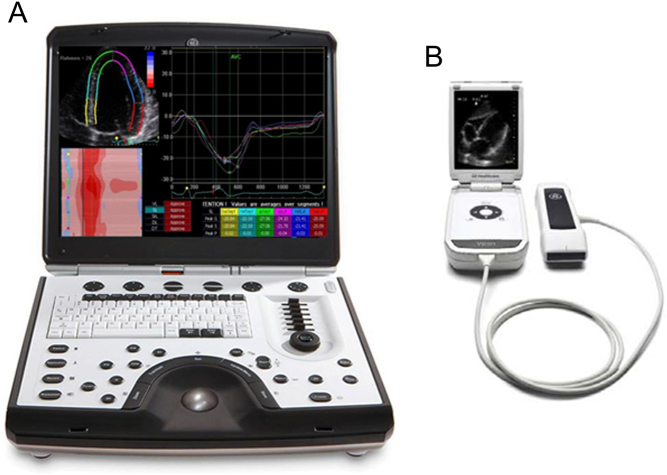
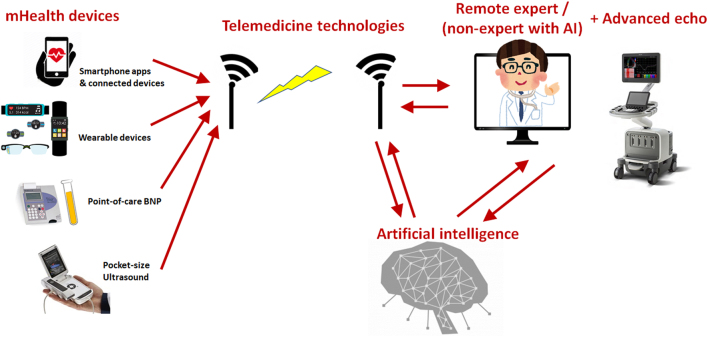
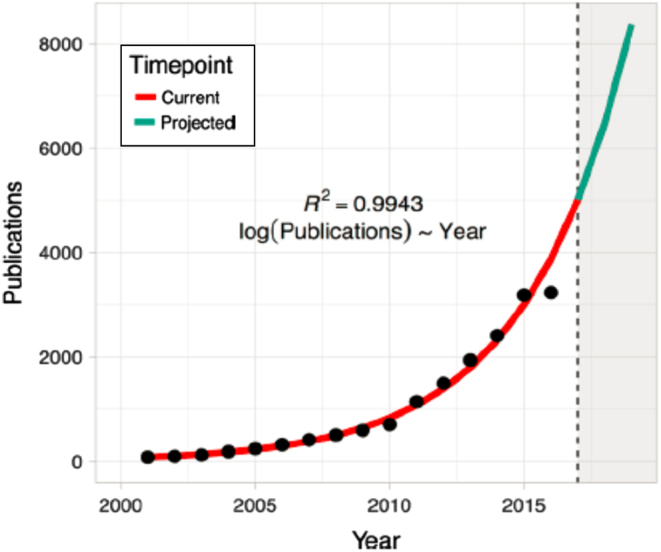
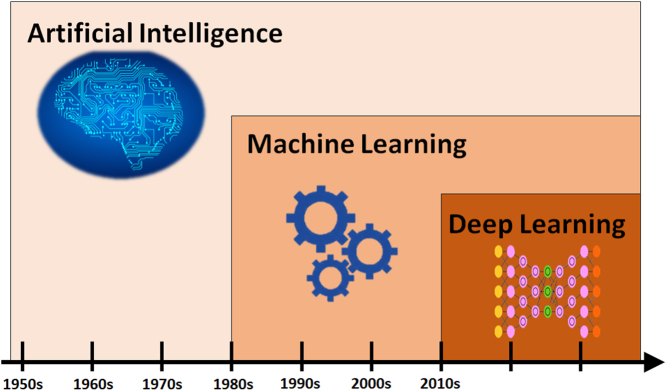
Verification
Claims the paper makes
The claims and statistics of this paper haven’t been checked yet.
Run the check — free, no account needed. It reads the open-access text and checks the sources it cites.
Claims other papers make about this one
Each is checked against this paper’s own text: does it say what the citing paper says it does?
In the citing paper
“AI has been put in application in various domains of healthcare [83–87] which includes cancer research [88], cardiology [89], diabetes [90], mental health [91], identification of prognosis [92], identification of Alzheimer's disease [93], identification of difference in the clinical groups [94], identification of cardiovascular disease [39], stroke-related studies [95], etc.”
From Applications of Artificial Intelligence and Big Data Analytics in m-Health: A Healthcare System Perspective (2020) · cites this paper as [87]
Self-check
Percentages, sums and reported differences re-computed from the paper’s own numbers.
The self-check needs the paper’s full text.
Citations
Cites
2013 ACC/AHA Guideline on the Assessment of Cardiovascular Risk
Goff, D. C., Lloyd-Jones, D. M., Bennett, G., Coady, S., D’Agostino, R. B., Gibbons, R., Greenland, P., Lackland, D. T., Levy, D., O’Donnell, C. J., et al. (2014) · Journal of the American College of Cardiology · doi:10.1016/j.jacc.2013.11.005 · Cited by 4,945
Mor‐Avi, V., Lang, R. M., Badano, L. P., Bëlohlávek, M., Cardim, N. M., Dérumeaux, G., Galderisi, M., Marwick, T. H., Nagueh, S. F., Sengupta, P. P., et al. (2011) · Journal of the American Society of Echocardiography · doi:10.1016/j.echo.2011.01.015 · Cited by 1,258
Self-citationArtificial intelligence in cardiology
Johnson, K. W., Torres Soto, J., Glicksberg, B. S., Shameer, K., Miotto, R., Ali, M., Ashley, E., & Dudley, J. T. (2018) · Journal of the American College of Cardiology · doi:10.1016/j.jacc.2018.03.521 · Cited by 1,202
Artificial Intelligence in Precision Cardiovascular Medicine
Krittanawong, C., Zhang, H., Wang, Z., Aydar, M., & Kitai, T. (2017) · Journal of the American College of Cardiology · doi:10.1016/j.jacc.2017.03.571 · Cited by 1,126
Zhang, J., Gajjala, S., Agrawal, P., Tison, G. H., Hallock, L. A., Beussink-Nelson, L., Lassen, M. H., Fan, E., Aras, M. A., Jordan, C., et al. (2018) · Circulation · doi:10.1161/circulationaha.118.034338 · Cited by 1,006
Tuckson, R. V., Edmunds, M., & Hodgkins, M. L. (2017) · New England Journal of Medicine · doi:10.1056/nejmsr1503323 · Cited by 907
Automated cardiovascular magnetic resonance image analysis with fully convolutional networks
Bai, W., Sinclair, M., Tarroni, G., Oktay, O., Rajchl, M., Vaillant, G., Lee, A. M., Aung, N., Lukaschuk, E., Sanghvi, M. M., et al. (2018) · Journal of Cardiovascular Magnetic Resonance · doi:10.1186/s12968-018-0471-x · Cited by 773
(1984) · European Heart Journal · doi:10.1093/oxfordjournals.eurheartj.a061650 · Cited by 664
Churpek, M. M., Yuen, T. C., Winslow, C., Meltzer, D. O., Kattan, M. W., & Edelson, D. P. (2016) · Critical Care Medicine · doi:10.1097/ccm.0000000000001571 · Cited by 638
Passive Detection of Atrial Fibrillation Using a Commercially Available Smartwatch
Tison, G. H., Sanchez, J. M., Ballinger, B., Singh, A., Olgin, J. E., Pletcher, M. J., Vittinghoff, E., Lee, E. S., Fan, S. M., Gladstone, R. A., et al. (2018) · JAMA Cardiology · doi:10.1001/jamacardio.2018.0136 · Cited by 566
Research works printed but not linked: 2
- GE Healthcare. Vscan Extend datasheet. Chicago, IL, USA: General Electric Company, 2018. (available at: https://www.gehealthcare.com/-/media/fdbbc3f456914f5dbc3cc44cb866ffb5.pdf)
- DeepMind. AlphaGo. London, UK: DeepMind Technologies Limited, 2019. (available at: https://deepmind.com/research/alphago/)
Cited by
Sorted by citations
Déniz-García, A., Fabelo, H. A., Rodríguez-Almeida, A. J., Zamorano, G. B. Z., Castro-Fernández, M., Alberiche-Ruano, M. P., Solvoll, T. G., Granja, C., Schopf, T. R., Callicó, G. M., et al. (2023) · Journal of Medical Internet Research · doi:10.2196/44030 · Cited by 321
Aminizadeh, S., Heidari, A., Dehghan, M., Toumaj, S., Rezaei, M., Navimipour, N. J., Stroppa, F., & Ünal, M. (2024) · Artificial Intelligence in Medicine · doi:10.1016/j.artmed.2024.102779 · Cited by 254
khan, Z. F., & Alotaibi, S. R. (2020) · Journal of Healthcare Engineering · doi:10.1155/2020/8894694 · Cited by 235
Marey, A., Arjmand, P., alerab, A. D. S., Eslami, M. J., Saad, A. M., Sanchez, N., & Umair, M. (2024) · The Egyptian Journal of Radiology and Nuclear Medicine · doi:10.1186/s43055-024-01356-2 · Cited by 243
Artificial Intelligence: Practical Primer for Clinical Research in Cardiovascular Disease
Kagiyama, N., Shrestha, S., Farjo, P. D., & Sengupta, P. P. (2019) · Journal of the American Heart Association · doi:10.1161/jaha.119.012788 · Cited by 190
Self-citation
Metadata
- Authors
- Seetharam, K., Kagiyama, N., & Sengupta, P. P.
- Affiliations
- West Virginia University (US)
- Venue
- Echo Research & Practice
- Published
- 2019-06
- Volume
- 6
- Issue
- 2
- Pages
- R41-R52
- ISSN
- 2055-0456 (ISSN-L)
- 2055-0464
- PMC
- PMC6432977
- OpenAlex
- W2921183828
- Cited by
- 111
- References
- 65
- Citations by year
- 2026: 7 · 2025: 10 · 2024: 18 · 2023: 14 · 2022: 23 · 2021: 22 · 2020: 13 · 2019: 4
- FWCI
- 0.76
- Type
- journal article
- Language
- en
- Open access
- gold
- doi.org
- Locations
- Echo Research and Practice (publishedVersion, cc-by)
- Europe PMC (PubMed Central) (publishedVersion, cc-by-nc)
- PubMed Central (publishedVersion, cc-by-nc)
- PubMed (publishedVersion)
- The Research Repository @ WVU (West Virginia University) (submittedVersion, cc-by-nc)
- DOAJ (DOAJ: Directory of Open Access Journals) (submittedVersion)
- Topics
- Health Sciences › Medicine › Health Informatics › Artificial Intelligence in Healthcare and Education
- Health Sciences › Health Professions › Health Information Management › Artificial Intelligence in Healthcare
- Health Sciences › Medicine › Critical Care and Intensive Care Medicine › Ultrasound in Clinical Applications
- Keywords
- mobile health, telemedicine, artificial intelligence, echocardiography, cardiovascular imaging, handheld ultrasound, mobile application, wearable devices, deep learning, automated image analysis, machine learning, precision medicine
About these checks
Registry, retraction, Cites and statistics results are computed, not judged, with one exception: a printed reference that no index lists is read once by a model before it counts as a citation error. Claims are extracted by a model and kept only when their quote appears verbatim in the text; each cited source is then checked, with a model’s help, for whether it says what the claim relies on. Those verdicts can be wrong — read the claim’s quote and the cited source before relying on one.
Statistics and arithmetic are recomputed, not judged.
Confidence bands are shown only for fields calibrated on our annotated test set. None is calibrated yet, so no band is shown.
What counts as a claim ›How we measure confidence ›How we check this ›
Are you an author, or do you see a problem with this page? Request a review
