

The DOI matches its Crossref record; 36 of the 36 references it cites were found in a registry or an index.
USE OF CONSUMER WEARABLE DEVICES TO PROMOTE PHYSICAL ACTIVITY: A REVIEW OF HEALTH INTERVENTION STUDIES
Open accessAbstract
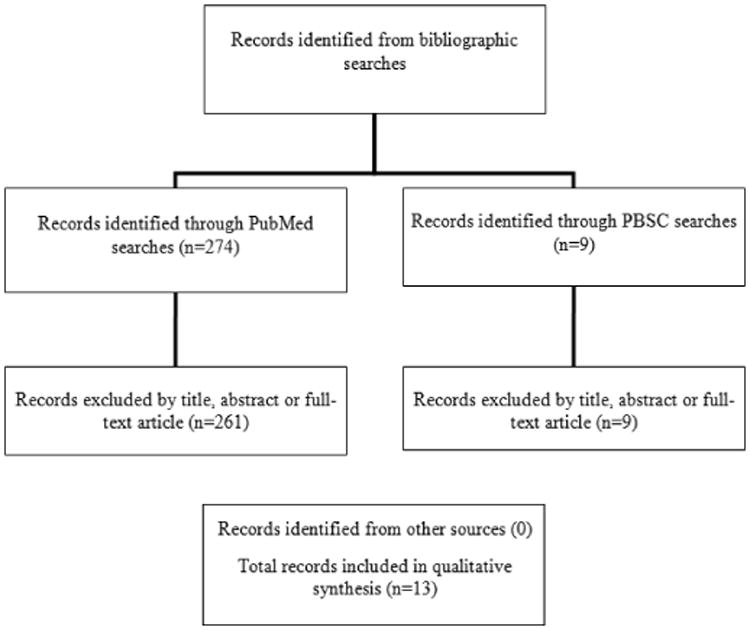
BACKGROUND: Although many wearable devices for monitoring and tracking physical activity are available to consumers, relatively few research studies have been conducted to determine their efficacy in promoting health. METHODS: In this article, data on the use of consumer wearable devices in promoting healthy behaviors are summarized based upon bibliographic searches in PubMed and Psychology and Behavioral Sciences Collection with relevant search terms through September 2016. RESULTS: A total of 274 articles were identified in the bibliographic searches. By screening abstracts or full-text articles, six pre/post test trials and seven randomized controlled trials were identified. In initial trials, consumer wearable devices have been shown to increase physical activity and help users lose weight. However, the number of studies completed to date is small and limited by small sample sizes, short study durations, and uncertain generalizability of the findings. CONCLUSIONS: Future studies should utilize randomized controlled trial research designs, larger sample sizes, and longer study periods to better establish the efficacy of wearable devices in promoting physical activity. Additional research is needed to determine the feasibility and effectiveness of wearable devices in promoting physical activity and weight loss in community settings including communities affected by health disparities. Studies focusing on children and adolescents are also needed.
Overview
The claims and statistics of this paper haven’t been checked yet.
Run the check — free, no account needed. It reads the open-access text and checks the sources it cites.
Integrity signals
Registry
Cites
Statistics
Figures
Verification
Claims the paper makes
The claims and statistics of this paper haven’t been checked yet.
Run the check — free, no account needed. It reads the open-access text and checks the sources it cites.
Claims other papers make about this one
Each is checked against this paper’s own text: does it say what the citing paper says it does?
The source backs part of the claim, not all of it — or backs it for a different population, condition or comparison.
In the citing paper
“However, these strategies are often resource-intensive and time-consuming, factors that limit long-term adherence and usually not feasible in routine clinical care [15].”
From Can consumer wearable activity tracker-based interventions improve physical activity and cardiometabolic health in patients with chronic diseases? A systematic review and meta-analysis of randomised controlled trials (2020) · cites this paper as [15]
Experimental — accuracy not yet measuredThe cited source says what the claim attributes to it.
In the citing paper
“In addition, conclusions are not based on randomised controlled trials [14, 22] and most of reviews did not (or partly) report a cardiometabolic risk profile [15, 19, 20, 23].”
The cited source says what the claim attributes to it.
In the citing paper
“In addition, these types of interventions are often labor and resource intensive [18].”
From Consumer-based wearable activity trackers increase physical activity participation: systematic review and meta-analysis (2019) · cites this paper as [18]
In the citing paper
“For generating insights with the wearables devices data, we deemed n = 150 as sufficient, as reported in the literature [49].”
Self-check
Percentages, sums and reported differences re-computed from the paper’s own numbers.
The self-check needs the paper’s full text.
Citations
Cites
A review of wearable sensors and systems with application in rehabilitation
Patel, S., Park, H., Bonato, P., Chan, L., & Rodgers, M. (2012) · Journal of NeuroEngineering and Rehabilitation · doi:10.1186/1743-0003-9-21 · Cited by 2,396
Systematic review of the validity and reliability of consumer-wearable activity trackers
Evenson, K. R., Goto, M. M., & Furberg, R. D. (2015) · International Journal of Behavioral Nutrition and Physical Activity · doi:10.1186/s12966-015-0314-1 · Cited by 1,232
Jakicic, J. M., Davis, K. K., Rogers, R. J., King, W. C., Marcus, M. D., Helsel, D., Rickman, A. D., Wahed, A. S., & Belle, S. H. (2016) · JAMA · doi:10.1001/jama.2016.12858 · Cited by 621
Johnson, N. B., Hayes, L., Brown, K., Hoo, E., & Ethier, K. A. (2014) · PubMed · Cited by 578
Randomized Trial of a Fitbit-Based Physical Activity Intervention for Women
Cadmus-Bertram, L. A., Marcus, B. H., Patterson, R. E., Parker, B. A., & Morey, B. L. (2015) · American Journal of Preventive Medicine · doi:10.1016/j.amepre.2015.01.020 · Cited by 469
Fitbit®: An accurate and reliable device for wireless physical activity tracking
Diaz, K. M., Krupka, D. J., Chang, M. J., Peacock, J., Ma, Y., Goldsmith, J., Schwartz, J. E., & Davidson, K. W. (2015) · International Journal of Cardiology · doi:10.1016/j.ijcard.2015.03.038 · Cited by 405
Patient-centered activity monitoring in the self-management of chronic health conditions
Chiauzzi, E. J., Rodarte, C., & DasMahapatra, P. (2015) · BMC Medicine · doi:10.1186/s12916-015-0319-2 · Cited by 342
Wang, J. B., Cadmus-Bertram, L. A., Natarajan, L., White, M. M., Madanat, H., Nichols, J. F., Ayala, G. X., & Pierce, J. P. (2015) · Telemedicine and e-Health · doi:10.1089/tmj.2014.0176 · Cited by 308
Martin, S. S., Feldman, D. I., Blumenthal, R. S., Jones, S. R., Post, W. S., McKibben, R. A., Michos, E. D., Ndumele, C. E., Ratchford, E. V., Coresh, J., et al. (2015) · Journal of the American Heart Association · doi:10.1161/jaha.115.002239 · Cited by 267
Molecular Pathways: Adiponectin and Leptin Signaling in Cancer
VanSaun, M. N. (2013) · Clinical Cancer Research · doi:10.1158/1078-0432.ccr-12-0930 · Cited by 253
Cited by
Sorted by citations
Items 101–137 of 137
Kim, S.-W., Choi, J.-H., Sun, Y., Seo, J., Jung, W., Park, H., Kim, J., & Lim, K. (2022) · Physical Activity and Nutrition · doi:10.20463/pan.2022.0016 · Cited by 4
Utilizing large-scale human mobility data to identify determinants of physical activity
Ioannou, G., Pallis, G., Dikaiakos, M. D., & Nicolaides, C. (2025) · Scientific Reports · doi:10.1038/s41598-025-87017-4 · Cited by 5
Landscape of Big Medical Data: A Pragmatic Survey on Prioritized Tasks
Zhang, Z., Gao, W., Zhang, F., Huang, Y., Dai, S., Fan, F., Zhan, J., Du, M., Yin, S., Xiong, L., et al. (2019) · IEEE Access · doi:10.1109/access.2019.2891948 · Cited by 5
Chapter 9: mHealth for Better Quality of Life, Healthier Lifestyles, and More Meaningful Lives
Narasimhadevara, A., & Rambhatla, R. (2020) · Springer eBooks · doi:10.1007/978-3-030-46355-7_14 · Cited by 4
Leung, W. C. W., Shi, L., & Jung, J. (2022) · Journal of Physical Activity and Health · doi:10.1123/jpah.2022-0155 · Cited by 4
Tan, C. Y. H., Koh, J. Y. J., Ang, W. W., Tan, X. M., Koh, S. W. C., Lin, W., Lee, J. W. K., & Chew, H. S. J. (2025) · International Journal of Medical Informatics · doi:10.1016/j.ijmedinf.2025.106133 · Cited by 5
Валерьевич, Л. В., Semenov, V. M., Volkova, E., Chernakov, D., Ahn, J., & Kim, J. Y. (2023) · Annual International Conference of the IEEE Engineering in Medicine and Biology Society (EMBC) · doi:10.1109/embc40787.2023.10341173 · Cited by 3
Rockette‐Wagner, B., & Aggarwal, R. (2024) · Rheumatology · doi:10.1093/rheumatology/keae004 · Cited by 4
Leskinen, T., Suorsa, K., HEINONEN, I. H. A., Löyttyniemi, E., Pentti, J., Vahtera, J., & Stenholm, S. (2021) · Frontiers in Aging · doi:10.3389/fragi.2021.757080 · Cited by 3
Effect of Group Contingency Type on Walking: Comparisons of Effectiveness and Cost Efficiency
Kim, H., Lee, C., Lee, S., & Chung, K. (2021) · Frontiers in Psychology · doi:10.3389/fpsyg.2021.655663 · Cited by 5
Smart Technology and Child Development in the Fourth Industrial Revolution Era
Kim, Y., Song, H., & Jeong, Y. (2019) · 한국심리학회지: 일반 · doi:10.22257/kjp.2019.12.38.4.487 · Cited by 3
Investigating Opportunities to Support Kids' Agency and Well-being: A Review of Kids' WearablesPreprint
Zehrung, R., Huang, L. C., Lee, B., & Choe, E. K. (2021) · arXiv (Cornell University) · doi:10.48550/arxiv.2104.05979 · Cited by 3
“When used as fitness interventions, wearables have been shown to promote physical activity and weight loss [18], though that is not always the case [39].”
MethodTrinh, L., Rhodes, R. E., Alibhai, S. M. H., Campbell, K. L., Langelier, D. M., Chang, E. B., Colella, T. J. F., Chan, B., Mina, D. S., OH, P. I., et al. (2025) · BMC Cancer · doi:10.1186/s12885-025-13904-8 · Cited by 2
“These wearables have been incorporated into several interventions as an intervention tool to increase PA as they provide effective self-monitoring for PA intensity [53, 54].”
Tiralla, G., Tamulevicius, N., Martinasek, M. P., & Leung, W. C. W. (2024) · American Journal of Health Promotion · doi:10.1177/08901171241256712 · Cited by 2
“30-32 However, there are limited studies investigating the ef fi cacy of physical activity interventions on different populations such as e-cigarette users and wearable device users, calling for more focused interventions on these groups.”
Brown, T., Muls, A., Pawlyn, C., Boyd, K. D., & Cruickshank, S. (2024) · Clinical Hematology International · doi:10.46989/001c.121406 · Cited by 2
Kalman Filter Models for the Prediction of Individualised Thermal Work Strain
Guo, J., Chen, Y., Fan, W. P., Lee, S. H. M., Ong, J., Tan, P. L., Law, L. Y. L., LEE, J. K. W., & Seng, K. (2018) · InTech eBooks · doi:10.5772/intechopen.71205 · Cited by 2
“HR and surface skin temperature (ST) [6].”
Kekere, V., Onyeaka, H., Fatoki, O., Olatunde, K., Enemuo, S., Asuzu, C., & Kesiena, O. (2020) · Journal of Physical Activity Research · doi:10.12691/jpar-5-2-2 · Cited by 2
Weisberg, A., Campelo, A. M., Bhaidani, T., & Katz, L. (2020) · Journal for the Measurement of Physical Behaviour · doi:10.1123/jmpb.2019-0050 · Cited by 2
“…wearable devices are able to assess PA outcomes, such as step count, energy expenditure (EE), and heart rate (HR), and so forth (Appelboom et al., 2014; Bunn, Navalta, Fountaine, & Reece, 2018; Cadmus-Bertram, 2017; de Arriba-Pérez, CaeiroRodríguez, & Santos-Gago, 2017; Stewart & Coughlin, 2016).”
BackgroundPhysical Activity Monitors in Myositis
Almackenzie, M., Aggarwal, A., Rockette‐Wagner, B., & Aggarwal, R. (2025) · Rheumatic Disease Clinics of North America · doi:10.1016/j.rdc.2025.07.011 · Cited by 1
Challenges and opportunities of psychological aging research
Ghisletta, P. (2025) · European Journal of Ageing · doi:10.1007/s10433-025-00891-9 · Cited by 1
“Yet, few (usually smaller scale and relatively short) studies have evaluated the use of wearable devices for health intervention (Coughlin and Stewart 2016).”
Development of Smart Gloves Prototype for Cyclists
Mohamad, M. R., & Hayedaud, A. (2023) · Journal of Medical Device Technology · doi:10.11113/jmeditec.v2n2.46 · Cited by 1
“Hence, it was considered as normal for the oxygen level to drop a little bit during doing activities but, in case if the blood oxygen level drops below the normal range, immediate medical assistance is required (Coughlin et al., 2016).”
BackgroundMuria, H. (2023) · Journal of Community Positive Practices · doi:10.35782/jcpp.2023.4.05 · Cited by 1
The Social Implications of Wearable Information Technologies
Sundrup, R. Z., Windeler, J. B., & Froehle, C. M. (2019) · ACM SIGCPR Conference on Computer Personnel Research (SIGCPR) · doi:10.1145/3322385.3322420 · Cited by 1
Lopes, V. P., & Sá, C. (2021) · Cuadernos de Psicología del Deporte · doi:10.6018/cpd.407181 · Cited by 2
Cooperation Strategies for the Amazon Marketplace
Knape, D. A. (2021) · Alexandria (UniSG) (University of St.Gallen) · Cited by 1
Lin, S. (2020) · DR-NTU (Nanyang Technological University) · doi:10.32657/10356/151433 · Cited by 1
Physical Activity Promotion and Coaching to Support Healthy Ageing
Manferdelli, G., Mastropietro, A., Denna, E., Kniestedt, I., Mauri, M., Civiello, M. T. L., Lukosch, S. G., Rizzo, G., & Porcelli, S. (2021) · Research for development · doi:10.1007/978-3-030-72663-8_9
Kapteyn, A., Kapteyn, A., & Darling, J. E. (2021) · Survey research methods · doi:10.18148/srm/2024.v18i3.8308 · Cited by 1
“Further, drawing a firm conclusion across prior studies has been hampered by heterogeneous findings, limited generalizability of findings due to use of convenience samples, small sample sizes, differences in study designs, use of various devices, and short study durations (Coughlin & Stewart, 2016).”
Bergamasco, M. (2020) · Lecture notes in morphogenesis · doi:10.1007/978-3-030-51324-5_24
Franssen, W. M. A. (2022) · Research Publications (Maastricht University) · doi:10.26481/dis.20221121wf · Cited by 1
Evaluating Physical Activity Levels
Camp, C. M. V., Helvey, C. I., & Washington, W. D. (2023) · Autism and child psychopathology series · doi:10.1007/978-3-031-19964-6_23
Motivation Prediction for Persuasive Intervention at Appropriate Timing to Promote Exercises
Yuasa, T., Harada, F., & Shimakawa, H. (2023) · Lecture notes in networks and systems · doi:10.1007/978-981-99-3091-3_52
Hemoglobin Concentration Measurements with the Reflectance Mode Photoplethysmography
Валерьевич, Л. В., Semenov, V. M., Volkova, E., Chernakov, D., Ahn, J., & Kim, J. Y. (2023) · Globecom · doi:10.1109/globecom54140.2023.10437978
Use of wearable technologies for physical activity promotion in older adults: A systematic review
Félix, J., Vale, A. F., Sá, C., Santos, R. S., Kontio, E., Pinheiro, A. R., & Sousa, A. S. P. (2026) · Ageing Research Reviews · doi:10.1016/j.arr.2026.103258 · Cited by 1
Lampe, E. W., Gorrell, S., Lee, A. R., Presseller, E. K., & Manasse, S. M. (2026) · Digital Health · doi:10.1177/20552076261476177
Exercise for Health: The Use of Digital Tools from Activity Tracking Through to Guided Delivery
Buist, B. D., Wright, K. E., Kramer, B., Borges, N., Petrofes, A. M., & Furzer, B. J. (2026) · Springer eBooks · doi:10.1007/978-3-032-32552-5_10
Quijote, J. K., Porter, N. R., Diego, G. J. S., Leones, M. H., Matunog, M. A., Pantaleon, C. B., Laviste, R. P., & Barbaso, L. V. (2025) · International Conference on Digital Technology in Education (ICDTE) · doi:10.1145/3796159.3796168
“Thearticle [6] also discusses the application of the wearable devices in the promotion of the physical activities.”
Metadata
- Authors
- Department of Clinical and Digital Health Sciences, C. O. A. H. S., Coughlin, S. S., & Stewart, J.
- Affiliations
- Augusta University (US)
- Corresponding author
- Coughlin, Steven S
- Venue
- Journal of Environment and Health Science
- Publisher
- Ommega Online Publishers
- Published
- 2016
- Volume
- 2
- Issue
- 6
- Pages
- 1-6
- ISSN
- 2378-6841 (ISSN-L)
- PMC
- PMC5395205
- OpenAlex
- W2583266938
- Cited by
- 137
- References
- 36
- Citations by year
- 2026: 3 · 2025: 10 · 2024: 4 · 2023: 20 · 2022: 21 · 2021: 23 · 2020: 25 · 2019: 17 · 2018: 11 · 2017: 3
- FWCI
- 8.32
- Type
- journal article
- Language
- en
- Open access
- diamond
- doi.org
- Licence
- cc-by
- Locations
- JOURNAL OF ENVIRONMENT AND HEALTH SCIENCE (publishedVersion, cc-by)
- PubMed (publishedVersion)
- PubMed Central (acceptedVersion, cc-by)
- Funders
- National Heart, Lung, and Blood Institute (R29HL044904)
- Topics
- Health Sciences › Medicine › Public Health, Environmental and Occupational Health › Physical Activity and Health
- Health Sciences › Health Professions › General Health Professions › Mobile Health and mHealth Applications
- Physical Sciences › Computer Science › Computer Vision and Pattern Recognition › Context-Aware Activity Recognition Systems
- Keywords
- consumer wearable devices, physical activity promotion, physical activity monitoring, weight loss, health interventions, health behavior change, health disparities, children and adolescents
About these checks
Registry, retraction, Cites and statistics results are computed, not judged, with one exception: a printed reference that no index lists is read once by a model before it counts as a citation error. Claims are extracted by a model and kept only when their quote appears verbatim in the text; each cited source is then checked, with a model’s help, for whether it says what the claim relies on. Those verdicts can be wrong — read the claim’s quote and the cited source before relying on one.
Statistics and arithmetic are recomputed, not judged.
Confidence bands are shown only for fields calibrated on our annotated test set. None is calibrated yet, so no band is shown.
What counts as a claim ›How we measure confidence ›How we check this ›
Are you an author, or do you see a problem with this page? Request a review
