

The DOI matches its Crossref record; 36 of the 36 references it cites were found in a registry or an index.
USE OF CONSUMER WEARABLE DEVICES TO PROMOTE PHYSICAL ACTIVITY: A REVIEW OF HEALTH INTERVENTION STUDIES
Open accessAbstract
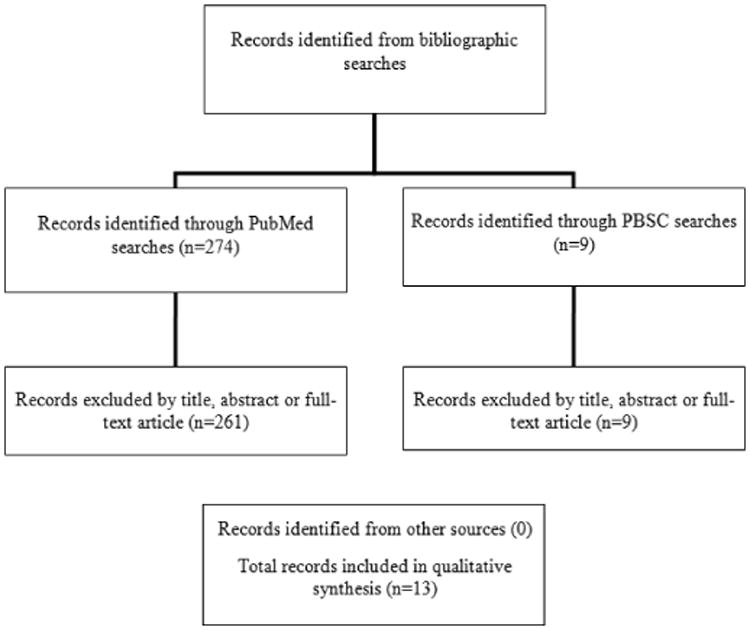
BACKGROUND: Although many wearable devices for monitoring and tracking physical activity are available to consumers, relatively few research studies have been conducted to determine their efficacy in promoting health. METHODS: In this article, data on the use of consumer wearable devices in promoting healthy behaviors are summarized based upon bibliographic searches in PubMed and Psychology and Behavioral Sciences Collection with relevant search terms through September 2016. RESULTS: A total of 274 articles were identified in the bibliographic searches. By screening abstracts or full-text articles, six pre/post test trials and seven randomized controlled trials were identified. In initial trials, consumer wearable devices have been shown to increase physical activity and help users lose weight. However, the number of studies completed to date is small and limited by small sample sizes, short study durations, and uncertain generalizability of the findings. CONCLUSIONS: Future studies should utilize randomized controlled trial research designs, larger sample sizes, and longer study periods to better establish the efficacy of wearable devices in promoting physical activity. Additional research is needed to determine the feasibility and effectiveness of wearable devices in promoting physical activity and weight loss in community settings including communities affected by health disparities. Studies focusing on children and adolescents are also needed.
Overview
The claims and statistics of this paper haven’t been checked yet.
Run the check — free, no account needed. It reads the open-access text and checks the sources it cites.
Integrity signals
Registry
Cites
Statistics
Figures
Verification
Claims the paper makes
The claims and statistics of this paper haven’t been checked yet.
Run the check — free, no account needed. It reads the open-access text and checks the sources it cites.
Claims other papers make about this one
Each is checked against this paper’s own text: does it say what the citing paper says it does?
The source backs part of the claim, not all of it — or backs it for a different population, condition or comparison.
In the citing paper
“However, these strategies are often resource-intensive and time-consuming, factors that limit long-term adherence and usually not feasible in routine clinical care [15].”
From Can consumer wearable activity tracker-based interventions improve physical activity and cardiometabolic health in patients with chronic diseases? A systematic review and meta-analysis of randomised controlled trials (2020) · cites this paper as [15]
Experimental — accuracy not yet measuredThe cited source says what the claim attributes to it.
In the citing paper
“In addition, conclusions are not based on randomised controlled trials [14, 22] and most of reviews did not (or partly) report a cardiometabolic risk profile [15, 19, 20, 23].”
The cited source says what the claim attributes to it.
In the citing paper
“In addition, these types of interventions are often labor and resource intensive [18].”
From Consumer-based wearable activity trackers increase physical activity participation: systematic review and meta-analysis (2019) · cites this paper as [18]
In the citing paper
“For generating insights with the wearables devices data, we deemed n = 150 as sufficient, as reported in the literature [49].”
Self-check
Percentages, sums and reported differences re-computed from the paper’s own numbers.
The self-check needs the paper’s full text.
Citations
Cites
A review of wearable sensors and systems with application in rehabilitation
Patel, S., Park, H., Bonato, P., Chan, L., & Rodgers, M. (2012) · Journal of NeuroEngineering and Rehabilitation · doi:10.1186/1743-0003-9-21 · Cited by 2,396
Systematic review of the validity and reliability of consumer-wearable activity trackers
Evenson, K. R., Goto, M. M., & Furberg, R. D. (2015) · International Journal of Behavioral Nutrition and Physical Activity · doi:10.1186/s12966-015-0314-1 · Cited by 1,232
Jakicic, J. M., Davis, K. K., Rogers, R. J., King, W. C., Marcus, M. D., Helsel, D., Rickman, A. D., Wahed, A. S., & Belle, S. H. (2016) · JAMA · doi:10.1001/jama.2016.12858 · Cited by 621
Johnson, N. B., Hayes, L., Brown, K., Hoo, E., & Ethier, K. A. (2014) · PubMed · Cited by 578
Randomized Trial of a Fitbit-Based Physical Activity Intervention for Women
Cadmus-Bertram, L. A., Marcus, B. H., Patterson, R. E., Parker, B. A., & Morey, B. L. (2015) · American Journal of Preventive Medicine · doi:10.1016/j.amepre.2015.01.020 · Cited by 469
Fitbit®: An accurate and reliable device for wireless physical activity tracking
Diaz, K. M., Krupka, D. J., Chang, M. J., Peacock, J., Ma, Y., Goldsmith, J., Schwartz, J. E., & Davidson, K. W. (2015) · International Journal of Cardiology · doi:10.1016/j.ijcard.2015.03.038 · Cited by 405
Patient-centered activity monitoring in the self-management of chronic health conditions
Chiauzzi, E. J., Rodarte, C., & DasMahapatra, P. (2015) · BMC Medicine · doi:10.1186/s12916-015-0319-2 · Cited by 342
Wang, J. B., Cadmus-Bertram, L. A., Natarajan, L., White, M. M., Madanat, H., Nichols, J. F., Ayala, G. X., & Pierce, J. P. (2015) · Telemedicine and e-Health · doi:10.1089/tmj.2014.0176 · Cited by 308
Martin, S. S., Feldman, D. I., Blumenthal, R. S., Jones, S. R., Post, W. S., McKibben, R. A., Michos, E. D., Ndumele, C. E., Ratchford, E. V., Coresh, J., et al. (2015) · Journal of the American Heart Association · doi:10.1161/jaha.115.002239 · Cited by 267
Molecular Pathways: Adiponectin and Leptin Signaling in Cancer
VanSaun, M. N. (2013) · Clinical Cancer Research · doi:10.1158/1078-0432.ccr-12-0930 · Cited by 253
Cadmus‐Bertram, L., Marcus, B. H., Patterson, R. E., Parker, B. A., & Morey, B. L. (2015) · JMIR mhealth and uhealth · doi:10.2196/mhealth.4229 · Cited by 207
Adam Noah, J., Spierer, D. K., Gu, J., & Bronner, S. (2013) · Journal of Medical Engineering & Technology · doi:10.3109/03091902.2013.831135 · Cited by 202
Cook, D. J., Thompson, J. E., Prinsen, S. K., Dearani, J. A., & Deschamps, C. C. (2013) · The Annals of Thoracic Surgery · doi:10.1016/j.athoracsur.2013.05.092 · Cited by 193
Choi, J. W., Lee, J. H., Vittinghoff, E., & Fukuoka, Y. (2015) · Maternal and Child Health Journal · doi:10.1007/s10995-015-1895-7 · Cited by 182
Desired Features of Smartphone Applications Promoting Physical Activity
Rabin, C., & Bock, B. C. (2011) · Telemedicine Journal and e-Health · doi:10.1089/tmj.2011.0055 · Cited by 153
A review of wearable sensors and systems with application in rehabilitation
Patel, S., Park, H., Bonato, P., Chan, L. E., & Rodgers, M. M. (2011) · DSpace@MIT (Massachusetts Institute of Technology) · Cited by 148
Wearable devices and smartphones for activity tracking among people with serious mental illness
Naslund, J. A., Aschbrenner, K. A., & Bartels, S. J. (2016) · Mental health and physical activity · doi:10.1016/j.mhpa.2016.02.001 · Cited by 139
The Response of the US Centers for Disease Control and Prevention to the Obesity Epidemic
Dietz, W. H. (2015) · Annual Review of Public Health · doi:10.1146/annurev-publhealth-031914-122415 · Cited by 124
Wearable Systems for Monitoring Mobility-Related Activities in Chronic Disease: A Systematic Review
Allet, L., Knols, R. H., Shirato, K., & de Bruin, E. D. (2010) · Sensors · doi:10.3390/s101009026 · Cited by 118
Internet-based contingency management increases walking in sedentary adults
Kurti, A. N., & Dallery, J. (2013) · Journal of Applied Behavior Analysis · doi:10.1002/jaba.58 · Cited by 114
Chung, A. E., Skinner, A. C., Hasty, S. E., & Perrin, E. M. (2016) · Clinical Pediatrics · doi:10.1177/0009922816653385 · Cited by 106
Mental health and physical activity.
Arent, S. M., Rogers, T. J., & Landers, D. M. (2001) · Cited by 104
Ashe, M. C., Winters, M., Hoppmann, C. A., Dawes, M. G., Gardiner, P. A., Giangregorio, L. M., Madden, K. M., McAllister, M. M., Wong, G., Puyat, J. H., et al. (2015) · Pilot and Feasibility Studies · doi:10.1186/2055-5784-1-4 · Cited by 103
Quintiliani, L. M., Mann, D. M., Puputti, M., Quinn, E. K., & Bowen, D. J. (2016) · JMIR Cancer · doi:10.2196/cancer.5305 · Cited by 100
Technology- and Phone-Based Weight Loss Intervention
Hartman, S. J., Nelson, S. H., Cadmus-Bertram, L. A., Patterson, R. E., Parker, B. A., & Pierce, J. P. (2016) · American Journal of Preventive Medicine · doi:10.1016/j.amepre.2016.06.024 · Cited by 86
Washington, W. D., Banna, K. M., & Gibson, A. L. (2014) · Journal of Applied Behavior Analysis · doi:10.1002/jaba.119 · Cited by 85
Increasing physical activity of children during school recess
Hayes, L. B., & Camp, C. M. V. (2015) · Journal of Applied Behavior Analysis · doi:10.1002/jaba.222 · Cited by 75
Mobile and Wearable Device Features that Matter in Promoting Physical Activity
Wang, J. B., Cataldo, J. K., Ayala, G. X., Natarajan, L., Cadmus‐Bertram, L., White, M. M., Madanat, H. N., Nichols, J. F., & Pierce, J. P. (2016) · Journal of Mobile Technology in Medicine · doi:10.7309/jmtm.5.2.2 · Cited by 73
Jakicic, J. M., Davis, K. K., Rogers, R. J., King, W. C., Marcus, M. D., Helsel, D. L., Rickman, A. D., Wahed, A. S., & Belle, S. H. (2017) · Obstetrical & Gynecological Survey · doi:10.1097/01.ogx.0000511086.69375.3b · Cited by 52
Yingling, L., Brooks, A. T., Wallen, G. R., Peters-Lawrence, M. H., McClurkin, M., Cooper-McCann, R., Wiley, K. L., Mitchell, V. M., Saygbe, J. N., Johnson, T. D., et al. (2016) · JMIR mhealth and uhealth · doi:10.2196/mhealth.4489 · Cited by 47
Activity Monitoring in Chronic Obstructive Pulmonary Disease
Benzo, R. (2009) · Journal of Cardiopulmonary Rehabilitation and Prevention · doi:10.1097/hcr.0b013e3181be7a3c · Cited by 41
Jakicic, J. M., Davis, K. K., Rogers, R. J., King, W. C., Marcus, M. D., Helsel, D. L., Rickman, A. D., Wahed, A. S., & Belle, S. H. (2017) · Obstetrical & Gynecological Survey · doi:10.1097/01.ogx.0000512372.67520.49 · Cited by 40
Hartman, S. J., Natarajan, L., Palmer, B. W., Parker, B. A., Patterson, R. E., & Sears, D. D. (2015) · Contemporary Clinical Trials · doi:10.1016/j.cct.2015.09.021 · Cited by 38
Thompson, H. J., SEDLACEK, S. M., Paul, D., Wolfe, P., McGinley, J. N., Playdon, M. C., Daeninck, E. A., Bartels, S. N., & Wisthoff, M. R. (2012) · Breast Cancer Research · doi:10.1186/bcr3082 · Cited by 32
Jordan, C., & Klepsa, A. (2015) · Journal of Clinical Oncology · doi:10.1200/jco.2015.33.28_suppl.91 · Cited by 7
Bade, B. C., & Nietert, S. (2015) · Furman University Scholar Exchange (Furman University) · Cited by 4
Cited by
Sorted by citations
Brickwood, K.-J., Watson, G., O'Brien, J., & Williams, A. D. (2019) · JMIR mHealth and uHealth · doi:10.2196/11819 · Cited by 689
“In addition, these types of interventions are often labor and resource intensive [18].”
Shin, G., Jarrahi, M. H., Fei, Y., Karami, A., Gafinowitz, N., Byun, A., & Lu, X. (2019) · Journal of Biomedical Informatics · doi:10.1016/j.jbi.2019.103153 · Cited by 326
Sember, V., Meh, K., Sorić, M., Starc, G., Rocha, P. M., & Jurak, G. (2020) · International Journal of Environmental Research and Public Health · doi:10.3390/ijerph17197161 · Cited by 306
Validity of Wearable Activity Monitors during Cycling and Resistance Exercise
BOUDREAUX, B. D., HEBERT, E. P., HOLLANDER, D. B., WILLIAMS, B. M., CORMIER, C. L., NAQUIN, M. R., GILLAN, W. W., GUSEW, E. E., & KRAEMER, R. R. (2018) · Medicine & Science in Sports & Exercise · doi:10.1249/mss.0000000000001471 · Cited by 205
“In a review by Coughlin and Stewart (4), it was revealed that wearable devices can be of benefit to users by increasing their physical activity levels and enhancing weight loss.”
BackgroundFranssen, W. M. A., Franssen, G. H. L. M., Spaas, J., Solmi, F., & Eijnde, B. O. (2020) · International Journal of Behavioral Nutrition and Physical Activity · doi:10.1186/s12966-020-00955-2 · Cited by 193
“In addition, conclusions are not based on randomised controlled trials [14, 22] and most of reviews did not (or partly) report a cardiometabolic risk profile [15, 19, 20, 23].”
Background
Metadata
- Authors
- Department of Clinical and Digital Health Sciences, C. O. A. H. S., Coughlin, S. S., & Stewart, J.
- Affiliations
- Augusta University (US)
- Corresponding author
- Coughlin, Steven S
- Venue
- Journal of Environment and Health Science
- Publisher
- Ommega Online Publishers
- Published
- 2016
- Volume
- 2
- Issue
- 6
- Pages
- 1-6
- ISSN
- 2378-6841 (ISSN-L)
- PMC
- PMC5395205
- OpenAlex
- W2583266938
- Cited by
- 137
- References
- 36
- Citations by year
- 2026: 3 · 2025: 10 · 2024: 4 · 2023: 20 · 2022: 21 · 2021: 23 · 2020: 25 · 2019: 17 · 2018: 11 · 2017: 3
- FWCI
- 8.32
- Type
- journal article
- Language
- en
- Open access
- diamond
- doi.org
- Licence
- cc-by
- Locations
- JOURNAL OF ENVIRONMENT AND HEALTH SCIENCE (publishedVersion, cc-by)
- PubMed (publishedVersion)
- PubMed Central (acceptedVersion, cc-by)
- Funders
- National Heart, Lung, and Blood Institute (R29HL044904)
- Topics
- Health Sciences › Medicine › Public Health, Environmental and Occupational Health › Physical Activity and Health
- Health Sciences › Health Professions › General Health Professions › Mobile Health and mHealth Applications
- Physical Sciences › Computer Science › Computer Vision and Pattern Recognition › Context-Aware Activity Recognition Systems
- Keywords
- consumer wearable devices, physical activity promotion, physical activity monitoring, weight loss, health interventions, health behavior change, health disparities, children and adolescents
About these checks
Registry, retraction, Cites and statistics results are computed, not judged, with one exception: a printed reference that no index lists is read once by a model before it counts as a citation error. Claims are extracted by a model and kept only when their quote appears verbatim in the text; each cited source is then checked, with a model’s help, for whether it says what the claim relies on. Those verdicts can be wrong — read the claim’s quote and the cited source before relying on one.
Statistics and arithmetic are recomputed, not judged.
Confidence bands are shown only for fields calibrated on our annotated test set. None is calibrated yet, so no band is shown.
What counts as a claim ›How we measure confidence ›How we check this ›
Are you an author, or do you see a problem with this page? Request a review
