

Prevalence of Autism Spectrum Disorder Among Children Aged 8 Years — Autism and Developmental Disabilities Monitoring Network, 11 Sites, United States, 2014
Open accessThe DOI matches its Crossref record; 37 of the 37 references it cites were found in a registry or an index.
Abstract
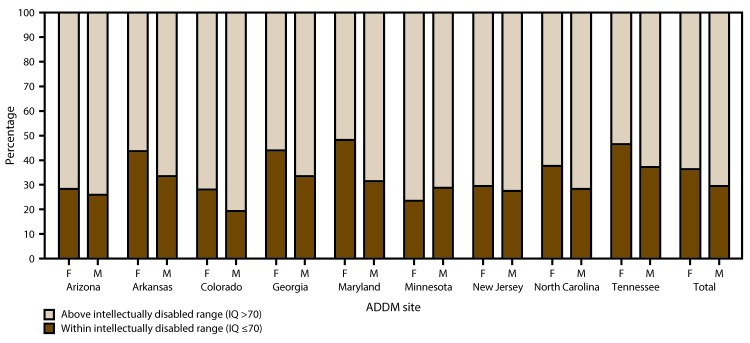
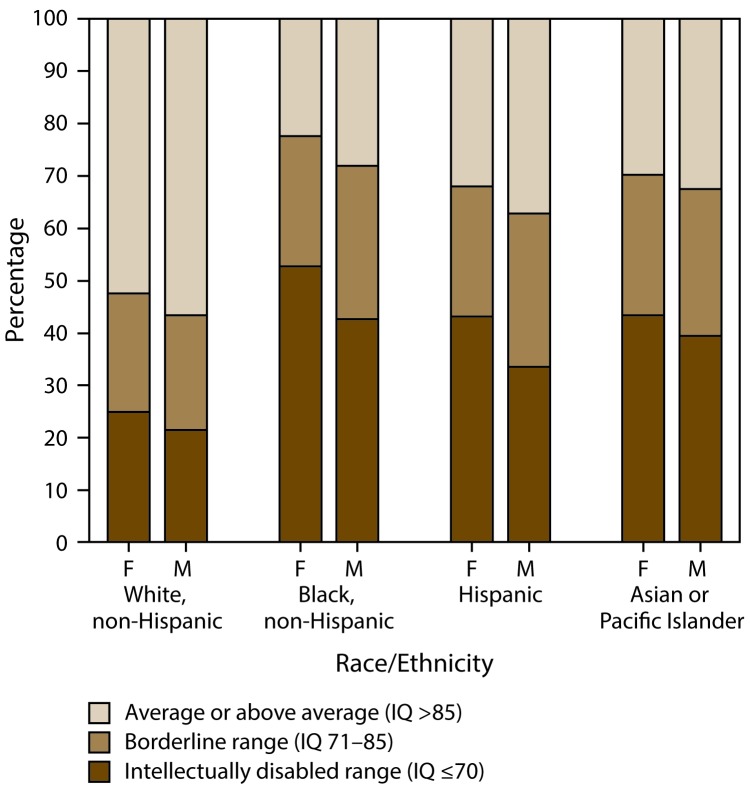
PROBLEM/CONDITION: Autism spectrum disorder (ASD). PERIOD COVERED: 2014. DESCRIPTION OF SYSTEM: The Autism and Developmental Disabilities Monitoring (ADDM) Network is an active surveillance system that provides estimates of the prevalence of autism spectrum disorder (ASD) among children aged 8 years whose parents or guardians reside within 11 ADDM sites in the United States (Arizona, Arkansas, Colorado, Georgia, Maryland, Minnesota, Missouri, New Jersey, North Carolina, Tennessee, and Wisconsin). ADDM surveillance is conducted in two phases. The first phase involves review and abstraction of comprehensive evaluations that were completed by professional service providers in the community. Staff completing record review and abstraction receive extensive training and supervision and are evaluated according to strict reliability standards to certify effective initial training, identify ongoing training needs, and ensure adherence to the prescribed methodology. Record review and abstraction occurs in a variety of data sources ranging from general pediatric health clinics to specialized programs serving children with developmental disabilities. In addition, most of the ADDM sites also review records for children who have received special education services in public schools. In the second phase of the study, all abstracted information is reviewed systematically by experienced clinicians to determine ASD case status. A child is considered to meet the surveillance case definition for ASD if he or she displays behaviors, as described on one or more comprehensive evaluations completed by community-based professional providers, consistent with the Diagnostic and Statistical Manual of Mental Disorders, Fourth Edition, Text Revision (DSM-IV-TR) diagnostic criteria for autistic disorder; pervasive developmental disorder-not otherwise specified (PDD-NOS, including atypical autism); or Asperger disorder. This report provides updated ASD prevalence estimates for children aged 8 years during the 2014 surveillance year, on the basis of DSM-IV-TR criteria, and describes characteristics of the population of children with ASD. In 2013, the American Psychiatric Association published the Diagnostic and Statistical Manual of Mental Disorders, Fifth Edition (DSM-5), which made considerable changes to ASD diagnostic criteria. The change in ASD diagnostic criteria might influence ADDM ASD prevalence estimates; therefore, most (85%) of the records used to determine prevalence estimates based on DSM-IV-TR criteria underwent additional review under a newly operationalized surveillance case definition for ASD consistent with the DSM-5 diagnostic criteria. Children meeting this new surveillance case definition could qualify on the basis of one or both of the following criteria, as documented in abstracted comprehensive evaluations: 1) behaviors consistent with the DSM-5 diagnostic features; and/or 2) an ASD diagnosis, whether based on DSM-IV-TR or DSM-5 diagnostic criteria. Stratified comparisons of the number of children meeting either of these two case definitions also are reported. RESULTS: For 2014, the overall prevalence of ASD among the 11 ADDM sites was 16.8 per 1,000 (one in 59) children aged 8 years. Overall ASD prevalence estimates varied among sites, from 13.1-29.3 per 1,000 children aged 8 years. ASD prevalence estimates also varied by sex and race/ethnicity. Males were four times more likely than females to be identified with ASD. Prevalence estimates were higher for non-Hispanic white (henceforth, white) children compared with non-Hispanic black (henceforth, black) children, and both groups were more likely to be identified with ASD compared with Hispanic children. Among the nine sites with sufficient data on intellectual ability, 31% of children with ASD were classified in the range of intellectual disability (intelligence quotient [IQ] <70), 25% were in the borderline range (IQ 71-85), and 44% had IQ scores in the average to above average range (i.e., IQ >85). The distribution of intellectual ability varied by sex and race/ethnicity. Although mention of developmental concerns by age 36 months was documented for 85% of children with ASD, only 42% had a comprehensive evaluation on record by age 36 months. The median age of earliest known ASD diagnosis was 52 months and did not differ significantly by sex or race/ethnicity. For the targeted comparison of DSM-IV-TR and DSM-5 results, the number and characteristics of children meeting the newly operationalized DSM-5 case definition for ASD were similar to those meeting the DSM-IV-TR case definition, with DSM-IV-TR case counts exceeding DSM-5 counts by less than 5% and approximately 86% overlap between the two case definitions (kappa = 0.85). INTERPRETATION: Findings from the ADDM Network, on the basis of 2014 data reported from 11 sites, provide updated population-based estimates of the prevalence of ASD among children aged 8 years in multiple communities in the United States. T
Overview
The claims and statistics of this paper haven’t been checked yet.
Free: it reads the open-access text and checks the first 5 claims that cite a source we can check. Create a free account to check every claim.
Integrity signals
Registry
Cites
Statistics
Figures
Verification
Claims the paper makes
The claims and statistics of this paper haven’t been checked yet.
Free: it reads the open-access text and checks the first 5 claims that cite a source we can check. Create a free account to check every claim.
Claims other papers make about this one
Each is checked against this paper’s own text: does it say what the citing paper says it does?
The source backs part of the claim, not all of it — or backs it for a different population, condition or comparison.
In the citing paper
“The U.S. reports a consistent pattern of increased ASD prevalence among higher socioeconomic status (SES) families (Baio et al. 2018; Durkin et al. 2010, 2017; Maenner et al. 2020; Pedersen et al. 2012), while European countries report increased prevalence among lower SES families (Delobel-Ayoub et al. 2015; Emerson 2012; Rai et al. 2012).”
From The Diagnosis of Autism: From Kanner to DSM-III to DSM-5 and Beyond (2021) · cites this paper as Baio et al. 2018
Experimental — accuracy not yet measuredThe source backs part of the claim, not all of it — or backs it for a different population, condition or comparison.
In the citing paper
“the mean patient age at ASD detection is several years later, generally between 3 and 4 years of age.1”
From Evaluation of the Diagnostic Stability of the Early Autism Spectrum Disorder Phenotype in the General Population Starting at 12 Months (2019) · cites this paper as [1]
Experimental — accuracy not yet measuredThe source backs part of the claim, not all of it — or backs it for a different population, condition or comparison.
In the citing paper
“Studies applied prospectively that compare DSM-IV with DSM-5 criteria reported that the latest revision narrowed eligibility for an autism spectrum diagnosis by between 4% [29] and more than 10% among children”
From Lobbying Autism's Diagnostic Revision in the DSM-5 (2020) · cites this paper as [29]
Experimental — accuracy not yet measuredThe cited source says what the claim attributes to it.
In the citing paper
“Racial differences also impact clinical presentation in the United States; a higher proportion of blacks diagnosed with autism were classified in the range of ID compared with Hispanic and white children (Baio et al., 2018).”
From Global prevalence of autism: A systematic review update (2022) · cites this paper as Baio et al., 2018
The check wasn’t confident either way, so it gives no verdict — never disputed.
In the citing paper
“Children with co-occurring intellectual disability are more likely to be identified earlier than children without intellectual disability, as indicated by an earlier median age at identification among this group (11) as well as the consistently higher proportion of children with intellectual disability at age 4 years (8,13) than at age 8 years (9,11,17).”
From Early Identification of Autism Spectrum Disorder Among Children Aged 4 Years — Autism and Developmental Disabilities Monitoring Network, 11 Sites, United States, 2018 (2021) · cites this paper as [17]
Experimental — accuracy not yet measured
5 more claims about this paper
Create a free account to see every claim other papers make about this one.
Self-check
Percentages, sums and reported differences re-computed from the paper’s own numbers.
The self-check needs the paper’s full text.
Citations
Cites
1 retracted
Christensen, D. L., Baio, J., Braun, K. V. N., Bilder, D., Charles, J., Constantino, J. N., Daniels, J., Durkin, M. S., Fitzgerald, R. T., Kurzius-Spencer, M., et al. (2016) · MMWR. Surveillance Summaries · doi:10.15585/mmwr.ss6503a1 · Cited by 1,964
Self-citationRetractedDiagnostic and Statistical Manual of Mental Disorders
American Psychiatric Association (2013) · doi:10.1176/appi.books.9780890425596 · Cited by 116,369
Identification and Evaluation of Children With Autism Spectrum Disorders
Johnson, C. P., Myers, S. M., & and the Council on Children With Disabilities (2007) · Pediatrics · doi:10.1542/peds.2007-2361 · Cited by 2,011
Naarden Braun, K. V., Lopez, M., White, T., et al. (2023) · Carolina Digital Repository (University of North Carolina at Chapel Hill) · doi:10.17615/y3kk-5x30 · Cited by 1,381
Self-citationPrevalence of Autism in a US Metropolitan Area
Yeargin-Allsopp, M., Rice, C., Karapurkar, T., Doernberg, N., Boyle, C., & Murphy, C. (2003) · JAMA · doi:10.1001/jama.289.1.49 · Cited by 1,248 · cited 4×
“CDC began tracking the prevalence of ASD and characteristics of children with ASD in the United States in 1998 (2,3).”
BackgroundResultInfluentialSelf-citationBlumberg, S. J., Bramlett, M. D., Kogan, M. D., Schieve, L. A., Jones, J. R., & Lu, M. C. (2013) · PubMed · Cited by 826
(2009) · PubMed · Cited by 812
Rice, C. (2009) · PsycEXTRA Dataset · doi:10.1037/e562722010-001 · Cited by 759
Prevalence of Autism in a United States Population: The Brick Township, New Jersey, Investigation
Bertrand, J., Mars, A., Boyle, C., Bove, F., Yeargin-Allsopp, M., & Decoufle, P. (2001) · Pediatrics · doi:10.1542/peds.108.5.1155 · Cited by 572 · cited 2×
“CDC began tracking the prevalence of ASD and characteristics of children with ASD in the United States in 1998 (2,3).”
BackgroundResultSelf-citationDurkin, M. S., Maenner, M. J., Meaney, F. J., Levy, S. E., DiGuiseppi, C., Nicholas, J. S., Kirby, R. S., Pinto-Martin, J. A., & Schieve, L. A. (2010) · PLoS ONE · doi:10.1371/journal.pone.0011551 · Cited by 509 · cited 2×
“Although ASD prevalence has increased over time at all levels of SES, the absolute difference in prevalence between high, middle, and lower SES did not change from 2002 to 2010 (14,15).”
BackgroundResultSelf-citationMack, A. H. (2011) · Yearbook of Psychiatry and Applied Mental Health · doi:10.1016/j.ypsy.2010.11.009 · Cited by 500
Christensen, D. L., Bilder, D. A., Zahorodny, W., Pettygrove, S., Durkin, M. S., Fitzgerald, R. T., Rice, C., Kurzius-Spencer, M., Baio, J., & Yeargin-Allsopp, M. (2016) · Journal of Developmental & Behavioral Pediatrics · doi:10.1097/dbp.0000000000000235 · Cited by 390
Self-citationThe prevalence of parent-reported autism spectrum disorder among US children
Kogan, M. D., Vladutiu, C. J., Schieve, L. A., Ghandour, R. M., Blumberg, S. J., Zablotsky, B., Perrin, J. M., Shattuck, P., Kuhlthau, K. A., Harwood, R. L., et al. (2018) · Pediatrics · doi:10.1542/peds.2017-4161 · Cited by 354
Reichow, B., Hume, K., Barton, E. E., & Boyd, B. A. (2018) · Cochrane Database of Systematic Reviews · doi:10.1002/14651858.cd009260.pub3 · Cited by 350
Durkin, M. S., Maenner, M. J., Baio, J., Christensen, D., Daniels, J., Fitzgerald, R., Imm, P., Lee, L.-C., Schieve, L. A., Van Naarden Braun, K., et al. (2017) · American Journal of Public Health · doi:10.2105/ajph.2017.304032 · Cited by 347 · cited 1×
“Although ASD prevalence has increased over time at all levels of SES, the absolute difference in prevalence between high, middle, and lower SES did not change from 2002 to 2010 (14,15).”
BackgroundSelf-citationPotential Impact of DSM-5 Criteria on Autism Spectrum Disorder Prevalence Estimates
Maenner, M. J., Rice, C. E., Arneson, C. L., Cunniff, C., Schieve, L. A., Carpenter, L. A., Van Naarden Braun, K., Kirby, R. S., Bakian, A. V., & Durkin, M. S. (2014) · JAMA Psychiatry · doi:10.1001/jamapsychiatry.2013.3893 · Cited by 292 · cited 1×
“population of children aged 8 years in 2014 (4,119,668) (19).”
BackgroundSelf-citationRogers, S. J., Estes, A., Lord, C., Munson, J., Rocha, M., Winter, J., Greenson, J., Colombi, C., Dawson, G., Vismara, L. A., et al. (2019) · Journal of the American Academy of Child & Adolescent Psychiatry · doi:10.1016/j.jaac.2019.01.004 · Cited by 233
Maenner, M. J., Blumberg, S. J., Kogan, M. D., Christensen, D., Yeargin-Allsopp, M., & Schieve, L. A. (2016) · Annals of Epidemiology · doi:10.1016/j.annepidem.2016.01.001 · Cited by 209
Self-citationZablotsky, B., Black, L. I., & Blumberg, S. J. (2017) · PubMed · Cited by 208
Yeargin‐Allsopp, M., Oakley, G. P., Murphy, C. C., Sikes, R. K., & Staff, T. M. A. D. D. S. (1992) · PEDIATRICS · doi:10.1542/peds.89.4.624 · Cited by 158
Self-citationA public health collaboration for the surveillance of autism spectrum disorders
Rice, C. E., Baio, J., Van Naarden Braun, K., Doernberg, N., Meaney, F. J., Kirby, R. S., & ADDM Network (2007) · Paediatric and Perinatal Epidemiology · doi:10.1111/j.1365-3016.2007.00801.x · Cited by 158
Self-citationCumulative Incidence of Autism Into Adulthood for Birth Cohorts in Denmark, 1980-2012
Schendel, D. E., & Thorsteinsson, E. (2018) · JAMA · doi:10.1001/jama.2018.11328 · Cited by 101
‘Learn the signs. Act early’: A campaign to help every child reach his or her full potential
Daniel, K. L., Prue, C. E., Taylor, M. K., Thomas, J. J., & Scales, M. (2009) · Public Health · doi:10.1016/j.puhe.2009.06.002 · Cited by 90 · cited 1×
“Act Early” (LTSAE) campaign, launched in October 2004, aims to change perceptions among parents, health care professionals, and early educators regarding the importance of early identification and treatment of autism and other developmental disorders (30).”
BackgroundSeverity of Autism Spectrum Disorders: Current Conceptualization, and Transition to DSM-5
Mehling, M. H., & Tassé, M. J. (2016) · Journal of Autism and Developmental Disorders · doi:10.1007/s10803-016-2731-7 · Cited by 89
Jarquin, V. G., Wiggins, L. D., Schieve, L. A., & Van Naarden-Braun, K. (2011) · Journal of Developmental & Behavioral Pediatrics · doi:10.1097/dbp.0b013e31820b4260 · Cited by 88 · cited 2×
“Although ASD prevalence estimates have historically been greater among white children compared with black or Hispanic children (13), ADDM-reported white:black and white:Hispanic prevalence ratios have declined over time because of larger increases in ASD prevalence among black children and, to an even greater extent,…”
BackgroundResultCommentary from the DSM-5 Workgroup on Neurodevelopmental Disorders
Swedo, S. E., Baird, G., Cook, E. H., Happé, F. G., Harris, J. C., Kaufmann, W. E., King, B. H., Lord, C. E., Piven, J., Rogers, S. J., et al. (2012) · Journal of the American Academy of Child & Adolescent Psychiatry · doi:10.1016/j.jaac.2012.02.013 · Cited by 70 · cited 1×
“The DSM-5 introduced a framework to address these concerns (18), while maintaining that any person with an established DSM-IV-TR diagnosis of autistic disorder, Asperger disorder, or PDD-NOS would automatically qualify for a DSM-5 diagnosis of autism spectrum disorder.”
BackgroundA Mobile Game for Automatic Emotion-Labeling of Images
Kalantarian, H., Jedoui, K., Washington, P. Y., & Wall, D. P. (2018) · IEEE Transactions on Games · doi:10.1109/tg.2018.2877325 · Cited by 67
Schieve, L. A., Rice, C., Devine, O., Maenner, M. J., Lee, L.-C., Fitzgerald, R., Wingate, M. S., Schendel, D., Pettygrove, S., van Naarden Braun, K., et al. (2011) · Annals of Epidemiology · doi:10.1016/j.annepidem.2011.08.009 · Cited by 58
Self-citationMazurek, M. O., Lu, F., Symecko, H., Butter, E., Bing, N. M., Hundley, R. J., Poulsen, M., Kanne, S. M., Macklin, E. A., & Handen, B. L. (2017) · Journal of Autism and Developmental Disorders · doi:10.1007/s10803-017-3200-7 · Cited by 49
Imm, P., White, T., & Durkin, M. S. (2019) · Autism · doi:10.1177/1362361319827510 · Cited by 35
Self-citationHartley-McAndrew, M., Mertz, J., Hoffman, M. T., & Crawford, D. G. (2016) · Pediatric Neurology · doi:10.1016/j.pediatrneurol.2016.01.012 · Cited by 26
Yaylacı, F., & Miral, S. (2016) · Journal of Autism and Developmental Disorders · doi:10.1007/s10803-016-2937-8 · Cited by 26
Newschaffer, C. J. (2017) · American Journal of Public Health · doi:10.2105/ajph.2017.304085 · Cited by 7 · cited 1×
“In the context of declining white:black and white:Hispanic prevalence ratios amidst consistent SES patterns, a complex three-way interaction among time, SES, and race/ethnicity has been proposed (16).”
Background
Cited by
Zhang, Y., Brady, M., & Smith, S. (2001) · IEEE Transactions on Medical Imaging · doi:10.1109/42.906424 · Cited by 6,982
Maenner, M. J., Shaw, K. A., Baio, J., EdS1, Washington, A., Patrick, M., DiRienzo, M., Christensen, D. L., Wiggins, L. D., Pettygrove, S., et al. (2020) · MMWR. Surveillance Summaries · doi:10.15585/mmwr.ss6904a1 · Cited by 3,780
“8 per 1,000 (one in 59) children aged 8 years in 2014 (3).”
BackgroundMethodInfluentialSelf-citationGlobal prevalence of autism: A systematic review update
Zeidan, J., Fombonne, E., Scorah, J., Ibrahim, A., Durkin, M. S., Saxena, S., Yusuf, A., Shih, A., & Elsabbagh, M. (2022) · Autism Research · doi:10.1002/aur.2696 · Cited by 3,117
Self-citationLord, C., Elsabbagh, M., Baird, G., & Veenstra-Vanderweele, J. (2018) · The Lancet · doi:10.1016/s0140-6736(18)31129-2 · Cited by 2,819
What Is the Male-to-Female Ratio in Autism Spectrum Disorder? A Systematic Review and Meta-Analysis
Loomes, R., Hull, L., & Mandy, W. P. L. (2017) · Journal of the American Academy of Child & Adolescent Psychiatry · doi:10.1016/j.jaac.2017.03.013 · Cited by 2,804
Metadata
- Authors
- Baio, J., Wiggins, L., Christensen, D. L., Maenner, M. J., Daniels, J., Warren, Z., Kurzius-Spencer, M., Zahorodny, W., Robinson, C., Rosenberg, White, T., Durkin, M. S., Imm, P., Nikolaou, L., Yeargin-Allsopp, M., Lee, L.-C., Harrington, R., Lopez, M., Fitzgerald, R. T., Hewitt, A., Pettygrove, S., Constantino, J. N., Vehorn, A., Shenouda, J., Hall-Lande, J., Van, K., Naarden, Braun, & Dowling, N. F.
- Affiliations
- Centers for Disease Control and Prevention (US)
- University of North Carolina at Chapel Hill (US)
- Vanderbilt University Medical Center (US)
- Rutgers, The State University of New Jersey (US)
- University of Colorado Anschutz (US)
- Colorado Department of Public Health and Environment (US)
- University of Wisconsin–Madison (US)
- Johns Hopkins University (US)
- University of Arkansas for Medical Sciences (US)
- Washington University in St. Louis (US)
- University of Minnesota (US)
- University of Arizona (US)
- Corresponding author
- Baio, Jon
- ORCID
- Venue
- MMWR. Surveillance Summaries
- Published
- 2018-04-27
- Volume
- 67
- Issue
- 6
- Pages
- 1-23
- ISSN
- 1545-8636 (ISSN-L)
- 1546-0738
- PMC
- PMC5919599
- OpenAlex
- W2614349964
- Cited by
- 6,078
- References
- 30
- Citations by year
- 2026: 105 · 2025: 194 · 2024: 294 · 2023: 392 · 2022: 560 · 2021: 892 · 2020: 1038 · 2019: 853 · 2018: 500
- FWCI
- 485.15
- Type
- journal article
- Language
- en
- Open access
- hybrid
- doi.org
- Licence
- public-domain
- Locations
- MMWR Surveillance Summaries (publishedVersion, public-domain)
- Europe PMC (PubMed Central) (publishedVersion, cc-by)
- PubMed Central (publishedVersion, cc-by)
- PubMed (publishedVersion)
- UA Campus Repository (The University of Arizona) (acceptedVersion, public-domain)
- Carolina Digital Repository (University of North Carolina at Chapel Hill) (submittedVersion, public-domain)
- Carolina Digital Repository (University of North Carolina at Chapel Hill) (submittedVersion)
- UNC Libraries
- Funders
- U.S. Department of Education
- Vanderbilt University
- Emory University
- University of Minnesota
- Washington University in St. Louis
- Colorado Department of Public Health and Environment
- Johns Hopkins University
- University of Arkansas for Medical Sciences
- University of South Carolina
- Vanderbilt University Medical Center
- Centers for Disease Control and Prevention
- University of North Carolina at Chapel Hill
- National Center for Chronic Disease Prevention and Health Promotion
- National Center on Birth Defects and Developmental Disabilities
- Eunice Kennedy Shriver National Institute of Child Health and Human Development (U54HD087011)
- Topics
- Life Sciences › Neuroscience › Cognitive Neuroscience › Autism Spectrum Disorder Research
- Health Sciences › Medicine › Psychiatry and Mental health › Child Nutrition and Feeding Issues
- Social Sciences › Psychology › Clinical Psychology › Family and Disability Support Research
- Keywords
- autism spectrum disorder, prevalence, DSM-IV-TR diagnostic criteria, DSM-5 diagnostic criteria, surveillance case definition, autism epidemiology, developmental disabilities, comprehensive evaluation, United States
- MeSH terms
- Autism Spectrum Disorder, Child, Female, Humans, Male, Population Surveillance, United States, Prevalence
About these checks
Registry, retraction, Cites and statistics results are computed, not judged, with one exception: a printed reference that no index lists is read once by a model before it counts as a citation error. Claims are extracted by a model and kept only when their quote appears verbatim in the text; each cited source is then checked, with a model’s help, for whether it says what the claim relies on. Those verdicts can be wrong — read the claim’s quote and the cited source before relying on one.
Statistics and arithmetic are recomputed, not judged.
Confidence bands are shown only for fields calibrated on our annotated test set. None is calibrated yet, so no band is shown.
What counts as a claim ›How we measure confidence ›How we check this ›
Are you an author, or do you see a problem with this page? Request a review
Data sources
Bibliographic data: Semantic Scholar, OpenAlex, Crossref.
Contains information from the Semantic Scholar Academic Graph Datasets, made available under the ODC Attribution License (ODC-BY 1.0).
Semantic Scholar’s data is described in: Kinney, R., et al. (2023). The Semantic Scholar Open Data Platform. arXiv:2301.10140.
