

Population-Based Active Surveillance for Culture-Confirmed Candidemia — 10 Sites, United States, 2017–2021
Open accessThe DOI matches its Crossref record; 24 of the 24 references it cites were found in a registry or an index; 34 of the 41 sources its claims cite were checked for support.
Abstract
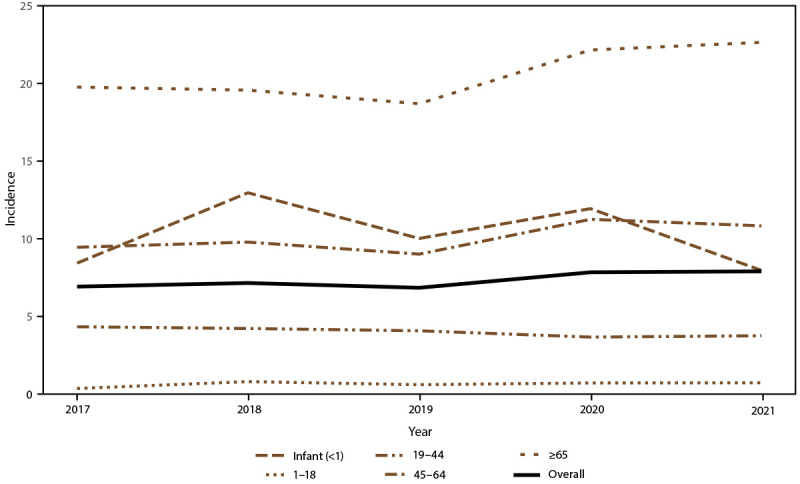
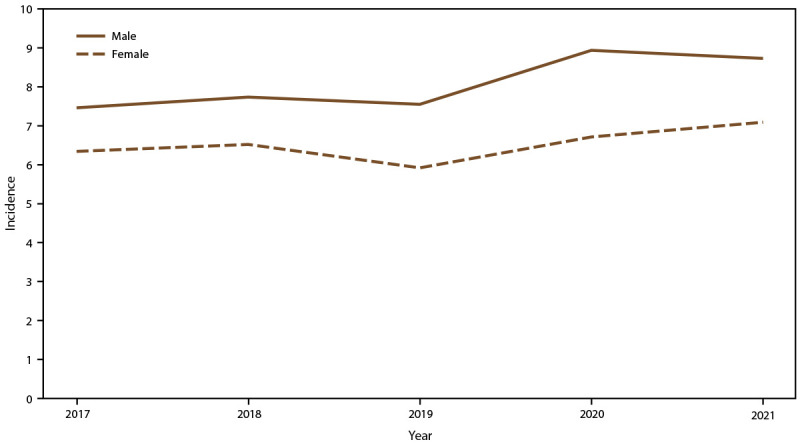
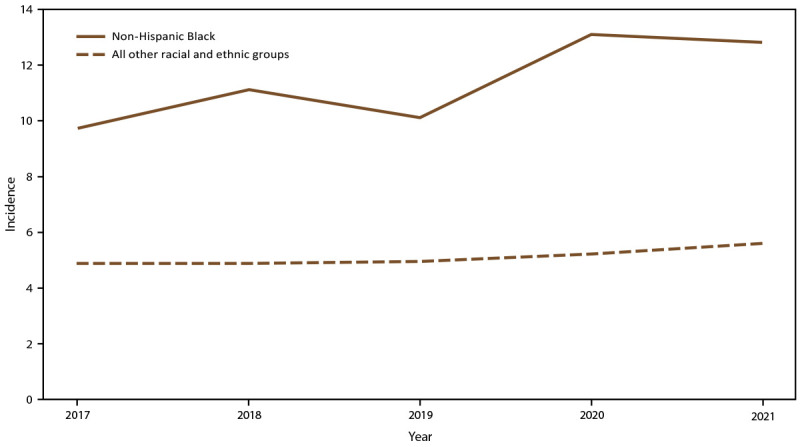
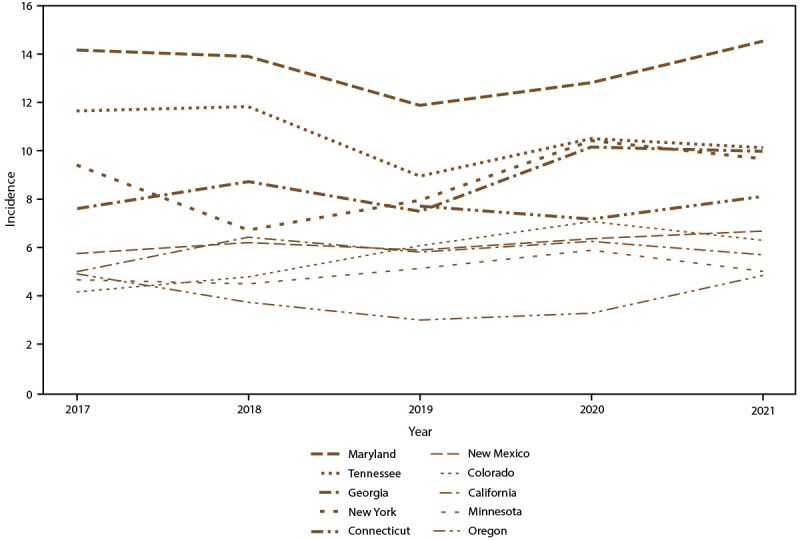
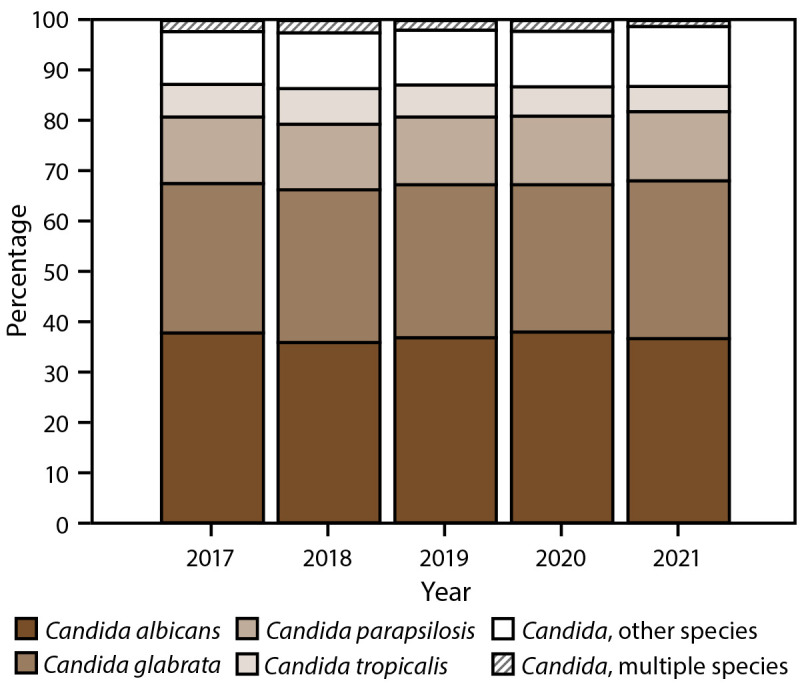
Problem/Condition: Candidemia, a bloodstream infection caused by Candida spp., is a common cause of health care-associated bloodstream infections in the United States. Candidemia is associated with substantial health care costs, morbidity, and mortality. Period Covered: 2017-2021. Description of System: CDC's Emerging Infections Program (EIP), a collaboration among CDC, state health departments, and academic partners, was used to conduct active, population-based laboratory surveillance for candidemia at city or county sites located in 10 states (California, Colorado, Connecticut, Georgia, Maryland, Minnesota, New Mexico, New York, Oregon, and Tennessee), representing a combined population of approximately 21.5 million persons, or 7% of the U.S. population in 2019. Connecticut began reporting cases on January 1, 2019, and conducts statewide surveillance. Although candidemia is not a nationally notifiable condition, cases of Candida auris infection are nationally notifiable, and cases of candidemia caused by C. auris could be included in both national case counts and EIP surveillance. A culture-confirmed candidemia case is defined as a positive blood culture for any Candida sp. from a resident in the surveillance catchment area. Subsequent positive blood cultures for Candida within 30 days of the initial positive culture (index date) in the same patient are considered part of the same case. Clinical laboratories serving each catchment area report candidemia cases, and trained surveillance officers abstract information from medical charts for all cases. Corresponding isolates are sent to CDC for species confirmation and antifungal susceptibility testing. Results: A total of 7,381 candidemia cases were identified during the surveillance period (2017-2021). The overall incidence was 7.4 cases per 100,000 population. Across age groups, sexes, racial and ethnic groups, and surveillance sites, incidence was generally stable or increased slightly from 2017 to 2021, with the lowest overall incidence in 2019 (6.8) and the highest in 2021 (7.9). In 2021, candidemia incidence was highest in patients aged ≥65 years (22.7) and infants (aged <1 year) (8.0). Incidence was higher in males (8.7) compared with females (7.0) and higher in non-Hispanic Black or African American (Black) patients (12.8) compared with non-Black patients (5.6). Incidence was highest in Maryland (14.5), followed by Tennessee (10.1) and Georgia (10.0); incidence was lowest in Oregon (4.8). Increases occurred in the percentage of cases classified as health care onset (52.2% in 2017 to 58.0% in 2021). Overall, among 7,381 cases (in 6,235 patients), 63.7% occurred in patients who had a central venous catheter, 80.7% involved recent systemic antibiotic receipt, and 9.0% occurred in patients who had a history of injection drug use. The percentage of cases with a positive SARS-CoV-2 test during the 90 days before or after the index date increased from 10.4% in 2020 to 17.7% in 2021. From 2017 to 2021, the percentage of cases involving an intensive care unit stay before the index date increased from 38.3% to 44.9%. Echinocandins (e.g., micafungin) were used as treatment in 49.8% of cases, and azoles were used in 47.7%. The all-cause in-hospital mortality rate was 32.6%; this increased from 26.8% in 2019 to 36.1% in 2021. Overall, Candida albicans accounted for 37.1% of cases, followed by Candida glabrata (30.4%) and Candida parapsilosis (13.5%); however, C. glabrata was the most frequent species in California (38.4%) and Maryland (32.9%). Candida auris infections accounted for 0.4% of cases. Among 6,576 Candida isolates for which interpretive breakpoints exist and isolates were available for testing, 5.6% were fluconazole resistant, and <1% were echinocandin resistant. Antifungal resistance was stable for all antifungals tested across years. Interpretation: Candidemia remains an important health care-associated infection. The disproportionate incidence among older adults, males, and Black patients is consistent with previous reports, and the overall incidence of candidemia has not changed substantially compared with previous EIP findings based on data collected during 2012-2016 (8.7 per 100,000 population). The higher mortality rate associated with candidemia during 2020-2021 likely reflects consequences of the COVID-19 pandemic, including strained health care systems and an increased population of patients who were susceptible to candidemia because of COVID-19-related critical illness. Public Health Action: Strict implementation of measures to prevent health care-associated bloodstream infections is important to help prevent candidemia cases. Health care officials and providers should be vigilant for candidemia as a complication of critical illness. Continued surveillance is needed to monitor for emerging populations at risk for candidemia and changes in antifungal resistance patterns, which can help guide antifungal treatment selection.
Overview
CoChat Summary
TL;DR
CDC’s Emerging Infections Program conducted active, population-based surveillance for culture-confirmed candidemia at 10 U.S. sites during 2017–2021, identifying 7,381 cases from 6,235 patients. Overall incidence was 7.4 per 100,000 population, with stable-to-slightly-increased incidence over time and higher mortality in 2020–2021.
Key findings
- Among 7,381 cases, overall candidemia incidence was 7.4 per 100,000 population; incidence was lowest in 2019 (6.8) and highest in 2021 (7.9). In 2021, incidence was highest among adults aged ≥65 years (22.7) and infants aged <1 year (8.0), higher in males (8.7) than females (7.0), and higher in Black patients (12.8) than non-Black patients (5.6).
- Site incidence varied widely: Maryland had the highest incidence (14.5), followed by Tennessee (10.1) and Georgia (10.0), while Oregon had the lowest (4.8). Health care onset cases increased from 52.2% in 2017 to 58.0% in 2021; ICU stay before index date increased from 38.3% to 44.9%.
- Common risk factors included central venous catheter (63.7%), recent systemic antibiotics (80.7%), and injection drug use (9.0%). Positive SARS-CoV-2 test during the 90 days before or after index date increased from 10.4% in 2020 to 17.7% in 2021.
- Candida albicans accounted for 37.1% of cases, followed by C. glabrata (30.4%) and C. parapsilosis (13.5%); C. auris accounted for 0.4%. Among 6,576 isolates tested, 5.6% were fluconazole resistant and <1% were echinocandin resistant. All-cause in-hospital mortality was 32.6% overall and 36.1% in 2021.
Methods
- Active, population-based laboratory surveillance through CDC’s Emerging Infections Program at 10 sites in California, Colorado, Connecticut, Georgia, Maryland, Minnesota, New Mexico, New York, Oregon, and Tennessee, representing approximately 21.5 million persons (about 7% of the U.S. population in 2019); Connecticut began reporting in 2019.
- A case was a positive blood culture for any Candida sp. from a surveillance-area resident; positive cultures within 30 days of the initial culture were considered the same case. Clinical, reference, and commercial laboratories reported cases, and trained surveillance officers abstracted standardized case report forms from medical records.
- Isolates were sent to CDC for species confirmation by MALDI-TOF or DNA sequencing and antifungal susceptibility testing by CLSI microdilution; analyses were descriptive, with annual incidence rates calculated using U.S. Census Bureau population estimates. Cases missing index date (<1%) were excluded.
Limitations
- The paper states five limitations: data came from only 10 geographic areas, limiting representativeness; changes in data collection over years limited availability and interpretation of certain data; chart abstraction by surveillance personnel may have led to inconsistencies; some data elements are not systematically documented in charts, likely underestimating risk factors; and blood culture sensitivity is low, so some cases may have been missed.
- Evident from the text: Connecticut began surveillance in 2019 and some variables were collected only in certain years, so 2017–2021 trends are not uniformly based on all sites or all years.
Model-written summary. Check it against the paper before relying on it.
Integrity signals
Registry
Cites
Statistics
Figures
Verification
Claims the paper makes
26 Valid · 0 Not valid · 3 Not checked · 95 Own results and interpretations
Every source the paper cites for this claim was checked and supports it.
In the paper
“This surveillance effort also aligns with previous findings regarding the disproportionate incidence of candidemia in Black patients (3).”
§ Population-Based Active Surveillance for Culture-Confirmed Candidemia — 10 Sites, United States, 2017–2021 > Discussion
What the sources say
- Supportedcites [3] Toda M, Williams SR, Berkow EL, Population-based active surveillance for culture-confirmed candidemia—four sites, United States, 2012–2016. MMWR Surveill Summ 2019; 68(No. SS-8): 1– 15. 10.15585/mmwr.ss6808a1 31557145 PMC6772189 source
The Results (Demographic Characteristics and Incidence) report higher candidemia incidence among Black patients than non-Black patients: 13.7 versus 5.8 per 100,000. The Discussion explicitly describes this as a previously reported racial disparity that persisted during the surveillance period. (LLM, conf=0.94)
plainstates an association- Asserted: passes — The authors put it forward as true.
- Checkable: passes — It can be checked against evidence.
- Load-bearing: unclear — It is unclear whether the paper’s conclusions depend on it.
- Based: passes — The paper gives a reason why it holds.
- Supported
The cited sources support only part of this claim — read each source’s verdict below.
In the paper
“Differences in candidemia incidence by age, sex, racial and ethnic group, and geographic region were consistent with previous surveillance data (3).”
§ Population-Based Active Surveillance for Culture-Confirmed Candidemia — 10 Sites, United States, 2017–2021 > Discussion
What the sources say
- Partly supportedcites [3] Toda M, Williams SR, Berkow EL, Population-based active surveillance for culture-confirmed candidemia—four sites, United States, 2012–2016. MMWR Surveill Summ 2019; 68(No. SS-8): 1– 15. 10.15585/mmwr.ss6808a1 31557145 PMC6772189 sourceExperimental — accuracy not yet measured
The Discussion (page not provided) says a previously reported racial disparity persisted. The Results > Demographic Characteristics and Incidence (page not provided) document differences by age and surveillance site, and the Discussion documents a difference by sex. The copy does not establish that those age, sex, or geographic differences were consistent with previous surveillance data, and it does not report incidence differences by ethnicity. (LLM, conf=0.87)
plainstates an association- Asserted: passes — The authors put it forward as true.
- Checkable: passes — It can be checked against evidence.
- Load-bearing: unclear — It is unclear whether the paper’s conclusions depend on it.
- Based: passes — The paper gives a reason why it holds.
- Partly supported
The cited sources support only part of this claim — read each source’s verdict below.
In the paper
“During 2021, the all-cause mortality rate associated with candidemia was higher compared with earlier years (36.1% versus 26.8% in 2017 and 25% during 2012–2016), and cases during 2020–2021 also more frequently involved previous ICU stays and onset in the health care setting.”
§ Population-Based Active Surveillance for Culture-Confirmed Candidemia — 10 Sites, United States, 2017–2021 > Discussion
What the sources say
- Partly supportedcites [3] Toda M, Williams SR, Berkow EL, Population-based active surveillance for culture-confirmed candidemia—four sites, United States, 2012–2016. MMWR Surveill Summ 2019; 68(No. SS-8): 1– 15. 10.15585/mmwr.ss6808a1 31557145 PMC6772189 sourceExperimental — accuracy not yet measured
The Results, under “Deaths” (page not provided), report a 25% all-cause in-hospital case-fatality ratio for the 2012–2016 surveillance period. The paper does not provide the claimed 26.8% figure for 2017 or the 36.1% figure for 2021, so it cannot support the full comparison. (LLM, conf=0.90)
plainstates an associationn = 7,400- Asserted: passes — The authors put it forward as true.
- Checkable: passes — It can be checked against evidence.
- Load-bearing: passes — The paper’s conclusions depend on it.
- Based: passes — The paper gives a reason why it holds.
- Partly supported
Every source the paper cites for this claim was checked and supports it.
In the paper
“Candidemia surveillance, conducted through CDC’s Emerging Infections Program (EIP), monitors changes in U.S. candidemia epidemiology (3).”
§ Population-Based Active Surveillance for Culture-Confirmed Candidemia — 10 Sites, United States, 2017–2021 > Introduction
What the sources say
- Supportedcites [3] Toda M, Williams SR, Berkow EL, Population-based active surveillance for culture-confirmed candidemia—four sites, United States, 2012–2016. MMWR Surveill Summ 2019; 68(No. SS-8): 1– 15. 10.15585/mmwr.ss6808a1 31557145 PMC6772189 source
The Abstract’s Description of System says CDC’s Emerging Infections Program conducted active, population-based candidemia surveillance at four U.S. sites. The Abstract’s Public Health Action section says the surveillance helps monitor changes in incidence, species distribution, risk factors, treatment, and outcomes. (LLM, conf=0.92)
plain- Asserted: passes — The authors put it forward as true.
- Checkable: passes — It can be checked against evidence.
- Load-bearing: passes — The paper’s conclusions depend on it.
- Based: passes — The paper gives a reason why it holds.
- Supported
The cited sources support only part of this claim — read each source’s verdict below.
In the paper
“The percentage of Black patients affected by candidemia increased during the study period, likely mirroring the disproportionate effect of the COVID-19 pandemic on Black patients (3,17,25).”
§ Population-Based Active Surveillance for Culture-Confirmed Candidemia — 10 Sites, United States, 2017–2021 > Discussion
What the sources say
- Partly supportedcites [3] Toda M, Williams SR, Berkow EL, Population-based active surveillance for culture-confirmed candidemia—four sites, United States, 2012–2016. MMWR Surveill Summ 2019; 68(No. SS-8): 1– 15. 10.15585/mmwr.ss6808a1 31557145 PMC6772189 sourceExperimental — accuracy not yet measured
The Results and Discussion report that Black people had higher candidemia incidence than non-Black people during surveillance in 2012–2016. They do not establish that the percentage of Black patients increased over the citing study’s period or connect candidemia to the COVID-19 pandemic. (LLM, conf=0.88)
- Could not verifycites [17] Cleveland AA, Harrison LH, Farley MM, Declining incidence of candidemia and the shifting epidemiology of Candida resistance in two US metropolitan areas, 2008–2013: results from population-based surveillance. PLoS One 2015; 10: e0120452. 10.1371/journal.pone.0120452 25822249 PMC4378850 sourceExperimental — accuracy not yet measured
Case-Patient Characteristics reports that approximately 60% of candidemia cases in the 2008–2013 surveillance period were among Black patients, but it does not report whether that percentage increased. The paper does not address COVID-19 or a pandemic-related explanation for such an increase; the race and COVID-19 passages searched do not substantiate the attributed claim. (LLM, conf=0.78)
- Supportedcites [25] Price-Haywood EG, Burton J, Fort D, Seoane L. Hospitalization and mortality among Black patients and White patients with Covid-19. N Engl J Med 2020; 382: 2534– 43. 10.1056/NEJMsa2011686 32459916 PMC7269015 source
The Discussion reports that Black patients were 31% of those routinely cared for by the health system but 76.9% of its COVID-19 hospitalizations. The Results also associate Black race with approximately twice the adjusted odds of admission compared with White race. These passages support the cited COVID-19 disparity; the suggested link to candidemia is the citing authors’ inference. (LLM, conf=0.91)
hedgedstates an association- Asserted: passes — The authors put it forward as true.
- Checkable: passes — It can be checked against evidence.
- Load-bearing: unclear — It is unclear whether the paper’s conclusions depend on it.
- Based: passes — The paper gives a reason why it holds.
- Partly supported
67 more claims · 4 with their cited sources checked
Create a free account to see all 124 claims and to verify the 1 reference still open.
- It may state two separate claims as one. 41
- Probably not a substantial claim. 23
- The quote only partly states this claim. 1
Self-check
Percentages, sums and reported differences re-computed from the paper’s own numbers.
Each contradiction between two passages listed here was confirmed by an independent check.
Rated major: it would touch a result — a value a result rests on, reported and recomputed p-values on opposite sides of the significance level, two passages that conflict with no sign which is right, or a cited work retracted before this paper was published.
In the paper
§ Population-Based Active Surveillance for Culture-Confirmed Candidemia — 10 Sites, United States, 2017–2021 > Results > Demographic Characteristics and Incidence
“Among patients with multiple cases (n = 1,146), 377 (32.9%) patients had two cases, 145 (12.7%) had three cases, 108 (9.4%) had four cases, and 516 (45.0%) had ≥5 cases.”
§ Population-Based Active Surveillance for Culture-Confirmed Candidemia — 10 Sites, United States, 2017–2021 > Results > Demographic Characteristics and Incidence
“During 2017–2021, a total of 7,381 candidemia cases from 6,235 patients were identified.”
Rated minor: it would not touch a result — a value no result rests on, a p-value that stays on the same side of the significance level, or a conflict that is clerical, resolved elsewhere in the paper, or outside its own findings.
In the paper
§ Population-Based Active Surveillance for Culture-Confirmed Candidemia — 10 Sites, United States, 2017–2021 > Results > Antifungal Treatment, Health Care Use, Clinical Course, and Outcomes
“The most common reason for not receiving antifungal treatment was that the patient died before the culture result was available to clinicians (52.7% of those not treated).”
§ Population-Based Active Surveillance for Culture-Confirmed Candidemia — 10 Sites, United States, 2017–2021 > Results > Antifungal Treatment, Health Care Use, Clinical Course, and Outcomes
“Reason for not receiving antifungal treatment was available for 1,057 (52.7%) cases and included the following: the patient died before culture results were available (51.6%)”
Rated minor: it would not touch a result — a value no result rests on, a p-value that stays on the same side of the significance level, or a conflict that is clerical, resolved elsewhere in the paper, or outside its own findings.
In the paper
§ Population-Based Active Surveillance for Culture-Confirmed Candidemia — 10 Sites, United States, 2017–2021 > Abstract > Results
“The all-cause in-hospital mortality rate was 32.6%; this increased from 26.8% in 2019 to 36.1% in 2021.”
§ Population-Based Active Surveillance for Culture-Confirmed Candidemia — 10 Sites, United States, 2017–2021 > Results > Antifungal Treatment, Health Care Use, Clinical Course, and Outcomes
“| In-hospital death | 328 (26.8) | 406 (31.8) | 446 (30.3) | 612 (36.0) | 616 (36.1) | 2,408 (32.6) |”
Rated minor: it would not touch a result — a value no result rests on, a p-value that stays on the same side of the significance level, or a conflict that is clerical, resolved elsewhere in the paper, or outside its own findings.
In the paper
§ Population-Based Active Surveillance for Culture-Confirmed Candidemia — 10 Sites, United States, 2017–2021 > Results > Demographic Characteristics and Incidence
“Proportions of White patients with candidemia were slightly lower (44.8% versus 53.1%)”
§ Population-Based Active Surveillance for Culture-Confirmed Candidemia — 10 Sites, United States, 2017–2021 > Results > Demographic Characteristics and Incidence
“| White | 620 (53.1) | 596 (50.3) | 573 (50.5) | 619 (44.8) | 654 (47.9) | 3,062 (49.1) |”
Citations
Cites
Pappas, P. G., Kauffman, C. A., Andes, D. R., Clancy, C. J., Marr, K. A., Ostrosky-Zeichner, L., Reboli, A. C., Schuster, M. G., Vazquez, J. A., Walsh, T. J., et al. (2016) · Clinical Infectious Diseases · doi:10.1093/cid/civ933 · Cited by 4,200 · cited 2×
“Candidiasis is a fungal infection caused by yeast from the genus Candida ( 1 ).”
Hospitalization and mortality among Black patients and White patients with Covid-19.
Price-Haywood, E. G., Burton, J., Fort, D., & Seoane, L. (2020) · New England Journal of Medicine · doi:10.1056/nejmsa2011686 · Cited by 1,660 · cited 1×
“The percentage of Black patients affected by candidemia increased during the study period, likely mirroring the disproportionate effect of the COVID-19 pandemic on Black patients ( 3 , 17 , 25 ).”
Kullberg, B. J., & Arendrup, M. C. (2015) · New England Journal of Medicine · doi:10.1056/nejmra1315399 · Cited by 1,315 · cited 2×
“The infection might develop after translocation of Candida spp. from the gut through disruptions in the intestinal mucosa, making abdominal surgeries a candidemia risk factor ( 7 ).”
Changes in prevalence of health care-associated infections in U.S. hospitals
Magill, S. S., O’Leary, E., Janelle, S. J., Thompson, D. L., Dumyati, G., Nadle, J., Wilson, L. E., Kainer, M. A., Lynfield, R., Greissman, S., et al. (2018) · New England Journal of Medicine · doi:10.1056/nejmoa1801550 · Cited by 1,249
Self-citationRevisiting the source of candidemia: skin or gut?
Nucci, M., & Anaissie, E. (2001) · Clinical Infectious Diseases · doi:10.1086/323759 · Cited by 424 · cited 1×
“Candidemia can occur after disruption of the body’s skin and mucosal barriers, including in the intestines ( 6 ).”
Cleveland, A. A., Harrison, L. H., Farley, M. M., Hollick, R., Stein, B., Chiller, T. M., Lockhart, S. R., & Park, B. J. (2015) · PLOS ONE · doi:10.1371/journal.pone.0120452 · Cited by 304 · cited 2×
“The percentage of Black patients affected by candidemia increased during the study period, likely mirroring the disproportionate effect of the COVID-19 pandemic on Black patients ( 3 , 17 , 25 ).”
InfluentialSelf-citationLockhart, S. R., Iqbal, N., Cleveland, A. A., Farley, M. M., Harrison, L. H., Bolden, C. B., Baughman, W., Stein, B., Hollick, R., Park, B. J., et al. (2012) · Journal of Clinical Microbiology · doi:10.1128/jcm.01283-12 · Cited by 299
Self-citationWorsening Spread of Candida auris in the United States, 2019 to 2021
Lyman, M., Forsberg, K., Sexton, D. J., Chow, N. A., Lockhart, S. R., Jackson, B. R., & Chiller, T. (2023) · Annals of Internal Medicine · doi:10.7326/m22-3469 · Cited by 287 · cited 1×
“In addition, Candida auris , a highly transmissible, and frequently multidrug-resistant Candida sp., has emerged as a cause of health care–associated outbreaks and candidemia ( 15 , 16 ).”
Self-citationCandida auris Outbreak in a COVID-19 Specialty Care Unit — Florida, July–August 2020
Prestel, C., Anderson, E., Forsberg, K., Lyman, M., de Perio, M. A., Kuhar, D., Edwards, K., Rivera, M., Shugart, A., Walters, M., et al. (2021) · MMWR. Morbidity and Mortality Weekly Report · doi:10.15585/mmwr.mm7002e3 · Cited by 237
Self-citationEpidemiology of Candida albicans Infections and Role of Non-Candidaalbicans Yeasts
Ruhnke, M. (2006) · Current Drug Targets · doi:10.2174/138945006776359421 · Cited by 210 · cited 1×
“Historically, Candida albicans has been the leading cause of candidemia; however, candidemia involving non-C. albicans spp., especially Candida glabrata , Candida parapsilosis , Candida tropicalis , and Candida krusei, has become more prevalent in recent years ( 11 ).”
Cited by
Gold, J. A. W., Benedict, K., Lyman, M., Toda, M., Little, J. S., & Ostrosky-Zeichner, L. L. (2026) · Clinical Infectious Diseases · doi:10.1093/cid/ciag252 · Cited by 13
Self-citationMotta, J. C., Rivas-Pinedo, P., & Oñate, J. (2025) · Journal of Fungi · doi:10.3390/jof11090609 · Cited by 15
“In addition to the risk factors, intravenous drug use represents a distinct contributor to candidemia in the United States, differing from patterns observed in other regions [40].”
InfluentialDe-la-Pinta, I., Marcos‐Arias, C., Sevillano, E., Eraso, E., & Quindós, G. (2026) · Microorganisms · doi:10.3390/microorganisms14020367 · Cited by 8
“C. glabrata is the second most prevalent species, accounting for approximately one-third of cases in states such as Maryland and California [38].”
New and emerging drugs for the treatment of invasive fungal infections
Maves, R. C., & Fowler, M. N. (2025) · Expert Opinion on Pharmacotherapy · doi:10.1080/14656566.2025.2568547 · Cited by 5
“Candidemia and invasive candidiasis remain one of the most common invasive fungal infections in hospitalized patients, associated with high morbidity and mortality, particularly in the ICU and in immunocompromised hosts [98,99].”
Natural product based approaches to overcome Candida glabrata and emerging AMR threats
Sahu, B. K., Patra, S. K., Sahu, M. C., & Panda, S. K. (2026) · Frontiers in Antibiotics · doi:10.3389/frabi.2026.1767032 · Cited by 7
“…surveillance studies consistently report that C. glabrata accounts for approximately 13-30% of candidemia cases globally, with higher prevalence in hospital settings and high-risk patient populations, underscoring its growing clinical relevance (Jenkins, 2025; Dai et al., 2025; Yamin et al., 2025).”
Changes in Epidemiology of Candidemia in the United States With a Focus on Candida auris
Pérez, M. A., Patel, K., Rasmy, L., Yoshida, H., Arias, C. A., Nigo, M., & Adelman, M. W. (2026) · Clinical Infectious Diseases · doi:10.1093/cid/ciag312 · Cited by 7
“However, there has been an increase in the prevalence of Nakaseomyces glabratus (formerly C. glabrata ) [2, 9], and the commonly multidrug-resistant C. auris has continued to emerge globally [10, 11].”
InfluentialPariano, M., Puccetti, M., Fabi, C., Nunzi, E., Balucchi, S., Perioli, L., Ricci, M., Giovagnoli, S., Garaci, E., & Romani, L. R. (2025) · Expert Review of Anti-infective Therapy · doi:10.1080/14787210.2025.2569831 · Cited by 7
Cai, G., & Zhang, Z. (2026) · Antimicrobial Agents and Chemotherapy · doi:10.1128/aac.01617-25 · Cited by 5
“…epidemiological programs, have provided valuable insight into antifungal susceptibility trends, but most have been limited by geographic scope, modest sample sizes, or short time span, thereby constraining their ability to detect subtle temporal dynamics or nascent resistance clusters (12–14).”
Fungal Infection in HIV-Infected Patients—Is It Still a Challenge?
Biała, M., Słabisz, N., & Knysz, B. (2025) · Journal of Clinical Medicine · doi:10.3390/jcm14238570 · Cited by 5
“Population-based active surveillance for culture-confirmed candidemia in 2017–2021 including 10 sites of the United States showed that diabetes was the most frequent underlying condition, accounting for 36.2% of cases, with its prevalence rising from 32.1% in 2017 to 38.0% in 2021 [32].”
InfluentialGold, J. A. W., Benedict, K., Haass, K. A., Kaur, H., Muthe, P., Bouwkamp, B. A., Lyman, M., Toda, M., Rivers, T., & Lockhart, S. R. (2026) · Journal of Clinical Microbiology · doi:10.1128/jcm.00091-26 · Cited by 3
Self-citationHuynh-Phan, R., Plauche, A., Musick, W. L., Phe, K., Hoffman, W. J., Mohajer, M. A., Lasco, T. M., Beyda, N. D., Eubank, T. A., & Garey, K. W. (2025) · Antimicrobial Stewardship & Healthcare Epidemiology · doi:10.1017/ash.2025.10200 · Cited by 2
Hospitalizations involving Candida parapsilosis bloodstream infection, United States, 2016–2024
Benedict, K., Toda, M., Lockhart, S. R., Lyman, M., & Gold, J. A. W. (2025) · Medical Mycology · doi:10.1093/mmy/myaf109 · Cited by 3
Self-citationCaracciolo, M., D’Aleo, F., Stagno, M. F., Papola, C., Pellicano, S., Nicolò, G. M., Caracciolo, S. A., Ripepi, A., Pellicano, N., Scopelliti, C., et al. (2026) · Frontiers in Medicine · doi:10.3389/fmed.2026.1796594 · Cited by 2
“Experimental studies have described this interaction as a “one-two punch” antifungal effect, resulting in enhanced fungicidal activity and delayed resistance emergence (18, 24, 26) (see Figure 3).”
Candida blankii : The Difficult Capture of a Fungus With Pathogenic Potential
Smillie, E., Sharma, A., Delport, J., Cabrera, A. L., Shahmirzadi, M. R., & AlMutawa, F. (2025) · Case Reports in Infectious Diseases · doi:10.1155/crdi/5543654 · Cited by 1
“CDC has more recently identifed a total of 7381 candidemia cases throughout the surveillance period of 2017–2021 with an incidence of 7.4 cases per 100,000 persons [4].”
InfluentialMundhe, A. K., Premanand, A., & Baskaran, R. R. (2026) · In Silico Pharmacology · doi:10.1007/s40203-025-00480-9 · Cited by 3
Abdullah, S. N. S., Tzar, M. N., & Othman, S. N. (2026) · Microbiology Spectrum · doi:10.1128/spectrum.02170-25 · Cited by 1
The Upcoming Antifungal Drugs in Clinical Development for the Treatment of Invasive Candidiasis
Zubovskaia, A., & Vázquez, J. A. (2026) · Infection and Drug Resistance · doi:10.2147/idr.s547511 · Cited by 3
Is candidemia mortality inevitable or a consequence of inadequate guideline adherence?
Sequeira, M. F., Sambo, C. T., de Almeida, B. L., Ishigaki, É. Y., Ayub, E. B. S., Fialkovitz, G., Magri, A. S. G. K., Leite, O. H. M., & Magri, M. M. C. (2026) · The Brazilian Journal of Infectious Diseases · doi:10.1016/j.bjid.2026.105824 · Cited by 1
“6,7 Internationally, a rise in C. glabrata has been documented in the United Kingdom and the United States, 9,12 whereas in this study the C. parapsilosis complex predominated among non-albicans species (21.3%), followed by C. tropicalis (14.7%), consistent with traditional Brazilian fungal ecology.”
InfluentialEkemen, C., Çeltik, Ü., Taşçı, E. K., Cebeci, K., Yaşar, M., Karauzum, S. E., Özenen, G. G., Özek, G., Karadaş, N., Ataseven, E., et al. (2026) · Journal of Fungi · doi:10.3390/jof12060445 · Cited by 1
“Despite a high burden of underlying disease and frequent exposure to invasive supportive care, crude 30-day mortality was 10.8%, falling toward the lower range reported in pediatric cohorts [6,9,15–17].”
InfluentialCandida bloodstream infection in older adults: sex as a pathway marker, not a mortality shortcut
Zhao, Z., & Shen, T. (2026) · European Journal of Internal Medicine · doi:10.1016/j.ejim.2026.107109 · Cited by 1
Hristova, Y., Илиев, И., Hristamyan, M., Gocheva, M., Ilieva, L., & Gochev, V. (2025) · Applied Sciences · doi:10.3390/app152111672 · Cited by 1
Tuan, D. A., & Masák, J. (2026) · Journal of Applied Microbiology · doi:10.1093/jambio/lxag015 · Cited by 1
Saddik, A. A., Sayed, M. G., El‐Dean, A. M. K., Said, M. A., Galal, I., Ishak, E. A., & Gad‐Elkareem, M. A. M. (2026) · Journal of Molecular Structure · doi:10.1016/j.molstruc.2026.145393 · Cited by 1
Yoshida, H., Adelman, M. W., Rasmy, L., Ifiora, F., Xie, Z., Pérez, M. A., Guerra, F. M., Yoshimura, H., Jones, S. L., Arias, C. A., et al. (2026) · EClinicalMedicine · doi:10.64898/2026.03.03.26347531
Namysł, M., Skóra, M., Pomorska-Wesołowska, M., Romanik, M. K., Kwapniewska, W. Ś. –., Serwacki, P., Pawłowska, I., Olechowska‐Jarząb, A., & Wójkowska‐Mach, J. (2026) · Journal of Fungi · doi:10.3390/jof12030212
“The most recent Centers for Disease Control and Prevention (CDC) data provides one of the most detailed national epidemiological assessments of candidemia [51].”
Gentry, C. A., Evans, C., Thind, S. K., & Williams, R. J. (2026) · Annals of Pharmacotherapy · doi:10.1177/10600280261429453
Kim, M., Ranganath, N., Garcia, S. M., Barrett, K. O., Mahmoud, K. H., Stevens, R. W., LeMahieu, A., Strajina, V., & Shah, A. (2026) · Surgical Infections · doi:10.1177/10962964261445330
Xu, Z., Wang, Y., Duan, X., & Liu, D. (2026) · BMC Infectious Diseases · doi:10.1186/s12879-026-13510-4
“Candidemia, defined as the presence of one or more positive Candida cultures in blood samples, is the most prevalent clinical manifestation of invasive candidiasis [4, 5].”
When life gives you limes… it gives you Candida: a case of lime-contaminated IV injection
Lopez, P., Lama, T., Kodan, P., & Sivapalan, V. (2026) · Oxford Medical Case Reports · doi:10.1093/omcr/omag077
“Several studies have reported severe complications related to this behavior, including localized abscesses, endophthalmitis, bacteremia, and candidemia [11–14].”
Time to positivity as a diagnostic tool for catheter-related candidemia: A species-specific analysis
Albanell‐Fernández, M., Vergara, A., Cardozo, C., Herrera, S., Verdejo, M. Á., Malano-Barletta, D., Pitart, C., Meneses, M. H., Cuervo, G., García‐Vidal, C., et al. (2026) · International Journal of Infectious Diseases · doi:10.1016/j.ijid.2026.108847 · Cited by 3
Temporal changes in mortality and risk factors of candidemia in intensive care unit patients
Kizilcay, B., Çizmeci, Z., Hergünsel, G. O., Cukurova, Z., Yaşar, K. K., & Yeşilbağ, Z. (2026) · BMC Infectious Diseases · doi:10.1186/s12879-026-13759-9
“According to recent CDC population-based surveillance data from the United States, the overall incidence of candidemia during 2017–2021 was 7.4 cases per 100,000 population, and all-cause in-hospital mortality was 32.6% [7].”
InfluentialInvasive Candidiasis in Liver Transplant Recipients Undergoing Antifungal Prophylaxis
Guimarães, L. F., Pereira, L. D. O., Curcio, T. M., de Sousa, C. C. T., Basto, S. T., Szrajbman, D., Fernandes, E. D. S. M., & Lopes, G. S. (2026) · Transplantation Proceedings · doi:10.1016/j.transproceed.2026.05.006
LAMP‐Based Detection of Candida albicans : A Potential Tool for Candidemia Diagnosis
Prompunt, E., Jamnai, K., Marome, N., Phutthawong, N., Sumphanapai, T., Kamseng, P., Kloypan, C., Saoin, S., Khamchun, S., & Nangola, S. (2026) · Canadian Journal of Infectious Diseases and Medical Microbiology · doi:10.1155/cjid/1980977
Sung, M., Chang, S., Leem, A. Y., Lee, C. H., Chung, K. S., Kim, Y. S., Kim, J. M., & Lee, S. H. (2026) · Journal of Fungi · doi:10.3390/jof12070495
Endo, A., Hanai, Y., Mikawa, T., Asakawa, D., Ishibe, T., Nakane, Y., Tanaka, M., Mitsui, D., Kido, S., Nonaka, T., et al. (2026) · European Journal of Clinical Microbiology & Infectious Diseases · doi:10.1007/s10096-026-05601-6
Clinical controversies in the management of candidemia in adults and children
Cluck, D. B., White, B. P., Hilzendager, S. A., Ryder, J. H., Tu, P. J., McPherson, A. Z., Rogers, D. J., & Chastain, D. B. (2026) · American Journal of Health-System Pharmacy · doi:10.1093/ajhp/zxag212
Campa, I. C., Studebaker, M. C., Henao‐Martínez, A. F., Kršák, M., & Chastain, D. B. (2026) · Medical Mycology · doi:10.1093/mmy/myag080
Kılıç, A., & Palavecino, E. L. (2026) · Cureus · doi:10.7759/cureus.115734
Clinical profile and outcomes of persistent candidemia: A matched case-control study
Bayless, D. R., Saleh, O. A., Challener, D. W., Vergidis, P. I., & McHugh, J. (2026) · Medical Mycology · doi:10.1093/mmy/myag090
Jones, M. N., Nigo, M., Pérez, M. E., Casarin, S., Sanghvi, A., Jones, S. L., Corry, D. B., Arias, C. A., & Adelman, M. W. (2026) · Open Forum Infectious Diseases · doi:10.1093/ofid/ofag558
“Multiple large studies have reported an increase in mortality rates associated with candidemia during COVID [4, 8].”
InfluentialNon-albicans Candida Species: Epidemiology and Antifungal Resistance
Bosan, M. A., Durrani, A. D., Faiz, A., Farooqi, J. Q., & Jabeen, K. (2026) · Current Fungal Infection Reports · doi:10.1007/s12281-026-00542-1
“[ 40].”
Tao, M., Huang, R., Hu, F., Zhao, X., Cen, N., Liu, C., Li, W., & 罗振华 (2026) · Journal of Peptide Science · doi:10.1002/psc.70127
Metadata
- Authors
- Jenkins, E. N., Gold, J. A. W., Benedict, K., Lockhart, S. R., Berkow, E. L., Dixon, T., Shack, S. L., Witt, L. S., Harrison, L. H., Seopaul, S., Correa, M. A., Fitzsimons, M., Jabarkhyl, Y., Barter, D., Czaja, C. A., Johnston, H., Markus, T., Schaffner, W., Gross, A., Lynfield, R., Tourdot, L., Nadle, J., Roland, J., Escutia, G., Zhang, A. Y., Gellert, A., Hurley, C., Tesini, B. L., Phipps, E. C., Davis, S. S., & Lyman, M.
- Affiliations
- Centers for Disease Control and Prevention (US)
- Colorado Department of Public Health and Environment (US)
- Emory University (US)
- Johns Hopkins University (US)
- Yale University (US)
- Vanderbilt University Medical Center (US)
- Minnesota Department of Health (US)
- Oregon Health Authority (US)
- University of Rochester Medicine (US)
- Corresponding author
- Jenkins, Emily N.
- ORCID
- Jenkins, Emily N.
- Gold, Jeremy A.W.
- Benedict, Kaitlin
- Lockhart, Shawn R.
- Berkow, Elizabeth L.
- Witt, Lucy S.
- Harrison, Lee H.
- Seopaul, Shannon
- Correa, Maria A.
- Fitzsimons, Megan
- Czaja, Christopher A.
- Johnston, Helen
- Markus, Tiffanie
- Schaffner, William
- Lynfield, Ruth
- Nadle, Joelle
- Hurley, Christine
- Tesini, Brenda L.
- Phipps, Erin C.
- Davis, Sarah Shrum
- Lyman, Meghan
- Venue
- MMWR. Surveillance Summaries
- Published
- 2025-05-29
- Volume
- 74
- Issue
- 4
- Pages
- 1-15
- ISSN
- 1545-8636 (ISSN-L)
- 1546-0738
- PMC
- PMC12115505
- OpenAlex
- W4410775086
- Cited by
- 43
- References
- 24
- Citations by year
- 2026: 35 · 2025: 8
- FWCI
- 32.80
- Type
- journal article
- Language
- en
- Open access
- diamond
- doi.org
- Licence
- public-domain
- Locations
- MMWR Surveillance Summaries (publishedVersion, public-domain)
- PubMed Central (publishedVersion, public-domain)
- PubMed (publishedVersion)
- Funders
- Minnesota Department of Health
- Yale University
- Vanderbilt University
- Colorado Department of Public Health and Environment
- Vanderbilt University Medical Center
- Georgia Department of Public Health
- Centers for Disease Control and Prevention
- Topics
- Health Sciences › Medicine › Infectious Diseases › Antifungal resistance and susceptibility
- Life Sciences › Immunology and Microbiology › Microbiology › Yeasts and Rust Fungi Studies
- Health Sciences › Medicine › Infectious Diseases › Fungal Infections and Studies
- Keywords
- candidemia, Candida, bloodstream infection, nosocomial infections, incidence trends, Candida auris, antifungal susceptibility, emerging infectious diseases, Emerging Infections Program, population-based surveillance, age and sex differences, racial and ethnic disparities, regional variation, Colorado, Connecticut, Georgia, Maryland, Minnesota, New Mexico, New York, Oregon, Tennessee, United States
- MeSH terms
- Adolescent, Adult, Aged, Aged, 80 and over, Candida, Child, Child, Preschool, Female, Humans, Infant, Infant, Newborn, Male, Middle Aged, Population Surveillance, United States, Young Adult, Candidemia
About these checks
Registry, retraction, Cites and statistics results are computed, not judged, with one exception: a printed reference that no index lists is read once by a model before it counts as a citation error. Claims are extracted by a model and kept only when their quote appears verbatim in the text; each cited source is then checked, with a model’s help, for whether it says what the claim relies on. Those verdicts can be wrong — read the claim’s quote and the cited source before relying on one.
The claim verdicts this report counts are experimental: their accuracy is not yet measured.
A language model drew the claims from the paper on 2026-10-10, under version 3 of the claim definition (model deepseek-v4.1-flash, prompt extract-v3).
A second model labelled each claim on 2026-10-10 (model jev-1.13-20260917, definition revision gold-guideline-v0.2).
Cited sources are checked with a language model’s help (gpt-6-sol).
Statistics and arithmetic are recomputed, not judged.
Confidence bands are shown only for fields calibrated on our annotated test set. None is calibrated yet, so no band is shown.
What counts as a claim ›How we measure confidence ›How we check this ›
Are you an author, or do you see a problem with this page? Request a review
Data sources
Bibliographic data: Semantic Scholar, OpenAlex, Crossref.
Contains information from the Semantic Scholar Academic Graph Datasets, made available under the ODC Attribution License (ODC-BY 1.0).
Semantic Scholar’s data is described in: Kinney, R., et al. (2023). The Semantic Scholar Open Data Platform. arXiv:2301.10140.
