

Disruption of Type 3 Adenylyl Cyclase Expression in the Hypothalamus Leads to Obesity
Open accessThe DOI matches its Crossref record; 24 of the 24 references it cites were found in a registry or an index.
Abstract
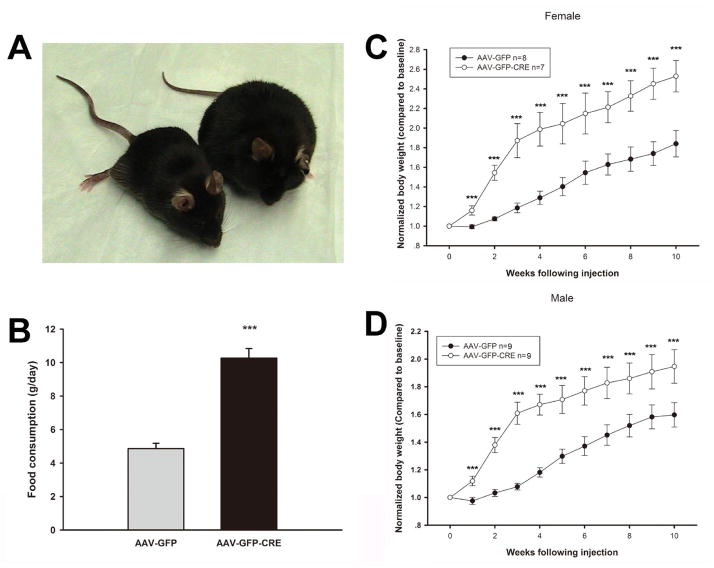
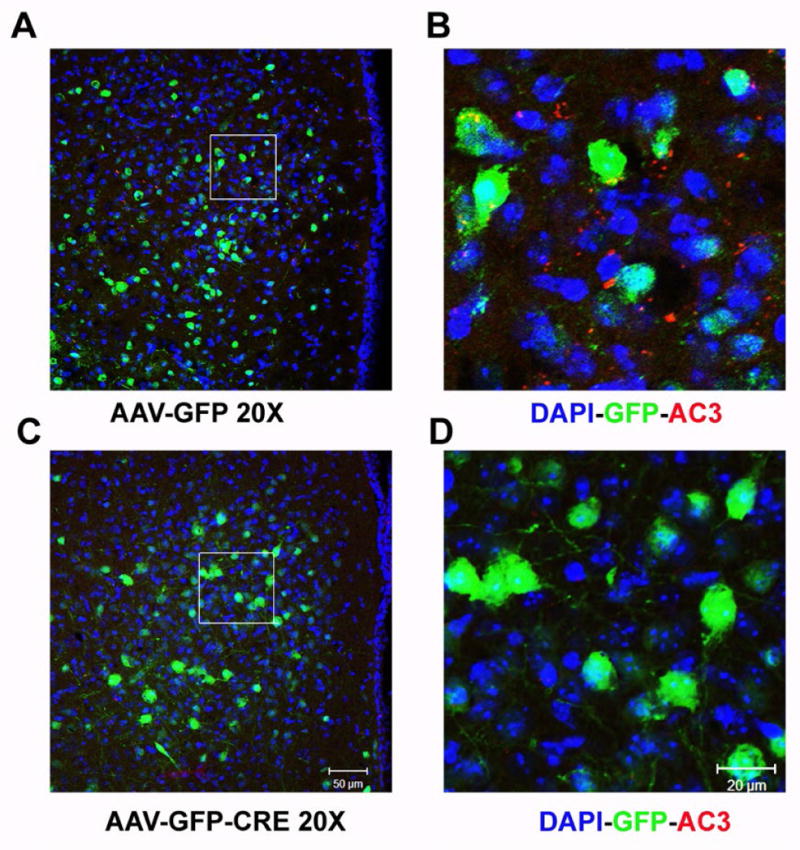
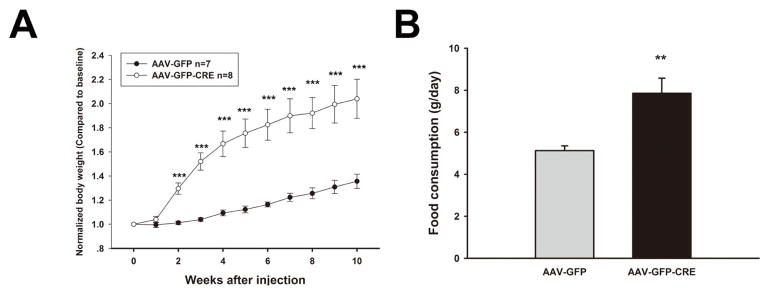
Evidence from human studies and transgenic mice lacking the type 3 adenylyl cyclase (AC3) indicates that AC3 plays a role in the regulation of body weight. It is unknown in which brain region AC3 exerts such an effect. We examined the role of AC3 in the hypothalamus for body weight control using a floxed AC3 mouse strain. Here, we report that AC3 flox/flox mice became obese after the administration of AAV-CRE-GFP into the hypothalamus. Both male and female AC3 floxed mice showed heavier body weight than AAV-GFP injected control mice. Furthermore, mice with selective ablation of AC3 expression in the ventromedial hypothalamus also showed increased body weight and food consumption. Our results indicated that AC3 in the hypothalamus regulates energy balance.
Overview
The claims and statistics of this paper haven’t been checked yet.
Free: it reads the open-access text and checks the first 5 claims that cite a source we can check. Create a free account to check every claim.
Integrity signals
Registry
Cites
Statistics
Figures
Verification
Claims the paper makes
The claims and statistics of this paper haven’t been checked yet.
Free: it reads the open-access text and checks the first 5 claims that cite a source we can check. Create a free account to check every claim.
Claims other papers make about this one
Each is checked against this paper’s own text: does it say what the citing paper says it does?
In the citing paper
“This group later verified this hypothesis by deleting AC3 from the hypothalamus and demonstrated an increase in food consumption and body weight (301).”
From Physiological roles of mammalian transmembrane adenylyl cyclase isoforms (2022) · cites this paper as [301]
In the citing paper
“A specific ventromedial hypothalamus deletion resulted in the same effect (301), although a different subregion of the hypothalamus, the paraventricular nucleus, has also been implicated in the body weight regulation of AC3 (302).”
From Physiological roles of mammalian transmembrane adenylyl cyclase isoforms (2022) · cites this paper as [301]
Self-check
Percentages, sums and reported differences re-computed from the paper’s own numbers.
The self-check needs the paper’s full text.
Citations
Cites
The metabolic phenotype in obesity: Fat mass, body fat distribution, and adipose tissue function
Goossens, G. H. (2017) · Obesity Facts · doi:10.1159/000471488 · Cited by 8,481
Central nervous system control of food intake
Schwartz, M. W., Woods, S. C., Porte, D., Seeley, R. J., & Baskin, D. G. (2000) · Nature · doi:10.1038/35007534 · Cited by 6,451 · cited 2×
“Different hypothalamic nuclei, including the arcuate nucleus (ARC), dorsomedial hypothalamus (DMH), ventromedial hypothalamus (VMH), paraventricular nucleus (PVN), and lateral hypothalamic area (LH) have been demonstrated to have specific functions in the regulation of energy balance [11-13].”
BackgroundKopelman, P. G. (2000) · Nature · doi:10.1038/35007508 · Cited by 4,795 · cited 1×
“Obese individuals have a higher risk for a number of diseases including type 2 diabetes, cardiovascular disease, metabolic syndrome, hypertension, certain forms of cancer, and sleep-breathing disorders [1].”
BackgroundTargeted disruption of the melanocortin-4 receptor results in obesity in mice
Huszar, D., Lynch, C. A., Fairchild-Huntress, V., Dunmore, J. H., Fang, Q., Berkemeier, L. R., Gu, W., Kesterson, R. A., Boston, B. A., Cone, R. D., et al. (1997) · Cell · doi:10.1016/s0092-8674(00)81865-6 · Cited by 3,030 · cited 5×
“Furthermore, the injection of agonists of the MC4-R ICV into mice significantly depresses food consumption while chronic blockade of MC4-R causes obesity [22].”
BackgroundInfluentialYears of Life Lost Due to Obesity
Fontaine, K. R., Redden, D. T., Wang, C., Westfall, A. O., & Allison, D. B. (2003) · JAMA · doi:10.1001/jama.289.2.187 · Cited by 2,495 · cited 1×
“Furthermore, obesity decreases longevity and lowers the general quality of life [2-5].”
BackgroundObesity and the regulation of energy balance
Spiegelman, B. M., & Flier, J. S. (2001) · Cell · doi:10.1016/s0092-8674(01)00240-9 · Cited by 2,398
Role of melanocortinergic neurons in feeding and the agouti obesity syndrome
Fan, W., Boston, B. A., Kesterson, R. A., Hruby, V. J., & Cone, R. D. (1997) · Nature · doi:10.1038/385165a0 · Cited by 1,902 · cited 1×
“Furthermore, the injection of agonists of the MC4-R ICV into mice significantly depresses food consumption while chronic blockade of MC4-R causes obesity [22].”
BackgroundElmquist, J. K., Elias, C. F., & Saper, C. B. (1999) · Neuron · doi:10.1016/s0896-6273(00)81084-3 · Cited by 1,160
A frameshift mutation in human MC4R is associated with a dominant form of obesity
Vaisse, C., Clement, K., Guy-Grand, B., & Froguel, P. (1998) · Nature Genetics · doi:10.1038/2407 · Cited by 1,100
Obesity and health‐related quality of life
Fontaine, K. R., & Barofsky, I. (2001) · Obesity Reviews · doi:10.1046/j.1467-789x.2001.00032.x · Cited by 743 · cited 1×
“Furthermore, obesity decreases longevity and lowers the general quality of life [2-5].”
BackgroundRegulation and Role of Adenylyl Cyclase Isoforms
Hanoune, J., & Defer, N. (2001) · Annual Review of Pharmacology and Toxicology · doi:10.1146/annurev.pharmtox.41.1.145 · Cited by 691 · cited 1×
“There are ten AC isoforms that have been cloned and characterized in mammals [6].”
BackgroundMechanism of the development of obesity in animals with hypothalamic lesions.
Brobeck, J. R. (1946) · Physiological Reviews · doi:10.1152/physrev.1946.26.4.541 · Cited by 488 · cited 2×
“For example, ablation of the ventromedial nuclei of the hypothalamus causes overeating and obesity [14].”
BackgroundAdult Type 3 Adenylyl Cyclase–Deficient Mice Are Obese
Wang, Z., Li, V., Chan, G. C. K., Phan, T., Nudelman, A. S., Xia, Z., & Storm, D. R. (2009) · PLoS ONE · doi:10.1371/journal.pone.0006979 · Cited by 159 · cited 3×
“Immunofluorescene procedures were performed as described previously with a few modifications [9].”
BackgroundMethodNeurobiology of overeating and obesity: The role of melanocortins and beyond
Pandit, R., de Jong, J. W., Vanderschuren, L. J. M. J., & Adan, R. A. H. (2011) · European Journal of Pharmacology · doi:10.1016/j.ejphar.2011.01.034 · Cited by 117 · cited 1×
“Leptin can act in the hypothalamus to reduce food intake and increase physical activity [18].”
BackgroundBray, G. A. (2006) · Journal of Medicinal Chemistry · doi:10.1021/jm0680124 · Cited by 108
Years of Life Lost Due to Obesity
McGoldrick, K. E. (2004) · Survey of Anesthesiology · doi:10.1097/01.sa.0000108478.38017.ad · Cited by 99
Stergiakouli, E., Gaillard, R., Tavaré, J. M., Balthasar, N., Loos, R. J., Taal, H. R., Evans, D. M., Rivadeneira, F., St Pourcain, B., Uitterlinden, A. G., et al. (2014) · Obesity · doi:10.1002/oby.20840 · Cited by 90 · cited 2×
“It has been reported that AC3 gene polymorphisms are associated with obesity in humans [7,8].”
BackgroundChen, X., Luo, J., Leng, Y., Yang, Y., Zweifel, L. S., Palmiter, R. D., & Storm, D. R. (2016) · Biological Psychiatry · doi:10.1016/j.biopsych.2015.12.012 · Cited by 74
Self-citationNordman, S., Abulaiti, A., Hilding, A., Langberg, E.-C., Humphreys, K., Östenson, C.-G., Efendić, S., & Gu, H. F. (2007) · International Journal of Obesity · doi:10.1038/sj.ijo.0803742 · Cited by 73 · cited 2×
“It has been reported that AC3 gene polymorphisms are associated with obesity in humans [7,8].”
BackgroundToda, C., Shiuchi, T., Kageyama, H., Okamoto, S., Coutinho, E. A., Sato, T., Okamatsu‐Ogura, Y., Yokota, S., Takagi, K., Tang, L., et al. (2013) · Diabetes · doi:10.2337/db12-1629 · Cited by 66 · cited 2×
“POMC neurons originating in the arcuate nucleus contact synaptically at MC4-R containing neurons in the VMH or other hypothalamic nuclei that participate in control of feeding behavior [19].”
BackgroundA Gain-of-Function Mutation in Adenylate Cyclase 3 Protects Mice from Diet-Induced Obesity
Pitman, J. L., Wheeler, M. C., Lloyd, D. J., Walker, J. R., Glynne, R. J., & Gekakis, N. (2014) · PLoS ONE · doi:10.1371/journal.pone.0110226 · Cited by 63 · cited 1×
“Subsequently, it was discovered that a gain of function mutation in AC3 protects mice from diet-induced obesity providing further evidence that AC3 may play a major role in weight control [10].”
BackgroundGa, B. (1984) · PubMed · Cited by 55
Zheng, R., Yang, L., Sikorski, M. A., Enns, L. C., Czyzyk, T. A., Ladiges, W., & McKnight, G. S. (2013) · Proceedings of the National Academy of Sciences · doi:10.1073/pnas.1219542110 · Cited by 40
Vergoni, A. V., Bertolini, A., Guidetti, G., Karefilakis, V., Filaferro, M., Wikberg, J., & Schiöth, H. B. (2000) · Journal of Endocrinology · doi:10.1677/joe.0.1660419 · Cited by 21
Research works printed but not linked: 1
- [13]Spiegelman BM Flier JS 2001 Obesity and the regulation of energy balance Cell 104 531 543 http://www.ncbi.nlm.nih.gov/pubmed/11239410 11239410
Cited by
Loss-of-function mutations in ADCY3 cause monogenic severe obesity
Saeed, S., Bonnefond, A., Tamanini, F., Mirza, M. U., Manzoor, J., Janjua, Q. M., Din, S. M., Gaitan, J., Milochau, A., Durand, E., et al. (2018) · Nature Genetics · doi:10.1038/s41588-017-0023-6 · Cited by 187
Physiological roles of mammalian transmembrane adenylyl cyclase isoforms
Ostrom, K. F., LaVigne, J. E., Brust, T. F., Seifert, R., Dessauer, C. W., Watts, V. J., & Ostrom, R. S. (2022) · Physiological Reviews · doi:10.1152/physrev.00013.2021 · Cited by 131
Neuronal and astrocytic primary cilia in the mature brain
Sterpka, A., & Chen, X. (2018) · Pharmacological Research · doi:10.1016/j.phrs.2018.10.002 · Cited by 80
“It has been postulated that AC3 functionally couples to melanocortin 4 receptor (MC4R) in the hypothalamus [89,103], because activation of adenylyl cyclase by alpha-melanocyte stimulating hormone (α-MSH) downstream in the leptin pathway is required for the anorectic activity of leptin [110,111].”
BackgroundSelf-citationNanobody-directed targeting of optogenetic tools to study signaling in the primary cilium
Hansen, J. N., Kaiser, F., Klausen, C., Stüven, B., Chong, R., Bönigk, W., Mick, D. U., Möglich, A., Jurisch‐Yaksi, N., Schmidt, F. I., et al. (2020) · eLife · doi:10.7554/elife.57907 · Cited by 58
Goñi, L., Riezu‐Boj, J. I., Milagro, F. I., Corrales, F. J., Ortiz, L., Cuervo, M., & Martínez, J. A. (2018) · Nutrients · doi:10.3390/nu10060789 · Cited by 36
“Recently, the same group using a floxed Adcy3 mouse strain determined that Adcy3 in the hypothalamus regulated energy expenditure [27].”
Background
Metadata
- Authors
- Cao, H., Chen, X., Yang, Y., & R Storm, D.
- Affiliations
- University of Washington (US)
- University of New Hampshire (US)
- Venue
- Integrative Obesity and Diabetes
- Publisher
- Open Access Text Pvt, Ltd.
- Published
- 2016
- Volume
- 2
- Issue
- 3
- Pages
- 225-228
- ISSN
- 2056-8827 (ISSN-L)
- PMC
- PMC5145199
- OpenAlex
- W2516160718
- Cited by
- 25
- References
- 24
- Citations by year
- 2026: 2 · 2025: 3 · 2024: 5 · 2023: 2 · 2022: 2 · 2021: 3 · 2020: 2 · 2018: 6
- FWCI
- 1.27
- Type
- journal article
- Language
- en
- Open access
- hybrid
- doi.org
- Licence
- cc-by
- Locations
- Integrative Obesity and Diabetes (publishedVersion, cc-by)
- PubMed (publishedVersion)
- Europe PMC (PubMed Central) (acceptedVersion, cc-by)
- PubMed Central (acceptedVersion, cc-by)
- University of New Hampshire Scholars Repository (University of New Hampshire at Manchester) (submittedVersion, cc-by)
- Funders
- National Natural Science Foundation of China (201355)
- China Postdoctoral Science Foundation
- National Institutes of Health (MH105746)
- National Institute of Mental Health (R21MH105746, R01MH073601)
- National Institute on Deafness and Other Communication Disorders (R01DC004156)
- Topics
- Life Sciences › Neuroscience › Endocrine and Autonomic Systems › Regulation of Appetite and Obesity
- Health Sciences › Medicine › Reproductive Medicine › Hypothalamic control of reproductive hormones
- Health Sciences › Medicine › Endocrinology, Diabetes and Metabolism › Adipokines, Inflammation, and Metabolic Diseases
- Keywords
- hypothalamus, obesity, body weight regulation, energy balance, ventromedial hypothalamus, gene ablation, dietary intake
About these checks
Registry, retraction, Cites and statistics results are computed, not judged, with one exception: a printed reference that no index lists is read once by a model before it counts as a citation error. Claims are extracted by a model and kept only when their quote appears verbatim in the text; each cited source is then checked, with a model’s help, for whether it says what the claim relies on. Those verdicts can be wrong — read the claim’s quote and the cited source before relying on one.
Statistics and arithmetic are recomputed, not judged.
Confidence bands are shown only for fields calibrated on our annotated test set. None is calibrated yet, so no band is shown.
What counts as a claim ›How we measure confidence ›How we check this ›
Are you an author, or do you see a problem with this page? Request a review
Data sources
Bibliographic data: Semantic Scholar, OpenAlex, Crossref.
Contains information from the Semantic Scholar Academic Graph Datasets, made available under the ODC Attribution License (ODC-BY 1.0).
Semantic Scholar’s data is described in: Kinney, R., et al. (2023). The Semantic Scholar Open Data Platform. arXiv:2301.10140.
