

Effect of magnesium ion on human osteoblast activity
Open accessThe DOI matches its Crossref record; 30 of the 30 references it cites were found in a registry or an index.
Abstract
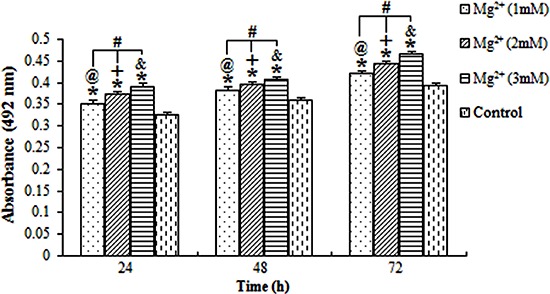
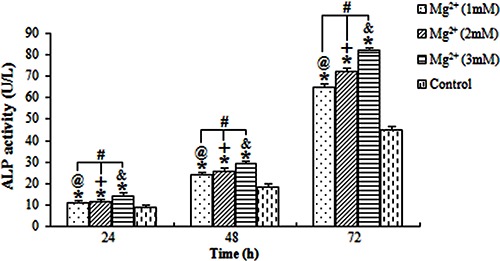
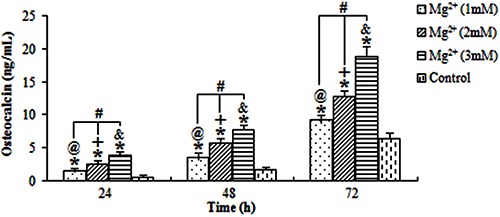
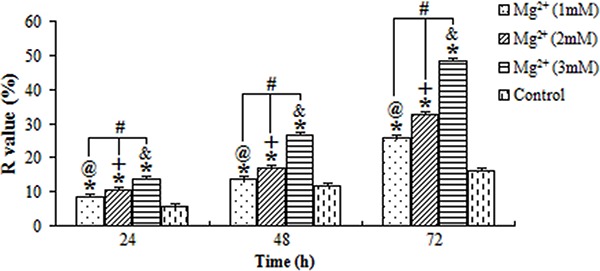
Magnesium, a promising biodegradable metal, has been reported in several studies to increase bone formation. Although there is some information regarding the concentrations of magnesium ions that affect bone remodeling at a cellular level, little is known about the effect of magnesium ions on cell gap junctions. Therefore, this study aimed to systematically investigate the effects of different concentrations of magnesium on bone cells, and further evaluate its effect on gap junctions of osteoblasts. Cultures of normal human osteoblasts were treated with magnesium ions at concentrations of 1, 2 and 3 mM, for 24, 48 and 72 h. The effects of magnesium ions on viability and function of normal human osteoblasts and on gap junction intercellular communication (GJIC) in osteoblasts were investigated. Magnesium ions induced significant (P<0.05) increases in cell viability, alkaline phosphate activity and osteocalcin levels of human osteoblasts. These stimulatory actions were positively associated with the concentration of magnesium and the time of exposure. Furthermore, the GJIC of osteoblasts was significantly promoted by magnesium ions. In conclusion, this study demonstrated that magnesium ions induced the activity of osteoblasts by enhancing GJIC between cells, and influenced bone formation. These findings may contribute to a better understanding of the influence of magnesium on bone remodeling and to the advance of its application in clinical practice.
Overview
The claims and statistics of this paper haven’t been checked yet.
Free: it reads the open-access text and checks the first 5 claims that cite a source we can check. Create a free account to check every claim.
Integrity signals
Registry
Cites
Statistics
Figures
Verification
Claims the paper makes
The claims and statistics of this paper haven’t been checked yet.
Free: it reads the open-access text and checks the first 5 claims that cite a source we can check. Create a free account to check every claim.
Claims other papers make about this one
Each is checked against this paper’s own text: does it say what the citing paper says it does?
The source backs part of the claim, not all of it — or backs it for a different population, condition or comparison.
In the citing paper
“This is consistent with reports that appropriate concentrations of Mg 2+ can promote osteogenic differentiation by upregulating ALP and bone formation-related markers, and it is considered that PDASC coating in particular provides an ionic environment centered on Mg 2+ and Ca 2+ that is favorable for promoting differentiation while suppressing excessive corrosion [45,47].”
From Functional Surface Modification of Magnesium Implant by Drug-Loaded Biodegradable Polymer Coating (2026) · cites this paper as [45]
Experimental — accuracy not yet measuredThe source backs part of the claim, not all of it — or backs it for a different population, condition or comparison.
In the citing paper
“This can be interpreted as Mg 2+ released from PM under daily medium exchange conditions acting within a concentration range that promotes osteoblast proliferation and metabolic activity in the several mM range, as reported in the literature, rather than accumulating to toxic levels [45,46].”
From Functional Surface Modification of Magnesium Implant by Drug-Loaded Biodegradable Polymer Coating (2026) · cites this paper as [45]
Experimental — accuracy not yet measuredThe source backs part of the claim, not all of it — or backs it for a different population, condition or comparison.
In the citing paper
“Mg 2+ and Ca 2+ from coating primarily drove ALP upregulation [45,47].”
From Functional Surface Modification of Magnesium Implant by Drug-Loaded Biodegradable Polymer Coating (2026) · cites this paper as [45]
Experimental — accuracy not yet measuredThe cited source says what the claim attributes to it.
In the citing paper
“This is consistent with reports that appropriate concentrations of Mg 2+ can promote osteogenic differentiation by upregulating ALP and bone formation-related markers, and it is considered that PDASC coating in particular provides an ionic environment centered on Mg 2+ and Ca 2+ that is favorable for promoting differentiation while suppressing excessive corrosion [45,47].”
From Functional Surface Modification of Magnesium Implant by Drug-Loaded Biodegradable Polymer Coating (2026) · cites this paper as [45]
Self-check
Percentages, sums and reported differences re-computed from the paper’s own numbers.
The self-check needs the paper’s full text.
Citations
Cites
Magnesium and its alloys as orthopedic biomaterials: A review
Staiger, M. P., Pietak, A. M., Huadmai, J., & Dias, G. (2006) · Biomaterials · doi:10.1016/j.biomaterials.2005.10.003 · Cited by 4,452 · cited 1×
“A few studies have reported an increase in the attachment and functions of osteoblasts on the Mg surface (14,15).”
BackgroundDegradable biomaterials based on magnesium corrosion
Witte, F., Hort, N., Vogt, C., Cohen, S., Kainer, K. U., Willumeit, R., & Feyerabend, F. (2008) · Current Opinion in Solid State and Materials Science · doi:10.1016/j.cossms.2009.04.001 · Cited by 1,820
The development of binary Mg–Ca alloys for use as biodegradable materials within bone
Li, Z., Gu, X., Lou, S., & Zheng, Y. (2008) · Biomaterials · doi:10.1016/j.biomaterials.2007.12.021 · Cited by 1,593
Zreiqat, H., Howlett, C. R., Zannettino, A., Evans, P., Schulze‐Tanzil, G., Knabe, C., & Shakibaei, M. (2002) · Journal of Biomedical Materials Research · doi:10.1002/jbm.10270 · Cited by 825 · cited 1×
“A few studies have reported an increase in the attachment and functions of osteoblasts on the Mg surface (14,15).”
BackgroundMagnesium: nutrition and metabolism
Vormann, J. (2003) · Molecular Aspects of Medicine · doi:10.1016/s0098-2997(02)00089-4 · Cited by 671 · cited 1×
“Moreover, Mg is the fourth most abundant mineral in the human body, the second most abundant in intracellular medium and the most abundant in cartilage and bone tissue during the initial stages of osteogenesis (16).”
BackgroundThree-Dimensional Structure of a Recombinant Gap Junction Membrane Channel
Unger, V. M., Kumar, N. M., Gilula, N. B., & Yeager, M. (1999) · Science · doi:10.1126/science.283.5405.1176 · Cited by 542
Xu, L., Pan, F., Yu, G., Yang, L., Zhang, E., & Yang, K. (2009) · Biomaterials · doi:10.1016/j.biomaterials.2008.12.001 · Cited by 505 · cited 1×
“Recently, magnesium (Mg) alloys or Mg-coated surfaces of metallic substrates were introduced in medical applications (12,13).”
BackgroundCherian, P. P., Siller-Jackson, A. J., Gu, S., Wang, X., Bonewald, L. F., Sprague, E., & Jiang, J. X. (2005) · Molecular Biology of the Cell · doi:10.1091/mbc.e04-10-0912 · Cited by 481
Lecanda, F., Warlow, P. M., Sheikh, S., Furlan, F., Steinberg, T. H., & Civitelli, R. (2000) · The Journal of Cell Biology · doi:10.1083/jcb.151.4.931 · Cited by 395
Skeletal and Hormonal Effects of Magnesium Deficiency
Rude, R. K., Singer, F. R., & Gruber, H. E. (2009) · Journal of the American College of Nutrition · doi:10.1080/07315724.2009.10719764 · Cited by 285 · cited 2×
“It was also reported that magnesium deficiency in the rat and/or mouse resulted in increased skeletal substance P, which in turn stimulated production of cytokines and increased bone resorption by osteoclasts (8).”
Background
Cited by
Items 101–166 of 166
Chen, P., Lee, Y., Jao, H., Wang, C., Jacobs, A., Hu, K., Chen, J., Lo, C.-S., & Lee, H. (2020) · Journal of Food Biochemistry · doi:10.1111/jfbc.13236 · Cited by 8
Wetteland, C. L., Xu, C., Wang, S. M., Zhang, C., Ang, E. J., Azevedo, C. G., & Liu, H. H. (2025) · ACS Applied Materials & Interfaces · doi:10.1021/acsami.4c14712 · Cited by 7
Takata, K., Yugami, M., Karata, S., Karasugi, T., Uehara, Y., Masuda, T., Nakamura, T., Tokunaga, T., Hisanaga, S., Sugimoto, K., et al. (2025) · Scientific Reports · doi:10.1038/s41598-025-96853-3 · Cited by 7
“Mg is bioabsorbable and has osteogenic activity 34–37 , but pure Mg is quickly absorbed by the body and is not strong enough to stabilize fracture sites 16 .”
Kareem, R. O., Barzinjy, A. A., Ateş, T., Bulut, N., Keser, S., & Kaygılı, O. (2025) · Journal of the Australian Ceramic Society · doi:10.1007/s41779-025-01289-7 · Cited by 11
Tuminoh, H., Hermawan, H., & Ramlee, M. H. (2022) · Journal of the mechanical behavior of biomedical materials/Journal of mechanical behavior of biomedical materials · doi:10.1016/j.jmbbm.2022.105457 · Cited by 7
Zhou, L., Huang, C., HuangFu, C., Shen, P., Hu, Y., Wang, N., Li, G., Deng, H., Xia, T., Zhou, Y., et al. (2024) · Ecotoxicology and Environmental Safety · doi:10.1016/j.ecoenv.2024.116655 · Cited by 7
Wang, L., Li, Y., Jiang, S., Zhang, Z., Zhao, S., Song, Y., Liu, J., & Tan, F. (2023) · Biomedical Materials · doi:10.1088/1748-605x/ace9a5 · Cited by 6
“On the one hand, a high concentration of Mg2+ in the hydrogels causes significant cytotoxicity [15].”
Chen, K., Chen, C., Wang, W.-R., Lee, Y. B., Chen, C., & Wong, P. (2024) · Biomaterials Advances · doi:10.1016/j.bioadv.2024.213963 · Cited by 7
Pinho, L. C., Alves, M. M., Colaço, B., Fernandes, M. H., & Santos, C. F. (2021) · Pharmaceuticals · doi:10.3390/ph14121281 · Cited by 6
Shahid, A., Moeen, F., Habib, S., Arshad, A., Zeeshan, R., Chaudhry, A. A., Khalid, H., Alhamoudi, F. H., Akhtar, H., & Khan, A. F. (2024) · Materials Chemistry and Physics · doi:10.1016/j.matchemphys.2024.129911 · Cited by 6
Dharmayanti, A. W. S., & Kusumawardani, B. (2018) · Dental Journal (Majalah Kedokteran Gigi) · doi:10.20473/j.djmkg.v50.i3.p131-137 · Cited by 6
Elution properties of a resorbable magnesium phosphate cement
Roller, B. L., Stoker, A. M., & Cook, J. L. (2020) · Journal of Clinical Orthopaedics and Trauma · doi:10.1016/j.jcot.2020.06.011 · Cited by 6
Osteogenic Effects of Ion Released from Biodegradable Metallic Magnesium and Calcium Coating
Miyake, R., Shimabukuro, M., Terauchi, M., Marukawa, E., & Kawashita, M. (2025) · Advanced Biology · doi:10.1002/adbi.202500401 · Cited by 5
Xie, Y., Zeng, G., Zhang, Y., Chen, C., Li, M., Ma, D., Liu, T., Liu, T., Hua, Z., Qi, Y., et al. (2025) · Composites Communications · doi:10.1016/j.coco.2025.102445 · Cited by 5
Bioceramics for antibacterial and antiviral applications
Praharaj, R., Swain, S., & Rautray, T. R. (2023) · Elsevier eBooks · doi:10.1016/b978-0-323-99626-6.00010-x · Cited by 6
Phytic acid effect on periodontal ligament fibroblast: An in-vitro study
C, S. A. A., Nassar, M., Gopalakrishnan, A. R. K., Al-Rawi, A. M., Nassar, R., & Islam, M. S. (2023) · PLoS ONE · doi:10.1371/journal.pone.0295612 · Cited by 5
Mondal, S., Samanta, R., Shit, S., Biswas, A., Bandyopadhyay, A., Dhar, R. S., & Mandal, G. (2023) · International Journal for Multiscale Computational Engineering · doi:10.1615/intjmultcompeng.2023050288 · Cited by 5
Aenglong, C., Tang, Q., Tanasawet, S., Klaypradit, W., & Sukketsiri, W. (2023) · Fisheries Science · doi:10.1007/s12562-023-01711-8 · Cited by 6
“In addition, treatments with HA, HA-Cl-Ci, and HA-OH-Lac inhibit glucocorticoid ‐ induced osteoporosis by upregulating osteogenic differentiation markers such as ALP, BMP4, Col-1A1, OTC, OSX, and RUNX2.”
BackgroundInfluentialNamnabat, M., Tamjid, E., Najafi, P., & Bazazzadeh, E. (2025) · Scientific Reports · doi:10.1038/s41598-025-28284-z · Cited by 4
Wang, C., Luo, Y., Shen, Y., Liu, B., Wang, Z., Wang, C., Ma, X., Wen, P. P., Zheng, Y., & Tian, Y. (2024) · Chemical Engineering Journal · doi:10.1016/j.cej.2024.158712 · Cited by 4
Self-citationChaushu, G., Reiser, V., Rosenfeld, E., Masri, D., Chaushu, L., Čandrlić, M., Rider, P., & Kačarević, Ž. P. (2025) · Healthcare · doi:10.3390/healthcare13091068 · Cited by 4
“The decision to choose more extensive surgical interventions should be based on careful consideration of individual case characteristics, like in this described case report, including lesion size, bone integrity, and the potential for spontaneous healing.”
Cellular response to bioactive glasses and glass–ceramics
Banijamali, S., Heydari, M. Z., & Mozafari, M. (2020) · Elsevier eBooks · doi:10.1016/b978-0-08-102967-1.00019-0 · Cited by 4
Review on the Biocompatibility and Bioactivity of Forsterite: In Vitro and in Vivo studies
Avram, A., Mocanu, A., Tomoaia, G., & Tomoaia-Cotişel, M. (2022) · Annals of the Academy of Romanian Scientists Series on Biological Sciences · doi:10.56082/annalsarscibio.2022.1.167 · Cited by 5
Kouyaté, A., 1 UFR Environnement, U. J. L. G., Yapi, Y. H. A., Guillaume, P. L. A., Ahoussou, A. P., Trokourey, A., 2 UFR Sciences biologiques, U. P. G. C., & 3 Laboratoire de Chimie-Physique, U.-S. (2020) · AIMS Materials Science · doi:10.3934/matersci.2020.3.323 · Cited by 4
Functional Surface Modification of Magnesium Implant by Drug-Loaded Biodegradable Polymer Coating
Park, J.-E., Jang, Y.-S., Ko, S.-O., & Lee, M.-H. (2026) · Applied Sciences · doi:10.3390/app16031542 · Cited by 3
Li, T., Bai, Y., Zhang, C., Gao, Y., & Ma, W. (2025) · Journal of Thermal Spray Technology · doi:10.1007/s11666-025-01987-5 · Cited by 3
“Previous studies also showed that the presence of Mg 2 ? ions could improve the proliferation of preosteoblastic cells and influence mineral metabolism in the bone remodeling process (Ref 37, 38).”
Self-citationRenner, T., Steinacker, V. C., Fleckenstein, N., Marx, L., Kübler, A. C., Otto, P. F., & Gbureck, U. (2025) · Scientific Reports · doi:10.1038/s41598-025-15174-7 · Cited by 3
“He et al. 69 similarly reported rising ALP and osteocalcin levels between 1 and 3 mM, along with enhanced gap junction communication.”
Leață, G., Earar, K., Munteanu, C., Lupu, F. C., Vlad, M. D., Istrate, B., Cimpoeșu, R., Pașca, S. A., & Sindilar, E. V. (2025) · Bioengineering · doi:10.3390/bioengineering12090939 · Cited by 3
“…related to the reorganization of cytoskeletal elements [42,43], magnesium ions have a role in regulating the expression of genes and proteins involved in cell growth and osteogenesis [44], and strontium is known to have an osteogenic role, stimulating cell proliferation and differentiation [45].”
Part I: Dentinogenic Effect of Magnesium Oxide on Normal Human Dental Pulp Cells: An In Vitro Study
Salem, R. M. (2021) · Madridge Journal of Dentistry and Oral Surgery · doi:10.18689/mjdl-1000124 · Cited by 3
“Mg2+ is known to stimulate osteoblast proliferation, differentiation, migration, and mineralization ability [20,21].”
Effect of magnesium on bone tissue remodeling
Litovka, I. G., & Березовский, В. А. (2018) · Fìzìologìčnij žurnal · doi:10.15407/fz64.03.091 · Cited by 5
Ion—modified optimization of smart scaffolds in bone tissue regeneration
Basavarajappa, Y. (2023) · Frontiers in Biomaterials Science · doi:10.3389/fbiom.2023.1289382 · Cited by 3
Lin, K.-Y., Wu, Y., Aung, L. M., Teng, N., Sun, Y.-S., Salamanca, E., & Chang, W. (2024) · RSC Advances · doi:10.1039/d4ra03496a · Cited by 2
Luminescent magnesium bone whitlockite nanopowders doped with europium ions
Рустамовна, Х. Д., Goldberg, M. A., Алексеевна, К. П., Deyneko, D. V., Fomin, A. S., Sentcova, A. M., Antonova, O. S., Konovalov, A. A., Donskaya, N. O., Lebedev, V. N., et al. (2025) · Optical Materials · doi:10.1016/j.optmat.2025.116736 · Cited by 2
Ivănescu, M. C., Munteanu, C., Cimpoeșu, R., Vlad, M. D., Istrate, B., Lupu, F. C., Sindilar, E. V., Vlasa, A., Stan, C. I., Ivănescu, M. L., et al. (2025) · Medicina · doi:10.3390/medicina61071271 · Cited by 2
“In addition, Mg ions are essential to the regulation of various cellular functions, such as osteoblast cell proliferation, and the expression levels and activities of several key osteogenic markers, such as alkaline phosphate and osteocalcin [67].”
Rath, P., Mandal, S., Harinarayanan, T. A., Sahoo, S. N., Das, P., Ghosh, P., Mandal, S., Ghosh, D., Roy, M., & Nandi, S. K. (2025) · Journal of Materials Chemistry B · doi:10.1039/d5tb01425e · Cited by 3
Bharadwaj, T., Chrungoo, S., Jenamani, A. N. D. S., Pradhan, S. S., & Verma, D. K. (2025) · Carbohydrate Polymers · doi:10.1016/j.carbpol.2025.124791 · Cited by 4
Kareem, H. R., Hussein, N. A., Hamim, H. A., Al‐Musawi, M. H., Almajidi, Y. Q., Azamian, F., Zahed, P., Kamaluldeen, A., Talebi, S., Esfahani, S. N., et al. (2026) · International Journal of Biological Macromolecules · doi:10.1016/j.ijbiomac.2026.150407 · Cited by 2
Palermo, A., Naciu, A. M., Zavatta, G., Sargentini, E., Menale, C., Yavropoulou, M. P., Cipriani, C., Tabacco, G., & Anastasilakis, A. D. (2026) · European Journal of Endocrinology · doi:10.1093/ejendo/lvag076 · Cited by 4
Investigation for the pro-angiogenic properties of eggshell-derived nanoparticles
Nagchowdhury, P., Haque, S., Patra, U., Londhe, S., Banerjee, R., & Patra, C. R. (2025) · Biomedical Materials · doi:10.1088/1748-605x/add8d7 · Cited by 2
“Considering the role of calcium and magnesium (in ionic form) for wound healing and bone formation [10, 11, 16, 17], we hypothesized the involvement of calcium and magnesium present in eggshells either in the form of bulk materials or nanoform, may induce angiogenesis, and ultimately help in wound…”
Khedir, R., Taqa, G. A., & Qassar, S. S. S. A. (2023) · Egyptian Journal of Veterinary Science · doi:10.21608/ejvs.2022.155237.1377 · Cited by 10
Li, Y., Wang, Y., Xu, L., Liu, C., Cui, J., Huang, Y., Li, S., Wang, Y., & Dong, B. (2024) · Frontiers in Endocrinology · doi:10.3389/fendo.2024.1375871 · Cited by 1
“Furthermore, Mg ions were observed to enhance gap junction intercellular communication (GJIC) between osteoblasts, stimulate osteoblast cell viability, and facilitate bone formation (34).”
BackgroundJiao, Q., Xu, H., Yang, L. J., Zhang, Y., Shi, C., Zhang, M., & Zhang, E. (2025) · Metals · doi:10.3390/met15111187 · Cited by 1
Mabrouk, M., Aboelnasr, M. A., Shiomoto, S., Nishimura, S., Beherei, H. H., Alzahrani, E. A., Tanaka, Y., & Tanaka, M. (2025) · Biomaterials Advances · doi:10.1016/j.bioadv.2025.214606 · Cited by 1
Freeze-dried magnesium doped hydroxyapatite for biomedical applications
Predoi, D., Iconaru, S. L., Ciobanu, C. S., Rokosz, K., Raaen, S., Leduc, D., El-Kettani, M. E.-C., Zelmar, P., Bleoţu, C., Predoi, M. V., et al. (2026) · Micron · doi:10.1016/j.micron.2026.103997 · Cited by 3
Pepgen-P15 delivery to bone: A novel 3D printed scaffold for enhanced bone regeneration
Eshghinejad, A., Varshosaz, J., Najafinezhad, A., & Mirian, M. (2024) · Journal of Drug Delivery Science and Technology · doi:10.1016/j.jddst.2024.106280 · Cited by 1
High-Temperature Solid-Phase Interaction of Hydroxyapatite with Mg, Sr, and Zn Nitrates
Petrakova, N. V., Ашмарин, А. А., Baranov, O. V., Fedotov, A. Y., Barinov, S. M., & Комлев, В. С. (2018) · Doklady Chemistry · doi:10.1134/s0012500818110095 · Cited by 1
Asgari, M. S. (2020) · Queensland University of Technology · doi:10.5204/thesis.eprints.201975
Evtushenko, M. S., Koshоva, О. Y., Kryzhna, S. I., & Tyupka, T. I. (2021) · Likarska sprava · doi:10.31640/jvd.1-2.2021(8
Evtushenko, M. S., Koshоva, О. Y., Kryzhna, S. I., & Tyupka, T. I. (2021) · Likarska sprava · doi:10.31640/jvd.3-4.2021(10
FORSTERITE AS AN ALTERNATIVE FOR ORTHOPAEDIC IMPLANTS – SHORT REVIEW
Avram, A., Mocanu, A., Tomoaia, G., & Tomoaia-Cotişel, M. (2021) · Annals of the Academy of Romanian Scientists Series on Physics and Chemistry · doi:10.56082/annalsarsciphyschem.2021.2.32 · Cited by 3
Verma, H., Garg, R., Verma, A., Singh, J., & Chakraborty, S. (2023) · Medical Hypotheses · doi:10.1016/j.mehy.2023.111239
Nanotechnology in Fracture Management
Arora, N., Saharan, S., & Kumar, R. (2024) · Livestock diseases and management · doi:10.1007/978-981-16-1610-5_26
Tudpor, K., Kareechum, W., Sriphuwong, C., Nghiep, L. K., & Turnbull, N. (2024) · Studies in health technology and informatics · doi:10.3233/shti240823
Nanotechnology-based approaches for bone tissue engineering
Bonany, M. (2022) · UPCommons institutional repository (Universitat Politècnica de Catalunya) · doi:10.5821/dissertation-2117-413337
Chronic Kidney Disease‐Mineral Bone Disorder ( CKD ‐ MBD ) in Pediatric Kidney Transplant Recipients
Tamer, Z., Hanudel, M. R., & Salusky, I. B. (2025) · Pediatric Transplantation · doi:10.1111/petr.70021
“Magnesium, predominantly stored in the bone, is essential for maintaining bone integrity, facilitating hydroxyapatite structure, and promoting osteo-blast proliferation while inhibiting osteoclast activity [61–64].”
Min, S., & Tian, Y. (2025) · PubMed Central · doi:10.19723/j.issn.1671-167x.2025.02.014
Self-citationSmall Molecules and Nanoparticles in Bone Healing: A Transformative Pathway in Tissue Engineering
Monisha, K., & Narayan, S. (2025) · Regenerative Engineering and Translational Medicine · doi:10.1007/s40883-025-00423-y · Cited by 2
“This improves osteoblasts’ reactivity to numerous stimuli [115].”
Wu, Y., Takai, S., & Yabutsuka, T. (2025) · International Journal of Molecular Sciences · doi:10.3390/ijms262210950
“It has been widely reported that Mg 2+ can stabilize amorphous calcium phosphate, retard its crystallization into apatite [12], and stimulate osteogenesis in human osteoblasts [13].”
Calcium silicate in drug delivery
Gaikwad, V. L., Dhake, P. R., & Mahalinge, V. S. (2025) · Elsevier eBooks · doi:10.1016/b978-0-323-95366-5.00016-7
Şahin, Y. M. (2025) · Journal of the Australian Ceramic Society · doi:10.1007/s41779-025-01315-8
“This reduction could be explained by the local decrease in pH, which occurs as Mg dissolves [56, 57] and potentially stressing the cells.”
Nutrition in Osteoporosis: Prevention and Management
Khan, S., Parab, B., & Hasan, S. (2026) · IntechOpen eBooks · doi:10.5772/intechopen.1012585
Scognamiglio, C., Perucchi, A., Čandrlić, M., & Kačarević, Ž. P. (2026) · Dentistry Journal · doi:10.3390/dj14060381
Membranes for Bone Engineering Enriched with Magnesium- and Strontium-Substituted Hydroxyapatite
Rodrigues, M. A. R., Guedes, H. O., GALLORO, M. B., Medeiros, A. C. C., Delechiave, G., Sarra, G., Silva, L. T. S., Daguano, J. K. M. B., Catalani, L. H., Nali, L. H. D. S., et al. (2026) · ACS Omega · doi:10.1021/acsomega.6c01548
Multifunctional Roles of Magnesium Ions in Modulating Bone Regeneration-Related Cells
Lei, X.-C., Li, R., Nie, Y., Gao, D., Zhang, W., Lai, Y., & Li, C. (2026) · Bioengineering · doi:10.3390/bioengineering13091093
“Mechanistically, Mg 2+ is involved in bone formation through the regulation of multiple signaling pathways, including Notch, Wnt/ β -catenin, PI3K/Akt/mTOR, and MAPK pathways [17–22].”
Metadata
- Authors
- He, L. Y., Zhang, X. M., Liu, B., Tian, Y., & Ma, W. H.
- Affiliations
- Hebei Medical University (CN)
- Corresponding author
- He, L.Y.
- Zhang, X.M.
- Venue
- Brazilian Journal of Medical and Biological Research
- Publisher
- FapUNIFESP (SciELO)
- Published
- 2016
- Volume
- 49
- Issue
- 7
- ISSN
- 0100-879X (ISSN-L)
- 1414-431X
- PMC
- PMC4942226
- OpenAlex
- W2473571684
- Semantic Scholar
- 662777eedf9a0d4c2be67f1765c5cafb2b362203
- Cited by
- 166
- References
- 30
- Citations by year
- 2026: 9 · 2025: 27 · 2024: 22 · 2023: 17 · 2022: 25 · 2021: 18 · 2020: 14 · 2019: 11 · 2018: 13 · 2017: 8 · 2016: 1
- FWCI
- 11.52
- Type
- journal article
- Language
- en
- Open access
- gold
- doi.org
- Licence
- cc-by
- creativecommons.org/licenses/by/4.0/ (vor)
- creativecommons.org/licenses/by/4.0/ (am)
- creativecommons.org/licenses/by/4.0/ (tdm)
- Locations
- Brazilian Journal of Medical and Biological Research (publishedVersion, cc-by)
- Europe PMC (PubMed Central) (publishedVersion, cc-by)
- PubMed Central (publishedVersion, cc-by)
- PubMed (publishedVersion)
- LA Referencia (Red Federada de Repositorios Institucionales de Publicaciones Científicas) (publishedVersion, other-oa)
- Americanae (AECID Library) (submittedVersion, cc-by)
- DOAJ (DOAJ: Directory of Open Access Journals) (submittedVersion, cc-by-sa)
- Topics
- Health Sciences › Nursing › Nutrition and Dietetics › Magnesium in Health and Disease
- Physical Sciences › Materials Science › Biomaterials › Magnesium Alloys: Properties and Applications
- Life Sciences › Biochemistry, Genetics and Molecular Biology › Molecular Biology › Bone Metabolism and Diseases
- Keywords
- magnesium ions, human osteoblasts, gap junctional intercellular communication, cell viability, alkaline phosphatase activity, osteocalcin, bone formation, bone remodeling, biodegradable magnesium
- MeSH terms
- Cell Communication, Cell Survival, Cells, Cultured, Enzyme-Linked Immunosorbent Assay, Humans, Ions, Magnesium, Osteoblasts, Osteogenesis, Time Factors, Reproducibility of Results, Osteocalcin, Gap Junctions, Cell Proliferation
About these checks
Registry, retraction, Cites and statistics results are computed, not judged, with one exception: a printed reference that no index lists is read once by a model before it counts as a citation error. Claims are extracted by a model and kept only when their quote appears verbatim in the text; each cited source is then checked, with a model’s help, for whether it says what the claim relies on. Those verdicts can be wrong — read the claim’s quote and the cited source before relying on one.
Statistics and arithmetic are recomputed, not judged.
Confidence bands are shown only for fields calibrated on our annotated test set. None is calibrated yet, so no band is shown.
What counts as a claim ›How we measure confidence ›How we check this ›
Are you an author, or do you see a problem with this page? Request a review
Data sources
Bibliographic data: Semantic Scholar, OpenAlex, Crossref.
Contains information from the Semantic Scholar Academic Graph Datasets, made available under the ODC Attribution License (ODC-BY 1.0).
Semantic Scholar’s data is described in: Kinney, R., et al. (2023). The Semantic Scholar Open Data Platform. arXiv:2301.10140.
