

The DOI matches its Crossref record; 19 of the 25 references it cites were found in a registry or an index.
The use of artificial intelligence to improve the scientific writing of non-native english speakers
Open accessAbstract
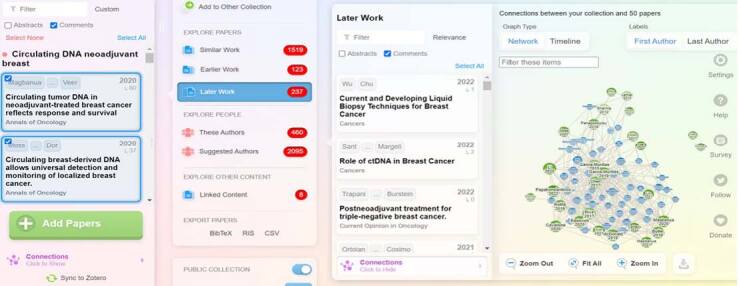
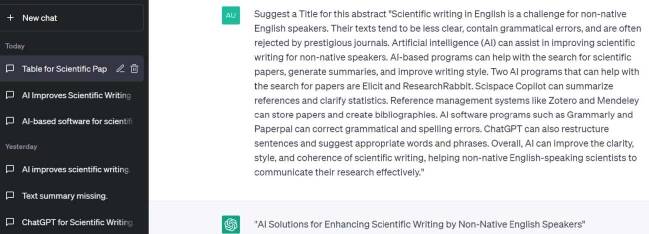
OBJECTIVE: Scientific writing in English is a daunting task for non-native English speakers. The challenges of writing in a foreign language are evident in the scientific literature where texts by non-native English-speaking scientists tend to be less clear and succinct, contain grammatical errors, and are often rejected by prestigious journals. METHODS: We conducted a non-systematic review of the most recent literature using the terms "Artificial Intelligence," "Scientific Writing," and "Non-English Speaking" to create a narrative review. RESULTS: Artificial intelligence can be a solution to improve scientific writing, especially for non-native English-speaking scientists. Artificial intelligence can assist in the search for pertinent scientific papers, generate summaries, and help with the writing of different sections of the manuscript, including the abstract, introduction, methods, results, and discussion. Artificial intelligence-based programs can correct grammatical errors and improve writing style, both of which are particularly helpful for non-native English speakers. Two artificial intelligence programs that can help with the search for pertinent scientific papers on the internet are Elicit and ResearchRabbit. Scispace Copilot can be used to summarize the retrieved reference. The artificial intelligence software programs such as Grammarly and Paperpal can correct grammatical and spelling errors, while ChatGPT can also restructure sentences and paragraphs, reword text, and suggest appropriate words and phrases. CONCLUSION: Overall, artificial intelligence can be an effective tool to improve the clarity, style, and coherence of scientific writing, helping non-native English-speaking scientists to communicate their research more effectively.
Overview
The claims and statistics of this paper haven’t been checked yet.
Run the check — free, no account needed. It reads the open-access text and checks the sources it cites.
Integrity signals
Registry
Cites
Statistics
Figures
Verification
Claims the paper makes
The claims and statistics of this paper haven’t been checked yet.
Run the check — free, no account needed. It reads the open-access text and checks the sources it cites.
Claims other papers make about this one
Each is checked against this paper’s own text: does it say what the citing paper says it does?
The cited source says what the claim attributes to it.
In the citing paper
“Our observations align with those of others who investigated AI platforms for writing and research objectives, as they found that Elicit and SciSpace are far more dedicated to searching for scientific papers and summarizing references [40].”
From Reference Hallucination Score for Medical Artificial Intelligence Chatbots: Development and Usability Study (2024) · cites this paper as [40]
Self-check
Percentages, sums and reported differences re-computed from the paper’s own numbers.
The self-check needs the paper’s full text.
Citations
Cites
Sallam, M. (2023) · Healthcare · doi:10.3390/healthcare11060887 · Cited by 3,126
Sarker, I. H. (2022) · SN Computer Science · doi:10.1007/s42979-022-01043-x · Cited by 1,208
Papers and patents are becoming less disruptive over time
Park, M., Leahey, E., & Funk, R. J. (2023) · Nature · doi:10.1038/s41586-022-05543-x · Cited by 899
Hamel, R. E. (2007) · AILA Review · doi:10.1075/aila.20.06ham · Cited by 332
The Future of AI in Medicine: A Perspective from a Chatbot
King, M. R. (2023) · Annals of Biomedical Engineering · doi:10.1007/s10439-022-03121-w · Cited by 299 · cited 2×
“2023;69(9):e20230560 ORIGINAL ARTICLE https://doi.”
BackgroundArtificial intelligence in scientific writing: a friend or a foe?
Altmäe, S., Sola-Leyva, A., & Salumets, A. (2023) · Reproductive BioMedicine Online · doi:10.1016/j.rbmo.2023.04.009 · Cited by 174
Artificial intelligence in academic writing: a paradigm-shifting technological advance
Golan, R., Reddy, R., Muthigi, A., & Ramasamy, R. (2023) · Nature Reviews Urology · doi:10.1038/s41585-023-00746-x · Cited by 136
Ten simple rules for structuring papers
Mensh, B., & Kording, K. (2017) · PLOS Computational Biology · doi:10.1371/journal.pcbi.1005619 · Cited by 98
Peer review perpetuates barriers for historically excluded groups
Smith, O. M., Davis, K. L., Pizza, R. B., Waterman, R., Dobson, K. C., Foster, B., Jarvey, J. C., Jones, L. N., Leuenberger, W., Nourn, N., et al. (2023) · Nature Ecology & Evolution · doi:10.1038/s41559-023-01999-w · Cited by 80
Journals take up arms against AI-written text
Brainard, J. (2023) · Science · doi:10.1126/science.adh2762 · Cited by 67
Research works printed but not linked: 4
- Armani A, 2020, 10 simple steps to writing a scientific paper [Internet], The International Society for Optics and Photonics.
- Pineda A, 2021, In which section should you start writing your scientific paper? [Internet], I focus and write.
- Lowe L, 2017, Advice on publishing your first scientific journal article [Internet], Capstone Editing.
- Parker J, 2021, Top 5 AI-based paraphrasing tools to avoid plagiarism, Jack & Bean.
Cited by
Sorted by citations
Items 101–161 of 161
Revolutionizing Scientific Writing: The Role of AI in Enhancing Efficiency, Accuracy, and Creativity
Setiana, L. N., & Chamalah, E. (2025) · Journal of Language, Literature, and Cultural Dynamics · doi:10.65840/jllcd.v2i01.30 · Cited by 1
“The area of overlap between ChatGPT and QuillBot indicates a shared role in paraphrasing and sentence restructuring (Fera Andriani, 2024), while the wedge between ChatGPT and Grammarly emphasizes the function of grammar correction and sentence quality improvement (Giglio, 2023).”
Ribeiro, S. D. J., Efendi, A., Hartono, H., & Martins, A. (2025) · JP-BSI (Jurnal Pendidikan Bahasa dan Sastra Indonesia) · doi:10.26737/jp-bsi.v10i1.7028 · Cited by 1
“Penelitian ini mendukung temuan terdahulu mengenai keterbatasan kohesi pada penutur asing (Anindita, 2024; Giglio & Costa, 2023; Kajzer-Wietrzny, 2022; Saadat & Alavi, 2018), dan secara khusus menyoroti tantangan tambahan dalam konteks multibahasa seperti di Timor-Leste.”
Forte d’une reconnaissance accrue, la ROR maintient le cap !
Ramboarisata, L. (2025) · Revue de l'organisation responsable · doi:10.3917/ror.201.0003 · Cited by 1
González‐Argote, J., Castillo, V. S., & Gallego, T. A. C. (2025) · Telos Revista de Estudios Interdisciplinarios en Ciencias Sociales · doi:10.36390/telos271.07 · Cited by 1
IMPACTO DA IA NA PRODUTIVIDADE CIENTÍFICA: UMA REVISÃO SISTEMATIZADA
Figueiredo, F. J. G., Marinho, D. F. P., Holanda, G. C., Pinto, N. B., de Lira, R. C., de Assis, E. V., & Nunes, M. A. P. (2025) · Revista Foco · doi:10.54751/revistafoco.v18n1-015 · Cited by 1
Carneiro, M. (2024) · Women & health · doi:10.1080/03630242.2025.2445890 · Cited by 1
“AI may help non-natives improve their writing abilities and thus produce clear concise manuscripts with better chances of publication at no cost (Giglio and Mupd 2023).”
Seam, N., Chotirmall, S. H., Martínez, F. J., Halayko, A. J., Harhay, M. O., Davis, S. D., Schumacker, P. T., Tighe, R. M., Burkart, K. M., & Cooke, C. R. (2024) · American Journal of Respiratory and Critical Care Medicine · doi:10.1164/rccm.202411-2208ed · Cited by 3
“Reviewers for whom English is not their fi rst language may wish to use LLMs to write more clearly (13).”
Reba, Y. A., Hidayah, N., Wiyono, B. B., Muslihati, M., & Arip, M. A. S. M. (2026) · Journal of Education and Learning (EduLearn) · doi:10.11591/edulearn.v20i4.26743
I Am Not a Writer. . . or Am I?
Mujika, I. (2026) · International Journal of Sports Physiology and Performance · doi:10.1123/ijspp.2026-0419
Lies, I. H., Urevick, A., Major, L., Buerster, K. B., Stewart, A., Rippy, M. G., & Bhattacharya, S. D. (2026) · The American Surgeon · doi:10.1177/00031348261496616
Alam, M. S., Asmawi, A., Haque, M. H., Fatema, S., Ullah, M., Patwary, M. N., Fatema, T., & Akhter, H. (2026) · Discover Education · doi:10.1007/s44217-026-02263-6
“It has been unfolded from empirical evidence that non-native English-speaking researchers (N-NESRs) often encounter challenges in getting their scientific work published because of their insufficient command of English [5–8].”
Yang, M., Chen, Q.-H., Chiu, M. M., Lin, A., & Ma, S.-Y. (2026) · Language Teaching Research · doi:10.1177/13621688261487634
Otero, P. (2026) · Archivos Argentinos de Pediatria · doi:10.5546/aap.2026-11022
Alhasnawi, S., Selvi, B., Radif, M., & Orak, S. D. (2026) · SAGE Open · doi:10.1177/21582440261491814
PAKISTANI ESL UNDERGRADUATES' PERCEPTIONS ABOUT THE ROLE OF CHATGPT IN ACADEMIC WRITING
Shaikh, F., Palpanadan, S. T., Siming, I. A., & Abbasi, A. A. (2026) · Natural Language Processing Journal · doi:10.1016/j.nlp.2026.100240
Angelier, V. (2026) · AI and Ethics · doi:10.1007/s43681-026-01376-w
Forum: Factors Influencing Publishing Success in Forestry Journals
Chambers, C. L., Edgeley, C. M., Becdach, R. E., DeJong, M., Gunther, M. S., Morzillo, A. T., Titus, V. R., Wan, H. Y., Woodford, C., & McComb, B. C. (2026) · Journal of Forestry · doi:10.1007/s44392-026-00109-5
God save the reviewer! Reviewing science in the age of AI
Milani, G., Calimeri, F., & de Winter, J. (2026) · European Journal of Pediatrics · doi:10.1007/s00431-026-07402-7
Kamińska, A. M. (2026) · Zagadnienia Informacji Naukowej - Studia Informacyjne · doi:10.36702/zin2026.01.02
Opportunities and challenges of generative AI in the research lifecycle
Sadeghi, N., Nakamura, E., Norman, L. J., Okur, A., Ouyang, J. X., Sudre, G. P., & White, T. J. H. (2026) · Aperture Neuro · doi:10.52294/001c.165447
Artificial Intelligence in Scientific Writing – Our Editorial Position
Stone, E. C. A., & Adjei, A. A. (2026) · JTO Clinical and Research Reports · doi:10.1016/j.jtocrr.2026.101035
AI Writing Vocabulary in Ophthalmology: Faster Non-Native Adoption, Unchanged Outcomes
Berni, A., Ting, D. S. W., Caputo, G., Russo, A., Gutiérrez-Sinisterra, L., Avitabile, A., Virgili, G., Reibaldi, M., Giansanti, F., Bacherini, D., et al. (2026) · American Journal of Ophthalmology · doi:10.1016/j.ajo.2026.08.011
Artificial Intelligence in Scientific Writing – Our Editorial Position
Stone, E. C. A., & Adjei, A. A. (2026) · Journal of Thoracic Oncology · doi:10.1016/j.jtho.2026.103950
Sebo, P., Nie, B., & Wang, T. (2026) · Journal of the Medical Library Association · doi:10.5195/jmla.2026.2266
“…with higher citation rates and visibility [2–5, 51 ] , although some For researchers, LLMs such as ChatGPT may serve as useful co-writing tools to enhance the completeness, precision, or discoverability of titles, particularly for early-career researchers or non-native English speakers [53].”
León, F. G., & Sosa‐Panzera, L. (2026) · Biotropica · doi:10.1111/btp.70243
“The growing integration of AI tools into scientific writing is rapidly transforming research workflows and may help students communicate their research more effectively (Giglio and da Costa 2023).”
Strategic integration or skill compensation? Understanding GenAI use in online higher education
Sylvester, J., Kulick, M., Maganares, L., & Smith, S. (2026) · International Conference on Artificial Intelligence in Education · doi:10.1108/aiie-08-2025-0237
Guest editorial: Psychobiography, business leadership and the advancement of theory
Banai, M., Mayer, C.-H., & van Niekerk, R. (2026) · Leadership & Organization Development Journal · doi:10.1108/lodj-07-2026-969
Tridinanti, G., Maskana, N., Maulana, I., & Faradila, Y. (2026) · Journal of English Education · doi:10.61994/jee.v4i1.1126
“Similarly, Giglio and da Costa, (2023) observed that tools such as Grammarly increase not only grammar but also writing clarity and consistency.”
Weak-lensing mass calibration of \emph{Planck} Sunyaev--Zel'dovich clusters with HSC-SSP Year~3
Malag'on, A. A. P., Miyatake, H., More, S., Battaglia, N., Lee, E., & Bahcall, N. (2026) · doi:10.48550/arxiv.2606.17984
“…et al. Duringthe preparation of this work, Claude Code (Opus 4.6 and Sonnet 4.6, Anthropic) and ChatGPT (5.5, OpenAI) were used as coding assistants and to help overcome language barriers associated with the use of English as an additional language [97, 98] by improving grammar and writing.”
InfluentialChatGPT assisted generation of systematic review ideas in urooncology
Doğan, A. E., & Ozenc, G. (2026) · Revista da Associação Médica Brasileira · doi:10.1590/1806-9282.20250910
“In addition, AI has been reported to improve the quality and readability of scientific writing 8 .”
Meta-research on key metrics of preregistered scoping reviews
Nordmann, K., Kuhn, P., & Fischer, F. (2026) · Research Synthesis Methods · doi:10.1017/rsm.2026.10078
Artificial Intelligence Use in Academic Writing and Research: Advantages, Risks and Recommendations
Abdullah, R. Y. (2026) · Ninevah Journal of Public Health & Nursing · doi:10.64554/njphn.2026.192022
“While not exclusively found in the English language, these enhancements provided a reliable means of ensuring equal opportunity for all researchers to communicate with clarity and precision within the context of the global academic community [4, 16].”
InfluentialLiu, J., & Hubbard, K. (2026) · NABE Journal of Research and Practice · doi:10.1080/26390043.2026.2674633
Schreiben mit System – ChatGPT in der wissenschaftlichen Praxis von Orthopädie und Unfallchirurgie
Zehnder, P., Völk, D., Ketzer, C., Zyskowski, M., & Biberthaler, P. (2026) · Die Orthopädie · doi:10.1007/s00132-026-04833-w
Breaking Language Barriers with AI: Transforming Academic Writing in Higher Education
Yaacob, Y., Ahmad, R., Mustamam, N. I., A'seri, M. S. M., & Mahmud, M. (2026) · International Conference Innovation Engineering and Technology · doi:10.1109/iciet69664.2026.11561609
“This is particularly beneficial for non-native English speakers [14].”
Ead, H. A. (2026) · Journal of Humanities and Applied Social Sciences · doi:10.1108/jhass-10-2025-0210
Yu, R. (2026) · Exploring Science Academic Conference Series · doi:10.70267/ic-aimees.2026024160
“For instance, some studies advocate for concise and objective narratives as more highly valued [10], while others suggest that moderate subjectivity can enhance persuasiveness [11].”
Automated feedback for speaking and writing skills: Deep learning in English language assessment
Asrifan, A., Cardoso, L. M. O. D. B., & Vargheese, K. (2026) · Edulite: Journal of English Education, Literature, and Culture · doi:10.30659/e.11.1.67-85
Leveraging AI-Powered Tools in Academic Research: Promises and Perils
Aouri, Z. E. (2026) · Lingua. Language and Culture · doi:10.24193/llc.2025.1.9
“…in organizing longer, more complex especially novice researchers, improve their academic writing skills (Floridi & Chiriatti, 2020; Pinkwart, 2016; Thomas et al., 2023; Noy & Zhang, 2023; Giglio & Costa, 2023). higher education and academia made great contributions to exploring the academic realm.”
Artificial Intelligence Tools for Preparing Scientific Reviews: A Comparative Applied Study
Nabil, O. (2026) · Education for Information · doi:10.1177/01678329261425828
Jain, A., & Gupta, V. (2026) · Current Medicine Research and Practice · doi:10.4103/cmrp.cmrp_163_25
Students′ Voices on Artificial Intelligence: Uncovering the Dependency Paradox in Academic Writing
Jannah, S. M., Putro, N. H. P. S., Andriyanti, E., Hidayat, N., Mokay, M. M., Rahmawati, R. N., Nursalam, Suprianti, G. A. P., & Safa, B. S. S. (2026) · Human Behavior and Emerging Technologies · doi:10.1155/hbe2/7738557 · Cited by 2
The blurred lines of plagiarism and ai authorship in scientific publishing
Shomoossi, N., & Alizadeh, K. (2026) · Journal of Medical Education Development · doi:10.66224/edcj.19.1.105
Pinto, J., Cea, A., & Fondo, M. D. C. (2025) · Revista Electrónica de Lingüística Aplicada · doi:10.58859/rael.v24i1.641 · Cited by 1
Pinnavaia, L. (2025) · Italiano LinguaDue · doi:10.54103/2037-3597/30545
Improving Lecturer Competence and Research Impact through Scientific Article Writing Workshop
Ramadani, T. A., Jami'in, M. A., Anda Iviana, J., Leonard, R., Widiana, D. R., Sriwijayasih, I., Novianarenti, E., & Gunawan, I. (2025) · International Journal of Community Service Learning · doi:10.23887/ijcsl.v9i4.93278
Habibie, P. (2025) · Written Communication · doi:10.1177/07410883251372206 · Cited by 1
“…and literature integration, GAI can aid researchers in constructing scholarly arguments that are both more comprehensive and more attuned to the multiplicity of perspectives characterizing contemporary inter-disciplinary inquiry (see Giglio & da Costa, 2023; Huang & Tan, 2023; Jenko et al., 2024).”
Trajetória da nova regulamentação de cosmetovigilância no Brasil: uma revisão documental
Mota, D. M., Leitão, L. O., Troncoso, G., & Silva, M. T. (2025) · Vigilância Sanitária em Debate · doi:10.22239/2317-269x.02391
Adi, S., Soenyoto, T., & Darmawan, A. (2025) · GANDRUNG: Jurnal Pengabdian Kepada Masyarakat · doi:10.36526/gandrung.v6i1.4230
“Chatbot berkemampuan AI, seperti ChatGPT, telah dikembangkan untuk membantu penulisan ilmiah dengan mengatur materi, menghasilkan draf awal, dan mengoreksi (Castellanos-Gomez, 2023; Giglio & Costa, 2023; İmre, 2023) .”
Wang, S.-W., & Kew, S. N. (2025) · World Journal of English Language · doi:10.5430/wjel.v15n4p70
An Exploration of Artificial Intelligence Assisted Strategies in English Reading Teaching
Zhao, Q. (2025) · Applied Mathematics and Nonlinear Sciences · doi:10.2478/amns-2025-0632
IMPLEMENTASI ARTIFICIAL INTELLIGENCE DALAM PENGEMBANGAN KETERAMPILAN MENULIS AKADEMIK
Wardhana, D. E. C., Arsyad, S., Arono, A., Yunita, W., Juansyah, M., Syaprizal, S., & Satinem, S. (2024) · JMM (Jurnal Masyarakat Mandiri) · doi:10.31764/jmm.v8i5.26090
“Kecerdasan Buatan (AI) telah menjadi subjek yang semakin menarik perhatian dalam dunia akademik, terutama dalam konteks meningkatkan kemampuan menulis artikel ilmiah (Giglio & da Costa, 2023; Karadogan, 2024).”
Ren, D., & Roland, D. (2024) · Pediatric Research · doi:10.1038/s41390-024-03217-0
Artificial intelligence and the scientific writing of non-native English speakers
Daungsupawong, H., & Wiwanitkit, V. (2024) · Revista da Associação Médica Brasileira · doi:10.1590/1806-9282.20231291
Ortopedi ve travmatoloji araştırmalarında yapay zekâ uygulamaları: Doğal dil işleme potansiyeli
Köse, Ö., Yapar, D., & Boz, M. (2024) · Türk Ortopedi ve Travmatoloji Birliği Derneği · doi:10.5578/totbid.dergisi.2024.13 · Cited by 1
“[31] Üretken YZ araçlarıyla makale üretme kolaylığının dergilerin düşük kaliteli makaleler ile dolup taşmasına neden olabileceği de ayrı bir endişe konusu-dur.”
Intelligence artificielle : émergence et possible utilisation frauduleuse dans l’édition médicale
Jacques, T., Sleiman, R., Diaz, M. I., & Dаrtus, J. (2023) · Revue de Chirurgie Orthopédique et Traumatologique · doi:10.1016/j.rcot.2023.10.010 · Cited by 1
Kurniawati, D., Santoso, K. H., Hadi, D., & Mansur, M. (2026) · AIP conference proceedings · doi:10.1063/5.0318404
Artificial intelligence in the preparation of scientific articles: uses, limits, and best practices
Brandão, A. A. F., Garcia, L. P., & de Sandes-Guimarães, L. V. (2026) · Revista Brasileira de Saúde Ocupacional · doi:10.1590/2317-6369/nt126en2026v51e29
Inteligência artificial na elaboração de artigos científicos: usos, limites e boas práticas
Brandão, A. A. F., Garcia, L. P., & de Sandes-Guimarães, L. V. (2026) · Revista Brasileira de Saúde Ocupacional · doi:10.1590/2317-6369/nt126pt2026v51e29
Human-AI collaborative assessment in central Asian EFL classrooms: An action research study
Sarsenbayeva, N., Bizhigitova, E., Orazkeldiyeva, Z., Sadykova, A., Alimbekova, R., Absadikova, I., & Avasi, V. (2026) · Social Sciences & Humanities Open · doi:10.1016/j.ssaho.2026.103280
Metadata
- Authors
- Giglio, A. D., & Costa, M. U. P. D.
- Affiliations
- Fundação do ABC, Brazil
- Biblioteca da Sociedade Brasileira de Oncologia Clínica, Brazil
- Venue
- Revista da Associação Médica Brasileira
- Publisher
- FapUNIFESP (SciELO)
- Published
- 2023
- Volume
- 69
- Issue
- 9
- Pages
- e20230560-e20230560
- ISSN
- 0004-5241 (ISSN-L)
- 1806-9282
- 0104-4230
- PMC
- PMC10508892
- OpenAlex
- W4386831162
- Cited by
- 158
- References
- 25
- Citations by year
- 2026: 53 · 2025: 58 · 2024: 43 · 2023: 3
- FWCI
- 141.57
- Type
- journal article
- Language
- pt
- Open access
- diamond
- doi.org
- Licence
- Locations
- Revista da Associação Médica Brasileira (publishedVersion, cc-by)
- PubMed Central (publishedVersion, cc-by)
- PubMed (publishedVersion)
- Topics
- Social Sciences › Library and Information Sciences › Academic Writing and Publishing
- Health Sciences › Medicine › Health Informatics › Artificial Intelligence in Healthcare and Education
- Social Sciences › Education › Artificial Intelligence in Education
- Keywords
- artificial intelligence, scientific writing, non-native English speakers, English as a second language, grammatical error correction, ChatGPT, Grammarly, Elicit, literature searching, text summarization
- MeSH terms
- Artificial Intelligence, Humans, Language, Physicians, Writing, Internet
About these checks
Registry, retraction, Cites and statistics results are computed, not judged, with one exception: a printed reference that no index lists is read once by a model before it counts as a citation error. Claims are extracted by a model and kept only when their quote appears verbatim in the text; each cited source is then checked, with a model’s help, for whether it says what the claim relies on. Those verdicts can be wrong — read the claim’s quote and the cited source before relying on one.
Statistics and arithmetic are recomputed, not judged.
Confidence bands are shown only for fields calibrated on our annotated test set. None is calibrated yet, so no band is shown.
What counts as a claim ›How we measure confidence ›How we check this ›
Are you an author, or do you see a problem with this page? Request a review
