

Quantification of chlorogenic acid, rosmarinic acid, and caffeic acid contents in selected Thai medicinal plants using RP-HPLC-DAD
Open accessThe DOI matches its Crossref record; 15 of the 15 references it cites were found in a registry or an index.
Abstract
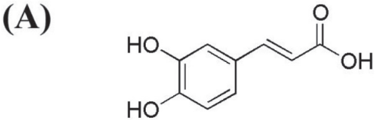
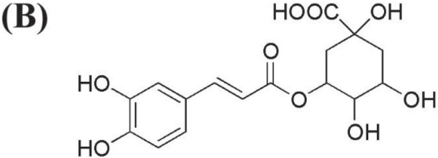
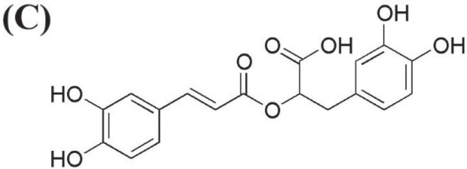
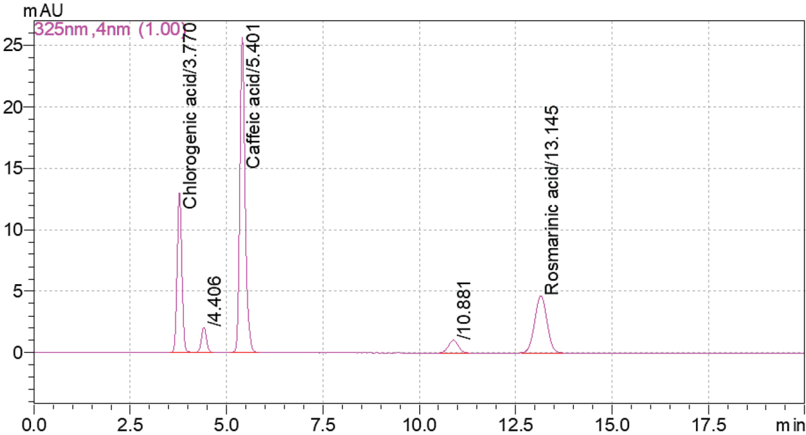
The chlorogenic acid, rosmarinic acid, and caffeic acid contents in 100 selected plants were determined using reversed phase high performance liquid chromatography equipped with diode array detector. The optimum condition was 0.2% phosphoric acid in water (solvent A) and methanol (solvent B) as the mobile phase, which was set at 45% B for 20 minutes at a flow rate of 1.2 mL/min. The column temperature was maintained at 30 ºC and the detection wavelength was 325 nm. Among 100 selected plants, 39.64% contained all 3 compounds, 40.54% contained 2 compounds, 14.41% contained only 1 compound, and 5.41% could not detect any of the 3 compounds. The highest contents of chlorogenic acid, rosmarinic acid, and caffeic acid were found in Lonicera japonica flowering buds, Melissa officinalis leaves, and Coffea canephora seeds at the concentration of 9.900 ± 0.004, 19.908 ± 0.171, and 1.233 ± 0.003 g/100 g of dried plant, respectively.
Overview
The claims and statistics of this paper haven’t been checked yet.
Free: it reads the open-access text and checks the first 5 claims that cite a source we can check. Create a free account to check every claim.
Integrity signals
Registry
Cites
Statistics
Figures
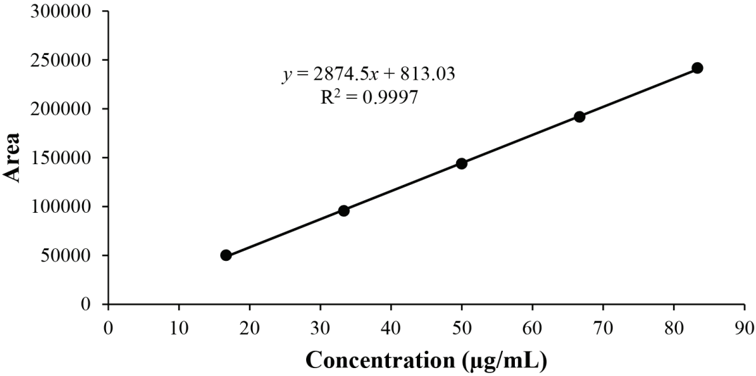
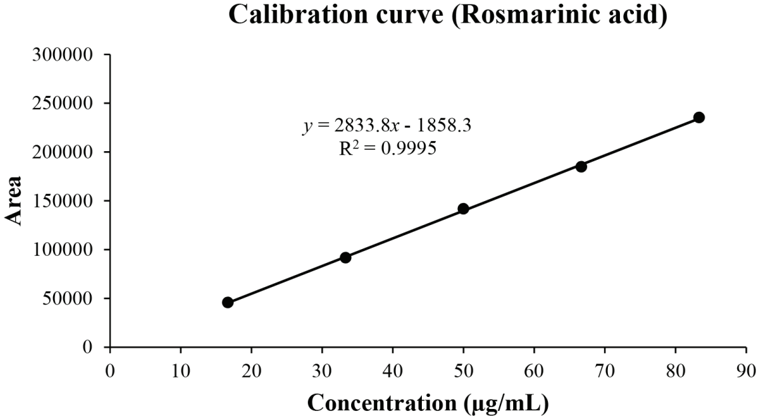
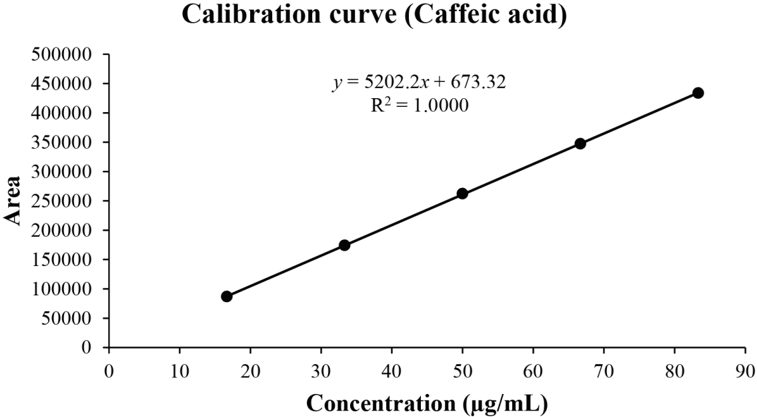
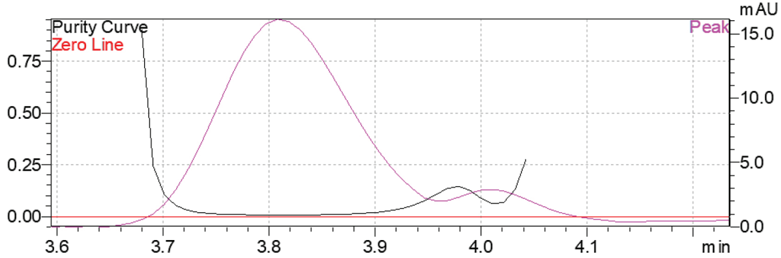
Verification
Claims the paper makes
The claims and statistics of this paper haven’t been checked yet.
Free: it reads the open-access text and checks the first 5 claims that cite a source we can check. Create a free account to check every claim.
Claims other papers make about this one
Each is checked against this paper’s own text: does it say what the citing paper says it does?
In the citing paper
“To our knowledge, rosmarinic acid, an ester of caffeic acid reported in Coffea arabica L. [20], was newly identified in the present study and has never been mentioned before in SCGs.”
Self-check
Percentages, sums and reported differences re-computed from the paper’s own numbers.
The self-check needs the paper’s full text.
Citations
Cites
Polyphenols: Food sources and bioavailability
Manach, C., Scalbert, A., Morand, C., Rémésy, C., & Jiménez, L. (2004) · The American Journal of Clinical Nutrition · doi:10.1093/ajcn/79.5.727 · Cited by 8,175 · cited 2×
“Polyphenols occur primarily in a conjugated form with one or more sugar residues linked to hydroxyl groups, although direct linkages of the sugar unit to an aromatic carbon atom also exist (Bravo, 1998; Manach et al., 2004).”
BackgroundPolyphenols: Chemistry, dietary sources, metabolism, and nutritional significance
Bravo, L. (2009) · Nutrition Reviews · doi:10.1111/j.1753-4887.1998.tb01670.x · Cited by 4,030 · cited 1×
“Polyphenols occur primarily in a conjugated form with one or more sugar residues linked to hydroxyl groups, although direct linkages of the sugar unit to an aromatic carbon atom also exist (Bravo, 1998; Manach et al., 2004).”
BackgroundPetersen, M. (2003) · Phytochemistry · doi:10.1016/s0031-9422(02)00513-7 · Cited by 1,234
Caffeic acid: a review of its potential use in medications and cosmetics
Magnani, C., Isaac, V. L. B., Correa, M. A., & Salgado, H. R. N. (2014) · Anal. Methods · doi:10.1039/c3ay41807c · Cited by 392
An Outlook on Chlorogenic Acids—Occurrence, Chemistry, Technology, and Biological Activities
Upadhyay, R., & Mohan Rao, L. J. (2013) · Critical Reviews in Food Science and Nutrition · doi:10.1080/10408398.2011.576319 · Cited by 386
Hydroxycinnamic Acid Antioxidants: An Electrochemical Overview
Teixeira, J., Gaspar, A., Garrido, E. M., Garrido, J., & Borges, F. (2013) · BioMed Research International · doi:10.1155/2013/251754 · Cited by 377 · cited 1×
“The main hydroxycinnamic acid derivatives are ferulic acid, caffeic acid, p-coumaric acid, chlorogenic acid, sinapic acid, and rosmarinic acid (Lafay, Gil-Izquierdo, 2008; Manach et al., 2004; Teixeira et al., 2013).”
BackgroundBioavailability of phenolic acids
Lafay, S., & Gil-Izquierdo, A. (2008) · Phytochemistry Reviews · doi:10.1007/s11101-007-9077-x · Cited by 309
Comparative study of rosmarinic acid content in some plants of Labiatae family
Hajimehdipoor, H., Saeidnia, S., Gohari, A., Hamedani, M., & Shekarchi, M. (2012) · Pharmacognosy Magazine · doi:10.4103/0973-1296.93316 · Cited by 251 · cited 1×
“Rosmarinic acid was mostly found in the Labiatae family, relating to a previous report of high rosmarinic acid content in plants of this family, especially in Mentha spicata, Salvia officicalis, and Melissa officinalis (Shekarchi et al., 2012).”
Background(2010) · Wiley eBooks · doi:10.1002/9780470921340 · Cited by 100
Haghi, G., & Hatami, A. (2010) · Journal of Agricultural and Food Chemistry · doi:10.1021/jf102175x · Cited by 95
Determination of Chlorogenic Acids (CGA) in Coffee Beans using HPLC
Ayelign, A., & Sabally, K. (2013) · Cited by 70
Fingerprint analysis of Hawk-tea by high-performance liquid chromatography
Ma, T., Huang, C. Z., Meng, X., Zhang, Q., Zhang, L., Lv, X., Jin, Y. J., Xie, J., & Li, J. (2011) · Food Chemistry · doi:10.1016/j.foodchem.2011.04.059 · Cited by 43 · cited 1×
“2020;56:e17547 Page 4 / 13 acid, and acetic acid were usually employed to the aqueous phase to enhance the resolution, restrain the ionization, and reduce the peak tailing of compounds (Ma et al., 2011).”
BackgroundSPE-HPLC Determination of Chlorogenic and Phenolic Acids in Coffee
Yılmaz, P. K., & Kolak, U. (2017) · Journal of Chromatographic Science · doi:10.1093/chromsci/bmx025 · Cited by 38
Chaowuttikul, C., Palanuvej, C., & Ruangrungsi, N. (2017) · Europe PMC (PubMed Central) · doi:10.4103/pr.pr_117_16 · Cited by 20
Self-citationCai, H., Cai, B., Shan, Q., & Cao, G. (2013) · Pharmacognosy Magazine · doi:10.4103/0973-1296.113269 · Cited by 17 · cited 1×
“The optimal detection wavelength in this study was to be 325 nm (Haghi, Hatami, 2010; Shan et al., 2013).”
Background
Research works printed but not linked: 2
- Hansen S, Pedersen-Bjergaard S, Rasmussen K. Quantification and quality of analytical data. In: Introduction to pharmaceutical chemical analysis. West Sussex: John Wiley & Sons; 2011. p.309-326.
- Zeng JG, 2011, Standardization and quality control of herbal extracts and products, 377
Cited by
Gupta, A., Atanasov, A. G., Li, Y., Kumar, N., & Bishayee, A. (2022) · Pharmacological Research · doi:10.1016/j.phrs.2022.106505 · Cited by 162
Wang, Z., Barrow, C. J., Dunshea, F. R., & Suleria, H. A. R. (2021) · Antioxidants · doi:10.3390/antiox10020151 · Cited by 70
Derouich, M., Bouhlali, E. D. T., Bammou, M., Hmidani, A., Sellam, K., & Alem, C. (2020) · Scientifica · doi:10.1155/2020/3971041 · Cited by 41
“[36] who have analyzed eleven Chinese and two +ai celery cultivars and found caffeic, ferulic, and p-coumaric acids, as well as luteolin and chlorogenic acid, respectively.”
BackgroundAdjuvant Properties of Caffeic Acid in Cancer Treatment
Cortez, N., Villegas, C., Burgos, V., Cabrera‐Pardo, J. R., Ortíz, L., González‐Chavarría, I., Nchiozem‐Ngnitedem, V., & Paz, C. (2024) · International Journal of Molecular Sciences · doi:10.3390/ijms25147631 · Cited by 64
Moura, H. F. S., Dias, F. D. S., Souza, L. B. S. E., de Magalhães, B. E. A., Tannus, C. D. A., de Carvalho, W. C., Brandão, G. C., dos Santos, W. N. L., Korn, M. G. A., Santos, D. C. M. B., et al. (2021) · Food Chemistry · doi:10.1016/j.foodchem.2021.129995 · Cited by 64
Metadata
- Authors
- Chaowuttikul, C., Palanuvej, C., & Ruangrungsi, N.
- Affiliations
- Chulalongkorn University (TH)
- ORCID
- Palanuvej, Chanida
- Venue
- Brazilian Journal of Pharmaceutical Sciences
- Publisher
- FapUNIFESP (SciELO)
- Published
- 2020
- Volume
- 56
- ISSN
- 1984-8250 (ISSN-L)
- 2175-9790
- OpenAlex
- W3011533417
- Cited by
- 68
- References
- 15
- Citations by year
- 2026: 11 · 2025: 15 · 2024: 14 · 2023: 5 · 2022: 8 · 2021: 11 · 2020: 4
- FWCI
- 3.79
- Type
- journal article
- Language
- en
- Open access
- diamond
- doi.org
- Licence
- cc-by
- creativecommons.org/licenses/by/4.0/ (vor)
- creativecommons.org/licenses/by/4.0/ (am)
- creativecommons.org/licenses/by/4.0/ (tdm)
- Locations
- Brazilian Journal of Pharmaceutical Sciences (publishedVersion, cc-by)
- LA Referencia (Red Federada de Repositorios Institucionales de Publicaciones Científicas) (publishedVersion, other-oa)
- Americanae (AECID Library) (submittedVersion, other-oa)
- DOAJ (DOAJ: Directory of Open Access Journals) (submittedVersion, cc-by-sa)
- LA Referencia (Red Federada de Repositorios Institucionales de Publicaciones Científicas) (submittedVersion, cc-by)
- Funders
- Chulalongkorn University
- Topics
- Health Sciences › Medicine › Biochemistry (medical) › Phytochemicals and Antioxidant Activities
- Life Sciences › Agricultural and Biological Sciences › Plant Science › Phytochemistry and Biological Activities
- Life Sciences › Agricultural and Biological Sciences › Plant Science › Medicinal Plant Research
- Keywords
- chlorogenic acid, rosmarinic acid, caffeic acid, Thai medicinal plants, phytochemical quantification, Lonicera japonica, lemon balm, Coffea canephora, flavonoids
About these checks
Registry, retraction, Cites and statistics results are computed, not judged, with one exception: a printed reference that no index lists is read once by a model before it counts as a citation error. Claims are extracted by a model and kept only when their quote appears verbatim in the text; each cited source is then checked, with a model’s help, for whether it says what the claim relies on. Those verdicts can be wrong — read the claim’s quote and the cited source before relying on one.
Statistics and arithmetic are recomputed, not judged.
Confidence bands are shown only for fields calibrated on our annotated test set. None is calibrated yet, so no band is shown.
What counts as a claim ›How we measure confidence ›How we check this ›
Are you an author, or do you see a problem with this page? Request a review
Data sources
Bibliographic data: Semantic Scholar, OpenAlex, Crossref.
Contains information from the Semantic Scholar Academic Graph Datasets, made available under the ODC Attribution License (ODC-BY 1.0).
Semantic Scholar’s data is described in: Kinney, R., et al. (2023). The Semantic Scholar Open Data Platform. arXiv:2301.10140.
