

Air Pollution as an Environmental Risk Factor for Alzheimer’s Disease and Related Dementias
Open accessThe DOI matches its Crossref record; 325 of the 325 references it cites were found in a registry or an index; none of the 187 sources its claims cite is checked for support yet.
Abstract
Alzheimer’s disease and related dementias are a leading cause of morbidity in our aging populations. Although influenced by genetic factors, fewer than 5% of Alzheimer’s disease and related dementia cases are due solely to genetic causes. There is growing scientific consensus that these dementias arise from complex gene by environment interactions. The 2020 Lancet Commission on dementia prevention, intervention, and care identified 12 modifiable risk factors of dementia, including lifestyle, educational background, comorbidities, and environmental exposures to environmental contaminants. In this review, we summarize the current understanding and data gaps regarding the role(s) of environmental pollutants in the etiology of Alzheimer’s disease and related dementias with a focus on air pollution. In addition to summarizing findings from epidemiological and experimental animal studies that link airborne exposures to environmental contaminants to increased risk and/or severity of Alzheimer’s disease and related dementias, we discuss currently hypothesized mechanism(s) underlying these associations, including peripheral inflammation, neuroinflammation and epigenetic changes. Key data gaps in this rapidly expanding investigative field and approaches for addressing these gaps are also addressed.
Overview
CoChat Summary
TL;DR
This review synthesizes epidemiological, experimental animal, in vitro, and epigenetic evidence linking air pollution to increased risk and/or severity of Alzheimer’s disease and related dementias (AD/ADRD), with PM2.5 and NOx most consistently associated. It concludes that air pollution is an environmental risk factor likely acting through peripheral inflammation, neuroinflammation, oxidative stress, and epigenetic changes, while highlighting data gaps and exposure-model limitations.
Key findings
- Epidemiological evidence: over 80 studies in the last six years show a strong association between air pollution and AD/ADRD; most found positive correlations for all-cause dementia with PM2.5 and NOx but not O3, while associations with dementia subtypes were mixed. Long-term PM2.5 and NOx exposure was associated with increased AD/ADRD risk, amyloid PET positivity, cortical atrophy, AD-relevant biomarkers, and post-mortem tau/Aβ/glial pathology.
- Experimental animal evidence: chronic exposures longer than 3 months to concentrated or ambient UFPM, PM2.5, or O3 increased Aβ plaque load, tau phosphorylation, gliosis, and worsened learning and memory in transgenic AD rodent models; short-term 2–3 week exposures produced mixed results. Real-time ambient exposure systems, including traffic-related air pollution (TRAP) and the Taipei Air Pollutant Exposure System (TAPES), also exacerbated AD-relevant phenotypes.
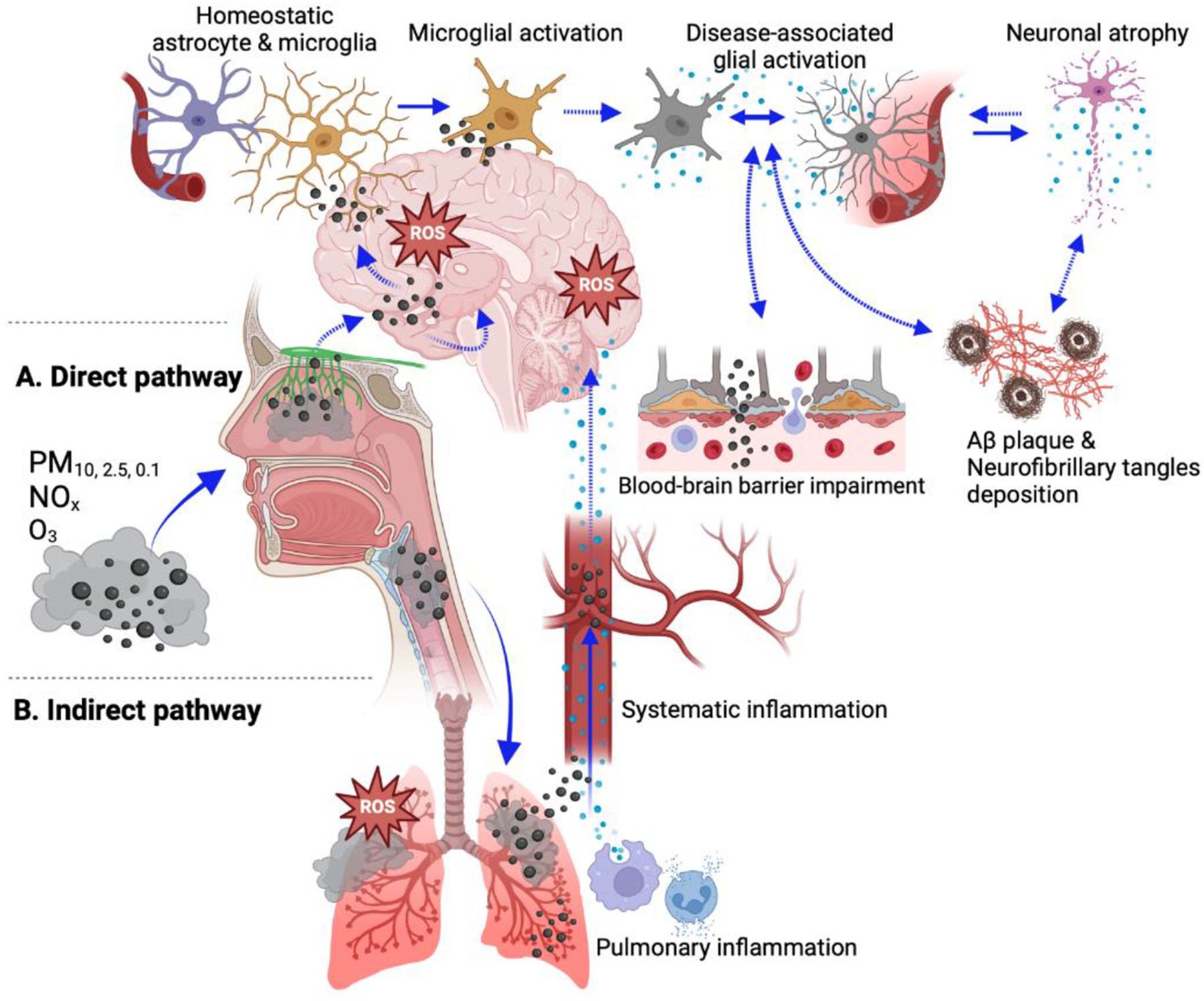
- Mechanistic evidence: air pollution promotes neuroinflammation via microglial and astrocytic activation, disease-associated microglia/astrocyte phenotypes, oxidative stress, and proinflammatory cytokines such as TNF-α, IL-1β, IL-6, and IFN-γ. Proposed pathways include direct PM translocation to the brain via olfactory nerves or the blood-brain barrier and an indirect lung-brain axis involving systemic inflammation.
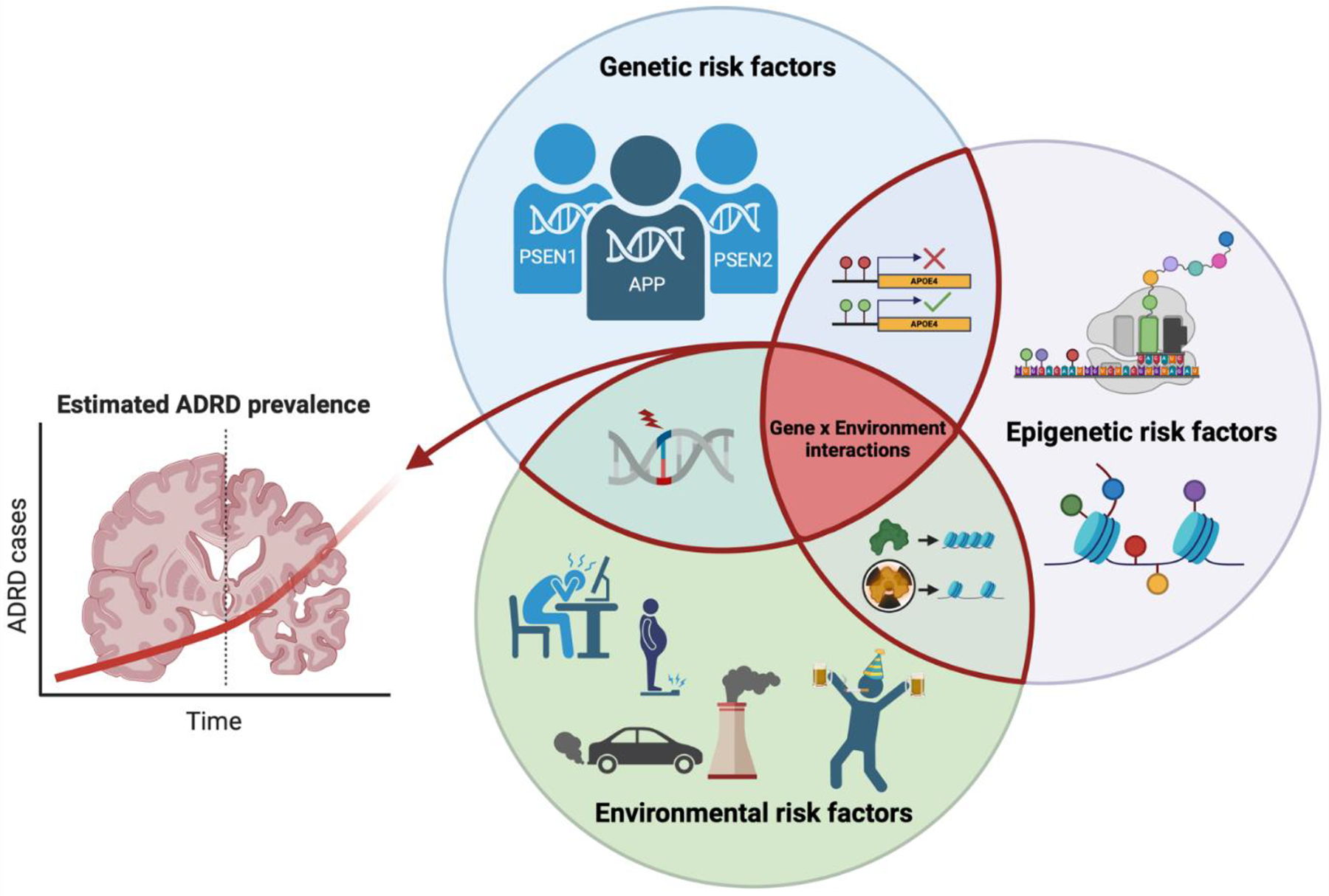
- Genetic/epigenetic context: fewer than 5% of AD/ADRD cases are due solely to genetic causes; the 2020 Lancet Commission identified 12 modifiable risk factors contributing to 40% of global dementia prevalence. Twin polygenic risk score analysis attributed 71% of AD risk to genetics and 29% to environmental factors; in the WHIMS cohort, nanoparticle exposure increased cognitive decline by 81% and all-cause dementia by 92% in APOE ε4 carriers.
Methods
- Design: narrative review, not a primary study; it synthesizes prior epidemiological, experimental animal, in vitro, human twin, post-mortem, and epigenetic studies.
- Data/sample: epidemiological evidence includes over 80 studies from the last six years, with cohort sizes from n=150–8,000 to n=4–12 million, midlife to aged participants (age >45), and outcomes including incident ADRD, hospitalization, AD-relevant biomarkers, cognitive assessment, and mortality. Experimental evidence includes wildtype and transgenic rodent models and in vitro microglia/astrocyte/neuron cultures.
- Main analysis: qualitative synthesis of associations between air pollutants and AD/ADRD, hypothesized mechanisms, and data gaps; no formal meta-analysis or systematic search is described.
Limitations
- Stated epidemiological limitations: residual confounding by synergistic genetic, lifestyle, and environmental risk factors; inconclusive modifying effects of APOE ε4; other genetic susceptibilities and lifestyle factors such as physical activity, traffic noise, sleep, and socioeconomic status may not have been well adjusted for; complex G × E interactions are difficult to capture fully.
- Stated experimental limitations: replicating human-relevant air pollution exposures is challenging; instillation/aspiration methods have inaccurate exposure route, composition, pattern, and dosage and omit gaseous co-pollutants; CAP systems concentrate particles but not gases; laboratory-generated and CAP aerosols do not emulate chronic real-life exposure dynamics; mixed results arise from differing exposure paradigms and animal models, and standardized exposures including both sexes are needed.
- Evident from the text: as a narrative review, it does not use a systematic search strategy or quantitative synthesis, and the heterogeneity of study designs, exposure assessments, dementia ascertainment, and animal models limits causal inference.
Model-written summary. Check it against the paper before relying on it.
Integrity signals
Registry
Cites
Statistics
Figures
Verification
Claims the paper makes
0 Valid · 4 Not valid · 121 Not checked · 54 Own results and interpretations
A result the paper states — it cites no source for it, so there is none to check. The quote shows it is in the paper.
In the paper
“the main consensus of current epidemiological findings is that there is a strong association between exposure to air pollution and AD/ADRD”
§ Air Pollution as an Environmental Risk Factor for Alzheimer’s Disease and Related Dementias > Epidemiological evidence linking air pollution with progressive cognitive impairment and Alzheimer’s disease and related dementias > SUMMARY OF FINDINGS
boostedstates an association- Asserted: passes — The authors put it forward as true.
- Checkable: passes — It can be checked against evidence.
- Load-bearing: passes — The paper’s conclusions depend on it.
- Based: passes — The paper gives a reason why it holds.
In the paper
“Over 80 epidemiological studies investigating an association between air pollution and AD/ADRD were published in the peer-reviewed literature during the last six years”
§ Air Pollution as an Environmental Risk Factor for Alzheimer’s Disease and Related Dementias > Epidemiological evidence linking air pollution with progressive cognitive impairment and Alzheimer’s disease and related dementias
What the sources say
- Not matchedcites Table 2
This doesn’t read as a citation we can look up.
plainstates an association- Asserted: passes — The authors put it forward as true.
- Checkable: passes — It can be checked against evidence.
- Load-bearing: unclear — It is unclear whether the paper’s conclusions depend on it.
- Based: passes — The paper gives a reason why it holds.
- Not matched
A result the paper states — it cites no source for it, so there is none to check. The quote shows it is in the paper.
In the paper
“In addition to summarizing findings from epidemiological and experimental animal studies that link airborne exposures to environmental contaminants to increased risk and/or severity of Alzheimer’s disease and related dementias”
§ Air Pollution as an Environmental Risk Factor for Alzheimer’s Disease and Related Dementias > Abstract
plainstates an association- Asserted: passes — The authors put it forward as true.
- Checkable: passes — It can be checked against evidence.
- Load-bearing: passes — The paper’s conclusions depend on it.
- Based: passes — The paper gives a reason why it holds.
None of the sources cited for this claim have been checked yet.
In the paper
“but contrary results showed more significant association with non-AD or VaD than with AD”
§ Air Pollution as an Environmental Risk Factor for Alzheimer’s Disease and Related Dementias > Epidemiological evidence linking air pollution with progressive cognitive impairment and Alzheimer’s disease and related dementias > SUMMARY OF FINDINGS
What the sources say
- Not checked yetcites [82] Cerza F, Renzi M, Gariazzo C, Long-term exposure to air pollution and hospitalization for dementia in the Rome longitudinal study. Environ Health. Aug 9 2019; 18(1): 72. doi: 10.1186/s12940-019-0511-5 31399053 PMC6689157 source
- Not checked yetcites [84] Peters S, Bouma F, Hoek G, Janssen N, Vermeulen R. Air pollution exposure and mortality from neurodegenerative diseases in the Netherlands: A population-based cohort study. Environ Res. Jul 2 2024; 259: 119552. doi: 10.1016/j.envres.2024.119552 38964584 source
- Not checked yetcites [100] Shim JI, Byun G, Lee JT. Long-term exposure to particulate matter and risk of Alzheimer’s disease and vascular dementia in Korea: a national population-based Cohort Study. Environ Health. Apr 14 2023; 22(1): 35. doi: 10.1186/s12940-023-00986-9 37060077 PMC10105439 source
plainstates an association- Asserted: passes — The authors put it forward as true.
- Checkable: passes — It can be checked against evidence.
- Load-bearing: unclear — It is unclear whether the paper’s conclusions depend on it.
- Based: passes — The paper gives a reason why it holds.
None of the sources cited for this claim have been checked yet.
In the paper
“and a small number of studies found a positive association between O3 level and risk of dementia”
§ Air Pollution as an Environmental Risk Factor for Alzheimer’s Disease and Related Dementias > Epidemiological evidence linking air pollution with progressive cognitive impairment and Alzheimer’s disease and related dementias > SUMMARY OF FINDINGS
What the sources say
- Not checked yetcites [58] Shi L, Steenland K, Li H, A national cohort study (2000–2018) of long-term air pollution exposure and incident dementia in older adults in the United States. Nat Commun. Nov 19 2021; 12(1): 6754. doi: 10.1038/s41467-021-27049-2 34799599 PMC8604909 source
- Not checked yetcites [82] Cerza F, Renzi M, Gariazzo C, Long-term exposure to air pollution and hospitalization for dementia in the Rome longitudinal study. Environ Health. Aug 9 2019; 18(1): 72. doi: 10.1186/s12940-019-0511-5 31399053 PMC6689157 source
- Not checked yetcites [93] Fania A, Monaco A, Amoroso N, Machine learning and XAI approaches highlight the strong connection between O3 and NO2 pollutants and Alzheimer’s disease. Sci Rep. Mar 5 2024; 14(1): 5385. doi: 10.1038/s41598-024-55439-1 38443419 PMC11319812 source
plainstates an association- Asserted: passes — The authors put it forward as true.
- Checkable: passes — It can be checked against evidence.
- Load-bearing: unclear — It is unclear whether the paper’s conclusions depend on it.
- Based: passes — The paper gives a reason why it holds.
92 more claims
Create a free account to see all 179 claims and to verify the 183 references still open.
- It may state two separate claims as one. 60
- Probably not a substantial claim. 34
Claims other papers make about this one
Each is checked against this paper’s own text: does it say what the citing paper says it does?
In the citing paper
“GWASs also overlook social, behavioral, and environmental factors, such as diet, exercise, and exposure to harmful substances, which may contribute to AD and ADRD epigenetics.”
From Shared genes and pathways in dementia: Insights from genome‐wide association studies (2025) · cites this paper as [135]
Self-check
Percentages, sums and reported differences re-computed from the paper’s own numbers.
Each contradiction between two passages listed here was confirmed by an independent check.
Rated minor: it would not touch a result — a value no result rests on, a p-value that stays on the same side of the significance level, or a conflict that is clerical, resolved elsewhere in the paper, or outside its own findings.
In the paper
§ Air Pollution as an Environmental Risk Factor for Alzheimer’s Disease and Related Dementias > Epidemiological evidence linking air pollution with progressive cognitive impairment and Alzheimer’s disease and related dementias > SUMMARY OF FINDINGS
“but not to O358,61,76,87,94,95”
§ Air Pollution as an Environmental Risk Factor for Alzheimer’s Disease and Related Dementias > Epidemiological evidence linking air pollution with progressive cognitive impairment and Alzheimer’s disease and related dementias > SUMMARY OF FINDINGS
“a small number of studies found a positive association between O3 level and risk of dementia58,82,93.”
Rated minor: it would not touch a result — a value no result rests on, a p-value that stays on the same side of the significance level, or a conflict that is clerical, resolved elsewhere in the paper, or outside its own findings.
In the paper
§ Air Pollution as an Environmental Risk Factor for Alzheimer’s Disease and Related Dementias > Experimental animal studies: Chronic exposure to air pollution exacerbates Alzheimer’s disease pathology
“the exposure paradigms were short-term or subchronic exposures to PM2.5 and UFPM that ranged from 2–13 weeks149–152,155–158,161.”
§ Air Pollution as an Environmental Risk Factor for Alzheimer’s Disease and Related Dementias > Experimental animal studies: Chronic exposure to air pollution exacerbates Alzheimer’s disease pathology
“Exposures longer than 3 months at either concentrated or ambient levels of UFPM, PM2.5, or O3 were shown to increase Aβ plaque load, tau phosphorylation, gliosis, and worsen learning and memory in transgenic AD rodent models109,150,153,157,158,160.”
Cited works that were retracted
Works this paper cites that were later retracted, from the retraction notices publishers deposit. Major when the notice came out before this paper was published.
Rated major: it would touch a result — a value a result rests on, reported and recomputed p-values on opposite sides of the significance level, two passages that conflict with no sign which is right, or a cited work retracted before this paper was published.
In the paper
“Livingston G, Huntley J, Sommerlad A, Dementia prevention, intervention, and care: 2020 report of the Lancet Commission. Lancet. Aug 8 2020; 396(10248): 413– 446. doi: 10.1016/S0140-6736(20)30367-6 32738937 PMC7392084”
Cited work 10.1016/s0140-6736(20)30367-6 · retracted 2023-05-01 · notice 10.1016/s2468-2667(23)00083-x · this paper published 2024-11-01
Citations
Cites
1 retracted
Dementia prevention, intervention, and care: 2020 report of the Lancet Commission
Livingston, G., Huntley, J., Sommerlad, A., Ames, D., Ballard, C., Banerjee, S., Brayne, C., Burns, A., Cohen-Mansfield, J., Cooper, C., et al. (2020) · The Lancet · doi:10.1016/s0140-6736(20)30367-6 · Cited by 10,430
RetractedNIA‐AA Research Framework: Toward a biological definition of Alzheimer's disease
Jack, C. R., Bennett, D. A., Blennow, K., Carrillo, M. C., Dunn, B., Haeberlein, S. B., Holtzman, D. M., Jagust, W., Jessen, F., Karlawish, J., et al. (2018) · Alzheimer's & Dementia · doi:10.1016/j.jalz.2018.02.018 · Cited by 10,537
Neurotoxic reactive astrocytes are induced by activated microglia
Liddelow, S. A., Guttenplan, K. A., Clarke, L. E., Bennett, F. C., Bohlen, C. J., Schirmer, L., Bennett, M. L., Münch, A. E., Chung, W.-S., Peterson, T. C., et al. (2017) · Nature · doi:10.1038/nature21029 · Cited by 7,971
Sperling, R. A., Aisen, P. S., Beckett, L. A., Bennett, D. A., Craft, S., Fagan, A. M., Iwatsubo, T., Jack, C. R., Kaye, J., Montine, T. J., et al. (2011) · Alzheimer's & Dementia · doi:10.1016/j.jalz.2011.03.003 · Cited by 7,155
Brook, R. D., Rajagopalan, S., Pope, C. A., Brook, J. R., Bhatnagar, A., Diez-Roux, A. V., Holguin, F., Hong, Y., Luepker, R. V., Mittleman, M. A., et al. (2010) · Circulation · doi:10.1161/cir.0b013e3181dbece1 · Cited by 6,548
Neuroinflammation in Alzheimer's disease
Heneka, M. T., Carson, M. J., Khoury, J. E., Landreth, G. E., Brosseron, F., Feinstein, D. L., Jacobs, A. H., Wyss-Coray, T., Vitorica, J., Ransohoff, R. M., et al. (2015) · The Lancet Neurology · doi:10.1016/s1474-4422(15)70016-5 · Cited by 6,226
The amyloid hypothesis of Alzheimer's disease at 25 years
Selkoe, D. J., & Hardy, J. (2016) · EMBO Molecular Medicine · doi:10.15252/emmm.201606210 · Cited by 6,164
Dementia prevention, intervention, and care
Livingston, G., Sommerlad, A., Orgeta, V., Costafreda, S. G., Huntley, J., Ames, D., Ballard, C., Banerjee, S., Burns, A., Cohen-Mansfield, J., et al. (2017) · The Lancet · doi:10.1016/s0140-6736(17)31363-6 · Cited by 6,072
Nichols, E., Steinmetz, J. D., Vollset, S. E., Fukutaki, K., Chalek, J., Abd-Allah, F., Abdoli, A., Abualhasan, A., Abu-Gharbieh, E., Akram, T. T., et al. (2022) · The Lancet Public Health · doi:10.1016/s2468-2667(21)00249-8 · Cited by 5,575
Histone H3K27ac separates active from poised enhancers and predicts developmental state
Creyghton, M. P., Cheng, A. W., Welstead, G. G., Kooistra, T., Carey, B. W., Steine, E. J., Hanna, J., Lodato, M. A., Frampton, G. M., Sharp, P. A., et al. (2010) · Proceedings of the National Academy of Sciences · doi:10.1073/pnas.1016071107 · Cited by 4,302
Cited by
Environmental Stressors and Neuroinflammation: Linking Climate Change to Alzheimer’s Disease
Caldarelli, M., Rio, P., Gasbarrini, A., Gambassi, G., & Cianci, R. (2025) · Current Issues in Molecular Biology · doi:10.3390/cimb47110959 · Cited by 10
Shared genes and pathways in dementia: Insights from genome‐wide association studies
Loi, K. J., Radtke, N., Kiriluk, C., Noureldein, M. H., Feldman, E. L., Bakulski, K. M., & Chen, K. S. (2025) · Alzheimer's & Dementia · doi:10.1002/alz.70845 · Cited by 9
Song, S., Fan, M.-C., Feng, R., & Zhao, H. (2026) · Journal of Neuroinflammation · doi:10.1186/s12974-026-03770-x · Cited by 9
From particulates to pathways: environmental exposures and their impact on Alzheimer’s disease
Liu, B., Ahmad, M. A., Abbas, G., Ahmed, U., Javed, R., Ali, I., Ao, Q., & Deng, X. (2025) · Brain Research · doi:10.1016/j.brainres.2025.149880 · Cited by 8
Bridging the gaps in alzheimer’s disease: a comprehensive review of current and emerging therapies
Mostafa, R. E., & Asaad, G. F. (2026) · Inflammopharmacology · doi:10.1007/s10787-026-02151-3 · Cited by 6
Alzhrani, A. S., Stockfelt, L., Xu, Y., Harari, F., Gustafsson, S., Engström, G., Hansson, O., & Oudin, A. (2025) · Journal of Alzheimer s Disease · doi:10.1177/13872877251360225 · Cited by 3
Gonzales, G. F., & Ordóñez-Aquino, C. (2025) · Preprints.org · doi:10.20944/preprints202508.0197.v1 · Cited by 3
Aging in a highly polluted world: challenges and solutions to prevent Alzheimer’s disease
Domingo, J. L. (2026) · Archives of Toxicology · doi:10.1007/s00204-026-04469-x · Cited by 2
Wright, C. Y., Jaca, A., Kapwata, T., Naidoo, N., Awokola, B. I., Bainomugisha, E., Berhane, K. T., Blesić, S., Kehbila, A. G., Naidoo, R. N., et al. (2026) · Environmental Development · doi:10.1016/j.envdev.2026.101517 · Cited by 2
New Alzheimer’s disease diagnostics and psychological clinical perspectives
Aversi, M. T. M., Freitas, P. M., & Aversi‐Ferreira, T. A. (2026) · Frontiers in Psychology · doi:10.3389/fpsyg.2026.1866853 · Cited by 1
Martins, R., Cao, Y., & Wu, J. (2026) · Journal of Alzheimer s Disease Reports · doi:10.1177/25424823261449503 · Cited by 1
He, Y., Yi, T., Min, M., Xu, K., Lin, H., Xu, R., Deng, D., & Xiao, X. (2026) · Neuroscience Bulletin · doi:10.1007/s12264-026-01645-y · Cited by 1
Environmentally Driven Precision Neurology: A Neurogenomic Perspective
Ang, M. Y., Feisal, N. A. S., Ramli, M. D. C., & Hein, Z. M. (2026) · Biology · doi:10.3390/biology15030283 · Cited by 1
Saglam‐Metiner, P., Yıldırım, E. C., Dogan, B., Vaizoğlu, R. D., Celik, C. E., Göksel, Ö., Yeşil-Çeliktaş, Ö., Pelit, L., Kaymaz, Y., Kløverpris, H. N., et al. (2026) · Thoracic research and practice · doi:10.4274/thoracrespract.2026.2026-1-9 · Cited by 1
Parasuraman, V. R., Lee, W. R., Krishnan, Y. H., & Kim, S. (2026) · Journal of Hazardous Materials · doi:10.1016/j.jhazmat.2026.142308 · Cited by 1
Alberdi‐Páramo, Í. (2026) · Psiquiatría Biológica · doi:10.1016/j.psiq.2026.100929
Bang, J., Han, D. H., Park, K., Han, H.-S., Jang, H. B., Lim, H. J., & Kim, Y.-Y. (2026) · Indoor Air · doi:10.1155/ina/8312425
The role of air quality and pollution in obstructive sleep apnea: insights from recent studies
Tùng, N. T., Tran, X. N., Chang, J.-H., & Chuang, H. (2026) · Expert Review of Respiratory Medicine · doi:10.1080/17476348.2026.2736322
Public Preferences for End-of-Life Timing in Alzheimer Disease and Related DementiasPreprint
Dennelly, L., Thomas, Z., McAndrew, T., & Davis, D. S. (2026) · medRxiv · doi:10.64898/2026.07.25.26358937
Park, H. H., Cheng, M.-Y., Valenzuela, A. E., Domanico, M. C., Wallis, C., Ikeda, A., Sanchez, L., Ehrlich, A. K., Reader, R., Chandrasekaran, V., et al. (2026) · Environment & Health · doi:10.1021/envhealth.6c00178
Self-citationO’Toole, H. J., James, A., Nasim, N., Hadley, D. J., Hale, E. J., He, Q., Bein, K. J., Valenzuela, A., Rojalin, T., Dugger, B. N., et al. (2026) · Environmental Pollution · doi:10.1016/j.envpol.2026.127730
Self-citationRocha, E. S. S., de eça, E. S., Rocha, J. E. S., & Rocha, S. L. N. (2026) · doi:10.29327/9786527225560.1564288
Hong, M., Jeon, H., Lee, K., & Won, S. (2026) · Research Square · doi:10.21203/rs.3.rs-9148926/v1
Cao, Y. J., Yin, B., Huang, Y., Ma, C. X., 王智菡, Yao, L., Gao, L., Tian, Z., Liu, W., Liu, X. W., et al. (2026) · BMC Public Health · doi:10.1186/s12889-026-27926-9
Biomolekularna identifikacija za oceno tveganja okoljskega zdravja
Perša, S. (2026) · University of Maribor digital library (University of Maribor)
Cantu, A. G. (2026) · Nursing Clinics of North America · doi:10.1016/j.cnur.2026.06.007
Impact of Industrial Emissions on Respiratory Health in Louisiana’s "Cancer Alley
Arora, H., Talha, K. A., & Sahai, S. (2025) · International Journal of Research Publication and Reviews · doi:10.55248/gengpi.6.0625.2412
Metadata
- Authors
- Park, H. H., Armstrong, M. J., Gorin, F. A., & Lein, P. J.
- Affiliations
- University of California, Davis (US)
- Corresponding author
- Lein, Pamela J.
- Venue
- Medical Research Archives
- Publisher
- European Society of Medicine
- Published
- 2024-11-01
- Volume
- 12
- Issue
- 10
- ISSN
- 2375-1916 (ISSN-L)
- 2375-1924
- PMC
- PMC11736697
- OpenAlex
- W4404698362
- Semantic Scholar
- 85dca4712ed29389c091c19bb9d40d9a0d1adcec
- Cited by
- 28
- References
- 323
- Citations by year
- 2026: 22 · 2025: 6
- FWCI
- 3.94
- Type
- journal article
- Language
- en
- Open access
- diamond
- doi.org
- Licence
- Locations
- Medical Research Archives (publishedVersion, cc-by)
- PubMed (publishedVersion)
- PubMed Central (acceptedVersion, cc-by-nc-nd)
- Funders
- University of California, Davis (HL007013, T32 HL007013)
- National Institute on Aging (RF1AG074709, R01AG074709)
- National Heart, Lung, and Blood Institute (T32HL007013)
- National Institute of Neurological Disorders and Stroke (RF1NS130659, R01NS130659)
- Topics
- Physical Sciences › Environmental Science › Health, Toxicology and Mutagenesis › Air Quality and Health Impacts
- Health Sciences › Medicine › Psychiatry and Mental health › Dementia and Cognitive Impairment Research
- Life Sciences › Neuroscience › Cellular and Molecular Neuroscience › Alzheimer's disease research and treatments
- Keywords
- air pollution, Alzheimer's disease, dementia, environmental risk factors, gene-environment interaction, modifiable risk factors, environmental pollutants, neuroinflammation, peripheral inflammation, epigenetic modifications, dementia etiology, animal models of dementia
About these checks
Registry, retraction, Cites and statistics results are computed, not judged, with one exception: a printed reference that no index lists is read once by a model before it counts as a citation error. Claims are extracted by a model and kept only when their quote appears verbatim in the text; each cited source is then checked, with a model’s help, for whether it says what the claim relies on. Those verdicts can be wrong — read the claim’s quote and the cited source before relying on one.
A language model drew the claims from the paper on 2026-11-26, under version 3 of the claim definition (model deepseek-v4.1-flash, prompt extract-v3).
A second model labelled each claim on 2026-11-26 (model jev-1.13-20260917, definition revision gold-guideline-v0.2).
Statistics and arithmetic are recomputed, not judged.
Confidence bands are shown only for fields calibrated on our annotated test set. None is calibrated yet, so no band is shown.
What counts as a claim ›How we measure confidence ›How we check this ›
Are you an author, or do you see a problem with this page? Request a review
Data sources
Bibliographic data: Semantic Scholar, OpenAlex, Crossref.
Contains information from the Semantic Scholar Academic Graph Datasets, made available under the ODC Attribution License (ODC-BY 1.0).
Semantic Scholar’s data is described in: Kinney, R., et al. (2023). The Semantic Scholar Open Data Platform. arXiv:2301.10140.
