

Air Pollution as an Environmental Risk Factor for Alzheimer’s Disease and Related Dementias
Open accessThe DOI matches its Crossref record; 325 of the 325 references it cites were found in a registry or an index; none of the 187 sources its claims cite is checked for support yet.
Abstract
Alzheimer’s disease and related dementias are a leading cause of morbidity in our aging populations. Although influenced by genetic factors, fewer than 5% of Alzheimer’s disease and related dementia cases are due solely to genetic causes. There is growing scientific consensus that these dementias arise from complex gene by environment interactions. The 2020 Lancet Commission on dementia prevention, intervention, and care identified 12 modifiable risk factors of dementia, including lifestyle, educational background, comorbidities, and environmental exposures to environmental contaminants. In this review, we summarize the current understanding and data gaps regarding the role(s) of environmental pollutants in the etiology of Alzheimer’s disease and related dementias with a focus on air pollution. In addition to summarizing findings from epidemiological and experimental animal studies that link airborne exposures to environmental contaminants to increased risk and/or severity of Alzheimer’s disease and related dementias, we discuss currently hypothesized mechanism(s) underlying these associations, including peripheral inflammation, neuroinflammation and epigenetic changes. Key data gaps in this rapidly expanding investigative field and approaches for addressing these gaps are also addressed.
Overview
CoChat Summary
TL;DR
This review synthesizes epidemiological, experimental animal, in vitro, and epigenetic evidence linking air pollution to increased risk and/or severity of Alzheimer’s disease and related dementias (AD/ADRD), with PM2.5 and NOx most consistently associated. It concludes that air pollution is an environmental risk factor likely acting through peripheral inflammation, neuroinflammation, oxidative stress, and epigenetic changes, while highlighting data gaps and exposure-model limitations.
Key findings
- Epidemiological evidence: over 80 studies in the last six years show a strong association between air pollution and AD/ADRD; most found positive correlations for all-cause dementia with PM2.5 and NOx but not O3, while associations with dementia subtypes were mixed. Long-term PM2.5 and NOx exposure was associated with increased AD/ADRD risk, amyloid PET positivity, cortical atrophy, AD-relevant biomarkers, and post-mortem tau/Aβ/glial pathology.
- Experimental animal evidence: chronic exposures longer than 3 months to concentrated or ambient UFPM, PM2.5, or O3 increased Aβ plaque load, tau phosphorylation, gliosis, and worsened learning and memory in transgenic AD rodent models; short-term 2–3 week exposures produced mixed results. Real-time ambient exposure systems, including traffic-related air pollution (TRAP) and the Taipei Air Pollutant Exposure System (TAPES), also exacerbated AD-relevant phenotypes.
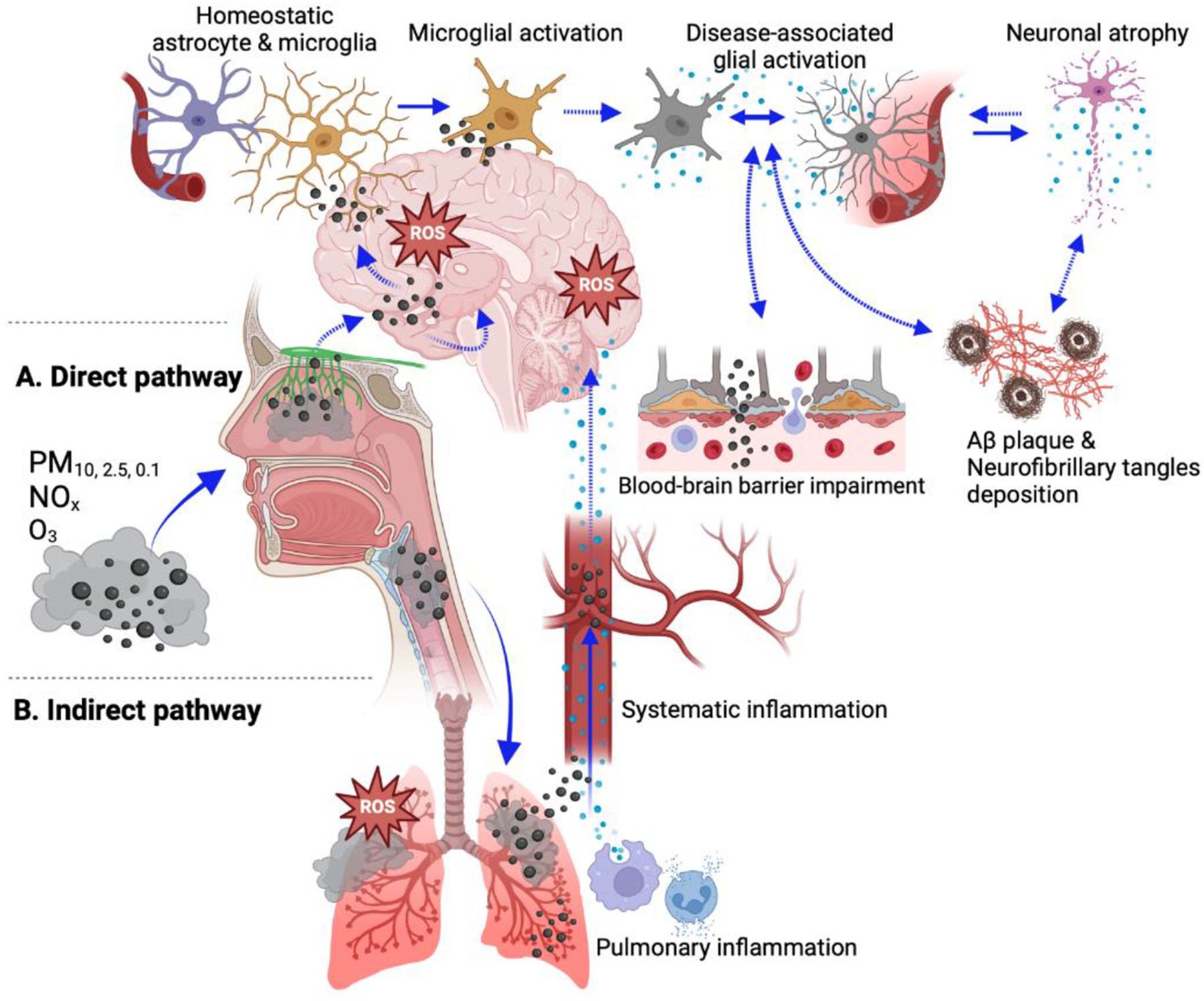
- Mechanistic evidence: air pollution promotes neuroinflammation via microglial and astrocytic activation, disease-associated microglia/astrocyte phenotypes, oxidative stress, and proinflammatory cytokines such as TNF-α, IL-1β, IL-6, and IFN-γ. Proposed pathways include direct PM translocation to the brain via olfactory nerves or the blood-brain barrier and an indirect lung-brain axis involving systemic inflammation.
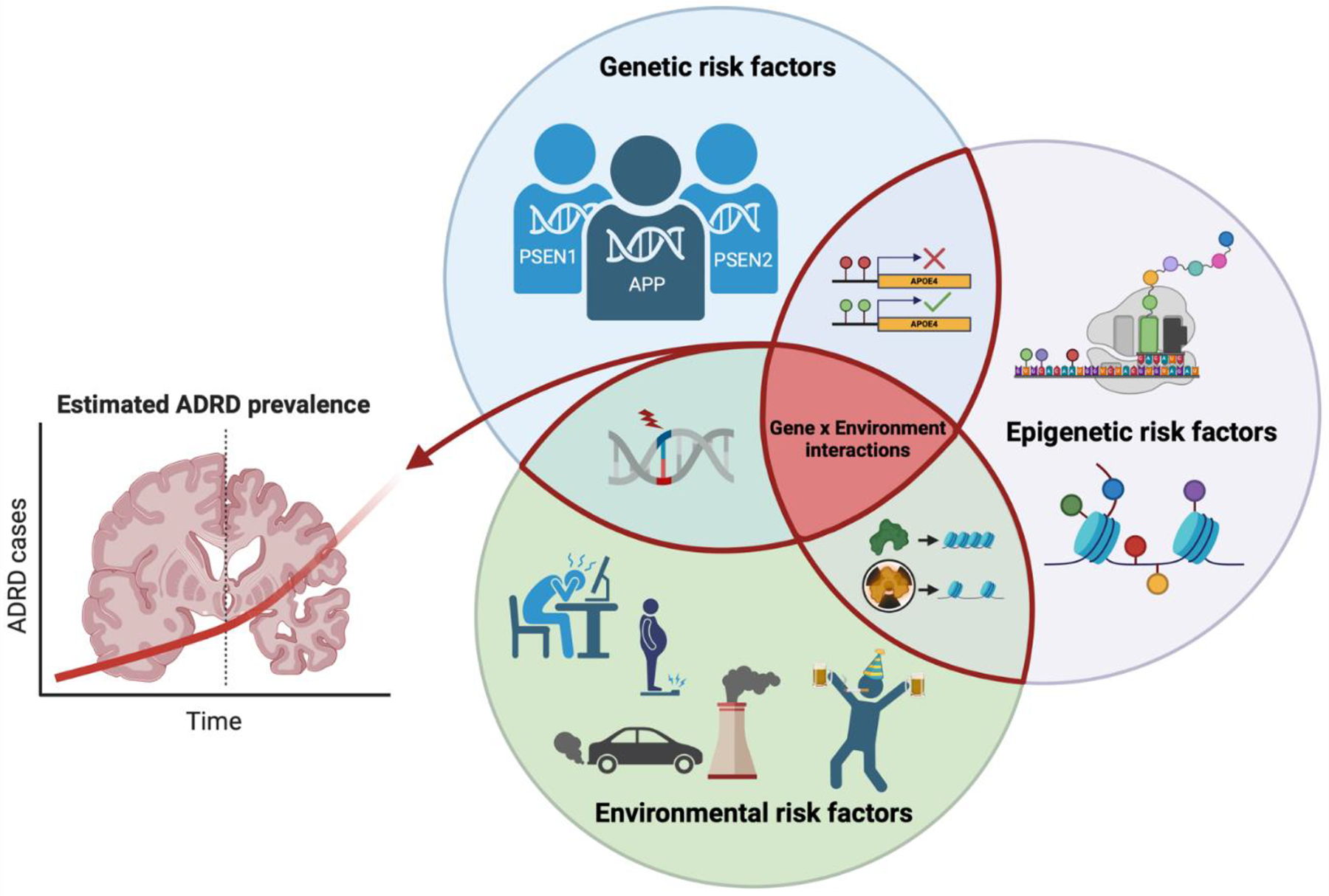
- Genetic/epigenetic context: fewer than 5% of AD/ADRD cases are due solely to genetic causes; the 2020 Lancet Commission identified 12 modifiable risk factors contributing to 40% of global dementia prevalence. Twin polygenic risk score analysis attributed 71% of AD risk to genetics and 29% to environmental factors; in the WHIMS cohort, nanoparticle exposure increased cognitive decline by 81% and all-cause dementia by 92% in APOE ε4 carriers.
Methods
- Design: narrative review, not a primary study; it synthesizes prior epidemiological, experimental animal, in vitro, human twin, post-mortem, and epigenetic studies.
- Data/sample: epidemiological evidence includes over 80 studies from the last six years, with cohort sizes from n=150–8,000 to n=4–12 million, midlife to aged participants (age >45), and outcomes including incident ADRD, hospitalization, AD-relevant biomarkers, cognitive assessment, and mortality. Experimental evidence includes wildtype and transgenic rodent models and in vitro microglia/astrocyte/neuron cultures.
- Main analysis: qualitative synthesis of associations between air pollutants and AD/ADRD, hypothesized mechanisms, and data gaps; no formal meta-analysis or systematic search is described.
Limitations
- Stated epidemiological limitations: residual confounding by synergistic genetic, lifestyle, and environmental risk factors; inconclusive modifying effects of APOE ε4; other genetic susceptibilities and lifestyle factors such as physical activity, traffic noise, sleep, and socioeconomic status may not have been well adjusted for; complex G × E interactions are difficult to capture fully.
- Stated experimental limitations: replicating human-relevant air pollution exposures is challenging; instillation/aspiration methods have inaccurate exposure route, composition, pattern, and dosage and omit gaseous co-pollutants; CAP systems concentrate particles but not gases; laboratory-generated and CAP aerosols do not emulate chronic real-life exposure dynamics; mixed results arise from differing exposure paradigms and animal models, and standardized exposures including both sexes are needed.
- Evident from the text: as a narrative review, it does not use a systematic search strategy or quantitative synthesis, and the heterogeneity of study designs, exposure assessments, dementia ascertainment, and animal models limits causal inference.
Model-written summary. Check it against the paper before relying on it.
Integrity signals
Registry
Cites
Statistics
Figures
Verification
Claims the paper makes
0 Valid · 4 Not valid · 121 Not checked · 54 Own results and interpretations
A result the paper states — it cites no source for it, so there is none to check. The quote shows it is in the paper.
In the paper
“the main consensus of current epidemiological findings is that there is a strong association between exposure to air pollution and AD/ADRD”
§ Air Pollution as an Environmental Risk Factor for Alzheimer’s Disease and Related Dementias > Epidemiological evidence linking air pollution with progressive cognitive impairment and Alzheimer’s disease and related dementias > SUMMARY OF FINDINGS
boostedstates an association- Asserted: passes — The authors put it forward as true.
- Checkable: passes — It can be checked against evidence.
- Load-bearing: passes — The paper’s conclusions depend on it.
- Based: passes — The paper gives a reason why it holds.
In the paper
“Over 80 epidemiological studies investigating an association between air pollution and AD/ADRD were published in the peer-reviewed literature during the last six years”
§ Air Pollution as an Environmental Risk Factor for Alzheimer’s Disease and Related Dementias > Epidemiological evidence linking air pollution with progressive cognitive impairment and Alzheimer’s disease and related dementias
What the sources say
- Not matchedcites Table 2
This doesn’t read as a citation we can look up.
plainstates an association- Asserted: passes — The authors put it forward as true.
- Checkable: passes — It can be checked against evidence.
- Load-bearing: unclear — It is unclear whether the paper’s conclusions depend on it.
- Based: passes — The paper gives a reason why it holds.
- Not matched
A result the paper states — it cites no source for it, so there is none to check. The quote shows it is in the paper.
In the paper
“In addition to summarizing findings from epidemiological and experimental animal studies that link airborne exposures to environmental contaminants to increased risk and/or severity of Alzheimer’s disease and related dementias”
§ Air Pollution as an Environmental Risk Factor for Alzheimer’s Disease and Related Dementias > Abstract
plainstates an association- Asserted: passes — The authors put it forward as true.
- Checkable: passes — It can be checked against evidence.
- Load-bearing: passes — The paper’s conclusions depend on it.
- Based: passes — The paper gives a reason why it holds.
None of the sources cited for this claim have been checked yet.
In the paper
“but contrary results showed more significant association with non-AD or VaD than with AD”
§ Air Pollution as an Environmental Risk Factor for Alzheimer’s Disease and Related Dementias > Epidemiological evidence linking air pollution with progressive cognitive impairment and Alzheimer’s disease and related dementias > SUMMARY OF FINDINGS
What the sources say
- Not checked yetcites [82] Cerza F, Renzi M, Gariazzo C, Long-term exposure to air pollution and hospitalization for dementia in the Rome longitudinal study. Environ Health. Aug 9 2019; 18(1): 72. doi: 10.1186/s12940-019-0511-5 31399053 PMC6689157 source
- Not checked yetcites [84] Peters S, Bouma F, Hoek G, Janssen N, Vermeulen R. Air pollution exposure and mortality from neurodegenerative diseases in the Netherlands: A population-based cohort study. Environ Res. Jul 2 2024; 259: 119552. doi: 10.1016/j.envres.2024.119552 38964584 source
- Not checked yetcites [100] Shim JI, Byun G, Lee JT. Long-term exposure to particulate matter and risk of Alzheimer’s disease and vascular dementia in Korea: a national population-based Cohort Study. Environ Health. Apr 14 2023; 22(1): 35. doi: 10.1186/s12940-023-00986-9 37060077 PMC10105439 source
plainstates an association- Asserted: passes — The authors put it forward as true.
- Checkable: passes — It can be checked against evidence.
- Load-bearing: unclear — It is unclear whether the paper’s conclusions depend on it.
- Based: passes — The paper gives a reason why it holds.
None of the sources cited for this claim have been checked yet.
In the paper
“and a small number of studies found a positive association between O3 level and risk of dementia”
§ Air Pollution as an Environmental Risk Factor for Alzheimer’s Disease and Related Dementias > Epidemiological evidence linking air pollution with progressive cognitive impairment and Alzheimer’s disease and related dementias > SUMMARY OF FINDINGS
What the sources say
- Not checked yetcites [58] Shi L, Steenland K, Li H, A national cohort study (2000–2018) of long-term air pollution exposure and incident dementia in older adults in the United States. Nat Commun. Nov 19 2021; 12(1): 6754. doi: 10.1038/s41467-021-27049-2 34799599 PMC8604909 source
- Not checked yetcites [82] Cerza F, Renzi M, Gariazzo C, Long-term exposure to air pollution and hospitalization for dementia in the Rome longitudinal study. Environ Health. Aug 9 2019; 18(1): 72. doi: 10.1186/s12940-019-0511-5 31399053 PMC6689157 source
- Not checked yetcites [93] Fania A, Monaco A, Amoroso N, Machine learning and XAI approaches highlight the strong connection between O3 and NO2 pollutants and Alzheimer’s disease. Sci Rep. Mar 5 2024; 14(1): 5385. doi: 10.1038/s41598-024-55439-1 38443419 PMC11319812 source
plainstates an association- Asserted: passes — The authors put it forward as true.
- Checkable: passes — It can be checked against evidence.
- Load-bearing: unclear — It is unclear whether the paper’s conclusions depend on it.
- Based: passes — The paper gives a reason why it holds.
92 more claims
Create a free account to see all 179 claims and to verify the 183 references still open.
- It may state two separate claims as one. 60
- Probably not a substantial claim. 34
Claims other papers make about this one
Each is checked against this paper’s own text: does it say what the citing paper says it does?
In the citing paper
“GWASs also overlook social, behavioral, and environmental factors, such as diet, exercise, and exposure to harmful substances, which may contribute to AD and ADRD epigenetics.”
From Shared genes and pathways in dementia: Insights from genome‐wide association studies (2025) · cites this paper as [135]
Self-check
Percentages, sums and reported differences re-computed from the paper’s own numbers.
Each contradiction between two passages listed here was confirmed by an independent check.
Rated minor: it would not touch a result — a value no result rests on, a p-value that stays on the same side of the significance level, or a conflict that is clerical, resolved elsewhere in the paper, or outside its own findings.
In the paper
§ Air Pollution as an Environmental Risk Factor for Alzheimer’s Disease and Related Dementias > Epidemiological evidence linking air pollution with progressive cognitive impairment and Alzheimer’s disease and related dementias > SUMMARY OF FINDINGS
“but not to O358,61,76,87,94,95”
§ Air Pollution as an Environmental Risk Factor for Alzheimer’s Disease and Related Dementias > Epidemiological evidence linking air pollution with progressive cognitive impairment and Alzheimer’s disease and related dementias > SUMMARY OF FINDINGS
“a small number of studies found a positive association between O3 level and risk of dementia58,82,93.”
Rated minor: it would not touch a result — a value no result rests on, a p-value that stays on the same side of the significance level, or a conflict that is clerical, resolved elsewhere in the paper, or outside its own findings.
In the paper
§ Air Pollution as an Environmental Risk Factor for Alzheimer’s Disease and Related Dementias > Experimental animal studies: Chronic exposure to air pollution exacerbates Alzheimer’s disease pathology
“the exposure paradigms were short-term or subchronic exposures to PM2.5 and UFPM that ranged from 2–13 weeks149–152,155–158,161.”
§ Air Pollution as an Environmental Risk Factor for Alzheimer’s Disease and Related Dementias > Experimental animal studies: Chronic exposure to air pollution exacerbates Alzheimer’s disease pathology
“Exposures longer than 3 months at either concentrated or ambient levels of UFPM, PM2.5, or O3 were shown to increase Aβ plaque load, tau phosphorylation, gliosis, and worsen learning and memory in transgenic AD rodent models109,150,153,157,158,160.”
Cited works that were retracted
Works this paper cites that were later retracted, from the retraction notices publishers deposit. Major when the notice came out before this paper was published.
Rated major: it would touch a result — a value a result rests on, reported and recomputed p-values on opposite sides of the significance level, two passages that conflict with no sign which is right, or a cited work retracted before this paper was published.
In the paper
“Livingston G, Huntley J, Sommerlad A, Dementia prevention, intervention, and care: 2020 report of the Lancet Commission. Lancet. Aug 8 2020; 396(10248): 413– 446. doi: 10.1016/S0140-6736(20)30367-6 32738937 PMC7392084”
Cited work 10.1016/s0140-6736(20)30367-6 · retracted 2023-05-01 · notice 10.1016/s2468-2667(23)00083-x · this paper published 2024-11-01
Citations
Cites
1 retracted
Dementia prevention, intervention, and care: 2020 report of the Lancet Commission
Livingston, G., Huntley, J., Sommerlad, A., Ames, D., Ballard, C., Banerjee, S., Brayne, C., Burns, A., Cohen-Mansfield, J., Cooper, C., et al. (2020) · The Lancet · doi:10.1016/s0140-6736(20)30367-6 · Cited by 10,430
RetractedNIA‐AA Research Framework: Toward a biological definition of Alzheimer's disease
Jack, C. R., Bennett, D. A., Blennow, K., Carrillo, M. C., Dunn, B., Haeberlein, S. B., Holtzman, D. M., Jagust, W., Jessen, F., Karlawish, J., et al. (2018) · Alzheimer's & Dementia · doi:10.1016/j.jalz.2018.02.018 · Cited by 10,537
Neurotoxic reactive astrocytes are induced by activated microglia
Liddelow, S. A., Guttenplan, K. A., Clarke, L. E., Bennett, F. C., Bohlen, C. J., Schirmer, L., Bennett, M. L., Münch, A. E., Chung, W.-S., Peterson, T. C., et al. (2017) · Nature · doi:10.1038/nature21029 · Cited by 7,971
Sperling, R. A., Aisen, P. S., Beckett, L. A., Bennett, D. A., Craft, S., Fagan, A. M., Iwatsubo, T., Jack, C. R., Kaye, J., Montine, T. J., et al. (2011) · Alzheimer's & Dementia · doi:10.1016/j.jalz.2011.03.003 · Cited by 7,155
Brook, R. D., Rajagopalan, S., Pope, C. A., Brook, J. R., Bhatnagar, A., Diez-Roux, A. V., Holguin, F., Hong, Y., Luepker, R. V., Mittleman, M. A., et al. (2010) · Circulation · doi:10.1161/cir.0b013e3181dbece1 · Cited by 6,548
Neuroinflammation in Alzheimer's disease
Heneka, M. T., Carson, M. J., Khoury, J. E., Landreth, G. E., Brosseron, F., Feinstein, D. L., Jacobs, A. H., Wyss-Coray, T., Vitorica, J., Ransohoff, R. M., et al. (2015) · The Lancet Neurology · doi:10.1016/s1474-4422(15)70016-5 · Cited by 6,226
The amyloid hypothesis of Alzheimer's disease at 25 years
Selkoe, D. J., & Hardy, J. (2016) · EMBO Molecular Medicine · doi:10.15252/emmm.201606210 · Cited by 6,164
Dementia prevention, intervention, and care
Livingston, G., Sommerlad, A., Orgeta, V., Costafreda, S. G., Huntley, J., Ames, D., Ballard, C., Banerjee, S., Burns, A., Cohen-Mansfield, J., et al. (2017) · The Lancet · doi:10.1016/s0140-6736(17)31363-6 · Cited by 6,072
Nichols, E., Steinmetz, J. D., Vollset, S. E., Fukutaki, K., Chalek, J., Abd-Allah, F., Abdoli, A., Abualhasan, A., Abu-Gharbieh, E., Akram, T. T., et al. (2022) · The Lancet Public Health · doi:10.1016/s2468-2667(21)00249-8 · Cited by 5,575
Histone H3K27ac separates active from poised enhancers and predicts developmental state
Creyghton, M. P., Cheng, A. W., Welstead, G. G., Kooistra, T., Carey, B. W., Steine, E. J., Hanna, J., Lodato, M. A., Frampton, G. M., Sharp, P. A., et al. (2010) · Proceedings of the National Academy of Sciences · doi:10.1073/pnas.1016071107 · Cited by 4,302
Complement and microglia mediate early synapse loss in Alzheimer mouse models
Hong, S., Beja-Glasser, V. F., Nfonoyim, B. M., Frouin, A., Li, S., Ramakrishnan, S., Merry, K. M., Shi, Q., Rosenthal, A., Barres, B. A., et al. (2016) · Science · doi:10.1126/science.aad8373 · Cited by 3,343
The Classical Complement Cascade Mediates CNS Synapse Elimination
Stevens, B., Allen, N. J., Vazquez, L. E., Howell, G. R., Christopherson, K. S., Nouri, N., Micheva, K. D., Mehalow, A. K., Huberman, A. D., Stafford, B., et al. (2007) · Cell · doi:10.1016/j.cell.2007.10.036 · Cited by 3,313
Alzheimer Disease Genetics Consortium (ADGC), Kunkle, B. W., The European Alzheimer’s Disease Initiative (EADI), Cohorts for Heart and Aging Research in Genomic Epidemiology Consortium (CHARGE), Genetic and Environmental Risk in AD/Defining Genetic, P. A. E. R. F. A. D. C. (., Grenier-Boley, B., Sims, R., Bis, J. C., Damotte, V., Naj, A. C., et al. (2019) · Nature Genetics · doi:10.1038/s41588-019-0358-2 · Cited by 2,946
2024 Alzheimer's disease facts and figures
(2024) · Alzheimer's & Dementia · doi:10.1002/alz.13809 · Cited by 2,536
New insights into the genetic etiology of Alzheimer’s disease and related dementias
Bellenguez, C., Küçükali, F., Jansen, I. E., Kleineidam, L., Moreno-Grau, S., Amin, N., Naj, A. C., Campos-Martin, R., Grenier-Boley, B., Andrade, V., et al. (2022) · Nature Genetics · doi:10.1038/s41588-022-01024-z · Cited by 2,498
The role of m6A modification in the biological functions and diseases
Jiang, X., Liu, B., Nie, Z., Duan, L., Xiong, Q., Jin, Z., Yang, C., & Chen, Y. (2021) · Signal Transduction and Targeted Therapy · doi:10.1038/s41392-020-00450-x · Cited by 2,335
Jansen, I. E., Savage, J. E., Watanabe, K., Bryois, J., Williams, D. M., Steinberg, S., Sealock, J., Karlsson, I. K., Hägg, S., Athanasiu, L., et al. (2019) · Nature Genetics · doi:10.1038/s41588-018-0311-9 · Cited by 2,277
(2018) · Neurology · doi:10.1212/wnl.0000000000004826 · Cited by 2,183
Self-citationThe diverse roles of DNA methylation in mammalian development and disease
Greenberg, M. V. C., & Bourc’his, D. (2019) · Nature Reviews Molecular Cell Biology · doi:10.1038/s41580-019-0159-6 · Cited by 2,161
How neuroinflammation contributes to neurodegeneration
Ransohoff, R. M. (2016) · Science · doi:10.1126/science.aag2590 · Cited by 1,967
Oxidative stress, dysfunctional glucose metabolism and Alzheimer disease
Butterfield, D. A., & Halliwell, B. (2019) · Nature Reviews Neuroscience · doi:10.1038/s41583-019-0132-6 · Cited by 1,954
Preclinical Alzheimer’s Disease: Definition, Natural History, and Diagnostic Criteria
Dubois, B., Hampel, H., Feldman, H. H., Scheltens, P., Aisen, P., Andrieu, S., Bakardjian, H., Benali, H., Bertram, L., Blennow, K., et al. (2016) · Alzheimer's & Dementia · doi:10.1016/j.jalz.2016.02.002 · Cited by 1,925
Clearing the Air: A Review of the Effects of Particulate Matter Air Pollution on Human Health
Anderson, J. O., Thundiyil, J. G., & Stolbach, A. (2012) · Journal of Medical Toxicology · doi:10.1007/s13181-011-0203-1 · Cited by 1,753
Neuroinflammation in Alzheimer's disease: current evidence and future directions
Calsolaro, V., & Edison, P. (2016) · Alzheimer's & Dementia · doi:10.1016/j.jalz.2016.02.010 · Cited by 1,726
Mild cognitive impairment: a concept in evolution
Petersen, R. C., Caracciolo, B., Brayne, C., Gauthier, S., Jelic, V., & Fratiglioni, L. (2014) · Journal of Internal Medicine · doi:10.1111/joim.12190 · Cited by 1,694
Dynamic transcriptomic m6A decoration: writers, erasers, readers and functions in RNA metabolism
Yang, Y., Hsu, P. J., Chen, Y.-S., & Yang, Y.-G. (2018) · Cell Research · doi:10.1038/s41422-018-0040-8 · Cited by 1,678
Role of neuroinflammation in neurodegeneration development
Zhang, W., Xiao, D., Mao, Q., & Xia, H. (2023) · Signal Transduction and Targeted Therapy · doi:10.1038/s41392-023-01486-5 · Cited by 1,668
The role of apolipoprotein E in Alzheimer's disease
Kim, J., Basak, J. M., & Holtzman, D. M. (2009) · Neuron · doi:10.1016/j.neuron.2009.06.026 · Cited by 1,661
Advances in epigenetics link genetics to the environment and disease
Cavalli, G., & Heard, E. (2019) · Nature · doi:10.1038/s41586-019-1411-0 · Cited by 1,509 · cited 2×
“Prior experimental and population-based epigenetic studies characterizing G × E interactions identified dynamic and disease-associated epigenetic modifications and transcriptional profiles that varied in response to environmental factors 268 .”
Microglia-specific localisation of a novel calcium binding protein, Iba1
Ito, D., Imai, Y., Ohsawa, K., Nakajima, K., Fukuuchi, Y., & Kohsaka, S. (1998) · Molecular Brain Research · doi:10.1016/s0169-328x(98)00040-0 · Cited by 1,476
Diagnosis and Management of Dementia: Review
Arvanitakis, Z., Shah, R. C., & Bennett, D. A. (2019) · JAMA · doi:10.1001/jama.2019.4782 · Cited by 1,403
Translocation of Inhaled Ultrafine Manganese Oxide Particles to the CentralNervous System
Elder, A., Gelein, R., Silva, V., Feikert, T., Opanashuk, L., Carter, J., Potter, R., Maynard, A., Ito, Y., Finkelstein, J., et al. (2006) · Environmental Health Perspectives · doi:10.1289/ehp.9030 · Cited by 1,180
Histone post-translational modifications - cause and consequence of genome function
Millán-Zambrano, G., Burton, A., Bannister, A. J., & Schneider, R. (2022) · Nature Reviews Genetics · doi:10.1038/s41576-022-00468-7 · Cited by 1,116
Middeldorp, J., & Hol, E. M. (2011) · Progress in Neurobiology · doi:10.1016/j.pneurobio.2011.01.005 · Cited by 1,080
Wightman, D. P., Jansen, I. E., Savage, J. E., Shadrin, A. A., Bahrami, S., Holland, D., Rongve, A., Børte, S., Winsvold, B. S., Drange, O. K., et al. (2021) · Nature Genetics · doi:10.1038/s41588-021-00921-z · Cited by 1,011
Sleep disturbances increase the risk of dementia: a systematic review and meta-analysis
Shi, L., Chen, S.-J., Ma, M.-Y., Bao, Y.-P., Han, Y., Wang, Y.-M., Shi, J., Vitiello, M. V., & Lu, L. (2018) · Sleep Medicine Reviews · doi:10.1016/j.smrv.2017.06.010 · Cited by 1,009
Neurotoxicity of Amyloid -Protein: Synaptic and Network Dysfunction
Mucke, L., & Selkoe, D. J. (2012) · Cold Spring Harbor Perspectives in Medicine · doi:10.1101/cshperspect.a006338 · Cited by 1,000
Alzheimer's disease: early alterations in brain DNA methylation at ANK1, BIN1, RHBDF2 and other loci
De Jager, P. L., Srivastava, G., Lunnon, K., Burgess, J., Schalkwyk, L. C., Yu, L., Eaton, M. L., Keenan, B. T., Ernst, J., McCabe, C., et al. (2014) · Nature Neuroscience · doi:10.1038/nn.3786 · Cited by 956
Cerebral amyloid angiopathy and Alzheimer disease — one peptide, two pathways
Greenberg, S. M., Bacskai, B. J., Hernandez-Guillamon, M., Pruzin, J., Sperling, R., & van Veluw, S. J. (2020) · Nature Reviews Neurology · doi:10.1038/s41582-019-0281-2 · Cited by 947
Socioeconomic Status and Access to Healthcare: Interrelated Drivers for Healthy Aging
McMaughan, D. J., Oloruntoba, O., & Smith, M. L. (2020) · Frontiers in Public Health · doi:10.3389/fpubh.2020.00231 · Cited by 895
Imai, Y., Ibata, I., Ito, D., Ohsawa, K., & Kohsaka, S. (1996) · Biochemical and Biophysical Research Communications · doi:10.1006/bbrc.1996.1112 · Cited by 872
Oxidative stress: The core pathogenesis and mechanism of Alzheimer’s disease
Bai, R., Guo, J., Ye, X.-Y., Xie, Y., & Xie, T. (2022) · Ageing Research Reviews · doi:10.1016/j.arr.2022.101619 · Cited by 813
Cognitive impairment in multiple sclerosis: clinical management, MRI, and therapeutic avenues
Benedict, R. H. B., Amato, M. P., DeLuca, J., & Geurts, J. J. G. (2020) · The Lancet Neurology · doi:10.1016/s1474-4422(20)30277-5 · Cited by 764
Eng, L. F. (1985) · Journal of Neuroimmunology · doi:10.1016/s0165-5728(85)80063-1 · Cited by 734
APOE and Alzheimer disease: a major gene with semi-dominant inheritance
Genin, E., Hannequin, D., Wallon, D., Sleegers, K., Hiltunen, M., Combarros, O., Bullido, M. J., Engelborghs, S., De Deyn, P., Berr, C., et al. (2011) · Molecular Psychiatry · doi:10.1038/mp.2011.52 · Cited by 714
Diesel Exhaust Inhalation Causes Vascular Dysfunction and Impaired Endogenous Fibrinolysis
Mills, N. L., Törnqvist, H., Robinson, S. D., Gonzalez, M., Darnley, K., MacNee, W., Boon, N. A., Donaldson, K., Blomberg, A., Sandstrom, T., et al. (2005) · Circulation · doi:10.1161/circulationaha.105.588962 · Cited by 646
Hopperton, K. E., Mohammad, D., Trépanier, M. O., Giuliano, V, & Bazinet, R. P. (2018) · Molecular Psychiatry · doi:10.1038/mp.2017.246 · Cited by 622
Molecular genetics of early-onset Alzheimer’s disease revisited
Cacace, R., Sleegers, K., & Van Broeckhoven, C. (2016) · Alzheimer's & Dementia · doi:10.1016/j.jalz.2016.01.012 · Cited by 617
Lian, H., Litvinchuk, A., Chiang, A. C.-A., Aithmitti, N., Jankowsky, J. L., & Zheng, H. (2016) · The Journal of Neuroscience · doi:10.1523/jneurosci.2117-15.2016 · Cited by 597
Complement C3 deficiency protects against neurodegeneration in aged plaque-rich APP/PS1 mice
Shi, Q., Chowdhury, S., Ma, R., Le, K. X., Hong, S., Caldarone, B. J., Stevens, B., & Lemere, C. A. (2017) · Science Translational Medicine · doi:10.1126/scitranslmed.aaf6295 · Cited by 593
Exposure to Particulate Air Pollution and Cognitive Decline in Older Women
Weuve, J. (2012) · Archives of Internal Medicine · doi:10.1001/archinternmed.2011.683 · Cited by 537
Mild Traumatic Brain Injury (mTBI) and chronic cognitive impairment: A scoping review
McInnes, K., Friesen, C. L., MacKenzie, D. E., Westwood, D. A., & Boe, S. G. (2017) · PLOS ONE · doi:10.1371/journal.pone.0174847 · Cited by 531
Tau and neuroinflammation in Alzheimer’s disease: interplay mechanisms and clinical translation
Chen, Y., & Yu, Y. (2023) · Journal of Neuroinflammation · doi:10.1186/s12974-023-02853-3 · Cited by 516
Air pollution, physical activity and health: A mapping review of the evidence
Tainio, M., Jovanovic Andersen, Z., Nieuwenhuijsen, M. J., Hu, L., de Nazelle, A., An, R., Garcia, L. M. T., Goenka, S., Zapata-Diomedi, B., Bull, F., et al. (2021) · Environment International · doi:10.1016/j.envint.2020.105954 · Cited by 485
The mechanisms of air pollution and particulate matter in cardiovascular diseases
Fiordelisi, A., Piscitelli, P., Trimarco, B., Coscioni, E., Iaccarino, G., & Sorriento, D. (2017) · Heart Failure Reviews · doi:10.1007/s10741-017-9606-7 · Cited by 485
Costa, L. G., Cole, T. B., Dao, K., Chang, Y.-C., Coburn, J., & Garrick, J. M. (2020) · Pharmacology & Therapeutics · doi:10.1016/j.pharmthera.2020.107523 · Cited by 484
Chen, Z., Jalabi, W., Shpargel, K. B., Farabaugh, K. T., Dutta, R., Yin, X., Kidd, G. J., Bergmann, C. C., Stohlman, S. A., & Trapp, B. D. (2012) · The Journal of Neuroscience · doi:10.1523/jneurosci.0730-12.2012 · Cited by 432
Cacciottolo, M., Wang, X., Driscoll, I., Woodward, N., Saffari, A., Reyes, J., Serre, M. L., Vizuete, W., Sioutas, C., Morgan, T. E., et al. (2017) · Translational Psychiatry · doi:10.1038/tp.2016.280 · Cited by 432
Rangaraju, S., Dammer, E. B., Raza, S. A., Rathakrishnan, P., Xiao, H., Gao, T., Duong, D. M., Pennington, M. W., Lah, J. J., Seyfried, N. T., et al. (2018) · Molecular Neurodegeneration · doi:10.1186/s13024-018-0254-8 · Cited by 430
Long-term exposure to traffic-related particulate matter impairs cognitive function in the elderly
Ranft, U., Schikowski, T., Sugiri, D., Krutmann, J., & Krämer, U. (2009) · Environmental Research · doi:10.1016/j.envres.2009.08.003 · Cited by 410
Klimentidis, Y. C., Raichlen, D. A., Bea, J., Garcia, D. O., Wineinger, N. E., Mandarino, L. J., Alexander, G. E., Chen, Z., & Going, S. B. (2018) · International Journal of Obesity · doi:10.1038/s41366-018-0120-3 · Cited by 403 · cited 1×
“Moreover, other lifestyle factors, such as physical activity, exposure to traffic noise, sleeping patterns, and socioeconomic status, all of which are known to influence AD etiology 87,129,137–140 may not have been well reflected or adjusted for in most studies.”
Wang, M., Aaron, C. P., Madrigano, J., Hoffman, E. A., Angelini, E., Yang, J., Laine, A., Vetterli, T. M., Kinney, P. L., Sampson, P. D., et al. (2019) · JAMA · doi:10.1001/jama.2019.10255 · Cited by 389
Occupational exposure to pesticides increases the risk of incident AD: The Cache County Study
Hayden, K. M., Norton, M. C., Darcey, D., Østbye, T., Zandi, P. P., Breitner, J. C. S., & Welsh-Bohmer, K. A. (2010) · Neurology · doi:10.1212/wnl.0b013e3181dd4423 · Cited by 388
Jung, C.-R., Lin, Y.-T., & Hwang, B.-F. (2015) · Journal of Alzheimer's Disease · doi:10.3233/jad-140855 · Cited by 380
Role of Blood-Brain Barrier in Alzheimer’s Disease
Cai, Z., Qiao, P.-F., Wan, C.-Q., Cai, M., Zhou, N.-K., & Li, Q. (2018) · Journal of Alzheimer's Disease · doi:10.3233/jad-180098 · Cited by 370
APOE4 homozygosity represents a distinct genetic form of Alzheimer’s disease
Fortea, J., Pegueroles, J., Alcolea, D., Belbin, O., Dols-Icardo, O., Vaqué-Alcázar, L., Videla, L., Gispert, J. D., Suárez-Calvet, M., Johnson, S. C., et al. (2024) · Nature Medicine · doi:10.1038/s41591-024-02931-w · Cited by 369
Mapping the epigenetic modifications of DNA and RNA
Zhao, L.-Y., Song, J., Liu, Y., Song, C.-X., & Yi, C. (2020) · Protein & Cell · doi:10.1007/s13238-020-00733-7 · Cited by 361
Recent advances in carrier mediated nose-to-brain delivery of pharmaceutics
Bourganis, V., Kammona, O., Alexopoulos, A., & Kiparissides, C. (2018) · European Journal of Pharmaceutics and Biopharmaceutics · doi:10.1016/j.ejpb.2018.05.009 · Cited by 357
RNA modifications in physiology and disease: towards clinical applications
Delaunay, S., Helm, M., & Frye, M. (2024) · Nature Reviews Genetics · doi:10.1038/s41576-023-00645-2 · Cited by 345
The Impact of Systemic Inflammation on Alzheimer’s Disease Pathology
Xie, J., Van Hoecke, L., & Vandenbroucke, R. E. (2022) · Frontiers in Immunology · doi:10.3389/fimmu.2021.796867 · Cited by 324
Neurodegenerative Diseases and Exposure to Pesticides in the Elderly
Baldi, I. (2003) · American Journal of Epidemiology · doi:10.1093/aje/kwf216 · Cited by 321
Diesel exhaust inhalation increases thrombus formation in man
Lucking, A. J., Lundback, M., Mills, N. L., Faratian, D., Barath, S. L., Pourazar, J., Cassee, F. R., Donaldson, K., Boon, N. A., Badimon, J. J., et al. (2008) · European Heart Journal · doi:10.1093/eurheartj/ehn464 · Cited by 321
Microglial displacement of inhibitory synapses provides neuroprotection in the adult brain
Chen, Z., Jalabi, W., Hu, W., Park, H.-J., Gale, J. T., Kidd, G. J., Bernatowicz, R., Gossman, Z. C., Chen, J. T., Dutta, R., et al. (2014) · Nature Communications · doi:10.1038/ncomms5486 · Cited by 319
Self-citationGenes associated with Alzheimer's disease: an overview and current status
Giri, M., Lü, Y., & Zhang, M. (2016) · Clinical Interventions in Aging · doi:10.2147/cia.s105769 · Cited by 311
Are noise and air pollution related to the incidence of dementia? A cohort study in London, England
Carey, I. M., Anderson, H. R., Atkinson, R. W., Beevers, S. D., Cook, D. G., Strachan, D. P., Dajnak, D., Gulliver, J., & Kelly, F. J. (2018) · BMJ Open · doi:10.1136/bmjopen-2018-022404 · Cited by 302 · cited 5×
“In line with these findings, other studies reported the association of PM 2.5 to be more pronounced with AD than with non-AD or VaD 61,64,65,74 , but contrary results showed more significant association with non-AD or VaD than with AD 82,84,100 .”
InfluentialSchindler, S. E., Galasko, D., Pereira, A. C., Rabinovici, G. D., Salloway, S., Suárez-Calvet, M., Khachaturian, A. S., Mielke, M. M., Udeh-Momoh, C., Weiss, J., et al. (2024) · Nature Reviews Neurology · doi:10.1038/s41582-024-00977-5 · Cited by 290
Grande, G., Ljungman, P. L. S., Eneroth, K., Bellander, T., & Rizzuto, D. (2020) · JAMA Neurology · doi:10.1001/jamaneurol.2019.4914 · Cited by 282
Air pollution and cardiovascular disease: car sick
Miller, M. R., & Newby, D. E. (2019) · Cardiovascular Research · doi:10.1093/cvr/cvz228 · Cited by 281
Kilian, J., & Kitazawa, M. (2018) · Biomedical Journal · doi:10.1016/j.bj.2018.06.001 · Cited by 265
Shafik, A. M., Zhang, F., Guo, Z., Dai, Q., Pajdzik, K., Li, Y., Kang, Y., Yao, B., Wu, H., He, C., et al. (2021) · Genome Biology · doi:10.1186/s13059-020-02249-z · Cited by 261
The lung microbiome regulates brain autoimmunity
Hosang, L., Canals, R. C., van der Flier, F. J., Hollensteiner, J., Daniel, R., Flügel, A., & Odoardi, F. (2022) · Nature · doi:10.1038/s41586-022-04427-4 · Cited by 260
Potential Benefits of Physical Activity in MCI and Dementia
Nuzum, H., Stickel, A., Corona, M., Zeller, M., Melrose, R. J., & Wilkins, S. S. (2020) · Behavioural Neurology · doi:10.1155/2020/7807856 · Cited by 247
Goshi, N., Morgan, R. K., Lein, P. J., & Seker, E. (2020) · Journal of Neuroinflammation · doi:10.1186/s12974-020-01819-z · Cited by 242
Self-citationShi, L., Steenland, K., Li, H., Liu, P., Zhang, Y., Lyles, R. H., Requia, W. J., Ilango, S. D., Chang, H. H., Wingo, T., et al. (2021) · Nature Communications · doi:10.1038/s41467-021-27049-2 · Cited by 239
Zhang, J., Malik, A., Choi, H. B., Ko, R. W. Y., Dissing-Olesen, L., & MacVicar, B. A. (2014) · Neuron · doi:10.1016/j.neuron.2014.01.043 · Cited by 234 · cited 1×
“Interestingly, it has been reported that complement 3 (C3)-mediated microglial activation resulted in aggravated A β deposition, synaptic loss, and neuronal degeneration 182,207–210 via NADPH oxidase activation 208,209 , which increases ROS production.”
Dynamic regulation and functions of mRNA m6A modification
Wang, S., Lv, W., Li, T., Zhang, S., Wang, H., Li, X., Wang, L., Ma, D., Zang, Y., Shen, J., et al. (2022) · Cancer Cell International · doi:10.1186/s12935-022-02452-x · Cited by 227
Yuchi, W., Sbihi, H., Davies, H., Tamburic, L., & Brauer, M. (2020) · Environmental Health · doi:10.1186/s12940-020-0565-4 · Cited by 220
Kumar, A., Barrett, J. P., Alvarez-Croda, D.-M., Stoica, B. A., Faden, A. I., & Loane, D. J. (2016) · Brain Behavior and Immunity · doi:10.1016/j.bbi.2016.07.158 · Cited by 213
Ritchie, C., Smailagic, N., Noel-Storr, A. H., Ukoumunne, O., Ladds, E. C., & Martin, S. (2017) · Cochrane Database of Systematic Reviews · doi:10.1002/14651858.cd010803.pub2 · Cited by 208
Tzivian, L., Dlugaj, M., Winkler, A., Weinmayr, G., Hennig, F., Fuks, K. B., Vossoughi, M., Schikowski, T., Weimar, C., Erbel, R., et al. (2016) · Environmental Health Perspectives · doi:10.1289/ehp.1509824 · Cited by 207
Rivas-Arancibia, S., Guevara-Guzmán, R., López-Vidal, Y., Rodríguez-Martínez, E., Zanardo-Gomes, M., Angoa-Pérez, M., & Raisman-Vozari, R. (2010) · Toxicological Sciences · doi:10.1093/toxsci/kfp252 · Cited by 204
The development and convergence of co-pathologies in Alzheimer’s disease
Robinson, J. L., Richardson, H., Xie, S. X., Suh, E., Van Deerlin, V. M., Alfaro, B., Loh, N., Porras-Paniagua, M., Nirschl, J. J., Wolk, D., et al. (2021) · Brain · doi:10.1093/brain/awaa438 · Cited by 203
Yamazaki, Y., Shinohara, M., Shinohara, M., Yamazaki, A., Murray, M. E., Liesinger, A. M., Heckman, M. G., Lesser, E. R., Parisi, J. E., Petersen, R. C., et al. (2019) · Brain · doi:10.1093/brain/awz011 · Cited by 202 · cited 1×
“Blood-brain barrier impairment is a known AD pathology 226–228 that may be both a causal factor and a result of air pollution-induced AD exacerbation because PM and circulating mediators can cross an impaired BBB 229 and air pollution can break down components of the neurovascular unit that forms…”
An Air Particulate Pollutant Induces Neuroinflammation and Neurodegeneration in Human Brain Models
Kang, Y. J., Tan, H., Lee, C. Y., & Cho, H. (2021) · Advanced Science · doi:10.1002/advs.202101251 · Cited by 195
Zhao, F., Xu, Y., Gao, S., Qin, L., Austria, Q., Siedlak, S. L., Pajdzik, K., Dai, Q., He, C., Wang, W., et al. (2021) · Molecular Neurodegeneration · doi:10.1186/s13024-021-00484-x · Cited by 194
Mumaw, C. L., Levesque, S., McGraw, C., Robertson, S., Lucas, S., Stafflinger, J. E., Campen, M. J., Hall, P., Norenberg, J. P., Anderson, T., et al. (2016) · The FASEB Journal · doi:10.1096/fj.201500047 · Cited by 190
Dysfunction of the blood–brain barrier in Alzheimer's disease: Evidence from human studies
Kurz, C., Walker, L., Rauchmann, B., & Perneczky, R. (2022) · Neuropathology and Applied Neurobiology · doi:10.1111/nan.12782 · Cited by 183
Gunnarsson, L.-G., & Bodin, L. (2019) · International Journal of Environmental Research and Public Health · doi:10.3390/ijerph16030337 · Cited by 180
Air pollution exposure and cardiometabolic risk
Rajagopalan, S., Brook, R. D., Salerno, P. R. V. D. O., Bourges-Sevenier, B., Landrigan, P. J., Nieuwenhuijsen, M. J., Münzel, T. F., Deo, S. V., & Al-Kindi, S. G. (2024) · The Lancet Diabetes & Endocrinology · doi:10.1016/s2213-8587(23)00361-3 · Cited by 179
Lakatos, H. F., Burgess, H. A., Thatcher, T. H., Redonnet, M. R., Hernady, E., Williams, J. P., & Sime, P. J. (2006) · Experimental Lung Research · doi:10.1080/01902140600817465 · Cited by 174
Chemical multi-fingerprinting of exogenous ultrafine particles in human serum and pleural effusion
Lu, D., Luo, Q., Chen, R., Zhuansun, Y., Jiang, J., Wang, W., Yang, X., Zhang, L., Liu, X., Li, F., et al. (2020) · Nature Communications · doi:10.1038/s41467-020-16427-x · Cited by 171
Zhong, L., Sheng, X., Wang, W., Li, Y., Zhuo, R., Wang, K., Zhang, L., Hu, D.-D., Hong, Y., Chen, L., et al. (2023) · Immunity · doi:10.1016/j.immuni.2023.06.016 · Cited by 168
Late-onset vs nonmendelian early-onset Alzheimer disease: A distinction without a difference?
Reitz, C., Rogaeva, E., & Beecham, G. W. (2020) · Neurology Genetics · doi:10.1212/nxg.0000000000000512 · Cited by 168
Ambient Air Pollution, Noise, and Late-Life Cognitive Decline and Dementia Risk
Paul, K. C., Haan, M., Mayeda, E. R., & Ritz, B. R. (2019) · Annual Review of Public Health · doi:10.1146/annurev-publhealth-040218-044058 · Cited by 166
Effects of Ambient Air Pollution Exposure on Olfaction: A Review
Ajmani, G. S., Suh, H. H., & Pinto, J. M. (2016) · Environmental Health Perspectives · doi:10.1289/ehp136 · Cited by 165
Gene-environment interactions in Alzheimer's disease: A potential path to precision medicine
Eid, A., Mhatre, I., & Richardson, J. R. (2019) · Pharmacology & Therapeutics · doi:10.1016/j.pharmthera.2019.03.005 · Cited by 164
Zhang, B., Weuve, J., Langa, K. M., D’Souza, J., Szpiro, A., Faul, J., Mendes de Leon, C., Gao, J., Kaufman, J. D., Sheppard, L., et al. (2023) · JAMA Internal Medicine · doi:10.1001/jamainternmed.2023.3300 · Cited by 164
The pathogenic effects of particulate matter on neurodegeneration: a review
You, R., Ho, Y.-S., & Chang, R. C.-C. (2022) · Journal of Biomedical Science · doi:10.1186/s12929-022-00799-x · Cited by 164
Altered Expression of the m6A Methyltransferase METTL3 in Alzheimer’s Disease
Huang, H., Camats-Perna, J., Medeiros, R., Anggono, V., & Widagdo, J. (2020) · eneuro · doi:10.1523/eneuro.0125-20.2020 · Cited by 163
Gene-by-environment interactions in Alzheimer’s disease and Parkinson’s disease
Dunn, A. R., O’Connell, K. M. S., & Kaczorowski, C. C. (2019) · Neuroscience & Biobehavioral Reviews · doi:10.1016/j.neubiorev.2019.06.018 · Cited by 157
Chung, H.-Y., Wickel, J., Hahn, N., Mein, N., Schwarzbrunn, M., Koch, P., Ceanga, M., Haselmann, H., Baade-Büttner, C., von Stackelberg, N., et al. (2023) · Science Advances · doi:10.1126/sciadv.abq7806 · Cited by 156
Microglial amyloid beta clearance is driven by PIEZO1 channels
Jäntti, H., Sitnikova, V., Ishchenko, Y., Shakirzyanova, A., Giudice, L., Ugidos, I. F., Gómez-Budia, M., Korvenlaita, N., Ohtonen, S., Belaya, I., et al. (2022) · Journal of Neuroinflammation · doi:10.1186/s12974-022-02486-y · Cited by 151
Shi, L., Zhu, Q., Wang, Y., Hao, H., Zhang, H., Schwartz, J., Amini, H., van Donkelaar, A., Martin, R. V., Steenland, K., et al. (2023) · Proceedings of the National Academy of Sciences · doi:10.1073/pnas.2211282119 · Cited by 145
Crous-Bou, M., Gascon, M., Gispert, J. D., Cirach, M., Sánchez-Benavides, G., Falcon, C., Arenaza-Urquijo, E. M., Gotsens, X., Fauria, K., Sunyer, J., et al. (2020) · Environment International · doi:10.1016/j.envint.2020.105546 · Cited by 145
Microglia antioxidant systems and redox signalling
Vilhardt, F., Haslund‐Vinding, J., Jaquet, V, & McBean, G. (2017) · British Journal of Pharmacology · doi:10.1111/bph.13426 · Cited by 135
Oudin, A., Segersson, D., Adolfsson, R., & Forsberg, B. (2018) · PLOS ONE · doi:10.1371/journal.pone.0198283 · Cited by 133
Impaired Lung Function, Lung Disease, and Risk of Incident Dementia
Lutsey, P. L., Chen, N., Mirabelli, M. C., Lakshminarayan, K., Knopman, D. S., Vossel, K. A., Gottesman, R. F., Mosley, T. H., & Alonso, A. (2019) · American Journal of Respiratory and Critical Care Medicine · doi:10.1164/rccm.201807-1220oc · Cited by 132
Genetic analyses of early-onset Alzheimer’s disease using next generation sequencing
Giau, V. V., Bagyinszky, E., Yang, Y. S., Youn, Y. C., An, S. S. A., & Kim, S. Y. (2019) · Scientific Reports · doi:10.1038/s41598-019-44848-2 · Cited by 132
Kulick, E. R., Elkind, M. S. V., Boehme, A. K., Joyce, N. R., Schupf, N., Kaufman, J. D., Mayeux, R. P., Manly, J. J., & Wellenius, G. A. (2020) · Environment International · doi:10.1016/j.envint.2019.105440 · Cited by 131
Mortamais, M., Gutierrez, L.-A., de Hoogh, K., Chen, J., Vienneau, D., Carrière, I., Letellier, N., Helmer, C., Gabelle, A., Mura, T., et al. (2021) · Environment International · doi:10.1016/j.envint.2020.106376 · Cited by 128
Iaccarino, L., La Joie, R., Lesman-Segev, O. H., Lee, E., Hanna, L., Allen, I. E., Hillner, B. E., Siegel, B. A., Whitmer, R. A., Carrillo, M. C., et al. (2021) · JAMA Neurology · doi:10.1001/jamaneurol.2020.3962 · Cited by 124
Xu, M., Zhu, Y.-F., Chang, H.-F., & Liang, Y. (2016) · Free Radical Biology and Medicine · doi:10.1016/j.freeradbiomed.2016.08.021 · Cited by 123
Wang, B.-R., Shi, J.-Q., Ge, N.-N., Ou, Z., Tian, Y.-Y., Jiang, T., Zhou, J.-S., Xu, J., & Zhang, Y.-D. (2018) · Journal of Neuroinflammation · doi:10.1186/s12974-018-1178-5 · Cited by 123
Urban green space, tree canopy and 11-year risk of dementia in a cohort of 109,688 Australians
Astell‐Burt, T., Navakatikyan, M., & Feng, X. (2020) · Environment International · doi:10.1016/j.envint.2020.106102 · Cited by 121
Tau: The Center of a Signaling Nexus in Alzheimer's Disease
Khan, S. S., & Bloom, G. S. (2016) · Frontiers in Neuroscience · doi:10.3389/fnins.2016.00031 · Cited by 121
Cardiovascular effects of air pollution: current evidence from animal and human studies
Lederer, A. M., Fredriksen, P. M., Nkeh-Chungag, B. N., Everson, F., Strijdom, H., De Boever, P., & Goswami, N. (2021) · American Journal of Physiology-Heart and Circulatory Physiology · doi:10.1152/ajpheart.00706.2020 · Cited by 120
Identifying modifiable factors and their joint effect on dementia risk in the UK Biobank
Zhang, Y., Chen, S.-D., Deng, Y., You, J., He, X., Wu, X., Wu, B., Liu, Y., Zhang, Y.-R., Kuo, K., et al. (2023) · Nature Human Behaviour · doi:10.1038/s41562-023-01585-x · Cited by 118
Neuroinflammation in mouse models of Alzheimer's disease
Saito, T., & Saido, T. C. (2018) · Clinical and Experimental Neuroimmunology · doi:10.1111/cen3.12475 · Cited by 117
Wallin, C., Sholts, S. B., Österlund, N., Luo, J., Jarvet, J., Roos, P. M., Ilag, L., Gräslund, A., & Wärmländer, S. K. T. S. (2017) · Scientific Reports · doi:10.1038/s41598-017-13759-5 · Cited by 116
Exposure to air pollution and risk of incident dementia in the UK Biobank
Parra, K., Alexander, G. E., Raichlen, D. A., Klimentidis, Y. C., & Furlong, M. (2022) · Environmental Research · doi:10.1016/j.envres.2022.112895 · Cited by 115
Wang, L., Rowe, R. G., Jaimes, A., Yu, C., Nam, Y., Pearson, D. S., Zhang, J., Xie, X., Marion, W., Heffron, G. J., et al. (2018) · Cell Reports · doi:10.1016/j.celrep.2018.04.116 · Cited by 113
Calderón-Garcidueñas, L., Herrera-Soto, A., Jury, N., Maher, B. A., González-Maciel, A., Reynoso-Robles, R., Ruiz-Rudolph, P., van Zundert, B., & Varela-Nallar, L. (2020) · Environmental Research · doi:10.1016/j.envres.2020.109226 · Cited by 111
Calderón-Garcidueñas, L., González-Maciel, A., Reynoso-Robles, R., Kulesza, R. J., Mukherjee, P. S., Torres-Jardón, R., Rönkkö, T., & Doty, R. L. (2018) · Environmental Research · doi:10.1016/j.envres.2018.06.027 · Cited by 110
Tau Oligomer–Containing Synapse Elimination by Microglia and Astrocytes in Alzheimer Disease
Taddei, R. N., Perbet, R., Mate de Gerando, A., Wiedmer, A. E., Sanchez-Mico, M., Connors Stewart, T., Gaona, A., Melloni, A., Amaral, A. C., Duff, K., et al. (2023) · JAMA Neurology · doi:10.1001/jamaneurol.2023.3530 · Cited by 110
Histone Modifications in Alzheimer’s Disease
Santana, D. A., Smith, M. D. A. C., & Chen, E. S. (2023) · Genes · doi:10.3390/genes14020347 · Cited by 109
Alemany, S., Crous‐Bou, M., Vilor‐Tejedor, N., Milà‐Alomà, M., Suárez‐Calvet, M., Salvadó, G., Cirach, M., Arenaza‐Urquijo, E. M., Sánchez‐Benavides, G., Grau‐Rivera, O., et al. (2021) · Environment International · doi:10.1016/j.envint.2021.106864 · Cited by 108
Guerreiro, R. J., Lohmann, E., Kinsella, E., Brás, J. M., Luu, N., Gurunlian, N., Dursun, B., Bilgic, B., Santana, I., Hanagasi, H., et al. (2012) · Neurobiology of Aging · doi:10.1016/j.neurobiolaging.2011.10.009 · Cited by 107
Wang, W., Lin, Y., Yang, H., Ling, W., Liu, L., Zhang, W., Lu, D., Liu, Q., & Jiang, G. (2022) · Environmental Science & Technology · doi:10.1021/acs.est.1c07051 · Cited by 106
Zavala, J., Freedman, A. N., Szilagyi, J. T., Jaspers, I., Wambaugh, J. F., Higuchi, M., & Rager, J. E. (2020) · International Journal of Environmental Research and Public Health · doi:10.3390/ijerph17062124 · Cited by 105
Hou, L., Wang, K., Zhang, C., Sun, F., Che, Y., Zhao, X., Zhang, D., Li, H., & Wang, Q. (2018) · Redox Biology · doi:10.1016/j.redox.2017.09.017 · Cited by 104
Hoogmartens, J., Cacace, R., & Van Broeckhoven, C. (2021) · Alzheimer's & Dementia: Diagnosis, Assessment & Disease Monitoring · doi:10.1002/dad2.12155 · Cited by 104
Identifying PM2.5 and PM0.1 Sources for Epidemiological Studies in California
Hu, J., Zhang, H., Chen, S., Ying, Q., Wiedinmyer, C., Vandenberghe, F., & Kleeman, M. J. (2014) · Environmental Science & Technology · doi:10.1021/es404810z · Cited by 101
Neurotoxic A1 astrocytes promote neuronal ferroptosis via CXCL10/CXCR3 axis in epilepsy
Liang, P., Zhang, X., Zhang, Y., Wu, Y., Song, Y., Wang, X., Chen, T.-X., Liu, W., Peng, B., Yin, J., et al. (2023) · Free Radical Biology and Medicine · doi:10.1016/j.freeradbiomed.2023.01.002 · Cited by 101
Park, H., Shin, J., Kim, Y.-K., Saito, T., Saido, T. C., & Kim, J. (2022) · Translational Neurodegeneration · doi:10.1186/s40035-022-00314-0 · Cited by 101
Self-citationRoad traffic noise, air pollution, and risk of dementia – results from the Betula project
Andersson, J., Oudin, A., Sundström, A., Forsberg, B., Adolfsson, R., & Nordin, M. (2018) · Environmental Research · doi:10.1016/j.envres.2018.06.008 · Cited by 99
Fine Particulate Matter and Dementia Incidence in the Adult Changes in Thought Study
Shaffer, R. M., Blanco, M. N., Ge, L., Adar, S. D., Carone, M., Szpiro, A. A., Kaufman, J. D., Larson, T. V., Larson, E. B., Crane, P. K., et al. (2021) · Environmental Health Perspectives · doi:10.1289/ehp9018 · Cited by 99
Long-term exposure to air pollution and hospitalization for dementia in the Rome longitudinal study
Cerza, F., Renzi, M., Gariazzo, C., Davoli, M., Michelozzi, P., Forastiere, F., & Cesaroni, G. (2019) · Environmental Health · doi:10.1186/s12940-019-0511-5 · Cited by 97
Particulate matter air pollution, physical activity and systemic inflammation in Taiwanese adults
Zhang, Z., Hoek, G., Chang, L.-Y., Chan, T., Guo, C., Chuang, Y. C., Chan, J. W. M., Lin, C., Jiang, W. K., Guo, Y., et al. (2017) · International Journal of Hygiene and Environmental Health · doi:10.1016/j.ijheh.2017.10.001 · Cited by 95
Particulate Matter Exposure Exacerbates Amyloid-β Plaque Deposition and Gliosis in APP/PS1 Mice
Sahu, B., Mackos, A. R., Floden, A. M., Wold, L. E., & Combs, C. K. (2021) · Journal of Alzheimer s Disease · doi:10.3233/jad-200919 · Cited by 95
Air pollution and respiratory infections: the past, present, and future
Monoson, A., Schott, E., Ard, K., Kilburg-Basnyat, B., Tighe, R. M., Pannu, S., & Gowdy, K. M. (2023) · Toxicological Sciences · doi:10.1093/toxsci/kfad003 · Cited by 95
Peretz, A., Peck, E. C., Bammler, T. K., Beyer, R. P., Sullivan, J. H., Trenga, C. A., Srinouanprachnah, S., Farin, F. M., & Kaufman, J. D. (2007) · Inhalation Toxicology · doi:10.1080/08958370701665384 · Cited by 94
Calderón‐Garcidueñas, L., Reynoso-Robles, R., & González-Maciel, A. (2019) · Environmental Research · doi:10.1016/j.envres.2019.108574 · Cited by 93
Type 2 diabetes mellitus and cognitive function: understanding the connections
Dao, L., CHOI, S. E., & Freeby, M. (2022) · Current Opinion in Endocrinology Diabetes and Obesity · doi:10.1097/med.0000000000000783 · Cited by 93
So, R., Andersen, Z. J., Chen, J., Stafoggia, M., de Hoogh, K., Katsouyanni, K., Vienneau, D., Rodopoulou, S., Samoli, E., Lim, Y.-H., et al. (2022) · Environment International · doi:10.1016/j.envint.2022.107241 · Cited by 93
Measuring heritable contributions to Alzheimer’s disease: polygenic risk score analysis with twins
Karlsson, I. K., Escott-Price, V., Gatz, M., Hardy, J., Pedersen, N. L., Shoai, M., & Reynolds, C. A. (2022) · Brain Communications · doi:10.1093/braincomms/fcab308 · Cited by 92
Roqué, P. J., Dao, K., & Costa, L. G. (2016) · NeuroToxicology · doi:10.1016/j.neuro.2016.08.006 · Cited by 91
Patten, K. T., Valenzuela, A. E., Wallis, C., Berg, E. L., Silverman, J. L., Bein, K. J., Wexler, A. S., & Lein, P. J. (2021) · Environmental Health Perspectives · doi:10.1289/ehp8905 · Cited by 90
Self-citationNanoparticle transport across in vitro olfactory cell monolayers
Gartziandia, O., Egusquiaguirre, S. P., Bianco, J., Pedraz, J. L., Igartua, M., Hernandez, R. M., Préat, V., & Beloqui, A. (2016) · International Journal of Pharmaceutics · doi:10.1016/j.ijpharm.2015.12.046 · Cited by 90
Cacciottolo, M., Morgan, T. E., Saffari, A. A., Shirmohammadi, F., Forman, H. J., Sioutas, C., & Finch, C. E. (2019) · Free Radical Biology and Medicine · doi:10.1016/j.freeradbiomed.2019.12.023 · Cited by 89
Bendtsen, K. M., Gren, L., Malmborg, V., Shukla, P. C., Tunér, M., Essig, Y. J., Krais, A. M., Clausen, P. A., Berthing, T., Loeschner, K., et al. (2020) · Particle and Fibre Toxicology · doi:10.1186/s12989-020-00369-9 · Cited by 89
Kreyling, W. G., Möller, W., Holzwarth, U., Hirn, S., Wenk, A., Schleh, C., Schäffler, M., Haberl, N., Gibson, N., & Schittny, J. C. (2018) · ACS Nano · doi:10.1021/acsnano.8b01826 · Cited by 87
Respiratory Disease and Lower Pulmonary Function as Risk Factors for Dementia
Russ, T. C., Kivimäki, M., & Batty, G. D. (2020) · Chest · doi:10.1016/j.chest.2019.12.012 · Cited by 86
Ehsanifar, M., Montazeri, Z., Taheri, M. A., Rafati, M., Behjati, M., & Karimian, M. (2021) · Neurochemistry International · doi:10.1016/j.neuint.2021.104989 · Cited by 86
Role of non-coding-RNAs in response to environmental stressors and consequences on human health
Miguel, V., Lamas, S., & Espinosa-Diez, C. (2020) · Redox Biology · doi:10.1016/j.redox.2020.101580 · Cited by 85
DNAmod: the DNA modification database
Sood, A. J., Viner, C., & Hoffman, M. M. (2019) · Journal of Cheminformatics · doi:10.1186/s13321-019-0349-4 · Cited by 84
Silva, R. M., Doudrick, K., Franzi, L. M., TeeSy, C., Anderson, D. S., Wu, Z., Mitra, S., Vu, V., Dutrow, G., Evans, J. E., et al. (2014) · ACS Nano · doi:10.1021/nn503887r · Cited by 84
Inflammasome assembly in neurodegenerative diseases
Singh, J., Habean, M. L., & Panicker, N. (2023) · Trends in Neurosciences · doi:10.1016/j.tins.2023.07.009 · Cited by 83
Functional alterations of myeloid cells during the course of Alzheimer’s disease
Thome, A. D., Faridar, A., Beers, D. R., Thonhoff, J. R., Zhao, W., Wen, S., Pascual, B., Masdeu, J. C., & Appel, S. H. (2018) · Molecular Neurodegeneration · doi:10.1186/s13024-018-0293-1 · Cited by 83
Greve, H. J., Dunbar, A. L., Lombo, C. G., Ahmed, C., Thang, M., Messenger, E. J., Mumaw, C. L., Johnson, J. A., Kodavanti, U. P., Oblak, A. L., et al. (2023) · Brain · doi:10.1093/brain/awac113 · Cited by 82
Sarailoo, M., Afshari, S., Asghariazar, V., Safarzadeh, E., & Dadkhah, M. (2022) · Neurotoxicity Research · doi:10.1007/s12640-022-00552-0 · Cited by 80
Rauti, R., Cellot, G., D’Andrea, P., Colliva, A., Scaini, D., Tongiorgi, E., & Ballerini, L. (2020) · Molecular Brain · doi:10.1186/s13041-020-00582-9 · Cited by 78
Motta, V., Angelici, L., Nordio, F., Bollati, V., Fossati, S., Frascati, F., Tinaglia, V., Bertazzi, P. A., Battaglia, C., & Baccarelli, A. A. (2013) · Toxicological Sciences · doi:10.1093/toxsci/kft013 · Cited by 77
Cao, J., Huang, M., Guo, L., Zhu, L., Hou, J., Zhang, L., Pero, A., Ng, S., El Gaamouch, F., Elder, G., et al. (2021) · Molecular Psychiatry · doi:10.1038/s41380-020-0824-3 · Cited by 76
Cho, J., Sohn, J., Noh, J., Jang, H., Kim, W., Cho, S.-K., Seo, H., Seo, G., Lee, S., Noh, Y., et al. (2020) · The Science of The Total Environment · doi:10.1016/j.scitotenv.2020.140097 · Cited by 76
Cullen, B., Newby, D., Lee, D., Lyall, D. M., Nevado-Holgado, A. J., Evans, J. J., Pell, J. P., Lovestone, S., & Cavanagh, J. (2018) · Scientific Reports · doi:10.1038/s41598-018-30568-6 · Cited by 75
Accumulation of Ambient Black Carbon Particles Within Key Memory-Related Brain Regions
Vanbrabant, K., Dam, D. V., Bongaerts, E., Vermeiren, Y., Bové, H., Hellings, N., Ameloot, M. M., Plusquin, M., Deyn, P. P. D., & Nawrot, T. S. (2024) · JAMA Network Open · doi:10.1001/jamanetworkopen.2024.5678 · Cited by 74
Daniel, S., Phillippi, D., Schneider, L. J., Nguyen, K. N., Mirpuri, J., & Lund, A. K. (2021) · Particle and Fibre Toxicology · doi:10.1186/s12989-020-00393-9 · Cited by 74
Cochran, J. N., Geier, E. G., Bonham, L. W., Newberry, J. S., Amaral, M. D., Thompson, M. L., Lasseigne, B. N., Karydas, A. M., Roberson, E. D., Cooper, G. M., et al. (2020) · The American Journal of Human Genetics · doi:10.1016/j.ajhg.2020.03.010 · Cited by 73
Ilango, S. D., Chen, H., Hystad, P., van Donkelaar, A., Kwong, J. C., Tu, K., Martin, R. V., & Benmarhnia, T. (2020) · International Journal of Epidemiology · doi:10.1093/ije/dyz154 · Cited by 72
Traffic-derived particulate matter exposure and histone H3 modification: A repeated measures study
Zheng, Y., Sanchez-Guerra, M., Zhang, Z., Joyce, B. T., Zhong, J., Kresovich, J. K., Liu, L., Zhang, W., Gao, T., Chang, D., et al. (2017) · Environmental Research · doi:10.1016/j.envres.2016.11.015 · Cited by 72
Erickson, M. A., Jude, J. A., Zhao, H., Rhea, E. M., Salameh, T. S., Jester, W. F., Pu, S., Harrowitz, J., Nguyen, N., Banks, W. A., et al. (2017) · The FASEB Journal · doi:10.1096/fj.201600857rrr · Cited by 69
Rhew, S. H., Kravchenko, J., & Lyerly, H. K. (2021) · PLOS ONE · doi:10.1371/journal.pone.0253253 · Cited by 67
Loureiro, L. R., Gadeyne, S., Bauwelinck, M., Lefebvre, W., Vanpoucke, C., & Casas, L. (2022) · Environmental Health · doi:10.1186/s12940-022-00863-x · Cited by 66
Ljubimova, J. Y., Braubach, O., Patil, R., Chiechi, A., Tang, J., Galstyan, A., Shatalova, E. S., Kleinman, M. T., Black, K. L., & Holler, E. (2018) · Scientific Reports · doi:10.1038/s41598-018-23885-3 · Cited by 66
Neuropathology of Dementia Disorders
Schneider, J. A. (2022) · Continuum · doi:10.1212/con.0000000000001137 · Cited by 63
Saha, P., Sarkar, S., Paidi, R. K., & Biswas, S. C. (2020) · Brain, Behavior, and Immunity · doi:10.1016/j.bbi.2020.03.014 · Cited by 62
Exposure to ambient air pollutants and the onset of dementia in Québec, Canada
Smargiassi, A., Sidi, E. A. L., Robert, L.-E., Plante, C., Haddad, M., Gamache, P., Burnett, R., Goudreau, S., Liu, L., Fournier, M., et al. (2020) · Environmental Research · doi:10.1016/j.envres.2020.109870 · Cited by 61
Residential greenness, air pollution and incident neurodegenerative disease: A cohort study in China
Zhu, Z., Yang, Z., Yu, L., Xu, L., Wu, Y., Zhang, X., Shen, P., Lin, H., Shui, L., Tang, M., et al. (2023) · The Science of The Total Environment · doi:10.1016/j.scitotenv.2023.163173 · Cited by 61
Lee, S.-H., Chen, Y., Chien, C.-C., Yan, Y., Chen, H., Chuang, H., Hsieh, H.-I., Cho, K.-H., Kuo, L., Chou, C. C. ‐., et al. (2021) · PLoS ONE · doi:10.1371/journal.pone.0254587 · Cited by 61
Jew, K., Herr, D., Wong, C., Kennell, A., Morris‐Schaffer, K., Oberdörster, G., O’Banion, M. K., Cory‐Slechta, D. A., & Elder, A. C. P. (2019) · Particle and Fibre Toxicology · doi:10.1186/s12989-019-0323-3 · Cited by 61
Mutation analysis of sporadic early-onset Alzheimer's disease using the NeuroX array
Barber, I., Braae, A., Clement, N. S., Patel, T., Guetta‐Baranes, T., Brookes, K. J., Medway, C., Chappell, S., Guerreiro, R. J., Brás, J., et al. (2016) · Neurobiology of Aging · doi:10.1016/j.neurobiolaging.2016.09.008 · Cited by 60
Tapia, V., Carbajal, L., Vásquez, V., Espinoza, R., Vásquez‐Velásquez, C., Steenland, K., & Gonzales, G. F. (2018) · Revista Peruana de Medicina Experimental y Salud Pública · doi:10.17843/rpmesp.2018.352.3250 · Cited by 59
Racial/Ethnic Disparities in Alzheimer’s Disease Risk: Role of Exposure to Ambient Fine Particles
Younan, D., Wang, X., Gruenewald, T. L., Gatz, M., Serre, M. L., Vizuete, W., Braskie, M. N., Woods, N. F., He, K., García, L., et al. (2021) · The Journals of Gerontology Series A · doi:10.1093/gerona/glab231 · Cited by 56
Rivas-Arancibia, S., Rodríguez-Martínez, E., Badillo‐Ramírez, I., López-González, U., & Saniger, J. M. (2017) · Frontiers in Molecular Neuroscience · doi:10.3389/fnmol.2017.00137 · Cited by 56
Younan, D., Wang, X., Millstein, J., Petkus, A. J., Beavers, D. P., Espeland, M. A., Chui, H. C., Resnick, S. M., Gatz, M., Kaufman, J. D., et al. (2022) · PLoS Medicine · doi:10.1371/journal.pmed.1003893 · Cited by 55
Suwannasual, U., Lucero, J., McDonald, J. D., & Lund, A. K. (2018) · Environmental Research · doi:10.1016/j.envres.2017.10.029 · Cited by 53
Fan, J., Dong, X., Tang, Y., Wang, X., Lin, D., Gong, L., Chen, C., Jiang, J., Shen, W., Xu, A., et al. (2023) · CNS Neuroscience & Therapeutics · doi:10.1111/cns.14224 · Cited by 53
Traffic-related Noise Exposure and Late-life Dementia and Cognitive Impairment in Mexican–Americans
Yu, Y., Mayeda, E. R., Paul, K. C., Lee, E. Y., Jerrett, M., Su, J. G., Wu, J. Y., Shih, I., Haan, M. N., & Ritz, B. R. (2020) · Epidemiology · doi:10.1097/ede.0000000000001249 · Cited by 53
Wu, J., Grande, G., Stafoggia, M., Ljungman, P. L. S., Laukka, E. J., Eneroth, K., Bellander, T., & Rizzuto, D. (2022) · Environment International · doi:10.1016/j.envint.2021.107067 · Cited by 53
Li, Y., Liu, Y., Hu, C., Chang, Q., Deng, Q., Yang, X., & Wu, Y. (2020) · Environment International · doi:10.1016/j.envint.2020.105598 · Cited by 52
Cited by
Environmental Stressors and Neuroinflammation: Linking Climate Change to Alzheimer’s Disease
Caldarelli, M., Rio, P., Gasbarrini, A., Gambassi, G., & Cianci, R. (2025) · Current Issues in Molecular Biology · doi:10.3390/cimb47110959 · Cited by 10
Shared genes and pathways in dementia: Insights from genome‐wide association studies
Loi, K. J., Radtke, N., Kiriluk, C., Noureldein, M. H., Feldman, E. L., Bakulski, K. M., & Chen, K. S. (2025) · Alzheimer's & Dementia · doi:10.1002/alz.70845 · Cited by 9
Song, S., Fan, M.-C., Feng, R., & Zhao, H. (2026) · Journal of Neuroinflammation · doi:10.1186/s12974-026-03770-x · Cited by 9
From particulates to pathways: environmental exposures and their impact on Alzheimer’s disease
Liu, B., Ahmad, M. A., Abbas, G., Ahmed, U., Javed, R., Ali, I., Ao, Q., & Deng, X. (2025) · Brain Research · doi:10.1016/j.brainres.2025.149880 · Cited by 8
Bridging the gaps in alzheimer’s disease: a comprehensive review of current and emerging therapies
Mostafa, R. E., & Asaad, G. F. (2026) · Inflammopharmacology · doi:10.1007/s10787-026-02151-3 · Cited by 6
Metadata
- Authors
- Park, H. H., Armstrong, M. J., Gorin, F. A., & Lein, P. J.
- Affiliations
- University of California, Davis (US)
- Corresponding author
- Lein, Pamela J.
- Venue
- Medical Research Archives
- Publisher
- European Society of Medicine
- Published
- 2024-11-01
- Volume
- 12
- Issue
- 10
- ISSN
- 2375-1916 (ISSN-L)
- 2375-1924
- PMC
- PMC11736697
- OpenAlex
- W4404698362
- Semantic Scholar
- 85dca4712ed29389c091c19bb9d40d9a0d1adcec
- Cited by
- 28
- References
- 323
- Citations by year
- 2026: 22 · 2025: 6
- FWCI
- 3.94
- Type
- journal article
- Language
- en
- Open access
- diamond
- doi.org
- Licence
- Locations
- Medical Research Archives (publishedVersion, cc-by)
- PubMed (publishedVersion)
- PubMed Central (acceptedVersion, cc-by-nc-nd)
- Funders
- University of California, Davis (HL007013, T32 HL007013)
- National Institute on Aging (RF1AG074709, R01AG074709)
- National Heart, Lung, and Blood Institute (T32HL007013)
- National Institute of Neurological Disorders and Stroke (RF1NS130659, R01NS130659)
- Topics
- Physical Sciences › Environmental Science › Health, Toxicology and Mutagenesis › Air Quality and Health Impacts
- Health Sciences › Medicine › Psychiatry and Mental health › Dementia and Cognitive Impairment Research
- Life Sciences › Neuroscience › Cellular and Molecular Neuroscience › Alzheimer's disease research and treatments
- Keywords
- air pollution, Alzheimer's disease, dementia, environmental risk factors, gene-environment interaction, modifiable risk factors, environmental pollutants, neuroinflammation, peripheral inflammation, epigenetic modifications, dementia etiology, animal models of dementia
About these checks
Registry, retraction, Cites and statistics results are computed, not judged, with one exception: a printed reference that no index lists is read once by a model before it counts as a citation error. Claims are extracted by a model and kept only when their quote appears verbatim in the text; each cited source is then checked, with a model’s help, for whether it says what the claim relies on. Those verdicts can be wrong — read the claim’s quote and the cited source before relying on one.
A language model drew the claims from the paper on 2026-11-26, under version 3 of the claim definition (model deepseek-v4.1-flash, prompt extract-v3).
A second model labelled each claim on 2026-11-26 (model jev-1.13-20260917, definition revision gold-guideline-v0.2).
Statistics and arithmetic are recomputed, not judged.
Confidence bands are shown only for fields calibrated on our annotated test set. None is calibrated yet, so no band is shown.
What counts as a claim ›How we measure confidence ›How we check this ›
Are you an author, or do you see a problem with this page? Request a review
Data sources
Bibliographic data: Semantic Scholar, OpenAlex, Crossref.
Contains information from the Semantic Scholar Academic Graph Datasets, made available under the ODC Attribution License (ODC-BY 1.0).
Semantic Scholar’s data is described in: Kinney, R., et al. (2023). The Semantic Scholar Open Data Platform. arXiv:2301.10140.
