

Language Models Resist Alignment: Evidence From Data Compression
Open accessThe DOI matches its Crossref record; 89 of the 89 references it cites were found in a registry or an index; none of the 16 sources its claims cite is checked for support yet.
Abstract
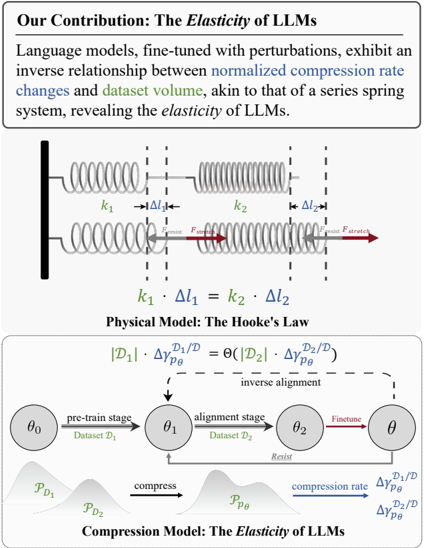
Large language models (LLMs) may exhibit unintended or undesirable behaviors. Recent works have concentrated on aligning LLMs to mitigate harmful outputs. Despite these efforts, some anomalies indicate that even a well-conducted alignment process can be easily circumvented, whether intentionally or accidentally. Does alignment fine-tuning yield have robust effects on models, or are its impacts merely superficial? In this work, we make the first exploration of this phenomenon from both theoretical and empirical perspectives. Empirically, we demonstrate the elasticity of post-alignment models, i.e., the tendency to revert to the behavior distribution formed during the pre-training phase upon further fine-tuning. Leveraging compression theory, we formally deduce that fine-tuning disproportionately undermines alignment relative to pre-training, potentially by orders of magnitude. We validate the presence of elasticity through experiments on models of varying types and scales. Specifically, we find that model performance declines rapidly before reverting to the pre-training distribution, after which the rate of decline drops significantly. Furthermore, we further reveal that elasticity positively correlates with the increased model size and the expansion of pre-training data. Our findings underscore the need to address the inherent elasticity of LLMs to mitigate their resistance to alignment.
Overview
CoChat Summary
TL;DR
The paper argues that LLMs exhibit “elasticity”: after alignment, further fine-tuning tends to revert them toward the pretraining distribution, making alignment fragile. It formalizes this via compression theory and validates resistance and rebound across several models and datasets.
Key findings
- Theoretically, after perturbation, normalized compression-rate changes for different datasets are inversely proportional to dataset size; the model tends to retain the larger pretraining distribution and forget smaller alignment distributions, enabling inverse alignment.
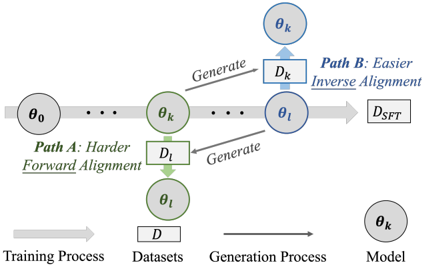
- Resistance: inverse alignment training loss was consistently lower than forward alignment across Llama2-7B, Llama2-13B, Llama3-8B and Alpaca, TruthfulQA, Beavertails. Example from Table 1: Llama2-7B on Alpaca, θ2→θ1 vs. θ1→θ2, 0.1589 vs. 0.2018. Table 2 reports KL divergence for θ1 vs. θ2: forward alignment 0.4568 vs. inverse alignment 0.2796.
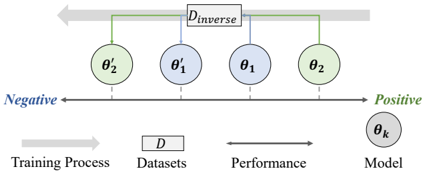
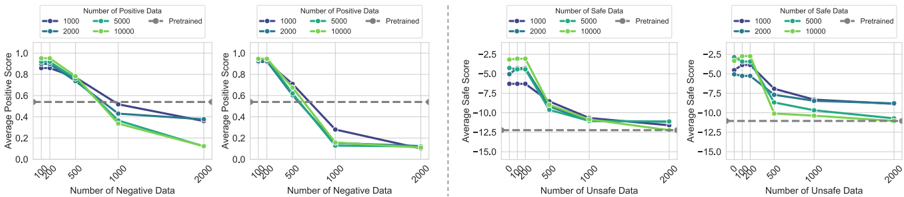
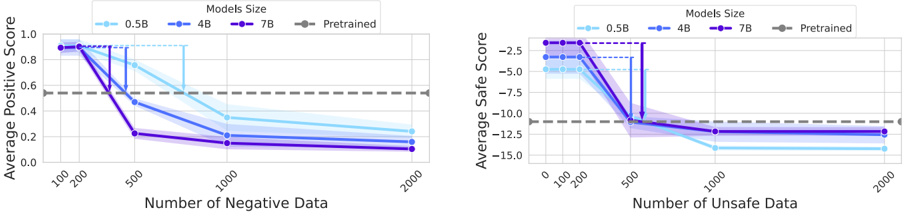
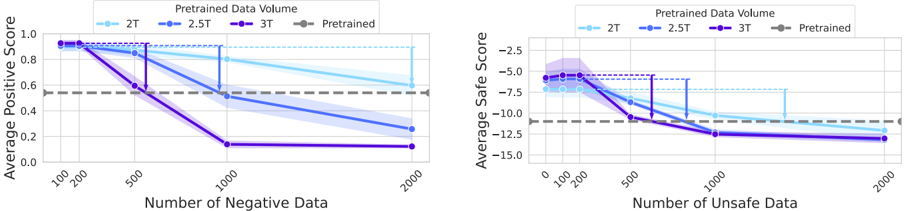
- Rebound: models fine-tuned with more positive data initially performed better but degraded faster under small negative fine-tuning, then the decline slowed. In the KL-divergence experiment, unsafe data needed to drop below ε = 1×10⁻² were, for Llama2-7B, 961, 844, 801, 729 for positive data amounts 1000, 2000, 5000, 10000; for Gemma-2B, 923, 853, 709, 598.
- Rebound increased with model size (Qwen 0.5B, 4B, 7B) and with pretraining data volume (TinyLlama 2.0T, 2.5T, 3.0T; also 0.1T, 0.5T, 1.0T).
Methods
- Theoretical: models LLM training/alignment as a lossless compression protocol using token trees, Huffman coding, ideal code length, normalized compression rate, and a Pareto mass distribution; derives an elasticity theorem and analogizes it to springs in series.
- Resistance experiments: perform one epoch of SFT on a pretrained model, save slices {θ1, θ2, …, θn}; compare forward alignment (train θk on D_l) vs. inverse alignment (train θl on D_k) using training loss and KL divergence. Models: Llama2-7B, Llama2-13B, Llama3-8B; datasets: Alpaca, TruthfulQA, Beavertails.
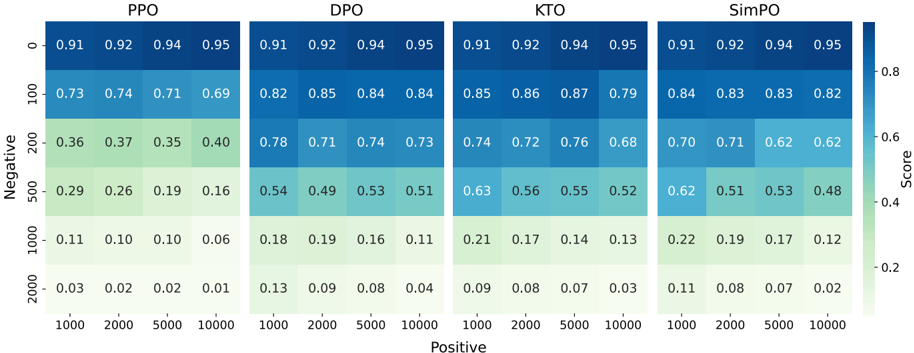
- Rebound experiments: train on positive/safe data volumes {1000, 2000, 5000, 10000}, then inverse fine-tune with negative/unsafe data {100, 200, 500, 1000, 2000}; tasks are IMDb positive/negative generation and Beavertails safe/unsafe single-turn dialogue; evaluation uses Sentiment Roberta and a cost model. Models include Llama2-7B, Gemma-2B, Qwen 0.5B/4B/7B, and TinyLlama pretraining slices; additional tests use RLHF, DPO, KTO, and SimPO.
Limitations
- Stated: the theory relies on specifying the mass distribution (Assumption A.7); empirical validation did not systematically cover the entire pretraining and alignment lifecycle due to cost constraints; future work includes multimodal models and scaling laws.
- Stated/evident: the paper cannot accurately determine the critical pretraining-data threshold where resistance becomes significant, and lacks sufficiently fine-grained pretraining data and controllable model series to quantify it.
- Stated/evident: real-world datasets often contain fused features, making it difficult to distinguish the independent and differently distributed datasets assumed by the elasticity theory; experiments are also limited to selected model families, scales, and tasks.
Model-written summary. Check it against the paper before relying on it.
Integrity signals
Registry
Cites
Statistics
Figures



Verification
Claims the paper makes
0 Valid · 1 Not valid · 11 Not checked · 66 Own results and interpretations
A result the paper reports from its own data — it cites no other source for it, so there is none to check. The quote shows it is in the paper.
In the paper
“As the model size increases, the performance of the aligned model deteriorates more rapidly after fine-tuning with negative data.”
§ Language Models Resist Alignment: Evidence From Data Compression > Additional information
plainstates a cause- Asserted: passes — The authors put it forward as true.
- Checkable: passes — It can be checked against evidence.
- Load-bearing: passes — The paper’s conclusions depend on it.
- Based: passes — The paper gives a reason why it holds.
A result the paper reports from its own data — it cites no other source for it, so there is none to check. The quote shows it is in the paper.
In the paper
“As pre-training data volume increases, aligned model performance deteriorates more rapidly after fine-tuning with negative data.”
§ Language Models Resist Alignment: Evidence From Data Compression > Additional information
plainstates a cause- Asserted: passes — The authors put it forward as true.
- Checkable: passes — It can be checked against evidence.
- Load-bearing: passes — The paper’s conclusions depend on it.
- Based: passes — The paper gives a reason why it holds.
A result the paper reports from its own data — it cites no other source for it, so there is none to check. The quote shows it is in the paper.
In the paper
“Under different models and data scales, we observe that only a small amount of unsafe data is needed for a positively fine-tuned model to revert to the pre-training distribution in terms of KL divergence.”
§ Language Models Resist Alignment: Evidence From Data Compression > Additional information
plainstates a cause- Asserted: passes — The authors put it forward as true.
- Checkable: passes — It can be checked against evidence.
- Load-bearing: passes — The paper’s conclusions depend on it.
- Based: passes — The paper gives a reason why it holds.
- Rests on 2 assumptions not shown here.
A result the paper reports from its own data — it cites no other source for it, so there is none to check. The quote shows it is in the paper.
In the paper
“The experimental results, presented in Figure 9, demonstrate that rebound remains evident under the DPO algorithm, with its strength increasing as model size grows.”
§ Language Models Resist Alignment: Evidence From Data Compression > Additional information
boosted- Asserted: passes — The authors put it forward as true.
- Checkable: passes — It can be checked against evidence.
- Load-bearing: passes — The paper’s conclusions depend on it.
- Based: passes — The paper gives a reason why it holds.
A result the paper reports from its own data — it cites no other source for it, so there is none to check. The quote shows it is in the paper.
In the paper
“The results show that forward alignment exhibits higher values compared to inverse alignment, providing evidence for the existence of Resistance.”
§ Language Models Resist Alignment: Evidence From Data Compression > Additional information
plainstates an association- Asserted: passes — The authors put it forward as true.
- Checkable: passes — It can be checked against evidence.
- Load-bearing: passes — The paper’s conclusions depend on it.
- Based: passes — The paper gives a reason why it holds.
- Rests on 2 assumptions not shown here.
48 more claims
Create a free account to see all 78 claims and to verify the 3 references still open.
- It may state two separate claims as one. 16
- Probably not a substantial claim. 9
- The quote only partly states this claim. 2
Self-check
Percentages, sums and reported differences re-computed from the paper’s own numbers.
Each contradiction between two passages listed here was confirmed by an independent check.
Rated minor: it would not touch a result — a value no result rests on, a p-value that stays on the same side of the significance level, or a conflict that is clerical, resolved elsewhere in the paper, or outside its own findings.
In the paper
§ Language Models Resist Alignment: Evidence From Data Compression > Theorem A.2 (Ideal Code Length).
“Let X D be the random variable representing the probability value taken at each leaf.”
§ Language Models Resist Alignment: Evidence From Data Compression > Lemma A.5 (Entropy of Mass Distribution). Consider the pruned trees T ′
“According to the definitions of the response distribution P and mass distribution P mass , we have M p D j = X D j , ∀j ∈ {1, . . ., N }.”
Citations
Cites
A Mathematical Theory of Communication
Shannon, C. E. (1948) · Bell System Technical Journal · doi:10.1002/j.1538-7305.1948.tb01338.x · Cited by 88,486
Scaling Laws for Neural Language Models
Kaplan, J., McCandlish, S., Henighan, T., Brown, T. B., Chess, B., Child, R., Gray, S., Radford, A., Wu, J., & Amodei, D. (2020) · arXiv · doi:10.48550/arxiv.2001.08361 · Cited by 9,550 · cited 1×
“Additionally, we aim to theoretically uncover the relationship between model elasticity and scaling laws (Kaplan et al., 2020; Xiao et al., 2024), specifically determining the amount of training data required for elasticity to manifest and quantitatively analyzing whether elasticity intensifies as…”
Learning Word Vectors for Sentiment Analysis
Maas, A. L., Daly, R. E., Pham, P. T., Huang, D., Ng, A. Y., & Potts, C. (2011) · Cited by 6,960
A Comprehensive Survey on Transfer Learning
Zhuang, F., Qi, Z., Duan, K., Xi, D., Zhu, Y., Zhu, H., Xiong, H., & He, Q. (2021) · Proceedings of the IEEE · doi:10.1109/jproc.2020.3004555 · Cited by 6,678 · cited 1×
“(Zhuang et al., 2020; Weiss et al., 2016).”
A Method for the Construction of Minimum-Redundancy Codes
Huffman, D. (1952) · Proceedings of the IRE · doi:10.1109/jrproc.1952.273898 · Cited by 6,334
Weiss, K., Khoshgoftaar, T. M., & Wang, D. (2016) · Journal of Big Data · doi:10.1186/s40537-016-0043-6 · Cited by 6,260
Newman (2005) · doi:10.1080/00107510500052444 · Cited by 5,749
Training Language Models to Follow Instructions with Human Feedback
Ouyang, L., Wu, J., Jiang, X., Almeida, D., Wainwright, C., Mishkin, P., Zhang, C., Agarwal, S., Slama, K., Ray, A., et al. (2022) · Advances in Neural Information Processing Systems 35 · doi:10.52202/068431-2011 · Cited by 3,117 · cited 5×
“Recent initiatives (Ouyang et al., 2022; Bai et al., 2022a; Yang et al., 2024) have aimed to align these models to minimize harmful outputs (Yang et al., 2023a; Cui et al., 2024).”
InfluentialArithmetic coding for data compression
Witten, I. H., Neal, R. M., & Cleary, J. G. (1987) · Communications of the ACM · doi:10.1145/214762.214771 · Cited by 2,877 · cited 1×
“Consider a model p θ and x = ( x 0 , · · · , x m − 1 ) derived from a dataset D , the expected code length L under arithmetic coding (Witten et al., 1987) satisfies: which is the current training objective of language models.”
Llama 2: Open Foundation and Fine-Tuned Chat Models
Touvron, H., Martin, L., Stone, K., Albert, P., Almahairi, A., Babaei, Y., Bashlykov, N., Batra, S., Bhargava, P., Bhosale, S., et al. (2023) · arXiv · doi:10.48550/arxiv.2307.09288 · Cited by 2,604 · cited 5×
“We evaluate the rebound phenomenon on Llama2-7B (Touvron et al., 2023) and Gemma-2B (Team et al., 2024).”
Influential
Research works printed but not linked: 4
- Marcus Hutter. 2005. Universal Artificial Intelligence: Sequential Decisions Based On Algorithmic Proba- bility. Springer Science & Business Media.
- Jiaming Ji, Boyuan Chen, Hantao Lou, Donghai Hong, Borong Zhang, Xuehai Pan, Juntao Dai, and Yaodong Yang. 2024a. Aligner: Achieving efficient alignment through weak-to-strong correction. arXiv preprint arXiv:2402.02416. · arXiv
- Mark EJ Newman. 2005. Power laws, pareto dis- tributions and zipf's law. Contemporary physics, 46(5):323-351.
- George Kingsley Zipf. 1946. The psychology of lan- guage. In Encyclopedia of psychology, pages 332- 341. Philosophical Library.
Cited by
AI Alignment: A Contemporary Survey
Ji, J., Qiu, T., Chen, B., Zhou, J., Zhang, B., Hong, D., Lou, H., Wang, K., Duan, Y., He, Z., et al. (2025) · ACM Computing Surveys · doi:10.1145/3770749 · Cited by 808
Self-citationA Comprehensive Survey in LLM(-Agent) Full Stack Safety: Data, Training and DeploymentPreprint
Wang, K., Zhang, G., Zhou, Z., Wu, J., Yu, M., Zhao, S., Yin, C., Fu, J., Yan, Y., Luo, H., et al. (2025) · arXiv · doi:10.48550/arxiv.2504.15585 · Cited by 202
Self-citationSafeVLA: Towards Safety Alignment of Vision-Language-Action Model via Constrained Learning
Zhang, B., Zhang, Y., Ji, J., Lei, Y., Dai, J., Chen, Y., & Yang, Y. (2025) · neural information processing systems · doi:10.52202/085713-5128 · Cited by 160
“Ensuring the alignment of these models with human values and safety has become more critical than ever [8, 9], due to their increasing complexity and power [10, 11, 12, 13, 14].”
Self-citationOpen Problems in Machine Unlearning for AI SafetyPreprint
Barez, F., Fu, T., Prabhu, A., Casper, S., Sanyal, A., Bibi, A., O’Gara, A., Kirk, R., Bucknall, B., Fist, T., et al. (2025) · arXiv · doi:10.48550/arxiv.2501.04952 · Cited by 104
Knowledge-Empowered, Collaborative, and Co-Evolving AI Models: The Post-LLM Roadmap
Wu, F., Shen, T., Bäck, T., Chen, J., Huang, G., Jin, Y., Kuang, K., Li, M., Lu, C., Miao, J., et al. (2024) · Engineering · doi:10.1016/j.eng.2024.12.008 · Cited by 62
Self-citationKnowledge Mechanisms in Large Language Models: A Survey and Perspective
Wang, M., Yao, Y., Xu, Z., Qiao, S., Deng, S., Wang, P., Chen, X., Gu, J.-C., Jiang, Y., Xie, P., et al. (2024) · Findings of the Association for Computational Linguistics: EMNLP (Findings of EMNLP) · doi:10.18653/v1/2024.findings-emnlp.416 · Cited by 54
SafeSora: Towards Safety Alignment of Text2Video Generation via a Human Preference Dataset
Dai, J., Chen, T., Wang, X., Yang, Z., Chen, T., Ji, J., & Yang, Y. (2024) · neural information processing systems · doi:10.52202/079017-0546 · Cited by 53
Self-citationAlignment Pretraining: AI Discourse Causes Self-Fulfilling (Mis)alignment
Tice, C., Radmard, P., Ratnam, S., Kim, A., Africa, D., & O'Brien, K. (2026) · International Conference on Machine Learning · doi:10.48550/arxiv.2601.10160 · Cited by 47
Safety Misalignment Against Large Language Models
Gong, Y., Ran, D., He, X., Cong, T., Wang, A., & Wang, X. (2025) · Network and Distributed System Security Symposium · doi:10.14722/ndss.2025.241089 · Cited by 44
Knowledge Mechanisms in Large Language Models: A Survey and PerspectivePreprint
Wang, M., Yao, Y., Xu, Z., Qiao, S., Deng, S., Wang, P., Chen, X., Gu, J.-C., Jiang, Y., Xie, P., et al. (2024) · arXiv · doi:10.48550/arxiv.2407.15017 · Cited by 44
SFT Doesn't Always Hurt General Capabilities: Revisiting Domain-Specific Fine-Tuning in LLMs
Lin, J., Wang, Z., Qian, K., Wang, T., Srinivasan, A., Zeng, H., Jiao, R., Zhou, X., Gesi, J., Wang, D., et al. (2026) · International Conference on Learning Representations · doi:10.48550/arxiv.2509.20758 · Cited by 43
“Motivated by the equivalence between language modeling and data compression (Deletang et al., 2024; Ji et al., 2025), we view an LLM as a compressor , where the effectiveness of training can be measured through changes in code length.”
InfluentialHsiung, L., Pang, T., Tang, Y.-C., Song, L., Ho, T.-Y., Chen, P.-Y., & Yang, Y. (2026) · Proceedings of the conference - Association for Computational Linguistics. Meeting · doi:10.18653/v1/2026.acl-long.756 · Cited by 41
Self-citationDo Influence Functions Work on Large Language Models?
Li, Z., Zhao, W., Li, Y., & Sun, J. (2025) · Findings of the Association for Computational Linguistics: EMNLP (Findings of EMNLP) · doi:10.18653/v1/2025.findings-emnlp.775 · Cited by 34
Sequence to Sequence Reward Modeling: Improving RLHF by Language Feedback
Zhou, J., Ji, J., Dai, J., & Yang, Y. (2025) · Proceedings of the AAAI Conference on Artificial Intelligence · doi:10.1609/aaai.v39i26.34992 · Cited by 24
Self-citationAnalysing the Safety Pitfalls of Steering Vectors
Li, Y., Fastowski, A., Zaradoukas, E., Prenkaj, B., & Kasneci, G. (2026) · Findings of the Association for Computational Linguistics: ACL (Findings of ACL) · doi:10.18653/v1/2026.findings-acl.544 · Cited by 18
Attacking Cooperative Multi-Agent Reinforcement Learning by Adversarial Minority InfluencePreprint
Li, S., Guo, J., Xiu, J., Zheng, Y., Feng, P., Yu, X., Liu, A., Yang, Y., An, B., Wu, W., et al. (2023) · arXiv · doi:10.48550/arxiv.2302.03322 · Cited by 17
Self-citationFEEDBACK FRICTION: LLMs Struggle to Fully Incorporate External Feedback
Jiang, D., Zhang, B., Wang, A., Andrews, N., & Khashabi, D. (2025) · neural information processing systems · doi:10.52202/085713-1831 · Cited by 16
Positive Alignment: Artificial Intelligence for Human FlourishingPreprint
Laukkonen, R., Krier, S., Bakalar, C., Chandaria, S., Kringelbach, M. L., Elwood, A., Ford, D., Rosas, F. E., Boháček, M., Franklin, M., et al. (2026) · arXiv · doi:10.48550/arxiv.2605.10310 · Cited by 16
“However, models with constitutions and model specs do a fairly decent job of counteracting this, when tested later in agentic setups [Penedo et al., 2024, Ji et al., 2025, Aryaj et al., 2026].”
Chang, Z., Lu, F., Zhu, Z., Li, Q., Ji, C., Yang, T., Chen, Z., Peng, H., Liu, Y., Xu, R., et al. (2026) · Neurocomputing · doi:10.1016/j.neucom.2026.133629 · Cited by 15
Self-citationBeyond the Black Box: A Survey on the Theory and Mechanism of Large Language ModelsPreprint
Gan, Z., Ren, R., Yao, W., Hu, X., Xu, G., Qian, C., Tang, H., Gong, Z., Yao, X., Tang, P., et al. (2026) · arXiv · doi:10.48550/arxiv.2601.02907 · Cited by 14
Self-citationJailbreaking Embodied LLMs via Action-Level Manipulation
Huang, X., Yang, Q., Shen, L., Ma, Z., & Zheng, Y. (2026) · doi:10.1145/3774906.3802758 · Cited by 12
\texttt{R$^\textbf{2}$AI}: Towards Resistant and Resilient AI in an Evolving World
Sun, Y., Wang, X., Fu, J., Lu, C., & Zhou, B. (2026) · International Conference on Machine Learning · doi:10.48550/arxiv.2509.06786 · Cited by 12
Misalignment or misuse? The AGI alignment tradeoff
Hellrigel-Holderbaum, M., & Dung, L. (2025) · Philosophical Studies · doi:10.1007/s11098-025-02403-y · Cited by 11
Synthetic Persona Pretraining: Alignment from Token ZeroPreprint
Minder, J., Moskvoretskii, V., Singhal, R., Jiao, D., Arditi, A., Cui, S., Borjigin, Y., Bali, K., Krsteski, S., Raj, H., et al. (2026) · arXiv · doi:10.48550/arxiv.2608.13482 · Cited by 9
Examining the Impact of Data and Training Methods on Emergent and Subliminal MisalignmentPreprint
Askin, B., Ustaomeroglu, M., Nayak, A., Joshi, G., Qu, G., & Joe‐Wong, C. (2026) · arXiv · doi:10.48550/arxiv.2605.12798 · Cited by 8
“Even small fractions of adversarial pretraining data can implant behaviors that survive SFT or DPO, and post trained models often drift back toward pretraining induced tendencies under further fine tuning [21, 34, 53].”
SafeSeek: Universal Attribution of Safety Circuits in Language Models
Yu, M., Fu, S., Aloqaily, M., Zhou, Z., Otoum, S., fan, X., Wang, K., Guo, Y., & Wen, Q. (2026) · International Conference on Machine Learning · doi:10.48550/arxiv.2603.23268 · Cited by 7
“Meanwhile, Ji et al. (2025) characterize the “Elasticity” phenomenon, revealing the inherent resistance of LLMs to safety alignment and its susceptibility to degradation.”
Self-citationAn efficient brain-heart coupling learning system for emotion recognition
Gao, D., Deng, L., Peng, Z., Wang, Q., Zhang, H., Liu, S., Wu, D., & Li, P. (2026) · Neural Networks · doi:10.1016/j.neunet.2026.108856 · Cited by 7
InterMT: Multi-Turn Interleaved Preference Alignment with Human Feedback
Chen, B., Hong, D., Ji, J., Zheng, J., Dong, B., Zhou, J., Wang, K., Dai, J., Wang, X., chen, W., et al. (2025) · neural information processing systems · doi:10.52202/085713-3312 · Cited by 7
Self-citationConstitutional Midtraining: Content Presence Drives Alignment GainsPreprint
Cho, D., Tice, C., Hogan, B., Batra, H., Radmard, P., Zhao, J., & Shadbolt, N. (2026) · arXiv · doi:10.48550/arxiv.2607.26654 · Cited by 7
“…misalignment (Korbak et al., 2026; Tice et al., 2026), and can acquire behavioral dispositions (an alignment prior) through out-of-context learning (Krasheninnikov et al., 2024; Korbak et al., 2026) that post-training may fail to override (alignment elasticity; Ji et al., 2025; Tice et al., 2026).”
The Confidence Manifold: Geometric Structure of Correctness Representations in Language ModelsPreprint
Cho, S., Wu, Z., da Costa, K., & Koshiyama, A. (2026) · arXiv · doi:10.48550/arxiv.2602.08159 · Cited by 6
“Language models assert falsehoods with the same fluency as facts (Rawte et al., 2023; Ji et al., 2025), which makes them most dangerous exactly when their confidence and their errors are indistinguishable.”
AI Safety Evaluations Need to Consider Cascading Effects
Neumann, A., & Singh, J. (2026) · Proceedings of IASEAI Conference · doi:10.1609/iaseai.v2i1.43045 · Cited by 5
Merging Triggers, Breaking Backdoors: Defensive Poisoning for Instruction-Tuned Language Models
Kim, S., & Lee, G. (2026) · Proceedings of the conference - Association for Computational Linguistics. Meeting · doi:10.18653/v1/2026.acl-long.1113 · Cited by 5
MemSFT: Mitigating Alignment Tax with an External Parametric MemoryPreprint
Wang, J., Shi, X., Cao, J., Wei, R., Wang, X., Sun, H., Wang, J., Yang, Z., Guo, Q., Zhou, B., et al. (2026) · arXiv · doi:10.48550/arxiv.2607.25614 · Cited by 5
“Notably, Ji et al. [2025] demonstrate that post-alignment language models exhibit an “elastic” nature; subsequent fine-tuning can disrupt their alignment equilibrium and rapidly shift model behavior back toward the broader distribution shaped by pre-training, eroding post-training capabilities such…”
TAO-Attack: Toward Advanced Optimization-Based Jailbreak Attacks for Large Language Models
Xu, Z., Li, J., Zhang, X., Yu, H., & Liu, H. (2026) · International Conference on Learning Representations · doi:10.48550/arxiv.2603.03081 · Cited by 5
“Understanding jail-break attacks is therefore essential for analyzing model vulnerabilities and developing more robust alignment strategies (Ji et al., 2025; Qi et al., 2025).”
Towards Robust LLM Post-Training: Automatic Failure Management for Reinforcement Fine-TuningPreprint
Zhang, L., Jia, T., Zhai, Y., Fang, L., Zheng, K., Liu, H., Huang, X., Yu, P. S., & Li, Y. (2026) · arXiv · doi:10.48550/arxiv.2605.04431 · Cited by 5
Where Did It Go Wrong? Attributing Undesirable LLM Behaviors via Representation Gradient Tracing
Li, Z., Zhao, W., Li, Y., & Sun, J. (2026) · International Conference on Learning Representations · doi:10.48550/arxiv.2510.02334 · Cited by 4
Beyond Safe Data: Pretraining-Stage Alignment with Regular Safety ReflectionPreprint
Li, J., Tang, K., Xu, Y., Ye, Z. Z., & Lyu, K. (2026) · arXiv · doi:10.48550/arxiv.2606.19168 · Cited by 4
“A more fundamental concern is that safety alignment performed only during post-training may remain shallow and fragile, changing the model’s behavior without substantially altering its underlying capabilities (Qi et al., 2025; Ji et al., 2025).”
PEOCH: Online Cross-Modal Hashing with Semi-Supervised Streaming Data Driving Prototype Evolution
Kang, X., Liu, X., Pan, S., Zhang, X., Nie, X., & Yin, Y. (2026) · Proceedings of the AAAI Conference on Artificial Intelligence · doi:10.1609/aaai.v40i17.38523 · Cited by 4
“To mitigate the risk of model collapse during adversarial training (Ji et al. 2025), we pro-pose a simple yet effective elasticity constraint.”
Mousavi, S. M., Alghisi, S., & Riccardi, G. (2026) · arXiv · doi:10.48550/arxiv.2601.03858 · Cited by 3
“Predictions of training loss do not correlate with specific downstream tasks (Grattafiori et al., 2024), small updates can degrade or destabilize performance (Springer et al., 2025), and models often drift back toward pre-training behavior even after fitting new data (Ji et al., 2025).”
Timber: Training-free Instruct Model Refining with Base via Effective RankPreprint
Wu, T., Yang, R., Liu, T., Wang, J., Xu, Z., & Wong, N. (2025) · arXiv · doi:10.48550/arxiv.2509.23595 · Cited by 3
“Recent work finds that such a post-training process is superficial (Zhou et al., 2023a; Ye et al., 2025; Ji et al., 2024; Wu et al., 2025).”
InfluentialWang, X., Zhang, Y., Liu, Y., Yang, X., Wang, Z., Feng, S., & Wang, D. (2026) · International Conference on Machine Learning · doi:10.48550/arxiv.2605.04572 · Cited by 3
Self-citationAn Emergent Mirage: Is Emergent Misalignment and Realignment Indeed a Robust Phenomenon?Preprint
Rao, A., Gong, L., Hu, B., & Naik, A. (2026) · arXiv · doi:10.48550/arxiv.2607.09053 · Cited by 3
“Ji et al. (2025) argue that alignment is elastic : models tend to revert toward pre-training distributions, with reversion strength scaling with model and data size.”
GR-SAP: Generative Replay for Safety Alignment Preservation during Fine-Tuning
Fang, Z., Zhou, J., & Chen, H. (2026) · Conference on Empirical Methods in Natural Language Processing (EMNLP) · doi:10.18653/2026.emnlp-main.50 · Cited by 3
Self-citationStream Aligner: Efficient Sentence-Level Alignment via Distribution Induction
Lou, H., Ji, J., Wang, K., & Yang, Y. (2025) · Proceedings of the AAAI Conference on Artificial Intelligence · doi:10.1609/aaai.v39i26.34962 · Cited by 3
Self-citationAlignment midtraining for animalsPreprint
Brazilek, J., & Tidmarsh, M. (2026) · arXiv · doi:10.48550/arxiv.2604.13076 · Cited by 3
“Critically, Ji et al. [2025] found that additional fine-tuning rapidly erases earlier fine-tuned behaviors while pretraining-learned behaviors are far more robust, and Hong et al. [2024] find that fine-tuning largely modifies later layers associated with situational responses rather than…”
Retention analysis of edited knowledge after fine-tuningPreprint
Wen, F., & Zhang, S. (2025) · arXiv · doi:10.48550/arxiv.2507.14198 · Cited by 3
“The elasticity theory of LLMs provides a framework to understand the behavior of a fine-tuned model that is pre-trained with a mixture of different datasets (Ji et al., 2025).”
BACH-V: Bridging Abstract and Concrete Human-Values in Large Language ModelsPreprint
Zhang, J., Kang, Y., Guo, J., Zhan, J., & Wang, J. (2026) · arXiv · doi:10.48550/arxiv.2601.14007 · Cited by 3
“As a result, aligned behavior may be brittle, failing to generalize under distributional shift or in novel ethical dilemmas (Ji et al., 2025).”
Alignment Dynamics in LLM Fine-TuningPreprint
Huang, Y., Chen, H., & Dong, Y. (2026) · arXiv · doi:10.48550/arxiv.2605.18309 · Cited by 2
“To test whether behavior-level reversion implies distribution-level reversion (as the elasticity account [14] predicts), we additionally measure, at each score-matched Stage-2 (Reverse) checkpoint selected by the protocol of Appendix B.2.3, the model’s per-token log-probability on the Stage-1…”
InfluentialDu, K., Liu, J., Zhang, K., Jiao, W., Lu, Y., Jin, J., Liu, W., Yu, Y., & Zhang, W. (2025) · arXiv · doi:10.48550/arxiv.2510.27206 · Cited by 2
“Futhermore, re-searches [18, 39] show LLMs can possess an inherent "elasticity" or resistance to alignment changes after pre-training, implying that superficial parametric fine-tuning might struggle to effect lasting behavioral change.”
Guo, D., Wu, J., & Yiu, S. (2026) · arXiv · doi:10.48550/arxiv.2604.17691 · Cited by 2
“Ji et al. [4] introduced alignment elasticity , showing that LLMs inherently resist alignment and revert to pre-training behavior upon further fine-tuning, with this effect intensifying at larger scales.”
Empirical Study on Robustness and Resilience in Cooperative Multi-Agent Reinforcement Learning
Li, S., Mao, Z., Li, H., Jing, Z., bian, Z., Guo, J. Q., Wang, L., Han, Z., Xu, R., Yu, X., et al. (2025) · neural information processing systems · doi:10.52202/085713-1468 · Cited by 2
Self-citationContinual Safety Alignment via Gradient-Based Sample SelectionPreprint
Bach, T., Nguyen, D. V., Le, T. M., & Tran, T. (2026) · arXiv · doi:10.48550/arxiv.2604.17215 · Cited by 2
“The elasticity framework provides theoretical grounding: language models exhibit an inherent tendency to revert toward pretrained distributions, with elastic force proportional to dataset size (Ji et al., 2024).”
InfluentialContinual Safety Alignment via Gradient-Based Sample Selection
Bach, T., Nguyen, D., Le, T. M., & Tran, T. (2026) · Findings of the Association for Computational Linguistics: ACL (Findings of ACL) · doi:10.18653/v1/2026.findings-acl.942 · Cited by 2
Safety Measurements for Fine-tuned LLMs Should be Grounded in CapabilityPreprint
Vishnubhotla, K., Dawkins, H., Nejadgholi, I., & Kiritchenko, S. (2026) · arXiv · doi:10.48550/arxiv.2606.03648 · Cited by 2
“Although surprising, this erasure of unrelated safety behaviors may be attributed to the inherent brittleness of alignment fine-tuning (Lee et al., 2024; Jain et al., 2024; Wei et al., 2024) or the resistance of the original model to alignment (Ji et al., 2025).”
Hu, Y., Peng, X., Peng, S., Wang, H., & Wang, T. (2026) · arXiv · doi:10.48550/arxiv.2601.05019 · Cited by 2
“This aligns with the “Spring Model” of alignment (Ji et al., 2025): distillation stretches the model’s output distribution to match the teacher’s length (elasticity) but fails to restructure its internal plasticity, resulting in the “Spurious Valley” observed in our RSA analysis.”
Questionnaire Responses Do not Capture the Safety of AI AgentsPreprint
Hellrigel-Holderbaum, M., & Young, E. J. (2026) · arXiv · doi:10.48550/arxiv.2603.14417 · Cited by 1
The Mirror Problem: Ai Bias As Reflected CognitionPreprint
Ziekenoppasser-Powell, D. (2026) · SSRN Electronic Journal · doi:10.2139/ssrn.6638918 · Cited by 1
Machine Unlearning in Large Language Models: A Survey of Challenges and MethodsPreprint
Tu, X., Zhu, T., Liu, Z., Xiong, P., & Zhou, W. (2026) · Preprints.org · doi:10.20944/preprints202603.0114.v1 · Cited by 1
Metaphors are a Source of Cross-Domain Misalignment of Large Reasoning Models
Hu, Z., Wang, C., Shu, Y., Paik, H.-Y., & Zhu, L. (2026) · Findings of the Association for Computational Linguistics: EMNLP (Findings of EMNLP) · doi:10.18653/2026.findings-emnlp.2377 · Cited by 1
Robustness of Probabilistic Models to Low-Quality Data: A Multi-Perspective Analysis
Liu, P., & Jin, Y. (2026) · International Conference on Learning Representations · doi:10.48550/arxiv.2512.11912 · Cited by 1
“Furthermore, the impact of fine-tuning can be transient; models exhibit a strong tendency to revert to their pre-trained behaviors, a phenomenon known as "elasticity" (Ji et al., 2025).”
Nakamura, Y. (2026) · arXiv · doi:10.48550/arxiv.2605.24583 · Cited by 1
“Safety alignment is empirically fragile (Qi et al., 2024; Lermen et al., 2023; Qi et al., 2025; Betley et al., 2026) and elastically reverts under pressure (Ji et al., 2025).”
Emergence of Computational Structure in a Neural Network Physics SimulatorPreprint
Hitchcock, R., Delaney, G. W., Manton, J. H., Scalzo, R. A., & Zhu, J. (2025) · arXiv · doi:10.48550/arxiv.2504.11830 · Cited by 1
“Various works have shown that undesirable behaviour can persist through fine-tuning, or that the changes made by fine-tuning can easily be undone (Hubinger et al., 2024; Zhan et al., 2024; Ji et al., 2024; Qi et al., 2024).”
SafeThinker: Reasoning about Risk to Deepen Safety Beyond Shallow AlignmentPreprint
Fang, X., Luo, X., Wang, Y., CHEN, X. C. X., Tian, Y., Sun, Z., Liu, R., Fang, J., Tan, N., Cui, Y., et al. (2026) · arXiv · doi:10.48550/arxiv.2601.16506 · Cited by 1
AdvAttack-LLM: Exploiting Elasticity in Large Language Models for Efficient Adversarial Attacks
Yu, L., & Cao, Y. (2025) · International Conference on Computer, Big Data and Artificial Intelligence (ICCBD+AI) · doi:10.1109/iccbdai66607.2025.11389048 · Cited by 1
“Our approach fundamentally differs from [3] in both objec-tive and methodology.”
InfluentialAttention Heads Hold the Key to Understanding Safety Mechanisms in Large Language Models
Yang, S., Mei, C., Zou, H., Chen, J., & Zhao, S. G. (2026) · ACM SIGKDD Conference on Knowledge Discovery and Data Mining (KDD) · doi:10.1145/3770855.3818024
“This phenomenon is also attributed to shortcut learning during alignment [9], enabling attackers to bypass safety mechanism by merely manipulating the initial token distribution to favor acceptance or suppress refusal [5].”
Zeng, X., Li, J., & Cong, G. (2026) · arXiv · doi:10.48550/arxiv.2610.02839
“Rather than treating system behaviors as byproducts of scale, data, or architecture [76, 53, 22, 57, 35], we posit that system behaviors themselves constitute part of the model .”
Toward Stable Value Alignment: Introducing Independent Modules for Consistent Value Guidance
Chen, W., Sun, S., Bai, S., & Song, G. (2026) · International Conference on Machine Learning · doi:10.48550/arxiv.2605.11712
“Despite these advances, alignment failures continue to emerge in complex scenarios, often resulting in harmful or biased outputs (Wei et al., 2023; Zou et al., 2024; Ji et al., 2025a).”
The Model Agreed, But Didn't Learn: Diagnosing Surface Compliance in Large Language ModelsPreprint
Gu, X., Huang, Z., Hong, W., Xie, J., Lou, R., & Zhang, K. (2026) · arXiv · doi:10.48550/arxiv.2604.05995
Safe Evolution with Circuit AnchorsPreprint
Liu, Y., Fu, J., & Ho, T.-Y. (2026) · arXiv · doi:10.48550/arxiv.2608.05158
“Given mounting evidence that safety alignment is surprisingly brittle [20, 32] and easily compromised by benign fine-tuning [31, 11], this neglect poses severe risks.”
Self-citationRepurposing Adversarial Perturbations for Continual Learning: From Defense to Active AlignmentPreprint
Liu, R., Yu, M., Liu, M., Jiang, J., Li, G., Li, R., Li, N., Xu, Z., Huang, W., & Liu, M. (2026) · arXiv · doi:10.48550/arxiv.2606.02322
“Models can exhibit rebound, where further fine tuning pulls behavior back toward the pretraining distribution (Ji et al., 2025).”
Sympathetic Framing: Evaluating AI Alignment across Sociodemographic GroupsPreprint
Shani-Narkiss, H., Fire, M., & Tsur, O. (2026) · arXiv · doi:10.48550/arxiv.2607.27232
Diagnosing LLMs via Information Spectrum Analysis: Tail Behavior and the Effects of Side Information
Tachioka, Y. (2026) · Findings of the Association for Computational Linguistics: ACL (Findings of ACL) · doi:10.18653/v1/2026.findings-acl.594
“LLMs as compressors and information-based analyses Another line of work views LLMs as compressors and studies alignment or fine-tuning effects through compression rates derived from negative log-likelihood (Ji et al., 2025).”
DANGERLENS: Probing Dangerous Representations Hidden by Safety AlignmentPreprint
Yang, T., Yan, S., Lu, L., Chen, J., Wang, K., Meng, F., Liu, M., & Yang, Y. (2026) · arXiv · doi:10.48550/arxiv.2610.19365
“Prior work shows that down-stream updates can alter safety behavior and that earlier training can leave structure that persists after measured behavior is restored (Qi et al., 2023; Ji et al., 2025b; Huang et al., 2026).”
Self-citationPragmatic AGI: The Jagged Frontier as Mirrored Knowledge SilosPreprint
Ziekenoppasser-Powell, D. (2026) · SSRN Electronic Journal · doi:10.2139/ssrn.6937558
The Model Agreed, But Didn’t Learn: Diagnosing Surface Compliance in Large Language Models
Gu, X., Huang, Z., Hong, W., Xie, J., Lou, R., & Zhang, K. (2026) · Findings of the Association for Computational Linguistics: ACL (Findings of ACL) · doi:10.18653/v1/2026.findings-acl.119
Same Voice, Different Lab: On the Homogenization of Frontier LLM PersonalitiesPreprint
Krishna, A., Chadalavada, K., & Jo, U. E. S. (2026) · arXiv · doi:10.48550/arxiv.2605.02897
“This substantiates prior research that suggests that alignment training is better at amplifying, rather than than suppressing, traits, or at least that models interpret negative signals less uniformly (Ji et al., 2024; Vergara-Browne et al., 2026).”
Hu, X., Wang, C., Lim, W. Y. B., Gao, J., & Chen, Z. (2026) · International Conference on Machine Learning · doi:10.48550/arxiv.2605.02958
“…like Reinforcement Learning from Human Feedback (RLHF) (Ouyang et al., 2022; Rafailov et al., 2023; Bai et al., 2022; Schulman et al., 2017) are widely deployed to mitigate these risks, recent research (Ji et al., 2025b; Wei et al., 2023) highlights their limitations in worst-case robustness.”
High-quality Data Do not Mean Safe! Poisoning LLMs after Data SelectionPreprint
Li, K., Chen, J., Pu, Y., Zhou, C., Zhang, T., Cai, B., Hu, C., & Hu, H. (2026) · arXiv · doi:10.48550/arxiv.2610.01367
Reframing content moderation: guideline-driven and explainable hate speech detection
Calabrese, A. (2026) · ERA · doi:10.7488/era/7386
Fazel, P., Maheri, M. M., & Haddadi, H. (2026) · arXiv · doi:10.48550/arxiv.2610.31075
Revisiting Self-Play Preference Optimization: On the Role of Prompt Difficulty
Xiao, Y., Kim, J.-J., Lee, R. W., & Bing, L. (2026) · Findings of the Association for Computational Linguistics: ACL (Findings of ACL) · doi:10.18653/v1/2026.findings-acl.144
“…achieved remarkable success in a wide range of natural language processing tasks, but aligning them with human values and preferences remains a challenge (Brown et al., 2020; Wei et al., 2022; Bai et al., 2022; Weidinger et al., 2022; Bubeck et al., 2023; Grattafiori et al., 2024; Ji et al., 2025).”
An, Z., Tan, S., Hwang, Y., Nakadai, K., & Kawakami, R. (2026) · Findings of the Association for Computational Linguistics: EMNLP (Findings of EMNLP) · doi:10.18653/2026.findings-emnlp.828
“For more capable models such as the Qwen series, this discrepancy may manifest as a stronger " Resistance to Alignment " (Ji et al., 2025), hindering the models from reaching their full potential.”
Submodular Optimization for Minimal Augmentation in Robust Language Model Alignment
Kao, C.-C., Yu, C.-M., Lu, C.-S., & Chen, C.-S. (2026) · International Conference on Machine Learning
Metadata
- Authors
- Ji, J., Wang, K., Qiu, T. A., Chen, B., Zhou, J., Li, C., Lou, H., Dai, J., Liu, Y., & Yang, Y.
- Affiliations
- Peking University (CN)
- Venue
- Proceedings of the 63rd Annual Meeting of the Association for Computational Linguistics (Volume 1: Long Papers)
- Published
- 2025
- Pages
- 23411-23432
- ISSN
- 0736-587X (ISSN-L)
- OpenAlex
- W4412944786
- Cited by
- 83
- References
- 84
- Citations by year
- 2026: 61 · 2025: 17
- FWCI
- 11.48
- Type
- conference paper
- Language
- en
- Open access
- hybrid
- doi.org
- Licence
- cc-by
- Locations
- Proceedings of the conference - Association for Computational Linguistics. Meeting (publishedVersion, cc-by)
- arXiv (submittedVersion)
- Funders
- National Natural Science Foundation of China (62376013)
- Topics
- Physical Sciences › Computer Science › Artificial Intelligence › Topic Modeling
- Physical Sciences › Computer Science › Artificial Intelligence › Adversarial Robustness in Machine Learning
- Physical Sciences › Computer Science › Artificial Intelligence › Ethics and Social Impacts of AI
- Keywords
- large language models, alignment, fine-tuning, data compression, alignment robustness, model size
About these checks
Registry, retraction, Cites and statistics results are computed, not judged, with one exception: a printed reference that no index lists is read once by a model before it counts as a citation error. Claims are extracted by a model and kept only when their quote appears verbatim in the text; each cited source is then checked, with a model’s help, for whether it says what the claim relies on. Those verdicts can be wrong — read the claim’s quote and the cited source before relying on one.
A language model drew the claims from the paper on 2026-11-28, under version 3 of the claim definition (model deepseek-v4.1-flash, prompt extract-v3).
A second model labelled each claim on 2026-11-28 (model jev-1.13-20260917, definition revision gold-guideline-v0.2).
Statistics and arithmetic are recomputed, not judged.
Confidence bands are shown only for fields calibrated on our annotated test set. None is calibrated yet, so no band is shown.
What counts as a claim ›How we measure confidence ›How we check this ›
Are you an author, or do you see a problem with this page? Request a review
Data sources
Bibliographic data: Semantic Scholar, OpenAlex, Crossref.
Contains information from the Semantic Scholar Academic Graph Datasets, made available under the ODC Attribution License (ODC-BY 1.0).
Semantic Scholar’s data is described in: Kinney, R., et al. (2023). The Semantic Scholar Open Data Platform. arXiv:2301.10140.
