

Language Models Resist Alignment: Evidence From Data Compression
Open accessThe DOI matches its Crossref record; 89 of the 89 references it cites were found in a registry or an index; none of the 16 sources its claims cite is checked for support yet.
Abstract
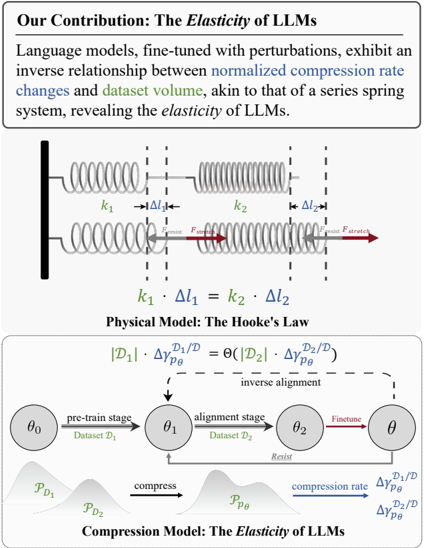
Large language models (LLMs) may exhibit unintended or undesirable behaviors. Recent works have concentrated on aligning LLMs to mitigate harmful outputs. Despite these efforts, some anomalies indicate that even a well-conducted alignment process can be easily circumvented, whether intentionally or accidentally. Does alignment fine-tuning yield have robust effects on models, or are its impacts merely superficial? In this work, we make the first exploration of this phenomenon from both theoretical and empirical perspectives. Empirically, we demonstrate the elasticity of post-alignment models, i.e., the tendency to revert to the behavior distribution formed during the pre-training phase upon further fine-tuning. Leveraging compression theory, we formally deduce that fine-tuning disproportionately undermines alignment relative to pre-training, potentially by orders of magnitude. We validate the presence of elasticity through experiments on models of varying types and scales. Specifically, we find that model performance declines rapidly before reverting to the pre-training distribution, after which the rate of decline drops significantly. Furthermore, we further reveal that elasticity positively correlates with the increased model size and the expansion of pre-training data. Our findings underscore the need to address the inherent elasticity of LLMs to mitigate their resistance to alignment.
Overview
CoChat Summary
TL;DR
The paper argues that LLMs exhibit “elasticity”: after alignment, further fine-tuning tends to revert them toward the pretraining distribution, making alignment fragile. It formalizes this via compression theory and validates resistance and rebound across several models and datasets.
Key findings
- Theoretically, after perturbation, normalized compression-rate changes for different datasets are inversely proportional to dataset size; the model tends to retain the larger pretraining distribution and forget smaller alignment distributions, enabling inverse alignment.
- Resistance: inverse alignment training loss was consistently lower than forward alignment across Llama2-7B, Llama2-13B, Llama3-8B and Alpaca, TruthfulQA, Beavertails. Example from Table 1: Llama2-7B on Alpaca, θ2→θ1 vs. θ1→θ2, 0.1589 vs. 0.2018. Table 2 reports KL divergence for θ1 vs. θ2: forward alignment 0.4568 vs. inverse alignment 0.2796.
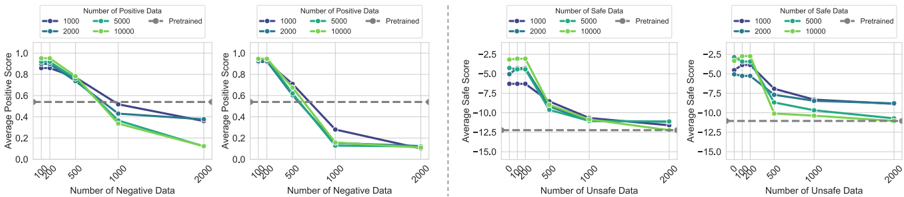
- Rebound: models fine-tuned with more positive data initially performed better but degraded faster under small negative fine-tuning, then the decline slowed. In the KL-divergence experiment, unsafe data needed to drop below ε = 1×10⁻² were, for Llama2-7B, 961, 844, 801, 729 for positive data amounts 1000, 2000, 5000, 10000; for Gemma-2B, 923, 853, 709, 598.
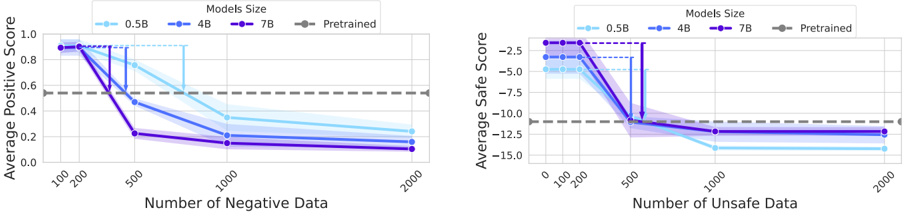
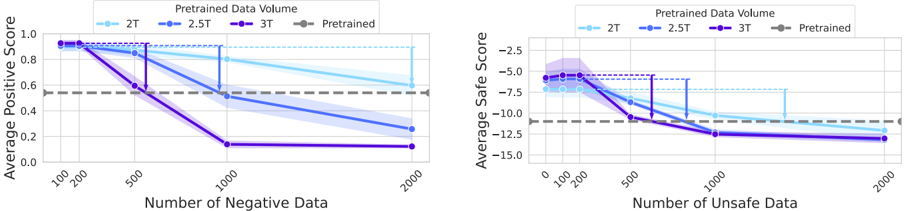
- Rebound increased with model size (Qwen 0.5B, 4B, 7B) and with pretraining data volume (TinyLlama 2.0T, 2.5T, 3.0T; also 0.1T, 0.5T, 1.0T).
Methods
- Theoretical: models LLM training/alignment as a lossless compression protocol using token trees, Huffman coding, ideal code length, normalized compression rate, and a Pareto mass distribution; derives an elasticity theorem and analogizes it to springs in series.
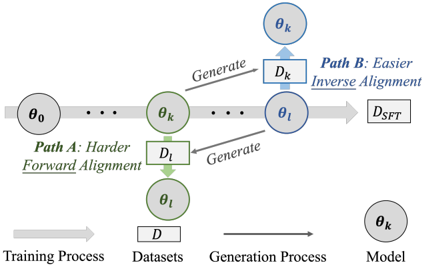
- Resistance experiments: perform one epoch of SFT on a pretrained model, save slices {θ1, θ2, …, θn}; compare forward alignment (train θk on D_l) vs. inverse alignment (train θl on D_k) using training loss and KL divergence. Models: Llama2-7B, Llama2-13B, Llama3-8B; datasets: Alpaca, TruthfulQA, Beavertails.
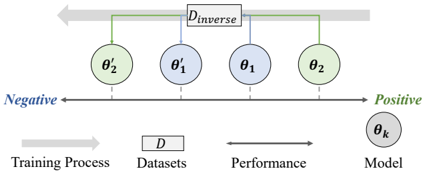
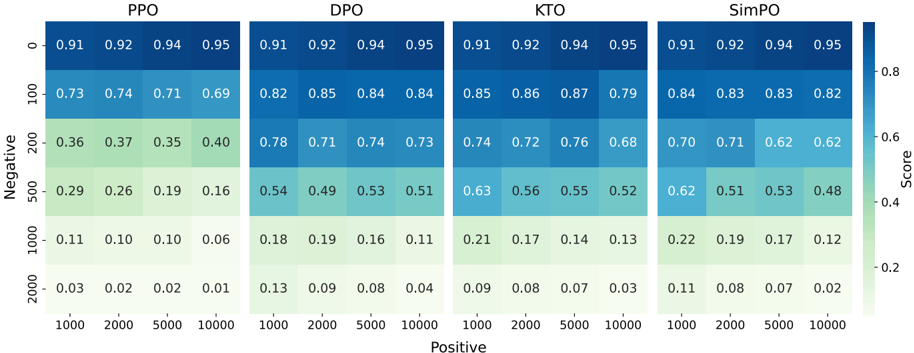
- Rebound experiments: train on positive/safe data volumes {1000, 2000, 5000, 10000}, then inverse fine-tune with negative/unsafe data {100, 200, 500, 1000, 2000}; tasks are IMDb positive/negative generation and Beavertails safe/unsafe single-turn dialogue; evaluation uses Sentiment Roberta and a cost model. Models include Llama2-7B, Gemma-2B, Qwen 0.5B/4B/7B, and TinyLlama pretraining slices; additional tests use RLHF, DPO, KTO, and SimPO.
Limitations
- Stated: the theory relies on specifying the mass distribution (Assumption A.7); empirical validation did not systematically cover the entire pretraining and alignment lifecycle due to cost constraints; future work includes multimodal models and scaling laws.
- Stated/evident: the paper cannot accurately determine the critical pretraining-data threshold where resistance becomes significant, and lacks sufficiently fine-grained pretraining data and controllable model series to quantify it.
- Stated/evident: real-world datasets often contain fused features, making it difficult to distinguish the independent and differently distributed datasets assumed by the elasticity theory; experiments are also limited to selected model families, scales, and tasks.
Model-written summary. Check it against the paper before relying on it.
Integrity signals
Registry
Cites
Statistics
Figures



Verification
Claims the paper makes
0 Valid · 1 Not valid · 11 Not checked · 66 Own results and interpretations
A result the paper reports from its own data — it cites no other source for it, so there is none to check. The quote shows it is in the paper.
In the paper
“As the model size increases, the performance of the aligned model deteriorates more rapidly after fine-tuning with negative data.”
§ Language Models Resist Alignment: Evidence From Data Compression > Additional information
plainstates a cause- Asserted: passes — The authors put it forward as true.
- Checkable: passes — It can be checked against evidence.
- Load-bearing: passes — The paper’s conclusions depend on it.
- Based: passes — The paper gives a reason why it holds.
A result the paper reports from its own data — it cites no other source for it, so there is none to check. The quote shows it is in the paper.
In the paper
“As pre-training data volume increases, aligned model performance deteriorates more rapidly after fine-tuning with negative data.”
§ Language Models Resist Alignment: Evidence From Data Compression > Additional information
plainstates a cause- Asserted: passes — The authors put it forward as true.
- Checkable: passes — It can be checked against evidence.
- Load-bearing: passes — The paper’s conclusions depend on it.
- Based: passes — The paper gives a reason why it holds.
A result the paper reports from its own data — it cites no other source for it, so there is none to check. The quote shows it is in the paper.
In the paper
“Under different models and data scales, we observe that only a small amount of unsafe data is needed for a positively fine-tuned model to revert to the pre-training distribution in terms of KL divergence.”
§ Language Models Resist Alignment: Evidence From Data Compression > Additional information
plainstates a cause- Asserted: passes — The authors put it forward as true.
- Checkable: passes — It can be checked against evidence.
- Load-bearing: passes — The paper’s conclusions depend on it.
- Based: passes — The paper gives a reason why it holds.
- Rests on 2 assumptions not shown here.
A result the paper reports from its own data — it cites no other source for it, so there is none to check. The quote shows it is in the paper.
In the paper
“The experimental results, presented in Figure 9, demonstrate that rebound remains evident under the DPO algorithm, with its strength increasing as model size grows.”
§ Language Models Resist Alignment: Evidence From Data Compression > Additional information
boosted- Asserted: passes — The authors put it forward as true.
- Checkable: passes — It can be checked against evidence.
- Load-bearing: passes — The paper’s conclusions depend on it.
- Based: passes — The paper gives a reason why it holds.
A result the paper reports from its own data — it cites no other source for it, so there is none to check. The quote shows it is in the paper.
In the paper
“The results show that forward alignment exhibits higher values compared to inverse alignment, providing evidence for the existence of Resistance.”
§ Language Models Resist Alignment: Evidence From Data Compression > Additional information
plainstates an association- Asserted: passes — The authors put it forward as true.
- Checkable: passes — It can be checked against evidence.
- Load-bearing: passes — The paper’s conclusions depend on it.
- Based: passes — The paper gives a reason why it holds.
- Rests on 2 assumptions not shown here.
48 more claims
Create a free account to see all 78 claims and to verify the 3 references still open.
- It may state two separate claims as one. 16
- Probably not a substantial claim. 9
- The quote only partly states this claim. 2
Self-check
Percentages, sums and reported differences re-computed from the paper’s own numbers.
Each contradiction between two passages listed here was confirmed by an independent check.
Rated minor: it would not touch a result — a value no result rests on, a p-value that stays on the same side of the significance level, or a conflict that is clerical, resolved elsewhere in the paper, or outside its own findings.
In the paper
§ Language Models Resist Alignment: Evidence From Data Compression > Theorem A.2 (Ideal Code Length).
“Let X D be the random variable representing the probability value taken at each leaf.”
§ Language Models Resist Alignment: Evidence From Data Compression > Lemma A.5 (Entropy of Mass Distribution). Consider the pruned trees T ′
“According to the definitions of the response distribution P and mass distribution P mass , we have M p D j = X D j , ∀j ∈ {1, . . ., N }.”
Citations
Cites
A Mathematical Theory of Communication
Shannon, C. E. (1948) · Bell System Technical Journal · doi:10.1002/j.1538-7305.1948.tb01338.x · Cited by 88,486
Scaling Laws for Neural Language Models
Kaplan, J., McCandlish, S., Henighan, T., Brown, T. B., Chess, B., Child, R., Gray, S., Radford, A., Wu, J., & Amodei, D. (2020) · arXiv · doi:10.48550/arxiv.2001.08361 · Cited by 9,550 · cited 1×
“Additionally, we aim to theoretically uncover the relationship between model elasticity and scaling laws (Kaplan et al., 2020; Xiao et al., 2024), specifically determining the amount of training data required for elasticity to manifest and quantitatively analyzing whether elasticity intensifies as…”
Learning Word Vectors for Sentiment Analysis
Maas, A. L., Daly, R. E., Pham, P. T., Huang, D., Ng, A. Y., & Potts, C. (2011) · Cited by 6,960
A Comprehensive Survey on Transfer Learning
Zhuang, F., Qi, Z., Duan, K., Xi, D., Zhu, Y., Zhu, H., Xiong, H., & He, Q. (2021) · Proceedings of the IEEE · doi:10.1109/jproc.2020.3004555 · Cited by 6,678 · cited 1×
“(Zhuang et al., 2020; Weiss et al., 2016).”
A Method for the Construction of Minimum-Redundancy Codes
Huffman, D. (1952) · Proceedings of the IRE · doi:10.1109/jrproc.1952.273898 · Cited by 6,334
Weiss, K., Khoshgoftaar, T. M., & Wang, D. (2016) · Journal of Big Data · doi:10.1186/s40537-016-0043-6 · Cited by 6,260
Newman (2005) · doi:10.1080/00107510500052444 · Cited by 5,749
Training Language Models to Follow Instructions with Human Feedback
Ouyang, L., Wu, J., Jiang, X., Almeida, D., Wainwright, C., Mishkin, P., Zhang, C., Agarwal, S., Slama, K., Ray, A., et al. (2022) · Advances in Neural Information Processing Systems 35 · doi:10.52202/068431-2011 · Cited by 3,117 · cited 5×
“Recent initiatives (Ouyang et al., 2022; Bai et al., 2022a; Yang et al., 2024) have aimed to align these models to minimize harmful outputs (Yang et al., 2023a; Cui et al., 2024).”
InfluentialArithmetic coding for data compression
Witten, I. H., Neal, R. M., & Cleary, J. G. (1987) · Communications of the ACM · doi:10.1145/214762.214771 · Cited by 2,877 · cited 1×
“Consider a model p θ and x = ( x 0 , · · · , x m − 1 ) derived from a dataset D , the expected code length L under arithmetic coding (Witten et al., 1987) satisfies: which is the current training objective of language models.”
Llama 2: Open Foundation and Fine-Tuned Chat Models
Touvron, H., Martin, L., Stone, K., Albert, P., Almahairi, A., Babaei, Y., Bashlykov, N., Batra, S., Bhargava, P., Bhosale, S., et al. (2023) · arXiv · doi:10.48550/arxiv.2307.09288 · Cited by 2,604 · cited 5×
“We evaluate the rebound phenomenon on Llama2-7B (Touvron et al., 2023) and Gemma-2B (Team et al., 2024).”
InfluentialCooperation under the security dilemma
Jervis, R. (1978) · World Politics · doi:10.2307/2009958 · Cited by 2,305 · cited 1×
“These efforts collectively help sustain a balanced offence-defense dynamic (Jervis, 1978; Garfinkel and Dafoe, 2021) in the open-source environment and improve model security (Eiras et al., 2024).”
Fine-tuning Aligned Language Models Compromises Safety, Even When Users Do Not Intend To!
Qi, X., Zeng, Y., Xie, T., Chen, P., Jia, R., Mittal, P., & Henderson, P. (2024) · International Conference on Learning Representations · doi:10.48550/arxiv.2310.03693 · Cited by 1,741 · cited 2×
“However, research indicates that even well-aligned models can be compromised easily, and fine-tuning them on non-malicious datasets might unintentionally impair their safety mechanisms (Yang et al., 2023b; Qi et al., 2024b; Hub-inger et al., 2024; Dong et al., 2024).”
TinyLlama: An Open-Source Small Language ModelPreprint
Zhang, P.-Y., Zeng, G.-T., Wang, T., & Lu, W. (2024) · arXiv.org · doi:10.48550/arxiv.2401.02385 · Cited by 1,016 · cited 1×
“To verify that rebound increases with the growth of pre-training data, we vary pre-training slices (2.0T, 2.5T, and 3.0T) released by TinyL-lama (Zhang et al., 2024a) and conduct the same experiment.”
TruthfulQA: Measuring How Models Mimic Human Falsehoods
Lin, S., Hilton, J., & Evans, O. (2022) · Proceedings of the 60th Annual Meeting of the Association for Computational Linguistics (Volume 1: Long Papers) · doi:10.18653/v1/2022.acl-long.229 · Cited by 904
TruthfulQA: Measuring How Models Mimic Human Falsehoods
Lin, S., Hilton, J., & Evans, O. (2021) · arXiv · doi:10.48550/arxiv.2109.07958 · Cited by 899 · cited 1×
“We select different SFT datasets including Alpaca (Taori et al., 2023), TruthfulQA (Lin et al., 2022), and Beavertails (Ji et al., 2024c,b), which correspond respectively to the model’s 3H principle (Askell et al., 2021).”
AI Alignment: A Contemporary Survey
Ji, J., Qiu, T., Chen, B., Zhou, J., Zhang, B., Hong, D., Lou, H., Wang, K., Duan, Y., He, Z., et al. (2025) · ACM Computing Surveys · doi:10.1145/3770749 · Cited by 808
Self-citationProbabilistic machine learning advanced topics
Murphy, K. P. (2023) · Cited by 745
Direct Preference Optimization: Your Language Model is Secretly a Reward Model
Rafailov, R., Sharma, A., Mitchell, E., Manning, C. D., Ermon, S., & Finn, C. (2023) · Advances in Neural Information Processing Systems 36 · doi:10.52202/075280-2338 · Cited by 686 · cited 7×
“…methods, including supervised fine-tuning (SFT), reinforcement learning with human feedback (RLHF) (Ouyang et al., 2022), and other derivatives (Rafailov et al., 2024; Bai et al., 2022b; Lee et al., 2023; Gulcehre et al., 2023; Dong et al., 2023; Xiong et al., 2024; Li et al., 2023; Zhou et…”
InfluentialSafety Alignment Should Be Made More Than Just a Few Tokens Deep
Qi, X., Panda, A., Lyu, K., Ma, X., Roy, S. S., Beirami, A., Mittal, P., & Henderson, P. (2025) · International Conference on Learning Representations · doi:10.48550/arxiv.2406.05946 · Cited by 648 · cited 5×
“Furthermore, fine-tuning aligned LLMs on non-malicious datasets may also weaken models’ safety mechanisms (Qi et al., 2024a; Jain et al., 2023).”
InfluentialXiong, W., Dong, H., Ye, C., Wang, Z., Zhong, H., Ji, H., Jiang, N., & Zhang, T. (2023) · arXiv · doi:10.48550/arxiv.2312.11456 · Cited by 466 · cited 2×
“Wei et al. (2024) use weight attribution to separate safety-critical and utility-related regions at both neuron and rank levels.”
Training a Helpful and Harmless Assistant with Reinforcement Learning from Human Feedback
Bai, Y., Jones, A., Ndousse, K., Askell, A., Chen, A., DasSarma, N., Drain, D., Fort, S., Ganguli, D., Henighan, T., et al. (2022) · arXiv · doi:10.48550/arxiv.2204.05862 · Cited by 442 · cited 2×
“We conjecture that the elasticity causes language models to resist alignment, enabling the possibility of inverse alignment . datasets (Bai et al., 2022a; Ji et al., 2024c; Qian et al., 2024; Lin et al., 2025), LLMs often exhibit behaviors that deviate from human intentions, a phenomenon we refer…”
PKU-SafeRLHF: Towards Multi-Level Safety Alignment for LLMs with Human Preference
Ji, J., Hong, D., Zhang, B., Chen, B., Dai, J., Zheng, B., Qiu, T. A., Zhou, J., Wang, K., Li, B., et al. (2025) · Proceedings of the conference - Association for Computational Linguistics. Meeting · doi:10.18653/v1/2025.acl-long.1544 · Cited by 416
Self-citationShadow Alignment: The Ease of Subverting Safely-Aligned Language ModelsPreprint
Yang, X., Wang, X., Zhang, Q., Petzold, L., Wang, W. Y., Zhao, X., & Lin, D.-H. (2023) · arXiv.org · doi:10.48550/arxiv.2310.02949 · Cited by 369
More than a Feeling: Accuracy and Application of Sentiment Analysis
Hartmann, J., Heitmann, M., Siebert, C., & Schamp, C. (2023) · International Journal of Research in Marketing · doi:10.1016/j.ijresmar.2022.05.005 · Cited by 356 · cited 1×
“For positive style generation, we refer to (Rafailov et al., 2024) and use the Sentiment Roberta model (Hartmann et al., 2023) to classify the responses, taking the proportion of all responses classified as positive as the model score.”
Dual use of artificial-intelligence-powered drug discovery
Urbina, F., Lentzos, F., Invernizzi, C., & Ekins, S. (2022) · Nature Machine Intelligence · doi:10.1038/s42256-022-00465-9 · Cited by 346 · cited 1×
“Malicious fine-tuning of open-source models (Urbina et al., 2022; Sand-brink, 2023) and the use of the open-source models to facilitate system jailbreaks (Zou et al., 2023) can pose serious threats to public safety (Gold-stein et al., 2023; Reuel et al., 2024).”
Bai, J., Bai, S., Chu, Y., Cui, Z., Dang, K., Deng, X., Fan, Y., Ge, W., Han, Y., Huang, F., et al. (2023) · arXiv · doi:10.48550/arxiv.2309.16609 · Cited by 332 · cited 2×
“To investigate how the rebound phenomenon varies with model size, we conducted experiments on Qwen models (Bai et al., 2023) with parameter scales of 0.5B, 4B, and 7B.”
Self-citationBai, Y., Kadavath, S., Kundu, S., Askell, A., Kernion, J., Jones, A., Chen, A., Goldie, A., Mirhoseini, A., & Kaplan, J. (2022) · arXiv (Cornell University) · doi:10.48550/arxiv.2212.08073 · Cited by 326 · cited 1×
“…supervised fine-tuning (SFT), reinforcement learning with human feedback (RLHF) (Ouyang et al., 2022), and other derivatives (Rafailov et al., 2024; Bai et al., 2022b; Lee et al., 2023; Gulcehre et al., 2023; Dong et al., 2023; Xiong et al., 2024; Li et al., 2023; Zhou et al., 2023, 2025; Ji et…”
Li, Z., Xu, T., Zhang, Y., Lin, Z., Yu, Y., Sun, R., & Luo, Z.-Q. T. (2024) · International Conference on Machine Learning · doi:10.48550/arxiv.2310.10505 · Cited by 307
Assessing the Brittleness of Safety Alignment via Pruning and Low-Rank ModificationsPreprint
Wei, B., Huang, K., Huang, Y., Xie, T., Qi, X., Xia, M., Mittal, P., Wang, M., & Henderson, P. (2024) · arXiv (Cornell University) · doi:10.48550/arxiv.2402.05162 · Cited by 293
Auditing Large Language Models: A Three-Layered Approach
Mökander, J., Schuett, J., Kirk, H. R., & Floridi, L. (2023) · doi:10.2139/ssrn.4361607 · Cited by 292
Auditing large language models: a three-layered approach
Mökander, J., Schuett, J., Kirk, H. R., & Floridi, L. (2023) · arXiv · doi:10.48550/arxiv.2302.08500 · Cited by 292 · cited 1×
“At present, the open-sourcing of powerful language models relies on safety alignment and rigorous security au-dits (Mökander et al., 2024) to ensure responsible use.”
Auditing large language models: a three-layered approach
Mökander, J., Schuett, J., Kirk, H. R., & Floridi, L. (2024) · AI and Ethics · doi:10.1007/s43681-023-00289-2 · Cited by 289 · cited 1×
“At present, the open-sourcing of powerful language models relies on safety alignment and rigorous security au-dits (Mökander et al., 2024) to ensure responsible use.”
Gemma: Open Models Based on Gemini Research and Technology
Gemma Team, Mesnard, T., Hardin, C., Dadashi, R., Bhupatiraju, S., Pathak, S., Sifre, L., Rivière, M., Kale, M. S., Love, J., et al. (2024) · arXiv · doi:10.48550/arxiv.2403.08295 · Cited by 284
LIMA: Less Is More for Alignment
Zhou, C., Liu, P., Xu, P., Iyer, S., Sun, J., Mao, Y., Ma, X., Efrat, A., Yu, P., Yu, L., et al. (2023) · arXiv · doi:10.48550/arxiv.2305.11206 · Cited by 275 · cited 1×
“Recent studies have shown that highly safety-aligned models can become unsafe again with minimal fine-tuning(Yang et al., 2023b; Zhou et al., 2024).”
LIMA: Less Is More for Alignment
Zhou, C., Liu, P., Xu, P., Iyer, S., Sun, J., Mao, Y., Ma, X., Efrat, A., Yu, P., Yu, L., et al. (2023) · Advances in Neural Information Processing Systems 36 · doi:10.52202/075280-2400 · Cited by 275 · cited 1×
“Recent studies have shown that highly safety-aligned models can become unsafe again with minimal fine-tuning(Yang et al., 2023b; Zhou et al., 2024).”
AI deception: A survey of examples, risks, and potential solutions
Park, P. S., Goldstein, S., O’Gara, A., Chen, M., & Hendrycks, D. (2024) · Patterns · doi:10.1016/j.patter.2024.100988 · Cited by 243
Attacks, Defenses and Evaluations for LLM Conversation Safety: A Survey
Dong, Z., Zhou, Z., Yang, C., Shao, J., & Qiao, Y. (2024) · Conference of the North American Chapter of the Association for Computational Linguistics: Human Language Technologies (NAACL-HLT) · doi:10.18653/v1/2024.naacl-long.375 · Cited by 236
Yang, Y., Chern, E., Qiu, X., Neubig, G., & Liu, P. (2024) · neural information processing systems · doi:10.52202/079017-2030 · Cited by 207
Self-citationAligner: Efficient Alignment by Learning to Correct
Ji, J., Chen, B., Lou, H., Hong, D., Zhang, B., Pan, X., Dai, J., Qiu, T., & Yang, Y. (2024) · neural information processing systems · doi:10.52202/079017-2884 · Cited by 200
Self-citationUniversal and Transferable Adversarial Attacks on Aligned Language Models
Zou, A., Wang, Z., Carlini, N., Nasr, M., Kolter, J. Z., & Fredrikson, M. (2023) · arXiv · doi:10.48550/arxiv.2307.15043 · Cited by 197 · cited 1×
“Malicious fine-tuning of open-source models (Urbina et al., 2022; Sand-brink, 2023) and the use of the open-source models to facilitate system jailbreaks (Zou et al., 2023) can pose serious threats to public safety (Gold-stein et al., 2023; Reuel et al., 2024).”
Sandbrink, J. B. (2023) · arXiv (Cornell University) · doi:10.48550/arxiv.2306.13952 · Cited by 163 · cited 1×
“Subsequently, without loss of generality, we collect the responses of slices Experiment Setup.”
Beyond One-Preference-Fits-All Alignment: Multi-Objective Direct Preference Optimization
Zhou, Z.-H., Liu, J., Shao, J., Yue, X.-Y., Yang, C., Ouyang, W.-L., & Qiao, Y. (2023) · Annual Meeting of the Association for Computational Linguistics · doi:10.18653/v1/2024.findings-acl.630 · Cited by 159 · cited 1×
“…human feedback (RLHF) (Ouyang et al., 2022), and other derivatives (Rafailov et al., 2024; Bai et al., 2022b; Lee et al., 2023; Gulcehre et al., 2023; Dong et al., 2023; Xiong et al., 2024; Li et al., 2023; Zhou et al., 2023, 2025; Ji et al., 2024a), are the dominant approaches for aligning models.”
Goldstein, J. A., Sastry, G., Musser, M., DiResta, R., Gentzel, M., & Sedova, K. (2023) · arXiv · doi:10.48550/arxiv.2301.04246 · Cited by 152
A General Language Assistant as a Laboratory for Alignment
Askell, A., Bai, Y., Chen, A., Drain, D., Ganguli, D., Henighan, T., Jones, A., Joseph, N., Mann, B., DasSarma, N., et al. (2021) · arXiv · doi:10.48550/arxiv.2112.00861 · Cited by 146 · cited 1×
“We select different SFT datasets including Alpaca (Taori et al., 2023), TruthfulQA (Lin et al., 2022), and Beavertails (Ji et al., 2024c,b), which correspond respectively to the model’s 3H principle (Askell et al., 2021).”
What is in Your Safe Data? Identifying Benign Data that Breaks SafetyPreprint
He, L., Xia, M., & Henderson, P. (2024) · arXiv (Cornell University) · doi:10.48550/arxiv.2404.01099 · Cited by 140
Against The Achilles' Heel: A Survey on Red Teaming for Generative Models
Lin, L., Mu, H., Zhai, Z., Wang, M., Wang, Y., Wang, R., Gao, J., Zhang, Y., Che, W., Baldwin, T., et al. (2025) · Journal of Artificial Intelligence Research · doi:10.1613/jair.1.17654 · Cited by 115
Open Problems and Fundamental Limitations of Reinforcement Learning from Human Feedback
Casper, S., Davies, X., Shi, C., Gilbert, T. K., Scheurer, J., Rando, J., Freedman, R., Korbak, T., Lindner, D., Freire, P., et al. (2023) · arXiv · doi:10.48550/arxiv.2307.15217 · Cited by 101 · cited 1×
“These methods aim to optimize model behavior by rejecting harmful distributions, ensuring LLMs remain consistent with human intentions and values (Ji et al., 2023; Casper et al., 2023).”
RLCD: Reinforcement Learning from Contrastive Distillation for Language Model Alignment
Yang, K., Klein, D., Çelikyılmaz, A., Peng, N., & Tian, Y. (2024) · International Conference on Learning Representations · doi:10.48550/arxiv.2307.12950 · Cited by 99 · cited 1×
“Recent initiatives (Ouyang et al., 2022; Bai et al., 2022a; Yang et al., 2024) have aimed to align these models to minimize harmful outputs (Yang et al., 2023a; Cui et al., 2024).”
Is SGD a Bayesian sampler? Well, almostPreprint
Mingard, C., Valle-Pérez, G., Skalse, J., & Louis, A. A. (2020) · Oxford University Research Archive (ORA) (University of Oxford) · doi:10.48550/arxiv.2006.15191 · Cited by 88 · cited 1×
“We assume that the mass distribution of the segment follows a heavy-tailed Pareto distribution, with supporting evidence from Mingard et al. (2021); Zipf (1946).”
RLAIF vs. RLHF: Scaling Reinforcement Learning from Human Feedback with AI Feedback
Lee, H., Phatale, S., Mansoor, H., Mesnard, T., Ferret, J., Lu, K., Bishop, C., Hall, E., Carbune, V., Rastogi, A., et al. (2023) · arXiv · doi:10.48550/arxiv.2309.00267 · Cited by 87 · cited 1×
“…(SFT), reinforcement learning with human feedback (RLHF) (Ouyang et al., 2022), and other derivatives (Rafailov et al., 2024; Bai et al., 2022b; Lee et al., 2023; Gulcehre et al., 2023; Dong et al., 2023; Xiong et al., 2024; Li et al., 2023; Zhou et al., 2023, 2025; Ji et al., 2024a), are the…”
RRM: Robust Reward Model Training Mitigates Reward Hacking
Liu, T.-Q., Xiong, W., Ren, J., Chen, L.-C., Wu, J.-R., Joshi, R., Gao, Y., Shen, J., Qin, Z., Yu, T., et al. (2024) · International Conference on Learning Representations · doi:10.48550/arxiv.2409.13156 · Cited by 86 · cited 1×
“…will enable the design of more robust alignment algorithms (Revel et al., 2024; Zhang et al., 2024b; Chen et al., 2024; Sheshadri et al., 2024; Liu et al., 2024; Li et al., 2025), ultimately achieving true and reliable alignment for LLMs. Rethinking Open-sourcing from Elasticity of LLMs.…”
Self-citationA survey of table reasoning with large language models
Zhang, X., Wang, D., Dou, L., Zhu, Q., & Che, W. (2025) · Frontiers of Computer Science · doi:10.1007/s11704-024-40330-z · Cited by 79
SimPO: Simple Preference Optimization with a Reference-Free Reward
Meng, Y., Xia, M., & Chen, D. (2024) · Advances in Neural Information Processing Systems 37 · doi:10.52202/079017-3946 · Cited by 77
From Theft to Bomb-Making: The Ripple Effect of Unlearning in Defending Against Jailbreak AttacksPreprint
Zhang, Z., Yang, J., Lu, Y., Ke, P., Cui, S., Zheng, C., Wang, H., & Huang, M. (2024) · arXiv (Cornell University) · doi:10.48550/arxiv.2407.02855 · Cited by 73
BeaverTails: Towards Improved Safety Alignment of LLM via a Human-Preference Dataset
Ji, J., Liu, M., Dai, J., Pan, X., Zhang, C., Bian, C., Chen, B., Sun, R., Wang, Y., & Yang, Y. (2023) · neural information processing systems · doi:10.52202/075280-1072 · Cited by 70
Self-citationA Literature Survey on Open Source Large Language Models
Kukreja, S., Kumar, T., Purohit, A., Dasgupta, A., & Guha, D. (2024) · International Conferences on Computers in Management and Business · doi:10.1145/3647782.3647803 · Cited by 67
Align Anything: Training All-Modality Models to Follow Instructions with Language FeedbackPreprint
Ji, J., Zhou, J., Lou, H., Chen, B., Hong, D., Wang, X., Chen, W., Wang, K., Pan, R., Li, J., et al. (2024) · arXiv (Cornell University) · doi:10.48550/arxiv.2412.15838 · Cited by 52 · cited 1×
“In future works, we plan to focus on whether this phenomenon is universally applicable, such as in multimodal models (Ji et al., 2024d; Huh et al., 2024).”
Self-citationIs this Paper Dangerous? Balancing Secrecy and Openness in Counterterrorism
Shapiro, J. N., & Siegel, D. A. (2010) · Security Studies · doi:10.1080/09636410903546483 · Cited by 48 · cited 1×
“…feasible, even carefully aligned and audited open-source models could be reverted to their pre-alignment states at minimal cost, drastically lowering the barrier for jailbreaking aligned models and disrupting the offense-defense balance in the open-source ecosystem (Shapiro and Siegel, 2010).”
Sleeper Agents: Training Deceptive LLMs that Persist Through Safety Training
Hubinger, E., Denison, C., Mu, J., Lambert, M., Tong, M., MacDiarmid, M., Lanham, T., Ziegler, D. M., Maxwell, T., Cheng, N., et al. (2024) · arXiv · doi:10.48550/arxiv.2401.05566 · Cited by 46 · cited 1×
“In future works, we plan to focus on whether this phenomenon is universally applicable, such as in multimodal models (Ji et al., 2024d; Huh et al., 2024).”
Language Modeling Is Compression
Delétang, G., Ruoss, A., Duquenne, P.-A., Catt, E., Genewein, T., Mattern, C., Grau-Moya, J., Wenliang, L. K., Aitchison, M., Orseau, L., et al. (2023) · arXiv · doi:10.48550/arxiv.2309.10668 · Cited by 39 · cited 3×
“Experiments show the equivalence between large language model prediction and compression (Delétang et al., 2023), and that compression performance correlates linearly with intelligence (Huang et al., 2024).”
Safe RLHF: Safe Reinforcement Learning from Human Feedback
Dai, J., Pan, X., Sun, R., Ji, J., Xu, X., Liu, M., Wang, Y., & Yang, Y. (2023) · arXiv · doi:10.48550/arxiv.2310.12773 · Cited by 32 · cited 1×
“For single-turn safe dialogue, we use the cost model (Dai et al., 2024) to score the safety of each response, using the average score of all responses as the model score.”
Self-citationSeger, E., Dreksler, N., Moulange, R., Dardaman, E., Schuett, J., Wei, K., Winter, C., Arnold, M., Ó hÉigeartaigh, S., Korinek, A., et al. (2023) · doi:10.2139/ssrn.4596436 · Cited by 31 · cited 2×
“…2024b; Chen et al., 2024; Sheshadri et al., 2024; Liu et al., 2024; Li et al., 2025), ultimately achieving true and reliable alignment for LLMs. Rethinking Open-sourcing from Elasticity of LLMs. Open-sourcing is a double-edged sword (Seger et al., 2023; Anwar et al., 2024; Kukreja et al., 2024).”
Lang, L., Foote, D., Russell, S., Dragan, A. D., Jenner, E., & Emmons, S. (2024) · neural information processing systems · doi:10.52202/079017-2959 · Cited by 31
Alignment faking in large language models
Greenblatt, R., Denison, C., Wright, B., Roger, F., MacDiarmid, M., Marks, S., Treutlein, J., Belonax, T., Chen, J., Duvenaud, D., et al. (2024) · arXiv · doi:10.48550/arxiv.2412.14093 · Cited by 30 · cited 2×
“Moreover, recent study reveals that models selectively adhere to training objectives during the training phase to preserve their inherent preferences (Greenblatt et al., 2024; Lang et al., 2024; Park et al., 2024).”
KTO: Model Alignment as Prospect Theoretic Optimization
Ethayarajh, K., Xu, W., Muennighoff, N., Jurafsky, D., & Kiela, D. (2024) · arXiv · doi:10.48550/arxiv.2402.01306 · Cited by 29
Zipf, G. K. (1946) · Max Planck Digital Library · Cited by 28
Xiao, C., Cai, J., Zhao, W., Lin, B., Zeng, G., Zhou, J., Zheng, Z., Han, X., Liu, Z., & Sun, M. (2025) · Nature Machine Intelligence · doi:10.1038/s42256-025-01137-0 · Cited by 24
Self-citationSequence to Sequence Reward Modeling: Improving RLHF by Language Feedback
Zhou, J., Ji, J., Dai, J., & Yang, Y. (2025) · Proceedings of the AAAI Conference on Artificial Intelligence · doi:10.1609/aaai.v39i26.34992 · Cited by 24
Self-citationUltraFeedback: Boosting Language Models with Scaled AI Feedback
Cui, G., Yuan, L., Ding, N., Yao, G., He, B., Zhu, W., Ni, Y., Xie, G., Xie, R., Lin, Y., et al. (2023) · arXiv · doi:10.48550/arxiv.2310.01377 · Cited by 23 · cited 1×
“Recent initiatives (Ouyang et al., 2022; Bai et al., 2022a; Yang et al., 2024) have aimed to align these models to minimize harmful outputs (Yang et al., 2023a; Cui et al., 2024).”
Robust and Scalable Model Editing for Large Language Models
Chen, Y., Zhang, Z., Han, X., Xiao, C., Liu, Z., Chen, C., Li, K., Yang, T., & Sun, M. (2024) · Language Resources and Evaluation Conference (LREC) · doi:10.63317/5kijh6rnycys · Cited by 23
Reinforced Self-Training (ReST) for Language Modeling
Gulcehre, C., Paine, T. L., Srinivasan, S., Konyushkova, K., Weerts, L., Sharma, A., Siddhant, A., Ahern, A., Wang, M., Gu, C., et al. (2023) · arXiv · doi:10.48550/arxiv.2308.08998 · Cited by 20 · cited 1×
“…learning with human feedback (RLHF) (Ouyang et al., 2022), and other derivatives (Rafailov et al., 2024; Bai et al., 2022b; Lee et al., 2023; Gulcehre et al., 2023; Dong et al., 2023; Xiong et al., 2024; Li et al., 2023; Zhou et al., 2023, 2025; Ji et al., 2024a), are the dominant…”
Foundational Challenges in Assuring Alignment and Safety of Large Language Models
Anwar, U., Saparov, A., Rando, J., Paleka, D., Turpin, M., Hase, P., Lubana, E. S., Jenner, E., Casper, S., Sourbut, O., et al. (2024) · arXiv · doi:10.48550/arxiv.2404.09932 · Cited by 19
Foundational Challenges in Assuring Alignment and Safety of Large Language Models
Anwar, U., Saparov, A., Ramírez, J. R., Paleka, D., Turpin, M., Hase, P., Lubana, E. S., Jenner, E., Casper, S., Sourbut, O., et al. (2024) · arXiv (Cornell University) · doi:10.3929/ethz-b-000706962 · Cited by 17
International AI Safety Report
Bengio, Y., Mindermann, S., Privitera, D., Besiroglu, T., Bommasani, R., Casper, S., Choi, Y., Fox, P., Garfinkel, B., Goldfarb, D., et al. (2025) · arXiv · doi:10.48550/arxiv.2501.17805 · Cited by 16 · cited 1×
“…preventing the emergence of more effective inverse alignment techniques that could give rise to extreme misalignment risks such as deceptive adversarial alignment (IDAIS-Beijing, 2024; Bengio et al., 2025; Marks et al., 2025; Baker et al., 2025) or alignment faking (Greenblatt et al., 2024).”
How does the offense-defense balance scale?
Garfinkel, B., & Dafoe, A. (2021) · Routledge eBooks · doi:10.4324/9781003179917-10 · Cited by 16
Towards Tracing Trustworthiness Dynamics: Revisiting Pre-training Period of Large Language Models
Qian, C., Zhang, J., Yao, W., Liu, D., Yin, Z., Qiao, Y., Liu, Y., & Shao, J. (2024) · Findings of the Association for Computational Linguistics ACL 2024 · doi:10.18653/v1/2024.findings-acl.290 · Cited by 12
Self-citationMonitoring Reasoning Models for Misbehavior and the Risks of Promoting Obfuscation
Baker, B., Huizinga, J., Gao, L., Dou, Z., Guan, M. Y., Madry, A., Zaremba, W., Pachocki, J., & Farhi, D. (2025) · arXiv · doi:10.48550/arxiv.2503.11926 · Cited by 8 · cited 1×
“…preventing the emergence of more effective inverse alignment techniques that could give rise to extreme misalignment risks such as deceptive adversarial alignment (IDAIS-Beijing, 2024; Bengio et al., 2025; Marks et al., 2025; Baker et al., 2025) or alignment faking (Greenblatt et al., 2024).”
MixPro: Simple yet Effective Data Augmentation for Prompt-based Learning
Li, B., Dou, L., Hou, Y., Feng, Y., Mu, H., Wang, E., Zhu, Q., Sun, Q., & Che, W. (2025) · International Journal of Machine Learning and Cybernetics · doi:10.1007/s13042-025-02548-6 · Cited by 6 · cited 1×
“…design of more robust alignment algorithms (Revel et al., 2024; Zhang et al., 2024b; Chen et al., 2024; Sheshadri et al., 2024; Liu et al., 2024; Li et al., 2025), ultimately achieving true and reliable alignment for LLMs. Rethinking Open-sourcing from Elasticity of LLMs. Open-sourcing is a…”
RL, but don't do anything I wouldn't doPreprint
Cohen, M. K., Hütter, M., Bengio, Y., & Russell, S. (2024) · arXiv (Cornell University) · doi:10.48550/arxiv.2410.06213 · Cited by 6 · cited 2×
“However, these alignment methods do not truly penetrate the model representations but merely perform superficial alignment (Qi et al., 2024a; Cohen et al., 2024; Wen et al., 2024).”
SEAL: Systematic Error Analysis for Value ALignment
Revel, M., Cargnelutti, M., Eloundou, T., & Leppert, G. (2025) · Proceedings of the AAAI Conference on Artificial Intelligence · doi:10.1609/aaai.v39i26.34973 · Cited by 6
Compression Represents Intelligence Linearly
Huang, Y., Zhang, J., Shan, Z., & He, J. (2024) · arXiv · doi:10.48550/arxiv.2404.09937 · Cited by 5
Language Models Learn to Mislead Humans via RLHF
Wen, J., Zhong, R., Khan, A., Perez, E., Steinhardt, J., Huang, M., Bowman, S. R., He, H., & Feng, S. (2024) · arXiv · doi:10.48550/arxiv.2409.12822 · Cited by 4 · cited 1×
“However, these alignment methods do not truly penetrate the model representations but merely perform superficial alignment (Qi et al., 2024a; Cohen et al., 2024; Wen et al., 2024).”
Auditing language models for hidden objectives
Marks, S., Treutlein, J., Bricken, T., Lindsey, J., Marcus, J., Mishra-Sharma, S., Ziegler, D., Ameisen, E., Batson, J., Belonax, T., et al. (2025) · arXiv · doi:10.48550/arxiv.2503.10965 · Cited by 4 · cited 1×
“…preventing the emergence of more effective inverse alignment techniques that could give rise to extreme misalignment risks such as deceptive adversarial alignment (IDAIS-Beijing, 2024; Bengio et al., 2025; Marks et al., 2025; Baker et al., 2025) or alignment faking (Greenblatt et al., 2024).”
Self-citationLatent Adversarial Training Improves Robustness to Persistent Harmful Behaviors in LLMs
Sheshadri, A., Ewart, A., Guo, P., Lynch, A., Wu, C., Hebbar, V., Sleight, H., Stickland, A. C., Perez, E., Hadfield-Menell, D., et al. (2024) · arXiv · doi:10.48550/arxiv.2407.15549 · Cited by 3
Near to Mid-term Risks and Opportunities of Open-Source Generative AI
Eiras, F., Petrov, A., Vidgen, B., de Witt, C. S., Pizzati, F., Elkins, K., Mukhopadhyay, S., Bibi, A., Csaba, B., Steibel, F., et al. (2024) · arXiv · doi:10.48550/arxiv.2404.17047 · Cited by 2 · cited 1×
“These efforts collectively help sustain a balanced offence-defense dynamic (Jervis, 1978; Garfinkel and Dafoe, 2021) in the open-source environment and improve model security (Eiras et al., 2024).”
OpenAI, Achiam, J., Adler, S., Agarwal, S., Ahmad, L., Akkaya, I., Aleman, F. L., Almeida, D., Altenschmidt, J., Altman, S., et al. (2023) · arXiv · doi:10.48550/arxiv.2303.08774 · cited 1×
“Large language models (LLMs) have shown remarkable capabilities (Achiam et al., 2023; Zhang et al., 2025).”
RAFT: Reward rAnked FineTuning for Generative Foundation Model Alignment
Dong, H., Xiong, W., Goyal, D., Zhang, Y., Chow, W., Pan, R., Diao, S., Zhang, J., Shum, K., & Zhang, T. (2023) · arXiv · doi:10.48550/arxiv.2304.06767 · cited 1×
“…human feedback (RLHF) (Ouyang et al., 2022), and other derivatives (Rafailov et al., 2024; Bai et al., 2022b; Lee et al., 2023; Gulcehre et al., 2023; Dong et al., 2023; Xiong et al., 2024; Li et al., 2023; Zhou et al., 2023, 2025; Ji et al., 2024a), are the dominant approaches for aligning models.”
Mechanistically analyzing the effects of fine-tuning on procedurally defined tasks
Jain, S., Kirk, R., Lubana, E. S., Dick, R. P., Tanaka, H., Grefenstette, E., Rocktäschel, T., & Krueger, D. S. (2023) · arXiv · doi:10.48550/arxiv.2311.12786 · cited 1×
“Furthermore, fine-tuning aligned LLMs on non-malicious datasets may also weaken models’ safety mechanisms (Qi et al., 2024a; Jain et al., 2023).”
Open Problems in Technical AI Governance
Reuel, A., Bucknall, B., Casper, S., Fist, T., Soder, L., Aarne, O., Hammond, L., Ibrahim, L., Chan, A., Wills, P., et al. (2024) · arXiv · doi:10.48550/arxiv.2407.14981 · cited 1×
“Malicious fine-tuning of open-source models (Urbina et al., 2022; Sand-brink, 2023) and the use of the open-source models to facilitate system jailbreaks (Zou et al., 2023) can pose serious threats to public safety (Gold-stein et al., 2023; Reuel et al., 2024).”
Research works printed but not linked: 4
- Marcus Hutter. 2005. Universal Artificial Intelligence: Sequential Decisions Based On Algorithmic Proba- bility. Springer Science & Business Media.
- Jiaming Ji, Boyuan Chen, Hantao Lou, Donghai Hong, Borong Zhang, Xuehai Pan, Juntao Dai, and Yaodong Yang. 2024a. Aligner: Achieving efficient alignment through weak-to-strong correction. arXiv preprint arXiv:2402.02416. · arXiv
- Mark EJ Newman. 2005. Power laws, pareto dis- tributions and zipf's law. Contemporary physics, 46(5):323-351.
- George Kingsley Zipf. 1946. The psychology of lan- guage. In Encyclopedia of psychology, pages 332- 341. Philosophical Library.
Cited by
AI Alignment: A Contemporary Survey
Ji, J., Qiu, T., Chen, B., Zhou, J., Zhang, B., Hong, D., Lou, H., Wang, K., Duan, Y., He, Z., et al. (2025) · ACM Computing Surveys · doi:10.1145/3770749 · Cited by 808
Self-citationA Comprehensive Survey in LLM(-Agent) Full Stack Safety: Data, Training and DeploymentPreprint
Wang, K., Zhang, G., Zhou, Z., Wu, J., Yu, M., Zhao, S., Yin, C., Fu, J., Yan, Y., Luo, H., et al. (2025) · arXiv · doi:10.48550/arxiv.2504.15585 · Cited by 202
Self-citationSafeVLA: Towards Safety Alignment of Vision-Language-Action Model via Constrained Learning
Zhang, B., Zhang, Y., Ji, J., Lei, Y., Dai, J., Chen, Y., & Yang, Y. (2025) · neural information processing systems · doi:10.52202/085713-5128 · Cited by 160
“Ensuring the alignment of these models with human values and safety has become more critical than ever [8, 9], due to their increasing complexity and power [10, 11, 12, 13, 14].”
Self-citationOpen Problems in Machine Unlearning for AI SafetyPreprint
Barez, F., Fu, T., Prabhu, A., Casper, S., Sanyal, A., Bibi, A., O’Gara, A., Kirk, R., Bucknall, B., Fist, T., et al. (2025) · arXiv · doi:10.48550/arxiv.2501.04952 · Cited by 104
Knowledge-Empowered, Collaborative, and Co-Evolving AI Models: The Post-LLM Roadmap
Wu, F., Shen, T., Bäck, T., Chen, J., Huang, G., Jin, Y., Kuang, K., Li, M., Lu, C., Miao, J., et al. (2024) · Engineering · doi:10.1016/j.eng.2024.12.008 · Cited by 62
Self-citation
Metadata
- Authors
- Ji, J., Wang, K., Qiu, T. A., Chen, B., Zhou, J., Li, C., Lou, H., Dai, J., Liu, Y., & Yang, Y.
- Affiliations
- Peking University (CN)
- Venue
- Proceedings of the 63rd Annual Meeting of the Association for Computational Linguistics (Volume 1: Long Papers)
- Published
- 2025
- Pages
- 23411-23432
- ISSN
- 0736-587X (ISSN-L)
- OpenAlex
- W4412944786
- Cited by
- 83
- References
- 84
- Citations by year
- 2026: 61 · 2025: 17
- FWCI
- 11.48
- Type
- conference paper
- Language
- en
- Open access
- hybrid
- doi.org
- Licence
- cc-by
- Locations
- Proceedings of the conference - Association for Computational Linguistics. Meeting (publishedVersion, cc-by)
- arXiv (submittedVersion)
- Funders
- National Natural Science Foundation of China (62376013)
- Topics
- Physical Sciences › Computer Science › Artificial Intelligence › Topic Modeling
- Physical Sciences › Computer Science › Artificial Intelligence › Adversarial Robustness in Machine Learning
- Physical Sciences › Computer Science › Artificial Intelligence › Ethics and Social Impacts of AI
- Keywords
- large language models, alignment, fine-tuning, data compression, alignment robustness, model size
About these checks
Registry, retraction, Cites and statistics results are computed, not judged, with one exception: a printed reference that no index lists is read once by a model before it counts as a citation error. Claims are extracted by a model and kept only when their quote appears verbatim in the text; each cited source is then checked, with a model’s help, for whether it says what the claim relies on. Those verdicts can be wrong — read the claim’s quote and the cited source before relying on one.
A language model drew the claims from the paper on 2026-11-28, under version 3 of the claim definition (model deepseek-v4.1-flash, prompt extract-v3).
A second model labelled each claim on 2026-11-28 (model jev-1.13-20260917, definition revision gold-guideline-v0.2).
Statistics and arithmetic are recomputed, not judged.
Confidence bands are shown only for fields calibrated on our annotated test set. None is calibrated yet, so no band is shown.
What counts as a claim ›How we measure confidence ›How we check this ›
Are you an author, or do you see a problem with this page? Request a review
Data sources
Bibliographic data: Semantic Scholar, OpenAlex, Crossref.
Contains information from the Semantic Scholar Academic Graph Datasets, made available under the ODC Attribution License (ODC-BY 1.0).
Semantic Scholar’s data is described in: Kinney, R., et al. (2023). The Semantic Scholar Open Data Platform. arXiv:2301.10140.
