

Efficient Contextualized Representation: Language Model Pruning for Sequence Labeling
Open accessThe DOI matches its Crossref record; 43 of the 43 references it cites were found in a registry or an index.
Abstract
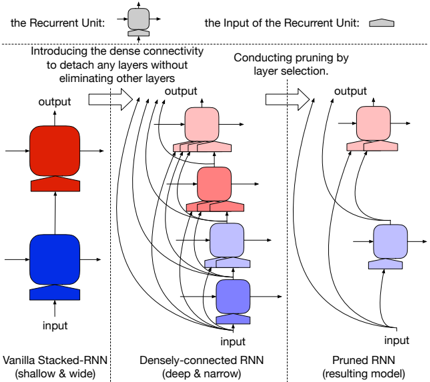
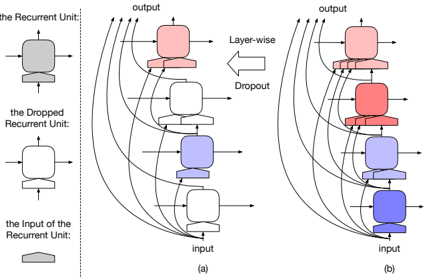
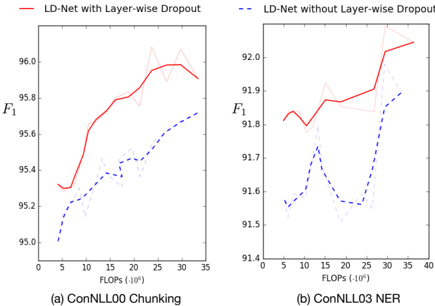
Many efforts have been made to facilitate natural language processing tasks with pre-trained language models (LMs), and brought significant improvements to various applications.To fully leverage the nearly unlimited corpora and capture linguistic information of multifarious levels, large-size LMs are required; but for a specific task, only parts of these information are useful.Such large-sized LMs, even in the inference stage, may cause heavy computation workloads, making them too time-consuming for large-scale applications.Here we propose to compress bulky LMs while preserving useful information with regard to a specific task.As different layers of the model keep different information, we develop a layer selection method for model pruning using sparsityinducing regularization.By introducing the dense connectivity, we can detach any layer without affecting others, and stretch shallow and wide LMs to be deep and narrow.In model training, LMs are learned with layerwise dropouts for better robustness.Experiments on two benchmark datasets demonstrate the effectiveness of our method.
Overview
The claims and statistics of this paper haven’t been checked yet.
Free: it reads the open-access text and checks the first 5 claims that cite a source we can check. Create a free account to check every claim.
Integrity signals
Registry
Cites
Statistics
Figures
Verification
Claims the paper makes
The claims and statistics of this paper haven’t been checked yet.
Free: it reads the open-access text and checks the first 5 claims that cite a source we can check. Create a free account to check every claim.
Claims other papers make about this one
Each is checked against this paper’s own text: does it say what the citing paper says it does?
The check wasn’t confident either way, so it gives no verdict — never disputed.
In the citing paper
“Prompt-based methods have shown great power in few-shot setting [199, 200, 70, 72], zero-shot setting [129, 201], and even fully-supervised setting [74, 75].”
From Pre-trained models for natural language processing: A survey (2020) · cites this paper as [201]
Experimental — accuracy not yet measured
Self-check
Percentages, sums and reported differences re-computed from the paper’s own numbers.
The self-check needs the paper’s full text.
Citations
Cites
Adam: A Method for Stochastic Optimization
Kingma, D. P., & Ba, J. (2014) · arXiv · doi:10.48550/arxiv.1412.6980 · Cited by 98,946 · cited 1×
“The optimization is performed by the Adam algorithm (Kingma and Ba, 2014), the gradient is clipped at 5.”
MethodDensely Connected Convolutional Networks
Huang, G., Liu, Z., Van Der Maaten, L., & Weinberger, K. Q. (2017) · 2017 IEEE Conference on Computer Vision and Pattern Recognition (CVPR) · doi:10.1109/cvpr.2017.243 · Cited by 48,566
Distilling the Knowledge in a Neural Network
Hinton, G., Vinyals, O., & Dean, J. (2015) · arXiv · doi:10.48550/arxiv.1503.02531 · Cited by 14,204 · cited 2×
“, 2016), and using shallower networks to mimic the output of deeper ones (Hinton et al., 2015; Romero et al., 2014).”
Background(2010) · Cited by 14,134
Deep Contextualized Word Representations
Peters, M., Neumann, M., Iyyer, M., Gardner, M., Clark, C., Lee, K., & Zettlemoyer, L. (2018) · Proceedings of the 2018 Conference of the North American Chapter of the Association for Computational Linguistics: Human Language Technologies, Volume 1 (Long Papers) · doi:10.18653/v1/n18-1202 · Cited by 11,983 · cited 10×
“Also, as discussed in (Peters et al., 2018, 2017), the performance of the contextualized representation can be further improved by training larger models or using the CNN to represent words.”
BackgroundMethodInfluentialIdentity mappings in deep residual networks
He, K., Zhang, X., Ren, S., & Sun, J. (2016) · Lecture Notes in Computer Science · doi:10.1007/978-3-319-46493-0_38 · Cited by 10,741
Neural Architectures for Named Entity Recognition
Lample, G., Ballesteros, M., Subramanian, S., Kawakami, K., & Dyer, C. (2016) · Proceedings of the 2016 Conference of the North American Chapter of the Association for Computational Linguistics: Human Language Technologies · doi:10.18653/v1/n16-1030 · Cited by 4,401 · cited 3×
“Many attempts have been made to conduct end-to-end learning and build reliable models without handcrafted features (Chiu and Nichols, 2016; Lample et al., 2016; Ma and Hovy, 2016).”
BackgroundMethodFitNets: Hints for Thin Deep Nets
Romero, A., Ballas, N., Kahou, S. E., Chassang, A., Gatta, C., & Bengio, Y. (2014) · arXiv · doi:10.48550/arxiv.1412.6550 · Cited by 2,859 · cited 2×
“, 2016), and using shallower networks to mimic the output of deeper ones (Hinton et al., 2015; Romero et al., 2014).”
BackgroundIntroduction to the CoNLL-2003 Shared Task: Language-Independent Named Entity Recognition
Tjong Kim Sang, E. F., & De Meulder, F. (2003) · Proceedings of the seventh conference on Natural language learning at HLT-NAACL 2003 - · doi:10.3115/1119176.1119195 · Cited by 2,788
End-to-end Sequence Labeling via Bi-directional LSTM-CNNs-CRF
Ma, X., & Hovy, E. (2016) · Proceedings of the 54th Annual Meeting of the Association for Computational Linguistics (Volume 1: Long Papers) · doi:10.18653/v1/p16-1101 · Cited by 2,567 · cited 1×
“Many attempts have been made to conduct end-to-end learning and build reliable models without handcrafted features (Chiu and Nichols, 2016; Lample et al., 2016; Ma and Hovy, 2016).”
Background
Research works printed but not linked: 4
- Xavier Glorot and Yoshua Bengio. 2010. Understand- ing the difficulty of training deep feedforward neu- ral networks. In Proceedings of the Thirteenth In- ternational Conference on Artificial Intelligence and Statistics.
- Song Han, Jeff Pool, John Tran, and William Dally. 2015. Learning both weights and connections for efficient neural network. In Advances in neural in- formation processing systems, pages 1135-1143.
- Gao Huang, Zhuang Liu, Laurens Van Der Maaten, and Kilian Q Weinberger. 2017. Densely connected con- volutional networks. In CVPR.
- Walter Murray and Kien-Ming Ng. 2010. An algo- rithm for nonlinear optimization problems with bi- nary variables. Computational Optimization and Applications, 47(2):257-288.
Cited by
A Survey on Deep Learning for Named Entity Recognition
Li, J., Sun, A., Han, J., & Li, C. (2022) · IEEE Transactions on Knowledge and Data Engineering · doi:10.1109/tkde.2020.2981314 · Cited by 1,567
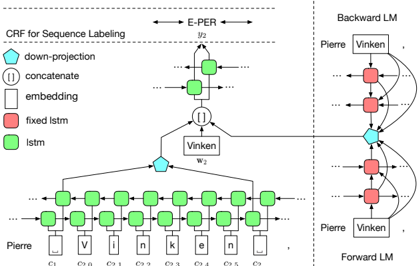
“Figure 10 shows the architecture of LM-LSTM-CRF model [124], [125].”
MethodSelf-citationPre-trained models for natural language processing: A survey
Qiu, X., Sun, T., Xu, Y., Shao, Y., Dai, N., & Huang, X. (2020) · Science China Technological Sciences · doi:10.1007/s11431-020-1647-3 · Cited by 1,591
“[107] used layer-wise pruning and dense connection to speed up ELMo’s inference on NER.”
MethodOn the Variance of the Adaptive Learning Rate and Beyond
Liu, L., Jiang, H., He, P., Chen, W., Liu, X., Gao, J., & Han, J. (2019) · arXiv (Cornell University) · doi:10.48550/arxiv.1908.03265 · Cited by 595
“So we only need to show Using Gautschi’s inequality ( Γ( x +1) Γ( x + s ) ( x + 1) 1 − s ), we have Our implementation is based on the previous work (Liu et al., 2018).”
MethodSelf-citationMoverScore: Text Generation Evaluating with Contextualized Embeddings and Earth Mover Distance
Zhao, W., Peyrard, M., Liu, F., Gao, Y., Meyer, C. M., & Eger, S. (2019) · Proceedings of the 2019 Conference on Empirical Methods in Natural Language Processing and the 9th International Joint Conference on Natural Language Processing (EMNLP-IJCNLP) · doi:10.18653/v1/d19-1053 · Cited by 490
“…of multi-layer attentive neural architectures (Devlin et al., 2018; Peters et al., 2018), consolidating layer-wise information remains an open problem as different layers capture information at disparate scales and task-specific layer selection methods may be limited (Liu et al., 2018, 2019).”
BackgroundDissecting Contextual Word Embeddings: Architecture and Representation
Peters, M., Neumann, M., Zettlemoyer, L., & Yih, W.-T. (2018) · Proceedings of the 2018 Conference on Empirical Methods in Natural Language Processing · doi:10.18653/v1/d18-1179 · Cited by 434
Named Entity Extraction for Knowledge Graphs: A Literature Overview
Al-Moslmi, T., Gallofre Ocana, M., L. Opdahl, A., & Veres, C. (2020) · IEEE Access · doi:10.1109/access.2020.2973928 · Cited by 229
The Right Tool for the Job: Matching Model and Instance Complexities
Schwartz, R., Stanovsky, G., Swayamdipta, S., Dodge, J., & Smith, N. A. (2020) · Proceedings of the 58th Annual Meeting of the Association for Computational Linguistics · doi:10.18653/v1/2020.acl-main.593 · Cited by 128
Samant, R. M., Bachute, M. R., Gite, S., & Kotecha, K. (2022) · IEEE Access · doi:10.1109/access.2022.3149798 · Cited by 123
“• The model pruning [111] technique is more efficient”
MethodCrossWeigh: Training Named Entity Tagger from Imperfect Annotations
Wang, Z., Shang, J., Liu, L., Lu, L., Liu, J., & Han, J. (2019) · Conference on Empirical Methods in Natural Language Processing (EMNLP) · doi:10.18653/v1/d19-1519 · Cited by 146
“…NER performance has been pushed to a F 1 score around 93% (Akbik et al., 2019), through building end-to-end neural models (Lample et al., 2016; Ma and Hovy, 2016) and introducing language models for contextualized representations (Peters et al., 2017, 2018; Akbik et al., 2018; Liu et al., 2018a).”
BackgroundMethodSelf-citationHadi, M. A., & Fard, F. H. (2023) · Empirical Software Engineering · doi:10.1007/s10664-023-10314-x · Cited by 71
“Previous studies (Liu et al. 2018; Hakala and Pyysalo 2019; Edunov et al. 2019) developed Named Entity Recognition systems with the help of PLMs.”
Short-Text Semantic Similarity (STSS): Techniques, Challenges and Future Perspectives
Amur, Z. H., Hooi, Y. K., Bhanbhro, H., Dahri, K., & Soomro, G. M. (2023) · Applied Sciences · doi:10.3390/app13063911 · Cited by 78
Which *BERT? A Survey Organizing Contextualized Encoders
Xia, P., Wu, S., & Durme, B. V. (2020) · Conference on Empirical Methods in Natural Language Processing (EMNLP) · doi:10.18653/v1/2020.emnlp-main.608 · Cited by 78
Word-Character Graph Convolution Network for Chinese Named Entity Recognition
Tang, Z., Wan, B., & Yang, L. (2020) · IEEE/ACM Transactions on Audio Speech and Language Processing · doi:10.1109/taslp.2020.2994436 · Cited by 42
“They can be incorporated with general models by multi-task learning [6], [27], [28] or by directly utilizing the hidden states of a pre-trained language model [29], [30] as input.”
BackgroundProceedings of the Fourth Arabic Natural Language Processing Workshop
El-Hajj, W., Belguith, L. H., Bougares, F., Magdy, W., Zitouni, I., Tomeh, N., & El Hajj, M. (2019) · doi:10.18653/v1/w19-46 · Cited by 38
Learning to Contextually Aggregate Multi-Source Supervision for Sequence Labeling
Lan, O., Huang, X., Lin, B. Y., Jiang, H., Liu, L., & Ren, X. (2020) · Proceedings of the conference - Association for Computational Linguistics. Meeting · doi:10.18653/v1/2020.acl-main.193 · Cited by 37
Self-citationReliability-aware Dynamic Feature Composition for Name Tagging
Lin, Y., Liu, L., Ji, H., Yu, D., & Han, J. (2019) · Proceedings of the conference - Association for Computational Linguistics. Meeting · doi:10.18653/v1/p19-1016 · Cited by 23
“LSTM-CRF and LSTM-CNNs-CRF are proposed to get rid of hand-crafted features and demonstrate the feasibility to fully rely on representation learning to capture textual features (Lample et al., 2016; Ma and Hovy, 2016; Liu et al., 2018b).”
BackgroundMethodSelf-citationArabic Named Entity Recognition: What Works and What’s Next
Liu, L., Shang, J., & Han, J. (2019) · Arabic Natural Language Processing Workshop (WANLP) · doi:10.18653/v1/w19-4607 · Cited by 26
“Recent studies have revealed that language model is an effective representation module for NER (Peters et al., 2017, 2018; Liu et al., 2018b; Akbik et al., 2018; Liu et al., 2018a).”
BackgroundSelf-citationf-Divergence Minimization for Sequence-Level Knowledge Distillation
Wen, Y., Li, Z., Du, W., & Mou, L. (2023) · Proceedings of the conference - Association for Computational Linguistics. Meeting · doi:10.18653/v1/2023.acl-long.605 · Cited by 186
SC-LSTM: Learning Task-Specific Representations in Multi-Task Learning for Sequence Labeling
Lu, P., Bai, T., & Langlais, P. (2019) · Conference of the North American Chapter of the Association for Computational Linguistics: Human Language Technologies (NAACL-HLT) · doi:10.18653/v1/n19-1249 · Cited by 36
MoverScore: Text Generation Evaluating with Contextualized Embeddings and Earth Mover DistancePreprint
Zhao, W., Peyrard, M., Liu, F., Gao, Y., Meyer, C. M., & Eger, S. (2019) · arXiv (Cornell University) · doi:10.48550/arxiv.1909.02622 · Cited by 171
“…of multi-layer attentive neural architectures (Devlin et al., 2018; Peters et al., 2018), consolidating layer-wise information remains an open problem as different layers capture information at disparate scales and task-specific layer selection methods may be limited (Liu et al., 2018, 2019).”
BackgroundSeNsER: Learning Cross-Building Sensor Metadata Tagger
Jiao, Y., Li, J., Wu, J., Hong, D., Gupta, R. K., & Shang, J. (2020) · Findings of the Association for Computational Linguistics: EMNLP (Findings of EMNLP) · doi:10.18653/v1/2020.findings-emnlp.85 · Cited by 14
“Inspired by previous work (Liu et al., 2018b), we adopt a highway layer to further introduce nonlinear transformation from f i to f LMi : where (cid:12) is element-wise product, g () is a nonlinear transformation such as ReLU in our experiments, W H and b H are two parameters in the highway layer,…”
BackgroundMethodInfluentialSelf-citationLee, H., & Jeong, O. (2023) · Sensors · doi:10.3390/s23020685 · Cited by 15
Text Is No More Enough! A Benchmark for Profile-Based Spoken Language Understanding
Xiao, X., Qin, L., Chen, K., Wu, G., Li, L., & Che, W. (2022) · Proceedings of the AAAI Conference on Artificial Intelligence · doi:10.1609/aaai.v36i10.21411 · Cited by 17
Deep Contextualized Medical Concept Normalization in Social Media Text
Subramanyam, K., & Sangeetha, S. (2020) · Procedia Computer Science · doi:10.1016/j.procs.2020.04.145 · Cited by 15
Innovative Deep Neural Network Modeling for Fine-Grained Chinese Entity Recognition
Liu, J., Xia, C., Yan, H., & Xu, W. (2020) · Electronics · doi:10.3390/electronics9061001 · Cited by 9
“In recent years, widely-used encoders of NER models based on deep learning are usually some kinds of neural network structures [29,30].”
Beyond facts – a survey and conceptualisation of claims in online discourse analysis
Boland, K., Fafalios, P., Tchechmedjiev, A., Dietze, S., & Todorov, K. (2022) · Semantic Web · doi:10.3233/sw-212838 · Cited by 20
“Concerning the matching of text fragments more generally, recent advances in neural NLP and the advent of deep contextualized language models for language understanding, have allowed a renewal state-of-the-art techniques for matching text fragments through the pooling or aggregation of classical [204] and contextualiz…”
BackgroundERNIE based intelligent triage system
Wang, C., & Feng, F. (2022) · Journal of Intelligent & Fuzzy Systems · doi:10.3233/jifs-212140 · Cited by 8
“In recent years, pre-trained language models have developed rapidly, and ELMO [6], BERT [7] and ERNIE [8] models have been used in a variety of natural language processing tasks have achieved significant improvements and can be applied to a variety of downstream tasks, such as text classification,…”
Recent Progress of Named Entity Recognition over the Most Popular Datasets
Albared, M., Ocaña, M. G., Ghareb, A. S., & Al-Moslmi, T. (2019) · International Conference of Intelligent Computing and Engineering (ICOICE) · doi:10.1109/icoice48418.2019.9035170 · Cited by 11
“Liu et al. [20] proposed to compress the size of language models (LM) while maintaining the useful information for the specific task.”
BackgroundKhan, M., Penfield, J., Suman, A., & Crowell, S. (2025) · Heliyon · doi:10.1016/j.heliyon.2025.e42215 · Cited by 11
Does local pruning offer task-specific models to learn effectively?
Mishra, A. K., & Chakraborty, M. (2021) · Student Research Workshop .../Proceedings of the Student Research Workshop ... · doi:10.26615/issn.2603-2821.2021_017 · Cited by 10
“In unstructured pruning, (Mao et al., 2017), individual connections between neurons or filters of adjacent filters are detached from the network, whereas in structured pruning (Liu et al., 2018b), the entire neurons or filters are detached from the network.”
BackgroundMethodInfluentialLifting news into a journalistic knowledge platform
Al-Moslmi, T., & Ocaña, M. G. (2020) · NORA - Norwegian Open Research Archives · Cited by 5
Don’t Read Too Much Into It: Adaptive Computation for Open-Domain Question Answering
Wu, Y., Riedel, S., Minervini, P., & Stenetorp, P. (2020) · Conference on Empirical Methods in Natural Language Processing (EMNLP) · doi:10.18653/v1/2020.emnlp-main.244 · Cited by 11
CrossWeigh: Training Named Entity Tagger from Imperfect AnnotationsPreprint
Wang, Z., Shang, J., Liu, L., Lu, L., Liu, J., & Han, J. (2019) · arXiv (Cornell University) · doi:10.48550/arxiv.1909.01441 · Cited by 24
“…NER performance has been pushed to a F 1 score around 93% (Akbik et al., 2019), through building end-to-end neural models (Lample et al., 2016; Ma and Hovy, 2016) and introducing language models for contextualized representations (Peters et al., 2017, 2018; Akbik et al., 2018; Liu et al., 2018a).”
BackgroundMethodSelf-citationCross‐domain sequence labelling using language modelling and parameter generating
Zhou, B., Chen, J., Cai, Q., Xue, Y., Yang, C., & He, J. (2022) · CAAI Transactions on Intelligence Technology · doi:10.1049/cit2.12107 · Cited by 4
Compressibility of Distributed Document Representations
Škrlj, B., & Petković, M. (2021) · Proceedings · doi:10.1109/icdm51629.2021.00166 · Cited by 4
Raw-to-End Name Entity Recognition in Social MediaPreprint
Liu, L., Wang, Z., Shang, J., Yin, D., Ji, H., Ren, X., Wang, S., & Han, J. (2019) · arXiv (Cornell University) · doi:10.48550/arxiv.1908.05344 · Cited by 5
“More recently, language modelings are noticed to be dramatically effective as the representation module for NER (Peters et al., 2017, 2018; Liu et al., 2018a,b; Akbik et al., 2018; Liu et al., 2019b).”
BackgroundMethodSelf-citationZero-shot Sharpness-Aware Quantization for Pre-trained Language Models
Zhu, M., Zhong, Q., Shen, L., Ding, L., Liu, J., Du, B., & Tao, D. (2023) · Conference on Empirical Methods in Natural Language Processing (EMNLP) · doi:10.18653/v1/2023.emnlp-main.696 · Cited by 7
Don’t Read Too Much Into It: Adaptive Computation for Open-Domain Question Answering
Wu, Y., Minervini, P., Stenetorp, P., & Riedel, S. (2020) · Workshop on Simple and Efficient Natural Language Processing (SustaiNLP) · doi:10.18653/v1/2020.sustainlp-1.9 · Cited by 4
Feng, H., & Ma, Q. (2022) · Findings of the Association for Computational Linguistics: EMNLP (Findings of EMNLP) · doi:10.18653/v1/2022.findings-emnlp.46 · Cited by 2
“To get a better representation, various word embed-dings (e.g., ELMO embedding (Liu et al., 2018)) and attention mechanisms are introduced into the input and structure of the model (Mao et al., 2019).”
MethodA Simple Survey of Pre-trained Language ModelsPreprint
Zhu, Z. (2022) · Preprints.org · doi:10.20944/preprints202208.0238.v1 · Cited by 4
Empirical Study of Named Entity Recognition Performance Using Distribution-aware Word EmbeddingPreprint
Chen, X., Zhao, Q., & Liu, X. (2021) · arXiv (Cornell University) · doi:10.48550/arxiv.2109.01636 · Cited by 1
“We first train Gauss-based embedding and vMF-based word embedding with their distribution specificity and then modify the NER model in [9] to make use of word specificity information and test the performance.”
MethodMorgan, J. (2022) · Cronfa (Swansea University) · doi:10.23889/suthesis.59258
Key Information Extraction and Recognition from Rich Text Images
Do, T., Doan, T. T., Le, K., Nguyen, T., Le, D.-D., & Ngo, T. D. (2024) · Vietnam Journal of Computer Science · doi:10.1142/s2196888824500131
Building Multilingual Terminological Bridges Between Language-Specific Knowledge Silos
Chaplynskyi, D., Wittenborg, T., Kosa, V., Rabby, G., Ignatenko, O. P., Auer, S., & Ermolayev, V. (2025) · Communications in computer and information science · doi:10.1007/978-3-032-10477-9_20
Lin, J., Guo, J., Chen, K., & Pan, P. (2026) · SSRN Electronic Journal · doi:10.2139/ssrn.6254022
Metadata
- Authors
- Liu, L., Ren, X., Shang, J., Gu, X., Peng, J., & Han, J.
- Affiliations
- University of Illinois Urbana-Champaign (US)
- University of Southern California (US)
- Venue
- Proceedings of the 2018 Conference on Empirical Methods in Natural Language Processing
- Published
- 2018
- Pages
- 1215-1225
- OpenAlex
- W2963972328
- Cited by
- 45
- References
- 43
- Citations by year
- 2026: 1 · 2025: 2 · 2024: 1 · 2023: 5 · 2022: 8 · 2021: 3 · 2020: 13 · 2019: 11 · 2018: 1
- FWCI
- 2.86
- Type
- conference paper
- Language
- en
- Open access
- hybrid
- doi.org
- Licence
- cc-by
- Locations
- Conference on Empirical Methods in Natural Language Processing (EMNLP) (publishedVersion, cc-by)
- arXiv (Cornell University) (submittedVersion)
- arXiv (Cornell University)
- Funders
- Army Research Laboratory (Cooperative Agreement Number W911NF-09-2-0053 (the, W911NF, W911NF-09-2-0053)
- Topics
- Physical Sciences › Computer Science › Artificial Intelligence › Topic Modeling
- Physical Sciences › Computer Science › Computer Vision and Pattern Recognition › Advanced Neural Network Applications
- Physical Sciences › Computer Science › Artificial Intelligence › Natural Language Processing Techniques
- Keywords
- sequence labeling, layer selection, sparsity-promoting regularization, dense connections, model compression, pre-trained language models, inference efficiency
About these checks
Registry, retraction, Cites and statistics results are computed, not judged, with one exception: a printed reference that no index lists is read once by a model before it counts as a citation error. Claims are extracted by a model and kept only when their quote appears verbatim in the text; each cited source is then checked, with a model’s help, for whether it says what the claim relies on. Those verdicts can be wrong — read the claim’s quote and the cited source before relying on one.
Statistics and arithmetic are recomputed, not judged.
Confidence bands are shown only for fields calibrated on our annotated test set. None is calibrated yet, so no band is shown.
What counts as a claim ›How we measure confidence ›How we check this ›
Are you an author, or do you see a problem with this page? Request a review
Data sources
Bibliographic data: Semantic Scholar, OpenAlex, Crossref.
Contains information from the Semantic Scholar Academic Graph Datasets, made available under the ODC Attribution License (ODC-BY 1.0).
Semantic Scholar’s data is described in: Kinney, R., et al. (2023). The Semantic Scholar Open Data Platform. arXiv:2301.10140.
