

The DOI matches its Crossref record; 34 of the 34 references it cites were found in a registry or an index.
Retrieve, Rerank and Rewrite: Soft Template Based Neural Summarization
Open accessAbstract
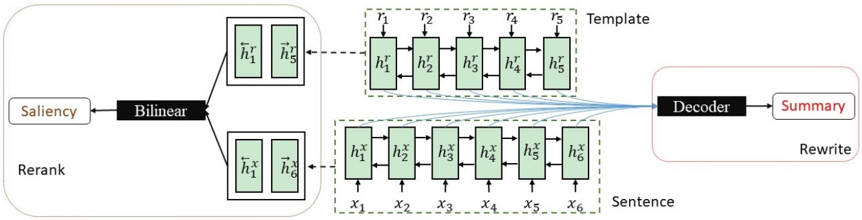
Most previous seq2seq summarization systems purely depend on the source text to generate summaries, which tends to work unstably.Inspired by the traditional template-based summarization approaches, this paper proposes to use existing summaries as soft templates to guide the seq2seq model.To this end, we use a popular IR platform to Retrieve proper summaries as candidate templates.Then, we extend the seq2seq framework to jointly conduct template Reranking and templateaware summary generation (Rewriting).Experiments show that, in terms of informativeness, our model significantly outperforms the state-of-the-art methods, and even soft templates themselves demonstrate high competitiveness.In addition, the import of high-quality external summaries improves the stability and readability of generated summaries.
Overview
The claims and statistics of this paper haven’t been checked yet.
Free: it reads the open-access text and checks the first 5 claims that cite a source we can check. Create a free account to check every claim.
Integrity signals
Registry
Cites
Statistics
Figures

Verification
Claims the paper makes
The claims and statistics of this paper haven’t been checked yet.
Free: it reads the open-access text and checks the first 5 claims that cite a source we can check. Create a free account to check every claim.
Self-check
Percentages, sums and reported differences re-computed from the paper’s own numbers.
The self-check needs the paper’s full text.
Citations
Cites
(2014) · Cited by 33,419
Learning Phrase Representations using RNN Encoder–Decoder for Statistical Machine Translation
Cho, K., van Merrienboer, B., Gulcehre, C., Bahdanau, D., Bougares, F., Schwenk, H., & Bengio, Y. (2014) · Proceedings of the 2014 Conference on Empirical Methods in Natural Language Processing (EMNLP) · doi:10.3115/v1/d14-1179 · Cited by 25,545
Neural Machine Translation by Jointly Learning to Align and Translate
Bahdanau, D., Cho, K., & Bengio, Y. (2014) · arXiv · doi:10.48550/arxiv.1409.0473 · Cited by 16,213
(2004) · Cited by 9,718
Effective Approaches to Attention-based Neural Machine Translation
Luong, T., Pham, H., & Manning, C. D. (2015) · Proceedings of the 2015 Conference on Empirical Methods in Natural Language Processing · doi:10.18653/v1/d15-1166 · Cited by 8,382
The Stanford CoreNLP Natural Language Processing Toolkit
Manning, C., Surdeanu, M., Bauer, J., Finkel, J., Bethard, S., & McClosky, D. (2014) · Proceedings of 52nd Annual Meeting of the Association for Computational Linguistics: System Demonstrations · doi:10.3115/v1/p14-5010 · Cited by 7,037
Google's Neural Machine Translation System: Bridging the Gap between Human and Machine Translation
Wu, Y., Schuster, M., Chen, Z., Le, Q. V., Norouzi, M., Macherey, W., Krikun, M., Cao, Y., Gao, Q., Macherey, K., et al. (2016) · arXiv · doi:10.48550/arxiv.1609.08144 · Cited by 5,319
Get To The Point: Summarization with Pointer-Generator Networks
See, A., Liu, P. J., & Manning, C. D. (2017) · Proceedings of the 55th Annual Meeting of the Association for Computational Linguistics (Volume 1: Long Papers) · doi:10.18653/v1/p17-1099 · Cited by 3,775
Learning Phrase Representations using RNN Encoder-Decoder for Statistical Machine Translation
Cho, K., van Merrienboer, B., Gulcehre, C., Bahdanau, D., Bougares, F., Schwenk, H., & Bengio, Y. (2014) · arXiv · doi:10.48550/arxiv.1406.1078 · Cited by 3,317
A Neural Attention Model for Abstractive Sentence Summarization
Rush, A. M., Chopra, S., & Weston, J. (2015) · Proceedings of the 2015 Conference on Empirical Methods in Natural Language Processing · doi:10.18653/v1/d15-1044 · Cited by 2,656
Research works printed but not linked: 2
- [14]14. Philipp Koehn and Rebecca Knowles. 2017. Six chal- lenges for neural machine translation. arXiv pre- print arXiv:1706.03872. · arXiv
- [21]21. Alexander M. Rush, Sumit Chopra, and Jason Weston. 2015b. A neural attention model for abstractive sen- tence summarization. In Proceedings of EMNLP, pages 379-389.
Cited by
Liu, P., Yuan, W., Fu, J., Jiang, Z., Hayashi, H., & Neubig, G. (2023) · ACM Computing Surveys · doi:10.1145/3560815 · Cited by 4,361
Unified Language Model Pre-training for Natural Language Understanding and Generation
Dong, L., Yang, N., Wang, W., Wei, F., Liu, X., Wang, Y., Gao, J., Zhou, M., & Hon, H.-W. (2019) · arXiv · doi:10.48550/arxiv.1905.03197 · Cited by 1,225
Self-citationLiu, P., Yuan, W., Fu, J., Jiang, Z., Hayashi, H., & Neubig, G. (2021) · arXiv · doi:10.48550/arxiv.2107.13586 · Cited by 4,352
ProphetNet: Predicting Future N-gram for Sequence-to-SequencePre-training
Qi, W., Yan, Y., Gong, Y., Liu, D., Duan, N., Chen, J., Zhang, R., & Zhou, M. (2020) · Findings of the Association for Computational Linguistics: EMNLP 2020 · doi:10.18653/v1/2020.findings-emnlp.217 · Cited by 374
Knowledge-Driven Encode, Retrieve, Paraphrase for Medical Image Report Generation
Li, C. Y., Liang, X., Hu, Z., & Xing, E. P. (2019) · Proceedings of the AAAI Conference on Artificial Intelligence · doi:10.1609/aaai.v33i01.33016666 · Cited by 299
Hybrid Retrieval-Generation Reinforced Agent for Medical Image Report Generation
Li, C. Y., Liang, X., Hu, Z., & Xing, E. P. (2018) · arXiv · doi:10.48550/arxiv.1805.08298 · Cited by 271
“ection, relation generation, and content ordering. The task differs from image captioning [44, 24] and sentence generation [14, 6] where usually single or few sentences are required, or summarization [2, 45] where summaries tend to be more diverse without clear template sentences. State-of-the-art methods on report ge…”
BackgroundMethodA Survey of Knowledge-enhanced Text Generation
Yu, W., Zhu, C., Li, Z., Hu, Z., Wang, Q., Ji, H., & Jiang, M. (2022) · ACM Computing Surveys · doi:10.1145/3512467 · Cited by 257
“(i.e., answer) Creative writing Document - - [38] - [56, 70] - - - (e.g., story, paper) (e.g., paper title) [75, 149] Summarization Document [105, 146] [80, 84] [2, 104] [166] [65, 183] [72, 87] [84] [18, 47, 145] (e.g., an article) [43, 149] [81] Machine Sentence [152, 174] - [31, 124] - [103, 177] [1, 6] [15, 165] t…”
BackgroundMethodInfluentialGSum: A General Framework for Guided Neural Abstractive Summarization
Dou, Z.-Y., Liu, P., Hayashi, H., Jiang, Z., & Neubig, G. (2021) · Proceedings of the 2021 Conference of the North American Chapter of the Association for Computational Linguistics: Human Language Technologies · doi:10.18653/v1/2021.naacl-main.384 · Cited by 210
Retrieve and Refine: Improved Sequence Generation Models For Dialogue
Weston, J., Dinan, E., & Miller, A. (2018) · Proceedings of the 2018 EMNLP Workshop SCAI: The 2nd International Workshop on Search-Oriented Conversational AI · doi:10.18653/v1/w18-5713 · Cited by 165
“…(Junczys-Dowmunt and Grundkiewicz, 2017; Niehues et al., 2016; Novak et al., 2016; Xia et al., 2017; Grangier and Auli, 2017) or combining with retrieval (Gu et al., 2017; Cao et al., 2018), as well as for sentence correction or refinement without context (Guu et al., 2017; Schmaltz et al., 2017).”
BackgroundGenerate Neural Template Explanations for Recommendation
Li, L., Zhang, Y., & Chen, L. (2020) · Proceedings of the 29th ACM International Conference on Information & Knowledge Management · doi:10.1145/3340531.3411992 · Cited by 149
“In natural language processing, the encoder-decoder framework has been widely used in different tasks, such as machine translation [10], conversational systems [30, 42], and text summarization [2].”
MethodImproving Named Entity Recognition by External Context Retrieving and Cooperative Learning
Wang, X., Jiang, Y., Bách, N., Wang, T., Huang, Z., Huang, F., & Tu, K. (2021) · doi:10.18653/v1/2021.acl-long.142 · Cited by 218
“For the re-ranking models, fuzzy match score (Gu et al., 2018; Zhang et al., 2018; Hayati et al., 2018; Xu et al., 2020), attention mechanisms (Cao et al., 2018; Cai et al., 2019), and dot products between sentence representations (Lewis et al., 2020; Xu et al., 2020) are usual scoring functions to…”
Deep reinforcement and transfer learning for abstractive text summarization: A review
Alomari, A., Idris, N. B., Sabri, A. Q. M., & Alsmadi, I. M. (2021) · Computer Speech & Language · doi:10.1016/j.csl.2021.101276 · Cited by 170
Distilling Knowledge Learned in BERT for Text Generation
Chen, Y.-C., Gan, Z., Yu, C., Liu, J., & Liu, J. (2020) · Proceedings of the conference - Association for Computational Linguistics. Meeting · doi:10.18653/v1/2020.acl-main.705 · Cited by 183
“Re 3 Sum (Cao et al., 2018a) carefully designed a retrieve-and-rerank pipeline with human-written soft templates.”
BackgroundMethodInfluentialCase-based Reasoning for Natural Language Queries over Knowledge Bases
Das, R., Zaheer, M., Thai, D., Godbole, A., Perez, E., Lee, J. Y., Tan, L., Polymenakos, L., & McCallum, A. (2021) · Conference on Empirical Methods in Natural Language Processing (EMNLP) · doi:10.18653/v1/2021.emnlp-main.755 · Cited by 191
“Another recent line of work use training examples at test time to improve language generation (Weston et al., 2018; Pandey et al., 2018; Cao et al., 2018; Peng et al., 2019).”
BackgroundResponse Generation by Context-Aware Prototype Editing
Wu, Y., Wei, F., Huang, S., Wang, Y., Li, Z., & Zhou, M. (2019) · Proceedings of the AAAI Conference on Artificial Intelligence · doi:10.1609/aaai.v33i01.33017281 · Cited by 117
Self-citationImproving Multi-turn Dialogue Modelling with Utterance ReWriter
Su, H., Shen, X., Zhang, R., Sun, F., Hu, P., Niu, C., & Zhou, J. (2019) · Proceedings of the conference - Association for Computational Linguistics. Meeting · doi:10.18653/v1/p19-1003 · Cited by 151
“In text summarization, reediting the retrieved candidates can provide more accurate and abstractive summaries (See et al., 2017; Chen and Bansal, 2018; Cao et al., 2018).”
Controllable Paraphrase Generation with a Syntactic Exemplar
Chen, M., Tang, Q., Wiseman, S., & Gimpel, K. (2019) · Proceedings of the conference - Association for Computational Linguistics. Meeting · doi:10.18653/v1/p19-1599 · Cited by 140
“Another related line of work builds generation upon sentential exemplars (Guu et al., 2018; Weston et al., 2018; Pandey et al., 2018; Cao et al., 2018; Peng et al., 2019) in order to improve the quality of the generation itself, rather than to allow for control over syntactic structures.”
BackgroundScoring Sentence Singletons and Pairs for Abstractive Summarization
Lebanoff, L., Song, K., Dernoncourt, F., Kim, D. S., Kim, S., Chang, W. H., & Liu, F. (2019) · Proceedings of the conference - Association for Computational Linguistics. Meeting · doi:10.18653/v1/p19-1209 · Cited by 132
“Recent studies have leveraged neural encoder-decoder models to rewrite the first sentence of an article to a title-like summary (Nallapati et al., 2016; Zhou et al., 2017; Li et al., 2017; Song et al., 2018; Guo et al., 2018; Cao et al., 2018a).”
BackgroundZhang, Z., Yu, W., Yu, M., Guo, Z., & Jiang, M. (2023) · Conference of the European Chapter of the Association for Computational Linguistics · doi:10.18653/v1/2023.eacl-main.66 · Cited by 137
Syntax-Guided Controlled Generation of Paraphrases
Kumar, A., Ahuja, K., Vadapalli, R., & Talukdar, P. P. (2020) · Transactions of the Association for Computational Linguistics · doi:10.1162/tacl_a_00318 · Cited by 73
“summarization (Cao et al., 2018), and adversarial”
BackgroundText Summarization Method Based on Double Attention Pointer Network
Li, Z., Peng, Z. J., Tang, S., Zhang, C., & Ma, H. (2020) · IEEE Access · doi:10.1109/access.2020.2965575 · Cited by 74
“In the next work [19], they used existing summary as soft templates to supplement the input, and extended the seq2seq framework.”
MethodEnhancing Aspect Term Extraction with Soft Prototypes
Chen, Z., & Qian, T. (2020) · Conference on Empirical Methods in Natural Language Processing (EMNLP) · doi:10.18653/v1/2020.emnlp-main.164 · Cited by 64
“…metrics (Guu et al., 2018; Hashimoto et al., 2018), common metrics such as Jaccard similarity (Gu et al., 2018; Cao et al., 2018; Wu et al., 2019), or existing tools like Lucene (Cao et al., 2018) to retrieve prototypes, and then input the pro-totypes into a neural model for generating outputs.”
MethodSemSUM: Semantic Dependency Guided Neural Abstractive Summarization
Jin, H., Wang, T., & Wan, X. (2020) · Proceedings of the AAAI Conference on Artificial Intelligence · doi:10.1609/aaai.v34i05.6312 · Cited by 60
“Cao et al. (2018b) extracted facts from the source sentence as an auxiliary input to correct semantic errors and false facts generated by the neural network.”
BackgroundBiSET: Bi-directional Selective Encoding with Template for Abstractive Summarization
Wang, K., Quan, X., & Wang, R. (2019) · Proceedings of the conference - Association for Computational Linguistics. Meeting · doi:10.18653/v1/p19-1207 · Cited by 68
“For example, Cao et al. (2018a) simply concatenated template encoding after the source article in their summarization work.”
BackgroundMethodInfluentialA Comprehensive Survey of Abstractive Text Summarization Based on Deep Learning
Zhang, M., Zhou, G., Yu, W., Huang, N., & Liu, W. (2022) · Computational Intelligence and Neuroscience · doi:10.1155/2022/7132226 · Cited by 102
“(xi) Rê3 Sum [126]: a extended Seq2seq framework that can utilize candidate templates to generate summaries.”
Hierarchical Human-Like Deep Neural Networks for Abstractive Text Summarization
Yang, M., Li, C., Shen, Y., Wu, Q., Zhao, Z., & Chen, X. (2020) · IEEE Transactions on Neural Networks and Learning Systems · doi:10.1109/tnnls.2020.3008037 · Cited by 79
“8) Re 3 : This retrieve, rerank, and rewrite model is proposed in [43], which uses summaries from training set as soft templates to guide the process of generating summaries.”
MethodCross-modal Clinical Graph Transformer for Ophthalmic Report Generation
Li, M., Cai, W., Verspoor, K., Pan, S., Liang, X., & Chang, X. (2022) · 2022 IEEE/CVF Conference on Computer Vision and Pattern Recognition (CVPR) · doi:10.1109/cvpr52688.2022.02000 · Cited by 60
“Therefore, Cao et al. [6], and Li et al. summarized a set of sentence templates and used the retrieved semantic features to fill the templates and generate a report.”
Hooks in the Headline: Learning to Generate Headlines with Controlled Styles
Jin, D., Jin, Z., Zhou, J. T., Orii, L., & Szolovits, P. (2020) · Proceedings of the conference - Association for Computational Linguistics. Meeting · doi:10.18653/v1/2020.acl-main.456 · Cited by 66
Template Guided Text Generation for Task-Oriented Dialogue
Kale, M., & Rastogi, A. (2020) · Conference on Empirical Methods in Natural Language Processing (EMNLP) · doi:10.18653/v1/2020.emnlp-main.527 · Cited by 64
“Our template based approach bears similarities to sentence fusion (Barzilay and McKeown, 2005), and prototype based text editing (Hossain et al., 2020; Cao et al., 2018; Guu et al., 2018; Wu et al., 2019).”
MethodAn Integrated Approach for Keyphrase Generation via Exploring the Power of Retrieval and Extraction
Chen, W., Chan, H. P., Li, P., Bing, L., & King, I. (2019) · Conference of the North American Chapter of the Association for Computational Linguistics: Human Language Technologies (NAACL-HLT) · doi:10.18653/v1/n19-1292 · Cited by 55
“(2018) and Cao et al. (2018), we enhance existing generative methods by adopting an extractive model to assist the copy mechanism and exploiting external knowledge from retrieved keyphrases to help the generation.”
MethodControlling the Amount of Verbatim Copying in Abstractive Summarization
Song, K., Wang, B., Feng, Z., Liu, R., & Liu, F. (2020) · Proceedings of the AAAI Conference on Artificial Intelligence · doi:10.1609/aaai.v34i05.6420 · Cited by 50
Text Generation with Exemplar-based Adaptive Decoding
Peng, H., Parikh, A. P., Faruqui, M., Dhingra, B., & Das, D. (2019) · Conference of the North American Chapter of the Association for Computational Linguistics: Human Language Technologies (NAACL-HLT) · doi:10.18653/v1/n19-1263 · Cited by 60
“The B ASIC model by Cao et al. (2018a) ablates the reranking component from their F ULL model, and uses the top exemplar retrieved by the IR system.”
InfluentialUnifying Relational Sentence Generation and Retrieval for Medical Image Report Composition
Wang, F., Liang, X., Xu, L. H., & Lin, L. (2020) · IEEE Transactions on Cybernetics · doi:10.1109/tcyb.2020.3026098 · Cited by 49
Analyzing Sentence Fusion in Abstractive Summarization
Lebanoff, L., Muchovej, J., Dernoncourt, F., Kim, D. S., Kim, S., Chang, W. H., & Liu, F. (2019) · Workshop on New Frontiers in Summarization (NewSum) · doi:10.18653/v1/d19-5413 · Cited by 41
Improving Truthfulness of Headline Generation
Matsumaru, K., Takase, S., & Okazaki, N. (2020) · Proceedings of the conference - Association for Computational Linguistics. Meeting · doi:10.18653/v1/2020.acl-main.123 · Cited by 42
Improving Transformer with Sequential Context Representations for Abstractive Text Summarization
Cai, T., Shen, M., Peng, H., Jiang, L., & Dai, Q. (2019) · Lecture notes in computer science · doi:10.1007/978-3-030-32233-5_40 · Cited by 40
“Re 3 Sum model [1] proposes to use existing summaries as soft templates to guide the seq2seq model.”
MethodGlobal Optimization under Length Constraint for Neural Text Summarization
Makino, T., Iwakura, T., Takamura, H., & Okumura, M. (2019) · Proceedings of the conference - Association for Computational Linguistics. Meeting · doi:10.18653/v1/p19-1099 · Cited by 55
“Other methods for the improvement of abstractive summarization models include use of existing summaries as soft templates with a source text (Li et al., 2018) and extraction of actual fact descriptions from a source text (Cao et al., 2018).”
MethodSimple and Effective Retrieve-Edit-Rerank Text Generation
Hossain, N., Ghazvininejad, M., & Zettlemoyer, L. (2020) · Proceedings of the conference - Association for Computational Linguistics. Meeting · doi:10.18653/v1/2020.acl-main.228 · Cited by 44
Meaningful Answer Generation of E-Commerce Question-Answering
Gao, S., Chen, X., Ren, Z., Zhao, D., & Yan, R. (2021) · ACM Transactions on Information Systems · doi:10.1145/3432689 · Cited by 53
HighRES: Highlight-based Reference-less Evaluation of Summarization
Hardy, H., Narayan, S., & Vlachos, A. (2019) · Proceedings of the conference - Association for Computational Linguistics. Meeting · doi:10.18653/v1/p19-1330 · Cited by 59
From Standard Summarization to New Tasks and Beyond: Summarization with Manifold Information
Gao, S., Chen, X., Ren, Z., Zhao, D., & Yan, R. (2020) · International Joint Conference on Artificial Intelligence · doi:10.24963/ijcai.2020/676 · Cited by 38
Document Summarization with VHTM: Variational Hierarchical Topic-Aware Mechanism
Fu, X., Wang, J., Zhang, J., Wei, J., & Yang, Z. (2020) · Proceedings of the AAAI Conference on Artificial Intelligence · doi:10.1609/aaai.v34i05.6277 · Cited by 31
“The work in (Cao et al. 2018) retrieved proper existing summaries as candidate soft templates and extended the basic framework to jointly perform template reranking and template-aware summary generation.”
BackgroundA Survey of Text Summarization Approaches Based on Deep Learning
Hou, S., Huang, X., Fei, C., Zhang, S., Li, Y., Sun, Q., & Wang, C. (2021) · Journal of Computer Science and Technology · doi:10.1007/s11390-020-0207-x · Cited by 36
“Moreover, there are the user preference-oriented model ([56]), soft template-guided model ([79]), CNN-based Seq2Seq model [42, , multi-task learning model ([72]), etc.”
MethodRetrieve-and-Edit Domain Adaptation for End2End Aspect Based Sentiment Analysis
Chen, Z., & Qian, T. (2022) · IEEE/ACM Transactions on Audio Speech and Language Processing · doi:10.1109/taslp.2022.3146052 · Cited by 33
Gao, S., Chen, X., Li, P., Chan, Z., Zhao, D., & Yan, R. (2019) · Conference on Empirical Methods in Natural Language Processing (EMNLP) · doi:10.18653/v1/d19-1388 · Cited by 30
“(Cao et al., 2018) applied this method on summarization, where they employed existing summaries as soft templates to generate new summary without modeling the dependency between the prototype document, summary and input document.”
BackgroundMethodInfluentialImproving Neural Machine Translation with Soft Template Prediction
Yang, J., Ma, S., Zhang, D., Li, Z., & Zhou, M. Q. (2020) · Proceedings of the conference - Association for Computational Linguistics. Meeting · doi:10.18653/v1/2020.acl-main.531 · Cited by 33
“…works and the successful application of templates for other intriguing tasks, including semantic parsing (Dong and Lapata, 2018), summarization (Cao et al., 2018; Wang et al., 2019a), question answering (Duan et al., Pandey et al., 2018), and other text generation tasks (Wiseman et al., 2018;…”
BackgroundA Combined Extractive With Abstractive Model for Summarization
Liu, W., Gao, Y., Li, J., & Yang, Y. (2021) · IEEE Access · doi:10.1109/access.2021.3066484 · Cited by 30
“So they cannot convey the semantics of the document [14], [15].”
BackgroundExploring Human-Like Reading Strategy for Abstractive Text Summarization
Yang, M., Qu, Q., Tu, W., Shen, Y., Zhao, Z., & Chen, X. (2019) · Proceedings of the AAAI Conference on Artificial Intelligence · doi:10.1609/aaai.v33i01.33017362 · Cited by 29
Alzuhair, A., & Al-Dhelaan, M. (2019) · IEEE Access · doi:10.1109/access.2019.2936832 · Cited by 27
On the Evaluation of Machine-Generated Reports
Mayfield, J., Yang, E., Lawrie, D., MacAvaney, S., McNamee, P., Oard, D. W., Soldaini, L., Soboroff, I. M., Weller, O., Kayi, E. S., et al. (2024) · International ACM SIGIR Conference on Research and Development in Information Retrieval (SIGIR) · doi:10.1145/3626772.3657846 · Cited by 52
Simple Unsupervised Summarization by Contextual Matching
Zhou, J., & Rush, A. M. (2019) · Proceedings of the conference - Association for Computational Linguistics. Meeting · doi:10.18653/v1/p19-1503 · Cited by 38
Denoising based Sequence-to-Sequence Pre-training for Text Generation
Wang, L., Zhao, W., Jia, R., Li, S., & Liu, J. (2019) · Conference on Empirical Methods in Natural Language Processing (EMNLP) · doi:10.18653/v1/d19-1412 · Cited by 46
“, 2018b), and Re3Sum (Cao et al., 2018a) are used as baselines.”
MethodSelf-citationDictionary-Guided Editing Networks for Paraphrase Generation
Huang, S., Wu, Y., Wei, F., & Luan, Z. (2019) · Proceedings of the AAAI Conference on Artificial Intelligence · doi:10.1609/aaai.v33i01.33016546 · Cited by 22
Self-citationProceedings of the 2nd Workshop on New Frontiers in Summarization
(2019) · doi:10.18653/v1/d19-54 · Cited by 22
Retrieval-Augmented Controllable Review Generation
Kim, J., Choi, S. L., Amplayo, R. K., & Hwang, S.-W. (2020) · International Conference on Computational Linguistics · doi:10.18653/v1/2020.coling-main.207 · Cited by 32
“Meanwhile references have been used as additional source to augment context in text-to-text generation tasks such as summarization (Cao et al., 2018; Peng et al., 2019), machine translation (Gu et al., 2018), or dialogue system (Song et al., 2018; Pandey et al., 2018; Weston et al., 2018; Zhu et…”
MethodAn Enhanced Knowledge Injection Model for Commonsense Generation
Fan, Z., Gong, Y., Wei, Z., Wang, S., Huang, Y., Jiao, J., Huang, X., Duan, N., & Zhang, R. (2020) · International Conference on Computational Linguistics · doi:10.18653/v1/2020.coling-main.182 · Cited by 24
FFCI: A Framework for Interpretable Automatic Evaluation of Summarization
Koto, F., Baldwin, T., & Lau, J. H. (2022) · Journal of Artificial Intelligence Research · doi:10.1613/jair.1.13167 · Cited by 42
Bi, S., Liu, J., Miao, Z., & Min, Q. (2024) · Information Processing & Management · doi:10.1016/j.ipm.2024.103721 · Cited by 25
STRASS: A Light and Effective Method for Extractive Summarization Based on Sentence Embeddings
Bouscarrat, L., Bonnefoy, A., Peel, T., & Pereira, C. (2019) · Annual Meeting of the Association for Computational Linguistics: Student Research Workshop (ACL SRW) · doi:10.18653/v1/p19-2034 · Cited by 18
“Some models combine extractive and abstractive summarization, using an extractor to select sentences and then an abstractor to rewrite them (Chen and Bansal, 2018; Cao et al., 2018; Hsu et al., 2018).”
MethodA memory network based end-to-end personalized task-oriented dialogue generation
Zhang, B., Xu, X., Li, X., Ye, Y., Chen, X., & Wang, Z. (2020) · Knowledge-Based Systems · doi:10.1016/j.knosys.2020.106398 · Cited by 23
Li, M., Chen, X., Yang, M., Gao, S., Zhao, D., & Yan, R. (2021) · Proceedings of the AAAI Conference on Artificial Intelligence · doi:10.1609/aaai.v35i15.17565 · Cited by 17
Multi-modal Summarization for Video-containing DocumentsPreprint
Fu, X., Wang, J., & Yang, Z. (2020) · arXiv (Cornell University) · doi:10.48550/arxiv.2009.08018 · Cited by 24
“The work of Cao et al. (2018) retrieved proper existing summaries as candidate soft templates and extended the framework to jointly perform template reranking and summary generation.”
BackgroundDocument Summarization with Latent Queries
Xu, Y., & Lapata, M. (2022) · Transactions of the Association for Computational Linguistics · doi:10.1162/tacl_a_00480 · Cited by 30
“, 2020), retrieve-and-edit methods (Cao et al., 2018), factual relations (Jin et al.”
MethodData-to-Text Generation with Style Imitation
Lin, S., Wang, W., Yang, Z., Liang, X., Xu, F. F., Xing, E. P., & Hu, Z. (2020) · Findings of the Association for Computational Linguistics: EMNLP (Findings of EMNLP) · doi:10.18653/v1/2020.findings-emnlp.144 · Cited by 31
“This highlights the difference from the recent retrievaland-generation work (e.g., Hashimoto et al., 2018; Weston et al., 2018; Cao et al., 2018; Peng et al., 2019) which focuses only on content fidelity and thus is a supervised learning problem given the record-description pairs.”
BackgroundInfluentialA General Contextualized Rewriting Framework for Text Summarization
Bao, G., & Zhang, Y. (2023) · IEEE/ACM Transactions on Audio Speech and Language Processing · doi:10.1109/taslp.2023.3268569 · Cited by 20
A New Approach to Overgenerating and Scoring Abstractive Summaries
Song, K., Wang, B., Feng, Z., & Liu, F. (2021) · Conference of the North American Chapter of the Association for Computational Linguistics: Human Language Technologies (NAACL-HLT) · doi:10.18653/v1/2021.naacl-main.110 · Cited by 16
Warm-Starting for Improving the Novelty of Abstractive Summarization
Alomari, A., Al‐Shamayleh, A. S., Idris, N. B., Sabri, A. Q. M., Alsmadi, I. M., & Omary, D. (2023) · IEEE Access · doi:10.1109/access.2023.3322226 · Cited by 18
“Many studies [9], [10], [11], [12] began applying various neural DL-based approaches to improve the results of abstrac-tive summarization and address various challenges such as long-term dependencies, out of vocabulary words, inaccurate factual details, repeated statements, fake information, and…”
BackgroundDisentangled CVAEs with Contrastive Learning for Explainable Recommendation
Wang, L., Cai, Z., de Melo, G., Cao, Z., & He, L. (2023) · Proceedings of the AAAI Conference on Artificial Intelligence · doi:10.1609/aaai.v37i11.26604 · Cited by 14
“traits and attributes of users and items (Cao et al. 2018).”
BackgroundSelf-citationKFCNet: Knowledge Filtering and Contrastive Learning for Generative Commonsense Reasoning
Li, H., Gong, Y., Jiao, J., Zhang, R., Baldwin, T., & Duan, N. (2021) · Findings of the Association for Computational Linguistics: EMNLP (Findings of EMNLP) · doi:10.18653/v1/2021.findings-emnlp.249 · Cited by 24
Retrieve and Refine: Improved Sequence Generation Models For DialoguePreprint
Weston, J., Dinan, E., & Miller, A. (2018) · arXiv (Cornell University) · doi:10.48550/arxiv.1808.04776 · Cited by 70
“…(Junczys-Dowmunt and Grundkiewicz, 2017; Niehues et al., 2016; Novak et al., 2016; Xia et al., 2017; Grangier and Auli, 2017) or combining with retrieval (Gu et al., 2017; Cao et al., 2018), as well as for sentence correction or refinement without context (Guu et al., 2017; Schmaltz et al., 2017).”
BackgroundS2SPMN: A Simple and Effective Framework for Response Generation with Relevant Information
Pei, J., & Li, C. (2018) · Conference on Empirical Methods in Natural Language Processing (EMNLP) · doi:10.18653/v1/d18-1082 · Cited by 13
“Li et al. (2018) devised a Retrieve-Rerank-Rewrite model for abstractive summarization which uses retrieved results as soft template to assist the decoding process.”
MethodExploring Methods for Generating Feedback Comments for Writing Learning
Hanawa, K., Nagata, R., & Inui, K. (2021) · Conference on Empirical Methods in Natural Language Processing (EMNLP) · doi:10.18653/v1/2021.emnlp-main.766 · Cited by 17
“Weston et al. (2018); Guu et al. (2018); Cao et al. (2018); Hossain et al. (2020) retrieve a similar instance using a superficial similarity of the entire input.”
GSum: A General Framework for Guided Neural Abstractive SummarizationPreprint
Dou, Z.-Y., Liu, P., Hayashi, H., Jiang, Z., & Neubig, G. (2020) · arXiv (Cornell University) · doi:10.48550/arxiv.2010.08014 · Cited by 13
“For example, Kikuchi et al. (2016) specify the length of abstractive summaries, Li et al. (2018) provide models with keywords to prevent the model from missing key information, and Cao et al. (2018) propose models that retrieve and reference relevant summaries from the training set.”
BackgroundRecent advances of neural text generation: Core tasks, datasets, models and challenges
Jin, H., Cao, Y., Wang, T., Xing, X., & Wan, X. (2020) · Science China Technological Sciences · doi:10.1007/s11431-020-1622-y · Cited by 18
“…summarization methods involve revised attention mechanism [49–51], copy mechanism [52, 53], selection mechanism [131], template-based methods [132,133], entity-driven method [134], multi-task training strategies [135], reinforcement learning training strategies [17, 68], pre-training…”
MethodTopic-sensitive neural headline generation
Yana, A., Wang, Z., Xu, L., Liu, Z., & Sun, M. (2020) · Science China Information Sciences · doi:10.1007/s11432-019-2657-8 · Cited by 12
“Cao et al. [9] proposed to combine the traditional NHG framework with a template-based summarization method.”
BackgroundMethodShen, L., Guo, X., & Chen, M. (2020) · International Joint Conference on Neural Networks (IJCNN) · doi:10.1109/ijcnn48605.2020.9206888 · Cited by 17
Abstractive Summarization for Low Resource Data using Domain Transfer and Data Synthesis
Magooda, A., & Litman, D. J. (2020) · arXiv (Cornell University) · doi:10.48550/arxiv.2002.03407 · Cited by 17
“In a different approach to abstractive summarization, (Cao et al. 2018) developed a soft template based neural method consisting of an end-to-end deep model for template retrieval, reranking and summary rewriting.”
MethodRetrievalSum: A Retrieval Enhanced Framework for Abstractive SummarizationPreprint
An, C., Zhong, M., Geng, Z., Yang, J., & Qiu, X. (2021) · arXiv (Cornell University) · doi:10.48550/arxiv.2109.07943 · Cited by 30
“Cao et al. (2018) form a retrieve-rerank-rewrite pipeline to facilitate templates.”
InfluentialSARG: A Novel Semi Autoregressive Generator for Multi-turn Incomplete Utterance Restoration
Huang, M., Li, F., Zou, W., & Zhang, W. (2021) · Proceedings of the AAAI Conference on Artificial Intelligence · doi:10.1609/aaai.v35i14.17543 · Cited by 30
STV-BEATS: Skip Thought Vector and Bi-Encoder based Automatic Text Summarizer
Tomer, M., & Kumar, M. (2022) · Knowledge-Based Systems · doi:10.1016/j.knosys.2021.108108 · Cited by 11
News headline generation based on improved decoder from transformer
Li, Z., Wu, J., Miao, J., & Yu, X. (2022) · Scientific Reports · doi:10.1038/s41598-022-15817-z · Cited by 12
“(12) p(x|x1:i−1 ) = p(x|x1:i−1 ) ∑ P(x|x1:i−1 ) ,”
Summarization of German Court Rulings
Glaser, I., Moser, S., & Matthes, F. (2021) · Natural Legal Language Processing Workshop (NLLP) · doi:10.18653/v1/2021.nllp-1.19 · Cited by 23
“Some papers use templates or salient sentences in the word generation process (Cao et al., 2018; Bae et al., 2019; Chen and Bansal, 2018).”
BackgroundMethodTowards Summary Candidates Fusion
Ravaut, M., Joty, S., & Chen, N. F. (2022) · Conference on Empirical Methods in Natural Language Processing (EMNLP) · doi:10.18653/v1/2022.emnlp-main.581 · Cited by 19
Wang, Z., Ren, Y., Zhang, X., & Wang, Y. (2024) · IEEE Transactions on Artificial Intelligence · doi:10.1109/tai.2024.3351594 · Cited by 11
“Specifically, we design an encoder– decoder architecture to learn the latent variable distribution from this set of news–report data to provide background knowledge.”
MethodYu, X., & Jiang, A. A. (2021) · Conference of the European Chapter of the Association for Computational Linguistics · doi:10.18653/v1/2021.eacl-main.279 · Cited by 16
“In exemplar-based systems (Cao et al., 2018; Peng et al., 2019; Chen et al., 2019), the exemplar works as a soft constraint to guide the sequence-to-sequence generation and realize controllable diverse generation.”
BackgroundAbstractive text summarization using adversarial learning and deep neural network
Tank, M., & Thakkar, P. (2023) · Multimedia Tools and Applications · doi:10.1007/s11042-023-17478-0 · Cited by 13
“They used previous summary as soft templates to complement the input in their next effort [42], and enhanced the Seq2Seq framework.”
Revolutionizing optical networks: The integration and impact of large language models
Cruzes, S. (2025) · Optical Switching and Networking · doi:10.1016/j.osn.2025.100812 · Cited by 9
Frame Semantics guided network for Abstractive Sentence Summarization
Guan, Y., Guo, S., Li, R., Li, X., & Hu, Z. (2021) · Knowledge-Based Systems · doi:10.1016/j.knosys.2021.106973 · Cited by 16
“Encoder-decoder architecture has attracted attentions and achieved state-of-the-art performance [5, 32, 33] [34] proposed to enrich their encoder with handcrafted features, such as named entities and part-of-speech tags, the word embedding in the embedding lookup layer.”
BackgroundMethodHierarchical Model for Goal Guided Summarization of Annual Financial Reports
Agrawal, Y., Anand, V., Arunachalam, S., & Varma, V. (2021) · International World Wide Web Conference (WWW) · doi:10.1145/3442442.3451373 · Cited by 14
“[2] used existing summaries as soft templates to guide the Seq2Seq model for summary generation task.”
MethodImproving Named Entity Recognition by External Context Retrieving and Cooperative LearningPreprint
Wang, X., Jiang, Y., Bách, N., Wang, T., Huang, Z., Huang, F., & Tu, K. (2021) · arXiv (Cornell University) · doi:10.48550/arxiv.2105.03654 · Cited by 9
“For the re-ranking models, fuzzy match score (Gu et al., 2018; Zhang et al., 2018; Hayati et al., 2018; Xu et al., 2020), attention mechanisms (Cao et al., 2018; Cai et al., 2019), and dot products between sentence representations (Lewis et al., 2020; Xu et al., 2020) are usual scoring functions to…”
A recent survey on controllable text generation: A causal perspective
Wang, J., Zhang, C., Zhang, D., Tong, H., Yan, C., & Jiang, C. (2024) · Fundamental Research · doi:10.1016/j.fmre.2024.01.001 · Cited by 18
“Practically speaking, some approaches use external knowledge to optimize strategies, for instance, providing references during indexing [59] , and some approaches numerically integrate knowledge into generations, using calculations, like summation, combination and vector concatenation [ 60 , 62 ].”
Neural Diverse Abstractive Sentence Compression Generation
Nayeem, M. T., Fuad, T. A., & Chali, Y. (2019) · Lecture notes in computer science · doi:10.1007/978-3-030-15719-7_14 · Cited by 8
Quality-Sensitive Training! Social Advertisement Generation by Leveraging User Click Behavior
Wang, Y., Huang, H., Yan, Y., & Liu, X. (2019) · International World Wide Web Conference (WWW) · doi:10.1145/3308558.3313536 · Cited by 8
“…representative NLG methods as another benchmark group, including: 1) Re3Sum: using approximate outputs as soft templates to guide the seq2seq model [5]; 2) Transformer: a sequence transduction model based entirely on the self-attention [30]; 3) PGenerator: a hybrid pointer-generator network with…”
BackgroundMethodInfluentialBi, S., Cheng, X., Li, Y.-F., Qu, L., Shen, S., Qi, G., Pan, L., & Jiang, Y. (2021) · Findings of the Association for Computational Linguistics: EMNLP (Findings of EMNLP) · doi:10.18653/v1/2021.findings-emnlp.397 · Cited by 21
Meeting Summarization, A Challenge for Deep Learning
Jacquenet, F., Bernard, M., & Largeron, C. (2019) · Lecture notes in computer science · doi:10.1007/978-3-030-20521-8_53 · Cited by 8
Extract, Transform and Filling: A Pipeline Model for Question Paraphrasing based on Template
Gu, Y., yuqiao, Y., & Wei, Z. (2019) · Workshop on Noisy User-generated Text (W-NUT) · doi:10.18653/v1/d19-5514 · Cited by 8
“In order to alleviate the uncertainty in sequence-to-sequence model, Cao et al. (2018) propose to search for similar sentences as soft template to back up the neural generation model in the scenario of text summarization.”
BackgroundReinforced Zero-Shot Cross-Lingual Neural Headline Generation
Yana, A., Chen, Y., Yang, C. H., Liu, Z., & Sun, M. (2020) · IEEE/ACM Transactions on Audio Speech and Language Processing · doi:10.1109/taslp.2020.3009487 · Cited by 8
“These research include augmenting the fixed-size vocabulary [34]–[36], tackling the online learning problem [37], addressing the unique characteristics of summarization [38]–[41], enhancing headline quality [42], [43], and integrating topic information [44].”
BackgroundAttributed Rhetorical Structure Grammar for Domain Text SummarizationPreprint
Lu, R., Hou, S., Wang, C., Huang, Y., Fei, C., & Zhang, S. (2019) · arXiv (Cornell University) · doi:10.48550/arxiv.1909.00923 · Cited by 6
“ccessful linguistic theories which support the analyzing, understanding and summarizing of NL texts. There are usually two dierent approaches for text summarization [15,37]: the abstractive approach [9,50,44,3] and the extractive counterpart [27,30,1, 20,46,10,6,52]. In these works various techniques of machine learni…”
BackgroundMethodA Template-guided Hybrid Pointer Network for Knowledge-based Task-oriented Dialogue Systems
Wang, D., Chen, Z., He, W., Li, Z., Tao, Y., & Yang, M. (2021) · doi:10.18653/v1/2021.dialdoc-1.3 · Cited by 7
“On the other hand, as shown in previous works (Cao et al., 2018; Madotto et al., 2018), the Seq2Seq models are likely to generate non-committal or similar responses that often involve high-frequency words or phrases.”
BackgroundResultEnhance Incomplete Utterance Restoration by Joint Learning Token Extraction and Text Generation
Inoue, S., Liu, T., Nguyen, S., & Nguyen, M.-T. (2022) · Conference of the North American Chapter of the Association for Computational Linguistics: Human Language Technologies (NAACL-HLT) · doi:10.18653/v1/2022.naacl-main.229 · Cited by 8
Metadata
- Authors
- Cao, Z., Li, W., Li, S., & Wei, F.
- Affiliations
- Hong Kong Polytechnic University (HK)
- Peking University (CN)
- Microsoft Research Asia (China) (CN)
- Venue
- Proceedings of the 56th Annual Meeting of the Association for Computational Linguistics (Volume 1: Long Papers)
- Published
- 2018
- Pages
- 152-161
- ISSN
- 0736-587X (ISSN-L)
- OpenAlex
- W2798542795
- Cited by
- 202
- References
- 27
- Citations by year
- 2026: 1 · 2025: 11 · 2024: 10 · 2023: 21 · 2022: 26 · 2021: 37 · 2020: 48 · 2019: 43 · 2018: 5
- FWCI
- 13.58
- Type
- conference paper
- Language
- en
- Open access
- hybrid
- doi.org
- Licence
- cc-by
- Locations
- Proceedings of the conference - Association for Computational Linguistics. Meeting (publishedVersion, cc-by)
- PolyU Institutional Research Archive (Hong Kong Polytechnic University) (submittedVersion, cc-by-nc-sa)
- Funders
- National Natural Science Foundation of China (61672445, 61572049)
- Hong Kong Polytechnic University (G-YBP6)
- Topics
- Physical Sciences › Computer Science › Artificial Intelligence › Topic Modeling
- Physical Sciences › Computer Science › Artificial Intelligence › Advanced Text Analysis Techniques
- Physical Sciences › Computer Science › Artificial Intelligence › Natural Language Processing Techniques
- Keywords
- soft template, information retrieval, informativeness
About these checks
Registry, retraction, Cites and statistics results are computed, not judged, with one exception: a printed reference that no index lists is read once by a model before it counts as a citation error. Claims are extracted by a model and kept only when their quote appears verbatim in the text; each cited source is then checked, with a model’s help, for whether it says what the claim relies on. Those verdicts can be wrong — read the claim’s quote and the cited source before relying on one.
Statistics and arithmetic are recomputed, not judged.
Confidence bands are shown only for fields calibrated on our annotated test set. None is calibrated yet, so no band is shown.
What counts as a claim ›How we measure confidence ›How we check this ›
Are you an author, or do you see a problem with this page? Request a review
Data sources
Bibliographic data: Semantic Scholar, OpenAlex, Crossref.
Contains information from the Semantic Scholar Academic Graph Datasets, made available under the ODC Attribution License (ODC-BY 1.0).
Semantic Scholar’s data is described in: Kinney, R., et al. (2023). The Semantic Scholar Open Data Platform. arXiv:2301.10140.
