

Retrieve, Rerank and Rewrite: Soft Template Based Neural Summarization
Open accessThe DOI matches its Crossref record; 34 of the 34 references it cites were found in a registry or an index.
Abstract
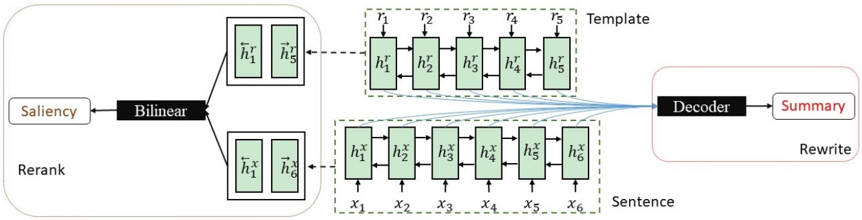
Most previous seq2seq summarization systems purely depend on the source text to generate summaries, which tends to work unstably.Inspired by the traditional template-based summarization approaches, this paper proposes to use existing summaries as soft templates to guide the seq2seq model.To this end, we use a popular IR platform to Retrieve proper summaries as candidate templates.Then, we extend the seq2seq framework to jointly conduct template Reranking and templateaware summary generation (Rewriting).Experiments show that, in terms of informativeness, our model significantly outperforms the state-of-the-art methods, and even soft templates themselves demonstrate high competitiveness.In addition, the import of high-quality external summaries improves the stability and readability of generated summaries.
Overview
The claims and statistics of this paper haven’t been checked yet.
Free: it reads the open-access text and checks the first 5 claims that cite a source we can check. Create a free account to check every claim.
Integrity signals
Registry
Cites
Statistics
Figures

Verification
Claims the paper makes
The claims and statistics of this paper haven’t been checked yet.
Free: it reads the open-access text and checks the first 5 claims that cite a source we can check. Create a free account to check every claim.
Self-check
Percentages, sums and reported differences re-computed from the paper’s own numbers.
The self-check needs the paper’s full text.
Citations
Cites
(2014) · Cited by 33,419
Learning Phrase Representations using RNN Encoder–Decoder for Statistical Machine Translation
Cho, K., van Merrienboer, B., Gulcehre, C., Bahdanau, D., Bougares, F., Schwenk, H., & Bengio, Y. (2014) · Proceedings of the 2014 Conference on Empirical Methods in Natural Language Processing (EMNLP) · doi:10.3115/v1/d14-1179 · Cited by 25,545
Neural Machine Translation by Jointly Learning to Align and Translate
Bahdanau, D., Cho, K., & Bengio, Y. (2014) · arXiv · doi:10.48550/arxiv.1409.0473 · Cited by 16,213
(2004) · Cited by 9,718
Effective Approaches to Attention-based Neural Machine Translation
Luong, T., Pham, H., & Manning, C. D. (2015) · Proceedings of the 2015 Conference on Empirical Methods in Natural Language Processing · doi:10.18653/v1/d15-1166 · Cited by 8,382
The Stanford CoreNLP Natural Language Processing Toolkit
Manning, C., Surdeanu, M., Bauer, J., Finkel, J., Bethard, S., & McClosky, D. (2014) · Proceedings of 52nd Annual Meeting of the Association for Computational Linguistics: System Demonstrations · doi:10.3115/v1/p14-5010 · Cited by 7,037
Google's Neural Machine Translation System: Bridging the Gap between Human and Machine Translation
Wu, Y., Schuster, M., Chen, Z., Le, Q. V., Norouzi, M., Macherey, W., Krikun, M., Cao, Y., Gao, Q., Macherey, K., et al. (2016) · arXiv · doi:10.48550/arxiv.1609.08144 · Cited by 5,319
Get To The Point: Summarization with Pointer-Generator Networks
See, A., Liu, P. J., & Manning, C. D. (2017) · Proceedings of the 55th Annual Meeting of the Association for Computational Linguistics (Volume 1: Long Papers) · doi:10.18653/v1/p17-1099 · Cited by 3,775
Learning Phrase Representations using RNN Encoder-Decoder for Statistical Machine Translation
Cho, K., van Merrienboer, B., Gulcehre, C., Bahdanau, D., Bougares, F., Schwenk, H., & Bengio, Y. (2014) · arXiv · doi:10.48550/arxiv.1406.1078 · Cited by 3,317
A Neural Attention Model for Abstractive Sentence Summarization
Rush, A. M., Chopra, S., & Weston, J. (2015) · Proceedings of the 2015 Conference on Empirical Methods in Natural Language Processing · doi:10.18653/v1/d15-1044 · Cited by 2,656
Research works printed but not linked: 2
- [14]14. Philipp Koehn and Rebecca Knowles. 2017. Six chal- lenges for neural machine translation. arXiv pre- print arXiv:1706.03872. · arXiv
- [21]21. Alexander M. Rush, Sumit Chopra, and Jason Weston. 2015b. A neural attention model for abstractive sen- tence summarization. In Proceedings of EMNLP, pages 379-389.
Cited by
Items 101–200 of 203
Enhance Incomplete Utterance Restoration by Joint Learning Token Extraction and Text Generation
Inoue, S., Liu, T., Nguyen, S., & Nguyen, M.-T. (2022) · Conference of the North American Chapter of the Association for Computational Linguistics: Human Language Technologies (NAACL-HLT) · doi:10.18653/v1/2022.naacl-main.229 · Cited by 18
Nearest Neighbor Non-autoregressive Text Generation
Niwa, A., Takase, S., & Okazaki, N. (2023) · Journal of Information Processing · doi:10.2197/ipsjjip.31.344 · Cited by 10
Divya, S., Sripriya, N., Andrew, J., & Mazzara, M. (2024) · PeerJ Computer Science · doi:10.7717/peerj-cs.2424 · Cited by 17
An Abstractive Summarization Model Based on Joint-Attention Mechanism and a Priori Knowledge
Li, Y., Huang, Y., Huang, W., Yu, J., & Huang, Z. (2023) · Applied Sciences · doi:10.3390/app13074610 · Cited by 10
Claim Optimization in Computational Argumentation
Skitalinskaya, G., Spliethöver, M., & Wachsmuth, H. (2023) · International Conference on Natural Language Generation · doi:10.18653/v1/2023.inlg-main.10 · Cited by 19
Hitomi, Y., Taguchi, Y., Tamori, H., Kikuta, K., Nishitoba, J., Okazaki, N., Inui, K., & Okumura, M. (2019) · International Conference on Natural Language Generation · doi:10.18653/v1/w19-8641 · Cited by 15
“The technology of automatic headline generation has the potential to contribute greatly to this domain, and the problems of news headline generation have motivated a wide range of studies (Wang et al., 2018; Chen et al., 2018; Kiyono et al., 2018; Zhou et al., 2018; Cao et al., 2018; Wang et al., 2019).”
Triple-to-Text Generation with an Anchor-to-Prototype Framework
Li, Z., Lin, Z., Ding, N., Zheng, H.-T., & Shen, Y. (2020) · International Joint Conference on Artificial Intelligence · doi:10.24963/ijcai.2020/523 · Cited by 9
“…retrieved prototypes has also been exploited in other generation task such as unconditional text generation [ Guu et al. , 2018 ] , dialogue response generation [ Wu et al. , 2019; Cai et al. , 2019a; Cai et al. , 2019b ] and abstractive summarization [ Cao et al. , 2018; Wang et al. , 2019 ] .”
MethodRen, Y., Wang, Z., Wang, Y., & Zhang, X. (2021) · Proceedings of the AAAI Conference on Artificial Intelligence · doi:10.1609/aaai.v35i18.17936 · Cited by 7
Template-Based Headline Generator for Multiple Documents
Tseng, Y.-C., Yang, M.-H., Fan, Y.-C., Peng, W.-C., & Hung, C. (2022) · IEEE Access · doi:10.1109/access.2022.3157287 · Cited by 7
“On the other hand, Cao et al. [4] considered that seq2seq models tend to copy source words in order, so they proposed a soft template-based summarization Re 3 Sum.”
BackgroundMethodInfluentialWang, Y., Wang, J., Huang, H., Li, H., & Liu, X. (2020) · International ACM SIGIR Conference on Research and Development in Information Retrieval (SIGIR) · doi:10.1145/3397271.3401140 · Cited by 7
Template Guided Text Generation for Task-Oriented DialoguePreprint
Kale, M., & Rastogi, A. (2020) · arXiv (Cornell University) · doi:10.48550/arxiv.2004.15006 · Cited by 26
Text Summarization with Latent Queries
Xu, Y., & Lapata, M. (2021) · arXiv · doi:10.48550/arxiv.2106.00104
“Another line of research in abstractive summarization propose to control text generation via topics (Perez-Beltrachini et al., 2019; Wang et al., 2020), retrieved summaries (Cao et al., 2018), or factual relations (Zhu et al., 2021).”
Mutual Information Guided Financial Report Generation With Domain Adaption
Wang, Z., Zhang, X., & Du, H. (2023) · IEEE Transactions on Emerging Topics in Computational Intelligence · doi:10.1109/tetci.2023.3314691 · Cited by 7
An Extraction-Abstraction Hybrid Approach for Long Document Summarization
Huang, S., Wang, R., Xie, Q., Li, L., & Liu, Y. (2019) · International Conference on Behavioral, Economic, and Socio-Cultural Computing · doi:10.1109/besc48373.2019.8962979 · Cited by 7
“[14] used the ground truth summary to guide the generation of the summary.”
MethodMimic and Rephrase: Reflective Listening in Open-Ended Dialogue
Dieter, J., Wang, T., Chaganty, A. T., Angeli, G., & Chang, A. X. (2019) · Conference on Computational Natural Language Learning · doi:10.18653/v1/k19-1037 · Cited by 13
“Such models have also been shown to be effective at semantic parsing (Jia and Liang, 2016), summarization (See et al., 2017; Cao et al., 2018), and task oriented”
BackgroundTemPEST: Soft Template-Based Personalized EDM Subject Generation through Collaborative Summarization
Chen, Y.-H., Chen, P., Shuai, H.-H., & Peng, W.-C. (2020) · Proceedings of the AAAI Conference on Artificial Intelligence · doi:10.1609/aaai.v34i05.6252 · Cited by 6
Incorporating bilingual translation templates into neural machine translation
Li, F., Liu, B., Yan, H., Xie, P., Li, J., & Zhang, Z. (2025) · Scientific Reports · doi:10.1038/s41598-025-86754-w · Cited by 10
Introducing bidirectional attention for autoregressive models in abstractive summarization
Zhao, J., Sun, X., & Feng, C. (2024) · Information Sciences · doi:10.1016/j.ins.2024.121497 · Cited by 5
Document Clustering Using Graph Based Fuzzy Association Rule Generation
Perumal, P. (2022) · Computer Systems Science and Engineering · doi:10.32604/csse.2022.020459 · Cited by 5
An Integrated Approach for Keyphrase Generation via Exploring the Power of Retrieval and ExtractionPreprint
Chen, W., Chan, H. P., Li, P., Bing, L., & King, I. (2019) · arXiv (Cornell University) · doi:10.48550/arxiv.1904.03454 · Cited by 5
“(2018) and Cao et al. (2018), we enhance existing generative methods by adopting an extractive model to assist the copy mechanism and exploiting external knowledge from retrieved keyphrases to help the generation.”
MethodDenoising based Sequence-to-Sequence Pre-training for Text GenerationPreprint
Wang, L., Zhao, W., Jia, R., Li, S., & Liu, J. (2019) · arXiv (Cornell University) · doi:10.48550/arxiv.1908.08206 · Cited by 5
“, 2018b), and Re3Sum (Cao et al., 2018a) are used as baselines.”
MethodSelf-citationMulti-stage Pretraining for Abstractive SummarizationPreprint
Goodman, S., Lan, Z., & Soricut, R. (2019) · arXiv (Cornell University) · doi:10.48550/arxiv.1909.10599 · Cited by 5
What Makes a Good Summary? Reconsidering the Focus of Automatic Summarization.Preprint
ter Hoeve, M., Kiseleva, J., & de Rijke, M. (2020) · arXiv (Cornell University) · Cited by 5
Abstractive Text Summarization with Hierarchical Multi-scale Abstraction Modeling and Dynamic Memory
Wang, L., Yang, M., Li, C., Shen, Y., & Xu, R. (2021) · International ACM SIGIR Conference on Research and Development in Information Retrieval (SIGIR) · doi:10.1145/3404835.3462998 · Cited by 8
“Although great efforts have been devoted to the abstractive text summarization [1, 10, 19, 21], generating accurate, concise, informative summaries remains a challenge in practice for two primary reasons.”
BackgroundAbstractive document summarization via multi-template decoding
Huang, Y., Yu, Z., Guo, J., Xiang, Y., Yu, Z., & Xian, Y. (2022) · Applied Intelligence · doi:10.1007/s10489-021-02607-9 · Cited by 5
“…(4) MASS [23] is a pre-trained sequence generation model, and achieves competitive performance compared with previous works; (5) Open-NMT-Transformer [10] is the standard encoder-decoder [2] and BISET [27], which utilize the 1-best template retrieved by Lucene tool to guide the decoding process.”
MethodInfluentialIntensive vision-guided network for radiology report generation
Zheng, F., Li, M., Wang, Y., Yu, W., Wang, R., Chen, Z., Xiao, N., & Lu, Y. (2024) · Physics in Medicine and Biology · doi:10.1088/1361-6560/ad1995 · Cited by 6
“Some studies achieve good performance in text description of natural images by using GAN (Liang et al. 2017), template-guided module (Cao et al. 2018), attention mechanism (Liu et al. 2017b) and reinforcement learning (Paulus et al. 2018).”
BackgroundSentence Graph Attention for Content-Aware Summarization
Siragusa, G., & Robaldo, L. (2022) · Applied Sciences · doi:10.3390/app122010382 · Cited by 4
Question‐driven text summarization using an extractive‐abstractive framework
Kia, M. A., Garifullina, A., Kern, M., Chamberlain, J., & Jameel, S. (2024) · Computational Intelligence · doi:10.1111/coin.12689 · Cited by 6
“12,13 To recreate key content, abstractive summarization requires advanced natural language techniques for reading and understanding the text.”
BackgroundOpen Domain Response Generation Guided by Retrieved Conversations
Shu, C., Zhang, Z., Chen, Y., Xiao, J. Z., Lau, J. H., Zhang, Q., & Lu, Z. (2022) · IEEE Access · doi:10.1109/access.2022.3225647 · Cited by 4
“Miao, Cao and et al. [41], [42] develop retrieve-then-edit techniques for text generation which can improve the quality of the generated response.”
BackgroundKeyword-Aware Encoder for Abstractive Text Summarization
Hu, T., Liang, J., Ye, W., & Zhang, S. (2021) · Lecture notes in computer science · doi:10.1007/978-3-030-73197-7_3 · Cited by 4
Structure-to-word dynamic interaction model for abstractive sentence summarization
Guan, Y., Guo, S., & Li, R. (2025) · Neural Computing and Applications · doi:10.1007/s00521-024-10970-0 · Cited by 3
“To keep consistent with existing work [52, 53], we remove 49 sentence-headline pairs which consist of empty titles in test set.”
A survey of automatic text summarization: concepts, advances and future prospects
Lv, C., Tang, Y., Ao, L., Huang, Y., Zhang, S., Fan, J., & Han, W. (2025) · International Journal of Speech Technology · doi:10.1007/s10772-025-10215-y · Cited by 5
“Inspired by traditional methods, Cao et al. (2018) used soft templates to guide deep learning models, combining information retrieval to fetch candidate summaries and extend the model for template reordering and summary generation. the 7 methods was assessed, with SVM achieving the high - est score…”
Incorporating Textual Evidence in Visual Storytelling
Li, T., & Li, S. (2019) · doi:10.18653/v1/w19-8102 · Cited by 3
“Here we experiment on two approaches: a simple cosine similarity measure and a Bi-Linear model with Meteor score as gold annotation inspired by Cao et al. (2018).”
MethodSelf-citationAn Improved Template Representation-based Transformer for Abstractive Text Summarization
Sun, J., Wang, Y., & Li, Z. (2020) · International Joint Conference on Neural Networks (IJCNN) · doi:10.1109/ijcnn48605.2020.9207609 · Cited by 3
“Re3 [7] uses a retrieval module to retrieve templates and directly connect it with the source input.”
MethodInfluentialAutomatic Document Sketching: Generating Drafts from Analogous Texts
Wu, Z., Galley, M., Brockett, C., Zhang, Y., & Dolan, B. (2021) · Findings of the Association for Computational Linguistics: ACL (Findings of ACL) · doi:10.18653/v1/2021.findings-acl.185 · Cited by 9
A Closer Look at k-Nearest Neighbors Grammatical Error Correction
Vasselli, J., & Watanabe, T. (2023) · Workshop on Innovative Use of NLP for Building Educational Applications · doi:10.18653/v1/2023.bea-1.19 · Cited by 3
“Example-based, or instance-based, methods have recently been applied to tasks across the field such as named entity recognition (Ouchi et al., 2020), summarization (Cao et al., 2018), and machine translation (Khandelwal et al., 2020).”
BackgroundMethodInfluentialGrammatical Error Correction: More Data with More Context
Parnow, K., Li, Z., & Zhao, H. (2020) · International Conference on Asian Language Processing · doi:10.1109/ialp51396.2020.9310498 · Cited by 4
“Similar methods of gleaning information from supplemental data can be found in [4]–[6].”
MethodRL Extraction of Syntax-Based Chunks for Sentence Compression
Le, H. T., Cerisara, C., & Gardent, C. (2019) · Lecture notes in computer science · doi:10.1007/978-3-030-30490-4_28 · Cited by 3
“These figures come from [2], which appears to be the best system on the Gigaword corpus reported in http://nlpprogress.com/ english/summarization.html , as of May 2019.”
KI-HABS: Key Information Guided Hierarchical Abstractive Summarization
Zhang, M., Zhou, G., Yu, W., & Liu, W. (2021) · KSII Transactions on Internet and Information Systems · doi:10.3837/tiis.2021.12.001 · Cited by 3
“Chen et al. [27], Cao et al., [28] and Gehrmann et al. [33] operated at the sentence level of the input document and successfully captured the dependencies between sentences.”
BackgroundText Generation with Exemplar-based Adaptive DecodingPreprint
Peng, H., Parikh, A. P., Faruqui, M., Dhingra, B., & Das, D. (2019) · arXiv (Cornell University) · doi:10.48550/arxiv.1904.04428 · Cited by 13
“The B ASIC model by Cao et al. (2018a) ablates the reranking component from their F ULL model, and uses the top exemplar retrieved by the IR system.”
InfluentialTopic Detection and Summarization of User ReviewsPreprint
Li, P., Huang, L., & Ren, G. (2020) · arXiv (Cornell University) · doi:10.48550/arxiv.2006.00148 · Cited by 3
“Recently, many studies utilize neural networks that are based on encoder-decoder architecture for abstractive summarization [11, 12, 13].”
BackgroundKFCNet: Knowledge Filtering and Contrastive Learning Network for Generative Commonsense ReasoningPreprint
Li, H., Gong, Y., Jiao, J., Zhang, R.-F., Baldwin, T., & Duan, N. (2021) · arXiv.org · doi:10.48550/arxiv.2109.06704 · Cited by 6
“There is significant work on incorporating external knowledge from knowledge bases and incorporating retrieved information in language generation tasks (Weston et al., 2018; Cao et al., 2018; Guan et al., 2019; Hossain et al., 2020).”
Generating Explanations for Recommendation Systems via Injective VAE
Cai, Z. (2021) · Proceedings · doi:10.1109/icdm51629.2021.00115 · Cited by 2
What Makes a Good and Useful Summary? Incorporating Users in Automatic Summarization Research
ter Hoeve, M., Kiseleva, J., & de Rijke, M. (2022) · Conference of the North American Chapter of the Association for Computational Linguistics: Human Language Technologies (NAACL-HLT) · doi:10.18653/v1/2022.naacl-main.4 · Cited by 12
“Work on templatebased (e.g., Cao et al., 2018) and faceted (e.g., Meng et al., 2021) summarization follows a more headed (structured) format.”
BackgroundDuReSE: Rewriting Incomplete Utterances via Neural Sequence Editing
Jiang, W., Gu, X., Chen, Y., & Shen, B. (2023) · Neural Processing Letters · doi:10.1007/s11063-023-11174-8 · Cited by 6
“The Retrieve, Rerank, and Rewrite (Re 3 Sum) model introduced soft templates as additional input to improve the readability and stability of seq2seq summarization systems [3].”
MethodA Hybrid Approach to Cross-lingual Product Review Summarization
Soltan, S., Soto, V., Tran, K. M., & Hamza, W. (2022) · Conference on Empirical Methods in Natural Language Processing (EMNLP) · doi:10.18653/v1/2022.emnlp-industry.3 · Cited by 5
“Abstractive summarization methods can be structure-based, in which a data structure is used to generate the new summary (examples include tree-based methods (Knight and Marcu, 2000; Kikuchi et al., 2014), template-based methods (Cao et al., 2018) and rule-based methods).”
Gtpsum: guided tensor product framework for abstractive summarization
Lu, J., Zhu, Z., Li, K., Gong, S., Pei, H., & Wang, W.-L. (2023) · The Journal of Supercomputing · doi:10.1007/s11227-023-05630-4 · Cited by 2
“Inspired by traditional template-based summarization methods, Cao et al. [35] employ an Information Retrieval platform to identify a pool of potential soft templates, which are subsequently reevaluated and prioritized based on their predicted level of informativeness.”
Application of text summarization technology in human resource management informatization
Liu, T. (2020) · Conference on Artificial Intelligence and Healthcare (CAIH) · doi:10.1145/3433996.3434021 · Cited by 2
“1 n ext ) ) 1 log( ) 1 ( log ( 1 L n n n n g g N (1)”
Template-aware Attention Model for Earnings Call Report Generation
Huang, Y., Dhingra, P. K., & Taheri, S. D. M. (2021) · Workshop on New Frontiers in Summarization (NewSum) · doi:10.18653/v1/2021.newsum-1.2 · Cited by 3
“Inspired by traditional template-based summarization (Zhou and Hovy, 2004), and soft template-based sentence summarization (Cao et al., 2018), we use historical reports as soft templates to provide supplemental structure information for a summarization system.”
BackgroundMethodExploring Methods for Generating Feedback Comments for Writing Learning
Hanawa, K. (2022) · Journal of Natural Language Processing · doi:10.5715/jnlp.29.270 · Cited by 2
[Retracted] Text Mining Based on the Lexicon‐Constrained Network in the Context of Big Data
Wan, B., & Sohail, M. (2022) · Wireless Communications and Mobile Computing · doi:10.1155/2022/8703100 · Cited by 2
RetractedMulti-Scale Distribution Deep Variational Autoencoder for Explanation Generation
Cai, Z., Wang, L., de Melo, G., Sun, F., & He, L. (2022) · Findings of the Association for Computational Linguistics: ACL (Findings of ACL) · doi:10.18653/v1/2022.findings-acl.7 · Cited by 3
“Still, existing natural language generation meth-ods may generate overly generic sentences that fall short at providing concrete information and are thus less useful for users (Cao et al., 2018).”
BackgroundSEM-F1: an Automatic Way for Semantic Evaluation of Multi-Narrative Overlap Summaries at Scale
Bansal, N., Akter, M., & Santu, S. K. K. (2022) · Conference on Empirical Methods in Natural Language Processing (EMNLP) · doi:10.18653/v1/2022.emnlp-main.49 · Cited by 12
“The two most popular among them are extractive approaches (Cao et al., 2018; Narayan et al., 2018; Wu and Hu, 2018; Zhong et al., 2020) and abstractive approaches (Bae et al., 2019; Hsu et al., 2018; Liu et al., 2017; Nallapati et al., 2016).”
BackgroundChen, J., Wang, A., Jiang, H., Feng, S., Li, C., & Xiao, Y. (2019) · Proceedings of the conference - Association for Computational Linguistics. Meeting · doi:10.18653/v1/p19-1196 · Cited by 3
“In this task, the structured infobox is a source more suitable than textural data compared with text summarization task (Gu et al., 2016; See et al., 2017; Cao et al., 2018), because not every entity in a KG possesses a paragraph of description.”
Tsai, A. Y., & Ghaoui, L. E. (2020) · Workshop on Simple and Efficient Natural Language Processing (SustaiNLP) · doi:10.18653/v1/2020.sustainlp-1.8 · Cited by 2
“Besides these two categories, mixed strategies that combine both ex-tractive and abstractive approaches have also been proposed in recent literature (Peng et al., 2019; Cao et al., 2018; See et al., 2017).”
BackgroundControlling Text Edition by Changing Answers of Specific Questions
Sha, L., Hohenecker, P., & Lukasiewicz, T. (2021) · Findings of the Association for Computational Linguistics: ACL (Findings of ACL) · doi:10.18653/v1/2021.findings-acl.110 · Cited by 2
HighRES: Highlight-based Reference-less Evaluation of SummarizationPreprint
Hardy, Narayan, S., & Vlachos, A. (2019) · arXiv (Cornell University) · doi:10.17863/cam.40621 · Cited by 2
End-to-end Semantics-based Summary Quality Assessment for Single-document Summarization.Preprint
Bao, F. S., Li, H., Luo, G., Chen, C., Yang, Y., & Qiu, M. (2020) · arXiv (Cornell University) · Cited by 3
Lexicon-constrained Copying Network for Chinese Abstractive SummarizationPreprint
Wan, B., & Sohail, M. (2020) · arXiv (Cornell University) · doi:10.48550/arxiv.2010.08197 · Cited by 3
“sentence-level when encoded in conjunction with the source text [28], [29].”
BackgroundAnalyzing Methods for Generating Feedback Comments for Language Learners
Hanawa, K., Nagata, R., & Inui, K. (2022) · Journal of Natural Language Processing · doi:10.5715/jnlp.29.901 · Cited by 1
Guidance in Radiology Report Summarization: An Empirical Evaluation and Error Analysis
Trienes, J., Youssef, P., Schlötterer, J., & Seifert, C. (2023) · International Conference on Natural Language Generation · doi:10.18653/v1/2023.inlg-main.13 · Cited by 4
Dialogue-Rewriting Model Based on Transformer Pointer Extraction
Pu, C., Sun, Z., Li, C., & Song, J. (2024) · Electronics · doi:10.3390/electronics13122362 · Cited by 1
Kumar, A., & Rizvi, D. R. (2024) · SN Computer Science · doi:10.1007/s42979-024-03541-6 · Cited by 1
Metin Özetleme ve Benzerlik Analizi Üzerine Prototip Bir Çalışma: Google Scholar Örneği
Şahin, O., & Yayla, R. (2025) · Osmaniye Korkut Ata Üniversitesi Fen Bilimleri Enstitüsü Dergisi · doi:10.47495/okufbed.1570542 · Cited by 1
Paraphrase Generation with Chinese Short Text Dataset
Song, G. H., & Wang, Y. (2020) · International Conference on Computational Intelligence and Applications (ICCIA) · doi:10.1109/iccia49625.2020.00019 · Cited by 1
Neural Abstractive Multi-Document Summarization: Hierarchical or Flat Structure?
Ma, Y., & Zong, L. (2020) · doi:10.18653/v1/2020.iwdp-1.6 · Cited by 1
“With the promising results achieved by neural abstractive summarization on single documents (See et al., 2017; Cao et al., 2018; Liu et al., 2018a; Gehrmann et al., 2018), an increasing number”
BackgroundA Grammar-Aware Pointer Network for Abstractive Summarization
Zhou, Y., Cao, F., Cao, Y., Yang, N., & Li, Z. (2021) · Smart innovation, systems and technologies · doi:10.1007/978-981-33-6141-6_21 · Cited by 1
Pitchandi, P. (2022) · International Journal of Advanced Computer Science and Applications · doi:10.14569/ijacsa.2022.0130415 · Cited by 1
“The finest way of summarization has to preserve the preliminary factors while assisting the users to have better insight towards the enormous volume of data in a faster manner [11].”
BackgroundIncorporating Multi-Hypotheses as Soft-Templates in Neural Headline Generation
Yana, A., Liu, Z., Dong, S., & Bu, F. (2023) · Applied Sciences · doi:10.3390/app13148478 · Cited by 1
Adapt-to-Learn Policy Network for Abstractive Multi-document Summarization
Mu, H., Zhang, S., Li, Q., Liu, T., & Xu, H. (2023) · International Joint Conference on Neural Networks (IJCNN) · doi:10.1109/ijcnn54540.2023.10191102 · Cited by 1
“We consider retrieval accuracy when designing a retrieval agent [36].”
MethodAnalysis of Multidomain Abstractive Summarization Using Salience Allocation
Rehman, T., Bose, R., Dey, S., & Chattopadhyay, S. (2025) · Communications in computer and information science · doi:10.1007/978-3-031-81339-9_16 · Cited by 5
Encoding Position Improves Recurrent Neural Text Summarizers
Karanikolos, A., & Refanidis, I. (2019) · Cited by 1
Quality of Syntactic Implication of RL-Based Sentence Summarization
Le, H. T., Cerisara, C., & Gardent, C. (2020) · Communications in computer and information science · doi:10.1007/978-3-030-62144-5_9 · Cited by 2
Training and Inference Methods for High-Coverage Neural Machine Translation
Yang, M., Liu, Y., & Mayuranath, R. (2020) · Workshop on Neural Generation and Translation (WNGT) · doi:10.18653/v1/2020.ngt-1.13 · Cited by 1
“They have proven to be useful techniques for various NLP tasks, such as Question Answering (Kratzwald et al., 2019), Named Entity Recognition (Yang et al., 2017) and Neural Summarization (Cao et al., 2018).”
MethodAssessing the Quality of Human-Generated Summaries with Weakly Supervised Learning.
Olsen, J., Næss, A. B., & Lison, P. (2021) · DSpace repository (University of Tartu) · Cited by 1
Multi-level shared-weight encoding for abstractive sentence summarization
Lal, D. M., Singh, K. P., & Tiwary, U. S. (2021) · Neural Computing and Applications · doi:10.1007/s00521-021-06566-7 · Cited by 2
“• Re3 [4] : It enacts template-based summarization by retrieving candidate summary templates (incomplete sequences that can be expanded using input text fragments) for supervising the seq2seq model, thereby, enhancing the readability of the formulated summary.”
MethodLearning to Generate Overlap Summaries through Noisy Synthetic Data
Bansal, N., Akter, M., & Santu, S. K. K. (2022) · Conference on Empirical Methods in Natural Language Processing (EMNLP) · doi:10.18653/v1/2022.emnlp-main.807 · Cited by 4
“The two most popular among them are extractive approaches (Cao et al., 2018; Narayan et al., 2018; Wu and Hu, 2018; Zhong et al., 2020) and ab-stractive approaches (Bae et al., 2019; Liu et al., 2017; Nallapati et al., 2016).”
BackgroundIncorporating Textual Evidence in Visual StorytellingPreprint
Li, T., & Li, S. (2019) · arXiv (Cornell University) · doi:10.48550/arxiv.1911.09334 · Cited by 1
“Here we experiment on two approaches: a simple cosine similarity measure and a Bi-Linear model with Meteor score as gold annotation inspired by Cao et al. (2018).”
MethodSelf-citationHitomi, Y., Taguchi, Y., Tamori, H., Kikuta, K., Nishitoba, J., Okazaki, N., Inui, K., & Okumura, M. (2019) · arXiv (Cornell University) · doi:10.48550/arxiv.1903.11771
“The technology of automatic headline generation has the potential to contribute greatly to this domain, and the problems of news headline generation have motivated a wide range of studies (Wang et al., 2018; Chen et al., 2018; Kiyono et al., 2018; Zhou et al., 2018; Cao et al., 2018; Wang et al., 2019).”
Boosting Variational Generative Model via Condition Enhancing and Lexical-Editing
Tao, Z., Si, W., Li, J., Zhao, D., & Yan, R. (2019) · Lecture notes in computer science · doi:10.1007/978-3-030-29908-8_30
Gao, S., Chen, X., Li, P., Chan, Z., Zhao, D., & Yan, R. (2019) · arXiv (Cornell University) · doi:10.48550/arxiv.1909.08837 · Cited by 4
“(Cao et al., 2018) applied this method on summarization, where they employed existing summaries as soft templates to generate new summary without modeling the dependency between the prototype document, summary and input document.”
BackgroundMethodInfluentialPredict and Use Latent Patterns for Short-Text ConversationPreprint
Chen, H.-T., Chao, Y.-C., Chao, T.-H., & Ma, W.-Y. (2020) · arXiv (Cornell University) · doi:10.48550/arxiv.2010.13982
“rting point) since they are fluent and grammatically correct, and then editing is performed to improve relevance and coherence. Plenty of NLP tasks have adopted the technique, including summarization (Cao et al. 2018; Hossain, Ghazvininejad, and Zettlemoyer 2020), image caption generation (Kuznetsova et al. 2013; Mason…”
MethodGenerate and Revise: Reinforcement Learning in Neural Poetry
Zugarini, A., Pasqualini, L., Melacci, S., & Maggini, M. (2021) · International Joint Conference on Neural Networks (IJCNN) · doi:10.1109/ijcnn52387.2021.9533573
A Gist Information Guided Neural Network for Abstractive Summarization
Kong, Y., Zhang, L., & Ma, C. (2021) · Lecture notes in computer science · doi:10.1007/978-3-030-77964-1_5
“For example, Cao et al. [2] employ the IR platform to retrieve proper summaries as candidate templates and then jointly conduct template reranking as well as template-aware summary generation.”
Case-based Reasoning for Natural Language Queries over Knowledge BasesPreprint
Das, R., Zaheer, M., Thai, D., Godbole, A., Perez, E., Lee, J. Y., Tan, L., Polymenakos, L., & McCallum, A. (2021) · arXiv (Cornell University) · doi:10.48550/arxiv.2104.08762 · Cited by 47
“Another recent line of work use training examples at test time to improve language generation (Weston et al., 2018; Pandey et al., 2018; Cao et al., 2018; Peng et al., 2019).”
BackgroundAction based Network for Conversation Question ReformulationPreprint
Ye, Z., Liu, J., Yu, Q., & Ju, J. (2021) · arXiv (Cornell University) · doi:10.48550/arxiv.2111.14445
“In the text summary, rewriting the retrieved candidate text can provide a more accurate and complete summary (See et al., 2017; Chen and Bansal, 2018; Cao et al., 2018).”
MethodRulePG: Syntactic Rule-enhanced Paraphrase Generation
Lan, J. W., Xue, M., & Lv, J. (2023) · International Joint Conference on Neural Networks (IJCNN) · doi:10.1109/ijcnn54540.2023.10191854 · Cited by 1
“PG is a widely studied natural language processing task and is essential in many fundamental tasks [1] such as dialogue system [2], [3], summary generation [4], and question answering [5], [6].”
BackgroundTriplet-Free Knowledge-Guided Response Generation
Li, D., Liu, J., & Wang, B. (2023) · Findings of the Association for Computational Linguistics: ACL (Findings of ACL) · doi:10.18653/v1/2023.findings-acl.815
“For instance, a retrieve-rerank-rewrite (Cao et al., 2018; Wang et al., 2019) approach may perform better on opinion-like knowledge.”
MethodLiu, Z., & Ma, S. (2023) · Atlantis Highlights in Computer Sciences/Atlantis highlights in computer sciences · doi:10.2991/978-94-6463-242-2_51
Non-Parametric Memory Guidance for Multi-Document Summarization
LIRIS, V., Baud, F., Aussem, A., & LIRIS, V. (2023) · International conference Recent advances in natural language processing · doi:10.26615/978-954-452-092-2_017 · Cited by 1
“…we take the [CLS] token of encoders output that we normalize and we define a relevance function : We then calculate the relevance score on normalized tokens, which represents the cosine similarity between source documents q and candidate documents m that fall in the interval [ − 1 , 1] .”
MethodBalepur, N., Huang, J., & Chang, K. C. (2023) · Conference on Empirical Methods in Natural Language Processing (EMNLP) · doi:10.18653/v1/2023.emnlp-main.288 · Cited by 4
Personalized EDM Subject Generation via Co-factored User-Subject Embedding
Chen, Y., Tam, Z. R., & Shuai, H.-H. (2024) · Lecture notes in computer science · doi:10.1007/978-981-97-2253-2_5
Zhang, H., Yu, Z., Wang, T., Jiang, Z., & Tang, Y. P. (2025) · Alexandria Engineering Journal · doi:10.1016/j.aej.2025.04.032
Leveraging Faithfulness in Abstractive Text Summarization with Elementary Discourse Units
Delpisheh, N., & Chali, Y. (2025) · Proceedings of the ... International Florida Artificial Intelligence Research Society Conference · doi:10.32473/flairs.38.1.138888
“…can effectively incorporate different forms of external guidance such as important sentences, keywords (Li et al. 2018), key relational triples in the form of (subject, relation, object) (Jin, Wang, and Wan 2020; Zhu et al. 2020), and retrieved summaries (Cao et al. 2018) from the source document.”
Tan, S., Park, J., Li, D., Jiang, R., & Okumura, M. (2025) · International ACM SIGIR Conference on Research and Development in Information Retrieval (SIGIR) · doi:10.1145/3726302.3729884 · Cited by 3
“To address this limitation, many approaches [1, 3, 12, 15, 57] adopt a “retrieve-then-summarize” paradigm.”
Hallucinations in Abstractive Text Summarization with Large Language Models
Delpisheh, N., & Chali, Y. (2025) · International Generative AI and Computational Language Modelling Conference (GACLM) · doi:10.1109/gaclm67198.2025.11231924 · Cited by 1
“…summarization framework (GSum) [12] was proposed that can effectively incorporate different forms of external guidance such as important sentences, keywords [22], key relational triples in the form of (subject, relation, object) [29], [30], and retrieved summaries [31] from the source document.”
Metadata
- Authors
- Cao, Z., Li, W., Li, S., & Wei, F.
- Affiliations
- Hong Kong Polytechnic University (HK)
- Peking University (CN)
- Microsoft Research Asia (China) (CN)
- Venue
- Proceedings of the 56th Annual Meeting of the Association for Computational Linguistics (Volume 1: Long Papers)
- Published
- 2018
- Pages
- 152-161
- ISSN
- 0736-587X (ISSN-L)
- OpenAlex
- W2798542795
- Cited by
- 202
- References
- 27
- Citations by year
- 2026: 1 · 2025: 11 · 2024: 10 · 2023: 21 · 2022: 26 · 2021: 37 · 2020: 48 · 2019: 43 · 2018: 5
- FWCI
- 13.58
- Type
- conference paper
- Language
- en
- Open access
- hybrid
- doi.org
- Licence
- cc-by
- Locations
- Proceedings of the conference - Association for Computational Linguistics. Meeting (publishedVersion, cc-by)
- PolyU Institutional Research Archive (Hong Kong Polytechnic University) (submittedVersion, cc-by-nc-sa)
- Funders
- National Natural Science Foundation of China (61672445, 61572049)
- Hong Kong Polytechnic University (G-YBP6)
- Topics
- Physical Sciences › Computer Science › Artificial Intelligence › Topic Modeling
- Physical Sciences › Computer Science › Artificial Intelligence › Advanced Text Analysis Techniques
- Physical Sciences › Computer Science › Artificial Intelligence › Natural Language Processing Techniques
- Keywords
- soft template, information retrieval, informativeness
About these checks
Registry, retraction, Cites and statistics results are computed, not judged, with one exception: a printed reference that no index lists is read once by a model before it counts as a citation error. Claims are extracted by a model and kept only when their quote appears verbatim in the text; each cited source is then checked, with a model’s help, for whether it says what the claim relies on. Those verdicts can be wrong — read the claim’s quote and the cited source before relying on one.
Statistics and arithmetic are recomputed, not judged.
Confidence bands are shown only for fields calibrated on our annotated test set. None is calibrated yet, so no band is shown.
What counts as a claim ›How we measure confidence ›How we check this ›
Are you an author, or do you see a problem with this page? Request a review
Data sources
Bibliographic data: Semantic Scholar, OpenAlex, Crossref.
Contains information from the Semantic Scholar Academic Graph Datasets, made available under the ODC Attribution License (ODC-BY 1.0).
Semantic Scholar’s data is described in: Kinney, R., et al. (2023). The Semantic Scholar Open Data Platform. arXiv:2301.10140.
