

Transformation Networks for Target-Oriented Sentiment Classification
Open accessThe DOI matches its Crossref record; 44 of the 44 references it cites were found in a registry or an index.
Abstract
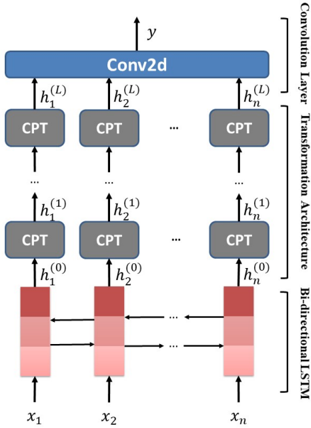
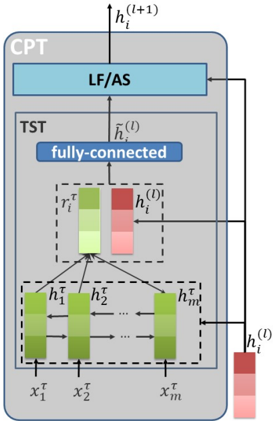
Target-oriented sentiment classification aims at classifying sentiment polarities over individual opinion targets in a sentence.RNN with attention seems a good fit for the characteristics of this task, and indeed it achieves the state-of-the-art performance.After re-examining the drawbacks of attention mechanism and the obstacles that block CNN to perform well in this classification task, we propose a new model to overcome these issues.Instead of attention, our model employs a CNN layer to extract salient features from the transformed word representations originated from a bi-directional RNN layer.Between the two layers, we propose a component to generate target-specific representations of words in the sentence, meanwhile incorporate a mechanism for preserving the original contextual information from the RNN layer.Experiments show that our model achieves a new state-of-the-art performance on a few benchmarks. 1
Overview
The claims and statistics of this paper haven’t been checked yet.
Free: it reads the open-access text and checks the first 5 claims that cite a source we can check. Create a free account to check every claim.
Integrity signals
Registry
Cites
Statistics
Figures
Verification
Claims the paper makes
The claims and statistics of this paper haven’t been checked yet.
Free: it reads the open-access text and checks the first 5 claims that cite a source we can check. Create a free account to check every claim.
Self-check
Percentages, sums and reported differences re-computed from the paper’s own numbers.
The self-check needs the paper’s full text.
Citations
Cites
Deep Residual Learning for Image Recognition
He, K., Zhang, X., Ren, S., & Sun, J. (2016) · 2016 IEEE Conference on Computer Vision and Pattern Recognition (CVPR) · doi:10.1109/cvpr.2016.90 · Cited by 235,474
Adam: A Method for Stochastic Optimization
Kingma, D. P., & Ba, J. (2014) · arXiv · doi:10.48550/arxiv.1412.6980 · Cited by 98,946
LeCun, Y., Bengio, Y., & Hinton, G. (2015) · Nature · doi:10.1038/nature14539 · Cited by 84,126
Glove: Global Vectors for Word Representation
Pennington, J., Socher, R., & Manning, C. (2014) · Proceedings of the 2014 Conference on Empirical Methods in Natural Language Processing (EMNLP) · doi:10.3115/v1/d14-1162 · Cited by 34,071
Neural Machine Translation by Jointly Learning to Align and Translate
Bahdanau, D., Cho, K., & Bengio, Y. (2014) · arXiv · doi:10.48550/arxiv.1409.0473 · Cited by 16,213
Convolutional Neural Networks for Sentence Classification
Kim, Y. (2014) · Proceedings of the 2014 Conference on Empirical Methods in Natural Language Processing (EMNLP) · doi:10.3115/v1/d14-1181 · Cited by 14,831
Representation Learning: A Review and New Perspectives
Bengio, Y., Courville, A., & Vincent, P. (2013) · IEEE Transactions on Pattern Analysis and Machine Intelligence · doi:10.1109/tpami.2013.50 · Cited by 13,001
Identity mappings in deep residual networks
He, K., Zhang, X., Ren, S., & Sun, J. (2016) · Lecture Notes in Computer Science · doi:10.1007/978-3-319-46493-0_38 · Cited by 10,741
Identity Mappings in Deep Residual Networks
He, K., Zhang, X., Ren, S., & Sun, J. (2016) · arXiv · doi:10.48550/arxiv.1603.05027 · Cited by 10,665 · cited 1×
“CPT also contains a context-preserving mechanism, resembling identity mapping (He et al., 2016a,b) and highway connection (Srivastava et al., 2015a,b), allows preserving the context information and learning more abstract word-level features using a deep network.”
BackgroundEffective Approaches to Attention-based Neural Machine Translation
Luong, T., Pham, H., & Manning, C. D. (2015) · Proceedings of the 2015 Conference on Empirical Methods in Natural Language Processing · doi:10.18653/v1/d15-1166 · Cited by 8,382
Cited by
Items 401–500 of 601
Sentiment Analysis for Arabic Product Reviews Using LLMs and Knowledge Graphs
Lotfy, A., Saleh, K., Mohamed, S., Lorance, J., Yehia, E., Mohammed, K., AbdAlbaky, I., Fathy, M., & Yasser, T. (2024) · International Conference on Computing and Informatics (ICCI) · doi:10.1109/icci61671.2024.10485037 · Cited by 5
Exploiting Subjectivity Knowledge Transfer for End-to-End Aspect-Based Sentiment Analysis
Pecar, S., & Šimko, M. (2021) · Lecture notes in computer science · doi:10.1007/978-3-030-83527-9_23 · Cited by 5
Aspect-Based Sentiment Analysis with Multi-aspects Heterogeneous Graph Convolutional Networks
Wang, S., Zhang, G., & Cao, J. H. (2021) · International Conference on Electronic Information Technology and Computer Engineering (EITCE) · doi:10.1145/3501409.3501574 · Cited by 5
BILEAT: a highly generalized and robust approach for unified aspect-based sentiment analysis
Kumar, A., Balan, R., Gupta, P., Neti, L. B. M., & Malapati, A. (2022) · Applied Intelligence · doi:10.1007/s10489-022-03311-y · Cited by 5
A weakly supervised knowledge attentive network for aspect-level sentiment classification
Bai, Q., Xiao, J., & Zhou, J. (2022) · The Journal of Supercomputing · doi:10.1007/s11227-022-04820-w · Cited by 5
Gated Relational Encoder-Decoder Model for Target-Oriented Opinion Word Extraction
Kang, T., Kim, S., Yun, H., Lee, H., & Jung, K. (2022) · IEEE Access · doi:10.1109/access.2022.3228835 · Cited by 5
Aspect-base Sentiment Analysis with Dual Contrastive Learning
Zarandi, A. K., Mirzaei, S., & Talebi, H. (2023) · International Conference on Web Research (ICWR) · doi:10.1109/icwr57742.2023.10139077 · Cited by 5
Pseudo dense counterfactual augmentation for aspect-based sentiment analysis
Ouyang, J., Feng, S., Wang, B., & Yang, Z. (2023) · Neurocomputing · doi:10.1016/j.neucom.2023.126869 · Cited by 5
Cao, F., & Huang, X. (2023) · PeerJ Computer Science · doi:10.7717/peerj-cs.1578 · Cited by 5
Yang, Y., Qian, X., Zhang, L., Tang, S. L., & Zhao, Q. (2024) · The Journal of Supercomputing · doi:10.1007/s11227-024-06290-8 · Cited by 5
Syntax-based residual graph attention network for aspect-level sentiment classification
Xu, G., Yang, Z., Ning, J., Lin, H., & Wang, J. (2025) · Knowledge-Based Systems · doi:10.1016/j.knosys.2025.113279 · Cited by 5
Aspect terms grouping via fusing concepts and context information
Xiong, S., Cheng, M., Batra, V., Tao, Q., Wang, B., & Ye, Y. (2020) · Information Fusion · doi:10.1016/j.inffus.2020.06.007 · Cited by 5
Entropy-Enhanced Attention Model for Explanation Recommendation
Yan, Y., Yu, G., & Yan, X. (2022) · Entropy · doi:10.3390/e24040535 · Cited by 5
Opinion Triplet Extraction for Aspect-Based Sentiment Analysis Using Co-Extraction Approach
Genadi, R. A., & Khodra, M. L. (2022) · Journal of Information and Communication Technology · doi:10.32890/jict2022.21.2.5 · Cited by 5
Bao, L., Lambert, P., & Badía, T. (2022) · Natural Language Engineering · doi:10.1017/s1351324922000432 · Cited by 5
Aspect-Level Sentiment Classification Based on Auto-Adaptive Model Transfer
Zheng, W., Jin, H., Zhang, Y., Fu, X., & Tao, X. (2023) · IEEE Access · doi:10.1109/access.2023.3265473 · Cited by 5
Learn to Select via Hierarchical Gate Mechanism for Aspect-Based Sentiment Analysis
Ran, X., Pan, Y., Sun, W., & Wang, C. (2019) · International Joint Conference on Artificial Intelligence · doi:10.24963/ijcai.2019/717 · Cited by 5
Aspect Category Sentiment Analysis with Self-Attention Fusion Networks
Huang, Z., Zhao, H. J., Peng, F., Chen, Q., & Zhao, G. (2020) · Lecture notes in computer science · doi:10.1007/978-3-030-59419-0_10 · Cited by 5
Interventional Aspect-Based Sentiment AnalysisPreprint
Bi, Z., Zhang, N., Ye, G., Yu, H., Chen, X., & Chen, H. (2021) · arXiv (Cornell University) · doi:10.48550/arxiv.2104.11681 · Cited by 5
Distilling Fine-grained Sentiment Understanding from Large Language ModelsPreprint
Zhang, Y., Xie, G., Xu, H., Hou, K., Bao, J., Wang, Q., Chen, S., & Xu, R. (2024) · arXiv (Cornell University) · doi:10.48550/arxiv.2412.18552 · Cited by 5
Leveraging Large Language Models for Aspect-Based Sentiment Classification using GPT-4
Alanazi, S., & Liu, X. (2024) · International Journal of Advanced Information Technology · doi:10.5121/ijait.2024.14402 · Cited by 4
Zhou, N., Sun, L., Han, M., & He, S. (2025) · Data & Knowledge Engineering · doi:10.1016/j.datak.2025.102477 · Cited by 4
Aspect-Level sentiment analysis based on fusion graph double convolutional neural networks
Zhang, Z., Tang, M., Chen, X., Lee, Y.-L., Du, Y., Zong, L., Li, X., Jiang, Z., & Gou, H. (2024) · International Journal of Parallel Emergent and Distributed Systems · doi:10.1080/17445760.2024.2319170 · Cited by 4
Self-citationYu, R., Xia, H., & Liu, Y. (2024) · Service Oriented Computing and Applications · doi:10.1007/s11761-024-00432-9 · Cited by 4
Zong, L., Hu, D., Gui, Q., Zhang, P., & Wang, J. (2025) · Neural Processing Letters · doi:10.1007/s11063-024-11715-9 · Cited by 4
DRHGNN: a dynamic residual hypergraph neural network for aspect sentiment triplet extraction
Guo, P. W., Yu, Z., Li, C., & Sun, J. (2025) · Applied Intelligence · doi:10.1007/s10489-025-06466-6 · Cited by 4
Pratama, Y., Rasywir, E., Fachruddin, F., Kisbianty, D., & Irawan, B. (2023) · Building of Informatics Technology and Science (BITS) · doi:10.47065/bits.v5i1.3604 · Cited by 4
Syntactic and semantic dual-enhanced bidirectional network for aspect sentiment triplet extraction
Wang, G., Wang, Y., Xu, F., Zhang, Y., & Liu, P. (2023) · The Journal of Supercomputing · doi:10.1007/s11227-023-05573-w · Cited by 4
Li, H., Xu, F., Zhang, Z., Liu, P., & Zhang, W. (2024) · The Journal of Supercomputing · doi:10.1007/s11227-024-06093-x · Cited by 4
Aspect Sentiment Classification via Local Context-Focused Syntax Based on DeBERTa
Liu, J., Zhang, Z., & Lu, X. (2024) · International Conference on Computer Communication and Artificial Intelligence (CCAI) · doi:10.1109/ccai61966.2024.10603339 · Cited by 4
Improved Adjacency Matrix-Based Graph Convolutional Network Aspect-Level Sentiment Analysis
Liú, L., Lu, H., Wang, Y., & Li, H. (2022) · International Conference on Pattern Recognition and Artificial Intelligence (PRAI) · doi:10.1109/prai55851.2022.9904153 · Cited by 4
Huang, Z., Wu, G., Qian, X., & Zhang, B. (2022) · IEEE International Conference on Industrial Informatics (INDIN) · doi:10.1109/indin51773.2022.9976125 · Cited by 4
Incorporating Word Significance into Aspect-Level Sentiment Analysis
Mokhosi, R., Qin, Z., Liu, Q., & Shivachi, C. S. (2019) · Applied Sciences · doi:10.3390/app9173522 · Cited by 4
Multiple Interactive Attention Networks for Aspect-Based Sentiment Classification
Zhang, D., Zhu, Z., Lu, Q., Pei, H., Wu, W., & Guo, Q. (2020) · Applied Sciences · doi:10.3390/app10062052 · Cited by 4
Octa: Omissions and Conflicts in Target-Aspect Sentiment Analysis
Zhang, Z., Hang, C.-W., & Singh, M. P. (2020) · Findings of the Association for Computational Linguistics: EMNLP (Findings of EMNLP) · doi:10.18653/v1/2020.findings-emnlp.149 · Cited by 4
Modeling Inter-aspect Relationship with Conjunction for Aspect-Based Sentiment Analysis
Zhao, H., Xue, Y., Gu, D., Chen, J., & Xiao, L. (2021) · Lecture notes in computer science · doi:10.1007/978-3-030-75765-6_60 · Cited by 4
Corpus-Aware Graph Aggregation Network for Sequence Labeling
Chen, H., Ma, Q., Yu, L., Lin, Z., & Yan, J. (2021) · IEEE/ACM Transactions on Audio Speech and Language Processing · doi:10.1109/taslp.2021.3084105 · Cited by 5
A Novel Bi-Branch Graph Convolutional Neural Network for Aspect Level Sentiment Classification
Chen, B., Lu, G., Xue, Y., & Cai, Q. (2021) · International Joint Conference on Neural Networks (IJCNN) · doi:10.1109/ijcnn52387.2021.9534472 · Cited by 4
Wang, J., Wu, W., & Ren, J. (2023) · Journal of Intelligent Information Systems · doi:10.1007/s10844-023-00785-1 · Cited by 4
Aspect-Level Sentiment Analysis Based on Syntactic Mask and Graph Convolutional Network
Han, Y. (2025) · International Journal of High Speed Electronics and Systems · doi:10.1142/s0129156425404577 · Cited by 3
He, B., Zhang, H., & Zhao, R. (2025) · Journal of Computational Science · doi:10.1016/j.jocs.2025.102732 · Cited by 3
Multi relational dual attention graph transformer for fine grained sentiment analysis
Anilkumar, A. P., Kim, S.-K., & Yoon, Y. C. (2026) · Scientific Reports · doi:10.1038/s41598-026-36490-6 · Cited by 3
Sentence constituent-aware attention mechanism for end-to-end aspect-based sentiment analysis
Lu, T., Xiang, Y., Zhang, L., & Zhang, J. (2022) · Multimedia Tools and Applications · doi:10.1007/s11042-022-12487-x · Cited by 3
Combines Contrastive Learning and Primary Capsule Encoder for Target Sentiment Classification
Deng, H., Li, Y., Ju, S., & Liu, M. (2023) · Lecture notes in computer science · doi:10.1007/978-981-99-6222-8_24 · Cited by 3
Filter channel network based on contextual position weight for aspect-based sentiment classification
Zhu, C., Yi, B., & Luo, L. (2024) · The Journal of Supercomputing · doi:10.1007/s11227-024-06131-8 · Cited by 3
Dual-layer contrastive learning for aspect-aligned multimodal sentiment analysis
Guo, J., Yan, Z., & Zhang, G. (2025) · Applied Intelligence · doi:10.1007/s10489-025-06483-5 · Cited by 3
Multi-Chain of Thought Prompt Learning for Aspect-Based Sentiment Analysis
He, Y., He, Z., Gu, T., Gu, B., Wan, Y., & Li, M. (2025) · Applied Sciences · doi:10.3390/app152212225 · Cited by 3
A Novel Model Utilizing Deep Neural Networks for Opinion Mining
Singh, J., Gangadharan, S. M. P., Singh, P., Diwakar, M., Mall, S., Bijalwan, A., & Kumar, S. (2025) · International Journal of Computational Intelligence Systems · doi:10.1007/s44196-025-00949-7 · Cited by 3
Interactive Multi-Grained Joint Model for Targeted Sentiment Analysis
Yin, D., Liu, X., & Wan, X. (2019) · ACM International Conference on Information and Knowledge Management (CIKM) · doi:10.1145/3357384.3358024 · Cited by 3
A Context-focused Attention Evolution Model for Aspect-based Sentiment Classification
Deng, X., Han, D., & Jiang, P. (2023) · ACM Transactions on Asian and Low-Resource Language Information Processing · doi:10.1145/3587465 · Cited by 3
An Ensemble Approach for Aspect-Level Sentiment Classification Using Deep Learning Methods
Sharma, T., & Kaur, K. (2023) · Lecture notes in networks and systems · doi:10.1007/978-981-19-7615-5_69 · Cited by 3
Learnable Conjunction Enhanced Model for Chinese Sentiment Analysis
Zhao, B., Zan, H., Wang, J., & Han, Y. (2023) · Lecture notes in computer science · doi:10.1007/978-981-99-6207-5_23 · Cited by 3
MGMFN: Multi-graph and MLP-mixer fusion network for Chinese social network sentiment classification
Kang, Y., Yang, X., Zhang, L., Luo, X., Xu, Y., Wang, H., & Liu, J. (2024) · Multimedia Tools and Applications · doi:10.1007/s11042-023-17857-7 · Cited by 3
Specificity-Driven Cascading Approach for Unsupervised Sentiment Modification
Yang, P., Lin, J., Xu, J., Xie, J., Su, Q., & Sun, X. (2019) · Conference on Empirical Methods in Natural Language Processing (EMNLP) · doi:10.18653/v1/d19-1553 · Cited by 3
Outperforming State-of-the-Art Systems for Aspect-Based Sentiment Analysis
Talafha, B., Al‐Ayyoub, M., Abuammar, A., & Jararweh, Y. (2019) · IEEE/ACS International Conference on Computer Systems and Applications (AICCSA) · doi:10.1109/aiccsa47632.2019.9035290 · Cited by 3
Tourist Sentiment Mining Based on Deep Learning
Li, W., Yang, Q., & Du, W. (2022) · Artificial intelligence · doi:10.5772/intechopen.98836 · Cited by 3
Aspect-Based Sentiment Classification with Reinforcement Learning and Local Understanding
Li, M.-F., Zhou, K., Wang, H., Ma, L., & Li, X. (2021) · Lecture notes in computer science · doi:10.1007/978-3-030-86380-7_54 · Cited by 3
Self-citationRao, G., Gu, X., Feng, Z., Cong, Q., & Zhang, L. (2021) · International Joint Conference on Neural Networks (IJCNN) · doi:10.1109/ijcnn52387.2021.9534321 · Cited by 3
Multimodal Aspect-Level Sentiment Analysis based on Deep Neural Networks
Ban, M., Zong, L., Zhou, J., & Xiao, Z. (2022) · International Symposium on System Security, Safety, and Reliability (ISSSR) · doi:10.1109/isssr56778.2022.00039 · Cited by 4
Li, C., Zheng, J., Ju, P., & Morimoto, Y. (2023) · International Conference on Dependable Systems and Their Applications (DSA) · doi:10.1109/dsa59317.2023.00103 · Cited by 3
Islam, S. M., & Bhattacharya, S. (2021) · arXiv (Cornell University) · Cited by 3
Hossain, M. M., Hossain, M. S., Chaki, S., & Hossain, M. R. (2025) · arXiv (Cornell University) · doi:10.48550/arxiv.2505.19018 · Cited by 3
Sparse Attention-Based Residual Joint Network for Aspect-Category-Based Sentiment Analysis
Kim, J., & Kil, H. (2025) · Mathematics · doi:10.3390/math13152437 · Cited by 2
Ju, X., Ding, L., Yang, R., Guo, C., Zou, G., Zhang, B., & Li, M. (2025) · Knowledge-Based Systems · doi:10.1016/j.knosys.2025.114701 · Cited by 3
A global–local relational graph attention networks for aspect-level sentiment analysis
Zhang, M., Li, X., Chen, X., Du, Y., Huang, D., Wang, S., & Fan, Y. (2025) · Engineering Applications of Artificial Intelligence · doi:10.1016/j.engappai.2025.113037 · Cited by 2
Self-citationHarnessing Commonsense: LLM-Driven Knowledge Integration for Fine-Grained Sentiment Analysis
Zhang, K., & Han, Y. (2025) · ACM International Conference on Information and Knowledge Management (CIKM) · doi:10.1145/3746252.3761223 · Cited by 2
Liao, X., Chen, X., Wang, L., Yang, J., Chen, Z., & Rong, Z. (2025) · Proceedings · doi:10.1109/icdm65498.2025.00052 · Cited by 2
Transfer learning for aspect based sentiment analysis
Fatemian, S., Farhadi, A., & Zamanifar, A. (2026) · Discover Artificial Intelligence · doi:10.1007/s44163-026-01153-y · Cited by 2
Xinyi, Y., Gao, J., Qiu, B., Wu, J., & Ren, F. (2026) · Neurocomputing · doi:10.1016/j.neucom.2026.133658 · Cited by 2
Structural Position Network for Aspect-Based Sentiment Classification
Song, P., Jiang, W., Zhu, F., Zhou, Y., Han, J., & Hu, S. (2020) · Lecture notes in computer science · doi:10.1007/978-3-030-61616-8_45 · Cited by 2
AspIOC: Aspect-Enhanced Deep Neural Network for Actionable Indicator of Compromise Recognition
Wang, S., Lang, B., Xiao, N., & Chen, Y. (2022) · Lecture notes in computer science · doi:10.1007/978-3-031-22390-7_24 · Cited by 2
Cui, C., Xu, L., Лю, Б., Chen, J., Yao, S., & Kang, Q. (2022) · IEEE International Conference on Networking, Sensing and Control (ICNSC) · doi:10.1109/icnsc55942.2022.10004113 · Cited by 2
CTAN: Class-optimized Tracking Attention Network for Aspect-Level Sentiment Classification
Chen, J., Ye, W., Cai, Y., & Du, M. (2024) · International Conference on Computer Information Science and Application Technology (CISAT) · doi:10.1109/cisat62382.2024.10695382 · Cited by 2
Label Correction Model for Aspect-based Sentiment Analysis
Wang, Q., & Ren, J. (2020) · International Conference on Computational Linguistics · doi:10.18653/v1/2020.coling-main.71 · Cited by 2
Survey on Deep Learning Approaches for Aspect Level Opinion Mining
Ahmed, R., .., I. E., Abdellatif, A., & Mohamed, H. H. (2020) · Journal of Cybersecurity and Information Management · doi:10.54216/jcim.040104 · Cited by 2
Interactive Attention-Based Convolutional GRU for Aspect Level Sentiment Analysis
Chen, L., Li, T., Luo, H., & Yin, C. (2021) · Human-Centric Intelligent Systems · doi:10.2991/hcis.k.210704.002 · Cited by 2
Edara, D. C., Sistla, V., & Kolli, V. K. K. (2021) · Applied Intelligence · doi:10.1007/s10489-021-02692-w · Cited by 2
Transformer based multi-head attention network for aspect-based sentiment classification
Shirahatti, A. P., Rajpurohit, V. S., & Sannakki, S. S. (2022) · Indonesian Journal of Electrical Engineering and Computer Science · doi:10.11591/ijeecs.v26.i1.pp472-481 · Cited by 2
Cao, Y., Tang, Y., Du, H., Xu, F., Wei, Z., & Jin, C. (2022) · Knowledge-Based Systems · doi:10.1016/j.knosys.2022.109879 · Cited by 2
SubCrime: Counterfactual Data Augmentation for Target Sentiment Analysis
Chen, W., Wang, L., Du, J., & He, Z. (2022) · Lecture notes in computer science · doi:10.1007/978-3-031-15931-2_26 · Cited by 2
Targeted Aspect-Based Sentiment Analysis by Utilizing Dynamic Aspect Representation
Miao, S., & Lu, M. (2022) · Lecture notes in computer science · doi:10.1007/978-3-031-15919-0_54 · Cited by 2
DependencyMerge Guided Latent Tree Structure for Aspect-Based Sentiment Analysis
Fang, C. (2022) · International Joint Conference on Neural Networks (IJCNN) · doi:10.1109/ijcnn55064.2022.9892385 · Cited by 2
Chen, Y., Zhang, K., Liu, Z., Bao, M., Liu, X., & Liu, Q. (2024) · International Conference on Computational Linguistics and Natural Language Processing (CLNLP) · doi:10.1109/clnlp64123.2024.00020 · Cited by 2
Damage Analysis via Bidirectional Multi-Task Cascaded Multimodal Fusion
Liang, T., Wu, S., Fang, J., Yang, G., Wang, W., & Lv, F. (2025) · International World Wide Web Conference (WWW) · doi:10.1145/3696410.3714609 · Cited by 2
Dual-Branch Sentiment Enhancement Modeling For Joint Multimodal Aspect-Based Sentiment Analysis
Ji, X. B., Shi, H., Wu, W., Li, N., & Wang, J. (2025) · International Conference on Multimedia Retrieval · doi:10.1145/3731715.3733317 · Cited by 2
Multi-granularity Position-Aware Convolutional Memory Network for Aspect-Based Sentiment Analysis
Pan, Y., Gan, J., Ran, X., & Wang, C. (2019) · IEEE International Conference on Tools with Artificial Intelligence (ICTAI) · doi:10.1109/ictai.2019.00106 · Cited by 2
Zhao, J., Yang, Y., Pang, G., Lv, L., Shang, H., Sun, Z., & Yang, W. P. (2020) · Lecture notes in computer science · doi:10.1007/978-3-030-47436-2_60 · Cited by 2
Does ensemble really work when facing the twitter semantic classification?
Luo, W., Yi, S. K. M., Chen, J., Weng, S., & Dong, Z. (2020) · International Conference on Computational Intelligence and Applications (ICCIA) · doi:10.1109/iccia49625.2020.00015 · Cited by 2
Target-Oriented Transformation Networks for Document Retrieval
Wang, L., Luo, Z., Li, J., & Chen, C. (2020) · International Conference on Computing and Pattern Recognition (ICCPR) · doi:10.1145/3436369.3437413 · Cited by 2
Aspect Fusion Graph Convolutional Networks for Aspect-Based Sentiment Analysis
Zhang, F., Zhang, Y., Hou, S., Chen, F., & Lu, M. (2021) · Lecture notes in computer science · doi:10.1007/978-3-030-88189-4_6 · Cited by 2
Ensemble correction model for aspect-level sentiment classification
Zhou, Y., An, L., Li, G., & Yu, C. (2022) · Journal of Information Science · doi:10.1177/01655515221096331 · Cited by 2
Neural Network based Approaches for Aspect-Based Sentiment Analysis
Lu, Q. (2022) · Highlights in Science Engineering and Technology · doi:10.54097/hset.v12i.1457 · Cited by 2
Progressive Multigranularity Information Propagation for Coupled Aspect-Opinion Extraction
Lv, F., Liang, T., Fei, Z., & Wang, W. (2022) · IEEE Transactions on Neural Networks and Learning Systems · doi:10.1109/tnnls.2022.3215190 · Cited by 2
Gu, W., Aishanl, W., Sun, W., & Yang, Q. (2022) · European Conference on Natural Language Processing and Information Retrieval (ECNLPIR) · doi:10.1109/ecnlpir57021.2022.00025 · Cited by 2
Aspect Based Sentiment Analysis with Aspect-Specific Opinion SpansPreprint
Xu, L., Bing, L., Lu, W., & Huang, F. (2020) · arXiv (Cornell University) · doi:10.48550/arxiv.2010.02696 · Cited by 2
Self-citationEmpirical Evaluation Methodology for Target Dependent Sentiment Analysis
Moore, A. (2021) · Lancaster EPrints (Lancaster University) · doi:10.17635/lancaster/thesis/1408 · Cited by 3
Syntactic Fusion: Enhancing Aspect-Level Sentiment Analysis Through Multi-Tree Graph IntegrationPreprint
Sunny, J., Padraig, T., Terry, R., & Ali, W. (2023) · arXiv (Cornell University) · doi:10.48550/arxiv.2312.03738 · Cited by 2
Balaji, T., Bablani, A., Sreeja, S. R., & Misra, H. (2024) · Lecture notes in computer science · doi:10.1007/978-3-031-50583-6_16 · Cited by 1
Eliminating Contextual Bias in Aspect-Based Sentiment Analysis
An, R., Zhang, C., & Song, D. (2024) · Lecture notes in computer science · doi:10.1007/978-3-031-56027-9_6 · Cited by 1
Metadata
- Authors
- Li, X., Bing, L., Lam, W., & Shi, B.
- Affiliations
- Chinese University of Hong Kong (HK)
- Tencent (China) (CN)
- Venue
- Proceedings of the 56th Annual Meeting of the Association for Computational Linguistics (Volume 1: Long Papers)
- Published
- 2018
- Pages
- 946-956
- ISSN
- 0736-587X (ISSN-L)
- OpenAlex
- W2963240575
- Cited by
- 603
- References
- 43
- Citations by year
- 2026: 28 · 2025: 52 · 2024: 74 · 2023: 75 · 2022: 102 · 2021: 104 · 2020: 88 · 2019: 75 · 2018: 5
- FWCI
- 21.59
- Type
- conference paper
- Language
- en
- Open access
- hybrid
- doi.org
- Licence
- cc-by
- Locations
- Proceedings of the conference - Association for Computational Linguistics. Meeting (publishedVersion, cc-by)
- arXiv (Cornell University) (submittedVersion)
- arXiv (Cornell University)
- Funders
- Tencent
- Topics
- Physical Sciences › Computer Science › Artificial Intelligence › Sentiment Analysis and Opinion Mining
- Physical Sciences › Computer Science › Artificial Intelligence › Topic Modeling
- Physical Sciences › Computer Science › Artificial Intelligence › Hate Speech and Cyberbullying Detection
- Keywords
- sentiment polarity, transformation networks, bidirectional RNN, attention mechanism, CNN feature extraction
About these checks
Registry, retraction, Cites and statistics results are computed, not judged, with one exception: a printed reference that no index lists is read once by a model before it counts as a citation error. Claims are extracted by a model and kept only when their quote appears verbatim in the text; each cited source is then checked, with a model’s help, for whether it says what the claim relies on. Those verdicts can be wrong — read the claim’s quote and the cited source before relying on one.
Statistics and arithmetic are recomputed, not judged.
Confidence bands are shown only for fields calibrated on our annotated test set. None is calibrated yet, so no band is shown.
What counts as a claim ›How we measure confidence ›How we check this ›
Are you an author, or do you see a problem with this page? Request a review
Data sources
Bibliographic data: Semantic Scholar, OpenAlex, Crossref.
Contains information from the Semantic Scholar Academic Graph Datasets, made available under the ODC Attribution License (ODC-BY 1.0).
Semantic Scholar’s data is described in: Kinney, R., et al. (2023). The Semantic Scholar Open Data Platform. arXiv:2301.10140.
