

The DOI matches its Crossref record; 174 of the 176 references it cites were found in a registry or an index.
Surface-Modified Nanocarriers for Nose-To-Brain Delivery: From Bioadhesion to Targeting
Open accessPreprint — published as 10.3390/pharmaceutics10010034 · Paper page
Abstract
In the field of nasal delivery, one of the most fascinating applications is the delivery of drugs directly to the central nervous system bypassing the blood brain barrier. This approach would provide a series of benefits, such as dose lowering and direct targeting of potent drugs, ultimately reducing their systemic side effects. Recently, clinical trials have explored the nasal administration of insulin for the treatment of Alzheimer’s disease, with promising results. The use of nanomedicines could provide further options for making nose-to-brain delivery reality. In particular, apart from the selection of devices able to deposit the formulation in the upper part of the nose, surface modification of these nanomedicines appears the key strategy to optimize the delivery of drugs from the nasal cavity to the brain. In this review, nanomedicines delivery approaches based on surface electrostatic charges, mucoadhesive polymers, as well as chemical moieties targeting nasal epithelium, will be discussed and critically evaluated for nose-to-brain delivery.
Overview
The claims and statistics of this paper haven’t been checked yet.
Run the check — free, no account needed. It reads the open-access text and checks the sources it cites.
Integrity signals
Registry
Cites
Statistics
Figures
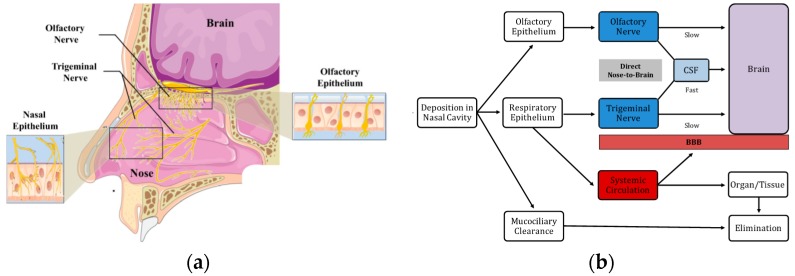
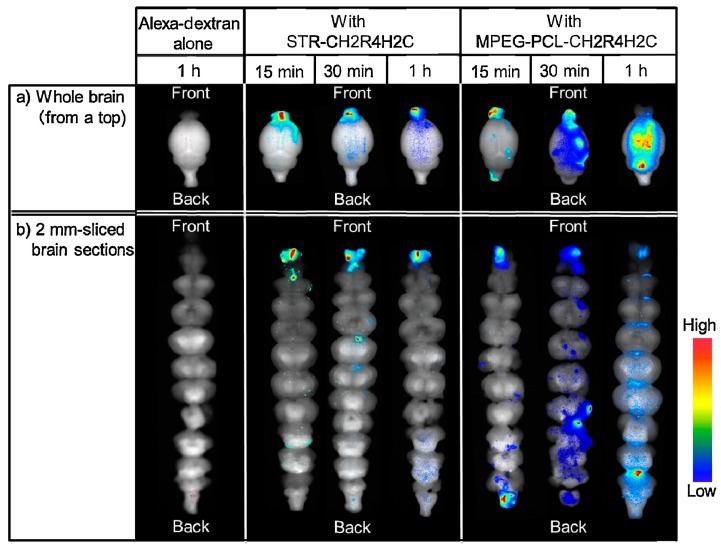
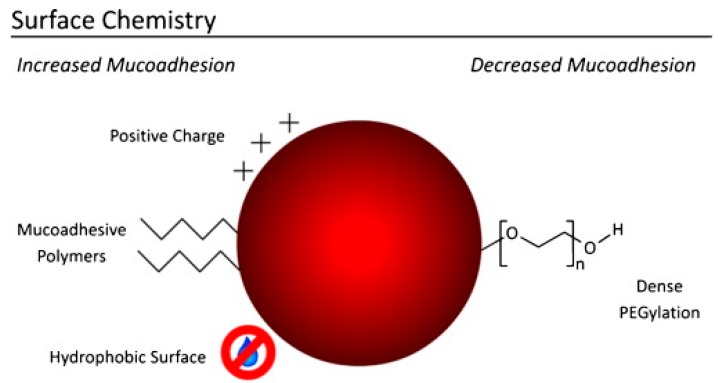
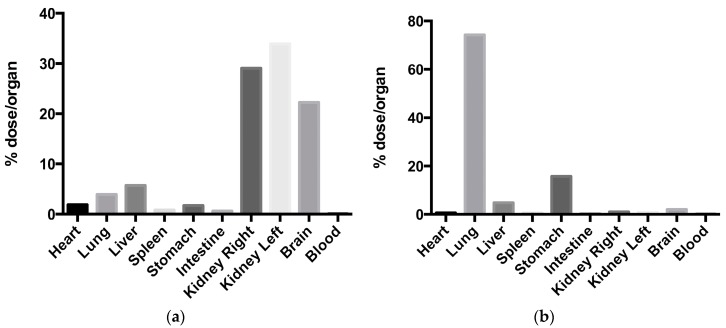
Verification
Claims the paper makes
The claims and statistics of this paper haven’t been checked yet.
Run the check — free, no account needed. It reads the open-access text and checks the sources it cites.
Claims other papers make about this one
Each is checked against this paper’s own text: does it say what the citing paper says it does?
The cited source says what the claim attributes to it.
In the citing paper
“According to the present literature, different kinds of nanocarriers are used to prepare nasal formulations able to target the brain, constituted by polymer-based and lipid-based nanoparticles [21,22,23].”
From Nanoemulsions for “Nose-to-Brain” Drug Delivery (2019) · cites this paper as [22]
Self-check
Percentages, sums and reported differences re-computed from the paper’s own numbers.
The self-check needs the paper’s full text.
Citations
Cites
1 retracted
Ahmad, N., Ahmad, I., Umar, S., Iqbal, Z., Samim, M., & Ahmad, F. J. (2014) · Drug Delivery · doi:10.3109/10717544.2014.941076 · Cited by 70
RetractedMucus-penetrating nanoparticles for drug and gene delivery to mucosal tissues
Lai, S. K., Wang, Y.-Y., & Hanes, J. S. (2008) · Advanced Drug Delivery Reviews · doi:10.1016/j.addr.2008.11.002 · Cited by 1,863
Cone, R. A. (2008) · Advanced Drug Delivery Reviews · doi:10.1016/j.addr.2008.09.008 · Cited by 1,459
Intranasal delivery to the central nervous system: Mechanisms and experimental considerations
Dhuria, S. V., Hanson, L. R., & Frey, W. H. (2010) · Journal of Pharmaceutical Sciences · doi:10.1002/jps.21924 · Cited by 1,239
Nasal drug delivery—possibilities, problems and solutions
Illum, L. (2003) · Journal of Controlled Release · doi:10.1016/s0168-3659(02)00363-2 · Cited by 1,139
Modern methods for delivery of drugs across the blood–brain barrier
Chen, Y., & Liu, L. (2011) · Advanced Drug Delivery Reviews · doi:10.1016/j.addr.2011.11.010 · Cited by 1,036
Thorne, R. G., Pronk, G. J., Padmanabhan, V., & Frey, W. H. (2004) · Neuroscience · doi:10.1016/j.neuroscience.2004.05.029 · Cited by 958
Transport of drugs from the nasal cavity to the central nervous system
Illum, L. (2000) · European Journal of Pharmaceutical Sciences · doi:10.1016/s0928-0987(00)00087-7 · Cited by 907
Intranasal insulin improves cognition and modulates β-amyloid in early AD
Reger, M. A., Watson, G. S., Green, P. S., Wilkinson, C. W., Baker, L. D., Cholerton, B., Fishel, M. A., Plymate, S. R., Breitner, J. C. S., DeGroodt, W., et al. (2008) · Neurology · doi:10.1212/01.wnl.0000265401.62434.36 · Cited by 830
Approaches to transport therapeutic drugs across the blood–brain barrier to treat brain diseases
Gabathuler, R. (2009) · Neurobiology of Disease · doi:10.1016/j.nbd.2009.07.028 · Cited by 829
Cited by
Sorted by citations
Evaluation of intranasal delivery route of drug administration for brain targeting
Erdő, F., Bors, L. A., Farkas, D., Bajza, Á., & Gizurarson, S. S. (2018) · Brain Research Bulletin · doi:10.1016/j.brainresbull.2018.10.009 · Cited by 773
Drug delivery to the central nervous system
Nance, E. A., Pun, S. H., Saigal, R., & Sellers, D. L. (2021) · Nature Reviews Materials · doi:10.1038/s41578-021-00394-w · Cited by 442
On a highway to the brain: A review on nose-to-brain drug delivery using nanoparticles
Formica, M. L., Real, D. A., Picchio, M. L., Catlin, E. J., Donnelly, R. F., & Paredes, A. J. (2022) · Applied Materials Today · doi:10.1016/j.apmt.2022.101631 · Cited by 282
Nanoemulsions for “Nose-to-Brain” Drug Delivery
Bonferoni, M. C., Rossi, S., Sandri, G., Ferrari, F., Gavini, E., Rassu, G., & Giunchedi, P. (2019) · Pharmaceutics · doi:10.3390/pharmaceutics11020084 · Cited by 269
Ceña, V., & Játiva, P. (2018) · Nanomedicine · doi:10.2217/nnm-2018-0139 · Cited by 232
Metadata
- Authors
- Sonvico, F., Clementino, A. R., Buttini, F., Colombo, G., Pescina, S., Stanisçuaski Guterres, S., Raffin Pohlmann, A., & Nicoli, S.
- Affiliations
- University of Parma (IT)
- University of Ferrara (IT)
- Corresponding author
- Sonvico, Fabio
- ORCID
- Venue
- Pharmaceutics
- Publisher
- MDPI AG
- Published
- 2018-02-09
- Volume
- 10
- Issue
- 1
- Pages
- 34-34
- ISSN
- 1999-4923 (ISSN-L)
- PMC
- PMC5874847
- OpenAlex
- W2786145144
- Cited by
- 306
- References
- 176
- Citations by year
- 2026: 16 · 2025: 36 · 2024: 35 · 2023: 35 · 2022: 49 · 2021: 54 · 2020: 45 · 2019: 24 · 2018: 11
- FWCI
- 2.93
- Type
- journal article
- Language
- en
- Open access
- gold
- doi.org
- Locations
- Pharmaceutics (publishedVersion, cc-by)
- Preprints.org (acceptedVersion, cc-by)
- PubMed Central (publishedVersion, cc-by)
- PubMed (publishedVersion)
- DOAJ (DOAJ: Directory of Open Access Journals) (submittedVersion, cc-by-sa)
- Institutional Research Information System University of Ferrara (University of Ferrara) (submittedVersion, cc-by)
- Funders
- Conselho Nacional de Desenvolvimento Científico e Tecnológico (401196/2014-3, PVE 401196/2014-3)
- Topics
- Life Sciences › Pharmacology, Toxicology and Pharmaceutics › Pharmaceutical Science › Advanced Drug Delivery Systems
- Physical Sciences › Materials Science › Biomaterials › Nanoparticle-Based Drug Delivery
- Health Sciences › Medicine › Pulmonary and Respiratory Medicine › Inhalation and Respiratory Drug Delivery
- Keywords
- nose-to-brain delivery, intranasal drug delivery, nanocarriers, surface modification, blood-brain barrier bypass, mucoadhesion, mucoadhesive polymers, static electricity, insulin, Alzheimer's disease, brain drug delivery, particle engineering
About these checks
Registry, retraction, Cites and statistics results are computed, not judged, with one exception: a printed reference that no index lists is read once by a model before it counts as a citation error. Claims are extracted by a model and kept only when their quote appears verbatim in the text; each cited source is then checked, with a model’s help, for whether it says what the claim relies on. Those verdicts can be wrong — read the claim’s quote and the cited source before relying on one.
Statistics and arithmetic are recomputed, not judged.
Confidence bands are shown only for fields calibrated on our annotated test set. None is calibrated yet, so no band is shown.
What counts as a claim ›How we measure confidence ›How we check this ›
Are you an author, or do you see a problem with this page? Request a review
