

Gut microbiota, cognitive frailty and dementia in older individuals: a systematic review
Open accessThe DOI matches its Crossref record; 134 of the 135 references it cites were found in a registry or an index.
Abstract
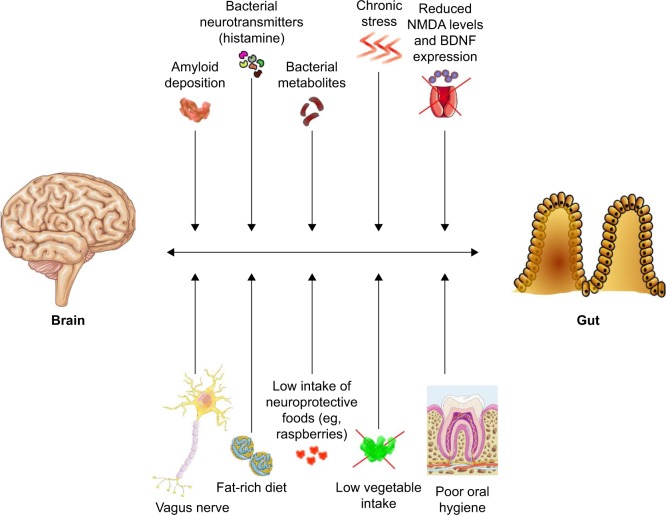
Cognitive frailty, defined as the coexistence of mild cognitive impairment symptoms and physical frailty phenotype in older persons, is increasingly considered the main geriatric condition predisposing to dementia. Recent studies have demonstrated that gut microbiota may be involved in frailty physiopathology by promoting chronic inflammation and anabolic resistance. The contribution of gut microbiota to the development of cognitive impairment and dementia is less defined, even though the concept of "gut-brain axis" has been well demonstrated for other neuropsychiatric disorders. The aim of this systematic review was to summarize the current state-of-the-art literature on the gut microbiota alterations associated with cognitive frailty, mild cognitive impairment and dementia and elucidate the effects of pre- or probiotic administration on cognitive symptom modulation in animal models of aging and human beings. We identified 47 papers with original data (31 from animal studies and 16 from human studies) suitable for inclusion according to our aims. We concluded that several observational and intervention studies performed in animal models of dementia (mainly Alzheimer's disease) support the concept of a gut-brain regulation of cognitive symptoms. Modulation of vagal activity and bacterial synthesis of substances active on host neural metabolism, inflammation and amyloid deposition are the main mechanisms involved in this physiopathologic link. Conversely, there is a substantial lack of human data, both from observational and intervention studies, preventing to formulate any clinical recommendation on this topic. Gut microbiota modulation of cognitive function represents, however, a promising area of research for identifying novel preventive and treatment strategies against dementia.
Overview
The claims and statistics of this paper haven’t been checked yet.
Free: it reads the open-access text and checks the first 5 claims that cite a source we can check. Create a free account to check every claim.
Integrity signals
Registry
Cites
Statistics
Figures
Verification
Claims the paper makes
The claims and statistics of this paper haven’t been checked yet.
Free: it reads the open-access text and checks the first 5 claims that cite a source we can check. Create a free account to check every claim.
Claims other papers make about this one
Each is checked against this paper’s own text: does it say what the citing paper says it does?
In the citing paper
“In aging, the microbiota is able to influence the brain physiology through multiple mechanisms, that have been recently reviewed by Ticinesi et al. [100] and Calvani et al. [101].”
From Gut Microbiota, Muscle Mass and Function in Aging: A Focus on Physical Frailty and Sarcopenia (2019) · cites this paper as [100]
Self-check
Percentages, sums and reported differences re-computed from the paper’s own numbers.
The self-check needs the paper’s full text.
Citations
Cites
1 retracted
Fougère, B., Daumas, M., Lilamand, M., Sourdet, S., Delrieu, J., Vellas, B. J., & van Kan, G. A. (2017) · Journal of the American Medical Directors Association · doi:10.1016/j.jamda.2017.06.024 · Cited by 56 · cited 1×
“10 Low gait speed is, in fact, the main motoric manifestation of cognitive frailty.”
BackgroundRetractedClegg, A., Young, J., Iliffe, S., Rikkert, M. O., & Rockwood, K. (2013) · The Lancet · doi:10.1016/s0140-6736(12)62167-9 · Cited by 9,503
Enterotypes of the human gut microbiome
MetaHIT Consortium (additional members), Arumugam, M., Raes, J., Pelletier, E., Le Paslier, D., Yamada, T., Mende, D. R., Fernandes, G. R., Tap, J., Bruls, T., et al. (2011) · Nature · doi:10.1038/nature09944 · Cited by 7,548 · cited 1×
“115 Similarly, in older individuals, the variety and pattern of food consumption were associated with a different trend toward gut microbiota dysbiosis.”
BackgroundGut microbiota composition correlates with diet and health in the elderly
Claesson, M. J., Jeffery, I. B., Conde, S., Power, S. E., O’Connor, E. M., Cusack, S., Harris, H. M. B., Coakley, M., Lakshminarayanan, B., O’Sullivan, O., et al. (2012) · Nature · doi:10.1038/nature11319 · Cited by 3,314 · cited 2×
“27 32 In fact, many microbial taxa, underrepresented in frail older persons, may produce”
BackgroundThe gut microbiota and host health: a new clinical frontier
Marchesi, J. R., Adams, D. H., Fava, F., Hermes, G. D. A., Hirschfield, G. M., Hold, G., Quraishi, M. N., Kinross, J., Smidt, H., Tuohy, K. M., et al. (2016) · Gut · doi:10.1136/gutjnl-2015-309990 · Cited by 2,302 · cited 2×
“12 However, in other studies, a Mini-Mental State Examination test score # 25 was used as a simplified method for assessing cognitive symptoms.”
BackgroundMethod(2018) · Neurology · doi:10.1212/wnl.0000000000004826 · Cited by 2,183 · cited 1×
“In this study, MCI was diagnosed using a battery of neuropsychological tests and not the clinical dementia rating scale,(7) in line with the most recent consensus recommendations.(12) However, in other studies, a Mini-Mental State Examination test score #25 was used as a simplified method for assessing cognitive sympt…”
MethodGut microbiome alterations in Alzheimer’s disease
Vogt, N. M., Kerby, R. L., Dill-McFarland, K. A., Harding, S. J., Merluzzi, A. P., Johnson, S. C., Carlsson, C. M., Asthana, S., Zetterberg, H., Blennow, K., et al. (2017) · Scientific Reports · doi:10.1038/s41598-017-13601-y · Cited by 2,137
Cattaneo, A., Cattane, N., Galluzzi, S., Provasi, S., Lopizzo, N., Festari, C., Ferrari, C., Guerra, U. P., Paghera, B., Muscio, C., et al. (2017) · Neurobiology of Aging · doi:10.1016/j.neurobiolaging.2016.08.019 · Cited by 1,382 · cited 2×
“Cattaneo et al 65 instead compared the fecal microbiota composition of 40 amyloid-positive patients with cognitive impairment, 33 amyloid-negative patients with cognitive impairment and 10 healthy controls using a quantitative-polymerase chain reaction approach.”
BackgroundMethodCognitive frailty: Rational and definition from an (I.A.N.A./I.A.G.G.) International Consensus Group
Kelaiditi, E., Cesari, M., Canevelli, M., Abellan van Kan, G., Ousset, P.-J., Gillette-Guyonnet, S., Ritz, P., Duveau, F., Soto, M. E., Provencher, V., et al. (2013) · The Journal of nutrition, health and aging · doi:10.1007/s12603-013-0367-2 · Cited by 1,084
Psychobiotics and the manipulation of bacteria–gut–brain signals
Sarkar, A., Lehto, S. M., Harty, S., Dinan, T. G., Cryan, J. F., & Burnet, P. W. J. (2016) · Trends in Neurosciences · doi:10.1016/j.tins.2016.09.002 · Cited by 1,068
Cited by
Items 101–200 of 219
Linking Metabolic Syndrome to Neurodegeneration Mechanisms and Potential Treatments
Džidić-Krivić, A., Fajkić, A., Farhat, E. K., Lekić, L., Ejubović, A. J., Vukas, S. K., Ejubović, M., Lepara, O., & Sher, E. K. (2025) · Molecular Neurobiology · doi:10.1007/s12035-025-04947-w · Cited by 25
“SCFA and microRNA (miRNA) are essential to healthy gut-brain axis function [79].”
ZNF185 is a p53 target gene following DNA damage
Smirnov, A., Cappello, A., Lena, A. M., Anemona, L., Mauriello, A., Daniele, N. D., Annicchiarico‐Petruzzelli, M., Melino, G., & Candi, E. (2018) · Aging · doi:10.18632/aging.101639 · Cited by 25
“Aging is complex set of genetic [40,41], epigenetic [42– 46], immunological [47–51], and metabolic [52–58] rearrangements, involving several cellular signalling pathways [59–63] able to regulate metabolism, ROS formation [64–71] and DNA Damage Response (DDR) [72–74] in all organs [75–77].”
BackgroundThe microbial guardians: Unveiling the role of gut microbiota in shaping neurodegenerative disease
Izzeddine, N. A., Ahmad, K., Bacha, C., Jabbour, M., Najjar, M., Salhab, S., Ghadieh, H. E., Kanaan, A., Azar, S. T., Khattar, Z. A., et al. (2025) · IBRO Neuroscience Reports · doi:10.1016/j.ibneur.2025.05.014 · Cited by 23
“This implies that the intestinal neurotransmitter synthesis pathway may have an impact on brain neuronal activity and cognitive processes, either directly or indirectly (Caspani and Swann, 2019, Chen et al., 2021, Jameson et al., 2020, Ticinesi et al., 2018) (Fig.”
Association between Anxiety and Vascular Dementia Risk: New Evidence and an Updated Meta-Analysis
Santabárbara, J., Lipnicki, D. M., Olaya, B., Villagrasa, B., Gracia‐García, P., Bueno‐Notivol, J., Lobo, A., & López‐Antón, R. (2020) · Journal of Clinical Medicine · doi:10.3390/jcm9051368 · Cited by 22
“Additionally, recent studies indicate that anxiety could be related to increased gut permeability [52] and changes in the composition of gut microbiota [53], which may modulate cognitive functioning [54].”
BackgroundLi, J.-S., Su, S., Xu, Z., Zhao, L.-H., Fan, R.-Y., Guo, J., Qian, D., & Duan, J. (2022) · Therapeutic Advances in Chronic Disease · doi:10.1177/20406223221091177 · Cited by 25
Cheng, H.-W., Jiang, S., & Hu, J. (2019) · Oral Health by Using Probiotic Products · doi:10.5772/intechopen.86775 · Cited by 17
Association between gut microbial dysbiosis and Alzheimer’s disease: an umbrella review
Kumari, S., Desai, V., Sivakumar, S., Sikri, K., & Kumar, M. (2025) · npj Dementia · doi:10.1038/s44400-025-00048-6 · Cited by 23
Yin, Z.-H., Bao, Q.-N., Li, Y., Liu, Y., Wang, Z.-Q., Ye, F., He, X., Zhang, X., Zhong, W., Wu, K., et al. (2024) · Complementary Therapies in Medicine · doi:10.1016/j.ctim.2024.103118 · Cited by 18
Gut–Brain Axis and Brain Microbiome Interactions from a Medical Perspective
Arneth, B. M. (2025) · Brain Sciences · doi:10.3390/brainsci15020167 · Cited by 18
“[47].”
Li, Y., Zhang, W., Sun, T., Liu, B., Manyande, A., Xu, W., & Xiang, H. (2021) · Frontiers in Medicine · doi:10.3389/fmed.2021.616489 · Cited by 19
Brandt, A., Kromm, F., Hernández-Arriaga, A. M., Sánchez, I. M., Bozkır, H. Ö., Staltner, R., Baumann, A., Camarinha‐Silva, A., Heijtz, R. D., & Bergheim, I. (2023) · Cells · doi:10.3390/cells12172153 · Cited by 15
“In recent years, changes in intestinal microbiota and the so-called ‘gut–brain axis’ were discussed to be of crucial importance in the development of aging associated cognitive impairments (for an overview, see [71,72]).”
BackgroundXie, L., Zhong, N., Liu, Y., Zhang, Q., Zhenjun, N., & Heng, Y. (2024) · International Journal of Nursing Practice · doi:10.1111/ijn.13306 · Cited by 17
The Influence of the Gut Microbiota on Alzheimer's Disease: A Narrative Review
Yin, J.-T., Xu, X., Jin, C.-Y., Yuan, X., & Wang, X. (2023) · Journal of Integrative Neuroscience · doi:10.31083/j.jin2202038 · Cited by 15
“Brain microglial activation, neuroinflammation, neuronal apoptosis and Aβ deposition are more severe in older individuals [92].”
BackgroundThe microbiome links between aging and lupus
Katz-Agranov, N. S., & Zandman‐Goddard, G. (2021) · Autoimmunity Reviews · doi:10.1016/j.autrev.2021.102765 · Cited by 15
Zhang, N., Zhang, Y., Wang, Z., Pan, F., Ren, R., Li, Z., Zhao, H., Luo, X., Li, Z., Wang, L., et al. (2022) · Frontiers in Aging Neuroscience · doi:10.3389/fnagi.2022.991157 · Cited by 17
“Recent studies have revealed an important relationship between the gut microbiome and aging-related diseases such as Alzheimer disease (Ticinesi et al., 2018; Haran and McCormick, 2021), suggesting that the gut microbiome plays an essential role in the aging process.”
BackgroundImpact of aging on vascular ion channels: perspectives and knowledge gaps across major organ systems
Behringer, E. J. (2023) · American Journal of Physiology-Heart and Circulatory Physiology · doi:10.1152/ajpheart.00288.2023 · Cited by 18
Annweiler, C., Duval, G. T., Cheng, C., Wong, T. Y., Lamoureux, E. L., Miléa, D., & Sabanayagam, C. (2019) · Nutrients · doi:10.3390/nu11030660 · Cited by 14
“, the ensemble of bacteria, fungi, viruses, protozoa, and archaea symbiotically living in the distal human gastrointestinal tract under various external influences, including the diet) may be involved in cognitive decline by promoting chronic inflammation and anabolic resistance [36].”
BackgroundAntioxidant diets and functional foods attenuate dementia and cognition in elderly subjects
Wichansawakun, S., Chupisanyarote, K., Wongpipathpong, W., Kaur, G., & Buttar, H. S. (2021) · Elsevier eBooks · doi:10.1016/b978-0-12-819815-5.00028-8 · Cited by 20
Liu, M., Li, D., Hong, X., & Sun, Z. (2022) · Frontiers in Neurology · doi:10.3389/fneur.2022.813266 · Cited by 17
Lynch, D. H., Howard, A. G., Tien, H.-C., Du, S., Zhang, B., Wang, H., Gordon‐Larsen, P., & Batsis, J. A. (2023) · The Journals of Gerontology Series A · doi:10.1093/gerona/glad051 · Cited by 13
Association between cognitive reserve proxies and frailty phenotype: data from UK Biobank
Lorenzo‐López, L., Cibeira, N., Hemadeh, A., López‐López, R., Lema‐Arranz, C., Maseda, A., Fernández‐Bertólez, N., Costa, S., Pásaro, E., Valdiglesias, V., et al. (2024) · GeroScience · doi:10.1007/s11357-024-01382-y · Cited by 14
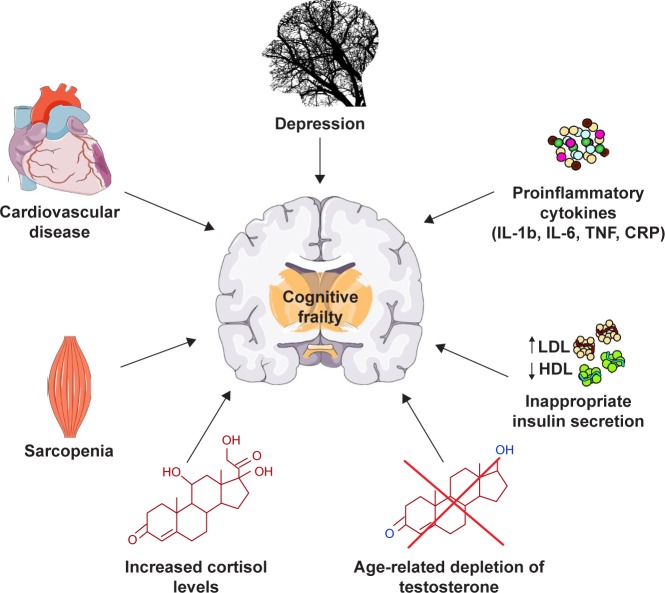
“It has been suggested that frailty and cognitive impairment may share common risk factors and biological mechanisms such as chronic inflammation, cardio-vascular risk, hormonal dysregulation, sarcopenia, depression, and lifestyle factors such as poor nutrition and physical inactivity [25, 29].”
Gut Microbiota, Mild Cognitive Impairment and Dementia: A Systematic Review
Tana, C., Moffa, S., Tana, M., Ucciferri, C., & Moffa, L. (2025) · Neurology International · doi:10.3390/neurolint17100155 · Cited by 15
“Animal models of cognitive decline, particularly those mimicking AD, consistently support the involvement of the gut microbiota in the modulation of cognitive symptoms [10].”
Self-citationVidal, P., Vienne-Jumeau, A., Moreau, A., Vidal, C., Wang, D., Audiffren, J., Bargiotas, I., Barrois, R., Buffat, S., Dubost, C., et al. (2020) · Aging Medicine · doi:10.1002/agm2.12115 · Cited by 13
Sánchez-de-Lara-Sánchez, S., & Sánchez‐Pérez, A. M. (2022) · Journal of Alzheimer s Disease · doi:10.3233/jad-220615 · Cited by 15
“To date,foursystematicreviewshavebeenpublishedon thesubject[92–95],allwithinthelast4years,sug-gestinganexponentialtrendinscientificproduction.”
The association between dietary fiber intake and sarcopenia
Kao, C.-C., Yang, Z., & Chen, W. (2023) · Journal of Functional Foods · doi:10.1016/j.jff.2023.105437 · Cited by 14
Zhang, X., Chen, Y., Tang, Y., Zhang, Y., Zhang, X. L., & Su, D. (2023) · Trials · doi:10.1186/s13063-023-07167-6 · Cited by 13
“A 2018 systematic review summarized the literature on intestinal microbiota changes associated with cognitive impairment, mild cognitive impairment (MCI), and dementia, evaluated the effects of prebiotics or probiotics on aging animal models and human cognitive symptoms and found that human data were insufficient to m…”
BackgroundResultEffects of Vegetable and Fruit Juicing on Gut and Oral Microbiome Composition
Sardaro, M. L. S., Grote, V. E., Baik, J., Atallah, M., Amato, K. R., & Ring, M. R. (2025) · Nutrients · doi:10.3390/nu17030458 · Cited by 14
“For example, the overrepresentation of taxa belonging to the Porphyromonadaceae and Odoribacteraceae families have been identified in an aging mouse study to induce memory deficits and increase anxious behavior with progression toward neurodegenerative disorder [114].”
Loffredo, L., Alfano, A. R., Ettorre, E., Desideri, G., Carnevale, R., Forte, M., Maglione, V., Bartimoccia, S., Castellani, V., Totè, C. M., et al. (2025) · Journal of Alzheimer s Disease · doi:10.1177/13872877251345157 · Cited by 16
“22,23 Gram-negative bacteria in the gastrointestinal tract, such as Bacteroides fragilis and Escherichia coli (EC) , release LPS, which exert pro-in fl ammatory effects on neurons.”
Gut Microbiota Alternation in Disease Progression of Neurosyphilis
Wang, G., Zou, D., Lu, X., Gu, X., Cheng, Y., Qi, T., Cheng, Y., Yu, J., Ye, M., & Zhou, P. (2022) · Infection and Drug Resistance · doi:10.2147/idr.s389155 · Cited by 18
“Numerous studies support the association of the microbiome-gut-brain axis with dementia such as Alzheimer’s disease.(21) However, to the best of our knowledge, the gut microbiota in NS has not been reported yet and the association between the gut microbiota and NS is also poorly understood.”
ResultZhang, W., Li, D., & Shi, J. (2023) · American Journal of Alzheimer s Disease & Other Dementias® · doi:10.1177/15333175231174193 · Cited by 15
“24,25 Obesity caused by insulin resistance or dyslipidemia could increase the risk of AD.”
BackgroundThe possible role of gut microbiota dysbiosis in the pathophysiology of delirium in older persons
Ticinesi, A., Parise, A., Nouvenne, A., Cerundolo, N., Prati, B., & Meschi, T. (2023) · Microbiome Research Reports · doi:10.20517/mrr.2023.15 · Cited by 15
Self-citationMyoblasts rely on TAp63 to control basal mitochondria respiration
Ciuffoli, V., Lena, A. M., Gambacurta, A., Melino, G., & Candi, E. (2018) · Aging · doi:10.18632/aging.101668 · Cited by 13
Intriguing Role of Gut-Brain Axis on Cognition with an Emphasis on Interaction with Papez Circuit
Xavier, J., Anu, M., Fathima, A. S., Ravichandiran, V., & Kumar, N. (2022) · CNS & Neurological Disorders - Drug Targets · doi:10.2174/1871527321666220614124145 · Cited by 11
Should we Try to Alleviate Immunosenescence and Inflammaging - Why, How and to What Extent?
Witkowski, J. M., Bryl, E., & Fülöp, T. (2019) · Current Pharmaceutical Design · doi:10.2174/1381612825666191111153016 · Cited by 11
An, Y., Cao, Z., Du, Y., Xu, G., Wang, J., Zheng, J., & Lu, Y. (2024) · Nutrients · doi:10.3390/nu16223929 · Cited by 12
“In conclusion, this study revealed the potential role of the gut microbiota in mediating the link between vitamin B supplementation and a reduced risk of AD, thereby providing new directions for future research and clinical practice.”
Zhao, T., Lu, J., Qin, J., Chen, Y., Shi, Z., Wei, W., Xiong, P., Ma, D., & Song, X. (2023) · Frontiers in Nutrition · doi:10.3389/fnut.2023.1117028 · Cited by 12
Oso, T. A., Ahmed, M. M., Okesanya, O. J., Adebayo, U. O., Obadeyi, K. B., Othman, Z. K., & Lucero‐Prisno, D. E. (2025) · Journal of Alzheimer s Disease · doi:10.1177/13872877251407700 · Cited by 9
“28”
Shimizu, Y., Inoue, M., Yasuda, N., Yamagishi, K., Iwasaki, M., Tsugane, S., & Sawada, N. (2023) · Public Health · doi:10.1016/j.puhe.2023.05.019 · Cited by 9
Hernandez, A. R., Hoffman, J. M., Hernandez, C. M., Cortés, C. J., Jumbo-Lucioni, P., Baxter, M. G., Esser, K. A., Liu, A. C., McMahon, L. L., Bizon, J. L., et al. (2021) · The Journals of Gerontology Series A · doi:10.1093/gerona/glab215 · Cited by 9
Anxiety and Risk of Vascular Dementia in an Elderly Community Sample: The Role of Sex
Santabárbara, J., Villagrasa, B., López‐Antón, R., de la Cámara, C., Gracia‐García, P., & Lobo, A. (2020) · Brain Sciences · doi:10.3390/brainsci10050265 · Cited by 10
“Gut microbiota has been suggested to play a role in the modulation of cognitive function, and the possibility that it is linked to frailty and dementia in older people has been hypothesized [44].”
BackgroundMedication Causes and Treatment of Delirium in Patients With and Without Dementia
Weidmann, A. E., Matthíasdóttir, R., Proppé, G. B., Tadić, I., Gunnarsson, P., & Jónsdóttir, F. (2025) · Brain and Behavior · doi:10.1002/brb3.70706 · Cited by 10
“The vagus nerve is key in the transmission of signals between the gastrointestinal tract and the central nervous system, the gut–brain axis (GBA) (Bonaz et al. 2018).”
The Salivary miRNome: A Promising Biomarker of Disease
Tomei, S., Manjunath, H. S., Murugesan, S., & Khodor, S. A. (2021) · MicroRNA · doi:10.2174/2211536610666210412154455 · Cited by 8
Poster Viewing Sessions PB01-B01 to PB03-V09
Badji, A., de la Colina, A. N., Sabra, D., Karakuzu, A., Bherer, L., Lamarre-Cliche, M., Stikov, N., Gauthier, C. J., Cohen‐Adad, J., & Girouard, H. (2019) · Journal of Cerebral Blood Flow & Metabolism · doi:10.1177/0271678x19851020 · Cited by 8
Influence of the Gut Microbiota, Metabolism and Environment on Neuropsychiatric Disorders
Wang, M., Ma, Y., Zeng, B., Yang, W., Huang, C., & Tang, B.-Q. (2024) · Current Clinical Pharmacology · doi:10.2174/0127724328335219241202142003 · Cited by 7
Global research trends of immunosenescence: A bibliometric study
Chen, H., Luo, Y., Zhang, X., Luo, R., Bian, Y., Hou, Y., & Liu, Y. (2023) · Heliyon · doi:10.1016/j.heliyon.2023.e20362 · Cited by 7
“(1) Gut microbiota: Gut microbiota (GM), a dynamic organ, is associated with the development of several age-related diseases, such as cardiovascular disease [34], cognitive frailty [35], neurodegenerative diseases [36], and cirrhosis [37].”
Isacco, C. G., Ballini, A., Vito, D. D., Inchingolo, A. M., Cantore, S., Paduanelli, G., Nguyen, K. C. D., Inchingolo, A. D., Dipalma, G., & Inchingolo, F. (2020) · IntechOpen eBooks · doi:10.5772/intechopen.88601 · Cited by 17
Severe Dementia Predicts Weight Loss by the Time of Death
Ciciliati, A. M. M., Adriazola, I. O., Farias‐Itao, D. S., Pasqualucci, C. A., Leite, R. E. P., Nitríni, R., Grinberg, L. T., Filho, W. J., & Suemoto, C. K. (2021) · Frontiers in Neurology · doi:10.3389/fneur.2021.610302 · Cited by 7
“In animal models, intestinal microbiota dysbiosis linked to obesity also stimulates the neuroinflammatory response, but human data regarding this hypothesis are still lacking (35).”
BackgroundPredictive Value of Gut Microbiome for Cognitive Impairment in Patients with Hypertension
Lu, S., Shao, L., Zhang, Y., Yang, Y., Wang, Z., Zhang, B., Yu, J. Z., Xu, Q., Wang, S., Chen, X., et al. (2021) · Disease Markers · doi:10.1155/2021/1683981 · Cited by 8
Raoof, M., al Chafi, S., Tohidinik, H. R., de Vries, R., & Lobbezoo, F. (2025) · GeroScience · doi:10.1007/s11357-025-01849-6 · Cited by 6
“A common microbial pattern includes increased abundance of Firmicutes and a reduction in Bacteroides [53, 71, 89], which has been implicated in systemic and periodontal inflammation.”
Mukilan, M. (2023) · Journal of Experimental Biology and Agricultural Sciences · doi:10.18006/2023.11(3).581.592 · Cited by 12
Kasselman, L. J., Peltier, M. R., Leon, J. D., & Reiss, A. B. (2024) · Nutrients · doi:10.3390/nu16213631 · Cited by 7
Cao, X., Wang, J., Zhang, Y., Zhang, J., & Li, J. (2025) · Archives of Gerontology and Geriatrics · doi:10.1016/j.archger.2025.106094 · Cited by 5
Fatores associados a fragilidade em pacientes com doenças neurodegenerativas
Rech, R. S., Padovani, M., Oliveira, N. F., Alós, B. G. S., Ayres, A. J., & Olchik, M. R. (2022) · CoDAS · doi:10.1590/2317-1782/20212020214 · Cited by 5
“Atualmente, a fragilidade é vista como um tipo de síndrome que possui uma base específica e independente, podendo ser evitada quando identificada precocemente ou, quando intervinda nas bases causadoras, ao menos postergada(10,11).”
BackgroundBaptista, L. C. P., Zumbro, E. L., Graham, Z., Hernandez, A. R., Buchanan, T., Sun, Y., Yang, Y., Banerjee, A., Verma, A., Li, Q., et al. (2023) · Journal of Applied Physiology · doi:10.1152/japplphysiol.00508.2022 · Cited by 5
Suess, G., Kasiah, J., Simpson, S., Brennan, M., Conlisk, D., Maturin, L., George, O., Chassaing, B., & Frantz, K. J. (2021) · bioRxiv (Cold Spring Harbor Laboratory) · doi:10.1101/2021.07.20.453110 · Cited by 5
“Indeed this bacterial family has been associated with drug reward, impulsivity, attention, and locomotor activation in animal models (Ning et al., 2017; Peterson et al., 2020), as well as obesity and Alzheimer’s Disease in humans (Crescenzo et al., 2017; Zhuang et al., 2018; Ticinesi et al., 2018).”
BackgroundStressful Life Events and Heart Failure: A Mixed-Method Study to Analyze the Patient’s Perspective
Giacomo, D. D., Cilli, E., Guerra, F., Barbati, F., Petroni, R., Sciarra, L., & Romano, S. (2025) · Cardiology and Therapy · doi:10.1007/s40119-025-00406-8 · Cited by 4
“Recently, age-related changes in cognitive and mental function have been reported in frailty [7, 8].”
Exploring the Gut-Brain Connection: The Role of Microbiota in Alzheimer’s Disease Pathogenesis
Rahi, A., Jafari, E., Azizian, R., Mohammadi, M. R., Razmfarsa, A., Hosseinabad, S. S., & Hamidi, M. (2026) · Dementia and Neurocognitive Disorders · doi:10.12779/dnd.2026.25.1.1 · Cited by 4
“20,21 22-24 The intricate nature and significant person-to-person variability of the microbiome emphasize the necessity for personalized approaches in dementia prevention and treatment.”
Sârb, O. F., Văcăraș, V., Sarb, A., Iacobescu, M., & Tanțău, A. I. (2023) · JMIR Research Protocols · doi:10.2196/50546 · Cited by 4
“Some studies have suggested that individuals with IBD may have elevated levels of amyloid proteins in their bloodstream, possibly as a result of chronic inflammation in the gut [24-29].”
Guimond, A., Ke, S., Tworoger, S. S., Huang, T., Chan, A. T., Kubzansky, L. D., & Liu, Y. (2024) · Psychosomatic Medicine · doi:10.1097/psy.0000000000001278 · Cited by 5
“Perturbations of the gut microbiome have been associated with various age-related diseases including cardiometabolic diseases (21), frailty (22), and neurodegenerative diseases (23,24), all of which are also strongly linked with eudaimonic PWB (11,13,14).”
BackgroundLiu, R., Durbin-Johnson, B. P., Paciotti, B. M., Liu, A. T., Weakley, A. M., Liu, X., & Wan, Y. Y. (2024) · Alzheimer s & Dementia · doi:10.1002/alz.14101 · Cited by 4
MICROBIOTA-GUT-BRAIN SIGNALING: A MINIREVIEW
Kubelková, K., & Macela, A. (2020) · Military Medical Science Letters · doi:10.31482/mmsl.2020.002 · Cited by 4
Human gut microbiome: the hypothesis of a gut-muscle axis in the elderly
Ticinesi, A., Tana, C., Nouvenne, A., & Meschi, T. (2018) · Deutsche Zeitschrift für Sportmedizin · doi:10.5960/dzsm.2018.355 · Cited by 4
Self-citationAnalysis of alterations in the composition of the intestinal microbiota in frail older individuals
Zhang, C., Gong, L., Luo, S., Yang, L., & Yan, X. (2025) · PLoS ONE · doi:10.1371/journal.pone.0320918 · Cited by 5
“In addition to chronic inflammation and the immune response, gut microbes may also promote frailty development through oxidative stress, metabolic processes, brain-gut-axis regulation, etc. [9–11].”
The Role of the human microbiome in neurodegenerative diseases: A Perspective
Mukherjea, N., Khandelwal, A., Saluja, R., & Kalra, N. (2025) · Current Genetics · doi:10.1007/s00294-025-01319-8 · Cited by 3
Yan, X., Xu, L., Wang, D., Luo, S., & Zhang, C. (2026) · Aging and Health Research · doi:10.1016/j.ahr.2026.100276 · Cited by 3
Kishiki, T., Hasegawa, H., Yoshino, H., Aso, N., Iioka, A., Wakamatsu, T., Honda, K., Kataoka, I., Kim, S., Ishii, S., et al. (2023) · Langenbeck s Archives of Surgery · doi:10.1007/s00423-023-03123-9 · Cited by 3
“Recently, in addition to physical frailty, age-related changes in cognitive and mental functions have been reported regarding frailty [4, 5].”
The Role of Antioxidants in the Connection Between Microbiota, Neuroinflammation and Epilepsy
Dardano, D. M., Serra, M., Ussia, S., Ritorto, G., Altomare, C., Macrì, E., Mollace, R., Savino, R., Palma, E., Citraro, R., et al. (2026) · Biomedicines · doi:10.3390/biomedicines14030550 · Cited by 2
“Indeed, gut neurotransmitter synthesis pathways might impact brain neuronal activity and cognitive function [229].”
The Gut–Brain–Muscle Axis: Microbial Regulation of Neuromuscular Aging and Cognitive Frailty
Taslim, N. A., Sibarani, J. N., Alfaray, R. I., Mayulu, N., Mustika, A., Kumalawati, D. A., Permatasari, H. K., Tjandrawinata, R. R., & Nurkolis, F. (2026) · Microorganisms · doi:10.3390/microorganisms14061366 · Cited by 4
What we have learned to date from the omics approach to non-Alzheimer's dementias
Demırci, M., & Kadırhan, Ö. A. (2022) · Journal of Integrative Neuroscience · doi:10.31083/j.jin2103076 · Cited by 2
“ative diseases such as dementia, studies on humans are limited, and the data need to be confirmed with comprehensive studies [50].”
BackgroundErnesto, J. T., Damásio, C. M., Gontijo, V. S., Gasparotto, J., & Viegas, C. (2023) · Exploration of Neuroprotective Therapy · doi:10.37349/ent.2023.00038 · Cited by 2
Persister Intestinal Bacteria, Epigenetics and Major Depression
Vitetta, L., Bambling, M., & Strodl, E. S. (2025) · Frontiers in Bioscience-Landmark · doi:10.31083/fbl26837 · Cited by 2
“This suggests that the neurotransmitter synthesis pathway in the in-testines may be directly or indirectly affecting the neuronal activities and cognitive functions of the brain [101,102].”
Gut Microbiota and Aging: A Broad Perspective
Pitchumoni, C. S., Mishra, S. P., & Yadav, H. (2020) · Springer eBooks · doi:10.1007/978-3-319-90761-1_59-1 · Cited by 4
Liu, Y., Huang, B., Zhu, Z., & Zheng, T. (2022) · International Journal of Pharmacology · doi:10.3923/ijp.2022.374.387 · Cited by 2
Microbiota Intestinal e Sistema Nervoso Central: explorando o eixo cérebro e intestino
Silva, J. C. L., Campos, S. É. D., de Santana, M. L. C., Costa, A. D. S., & Francelino, J. O. (2022) · Revista Neurociências · doi:10.34024/rnc.2022.v30.12129 · Cited by 14
Diverticular disease and risk of dementia: a Danish population‐based cohort study
Dahl, S. A.-M., Horváth–Puhó, E., Henderson, V. W., Erichsen, R., & Sørensen, H. T. (2024) · Journal of Gastroenterology and Hepatology · doi:10.1111/jgh.16465 · Cited by 2
“8 12 Therefore, patients with di-verticular disease (DD), may also be at increased risk of Alzheimer ’ s disease and perhaps other forms of dementia.”
BackgroundKarley, D., Nayak, K. K., & Kolla, V. (2024) · CRC Press eBooks · doi:10.1201/9781003160663-17 · Cited by 1
Larson, P. J., Zhou, W. L., Robison, J. T., Kuchel, G. A., & Oh, J. (2024) · Springer eBooks · doi:10.1007/978-3-031-57361-3_15 · Cited by 1
Zhang, T., Wang, Y., Gu, Y., Wu, J., Zhan, X., & Gong, P. (2025) · International Journal of Biological Macromolecules · doi:10.1016/j.ijbiomac.2025.143478 · Cited by 2
Campisciano, G., Rupel, K., D’Amico, F., Tettamanti, M., Vella, F., Cason, C., Comar, M., Turroni, S., & Marcon, G. (2025) · Maturitas · doi:10.1016/j.maturitas.2025.108593 · Cited by 1
Microbiota as a regulator of brain vulnerability across lifespan and disease contexts
Santerre, M., Shcherbik, N., & Sawaya, B. E. (2026) · Journal of Neuroinflammation · doi:10.1186/s12974-026-03824-0 · Cited by 1
“This convergence reflects both the limited pathways through which the microbiota communicates with the brain and the shared neuronal vulnerability to inflammation, metabolic stress, and protein aggregation, irrespective of anatomical location or specific disease [100].”
Bajić, D., Vučković, J., Pupovac, N., Slavić, D., Stojsic, M., Hodoba, N., Todorović, N., Plazačić, M., & Milosevic, N. P. (2026) · Medical Sciences · doi:10.3390/medsci14050536 · Cited by 1
Hensen, T., Khatib, L. A., Patel, L., McDonald, D. T., González, A. G., MahmoudianDehkordi, S., Blach, C., Knight, R. D., Kaddurah‐Daouk, R., & Thiele, I. (2026) · Gut Microbes · doi:10.1080/19490976.2026.2732659 · Cited by 1
“This result also aligns with previous systematic reviews by Ticinesi et al. (2018), 42 and by Jemimah et al. (2022), 43 who suggested that changes in gut dysbiosis may not always be identified between MCI and AD dementia.”
Focus on gut microbiota in age-associated body changes
Agafonova, E. V. (2021) · Medical alphabet · doi:10.33667/2078-5631-2021-9-44-51 · Cited by 1
Schaly, S., & Prakash, S. (2023) · Healthy ageing and longevity · doi:10.1007/978-3-031-14023-5_10 · Cited by 1
Jun, Y. K., Lee, S. W., Kim, K. W., Moon, J. M., Koh, S., Lee, H. J., Kim, J. S., Han, K., & Im, J. P. (2023) · Journal of Alzheimer s Disease · doi:10.3233/jad-220770 · Cited by 1
“Subjects with AD have different compositions of gut microbiota [47, 48].”
The Effects of Probiotic Supplementation on Alzheimer’s Disease
Santos, A. M. D. S. (2023) · American Journal of Biomedical Science & Research · doi:10.34297/ajbsr.2023.19.002582 · Cited by 1
Investigation of the Association of Oral Infections with Diabetes Mellitus
Aljubouri, E. A., & Alaubydi, M. A. (2023) · Iraqi Journal of Science · doi:10.24996/ijs.2023.64.9.12 · Cited by 1
Associations Between the Microbiome and Neurocognitive and Neuropsychiatric Function
Lundwall, R. A. (2024) · Oxford University Press eBooks · doi:10.1093/oso/9780192870414.003.0024 · Cited by 1
Gut Microbiota and Aging: A Broad Perspective
Pitchumoni, C. S., Mishra, S. P., & Yadav, H. (2021) · Springer eBooks · doi:10.1007/978-3-030-30192-7_59 · Cited by 1
Polidori, M. C. (2019) · Elsevier eBooks · doi:10.1016/b978-0-12-801238-3.11405-9 · Cited by 1
Medication Associated Salivary Gland Alterations– Assessment of risk
Thavarajah, R., Joshua, E., Rao, U. K., & Ranganathan, K. (2019) · Journal of Indian Dental Association · doi:10.33882/jida.13.24723
Пальцын, А. А., & Свиридкина, Н. Б. (2021) · Nauchno-prakticheskii zhurnal «Patogenez» · doi:10.25557/2310-0435.2021.01.79-86
“Все эти признаки обусловливаются изменениями состава кишечной микробиоты (снижением содержания продуцентов КЖК) и усугубляются малоподвижностью и однообразием пищи [25].”
I Encontro Acadêmico de Neurologia, Neurocirurgia e Neurociências
Gerais, U. F. D. M. (2021) · REVISTA CIÊNCIAS EM SAÚDE · doi:10.21876/rcshci.v11i3.1198
A New Approach to Suffering in Life-Limiting Illness: Total Pain and the Human Microbiome
Krawczyk, M., Wood, J., & Calanzani, N. (2023) · doi:10.36399/gla.pubs.302028
DISBIOSE DO TRATO GASTROINTESTINAL E DOENÇA DE ALZHEIMER: revisão integrativa
Baciuk-Souza, L., Baciuk, É. P., & Toma, M. D. A. (2024) · Intellectus Saúde · doi:10.21116/is.v1i1.954 · Cited by 1
The role of constipation in the development of dyslipidemia in the elderly
Martynenko, A., & Nunes, S. P. (2025) · Fundamental and Clinical Medicine · doi:10.23946/2500-0764-2025-10-2-118-129
MICROBIOMA GASTROINTESTINAL E DOENÇAS NEURAIS: REVISÃO INTEGRATIVA DA LITERATURA
Zilly, A., da Silva, R. M. M., Santos, F., Assolini, J. P., de Souza, I. F., & da Silva, A. P. (2023) · BIOFARM - Journal of Biology & Pharmacy and Agricultural Management · doi:10.18391/biofarm.v17i2.2256 · Cited by 2
Impact of Areca Catechu Kombucha on Inflammatory Markers and Gut Microbiota - a Review
Ariestine, D. A., Sari, D. K., Siahaan, L., Widyawati, T., Rusda, M., Sari, M., Sofyani, S., & Amin, M. M. (2025) · Medical Archives · doi:10.5455/medarh.2025.79.411-416 · Cited by 1
Xiao, Y., Li, H., Han, X., Liu, Y., Sun, J., Sun, C., Wang, Y., Ye, T., & Cheng, X. (2025) · Frontiers in Aging Neuroscience · doi:10.3389/fnagi.2025.1622286
“Numerous studies have verified the crucial effect that the gut-brain axis has on frailty (Ticinesi et al., 2018).”
Aya, V., Jiménez, P., Muñoz, E., & Ramírez, J. D. (2024) · Figshare · doi:10.6084/m9.figshare.26596778
Metadata
- Authors
- Ticinesi, A., Tana, C., Nouvenne, A., Prati, B., Lauretani, F., & Meschi, T.
- Affiliations
- University of Parma (IT)
- Ospedale di Parma (IT)
- Corresponding author
- Ticinesi, Andrea
- Venue
- Clinical Interventions in Aging
- Publisher
- Informa UK Limited
- Published
- 2018-08
- Volume
- Volume 13
- Pages
- 1497-1511
- ISSN
- 1176-9092 (ISSN-L)
- 1178-1998
- PMC
- PMC6120508
- OpenAlex
- W2888904023
- Cited by
- 215
- References
- 135
- Citations by year
- 2026: 20 · 2025: 21 · 2024: 25 · 2023: 34 · 2022: 28 · 2021: 32 · 2020: 26 · 2019: 22 · 2018: 6
- FWCI
- 2.11
- Type
- journal article
- Language
- en
- Open access
- gold
- doi.org
- Licence
- Locations
- Clinical Interventions in Aging (publishedVersion, cc-by-nc)
- Europe PMC (PubMed Central) (publishedVersion, cc-by-nc)
- PubMed Central (publishedVersion, cc-by-nc)
- PubMed (publishedVersion)
- Institutional Research Information System University of Ferrara (University of Ferrara) (acceptedVersion)
- DOAJ (DOAJ: Directory of Open Access Journals) (submittedVersion, cc-by-sa)
- Dove Medical Press (Taylor and Francis Group) (submittedVersion, cc-by-nc)
- Funders
- Servier
- Topics
- Life Sciences › Biochemistry, Genetics and Molecular Biology › Molecular Biology › Gut microbiota and health
- Health Sciences › Medicine › Psychiatry and Mental health › Dementia and Cognitive Impairment Research
- Life Sciences › Agricultural and Biological Sciences › Food Science › Probiotics and Fermented Foods
- Keywords
- gut microbiota, cognitive frailty, dementia, mild cognitive impairment, gut-brain axis, Alzheimer's disease, probiotics, prebiotics, vagus nerve, chronic inflammation, amyloid deposition, aging, older adults
- MeSH terms
- Gastrointestinal Microbiome, Frailty, Amyloid, Animals, Cognition, Dementia, Humans, Inflammation, Phenotype, Vagus Nerve, Probiotics, Cognitive Dysfunction
About these checks
Registry, retraction, Cites and statistics results are computed, not judged, with one exception: a printed reference that no index lists is read once by a model before it counts as a citation error. Claims are extracted by a model and kept only when their quote appears verbatim in the text; each cited source is then checked, with a model’s help, for whether it says what the claim relies on. Those verdicts can be wrong — read the claim’s quote and the cited source before relying on one.
Statistics and arithmetic are recomputed, not judged.
Confidence bands are shown only for fields calibrated on our annotated test set. None is calibrated yet, so no band is shown.
What counts as a claim ›How we measure confidence ›How we check this ›
Are you an author, or do you see a problem with this page? Request a review
Data sources
Bibliographic data: Semantic Scholar, OpenAlex, Crossref.
Contains information from the Semantic Scholar Academic Graph Datasets, made available under the ODC Attribution License (ODC-BY 1.0).
Semantic Scholar’s data is described in: Kinney, R., et al. (2023). The Semantic Scholar Open Data Platform. arXiv:2301.10140.
