

Gut microbiota, cognitive frailty and dementia in older individuals: a systematic review
Open accessThe DOI matches its Crossref record; 134 of the 135 references it cites were found in a registry or an index.
Abstract
Cognitive frailty, defined as the coexistence of mild cognitive impairment symptoms and physical frailty phenotype in older persons, is increasingly considered the main geriatric condition predisposing to dementia. Recent studies have demonstrated that gut microbiota may be involved in frailty physiopathology by promoting chronic inflammation and anabolic resistance. The contribution of gut microbiota to the development of cognitive impairment and dementia is less defined, even though the concept of "gut-brain axis" has been well demonstrated for other neuropsychiatric disorders. The aim of this systematic review was to summarize the current state-of-the-art literature on the gut microbiota alterations associated with cognitive frailty, mild cognitive impairment and dementia and elucidate the effects of pre- or probiotic administration on cognitive symptom modulation in animal models of aging and human beings. We identified 47 papers with original data (31 from animal studies and 16 from human studies) suitable for inclusion according to our aims. We concluded that several observational and intervention studies performed in animal models of dementia (mainly Alzheimer's disease) support the concept of a gut-brain regulation of cognitive symptoms. Modulation of vagal activity and bacterial synthesis of substances active on host neural metabolism, inflammation and amyloid deposition are the main mechanisms involved in this physiopathologic link. Conversely, there is a substantial lack of human data, both from observational and intervention studies, preventing to formulate any clinical recommendation on this topic. Gut microbiota modulation of cognitive function represents, however, a promising area of research for identifying novel preventive and treatment strategies against dementia.
Overview
The claims and statistics of this paper haven’t been checked yet.
Free: it reads the open-access text and checks the first 5 claims that cite a source we can check. Create a free account to check every claim.
Integrity signals
Registry
Cites
Statistics
Figures
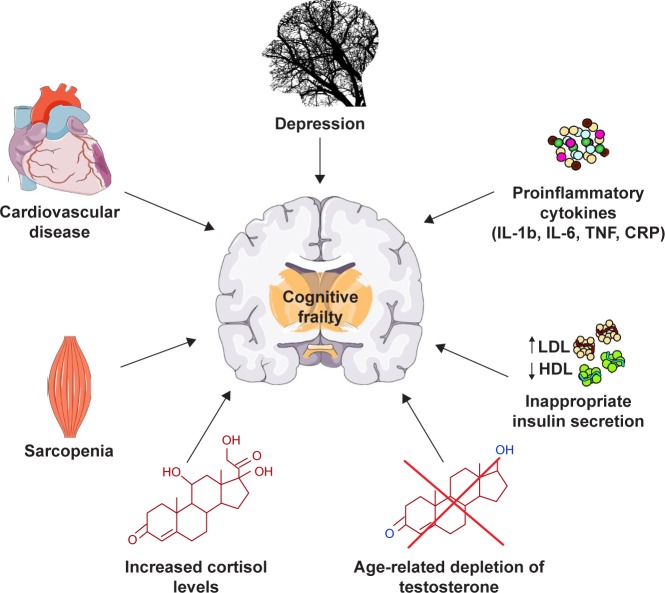
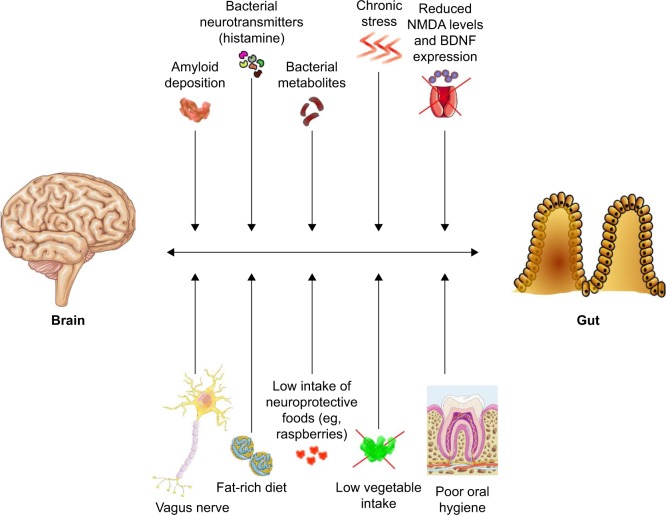
Verification
Claims the paper makes
The claims and statistics of this paper haven’t been checked yet.
Free: it reads the open-access text and checks the first 5 claims that cite a source we can check. Create a free account to check every claim.
Claims other papers make about this one
Each is checked against this paper’s own text: does it say what the citing paper says it does?
In the citing paper
“In aging, the microbiota is able to influence the brain physiology through multiple mechanisms, that have been recently reviewed by Ticinesi et al. [100] and Calvani et al. [101].”
From Gut Microbiota, Muscle Mass and Function in Aging: A Focus on Physical Frailty and Sarcopenia (2019) · cites this paper as [100]
Self-check
Percentages, sums and reported differences re-computed from the paper’s own numbers.
The self-check needs the paper’s full text.
Citations
Cites
1 retracted
Fougère, B., Daumas, M., Lilamand, M., Sourdet, S., Delrieu, J., Vellas, B. J., & van Kan, G. A. (2017) · Journal of the American Medical Directors Association · doi:10.1016/j.jamda.2017.06.024 · Cited by 56 · cited 1×
“10 Low gait speed is, in fact, the main motoric manifestation of cognitive frailty.”
BackgroundRetractedClegg, A., Young, J., Iliffe, S., Rikkert, M. O., & Rockwood, K. (2013) · The Lancet · doi:10.1016/s0140-6736(12)62167-9 · Cited by 9,503
Enterotypes of the human gut microbiome
MetaHIT Consortium (additional members), Arumugam, M., Raes, J., Pelletier, E., Le Paslier, D., Yamada, T., Mende, D. R., Fernandes, G. R., Tap, J., Bruls, T., et al. (2011) · Nature · doi:10.1038/nature09944 · Cited by 7,548 · cited 1×
“115 Similarly, in older individuals, the variety and pattern of food consumption were associated with a different trend toward gut microbiota dysbiosis.”
BackgroundGut microbiota composition correlates with diet and health in the elderly
Claesson, M. J., Jeffery, I. B., Conde, S., Power, S. E., O’Connor, E. M., Cusack, S., Harris, H. M. B., Coakley, M., Lakshminarayanan, B., O’Sullivan, O., et al. (2012) · Nature · doi:10.1038/nature11319 · Cited by 3,314 · cited 2×
“27 32 In fact, many microbial taxa, underrepresented in frail older persons, may produce”
BackgroundThe gut microbiota and host health: a new clinical frontier
Marchesi, J. R., Adams, D. H., Fava, F., Hermes, G. D. A., Hirschfield, G. M., Hold, G., Quraishi, M. N., Kinross, J., Smidt, H., Tuohy, K. M., et al. (2016) · Gut · doi:10.1136/gutjnl-2015-309990 · Cited by 2,302 · cited 2×
“12 However, in other studies, a Mini-Mental State Examination test score # 25 was used as a simplified method for assessing cognitive symptoms.”
BackgroundMethod(2018) · Neurology · doi:10.1212/wnl.0000000000004826 · Cited by 2,183 · cited 1×
“In this study, MCI was diagnosed using a battery of neuropsychological tests and not the clinical dementia rating scale,(7) in line with the most recent consensus recommendations.(12) However, in other studies, a Mini-Mental State Examination test score #25 was used as a simplified method for assessing cognitive sympt…”
MethodGut microbiome alterations in Alzheimer’s disease
Vogt, N. M., Kerby, R. L., Dill-McFarland, K. A., Harding, S. J., Merluzzi, A. P., Johnson, S. C., Carlsson, C. M., Asthana, S., Zetterberg, H., Blennow, K., et al. (2017) · Scientific Reports · doi:10.1038/s41598-017-13601-y · Cited by 2,137
Cattaneo, A., Cattane, N., Galluzzi, S., Provasi, S., Lopizzo, N., Festari, C., Ferrari, C., Guerra, U. P., Paghera, B., Muscio, C., et al. (2017) · Neurobiology of Aging · doi:10.1016/j.neurobiolaging.2016.08.019 · Cited by 1,382 · cited 2×
“Cattaneo et al 65 instead compared the fecal microbiota composition of 40 amyloid-positive patients with cognitive impairment, 33 amyloid-negative patients with cognitive impairment and 10 healthy controls using a quantitative-polymerase chain reaction approach.”
BackgroundMethodCognitive frailty: Rational and definition from an (I.A.N.A./I.A.G.G.) International Consensus Group
Kelaiditi, E., Cesari, M., Canevelli, M., Abellan van Kan, G., Ousset, P.-J., Gillette-Guyonnet, S., Ritz, P., Duveau, F., Soto, M. E., Provencher, V., et al. (2013) · The Journal of nutrition, health and aging · doi:10.1007/s12603-013-0367-2 · Cited by 1,084
Psychobiotics and the manipulation of bacteria–gut–brain signals
Sarkar, A., Lehto, S. M., Harty, S., Dinan, T. G., Cryan, J. F., & Burnet, P. W. J. (2016) · Trends in Neurosciences · doi:10.1016/j.tins.2016.09.002 · Cited by 1,068
Cited by
Items 201–219 of 219
Tam, A. C. Y., Chan, A. W. Y., Cheung, D. S. K., Ho, L. Y. W., Tang, A. S. K., Christensen, M., Tse, M. M. Y., & Kwan, R. Y. C. (2022) · Figshare · doi:10.6084/m9.figshare.20619900
Zhang, X., Chen, Y., Tang, Y., Zhang, Y., Zhang, X., & 苏殿三 (2023) · Figshare · doi:10.6084/m9.figshare.22610528
Aya, V., Jiménez, P., Muñoz, E., & Ramírez, J. D. (2024) · Figshare · doi:10.6084/m9.figshare.26596781
Connell, E. (2025) · UEA Digital Repository (University of East Anglia) · Cited by 1
Gut–Brain Axis Inflammation in Dementia: A Qualitative Literature Analysis
Sumadewi, K. T. (2025) · International Journal of Applied and Traditional Medicine · doi:10.47134/ijatm.v2i4.112
“Human observational studies reveal associations between gut microbial alterations and cognitive decline, yet robust longitudinal and interventional studies remain limited (Popescu et al, 2024) (Ticinesi et al, 2018).”
Transcriptomic integration nominates FOXN2 as a candidate schizophrenia risk gene
Yu, L., Chen, J., Du, S., Long, Q., Guo, Z., Liu, Y. K., Qin, F., Wang, M., Luo, R., Zhang, Y., et al. (2026) · Behavioural Brain Research · doi:10.1016/j.bbr.2026.116068
Gut–brain axis and cognitive health in the elderly: Contemporary evidence and Ayurvedic perspectives
Huilgol, P., Nayak, S., & Nambialil, D. V. (2026) · Journal of Research in Ayurvedic Sciences · doi:10.4103/jras.jras_323_24
Angioni, D., Delrieu, J., Cantet, C., Soriano, G., Bellelli, F., Vellas, B. J., Andrieu, S., & Sourdet, S. (2026) · Alzheimer s & Dementia Translational Research & Clinical Interventions · doi:10.1002/trc2.70213
“45 In this context, the specific mechanisms by which amyloidopathy and associated tauopathy may contribute to physical decline have yet to be elucidated.”
Rojas-Sánchez, N., Escandon, A., Moreno-González, E., Delgado-Casillas, O. M., Ibarra-García, A. P., Ignacio‐Mejía, I., Albores-Mendez, E. M., Vargas-Hernández, M. A., Hernández-Valdez, M. P., Romaña-Espiritu, P., et al. (2026) · Exploration of Neuroprotective Therapy · doi:10.37349/ent.2026.1004156
Progress in research on cognitive frailty in the older adults: a narrative review
Shao, S., Zhao, B., Jin, S., & Sha, L. (2026) · Frontiers in Medicine · doi:10.3389/fmed.2026.1791816 · Cited by 1
“Data from the Chinese Comprehensive Geriatric Assessment Survey (CCGAS) indicates that physical activity volume is an independent risk factor for cognitive frailty—lower activity levels correlate with higher cognitive impairment risk (25).”
Sun, J., Yao, Y., & Liu, L. (2026) · Geriatrics and gerontology international/Geriatrics & gerontology international · doi:10.1111/ggi.70596
“…theory suggests that dysregulation of the gut microbiota may cause cognitive impairment and frailty through various pathways such as abnormal vagus nerve activity, bacterial synthesis disorders, host neural metabolic disorders, inflammation, and abnormal deposition of amyloid proteins [4].”
Mental health and gut-brain crosstalk: implications for depression and Alzheimer's disease
Skourti, K., Katsaitis, F., Pavlidi, P., Anesti, M., Balla, J., Emvalomatis, A., Kokras, N., Dalla, C., & Sotiropoulos, I. (2026) · Neuroscience Applied · doi:10.1016/j.nsa.2026.107023
“Clinical evidence: Human studies suggest that the composition and diversity of the gut microbiota are altered in AD patients across different clinical stages (Ticinesi et al., 2018; Chandra et al., 2023).”
Sattar, Z., & Asili, J. (2026) · Probiotics and Antimicrobial Proteins · doi:10.1007/s12602-026-11152-1
Zhang, W., Chen, M., Guo, T., Wang, H., & Ma, N. (2026) · Frontiers in Microbiology · doi:10.3389/fmicb.2026.1841330
Qiu, J., Zhang, S., Chen, Y., Wang, Y., Zhang, Y., Zhang, N., Cao, Q., Sun, G., Zhou, L., Sun, J., et al. (2026) · Frontiers in Public Health · doi:10.3389/fpubh.2026.1853890
“Together, we hypothesize that this bidirectional brain–gut disruption might underlie a systemic frailty phenotype characterized by widespread capacity declines (54, 55).”
Yi, Z., Zhou, N., Sun, Z., Liu, X., & Chen, C. (2026) · Public Health Nursing · doi:10.1111/phn.70154
Nuță, C. R., Băjenaru, L., Sovarel, A. M. M., & Băjenaru, O. L. (2026) · Applied Biosciences · doi:10.3390/applbiosci5040089
“These pathways provide a plausible microbiota–gut–muscle–brain framework for cognitive frailty [6–9].”
Effects of hydration physiology on aspects of the gut-brain axis
Willis, N. (2023) · Illinois Digital Environment for Access to Learning and Scholarship (University of Illinois at Urbana-Champaign)
Altahrawi, A. Y., Sofi, F., Kanjwal, Z., & Shah, Z. A. (2026) · Cells · doi:10.3390/cells15201845
“Neurotoxic metabolites in the brain can cause neural injury, leading to neuroinflammation [34].”
Metadata
- Authors
- Ticinesi, A., Tana, C., Nouvenne, A., Prati, B., Lauretani, F., & Meschi, T.
- Affiliations
- University of Parma (IT)
- Ospedale di Parma (IT)
- Corresponding author
- Ticinesi, Andrea
- Venue
- Clinical Interventions in Aging
- Publisher
- Informa UK Limited
- Published
- 2018-08
- Volume
- Volume 13
- Pages
- 1497-1511
- ISSN
- 1176-9092 (ISSN-L)
- 1178-1998
- PMC
- PMC6120508
- OpenAlex
- W2888904023
- Cited by
- 215
- References
- 135
- Citations by year
- 2026: 20 · 2025: 21 · 2024: 25 · 2023: 34 · 2022: 28 · 2021: 32 · 2020: 26 · 2019: 22 · 2018: 6
- FWCI
- 2.11
- Type
- journal article
- Language
- en
- Open access
- gold
- doi.org
- Licence
- Locations
- Clinical Interventions in Aging (publishedVersion, cc-by-nc)
- Europe PMC (PubMed Central) (publishedVersion, cc-by-nc)
- PubMed Central (publishedVersion, cc-by-nc)
- PubMed (publishedVersion)
- Institutional Research Information System University of Ferrara (University of Ferrara) (acceptedVersion)
- DOAJ (DOAJ: Directory of Open Access Journals) (submittedVersion, cc-by-sa)
- Dove Medical Press (Taylor and Francis Group) (submittedVersion, cc-by-nc)
- Funders
- Servier
- Topics
- Life Sciences › Biochemistry, Genetics and Molecular Biology › Molecular Biology › Gut microbiota and health
- Health Sciences › Medicine › Psychiatry and Mental health › Dementia and Cognitive Impairment Research
- Life Sciences › Agricultural and Biological Sciences › Food Science › Probiotics and Fermented Foods
- Keywords
- gut microbiota, cognitive frailty, dementia, mild cognitive impairment, gut-brain axis, Alzheimer's disease, probiotics, prebiotics, vagus nerve, chronic inflammation, amyloid deposition, aging, older adults
- MeSH terms
- Gastrointestinal Microbiome, Frailty, Amyloid, Animals, Cognition, Dementia, Humans, Inflammation, Phenotype, Vagus Nerve, Probiotics, Cognitive Dysfunction
About these checks
Registry, retraction, Cites and statistics results are computed, not judged, with one exception: a printed reference that no index lists is read once by a model before it counts as a citation error. Claims are extracted by a model and kept only when their quote appears verbatim in the text; each cited source is then checked, with a model’s help, for whether it says what the claim relies on. Those verdicts can be wrong — read the claim’s quote and the cited source before relying on one.
Statistics and arithmetic are recomputed, not judged.
Confidence bands are shown only for fields calibrated on our annotated test set. None is calibrated yet, so no band is shown.
What counts as a claim ›How we measure confidence ›How we check this ›
Are you an author, or do you see a problem with this page? Request a review
Data sources
Bibliographic data: Semantic Scholar, OpenAlex, Crossref.
Contains information from the Semantic Scholar Academic Graph Datasets, made available under the ODC Attribution License (ODC-BY 1.0).
Semantic Scholar’s data is described in: Kinney, R., et al. (2023). The Semantic Scholar Open Data Platform. arXiv:2301.10140.
