

Resting-state functional connectivity changes within the default mode network and the salience network after antipsychotic treatment in early-phase schizophrenia
Open accessThe DOI matches its Crossref record; 55 of the 55 references it cites were found in a registry or an index.
Abstract
Objective: Abnormal resting-state functional connectivity (FC), particularly in the default mode network (DMN) and the salience network (SN), has been reported in schizophrenia, but little is known about the effects of antipsychotics on these networks. The purpose of this study was to examine the effects of atypical antipsychotics on DMN and SN and the relationship between these effects and symptom improvement in patients with schizophrenia. Methods : This was a prospective study of 33 patients diagnosed with schizophrenia and treated with antipsychotics at Shanghai Mental Health Center. Thirty-three healthy controls matched for age and gender were recruited. All subjects underwent functional magnetic resonance imaging (fMRI). Healthy controls were scanned only once; patients were scanned before and after 6–8 weeks of treatment. Results: In the DMN, the patients exhibited increased FC after treatment in the right superior temporal gyrus, right medial frontal gyrus, and left superior frontal gyrus and decreased FC in the right posterior cingulate/precuneus ( P <0.005). In the SN, the patients exhibited decreased FC in the right cerebellum anterior lobe and left insula ( P< 0.005). The FC in the right posterior cingulate/precuneus in the DMN negatively correlated with the difference between the Clinical Global Impression (CGI) score pre/post-treatment ( r =–0.564, P =0.023) and negative trends with the difference in the Positive and Negative Syndrome Scale (PANSS) total score pre/post-treatment ( r =–0.475, P =0.063) and the difference in PANSS-positive symptom scores ( r =–0.481, P =0.060). Conclusion: These findings suggest that atypical antipsychotics could regulate the FC of certain key brain regions within the DMN in early-phase schizophrenia, which might be related to symptom improvement. However, the effects of atypical antipsychotics on SN are less clear. Keywords: schizophrenia, fMRI, default network, salience network, antipsychotics
Overview
The claims and statistics of this paper haven’t been checked yet.
Free: it reads the open-access text and checks the first 5 claims that cite a source we can check. Create a free account to check every claim.
Integrity signals
Registry
Cites
Statistics
Figures
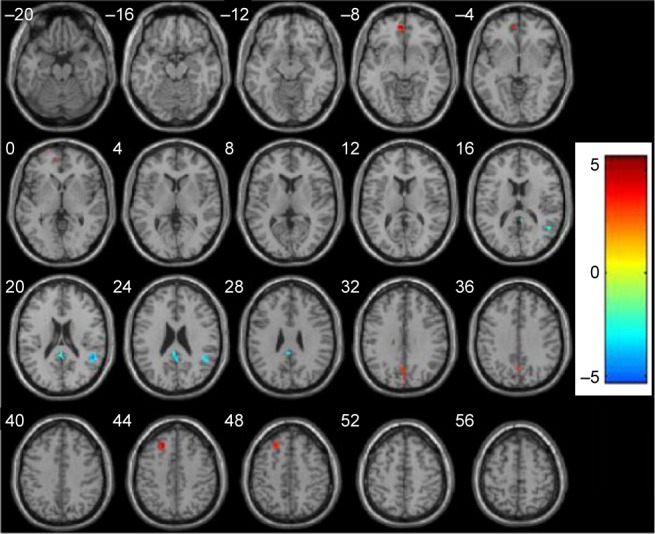
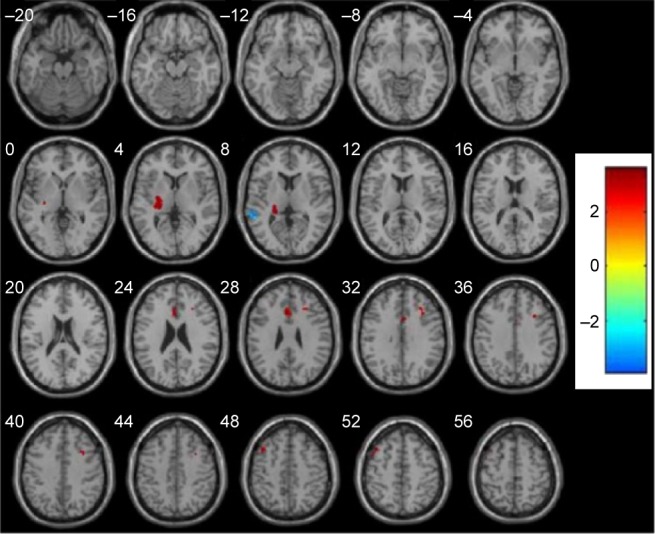
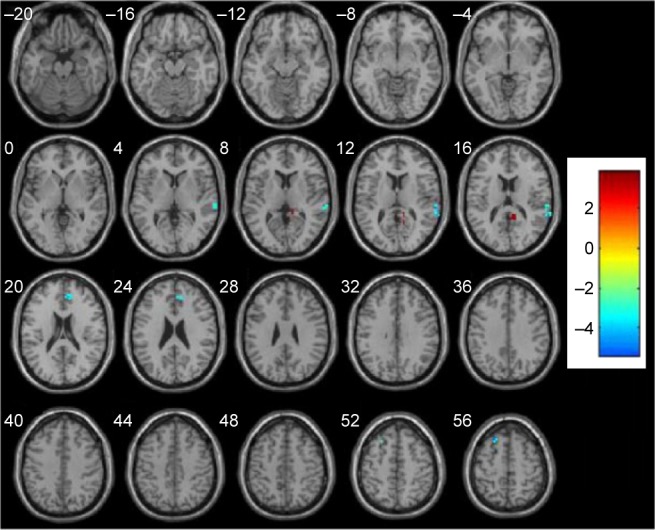
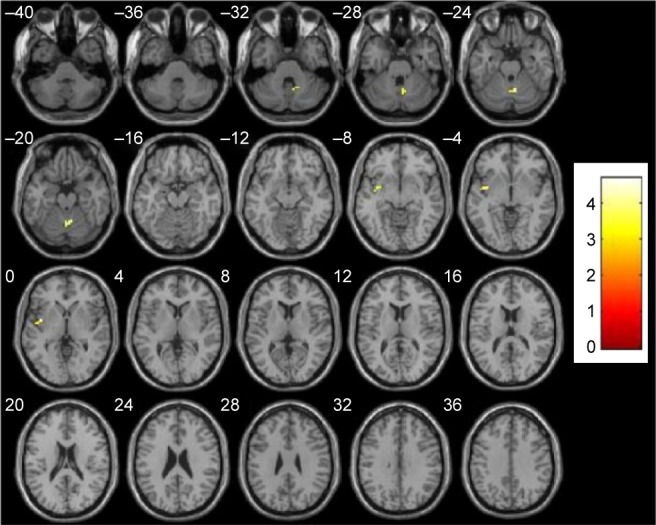
Verification
Claims the paper makes
The claims and statistics of this paper haven’t been checked yet.
Free: it reads the open-access text and checks the first 5 claims that cite a source we can check. Create a free account to check every claim.
Claims other papers make about this one
Each is checked against this paper’s own text: does it say what the citing paper says it does?
The source backs part of the claim, not all of it — or backs it for a different population, condition or comparison.
In the citing paper
“Antipsychotic medication has been shown to affect function in the medial prefrontal cortex and posterior cingulate cortex, two key brain regions associated with self-referential processing (Wang et al., 2017).”
From Narrative identity in the psychosis spectrum: A systematic review and developmental model (2021) · cites this paper as Wang et al., 2017
Experimental — accuracy not yet measured
Self-check
Percentages, sums and reported differences re-computed from the paper’s own numbers.
The self-check needs the paper’s full text.
Citations
Cites
The Positive and Negative Syndrome Scale (PANSS) for schizophrenia.
Kay, S. R., Fiszbein, A., & Opler, L. A. (1987) · Schizophrenia Bulletin · doi:10.1093/schbul/13.2.261 · Cited by 21,378
(1998) · The Journal of Clinical Psychiatry · Cited by 19,139
A default mode of brain function
Raichle, M. E., MacLeod, A. M., Snyder, A. Z., Powers, W. J., Gusnard, D. A., & Shulman, G. L. (2001) · Proceedings of the National Academy of Sciences · doi:10.1073/pnas.98.2.676 · Cited by 12,190
(1998) · PubMed · Cited by 10,216
The Brain's Default Network: Anatomy, Function, and Relevance to Disease
Buckner, R. L., Andrews‐Hanna, J. R., & Schacter, D. L. (2008) · Annals of the New York Academy of Sciences · doi:10.1196/annals.1440.011 · Cited by 9,761
The human brain is intrinsically organized into dynamic, anticorrelated functional networks
Fox, M. D., Snyder, A. Z., Vincent, J. L., Corbetta, M., Van Essen, D. C., & Raichle, M. E. (2005) · Proceedings of the National Academy of Sciences · doi:10.1073/pnas.0504136102 · Cited by 8,553
Dissociable intrinsic connectivity networks for salience processing and executive control
Seeley, W. W., Menon, V., Schatzberg, A. F., Keller, J., Glover, G. H., Kenna, H., Reiss, A. L., & Greicius, M. D. (2007) · The Journal of Neuroscience · doi:10.1523/jneurosci.5587-06.2007 · Cited by 7,426
Saliency, switching, attention and control: a network model of insula function
Menon, V., & Uddin, L. Q. (2010) · Brain Structure and Function · doi:10.1007/s00429-010-0262-0 · Cited by 5,592
Searching for a baseline: Functional imaging and the resting human brain
Gusnard, D. A., & Raichle, M. E. (2001) · Nature Reviews Neuroscience · doi:10.1038/35094500 · Cited by 3,371
A method for making group inferences from functional MRI data using independent component analysis
Calhoun, V. D., Adali, T., Pearlson, G. D., & Pekar, J. J. (2001) · Human Brain Mapping · doi:10.1002/hbm.1048 · Cited by 2,994
Sridharan, D., Levitin, D. J., & Menon, V. (2008) · Proceedings of the National Academy of Sciences · doi:10.1073/pnas.0800005105 · Cited by 2,892
Wandering minds: the default network and stimulus-independent thought
Mason, M. F., Norton, M. I., Van Horn, J. D., Wegner, D. M., Grafton, S. T., & Macrae, C. N. (2007) · Science · doi:10.1126/science.1131295 · Cited by 2,792 · cited 1×
“disturbances such as delusions, which are closely related to spontaneous thoughts, may be the result of abnormal DMN function in schizophrenia.(12) The SN has been proposed to function in the identification of internal and external stimuli (salience) and the shifting of brain function from DMN to CEN activities.”
The clinical global impressions scale: applying a research tool in clinical practice.
Busner, J., & Targum, S. D. (2007) · PubMed · Cited by 2,759
Large-scale brain networks in cognition: emerging methods and principles
Bressler, S. L., & Menon, V. (2010) · Trends in Cognitive Sciences · doi:10.1016/j.tics.2010.04.004 · Cited by 2,348
Whitfield-Gabrieli, S., Thermenos, H. W., Milanovic, S., Tsuang, M. T., Faraone, S. V., McCarley, R. W., Shenton, M. E., Green, A. I., Nieto-Castanon, A., LaViolette, P., et al. (2009) · Proceedings of the National Academy of Sciences · doi:10.1073/pnas.0809141106 · Cited by 1,435
Fransson, P., & Marrelec, G. (2008) · NeuroImage · doi:10.1016/j.neuroimage.2008.05.059 · Cited by 1,213 · cited 1×
“cated that the precuneus and posterior cingulate are the key brain regions or node contacts with other brain areas within the DMN and between the DMN and other networks.(10,42) The effect of antipsychotic drugs, particularly atypical antipsychotic drugs, on the resting-state DMN remains unclear.”
Aberrant “Default Mode” Functional Connectivity in Schizophrenia
Garrity, A. G., Pearlson, G. D., McKiernan, K., Lloyd, D., Kiehl, K. A., & Calhoun, V. D. (2007) · American Journal of Psychiatry · doi:10.1176/ajp.2007.164.3.450 · Cited by 1,114
Haro, J. M., Kamath, S. A., Ochoa, S., Novick, D., Rele, K., Fargas, A., Rodríguez, M. J., Rele, R., Orta, J., Kharbeng, A., et al. (2003) · Acta Psychiatrica Scandinavica · doi:10.1034/j.1600-0447.107.s416.5.x · Cited by 656
Bluhm, R. L., Miller, J., Lanius, R. A., Osuch, E. A., Boksman, K., Neufeld, R., Theberge, J., Schaefer, B., & Williamson, P. (2007) · Schizophrenia Bulletin · doi:10.1093/schbul/sbm052 · Cited by 568
Palaniyappan, L., & Liddle, P. F. (2012) · Journal of Psychiatry and Neuroscience · doi:10.1503/jpn.100176 · Cited by 548
Cabeza, R., Dolcos, F., Graham, R., & Nyberg, L. (2002) · NeuroImage · doi:10.1006/nimg.2002.1063 · Cited by 469
Functional disintegration in paranoid schizophrenia using resting-state fMRI
Zhou, Y., Liang, M., Tian, L., Wang, K., Hao, Y., Liu, H., Liu, Z., & Jiang, T. (2007) · Schizophrenia Research · doi:10.1016/j.schres.2007.05.029 · Cited by 437
Dose Equivalents for Second-Generation Antipsychotics: The Minimum Effective Dose Method
Leucht, S., Samara, M., Heres, S., Patel, M. X., Woods, S. W., & Davis, J. M. (2014) · Schizophrenia Bulletin · doi:10.1093/schbul/sbu001 · Cited by 372
Lui, S., Li, T., Deng, W., Jiang, L., Wu, Q., Tang, H., Yue, Q., Huang, X., Chan, R. C., Collier, D. A., et al. (2010) · Archives of General Psychiatry · doi:10.1001/archgenpsychiatry.2010.84 · Cited by 365
Altered Functional and Anatomical Connectivity in Schizophrenia
Camchong, J., MacDonald, A. W., Bell, C., Mueller, B. A., & Lim, K. O. (2011) · Schizophrenia Bulletin · doi:10.1093/schbul/sbp131 · Cited by 365
Manoliu, A., Riedl, V., Zherdin, A., Mühlau, M., Schwerthöffer, D., Scherr, M., Peters, H., Zimmer, C., Förstl, H., Bäuml, J., et al. (2014) · Schizophrenia Bulletin · doi:10.1093/schbul/sbt037 · Cited by 354
Exploring the network dynamics underlying brain activity during rest
Cabral, J., Kringelbach, M. L., & Deco, G. (2014) · Progress in Neurobiology · doi:10.1016/j.pneurobio.2013.12.005 · Cited by 351
Functional resting-state networks are differentially affected in schizophrenia
Woodward, N. D., Rogers, B., & Heckers, S. (2011) · Schizophrenia Research · doi:10.1016/j.schres.2011.03.010 · Cited by 347
Resting-State Brain Activity in Schizophrenia and Major Depression: A Quantitative Meta-Analysis
Kuhn, S., & Gallinat, J. (2013) · Schizophrenia Bulletin · doi:10.1093/schbul/sbr151 · Cited by 291
Aberrant “Default Mode” Functional Connectivity in Schizophrenia
Garrity, A. (2007) · American Journal of Psychiatry · doi:10.1176/appi.ajp.164.3.450 · Cited by 290
Sang, L., Qin, W., Liu, Y., Han, W., Zhang, Y., Jiang, T., & Yu, C. (2012) · NeuroImage · doi:10.1016/j.neuroimage.2012.04.011 · Cited by 257
Snitz, B. E., MacDonald, A., Cohen, J. D., Cho, R. Y., Becker, T., & Carter, C. S. (2005) · American Journal of Psychiatry · doi:10.1176/appi.ajp.162.12.2322 · Cited by 249
White, T. P., Joseph, V., Francis, S. T., & Liddle, P. F. (2010) · Schizophrenia Research · doi:10.1016/j.schres.2010.07.020 · Cited by 238 · cited 3×
“7–9,22–26 This study revealed decreased FC in the insula of schizophrenia patients after treatment.”
Alterations of the salience network in obesity: A resting‐state fMRI study
García‐García, I., Jurado, M. Á., Garolera, M., Segura, B., Sala‐Llonch, R., Marqués‐Iturria, I., Pueyo, R., Sender‐Palacios, M. J., Vernet‐Vernet, M., Narberhaus, A., et al. (2013) · Human Brain Mapping · doi:10.1002/hbm.22104 · Cited by 200 · cited 1×
“However, Garcia-Garcia et al 44 reported that the SN also includes the inferior frontal gyrus, middle temporal gyrus, superior parietal lobule, angular gyrus, putamen, globus pallidus, and tonsils as well as the insula and anterior cingulate.”
Pinkham, A. E., Penn, D. L., Perkins, D. O., Graham, K. A., & Siegel, M. (2007) · Cognitive Neuropsychiatry · doi:10.1080/13546800600985557 · Cited by 198
Disruption of anterior insula modulation of large-scale brain networks in schizophrenia
Moran, L. V., Tagamets, M. A., Sampath, H., O’Donnell, A., Stein, E. A., Kochunov, P., & Hong, L. E. (2013) · Biological Psychiatry · doi:10.1016/j.biopsych.2013.02.029 · Cited by 181
Orliac, F., Naveau, M., Joliot, M., Delcroix, N., Razafimandimby, A., Brazo, P., Dollfus, S., & Delamillieure, P. (2013) · Schizophrenia Research · doi:10.1016/j.schres.2013.05.007 · Cited by 172
Sun, J., Maller, J. J., Guo, L., & Fitzgerald, P. B. (2009) · Brain Research Reviews · doi:10.1016/j.brainresrev.2009.03.004 · Cited by 166
Mannell, M. V., Franco, A. R., Calhoun, V. D., Cañive, J. M., Thoma, R. J., & Mayer, A. R. (2009) · Human Brain Mapping · doi:10.1002/hbm.20876 · Cited by 154
Default mode network activity in schizophrenia studied at resting state using probabilistic ICA
Mingoia, G., Wagner, G., Langbein, K., Maitra, R., Smesny, S., Dietzek, M., Burmeister, H. P., Reichenbach, J. R., Schlösser, R. G. M., Gaser, C., et al. (2012) · Schizophrenia Research · doi:10.1016/j.schres.2012.01.036 · Cited by 150
Interrater and intermethod reliability of default mode network selection
Franco, A. R., Pritchard, A., Calhoun, V. D., & Mayer, A. R. (2009) · Human Brain Mapping · doi:10.1002/hbm.20668 · Cited by 142
The role of the cerebellum in schizophrenia: from cognition to molecular pathways
Yeganeh-Doost, P., Gruber, O., Falkai, P., & Schmitt, A. (2011) · Clinics · doi:10.1590/s1807-59322011001300009 · Cited by 131
Jang, J. H., Jung, W. H., Choi, J., Choi, C., Kang, D., Shin, N. Y., Hong, K. S., & Kwon, J. S. (2011) · Schizophrenia Research · doi:10.1016/j.schres.2010.12.022 · Cited by 113
Reality distortion is related to the structure of the salience network in schizophrenia
Palaniyappan, L., Mallikarjun, P., Joseph, V., White, T. P., & Liddle, P. F. (2011) · Psychological Medicine · doi:10.1017/s0033291710002205 · Cited by 107
Superior Temporal Sulcus Disconnectivity During Processing of Metaphoric Gestures in Schizophrenia
Straube, B., Green, A., Sass, K., & Kircher, T. (2014) · Schizophrenia Bulletin · doi:10.1093/schbul/sbt110 · Cited by 97
Regional contraction of brain surface area involves three large-scale networks in schizophrenia
Palaniyappan, L. K., Mallikarjun, P. K., Joseph, V., White, T. P., & Liddle, P. F. (2011) · Schizophrenia Research · doi:10.1016/j.schres.2011.03.020 · Cited by 89
Salience network-midbrain dysconnectivity and blunted reward signals in schizophrenia
Gradin, V. B., Waiter, G., O'Connor, A., Romaniuk, L., Stickle, C., Matthews, K., Hall, J., & Douglas Steele, J. (2013) · Psychiatry Research Neuroimaging · doi:10.1016/j.pscychresns.2012.06.003 · Cited by 82 · cited 1×
“In response to rewards, the control subjects activated task-related regions such as the striatum, amygdala/hippocampus, and midbrain.(45) The role of limbic system brain areas such as the striatum in the SN is not clear, but these areas are involved in many physiological functions such as the regulation of visceral ac…”
Aberrant Default Mode Functional Connectivity in Early Onset Schizophrenia
Tang, J., Liao, Y., Song, M., Gao, J.-H., Zhou, B., Tan, C., Liu, T., Tang, Y., Chen, J., & Chen, X. (2013) · PLoS ONE · doi:10.1371/journal.pone.0071061 · Cited by 71
Pu, W., Li, L., Zhang, H., Ouyang, X., Liu, H., Zhao, J., Li, L., Xue, Z., Xu, K., Tang, H., et al. (2012) · Schizophrenia Research · doi:10.1016/j.schres.2012.07.017 · Cited by 61
Reduced Connectivity in the Self-Processing Network of Schizophrenia Patients with Poor Insight
Liemburg, E. J., van der Meer, L., Swart, M., Ćurĉić‐Blake, B., Bruggeman, R., Knegtering, H., & Aleman, A. (2012) · PLoS ONE · doi:10.1371/journal.pone.0042707 · Cited by 61
Antipsychotic dose and diminished neural modulation: A multi-site fMRI study
Abbott, C., Juárez⁎, M., White, T. J. H., Gollub, R. L., Pearlson, G. D., Bustillo, J., Lauriello, J., Ho, B., Bockholt, H. J., Clark, V. P., et al. (2010) · Progress in Neuro-Psychopharmacology and Biological Psychiatry · doi:10.1016/j.pnpbp.2010.12.001 · Cited by 51
Role of sICAM-1 and sVCAM-1 as biomarkers in early and late stages of schizophrenia
Pantović-Stefanović, M., Petronijević, N., Dunjić-Kostić, B., Velimirović, M., Nikolić, T., Jurišić, V., Lačković, M., Damjanović, A., Totić-Poznanović, S., Jovanović, A., et al. (2015) · Journal of Psychiatric Research · doi:10.1016/j.jpsychires.2015.11.002 · Cited by 37
Mazza, M., Catalucci, A., Pino, M. C., Giusti, L., Nigri, A., Pollice, R., Roncone, R., CASACCHIA, M., & Gallucci, M. (2013) · Brain Imaging and Behavior · doi:10.1007/s11682-013-9223-6 · Cited by 25
García‐Martí, G., Aguilar, E. J., Martí‐Bonmatí, L., Escartí, M. J., & Sanjuán, J. (2012) · World Journal of Radiology · doi:10.4329/wjr.v4.i4.159 · Cited by 17
FUNCTIONAL MAGNETIC RESONANCE IMAGING RESEARCH IN PSYCHIATRY
Meisenzahl, E., & Schlösser, R. G. M. (2001) · Neuroimaging Clinics of North America · doi:10.1016/s1052-5149(25)00711-7 · Cited by 16
Cited by
Cortico-thalamic hypo- and hyperconnectivity extend consistently to basal ganglia in schizophrenia
Avram, M., Brandl, F., Bäuml, J., & Sorg, C. (2018) · Neuropsychopharmacology · doi:10.1038/s41386-018-0059-z · Cited by 116
Shared and Distinct Functional Architectures of Brain Networks Across Psychiatric Disorders
Xia, M., Womer, F. Y., Chang, M., Zhu, Y., Zhou, Q., Edmiston, E. K., Jiang, X., Wei, S., Duan, J., Xu, K., et al. (2018) · Schizophrenia Bulletin · doi:10.1093/schbul/sby046 · Cited by 106
Nair, A., Jolliffe, M., Lograsso, Y. S. S., & Bearden, C. E. (2020) · Frontiers in Psychiatry · doi:10.3389/fpsyt.2020.00614 · Cited by 94
Narrative identity in the psychosis spectrum: A systematic review and developmental model
Cowan, H. R., Mittal, V. A., & McAdams, D. P. (2021) · Clinical Psychology Review · doi:10.1016/j.cpr.2021.102067 · Cited by 82
de Bartolomeis, A., Barone, A., Begni, V., & Riva, M. A. (2022) · Pharmacological Research · doi:10.1016/j.phrs.2022.106078 · Cited by 86
Metadata
- Authors
- Wang, Y., Tang, W., Fan, X., Zhang, J., Geng, D., Jiang, K., Zhu, D., Song, Z., Xiao, Z., & Liu, D.
- Affiliations
- Shanghai Jiao Tong University (CN)
- Fudan University (CN)
- University of Massachusetts Chan Medical School (US)
- Corresponding author
- Xiao, Zeping
- Liu, Dengtang
- ORCID
- Venue
- Neuropsychiatric Disease and Treatment
- Publisher
- Informa UK Limited
- Published
- 2017-02
- Volume
- Volume 13
- Pages
- 397-406
- ISSN
- 1176-6328 (ISSN-L)
- 1178-2021
- PMC
- PMC5308583
- OpenAlex
- W2586872334
- Cited by
- 68
- References
- 55
- Citations by year
- 2026: 4 · 2025: 4 · 2024: 8 · 2023: 5 · 2022: 6 · 2021: 16 · 2020: 9 · 2019: 5 · 2018: 11
- FWCI
- 3.92
- Type
- journal article
- Language
- en
- Open access
- gold
- doi.org
- Licence
- Locations
- Neuropsychiatric Disease and Treatment (publishedVersion, cc-by-nc)
- Europe PMC (PubMed Central) (publishedVersion, cc-by-nc)
- PubMed Central (publishedVersion, cc-by-nc)
- PubMed (publishedVersion)
- The Journal of the American Medical Association (JAMA) Network (American Medical Association) (submittedVersion, cc-by-nc)
- DOAJ (DOAJ: Directory of Open Access Journals) (submittedVersion, cc-by-sa)
- Dove Medical Press (Taylor and Francis Group) (submittedVersion, cc-by-nc)
- Funders
- National Natural Science Foundation of China (2013-YJTSZK-05)
- Science and Technology Commission of Shanghai Municipality (16ZR1430500, 2013-YJTSZK-05)
- NIH Clinical Center
- Topics
- Life Sciences › Neuroscience › Cognitive Neuroscience › Functional Brain Connectivity Studies
- Health Sciences › Medicine › Psychiatry and Mental health › Schizophrenia research and treatment
- Social Sciences › Arts and Humanities › Philosophy › Mental Health and Psychiatry
- Keywords
- schizophrenia, atypical antipsychotics, resting-state functional connectivity, default mode network, salience network, early-phase schizophrenia, symptom improvement, cerebellum, insula, superior temporal gyrus, medial frontal gyrus, superior frontal gyrus
About these checks
Registry, retraction, Cites and statistics results are computed, not judged, with one exception: a printed reference that no index lists is read once by a model before it counts as a citation error. Claims are extracted by a model and kept only when their quote appears verbatim in the text; each cited source is then checked, with a model’s help, for whether it says what the claim relies on. Those verdicts can be wrong — read the claim’s quote and the cited source before relying on one.
Statistics and arithmetic are recomputed, not judged.
Confidence bands are shown only for fields calibrated on our annotated test set. None is calibrated yet, so no band is shown.
What counts as a claim ›How we measure confidence ›How we check this ›
Are you an author, or do you see a problem with this page? Request a review
Data sources
Bibliographic data: Semantic Scholar, OpenAlex, Crossref.
Contains information from the Semantic Scholar Academic Graph Datasets, made available under the ODC Attribution License (ODC-BY 1.0).
Semantic Scholar’s data is described in: Kinney, R., et al. (2023). The Semantic Scholar Open Data Platform. arXiv:2301.10140.
