

The current status of culturally adapted mental health interventions: a practice-focused review of meta-analyses
Open accessThe DOI matches its Crossref record; 39 of the 39 references it cites were found in a registry or an index.
Abstract
In recent years, there has been a steadily increasing recognition of the need to improve the cultural competence of services and cultural adaptation of interventions so that every individual can benefit from evidence-based care. There have been attempts at culturally adapting evidence-based interventions for mental health problems, and a few meta-analyses have been published in this area. This is, however, a much debated subject. Furthermore, there is a lack of a comprehensive review of meta-analyses and literature reviews that provide guidance to policy makers and clinicians. This review summarizes the current meta-analysis literature on culturally adapted interventions for mental health disorders to provide a succinct account of the current state of knowledge in this area, limitations, and guidance for the future research.
Overview
The claims and statistics of this paper haven’t been checked yet.
Free: it reads the open-access text and checks the first 5 claims that cite a source we can check. Create a free account to check every claim.
Integrity signals
Registry
Cites
Statistics
Figures
Verification
Claims the paper makes
The claims and statistics of this paper haven’t been checked yet.
Free: it reads the open-access text and checks the first 5 claims that cite a source we can check. Create a free account to check every claim.
Claims other papers make about this one
Each is checked against this paper’s own text: does it say what the citing paper says it does?
The source backs part of the claim, not all of it — or backs it for a different population, condition or comparison.
In the citing paper
“In fact, modifications that focus on increasing the fit of the EBPs with the target population can lead to improved engagement, acceptability, and clinical outcomes, particularly when working with minority populations [8–10].”
From The FRAME: an expanded framework for reporting adaptations and modifications to evidence-based interventions (2019) · cites this paper as [9]
Experimental — accuracy not yet measuredThe source backs part of the claim, not all of it — or backs it for a different population, condition or comparison.
In the citing paper
“with most RCT evidence for culturally adapted interventions so far being conducted in the United States, low-and middle-income countries, or among refugee populations [90-93].”
From A Virtual Reality-Assisted Cognitive Behavioral Therapy for and With Inuit in Québec: Protocol for a Proof-of-Concept Randomized Controlled Trial (2023) · cites this paper as [91]
Experimental — accuracy not yet measuredThe source backs part of the claim, not all of it — or backs it for a different population, condition or comparison.
In the citing paper
“Previous evidence of increased acceptability and increased adherence of culturally adapted treatments, with a comparable efficacy to conventional psychotherapy and pharmacological interventions, is promising [90-92].”
From A Virtual Reality-Assisted Cognitive Behavioral Therapy for and With Inuit in Québec: Protocol for a Proof-of-Concept Randomized Controlled Trial (2023) · cites this paper as [91]
Experimental — accuracy not yet measured
Self-check
Percentages, sums and reported differences re-computed from the paper’s own numbers.
The self-check needs the paper’s full text.
Citations
Cites
Preferred Reporting Items for Systematic Reviews and Meta-Analyses: the PRISMA statement
Moher, D., Liberati, A., Tetzlaff, J., Altman, D. G., & for the PRISMA Group (2009) · BMJ · doi:10.1136/bmj.b2535 · Cited by 83,823
Preferred Reporting Items for Systematic Reviews and Meta-Analyses: The PRISMA Statement
Moher, D., Liberati, A., Tetzlaff, J., Altman, D. G., & The PRISMA Group (2009) · PLoS Medicine · doi:10.1371/journal.pmed.1000097 · Cited by 64,042
Preferred reporting items for systematic reviews and meta-analyses: The PRISMA statement
Moher, D., Liberati, A., Tetzlaff, J., Altman, D. G., & the PRISMA Group* (2009) · Annals of Internal Medicine · doi:10.7326/0003-4819-151-4-200908180-00135 · Cited by 37,554
Liberati, A., Altman, D. G., Tetzlaff, J., Mulrow, C., Gøtzsche, P. C., Ioannidis, J. P. A., Clarke, M., Devereaux, P. J., Kleijnen, J., & Moher, D. (2009) · PLoS Medicine · doi:10.1371/journal.pmed.1000100 · Cited by 28,164 · cited 2×
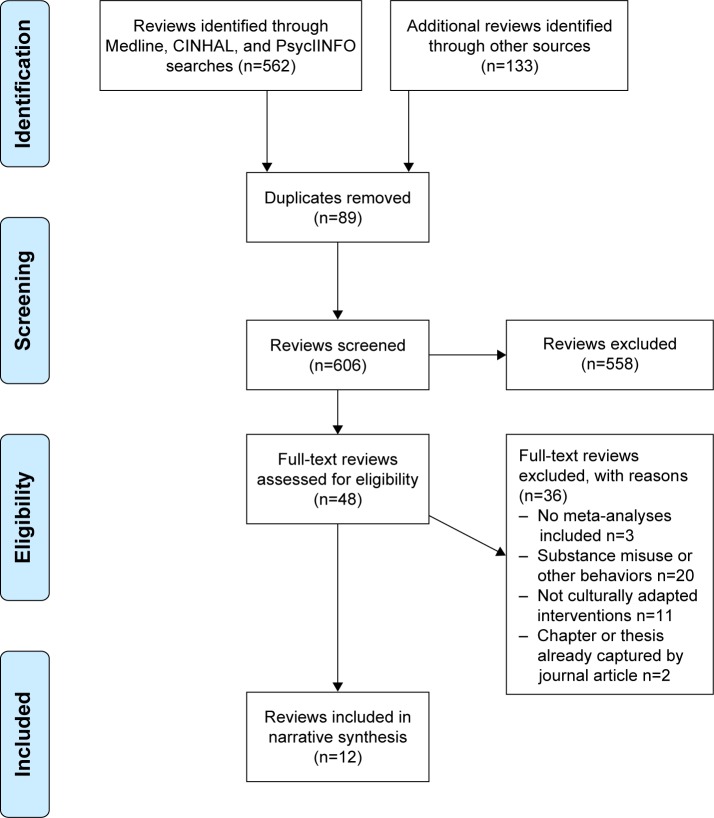
“We followed a similar method to that of PRISMA.”
Wang, G., Ma, R., Qiao, G., Wada, K., Aizawa, Y., & Satoh, T. (2015) · Integrative Medicine International · doi:10.1159/000368408 · Cited by 18,657
Duval, S., & Tweedie, R. (2000) · Biometrics · doi:10.1111/j.0006-341x.2000.00455.x · Cited by 14,099
Developing and evaluating complex interventions: the new Medical Research Council guidance
Craig, P., Dieppe, P., Macintyre, S., Michie, S., Nazareth, I., & Petticrew, M. (2008) · BMJ · doi:10.1136/bmj.a1655 · Cited by 10,995 · cited 1×
“Chowdhary et al 13 evaluated cultural adaptation using the Medical Research Council framework 24 and Bernal and Saez-Sanriago’s model 25 to describe nature of adaptation, while Degnan et al 23 used qualitative methodology to evaluate the nature of cultural adaptations.”
Liberati, A., Altman, D. G., Tetzlaff, J., Mulrow, C., Gøtzsche, P. C., Ioannidis, J. P. A., Clarke, M., Devereaux, P. J., Kleijnen, J., & Moher, D. (2009) · Annals of Internal Medicine · doi:10.7326/0003-4819-151-4-200908180-00136 · Cited by 10,349
Liberati, A., Altman, D. G., Tetzlaff, J., Mulrow, C., Gøtzsche, P. C., Ioannidis, J. P. A., Clarke, M., Devereaux, P. J., Kleijnen, J., & Moher, D. (2009) · Italian Journal of Public Health · doi:10.2427/5768 · Cited by 3,374
Utilization of the PICO framework to improve searching PubMed for clinical questions
Schardt, C., Adams, M. B., Owens, T., Keitz, S., & Fontelo, P. (2007) · BMC Medical Informatics and Decision Making · doi:10.1186/1472-6947-7-16 · Cited by 3,053
Cited by
Items 101–200 of 295
Atzor, M.-C., Andersson, G., von Lersner, U., & Weise, C. (2024) · Journal of Cross-Cultural Psychology · doi:10.1177/00220221231221095 · Cited by 11
“Despite the abundance of training approaches (Mattar et al., 2023), training that fosters mental health care for ethnically diverse patients is limited to specific disorders or treatment modalities (for meta-analyses, see Rathod et al., 2018).”
BackgroundCultural Considerations in the Treatment of Latina Survivors of Sexual Assault
Amaya, S., & Gray, M. J. (2021) · Journal of Loss and Trauma · doi:10.1080/15325024.2021.1926175 · Cited by 9
Spiritually Responsive SBIRT in Social Work Education
Rawlings, M. A., Gonzales-Castaneda, R., Valdovinos, I. C., Payne, J. S., & Yu, C. H. (2019) · Journal of Social Work Practice in the Addictions · doi:10.1080/1533256x.2019.1590702 · Cited by 9
“As with all evidence-informed practices, understanding of client culture in its implementation is critical (Barrera, Berkel, & Castro, 2017; Rathod et al., 2018; Rubin & Parrish, 2007).”
BackgroundDemetry, Y., Wasteson, E., Lindegaard, T., Abuleil, A., Geranmayeh, A., Andersson, G., & Shahnavaz, S. (2023) · JMIR Formative Research · doi:10.2196/46253 · Cited by 8
Scheibl, F., Boots, L. M. M., Eley, R., Fox, C., Gracey, F., Dening, K. H., Oyebode, J. R., Penhale, B., Poland, F. M., Ridel, G., et al. (2024) · JMIR Formative Research · doi:10.2196/52389 · Cited by 8
“While some commonalities exist in dementia care and caregivers’ needs across the boundaries of culture, adaptation to specific contexts requires adjustments to language, communication, and wider norms and practices [23,24].”
BackgroundMcCall, M. H., Boyd, C. T., Kerr, N. D., Daniel, S. S., & Sutfin, E. L. (2025) · Psycho-Oncology · doi:10.1002/pon.70074 · Cited by 9
“When behavioral treatment interventions such as DBT‐ST are culturally flexible and responsive, participation in treat-ment services can increase, leading to reductions in adverse patient outcomes and eventually alleviating health disparities for underserved populations [36, 37].”
Cultural Adaptation of Cognitive Behavioural Therapy
Rathod, S., Kingdon, D., Pinninti, N. R., Turkington, D., & Phiri, P. (2015) · Wiley eBooks · doi:10.1002/9781118976159.ch2 · Cited by 9
Self-citationHusain, N., Tofique, S., Chaudhry, I. B., Kiran, T., Taylor, P. J., Williams, C. J., Memon, R., Aggarwal, S., Alvi, M. H., Ananiadou, S., et al. (2022) · BMJ Open · doi:10.1136/bmjopen-2021-056301 · Cited by 10
Self-citationInclusive dementia care for ethnically diverse families
Brijnath, B., Antoniades, J., & Cavuoto, M. G. (2023) · Current Opinion in Psychiatry · doi:10.1097/yco.0000000000000889 · Cited by 8
Diversity and Cultural Perspectives
Asnaani, A., Majeed, I., Kaur, K., & Chavez, M. G. (2021) · Elsevier eBooks · doi:10.1016/b978-0-12-818697-8.00081-9 · Cited by 8
Perry, A., Gardener, C., Shieh, J., Hồ, Q. T., Doan, A., & Bhui, K. (2024) · Transcultural Psychiatry · doi:10.1177/13634615241228071 · Cited by 7
“Empirical support for this proposition derives from several meta-analyses, which show a moderate to large effect for the bene fi t of culturally adapted interventions (Anik et al., 2020; Chowdhary et al., 2014; Degnan et al., 2017; Hall et al., 2016; Harper-Shehadeh et al., 2016; Rathod, Gega et al., 2018; Rathod, Phir…”
InfluentialHusain, N., Lovell, K., Chew-Graham, C. A., Lunat, F., Bee, P., Pierce, M., Atif, N., Aseem, S., Bhui, K. S., Bower, P., et al. (2025) · Health Technology Assessment · doi:10.3310/kkds6622 · Cited by 9
Self-citationTempelaar, W. M., Barwick, M. A., Crawford, A. S., Voineskos, A. N., Addington, D. E., Addington, J., Alexander, T., Baluyut, C., Bromley, S., Durbin, J., et al. (2021) · JMIR Research Protocols · doi:10.2196/34591 · Cited by 7
Albor, Y., González, N., Benjet, C. L., Salamanca-Sanabria, A., la Rosa, C. H.-D., Eslava-Torres, V. G., García-Alfaro, M. C., Melchor-Audirac, A., Montoya-Montero, L. I., & Suárez, K. (2024) · JMIR Formative Research · doi:10.2196/63298 · Cited by 8
“Cultural adaptation frameworks assess intervention component selection, adaptation, piloting, and implementation [14].”
What are the barriers to accessing psychological therapy in Qatar: A concept mapping study
Brown, E., Topping, A. E., & Cheston, R. (2019) · Counselling and Psychotherapy Research · doi:10.1002/capr.12252 · Cited by 7
Naeem, F., Khan, T., Fung, K. P.-L., Narasiah, L., Guzder, J., & Kirmayer, L. J. (2019) · Canadian Journal of Community Mental Health · doi:10.7870/cjcmh-2019-016 · Cited by 11
Self-citationCultural Adaptations of Healthcare Interventions: A Step‐by‐Step Guide
Breckin, E., Sattar, R., Butt, N., Fylan, B., & Vincent, C. A. (2026) · Health Expectations · doi:10.1111/hex.70639 · Cited by 9
Fréel, S., Punski‐Hoogervorst, J. L., Hoeboer, C. M., Ruzek, J. I., Beardmore, L., Olff, M., & Javakhishvili, J. D. (2026) · BMJ Global Health · doi:10.1136/bmjgh-2025-022708 · Cited by 8
Wilson, D. H., Nelson, K. E., Gresh, A., Ricker, A., Littlepage, S., Krienke, L. K., & Brockie, T. (2023) · Global Implementation Research and Applications · doi:10.1007/s43477-022-00070-3 · Cited by 9
Knauf, S. A., O'Brien, A. J., & Kirkman, A. M. (2023) · Issues in Mental Health Nursing · doi:10.1080/01612840.2023.2270048 · Cited by 7
“A comprehensive literature review by Rathod et al. (2018) explored interventions for mental health disorders that have been culturally adapted.”
BackgroundWilliams, I. L., Laenui, P., & Rezentes, W. C. (2023) · Journal of Progressive Human Services · doi:10.1080/10428232.2023.2180605 · Cited by 7
“Yet, “current evidence does not offer a solution to the issue of which components of cultural adaptation are effective, for what population, and whether cultural adaptation works better than noncultural adaption” (Rathod et al., 2018, p. 177).”
BackgroundCardona, N. D., Ametaj, A., Cassiello-Robbins, C. F., Wilner, J. G., Olesnycky, O. S., Sauer-Zavala, S. E., Farchione, T. J., & Barlow, D. H. (2023) · The Journal of Nervous and Mental Disease · doi:10.1097/nmd.0000000000001692 · Cited by 8
Suen, Y. N., Chen, E. Y. H., Wong, Y. C., Ng, W., Patwardhan, S., Cheung, C., Hui, C. L. M., Wong, S. M. Y., Wong, M. T. H., & Mahtani, S. (2023) · BMJ Mental Health · doi:10.1136/bmjment-2023-300788 · Cited by 6
Tan, R. X. R., & Goh, Y. S. (2023) · International Journal of Mental Health Nursing · doi:10.1111/inm.13228 · Cited by 7
Rathod, S., Graves, E. G., Kingdon, D., Thorne, K. I., Naeem, F., & Phiri, P. (2020) · International Review of Psychiatry · doi:10.1080/09540261.2020.1750818 · Cited by 6
“The questionnaire was designed by the authors based on previous work in this area including a review of meta-analyses looking at culturally adapted mental health interventions (Rathod et al., 2018, p. 19).”
MethodSelf-citationGuidelines for culturally adapting mental health interventions in China
Gearing, R. E., Brewer, K. B., Leung, P., Cheung, M., Olson, L., & Smith, L. L. (2020) · China Journal of Social Work · doi:10.1080/17525098.2020.1792646 · Cited by 7
Clauss‐Ehlers, C. S., & Garagiola, E. R. (2023) · Issues in clinical child psychology · doi:10.1007/978-3-031-20006-9_18 · Cited by 7
Allen, C. G., Judge, D. P., Nietert, P. J., Hunt, K. J., Jackson, A., Gallegos, S., Sterba, K. R., Ramos, P. S., Melvin, C. L., Wager, K. A., et al. (2023) · Translational Behavioral Medicine · doi:10.1093/tbm/ibad006 · Cited by 6
Study Protocol: Multi-Level Determinants of Implementation and Sustainment in the Education Sector
McLeod, B. D., Sutherland, K. S., Conroy, M. A., Lyon, A. R., Chapman, J. E., Granger, K. L., & Saldana, L. (2022) · Journal of Emotional and Behavioral Disorders · doi:10.1177/10634266221090160 · Cited by 7
“When modifications enhance the fit of an EBP with a particular population or context, improvements in individual outcomes might result (Bernal & Rodriguez, 2012; Rathod et al., 2018; Steinka-Fry et al., 2017).”
BackgroundEdwards, C., Wittenborn, A. K., & Allan, R. (2025) · Journal of Marital and Family Therapy · doi:10.1111/jmft.70037 · Cited by 6
“…including language, contextual stressors, and therapeutic goals (Bernal et al. 2009; Wiltsey Stirman et al. 2013) and involves deliberately and proactively modifying both surface aspects (e.g., client materials) and structural elements (e.g., integration of cultural factors [Rathod et al. 2018]).”
Button, M., & Pretto, L. D. (2023) · Pastoral Psychology · doi:10.1007/s11089-022-01040-0 · Cited by 7
Karat, B. G., Narikuzhy, S., Bonato, S., Sanches, M., Ahmed, S., Liang, L., Husain, M. I., Husain, M. O., Farooq, S., Ayub, M., et al. (2022) · International Journal of Cognitive Therapy · doi:10.1007/s41811-022-00153-x · Cited by 8
“Interestingly, these culturally adapted interventions were found to be more effective when they were tailored towards one ethnic population (Rathod et al., 2018).”
BackgroundSelf-citationPeacock‐Chambers, E., Moran, M. J., Clark, M. C., Borelli, J. L., Byatt, N., Friedmann, P. D., Suchman, N. E., & Feinberg, E. (2023) · Implementation Research and Practice · doi:10.1177/26334895221151029 · Cited by 5
Wang, L., Yuwen, W., Hua, W., Chen, L., Cox, V. F., Zheng, H., Ning, Z., Zhao, Z., Liu, Z., Jiang, Y., et al. (2023) · JMIR Formative Research · doi:10.2196/47903 · Cited by 7
“The field of mental health interventions increasingly realizes the importance of culturally responsive interventions [26].”
BackgroundMusanje, K., Kamya, M. R., Kasujja, R., Hooper, N., Katahoire, A., White, R. G., Kimera, E., Getahun, M., Sinclair, D. L., Ojiambo, D., et al. (2023) · Journal of Contextual Behavioral Science · doi:10.1016/j.jcbs.2023.07.002 · Cited by 5
“Yet, evidence supporting its efficacy is limited to resource-rich settings (Casu et al., 2021; Falkner et al., 2018; Livheim et al., 2015), affecting its generalizability (Rathod et al., 2018).”
BackgroundOddo, L. E., McLeod, B. D., Sutherland, K. S., Chow, J. C., Ledford, J. R., & Li, G. W. (2025) · Prevention Science · doi:10.1007/s11121-025-01766-2 · Cited by 4
Developing guidelines on EFT for same‐sex/gender relationships: Recommendations from a Delphi study
Edwards, C., Wittenborn, A. K., & Allan, R. (2024) · Family Process · doi:10.1111/famp.13079 · Cited by 5
“The systematic modification of interventions to better fit the target population's values, beliefs, goals, and needs improve engagement and clinical outcomes (Rathod et al., 2018; Steinka-Fry et al., 2017).”
Cultural adaptation of CBT as a human rights issue: A UK study
Dalmia, H., Bhattacharjee, S., & Calia, C. (2023) · Clinical Psychology Forum · doi:10.53841/bpscpf.2023.1.369.75 · Cited by 6
Unraveling Trust Issues Towards Mental Health Professionals Among Bedouin-Arab Minority in Israel
Abo‐Rass, F., Nakash, O., Abu‐Kaf, S., & Braun‐Lewensohn, O. (2024) · Culture Medicine and Psychiatry · doi:10.1007/s11013-024-09862-8 · Cited by 6
“This is concerning, as the literature indicates that mental health services and interventions that lack cultural adaptation can impede individuals from seeking mental health help (Memon et al., 2016; Rathod et al., 2018).”
Eleven Reasons for Adaptation of Swedish Parenting Programs
Pettersson, K., Liedgren, P., Giannotta, F., & Schwarz, U. V. T. (2022) · Frontiers in Health Services · doi:10.3389/frhs.2022.923504 · Cited by 5
Transcultural Lifestyle Medicine
Nieto-Martínez, R. E., & Gonzalez-Rivas, J. P. (2020) · Springer eBooks · doi:10.1007/978-3-030-48088-2_19 · Cited by 4
Izon, E., Radež, J., & Knight, M. T. D. (2023) · Clinical Psychology & Psychotherapy · doi:10.1002/cpp.2921 · Cited by 3
Kunkel, M. C., Talmage, A., Noble, M., Haitsma, K. S. V., & Abbott, K. H. (2024) · The Gerontologist · doi:10.1093/geront/gnae122 · Cited by 3
Using big data to analyze the mental health status of college students
Xu, X. (2024) · Journal of Computational Methods in Sciences and Engineering · doi:10.1177/14727978241296987 · Cited by 3
“15,16 SCL-90 scale can not only help schools fi nd students ’ mental health problems in time but also evaluate the educational environment and the effect of mental health education in schools, so as to promote the continuous improvement and development of schools in these fi elds.”
Louie, T., Snidarich, M., Hippe, D. S., Wernli, K. J., Palazzo, L. G., Hansell, L. D., Brown, M. C., Coronado, G. D., Lodhi, S., Leone, R., et al. (2025) · Contemporary Clinical Trials · doi:10.1016/j.cct.2025.108106 · Cited by 4
Sanchez, K., Wiley, P., Nicholson, J., Brooks, K. M., Seruya, F. M., & Trenz, R. C. (2025) · Frontiers in Psychiatry · doi:10.3389/fpsyt.2025.1704371 · Cited by 3
“Intervention effectiveness may be increased when cultural relevance is emphasized (9, 14, 16).”
Almohammadi, A. A., Azuny, M. W., Azouni, D. W., & Alqayidi, M. H. (2025) · IAPS Journal of Practice in Mental Health · doi:10.4103/ijpmh.ijpmh_11_25 · Cited by 3
Rathod, S., Skórniewska, Z., Engelthaler, T., Fell, B., Sajid, S., & Phiri, P. (2024) · Journal of Affective Disorders · doi:10.1016/j.jad.2024.02.027 · Cited by 5
Self-citationDowson, M., Edge, D., & Morris, L. (2025) · Aging & Mental Health · doi:10.1080/13607863.2025.2478521 · Cited by 3
“Rathod et al. (2018) detailed benefits from various meta-analyses of interventions adapted for the cultural experience of specific communities, including culturally adapted interventions producing significantly better outcomes.”
Naeem, F., Husain, M. I., Husain, M. O., Mutta, B., Thandi, G., Kassam, A., Abbott, M., Sanches, M., Vasiliadis, H., Farooq, S., et al. (2025) · The Canadian Journal of Psychiatry · doi:10.1177/07067437251337644 · Cited by 3
Self-citationZichen, C. H. E. N., & Jiang, H. (2020) · Advances in Psychological Science · doi:10.3724/sp.j.1042.2020.00661 · Cited by 3
Lee, G. T., Jiang, Y., & Hu, X. (2023) · Behavioral Interventions · doi:10.1002/bin.1947 · Cited by 3
Afshari, M., Gheysvandi, E., Noorian, R., & Kangavari, M. (2024) · Ergonomics · doi:10.1080/00140139.2024.2315496 · Cited by 3
“However, caution is necessary in interpreting these findings because these articles were successful only with self-reported measures, which may be influenced by recording biases such as social desirability bias (Rathod et al. 2018).”
Schäfer, W. L. A., Johnson, J. K., Shallcross, M. L., Iroz, C. B., Huang, R., Balbale, S. N., & Stulberg, J. J. (2024) · Implementation Science Communications · doi:10.1186/s43058-024-00561-4 · Cited by 4
Psychosocial Variables That Enhance Marital Stability Among Couples in Southeast Nigeria
Nzewuji, A. U., Uche, I. B., & Uche, O. A. (2024) · Journal of Social Service Research · doi:10.1080/01488376.2024.2352155 · Cited by 5
“This aligns with the idea that interventions should be culturally congruent, respecting and incorporating cultural values and practices (Rathod et al., 2018).”
Alözkan, C., Cuijpers, P. J., Dawson, K. S., Mittendorfer‐Rutz, E., Akhtar, A., Bryant, R. A., & Sijbrandij, M. (2024) · Cambridge Prisms Global Mental Health · doi:10.1017/gmh.2024.93 · Cited by 3
“Research on the effectiveness of culturally adapted interventions has several methodological limitations (Rathod et al., 2018).”
Study on the Mental Health of Impoverished College Students Education
Fan, Y. (2018) · Creative Education · doi:10.4236/ce.2018.96064 · Cited by 3
“According to statistics (Gilbody, 2018), 73% of the poor students from the countryside or town, their home are often in remote areas, farmer income is low, can’t go out to work for various reasons, the family no sustained economic sources and protection; six percent of poor students are orphans or single parent famili…”
BackgroundWilson, D. H., Nelson, K. E., Gresh, A., Littlepage, S., & Brockie, T. (2022) · Research Square · doi:10.21203/rs.3.rs-1727821/v1 · Cited by 4
Han, X. (2025) · arXiv (Cornell University) · doi:10.48550/arxiv.2505.06640 · Cited by 2
Baik, S. H., Buscemi, J., Oswald, L. B., Buitrago, D., Guitelman, J., Iacobelli, F., Simon, M. A., Penedo, F. J., & Yanez, B. R. (2022) · Springer eBooks · doi:10.1007/978-3-031-14436-3_13 · Cited by 2
Molebatsi, K., Ng, L. C., & Chiliza, B. (2021) · Pilot and Feasibility Studies · doi:10.1186/s40814-021-00904-1 · Cited by 3
Scott, J. L., Powell, T. M., & Lee-Johnson, N. M. (2025) · JMIR Research Protocols · doi:10.2196/63723 · Cited by 3
“…of modifying COPE in different contexts to align with diverse cultural norms, values, and beliefs, while maintaining its core principles, could provide insight into how other group-based interventions might better use similar flexible frameworks to expand their cultural relevance [115,116].”
Brydon, C., Waitz‐Kudla, S. N., Gomez, M. M., López, C. M., & Witte, T. K. (2025) · Journal of Racial and Ethnic Health Disparities · doi:10.1007/s40615-025-02560-0 · Cited by 2
“…be attributable to pragmatic barriers (i.e., money, time, availability, transportation) [11, 24] or to treatment barriers, such as historically based mistrust of the clinical environment [25, 26] worsened by a lack of representation, cultural competence, and cultural humility among clinicians [27].”
Ng, L. C., Bowers, G., Tesfaye, D., Serba, E. G., Fekadu, A., Hook, K., Ametaj, A., Henderson, D. C., Mueser, K. T., & Hanlon, C. (2025) · SSM - Mental Health · doi:10.1016/j.ssmmh.2025.100502 · Cited by 2
Training and Supervision Needs of Practitioners Working with African American Women
Anderson, S. A., & Jackson, L. C. (2019) · Women & Therapy · doi:10.1080/02703149.2019.1622906 · Cited by 2
“Diversity and multicultural training are critical, and researchers are continuing to ask questions that reflect a need for best practices in the field (Rathod et al., 2018).”
BackgroundCovid-19 the Trigger for SDG Solutions in Mental Health
Illingworth, P. (2021) · Mental Health Global Challenges Journal · doi:10.32437/mhgcj.v4i1.103 · Cited by 3
Karimi‐Shahanjarini, A., Afshari, M., & Besharati, F. (2022) · International Archives of Occupational and Environmental Health · doi:10.1007/s00420-022-01880-6 · Cited by 2
“Although identifying and documenting cultural adaptation strategies are crucial, there is not yet a universal consensus on the standardized cultural adaptation guideline (Rathod et al. 2018).”
BackgroundResultAdvancing the Science of Cancer in Latinos: Building Collaboration for Action
Ramírez, A. G., & Trapido, E. J. (2022) · Springer eBooks · doi:10.1007/978-3-031-14436-3 · Cited by 4
Kulturološka prilagodba kognitivno-bihevioralne terapije – doprinos učinkovitosti
Centar za osobni razvoj Apsiha, Z., Mrgan, I., Jokić‐Begić, N., & Sveučilište u Zagrebu, F. F. (2023) · Socijalna psihijatrija · doi:10.24869/spsih.2022.417 · Cited by 2
“A 2018 review of 12 meta-analyses included in the study (24) reported moderate to high effects of culturally adapted forms of treatment.”
BackgroundCheng, Y. T. D., Young, K., Carlbring, P., Ng, Y. N. P., & Hung, S. (2023) · Journal of Evidence-Based Social Work · doi:10.1080/26408066.2023.2281418 · Cited by 3
Adesanya, E., Henderson, A. D., Hayes, J., Lewin, A., Mathur, R., Mulick, A. R., Morton, C. E., Smith, C. H., Langan, S., & Mansfield, K. E. (2024) · Clinical and Translational Allergy · doi:10.1002/clt2.12348 · Cited by 2
Utilizing Collective Wisdom: Ceremony-Assisted Treatment for Native and Non-Native Clients
Smith-Yliniemi, J., Malott, K. M., Riegert, J., & Branco, S. F. (2024) · The Professional Counselor · doi:10.15241/jsy.13.4.448 · Cited by 2
“In light of the universal practice around making meaning through ritual, certain Indigenous interventions may also be considered for adaptation with non-Native clientele, albeit with caution and an ethical mindset (Rathod et al., 2019).”
BackgroundCost-Effectiveness Analysis of Mental Health Programs in Middle Eastern Conflict Zones
Nasution, H., Rahmadi, M. A., Mawar, L., & Sihombing, N. (2025) · The Journal General Health and Pharmaceutical Sciences Research · doi:10.57213/tjghpsr.v3i2.669 · Cited by 3
Eagle, D. E., Parker, R. O., & Asobee, M. S. (2025) · Mental Health Religion & Culture · doi:10.1080/13674676.2025.2513959 · Cited by 2
“Recognising the cultural framework of mental illness is necessary for tailoring research-based interventions to maximise the potential for positive mental health outcomes (Gon-çalves et al., 2015; Rathod et al., 2018).”
Tavo, M., & Sivulliuqti, N. S. (2022) · PubMed · Cited by 3
Golding, K. S. (2023) · The Child & Family Clinical Psychology Review · doi:10.53841/bpscypf.2023.1.8.63 · Cited by 2
The acceptability of cognitive behaviour therapy in Indonesian community health care
Bouman, T. K., Lommen, M. J. J., & Setiyawati, D. (2022) · The Cognitive Behaviour Therapist · doi:10.1017/s1754470x22000228 · Cited by 1
“Despite the apparent greater effectiveness of culturally adapted treatments, direct comparisons between culturally adapted and un-adapted treatments are lacking, and it remains relatively unclear what adaptations have been made in most studies (Rathod et al., 2018).”
Brugmann, B., & Missmahl, I. (2022) · Psychotherapie-Wissenschaft · doi:10.30820/1664-9583-2022-2-21 · Cited by 1
Motamedi, M., Lau, A. S., Byeon, Y. V., Yu, S. H., & Brookman-Frazee, L. I. (2023) · The Journal of Behavioral Health Services & Research · doi:10.1007/s11414-023-09844-5 · Cited by 2
Cultural Considerations for Treatment of Persons Convicted of Sexual Offences
Serran, G. A. (2024) · Wiley eBooks · doi:10.1002/9781119893073.ch30 · Cited by 1
Brown, L., Batchelder, A., Gondré‐Lewis, M. C., Willie, T. C., & Chwastiak, L. (2025) · JAIDS Journal of Acquired Immune Deficiency Syndromes · doi:10.1097/qai.0000000000003615 · Cited by 2
“56 Most evidence-based behavioral health interventions are not designed or assessed for populations disproportionately affected by HIV (eg, racial and ethnic minorities, sexual and gender minorities, or PWUD).”
Caregiver and provider perspectives on the needs of families waiting for trauma therapy
Rancher, C. E., Winters, O., Moreland, A. D., & Smith, D. W. (2025) · Journal of Traumatic Stress · doi:10.1002/jts.23191 · Cited by 1
“This information is critical to understand, as tailoring interventions to address specific needs and concerns has been found to result in more treatment engagement and improved clinical outcomes (Benjamin et al., 2025; Rathod et al., 2018).”
Javadian, H., Stewart, M. E., Mathews, M., Williams, A. J., & Hale, D. R. (2025) · PLoS ONE · doi:10.1371/journal.pone.0315150 · Cited by 1
Skoli, E., Efthymiou, S., Iliopoulou, T., Pilafas, G., & Louka, P. (2025) · International Journal of Research and Review · doi:10.52403/ijrr.20250945 · Cited by 1
Miah, J., Bee, P., Lunat, F., McPhillips, R., Taylor, A. K., Aseem, S., Sharma, D., Husain, N., & Chew-Graham, C. A. (2025) · BMJ Open · doi:10.1136/bmjopen-2024-096828 · Cited by 1
Self-citationPhophichit, N. (2025) · Thammasat Review · doi:10.14456/tureview.2025.4 · Cited by 1
Xiao, H., Wen, R., & Peng, Q. (2026) · Frontiers in Psychology · doi:10.3389/fpsyg.2026.1641844 · Cited by 1
“…on culturally adapted mental health interventions confirms that cultural adaptation of evidence-based interventions produces moderate to large effect sizes, and that interventions should be tailored to specific cultural contexts to maximize engagement and outcomes (Rathod et al., 2018).”
Iudici, A., & Gusella, G. (2026) · Frontiers in Psychology · doi:10.3389/fpsyg.2026.1664913 · Cited by 1
“However, if dierences in illness perception and help-seeking behavior are minimal or do not exist, then it becomes crucial to search for, understand and eventually eliminate the barriers to more equitable care (Rathod et al., 2018).”
Khan, A., & Madihie, A. (2026) · Counselling and Psychotherapy Research · doi:10.1002/capr.70120 · Cited by 1
Mhlongo, X. L. (2026) · Journal of Mind and Medical Sciences · doi:10.3390/jmms13020011 · Cited by 1
Mamali, F. C., Rijkeboer, M. M., Molenaar, D., Rameckers, S. A., Panzeri, M., Arntz, A. R., Lee, C. W., Brockman, R. N., Tan, D. H., Mozumder, M. K., et al. (2026) · PLoS ONE · doi:10.1371/journal.pone.0332723 · Cited by 2
“Cultural factors exert a substantial influence in moulding the clinical expression, conceptualization, and treatment of mental health disorders and efforts to integrate culturally responsive, evidence-based frameworks within mental health services have been increasing [44,45].”
Owens, C., Radtke, M. D., Hatta-Langedyk, J., Markmann, J., Fleming-Wood, A., Carrillo, K. Z., Martinez-Reyes, L., Zhao, Y., Baidal, J. W., & Rosas, L. G. (2026) · Advances in Nutrition · doi:10.1016/j.advnut.2026.100684 · Cited by 1
“Evidence from meta-analyses suggests that culturally adapted behavioral and mental health interventions may be more effective at changing health-related practices than nonadapted interventions [116].”
Impact of Amazonian dance on speech performance in people with Parkinson’s disease
Prates, R. A. C. S., Guzzo, C. C. E., Duarte, M. V. A., Sánchez, A. M., Pauli, P., Martinez, F. G., Monteiro, E. P., García, A. M., Haas, A. N., & Theofanopoulou, C. (2026) · iScience · doi:10.1016/j.isci.2026.117185 · Cited by 1
“40,41 Further, echoing studies demonstrating the value of culturally adapted interventions in enhancing therapeutic engagement and efficacy, 42 the present study implemented the Amazonian dance protocol, a culturally grounded approach derived from Northern Brazilian traditions, combining rhythm,…”
Allport, T., Musse, S., Ingram, J. C., Feder, G. S., Osman, F., & Redwood, S. (2026) · Global Health Action · doi:10.1080/16549716.2026.2731693 · Cited by 1
“Key implications for this approach are that: a) culturally informed and attuned interventions will improve engagement and outcomes [53,54,87], b) successful interventions need to build on family strengths and address barriers [94,95], and c) a focus on social support and connectedness offers…”
Behavioral Health Service Delivery with Pacific Islanders
Duke, L. A., & Foster, H. (2020) · Springer eBooks · doi:10.1007/978-3-030-32229-8_11 · Cited by 1
Cultural Considerations in Applying TIMBER Therapy
Pradhan, B., Pinninti, N. R., & Rathod, S. (2019) · Springer eBooks · doi:10.1007/978-3-030-20648-2_6 · Cited by 1
Self-citationImproving the acceptability of internet-based cognitive-behavioral therapy among Black Americans.
Ellis, D. M., & Anderson, P. L. (2021) · Technology Mind and Behavior · doi:10.1037/tmb0000044 · Cited by 1
“Research has demonstrated the efficacy of culturally tailored mental health interventions for minority populations (Barrera et al., 2013; McCall et al., 2019; Rathod et al., 2018) but thus far none have been created for Black Americans regarding the use of iCBT.”
BackgroundPsychotherapy and Culture: Past, Present, Future
Roche, M. J. L., Lo, S. L., Vásquez, A., & Christopher, M. (2021) · Elsevier eBooks · doi:10.1016/b978-0-12-818697-8.00154-0 · Cited by 1
Anxiety and Depression in Latino Populations: Socio-Cultural Considerations and Best Practices
Viana, A. G., Trent, E. S., & Silva, K. (2021) · Elsevier eBooks · doi:10.1016/b978-0-12-818697-8.00185-0 · Cited by 2
Lewis, A. M. (2023) · Clinical Gerontologist · doi:10.1080/07317115.2023.2173693 · Cited by 1
“In their review, Rathod et al. (2018) found culturally adapted psychotherapies tended to include modifications made along the following dimensions: language/terminology, context, delivery, therapeutic alliance, and treatment goals.”
Metadata
- Authors
- Rathod, S., Gega, L., Degnan, A., Pikard, J., Khan, T., Husain, N., Munshi, T., & Naeem, F.
- Affiliations
- Southern Health NHS Foundation Trust (GB)
- University of York (GB)
- University of Manchester (GB)
- Queen's University (CA)
- University of Waterloo (CA)
- Corresponding author
- Rathod, Shanaya
- Venue
- Neuropsychiatric Disease and Treatment
- Publisher
- Informa UK Limited
- Published
- 2018-01
- Volume
- Volume 14
- Pages
- 165-178
- ISSN
- 1176-6328 (ISSN-L)
- 1178-2021
- PMC
- PMC5757988
- OpenAlex
- W2753755129
- Cited by
- 261
- References
- 38
- Citations by year
- 2026: 36 · 2025: 30 · 2024: 39 · 2023: 51 · 2022: 35 · 2021: 27 · 2020: 21 · 2019: 18 · 2018: 3
- FWCI
- 39.18
- Type
- journal article
- Language
- en
- Open access
- gold
- doi.org
- Licence
- Locations
- Neuropsychiatric Disease and Treatment (publishedVersion, cc-by-nc)
- Europe PMC (PubMed Central) (publishedVersion, cc-by-nc)
- PubMed Central (publishedVersion, cc-by-nc)
- PubMed (publishedVersion)
- White Rose Research Online (University of Leeds, The University of Sheffield, University of York) (acceptedVersion)
- Dove Medical Press (Taylor and Francis Group) (submittedVersion, cc-by-nc)
- Research Explorer (The University of Manchester) (submittedVersion, cc-by-nc)
- Topics
- Health Sciences › Medicine › Public Health, Environmental and Occupational Health › Cultural Competency in Health Care
- Health Sciences › Medicine › Psychiatry and Mental health › Mental Health Treatment and Access
- Social Sciences › Psychology › Clinical Psychology › Migration, Health and Trauma
- Keywords
- culturally tailored interventions, cultural competence, mental health interventions, evidence-based care, meta-analyses of meta-analyses, mental illness
About these checks
Registry, retraction, Cites and statistics results are computed, not judged, with one exception: a printed reference that no index lists is read once by a model before it counts as a citation error. Claims are extracted by a model and kept only when their quote appears verbatim in the text; each cited source is then checked, with a model’s help, for whether it says what the claim relies on. Those verdicts can be wrong — read the claim’s quote and the cited source before relying on one.
Statistics and arithmetic are recomputed, not judged.
Confidence bands are shown only for fields calibrated on our annotated test set. None is calibrated yet, so no band is shown.
What counts as a claim ›How we measure confidence ›How we check this ›
Are you an author, or do you see a problem with this page? Request a review
Data sources
Bibliographic data: Semantic Scholar, OpenAlex, Crossref.
Contains information from the Semantic Scholar Academic Graph Datasets, made available under the ODC Attribution License (ODC-BY 1.0).
Semantic Scholar’s data is described in: Kinney, R., et al. (2023). The Semantic Scholar Open Data Platform. arXiv:2301.10140.
