

The current status of culturally adapted mental health interventions: a practice-focused review of meta-analyses
Open accessThe DOI matches its Crossref record; 39 of the 39 references it cites were found in a registry or an index.
Abstract
In recent years, there has been a steadily increasing recognition of the need to improve the cultural competence of services and cultural adaptation of interventions so that every individual can benefit from evidence-based care. There have been attempts at culturally adapting evidence-based interventions for mental health problems, and a few meta-analyses have been published in this area. This is, however, a much debated subject. Furthermore, there is a lack of a comprehensive review of meta-analyses and literature reviews that provide guidance to policy makers and clinicians. This review summarizes the current meta-analysis literature on culturally adapted interventions for mental health disorders to provide a succinct account of the current state of knowledge in this area, limitations, and guidance for the future research.
Overview
The claims and statistics of this paper haven’t been checked yet.
Free: it reads the open-access text and checks the first 5 claims that cite a source we can check. Create a free account to check every claim.
Integrity signals
Registry
Cites
Statistics
Figures
Verification
Claims the paper makes
The claims and statistics of this paper haven’t been checked yet.
Free: it reads the open-access text and checks the first 5 claims that cite a source we can check. Create a free account to check every claim.
Claims other papers make about this one
Each is checked against this paper’s own text: does it say what the citing paper says it does?
The source backs part of the claim, not all of it — or backs it for a different population, condition or comparison.
In the citing paper
“In fact, modifications that focus on increasing the fit of the EBPs with the target population can lead to improved engagement, acceptability, and clinical outcomes, particularly when working with minority populations [8–10].”
From The FRAME: an expanded framework for reporting adaptations and modifications to evidence-based interventions (2019) · cites this paper as [9]
Experimental — accuracy not yet measuredThe source backs part of the claim, not all of it — or backs it for a different population, condition or comparison.
In the citing paper
“with most RCT evidence for culturally adapted interventions so far being conducted in the United States, low-and middle-income countries, or among refugee populations [90-93].”
From A Virtual Reality-Assisted Cognitive Behavioral Therapy for and With Inuit in Québec: Protocol for a Proof-of-Concept Randomized Controlled Trial (2023) · cites this paper as [91]
Experimental — accuracy not yet measuredThe source backs part of the claim, not all of it — or backs it for a different population, condition or comparison.
In the citing paper
“Previous evidence of increased acceptability and increased adherence of culturally adapted treatments, with a comparable efficacy to conventional psychotherapy and pharmacological interventions, is promising [90-92].”
From A Virtual Reality-Assisted Cognitive Behavioral Therapy for and With Inuit in Québec: Protocol for a Proof-of-Concept Randomized Controlled Trial (2023) · cites this paper as [91]
Experimental — accuracy not yet measured
Self-check
Percentages, sums and reported differences re-computed from the paper’s own numbers.
The self-check needs the paper’s full text.
Citations
Cites
Preferred Reporting Items for Systematic Reviews and Meta-Analyses: the PRISMA statement
Moher, D., Liberati, A., Tetzlaff, J., Altman, D. G., & for the PRISMA Group (2009) · BMJ · doi:10.1136/bmj.b2535 · Cited by 83,823
Preferred Reporting Items for Systematic Reviews and Meta-Analyses: The PRISMA Statement
Moher, D., Liberati, A., Tetzlaff, J., Altman, D. G., & The PRISMA Group (2009) · PLoS Medicine · doi:10.1371/journal.pmed.1000097 · Cited by 64,042
Preferred reporting items for systematic reviews and meta-analyses: The PRISMA statement
Moher, D., Liberati, A., Tetzlaff, J., Altman, D. G., & the PRISMA Group* (2009) · Annals of Internal Medicine · doi:10.7326/0003-4819-151-4-200908180-00135 · Cited by 37,554
Liberati, A., Altman, D. G., Tetzlaff, J., Mulrow, C., Gøtzsche, P. C., Ioannidis, J. P. A., Clarke, M., Devereaux, P. J., Kleijnen, J., & Moher, D. (2009) · PLoS Medicine · doi:10.1371/journal.pmed.1000100 · Cited by 28,164 · cited 2×
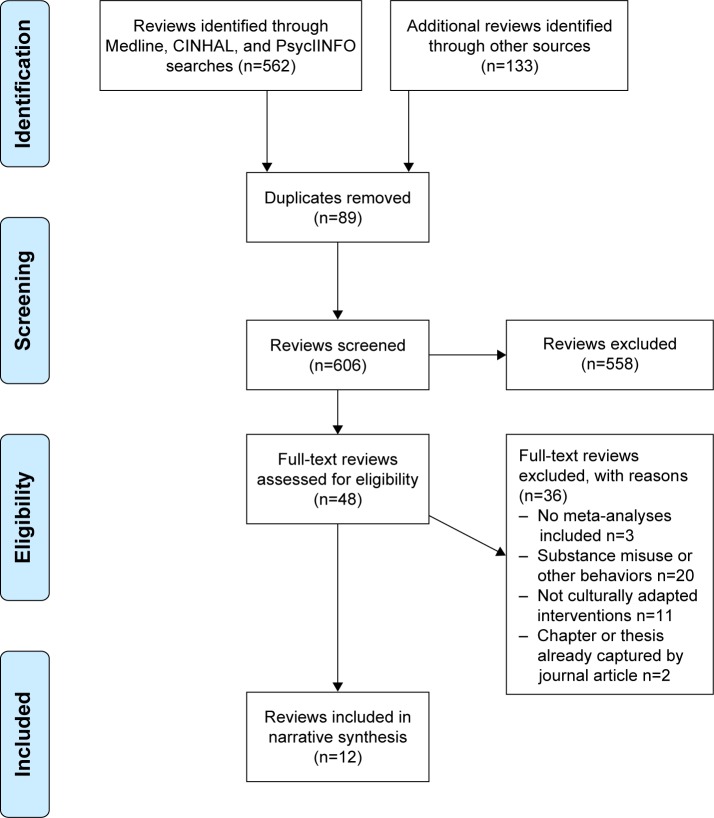
“We followed a similar method to that of PRISMA.”
Wang, G., Ma, R., Qiao, G., Wada, K., Aizawa, Y., & Satoh, T. (2015) · Integrative Medicine International · doi:10.1159/000368408 · Cited by 18,657
Duval, S., & Tweedie, R. (2000) · Biometrics · doi:10.1111/j.0006-341x.2000.00455.x · Cited by 14,099
Developing and evaluating complex interventions: the new Medical Research Council guidance
Craig, P., Dieppe, P., Macintyre, S., Michie, S., Nazareth, I., & Petticrew, M. (2008) · BMJ · doi:10.1136/bmj.a1655 · Cited by 10,995 · cited 1×
“Chowdhary et al 13 evaluated cultural adaptation using the Medical Research Council framework 24 and Bernal and Saez-Sanriago’s model 25 to describe nature of adaptation, while Degnan et al 23 used qualitative methodology to evaluate the nature of cultural adaptations.”
Liberati, A., Altman, D. G., Tetzlaff, J., Mulrow, C., Gøtzsche, P. C., Ioannidis, J. P. A., Clarke, M., Devereaux, P. J., Kleijnen, J., & Moher, D. (2009) · Annals of Internal Medicine · doi:10.7326/0003-4819-151-4-200908180-00136 · Cited by 10,349
Liberati, A., Altman, D. G., Tetzlaff, J., Mulrow, C., Gøtzsche, P. C., Ioannidis, J. P. A., Clarke, M., Devereaux, P. J., Kleijnen, J., & Moher, D. (2009) · Italian Journal of Public Health · doi:10.2427/5768 · Cited by 3,374
Utilization of the PICO framework to improve searching PubMed for clinical questions
Schardt, C., Adams, M. B., Owens, T., Keitz, S., & Fontelo, P. (2007) · BMC Medical Informatics and Decision Making · doi:10.1186/1472-6947-7-16 · Cited by 3,053
Cited by
Wiltsey Stirman, S., Baumann, A. A., & Miller, C. J. (2019) · Implementation Science · doi:10.1186/s13012-019-0898-y · Cited by 1,329
Reframing implementation science to address inequities in healthcare delivery
Baumann, A. A., & Cabassa, L. J. (2020) · BMC Health Services Research · doi:10.1186/s12913-020-4975-3 · Cited by 461
Cultural adaptation of cognitive–behavioural therapy
Naeem, F., Phiri, P., Rathod, S., & Ayub, M. (2019) · BJPsych Advances · doi:10.1192/bja.2019.15 · Cited by 157
Self-citationDevelopment of the WHO Caregiver Skills Training Program for Developmental Disorders or Delays
Salomone, E., Pacione, L., Shire, S., Brown, F. L., Reichow, B., & Servili, C. (2019) · Frontiers in Psychiatry · doi:10.3389/fpsyt.2019.00769 · Cited by 124
An evidence-based framework to culturally adapt cognitive behaviour therapy
Rathod, S., Phiri, P., & Naeem, F. (2019) · The Cognitive Behaviour Therapist · doi:10.1017/s1754470x18000247 · Cited by 84
Self-citationPeñuela-O′Brien, E., Wan, M. W., Edge, D., & Berry, K. (2022) · Transcultural Psychiatry · doi:10.1177/13634615211067360 · Cited by 98
“Systems-level cultural competence training and training in specific culturally adapted evidence-based interventions (Rathod et al., 2018) have been associated with improved clinical outcomes.”
BackgroundDay, S., Laver, K., Jeon, Y., Radford, K. A., & Low, L. (2023) · Dementia · doi:10.1177/14713012231192360 · Cited by 93
“Practitioners and researchers need guidance to select the appropriate framework for their intervention and populations (Rathod et al., 2018).”
BackgroundInfluentialKhan, S., Lovell, K., Lunat, F., Masood, Y., Shah, S. Z., Tomenson, B., & Husain, N. (2019) · BMC Women s Health · doi:10.1186/s12905-019-0712-7 · Cited by 74
“Despite this evidence, a majority of South Asian mothers with common mental disorders are not identified by their GPs [22].”
BackgroundResultInfluentialSelf-citationGrounding implementation science in health equity for cancer prevention and control
Adsul, P., Chambers, D., Brandt, H. M., Fernández, M. E., Ramanadhan, S., Torres, E., Leeman, J., Baquero, B. I., Fleisher, L. G., Escoffery, C., et al. (2022) · Implementation Science Communications · doi:10.1186/s43058-022-00311-4 · Cited by 72
Mental Health of Refugees and Asylum Seekers
Böge, K. (2010) · Oxford University Press eBooks · doi:10.1093/med/9780199557226.001.0001 · Cited by 70
Culturally adapted psychotherapies for depressed adults: A systematic review and meta-analysis
Anik, E., West, R. M., Cardno, A. G., & Mir, G. (2021) · Journal of Affective Disorders · doi:10.1016/j.jad.2020.09.051 · Cited by 65
“work better than an active treatment as the number of studies that were used an active treatment as comparison group were limited (Rathod et al., 2018).”
BackgroundWang, Y., Li, X., Zhang, Q., Yeung, D., & Wu, Y. (2025) · JMIR mHealth and uHealth · doi:10.2196/63806 · Cited by 35
“Rathod et al [39] also reviewed culturally adapted psychological interventions and found varying levels of effectiveness across different cultural groups and adaptation approaches.”
Price, M., Polk, W., Hill, N. E., Liang, B., & Perella, J. (2019) · Journal of Adolescence · doi:10.1016/j.adolescence.2019.09.002 · Cited by 45
Experiences of psychotherapists working with refugees in Germany: a qualitative study
Asfaw, B. B., Beiersmann, C., Keck, V., Nikendei, C., Benson-Martin, J., Schütt, I., & Lohmann, J. (2020) · BMC Psychiatry · doi:10.1186/s12888-020-02996-0 · Cited by 58
Sanchez, A. L., Comer, J. S., & Roche, M. J. L. (2021) · Cognitive and Behavioral Practice · doi:10.1016/j.cbpra.2021.04.003 · Cited by 58
The future of psychological treatments: The Marburg Declaration
Rief, W., Asmundson, G. J. G., Bryant, R. A., Clark, D. M., Ehlers, A., Holmes, E. A., McNally, R. J., Neufeld, C. B., Wilhelm, S., Jaroszewski, A. C., et al. (2024) · Clinical Psychology Review · doi:10.1016/j.cpr.2024.102417 · Cited by 54
Balci, S., Spanhel, K., Sander, L., & Baumeister, H. (2022) · npj Digital Medicine · doi:10.1038/s41746-022-00569-x · Cited by 60
Venner, K. L., Hernandez‐Vallant, A., Hirchak, K. A., & Herron, J. L. (2022) · Journal of Substance Abuse Treatment · doi:10.1016/j.jsat.2021.108716 · Cited by 51
Wright, A., Reisig, A., & Cullen, B. (2020) · Journal of Behavioral and Cognitive Therapy · doi:10.1016/j.jbct.2020.10.003 · Cited by 47
Böge, K., Karnouk, C., Hoell, A., Tschorn, M., Kamp‐Becker, I., Padberg, F., Übleis, A., Hasan, A., Falkai, P., Salize, H. J., et al. (2022) · The Lancet Regional Health - Europe · doi:10.1016/j.lanepe.2022.100413 · Cited by 49
Duncan, F., Baskin, C., McGrath, M., Coker, J. F., Lee, C. Y., Dykxhoorn, J. L., Adams, E. A., Gnani, S., Lafortune, L., Kirkbride, J. B., et al. (2021) · BMC Public Health · doi:10.1186/s12889-021-11741-5 · Cited by 48
“This is concerning given the evidence that men of minority ethnic background are less likely to seek help for common mental health problems [70, 71] and the evidence that culturally sensitive interventions are more likely to lead to positive outcomes [72].”
BackgroundAlgahtani, H. M., Almulhim, A., AlNajjar, F. A., Ali, M. K., Irfan, M., Ayub, M., & Naeem, F. (2019) · The Cognitive Behaviour Therapist · doi:10.1017/s1754470x1900028x · Cited by 45
“A recent review of metanalyses further highlights both the pitfalls and promises in this area (Rathod et al., 2018).”
BackgroundSelf-citationStanton, M. C., Ali, S., & the SUSTAIN Center Team (2022) · Implementation Research and Practice · doi:10.1177/26334895211064250 · Cited by 50
“Additionally, adaptation in implementation can improve fi t between interventions and communities experiencing health inequity (Rathod et al., 2018).”
Al-Sawafi, A., Lovell, K., Renwick, L., & Husain, N. (2020) · BMC Psychiatry · doi:10.1186/s12888-020-02816-5 · Cited by 42
“Therefore, people tend to accept and engage in interventions or treatment when they are congruent with their beliefs and values (14).”
BackgroundResultSelf-citationTranscultural adaptation of cognitive behavioral therapy ( CBT ) in Asia
Naeem, F., Latif, M., Mukhtar, F., Kim, Y., Li, W., Butt, M. G., Kumar, N., & Ng, R. (2020) · Asia-Pacific Psychiatry · doi:10.1111/appy.12442 · Cited by 47
“In a recent review of meta-analyses of culturally adapted interventions, we found that CBT was the most commonly used culturally adapted therapy (Rathod et al., 2018).”
MethodSelf-citationCoiro, M. J., Watson, K. H., Ciriegio, A., Jones, M. T., Wolfson, A. R., Reisman, J., & Compas, B. E. (2021) · Current Psychology · doi:10.1007/s12144-021-02444-6 · Cited by 47
Magaña, S., Dababnah, S., Xu, Y., Torres, M. G., Rieth, S. R., Corsello, C. M., Rangel, E., Brookman-Frazee, L. I., & Vanegas, S. B. (2021) · International review of research in developmental disabilities · doi:10.1016/bs.irrdd.2021.07.005 · Cited by 47
Naeem, F., Khan, N., Sohani, N., Safa, F., Masud, M., Ahmed, S., Thandi, G., Mutta, B., Kassam, A., Tello, K., et al. (2023) · The Canadian Journal of Psychiatry · doi:10.1177/07067437231178958 · Cited by 45
“19,44,48 CaCBT has not been employed for SA Canadians formerly, our fi ndings suggest that understanding patients ’ cultural values and incorporating them in therapy is an effective treatment that can reduce dropout rates.”
BackgroundSelf-citationArellano, B., Mier-Chairez, J., Tomek, S., & Hooper, L. M. (2018) · Journal of Mental Health Counseling · doi:10.17744/mehc.40.4.07 · Cited by 33
Kotera, Y., Ronaldson, A., Hayes, D., Hunter-Brown, H., McPhilbin, M., Dunnett, D. A., Jebara, T., Takhi, S. K., Masuda, T., Camacho, E. M., et al. (2024) · npj Mental Health Research · doi:10.1038/s44184-024-00092-9 · Cited by 37
Jidong, D. E., Husain, N., Roche, A., Lourie, G., Ike, T. J., Murshed, M., Park, M. S., Karick, H., Dagona, Z. K., Pwajok, J. Y., et al. (2021) · BMC Women s Health · doi:10.1186/s12905-021-01202-x · Cited by 38
Self-citationShala, M., Morina, N., Burchert, S., Cerga-Pashoja, A., Knaevelsrud, C., Maercker, A., & Heim, E. (2020) · Internet Interventions · doi:10.1016/j.invent.2020.100339 · Cited by 29
Latif, M., Husain, M. I., Gul, M., Naz, S., Irfan, M., Aslam, M., Awan, F., Sharif, A., Rathod, S., Farooq, S., et al. (2020) · Behavioural and Cognitive Psychotherapy · doi:10.1017/s1352465820000685 · Cited by 36
“Converging evidence indicates a strong benefit to culturally adapting interventions (Chowdhary et al., 2014; Griner and Smith, 2006; Rathod et al., 2018).”
BackgroundSelf-citationCulturally Sensitive Behavior Intervention Materials: a Tutorial for Practicing Behavior Analysts
Martinez, S., & Mahoney, A. (2022) · Behavior Analysis in Practice · doi:10.1007/s40617-022-00703-x · Cited by 32
“intervention materials may hinder client outcomes (Barrera et al., 2013; Kumpfer et al., 2017; Rathod et al., 2018).”
BackgroundMethodInfluentialBenjamin, L., Gillard, S., Nielsen, J. J., da Silva, M. E. P., & Sin, J. (2025) · Trauma Violence & Abuse · doi:10.1177/15248380251320982 · Cited by 31
“Results from several meta-analyses on the effectiveness of culturally adapted interventions in healthcare vary considerably (Anik et al., 2021; Hall et al., 2016; Rathod et al., 2018).”
Sawafi, A. A., Lovell, K., Renwick, L., & Husain, N. (2021) · Journal of Psychiatric and Mental Health Nursing · doi:10.1111/jpm.12786 · Cited by 35
Self-citationSzlamka, Z., Hanlon, C., Tekola, B., Pacione, L. R., Salomone, E., WHO CST Team, Servili, C., & Hoekstra, R. A. (2022) · PLoS ONE · doi:10.1371/journal.pone.0272077 · Cited by 36
Seekles, M. L., Twagira, F., Alam, A. M., & Obasi, A. I. N. (2023) · BMJ Public Health · doi:10.1136/bmjph-2023-000037 · Cited by 27
“111 This review highlighted that most interventions were delivered in the context of HIV, either by targeting (AIDS) orphans, HIV positive adolescents, embedding HIV prevention approaches, or by framing poor mental health as a risk factor for risky sexual behaviour.”
A Systematic Review of Culturally Adapted Behavioral Activation Treatments for Depression
Lehmann, D. C., & Bördlein, C. (2020) · Research on Social Work Practice · doi:10.1177/1049731520915635 · Cited by 28
“Email: davidclehmann@gmail.com amount of evidence indicates the effectiveness of culturally adapted mental health interventions (Chowdhary et al., 2014; Griner & Smith, 2006; Hall et al., 2016; Rathod et al., 2018).”
BackgroundBaik, S. H., Oswald, L. B., Buscemi, J., Buitrago, D., Iacobelli, F., Perez-Tamayo, A. M., Guitelman, J., Penedo, F. J., & Yanez, B. R. (2020) · JMIR Cancer · doi:10.2196/17538 · Cited by 27
A Scoping Review of Culturally Adapted Mindfulness-Based Interventions for Communities of Color
Morales, A., & Burnett‐Zeigler, I. (2024) · Journal of Integrative and Complementary Medicine · doi:10.1089/jicm.2023.0807 · Cited by 26
Telehealth-delivered caregiver training for autism: Recent innovations
Pacione, L. R. (2022) · Frontiers in Psychiatry · doi:10.3389/fpsyt.2022.916532 · Cited by 30
Kotera, Y., Ronaldson, A., Takhi, S. K., Felix, S., Namasaba, M., Lawrence, S., Kellermann, V., Kapka, A., Hayes, D., Dunnett, D. A., et al. (2025) · General Psychiatry · doi:10.1136/gpsych-2024-102010 · Cited by 25
Schilling, S., Mebane, A., & Perreira, K. M. (2021) · Family Process · doi:10.1111/famp.12658 · Cited by 29
Hernández, M. E. H., Waller, G., & Hardy, G. E. (2020) · The Cognitive Behaviour Therapist · doi:10.1017/s1754470x20000574 · Cited by 29
“beliefs and attitudes can differ from those in the ‘Western world’, and where resources are often less (Butler et al., 2016; Hwang, 2005; Organista and Munoz, 1996; Rathod et al., 2018).”
BackgroundCultural‐competence considerations for contemporary school‐based threat assessment
O’Malley, M. D., Wolf-Prusan, L. Y., Rodriguez, C. L., Xiong, R., & Swarts, M. R. (2018) · Psychology in the Schools · doi:10.1002/pits.22197 · Cited by 25
Culture and therapist self-disclosure
Phiri, P., Rathod, S., Gobbi, M., Carr, H., & Kingdon, D. (2019) · The Cognitive Behaviour Therapist · doi:10.1017/s1754470x19000102 · Cited by 26
Self-citationAdapting and Implementing Apps for Mental Healthcare
Zielasek, J., Reinhardt, I., Schmidt, L., & Gouzoulis‐Mayfrank, E. (2022) · Current Psychiatry Reports · doi:10.1007/s11920-022-01350-3 · Cited by 27
Couturier, J. L., Pellegrini, D., Grennan, L., Nicula, M., Miller, C., Agar, P., Webb, C., Anderson, K. E., Barwick, M. A., Dimitropoulos, G., et al. (2022) · Journal of Eating Disorders · doi:10.1186/s40337-022-00631-9 · Cited by 24
“Adaptations that focus on improving treatment suitability for the target population can lead to improved engagement, acceptability, and clinical outcomes [14], but modifications that alter or remove core components of a treatment, or which neglect population needs, may be less accepted among patient or provider popula…”
BackgroundBrijnath, B., Navarro, C., Antoniades, J., & Gilbert, A. S. (2022) · Clinical Gerontologist · doi:10.1080/07317115.2022.2101968 · Cited by 27
“The process of cultural adaptation goes beyond mere translation of materials, but rather includes adapting for dimensions of language, context, concepts, family, communication, content, and cultural norms and practices (Rathod et al., 2018).”
BackgroundMeade, N. A., Branco, S. F., Burt, I., White, R. K., & Hanks, A. (2021) · Journal of Counseling & Development · doi:10.1002/jcad.12400 · Cited by 22
Kotera, Y., Miyamoto, Y., Vilar-Lluch, S., Aizawa, I., Reilly, O., Miwa, A., Murakami, M., Stergiopoulos, V., Kroon, H., Giles, K., et al. (2024) · International Journal of Mental Health and Addiction · doi:10.1007/s11469-024-01356-3 · Cited by 25
“Meta-analyses reported notable effect differences between culturally adapted treatment and non-adapted treatment, including a five-time greater likelihood of symptom remission with culturally adapted treatment (Arundell et al., 2021; Hall et al., 2016; Rathod et al., 2018).”
Perceptions of alcohol use among injury patients and their family members in Tanzanian society
Meier, B. J., El-Gabri, D., Friedman, K., Mvungi, M., Mmbaga, B. T., Nickenig Vissoci, J. R., & Staton, C. A. (2020) · Alcohol · doi:10.1016/j.alcohol.2019.06.001 · Cited by 21
Chaudhry, N., Tofique, S., Husain, N., Couture, D., Glasgow, P., Husain, M., Kiran, T., Memon, R., Minhas, S., Qureshi, A., et al. (2020) · BJPsych Open · doi:10.1192/bjo.2020.49 · Cited by 21
Self-citationStakeholder perspectives of family interventions for schizophrenia in Indonesia: a qualitative study
Susanti, H., Brooks, H. L., Keliat, B. A., Bradshaw, T., Wulandari, D., Fadilah, R., Diorarta, R., Suherman, S., Bee, P., Lovell, K., et al. (2024) · BMC Psychiatry · doi:10.1186/s12888-024-05504-w · Cited by 22
“An existing heuristic framework for culturally adapting psychosocial interventions [19, 43] was used and codes were developed within the framework.”
MethodThe Catalyst Model of Change: Gratitude Interventions with Positive Long-Term Effects
Wong, Y. J. (2022) · Affective Science · doi:10.1007/s42761-022-00136-3 · Cited by 18
“…to fit the needs of diverse populations, given that the meaning and expression of gratitude differ across cultures (Corona et al., 2020) and culturally adapted mental health interventions generally outperform non-adapted interventions for culturally diverse populations (Rathod et al., 2018).”
BackgroundHoehne, E., Böge, K., Karnouk, C., Tschorn, M., Banaschewski, T., Hoell, A., Sukale, T., Plener, P. L., Schneider, F. W., Padberg, F., et al. (2023) · European Child & Adolescent Psychiatry · doi:10.1007/s00787-023-02179-8 · Cited by 19
“Culturally sensitive evidence-based interventions are a promising approach to face these challenges and are therefore, becoming more implemented in health care system [12–14].”
BackgroundRenwick, L., Susanti, H., Brooks, H. L., Keliat, B. A., Bradshaw, T., Bee, P., & Lovell, K. (2023) · Pilot and Feasibility Studies · doi:10.1186/s40814-023-01280-8 · Cited by 23
Tawankanjanachot, N., Melville, C. A., Habib, A., Truesdale, M., & Kidd, L. (2023) · Research in Autism · doi:10.1016/j.rasd.2023.102163 · Cited by 21
Psychotherapy for depression and anxiety in low- and middle-income countries
Cuijpers, P., Eylem, O., Karyotaki, E., Zhou, X., & Sijbrandij, M. (2019) · Global Mental Health and Psychotherapy · doi:10.1016/b978-0-12-814932-4.00008-2 · Cited by 15
Asnaani, A., Sanchez-Birkhead, A., Kaur, K., Mukundente, V., Napia, E. E., Tavake-Pasi, F., Villalta, J., Lee, D., Stark, L. A., Brown, H., et al. (2022) · Cognitive and Behavioral Practice · doi:10.1016/j.cbpra.2022.06.006 · Cited by 18
When Cultural Awareness Reveals Conflicting Cultural Values: A Pragmatic Approach
Delgado, D., Meindl, J. N., Al-Nasser, T., & Ivy, J. W. (2023) · Behavior Analysis in Practice · doi:10.1007/s40617-023-00826-9 · Cited by 19
“…and considering the complexity of intersec-tional influences (Hays, 1996), increasing cultural competence by gaining knowledge about diverse cultural practices, and using culturally adapted protocols and interventions with clients from diverse ethnicities (Rathod et al., 2018; Sanchez et al, 2022).”
Hammad, J., Guenuni, A. E., Bouzir, I., & Elguenuni, F. (2020) · Journal of Muslim Mental Health · doi:10.3998/jmmh.10381607.0014.202 · Cited by 18
Praptomojati, A., Icanervilia, A. V., Nauta, M. H., & Bouman, T. K. (2023) · Asian Journal of Psychiatry · doi:10.1016/j.ajp.2023.103896 · Cited by 20
Southampton Adaptation Framework to Culturally Adapt Cognitive Behavior Therapy
Naeem, F., Phiri, P., & Husain, N. (2024) · Psychiatric Clinics of North America · doi:10.1016/j.psc.2024.02.009 · Cited by 19
Self-citationMoody, M. D., & Lewis, J. C. J. (2022) · Aging & Mental Health · doi:10.1080/13607863.2022.2117792 · Cited by 18
“Culturally sensitive and high-quality behavioral healthcare are increasingly being recognized as the greater yielding methods for decreasing depressive symptomatology when compared to more traditional alternatives (Kalibatseva & Leong, 2014; Rathod et al., 2018).”
MethodCouturier, J. L., Pellegrini, D., Miller, C., Agar, P., Webb, C., Anderson, K. E., Barwick, M. A., Dimitropoulos, G., Findlay, S. M., Kimber, M., et al. (2021) · Implementation Science Communications · doi:10.1186/s43058-021-00143-8 · Cited by 17
“Adaptations that focus on improving treatment fit with the target population can lead to improved engagement, acceptability, and clinical outcomes [23], but modifications that alter or remove core components of a treatment, or fail to align Contributions to the literature”
BackgroundCollier‐Meek, M. A., Kratochwill, T. R., Luh, H.-J., Sanetti, L. M. H., & Susilo, A. (2022) · Journal of Educational and Psychological Consultation · doi:10.1080/10474412.2022.2131558 · Cited by 15
“Studies have documented stronger outcomes for culturally adapted interventions, in comparison to the original intervention (Degnan et al., 2018; Rathod et al., 2018).”
ResultPau, M. D., Vruggink, R., Vandevelde, S., & Laenen, F. V. (2023) · International Journal of Forensic Mental Health · doi:10.1080/14999013.2023.2167891 · Cited by 16
“Meta-analyses by Rathod et al. (2018) and Soto et al. (2018) indicate improved effectiveness of therapeutic practices if these had any type of cultural adaptation (e.g. language, content, methods, concepts), resulting in clinical improvement and mental wellbeing (e.g. anxiety, obsessive-compulsive…”
BackgroundSmith, S. M., Kheri, A., Ariyo, K., Gilbert, S., Salla, A., Lingiah, T., Taylor, C. J., & Edge, D. (2023) · Frontiers in Psychiatry · doi:10.3389/fpsyt.2023.1053502 · Cited by 18
“Such an approach clearly has advantages; evidence indicates there can be improvements to experiences, especially when support has been found to be culturally affirming (62).”
BackgroundMcCleary, J. S., & Horn, T. L. (2023) · American Journal of Community Psychology · doi:10.1002/ajcp.12709 · Cited by 15
Attar, S. M., Benavidez, H. R., Gicheru, C., Alabi, C., Sapano, R., & Stone, W. L. (2025) · Autism · doi:10.1177/13623613251335702 · Cited by 15
“Several meta-analyses provide evidence that culturally adapted materials for CLD communities are more effective than those that are not culturally adapted (Hall et al., 2016; Rathod et al., 2018; Shehadeh et al., 2016).”
Giusto, A. M., Missen, M. V., Kosgei, G., Njiriri, F., Puffer, E. S., Kwobah, E., Barasa, J., Turissini, M., Rasmussen, J. M., Ott, M. A., et al. (2023) · Research on Child and Adolescent Psychopathology · doi:10.1007/s10802-023-01075-8 · Cited by 16
Levinson, J., Hickey, E., Fuchu, P., Chu, A., Barnett, M. L., Stadnick, N. A., Feinberg, E., & Broder‐Fingert, S. (2023) · BMC Family Practice · doi:10.1186/s12875-023-02072-y · Cited by 16
Lin, S.-Y., Schleider, J. L., Nelson, B. D., Richmond, L. L., & Eaton, N. R. (2023) · Administration and Policy in Mental Health and Mental Health Services Research · doi:10.1007/s10488-023-01256-z · Cited by 14
Faro, A., Tejada, J., & Al‐Delaimy, W. K. (2025) · JMIR Public Health and Surveillance · doi:10.2196/72591 · Cited by 13
Schaechter, T., Flowers, S. N., Weiss, M., Becker‐Haimes, E. M., & Sanchez, A. L. (2025) · Child Psychiatry & Human Development · doi:10.1007/s10578-025-01833-3 · Cited by 17
Golker, C., & Cioffi, M. C. (2021) · The Cognitive Behaviour Therapist · doi:10.1017/s1754470x20000616 · Cited by 13
“Nevertheless, additional research is required to determine the effectiveness of culturally adapted CBT treatment protocols for various mental health conditions (Rathod et al., 2018).”
BackgroundA conceptual framework for culturally appropriate advocacy with racialised groups
Salla, A., Newbigging, K., Joseph, D., & Eneje, E. (2023) · Frontiers in Psychiatry · doi:10.3389/fpsyt.2023.1173591 · Cited by 14
Ouimet, A. J., Dixon‐Luinenburg, T., & Rooyakkers, M. (2020) · International Journal of Cognitive Therapy · doi:10.1007/s41811-020-00093-4 · Cited by 13
“Rathod et al. (2018) succinctly summarised the impact of these limitations: “…the generalization of findings of the effectiveness of therapeutic interventions to many cultural groups may not be valid or even appropriate” (p. 165).”
BackgroundMaarof, S. R., Ahmad, C. A., Atkins, L., Devol, E. B., Hussain, A., & Abdullah, K. L. (2022) · Journal of PeriAnesthesia Nursing · doi:10.1016/j.jopan.2022.02.006 · Cited by 13
Seon, Q., Mady, N., Yang, M., Karia, M., Lashley, M., Sescu, C., Lalonde, M., Puskas, S., Outerbridge, J., Parent-Racine, E., et al. (2023) · JMIR Research Protocols · doi:10.2196/40236 · Cited by 12
Coumoundouros, C., Farrand, P. A., Sanderman, R., von Essén, L., & Woodford, J. (2024) · BMC Nephrology · doi:10.1186/s12882-023-03444-3 · Cited by 18
“Additionally, tailoring interventions based on caregiver’s cultural background may enhance intervention effectiveness [82, 83], and has been found to improve the acceptability of interventions for caregivers in other settings [84].”
BackgroundMohsin, S., Atif, N., Rabbani, M. W., Tariq, A., Khan, S. A., Tariq, M., & Sikander, S. (2021) · Frontiers in Psychiatry · doi:10.3389/fpsyt.2021.598857 · Cited by 13
Adapting cognitive-behavioral therapy for a Malaysian muslim
Subhas, N., Mukhtar, F., & Munawar, K. (2021) · Medical Journal of the Islamic Republic of Iran · doi:10.47176/mjiri.35.28 · Cited by 18
“There are a few research studies that have adapted the CBT concept to suit the client’s spiritual, religious, and cultural background (11, 37, 44-49); for instance, incorporating Taoism into CBT for the neurosis treatment (50), using CBT with Christian beliefs to treat depression (51), culturally adapted CBT for psych…”
BackgroundAsif, M., Khoso, A. B., Husain, M., Shahzad, S., Hout, M. C. V., Rafiq, N. U. Z., Lane, S., Chaudhry, I. B., & Husain, N. (2023) · Pilot and Feasibility Studies · doi:10.1186/s40814-023-01296-0 · Cited by 12
“This will take into consideration the explanatory models of any illness, along with understanding of underlying beliefs and values [31].”
BackgroundSelf-citationRathod, S., Javed, A., Iqbal, R., Al-Sudani, A., Vaswani-Bye, A., Haider, I., & Phiri, P. (2023) · The Cognitive Behaviour Therapist · doi:10.1017/s1754470x23000077 · Cited by 14
“Interventions that are not culturally sensitive can lead to higher drop-out rates and poorer outcomes (Rathod et al., 2005; Rathod et al., 2010; Rathod et al., 2018).”
BackgroundSelf-citationGoldschmidt, A. B., Tortolani, C. C., Accurso, E. C., Dunbar, E.-M. P., Egbert, A. H., Donaldson, D. L., & Donaldson, A. A. (2023) · Journal of Eating Disorders · doi:10.1186/s40337-023-00850-8 · Cited by 14
“Adaptations that optimize the fit of evidence-based interventions for patients/families can improve engagement and clinical outcomes, especially with minority populations [16, 17].”
BackgroundJensen, E., Carr, R., Degnan, A., Berry, K., & Edge, D. (2021) · British Journal of Clinical Psychology · doi:10.1111/bjc.12273 · Cited by 15
“In a review of meta-analyses, culturally adapted interventions produced moderate to large effect sizes across different mental health problems (Rathod et al., 2018).”
Self-citationGreenwood, K., Webb, R., Gu, J., Fowler, D. G., de Visser, R. O., Bremner, S. A., Abramowicz, I., Perry, N., Clark, S., O’Donnell, A., et al. (2021) · Trials · doi:10.1186/s13063-021-05105-y · Cited by 14
Self-citationÖzen‐Dursun, B., Kaptan, S. K., Giles, S. J., Husain, N., & Panagioti, M. (2023) · BJPsych Open · doi:10.1192/bjo.2023.63 · Cited by 14
Self-citationMenon, S., Katona, C., & Glover, N. (2024) · Mental Health Science · doi:10.1002/mhs2.85 · Cited by 12
Cultural suitability of schema therapy: a qualitative exploration of clinician views
Martin, I. R., Stewart, S. E., Tchernegovski, P., & Devenish, B. D. (2024) · Australian Journal of Psychology · doi:10.1080/00049530.2024.2412012 · Cited by 12
“As such, some clients may experience distress when ST challenges their deeply held cultural beliefs, increasing the risk of disengagement (Rathod et al., 2018).”
Raghuram, H., Rajguru, A. J., Pathiyil, M. M., Brahmbhatt, A., Bhan, A., Spagnolo, J., & Naslund, J. A. (2025) · International Journal of Mental Health Systems · doi:10.1186/s13033-025-00671-z · Cited by 11
“Modifications help align interventions with the needs of the target population in a specific system or context which may in turn lead to improved engagement, better reach, higher acceptability, and enhanced outcomes [8].”
Özen‐Dursun, B., Panagioti, M., Alharbi, R., Giles, S. J., & Husain, N. (2023) · Clinical Psychology & Psychotherapy · doi:10.1002/cpp.2875 · Cited by 13
Self-citationSapkota, R. P., Valli, E., Wilhelms, A., Adlam, K., Bourgeault, L., Heron, V., Dickerson, K. C., Nugent, M., & Hadjistavropoulos, H. D. (2023) · Healthcare · doi:10.3390/healthcare11152135 · Cited by 11
“fidelity in comprehensive cultural adaptation [37,54], especially around what elements of the intervention should be culturally adapted, as we do not fully understand the “key ingredients” and mechanisms of change in psychological interventions [55,57,61].”
BackgroundFetterman, H., Ritter, C., Morrison, J. Q., & Newman, D. S. (2019) · Journal of Applied School Psychology · doi:10.1080/15377903.2019.1665607 · Cited by 14
“Common adaptations are not limited to the use of native language and include family involvement, and consideration of values in intervention procedures and goals (Rathod et al., 2018).”
BackgroundBu, D., Zhang, C., Liu, J., Han, Z., Wang, X., & Huang, Z. (2024) · Frontiers in Public Health · doi:10.3389/fpubh.2024.1391597 · Cited by 15
Kananian, S., Kip, A., Schumm, H., Giesebrecht, J., Nicolai, A., Schade‐Brittinger, C., Reese, J., Weise, C., Mewes, R., Morina, N., et al. (2022) · BMJ Open · doi:10.1136/bmjopen-2022-061274 · Cited by 10
Warner, C. M., Escobar, M., Thomas, H., Ahmed, T., Ndubuisi, I., Perrone, L., & Coyle, S. (2024) · School Mental Health · doi:10.1007/s12310-024-09658-6 · Cited by 11
“The development process is intensive, and some question whether cultural adaptation is justified when the original version may be effective or when challenges in methodological rigor make it difficult to compare effectiveness to standard evidence-based interventions (Rathod et al., 2018).”
Metadata
- Authors
- Rathod, S., Gega, L., Degnan, A., Pikard, J., Khan, T., Husain, N., Munshi, T., & Naeem, F.
- Affiliations
- Southern Health NHS Foundation Trust (GB)
- University of York (GB)
- University of Manchester (GB)
- Queen's University (CA)
- University of Waterloo (CA)
- Corresponding author
- Rathod, Shanaya
- Venue
- Neuropsychiatric Disease and Treatment
- Publisher
- Informa UK Limited
- Published
- 2018-01
- Volume
- Volume 14
- Pages
- 165-178
- ISSN
- 1176-6328 (ISSN-L)
- 1178-2021
- PMC
- PMC5757988
- OpenAlex
- W2753755129
- Cited by
- 261
- References
- 38
- Citations by year
- 2026: 36 · 2025: 30 · 2024: 39 · 2023: 51 · 2022: 35 · 2021: 27 · 2020: 21 · 2019: 18 · 2018: 3
- FWCI
- 39.18
- Type
- journal article
- Language
- en
- Open access
- gold
- doi.org
- Licence
- Locations
- Neuropsychiatric Disease and Treatment (publishedVersion, cc-by-nc)
- Europe PMC (PubMed Central) (publishedVersion, cc-by-nc)
- PubMed Central (publishedVersion, cc-by-nc)
- PubMed (publishedVersion)
- White Rose Research Online (University of Leeds, The University of Sheffield, University of York) (acceptedVersion)
- Dove Medical Press (Taylor and Francis Group) (submittedVersion, cc-by-nc)
- Research Explorer (The University of Manchester) (submittedVersion, cc-by-nc)
- Topics
- Health Sciences › Medicine › Public Health, Environmental and Occupational Health › Cultural Competency in Health Care
- Health Sciences › Medicine › Psychiatry and Mental health › Mental Health Treatment and Access
- Social Sciences › Psychology › Clinical Psychology › Migration, Health and Trauma
- Keywords
- culturally tailored interventions, cultural competence, mental health interventions, evidence-based care, meta-analyses of meta-analyses, mental illness
About these checks
Registry, retraction, Cites and statistics results are computed, not judged, with one exception: a printed reference that no index lists is read once by a model before it counts as a citation error. Claims are extracted by a model and kept only when their quote appears verbatim in the text; each cited source is then checked, with a model’s help, for whether it says what the claim relies on. Those verdicts can be wrong — read the claim’s quote and the cited source before relying on one.
Statistics and arithmetic are recomputed, not judged.
Confidence bands are shown only for fields calibrated on our annotated test set. None is calibrated yet, so no band is shown.
What counts as a claim ›How we measure confidence ›How we check this ›
Are you an author, or do you see a problem with this page? Request a review
Data sources
Bibliographic data: Semantic Scholar, OpenAlex, Crossref.
Contains information from the Semantic Scholar Academic Graph Datasets, made available under the ODC Attribution License (ODC-BY 1.0).
Semantic Scholar’s data is described in: Kinney, R., et al. (2023). The Semantic Scholar Open Data Platform. arXiv:2301.10140.
