

Understanding and Managing Corticosteroid-Induced Osteoporosis
Open accessThe DOI matches its Crossref record; 88 of the 88 references it cites were found in a registry or an index.
Abstract
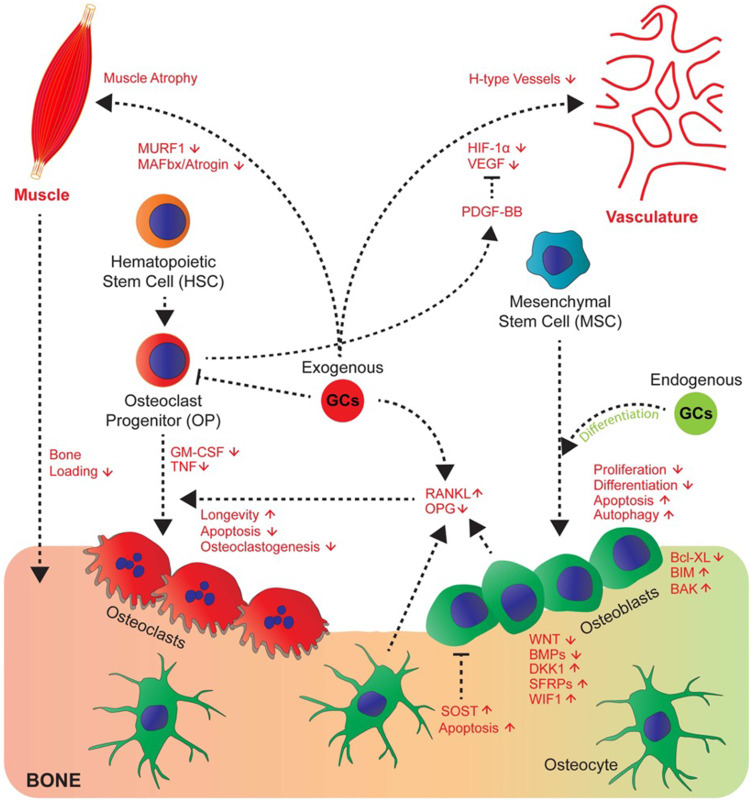
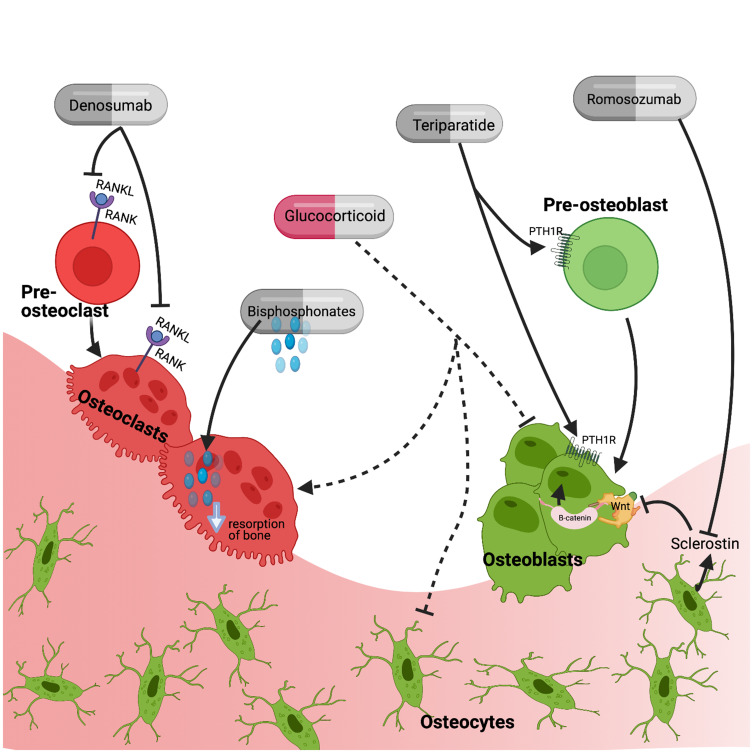
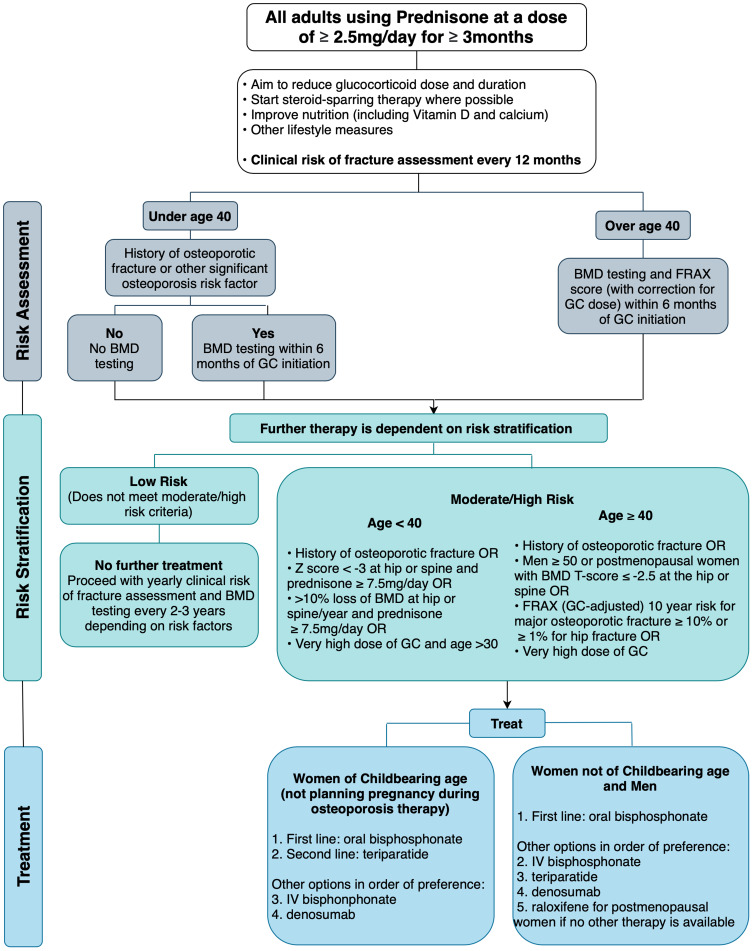
Glucocorticoids are effective immunosuppressants used in a wide variety of diseases. Their use results in secondary osteoporosis in about 30-50% of chronic glucocorticoid users. Glucocorticoids cause a rapid decline in bone strength within the first 3-6 months mostly due to increased bone resorption by osteoclasts. This is followed by a more gradual loss of bone partly due to decreased osteoblastogenesis and osteoblast and osteocyte apoptosis. The loss of bone strength induced by glucocorticoids is not fully captured by bone mineral density measurements. Other tools such as the trabecular bone score and advanced imaging techniques give insight into bone quality; however, these are not used widely in clinical practice. Glucocorticoid-induced osteoporosis should be seen as a widely preventable disease. Currently, only about 15% of chronic glucocorticoid users are receiving optimal care. Glucocorticoids should be prescribed at the lowest dose and shortest duration. All patients should be counselled on lifestyle measures to maintain bone strength including nutrition and weight-bearing exercise. Pharmacological therapy should be considered for all patients at moderate to high risk of fracture as there is evidence for the prevention of bone loss and fractures with a favourable safety profile. Oral bisphosphonates are the current mainstay of therapy, whereas osteoanabolic agents may be considered for those at highest risk of fracture.
Overview
The claims and statistics of this paper haven’t been checked yet.
Free: it reads the open-access text and checks the first 5 claims that cite a source we can check. Create a free account to check every claim.
Integrity signals
Registry
Cites
Statistics
Figures
Verification
Claims the paper makes
The claims and statistics of this paper haven’t been checked yet.
Free: it reads the open-access text and checks the first 5 claims that cite a source we can check. Create a free account to check every claim.
Claims other papers make about this one
Each is checked against this paper’s own text: does it say what the citing paper says it does?
The source backs part of the claim, not all of it — or backs it for a different population, condition or comparison.
In the citing paper
“excess glucocorticoids (endogenous or pharmacological) rapidly deplete trabecular bone by disrupting macrophage-fueled osteogenesis [107,108]”
From Interorgan Communications in Skeletal Pathophysiology: From Molecular Pathways to Multidisciplinary Therapies (2026) · cites this paper as [107]
Experimental — accuracy not yet measured
Self-check
Percentages, sums and reported differences re-computed from the paper’s own numbers.
The self-check needs the paper’s full text.
Citations
Cites
Neer, R. M., Arnaud, C. D., Zanchetta, J. R., Prince, R., Gaich, G. A., Reginster, J.-Y., Hodsman, A. B., Eriksen, E. F., Ish-Shalom, S., Genant, H. K., et al. (2001) · New England Journal of Medicine · doi:10.1056/nejm200105103441904 · Cited by 4,602
FRAX™ and the assessment of fracture probability in men and women from the UK
Kanis, J. A., Johnell, O., Oden, A., Johansson, H., & McCloskey, E. (2008) · Osteoporosis International · doi:10.1007/s00198-007-0543-5 · Cited by 2,467 · cited 1×
“5mg of prednisolone (or equivalent).(36) Schemas have”
Romosozumab Treatment in Postmenopausal Women with Osteoporosis
Cosman, F., Crittenden, D. B., Adachi, J. D., Binkley, N., Czerwinski, E., Ferrari, S., Hofbauer, L. C., Lau, E., Lewiecki, E. M., Miyauchi, A., et al. (2016) · New England Journal of Medicine · doi:10.1056/nejmoa1607948 · Cited by 1,805
Self-citationRomosozumab or Alendronate for Fracture Prevention in Women with Osteoporosis
Saag, K. G., Petersen, J., Brandi, M. L., Karaplis, A. C., Lorentzon, M., Thomas, T., Maddox, J., Fan, M., Meisner, P. D., & Grauer, A. (2017) · New England Journal of Medicine · doi:10.1056/nejmoa1708322 · Cited by 1,544
Use of Inhaled Corticosteroids and Risk of Fractures
Van Staa, T. P., Leufkens, H. G. M., & Cooper, C. (2001) · Journal of Bone and Mineral Research · doi:10.1359/jbmr.2001.16.3.581 · Cited by 1,308
The epidemiology of corticosteroid-induced osteoporosis: a meta-analysis
Staa, T. P. V., Staa, T. P. V., Staa, T. P. V., Leufkens, H. G. M., & Cooper, C. (2002) · Osteoporosis International · doi:10.1007/s001980200108 · Cited by 1,294 · cited 12×
“These swift changes suggest that the risk may be partly independent of changes in BMD.”
BackgroundInfluentialUse of oral corticosteroids and risk of fractures
Van Staa, T. P., Leufkens, H. G. M., Abenhaim, L., Zhang, B., & Cooper, C. (2000) · Journal of Bone and Mineral Research · doi:10.1359/jbmr.2000.15.6.993 · Cited by 1,263
Alendronate for the Prevention and Treatment of Glucocorticoid-Induced Osteoporosis
Saag, K. G., Emkey, R., Schnitzer, T. J., Brown, J. P., Hawkins, F., Goemaere, S., Thamsborg, G., Liberman, U. A., Delmas, P. D., Malice, M.-P., et al. (1998) · New England Journal of Medicine · doi:10.1056/nejm199807303390502 · Cited by 1,258
Self-citationA meta-analysis of prior corticosteroid use and fracture risk.
Kanis, J. A., Johansson, H., Oden, A., Johnell, O., de Laet, C., Melton, L. J., Tenenhouse, A., Reeve, J., Silman, A. J., Pols, H. A., et al. (2004) · Journal of Bone and Mineral Research · doi:10.1359/jbmr.040134 · Cited by 839 · cited 13×
“These swift changes suggest that the risk may be partly independent of changes in BMD.”
BackgroundInfluentialAnabolic Actions of Parathyroid Hormone on Bone*
DEMPSTER, D. W., COSMAN, F., PARISIEN, M., SHEN, V., & LINDSAY, R. (1993) · Endocrine Reviews · doi:10.1210/edrv-14-6-690 · Cited by 717 · cited 1×
“When released in an intermittent and pulsatile fashion, PTH has been shown to have an anabolic effect by promoting osteoblastogenesis and differentiation.(64) Teriparatide is recombinant human PTH (1–34).”
Background
Cited by
Rong, X., Kou, Y., Zhang, Y., Yang, P., Tang, R., Liu, H., & Li, M. (2022) · Drug Design Development and Therapy · doi:10.2147/dddt.s377001 · Cited by 66
“In addition, glucocorticoids facilitate osteoclast formation and enhance bone resorption rates in the early stages, while osteoclasts and osteoblasts are inhibited at later stages.(8) Currently, drug therapy is the primary treatment avenue for GIOP.”
BackgroundFaggiano, A., Mazzilli, R., Natalicchio, A., Adinolfi, V., Argentiero, A., Danesi, R., D’Oronzo, S., Fogli, S., Gallo, M., Giuffrida, D., et al. (2022) · Critical Reviews in Oncology/Hematology · doi:10.1016/j.critrevonc.2022.103826 · Cited by 62
“The prevalence of secondary osteoporosis is ~ 30 – 50 %, and the reduction in bone strength mainly occurs during the first 3 – 6 months of treatment (Kobza et al., 2021).”
BackgroundGlucocorticoid-induced osteoporosis: an overview with focus on its prevention and management
Anastasilaki, E., Paccou, J., Gkastaris, K., & Anastasilakis, A. D. (2023) · HORMONES · doi:10.1007/s42000-023-00491-1 · Cited by 37
“However, glucocorticoid administration, especially for prolonged periods of time, has been associated with serious side effects, including glucocorticoid-induced osteoporosis (GIOP) [2].”
BackgroundXiao, Y., Ren, Q., Zheng, Y., Zhang, S., Ouyang, J., Jiao, L., Tang, C., Li, L., Shi, W., Wang, M., et al. (2022) · Journal of Ethnopharmacology · doi:10.1016/j.jep.2022.115154 · Cited by 33
Lippi, L., Folli, A., Curci, C., D’Abrosca, F., Moalli, S., Mezian, K., Alessandro de, S. I. R. E., & Invernizzi, M. (2022) · International Journal of Environmental Research and Public Health · doi:10.3390/ijerph192114314 · Cited by 32
Metadata
- Authors
- Kobza, A. O., Herman, D., Papaioannou, A., Lau, A. N., & Adachi, J. D.
- Affiliations
- McMaster University (CA)
- Corresponding author
- Adachi, Jonathan D
- Venue
- Open Access Rheumatology Research and Reviews
- Publisher
- Informa UK Limited
- Published
- 2021-07
- Volume
- Volume 13
- Pages
- 177-190
- ISSN
- 1179-156X (ISSN-L)
- PMC
- PMC8259736
- OpenAlex
- W3174343567
- Cited by
- 84
- References
- 88
- Citations by year
- 2026: 19 · 2025: 19 · 2024: 20 · 2023: 10 · 2022: 16
- FWCI
- 2.45
- Type
- journal article
- Language
- en
- Open access
- gold
- doi.org
- Licence
- Locations
- Open Access Rheumatology Research and Reviews (publishedVersion, cc-by-nc)
- PubMed Central (publishedVersion, cc-by-nc)
- PubMed (publishedVersion)
- Dove Medical Press (Taylor and Francis Group) (submittedVersion, cc-by-nc)
- Topics
- Health Sciences › Medicine › Orthopedics and Sports Medicine › Bone health and osteoporosis research
- Health Sciences › Medicine › Oncology › Bone health and treatments
- Life Sciences › Biochemistry, Genetics and Molecular Biology › Molecular Biology › Bone Metabolism and Diseases
- Keywords
- glucocorticoid-induced osteoporosis, secondary osteoporosis, bone resorption, osteoclasts, osteoblast apoptosis, trabecular bone score, bone quality, fracture risk, bisphosphonates, osteoanabolic agents, low-dose glucocorticoid therapy, lifestyle intervention, bone mineral density
About these checks
Registry, retraction, Cites and statistics results are computed, not judged, with one exception: a printed reference that no index lists is read once by a model before it counts as a citation error. Claims are extracted by a model and kept only when their quote appears verbatim in the text; each cited source is then checked, with a model’s help, for whether it says what the claim relies on. Those verdicts can be wrong — read the claim’s quote and the cited source before relying on one.
Statistics and arithmetic are recomputed, not judged.
Confidence bands are shown only for fields calibrated on our annotated test set. None is calibrated yet, so no band is shown.
What counts as a claim ›How we measure confidence ›How we check this ›
Are you an author, or do you see a problem with this page? Request a review
How to cite
Cite CoChat for the checks on this page, and the paper for its own findings.
- This page
- CoChat. (2026). Citation check: Understanding and Managing Corticosteroid-Induced Osteoporosis. https://app.cochat.ai/papers/10.2147/oarrr.s282606
- The paper
- Kobza, A. O., Herman, D., Papaioannou, A., Lau, A. N., & Adachi, J. D. (2021). Understanding and Managing Corticosteroid-Induced Osteoporosis. Open Access Rheumatology Research and Reviews. https://doi.org/10.2147/oarrr.s282606
Data sources
Bibliographic data: Semantic Scholar, OpenAlex, Crossref.
Contains information from the Semantic Scholar Academic Graph Datasets, made available under the ODC Attribution License (ODC-BY 1.0).
Semantic Scholar’s data is described in: Kinney, R., et al. (2023). The Semantic Scholar Open Data Platform. arXiv:2301.10140.
