

HCN Channels Modulators: The Need for Selectivity
Open accessThe DOI matches its Crossref record; 292 of the 292 references it cites were found in a registry or an index.
Abstract
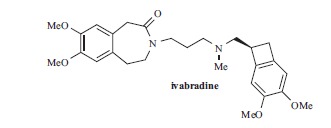
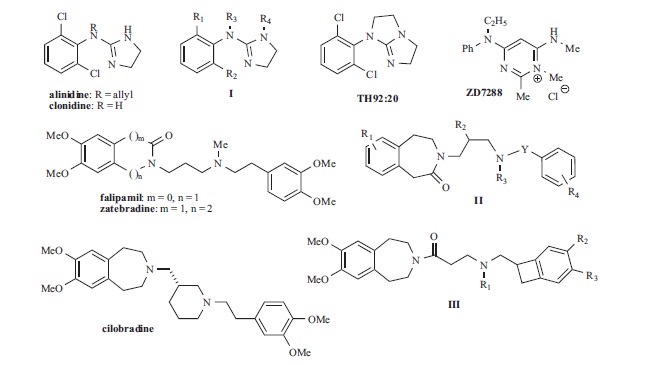
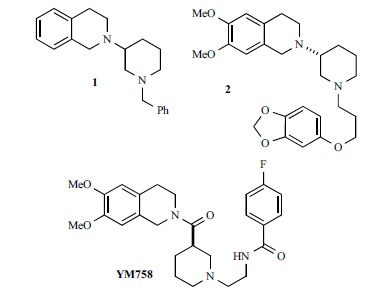
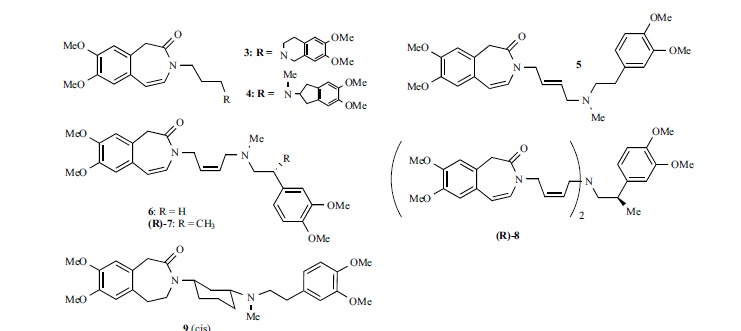
Hyperpolarization-activated, cyclic nucleotide-gated (HCN) channels, the molecular correlate of the hyperpolarization-activated current (If/Ih), are membrane proteins which play an important role in several physiological processes and various pathological conditions. In the Sino Atrial Node (SAN) HCN4 is the target of ivabradine, a bradycardic agent that is, at the moment, the only drug which specifically blocks If. Nevertheless, several other pharmacological agents have been shown to modulate HCN channels, a property that may contribute to their therapeutic activity and/or to their side effects. HCN channels are considered potential targets for developing drugs to treat several important pathologies, but a major issue in this field is the discovery of isoform-selective compounds, owing to the wide distribution of these proteins into the central and peripheral nervous systems, heart and other peripheral tissues. This survey is focused on the compounds that have been shown, or have been designed, to interact with HCN channels and on their binding sites, with the aim to summarize current knowledge and possibly to unveil useful information to design new potent and selective modulators.
Overview
The claims and statistics of this paper haven’t been checked yet.
Free: it reads the open-access text and checks the first 5 claims that cite a source we can check. Create a free account to check every claim.
Integrity signals
Registry
Cites
Statistics
Figures
Verification
Claims the paper makes
The claims and statistics of this paper haven’t been checked yet.
Free: it reads the open-access text and checks the first 5 claims that cite a source we can check. Create a free account to check every claim.
Claims other papers make about this one
Each is checked against this paper’s own text: does it say what the citing paper says it does?
The source backs part of the claim, not all of it — or backs it for a different population, condition or comparison.
In the citing paper
“Current pharmacology still lacks truly isoform-selective HCN modulators, which constrains both inference and dosing [296,297].”
From Synaptic Plasticity—Intrinsic Excitability and Antidepressant Discovery (2026) · cites this paper as [297]
Experimental — accuracy not yet measured
Self-check
Percentages, sums and reported differences re-computed from the paper’s own numbers.
The self-check needs the paper’s full text.
Citations
Cites
McDonagh, T. A., Metra, M., Adamo, M., Gardner, R. S., Baumbach, A., Böhm, M., Burri, H., Butler, J., Čelutkienė, J., Chioncel, O., et al. (2021) · European Heart Journal · doi:10.1093/eurheartj/ehab670 · Cited by 19,442
Ahmed, A., Jorna, T., & Bhandari, S. (2016) · Nephron · doi:10.1159/000447068 · Cited by 11,717
ESC Guidelines for the diagnosis and treatment of acute and chronic heart failure 2012
Authors/Task Force Members, McMurray, J. J. V., Adamopoulos, S., Anker, S. D., Auricchio, A., Böhm, M., Dickstein, K., Falk, V., Filippatos, G., Fonseca, C., et al. (2012) · European Heart Journal · doi:10.1093/eurheartj/ehs104 · Cited by 6,879
The Structure of the Potassium Channel: Molecular Basis of K + Conduction and Selectivity
Doyle, D. A., Cabral, J. M., Pfuetzner, R. A., Kuo, A., Gulbis, J. M., Cohen, S. L., Chait, B. T., & MacKinnon, R. (1998) · Science · doi:10.1126/science.280.5360.69 · Cited by 6,807
ESC Guidelines for the Diagnosis and Treatment of Acute and Chronic Heart Failure 2008
Dickstein, K., Authors/Task Force Members, Cohen-Solal, A., Filippatos, G., McMurray, J. J. V., Ponikowski, P., Poole-Wilson, P. A., Strömberg, A., van Veldhuisen, D. J., Atar, D., et al. (2008) · European Journal of Heart Failure · doi:10.1016/j.ejheart.2008.08.005 · Cited by 3,512
Ivabradine and outcomes in chronic heart failure (SHIFT): a randomised placebo-controlled study
Swedberg, K., Komajda, M., Böhm, M., Borer, J. S., Ford, I., Dubost-Brama, A., Lerebours, G., & Tavazzi, L. (2010) · The Lancet · doi:10.1016/s0140-6736(10)61198-1 · Cited by 2,563
Heart Rate, Life Expectancy and the Cardiovascular System: Therapeutic Considerations
Boudoulas, K. D., Borer, J. S., & Boudoulas, H. (2015) · Cardiology · doi:10.1159/000435947 · Cited by 1,938
Crystal structure and mechanism of a calcium-gated potassium channel
Jiang, Y., Lee, A., Chen, J., Cadene, M., Chait, B. T., & MacKinnon, R. (2002) · Nature · doi:10.1038/417515a · Cited by 1,332
Danshen: An Overview of Its Chemistry, Pharmacology, Pharmacokinetics, and Clinical Use
Zhou, L., Zuo, Z., & Chow, M. S. S. (2005) · The Journal of Clinical Pharmacology · doi:10.1177/0091270005282630 · Cited by 1,274 · cited 1×
“Indeed, a decrease of sinus rhythm, among many other effects, has been reported for this drug [197].”
BackgroundQueer Current and Pacemaker: The Hyperpolarization-Activated Cation Current in Neurons
Pape, H.-C. (1996) · Annual Review of Physiology · doi:10.1146/annurev.ph.58.030196.001503 · Cited by 1,151 · cited 1×
“Relative permeability to sodium and potassium is 1:3/1:5, which leads to a calculated reversal potential between -25 and -40 mV [53].”
Background
Research works printed but not linked: 1
- [231]Opthof T. The membrane current(If) in human atrial cells: implications for atrial arrhythmias. Cardiovasc. Res. 1998 38 3 537 540 9747423
Cited by
Davis, M. J., Earley, S., Li, Y.-S., & Chien, S. (2023) · Physiological Reviews · doi:10.1152/physrev.00053.2021 · Cited by 273
Sartiani, L., Mannaioni, G., Masi, A., Novella Romanelli, M., & Cerbai, E. (2017) · Pharmacological Reviews · doi:10.1124/pr.117.014035 · Cited by 143
“In the following discussion, only compounds used in the clinic are included; for a more comprehensive list, see Romanelli et al. (2016).”
BackgroundSelf-citationPathophysiological Mechanisms in Migraine and the Identification of New Therapeutic Targets
Haanes, K. A., & Edvinsson, L. I. (2019) · CNS Drugs · doi:10.1007/s40263-019-00630-6 · Cited by 114
Santoro, B., & Shah, M. M. (2020) · Annual Review of Pharmacology and Toxicology · doi:10.1146/annurev-pharmtox-010919-023356 · Cited by 108
Cardiac and neuronal HCN channelopathies
Rivolta, I., Binda, A., Masi, A., & DiFrancesco, J. C. (2020) · Pflügers Archiv - European Journal of Physiology · doi:10.1007/s00424-020-02384-3 · Cited by 96
Self-citationSelective HCN1 block as a strategy to control oxaliplatin-induced neuropathy
Resta, F., Micheli, L., Laurino, A., Spinelli, V., Mello, T., Sartiani, L., Mannelli, L. D. C., Cerbai, E., Ghelardini, C., Romanelli, M. N., et al. (2018) · Neuropharmacology · doi:10.1016/j.neuropharm.2018.01.014 · Cited by 70
“…HCN isoforms) cannot be fully exploited due to the detrimental effect that block of HCN4 in the sinus atrial node may have on cardiac rhythm (Novella Romanelli et al., 2016; Sartiani et al., 2017; Stillitano et al., 2013) In this work, we demonstrate that nociceptor neurons from OXA-treated rats…”
BackgroundSelf-citationDiscrete subicular circuits control generalization of hippocampal seizures
Fei, F., Wang, X., Xu, C., Shi, J., Gong, Y., Cheng, H., Lai, N., Ruan, Y., Ding, Y., Wang, S., et al. (2022) · Nature Communications · doi:10.1038/s41467-022-32742-x · Cited by 70
Cuddy, S. R., Schinlever, A. R., Dochnal, S. A., Seegren, P. V., Suzich, J. B., Kundu, P., Downs, T. K., Farah, M., Desai, B. N., Boutell, C., et al. (2020) · eLife · doi:10.7554/elife.58037 · Cited by 58
Gabapentin Modulates HCN4 Channel Voltage-Dependence
Tae, H.-S., Smith, K. M., Phillips, A. M., Boyle, K. A., Li, M., Forster, I. C., Hatch, R. J., Richardson, R., Hughes, D. I., Graham, B. A., et al. (2017) · Frontiers in Pharmacology · doi:10.3389/fphar.2017.00554 · Cited by 36
Thermodynamics of voltage-gated ion channels
Zhang, X. C., Yang, H., Liu, Z., & Sun, F. (2018) · Biophysics Reports · doi:10.1007/s41048-018-0074-y · Cited by 34
Missing Puzzle Pieces in Dementia Research: HCN Channels and Theta Oscillations
Kaźmierska, P., Jankowski, M. M., & MacIver, M. B. (2023) · Aging and Disease · doi:10.14336/ad.2023.0607 · Cited by 33
Characterization of drug binding within the HCN1 channel pore
Tanguay, J., Callahan, K. M., & D’Avanzo, N. (2019) · Scientific Reports · doi:10.1038/s41598-018-37116-2 · Cited by 29
Physiology and Therapeutic Potential of SK, H, and M Medium AfterHyperPolarization Ion Channels
Dwivedi, D., & Bhalla, U. S. (2021) · Frontiers in Molecular Neuroscience · doi:10.3389/fnmol.2021.658435 · Cited by 30
Pacemaker Channels and the Chronotropic Response in Health and Disease
Hennis, K., Piantoni, C., Biel, M., Fenske, S., & Wahl‐Schott, C. (2024) · Circulation Research · doi:10.1161/circresaha.123.323250 · Cited by 37
Carbone, C., Costa, A., Provensi, G., Mannaioni, G., & Masi, A. (2017) · Frontiers in Cellular Neuroscience · doi:10.3389/fncel.2017.00187 · Cited by 31
“The implications of Ih dysfunction in pathological states of the nervous system has prompted the quest for selective, subunit-specific modulators (Del Lungo et al., 2012; Novella Romanelli et al., 2016).”
BackgroundSelf-citationSpinelli, V., Sartiani, L., Mugelli, A., Romanelli, M. N., & Cerbai, E. (2018) · Canadian Journal of Physiology and Pharmacology · doi:10.1139/cjpp-2018-0115 · Cited by 26
“…the early stage of cardiac differentiation and membrane organization (i.e., low caveolin-3 expression); however, similar appearance was reported for HCN4 staining in mESC-CM (Saito et al., 2015) and cardiomyocytes isolated from embryonic mouse hearts and cultured thereafter (Scavone et al., 2013).”
BackgroundSelf-citationHsiao, H., Liu, Y., Liu, P., & Wu, S. (2019) · Brain Research Bulletin · doi:10.1016/j.brainresbull.2019.03.016 · Cited by 26
Circadian Mechanisms: Cardiac Ion Channel Remodeling and Arrhythmias
Bernardi, J., Aromolaran, K. A., Zhu, H., & Aromolaran, A. S. (2021) · Frontiers in Physiology · doi:10.3389/fphys.2020.611860 · Cited by 30
The HCN channel as a pharmacological target: Why, where, and how to block it
Balducci, V., Credi, C., Sacconi, L., Romanelli, M. N., Sartiani, L., & Cerbai, E. (2021) · Progress in Biophysics and Molecular Biology · doi:10.1016/j.pbiomolbio.2021.07.010 · Cited by 25
Self-citationMiyake, S., Higuchi, H., Honda-Wakasugi, Y., Fujimoto, M., Kawai, H., Nagatsuka, H., Maeda, S., & Miyawaki, T. (2019) · PLoS ONE · doi:10.1371/journal.pone.0217209 · Cited by 21
Are ion channels potential therapeutic targets for Parkinson’s disease?
Daniel, N. H., Aravind, A., & Thakur, P. S. (2021) · NeuroToxicology · doi:10.1016/j.neuro.2021.10.008 · Cited by 21
Cyclic AMP signaling in cardiac myocytes
Leroy, J., Vandecasteele, G., & Fischmeister, R. (2018) · Current Opinion in Physiology · doi:10.1016/j.cophys.2017.11.004 · Cited by 26
Kharouf, Q., Phillips, A. M., Bleakley, L. E., Morrisroe, E., Oyrer, J., Jia, L., Ludwig, A., Jin, L., Nicolazzo, J. A., Cerbai, E., et al. (2020) · British Journal of Pharmacology · doi:10.1111/bph.15088 · Cited by 23
Self-citationReview: HCN Channels in the Heart
Tytgat, J., Depuydt, A.-S., & Peigneur, S. (2022) · Current Cardiology Reviews · doi:10.2174/1573403x18666220204142436 · Cited by 31
“Romanelli et al. previously mentioned that the application of ethanol shifts the voltage dependence of HCN channels to more depolarized potentials and increases the maximum conductance, causing an increase in I f , and thus, in spontaneous firing [108, 126].”
BackgroundInfluentialLu, T., Chang, W., Chan, C.-H., & Wu, S. (2019) · Frontiers in Pharmacology · doi:10.3389/fphar.2019.00076 · Cited by 17
“Ivabradine was previously recognized as an inhibitor of Ih (Romanelli et al., 2016).”
BackgroundRomanelli, M. N., Lungo, M. D., Guandalini, L., Zobeiri, M., Gyökeres, A., Árpádffy‐Lovas, T., Koncz, I., Sartiani, L., Bartolucci, G., Dei, S., et al. (2019) · ACS Medicinal Chemistry Letters · doi:10.1021/acsmedchemlett.8b00587 · Cited by 16
Self-citationChang, W., Gao, Z.-H., Li, S.-W., Liu, P., Lo, Y., & Wu, S. (2020) · International Journal of Molecular Sciences · doi:10.3390/ijms21020396 · Cited by 15
“Ivabradine is an inhibitor of Ih [28,40], exmedetomidine was previously observed to induce analgesia through a mechanism linked to the inhibition of Ih [30], and protopine was reported to suppress multiple types of ionic currents [41].”
BackgroundResultZhong, L.-Y., Fan, X., Shi, Z., Fan, Z., Luo, J. H., Lin, N., Liu, Y.-C., Wu, L., Zeng, X., Cao, J., et al. (2019) · Frontiers in Cellular Neuroscience · doi:10.3389/fncel.2019.00415 · Cited by 15
Effect of ivabradine on cardiac arrhythmias: Antiarrhythmic or proarrhythmic?
Marciszek, M., Paterek, A., Oknińska, M., Zambrowska, Z., Mackiewicz, U., & Ma̧czewski, M. (2021) · Heart Rhythm · doi:10.1016/j.hrthm.2021.03.020 · Cited by 16
Lu, T., Lu, T., & Wu, S. (2020) · International Journal of Molecular Sciences · doi:10.3390/ijms21072416 · Cited by 14
Loperamide Inhibits Replication of Severe Fever with Thrombocytopenia Syndrome Virus
Urata, S., Yasuda, J., & Iwasaki, M. (2021) · Viruses · doi:10.3390/v13050869 · Cited by 13
“Since the IC50 of ivabradine for HCN channels was approximately 2 μM in HEK-293 cells [19], and ivabradine treatment in our study (250 μM) did not affect the post-entry step of the SFTSV infection, we concluded that HCN channels are not involved in post-entry step of SFTSV infection (Figure 3B).”
BackgroundShimizu, M., Mi, X., Toyoda, F., Kojima, A., Ding, W., Fukushima, Y., Omatsu‐Kanbe, M., Kitagawa, H., & Matsuura, H. (2022) · Biomolecules · doi:10.3390/biom12040570 · Cited by 14
So, E. C., Gao, Z.-H., Ko, S. Y., & Wu, S. (2020) · International Journal of Molecular Sciences · doi:10.3390/ijms21010357 · Cited by 11
“This current is a mixed inward Na+/K+ current, which is sensitive to blocking by different compounds such as CsCl, ivabradine or zatebradine [40,41], and increased amplitude of its own accord can act to depolarize membrane potential to the threshold required for elicitation of action potential (AP) [33,35–37,42].”
BackgroundChiaramonte, N., Maach, S., Biliotti, C., Angeli, A., Bartolucci, G., Braconi, L., Dei, S., Teodori, E., Supuran, C. T., & Romanelli, M. N. (2020) · Journal of Enzyme Inhibition and Medicinal Chemistry · doi:10.1080/14756366.2020.1749602 · Cited by 11
Chan, M., Chen, H., Lo, Y., & Wu, S. (2020) · International Journal of Molecular Sciences · doi:10.3390/ijms21124260 · Cited by 11
“, sinoatrial cells), since this effect may lead to decreased rhythmic activity in the heart [23,24,33,50,53].”
BackgroundLoganathan, K., Moriya, S., & Parhar, I. S. (2018) · Zebrafish · doi:10.1089/zeb.2018.1594 · Cited by 9
Chang, W., Ragazzi, E., Liu, P., & Wu, S. (2020) · European Journal of Pharmacology · doi:10.1016/j.ejphar.2020.173237 · Cited by 9
Effect of Ivabradine on Cardiac Ventricular Arrhythmias: Friend or Foe?
Oknińska, M., Paterek, A., Zambrowska, Z., Mackiewicz, U., & Ma̧czewski, M. (2021) · Journal of Clinical Medicine · doi:10.3390/jcm10204732 · Cited by 9
“Moreover, in the clinically relevant doses ivabradine did not affect calcium channels [41] and inhibited sodium channels at high concentrations (IC50 30 ± 3 μM) [6,41].”
BackgroundLinked biaromatic compounds as cardioprotective agents
Мокров, Г. В. (2021) · Archiv der Pharmazie · doi:10.1002/ardp.202100428 · Cited by 10
Schwerin, S., Westphal, C., Klug, C., Schneider, G. H., Kreuzer, M., Haseneder, R., & Kratzer, S. (2022) · International Journal of Molecular Sciences · doi:10.3390/ijms24010519 · Cited by 10
Harnessing ionic mechanisms to achieve disease modification in neurodegenerative disorders
Masi, A., Narducci, R., & Mannaioni, G. (2019) · Pharmacological Research · doi:10.1016/j.phrs.2019.104343 · Cited by 8
“The design of ion channels’ enhancers is a highly challenging endeavour for medicinal chemistry and specific HCN enhancers are not yet available [56].”
BackgroundSelf-citationCannabidiol potentiates hyperpolarization-activated cyclic nucleotide–gated (HCN4) channels
Page, D. A., & Ruben, P. C. (2024) · The Journal of General Physiology · doi:10.1085/jgp.202313505 · Cited by 6
Muscarinic modulation of M and h currents in gerbil spherical bushy cells
Gillet, C., Kurth, S., & Kuenzel, T. (2020) · PLoS ONE · doi:10.1371/journal.pone.0226954 · Cited by 7
“Indeed most of the channels are open when the membrane potential is hyperpolarized but a proportion of HCN channels stay tonically open at resting potential and maintain a resting state close to action potential threshold [20,37].”
BackgroundThe HCN Channel Blocker ZD7288 Induces Emesis in the Least Shrew (Cryptotis parva)
Zhong, W., & Darmani, N. A. (2021) · Frontiers in Pharmacology · doi:10.3389/fphar.2021.647021 · Cited by 9
Сardioprotective agents with biaromatic structure. Part 2. HCN channel blockers
Мокров, Г. В. (2022) · Pharmacokinetics and Pharmacodynamics · doi:10.37489/2587-7836-2022-2-03-10 · Cited by 6
Role of hyperpolarization-activated cyclic nucleotide-gated channels in aging bladder phenotype
Singh, N., Zabbarova, I. V., Ikeda, Y., Kanai, A., Chermansky, C., Yoshimura, N., & Tyagi, P. (2021) · Life Sciences · doi:10.1016/j.lfs.2021.120203 · Cited by 6
A Novel Flow Cytometry-Based Assay for the Identification of HCN4 CNBD Ligands
Wojciechowski, M. N., Schreiber, S., & Jose, J. (2023) · Pharmaceuticals · doi:10.3390/ph16050710 · Cited by 5
“This includes general and local anesthetics, anticonvulsive drugs and plant-derived compounds [32–34].”
BackgroundStructural mechanism of human HCN1 hyperpolarization-activated channel inhibition by ivabradine
Che, T., Zhang, W., Cheng, X., Lv, S., Zhang, M., Zhang, Y., Yang, T., Nan, W., Wan, S., Zeng, B., et al. (2024) · Journal of Biological Chemistry · doi:10.1016/j.jbc.2024.107798 · Cited by 6
“However, development of potent, selective and brain-penetrant inhibitors of HCN1 is hampered by limited understanding of the molecular mechanism of HCN1 inhibitor (18, 23).”
BackgroundMultitargeting in cardioprotection: An example of biaromatic compounds
Мокров, Г. В. (2023) · Archiv der Pharmazie · doi:10.1002/ardp.202300196 · Cited by 4
Morandini, A., Rossetti, A., & Sacchetti, A. (2021) · Catalysts · doi:10.3390/catal11010053 · Cited by 4
Screening effects of HCN channel blockers on sleep/wake behavior in zebrafish
Doldur-Balli, F., Smieszek, S. P., Keenan, B. T., Zimmerman, A. J., Veatch, O. J., Polymeropoulos, C. M., Birznieks, G., & Polymeropoulos, M. H. (2024) · Frontiers in Neuroscience · doi:10.3389/fnins.2024.1375484 · Cited by 4
“Cerbai (2016). "HCN Channels Modulators: The Need for Selectivity." Curr Top 14 Med Chem 16(16): 1764-1791. 15 O'Brown, N. M., S. G. Megason and C. Gu (2019). "Suppression of transcytosis 16 regulates zebrafish blood-brain barrier function." Elife 8. 17 Oikonomou, G. and D. A. Prober (2017). "Attacking sleep from a ne…”
BackgroundInfluentialSharma, S., Rana, P., Chadha, V. D., Dhingra, N., & Kaur, T. (2024) · European Biophysics Journal · doi:10.1007/s00249-024-01726-8 · Cited by 3
Saini, A., Sharma, S., Rana, P., Khanna, B., Kaur, T., & Dhingra, N. (2025) · Molecular Neurobiology · doi:10.1007/s12035-025-05088-w · Cited by 3
“Some studies suggest that nicotinic acid and its ester derivatives, such as (Benzyl nicotinate, methyl nico-tinate, etc.), showed antinociceptive, anti-inflammatory, and analgesic activity, respectively [13, 14, 29].”
New insights into the molecular pathophysiology and treatment of depression
Chattaraj, B., Karmakar, S., & Jash, R. (2025) · Neuroscience · doi:10.1016/j.neuroscience.2025.08.013 · Cited by 3
Spyrou, J., Escobar, I., Bordey, A., & Reid, C. A. (2025) · British Journal of Pharmacology · doi:10.1111/bph.70218 · Cited by 3
“For example, EC18 , is a structural derivative of zatebradine and shows six-fold selectivity for HCN4 over HCN1 and HCN2 channels (Romanelli et al., 2016; Romanelli et al., 2019).”
Influence of If-current blockade on rat heart contractility with a model of myocardial infarction
Bugrov, R. K., Kuptsova, A. M., Khabibrakhmanov, I. I., Ziyatdinova, N. I., & Zefirov, Т. L. (2021) · Zenodo (CERN European Organization for Nuclear Research) · doi:10.5281/zenodo.4422070 · Cited by 2
A Photoactivatable Version of Ivabradine Enables Light-Induced Block of HCN Current In Vivo
Porro, A., Armano, E., Brandalise, F., Appiani, R., Beltrame, M., Saponaro, A., Dallanoce, C., Nakajo, K., Ryu, K., Leone, R., et al. (2024) · Journal of Medicinal Chemistry · doi:10.1021/acs.jmedchem.4c01047 · Cited by 2
Мокров, Г. В., Pantileev, A. S., Vorobieva, T. Y., Бирюкова, В. Е., Крыжановский, С. А., & Дорофеев, В. Л. (2024) · Pharmacokinetics and Pharmacodynamics · doi:10.37489/2587-7836-2024-1-45-65 · Cited by 1
Reassessing Ivabradine: Potential Benefits and Risks in Atrial Fibrillation Therapy
Alijanzadeh, D., Moghim, S., Zarand, P., Akbarzadeh, M. A., Zarinfar, Y., & Khaheshi, I. (2024) · Cardiovascular Drugs and Therapy · doi:10.1007/s10557-024-07652-3 · Cited by 3
“…the carboxy-terminal cyclic nucleotide-binding domain (CNBD) motif, has a pivotal role in modulating the channel activity in response to cyclic nucleotides such as cyclic guanosine monophosphate (cGMP) and cAMP, highlighting its criticality in the channel voltage and ion selectivity functions [17].”
HCN channels: novel therapeutic targets for peripheral neuropathic pain
Howard, P. (2025) · BMJ Supportive & Palliative Care · doi:10.1136/spcare-2025-005509 · Cited by 2
“Tramadol inhibits HCN currents independently of mu agonism, but the HCN subtype(s) affected 7 and the relative contribution to its analgesic effect is unclear.”
Hyperpolarization-Activated Cyclic Nucleotide-Gated Channels
Masi, A., Romanelli, M. N., Mannaioni, G., & Cerbai, E. (2019) · Oxford University Press eBooks · doi:10.1093/oxfordhb/9780190669164.013.23 · Cited by 1
Self-citationMathew, E., & Joykutty, L. (2021) · Journal of Emerging Investigators · doi:10.59720/20-008 · Cited by 1
“Perhaps an HCN1-inhibiting medication can be incorporated into treatment plans for schizophrenics such as ketamine, isoflurane, and halotane (24).”
Gutiérrez-Vega, I., Schneider, I., Cáceres, C., Herrera‐Marschitz, M., Romanelli, M. N., Morales, P., Quintanilla, M. E., Vásquez, D., & Rivera‐Meza, M. (2025) · Life Sciences · doi:10.1016/j.lfs.2025.124043 · Cited by 2
Electro‐physics‐iology clarified? No spooky action required
Miller, D., & Eisner, D. A. (2019) · Experimental Physiology · doi:10.1113/ep087931 · Cited by 1
Tian, C., Zhu, X., Wang, Q., Lv, T., Cheng, S., & Yang, D. (2022) · Channels · doi:10.1080/19336950.2021.2020005 · Cited by 1
Synaptic Plasticity—Intrinsic Excitability and Antidepressant Discovery
Tanaka, M. (2026) · Biomedicines · doi:10.3390/biomedicines14061265
IVABRADINE OUTSIDE THE CLINICAL GUIDELINES: INTEREST OF A PRACTITIONER
Tarlovskaya, E. I. (2018) · Russian Journal of Cardiology · doi:10.15829/1560-4071-2018-3-60-64
Barbuti, A., Baruscotti, M., & Bucchi, A. (2023) · Springer eBooks · doi:10.1007/978-3-031-33588-4_4
Editorial: Signaling pathways and brain circuitry underlying circadian rhythms and sleep
Aten, S., Belle, M. D. C., & Behn, C. D. (2025) · Frontiers in Neuroscience · doi:10.3389/fnins.2025.1558246
“While these three compounds are used to reduce heart rate (Novella Romanelli et al., 2016), this is the first study to report the effects of HCN channel inhibition in zebrafish—results that could provide insight into potential therapeutics that may impact sleep function.”
Ordiway, G., McLellan, K. R., & Sanchez, J. T. (2025) · Journal of Neurophysiology · doi:10.1152/jn.00602.2024 · Cited by 1
Zhang, X. C. (2025) · Springer eBooks · doi:10.1007/978-981-96-1321-2_6
Kuptsova, A. M., Ziyatdinova, N. I., Zefirov, A. L., Iskakov, N. G., & Zefirov, T. L. (2025) · Journal of Evolutionary Biochemistry and Physiology · doi:10.1134/s0022093025050047
“…I f discovery and description in the 1980s by DiFrancesco et al. [17], a large number of studies have been conducted to identify the involvement of these currents in the regulation of the cardiovascular system functions in the developing organism under normal and pathological conditions [18–20].”
Thérapie génique de l'insuffisance cardiaque par les phosphodiestérases
Bourcier, A. (2019) · theses.fr (ABES) · doi:10.70675/19ee12d6z21e8z440fza3cfz9b22674b5d02
Metadata
- Authors
- Novella Romanelli, M., Sartiani, L., Masi, A., Mannaioni, G., Manetti, D., Mugelli, A., & Cerbai, E.
- Affiliations
- University of Florence (IT)
- Venue
- Current Topics in Medicinal Chemistry
- Publisher
- Bentham Science Publishers Ltd.
- Published
- 2016-04-29
- Volume
- 16
- Issue
- 16
- Pages
- 1764-1791
- ISSN
- 1568-0266 (ISSN-L)
- PMC
- PMC5374843
- OpenAlex
- W2298251224
- Semantic Scholar
- 97e36620a92fd59dfcca8cdb2368cfc0a2382c0e
- Cited by
- 73
- References
- 290
- Citations by year
- 2026: 1 · 2025: 9 · 2024: 8 · 2023: 5 · 2022: 6 · 2021: 13 · 2020: 11 · 2019: 11 · 2018: 6 · 2017: 3
- FWCI
- 0.60
- Type
- journal article
- Language
- en
- Open access
- bronze
- doi.org
- Locations
- Current Topics in Medicinal Chemistry (publishedVersion)
- PubMed Central (publishedVersion, cc-by-nc)
- PubMed (publishedVersion)
- Florence Research (University of Florence) (submittedVersion)
- Topics
- Life Sciences › Biochemistry, Genetics and Molecular Biology › Molecular Biology › Ion channel regulation and function
- Health Sciences › Medicine › Cardiology and Cardiovascular Medicine › Cardiac electrophysiology and arrhythmias
- Life Sciences › Biochemistry, Genetics and Molecular Biology › Molecular Biology › Nicotinic Acetylcholine Receptors Study
- Keywords
- HCN channels, hyperpolarization-activated current, HCN4, ivabradine, drug design, sinoatrial node, cardiac pacemaker, bradycardic agents, adverse effects
- MeSH terms
- Animals, Humans, Drug Design, Molecular Structure, Membrane Transport Modulators, Hyperpolarization-Activated Cyclic Nucleotide-Gated Channels
About these checks
Registry, retraction, Cites and statistics results are computed, not judged, with one exception: a printed reference that no index lists is read once by a model before it counts as a citation error. Claims are extracted by a model and kept only when their quote appears verbatim in the text; each cited source is then checked, with a model’s help, for whether it says what the claim relies on. Those verdicts can be wrong — read the claim’s quote and the cited source before relying on one.
Statistics and arithmetic are recomputed, not judged.
Confidence bands are shown only for fields calibrated on our annotated test set. None is calibrated yet, so no band is shown.
What counts as a claim ›How we measure confidence ›How we check this ›
Are you an author, or do you see a problem with this page? Request a review
Data sources
Bibliographic data: Semantic Scholar, OpenAlex, Crossref.
Contains information from the Semantic Scholar Academic Graph Datasets, made available under the ODC Attribution License (ODC-BY 1.0).
Semantic Scholar’s data is described in: Kinney, R., et al. (2023). The Semantic Scholar Open Data Platform. arXiv:2301.10140.
