

Neuroleptic Malignant Syndrome: A Review from a Clinically Oriented Perspective
Open accessThe DOI matches its Crossref record; 73 of the 73 references it cites were found in a registry or an index.
Abstract
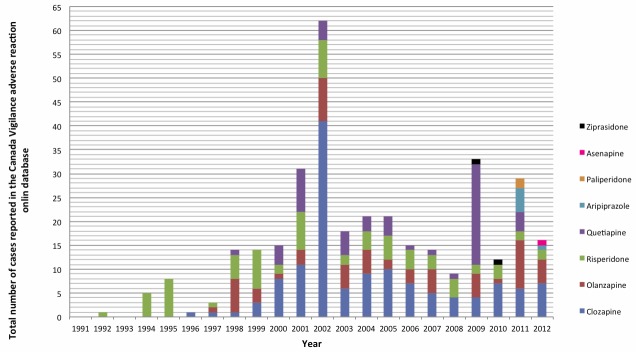
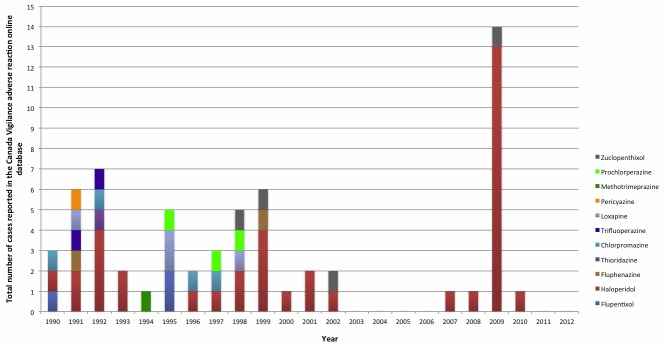
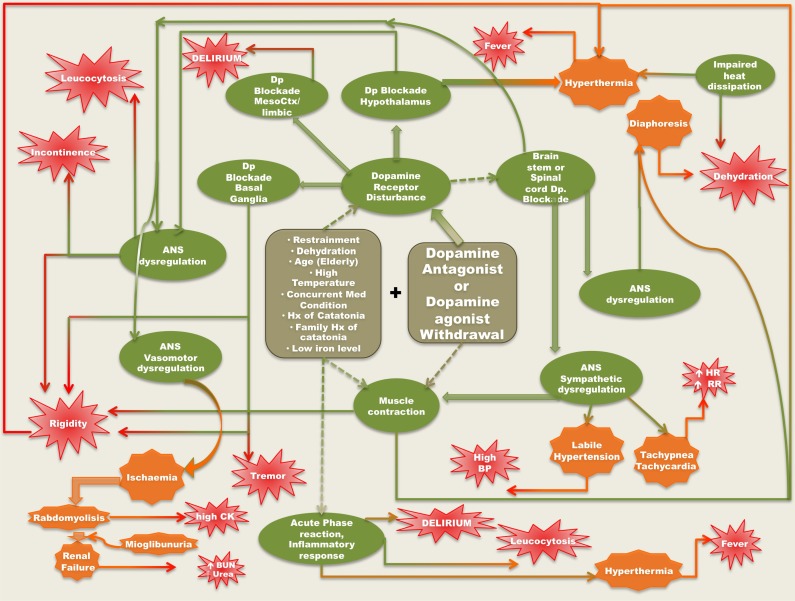
Neuroleptic malignant syndrome (NMS) is a rare but potentially life-threatening side-effect that can occur in response to treatment with antipsychotic drugs. Symptoms commonly include hyperpyrexia, muscle rigidity, autonomic dysfunction and altered mental status. In the current review we provide an overview on past and current developments in understanding the causes and treatment of NMS. Studies on the epidemiological incidence of NMS are evaluated, and we provide new data from the Canada Vigilance Adverse Reaction Online database to elaborate on drug-specific and antipsychotic drug polypharmacy instances of NMS reported between 1965 and 2012. Established risk factors are summarized with an emphasis on pharmacological and environmental causes. Leading theories about the etiopathology of NMS are discussed, including the potential contribution of the impact of dopamine receptor blockade and musculoskeletal fiber toxicity. A clinical perspective is provided whereby the clinical presentation and phenomenology of NMS is detailed, while the diagnosis of NMS and its differential is expounded. Current therapeutic strategies are outlined and the role for both pharmacological and non-pharmacological treatment strategies in alleviating the symptoms of NMS are discussed.
Overview
The claims and statistics of this paper haven’t been checked yet.
Free: it reads the open-access text and checks the first 5 claims that cite a source we can check. Create a free account to check every claim.
Integrity signals
Registry
Cites
Statistics
Figures
Verification
Claims the paper makes
The claims and statistics of this paper haven’t been checked yet.
Free: it reads the open-access text and checks the first 5 claims that cite a source we can check. Create a free account to check every claim.
Claims other papers make about this one
Each is checked against this paper’s own text: does it say what the citing paper says it does?
The cited source says what the claim attributes to it.
In the citing paper
“Patients with a previous history of NMS and/or a personal or family history of catatonia are also at higher risk.867”
Self-check
Percentages, sums and reported differences re-computed from the paper’s own numbers.
The self-check needs the paper’s full text.
Citations
Cites
DIAGNOSTIC AND STATISTICAL MANUAL OF MENTAL DISORDERS, FIFTH EDITION
Abbas, A., & Aminoroaia, M. (2013) · Cited by 1,479
Dunkley, E. J. C., Isbister, G. K., Sibbritt, D., Dawson, A. H., & Whyte, I. M. (2003) · QJM · doi:10.1093/qjmed/hcg109 · Cited by 1,029 · cited 1×
“Serotonin syndrome is a condition characterized by the presence of changes in mental status, agitation, clonus, hyperreflexia, and hyperthermia as a result of toxic and excessive serotoninergic stimulation [60].”
BackgroundNeuroleptic malignant syndrome
(1985) · American Journal of Psychiatry · doi:10.1176/ajp.142.10.1137 · Cited by 978
Serotonin receptors : their key role in drugs to treat schizophrenia
Meltzer, H. Y., Li, Z., Kaneda, Y., & Ichikawa, J. (2003) · Progress in Neuro-Psychopharmacology and Biological Psychiatry · doi:10.1016/j.pnpbp.2003.09.010 · Cited by 775 · cited 1×
“a more balanced dopamine D2 and 5-HT receptor blockade, particularly at the 5-HT2A receptor [26]), the evidence from the current literature is not conclusive in either direction [24].”
BackgroundCatatonia in Psychiatric Classification: A Home of Its Own
Taylor, M. A., & Fink, M. (2003) · American Journal of Psychiatry · doi:10.1176/appi.ajp.160.7.1233 · Cited by 581 · cited 1×
“ECT), and that NMS-like presentations are well documented before the development of antipsychotics [67].”
BackgroundNeuroleptic malignant syndrome
Caroff, S. N., & Mann, S. C. (1993) · Medical Clinics of North America · doi:10.1016/s0025-7125(16)30278-4 · Cited by 514
Neuroleptic malignant syndrome: A pathogenetic role for dopamine receptor blockade?
Henderson, V. W., & Wooten, G. F. (1981) · Neurology · doi:10.1212/wnl.31.2.132 · Cited by 339
Prevention of Ventilator-Associated Pneumonia: An Evidence-Based Systematic Review
Collard, H. R., Saint, S., & Matthay, M. A. (2003) · Annals of Internal Medicine · doi:10.7326/0003-4819-138-6-200303180-00015 · Cited by 304
Frequency and presentation of neuroleptic malignant syndrome in a large psychiatric hospital
(1986) · American Journal of Psychiatry · doi:10.1176/ajp.143.10.1227 · Cited by 302 · cited 4×
“15%, which was comparatively lower than the rate reported by Pope and colleagues five years earlier [4].”
BackgroundResultInfluentialMortality from neuroleptic malignant syndrome.
Shalev, A. Y., Hermesh, H., & Munitz, H. (1989) · PubMed · Cited by 290
Cited by
Yatham, L. N., Kennedy, S. H., Parikh, S. V., Schaffer, A., Bond, D. J., Frey, B. N., Sharma, V., Goldstein, B. I., Rej, S., Beaulieu, S., et al. (2018) · Bipolar Disorders · doi:10.1111/bdi.12609 · Cited by 1,852
Galletly, C., Castle, D., Dark, F., Humberstone, V., Jablensky, A., Killackey, E., Kulkarni, J., McGorry, P., Nielssen, O., & Tran, N. (2016) · Australian & New Zealand Journal of Psychiatry · doi:10.1177/0004867416641195 · Cited by 877
“Neuroleptic malignant syndrome (NMS) is a rare and potentially life-threatening condition characterised by fever, rigidity, tremor, sympathetic nervous system dysregulation and creatine kinase (CK) elevation (Tse et al., 2015).”
BackgroundBarnes, T. R., Drake, R., Paton, C., Cooper, S. J., Deakin, B., Ferrier, I. N., Gregory, C. J., Haddad, P. M., Howes, O. D., Jones, I., et al. (2020) · Journal of Psychopharmacology · doi:10.1177/0269881119889296 · Cited by 606
Management of common adverse effects of antipsychotic medications
Stroup, T. S., & Gray, N. (2018) · World Psychiatry · doi:10.1002/wps.20567 · Cited by 572
Solmi, M., Murru, A., Pacchiarotti, I., Undurraga, J., Veronese, N., Fornaro, M., Stubbs, B., Monaco, F., Vieta, E., Seeman, M., et al. (2017) · Therapeutics and Clinical Risk Management · doi:10.2147/tcrm.s117321 · Cited by 438
“medical comorbidities, previous history of NMS, family history of catatonia, and muscle channelopathy.(230)”
InfluentialNeuroleptic Malignant Syndrome: Focus on Treatment and Rechallenge
Pileggi, D. J., & Cook, A. M. (2016) · Annals of Pharmacotherapy · doi:10.1177/1060028016657553 · Cited by 153
“The cardinal laboratory finding in NMS is often an elevation in creatine kinase (CK), typically above 1000 μg/L.(2) NMS is an ADR that is uncommon and challenging to diagnose, and therefore, an accurate incidence cannot be known.”
BackgroundInfluentialClozapine-Induced Cardiovascular Side Effects and Autonomic Dysfunction: A Systematic Review
Yuen, J. W. Y., Kim, D. D., Procyshyn, R. M., White, R. F., Honer, W. G., & Barr, A. M. (2018) · Frontiers in Neuroscience · doi:10.3389/fnins.2018.00203 · Cited by 79
“Reduced HRV has been linked to increased risk of mortality from cardiac disease and predicts risk for future cardiac events, thus generating an increasing interest in the clinical value of HRV (Tsuji et al., 1996; La Rovere et al., 1998; Nolan et al., 1998; Dekker et al., 2000).”
BackgroundSelf-citationNeuroleptic malignant syndrome and serotonin syndrome
Tormoehlen, L. M., & Rusyniak, D. E. (2018) · Handbook of clinical neurology · doi:10.1016/b978-0-444-64074-1.00039-2 · Cited by 71
Hypothermia due to Antipsychotic Medication: A Systematic Review
Zonnenberg, C., Bueno-de-Mesquita, J. M., Ramlal, D., & Blom, J. D. (2017) · Frontiers in Psychiatry · doi:10.3389/fpsyt.2017.00165 · Cited by 70
“This other potentially lethal failure of thermoregulation due to APDs has been researched extensively (64).”
BackgroundGuinart, D., Misawa, F., Rubio, J. M., Pereira, J., de Filippis, R., Gastaldon, C., Kane, J. M., & Correll, C. U. (2021) · Acta Psychiatrica Scandinavica · doi:10.1111/acps.13359 · Cited by 69
Guinart, D., Taipale, H. T., Rubio, J. M., Tanskanen, A. J., Correll, C. U., Tiihonen, J., & Kane, J. M. (2021) · Schizophrenia Bulletin · doi:10.1093/schbul/sbab062 · Cited by 54
Bromocriptine therapy: Review of mechanism of action, safety and tolerability
Naz, F., Malik, A. R., Riaz, M., Mahmood, Q., Mehmood, M. H., Rasool, G., Mahmood, Z., & Abbas, M. (2022) · Clinical and Experimental Pharmacology and Physiology · doi:10.1111/1440-1681.13678 · Cited by 54
“Its diagnosis often gets challenging as several other medical conditions present similar symptoms.(175) Blockade of DRD2 in the hypothalamus and stri-”
BackgroundNeurological Immune‐Related Adverse Events After COVID‐19 Vaccination: A Systematic Review
Shafiq, A., Salameh, M. A., Laswi, I., Mohammed, I., Mhaimeed, O., Mhaimeed, N., Mhaimeed, N., Paul, P., Mushannen, M., Elshafeey, A., et al. (2022) · The Journal of Clinical Pharmacology · doi:10.1002/jcph.2017 · Cited by 47
Movement disorders in psychiatric patients
Perju‐Dumbrava, L., & Kempster, P. A. (2020) · BMJ Neurology Open · doi:10.1136/bmjno-2020-000057 · Cited by 46
“45 In its fully developed form, fever, rigidity with rhabdomyolysis, autonomic instability and altered mental state have life-threatening potential.”
Movement Disorders Emergencies
Rajan, S. M., Kaas, B. M., & Moukheiber, E. S. (2019) · Seminars in Neurology · doi:10.1055/s-0038-1677050 · Cited by 46
Infections in Critically Ill Children
Kannan, A., Pratyusha, K., Thakur, R., Sahoo, M. R., & Jindal, A. (2022) · The Indian Journal of Pediatrics · doi:10.1007/s12098-022-04420-9 · Cited by 37
Drug-Induced Hyperthermia Review
Horseman, M. A., Panahi, L., Udeani, G., Tenpas, A., Verduzco, R., Patel, P. H., Bazan, D. Z., Mora, A., Samuel, N. G., Mingle, A.-C., et al. (2022) · Cureus · doi:10.7759/cureus.27278 · Cited by 36
“…clinical features with EHS, including mental status changes (ranging from mild drowsiness, agitation, or confusion to a severe delirium or coma), with or without seizures, rhabdomyolysis, lactic acidosis, tachycardia, acute renal failure, leukocytosis, elevated LFTs, and tachypnea [71,75,77].”
InfluentialDrug-induced parkinsonism: diagnosis and management
Blanchet, P. J., & Kivenko, V. (2016) · Journal of Parkinsonism and Restless Legs Syndrome · doi:10.2147/jprls.s99197 · Cited by 35
“Rigidity typically coexists with fluctuating delirium, fever, and dysautonomia and is associated with a rise in creatine phosphokinase (usually >1,000 IU/L) and white blood cell count in most cases.(74) Like DIP, NMS commonly arises within the first few days or months following drug initiation or upward titration, but…”
Molecular and immunological origins of catatonia
Beach, S. R., Luccarelli, J., Praschan, N. C., Fusunyan, M. A., & Fricchione, G. L. (2023) · Schizophrenia Research · doi:10.1016/j.schres.2023.03.013 · Cited by 31
Dodsworth, T., Kim, D. D., Procyshyn, R. M., Ross, C. J., Honer, W. G., & Barr, A. M. (2018) · Child and Adolescent Psychiatry and Mental Health · doi:10.1186/s13034-018-0243-2 · Cited by 30
Self-citationSchneider, M., Regente, J., Greiner, T., Lensky, S., Bleich, S., Toto, S., Grohmann, R., Stübner, S., & Heinze, M. (2018) · European Archives of Psychiatry and Clinical Neuroscience · doi:10.1007/s00406-018-0959-2 · Cited by 30
Hsu, C., Lee, Y., Lee, C., & Lin, P. (2016) · BMC Pharmacology and Toxicology · doi:10.1186/s40360-016-0101-x · Cited by 29
“NMS is characterized by delirium, muscular rigidity, fever, and autonomic nervous system dysregulation with typically high levels of creatine phosphokinase but not necessary in elevation of creatinine [13, 14].”
Neuroleptic malignant syndrome: a guide for psychiatrists
Wadoo, O., Ouanes, S., & Firdosi, M. (2020) · BJPsych Advances · doi:10.1192/bja.2020.71 · Cited by 25
Kyotani, Y., Zhao, J., Nakahira, K., & Yoshizumi, M. (2023) · Scientific Reports · doi:10.1038/s41598-023-45783-z · Cited by 21
“Although there are a number of previous papers reporting associations between drugs and NMS, only the most relevant drugs are included in Table 3 4–6 , 16– 18 .”
BackgroundThe use of antipsychotics in the treatment of catatonia: a systematic review
Redon, M., Virolle, J., Montastruc, F., Taïb, S., Revet, A., Costa, J. D., & Véry, E. (2025) · European Psychiatry · doi:10.1192/j.eurpsy.2025.9 · Cited by 20
“No criteria for NMS have been fully agreed upon [50, 51].”
Virolle, J., Redon, M., Montastruc, F., Taïb, S., Revet, A., Zivkovic, V., Costa, J. D., & Véry, E. (2023) · Schizophrenia Research · doi:10.1016/j.schres.2023.08.003 · Cited by 20
Gastaldi, M., Nosadini, M., Spatola, M., Sartori, S., & Franciotta, D. M. (2018) · Expert Review of Molecular Diagnostics · doi:10.1080/14737159.2018.1431124 · Cited by 19
Yuen, J. W. Y., Wu, C. H. D., Wang, C. K., Kim, D. D., Procyshyn, R. M., Honer, W. G., & Barr, A. M. (2019) · Neuropharmacology · doi:10.1016/j.neuropharm.2019.107717 · Cited by 18
Self-citationLee, L. H. N., Procyshyn, R. M., White, R. F., Woodward, T. S., Honer, W. G., & Barr, A. M. (2018) · PLoS ONE · doi:10.1371/journal.pone.0199758 · Cited by 16
Self-citationAtypical Neuroleptic Malignant Syndrome: Case Reports and Diagnostic Challenges
Szota, A. M., Radajewska, I., & Araszkiewicz, A. S. (2021) · Journal of Psychoactive Drugs · doi:10.1080/02791072.2021.1957188 · Cited by 16
Maity, T., & Longo, C. J. (2021) · BMC Health Services Research · doi:10.1186/s12913-021-07260-z · Cited by 14
Toxicology of Psychoactive Substances
Prisco, L., Sarwal, A., Ganau, M., & Rubulotta, F. M. (2021) · Critical Care Clinics · doi:10.1016/j.ccc.2021.03.013 · Cited by 14
Antipsychotic-Related Hypothermia: Five New Cases
Zonnenberg, C., Bueno-de-Mesquita, J. M., Ramlal, D., & Blom, J. D. (2019) · Frontiers in Psychiatry · doi:10.3389/fpsyt.2019.00543 · Cited by 14
“org APD-related hyperthermia, which has been described extensively in the context of malignant antipsychotic syndrome (5).”
BackgroundCicala, G., de Filippis, R., Barbieri, M. A., Cutroneo, P. M., Fazio, P. D., Schoretsanitis, G., & Spina, E. (2023) · Frontiers in Psychiatry · doi:10.3389/fpsyt.2023.1130636 · Cited by 13
Szota, A. M., Radajewska, I., Grudzka, P., & Araszkiewicz, A. S. (2020) · BMC Psychiatry · doi:10.1186/s12888-020-02597-x · Cited by 13
Grover, S., Sarkar, S., & Avasthi, A. (2022) · Indian Journal of Psychiatry · doi:10.4103/indianjpsychiatry.indianjpsychiatry_1013_21 · Cited by 12
“[9] However, this should not be understood as NMS cannot occur after this time frame.”
InfluentialPossible involvement of apoptosis in the antipsychotics side effects: A mini‐review
Osacká, J., Kiss, A., & Pirník, Z. (2022) · Clinical and Experimental Pharmacology and Physiology · doi:10.1111/1440-1681.13671 · Cited by 11
Trenaman, S. C., Hill-Taylor, B. J., Matheson, K. J., Gardner, D. M., & SKETRIS, I. S. (2018) · Current Therapeutic Research · doi:10.1016/j.curtheres.2018.08.002 · Cited by 11
Reduced striatal dopamine transmission as a transdiagnostic substrate of psychomotor retardation
Leong, I. L., Ng, T. H., Sen, K., Burchill, E., Costello, H., Badenoch, J., Coebergh, J. W. W., McCutcheon, R. A., Nair, A., Browning, M. D., et al. (2025) · Brain · doi:10.1093/brain/awaf335 · Cited by 10
“20,158 There is evidence that the dopamine agonist bromocriptine can be used to treat neuroleptic malignant syndrome, 159,160 and a case series suggested levodopa may also be beneficial.”
Strube, W., Wagner, E. M., Luykx, J. J., & Hasan, A. (2024) · Expert Opinion on Drug Safety · doi:10.1080/14740338.2024.2348561 · Cited by 10
“Risk factors for developing NMS include fast uptitration of novel antipsychotic treatment, sudden antipsychotic treatment change, higher antipsychotic dose, and combination treatments of antipsychotics with anticholinergics or with lithium [153,158].”
BackgroundGonzález, M. F., Avina-Galindo, A. M., Elbe, D., Friedlander, R. I., & Vila‐Rodriguez, F. (2019) · Journal of Ect · doi:10.1097/yct.0000000000000598 · Cited by 10
Self-citationMalignant syndromes: current advances
Tao, M., Li, J., Wang, X., & Tian, X. (2021) · Expert Opinion on Drug Safety · doi:10.1080/14740338.2021.1919622 · Cited by 10
“NMS [1,14,52,53,88,92] PHS [64,69,70,73] MH [7,31,39,58,84,87]”
BackgroundNeuroleptic Malignant Syndrome: A Case Responding to Electroconvulsive Therapy Plus Bupropion
Boreu, Q. F., Coll-Negre, M., Serra, M., & Cavalleria-Verdaguer, M. (2018) · Clinics and Practice · doi:10.4081/cp.2018.1044 · Cited by 10
Kratom Ingestion and Emergency Care: Summary and a Case Report
Hall, A., & Hall, D. (2021) · Journal of Emergency Nursing · doi:10.1016/j.jen.2021.02.004 · Cited by 9
Ray, W. A., Fuchs, D. C., Olfson, M., Stein, C. M., Murray, K. T., Daugherty, J. R., & Cooper, W. O. (2024) · Journal of Child and Adolescent Psychopharmacology · doi:10.1089/cap.2024.0047 · Cited by 9
“N euroleptic malignant syndrome (NMS) is a rare, potentially fatal neurological adverse effect of antipsychotics that presents with fever, rigidity, altered mental status, and autonomic and metabolic dysfunction (Schneider et al., 2020, Tse et al., 2015, Wijdicks, 2023).”
Berloffa, S., Dosi, C., Tascini, B., Fossati, B., Lupetti, I., & Masi, G. (2021) · Children · doi:10.3390/children8121201 · Cited by 9
“loskeletal fibers, supported by the response to dantrolene in NMS and typical antipsychotic drug effects on calcium regulation in skeletal muscular fibers [2].”
BackgroundLeenhardt, F., Perier, D., Pinzani, V., Giraud, I., Villiet, M., Castet‐Nicolas, A., Gourhant, V., & Breuker, C. (2017) · Journal of Clinical Pharmacy and Therapeutics · doi:10.1111/jcpt.12531 · Cited by 9
Spiegel, D. R., Glad, R., Smith, M. J., Raja, U., Wade, R., & Johnson, K. A. (2019) · Clinical Neuropharmacology · doi:10.1097/wnf.0000000000000327 · Cited by 9
The Thermodynamic Consequences of Parkinson's Disease
Kempster, P. A., & Perju‐Dumbrava, L. (2021) · Frontiers in Neurology · doi:10.3389/fneur.2021.685314 · Cited by 9
“In its fully developed form, neuroleptic malignant syndrome is a life-threatening combination of pyrexia, rigidity with rhabdomyolysis, autonomic instability and altered mental state (103).”
BackgroundNeuroleptic Malignant Syndrome with Low Dose Lithium, Without Concomitant Antipsychotics
Ramadas, S., Nitin Murali, T. N., Krishnan, J., & Andrade, C. (2022) · Indian Journal of Psychological Medicine · doi:10.1177/02537176221099307 · Cited by 8
Statins and Immune-Mediated Necrotizing Myopathy
Turrin, M. (2018) · Clinical Management Issues · doi:10.7175/cmi.v12i1.1367 · Cited by 8
“The list of drugs causing muscle necrosis is long [19,112,113], and cholesterol-lowering agents (statins, fibrates), the immunophilins cyclosporine and tacrolimus, nucleoside analogs (telbivudine and entecavir) and drugs causing neuroleptic malignant syndrome (NMS)[114-116] are among the more common ones.”
BackgroundDas maligne neuroleptische Syndrom
Knorr, R., Schöllkopf, J., & Haen, E. (2017) · Der Nervenarzt · doi:10.1007/s00115-017-0463-3 · Cited by 8
Syed, S., Couse, M., & Ojha, R. (2021) · The International Journal of Psychiatry in Medicine · doi:10.1177/0091217420985979 · Cited by 8
“Additionally, higher rates of cognitive dysfunction and delirium are found in patients experiencing a greater anticholinergic load and therefore these medications were discontinued or avoided if possible.19–21 Lastly, to assist with normalization of sleep-wake cycle, melatonin has recently been proposed as a possible…”
BackgroundMethodInfluentialNaismith, R. T., Cohen, J. A., Bar‐Or, A., Comı, G., Selmaj, K. W., Hartung, H., Sheffield, J. K., Krakovich, A., Tatosian, D. A., Cheng, C.-Y., et al. (2023) · Multiple Sclerosis Journal · doi:10.1177/13524585231216854 · Cited by 7
Huarcaya-Victoria, J. (2023) · Anales de la Facultad de Medicina · doi:10.15381/anales.v84i3.25424 · Cited by 7
The broad spectrum of malignant syndromes
Cuccarelli, M., Zampogna, A., & Suppa, A. (2024) · Neurobiology of Disease · doi:10.1016/j.nbd.2024.106734 · Cited by 7
Psychotic Symptoms and Malignant Neuroleptic Syndrome in Williams Syndrome: A Case Report
Karpov, B., Muhonen, M., & Kieseppä, T. (2022) · Frontiers in Psychiatry · doi:10.3389/fpsyt.2022.891757 · Cited by 7
“NMS is generally a rare condition, more commonly associated with the use of typical rather than atypical antipsychotics (24).”
BackgroundA Case of Olanzapine-Induced Fever
Yang, C.-H., & Chen, Y. (2025) · Psychopharmacology Bulletin · doi:10.64719/pb.4356 · Cited by 7
Neuroleptic Malignant Syndrome Secondary to Quetiapine in Critical Care: A Case Report
Nestor, C. C., O’Brien, D., & Dwyer, R. (2020) · A&A Practice · doi:10.1213/xaa.0000000000001318 · Cited by 7
Touzani, S., Hamdouni, M., Houari, N., Khbiza, Y. Y., Elbouazzaoui, A., Boukatta, B., & Kanjaa, N. (2021) · Journal of Neurocritical Care · doi:10.18700/jnc.210019 · Cited by 6
“Other risk factors have been reported, such as advanced age, comorbid medical conditions, mental retardation, history of NMS, and personal and/or family history of catatonia [16].”
BackgroundShiga, Y., Kanaya, Y., Kono, R., Takeshima, S., Shimoe, Y., & Kuriyama, M. (2016) · Rinsho Shinkeigaku · doi:10.5692/clinicalneurol.cn-000843 · Cited by 6
Neuroleptic malignant syndrome in pregnancy: case report and literature review
Escobar-Vidarte, M. F., Loaiza‐Osorio, S., Messa, A., & Macías, G. E. (2018) · The Journal of Maternal-Fetal & Neonatal Medicine · doi:10.1080/14767058.2018.1432591 · Cited by 6
“calcium levels, urine protein/creatinine ratio, and urine and blood cultures) [12].”
BackgroundInfluentialClozapine Induced Neuroleptic Malignant Syndrome
Jo, Y. S., Jo, H. A., Yu, B. C., Shin, J., & Oh, K. (2016) · The Korean Journal of Critical Care Medicine · doi:10.4266/kjccm.2016.00052 · Cited by 6
“A collection of detailed information about drug history coupled with laboratory abnormalities helps the clinician to arrive at a diagnosis [2].”
BackgroundInfluentialNakano, M., Funayama, M., Takata, T., Wakisaka, R., Koyama, G., Koreki, A., Ishida, T., Uchida, H., & Mimura, M. (2024) · BMC Psychiatry · doi:10.1186/s12888-024-05846-5 · Cited by 5
“In this case, the patient exhibited fever, altered consciousness, and limb muscle rigidity, symptoms also observed in serotonin syndrome [7] as well as neuroleptic malignant syndrome [8].”
BackgroundHirofuji, S., Miyasaka, K., Maezawa, M., Wakabayashi, W., Oura, K., Nakao, S., Ichihara, N., Nokura, Y., Yamashita, M., Matsui, K., et al. (2023) · Heliyon · doi:10.1016/j.heliyon.2023.e21891 · Cited by 5
“Therefore, NMS is not only relevant to treating psychiatric problems but also affects health problems reported by other fields [1 – 5].”
BackgroundWelsh, J. W., Janjua, A. U., Garlow, S. J., McCormick, L. M., Husain, M. M., Maixner, D. F., Weiner, R. D., & Hermida, A. P. (2016) · Journal of Psychiatric Practice · doi:10.1097/pra.0000000000000193 · Cited by 5
Neuroleptic malignant syndrome following reintroduction of an antipsychotic after overdose
Korchia, T., Blackman, G., Cermolacce, M., & Richieri, R. M. (2018) · BMJ Case Reports · doi:10.1136/bcr-2017-223922 · Cited by 5
Neuroleptic malignant syndrome in patients with cancer: a systematic review
Sato, I., Onishi, H., Kawanishi, C., Yamada, S., Ishida, M., & Kawakami, K. (2020) · BMJ Supportive & Palliative Care · doi:10.1136/bmjspcare-2020-002200 · Cited by 5
Neuroleptic malignant syndrome
Brown, A. E., Giritharan, A. B., & Phibbs, F. T. (2023) · Elsevier eBooks · doi:10.1016/b978-0-323-85492-4.00062-4 · Cited by 5
Aussedat, M., Lavoie, A., Bussières, J., & Kleiber, N. (2020) · The Journal of Pediatric Pharmacology and Therapeutics · doi:10.5863/1551-6776-25.6.552 · Cited by 5
NISHIO, T., Toukairin, Y., Hoshi, T., Arai, T., & Nogami, M. (2025) · Legal Medicine · doi:10.1016/j.legalmed.2025.102650 · Cited by 4
Neuroleptic Malignant Syndrome in Patients With Dementia: Experiences of A Single Memory Clinic
Işık, A. T., Kaya, D., Öntan, M. S., Mutlay, F., Bulut, E. A., Dost, F. S., Erken, N., & Aydın, A. E. (2023) · Clinical Neuropharmacology · doi:10.1097/wnf.0000000000000570 · Cited by 4
Neuroleptic Malignant Syndrome Associated With Lurasidone: A Case Report
Pàmpols-Pérez, S., Gisbert-Solà, A., Resa-Pérez, B., Jiménez-Mayoral, A., Pach, I. F., & Llorca-Bofí, V. (2023) · Journal of Clinical Psychopharmacology · doi:10.1097/jcp.0000000000001781 · Cited by 4
Chen, T.-R., & Chen, Y.-C. (2018) · Frontiers in Psychiatry · doi:10.3389/fpsyt.2018.00718 · Cited by 4
“1% to 1% and the mortality rate is approximately 10% (2, 3).”
BackgroundNeuroleptic Malignant Syndrome due to Atypical Antipsychotics in a COVID-19-positive Pregnant Woman
Burad, J., & Kodange, S. (2021) · Indian Journal of Critical Care Medicine · doi:10.5005/jp-journals-10071-23959 · Cited by 4
Angulo, N., Castaño, P. A. A., Gómez, C. C., & Quintero, S. (2022) · Biomédica · doi:10.7705/biomedica.6428 · Cited by 4
Rhabdomyolysis in the Setting of Severe Hyponatremia: A Case Report
Mathew, D. M., Chilakala, A., & Elfert, K. (2023) · Cureus · doi:10.7759/cureus.39993 · Cited by 4
“Due to the varying nature of the criteria, it is important to use NMS as a diagnosis of exclusion [15].”
BackgroundSpecial Syndromes: Serotonin Syndrome, Neuroleptic Malignant Syndrome, and Catatonia
Kulikowski, J. D., & Parthasarathi, U. (2019) · Springer eBooks · doi:10.1007/978-3-030-10401-6_15 · Cited by 4
Muñoz, O. H., Rodríguez, L. J. V., Benavidez-Jiménez, H. A., & Vega-Sepúlveda, A. C. (2019) · Revista de Neuro-Psiquiatría · doi:10.20453/rnp.v82i4.3651 · Cited by 4
Nöroleptik Malign Sendrom nedir? Tanı ve tedavi yaklaşımları
Baltacıoğlu, M., & Hocaoğlu, Ç. (2019) · Journal of Contemporary Medicine · doi:10.16899/jcm.613358 · Cited by 4
“[18] Buradaki esas zorluğun ise prodromal veya gelişmekte olan NMS ile gerçek atipik NMS'yi birbirinden ayırt etmek zorluğu olduğunu belirtmişlerdir.[15]”
BackgroundInfluentialPatients with psychiatric disease: implications for anesthesiologists
Guthrie, D. B., & Richman, D. C. (2021) · Current Opinion in Anaesthesiology · doi:10.1097/aco.0000000000000982 · Cited by 4
“tension, arrhythmia, diaphoresis) [68].”
Pewloungsawat, P., Srisuma, S., & Ruangritchankul, S. (2025) · Journal of Clinical Medicine · doi:10.3390/jcm14248901 · Cited by 3
“In addition, a greater antipsychotic exposure has been implicated in enhanced calcium release from the sarcoplasmic reticulum of muscle cells, which contributes to the development of muscle rigidity and hyperthermia characteristics of NMS [11].”
InfluentialHodges, K., & Bourgeois, J. A. (2023) · Springer eBooks · doi:10.1007/978-3-031-14372-4_8 · Cited by 3
Effect of Zuclopenthixol Acetate on Neural Tube Development in Early Chick Embryos
Kurt, G. A., Sarıtaş, A., Atay, E., Ertekin, A., Kundakcı, Y. E., & Ertekın, T. (2023) · Clinical and Experimental Health Sciences · doi:10.33808/clinexphealthsci.1221688 · Cited by 3
Kochen, S. A., Hakkers, C. S., van Gorp, F., de Lange, D. W., & Haas, L. E. M. (2024) · Emergency Medicine Journal · doi:10.1136/emermed-2024-213972 · Cited by 3
He, J., Luo, X., Li, C., Zhong, W., Sun, M., & Zhang, C. (2025) · Journal of Affective Disorders · doi:10.1016/j.jad.2025.119481 · Cited by 3
Emerenciano, L. V. D. E. S., & Tôrres, J. V. A. D. (2023) · Revista Caribeña de Ciencias Sociales · doi:10.55905/rcssv12n7-023 · Cited by 3
Integrating Physiotherapy in Neuroleptic Malignant Syndrome Management: A Case Report
Seth, N. H., Raghuveer, R., & Qureshi, M. I. (2024) · Cureus · doi:10.7759/cureus.62808 · Cited by 3
Matsumoto, Y., Ayani, N., Omichi, C., Oya, N., Matsuoka, T., Kobayashi, T., Kuroda, J., & Narumoto, J. (2021) · Asian Journal of Psychiatry · doi:10.1016/j.ajp.2021.102952 · Cited by 3
Time to replace the term neuroleptic malignant syndrome with antidopaminergic syndrome?
Dietrichs, E. S., & Dietrichs, E. (2022) · The Lancet Psychiatry · doi:10.1016/s2215-0366(22)00108-0 · Cited by 3
Koparde, V., Pradeep, A. J., Shivakumar, V., Bose, A., Chhabra, H., Kommu, J. V. S., Venkatasubramanian, G., & Girimaji, S. C. (2022) · Journal of Indian Association for Child and Adolescent Mental Health · doi:10.1177/09731342221109965 · Cited by 3
Case report of neuroleptic malignant syndrome with prolonged mental changes and severe dyskinesia
Chung, Y. J., & Lee, S. J. (2018) · Asia-Pacific Psychiatry · doi:10.1111/appy.12303 · Cited by 3
“These observations are indicative of highly sensitive, or at least disrupted, dopaminergic signaling in the nigrostriatal pathway (Ossowska, 1993; Tse et al., 2015) that may be a vulnerability related NMS in the current case.”
BackgroundNeuroleptic Malignant Syndrome
Martin, J. L., & Martin, D. J. (2016) · Elsevier eBooks · doi:10.1016/b978-0-12-803376-0.00010-1 · Cited by 3
Neuroleptic Malignant Syndrome: A Case of Unknown Causation and Unique Clinical Course
Olson, B. J., & Dhariwal, M. S. (2021) · Cureus · doi:10.7759/cureus.14113 · Cited by 3
“Our patient’s fever history did differ from typical NMS presentation in that she fluctuated from afebrile to febrile states throughout the entirety of her stay, whereas fever in NMS is usually very high with no major fluctuations [7].”
BackgroundTaşçı, İ., & Uğur, K. (2022) · Psychiatry and Clinical Psychopharmacology · doi:10.5152/pcp.2022.21288 · Cited by 3
“The patient was vaccinated with the BNT162b2 vaccine 16 days prior to the development of NMS. 17 Our case is the second reported NMS case after COVID-19 vaccination.”
BackgroundInfluentialFatores associados à polimedicação no transtorno do espectro autista
Losapio, M. F. (2020) · Digital Library of Theses and Dissertations (Universidade de São Paulo) · doi:10.11606/d.17.2020.tde-08022021-145142 · Cited by 3
Lorazepam in Managing Atypical Neuroleptic Malignant Syndrome: A Systematic Review of Case Reports
Chen, A., & Bae, M. (2025) · Western Journal of Emergency Medicine · doi:10.5811/westjem.41514 · Cited by 2
Ankara Dr. Sami Ulus Kadin Dogum, C. S. V. H. E. A. H., Oğuz, S., Tuygun, N., Ankara Dr. Sami Ulus Kadin Dogum, C. S. V. H. E. A. H., Kesici, S., Ankara Dr. Sami Ulus Kadin Dogum, C. S. V. H. E. A. H., Karacan, C. D., & Ankara Dr. Sami Ulus Kadin Dogum, C. S. V. H. E. A. H. (2018) · Bezmialem Science · doi:10.14235/bs.2018.1249 · Cited by 2
“It is often associated with antipsychotic medications (7).”
BackgroundStrus, K., Madera, M., Dąbrowska, N., Mazur, S., Zdunek, R., Mazur, A., Nagórska, E., Marcinkowski, K., Bizan, A., & Kublińska, A. (2024) · Journal of Education Health and Sport · doi:10.12775/jehs.2024.67.49175 · Cited by 2
Abbasi, B., Elyasi, F., & Aliyali, M. (2025) · Clinical Case Reports · doi:10.1002/ccr3.70632 · Cited by 2
Metadata
- Authors
- Tse, L., Barr, A., Scarapicchia, V., & Vila-Rodriguez, F.
- Affiliations
- University of British Columbia Hospital (CA)
- University of British Columbia (CA)
- ORCID
- Barr, Alasdair
- Venue
- Current Neuropharmacology
- Publisher
- Bentham Science Publishers Ltd.
- Published
- 2015-07-14
- Volume
- 13
- Issue
- 3
- Pages
- 395-406
- ISSN
- 1570-159X (ISSN-L)
- PMC
- PMC4812801
- OpenAlex
- W2332600596
- Cited by
- 179
- References
- 73
- Citations by year
- 2026: 7 · 2025: 18 · 2024: 25 · 2023: 26 · 2022: 15 · 2021: 27 · 2020: 11 · 2019: 16 · 2018: 19 · 2017: 4 · 2016: 10 · 2015: 1
- FWCI
- 9.19
- Type
- journal article
- Language
- en
- Open access
- green
- www.ncbi.nlm.nih.gov
- Licence
- cc-by-nc
- Locations
- Current Neuropharmacology (publishedVersion)
- Europe PMC (PubMed Central) (publishedVersion, cc-by-nc)
- PubMed Central (publishedVersion, cc-by-nc)
- PubMed (publishedVersion)
- Topics
- Health Sciences › Medicine › Psychiatry and Mental health › Electroconvulsive Therapy Studies
- Health Sciences › Medicine › Psychiatry and Mental health › Schizophrenia research and treatment
- Life Sciences › Pharmacology, Toxicology and Pharmaceutics › Toxicology › Pharmacovigilance and Adverse Drug Reactions
- Keywords
- neuroleptic malignant syndrome, antipsychotic adverse effects, hyperpyrexia, muscle rigidity, autonomic dysfunction, altered mental status, adverse drug reaction reporting, risk factors, dopamine receptor blockade, etiopathogenesis, diagnosis, differential diagnosis, treatment options, polypharmacy
- MeSH terms
- Animals, Diagnosis, Differential, Humans, Muscle Rigidity, Neuroleptic Malignant Syndrome, Risk Factors, Antipsychotic Agents, Incidence
About these checks
Registry, retraction, Cites and statistics results are computed, not judged, with one exception: a printed reference that no index lists is read once by a model before it counts as a citation error. Claims are extracted by a model and kept only when their quote appears verbatim in the text; each cited source is then checked, with a model’s help, for whether it says what the claim relies on. Those verdicts can be wrong — read the claim’s quote and the cited source before relying on one.
Statistics and arithmetic are recomputed, not judged.
Confidence bands are shown only for fields calibrated on our annotated test set. None is calibrated yet, so no band is shown.
What counts as a claim ›How we measure confidence ›How we check this ›
Are you an author, or do you see a problem with this page? Request a review
Data sources
Bibliographic data: Semantic Scholar, OpenAlex, Crossref.
Contains information from the Semantic Scholar Academic Graph Datasets, made available under the ODC Attribution License (ODC-BY 1.0).
Semantic Scholar’s data is described in: Kinney, R., et al. (2023). The Semantic Scholar Open Data Platform. arXiv:2301.10140.
