

Neuroleptic Malignant Syndrome: A Review from a Clinically Oriented Perspective
Open accessThe DOI matches its Crossref record; 73 of the 73 references it cites were found in a registry or an index.
Abstract
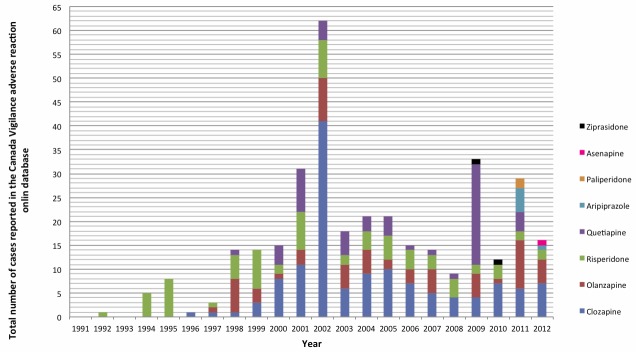
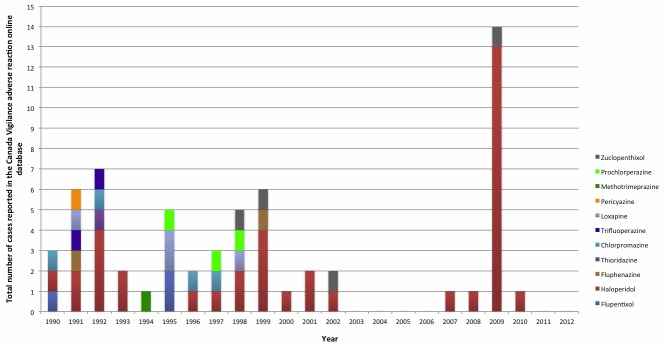
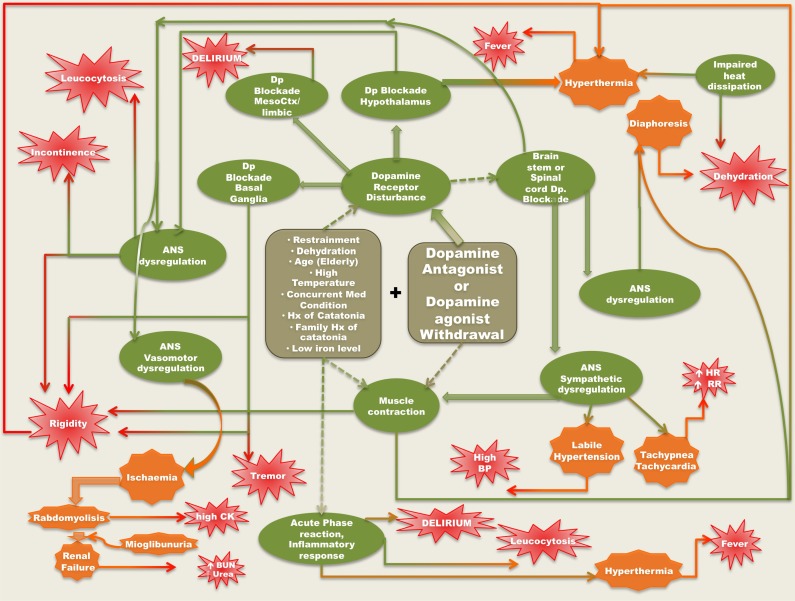
Neuroleptic malignant syndrome (NMS) is a rare but potentially life-threatening side-effect that can occur in response to treatment with antipsychotic drugs. Symptoms commonly include hyperpyrexia, muscle rigidity, autonomic dysfunction and altered mental status. In the current review we provide an overview on past and current developments in understanding the causes and treatment of NMS. Studies on the epidemiological incidence of NMS are evaluated, and we provide new data from the Canada Vigilance Adverse Reaction Online database to elaborate on drug-specific and antipsychotic drug polypharmacy instances of NMS reported between 1965 and 2012. Established risk factors are summarized with an emphasis on pharmacological and environmental causes. Leading theories about the etiopathology of NMS are discussed, including the potential contribution of the impact of dopamine receptor blockade and musculoskeletal fiber toxicity. A clinical perspective is provided whereby the clinical presentation and phenomenology of NMS is detailed, while the diagnosis of NMS and its differential is expounded. Current therapeutic strategies are outlined and the role for both pharmacological and non-pharmacological treatment strategies in alleviating the symptoms of NMS are discussed.
Overview
The claims and statistics of this paper haven’t been checked yet.
Free: it reads the open-access text and checks the first 5 claims that cite a source we can check. Create a free account to check every claim.
Integrity signals
Registry
Cites
Statistics
Figures
Verification
Claims the paper makes
The claims and statistics of this paper haven’t been checked yet.
Free: it reads the open-access text and checks the first 5 claims that cite a source we can check. Create a free account to check every claim.
Claims other papers make about this one
Each is checked against this paper’s own text: does it say what the citing paper says it does?
The cited source says what the claim attributes to it.
In the citing paper
“Patients with a previous history of NMS and/or a personal or family history of catatonia are also at higher risk.867”
Self-check
Percentages, sums and reported differences re-computed from the paper’s own numbers.
The self-check needs the paper’s full text.
Citations
Cites
DIAGNOSTIC AND STATISTICAL MANUAL OF MENTAL DISORDERS, FIFTH EDITION
Abbas, A., & Aminoroaia, M. (2013) · Cited by 1,479
Dunkley, E. J. C., Isbister, G. K., Sibbritt, D., Dawson, A. H., & Whyte, I. M. (2003) · QJM · doi:10.1093/qjmed/hcg109 · Cited by 1,029 · cited 1×
“Serotonin syndrome is a condition characterized by the presence of changes in mental status, agitation, clonus, hyperreflexia, and hyperthermia as a result of toxic and excessive serotoninergic stimulation [60].”
BackgroundNeuroleptic malignant syndrome
(1985) · American Journal of Psychiatry · doi:10.1176/ajp.142.10.1137 · Cited by 978
Serotonin receptors : their key role in drugs to treat schizophrenia
Meltzer, H. Y., Li, Z., Kaneda, Y., & Ichikawa, J. (2003) · Progress in Neuro-Psychopharmacology and Biological Psychiatry · doi:10.1016/j.pnpbp.2003.09.010 · Cited by 775 · cited 1×
“a more balanced dopamine D2 and 5-HT receptor blockade, particularly at the 5-HT2A receptor [26]), the evidence from the current literature is not conclusive in either direction [24].”
BackgroundCatatonia in Psychiatric Classification: A Home of Its Own
Taylor, M. A., & Fink, M. (2003) · American Journal of Psychiatry · doi:10.1176/appi.ajp.160.7.1233 · Cited by 581 · cited 1×
“ECT), and that NMS-like presentations are well documented before the development of antipsychotics [67].”
BackgroundNeuroleptic malignant syndrome
Caroff, S. N., & Mann, S. C. (1993) · Medical Clinics of North America · doi:10.1016/s0025-7125(16)30278-4 · Cited by 514
Neuroleptic malignant syndrome: A pathogenetic role for dopamine receptor blockade?
Henderson, V. W., & Wooten, G. F. (1981) · Neurology · doi:10.1212/wnl.31.2.132 · Cited by 339
Prevention of Ventilator-Associated Pneumonia: An Evidence-Based Systematic Review
Collard, H. R., Saint, S., & Matthay, M. A. (2003) · Annals of Internal Medicine · doi:10.7326/0003-4819-138-6-200303180-00015 · Cited by 304
Frequency and presentation of neuroleptic malignant syndrome in a large psychiatric hospital
(1986) · American Journal of Psychiatry · doi:10.1176/ajp.143.10.1227 · Cited by 302 · cited 4×
“15%, which was comparatively lower than the rate reported by Pope and colleagues five years earlier [4].”
BackgroundResultInfluentialMortality from neuroleptic malignant syndrome.
Shalev, A. Y., Hermesh, H., & Munitz, H. (1989) · PubMed · Cited by 290
Cited by
Items 101–200 of 214
Persistent altered mental status
Cabrera, M. (2021) · Current Psychiatry · doi:10.12788/cp.0180 · Cited by 2
Hypothermia as a Medication Side Effect
Varışlı, B. (2023) · Eurasian Journal of Emergency Medicine · doi:10.4274/eajem.galenos.2023.63383 · Cited by 2
Evaluation of Antipsychotic-Induced Neuroleptic Malignant Syndrome Using a Self-Organizing Map
Miyasaka, K., Hirofuji, S., Maezawa, M., Nakao, S., Yamashita, M., Ichihara, N., Nokura, Y., Tamaki, H., Iguchi, K., & Nakamura, M. (2024) · Cureus · doi:10.7759/cureus.68260 · Cited by 2
“…clinical manifestations of NMS are diverse, its etiology and pathogenesis have not yet been fully elucidated, and most NMS symptoms are thought to result from a rapid decrease in central dopaminergic activity due to the blockade of D2 receptors or abrupt cessation of D2 receptor stimulation [4].”
BackgroundNeuroleptic malignant syndrome in Huntington disease
Funcis, A., Ravera, B., Zinzi, P., Solito, M., Petracca, M., Calabresi, P., & Bentivoglio, A. R. (2024) · European Journal of Neurology · doi:10.1111/ene.16442 · Cited by 2
“Furthermore, even if higher doses are correlated with increased risk of NMS, it can occur even with low doses, indicat - ing that possibly the risk is related more to individual susceptibility than to DRBA dosage [10, 11 ].”
BackgroundInfluentialMisdiagnosis and high-dose polypharmacy-induced neuroleptic malignant syndrome: a case report
Adharshna, T., Kathiresan, P., Tyagi, S., Abins, T. K., & Singh, P. (2025) · East Asian Archives of Psychiatry · doi:10.12809/eaap2509 · Cited by 2
An Analytic Review of Neuropsychiatric Syndromes in the Intensive Care Unit
Radhakrishnan, V., Tareen, K., Cassady, M. K., Morgan, C. A., & Martin, A. R. (2025) · Journal of Intensive Care Medicine · doi:10.1177/08850666251368776 · Cited by 2
Saito, H., Tiger, M., Arakawa, R., & Tateno, A. (2025) · BMC Psychiatry · doi:10.1186/s12888-025-07349-3 · Cited by 2
Olanzapine Long-Acting Injections After Neuroleptic Malignant Syndrome: Two Case Reports
Šagud, M., Vuksan‐Ćusa, B., Božina, N., Lovrić, M., Mihaljević-Peleš, A., & Kramarić, M. (2016) · Journal of Clinical Psychopharmacology · doi:10.1097/jcp.0000000000000568 · Cited by 2
“Low-potency antipsychotics are recommended, including clozapine(3) and quetiapine.(1,3) Both drugs are available only in oral formulations.”
BackgroundIdiosyncratic Adverse Reactions to Psychotropic Medications
Stevens, J. R., Rodgers, J. J., & Stern, T. A. (2016) · Psychiatric Annals · doi:10.3928/00485713-20160622-01 · Cited by 2
Karayağmurlu, A., Karayağmurlu, E., Üstündağ, M. F., & Yazla, E. (2018) · Electronic Journal of General Medicine · doi:10.29333/ejgm/83617 · Cited by 2
“In differential diagnosis of catatonia, NMS has appeared sudden start of mental changes and presented motor rigidity, fever and autonomous dysregulation whereas catatonia was slower onset and presented posturing, automatisms, negativism, rarely hyperkinesias (11).”
BackgroundA Forme Fruste Presentation of Neuroleptic Malignant Syndrome Caused by Antipsychotic Medication
Khan, G. S., Raza, M., & Hussain, N. (2018) · Psychiatric Annals · doi:10.3928/00485713-20180406-01 · Cited by 2
Reconsidering Rigidity in the Diagnosis of Neuroleptic Malignant Syndrome: A Case Report
Khoury, R. E., Kassab, A., Dagher, R., Javelot, H., Chammay, R. E., & Richa, S. (2020) · Journal of Psychiatric Practice · doi:10.1097/pra.0000000000000478 · Cited by 2
Diagnostic and therapeutic challenges in neuroleptic malignant syndrome: a severe medical case
Brogna, P., Colasuonno, R., di Michele, F., Paterniti, A. M., Talamo, A., Ribolsi, M., Jannini, T. B., Siracusano, A., & Niolu, C. (2020) · Rivista di psichiatria · doi:10.1708/3417.34000 · Cited by 2
Neuroleptic malignant syndrome associated with the use of injection zuclopenthixol acetate
Grover, S., Shouan, A., & Sinha, A. (2020) · Industrial Psychiatry Journal · doi:10.4103/ipj.ipj_54_19 · Cited by 2
“Alcohol withdrawal and agitation contributed to the development of dehydration and exhaustion, which are known risk factors for NMS.[8,9] These factors possibly contributed to the development of delirium.”
BackgroundEnteric Fever: Diagnostic Dilemma Encountered in Domperidone-Induced Neuroleptic Malignant Syndrome
Akhunzada, H. A., Rehman, H. U., Tariq, N., Arif, M. A., & Niazi, R. (2021) · Cureus · doi:10.7759/cureus.15385 · Cited by 2
“NMS can be treated with bromocriptine, dantrolene, amantadine, and there is some role for anticholinergics as well [7-14].”
BackgroundInfluential“Neuroleptic Malignant Syndrome (NMS) Sans Rigidity”……Does it Exist??
Shaik, R. S., Manorenj, S., & Rao, R. V. (2022) · Annals of Indian Academy of Neurology · doi:10.4103/aian.aian_593_22 · Cited by 2
Managing Schizophrenia: A Challenge for Physicians
Mumtaz, N., & Hassan, M. O. (2023) · Springer eBooks · doi:10.1007/978-981-19-7022-1_9 · Cited by 2
Neuroleptic Malignant Syndrome After Lithium Withdrawal
OKUBO, S., Bannai, T., Seki, T., & Shiio, Y. (2023) · Journal of Clinical Psychopharmacology · doi:10.1097/jcp.0000000000001727 · Cited by 2
Zabel, M., & Kandukuri, R. (2024) · BMJ Case Reports · doi:10.1136/bcr-2023-257563 · Cited by 2
Malignant Catatonia in the Setting of Acute Methamphetamine and Cocaine Intoxication
Mullen, N. J., Karre, V. M. M., & Balasanova, A. A. (2024) · Journal of Addiction Medicine · doi:10.1097/adm.0000000000001353 · Cited by 2
Schizophrenia and Related Psychoses
(2025) · Wiley eBooks · doi:10.1002/9781119870203.mpg001.pub2 · Cited by 2
Neuroleptic Malignant Syndrome Requires Intensive Care Monitoring: A Review with Three Cases
Şen, İ. A., Kılınç, M., Şen, C., & Sungurtekin, H. (2021) · Türk yoğun bakım derneği dergisi/Türk yoğun bakım dergisi · doi:10.4274/tybd.galenos.2021.18480 · Cited by 1
Synopsis of Chemical and Drug-Related Agents That Cause Movement Disorders
Korkmaz, Ş. A. (2025) · Springer eBooks · doi:10.1007/978-3-031-73368-0_126 · Cited by 1
Neuroleptic Malignant Syndrome on Chronic Trifluoperazine Therapy: A Diagnostic Dilemma
Baral, S., Bhattarai, S., & Joshi, K. C. (2025) · Clinical Case Reports · doi:10.1002/ccr3.71631 · Cited by 1
Promethazine-induced neuroleptic malignant syndrome under general anesthesia: a case report
Liu, P., & Liao, Z. (2026) · Frontiers in Psychiatry · doi:10.3389/fpsyt.2026.1700644 · Cited by 1
“…resembling Parkinsonian symptoms, such as dopamine depletion in the tuberoinfundibular pathway causing thermoregulatory dysfunction and fever, alterations to the nigrostriatal pathway inducing muscle rigidity, and even mental status impairment due to autonomic nervous system dysfunction (5).”
Clinical Outcomes of Dantrolene in Neuroleptic Malignant Syndrome: A Nationwide Retrospective Study
Suekane, A., Senda, A., Morishita, K., & Fushimi, K. (2026) · Acta Psychiatrica Scandinavica · doi:10.1111/acps.70073 · Cited by 1
Boonstra, J. T. (2026) · Clinical Parkinsonism & Related Disorders · doi:10.1016/j.prdoa.2026.100440 · Cited by 1
“This paradox underlies a central safety controversy: whether lithium ’ s beneficial signaling effects of GSK-3 β inhibition, autophagy enhancement, and anti-inflammatory modulation can be separated from its toxic mechanisms, such as mitochondrial dysfunction and demyelination [12,80].”
Usta, N. C., Aydın, A., Sivrikaya, Z., & Akyol, A. (2026) · Acta Neurologica Belgica · doi:10.1007/s13760-026-03068-y · Cited by 1
“Although established diagnostic frameworks such as DSM-5, Levenson’s criteria, and the approach proposed by Adityanjee and Aderibigbe provide useful guidance, they may fail to capture non-classical cases [2–4].”
Molecular Mechanisms of Acute Drug Toxicity in Polypharmacy: Analgesic–Psychotropic Interactions
Rijavec, N., & Rijavec, B. (2026) · International Journal of Molecular Sciences · doi:10.3390/ijms27167168 · Cited by 1
“Reported risk factors include high antipsychotic dose, recent initiation or dose increase, parenteral administration, polypharmacy, dehydration, physical restraint, high ambient temperature, comorbidity, and previous NMS [69].”
Paroxysmal Sympathetic Hyperactivity in the Neurological Intensive Care Unit
Ko, S. (2015) · Journal of Neurocritical Care · doi:10.18700/jnc.2015.8.2.66 · Cited by 1
“정확한 진단을 위해서는 도파민길항제를 투약하였거나, 도파민작용제를 갑 자기 중단한 병력이 있는 지를 잘 파악하여야 한다.(16)”
A Case of Neuroleptic Malignant Syndrome in Pregnancy
Mittal, M., Garcia, P. D., Lee, J. P., & Agustines, D. A. (2019) · Cureus · doi:10.7759/cureus.4211 · Cited by 1
“Changes in dosage and intramuscular administration of antipsychotics have also been associated with an increased risk of NMS [5].”
BackgroundLee, J. M., Paek, S. H., Park, H. R., Lee, K. H., Shin, C., Park, H. Y., Park, H., Kim, D. G., & Jeon, B. S. (2016) · The Korean Journal of Critical Care Medicine · doi:10.4266/kjccm.2016.31.1.34 · Cited by 1
Morcos, M., Corns, J., & Hillen, J. B. (2018) · Journal of Pharmacy Practice · doi:10.1177/0897190018806414 · Cited by 1
“Associated risk factors include exposure to multiple antipsychotics, dehydration, and multiple comorbidities.(3) Once the syndrome begins, it usually evolves over 24 to 72 hours.”
BackgroundMethodInfluentialSíndrome neuroléptico maligno asociado a la administración del haloperidol. Caso clínico
Marín, J. A., Arango, C. C., Camargo, L., Agudelo, J. J., & Fernández-Álvarez, J. (2018) · Revista de toxicología · Cited by 1
Neuroleptic Malignant Syndrome: A Pilot Study on Psychiatric Inpatients in Iran
Shafti, S. S., Memarie, A., Rezaie, M., & Hamidi, M. (2019) · Current Psychopharmacologye · doi:10.2174/2211556008666191004121352 · Cited by 1
Cargnel, E. G., Cardoso, P. C., Irigoyen, J., & Puglisi, S. G. (2018) · Archivos Argentinos de Pediatria · doi:10.5546/aap.2018.e115 · Cited by 1
Ng, B. Z., & Yacob, S. (2021) · Indian Journal of Psychological Medicine · doi:10.1177/02537176211045621 · Cited by 1
EBATA, M., Kimura, R., Koda, K., KIMURA, H., Uzawa, M., & KITAMURA, T. (2021) · THE JOURNAL OF JAPAN SOCIETY FOR CLINICAL ANESTHESIA · doi:10.2199/jjsca.41.485 · Cited by 1
Psychopharmacology in the Critical Care Setting
Nayak, S. M., Brigham, J., Gerstenblith, T. A., & Prince, E. J. (2021) · Oxford University Press eBooks · doi:10.1093/oso/9780190077013.003.0011 · Cited by 1
Emergencies in movement disorders
Hero, M., Rački, V., & Vuletić, V. (2021) · Rad Hrvatske akademije znanosti i umjetnosti Medicinske znanosti · doi:10.21857/m3v76tel1y · Cited by 1
“These measures include: (1) domestic measures, by what we consider removing obstacles at the patients home, (2) physical assistance, in the form of a walking cane, walking assistant or possibly a wheelchair, and (3) managing possible risk factors, like nocturia, orthostatic hypotension and dyskinesia (17).”
BackgroundInfluentialFunctional propriospinal myoclonus in neuroleptic malignant syndrome
Giorelli, M. (2023) · Neurological Sciences · doi:10.1007/s10072-023-07085-0 · Cited by 1
“A diagnosis of Neuroleptic Malignant Syndrome (NMS) was made [1], and the patient was transferred to the Intensive Care Unit (ICU).”
InfluentialAutonomic Dysfunction Due to Toxic Agents and Drugs
Locatelli, C., Lonati, D., Schicchi, A., & Petrolini, V. M. (2023) · Springer eBooks · doi:10.1007/978-3-031-43036-7_19 · Cited by 1
Tariq, M., Wentzel, D., & Beggs, J. (2023) · Kansas Journal of Medicine · doi:10.17161/kjm.vol16.21303 · Cited by 1
Infectious disease evaluations in a psychiatric unit, an observational study
Fíca, A., Gálvez, L., Teneb, E., Fernandoi, C., & Acevedo, S. (2023) · Revista médica de Chile · doi:10.4067/s0034-98872023001001271 · Cited by 1
“The main axis of treatment is suspension of the compound involved, which allows improvement in about 3 to 10 days 19-21 .”
Neuroleptic Malignant Syndrome with Low-dose Quetiapine After Venlafaxine Withdrawal: A Case Report
Özden, H. C., & Gürel, Ş. C. (2024) · Turkish Journal of Psychiatry · doi:10.5080/u27497 · Cited by 1
Anti-NMDAR Encephalitis developing neuroleptic malignant syndrome
Dhaliwal, A. S., Sharma, S., & Panda, S. P. (2024) · Industrial Psychiatry Journal · doi:10.4103/ipj.ipj_52_24 · Cited by 1
“[5] The pathophysiological mechanisms of NMS are likely related to antipsychotic-induced dopamine blockade.”
Synopsis of Chemical and Drug-related Agents That Cause Movement Disorders
Korkmaz, Ş. A. (2024) · Springer eBooks · doi:10.1007/978-3-031-32035-4_126-1 · Cited by 1
Chapter 5. Toxicological Exposures and Nutritional Deficiencies in the Psychiatric Patient
Zein, M., Khan, S., Legha, J. K., & Wasserman, L. (2020) · American Psychiatric Association Publishing eBooks · doi:10.1176/appi.books.9781615378869.lg05 · Cited by 1
Ceyran, B., Aydın, E. P., Yucel, B., & Demirelli, D. S. (2026) · The Cerebellum · doi:10.1007/s12311-026-01959-7 · Cited by 1
กลุ่มอาการ Neuroleptic malignant syndrome:การทบทวนวารสารและรายงานผู้ป่วย 6 ราย
Sirisuwannarat, S. (2020) · Journal of Charoenkrung Pracharak Hospital · Cited by 1
Runciman, R., Ireland, S., & Wasunna‐Smith, B. (2024) · Cambridge University Press eBooks · doi:10.1017/9781108976770.022 · Cited by 1
Neuroleptic Malignant Syndrome and Hyperthermia
Renew, J. R., & Mordecai, M. (2019) · Oxford University Press eBooks · doi:10.1093/med/9780190862923.003.0076
Antipsychotic Induced Malignant Syndrome: A Native Inpatient Evaluation
Shafti, S. S. (2019) · Novel Research in Sciences · doi:10.31031/nrs.2019.02.000527
“be overrepresented in patients who develop NMS compared with those who do not [4].”
BackgroundInfluentialNeuroleptic Malignant Syndrome: An Undiagnosed Case
Chaudhry, H. H. (2019) · Scholarly Journal of Psychology and Behavioral Sciences · doi:10.32474/sjpbs.2019.02.000147
40.8℃の高体温とショックを呈した悪性症候群に対して,ダントロレンと急速冷却併用が奏効した1救命例
齊木, 巌., 今泉, 均., 宮崎, 夏., 関根, 秀., & 内野, 博. (2019) · 蘇生 · doi:10.11414/jjreanimatology.38.1_1
Psychological Interventions and Pharmacology
Suer, M. J., & Sehgal, N. (2021) · Springer eBooks · doi:10.1007/978-3-030-68204-0_7
Neuromuskuläre Erkrankungen auf Intensivstation
Müllges, W. (2021) · Intensivmedizin up2date · doi:10.1055/a-1250-7249
Immune Dysfunction and Catatonia
Rogers, J. P., & Pollak, T. A. (2021) · Springer eBooks · doi:10.1007/978-3-030-71229-7_18
Sindrom neuroleptic malign - Caz clinic | [Neuroleptic malignant syndrome - Case report]
Rancz, R., Ungureanu, E.-L., Ciopleiaș, B., Banu, A., Irincu, L., & Falup‐Pecurariu, C. (2022) · Jurnal Medical Brasovean · doi:10.31926/jmb.2021.2.2
Kung, D. H., Nguyen, T. P., & Das, R. (2019) · Springer eBooks · doi:10.1007/978-3-030-11132-8_5
Neuroleptic malignant syndrome associated with the use of injection zuclopenthixol acetate
Shouan, A., Sinha, A. K., & Grover, S. (2020) · Industrial Psychiatry Journal · doi:10.4103/ipj.ipj_49_19
“Alcohol withdrawal and agitation contributed to the development of dehydration and exhaustion, which are known risk factors for NMS.[8,9] These factors possibly contributed to the development of delirium.”
BackgroundInfluentialPsychopharmakologische Grundlagen
Köhler, T. (2020) · Springer eBooks · doi:10.1007/978-3-662-61814-1_8
Dwarfism Tanılı Hastada Atipik Nöroleptik Malign Sendrom: Bir Olgu Sunumu
Köse, S., Puşuroğlu, M., & Hocaoğlu, Ç. (2022) · Balıkesir Medical Journal · doi:10.33716/bmedj.1072434
Serotonin Syndrome and Neuroleptic Malignant Syndrome
Salem, H., Finocchio, B., & Pigott, T. A. (2022) · Oxford University Press eBooks · doi:10.1093/med/9780197574317.003.0006
Síndrome Neuroléptico Maligno: A propósito de un caso clínico
Riofrío Mora, D. I., Guerra Samaniego, D. H., Velasteguí, D. G., Chalaco Agreda, P. A., & Torres, L. C. (2019) · Revista Médica-Científica CAMbios HECAM · doi:10.36015/cambios.v16.n1.2017.279
Antidopaminergt syndrom – ikke malignt nevroleptikasyndrom
Dietrichs, E. S., & Dietrichs, E. (2022) · Tidsskrift for Den norske legeforening · doi:10.4045/tidsskr.22.0415
Jha, S., Taallapalli, A. V. R., Kishore, P., Nashi, S., & Kulkarni, G. B. (2022) · Annals of Indian Academy of Neurology · doi:10.4103/aian.aian_619_22
“frequent in adults, mainly in women, with an annual incidence of three to four cases per million and a mortality rate of 8%.[1,2] Abnormal uterine bleeding (AUB) is defined by the International Federation of Obstetrics and Gynecology (FIGO) as any departure from a normal menstrual cycle pattern, severe enough to impac…”
BackgroundPoian, L. R. (2022) · Digital Library of Theses and Dissertations (Universidade de São Paulo) · doi:10.11606/d.42.2022.tde-08022023-170937
Neuroleptic malignant syndrome in fields other than psychiatry
Shimada, K., Kase, Y., Nakatsuru, M., & Tanzawa, H. (2023) · Oral Science International · doi:10.1002/osi2.1171
A Case of Neuroleptic Malignant Syndrome Presenting as Anxiety
Hanson, C. G., & Chopra, A. (2023) · Cureus · doi:10.7759/cureus.35892
“This syndrome can occur within hours of exposure to a neuroleptic agent; however, on average, the time of onset is between four and 14 days, with up to 90% occurring within the first 10 days of starting these medications [7].”
BackgroundAltered Mental Status and Neurologic Syndromes
Heinrich, T. W., Steele, I. C., & Brady, S. J. (2023) · Oxford University Press eBooks · doi:10.1093/med/9780197624005.003.0007
Psychosis, Psychotic Disorders, and the Schizophrenia Spectrum
Wolf, C., & Winston, H. R. (2023) · Oxford University Press eBooks · doi:10.1093/med/9780197624005.003.0009
Serious states induced by taking psychopharmacs and their treatment
Češková, E., & Horská, K. (2023) · Psychiatrie pro praxi · doi:10.36290/psy.2023.015
PEIXES PEÇONHENTOS E VENENOSOS
Norões, A. K., Holanda, F. M. T., Tavares, R. S., Cacuro, M. N., & Sousa, P. D. C. (2023) · Amplla Editora eBooks · doi:10.51859/amplla.tca157.1123-20
Abstracts Criticare - IJCCM2023
(2023) · Indian Journal of Critical Care Medicine · doi:10.5005/ijccm-27-s1-s1
Safety and side effects of psychotropic medications, volume II
(2023) · Frontiers research topics · doi:10.3389/978-2-8325-4179-1
Case reports in psychopharmacology
(2024) · Frontiers research topics · doi:10.3389/978-2-8325-4421-1
Paudel, S., Lim, C., & Freudenreich, O. (2024) · Elsevier eBooks · doi:10.1016/b978-0-443-11844-9.00050-3
Neuroleptic Malignant Syndrome: A Systematic Review
Lakkas, Y., Warkad, R., Kharat, R., Ansari, M., Shaikh, A. S., & Shaikh, S. (2024) · The Journal of Medical Sciences · doi:10.5005/jp-journals-10045-00259
Geriatric Pharmacology Overview
How, P. C., Sommer, B. R., & Xiong, G. L. (2024) · Springer eBooks · doi:10.1007/978-3-031-53976-3_2
Tüm Hekimler İçin Poliklinik Koşullarında Hayati Psikiyatrik Bilgi ve Beceriler
Yaşar, A. B., Demirkan, A. K., Günendi, P. B., Karacan, F. A., Şahan, E., Taşdelen, R., Akdağ, E. M., Gündoğmuş, İ., Gürcan, A., Kahraman, B., et al. (2022) · Akademisyen Kitabevi eBooks · doi:10.37609/akya.1024
PIKTYBINIS NEUROLEPTINIS SINDROMAS: EPIDEMIOLOGIJA, RIZIKOS VEIKSNIAI, SIMPTOMAI, GYDYMO GALIMYBĖS
Kazlauskaitė, Ž. (2024) · Health Sciences · doi:10.35988/sm-hs.2024.223
Dystonia, Acquired and Degenerative Etiologies
Salles, P. A., & Muñoz, D. (2024) · Elsevier eBooks · doi:10.1016/b978-0-323-95702-1.00195-0
Zhang, V., Wirtz, A., Dhingra, A., Zahid, A., & Hussain, N. (2024) · Bipolar Disorders · doi:10.1111/bdi.13503
Restarting Neuroleptics in Neuroleptic Malignant Syndrome – A Case Series
Rao, A., & Sreedaran, P. (2024) · Annals of Indian Psychiatry · doi:10.4103/aip.aip_4_24
Efeitos adversos agudos de medicações utilizadas na psiquiatria
de Castro, R. A. M., & Del‐Ben, C. M. (2024) · Medicina (Ribeirão Preto) · doi:10.11606/issn.2176-7262.rmrp.2024.221674
Fallstricke bei neurologischen Erkrankungen
Albrecht, P. (2024) · Springer eBooks · doi:10.1007/978-3-662-68824-3_16
Paudel, S., Lim, C., & Freudenreich, O. (2024) · Elsevier eBooks · doi:10.1016/b978-0-443-11972-9.00009-0
Chapter 16. Serotonin Syndrome
Garcia, M. D., & Aggarwal, R. (2023) · American Psychiatric Association Publishing eBooks · doi:10.1176/appi.books.9781615379903.lg16
Chapter 6. Neurocognitive Disturbances
(2019) · American Psychiatric Association Publishing eBooks · doi:10.1176/appi.books.9781615379361.lg06
(2020) · American Psychiatric Association Publishing eBooks · doi:10.1176/appi.books.9781615379569.lg11
Skřont, T., Sagan, J., & Hýža, M. (2025) · BMC Psychiatry · doi:10.1186/s12888-025-07032-7
“Other potential factors implicated in the pathophysiology of NMS include muscle mitochondrial dysfunction, an altered sympathetic nervous system, and, more recently, inflam-mation-related changes [5].”
InfluentialAcute Febrile Encephalopathy with Rigidity
Kelly, D., & Kelleher, E. M. (2025) · Journal of Intensive Care Medicine · doi:10.1177/08850666251345448
Neuroleptic Malignant Syndrome and Hyperthermia
Fanous, J. A., & Skolnik, A. B. (2025) · Oxford University Press eBooks · doi:10.1093/med/9780197628638.003.0076
Understanding Neuroleptic Malignant Syndrome: Lessons from a Near-Miss Case
(2025) · Medicine & health · doi:10.17576/mh.2025.2002.35
A Young Man with Altered Mental Status, Rigidity, and Hyperthermia
Alsakha, A., Giardina, D., Cochran-Caggiano, N., Curtin, A., Burke, D. J., & Burke, S. G. (2025) · The Neurohospitalist · doi:10.1177/19418744251364117
NUVATUL-MZ Ointment for the Treatment of Ganglion Cyst
Bhavsar, V., Bhatia, T., Shah, N., Dave, Z., Parmar, M. Y., & Pandey, P. (2025) · Journal of Biomedical Research & Environmental Sciences · doi:10.37871/jbres2171
Neuroleptic Malignant Syndrome Masquerading as Sepsis
Abhishek, D. M. (2025) · Journal of Critical and Intensive Care · doi:10.14744/dcybd.2025.84516
Chen, H., Zhang, X., Chen, D., Jiang, X., & Yu, C. (2025) · Medicine · doi:10.1097/md.0000000000046304
“[14] This study aims to identify significant adverse effects of dantrolene therapy, compare adverse effects between MH and non-MH indications, highlight previously underre-ported AEs, and investigate potential mechanisms underlying these adverse reactions.”
Metadata
- Authors
- Tse, L., Barr, A., Scarapicchia, V., & Vila-Rodriguez, F.
- Affiliations
- University of British Columbia Hospital (CA)
- University of British Columbia (CA)
- ORCID
- Barr, Alasdair
- Venue
- Current Neuropharmacology
- Publisher
- Bentham Science Publishers Ltd.
- Published
- 2015-07-14
- Volume
- 13
- Issue
- 3
- Pages
- 395-406
- ISSN
- 1570-159X (ISSN-L)
- PMC
- PMC4812801
- OpenAlex
- W2332600596
- Semantic Scholar
- a984302e4da2432f25d4ae881e5670c169d479e8
- Cited by
- 179
- References
- 73
- Citations by year
- 2026: 7 · 2025: 18 · 2024: 25 · 2023: 26 · 2022: 15 · 2021: 27 · 2020: 11 · 2019: 16 · 2018: 19 · 2017: 4 · 2016: 10 · 2015: 1
- FWCI
- 9.19
- Type
- journal article
- Language
- en
- Open access
- green
- www.ncbi.nlm.nih.gov
- Licence
- cc-by-nc
- Locations
- Current Neuropharmacology (publishedVersion)
- Europe PMC (PubMed Central) (publishedVersion, cc-by-nc)
- PubMed Central (publishedVersion, cc-by-nc)
- PubMed (publishedVersion)
- Topics
- Health Sciences › Medicine › Psychiatry and Mental health › Electroconvulsive Therapy Studies
- Health Sciences › Medicine › Psychiatry and Mental health › Schizophrenia research and treatment
- Life Sciences › Pharmacology, Toxicology and Pharmaceutics › Toxicology › Pharmacovigilance and Adverse Drug Reactions
- Keywords
- neuroleptic malignant syndrome, antipsychotic adverse effects, hyperpyrexia, muscle rigidity, autonomic dysfunction, altered mental status, adverse drug reaction reporting, risk factors, dopamine receptor blockade, etiopathogenesis, diagnosis, differential diagnosis, treatment options, polypharmacy
- MeSH terms
- Animals, Diagnosis, Differential, Humans, Muscle Rigidity, Neuroleptic Malignant Syndrome, Risk Factors, Antipsychotic Agents, Incidence
About these checks
Registry, retraction, Cites and statistics results are computed, not judged, with one exception: a printed reference that no index lists is read once by a model before it counts as a citation error. Claims are extracted by a model and kept only when their quote appears verbatim in the text; each cited source is then checked, with a model’s help, for whether it says what the claim relies on. Those verdicts can be wrong — read the claim’s quote and the cited source before relying on one.
Statistics and arithmetic are recomputed, not judged.
Confidence bands are shown only for fields calibrated on our annotated test set. None is calibrated yet, so no band is shown.
What counts as a claim ›How we measure confidence ›How we check this ›
Are you an author, or do you see a problem with this page? Request a review
Data sources
Bibliographic data: Semantic Scholar, OpenAlex, Crossref.
Contains information from the Semantic Scholar Academic Graph Datasets, made available under the ODC Attribution License (ODC-BY 1.0).
Semantic Scholar’s data is described in: Kinney, R., et al. (2023). The Semantic Scholar Open Data Platform. arXiv:2301.10140.
