

Stress, the Autonomic Nervous System, and the Immune-kynurenine Pathway in the Etiology of Depression
Open accessThe DOI matches its Crossref record; 109 of the 109 references it cites were found in a registry or an index.
Abstract
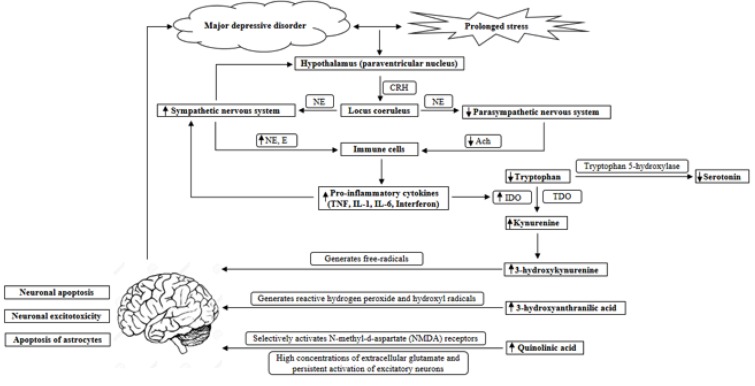
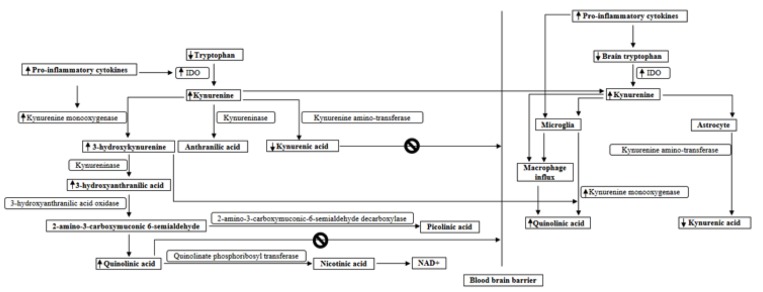
The autonomic nervous system is one of the major neural pathways activated by stress. In situations that are often associated with chronic stress, such as major depressive disorder, the sympathetic nervous system can be continuously activated without the normal counteraction of the parasympathetic nervous system. As a result, the immune system can be activated with increased levels of proinflammatory cytokines. These inflammatory conditions have been repeatedly observed in depression. In the search for the mechanism by which the immune system might contribute to depression, the enhanced activity of indoleamine 2,3- dioxygenase by pro-inflammatory cytokines has been suggested to play an important role. Indoleamine 2,3-dioxygenase is the first enzyme in the kynurenine pathway that converts tryptophan to kynurenine. Elevated activity of this enzyme can cause imbalances in downstream kynurenine metabolites. This imbalance can induce neurotoxic changes in the brain and create a vulnerable glial-neuronal network, which may render the brain susceptible to depression. This review focuses on the interaction between stress, the autonomic nervous system and the immune system which can cause imbalances in the kynurenine pathway, which may ultimately lead to major depressive disorder.
Overview
The claims and statistics of this paper haven’t been checked yet.
Free: it reads the open-access text and checks the first 5 claims that cite a source we can check. Create a free account to check every claim.
Integrity signals
Registry
Cites
Statistics
Figures
Verification
Claims the paper makes
The claims and statistics of this paper haven’t been checked yet.
Free: it reads the open-access text and checks the first 5 claims that cite a source we can check. Create a free account to check every claim.
Claims other papers make about this one
Each is checked against this paper’s own text: does it say what the citing paper says it does?
The source backs part of the claim, not all of it — or backs it for a different population, condition or comparison.
In the citing paper
“As neurons in the PVH and LC project to sympathetic centres in the brain stem and spinal cord, it is possible that elevated sympathetic tone arising from the activation of these brain regions during chronic stress drives these HSC and leukocyte dynamics in the bone marrow66–68.”
From Central regulation of stress-evoked peripheral immune responses (2023) · cites this paper as [66]
Experimental — accuracy not yet measuredThe source backs part of the claim, not all of it — or backs it for a different population, condition or comparison.
In the citing paper
“Briefly, responding to social stress, neurons in the hypothalamus release corticotropin‐releasing hormone (CRH) directly into the spinal cord and brain stem, sparking the additional release of CRH and quick release of epinephrine and norepinephrine from the adrenal glands (reviewed in (Won & Kim, 2016).”
From On race, human variation, and who gets and dies of sepsis (2022) · cites this paper as Won & Kim, 2016
Experimental — accuracy not yet measured
Self-check
Percentages, sums and reported differences re-computed from the paper’s own numbers.
The self-check needs the paper’s full text.
Citations
Cites
Correspondence - Tranexamic acid for traumatic brain injury
(2005) · London School of Economics and Political Science Theses Online (London School of Economics and Political Science) · doi:10.1016/s0140-6736 · Cited by 11,894
Vagus nerve stimulation attenuates the systemic inflammatory response to endotoxin
Borovikova, L. V., Ivanova, S., Zhang, M., Yang, H., Botchkina, G. I., Watkins, L. R., Wang, H., Abumrad, N., Eaton, J. W., & Tracey, K. J. (2000) · Nature · doi:10.1038/35013070 · Cited by 4,211 · cited 1×
“In contrast, ACh has been reported to dose-dependently inhibit the release of TNF, along with other proinflammatory cytokines such as IL-1, IL-6, and IL-18 [40].”
BackgroundThe Concepts of Stress and Stress System Disorders: Overview of Physical and Behavioral Homeostasis
Chrousos, G. P. (1992) · JAMA · doi:10.1001/jama.1992.03480090092034 · Cited by 2,689 · cited 2×
“Stress is defined as a state of threatened homeostasis following exposure to extrinsic or intrinsic adverse forces [9].”
BackgroundInfluentialElenkov, I. J., Wilder, R. L., Chrousos, G. P., & Vizi, E. S. (2000) · Pharmacological Reviews · doi:10.1016/s0031-6997(24)01470-4 · Cited by 2,252 · cited 1×
“Although stress initially activates both the ANS and the HPA axis, this review will focus on the role of the ANS, which has received much less attention than the HPA axis [22].”
BackgroundRajkowska, G., Miguel-Hidalgo, J. J., Wei, J., Dilley, G., Pittman, S. D., Meltzer, H. Y., Overholser, J. C., Roth, B. L., & Stockmeier, C. A. (1999) · Biological Psychiatry · doi:10.1016/s0006-3223(99)00041-4 · Cited by 1,477 · cited 13×
“As we consider inflammatory conditions to be caused by an over-driven SNS together with an under-driven PNS induced by stress, treatments that increase the parasympathetic tone and hence strengthen the cholinergic anti-inflammatory pathway [102] may be useful in treating MDD.”
ResultInfluentialCytokine-Associated Emotional and Cognitive Disturbances in Humans
Reichenberg, A., Yirmiya, R., Schuld, A., Kraus, T., Haack, M., Morag, A., & Pollmächer, T. (2001) · Archives of General Psychiatry · doi:10.1001/archpsyc.58.5.445 · Cited by 1,365 · cited 7×
“As a result, pro-inflammatory cytokines, such as TNF, IL-1, and IL-6, can increase in prolonged stressful situations such as depression.”
BackgroundInfluentialStress, depression, the immune system, and cancer
Reiche, E. M. V., Nunes, S. O. V., & Morimoto, H. K. (2004) · The Lancet Oncology · doi:10.1016/s1470-2045(04)01597-9 · Cited by 1,364 · cited 1×
“The activation of the SNS in turn stimulates the release of CRH by the hypothalamus, creating a positive bidirectional feedback loop [29].”
BackgroundO'Connor, J. C., Lawson, M. A., André, C., Moreau, M., Lestage, J., Castanon, N., Kelley, K. W., & Dantzer, R. (2009) · Molecular Psychiatry · doi:10.1038/sj.mp.4002148 · Cited by 1,278 · cited 1×
“The authors confirm that this article content has no conflict of interest.”
BackgroundThe increasing burden of depression
Briley, M., & Lépine (2011) · Neuropsychiatric Disease and Treatment · doi:10.2147/ndt.s19617 · Cited by 1,211
The global burden of women's cancers: a grand challenge in global health
Ginsburg, O., Bray, F., Coleman, M. P., Vanderpuye, V., Eniu, A., Kotha, S. R., Sarker, M., Huong, T. T., Allemani, C., Dvaladze, A., et al. (2017) · The Lancet · doi:10.1016/s0140-6736(16)31392-7 · Cited by 1,127
Cited by
Items 101–200 of 330
Possible antidepressant mechanism of acupuncture: targeting neuroplasticity
Xu, N., He, Y., Wei, Y.-N., Bai, L., & Wang, L. (2025) · Frontiers in Neuroscience · doi:10.3389/fnins.2025.1512073 · Cited by 20
Smith, A. L., Berry, A. K., Brubaker, L. T., Cunningham, S. D., Gahagan, S., Low, L. K., Mueller, M. G., Sutcliffe, S., Williams, B. R., & Brady, S. S. (2023) · Neurourology and Urodynamics · doi:10.1002/nau.25356 · Cited by 21
“73,74 Animal studies have shown that decreased levels of serotonin in the CNS can produce detrusor overactivity and resultant urinary frequency, while activation of the serotonergic system decreases involuntary bladder contractions and urinary frequency.”
BackgroundKokori, E., Aderinto, N., Olatunji, G. D., Komolafe, R., Abraham, I. C., Babalola, A. E., Aboje, J. E., Ukoaka, B. M., Samuel, O., Akinmeji, A., et al. (2024) · European journal of medical research · doi:10.1186/s40001-024-02070-5 · Cited by 20
“A heightened sympathetic response results in increased anxiety and difficulty in focusing, while inadequate parasympathetic activation could impair the ability to calm down and recover from stress [42].”
BackgroundMcCarthy, B., O’Neill, G. J., & Abu‐Ghannam, N. (2022) · Marine Drugs · doi:10.3390/md20080493 · Cited by 22
“Furthermore, chronic stress is associated with depression and inflammation, and is an indicator for insomnia [11,60].”
BackgroundChen, S., Wang, H., Yue, J., Guan, N., & Wang, X. (2022) · Comprehensive Psychiatry · doi:10.1016/j.comppsych.2022.152347 · Cited by 23
Diagnosis dan Terapi Non-farmakologis pada Hipertensi
Saputra, P. B. T., Lamara, A. D., Saputra, M. E., Maulana, R. A., Hermawati, I. E., Ahmad, H. A., Prastowo, R. A., & Oktaviono, Y. H. (2023) · Cermin Dunia Kedokteran · doi:10.55175/cdk.v50i6.624 · Cited by 36
Peng, L., Bi, S., Liu, X., Long, T., Zhao, Y., Li, F. Y., Yang, T., & Chenglong, Z. (2020) · BMJ Open · doi:10.1136/bmjopen-2019-033408 · Cited by 21
A Potential Interface between the Kynurenine Pathway and Autonomic Imbalance in Schizophrenia
Büki, A., Kékesi, G., Horváth, G., & Vécsei, L. (2021) · International Journal of Molecular Sciences · doi:10.3390/ijms221810016 · Cited by 18
Genetic variants associated with syncope implicate neural and autonomic processes
Aegisdottir, H. M., Þórólfsdóttir, R. B., Sveinbjörnsson, G., Stefánsson, Ó. A., Gunnarsson, B., Tragante, V., Þorleifsson, G., Stefánsdóttir, L., Thorgeirsson, T. E., Ferkingstad, E., et al. (2023) · European Heart Journal · doi:10.1093/eurheartj/ehad016 · Cited by 18
Lu, X., Wang, Y.-F., Liu, C., & Wang, Y. (2017) · PLoS ONE · doi:10.1371/journal.pone.0172339 · Cited by 18
Trigeminal Stimulus Menthol Masks Bitter Off-Flavor of Artificial Sweetener Acesulfame-K
Büchner, K., Haagen, J., Sastrosubroto, A., Kerpes, R., Freiherr, J., & Becker, T. M. (2022) · Foods · doi:10.3390/foods11182734 · Cited by 19
“This activates the locus coeruleus of the brain stem, thereby increasing the activity of the SNS, reducing the activity of the PNS [37], and accelerating the heart rate.”
BackgroundJulian, M., Somers, J. A., Schetter, C. D., & Guardino, C. M. (2023) · Stress and Health · doi:10.1002/smi.3275 · Cited by 20
Austelle, C. W., Sege, C. T., Kahn, A. T., Gregoski, M. J., Taylor, D. L., McTeague, L. M., Short, E. B., Badran, B. W., & George, M. S. (2023) · Neuromodulation Technology at the Neural Interface · doi:10.1016/j.neurom.2023.07.012 · Cited by 19
Ye, J., Cheung, W. M., & Tsang, H. W. H. (2019) · Evidence-based Complementary and Alternative Medicine · doi:10.1155/2019/2183403 · Cited by 17
“It has been reported that the positive relationship between NE and TNF has been found, and both catecholamines of NE and E stimulated the release of IL-6 via immune cells [43–45].”
BackgroundInfluentialHalaris, A. E. (2018) · Future Neurology · doi:10.2217/fnl-2017-0039 · Cited by 18
The Influence of Stress Noise and Music Stimulation on the Autonomous Nervous System
Rodrigues, M. J., Postolache, O. A., & Cercas, F. (2023) · IEEE Transactions on Instrumentation and Measurement · doi:10.1109/tim.2023.3279881 · Cited by 18
“The parts of the human body that are activated by stress and which will trigger all the necessary responses are the hypothalamic-pituitary-adrenal (HPA) axis and the autonomic nervous system [7].”
BackgroundDada, T., Gwal, R. S., Mahalingam, K., Chandran, D. S., Angmo, D., Gupta, S., Velpandian, T., & Deepak, K. K. (2024) · Journal of Glaucoma · doi:10.1097/ijg.0000000000002356 · Cited by 15
“10 Studies have demonstrated that stress can cause an increase in sympathetic activity and a decline in parasympathetic activity 11 and can aggravate the preexisting autonomic dysfunction in patients with glaucoma.”
BackgroundZhang, Y., Zhai, Y., Niu, B., Liu, X., Zhang, X., Wu, S., & Zhu, C. (2022) · Psychopathology · doi:10.1159/000524228 · Cited by 17
A Stress Detection Model Based on LSTM Network Using Solely Raw PPG Signals
Motaman, K., Alipour, K., Tarvirdizadeh, B., & Ghamari, M. (2022) · RSI International Conference on Robotics and Mechatronics (ICRoM) · doi:10.1109/icrom57054.2022.10025256 · Cited by 16
“Stress can influence on “Autonomic Nervous System” (ANS) [1], [2].”
BackgroundWang, Y., Nguyen, D. T., Anesi, J., Alramahi, A., Witting, P. K., Chai, Z., Khan, A. W., Kelly, J., Denton, K. M., & Golledge, J. (2023) · International Journal of Molecular Sciences · doi:10.3390/ijms24043857 · Cited by 14
“For example, stress, which leads to the activation of the sympathetic nervous system [7,8], is a critical risk factor for atherogenesis [9].”
BackgroundArtificial Intelligence, Machine Learning and Reasoning in Health Informatics—Case Studies
Ahmed, M. U., Barua, S., & Begum, S. (2020) · Intelligent systems reference library · doi:10.1007/978-3-030-54932-9_12 · Cited by 15
Exposure to Workplace Bullying, Distress, and Insomnia: The Moderating Role of the miR-146a Genotype
Rajalingam, D., Jacobsen, D. P., Nielsen, M. B., Einarsen, S. V., & Gjerstad, J. (2019) · Frontiers in Psychology · doi:10.3389/fpsyg.2019.01204 · Cited by 16
Razavi, M., Ziyadidegan, S., Jahromi, R. K., Kazeminasab, S., Janfaza, V., Mahmoudzadeh, A., Baharlouei, E., & Sasangohar, F. (2023) · arXiv (Cornell University) · doi:10.48550/arxiv.2308.04616 · Cited by 15
“Mental stress leads to an asynchrony between the sympathetic and parasympathetic nervous systems (SNS and PNS) which are the main divisions of the autonomic nervous system (ANS) [17] and serve an important role in regulating vital biological activities [18], [19].”
BackgroundMajeed, U., Aftab, M. F., Baloch, D. M., Ahmed, S., Yusuf, I. M., Hasan, M. A., & Qureshi, M. S. (2021) · Journal of Religion and Health · doi:10.1007/s10943-021-01431-2 · Cited by 13
Changes in Precarious Employment and Health in the United States Amidst the COVID-19 Pandemic
Oddo, V. M., Jones‐Smith, J. C., & Knox, M. A. (2023) · Preventive Medicine Reports · doi:10.1016/j.pmedr.2023.102113 · Cited by 13
“…like employment precarity, activate the hypothalamic–pituitaryadrenal axis (cortisol) and inflammatory cytokines (Segerstrom and Miller, 2004; Won and Kim, 2016; Miller et al., 2007), which promotes the storage of abdominal fat (Björntorp, 2001) and influences blood pressure regulation…”
BackgroundStress and Kynurenine-Inflammation Pathway in Major Depressive Disorder
Mingoti, M. E. D., Bertollo, A. G., de Oliveira, T., & Ignácio, Z. M. (2023) · Advances in experimental medicine and biology · doi:10.1007/978-981-19-7376-5_8 · Cited by 16
Breathwork for Chronic Stress and Mental Health: Does Choosing a Specific Technique Matter?
Siebieszuk, A., Płoński, A. F., & Baranowski, M. (2025) · Medical Sciences · doi:10.3390/medsci13030127 · Cited by 16
“These disturbances have been associated with excessive release of stress hormones and neurotransmitter imbalances, which alter brain function [57,207–212].”
O’Connor, J. C., Porter, G. A., & O’Connor, J. C. (2021) · Neurology and Neurobiology · doi:10.31487/j.nnb.2021.03.03 · Cited by 13
“Stress similarly activates up-regulation of proinflammatory cytokines and drives imbalances in the kynurenine metabolism pathway [43, 47-51].”
BackgroundRoss, E. J., Cassisi, J. E., Joseph, D. L., Dunn, M. E., & Jex, S. M. (2022) · Applied Psychology Health and Well-Being · doi:10.1111/aphw.12358 · Cited by 12
Uzawa, H., Akiyama, K., Furuyama, H., Takeuchi, S., & Nishida, Y. (2023) · PLoS ONE · doi:10.1371/journal.pone.0290061 · Cited by 14
“As prolonged pain activates the sympathetic nervous system through dysfunction of the stress system [60], patients with CMP show higher MSNA.”
BackgroundReininghaus, B., Riedrich, K., Dalkner, N., Bengesser, S., Birner, A., Platzer, M., Hamm, C., Gostner, J. M., Fuchs, D., & Reininghaus, E. Z. (2018) · Psychoneuroendocrinology · doi:10.1016/j.psyneuen.2018.04.029 · Cited by 12
ALSHUMRANI, R. A., Qanash, S. A., Aldobyany, A., Alhejaili, F. F., AlQassas, I., Shabrawishi, M., Al-Nashiwaty, O., Badghaish, M., Adnan, M., Afeef, A. B., et al. (2022) · Annals of Thoracic Medicine · doi:10.4103/atm.atm_191_21 · Cited by 13
“Chronic stress could explain the higher prevalence of depression in the control group due to the upregulation of the sympathetic nervous system that occurs under conditions that induce chronic stress.[26] In a similar study conducted by Alamri et al.”
ResultMechanisms underlying stress effects on the brain: Basic concepts and clinical implications
Saad, H. A., Marzouk, M., Abdelrahman, H., & Moradikor, N. (2025) · Progress in brain research · doi:10.1016/bs.pbr.2025.01.008 · Cited by 13
Halaris, A. E., & Leonard, B. E. (2019) · Neurology Psychiatry and Brain Research · doi:10.1016/j.npbr.2019.05.005 · Cited by 12
Impact of Venlafaxine on Platelet Count and Activity—Case Report and Narrative Review
Smolarczyk, J., Kosowski, M., Kunert, Ł., Filipczyk, K., Wojciechowski, M., Piegza, M. J., Gorczyca, P. W., Okopień, B., & Pudło, R. (2022) · Medicina · doi:10.3390/medicina58050626 · Cited by 11
“thetic system’s activity and reduces parasympathetic activity [15,16].”
BackgroundVassou, C., Chrysohoou, C. A., Skoumas, J., Georgousopoulou, E. N., Yannakoulia, M., Pitsavos, C., Cropley, M., & Panagiotakos, D. B. (2022) · Anxiety Stress & Coping · doi:10.1080/10615806.2022.2062331 · Cited by 11
Honinx, E., Broes, S., Roekaerts, B., Huys, I., & Janssens, R. (2023) · Mayo Clinic Proceedings Digital Health · doi:10.1016/j.mcpdig.2023.06.008 · Cited by 14
Luo, Q., Bao, K., Gao, W., Xiang, Y., Li, M., & Zhang, Y. (2023) · BMC Psychiatry · doi:10.1186/s12888-023-05105-z · Cited by 11
“Additionally, depression may lead to hyperfunctioning of the sympathetic and parasympathetic nervous systems, resulting in elevated blood pressure due to increased catecholamine secretion and myocardial contractility [31].”
BackgroundMechlińska, A., Wiglusz, M. S., Słupski, J., Włodarczyk, A., & Cubała, W. J. (2023) · Brain Sciences · doi:10.3390/brainsci13091262 · Cited by 15
“Imbal-ances in the metabolites along the kynurenine pathway can potentially lead to neurotoxic alterations [30–32].”
BackgroundCortisol in schizophrenia spectrum disorders: A comprehensive meta-analysis
Kogler, L., Wang, R., Luther, T., Hofer, A., Frajo-Apor, B., & Derntl, B. (2025) · Frontiers in Neuroendocrinology · doi:10.1016/j.yfrne.2025.101186 · Cited by 13
“Although the HPA axis is central to cortisol regulation, its activation in response to stressors can also involve autonomic nervous system responses, which respond more rapidly to acute challenges through catecholamine release (see reviews: Ulrich-Lai and Herman, 2009; Won and Kim, 2016).”
Jerath, R., & Beveridge, C. (2021) · Frontiers in Psychiatry · doi:10.3389/fpsyt.2021.645289 · Cited by 16
“The sympathetic branch of the autonomic nervous system is a major peripheral neural pathway activated by stress, and often in the conditions of insomnia, depression, and anxiety it can become continuously active with negligible counteraction by the parasympathetic branch (30, 43) leading to further sleep disturbances…”
BackgroundInvolvement of nitric oxide in the neurobiology of fear-like behavior
Medeiros, K. A. A. L., Almeida-Souza, T. H., Silva, R. S., Franco, H. S., Santos, E. V., de Gois, A. M., Leal, P. C., & dos Santos, J. R. (2022) · Nitric Oxide · doi:10.1016/j.niox.2022.04.003 · Cited by 12
A complex interplay between autonomic symptoms and symptoms of depression, anxiety, and stress
Junaković, A., Hanžek, M. S., Adamec, I., Skorić, M. K., & Habek, M. (2023) · Neurological Sciences · doi:10.1007/s10072-023-06787-9 · Cited by 12
“1 3 the parasympathetic nervous system [27].”
Ojha, Y. R., Giovannucci, D. R., & Cameron, B. D. (2020) · Journal of Biotechnology · doi:10.1016/j.jbiotec.2020.12.018 · Cited by 11
Mechanisms of stress-attributed breast cancer incidence and progression
Reznik, E., & Torjani, A. (2024) · Cancer Causes & Control · doi:10.1007/s10552-024-01884-2 · Cited by 11
“In situations in which stressful conditions persist, the SNS continues to be activated without the normal regulation of the parasympathetic nervous system, resulting in increased peripheral levels of norepinephrine and epinephrine [42].”
Wang, Y., Shi, G., Zeng, Y., Li, J., Wu, Y., Zheng, J., Xu, A., Ma, Y., Zhang, L., & Li, H. (2024) · Journal of Microbiology and Biotechnology · doi:10.4014/jmb.2405.05013 · Cited by 10
“Current research believes that the nervous system regulates the immune system through neurotransmitters, and depression is a common disease of nervous system immune disorder [24, 25].”
BackgroundThe Effectiveness of Web-Based Psychotherapy to Treat and Prevent Burnout: Controlled Trial
Michelsen, C. S., & Kjellgren, A. (2022) · JMIR Formative Research · doi:10.2196/39129 · Cited by 10
“It is well known that a heightened state of stimuli leads to an overactive amygdala signaling the hypothalamus and autonomic nervous to be on guard or in “Fight or Flight” mode [41].”
BackgroundOn race, human variation, and who gets and dies of sepsis
Brinkworth, J. F., & Shaw, J. G. (2022) · American Journal of Biological Anthropology · doi:10.1002/ajpa.24527 · Cited by 9
“This has been excellently reviewed elsewhere (Nicolaides et al., 2015; Vasconcelos et al., 2020; Won & Kim, 2016).”
BackgroundMethodXia, Y., Zhang, H., Wang, Z., Song, Y., Shi, K., Fan, J., & Yang, Y. (2025) · Journal of Psychiatric Research · doi:10.1016/j.jpsychires.2025.03.002 · Cited by 9
From Discrimination to Disease: The Role of Inflammation
Cuevas, A. G., & Cole, S. W. (2025) · Harvard Review of Psychiatry · doi:10.1097/hrp.0000000000000422 · Cited by 9
Dexmedetomidine in the Treatment of Depression: An Up-to-date Narrative Review
Al-Mahrouqi, T., Al‐Alawi, M., & Freire, R. C. R. (2023) · Clinical Practice and Epidemiology in Mental Health · doi:10.2174/17450179-v19-230823-2023-4 · Cited by 11
“This can lead to neurodegenerative alterations in the brain, making the brain more susceptible to depression [50].”
Merrigan, J. J., Klatt, M. D., Quatman‐Yates, C. C., Emerson, A. M., Kronenberg, J., Orr, M. L., Caputo, J., Daniel, K., Summers, R., Mulugeta, Y., et al. (2024) · EXPLORE · doi:10.1016/j.explore.2024.103022 · Cited by 9
Long-term relief from tension-type headache and major depression following chiropractic treatment
Chu, E. C., & Ng, M. (2018) · Journal of Family Medicine and Primary Care · doi:10.4103/jfmpc.jfmpc_68_18 · Cited by 9
“[8] According to the acknowledgment that autonomic dysfunction correlates with TTH[1] and depression,[5] the biological mechanism of spinal adjustment, as seen in our case, should have related to Figure 1: (a) Cervical radiographs showed a slightly straightened cervical spine of 24° (normal range: 31°–40°) and mild os…”
BackgroundChristopher, N., & Tamplin, J. (2022) · American Journal of Dance Therapy · doi:10.1007/s10465-022-09371-4 · Cited by 10
“Recurrent exposure to such distress keeps the sympathetic nervous system (SNS) charged and activated (Won & Kim, 2016).”
BackgroundKreppke, J.-N., Cody, R., Beck, J., Brand, S., Donath, L., Eckert, A., Imboden, C., Hatzinger, M., Holsboer‐Trachsler, E., Lang, U. E., et al. (2024) · Journal of Psychiatric Research · doi:10.1016/j.jpsychires.2024.05.044 · Cited by 8
Brain RFamide Neuropeptides in Stress-Related Psychopathologies
Kovács, A., Szabó, E., László, K., Kertes, E., Zagorácz, O., Mintál, K., Tóth, A., Gálosi, R., Berta, B., Lénárd, L., et al. (2024) · Cells · doi:10.3390/cells13131097 · Cited by 8
“HPA hyperactivity and autonomic nervous system dysfunction as well as structural and functional impairment of the limbic–cortical circuit underline stress-related psychopathologies such as depression, anxiety disorders, post-traumatic stress disorder (PTSD), and eating disorders [1,9–11].”
BackgroundDietary intake of tryptophan tied emotion-related impulsivity in humans
Javelle, F., Li, D., Zimmer, P., & Johnson, S. L. (2019) · International Journal for Vitamin and Nutrition Research · doi:10.1024/0300-9831/a000608 · Cited by 8
Effect of Cooling Blanket on the Heat Stress of Horses in Hot and Humid Environments
Ojima, Y., TORII, S., Maeda, Y., & Matsuura, A. (2022) · Animals · doi:10.3390/ani12192505 · Cited by 8
“In stress situations, the sympathetic nervous system is dominant [35].”
BackgroundYılmaz, M., & YILMAZ, S. (2023) · Bratislavské lekárske listy/Bratislava medical journal · doi:10.4149/bll_2023_048 · Cited by 8
Impact of Nontobacco Nicotine Dependence on Outcomes Following Anterior Lumbar Interbody Fusion
Hirpara, A., Shah, A., Moyal, A. J., Adelstein, J. M., Burkhart, R. J., Stirpe, C., Cheng, C. W., Gordon, Z. L., Furey, C. G., & Rajan, P. V. (2025) · Spine · doi:10.1097/brs.0000000000005555 · Cited by 7
Sharma, D., Malik, A., Locher, V., McGrath, S., Zabala, S., Grover, H., Ciszewski, C., Chen, L., Yang, D., Chiu, I. M., et al. (2025) · Immunity · doi:10.1016/j.immuni.2025.10.012 · Cited by 7
Chung, M., & Chang, W. (2023) · European Journal of Oncology Nursing · doi:10.1016/j.ejon.2023.102414 · Cited by 8
Role of Neuroglia in the Habenular Connection Hub of the Dorsal Diencephalic Conduction System
LOONEN, A. J. M. (2023) · Neuroglia · doi:10.3390/neuroglia4010004 · Cited by 7
Meteier, Q., Capallera, M., de Salis, E., Angelini, L., Carrino, S., Khaled, O. A., Mugellini, E., & Sonderegger, A. (2023) · Conference on l'Interaction Homme-Machine (IHM) · doi:10.1145/3583961.3583966 · Cited by 7
Salivary markers of stress system activation and social withdrawal in humans
Bauduin, S., Giltay, E. J., van Noorden, M. S., van der Werff, S. J. A., de Leeuw, M., van Hemert, A. M., & van der Wee, N. J. A. (2020) · Journal of Psychiatric Research · doi:10.1016/j.jpsychires.2020.10.017 · Cited by 7
Liu, J., Zhang, L., & Liu, M. (2019) · PubMed Central · Cited by 7
Matos, A. M., McIlvried, L. A., Horan, N. L., Rodriguez, N. A., Rothberg, J. I., Atherton, M. A., Glass, S., Nilsen, M. L., & Scheff, N. N. (2026) · Science Translational Medicine · doi:10.1126/scitranslmed.aec3196 · Cited by 6
What can the psychoneuroimmunology of yoga teach us about depression's psychopathology?
Chiarpenello, C., & Brodmann, K. (2024) · Brain Behavior & Immunity - Health · doi:10.1016/j.bbih.2024.100877 · Cited by 8
“Yoga may improve depressive symptoms by downregulating the two stress response pathways, the sympathetic ANS and the HPA axis, which are hyperactive in depression (Won and Kim, 2016; Vreeburg et al., 2009).”
BackgroundIshikawa, Y., Sugio, T., Shiga, K., Izumi, K., Minato, K., Kitazawa, M., Hanashiro, S., Takemura, R., Uchida, H., & Kishimoto, T. (2025) · Journal of Affective Disorders Reports · doi:10.1016/j.jadr.2025.100877 · Cited by 7
Teaching versus watching? Using video feedback to counter teacher stress
Junker, R., & Holodynski, M. (2022) · Teacher Development · doi:10.1080/13664530.2022.2089221 · Cited by 6
“These two systems (ANS and HPA) feature feedback loops that make it possible for the hypothalamus to adjust its actions (Hellhammer, Wüst, and Kudielka 2009; Won and Kim 2016).”
BackgroundUshakov, A. V. (2024) · Journal of Medicine and Life · doi:10.25122/jml-2023-0458 · Cited by 6
Prognostic Impacts of Depression and Inflammatory Factors in Pancreatic Cancer Patients
Chen, P. S., Shen, Y.-C., Lin, C., Liu, P., Lin, P., Su, P.-F., Yen, C., & Shan, Y.-S. (2025) · Psychosomatic Medicine · doi:10.1097/psy.0000000000001368 · Cited by 6
Sussman, D., Tassone, V. K., Nezhad, F. G., Wu, M., Adamsahib, F., Mattina, G. F., Pazmino‐Canizares, J., Demchenko, I., Jung, H., Lou, W. Y. W., et al. (2023) · Chronic Stress · doi:10.1177/24705470231160315 · Cited by 6
“Since MDD is associated with chronic stress and sympathetic nervous system activation, SGB might also be beneficial for MDD based on its ability to attenuate sympathetic flow.(47) Research has shown that specific symptoms of PTSD which overlap with MDD (eg, irritability; sleep, memory, and concentration difficulties(4…”
BackgroundSarlon, J., Plaszczyk, S., Engel, S., & Oertel‐Knöchel, V. (2017) · International Journal of Psychophysiology · doi:10.1016/j.ijpsycho.2017.11.011 · Cited by 7
A Review of Mental Stress and EEG Band Power
(2022) · International Journal of Nanotechnology and Nanomedicine · doi:10.33140/ijnn.07.02.01 · Cited by 8
“In these circumstances, the autonomic nervous systemis stimulated by stress throughthe central neural pathways [3]because the cause of prolonged stress is more continuous than acute stress[4].”
BackgroundPsychoneuroimmunology of Depression
Yan, Q. (2016) · Springer eBooks · doi:10.1007/978-3-319-45111-4_6 · Cited by 7
Post-stroke arrhythmia could be a potential predictor for post-stroke depression
Xu, T., Dong, F., Zhang, M., Wang, K., Xu, T., Xia, S., & Feng, C. (2024) · Scientific Reports · doi:10.1038/s41598-024-59789-8 · Cited by 5
“Now it seems to be a consensus that PSD is not just a result of stroke in some special locations, but is caused by dysfunction of multiple networks involving the process of cognition, mood, immune and autonomic nervous system 12,13 .”
BackgroundMachahary, N., Thakran, S., Thampi, G., Gangte, N., Sood, M., Kaushik, M., & Kukreti, R. (2025) · Biochemical and Biophysical Research Communications · doi:10.1016/j.bbrc.2025.153007 · Cited by 6
Liu, B., Yuan, M., Hu, Y. H., Ge, F., Wang, J., & Zhang, W. (2021) · PubMed Central · doi:10.12182/20210160101 · Cited by 6
Fedai, Ü. A., Fedai, H., & Tanrıverdi, Z. (2025) · Medicina · doi:10.3390/medicina61061026 · Cited by 7
“Prior studies have demonstrated that there is ANS dysregulation in MDD [43].”
Spaceflight exposome/microgravity effects on the psychoimmunoneuroendocrine system
Capri, M., Montano, N., Piccirillo, S., Narici, M. V., Ferranti, F., & Maccarrone, M. (2025) · npj Microgravity · doi:10.1038/s41526-025-00487-8 · Cited by 5
Jiang, H., Tan, Z., Cheng, W., Xu, M., Lin, P., Huang, X., Huang, R., Liu, J., Yang, F., Li, Y., et al. (2019) · Medicine · doi:10.1097/md.0000000000017174 · Cited by 6
“When chronic stress is untreated, it can play a role in developing major disorders, such as depression.([35]) Stress hormones, such as cortisol, help a person respond to an immediate threat.”
Hamers, P. C. M., Savas, M., van Rossum, E. F. C., de Rijke, Y. B., Bindels, P., Festen, D. A. M., & Hermans, H. (2021) · Journal of Applied Research in Intellectual Disabilities · doi:10.1111/jar.12899 · Cited by 6
“Besides the HPA axis, the autonomic nervous system plays an important role in the physiological response to stress (Won & Kim, 2016).”
BackgroundEarly maternal separation enhances melanoma progression in adult female mice by immune mechanisms
Barreto, F. S., Ribeiro, W. L. C., Cavalcanti, B. C., Silva, P. G. D. B., de Sousa, C. N. S., Vasconcelos, G. S., Nunes, A. P. N., de Moraes, M. O., & Macêdo, D. S. (2021) · Annals of the New York Academy of Sciences · doi:10.1111/nyas.14625 · Cited by 5
The Utility of Iris-pupillary Area Ratio as a Non-invasive Index of Stress in Primates
Lin, A., Maguire, L., Kilroy, D. P., & Kumar, A. H. S. (2018) · Biology Engineering Medicine and Science Reports · doi:10.5530/bems.4.1.6 · Cited by 5
Liu, Y., Chen, C., Zhao, Y., Li, M., Gao, Y., Yan, B., Jing, Y., Zhang, B., & Li, J. (2025) · Psychoneuroendocrinology · doi:10.1016/j.psyneuen.2025.107472 · Cited by 4
Silver, D., Vasileiadi, M., Stewart, M. S., Rabin, J. S., Giacobbe, P., Goubran, M., Swardfager, W., Lipsman, N., & Nestor, S. M. (2025) · Journal of Affective Disorders · doi:10.1016/j.jad.2025.120606 · Cited by 4
Ba, M., Huang, D., Yang, T., Xuan, S., Zhang, W., Qi, D., Pei, X., Lu, D., Huang, S., Yang, J., et al. (2025) · Investigative Ophthalmology & Visual Science · doi:10.1167/iovs.66.15.53 · Cited by 4
“77–82 However, neither treatment fully reversed circadian output decoupling, indicating that chronic stress may induce lasting alterations in circadian regulatory mechanisms despite normalization of systemic hormone levels.”
Dos and don'ts in large animal models of aortic insufficiency
Weisskopf, M., Glaus, L., Trimmel, N. E., Hierweger, M. M., Leuthardt, A. S., Kukucka, M., Stolte, T., Stoeck, C. T., Falk, V., Emmert, M. Y., et al. (2022) · Frontiers in Veterinary Science · doi:10.3389/fvets.2022.949410 · Cited by 4
“Themajor pathways activated by stressors are the hypothalamic–pituitary–adrenal (HPA) axis and the sympathetic nervous system (46).”
BackgroundDry eye disease and psychosomatics—benefits of mind-body therapy for dry eye disease
Zhao, C., & Li, X. (2025) · Frontiers in Medicine · doi:10.3389/fmed.2025.1600258 · Cited by 5
Esteves, M., Silva, C., Bovolini, A., Pereira, S. S., Morais, T., Moreira, Â., Costa, M. M., Monteiro, M. P., & Duarte, J. A. (2023) · International Journal of Sports Medicine · doi:10.1055/a-2008-7732 · Cited by 5
“Consequently, there is an increased cardiac output and higher blood pressure, that may impact on peripheral vascular conductance and resistance [48], thus improving tumor perfusion.”
BackgroundShih, C.-C., & Chang, C. (2023) · Behavioural Brain Research · doi:10.1016/j.bbr.2023.114682 · Cited by 4
Guidelines for in vivo models of developmental programming of cardiovascular disease risk
Warrington, J. P., Collins, H. E., Davidge, S. T., do Carmo, J. M., Goulopoulou, S., Intapad, S., Loria, A. S., Sones, J. L., Wold, L. E., Zinkhan, E. K., et al. (2024) · American Journal of Physiology-Heart and Circulatory Physiology · doi:10.1152/ajpheart.00060.2024 · Cited by 4
Shanmugavaradharajan, V., Ravikumar, R., Raghav, B., & Anand, I. (2024) · Indian Journal of Psychological Medicine · doi:10.1177/02537176241265490 · Cited by 4
The significance of microRNAs in the course of rDD
Bobińska, K., Szemraj, J., Mossakowska-Wójcik, J., Gałecki, P., & Talarowska, M. E. (2016) · Pharmacological Reports · doi:10.1016/j.pharep.2016.10.010 · Cited by 4
The role of stress in health and disease
Hassoulas, A. (2021) · Elsevier eBooks · doi:10.1016/b978-0-12-821573-9.00006-0 · Cited by 4
ang, X. Y., Deng, Y., ang, Z. Y., Li, S., Hai, Y., & Tian, Y. (2021) · Records of Natural Products · doi:10.25135/rnp.224.21.01.1950 · Cited by 4
Volkweis, M. C. C., Neculqueo, G. W., Freitas, R. D. S., Dagnino, A. P. A., Fritscher, G. G., Irigaray, T. Q., & Campos, M. M. (2021) · Scientific Reports · doi:10.1038/s41598-021-90721-6 · Cited by 5
Mohamed, A. A., & Alawna, M. (2021) · World Journal of Clinical Cases · doi:10.12998/wjcc.v9.i19.4939 · Cited by 4
Reyhanditya, D., Hikmawati, V. F., Kurnianingsih, N., & Fatchiyah, F. (2022) · Jurnal Kedokteran Brawijaya · doi:10.21776/ub.jkb.2022.032.01.1 · Cited by 4
Metadata
- Authors
- Won, E., & Kim, Y.-K.
- Affiliations
- Korea University (KR)
- Korea University Ansan Hospital (KR)
- Corresponding author
- Kim, Yong-Ku
- Venue
- Current Neuropharmacology
- Publisher
- Bentham Science Publishers Ltd.
- Published
- 2016-08-26
- Volume
- 14
- Issue
- 7
- Pages
- 665-673
- ISSN
- 1570-159X (ISSN-L)
- PMC
- PMC5050399
- OpenAlex
- W2312140404
- Semantic Scholar
- bfdbae28e179e7a39a199fe01e5df2a019ba4500
- Cited by
- 300
- References
- 109
- Citations by year
- 2026: 16 · 2025: 35 · 2024: 39 · 2023: 55 · 2022: 49 · 2021: 46 · 2020: 21 · 2019: 17 · 2018: 10 · 2017: 8 · 2016: 4
- FWCI
- 0.78
- Type
- journal article
- Language
- en
- Open access
- bronze
- doi.org
- Locations
- Current Neuropharmacology (publishedVersion)
- PubMed Central (publishedVersion, cc-by-nc)
- PubMed (publishedVersion)
- Topics
- Life Sciences › Neuroscience › Biological Psychiatry › Tryptophan and brain disorders
- Life Sciences › Neuroscience › Behavioral Neuroscience › Stress Responses and Cortisol
- Health Sciences › Medicine › Pharmacology (medical) › Treatment of Major Depression
- Keywords
- depression, chronic stress, autonomic nervous system, sympathetic nervous system, parasympathetic nervous system, indoleamine 2,3-dioxygenase, kynurenine metabolites, inflammatory cytokines, neuroinflammation, tryptophan metabolism, neurotoxicity
- MeSH terms
- Animals, Autonomic Nervous System, Major Depressive Disorder, Depressive Disorder, Major, Humans, Kynurenine, Stress, Psychological, Tryptophan
About these checks
Registry, retraction, Cites and statistics results are computed, not judged, with one exception: a printed reference that no index lists is read once by a model before it counts as a citation error. Claims are extracted by a model and kept only when their quote appears verbatim in the text; each cited source is then checked, with a model’s help, for whether it says what the claim relies on. Those verdicts can be wrong — read the claim’s quote and the cited source before relying on one.
Statistics and arithmetic are recomputed, not judged.
Confidence bands are shown only for fields calibrated on our annotated test set. None is calibrated yet, so no band is shown.
What counts as a claim ›How we measure confidence ›How we check this ›
Are you an author, or do you see a problem with this page? Request a review
Data sources
Bibliographic data: Semantic Scholar, OpenAlex, Crossref.
Contains information from the Semantic Scholar Academic Graph Datasets, made available under the ODC Attribution License (ODC-BY 1.0).
Semantic Scholar’s data is described in: Kinney, R., et al. (2023). The Semantic Scholar Open Data Platform. arXiv:2301.10140.
