

Stress, the Autonomic Nervous System, and the Immune-kynurenine Pathway in the Etiology of Depression
Open accessThe DOI matches its Crossref record; 109 of the 109 references it cites were found in a registry or an index.
Abstract
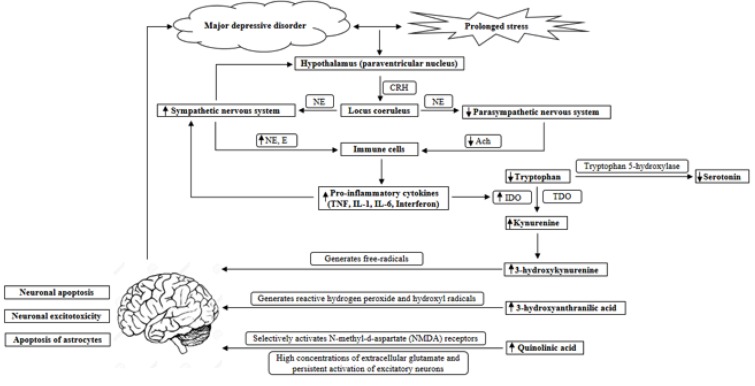
The autonomic nervous system is one of the major neural pathways activated by stress. In situations that are often associated with chronic stress, such as major depressive disorder, the sympathetic nervous system can be continuously activated without the normal counteraction of the parasympathetic nervous system. As a result, the immune system can be activated with increased levels of proinflammatory cytokines. These inflammatory conditions have been repeatedly observed in depression. In the search for the mechanism by which the immune system might contribute to depression, the enhanced activity of indoleamine 2,3- dioxygenase by pro-inflammatory cytokines has been suggested to play an important role. Indoleamine 2,3-dioxygenase is the first enzyme in the kynurenine pathway that converts tryptophan to kynurenine. Elevated activity of this enzyme can cause imbalances in downstream kynurenine metabolites. This imbalance can induce neurotoxic changes in the brain and create a vulnerable glial-neuronal network, which may render the brain susceptible to depression. This review focuses on the interaction between stress, the autonomic nervous system and the immune system which can cause imbalances in the kynurenine pathway, which may ultimately lead to major depressive disorder.
Overview
The claims and statistics of this paper haven’t been checked yet.
Free: it reads the open-access text and checks the first 5 claims that cite a source we can check. Create a free account to check every claim.
Integrity signals
Registry
Cites
Statistics
Figures
Verification
Claims the paper makes
The claims and statistics of this paper haven’t been checked yet.
Free: it reads the open-access text and checks the first 5 claims that cite a source we can check. Create a free account to check every claim.
Claims other papers make about this one
Each is checked against this paper’s own text: does it say what the citing paper says it does?
The source backs part of the claim, not all of it — or backs it for a different population, condition or comparison.
In the citing paper
“As neurons in the PVH and LC project to sympathetic centres in the brain stem and spinal cord, it is possible that elevated sympathetic tone arising from the activation of these brain regions during chronic stress drives these HSC and leukocyte dynamics in the bone marrow66–68.”
From Central regulation of stress-evoked peripheral immune responses (2023) · cites this paper as [66]
Experimental — accuracy not yet measuredThe source backs part of the claim, not all of it — or backs it for a different population, condition or comparison.
In the citing paper
“Briefly, responding to social stress, neurons in the hypothalamus release corticotropin‐releasing hormone (CRH) directly into the spinal cord and brain stem, sparking the additional release of CRH and quick release of epinephrine and norepinephrine from the adrenal glands (reviewed in (Won & Kim, 2016).”
From On race, human variation, and who gets and dies of sepsis (2022) · cites this paper as Won & Kim, 2016
Experimental — accuracy not yet measured
Self-check
Percentages, sums and reported differences re-computed from the paper’s own numbers.
The self-check needs the paper’s full text.
Citations
Cites
Correspondence - Tranexamic acid for traumatic brain injury
(2005) · London School of Economics and Political Science Theses Online (London School of Economics and Political Science) · doi:10.1016/s0140-6736 · Cited by 11,894
Vagus nerve stimulation attenuates the systemic inflammatory response to endotoxin
Borovikova, L. V., Ivanova, S., Zhang, M., Yang, H., Botchkina, G. I., Watkins, L. R., Wang, H., Abumrad, N., Eaton, J. W., & Tracey, K. J. (2000) · Nature · doi:10.1038/35013070 · Cited by 4,211 · cited 1×
“In contrast, ACh has been reported to dose-dependently inhibit the release of TNF, along with other proinflammatory cytokines such as IL-1, IL-6, and IL-18 [40].”
BackgroundThe Concepts of Stress and Stress System Disorders: Overview of Physical and Behavioral Homeostasis
Chrousos, G. P. (1992) · JAMA · doi:10.1001/jama.1992.03480090092034 · Cited by 2,689 · cited 2×
“Stress is defined as a state of threatened homeostasis following exposure to extrinsic or intrinsic adverse forces [9].”
BackgroundInfluentialElenkov, I. J., Wilder, R. L., Chrousos, G. P., & Vizi, E. S. (2000) · Pharmacological Reviews · doi:10.1016/s0031-6997(24)01470-4 · Cited by 2,252 · cited 1×
“Although stress initially activates both the ANS and the HPA axis, this review will focus on the role of the ANS, which has received much less attention than the HPA axis [22].”
BackgroundRajkowska, G., Miguel-Hidalgo, J. J., Wei, J., Dilley, G., Pittman, S. D., Meltzer, H. Y., Overholser, J. C., Roth, B. L., & Stockmeier, C. A. (1999) · Biological Psychiatry · doi:10.1016/s0006-3223(99)00041-4 · Cited by 1,477 · cited 13×
“As we consider inflammatory conditions to be caused by an over-driven SNS together with an under-driven PNS induced by stress, treatments that increase the parasympathetic tone and hence strengthen the cholinergic anti-inflammatory pathway [102] may be useful in treating MDD.”
ResultInfluentialCytokine-Associated Emotional and Cognitive Disturbances in Humans
Reichenberg, A., Yirmiya, R., Schuld, A., Kraus, T., Haack, M., Morag, A., & Pollmächer, T. (2001) · Archives of General Psychiatry · doi:10.1001/archpsyc.58.5.445 · Cited by 1,365 · cited 7×
“As a result, pro-inflammatory cytokines, such as TNF, IL-1, and IL-6, can increase in prolonged stressful situations such as depression.”
BackgroundInfluentialStress, depression, the immune system, and cancer
Reiche, E. M. V., Nunes, S. O. V., & Morimoto, H. K. (2004) · The Lancet Oncology · doi:10.1016/s1470-2045(04)01597-9 · Cited by 1,364 · cited 1×
“The activation of the SNS in turn stimulates the release of CRH by the hypothalamus, creating a positive bidirectional feedback loop [29].”
BackgroundO'Connor, J. C., Lawson, M. A., André, C., Moreau, M., Lestage, J., Castanon, N., Kelley, K. W., & Dantzer, R. (2009) · Molecular Psychiatry · doi:10.1038/sj.mp.4002148 · Cited by 1,278 · cited 1×
“The authors confirm that this article content has no conflict of interest.”
BackgroundThe increasing burden of depression
Briley, M., & Lépine (2011) · Neuropsychiatric Disease and Treatment · doi:10.2147/ndt.s19617 · Cited by 1,211
The global burden of women's cancers: a grand challenge in global health
Ginsburg, O., Bray, F., Coleman, M. P., Vanderpuye, V., Eniu, A., Kotha, S. R., Sarker, M., Huong, T. T., Allemani, C., Dvaladze, A., et al. (2017) · The Lancet · doi:10.1016/s0140-6736(16)31392-7 · Cited by 1,127
Tyring, S., Gottlieb, A., Papp, K., Gordon, K., Leonardi, C., Wang, A., Lalla, D., Woolley, M., Jahreis, A., Zitnik, R., et al. (2006) · The Lancet · doi:10.1016/s0140-6736(05)67763-x · Cited by 1,069 · cited 2×
“For the past few decades, the immune system has been repeatedly associated with depression in numerous ways [47].”
BackgroundCingulate function in depression: a potential predictor of treatment response
Mayberg, H. S., Brannan, S. K., Mahurin, R. K., Jerabek, P. A., Brickman, J. S., Tekell, J. L., Silva, J. A., McGinnis, S., Glass, T. G., Martin, C. C., et al. (1997) · NeuroReport · doi:10.1097/00001756-199703030-00048 · Cited by 1,029 · cited 13×
“As we consider inflammatory conditions to be caused by an over-driven SNS together with an under-driven PNS induced by stress, treatments that increase the parasympathetic tone and hence strengthen the cholinergic anti-inflammatory pathway [102] may be useful in treating MDD.”
BackgroundInfluential(2018) · doi:10.1001/jama · Cited by 932
The macrophage theory of depression
Smith, R. S. (1991) · Medical Hypotheses · doi:10.1016/0306-9877(91)90272-z · Cited by 931 · cited 1×
“In the macrophage theory of depression, excessive secretion of macrophage monokines, such as IL-1, was proposed as the cause of depression [43].”
BackgroundJones, B. E., & Yang, T. (1985) · Journal of Comparative Neurology · doi:10.1002/cne.902420105 · Cited by 896 · cited 1×
“The locus coeruleus of the brainstem sends direct projections to the sympathetic preganglionic neurons in the spinal cord and to the parasympathetic preganglionic neurons in the brainstem and the spinal cord [26].”
BackgroundPhysiology of the Autonomic Nervous System
McCorry, L. K. (2007) · American Journal of Pharmaceutical Education · doi:10.5688/aj710478 · Cited by 888 · cited 1×
“Under normal conditions, the PNS is activated when the stressful situation is alleviated because the SNS and the PNS are highly coordinated to maintain physiological homeostasis [33].”
BackgroundSickness behavior as a new target for drug development
Kent, S., Bluthé, R.-M., Kelley, K. W., & Dantzer, R. (1992) · Trends in Pharmacological Sciences · doi:10.1016/0165-6147(92)90012-u · Cited by 863 · cited 12×
“As a result, pro-inflammatory cytokines, such as TNF, IL-1, and IL-6, can increase in prolonged stressful situations such as depression.”
BackgroundInfluentialPerkins, M. N., & Stone, T. W. (1982) · Brain Research · doi:10.1016/0006-8993(82)91048-4 · Cited by 849 · cited 1×
“Kynurenic acid can act as non-selective antagonists of NMDA receptors at high concentrations [92].”
BackgroundPsychoneuroimmunology: interactions between the nervous system and the immune system
Ader, R., Cohen, N., & Felten, D. (1995) · The Lancet · doi:10.1016/s0140-6736(95)90066-7 · Cited by 802 · cited 7×
“The principal neurotransmitters of the ANS are norepinephrine (NE), epinephrine (E) and acetylcholine (ACh) [30].”
BackgroundInfluentialMaes, M., Song, C., Lin, A., De Jongh, R., Van Gastel, A., Kenis, G., Bosmans, E., De Meester, I., Benoy, I., Neels, H., et al. (1998) · Cytokine · doi:10.1006/cyto.1997.0290 · Cited by 772 · cited 1×
“Acute and chronic stressors have also been reported to affect the immune system, and an increase in various inflammatory markers has been reported in states of acute stress [13] and chronic stress [14].”
BackgroundBlood–Brain Barrier Transport of Kynurenines: Implications for Brain Synthesis and Metabolism
Fukui, S., Schwarcz, R., Rapoport, S. I., Takada, Y., & Smith, Q. R. (1991) · Journal of Neurochemistry · doi:10.1111/j.1471-4159.1991.tb03460.x · Cited by 761 · cited 2×
“However peripheral kynurenic acid crosses the BBB poorly [82].”
BackgroundTryptophan and the immune response
Moffett, J. R., & Namboodiri, M. A. (2003) · Immunology & Cell Biology · doi:10.1046/j.1440-1711.2003.t01-1-01177.x · Cited by 760 · cited 1×
“The extrahepatic tryptophan metabolism then shifts the tryptophan metabolism away from the liver [70], and a large amount of tryptophan degradation takes place in the blood and lymphoid tissues through the KYN pathway [71].”
BackgroundQuinolinic acid: a potent endogenous excitant at amino acid receptors in CNS
Stone, T. W., & Perkins, M. N. (1981) · European Journal of Pharmacology · doi:10.1016/0014-2999(81)90587-2 · Cited by 751 · cited 1×
“Quinolinic acid selectively activates N-methyl-d-aspartate (NMDA) receptors [86], stimulates neuronal release of glutamate, inhibits astroglial reuptake of glutamate [87] and reduces the activity of glutamine synthetase which facilitates glutamine production from glutamate and ammonia [88].”
BackgroundNeuroinflammation and psychiatric illness
Najjar, S., Pearlman, D. M., Alper, K., Najjar, A., & Devinsky, O. (2013) · Journal of Neuroinflammation · doi:10.1186/1742-2094-10-43 · Cited by 733
Inflammation-associated depression: From serotonin to kynurenine
Dantzer, R., O’Connor, J. C., Lawson, M. A., & Kelley, K. W. (2011) · Psychoneuroendocrinology · doi:10.1016/j.psyneuen.2010.09.012 · Cited by 726 · cited 2×
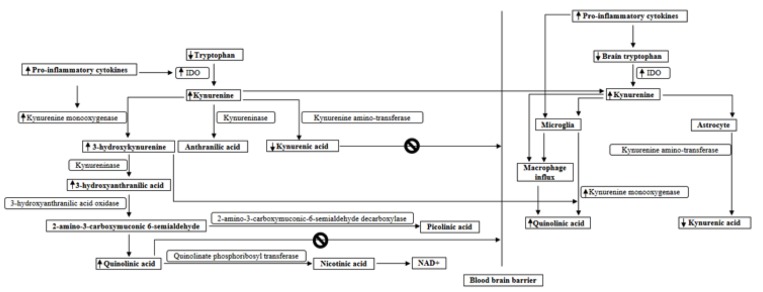
“Also, intact neurons can degrade KYN into picolinic acid [64].”
BackgroundSelective proper name anomia in a patient with asymmetric cortical degeneration
Fadda, L., Turriziani, P., Carlesimo, G. A., Nocentini, U., & Caltagirone, C. (1998) · European Journal of Neurology · doi:10.1046/j.1468-1331.1998.540417.x · Cited by 717
Lapin, I. P., & Oxenkrug, G. F. (1969) · The Lancet · doi:10.1016/s0140-6736(69)91140-4 · Cited by 709 · cited 1×
“In 1969, Lapin and Oxenkrug proposed that in depression the metabolism of tryptophan is shunted away from serotonin production towards kynurenine production, resulting in tryptophan depletion [19].”
BackgroundUnnerstall, J. R., Kopajtic, T. A., & Kuhar, M. J. (1984) · Brain Research Reviews · doi:10.1016/0165-0173(84)90030-4 · Cited by 708 · cited 1×
“In general, the locus coeruleus increases sympathetic activity through the activation of α1adrenoceptors on preganglionic sympathetic neurons [27] and reduces parasympathetic activity through the activation of α2-adrenoceptors on preganglionic parasympathetic neurons [28].”
BackgroundTryptophan catabolism and T-cell tolerance: immunosuppression by starvation?
Mellor, A. L., & Munn, D. H. (1999) · Immunology Today · doi:10.1016/s0167-5699(99)01520-0 · Cited by 648 · cited 2×
“In states of inflammation and oxidative stress, proinflammatory cytokines, such as TNF [67] and reactive oxygen species, can induce IDO activity in extrahepatic tissues, such as the lung, placenta, kidney, spleen, blood and brain [68, 69].”
BackgroundRaison, C. L., Dantzer, R., Kelley, K. W., Lawson, M. A., Woolwine, B. J., Vogt, G., Spivey, J. R., Saito, K., & Miller, A. H. (2010) · Molecular Psychiatry · doi:10.1038/mp.2009.116 · Cited by 630 · cited 1×
“Also, a study on interferon α-treated patients reported stable cerebrospinal fluid tryptophan levels, despite the fact that the patients had decreased blood tryptophan levels [81].”
BackgroundThe cholinergic anti-inflammatory pathway
Pavlov, V. A., & Tracey, K. J. (2005) · Brain, Behavior, and Immunity · doi:10.1016/j.bbi.2005.03.015 · Cited by 622 · cited 1×
“Inflammatory responses are characterized by a complex interaction between pro- and anti-inflammatory cytokines [34].”
BackgroundSteiner, J., Walter, M., Gos, T., Guillemin, G. J., Bernstein, H.-G., Sarnyai, Z., Mawrin, C., Brisch, R., Bielau, H., zu Schwabedissen, L., et al. (2011) · Journal of Neuroinflammation · doi:10.1186/1742-2094-8-94 · Cited by 568 · cited 1×
“Increased density of quinolinic acid positive cells of the anterior cingulate cortex, a brain area which has repeatedly been implicated in the pathology of MDD [96], has been reported in acutely depressed patients who have committed suicide [97].”
BackgroundKynurenine pathway metabolism in human astrocytes: a paradox for neuronal protection
Guillemin, G. J., Kerr, S. J., Smythe, G. A., Smith, D. G., Kapoor, V., Armati, P. J., Croitoru, J., & Brew, B. J. (2001) · Journal of Neurochemistry · doi:10.1046/j.1471-4159.2001.00498.x · Cited by 538 · cited 1×
“The KYN pathway takes place predominantly in microglia and astrocytes in the central nervous system [57], however the KYN metabolism is separated in the brain, as kynurenine monooxygenase is expressed in microglia but not in astrocytes [62], and kynurenine amino-transferase enzymes are expressed in astrocytes but not…”
BackgroundKynurenine pathway in major depression: Evidence of impaired neuroprotection
Myint, A.-M., Kim, Y. K., Verkerk, R., Scharpé, S., Steinbusch, H., & Leonard, B. (2007) · Journal of Affective Disorders · doi:10.1016/j.jad.2006.07.013 · Cited by 527 · cited 1×
“The mean plasma kynurenic acid values and the mean kynurenic acid/KYN ratio were reported to be significantly lower in MDD patients compared to healthy controls [93].”
BackgroundSelf-citationGuillemin, G. J., Smythe, G., Takikawa, O., & Brew, B. J. (2005) · Glia · doi:10.1002/glia.20090 · Cited by 497 · cited 1×
“Therefore, the accumulation of quinolinic acid can result in neuronal excitotoxicity and the selective apoptosis of astrocytes [90].”
BackgroundCapuron, L., Ravaud, A., Neveu, P. J., Miller, A. H., Maes, M., & Dantzer, R. (2002) · Molecular Psychiatry · doi:10.1038/sj.mp.4000995 · Cited by 473 · cited 2×
“Cytokines produced in inflammatory states were considered to induce tryptophan depletion by enhancing the activity of indoleamine 2,3dioxygenase (IDO), the first enzyme in the kynurenine (KYN) pathway that converts tryptophan to KYN [16, 20].”
BackgroundOkuda, S., Nishiyama, N., Saito, H., & Katsuki, H. (1998) · Journal of Neurochemistry · doi:10.1046/j.1471-4159.1998.70010299.x · Cited by 462 · cited 1×
“The authors confirm that this article content has no conflict of interest.”
BackgroundIDO and regulatory T cells: a role for reverse signalling and non-canonical NF-κB activation
Puccetti, P., & Grohmann, U. (2007) · Nature Reviews Immunology · doi:10.1038/nri2163 · Cited by 453 · cited 1×
“Tryptophan depletion through IDO activation induces a balance between pro-inflammatory T helper 17 cells and anti-inflammatory T-regulatory cells by suppressing effector T-cell activity and expanding T-regulatory cells [73], influencing the pro-inflammatory response [74].”
BackgroundHuman macrophages convert l-tryptophan into the neurotoxin quinolinic acid
Heyes, M. P., Saito, K., & Markey, S. P. (1992) · Biochemical Journal · doi:10.1042/bj2830633 · Cited by 447
Bonaccorso, S., Marino, V., Puzella, A., Pasquini, M., Biondi, M., Artini, M., Almerighi, C., Verkerk, R., Meltzer, H., & Maes, M. (2002) · Journal of Clinical Psychopharmacology · doi:10.1097/00004714-200202000-00014 · Cited by 437
Pavlov, V. A., Parrish, W. R., Rosas-Ballina, M., Ochani, M., Puerta, M., Ochani, K., Chavan, S., Al-Abed, Y., & Tracey, K. J. (2009) · Brain, Behavior, and Immunity · doi:10.1016/j.bbi.2008.06.011 · Cited by 435 · cited 1×
“The inhibition of acetyl-cholinesterase activity, which increases ACh levels in the central nervous system, resulted in the suppression of the immune response, indicating that ACh has an immunoinhibitory role in the brain [41].”
BackgroundInhibitors of indoleamine-2,3-dioxygenase for cancer therapy: can we see the wood for the trees?
Löb, S., Königsrainer, A., Rammensee, H.-G., Opelz, G., & Terness, P. (2009) · Nature Reviews Cancer · doi:10.1038/nrc2639 · Cited by 421 · cited 1×
“The expression of TDO is normally restricted to mammalian liver cells where it is believed to regulate systemic tryptophan concentrations [55].”
BackgroundInterleukin-1β: A New Regulator of the Kynurenine Pathway Affecting Human Hippocampal Neurogenesis
Zunszain, P. A., Anacker, C., Cattaneo, A., Choudhury, S., Musaelyan, K., Myint, A. M., Thuret, S., Price, J., & Pariante, C. M. (2012) · Neuropsychopharmacology · doi:10.1038/npp.2011.277 · Cited by 388 · cited 1×
“The brain seemed to compensate for the decrease in circulating tryptophan induced by acute or chronic inflammation by increasing brain tryptophan and stimulating brain serotonin metabolism [80].”
BackgroundCytokine–serotonin interaction through IDO: a neurodegeneration hypothesis of depression
Myint, A. M., & Kim, Y. K. (2003) · Medical Hypotheses · doi:10.1016/s0306-9877(03)00207-x · Cited by 374 · cited 1×
“Based on these findings, the “neurodegeneration hypothesis of depression” was proposed [21] which hypothesized that imbalances in downstream KYN metabolites induce neurotoxic changes that create a vulnerable glial-neuronal Yong-Ku Kim A R T I C L E H I S T O R Y”
BackgroundSelf-citationLugo-Huitrón, R., Blanco-Ayala, T., Ugalde-Muñiz, P., Carrillo-Mora, P., Pedraza-Chaverrí, J., Silva-Adaya, D., Maldonado, P. D., Torres, I., Pinzón, E., Ortiz-Islas, E., et al. (2011) · Neurotoxicology and Teratology · doi:10.1016/j.ntt.2011.07.002 · Cited by 346 · cited 1×
“On the other hand, kynurenic acid, which is decreased in inflammatory states, scavenges free radicals, such as hydroxyls and superoxide anions, and possesses antioxidant properties [91].”
BackgroundCharacterization of the Kynurenine Pathway in Human Neurons
Guillemin, G. J., Cullen, K. M., Lim, C. K., Smythe, G. A., Garner, B., Kapoor, V., Takikawa, O., & Brew, B. J. (2007) · The Journal of Neuroscience · doi:10.1523/jneurosci.4101-07.2007 · Cited by 324 · cited 1×
“The results of these studies demonstrated that induction of IDO is a common feature of interferon-gamma action, and the extent of this induction is influenced by extracellular Ltryptophan concentrations, and IDO is the only enzyme in the formation of 3-hydroxyanthranilic acid from tryptophan which…”
BackgroundWank, S. A. (1995) · American Journal of Physiology-Gastrointestinal and Liver Physiology · doi:10.1152/ajpgi.1995.269.5.g628 · Cited by 323
Tavares, R. G., Tasca, C. I., Santos, C. E. S., Alves, L. B., Porciúncula, L. O., Emanuelli, T., & Souza, D. O. (2002) · Neurochemistry International · doi:10.1016/s0197-0186(01)00133-4 · Cited by 320 · cited 1×
“Quinolinic acid selectively activates N-methyl-d-aspartate (NMDA) receptors [86], stimulates neuronal release of glutamate, inhibits astroglial reuptake of glutamate [87] and reduces the activity of glutamine synthetase which facilitates glutamine production from glutamate and ammonia [88].”
Backgroundl-Kynurenine Its synthesis and possible regulatory function in brain
G�l, E. M., & Sherman, A. D. (1980) · Neurochemical Research · doi:10.1007/bf00964611 · Cited by 318 · cited 1×
“The first studies comparing the effect of interferons on IDO induction in immunocompetent cells were published by Werner-Felmayer G, et al. [65, 66].”
BackgroundEffects of Cytokines on Cerebral Neurotransmission: Comparison with the Effects of Stress
Dunn, A. J., Wang, J., & Ando, T. (1999) · Advances in Experimental Medicine and Biology · doi:10.1007/978-0-585-37970-8_8 · Cited by 316
Cytokine imbalance in the pathophysiology of major depressive disorder
Kim, Y.-K., Na, K.-S., Shin, K.-H., Jung, H.-Y., Choi, S.-H., & Kim, J.-B. (2007) · Progress in Neuro-Psychopharmacology and Biological Psychiatry · doi:10.1016/j.pnpbp.2007.03.004 · Cited by 314 · cited 1×
“TNF and IL-6 have also been reported to be elevated in MDD patients [51], and meta-analyses have confirmed IL-6 levels to be elevated in depressed patients [8].”
BackgroundSelf-citationThe kynurenine pathway and neurodegenerative disease
Maddison, D. C., & Giorgini, F. (2015) · Seminars in Cell & Developmental Biology · doi:10.1016/j.semcdb.2015.03.002 · Cited by 309 · cited 6×
“The KYN pathway takes place predominantly in microglia and astrocytes in the central nervous system [57], however the KYN metabolism is separated in the brain, as kynurenine monooxygenase is expressed in microglia but not in astrocytes [62], and kynurenine amino-transferase enzymes are expressed in astrocytes but not…”
BackgroundInfluentialO'Connor, J. C., Lawson, M. A., André, C., Briley, E. M., Szegedi, S. S., Lestage, J., Castanon, N., Herkenham, M., Dantzer, R., & Kelley, K. W. (2009) · The Journal of Immunology · doi:10.4049/jimmunol.0802722 · Cited by 295 · cited 1×
“The authors confirm that this article content has no conflict of interest.”
BackgroundCapuron, L., Ravaud, A., & Dantzer, R. (2000) · Journal of Clinical Oncology · doi:10.1200/jco.2000.18.10.2143 · Cited by 294 · cited 1×
“Subsequent studies on depression in cancer patients receiving cytokine therapy supported the assumption that immune activation can cause depression [44-46].”
BackgroundAcute inflammation and negative mood: mediation by cytokine activation
Wright, C. E., Strike, P. C., Brydon, L., & Steptoe, A. (2005) · Brain, Behavior, and Immunity · doi:10.1016/j.bbi.2004.10.003 · Cited by 287 · cited 7×
“As a result, pro-inflammatory cytokines, such as TNF, IL-1, and IL-6, can increase in prolonged stressful situations such as depression.”
BackgroundInfluentialSpengler, R. N., Chensue, S. W., Giacherio, D. A., Blenk, N., & Kunkel, S. L. (1994) · The Journal of Immunology · doi:10.4049/jimmunol.152.6.3024 · Cited by 269 · cited 1×
“Results of in vitro and in vivo studies have suggested that NE enhances tumor necrosis factor (TNF) production [36, 37].”
BackgroundHuman microglia convert l-tryptophan into the neurotoxin quinolinic acid
HEYES, M. P., ACHIM, C. L., WILEY, C. A., MAJOR, E. O., SAITO, K., & MARKEY, S. P. (1996) · Biochemical Journal · doi:10.1042/bj3200595 · Cited by 260 · cited 1×
“In states of inflammation and oxidative stress, proinflammatory cytokines, such as TNF [67] and reactive oxygen species, can induce IDO activity in extrahepatic tissues, such as the lung, placenta, kidney, spleen, blood and brain [68, 69].”
BackgroundClinical and Biochemical Manifestations of Depression: Relation to the Neurobiology of Stress
Gold, P. W., Machado-Vieira, R., & Pavlatou, M. G. (2015) · Neural Plasticity · doi:10.1155/2015/581976 · Cited by 259 · cited 1×
“Stress has repeatedly been associated with depression, and is reported to precipitate depressive episodes and to influence the severity, duration and natural course of the disorder [12].”
BackgroundCacioppo, J. T., Malarkey, W. B., Kiecolt-Glaser, J. K., Uchino, B. N., Sgoutas-Emch, S. A., Sheridan, J. F., Berntson, G. G., & Glaser, R. (1995) · Psychosomatic Medicine · doi:10.1097/00006842-199503000-00008 · Cited by 248 · cited 1×
“These increases were potentiated in individuals who were more cardiovascularly reactive to stress [24].”
BackgroundCapuron, L., Ravaud, A., Miller, A. H., & Dantzer, R. (2004) · Brain, Behavior, and Immunity · doi:10.1016/j.bbi.2003.11.004 · Cited by 236 · cited 1×
“Subsequent studies on depression in cancer patients receiving cytokine therapy supported the assumption that immune activation can cause depression [44-46].”
Neopterin production, tryptophan degradation, and mental depression—What is the link?
Widner, B., Laich, A., Sperner-Unterweger, B., Ledochowski, M., & Fuchs, D. (2002) · Brain, Behavior, and Immunity · doi:10.1016/s0889-1591(02)00006-5 · Cited by 231 · cited 1×
“Also, it was suggested that activation of IDO could represent an important link between the immunological network and the pathogenesis of depression [76].”
BackgroundNetwork beyond IDO in psychiatric disorders: Revisiting neurodegeneration hypothesis
Myint, A.-M., & Kim, Y.-K. (2014) · Progress in Neuro-Psychopharmacology and Biological Psychiatry · doi:10.1016/j.pnpbp.2013.08.008 · Cited by 230 · cited 19×
“Enhanced IDO activity during inflammation is initially a reflex mechanism that suppresses inflammatory reactions [56].”
BackgroundSelf-citationExpression of The Kynurenine Pathway Enzymes in Human Microglia and Macrophages
Guillemin, G. J., Smith, D. G., Smythe, G. A., Armati, P. J., & Brew, G. J. (2003) · Advances in Experimental Medicine and Biology · doi:10.1007/978-1-4615-0135-0_12 · Cited by 229 · cited 3×
“IDO = indoleamine 2,3-dioxygenase; KYN = kynurenine. capacity for producing quinolinic acid than microglia, macrophage and cytokine influx can cause significant changes to the levels of KYN metabolites in the CNS [62].”
BackgroundDhabhar, F. S., Burke, H. M., Epel, E. S., Mellon, S. H., Rosser, R., Reus, V. I., & Wolkowitz, O. M. (2009) · Journal of Psychiatric Research · doi:10.1016/j.jpsychires.2009.05.010 · Cited by 225 · cited 1×
“Anti-inflammatory cytokines, such as IL-10, have been reported to be reduced in MDD patients [52].”
BackgroundKim, Y.-K., Suh, I.-B., Kim, H., Han, C.-S., Lim, C.-S., Choi, S.-H., & Licinio, J. (2002) · Molecular Psychiatry · doi:10.1038/sj.mp.4001084 · Cited by 224
Self-citationGoldstein, L. E., Leopold, M. C., Huang, X., Atwood, C. S., Saunders, A. J., Hartshorn, M., Lim, J. T., Faget, K. Y., Muffat, J. A., Scarpa, R. C., et al. (2000) · Biochemistry · doi:10.1021/bi992997s · Cited by 211 · cited 1×
“The authors confirm that this article content has no conflict of interest.”
BackgroundRobinson, C. M., Hale, P. T., & Carlin, J. M. (2005) · Journal of Interferon & Cytokine Research · doi:10.1089/jir.2005.25.20 · Cited by 207
Clinical and Physiological Consequences of Rapid Tryptophan Depletion
Moore, P. (2000) · Neuropsychopharmacology · doi:10.1016/s0893-133x(00)00161-5 · Cited by 205 · cited 1×
“Studies on tryptophan depletion in healthy controls reported that lowering plasma tryptophan accompanied a decline in central serotonin [77].”
BackgroundMaes, M., Verkerk, R., Bonaccorso, S., Ombelet, W., Bosmans, E., & Scharpé, S. (2002) · Life Sciences · doi:10.1016/s0024-3205(02)01853-2 · Cited by 203 · cited 1×
“Cytokines produced in inflammatory states were considered to induce tryptophan depletion by enhancing the activity of indoleamine 2,3dioxygenase (IDO), the first enzyme in the kynurenine (KYN) pathway that converts tryptophan to KYN [16, 20].”
BackgroundThe Stress Response and Immune Function: Clinical Implications: The 1999 Novera H. Spector Lecture
CHROUSOS, G. P. (2000) · Annals of the New York Academy of Sciences · doi:10.1111/j.1749-6632.2000.tb05371.x · Cited by 193 · cited 1×
“Thus, the effect of stress on the neuroendocrine system and how this effect influences the immune system, has become a subject of interest in recent years [25].”
BackgroundLa Cruz, V. P.-D., Carrillo-Mora, P., & Santamaría, A. (2012) · International Journal of Tryptophan Research · doi:10.4137/ijtr.s8158 · Cited by 191 · cited 1×
“The authors confirm that this article content has no conflict of interest.”
BackgroundCharacteristics of interferon induced tryptophan metabolism in human cells in vitro
Werner-Felmayer, G., Werner, E. R., Fuchs, D., Hausen, A., Reibnegger, G., & Wachter, H. (1989) · Biochimica et Biophysica Acta (BBA) - Molecular Cell Research · doi:10.1016/0167-4889(89)90087-6 · Cited by 190 · cited 1×
“Initial theories on how the immune-mediated activation of the tryptophan degradation pathway was related to depression, suggested that disturbed metabolism of tryptophan affects the biosynthesis of serotonin, and this appeared to be associated with an increased susceptibility for depression.”
BackgroundSocioeconomic status and stress-induced increases in interleukin-6
Brydon, L., Edwards, S., Mohamed-Ali, V., & Steptoe, A. (2004) · Brain, Behavior, and Immunity · doi:10.1016/j.bbi.2003.09.011 · Cited by 188 · cited 1×
“A potential interaction between chronic stress and inflammatory cytokine responses to acute stress has also been reported [15].”
BackgroundModulation of macrophage-mediated tumoricidal activity by neuropeptides and neurohormones.
Koff, W. C., & Dunegan, M. A. (1985) · The Journal of Immunology · doi:10.4049/jimmunol.135.1.350 · Cited by 181 · cited 1×
“NE has also been shown to augment macrophage phagocytosis and tumoricidal activity [39].”
BackgroundStress, depression and immunity: the role of defense and coping styles
Olff, M. (1999) · Psychiatry Research · doi:10.1016/s0165-1781(98)00139-5 · Cited by 178 · cited 1×
“Acute stress refers to stress that occurs for minutes or hours, whereas chronic stress persists for days, weeks, or months [10].”
BackgroundIndoleamine 2,3-Dioxygenase and Dendritic Cell Tolerogenicity
Harden, J. L., & Egilmez, N. K. (2012) · Immunological Investigations · doi:10.3109/08820139.2012.676122 · Cited by 176 · cited 1×
“Tryptophan depletion through IDO activation induces a balance between pro-inflammatory T helper 17 cells and anti-inflammatory T-regulatory cells by suppressing effector T-cell activity and expanding T-regulatory cells [73], influencing the pro-inflammatory response [74].”
BackgroundThe effects of tryptophan depletion on mood and psychiatric symptoms
Van der Does, A. J. W. (2001) · Journal of Affective Disorders · doi:10.1016/s0165-0327(00)00209-3 · Cited by 176 · cited 1×
“The authors confirm that this article content has no conflict of interest.”
BackgroundImmunology of Major Depression
Müller, N. (2014) · Neuroimmunomodulation · doi:10.1159/000356540 · Cited by 174 · cited 2×
“TNF and IL-6 have also been reported to be elevated in MDD patients [51], and meta-analyses have confirmed IL-6 levels to be elevated in depressed patients [8].”
BackgroundTing, K. K., Brew, B. J., & Guillemin, G. J. (2009) · Journal of Neuroinflammation · doi:10.1186/1742-2094-6-36 · Cited by 166 · cited 1×
“Quinolinic acid selectively activates N-methyl-d-aspartate (NMDA) receptors [86], stimulates neuronal release of glutamate, inhibits astroglial reuptake of glutamate [87] and reduces the activity of glutamine synthetase which facilitates glutamine production from glutamate and ammonia [88].”
BackgroundHaskó, G., & Szabó, C. (1998) · Biochemical Pharmacology · doi:10.1016/s0006-2952(98)00153-1 · Cited by 165 · cited 1×
“E and NE modulate the release of cytokines and inflammation through α- and β-adrenoceptors on immune cells [35].”
BackgroundThe role of IL-12 and TGF-β1 in the pathophysiology of major depressive disorder
Lee, K.-M., & Kim, Y.-K. (2006) · International Immunopharmacology · doi:10.1016/j.intimp.2006.03.015 · Cited by 150
Self-citationLeonard, B. E. (2014) · Progress in Neuro-Psychopharmacology and Biological Psychiatry · doi:10.1016/j.pnpbp.2013.10.018 · Cited by 129 · cited 2×
“The disruption of the immune system is viewed as the most plausible explanation [1].”
BackgroundTryptophan as a Link between Psychopathology and Somatic States
Russo, S., Kema, I. P., Fokkema, R. M., Boon, J. C., Willemse, P. H. B., de Vries, E. G. E., Den Boer, J. A., & Korf, J. (2003) · Psychosomatic Medicine · doi:10.1097/01.psy.0000078188.74020.cc · Cited by 118 · cited 2×
“IDO activity in nonpathological conditions is minimal [53].”
BackgroundThe possible role of the kynurenine pathway in adolescent depression with melancholic features
Gabbay, V., Klein, R. G., Katz, Y., Mendoza, S., Guttman, L. E., Alonso, C. M., Babb, J. S., Hirsch, G. S., & Liebes, L. (2010) · Journal of Child Psychology and Psychiatry · doi:10.1111/j.1469-7610.2010.02245.x · Cited by 115 · cited 1×
“Elevated KYN/tryptophan ratios and a positive relationship between MDD severity and 3-hydroxyanthranilic acid/KYN ratio were observed in adolescent MDD patients with melancholic features compared to healthy controls [94].”
BackgroundExocytosis in Chromaffin Cells of the Adrenal Medulla
Aunis, D. (1998) · International review of cytology · doi:10.1016/s0074-7696(08)60419-2 · Cited by 113 · cited 2×
“Medullary cells mainly release E, and to a lesser extent NE, into the blood rather quickly when stimulated by the SNS in response to stressors [31].”
BackgroundWerner‐Felmayer, G., Werner, E. R., Fuchs, D., Hausen, A., Reibnegger, G. J., & WACHTER, H. (1990) · PubMed · Cited by 106
Mood and cognitive disorders in cancer patients receiving cytokine therapy.
Meyers, C. A. (1999) · Advances in Experimental Medicine and Biology · doi:10.1007/978-0-585-37970-8_5 · Cited by 98 · cited 1×
“Subsequent studies on depression in cancer patients receiving cytokine therapy supported the assumption that immune activation can cause depression [44-46].”
BackgroundVazquez, S., Garner, B., Sheil, M. M., & Truscott, R. J. W. (2000) · Free Radical Research · doi:10.1080/10715760000300021 · Cited by 98 · cited 1×
“The authors confirm that this article content has no conflict of interest.”
BackgroundMurakami, Y., Hoshi, M., Imamura, Y., Arioka, Y., Yamamoto, Y., & Saito, K. (2013) · Mediators of Inflammation · doi:10.1155/2013/391984 · Cited by 93 · cited 3×
“However, the biological function of IDO2 is still unclear and needs clarification [54].”
Background[Physiology of the autonomic nervous system].
Espanes, E. M. D. (1953) · PubMed · Cited by 85
Mild acute inflammatory stimulation induces transient negative mood
Strike, P. C., Wardle, J., & Steptoe, A. (2004) · Journal of Psychosomatic Research · doi:10.1016/s0022-3999(03)00569-5 · Cited by 83 · cited 7×
“As a result, pro-inflammatory cytokines, such as TNF, IL-1, and IL-6, can increase in prolonged stressful situations such as depression.”
BackgroundInfluentialThe antidepressant mechanism of action of vagus nerve stimulation: Evidence from preclinical studies
Grimonprez, A., Raedt, R., Baeken, C., Boon, P., & Vonck, K. (2015) · Neuroscience & Biobehavioral Reviews · doi:10.1016/j.neubiorev.2015.06.019 · Cited by 81 · cited 1×
“This may explain why methods that increase parasympathetic tone, such as vagus nerve stimulation, have been suggested to be effective in treating depression [103].”
BackgroundGlia in the cytokine-mediated onset of depression: fine tuning the immune response
Jo, W. K., Zhang, Y., Emrich, H. M., & Dietrich, D. E. (2015) · Frontiers in Cellular Neuroscience · doi:10.3389/fncel.2015.00268 · Cited by 77 · cited 1×
“Recent reviews have reported the associations among the KYN pathway, inflammatory cytokines and neurotoxicity of KYN pathway metabolites in depression [99, 100].”
BackgroundKim, J.-W., Kim, Y.-K., Hwang, J.-A., Yoon, H.-K., Ko, Y.-H., Han, C., Lee, H.-J., Ham, B.-J., & Lee, H. S. (2013) · Psychiatry Investigation · doi:10.4306/pi.2013.10.3.294 · Cited by 77
Self-citationCholinergic modulation of inflammation.
Pavlov, V. A. (2008) · PubMed Central · Cited by 73
Dang, Y.-H., Dale, W. E., & Brown, O. R. (2000) · Free Radical Biology & Medicine · doi:10.1016/s0891-5849(99)00272-5 · Cited by 72
Melillo, G., Cox, G. W., Radzioch, D., & Varesio, L. (1993) · The Journal of Immunology · doi:10.4049/jimmunol.150.9.4031 · Cited by 71 · cited 1×
“Also, KYN metabolites, such as picolinic acid, activate the inflammatory reaction and further prolong the inflammatory process, which leads to increased quinolinic acid synthesis [75] Fig.”
BackgroundHale, M. W., Raison, C. L., & Lowry, C. A. (2012) · Pharmacology & Therapeutics · doi:10.1016/j.pharmthera.2012.09.005 · Cited by 70 · cited 1×
“Tryptophan functions as a biochemical precursor for serotonin, which in turn has been strongly implicated in the pathogenesis of depression [18].”
BackgroundHeart Rate, Neuroendocrine, and Immunological Reactivity in Response to an Acute Laboratory Stressor
Larson, M. R., Ader, R., & Moynihan, J. A. (2001) · Psychosomatic Medicine · doi:10.1097/00006842-200105000-00020 · Cited by 69 · cited 1×
“Thus, the effect of stress on the neuroendocrine system and how this effect influences the immune system, has become a subject of interest in recent years [25].”
BackgroundRole of cytokines in atypical depression
Yoon, H.-K., Kim, Y.-K., Lee, H.-J., Kwon, D.-Y., & Kim, L. (2012) · Nordic Journal of Psychiatry · doi:10.3109/08039488.2011.611894 · Cited by 65
Self-citationThe involvement of astrocytes and kynurenine pathway in Alzheimer’s disease
Ting, K. K., Brew, B. J., & Guillemin, G. J. (2007) · Neurotoxicity Research · doi:10.1007/bf03033908 · Cited by 60 · cited 1×
“KYN is further degraded in the brain into different metabolites, depending on the cell type in which KYN is produced or transported [60, 61].”
BackgroundBreznitz, S., Ben‐Zur, H., Berzon, Y., Weiss, D. W., Levitan, G., Tarcic, N., Lischinsky, S., Greenberg, A., Levi, N., & Zinder, O. (1998) · Brain Behavior and Immunity · doi:10.1006/brbi.1997.0511 · Cited by 58 · cited 1×
“Brief laboratory stressors, such as mental arithmetic and public speaking tasks, have been reported to induce increases in natural killer cell activity [23].”
BackgroundExcitation and inhibition of rat sympathetic preganglionic neurones by catecholamines
Lewis, D. I., & Coote, J. H. (1990) · Brain Research · doi:10.1016/0006-8993(90)91287-q · Cited by 56 · cited 1×
“In general, the locus coeruleus increases sympathetic activity through the activation of α1adrenoceptors on preganglionic sympathetic neurons [27] and reduces parasympathetic activity through the activation of α2-adrenoceptors on preganglionic parasympathetic neurons [28].”
BackgroundBertini, R., Garattini, S. K., Delgado, R., & Ghezzi, P. (1993) · PubMed Central · Cited by 54
Acute Stress Induces Proinflammatory Signaling at Chronic Inflammation Sites
Weik, U., Herforth, A., Kolb-Bachofen, V., & Deinzer, R. (2008) · Psychosomatic Medicine · doi:10.1097/psy.0b013e3181835bf3 · Cited by 47 · cited 1×
“Acute and chronic stressors have also been reported to affect the immune system, and an increase in various inflammatory markers has been reported in states of acute stress [13] and chronic stress [14].”
BackgroundLost among the trees? The autonomic nervous system and paediatrics
Rees, C. (2014) · Archives of Disease in Childhood · doi:10.1136/archdischild-2012-301863 · Cited by 36 · cited 1×
“The principal neurotransmitters of the ANS are norepinephrine (NE), epinephrine (E) and acetylcholine (ACh) [30].”
BackgroundMoffett, J. R., Blinder, K., Venkateshan, C., & Namboodiri, M. (1998) · Cell and Tissue Research · doi:10.1007/s004410051145 · Cited by 34 · cited 1×
“The extrahepatic tryptophan metabolism then shifts the tryptophan metabolism away from the liver [70], and a large amount of tryptophan degradation takes place in the blood and lymphoid tissues through the KYN pathway [71].”
BackgroundInflammation as the Cause of the Metabolic Syndrome in Depression
Leonard, B. E. (2013) · Modern Trends in Psychiatry · doi:10.1159/000343974 · Cited by 27 · cited 1×
“As illnesses such as heart disease, type 2 diabetes, autoimmune diseases and cancer, are often associated with depression [3], various possibilities have been posited to explain the link between such illnesses and depression.”
BackgroundKynurenine pathway (KP) inhibitors: Novel agents for the management of depression
Hazari, N., & Bhad, R. (2015) · Journal of Psychopharmacology · doi:10.1177/0269881115599386 · Cited by 7 · cited 1×
“Recent reviews have reported the associations among the KYN pathway, inflammatory cytokines and neurotoxicity of KYN pathway metabolites in depression [99, 100].”
Background
Cited by
The Pathogenesis of Sepsis and Potential Therapeutic Targets
Huang, M., Cai, S., & Su, J. (2019) · International Journal of Molecular Sciences · doi:10.3390/ijms20215376 · Cited by 776
“Moreover, a branch of the autonomic nervous system, mainly the sympathetic branch, regulates cytokine production [68].”
BackgroundMicroglia in depression: current perspectives
Jia, X., Gao, Z., & Hu, H. (2021) · Science China Life Sciences · doi:10.1007/s11427-020-1815-6 · Cited by 282
“The peripheral immune cells, in brief, respond to stress-induced hormone regulations and the innervation of immune organs by the continuously activated sympathetic neurons in depression (Won and Kim, 2016).”
BackgroundGullett, N., Zajkowska, Z., Walsh, A., Harper, R., & Mondelli, V. (2023) · International Journal of Psychophysiology · doi:10.1016/j.ijpsycho.2023.08.001 · Cited by 214
Stress, hypothalamic–pituitary–adrenal axis, hypothalamic–pituitary–gonadal axis, and aggression.
Mbiydzenyuy, N. E., & Qulu, L.-A. (2024) · Metabolic Brain Disease · doi:10.1007/s11011-024-01393-w · Cited by 255
“The activation of these systems helps prepare the body to deal with psychologically stressful conditions (Won and Kim 2016).”
BackgroundCentral regulation of stress-evoked peripheral immune responses
Chan, K. L., Poller, W. C., Swirski, F. K., & Russo, S. J. (2023) · Nature Reviews Neuroscience · doi:10.1038/s41583-023-00729-2 · Cited by 207
Metadata
- Authors
- Won, E., & Kim, Y.-K.
- Affiliations
- Korea University (KR)
- Korea University Ansan Hospital (KR)
- Corresponding author
- Kim, Yong-Ku
- Venue
- Current Neuropharmacology
- Publisher
- Bentham Science Publishers Ltd.
- Published
- 2016-08-26
- Volume
- 14
- Issue
- 7
- Pages
- 665-673
- ISSN
- 1570-159X (ISSN-L)
- PMC
- PMC5050399
- OpenAlex
- W2312140404
- Semantic Scholar
- bfdbae28e179e7a39a199fe01e5df2a019ba4500
- Cited by
- 300
- References
- 109
- Citations by year
- 2026: 16 · 2025: 35 · 2024: 39 · 2023: 55 · 2022: 49 · 2021: 46 · 2020: 21 · 2019: 17 · 2018: 10 · 2017: 8 · 2016: 4
- FWCI
- 0.78
- Type
- journal article
- Language
- en
- Open access
- bronze
- doi.org
- Locations
- Current Neuropharmacology (publishedVersion)
- PubMed Central (publishedVersion, cc-by-nc)
- PubMed (publishedVersion)
- Topics
- Life Sciences › Neuroscience › Biological Psychiatry › Tryptophan and brain disorders
- Life Sciences › Neuroscience › Behavioral Neuroscience › Stress Responses and Cortisol
- Health Sciences › Medicine › Pharmacology (medical) › Treatment of Major Depression
- Keywords
- depression, chronic stress, autonomic nervous system, sympathetic nervous system, parasympathetic nervous system, indoleamine 2,3-dioxygenase, kynurenine metabolites, inflammatory cytokines, neuroinflammation, tryptophan metabolism, neurotoxicity
- MeSH terms
- Animals, Autonomic Nervous System, Major Depressive Disorder, Depressive Disorder, Major, Humans, Kynurenine, Stress, Psychological, Tryptophan
About these checks
Registry, retraction, Cites and statistics results are computed, not judged, with one exception: a printed reference that no index lists is read once by a model before it counts as a citation error. Claims are extracted by a model and kept only when their quote appears verbatim in the text; each cited source is then checked, with a model’s help, for whether it says what the claim relies on. Those verdicts can be wrong — read the claim’s quote and the cited source before relying on one.
Statistics and arithmetic are recomputed, not judged.
Confidence bands are shown only for fields calibrated on our annotated test set. None is calibrated yet, so no band is shown.
What counts as a claim ›How we measure confidence ›How we check this ›
Are you an author, or do you see a problem with this page? Request a review
Data sources
Bibliographic data: Semantic Scholar, OpenAlex, Crossref.
Contains information from the Semantic Scholar Academic Graph Datasets, made available under the ODC Attribution License (ODC-BY 1.0).
Semantic Scholar’s data is described in: Kinney, R., et al. (2023). The Semantic Scholar Open Data Platform. arXiv:2301.10140.
