

Stress, the Autonomic Nervous System, and the Immune-kynurenine Pathway in the Etiology of Depression
Open accessThe DOI matches its Crossref record; 109 of the 109 references it cites were found in a registry or an index.
Abstract
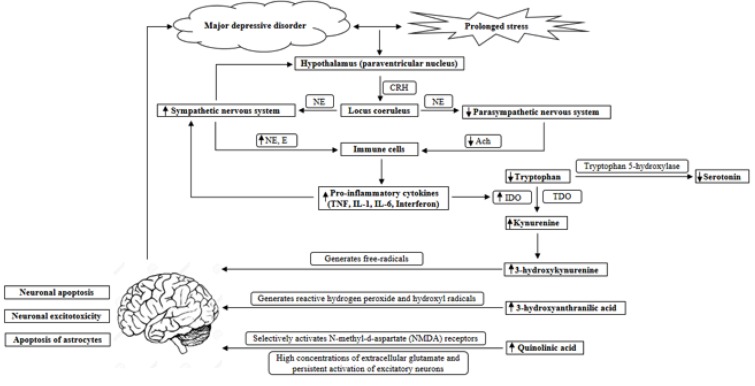
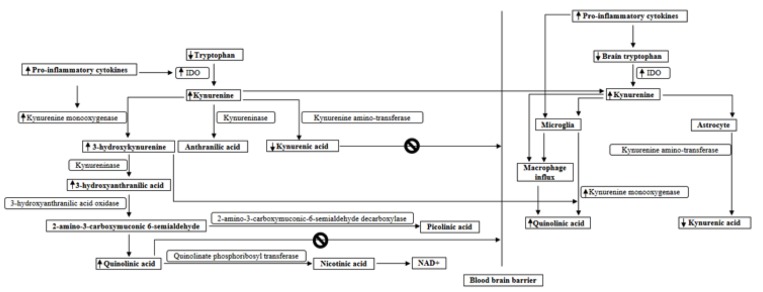
The autonomic nervous system is one of the major neural pathways activated by stress. In situations that are often associated with chronic stress, such as major depressive disorder, the sympathetic nervous system can be continuously activated without the normal counteraction of the parasympathetic nervous system. As a result, the immune system can be activated with increased levels of proinflammatory cytokines. These inflammatory conditions have been repeatedly observed in depression. In the search for the mechanism by which the immune system might contribute to depression, the enhanced activity of indoleamine 2,3- dioxygenase by pro-inflammatory cytokines has been suggested to play an important role. Indoleamine 2,3-dioxygenase is the first enzyme in the kynurenine pathway that converts tryptophan to kynurenine. Elevated activity of this enzyme can cause imbalances in downstream kynurenine metabolites. This imbalance can induce neurotoxic changes in the brain and create a vulnerable glial-neuronal network, which may render the brain susceptible to depression. This review focuses on the interaction between stress, the autonomic nervous system and the immune system which can cause imbalances in the kynurenine pathway, which may ultimately lead to major depressive disorder.
Overview
The claims and statistics of this paper haven’t been checked yet.
Free: it reads the open-access text and checks the first 5 claims that cite a source we can check. Create a free account to check every claim.
Integrity signals
Registry
Cites
Statistics
Figures
Verification
Claims the paper makes
The claims and statistics of this paper haven’t been checked yet.
Free: it reads the open-access text and checks the first 5 claims that cite a source we can check. Create a free account to check every claim.
Claims other papers make about this one
Each is checked against this paper’s own text: does it say what the citing paper says it does?
The source backs part of the claim, not all of it — or backs it for a different population, condition or comparison.
In the citing paper
“As neurons in the PVH and LC project to sympathetic centres in the brain stem and spinal cord, it is possible that elevated sympathetic tone arising from the activation of these brain regions during chronic stress drives these HSC and leukocyte dynamics in the bone marrow66–68.”
From Central regulation of stress-evoked peripheral immune responses (2023) · cites this paper as [66]
Experimental — accuracy not yet measuredThe source backs part of the claim, not all of it — or backs it for a different population, condition or comparison.
In the citing paper
“Briefly, responding to social stress, neurons in the hypothalamus release corticotropin‐releasing hormone (CRH) directly into the spinal cord and brain stem, sparking the additional release of CRH and quick release of epinephrine and norepinephrine from the adrenal glands (reviewed in (Won & Kim, 2016).”
From On race, human variation, and who gets and dies of sepsis (2022) · cites this paper as Won & Kim, 2016
Experimental — accuracy not yet measured
Self-check
Percentages, sums and reported differences re-computed from the paper’s own numbers.
The self-check needs the paper’s full text.
Citations
Cites
Correspondence - Tranexamic acid for traumatic brain injury
(2005) · London School of Economics and Political Science Theses Online (London School of Economics and Political Science) · doi:10.1016/s0140-6736 · Cited by 11,894
Vagus nerve stimulation attenuates the systemic inflammatory response to endotoxin
Borovikova, L. V., Ivanova, S., Zhang, M., Yang, H., Botchkina, G. I., Watkins, L. R., Wang, H., Abumrad, N., Eaton, J. W., & Tracey, K. J. (2000) · Nature · doi:10.1038/35013070 · Cited by 4,211 · cited 1×
“In contrast, ACh has been reported to dose-dependently inhibit the release of TNF, along with other proinflammatory cytokines such as IL-1, IL-6, and IL-18 [40].”
BackgroundThe Concepts of Stress and Stress System Disorders: Overview of Physical and Behavioral Homeostasis
Chrousos, G. P. (1992) · JAMA · doi:10.1001/jama.1992.03480090092034 · Cited by 2,689 · cited 2×
“Stress is defined as a state of threatened homeostasis following exposure to extrinsic or intrinsic adverse forces [9].”
BackgroundInfluentialElenkov, I. J., Wilder, R. L., Chrousos, G. P., & Vizi, E. S. (2000) · Pharmacological Reviews · doi:10.1016/s0031-6997(24)01470-4 · Cited by 2,252 · cited 1×
“Although stress initially activates both the ANS and the HPA axis, this review will focus on the role of the ANS, which has received much less attention than the HPA axis [22].”
BackgroundRajkowska, G., Miguel-Hidalgo, J. J., Wei, J., Dilley, G., Pittman, S. D., Meltzer, H. Y., Overholser, J. C., Roth, B. L., & Stockmeier, C. A. (1999) · Biological Psychiatry · doi:10.1016/s0006-3223(99)00041-4 · Cited by 1,477 · cited 13×
“As we consider inflammatory conditions to be caused by an over-driven SNS together with an under-driven PNS induced by stress, treatments that increase the parasympathetic tone and hence strengthen the cholinergic anti-inflammatory pathway [102] may be useful in treating MDD.”
ResultInfluentialCytokine-Associated Emotional and Cognitive Disturbances in Humans
Reichenberg, A., Yirmiya, R., Schuld, A., Kraus, T., Haack, M., Morag, A., & Pollmächer, T. (2001) · Archives of General Psychiatry · doi:10.1001/archpsyc.58.5.445 · Cited by 1,365 · cited 7×
“As a result, pro-inflammatory cytokines, such as TNF, IL-1, and IL-6, can increase in prolonged stressful situations such as depression.”
BackgroundInfluentialStress, depression, the immune system, and cancer
Reiche, E. M. V., Nunes, S. O. V., & Morimoto, H. K. (2004) · The Lancet Oncology · doi:10.1016/s1470-2045(04)01597-9 · Cited by 1,364 · cited 1×
“The activation of the SNS in turn stimulates the release of CRH by the hypothalamus, creating a positive bidirectional feedback loop [29].”
BackgroundO'Connor, J. C., Lawson, M. A., André, C., Moreau, M., Lestage, J., Castanon, N., Kelley, K. W., & Dantzer, R. (2009) · Molecular Psychiatry · doi:10.1038/sj.mp.4002148 · Cited by 1,278 · cited 1×
“The authors confirm that this article content has no conflict of interest.”
BackgroundThe increasing burden of depression
Briley, M., & Lépine (2011) · Neuropsychiatric Disease and Treatment · doi:10.2147/ndt.s19617 · Cited by 1,211
The global burden of women's cancers: a grand challenge in global health
Ginsburg, O., Bray, F., Coleman, M. P., Vanderpuye, V., Eniu, A., Kotha, S. R., Sarker, M., Huong, T. T., Allemani, C., Dvaladze, A., et al. (2017) · The Lancet · doi:10.1016/s0140-6736(16)31392-7 · Cited by 1,127
Cited by
Items 201–300 of 330
Zeibig, J., Takano, K., Seiffer, B., Sudeck, G., Rösel, I., Hautzinger, M., & Wolf, S. (2023) · Mental health and physical activity · doi:10.1016/j.mhpa.2023.100537 · Cited by 4
Sawyers, C. K., Sheerin, C. M., Moore, A. A., Neigh, G. N., Hettema, J. M., & Roberson‐Nay, R. (2023) · Psychoneuroendocrinology · doi:10.1016/j.psyneuen.2023.106922 · Cited by 4
Potential Plausible Role of Stem Cell for Treating Depressive Disorder: a Retrospective Review
Chang, Z., Wang, Q., Li, L.-H., Jiang, B., Zhou, X., Zhu, H., Sun, Y., Pan, X., Tu, X.-X., Wang, W., et al. (2023) · Molecular Neurobiology · doi:10.1007/s12035-023-03843-5 · Cited by 4
“Changes in the immune system leading to neuroinflammation and subsequent alterations in brain regions involved in mood regulation play a central role in the pathophysiology of depression [114–117].”
Physiological outcomes from mind-body resiliency programs in healthcare workers: A scoping review
Kronenberg, J., Merrigan, J. J., Quatman‐Yates, C. C., Emerson, A. M., Orr, M. L., Summers, R., Hagen, J. A., & Klatt, M. D. (2025) · PLOS mental health. · doi:10.1371/journal.pmen.0000332 · Cited by 3
Abdelbadiee, S., Yoon, G., Pearman, K., Kumar, A., & Harvey, P. (2025) · Biomedicines · doi:10.3390/biomedicines13122916 · Cited by 4
“This autonomic dysregulation as a result of stress also affects gut motility and intestinal permeability and can induce colitis [34,54–59].”
Kreppke, J.-N., Brupbacher, G., Rupf, K., Hohberg, V., Cody, R., Gerber, M., & Faude, O. (2026) · Sports Medicine · doi:10.1007/s40279-025-02365-5 · Cited by 5
“The imbalance of the ANS in individuals with MDD is reflected by a sustained activation of the sympathetic nervous system without the normal counteraction of the parasympathetic nervous system [26, 27].”
Yılmaz, Y., Uçar, C., & Yıldız, S. (2023) · Stress and Health · doi:10.1002/smi.3281 · Cited by 3
Aimaier, G., Qian, K., Cao, H., Peng, W., Zhang, Z., Ma, J., Ding, J., & Wang, X. (2023) · The International Journal of Neuropsychopharmacology · doi:10.1093/ijnp/pyad033 · Cited by 3
“In conditions associated with chronic stress, such as depression and epilepsy, the sympathetic nervous system can be continuously activated while parasympathetic output is suppressed, and impaired autonomic homeostasis can be reflected by decreased HRV (Won and Kim, 2016).”
BackgroundZahidullah, Bashir, S., & Kumar, S. (2024) · Pakistan Journal of Health Sciences · doi:10.54393/pjhs.v5i08.1950 · Cited by 5
Obsessive-Compulsive Disorder: Diagnosis and Management with an Osteopathic Component
Flaum, T. B., Chinsky, O.-I. R., & Sheldon C. Yao, D. (2020) · Osteopathic Family Physician · doi:10.33181/12062 · Cited by 3
Poincaré Plot Method for Physiological Analysis of the Gadget Use Effect on Children Stress Level
Zaky, U., Anggara, A., Zakariyah, M., & Fathullah, I. (2022) · Jurnal Online Informatika · doi:10.15575/join.v7i1.809 · Cited by 4
Byeon, H., Moon, Y., Lee, S., Son, G.-I., & Lee, E. (2023) · International Journal of Environmental Research and Public Health · doi:10.3390/ijerph20021542 · Cited by 3
“Many studies have evaluated the status of the SNS and PNS of the ANS using HRV and found a high correlation with thyroid-related diseases such as hypo- and hyperthyroidism [27–29].”
BackgroundInfluentialAngelica keiskei leaves extract attenuates psychosocial stress in overcrowding-subjected rats
Siswanto, F. M. (2024) · Journal of Applied Pharmaceutical Science · doi:10.7324/japs.2024.197137 · Cited by 3
Zhang, Y., Jin, Y., Zhao, N., Wang, T., Wang, X., Li, Z., & Yan, Y. (2024) · Journal of Ethnopharmacology · doi:10.1016/j.jep.2024.118860 · Cited by 3
Inflammatory factors and immunophenotypes in adjustment disorders
Klyushnik, T. P., Nikitina, V. B., Андросова, Л. В., Vetlugina, T. P., Zozulya, S. A., Михайлович, А. М., & Bokhan, N. A. (2018) · S S Korsakov Journal of Neurology and Psychiatry · doi:10.17116/jnevro20181183183-88 · Cited by 3
Ghane, M., Sullivan‐Toole, H., Giacco, A. C. D., & Richey, J. A. (2021) · Brain Behavior & Immunity - Health · doi:10.1016/j.bbih.2021.100341 · Cited by 3
“Growing evidence further suggests that inflammatory markers such as C-reactive protein (CRP) and interleukin (IL)-6 also relate to the pathophysiology of several psychiatric conditions, including mood and anxiety disorders (among others) (Howren et al., 2009; O'Donovan et al., 2010; Felger and Treadway, 2016; Won et a…”
BackgroundWhy mindfulness matters in musculoskeletal therapies: a narrative review
Bablis, P., Day, R. R., Bablis, S., & Pollard, H. P. (2025) · Frontiers in Psychology · doi:10.3389/fpsyg.2025.1518141 · Cited by 2
Uendes, B., Antonides, A., van de Ven, S. R. B., van der Mee, D. J., de Geus, E. J. C., & Hoogendoorn, M. (2026) · Journal of Medical Internet Research · doi:10.2196/80450 · Cited by 3
“Given that stress modulates the activity of the autonomic nervous system (ANS) [11], physiological biomarkers such as the electrocardiogram (ECG) and electrodermal activity have been widely proposed for automated stress monitoring.”
Moretto, U., & Palagini, L. (2019) · Handbook of behavioral neuroscience · doi:10.1016/b978-0-12-813743-7.00046-3 · Cited by 2
Skibitskiy, V. V., Ginter, Y. E., Вадимовна, Ф. А., & Сиротенко, Д. В. (2021) · Кубанский научный медицинский вестник · doi:10.25207/1608-6228-2021-28-3-61-77 · Cited by 2
Reconstruction and Physiological Basis of Samsung’s Galaxy Watch Stress Score
Spang, R. P., Machačík, O., Pieper, K., Vergari, M., & Voigt‐Antons, J. (2022) · Communications in computer and information science · doi:10.1007/978-3-031-06394-7_56 · Cited by 2
Szala‐Rycaj, J., Szewczyk, A., Zagaja, M. P., & Andres‐Mach, M. (2022) · Annals of Agricultural and Environmental Medicine · doi:10.26444/aaem/153448 · Cited by 2
“Chronic stress leads to the constant activation of the sympathetic nervous system, resulting in an increase of norepinephrine and epinephrine levels and a decrease of acetylcholine levels, which in turn leads to a greater release of pro-inflammatory cytokines from the immune cells [4].”
BackgroundLong, G., Wang, D., Li, M., Ma, H., Ping, Y., Mingsheng, T., & Yuxiang, S. (2023) · Journal of Orthopaedic Science · doi:10.1016/j.jos.2023.03.017 · Cited by 2
Kuratsune, H., Tatsumi, S., Kuratsune, D., & Ashiuchi, H. (2023) · Journal of Equine Rehabilitation · doi:10.1016/j.eqre.2023.100001 · Cited by 6
HUBUNGAN ANTARA TINGKAT RESILIENSI DENGAN KADAR GLUKOSA DARAH SEWAKTU REMAJA DENGAN DM TIPE 1
Salam, A. Y., & Hartono, D. (2023) · Jurnal Kesehatan Tambusai · doi:10.31004/jkt.v4i4.20715 · Cited by 7
“Hormon-hormon ini memicu pelepasan glukosa dari hati ke dalam darah melalui proses yang disebut gluconeogenesis yang pada akhirnya akan meningkatkan glukosa darah pada remaja (Won & Kim, 2016).”
BackgroundKim, J.-S., Kim, H., Kim, J. E., Yoo, Y., & Moon, J. Y. (2024) · Pain Medicine · doi:10.1093/pm/pnae038 · Cited by 2
Elbanna, R. H. M., Elabd, S. O. A., Saleh, M. S. M., & Alghitany, S. I. A. (2025) · Disability and Rehabilitation · doi:10.1080/09638288.2025.2506824 · Cited by 3
“In the circumstances frequently associated with long-term stress, the sympathetic nervous system can be continuously triggered without the normal opposing reaction of the parasympathetic nervous system [29].”
Changes of Heart Autonomic Regulation as Predictors of Tension Type Headache
Mashkovich, K. A., & Grigoryeva, V. N. (2019) · Современные технологии в медицине · doi:10.17691/stm2019.11.1.19 · Cited by 2
“One of the causes for increase of sympathetic activity and decrease of parasympathetic activity may be an emotional stress associated with TTH [16, 17].”
BackgroundTanra, A. J., Madeali, H., Sanusi, M., Syamsuddin, S., & Lisal, S. T. (2021) · Open Access Macedonian Journal of Medical Sciences · doi:10.3889/oamjms.2021.6347 · Cited by 4
The gender-specific reactions of student's central nervous system to physical loads
Босенко, А., Орлик, Н. А., Topchii, M., Мykhаliuk, Y. L., & Horokhovskyi, Y. (2023) · Physical rehabilitation and recreational health technologies · doi:10.15391/prrht.2023-8(1).08 · Cited by 2
Cano, S. P., Franco, E., Apablaza, J., & García, M. J. (2023) · Preprints.org · doi:10.20944/preprints202308.1236.v1 · Cited by 4
Effects of tcVNS and Multimodal Stimulation on Heart Rate Variability and Stress RegulationPreprint
Ha, S., Choi, S., Jeong, Y., Lee, S., Park, W., & Han, S. (2025) · Research Square · doi:10.1101/2025.06.22.25329895 · Cited by 2
ALTERATIONS IN FASTING BLOOD GLUCOSE LEVELS IN INDIVIDUALS EXPOSED TO HIGH PROFESSIONAL STRESS
Fatima, F., Rani, D. J., & Rani, B. (2020) · GLOBAL JOURNAL FOR RESEARCH ANALYSIS · doi:10.36106/gjra/3104125 · Cited by 1
Al-Shammary, Z. A. A., Hameid, S. A., & Jouda, J. (2023) · Al-Mustansiriyah Journal of Sciences · doi:10.23851/mjs.v33i5.1321 · Cited by 1
“Stress is a condition in which the body is subjected for competing external or internal forces that alter the homeostasis of the body [1].”
BackgroundPłeska, K., Wojtania, J., Łepik, M., Uszok, Z., Rosiak, K., Reguła, K., Waloch, K., Piaszczyński, S., Czajka, A., & Szymański, B. (2024) · Quality in Sport · doi:10.12775/qs.2024.15.51715 · Cited by 1
“Depression and chronic stress can cause the SNS to become dysregulated, which prolongs the activation of sympathetic pathways (18).”
BackgroundINFLUENCE OF MINE-BLAST INJURY AND COMBAT STRESS ON THE STATE OF THE VEGETATIVE NERVOUS SYSTEM
Formanchuk, T. V., Hudz, M. A., Oelsner, P. R., Pokidko, M. I., Форманчук, А. М., Martyniuk, D. P., Fedorovych, Y. M., & Lapshyn, H. V. (2024) · Clinical and Preventive Medicine · doi:10.31612/2616-4868.8.2024.03 · Cited by 1
HOQUE, M. (2025) · Batna Journal of Medical Sciences (BJMS) · doi:10.48087/bjmsoa.2025.12428 · Cited by 1
Cui, X., Song, G., Hu, D., Li, G., Zhang, Y., Ma, Y., & Tang, X. (2025) · Epidemiology and Psychiatric Sciences · doi:10.1017/s2045796025100310 · Cited by 1
“…pathways: the substantial burden and disability from multiple conditions (Verhaak et al. , 2014); shared immune-inflammatory mechanisms in diseases like hypertension and arthritis (Won and Kim, 2016); and overlapping neuroplasticity changes from long-term pain and depression (Ru et al. , 2022).”
Herlaș-Pop, A., Radu, A.-F., Radu, A., Bungau, G. S., Ţiţ, D. M., Babeş, E. E., & Bustea, C. (2026) · Medical Sciences · doi:10.3390/medsci14010138 · Cited by 1
Singing reveals vocal biomarkers of stress and cognitive load
Rodrigo, I., Navas-León, S., & Duñabeitia, J. A. (2026) · Discover Psychology · doi:10.1007/s44202-026-00679-7 · Cited by 1
“Formants F1 and F2 were not affected by the manipulations, which fits the view that cognitive load elicits a smaller autonomic response than the stress condition [72, 73].”
Oh, J., Park, S., Kwak, K. H., Lim, D. G., Hong, S. W., & Jeon, Y. (2026) · Medicine · doi:10.1097/md.0000000000048598 · Cited by 1
Martinez, M., Castellanos, E., Sheng, J. A., Hale, T. M., & Tobet, S. A. (2026) · Journal of Neuroendocrinology · doi:10.1111/jne.70231 · Cited by 1
“109 Cytokines are signaling proteins produced by peripheral immune cells (e.g., macrophages), CNS neurons, glial cells (microglia and astrocytes), and endothelial cells.”
Immunological Aspects of Depressive Disorder - The Review
Vojvodic, J., Mihajlović, G., Andonov, A., Marković, M., Djordjevic, J., & Vojvodić, P. (2024) · EABR. Experimental and Applied Biomedical Research · doi:10.2478/sjecr-2018-0076 · Cited by 1
“Since prolonged stressful reactions activate sympathetic nervous system (noradrenaline), while inhibit parasympathetic nervous system (acetylcholine), there is an increased releasing of pro-inflammatory cytokines which contribute to the development of depressive disorder (36).”
Background(2021) · International Journal of Psychological Research and Reviews · doi:10.28933/ijprr-2020-12-1905 · Cited by 1
Tanra, A. J., Madeali, H., Sanusi, M., Syamsuddin, S., & Lisal, S. T. (2021) · Open Access Macedonian Journal of Medical Sciences · doi:10.3889/oamjms.2021.6278 · Cited by 1
“Stress was associated with depression and could precipitate other depressive episodes, including severity, duration, and the natural course of the disorder [3], [4].”
Background5-HYDROXITRYPTOPHAN DIETARY SUPPLEMENTATION IN POST-TRAUMATIC STRESS SYNDROME
Ţincu, R. C. (2022) · FARMACIA · doi:10.31925/farmacia.2022.2.18 · Cited by 1
Yang, K., Chen, Y., Xiao-qing, Z., Zhen, Q., Gui, W., Ban, Y., He, Y., Pan, S., & Ding, M. (2022) · Journal of Liquid Chromatography & Related Technologies · doi:10.1080/10826076.2022.2124267 · Cited by 1
“Because of the reflection of the dysbiosis of gut microbiota, the excessive production of IND might disturb the catabolism of tryptophan, further affect the serotonin and kynurenine pathways, and finally make the brain susceptible to depression.([25,26]) The current understanding of depression is based on the monoamin…”
BackgroundKazmi, S. M. A., Lewis, C. A., Hasan, S. S., Iftikhar, R., Fayyaz, M. U., & Anjum, F. A. (2022) · Frontiers in Psychology · doi:10.3389/fpsyg.2022.942108 · Cited by 1
“Consequently, they are more likely to experience a weakened immune system response due to the psychological effects such as fear of being diagnosed with COVID-19 (Reiche et al., 2004; Won and Kim, 2016; Robson et al., 2017).”
BackgroundQuantification of stress and depression level posed by COVID-19 in first-line healthcare workers
Javierre, M., Miguel, M. P., Lázaro, J. M., Ribeiro, T. C., Pagès, E. G., Gil, E., de la Cámara, C., Aguiló, J., Bailón, R., & Kontaxis, S. (2022) · Conference of the European Study Group on Cardiovascular Oscillations (ESGCO) · doi:10.1109/esgco55423.2022.9931359 · Cited by 2
“The autonomic nervous system (ANS) plays a key role in the development of mental disorders since it controls the major pathways activated by stressors, including the regulation of heart rate (HR) and vasculature [3].”
BackgroundConversion From Hypothyroidism to Hyperthyroidism and Back After Anti-SARS-CoV-2 Vaccination
Ushakov, A. V. (2022) · Journal of Endocrinology and Metabolism · doi:10.14740/jem833 · Cited by 2
Depression and Cancer: The Inflammatory Bridge
Leite, F., & Leite, Â. M. T. (2023) · Interdisciplinary cancer research · doi:10.1007/16833_2022_106 · Cited by 1
Szymonik, J., & Szopa, S. (2024) · Journal of Education Health and Sport · doi:10.12775/jehs.2024.63.007 · Cited by 1
“[38] For this reason, effective coping with chronic stress is crucial for maintaining both mental and physical health.”
BackgroundSuryapraba, S., Nivethitha, L., & Mooventhan, A. (2024) · Journal of Bodywork and Movement Therapies · doi:10.1016/j.jbmt.2024.06.008 · Cited by 2
Evaluating Children’s Engagement Through Wrist-worn Biosensors and LSTM Network
Yu, S., Shui, X., Hao, S., Zhou, Z., Yu, J., Zhang, D., & Liang, J. (2024) · International Symposium on Computer and Information Processing Technology (ISCIPT) · doi:10.1109/iscipt61983.2024.10672656 · Cited by 1
“The activation of the autonomic nervous system collected by state-of-the-art sensors reliably reflects individuals’ engagement states [25], [26].”
BackgroundNahvi, N., & Kim, H. (2024) · 동의생리병리학회지 · doi:10.15188/kjopp.2024.10.38.5.196 · Cited by 1
Comella, S. (2020) · University of North Florida Digital Commons (University of North Florida) · Cited by 1
Broken Connections: The Evidence for Neuroglial Failure in ME/CFSPreprint
Renz‐Polster, H. (2021) · OSF Preprints (OSF Preprints) · doi:10.31219/osf.io/ef3n4 · Cited by 1
An Intelligent Model to Predict the Impact on Health Due to Commuting to Work on a RegularbasisPreprint
Sharif, M. S., Tamang, M. T., Fu, C. H. Y., & Baker, A. (2022) · SSRN Electronic Journal · doi:10.2139/ssrn.4148048 · Cited by 1
Biological Relationships Between Sleep, Stress, Performance, and ProductivityPreprint
Prakash, K. (2024) · doi:10.58445/rars.2053 · Cited by 1
Towers, A. E. (2018) · Illinois Digital Environment for Access to Learning and Scholarship (University of Illinois at Urbana-Champaign)
Novel approaches to measure physiological and behavioral responses to stress
Seidel, J. (2020) · eDiss (Georg-August-Universität Göttingen) · doi:10.53846/goediss-7845
Pertsov, S. S., Koplik, E. V., Смолина, Н. В., & Судаков, К. В. (2017) · Nauchno-prakticheskii zhurnal «Patogenez» · doi:10.25557/gm.2017.2.7300
Der Tryptophanstoffwechsel, seine Metaboliten und damit assoziierte Krankheiten
Passarge, M., & Schütz, B. (2021) · Journal für Gynäkologische Endokrinologie/Schweiz · doi:10.1007/s41975-021-00184-1
Miller, N. E. (2021) · Physician Assistant Clinics · doi:10.1016/j.cpha.2021.02.004
Association Of Stress and Prakriti:A Conceptual Review
Parmar, N., & Rajan, S. (2021) · International Research Journal of Ayurveda & Yoga · doi:10.47223/irjay.2021.4619
“Under the stress, the Autonomic nervous system is constantly kept under sympathetic stimulations [12] without enough time for the parasympathetic to do its job.”
BackgroundRoss, E. J. (2021) · STARS (University of Central Florida)
Bandara, N. (2021) · International Journal of Current Science Research and Review · doi:10.47191/ijcsrr/v4-i10-12 · Cited by 1
Diabetes is a Systemic Disorder: The 'Whole Body' Hypothesis
Ewing, G. W. (2021) · Diabetes & its Complications · doi:10.33425/2639-9326.1085
(2019) · Psychiatry and Clinical Psychopharmacology · doi:10.1080/24750573.2019.1608692
Otsuka, A., Tamaya, M., & Toda, A. (2022) · Physiology & Behavior · doi:10.1016/j.physbeh.2022.113913
Adah, A. S. (2023) · Media Kedokteran Hewan · doi:10.20473/mkh.v34i1.2023.27-35
Integrated cardiovascular and neural system processes as potential mechanisms of behavior change
(2023) · Frontiers research topics · doi:10.3389/978-2-83252-140-3
Prakash, K., Tu, J. W., & Staples, A. (2022) · Journal of Applied Research on Children Informing Policy for Children at Risk · doi:10.58464/2155-5834.1490
Justin, J. M., Klatt, M. D., Quatman‐Yates, C. C., Emerson, A. M., Kronenberg, J., Orr, M. L., Caputo, J., Daniel, K., Duchemin, A., Steinberg, B. A., et al. (2023) · Research Square · doi:10.21203/rs.3.rs-3314040/v1
Putri, T. N., Sudjatmoko, A., & Ambarsarie, R. (2023) · Jurnal Kedokteran RAFLESIA · doi:10.33369/juke.v9i1.30128 · Cited by 2
Borthakur, R., Sharma, N. L., Tank, M., & Pattanaik, P. R. (2024) · Research Square · doi:10.21203/rs.3.rs-4077485/v1
Kotherová, S., Cigán, J., Štěpánková, L., Vyskočilová, M., Littnerová, S., Ejova, A., & Sepši, M. (2024) · Journal of Religion and Health · doi:10.1007/s10943-024-02024-5
Betson, J., Fein, E. C., Long, D. N., & Horrocks, P. (2024) · International Journal of Paramedicine · doi:10.56068/qhqm3379 · Cited by 1
Ikeda, S., Ikeda, A., Yamagishi, K., Muraki, I., MATSUMURA, T., Kihara, T., Sankai, T., Takada, M., Okada, T., Kiyama, M., et al. (2024) · Lipids in Health and Disease · doi:10.1186/s12944-024-02256-0
“Chronic high levels of stress have been linked to impaired hypothalamus–pituitary–adrenal (HPA) axis function, higher sympathetic activation, and lower para-sympathetic autonomic tone, all of which can contribute to dysregulation across a range of biological processes [22–24].”
BackgroundTryptophan Metabolism and Birth Asphyxia: What Implications for Neurodevelopment?
Galipo, O., Scucces, L., Morganti-Kossmann, M. C., & Musumeci, S. (2024) · Archives of Community Medicine and Public Health · doi:10.17352/2455-5479.000213
(2023) · REST Journal on Data Analytics and Artificial Intelligence · doi:10.46632/jdaai/3/2/17
“Will I get it right?”: reducing test anxiety through resonance frequency breathing
Boudreau, C., & Langlais, M. R. (2024) · Academia Mental Health and Well-Being · doi:10.20935/mhealthwellb7461
Innovative Wearable EEG Solution for Stress Assessment and Control
Patel, A., Zagade, P., Ambudkar, S., Jadhav, A., & Ambudkar, B. (2024) · International Conference on Intelligent Systems and Advanced Applications (ICISAA) · doi:10.1109/icisaa62385.2024.10828600
Galassi, L., & Facchinetti, F. (2025) · Sinusitis · doi:10.3390/sinusitis9010003
“EGPA has also been linked to autonomic nervous system dysregulation [14,15].”
Neuroinflammation in the Pathogenesis of Psychiatric Disorder
Sutantio, E. H., & Octaviani, I. D. (2025) · Bulletin of Counseling and Psychotherapy · doi:10.51214/002025071341000
Enhanced Deep Learning-Based IT Employee Stress Detection for Non-Intrusive Monitoring
Leelavathiy, N., Rao, M. S., Murali, U., Meenakshi, K., Sundar, P., & Chowdary, P. (2025) · International Conference on Recent Advances in Information Technology · doi:10.1109/rait65068.2025.11088944
Comparative Analysis of Machine Learning Methodologies for HRV based Stress Detection
Kokate, S., Kovatte, M., Mhatre, N., & Deshpande, H. S. (2025) · International Conference on Expert Clouds and Applications (ICOECA) · doi:10.1109/icoeca66273.2025.00195
“ANS comprises two main components [4]: however, autonomic nervous system (ANS) can be controlled by two components-the sympathetic system [13] that works like an accelerator in a car and brings normal or active behavior and the parasympathetic system [4] that applies brakes to bring rest.”
Ran, M., Jin, M., Wang, Z., Zhang, H., Tao, Y., Xu, H., Zou, S., Deng, F., Zhang, H., Tang, X., et al. (2025) · Epigenetics · doi:10.1080/15592294.2025.2560339
“One plausible hypothesis posits that environmental factors (such as chronic stress) may lead to neurotoxic changes and rendering the glial-neuronal network vulnerable to MDD through activating KP, including elevated enzyme activity [24–26].”
do Nascimento, R. C., da Silva, G. O., Fortes-Queiroz, L., da Silva, D. H., Ferreira, F. C. D. S., DeMoura, J. R., Trombetta, I. C., & Correia, M. D. A. (2025) · ConScientiae Saúde · doi:10.5585/24.2025.27249
The Effects of Chronic Stress on Neuroanatomy and Cognitive Function
Viradia, N., Paredes, J. M. G., & Hassan, S. A. (2022) · Scholarly Research In Progress · doi:10.64057/001c.142181 · Cited by 1
“While the central nervous system is primed to produce integrated coping responses, it is the autonomic nervous system that engages in the fight, flight, or coping mechanisms that help the body adjust and adapt to the stressful stimuli that it may encounter (3).”
Does group life buffer the effects of cumulative stress on long-term physical and mental health?
Sanghe, N. (2023) · cIRcle (University of British Columbia) · doi:10.14288/1.0433827
Luna, E. (2023) · UCL Discovery (University College London)
Lima, R. M. S. D. (2021) · LA Referencia (Red Federada de Repositorios Institucionales de Publicaciones Científicas) · Cited by 1
Reiki Therapy for Anxiety in Patients Receiving Botulinum Toxin Facial Injections
Kranke, S. (2021) · eScholarship (California Digital Library)
Onyejose, M. A. (2021) · ScholarWorks (Walden University) · Cited by 1
An assessment of ischemia-reperfusion injury in rats exposed to chronic psychological stress
Oliver, L. V. Z. (2019) · SUNScholar (Stellenbosch University)
Fang, Y. (2023) · HARVEST (University of Saskatchewan) · Cited by 2
The Relationship of Divine Forgiveness, Victim Forgiveness, and Physical Health Mediated by Stress
Ragasajo, L. J. C. (2021) · Digital Commons (Liberty University)
Figueiredo, S. D. C. (2022) · Portuguese National Funding Agency for Science, Research and Technology (RCAAP Project by FCT) · doi:10.34626/1hbe-4068
Metadata
- Authors
- Won, E., & Kim, Y.-K.
- Affiliations
- Korea University (KR)
- Korea University Ansan Hospital (KR)
- Corresponding author
- Kim, Yong-Ku
- Venue
- Current Neuropharmacology
- Publisher
- Bentham Science Publishers Ltd.
- Published
- 2016-08-26
- Volume
- 14
- Issue
- 7
- Pages
- 665-673
- ISSN
- 1570-159X (ISSN-L)
- PMC
- PMC5050399
- OpenAlex
- W2312140404
- Semantic Scholar
- bfdbae28e179e7a39a199fe01e5df2a019ba4500
- Cited by
- 300
- References
- 109
- Citations by year
- 2026: 16 · 2025: 35 · 2024: 39 · 2023: 55 · 2022: 49 · 2021: 46 · 2020: 21 · 2019: 17 · 2018: 10 · 2017: 8 · 2016: 4
- FWCI
- 0.78
- Type
- journal article
- Language
- en
- Open access
- bronze
- doi.org
- Locations
- Current Neuropharmacology (publishedVersion)
- PubMed Central (publishedVersion, cc-by-nc)
- PubMed (publishedVersion)
- Topics
- Life Sciences › Neuroscience › Biological Psychiatry › Tryptophan and brain disorders
- Life Sciences › Neuroscience › Behavioral Neuroscience › Stress Responses and Cortisol
- Health Sciences › Medicine › Pharmacology (medical) › Treatment of Major Depression
- Keywords
- depression, chronic stress, autonomic nervous system, sympathetic nervous system, parasympathetic nervous system, indoleamine 2,3-dioxygenase, kynurenine metabolites, inflammatory cytokines, neuroinflammation, tryptophan metabolism, neurotoxicity
- MeSH terms
- Animals, Autonomic Nervous System, Major Depressive Disorder, Depressive Disorder, Major, Humans, Kynurenine, Stress, Psychological, Tryptophan
About these checks
Registry, retraction, Cites and statistics results are computed, not judged, with one exception: a printed reference that no index lists is read once by a model before it counts as a citation error. Claims are extracted by a model and kept only when their quote appears verbatim in the text; each cited source is then checked, with a model’s help, for whether it says what the claim relies on. Those verdicts can be wrong — read the claim’s quote and the cited source before relying on one.
Statistics and arithmetic are recomputed, not judged.
Confidence bands are shown only for fields calibrated on our annotated test set. None is calibrated yet, so no band is shown.
What counts as a claim ›How we measure confidence ›How we check this ›
Are you an author, or do you see a problem with this page? Request a review
Data sources
Bibliographic data: Semantic Scholar, OpenAlex, Crossref.
Contains information from the Semantic Scholar Academic Graph Datasets, made available under the ODC Attribution License (ODC-BY 1.0).
Semantic Scholar’s data is described in: Kinney, R., et al. (2023). The Semantic Scholar Open Data Platform. arXiv:2301.10140.
