

The Infectious Etiology of Alzheimer’s Disease
Open accessThe DOI matches its Crossref record; 141 of the 141 references it cites were found in a registry or an index.
Abstract
BACKGROUND: Inflammation is a part of the first line of defense of the body against invasive pathogens, and plays a crucial role in tissue regeneration and repair. A proper inflammatory response ensures the suitable resolution of inflammation and elimination of harmful stimuli, but when the inflammatory reactions are inappropriate it can lead to damage of the surrounding normal cells. The relationship between infections and Alzheimer's Disease (AD) etiology, especially lateonset AD (LOAD) has been continuously debated over the past three decades. METHODS: This review discusses whether infections could be a causative factor that promotes the progression of AD and summarizes recent investigations associating infectious agents and chronic inflammation with AD. Preventive and therapeutic approaches to AD in the context of an infectious etiology of the disease are also discussed. RESULTS: Emerging evidence supports the hypothesis of the role of neurotropic viruses from the Herpesviridae family, especially Human herpesvirus 1 (HHV-1), Cytomegalovirus (CMV), and Human herpesvirus 2 (HHV-2), in AD neuropathology. Recent investigations also indicate the association between Hepatitis C virus (HCV) infection and dementia. Among bacteria special attention is focused on spirochetes family and on periodontal pathogens such as Porphyromonas gingivalis or Treponema denticola that could cause chronic periodontitis and possibly contribute to the clinical onset of AD. CONCLUSION: Chronic viral, bacterial and fungal infections might be causative factors for the inflammatory pathway in AD.
Overview
The claims and statistics of this paper haven’t been checked yet.
Free: it reads the open-access text and checks the first 5 claims that cite a source we can check. Create a free account to check every claim.
Integrity signals
Registry
Cites
Statistics
Figures
Verification
Claims the paper makes
The claims and statistics of this paper haven’t been checked yet.
Free: it reads the open-access text and checks the first 5 claims that cite a source we can check. Create a free account to check every claim.
Claims other papers make about this one
Each is checked against this paper’s own text: does it say what the citing paper says it does?
The source backs part of the claim, not all of it — or backs it for a different population, condition or comparison.
In the citing paper
“Mechanisms underlying viral pathogenesis in these conditions may include a direct viral effect or indirect mechanisms, such as inflammation, epigenetic changes, and hypercoagulable changes, that may impact on brain structure and function in healthy or in cognitively impaired individuals [6, 11–15].”
From Cognitive decline following acute viral infections: literature review and projections for post-COVID-19 (2022) · cites this paper as [14]
Experimental — accuracy not yet measuredThe cited source says what the claim attributes to it.
In the citing paper
“Notwithstanding the role of aging in AD, environmental risk factors are suspected but unproven in exacerbating the disease (Sochocka et al., 2017).”
From Arbovirus infection increases the risk for the development of neurodegenerative disease pathology in the murine model (2024) · cites this paper as Sochocka et al., 2017
In the citing paper
“chronic infections appear to interact synergistically with environmental and genetic factors to influence these health outcomes76,77,81.”
From Chronic inflammation in the etiology of disease across the life span (2019) · cites this paper as [81]
In the citing paper
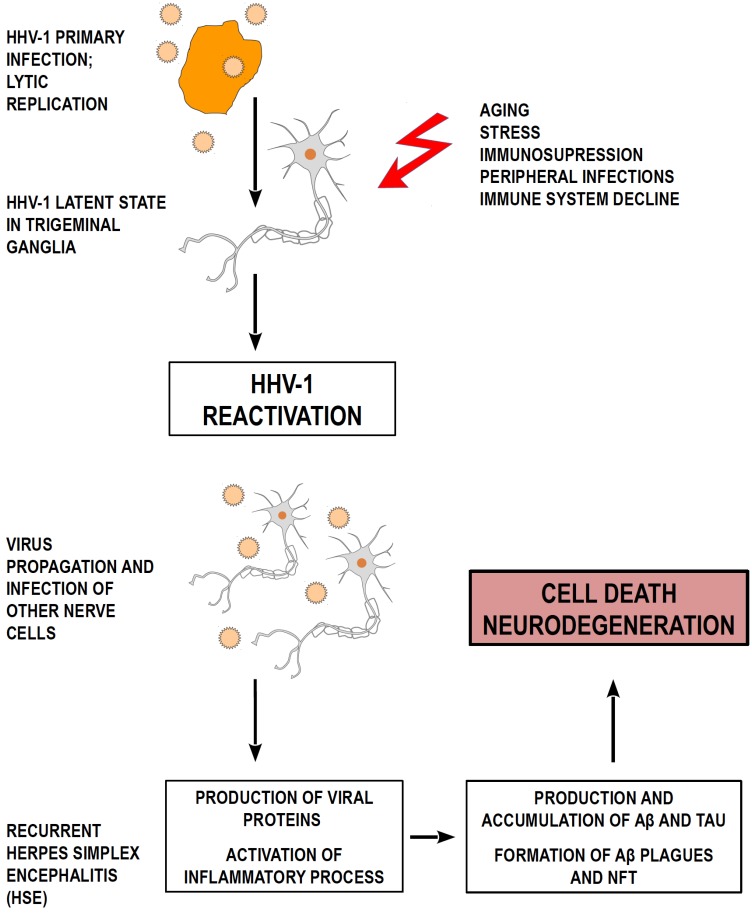
“The infectious hypothesis proposes that a pathogen (virus, bacterium, prion, etc.) triggers an inflammatory response and promotes the aggregation of Tau and Aβ, which in turn can cause further inflammation [53].”
From Alzheimer’s Disease: An Updated Overview of Its Genetics (2023) · cites this paper as [53]
Self-check
Percentages, sums and reported differences re-computed from the paper’s own numbers.
The self-check needs the paper’s full text.
Citations
Cites
Correspondence - Tranexamic acid for traumatic brain injury
(2005) · London School of Economics and Political Science Theses Online (London School of Economics and Political Science) · doi:10.1016/s0140-6736 · Cited by 11,894
Neurotoxic reactive astrocytes are induced by activated microglia
Liddelow, S. A., Guttenplan, K. A., Clarke, L. E., Bennett, F. C., Bohlen, C. J., Schirmer, L., Bennett, M. L., Münch, A. E., Chung, W.-S., Peterson, T. C., et al. (2017) · Nature · doi:10.1038/nature21029 · Cited by 7,971
Neuroinflammation in Alzheimer's disease
Heneka, M. T., Carson, M. J., Khoury, J. E., Landreth, G. E., Brosseron, F., Feinstein, D. L., Jacobs, A. H., Wyss-Coray, T., Vitorica, J., Ransohoff, R. M., et al. (2015) · The Lancet Neurology · doi:10.1016/s1474-4422(15)70016-5 · Cited by 6,226 · cited 1×
“In this process, cytokines, chemokines, complement and pattern-recognition receptors (PRRs), cellular and molecular immune factors, may activate microglia and astrocytes, which produce pro-inflammatory cytokines, especially IL-1β, IL-6, TNF-α, and additional Aβ production [19, 20].”
BackgroundThe cholinergic hypothesis of geriatric memory dysfunction
Bartus, R. T., Dean, R. L., Beer, B., & Lippa, A. S. (1982) · Science · doi:10.1126/science.7046051 · Cited by 5,545 · cited 1×
“The “inflammation hypothesis of AD” proposed more recently by Krstic and Knuesel [16] is one of three important hypotheses on the etiopathogenesis of AD along with the “cholinergic hypothesis” by Bartus and colleagues [17] then “amyloid cascade hypothesis” by Hardy and Allsop [18].”
Background2016 Alzheimer's disease facts and figures
Alzheimer's Association (2016) · Alzheimer's & Dementia · doi:10.1016/j.jalz.2016.03.001 · Cited by 5,069
Chronic Inflammation (Inflammaging) and Its Potential Contribution to Age-Associated Diseases
Franceschi, C., & Campisi, J. (2014) · The Journals of Gerontology Series A: Biological Sciences and Medical Sciences · doi:10.1093/gerona/glu057 · Cited by 3,891 · cited 1×
“If the activity of stimulating factors and the mechanisms of the proper development of inflammation are dysregulated, the body still receives a signal of health hazard and switches from the acute to a chronic inflammatory state [13, 14].”
BackgroundAmyloid deposition as the central event in the aetiology of Alzheimer’s disease
Hardy, J., & Allsop, D. (1991) · Trends in Pharmacological Sciences · doi:10.1016/0165-6147(91)90609-v · Cited by 2,538 · cited 1×
“The “inflammation hypothesis of AD” proposed more recently by Krstic and Knuesel [16] is one of three important hypotheses on the etiopathogenesis of AD along with the “cholinergic hypothesis” by Bartus and colleagues [17] then “amyloid cascade hypothesis” by Hardy and Allsop [18].”
Background2015 Alzheimer's disease facts and figures
Alzheimer's Association (2015) · Alzheimer's & Dementia · doi:10.1016/j.jalz.2015.02.003 · Cited by 1,635
A review on Alzheimer's disease pathophysiology and its management: an update
Kumar, A., Singh, A., & Ekavali (2015) · Pharmacological Reports · doi:10.1016/j.pharep.2014.09.004 · Cited by 1,578
Innate immune activation in neurodegenerative disease
Heneka, M. T., Kummer, M. P., & Latz, E. (2014) · Nature Reviews Immunology · doi:10.1038/nri3705 · Cited by 1,437 · cited 2×
“Leukocytes release more inflammatory factors (cytokines), escalate the inflammatory state, and exacerbate other AD pathologies [8, 10, 11].”
Background
Cited by
Items 101–200 of 436
Barber, A. J., del Genio, C. L., Swain, A. B., Pizzi, E. M., Watson, S. C., Tapiavala, V. N., Zanazzi, G. J., & Gaur, A. B. (2024) · Alzheimer's Research & Therapy · doi:10.1186/s13195-024-01492-x · Cited by 41
Salani, F., Sterbini, V., Sacchinelli, E., Garramone, M., & Bossù, P. (2019) · Frontiers in Immunology · doi:10.3389/fimmu.2019.01768 · Cited by 37
Tiwari, D., Singh, V. K., Baral, B., Pathak, D. K., Jayabalan, J., Kumar, R., Tapryal, S., & Jha, H. C. (2021) · ACS Chemical Neuroscience · doi:10.1021/acschemneuro.1c00584 · Cited by 41
Improving vaccination rates in older adults and at-risk groups: focus on pertussis
Choi, J., de Sousa, J. C., Fletcher, M. J., Gabutti, G., Harrington, L., Holden, M., Kim, H.-W., Michel, J., Mukherjee, P., Nolan, T. M., et al. (2022) · Aging Clinical and Experimental Research · doi:10.1007/s40520-021-02018-3 · Cited by 40
Association between dementia and hepatitis B and C virus infection
Choi, H. G., Soh, J. S., Lim, J. S., Sim, S. Y., & Lee, S. W. (2021) · Medicine · doi:10.1097/md.0000000000026476 · Cited by 40
Catumbela, C. S. G., Giridharan, V. V., Barichello, T., & Morales, R. (2023) · Translational Neurodegeneration · doi:10.1186/s40035-023-00369-7 · Cited by 37
“Consequently, these events are thought to eventually lead to cerebral Aβ accumulation and tau hyperphosphorylation [15] (Fig.”
BackgroundMa, L., & Cao, Z. (2021) · Journal of Periodontal Research · doi:10.1111/jre.12884 · Cited by 37
Recombinant zoster vaccine and the risk of dementia
Tang, E., Ray, I., Arnold, B. F., & Acharya, N. R. (2024) · Vaccine · doi:10.1016/j.vaccine.2024.126673 · Cited by 36
Onisiforou, A., Charalambous, E. G., & Zanos, P. (2025) · Microorganisms · doi:10.3390/microorganisms13010090 · Cited by 36
Ni, J., Xie, Z., Quan, Z., Meng, J., & Qing, H. (2023) · Glia · doi:10.1002/glia.24465 · Cited by 34
Considerations on nosology for HIV-associated neurocognitive disorders: it is time to update?
Ciccarelli, N. (2019) · Infection · doi:10.1007/s15010-019-01373-8 · Cited by 34
Onisiforou, A., & Zanos, P. (2024) · The Journal of Infectious Diseases · doi:10.1093/infdis/jiae242 · Cited by 33
Shinjyo, N., & Kita, K. (2021) · Frontiers in Cellular Neuroscience · doi:10.3389/fncel.2021.765217 · Cited by 33
A Prospective Viewpoint on Neurological Diseases and Their Biomarkers
Zehravi, M., Kabir, J., Akter, R., Malik, S., Ashraf, G. M., Tagde, P., Ramproshad, S., Mondal, B., Rahman, M. H., Mohan, A. G., et al. (2022) · Molecules · doi:10.3390/molecules27113516 · Cited by 33
Talwar, P., Gupta, R., Kushwaha, S. S., Agarwal, R., Saso, L., Kukreti, S., & Kukreti, R. (2018) · Current Neuropharmacology · doi:10.2174/1570159x16666180419124508 · Cited by 33
Mullane, K., & Williams, M. (2018) · Biochemical Pharmacology · doi:10.1016/j.bcp.2018.09.027 · Cited by 32
AβPeptide Originated from Platelets Promises New Strategy in Anti-Alzheimer’s Drug Development
Inyushin, M. Y., Sanabria, P., Rojas, L. V., Kucheryavykh, Y. V., & Kucheryavykh, L. Y. (2017) · BioMed Research International · doi:10.1155/2017/3948360 · Cited by 32
Das, T. K., Blasco-Conesa, M. P., Korf, J. M., Honarpisheh, P., Chapman, M. R., & Ganesh, B. P. (2022) · Journal of Alzheimer s Disease · doi:10.3233/jad-220106 · Cited by 32
Viral Infections, Are They a Trigger and Risk Factor of Alzheimer’s Disease?
Rippee-Brooks, M. D., Wu, W., Dong, J., Pappolla, M., Fang, X., & Bao, X. (2024) · Pathogens · doi:10.3390/pathogens13030240 · Cited by 28
Andreadou, E. G., Katsipis, G., Tsolaki, M., & Pantazaki, A. A. (2021) · Journal of Neuroimmunology · doi:10.1016/j.jneuroim.2021.577561 · Cited by 31
Nutraceutical based SIRT3 activators as therapeutic targets in Alzheimer's disease
Govindarajulu, M., Ramesh, S., Neel, L. T., Fabbrini, M., Buabeid, M. A., Fujihashi, A., Dwyer, D., Lynd, T. O., Shah, K., Mohanakumar, K. P., et al. (2021) · Neurochemistry International · doi:10.1016/j.neuint.2021.104958 · Cited by 31
Ringland, C., Schweig, J. E., Paris, D., Shackleton, B., Lynch, C., Eisenbaum, M., MULLAN, M. J., Crawford, F., Abdullah, L. I., & Bachmeier, C. J. (2020) · Neurobiology of Aging · doi:10.1016/j.neurobiolaging.2020.06.018 · Cited by 31
Current Strategies and Novel Drug Approaches for Alzheimer Disease
Ghai, R., Nagarajan, K., Arora, M., Grover, P., Ali, N., & Kapoor, G. T. (2020) · CNS & Neurological Disorders - Drug Targets · doi:10.2174/1871527319666200717091513 · Cited by 31
Mitra, S., Gera, R., Linderoth, B., Lind, G., Wahlberg, L. U., Almqvist, P. M., Behbahani, H., & Eriksdotter, M. (2021) · Advances in experimental medicine and biology · doi:10.1007/978-3-030-74046-7_11 · Cited by 30
Dasriya, V. L., Samtiya, M., Dhewa, T., Puniya, M., Kumar, S., Ranveer, S. A., Chaudhary, V., Vij, S., Behare, P. V., Singh, N., et al. (2021) · Journal of Food Biochemistry · doi:10.1111/jfbc.14043 · Cited by 30
Alzheimer’s disease is an inherent, natural part of human brain aging: an integrated perspective
Ferrer, I. (2022) · Free Neuropathology · doi:10.17879/freeneuropathology-2022-3806 · Cited by 30
Moné, Y., Earl, J. P., Król, J. E., Ahmed, A., Sen, B., Ehrlich, G. D., & Lapides, J. R. (2023) · Frontiers in Cellular and Infection Microbiology · doi:10.3389/fcimb.2023.1123228 · Cited by 30
Hegazy, E. M., Sabry, A. M., & Khalil, W. K. B. (2022) · Biotechnologia · doi:10.5114/bta.2022.116210 · Cited by 29
Olsen, I., & Singhrao, S. K. (2020) · Medical Hypotheses · doi:10.1016/j.mehy.2020.110393 · Cited by 30
Ojha, P., & Dixit, A. (2022) · Clinical and Experimental Pharmacology and Physiology · doi:10.1111/1440-1681.13626 · Cited by 29
Mawatari, S., Fukata, M., Arita, T., Maruyama, T., Kono, S., & Fujino, T. (2022) · Brain Research Bulletin · doi:10.1016/j.brainresbull.2022.08.009 · Cited by 28
Xie, Q., Hu, X., Zhao, X., Xiang, Z., Chen, Q., Xie, Z., Wang, H., Zhao, Y., Cheng, X. M., & Wang, C. (2023) · Journal of Ethnopharmacology · doi:10.1016/j.jep.2023.117106 · Cited by 28
Farina, M. P., Kim, J. K., Hayward, M. D., & Crimmins, E. M. (2022) · Brain Behavior & Immunity - Health · doi:10.1016/j.bbih.2022.100559 · Cited by 27
Wolska, N., Celikag, M., Failla, A. V., Tarafdar, A., Renné, T., Torti, M., Canobbio, I., & Pula, G. (2023) · Research and Practice in Thrombosis and Haemostasis · doi:10.1016/j.rpth.2023.100154 · Cited by 27
Araya, K., Watson, R., Khanipov, K., Golovko, G., & Taglialatela, G. (2025) · Journal of Alzheimer s Disease · doi:10.1177/13872877251317228 · Cited by 26
Rahman, M. M., Mim, S. A., Tumpa, M. A. A., Sarker, M. T., Ahmed, M., Alghamdi, B. S. A., Hafeez, A., Alexiou, A. T., Perveen, A., & Ashraf, G. M. (2022) · Cytokine · doi:10.1016/j.cyto.2022.155962 · Cited by 26
Systemic Inflammation Causes Microglial Dysfunction With a Vascular AD phenotype
Bathini, P., Dupanloup, I., Zenaro, E., Terrabuio, E., Fischer, A., Ballabani, E., Doucey, M., & Alberi, L. A. (2022) · Brain Behavior & Immunity - Health · doi:10.1016/j.bbih.2022.100568 · Cited by 27
Zhou, X., Fu, A. K. Y., & Ip, N. Y. (2021) · Current Opinion in Neurobiology · doi:10.1016/j.conb.2021.02.001 · Cited by 27
How to manage comorbidities in people with dementia: A scoping review
Ma, D., Wang, Y., Zhao, Y., Meng, X., Su, J., Zhi, S., Song, D., Gao, S., Sun, J., & Sun, J. (2023) · Ageing Research Reviews · doi:10.1016/j.arr.2023.101937 · Cited by 25
Peripheral inflammation is a potential etiological factor in Alzheimer’s disease
Li, Z., Wang, H., & Yin, Y. (2023) · Reviews in the Neurosciences · doi:10.1515/revneuro-2023-0049 · Cited by 25
Maggiore, A., Latina, V., D’Erme, M., Amadoro, G., & Coccurello, R. (2024) · Ageing Research Reviews · doi:10.1016/j.arr.2024.102578 · Cited by 27
Association of Influenza Vaccination and Dementia Risk: A Meta-Analysis of Cohort Studies
Sun, H., Liu, M., & Liu, J. (2023) · Journal of Alzheimer s Disease · doi:10.3233/jad-221036 · Cited by 24
The elusive role of herpesviruses in Alzheimer’s disease: current evidence and future directions
Piotrowski, S. L., Tucker, A., & Jacobson, S. (2023) · NeuroImmune Pharmacology and Therapeutics · doi:10.1515/nipt-2023-0011 · Cited by 24
Periodontal Pathogens and Neuropsychiatric Health
Wadhawan, A., Reynolds, M. A., Makkar, H., Scott, A. J., Potocki, E., Hoisington, A. J., Brenner, L. A., Dagdag, A., Lowry, C. A., Dwivedi, Y., et al. (2020) · Current Topics in Medicinal Chemistry · doi:10.2174/1568026620666200110161105 · Cited by 24
Lin, J.-W., Chang, C., & Caffrey, J. L. (2020) · Experimental Biology and Medicine · doi:10.1177/1535370220904924 · Cited by 25
Onisiforou, A., & Spyrou, G. M. (2021) · Briefings in Bioinformatics · doi:10.1093/bib/bbab141 · Cited by 23
James, L. M., & Georgopoulos, A. P. (2021) · Journal of Immunological Sciences · doi:10.29245/2578-3009/2021/2.1209 · Cited by 23
Wang, Y., Li, M., Kazis, L. E., & Xia, W. (2022) · Alzheimer s & Dementia · doi:10.1002/alz.12665 · Cited by 23
Does Alzheimer's disease stem in the gastrointestinal system?
Khodabakhsh, P., Bazrgar, M., Dargahi, L., Mohagheghi, F., Taei, A. A., Parvardeh, S., & Ahmadiani, A. (2021) · Life Sciences · doi:10.1016/j.lfs.2021.120088 · Cited by 23
Xiao, J., Savonenko, A. V., & Yolken, R. H. (2022) · Neuroscience & Biobehavioral Reviews · doi:10.1016/j.neubiorev.2022.104660 · Cited by 23
Quiroga, I. Y., Cruikshank, A. E., Reed, K. S. M., Bond, M. L., Evangelista, B., Tseng, J., Ragusa, J. V., Meeker, R. B., Won, H., Cohen, S., et al. (2022) · Journal of Neuroinflammation · doi:10.1186/s12974-022-02459-1 · Cited by 22
Nemergut, M., Batkova, T., Vigašová, D., Bartoš, M., Hlozankova, M., Schenkmayerová, A., Lišková, B., Sheardová, K., Vyhnálek, M., Hort, J., et al. (2022) · The Science of The Total Environment · doi:10.1016/j.scitotenv.2022.157114 · Cited by 23
Do microbes play a role in Alzheimer's disease?
Williams, Z. A. P., Láng, L., Nicolas, S., Clarke, G. A., Cryan, J. F., Vauzour, D., & Nolan, Y. M. (2024) · Microbial Biotechnology · doi:10.1111/1751-7915.14462 · Cited by 22
Isaiah, S., Loots, D. T., Solomons, R., van der Kuip, M., van Furth, A. M., & Mason, S. (2020) · Frontiers in Neuroscience · doi:10.3389/fnins.2020.00296 · Cited by 22
Too, L. K., Hunt, N. H., & Simunovic, M. P. (2021) · Frontiers in Cellular Neuroscience · doi:10.3389/fncel.2021.635486 · Cited by 22
SEAweb: the small RNA Expression Atlas web application
Rahman, R., Liebhoff, A.-M., Bansal, V., Fiošins, M., Rajput, A. B., Sattar, A., Magruder, D. S., Madan, S., Sun, T., Gautam, A., et al. (2019) · Nucleic Acids Research · doi:10.1093/nar/gkz869 · Cited by 23
From defense to disease: IFITM3 in immunity and Alzheimer's disease
Kehs, Z., Cross, A. C., & Li, Y. (2024) · Neurotherapeutics · doi:10.1016/j.neurot.2024.e00482 · Cited by 21
Corpora amylacea are associated with tau burden and cognitive status in Alzheimer’s disease
Wander, C. M., Tsujimoto, T. H. M., Ervin, J. F., Wang, C., Maranto, S. M., Bhat, V., Dallmeier, J., Wang, S. J., Lin, F., Scott, W. K., et al. (2022) · Acta Neuropathologica Communications · doi:10.1186/s40478-022-01409-5 · Cited by 21
Somatic Mutations and Alzheimer’s Disease
Downey, J. S., Lam, J. C. K., Li, V. O. K., & Gozes, I. (2022) · Journal of Alzheimer s Disease · doi:10.3233/jad-220643 · Cited by 20
Oral Porphyromonas gingivalis Infections Increase the Risk of Alzheimer's Disease: A Review.
Fu, Y., Xu, X., Zhang, Y., Yue, P., Fan, Y., Liu, M., Chen, J., Liu, A., Zhang, X., & Bao, F. (2023) · PubMed Central · doi:10.3290/j.ohpd.b3818045 · Cited by 20
Alzheimer's disease and herpes viruses: Current events and perspectives
Pinchera, B., Di Filippo, I., Cuccurullo, F., Salvatore, E., & Gentile, I. (2024) · Reviews in Medical Virology · doi:10.1002/rmv.2550 · Cited by 13
Gehlot, P., Pathak, R., Kumar, S., Choudhary, N. K., & Vyas, V. K. (2024) · Bioorganic & Medicinal Chemistry · doi:10.1016/j.bmc.2024.117925 · Cited by 20
Liang, L., Mao, S., Wang, J., Ding, X., & Zen, J. (2019) · ExRNA · doi:10.1186/s41544-019-0031-z · Cited by 20
Czapski, G. A., Zhao, Y., Lukiw, W. J., & Strosznajder, J. B. (2020) · International Journal of Molecular Sciences · doi:10.3390/ijms21217838 · Cited by 20
Athanasiou, E., Gargalionis, A. N., Anastassopoulou, C. G., Tsakris, A., & Boufidou, F. (2022) · Brain Sciences · doi:10.3390/brainsci12081010 · Cited by 20
Etiology, risk factors, treatments and current status of AlzheimerÓ?s disease in Mexico
Gomez‐Virgilio, L., Gutierrez, G. S. R., Silva‐Lucero, M., López-Toledo, G., & Cárdenas‐Aguayo, M. D. C. (2022) · Gaceta Médica de México · doi:10.24875/gmm.22000023 · Cited by 19
Cutuli, D., Giacovazzo, G., Decandia, D., & Coccurello, R. (2022) · Frontiers in Psychiatry · doi:10.3389/fpsyt.2022.1010169 · Cited by 19
Kwon, O.-Y., & Lee, S. H. (2022) · Antioxidants · doi:10.3390/antiox12010078 · Cited by 19
Kong, C., Xie, H., Gao, Z., Shao, M., Li, H., Shi, R., Cai, L., Gao, S., Sun, T., & Li, C. (2019) · Virologica Sinica · doi:10.1007/s12250-019-00124-1 · Cited by 18
Wang, X., & Wang, L. (2020) · Medical Science Monitor · doi:10.12659/msm.924263 · Cited by 18
Systemic Immune Dyshomeostasis Model and Pathways in Alzheimer’s Disease
Talwar, P., Kushwaha, S. S., Gupta, R., & Agarwal, R. (2019) · Frontiers in Aging Neuroscience · doi:10.3389/fnagi.2019.00290 · Cited by 18
Noureddini, M., & Bagheri-Mohammadi, S. (2021) · PubMed Central · doi:10.22088/ijmcm.bums.10.1.1 · Cited by 18
Genetic and Epigenetic Biomarkers Linking Alzheimer’s Disease and Age-Related Macular Degeneration
Kaštelan, S., Nikuševa-Martić, T., Pašalić, D., Antunica, A. G., & Zimak, D. M. (2024) · International Journal of Molecular Sciences · doi:10.3390/ijms25137271 · Cited by 17
Herpes zoster and long-term risk of subjective cognitive decline
Yeh, T., Curhan, G. C., Yawn, B. P., Willett, W. C., & Curhan, S. G. (2024) · Alzheimer s Research & Therapy · doi:10.1186/s13195-024-01511-x · Cited by 17
Bacterial Membrane Vesicles: The Missing Link Between Bacterial Infection and Alzheimer Disease
Butler, C. A., Ciccotosto, G. D., Rygh, N., Bijlsma, E., Dashper, S. G., & Brown, A. C. (2024) · The Journal of Infectious Diseases · doi:10.1093/infdis/jiae228 · Cited by 17
Lucan, M., Şandor, M. I., Bodog, A., Mocuta, D., Aur, C., Sachelarie, L., & Huniadi, A. C. (2025) · Reproductive Medicine · doi:10.3390/reprodmed6020014 · Cited by 17
Beyond the Obvious: Smoking and Respiratory Infection Implications on Alzheimer's Disease
Wadhwa, R., Paudel, K. R., Mehta, M., Shukla, S. D., Sunkara, K., Prasher, P., Panth, N., Goyal, R., Chellappan, D. K., Gupta, G., et al. (2020) · CNS & Neurological Disorders - Drug Targets · doi:10.2174/1871527319999200817112427 · Cited by 17
Scherer, R. X., & Scherer, W. J. (2020) · Scientific Reports · doi:10.1038/s41598-020-77937-8 · Cited by 18
Recent insights into viral infections as a trigger and accelerator in alzheimer's disease
Vlieger, L. D., Vandenbroucke, R. E., & Hoecke, L. V. (2022) · Drug Discovery Today · doi:10.1016/j.drudis.2022.103340 · Cited by 17
Phytochemistry and Polypharmacological Potential of Colebrookea oppositifolia Smith
Kumar, D., Singla, R. K., Sharma, R., Sharma, P., Kumar, L., Kaur, N., Dhawan, R. K., Sharma, S., & Dua, K. (2022) · Current Topics in Medicinal Chemistry · doi:10.2174/1568026623666221202112414 · Cited by 18
Li, X., Li, Q., Zhang, Z., Wang, C., Huo, X., Lai, H., Lu, H., Lu, W., Qian, Y., Dong, W., et al. (2023) · International Journal of Molecular Sciences · doi:10.3390/ijms241713074 · Cited by 16
Shen, H., Jiang, Y., Qiu, C., Xie, X., Zhang, H., He, Z., Song, Z., & Zhou, W. (2024) · Journal of Periodontal Research · doi:10.1111/jre.13224 · Cited by 16
Low cerebrospinal fluid Amyloid-βeta 1–42 in patients with tuberculous meningitis
Stroffolini, G., Guastamacchia, G., Audagnotto, S., Atzori, C., Trunfio, M., Nigra, M., Stefano, A. D., Perri, G. D., & Calcagno, A. (2021) · BMC Neurology · doi:10.1186/s12883-021-02468-2 · Cited by 16
Kouki, M. A., Pritchard, A. B., Alder, J. E., & Crean, S. (2021) · Journal of Alzheimer s Disease · doi:10.3233/jad-215103 · Cited by 18
Qian, T., Zhao, L., Pan, X., Sang, S., Xu, Y., Wang, C., Zhong, C., Fei, G., & Cheng, X. (2022) · Frontiers in Nutrition · doi:10.3389/fnut.2022.823573 · Cited by 16
Mechanistic insight of the potential of geraniol against Alzheimer’s disease
Liu, Y., Zhou, S., Huang, X., & Rehman, H. M. (2022) · European journal of medical research · doi:10.1186/s40001-022-00699-8 · Cited by 16
Song, S., Wu, J., Cheng, Y., Ma, L., Liu, T., Liu, J., Liu, J., Sotor, J. Z., & Luan, P. (2021) · Applied Materials Today · doi:10.1016/j.apmt.2021.101028 · Cited by 16
Cao, D., Wu, S., Wang, X., Li, Y., Xu, H., Pan, Z., Wu, Z., Yang, L., Tan, X., & Li, D. (2021) · Cancer Cell International · doi:10.1186/s12935-021-02269-0 · Cited by 15
Anwar, M. M. (2023) · Ibrain · doi:10.1002/ibra.12090 · Cited by 15
Li, Q., Li, X., Hu, H., Ma, Y., Ou, Y., Wang, A.-Y., Tan, L., & Yu, J. (2023) · Journal of Alzheimer s Disease · doi:10.3233/jad-221136 · Cited by 15
Re-examination of the risk of dementia after dengue virus infection: A population-based cohort study
Chien, Y., Shih, H., Wang, Y., & Chi, C. (2023) · PLoS neglected tropical diseases · doi:10.1371/journal.pntd.0011788 · Cited by 15
Transcriptomic analysis reveals sex-specific patterns in the hippocampus in Alzheimer’s disease
Onisiforou, A., Christodoulou, C. C., Zamba‐Papanicolaou, E., Zanos, P., & Georgiou, P. (2024) · Frontiers in Endocrinology · doi:10.3389/fendo.2024.1345498 · Cited by 15
Sochocka, M., Ochnik, M., Sobczyński, M., Siemieniec, I., Orzechowska, B., Naporowski, P., & Leszek, J. (2019) · Journal of Neuroinflammation · doi:10.1186/s12974-019-1520-6 · Cited by 16
Self-citationDegradation Products of Amyloid Protein: Are They The Culprits?
Zaretsky, D. V., & Zaretskaia, M. V. (2020) · Current Alzheimer Research · doi:10.2174/1567205017666201203142103 · Cited by 15
Lindblom, N., Lindquist, L., Westman, J., Åström, M., Bullock, R. A., Hendrix, S. B., & Wahlund, L. (2021) · Journal of Alzheimer s Disease Reports · doi:10.3233/adr-210301 · Cited by 16
Auclair‐Ouellet, N., Kassem, O., Bronner, S., Oula, M.-L., & Binda, S. (2025) · Frontiers in Nutrition · doi:10.3389/fnut.2025.1699884 · Cited by 14
Alzheimer's Disease and Oral-Systemic Health: Bidirectional Care Integration Improving Outcomes
Rice, A. O. (2021) · Frontiers in Oral Health · doi:10.3389/froh.2021.674329 · Cited by 14
Does Dementia Have a Microbial Cause?
Landry, R. L., & Embers, M. E. (2022) · NeuroSci · doi:10.3390/neurosci3020019 · Cited by 14
COVID-19 and Alzheimer’s Disease: What Is the Connection?
Itzhaki, R. F. (2022) · Journal of Alzheimer s Disease · doi:10.3233/jad-220955 · Cited by 14
Carbone, G., Ercolano, E., Bencivenga, L., Palaia, M. E., Scognamiglio, F., Rengo, G., & Femminella, G. D. (2024) · Journal of the American Medical Directors Association · doi:10.1016/j.jamda.2024.01.010 · Cited by 14
Metadata
- Authors
- Sochocka, M., Zwolińska, K., & Leszek, J.
- Affiliations
- Ludwik Hirszfeld Institute of Immunology and Experimental Therapy (PL)
- Wroclaw Medical University (PL)
- Corresponding author
- Sochocka, Marta
- Venue
- Current Neuropharmacology
- Publisher
- Bentham Science Publishers Ltd.
- Published
- 2017-08-28
- Volume
- 15
- Issue
- 7
- Pages
- 996-1009
- ISSN
- 1570-159X (ISSN-L)
- PMC
- PMC5652018
- OpenAlex
- W2731000069
- Semantic Scholar
- f4a4aed2ad34764b570007240cb31f37bb0f8878
- Cited by
- 399
- References
- 139
- Citations by year
- 2026: 21 · 2025: 32 · 2024: 57 · 2023: 39 · 2022: 68 · 2021: 91 · 2020: 46 · 2019: 30 · 2018: 9 · 2017: 6
- FWCI
- 3.05
- Type
- journal article
- Language
- en
- Open access
- bronze
- doi.org
- Locations
- Current Neuropharmacology (publishedVersion)
- PubMed Central (publishedVersion, cc-by-nc)
- PubMed (publishedVersion)
- Funders
- National Research Centre
- Krajowy Naukowy Osrodek Wiodacy (2014-2018, years 2014-2018)
- Topics
- Life Sciences › Neuroscience › Cellular and Molecular Neuroscience › Alzheimer's disease research and treatments
- Life Sciences › Neuroscience › Neurology › Neuroinflammation and Neurodegeneration Mechanisms
- Health Sciences › Medicine › Psychiatry and Mental health › Dementia and Cognitive Impairment Research
- Keywords
- Alzheimer's disease, infectious etiology, late-onset Alzheimer's disease, neurotropic viruses, herpesvirus, herpes simplex virus type 1, cytomegalovirus, hepatitis C virus, dementia, spirochetes, periodontal pathogens, Porphyromonas gingivalis, Treponema denticola, periodontitis, chronic inflammation, neuroinflammation
- MeSH terms
- Alzheimer Disease, Animals, Communicable Diseases, Humans, Inflammation
About these checks
Registry, retraction, Cites and statistics results are computed, not judged, with one exception: a printed reference that no index lists is read once by a model before it counts as a citation error. Claims are extracted by a model and kept only when their quote appears verbatim in the text; each cited source is then checked, with a model’s help, for whether it says what the claim relies on. Those verdicts can be wrong — read the claim’s quote and the cited source before relying on one.
Statistics and arithmetic are recomputed, not judged.
Confidence bands are shown only for fields calibrated on our annotated test set. None is calibrated yet, so no band is shown.
What counts as a claim ›How we measure confidence ›How we check this ›
Are you an author, or do you see a problem with this page? Request a review
Data sources
Bibliographic data: Semantic Scholar, OpenAlex, Crossref.
Contains information from the Semantic Scholar Academic Graph Datasets, made available under the ODC Attribution License (ODC-BY 1.0).
Semantic Scholar’s data is described in: Kinney, R., et al. (2023). The Semantic Scholar Open Data Platform. arXiv:2301.10140.
