

The Role of LRRK2 in Neurodegeneration of Parkinson Disease
Open accessThe DOI matches its Crossref record; 116 of the 116 references it cites were found in a registry or an index.
Abstract
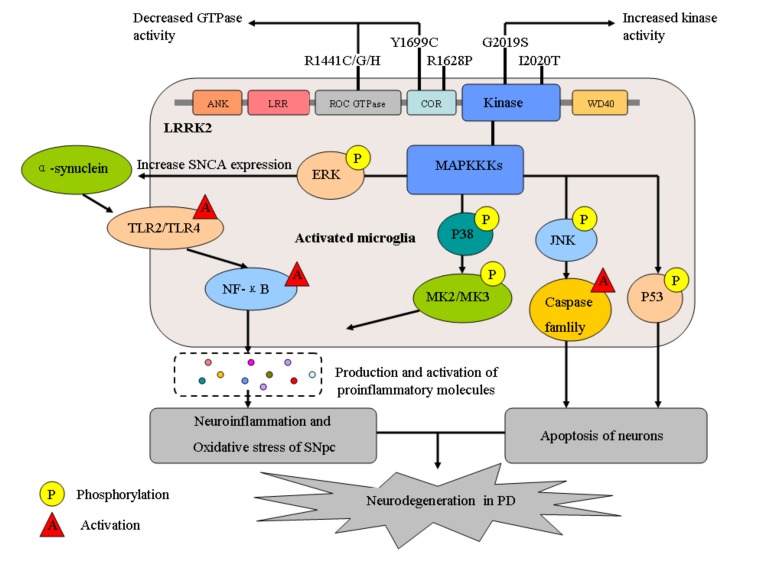
The leucine-rich repeat kinase 2 (LRRK2) gene and α-synuclein gene (SNCA) are the key influencing factors of Parkinson's disease (PD). It is reported that dysfunction of LRRK2 may influence the accumulation of α-synuclein and its pathology to alter cellular functions and signaling pathways by the kinase activation of LRRK2. The accumulation of α-synuclein is one of the main stimulants of microglial activation. Microglia are macrophages that reside in the brain, and activation of microglia is believed to contribute to neuroinflammation and neuronal death in PD. Therefore, clarifying the complex relationship among LRRK2, α-synuclein and microglials could offer targeted clinical therapies for PD. Here, we provide an updated review focused on the discussion of the evidence supporting some of the key mechanisms that are important for LRRK2-dependent neurodegeneration in PD.
Overview
The claims and statistics of this paper haven’t been checked yet.
Free: it reads the open-access text and checks the first 5 claims that cite a source we can check. Create a free account to check every claim.
Integrity signals
Registry
Cites
Statistics
Figures
Verification
Claims the paper makes
The claims and statistics of this paper haven’t been checked yet.
Free: it reads the open-access text and checks the first 5 claims that cite a source we can check. Create a free account to check every claim.
Claims other papers make about this one
Each is checked against this paper’s own text: does it say what the citing paper says it does?
The source backs part of the claim, not all of it — or backs it for a different population, condition or comparison.
In the citing paper
“Emerging evidence has shown that the LRRK2 gene is associated with both α-syn accumulation and PC [144].”
From The Impact of Neurotoxin Proteins Trafficked by Primary Cilia and Extracellular Vesicles in Neurodegenerative Diseases (2025) · cites this paper as [144]
Experimental — accuracy not yet measured
Self-check
Percentages, sums and reported differences re-computed from the paper’s own numbers.
The self-check needs the paper’s full text.
Citations
Cites
Yaşlı Kadınlarda Üreme Sağlığı
Kokanalı, D., & Engin Üstün, Y. (n.d.) · DergiPark (Istanbul University) · Cited by 170,090
Yaşlı Kadınlarda Üreme Sağlığı
Kokanalı, D., & Üstün, Y. E. (2019) · Jinekoloji-Obstetrik ve Neonatoloji Tıp Dergisi · Cited by 169,629
Mutation in the α-Synuclein Gene Identified in Families with Parkinson's Disease
Polymeropoulos, M. H., Lavedan, C., Leroy, E., Ide, S. E., Dehejia, A., Dutra, A., Pike, B., Root, H., Rubenstein, J., Boyer, R., et al. (1997) · Science · doi:10.1126/science.276.5321.2045 · Cited by 8,240
Taming Black Swans: Challenges for Sustainable Strategic Crisis Management: Plenary Session
Pelletier, P. (2021) · HAL (Le Centre pour la Communication Scientifique Directe) · doi:10.1111/j.1468 · Cited by 6,460
Dauer, W., & Przedborski, S. (2003) · Neuron · doi:10.1016/s0896-6273(03)00568-3 · Cited by 5,469
Colman (2022) · doi:10.1073/pnas · Cited by 4,370
AlaSOPro mutation in the gene encoding α-synuclein in Parkinson's disease
Krüger, R., Kuhn, W., Müller, T., Woitalla, D., Graeber, M., Kösel, S., Przuntek, H., Epplen, J. T., Schols, L., & Riess, O. (1998) · Nature Genetics · doi:10.1038/ng0298-106 · Cited by 3,836
Role of Adaptor TRIF in the MyD88-Independent Toll-Like Receptor Signaling Pathway
Yamamoto, M., Sato, S., Hemmi, H., Hoshino, K., Kaisho, T., Sanjo, H., Takeuchi, O., Sugiyama, M., Okabe, M., Takeda, K., et al. (2003) · Science · doi:10.1126/science.1087262 · Cited by 3,235
Mutations in LRRK2 Cause Autosomal-Dominant Parkinsonism with Pleomorphic Pathology
Zimprich, A., Biskup, S., Leitner, P., Lichtner, P., Farrer, M., Lincoln, S., Kachergus, J., Hulihan, M., Uitti, R. J., Calne, D. B., et al. (2004) · Neuron · doi:10.1016/j.neuron.2004.11.005 · Cited by 3,005
The new mutation, E46K, of α‐synuclein causes parkinson and Lewy body dementia
Zarranz, J. J., Alegre, J., Gómez‐Esteban, J. C., Lezcano, E., Ros, R., Ampuero, I., Vidal, L., Hoenicka, J., Rodriguez, O., Atarés, B., et al. (2004) · Annals of Neurology · doi:10.1002/ana.10795 · Cited by 2,737
Cited by
Items 101–200 of 224
Abubakar, M., Alom, S., Ali, F., Ali, S. R., Adhikary, K., Sarika, S., Gupta, P. K., Puppala, E. R., Murti, K., Nand, S., et al. (2026) · Current Neuropharmacology · doi:10.2174/011570159x446831260303200516 · Cited by 9
Unravelling the genetic links between Parkinson’s disease and lung cancer
Leong, Y. Q., Koh, R. Y., Chye, S. M., & Ng, K. Y. (2023) · Biological Chemistry · doi:10.1515/hsz-2022-0228 · Cited by 9
Insights into Calpain Activation and Rho-ROCK Signaling in Parkinson’s Disease and Aging
Gathings, A., Zaman, V., Banik, N. L., & Haque, A. (2024) · Biomedicines · doi:10.3390/biomedicines12051074 · Cited by 9
[18F]SynVest-1 PET imaging in people with Parkinson’s disease
Martin, S. L., Uribe, C., Desmond, K. L., Narciso, L., Dolman, B., Torres‐Carmona, E., Boileau, I., Graff‐Guerrero, A., Vasdev, N., & Strafella, A. P. (2025) · Brain Communications · doi:10.1093/braincomms/fcaf258 · Cited by 9
Transforming neurodegenerative disorder care with machine learning: Strategies and applications
Galal, A. A., Moustafa, A. A., & Salama, M. (2025) · Neuroscience · doi:10.1016/j.neuroscience.2025.03.036 · Cited by 8
Hayden, A. N., Leptich, E. J., & Arey, R. N. (2022) · Comparative Biochemistry and Physiology Part A Molecular & Integrative Physiology · doi:10.1016/j.cbpa.2022.111166 · Cited by 8
Zebrafish-Based Parkinson's Disease Models: Unveiling Genetic Mechanisms and Therapeutic Pathways
Dodiya, R., Sharma, P., Israni, D. K., Kamal, M. A., & Greig, N. H. (2025) · CNS & Neurological Disorders - Drug Targets · doi:10.2174/0118715273367688250528122144 · Cited by 8
Fadnis, A., Mhaske, A. S., & Shukla, R. (2025) · BioNanoScience · doi:10.1007/s12668-025-01834-5 · Cited by 8
Naidoo, D., & de Lencastre, A. (2024) · International Journal of Molecular Sciences · doi:10.3390/ijms25168795 · Cited by 8
Effects of Calcium Ion Dyshomeostasis and Calcium Ion-Induced Excitotoxicity in Parkinson’s Disease
Nam, D., Kim, H. J., Han, S. J., Son, I., & Ho, D. H. (2024) · Journal of Molecular Pathology · doi:10.3390/jmp5040037 · Cited by 7
KinasePred: A Computational Tool for Small-Molecule Kinase Target Prediction
Stefano, M. D., Piazza, L., Poles, C., Galati, S., Granchi, C., Giordano, A., Campisi, L., Macchia, M., Poli, G., & Tuccinardi, T. (2025) · International Journal of Molecular Sciences · doi:10.3390/ijms26052157 · Cited by 7
Suppression of Glioblastoma Stem Cell Potency and Tumor Growth via LRRK2 Inhibition
Park, S., Kim, K.-H., Bae, Y.-H., Oh, Y. T., Shin, H., Kwon, H. J., Kim, C. I., Kim, S. S., Choi, H., Park, J. B., et al. (2024) · International Journal of Stem Cells · doi:10.15283/ijsc24032 · Cited by 7
Qi, L., Sun, C., Sun, S., Li, A., Hu, Q., Liu, Y., & Zhang, Y. (2022) · Journal of Biological Chemistry · doi:10.1016/j.jbc.2022.102775 · Cited by 6
Khalili, A., Safarian, N., van Wijngaarden, E. W., Zoidl, G., & Rezai, P. (2023) · Journal of Neuroscience Research · doi:10.1002/jnr.25241 · Cited by 6
AI-enabled Parkinson's disease screening using smile videos
Adnan, T., Islam, M. S., Lee, S., Wasifur Rahman Chowdhury, E. M., Tithi, S. D., Noshin, K., Islam, M. R., Sarker, I., Rahman, M. S., Schneider, R. B., et al. (2025) · NEJM AI · doi:10.1056/aioa2400950 · Cited by 5
Schmidt, M. Y., Cuervo, A. M., Double, K. S., Ehninger, D., Goldberg, M. S., Harvey, K., Hoeijmakers, J. H. J., Luk, K. C., Mastroberardino, P. G., Moore, D. J., et al. (2026) · npj Parkinson s Disease · doi:10.1038/s41531-025-01239-x · Cited by 5
Sala-Cîrtog, M., & Sîrbu, I. O. (2024) · International Journal of Molecular Sciences · doi:10.3390/ijms25021114 · Cited by 5
Garip, A., Stefanova, D., & Tzankova, V. (2025) · Pharmacia · doi:10.3897/pharmacia.72.e175265 · Cited by 5
Gadhave, D. G., Kale, V. V., Kade, A. P., Jadhav, O. R., Sugandhi, V. V., Babar, V. B., Khot, S. V., Kokare, C., & Paudel, K. R. (2026) · Ageing Research Reviews · doi:10.1016/j.arr.2026.103026 · Cited by 5
Cellular and Extracellular MicroRNA Dysregulation in LRRK2-Linked Parkinson’s Disease
Knab, F., Lee, J.-H., Nirujogi, R. S., Menden, K., Braunger, L. J., Logarnudi, L., Riebenbauer, B., Işık, F. B., Rajkumar, A. P., Czemmel, S., et al. (2025) · Molecular Neurobiology · doi:10.1007/s12035-025-05379-2 · Cited by 5
LRRK2 kinase activity is necessary for development and regeneration in Nematostella vectensis
Holmes, G., Ferguson, S. R., Lewis, P. A., & Echeverri, K. (2024) · Neural Development · doi:10.1186/s13064-024-00193-3 · Cited by 5
Chen, Y., Yin, Q., Cheng, X.-Y., Zhang, J., Jin, H., Li, K., Mao, C., Wang, F., Bei, H.-Z., & Liu, C. (2022) · Frontiers in Neuroscience · doi:10.3389/fnins.2022.947927 · Cited by 5
Evola, V., & Parmar, M. S. (2026) · Expert Review of Neurotherapeutics · doi:10.1080/14737175.2026.2647033 · Cited by 4
Huang, Q., Mu, Q., Liu, N., Liu, G., & Liu, C. (2026) · Advanced Interventional Materials · doi:10.1016/j.advim.2026.100015 · Cited by 4
Fountain of youth—Targeting autophagy in aging
Danics, L., Abbas, A. A., Kis, B., & Pircs, K. (2023) · Frontiers in Aging Neuroscience · doi:10.3389/fnagi.2023.1125739 · Cited by 4
Parkinson's Disease Patient‐Specific Striatum Organoids Show Hallmarks of Increased Inflammation
Barmpa, K., Saraiva, C., Žagare, A., Tuzza, M., Longworth, J., Zuccoli, E., Hufnagel, K., Skwirblies, F., Schmidt, R., Brenner, D., et al. (2026) · Movement Disorders · doi:10.1002/mds.70176 · Cited by 4
Laflamme, C., McKeever, P., Kumar, R., Schwartz, J., Chen, C. X.-Q., You, Z., Xiao, S., Benaliouad, F., Gileadi, O., McBride, H. M., et al. (2018) · bioRxiv (Cold Spring Harbor Laboratory) · doi:10.1101/499350 · Cited by 4
LRRK2; Communicative Role in the Treatment of Parkinson’s Disease and Ulcerative Colitis Overlapping
Lashgari, N., Roudsari, N. M., Niknejad, A., Shamsnia, H. S., Shayan, M., Shalmani, L. M., Momtaz, S., Rezaei, N., & Abdolghaffari, A. H. (2024) · CNS & Neurological Disorders - Drug Targets · doi:10.2174/0118715273270874231205050727 · Cited by 4
Peltonen, S., Sonninen, T.-M., Niskanen, J., Koıstınaho, J., Ruponen, M., & Lehtonen, Š. (2024) · Fluids and Barriers of the CNS · doi:10.1186/s12987-024-00592-y · Cited by 4
Sonninen, T.-M., Peltonen, S., Niskanen, J., Hämäläinen, R. H., Koıstınaho, J., & Lehtonen, Š. (2024) · International Journal of Molecular Sciences · doi:10.3390/ijms252312874 · Cited by 4
Hyderi, Z., Farhana, M. S., Singh, T. P., & Ravi, A. V. (2025) · Brain Research · doi:10.1016/j.brainres.2025.149674 · Cited by 4
Vyavahare, S., Pawar, A., Sayyed, S. A., Shegar, N., Raykar, S., Doke, R. R., & Singh, S. (2026) · Journal of Biochemical and Molecular Toxicology · doi:10.1002/jbt.70750 · Cited by 4
10.14744/cpr.2025.44813, P. A. (2025) · Journal of Clinical Practice and Research · doi:10.14744/cpr.2025.44813 · Cited by 4
Zheng, Y., Jurgielewicz, B. J., Helton, L. G., Rideout, H. J., Kennedy, E. J., Stice, S., & Yao, Y. (2026) · Journal of Extracellular Biology · doi:10.1002/jex2.70116 · Cited by 3
Therapeutic potential of leucine-rich repeat kinase 2 inhibitors for Parkinson's disease treatment
Sahoo, S., Padhy, A. A., Kumari, V., Shivani, K., & Mishra, P. (2022) · Elsevier eBooks · doi:10.1016/b978-0-323-91287-7.00011-9 · Cited by 3
Pathophysiology and Management Approaches for Parkinson’s Disease
Khan, S. S., Naren, P., Pinjala, P., Uppala, S. N., Singh, S. B., & Khatri, D. K. (2023) · Springer eBooks · doi:10.1007/978-981-99-6807-7_5 · Cited by 3
Khan, M. R., Rahman, R. A., Rashid, M. H., & Islam, M. S. (2024) · Neuroprotection/Neuroprotection (Chichester, England. Print) · doi:10.1002/nep3.59 · Cited by 3
Parlar, S. C., Senkevich, K. A., Yu, E., Ruskey, J. A., Ahmad, J., Asayesh, F., Spiegelman, D., Waters, C., Monchi, O., Dauvilliers, Y. A., et al. (2025) · npj Parkinson's Disease · doi:10.1038/s41531-025-00934-z · Cited by 3
Mannheim, J. G., Fu, J. F., Wegener, T., Klyuzhin, I. S., Vafai, N. M., Shahinfard, E., McKenzie, J., Strongosky, A. J., Wszołek, Z. K., Stoessl, A. J., et al. (2024) · NeuroImage Clinical · doi:10.1016/j.nicl.2024.103600 · Cited by 3
Danna, R., Kondle, S., Amar, O., Mabourakh, M., Chen, G., Fadol, W. B., & Mohieldin, A. M. (2025) · Biology · doi:10.3390/biology14121787 · Cited by 2
“Emerging evidence has shown that the LRRK2 gene is associated with both α -syn accumulation and PC [144].”
Self-citationFrom Bench to Brain: Translating EV and Nanocarrier Research into Parkinson’s Disease Therapies
Barathan, M., & Abdullah, N. A. H. (2025) · Biology · doi:10.3390/biology14101349 · Cited by 2
Reinventing brain immunity in neurodegeneration
Huang, H., Han, Y., Han, Z., Yang, H., Fu, Y., & Liu, Q. (2025) · Immunity & Inflammation · doi:10.1007/s44466-025-00011-3 · Cited by 2
Lv, H., Tan, L., Miao, Y., Zhou, Y., Wang, L., & Liang, Z. (2025) · Scientific Reports · doi:10.1038/s41598-025-21576-4 · Cited by 2
Dagasso, G., Vigneshwaran, V., Winder, A. J., Souza, R., Ohara, E. Y., Wilms, M., & Forkert, N. D. (2025) · NeuroImage Clinical · doi:10.1016/j.nicl.2025.103928 · Cited by 2
Tripathi, A., & Kumar, P. (2021) · International Conference on Information Systems and Computer Networks (ISCON) · doi:10.1109/iscon52037.2021.9702406 · Cited by 2
Co-Application of C16 and Ang-1 Improves the Effects of Levodopa in Parkinson Disease Treatment
Fu, X., Wang, J., Cai, H., Jiang, H., Jiang, J., Chen, H., & Han, S. (2022) · Journal of Inflammation Research · doi:10.2147/jir.s368291 · Cited by 2
Exploring LRRK2-dependent Mechanisms in Parkinson’s Disease Therapy
Sharma, V., Sharma, S., Singh, S., & Singh, T. G. (2025) · CNS & Neurological Disorders - Drug Targets · doi:10.2174/0118715273377507250320035243 · Cited by 2
The VPS35-D620N mutation is associated with Parkinson's disease and can be a target for gene therapyPreprint
Dowaidar, M. (2021) · OSF Preprints (OSF Preprints) · doi:10.31219/osf.io/83sxr · Cited by 2
Современные представления о патогенезе спорадических форм болезни Паркинсона
Сайфитдинхужаев, З. Ф. (2025) · Nauchno-prakticheskii zhurnal «Patogenez» · doi:10.48612/path/2310-0435.2025.02.4-13 · Cited by 2
Godad, A. P., Bhatia, T., Shaikh, M., & Doshi, G. (2026) · Springer eBooks · doi:10.1007/978-981-95-6099-8_15 · Cited by 1
New insights in non-motor symptoms in Parkinson’s disease
Falup‐Pecurariu, C., Fanciulli, A., Borgohain, R., Chaudhuri, К. R., & Metta, V. (2024) · Frontiers research topics · doi:10.3389/978-2-8325-4722-9 · Cited by 1
Szukiewicz, D., Almeida‐de‐Souza, J., Gryka-Marton, M., Wątroba, M., & Grabowska, A. D. (2026) · Nutrients · doi:10.3390/nu18132106 · Cited by 1
Zhu, S., Wang, Z., Shi, X., Zhong, S., Ashraf, G. M., Fu, K., & Li, Y. (2026) · Materials Today Bio · doi:10.1016/j.mtbio.2026.103569 · Cited by 1
Computational Prediction for Precision Drug Discovery Against LRRK2 and GBA in Parkinson’s Disease
Brinda, M., Reddy, R. M. R., Durwas, S. G., Ananthaswamy, S., Shenoy, R. S., & Bhat, S. (2024) · Learning and analytics in intelligent systems · doi:10.1007/978-3-031-65392-6_20 · Cited by 1
LRRK2 G2019S mutation suppresses differentiation of Th9 and Treg cells via JAK/STAT3Preprint
Zheng, N., Jaffery, R., Guerrero, A. M., Hou, J., Pan, Y., Zhou, F., Chen, S., Xu, C., Egan, N. A., Bohat, R., et al. (2024) · bioRxiv (Cold Spring Harbor Laboratory) · doi:10.1101/2024.02.28.582561 · Cited by 1
Aolymat, I., Abu-Hassan, D. W., Oleimat, A. K., Sameer, W., Wreikat, B., Iqilan, T., Al-Momani, H., Ali, H., Tahtamouni, L. H., Iqsairi, M., et al. (2026) · Annals of Medicine · doi:10.1080/07853890.2026.2677288 · Cited by 1
Jana, S., Nerella, S. G., Samanta, S. S., Liow, J., Raso, I., Santamaria, J. A. M., Zoghbi, S. S., Wu, S., Innis, R. B., Telu, S., et al. (2026) · ACS Omega · doi:10.1021/acsomega.6c01976 · Cited by 1
Diet and the microbiome in Parkinson's disease
Metcalfe‐Roach, A. (2025) · cIRcle (University of British Columbia) · doi:10.14288/1.0444180 · Cited by 1
A Hypothesis-Generating Pharmacologic Profile for Sargramostim Treatment of Parkinson’s Disease
Sil, S., Du, X., Akter, S., Kumar, M., Oludipe, D. B., Saha, A., Hu, G., Ostlund, K. R., Haynatzki, G. R., Santamaria, P. M., et al. (2026) · Cellular and Molecular Neurobiology · doi:10.1007/s10571-026-01717-7 · Cited by 1
Do, M. D., Tran, T. N., Le, L. H. G., & Phuong, T. (2025) · Neurogenetics · doi:10.1007/s10048-025-00840-9 · Cited by 1
Protein serine/threonine signaling pathways: opportunities and translational perspectives
Das, V. (2026) · Elsevier eBooks · doi:10.1016/b978-0-443-44173-8.00012-7 · Cited by 1
Therapeutic Applications of Induced Pluripotent Stem Cell Use in Parkinson’s Disease Models
Baniadam, K., Tranchina, S., Lawlor, M.-K., & Kakazu, J. (2021) · Georgetown Medical Review · doi:10.52504/001c.29784 · Cited by 1
Endocytosis at the mouse blood brain barrier is elevated during sleepPreprint
Li, F., Chen, D., & Sehgal, A. (2026) · bioRxiv (Cold Spring Harbor Laboratory) · doi:10.64898/2026.04.02.716170 · Cited by 1
The immune functions of GBA in Parkinson's disease
Ibrahim, M. (2025) · doi:10.71781/235 · Cited by 1
Inflammatory Roads to Parkinson’s Disease
Anisman, H., Hayley, S. P., & Kusnecov, A. (2024) · Elsevier eBooks · doi:10.1016/b978-0-443-23565-8.00015-6
High-throughput identification of protein turnover modulators in human neuronsPreprint
Dembska, J., Mahul‐Mellier, A., Tollenaere, A., Jasiqi, Y., & Suter, D. M. (2026) · bioRxiv (Cold Spring Harbor Laboratory) · doi:10.64898/2026.05.06.723176
(2024) · Elsevier eBooks · doi:10.1016/b978-0-443-23565-8.09996-8
Synthetic Protein Mimetic Based Therapies for Neurodegeneration
Stillman, N. H. (2025) · Digital Commons - DU (University of Denver) · doi:10.56902/etdcrp.2025.171
Cilia in Nervous System Development, Function, and Disease
Li, Q., Zhang, A., & Song, T. (2026) · MedComm – Future Medicine · doi:10.1002/mef2.70057
Autophagy-lysosomal pathway in neurodegeneration
McDonough, S. R., Rao, A. K., McAleer, J. M., Babrowicz, B. M., & Sharma, M. (2026) · Molecular Neurodegeneration Advances · doi:10.1186/s44477-026-00041-0
Çağlar, Ö., & Türkez, H. (2026) · Applied Biochemistry and Biotechnology · doi:10.1007/s12010-026-05878-5
MOTOR PROTEİNLERİN NÖRODEJENERATİF HASTALIKLARDAKİ ROLÜ
Zobar, F. N., & Küçükkılınç, T. T. (2024) · Hacettepe University Journal of the Faculty of Pharmacy · doi:10.52794/hujpharm.1509048
Small molecular therapeutic targets for neurodegenerative diseases
Rangappa, N., Upadhyay, R., Lakshman, N., Ramasamy, S., Sevanan, M., Justin, A., & Chinnathambi, S. (2025) · Advances in protein chemistry and structural biology · doi:10.1016/bs.apcsb.2025.10.012
Animal Models of Genetically-Determined Neurodegenerative Diseases and Their Development
Konno, A., Matsuzaki, Y., & Hirai, H. (2026) · Contemporary clinical neuroscience · doi:10.1007/978-3-032-18296-8_8
Epigenetics in neurodegeneration: Emerging biomarkers and translational insights
Singh, H., Gurjar, S., & Taliyan, R. (2025) · Brain Research · doi:10.1016/j.brainres.2025.150005
Genotype–phenotype considerations in neurogenetic disease
Stevens, H. A., & Fogel, B. L. (2024) · Elsevier eBooks · doi:10.1016/b978-0-443-19041-4.00014-5
Targeting kinases with DNA-encoded libraries: current landscape and future directions
Staikopoulou, M., & Hassan, H. (2026) · Drug Discovery Today · doi:10.1016/j.drudis.2026.104658
Pescheteau, C. (2021) · theses.fr (ABES) · doi:10.70675/f258c770z5a4bz407bz9533z56a9b2b6a0f8
Kars, M. E., Wu, Y., Stenson, P. D., Cooper, D. N., Burisch, J., Peter, I., & Itan, Y. (2024) · Figshare · doi:10.6084/m9.figshare.25815101
Kars, M. E., Wu, Y., Stenson, P. D., Cooper, D. N., Burisch, J., Peter, I., & Itan, Y. (2024) · Figshare · doi:10.6084/m9.figshare.25815588
Leucine-rich repeat kinase 2: a potential target in Parkinson’s disease and beyond
Bajgai, B., Bali, A., Jaggi, S. K., & Jaggi, A. S. (2026) · Elsevier eBooks · doi:10.1016/b978-0-443-44173-8.00001-2
Of PARK genes and lncRNAs: possible molecular mechanisms behind Parkinson’s disease
Boros, F. A. (2021) · SZTE Repository of Dissertations (University of Szeged) · doi:10.14232/phd.10845
Advances in hiPSC-Based Models of Complex Neurological Disorders
Giadone, R. M., Sartore, R., Arlotta, P., & Rubin, L. L. (2026) · Springer eBooks · doi:10.1007/978-3-032-31497-0_10
E3 Ubiquitin Ligases in Parkinson’s Pathology
Usman, S., Ellappan, S., & Mondal, A. C. (2026) · Springer eBooks · doi:10.1007/978-981-95-6099-8_12
Biomarkers for Proteostasis Disruption: An Overview
Prakash, D., & Bisht, D. (2025) · Springer eBooks · doi:10.1007/978-981-96-6202-9_8
Poornima, S. I., & Sumathy, V. J. H. (2022) · Indian Journal of Science and Technology · doi:10.17485/ijst/v15i19.2270
In Vitro System for Modeling Parkinson Disease
Mourad, L., Salama, M., & Nicolas, M. (2024) · Springer eBooks · doi:10.1007/978-981-19-3949-5_8-1
In Vitro System for Modeling Parkinson Disease
Mourad, L., Salama, M., & Nicolas, M. (2024) · Springer eBooks · doi:10.1007/978-981-99-7557-0_8
The use of human astrocytes in studies of Parkinson’s disease pathology
Tasneem, K. (2020) · UEF eRepo (University of Eastern Finland)
Kim, K., Kim, T. S., Park, H., & Hong, S. (2026) · Journal of Medicinal Chemistry · doi:10.1021/acs.jmedchem.6c01439
Genetic and epigenetic complexity of Parkinson’s disease
Upadhyay, R., Nambiar, K. S., Rithick, R., & Sevanan, M. (2026) · International review of neurobiology · doi:10.1016/bs.irn.2026.08.007
Ethical and clinical aspects of genetic analysis in neurodegenerative diseases
Yusupov, F. A., & Abdykadyrov, M. (2026) · S S Korsakov Journal of Neurology and Psychiatry · doi:10.17116/jnevro202612607115
Relación entre genes reloj y fisiopatología del Parkinson en pez cebra
Aranda‐Martínez, P. (2023) · Institutional Repository of the University of Granada (University of Granada)
Macias, G. V. P. (2022) · theses.fr (ABES) · doi:10.70675/2e58decbz3797z41acza4d2zc982a5ac5170
Fundamental Links Between Cellular Stress and Neurodegeneration in a Parkinson’s Disease Model
Shippey, L. E. (2025) · Sheffield Hallam University · doi:10.7190/shu-thesis-00782
Translational Neuroscience: Foundations for Precision Therapies
Nikolich, K., & Malenka, R. C. (2026) · Springer eBooks · doi:10.1007/978-3-032-31497-0
Xu, Q., Luo, Y., Lü, X., Chen, X., Zhang, Y., Gong, Y., Su, T., Lin, H., & Xia, Q. (2026) · BMC Complementary Medicine and Therapies · doi:10.1186/s12906-026-05522-z
Metadata
- Authors
- Rui, Q., Ni, H., Li, D., Gao, R., & Chen, G.
- Affiliations
- Department of Laboratory, The First People's Hospital of Zhangjiagang City, Suzhou, Jiangsu, China
- Zhangjiagang First People's Hospital (CN)
- First Affiliated Hospital of Soochow University (CN)
- Corresponding author
- Gao, Rong
- Venue
- Current Neuropharmacology
- Publisher
- Bentham Science Publishers Ltd.
- Published
- 2018-10-05
- Volume
- 16
- Issue
- 9
- Pages
- 1348-1357
- ISSN
- 1570-159X (ISSN-L)
- PMC
- PMC6251048
- OpenAlex
- W2792312976
- Semantic Scholar
- 4f6a10e0c07dd573a7b55cd961a6f73cabae0071
- Cited by
- 196
- References
- 113
- Citations by year
- 2026: 30 · 2025: 32 · 2024: 49 · 2023: 27 · 2022: 22 · 2021: 24 · 2020: 8 · 2019: 3 · 2018: 1
- FWCI
- 1.41
- Type
- journal article
- Language
- en
- Open access
- bronze
- doi.org
- Locations
- Current Neuropharmacology (publishedVersion)
- PubMed Central (publishedVersion, cc-by-nc)
- PubMed (publishedVersion)
- Topics
- Health Sciences › Medicine › Clinical Neurology › Parkinson's Disease Mechanisms and Treatments
- Life Sciences › Biochemistry, Genetics and Molecular Biology › Molecular Biology › Nuclear Receptors and Signaling
- Life Sciences › Neuroscience › Neurology › Neuroinflammation and Neurodegeneration Mechanisms
- Keywords
- LRRK2, Parkinson's disease, alpha-synuclein, microglial activation, neuroinflammation, neurodegeneration, kinase activation, neuronal cell death, LRRK2 inhibitors
- MeSH terms
- Leucine-Rich Repeat Serine-Threonine Protein Kinase-2, Animals, Humans, Nerve Degeneration, Parkinsonian Disorders
About these checks
Registry, retraction, Cites and statistics results are computed, not judged, with one exception: a printed reference that no index lists is read once by a model before it counts as a citation error. Claims are extracted by a model and kept only when their quote appears verbatim in the text; each cited source is then checked, with a model’s help, for whether it says what the claim relies on. Those verdicts can be wrong — read the claim’s quote and the cited source before relying on one.
Statistics and arithmetic are recomputed, not judged.
Confidence bands are shown only for fields calibrated on our annotated test set. None is calibrated yet, so no band is shown.
What counts as a claim ›How we measure confidence ›How we check this ›
Are you an author, or do you see a problem with this page? Request a review
Data sources
Bibliographic data: Semantic Scholar, OpenAlex, Crossref.
Contains information from the Semantic Scholar Academic Graph Datasets, made available under the ODC Attribution License (ODC-BY 1.0).
Semantic Scholar’s data is described in: Kinney, R., et al. (2023). The Semantic Scholar Open Data Platform. arXiv:2301.10140.
