

The Role of LRRK2 in Neurodegeneration of Parkinson Disease
Open accessThe DOI matches its Crossref record; 116 of the 116 references it cites were found in a registry or an index.
Abstract
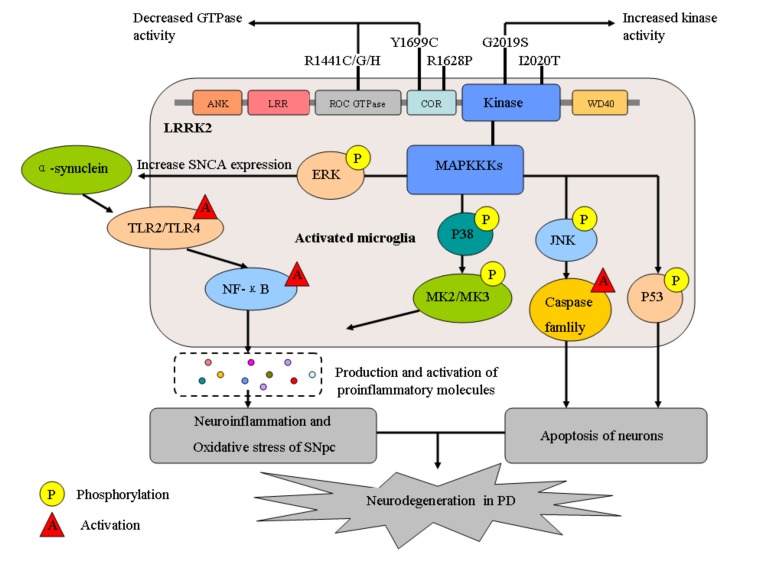
The leucine-rich repeat kinase 2 (LRRK2) gene and α-synuclein gene (SNCA) are the key influencing factors of Parkinson's disease (PD). It is reported that dysfunction of LRRK2 may influence the accumulation of α-synuclein and its pathology to alter cellular functions and signaling pathways by the kinase activation of LRRK2. The accumulation of α-synuclein is one of the main stimulants of microglial activation. Microglia are macrophages that reside in the brain, and activation of microglia is believed to contribute to neuroinflammation and neuronal death in PD. Therefore, clarifying the complex relationship among LRRK2, α-synuclein and microglials could offer targeted clinical therapies for PD. Here, we provide an updated review focused on the discussion of the evidence supporting some of the key mechanisms that are important for LRRK2-dependent neurodegeneration in PD.
Overview
The claims and statistics of this paper haven’t been checked yet.
Free: it reads the open-access text and checks the first 5 claims that cite a source we can check. Create a free account to check every claim.
Integrity signals
Registry
Cites
Statistics
Figures
Verification
Claims the paper makes
The claims and statistics of this paper haven’t been checked yet.
Free: it reads the open-access text and checks the first 5 claims that cite a source we can check. Create a free account to check every claim.
Claims other papers make about this one
Each is checked against this paper’s own text: does it say what the citing paper says it does?
The source backs part of the claim, not all of it — or backs it for a different population, condition or comparison.
In the citing paper
“Emerging evidence has shown that the LRRK2 gene is associated with both α-syn accumulation and PC [144].”
From The Impact of Neurotoxin Proteins Trafficked by Primary Cilia and Extracellular Vesicles in Neurodegenerative Diseases (2025) · cites this paper as [144]
Experimental — accuracy not yet measured
Self-check
Percentages, sums and reported differences re-computed from the paper’s own numbers.
The self-check needs the paper’s full text.
Citations
Cites
Yaşlı Kadınlarda Üreme Sağlığı
Kokanalı, D., & Engin Üstün, Y. (n.d.) · DergiPark (Istanbul University) · Cited by 170,090
Yaşlı Kadınlarda Üreme Sağlığı
Kokanalı, D., & Üstün, Y. E. (2019) · Jinekoloji-Obstetrik ve Neonatoloji Tıp Dergisi · Cited by 169,629
Mutation in the α-Synuclein Gene Identified in Families with Parkinson's Disease
Polymeropoulos, M. H., Lavedan, C., Leroy, E., Ide, S. E., Dehejia, A., Dutra, A., Pike, B., Root, H., Rubenstein, J., Boyer, R., et al. (1997) · Science · doi:10.1126/science.276.5321.2045 · Cited by 8,240
Taming Black Swans: Challenges for Sustainable Strategic Crisis Management: Plenary Session
Pelletier, P. (2021) · HAL (Le Centre pour la Communication Scientifique Directe) · doi:10.1111/j.1468 · Cited by 6,460
Dauer, W., & Przedborski, S. (2003) · Neuron · doi:10.1016/s0896-6273(03)00568-3 · Cited by 5,469
Colman (2022) · doi:10.1073/pnas · Cited by 4,370
AlaSOPro mutation in the gene encoding α-synuclein in Parkinson's disease
Krüger, R., Kuhn, W., Müller, T., Woitalla, D., Graeber, M., Kösel, S., Przuntek, H., Epplen, J. T., Schols, L., & Riess, O. (1998) · Nature Genetics · doi:10.1038/ng0298-106 · Cited by 3,836
Role of Adaptor TRIF in the MyD88-Independent Toll-Like Receptor Signaling Pathway
Yamamoto, M., Sato, S., Hemmi, H., Hoshino, K., Kaisho, T., Sanjo, H., Takeuchi, O., Sugiyama, M., Okabe, M., Takeda, K., et al. (2003) · Science · doi:10.1126/science.1087262 · Cited by 3,235
Mutations in LRRK2 Cause Autosomal-Dominant Parkinsonism with Pleomorphic Pathology
Zimprich, A., Biskup, S., Leitner, P., Lichtner, P., Farrer, M., Lincoln, S., Kachergus, J., Hulihan, M., Uitti, R. J., Calne, D. B., et al. (2004) · Neuron · doi:10.1016/j.neuron.2004.11.005 · Cited by 3,005
The new mutation, E46K, of α‐synuclein causes parkinson and Lewy body dementia
Zarranz, J. J., Alegre, J., Gómez‐Esteban, J. C., Lezcano, E., Ros, R., Ampuero, I., Vidal, L., Hoenicka, J., Rodriguez, O., Atarés, B., et al. (2004) · Annals of Neurology · doi:10.1002/ana.10795 · Cited by 2,737
α-synuclein locus duplication as a cause of familial Parkinson's disease
Chartier-Harlin, M.-C., Kachergus, J., Roumier, C., Mouroux, V., Douay, X., Lincoln, S., Levecque, C., Larvor, L., Andrieux, J., Hulihan, M., et al. (2004) · The Lancet · doi:10.1016/s0140-6736(04)17103-1 · Cited by 2,029
Lees, A. J., Hardy, J., & Revesz, T. (2009) · The Lancet · doi:10.1016/s0140-6736(09)60492-x · Cited by 1,956
Independent Human MAP-Kinase Signal Transduction Pathways Defined by MEK and MKK Isoforms
Dérijard, B., Raingeaud, J., Barrett, T., Wu, I.-H., Han, J., Ulevitch, R. J., & Davis, R. J. (1995) · Science · doi:10.1126/science.7839144 · Cited by 1,555 · cited 1×
“The c-Jun N-terminal kinases (JNKs), p38 MAPKs and the extracellular signalregulated kinases (ERKs) are three primary branches of the MAPK superfamily of serine/threonine protein kinases [49, 50].”
BackgroundMogi, M., Harada, M., Riederer, P., Narabayashi, H., Fujita, K., & Nagatsu, T. (1994) · Neuroscience Letters · doi:10.1016/0304-3940(94)90746-3 · Cited by 986
Kim, C., Ho, D.-H., Suk, J.-E., You, S., Michael, S., Kang, J., Joong Lee, S., Masliah, E., Hwang, D., Lee, H.-J., et al. (2013) · Nature Communications · doi:10.1038/ncomms2534 · Cited by 856 · cited 1×
“Studies in microglia reported that the expression and phosphorylation of LRRK2 were increased after induced by Toll-like receptor2 (TLR2) or TLR4 stimulation [94, 97, 98], and both of these cell surface receptors have been implicated in the SYN-induced activation of microglia [99, 100].”
BackgroundBendor, J. T., Logan, T. P., & Edwards, R. H. (2013) · Neuron · doi:10.1016/j.neuron.2013.09.004 · Cited by 825
Why neurodegenerative diseases are progressive: uncontrolled inflammation drives disease progression
Gao, H.-M., & Hong, J.-S. (2008) · Trends in Immunology · doi:10.1016/j.it.2008.05.002 · Cited by 821
Toll‐like receptor 4 is required for α‐synuclein dependent activation of microglia and astroglia
Fellner, L., Irschick, R., Schanda, K., Reindl, M., Klimaschewski, L., Poewe, W., Wenning, G. K., & Stefanova, N. (2013) · Glia · doi:10.1002/glia.22437 · Cited by 697
LRRK2 G2019S as a Cause of Parkinson's Disease in Ashkenazi Jews
Ozelius, L. J., Senthil, G., Saunders-Pullman, R., Ohmann, E., Deligtisch, A., Tagliati, M., Hunt, A. L., Klein, C., Henick, B., Hailpern, S. M., et al. (2006) · New England Journal of Medicine · doi:10.1056/nejmc055509 · Cited by 665
Inflammation as a causative factor in the aetiology of Parkinson's disease
Whitton, P. S. (2007) · British Journal of Pharmacology · doi:10.1038/sj.bjp.0707167 · Cited by 624
α-Synuclein Membrane Interactions and Lipid Specificity
Jo, E., McLaurin, J., Yip, C. M., St. George-Hyslop, P., & Fraser, P. E. (2000) · Journal of Biological Chemistry · doi:10.1074/jbc.m004345200 · Cited by 604
Mixed-lineage kinase control of JNK and p38 MAPK pathways
Gallo, K. A., & Johnson, G. L. (2002) · Nature Reviews Molecular Cell Biology · doi:10.1038/nrm906 · Cited by 572
Mogi, M., Harada, M., Narabayashi, H., Inagaki, H., Minami, M., & Nagatsu, T. (1996) · Neuroscience Letters · doi:10.1016/0304-3940(96)12706-3 · Cited by 545
The role of leucine-rich repeat kinase 2 (LRRK2) in Parkinson's disease
Cookson, M. R. (2010) · Nature Reviews Neuroscience · doi:10.1038/nrn2935 · Cited by 539
A frequent LRRK2 gene mutation associated with autosomal dominant Parkinson's disease
Di Fonzo, A., Rohé, C. F., Ferreira, J., Chien, H. F., Vacca, L., Stocchi, F., Guedes, L., Fabrizio, E., Manfredi, M., Vanacore, N., et al. (2005) · The Lancet · doi:10.1016/s0140-6736(05)17829-5 · Cited by 531
Lin, X., Parisiadou, L., Gu, X.-L., Wang, L., Shim, H., Sun, L., Xie, C., Long, C.-X., Yang, W.-J., Ding, J., et al. (2009) · Neuron · doi:10.1016/j.neuron.2009.11.006 · Cited by 518
Localization of LRRK2 to membranous and vesicular structures in mammalian brain
Biskup, S., Moore, D. J., Celsi, F., Higashi, S., West, A. B., Andrabi, S. A., Kurkinen, K., Yu, S., Savitt, J. M., Waldvogel, H. J., et al. (2006) · Annals of Neurology · doi:10.1002/ana.21019 · Cited by 511
LRRK2 G2019S as a Cause of Parkinson's Disease in North African Arabs
Lesage, S., Dürr, A., Tazir, M., Lohmann, E., Leutenegger, A.-L., Janin, S., Pollak, P., & Brice, A. (2006) · New England Journal of Medicine · doi:10.1056/nejmc055540 · Cited by 494
LRRK2 in Parkinson's disease: protein domains and functional insights
Mata, I. F., Wedemeyer, W. J., Farrer, M. J., Taylor, J. P., & Gallo, K. A. (2006) · Trends in Neurosciences · doi:10.1016/j.tins.2006.03.006 · Cited by 489
Jaleel, M., Nichols, R. J., Deak, M., Campbell, D. G., Gillardon, F., Knebel, A., & Alessi, D. R. (2007) · Biochemical Journal · doi:10.1042/bj20070209 · Cited by 472
LRRK2 Inhibition Attenuates Microglial Inflammatory Responses
Moehle, M. S., Webber, P. J., Tse, T., Sukar, N., Standaert, D. G., DeSilva, T. M., Cowell, R. M., & West, A. B. (2012) · The Journal of Neuroscience · doi:10.1523/jneurosci.5601-11.2012 · Cited by 463 · cited 3×
“As PD-associated mutants G2019S and R1441G of LRRK2, it is observed that the expression of LRRK2 G2019S could strengthen the mobilization of myeloid cells in response to a series of proinflammatory stimulant [94].”
BackgroundShen, W., Plotkin, J. L., Francardo, V., Ko, W. K. D., Xie, Z., Li, Q., Fieblinger, T., Wess, J., Neubig, R. R., Lindsley, C. W., et al. (2015) · HAL (Le Centre pour la Communication Scientifique Directe) · doi:10.1016/j.neuron · Cited by 452
Alegre-Abarrategui, J., Christian, H., Lufino, M. M. P., Mutihac, R., Venda, L. L., Ansorge, O., & Wade-Martins, R. (2009) · Human Molecular Genetics · doi:10.1093/hmg/ddp346 · Cited by 432
LRRK2 Is Involved in the IFN-γ Response and Host Response to Pathogens
Gardet, A., Benita, Y., Li, C., Sands, B. E., Ballester, I., Stevens, C., Korzenik, J. R., Rioux, J. D., Daly, M. J., Xavier, R. J., et al. (2010) · The Journal of Immunology · doi:10.4049/jimmunol.1000548 · Cited by 415
Parkinson's Disease and Alpha Synuclein: Is Parkinson's Disease a Prion‐Like Disorder?
Olanow, C. W., & Brundin, P. (2013) · Movement Disorders · doi:10.1002/mds.25373 · Cited by 390
Biophysics of Parkinsons Disease: Structure and Aggregation of α- Synuclein
Uversky, V., & Eliezer, D. (2009) · Current Protein & Peptide Science · doi:10.2174/138920309789351921 · Cited by 322
The genetics and neuropathology of Parkinson’s disease
Houlden, H., & Singleton, A. B. (2012) · Acta Neuropathologica · doi:10.1007/s00401-012-1013-5 · Cited by 316
Neuroinflammation in Neurodegenerative Disorders-a Review
Schain, M., & Kreisl, W. C. (2017) · Current Neurology and Neuroscience Reports · doi:10.1007/s11910-017-0733-2 · Cited by 301 · cited 2×
“A lot of studies reported that chronic inflammation can contribute to the degeneration of dopaminergic neurons and the progression of PD [77, 78, 80].”
BackgroundHakimi, M., Selvanantham, T., Swinton, E., Padmore, R. F., Tong, Y., Kabbach, G., Venderova, K., Girardin, S. E., Bulman, D. E., Scherzer, C. R., et al. (2011) · Journal of Neural Transmission · doi:10.1007/s00702-011-0653-2 · Cited by 283
Shen, W., Plotkin, J. L., Francardo, V., Ko, W. K. D., Xie, Z., Li, Q., Fieblinger, T., Wess, J., Neubig, R. R., Lindsley, C. W., et al. (2015) · Neuron · doi:10.1016/j.neuron.2015.10.039 · Cited by 244
An Update on Inflammation in the Acute Phase of Intracerebral Hemorrhage
Chen, S., Yang, Q., Chen, G., & Zhang, J. H. (2015) · Translational Stroke Research · doi:10.1007/s12975-014-0384-4 · Cited by 243
Self-citationMitogen-Activated Protein Kinase Signaling
Kyosseva, S. V. (2004) · International Review of Neurobiology · doi:10.1016/s0074-7742(04)59008-6 · Cited by 230
Membrane recruitment of endogenous LRRK2 precedes its potent regulation of autophagy
Schapansky, J., Nardozzi, J. D., Felizia, F., & LaVoie, M. J. (2014) · Human Molecular Genetics · doi:10.1093/hmg/ddu138 · Cited by 226 · cited 1×
“Studies in microglia reported that the expression and phosphorylation of LRRK2 were increased after induced by Toll-like receptor2 (TLR2) or TLR4 stimulation [94, 97, 98], and both of these cell surface receptors have been implicated in the SYN-induced activation of microglia [99, 100].”
BackgroundAlpha-Synuclein Function and Dysfunction on Cellular Membranes
Snead, D., & Eliezer, D. (2014) · Experimental Neurobiology · doi:10.5607/en.2014.23.4.292 · Cited by 223
Abrogation of α-synuclein–mediated dopaminergic neurodegeneration in LRRK2-deficient rats
Daher, J. P. L., Volpicelli-Daley, L. A., Blackburn, J. P., Moehle, M. S., & West, A. B. (2014) · Proceedings of the National Academy of Sciences · doi:10.1073/pnas.1403215111 · Cited by 223 · cited 1×
“Aberrant accumulation of α-synuclein can promote both neuronal dysfunction and neuroinflammation by activating microglia abnormally, the resident immune cells of the brain [13].”
BackgroundGillardon, F., Schmid, R., & Draheim, H. (2012) · Neuroscience · doi:10.1016/j.neuroscience.2012.02.001 · Cited by 222
Daher, J. P. L., Abdelmotilib, H. A., Hu, X., Volpicelli-Daley, L. A., Moehle, M. S., Fraser, K. B., Needle, E., Chen, Y., Steyn, S. J., Galatsis, P., et al. (2015) · Journal of Biological Chemistry · doi:10.1074/jbc.m115.660001 · Cited by 210
Zhou, W., Hurlbert, M. S., Schaack, J., Prasad, K. N., & Freed, C. R. (2000) · Brain Research · doi:10.1016/s0006-8993(00)02215-0 · Cited by 204
Analysis of Lrrk2 R1628P as a risk factor for Parkinson's disease
Ross, O. A., Wu, Y., Lee, M., Funayama, M., Chen, M., Soto, A. I., Mata, I. F., Lee‐Chen, G., Chen, C. M., Tang, M., et al. (2008) · Annals of Neurology · doi:10.1002/ana.21405 · Cited by 196
Regulation of LRRK2 Expression Points to a Functional Role in Human Monocyte Maturation
Thévenet, J., Pescini Gobert, R., Hooft van Huijsduijnen, R., Wiessner, C., & Sagot, Y. J. (2011) · PLoS ONE · doi:10.1371/journal.pone.0021519 · Cited by 189
Chen, C.-Y., Weng, Y.-H., Chien, K.-Y., Lin, K.-J., Yeh, T.-H., Cheng, Y.-P., Lu, C.-S., & Wang, H.-L. (2012) · Cell Death & Differentiation · doi:10.1038/cdd.2012.42 · Cited by 187
Localization of Parkinson’s disease-associated LRRK2 in normal and pathological human brain
Higashi, S., Biskup, S., West, A. B., Trinkaus, D. B., Dawson, V. L., Faull, R. L. M., Waldvogel, H. J., Arai, H., Dawson, T. M., Moore, D. J., et al. (2007) · Brain Research · doi:10.1016/j.brainres.2007.04.034 · Cited by 185
Takekawa, M., Tatebayashi, K., & Saito, H. (2005) · Molecular Cell · doi:10.1016/j.molcel.2005.04.001 · Cited by 179
Leucine-rich repeat kinase 2 associates with lipid rafts
Hatano, T., Kubo, S.-I., Imai, S., Maeda, M., Ishikawa, K., Mizuno, Y., & Hattori, N. (2007) · Human Molecular Genetics · doi:10.1093/hmg/ddm013 · Cited by 176
LRRK2 expression linked to dopamine‐innervated areas
Galter, D., Westerlund, M., Carmine, A., Lindqvist, E., Sydow, O., & Olson, L. (2006) · Annals of Neurology · doi:10.1002/ana.20808 · Cited by 174
Induction of neuronal death by α‐synuclein
Saha, A. R., Ninkina, N. N., Hanger, D. P., Anderton, B. H., Davies, A. M., & Buchman, V. L. (2000) · European Journal of Neuroscience · doi:10.1046/j.1460-9568.2000.00210.x · Cited by 169
LRRK2 pathobiology in Parkinson's disease
Martin, I., Kim, J. W., Dawson, V. L., & Dawson, T. M. (2014) · Journal of Neurochemistry · doi:10.1111/jnc.12949 · Cited by 167
Physical activity and exercise attenuate neuroinflammation in neurological diseases
Spielman, L. J., Little, J. P., & Klegeris, A. (2016) · Brain Research Bulletin · doi:10.1016/j.brainresbull.2016.03.012 · Cited by 167
The potential role of neuroinflammation and transcription factors in Parkinson disease
Tiwari, P. C., & Pal, R. (2017) · Dialogues in Clinical Neuroscience · doi:10.31887/dcns.2017.19.1/rpal · Cited by 164
Worldwide frequency of G2019S LRRK2 mutation in Parkinson's disease: A systematic review
Correia Guedes, L., Ferreira, J. J., Rosa, M. M., Coelho, M., Bonifati, V., & Sampaio, C. (2010) · Parkinsonism & Related Disorders · doi:10.1016/j.parkreldis.2009.11.004 · Cited by 161
Mendelian forms of Parkinson's disease
Gasser, T. (2009) · Biochimica et Biophysica Acta (BBA) - Molecular Basis of Disease · doi:10.1016/j.bbadis.2008.12.007 · Cited by 161
The LRRK2 Gly2385Arg variant is associated with Parkinson’s disease: genetic and functional evidence
Tan, E. K., Zhao, Y., Skipper, L., Tan, M. G., Di Fonzo, A., Sun, L., Fook-Chong, S., Tang, S., Chua, E., Yuen, Y., et al. (2007) · Human Genetics · doi:10.1007/s00439-006-0268-0 · Cited by 160
Dynamic and redundant regulation of LRRK2 and LRRK1 expression
Biskup, S., Moore, D. J., Rea, A., Lorenz-Deperieux, B., Coombes, C. E., Dawson, V. L., Dawson, T. M., & West, A. B. (2007) · BMC Neuroscience · doi:10.1186/1471-2202-8-102 · Cited by 158
A new muscle glycogen storage disease associated with glycogenin-1 deficiency
(2014) · DIAL (Catholic University of Leuven) · doi:10.1002/ana · Cited by 155
Lesage, S., Leutenegger, A., Ibáñez, P., Janin, S., Lohmann, E., Dürr, A., & Brice, A. (2005) · The American Journal of Human Genetics · doi:10.1086/432422 · Cited by 152
α-Synuclein and Mitochondrial Dysfunction in Parkinson’s Disease
Mullin, S., & Schapira, A. (2013) · Molecular Neurobiology · doi:10.1007/s12035-013-8394-x · Cited by 146
α-Synuclein Expression Modulates Microglial Activation Phenotype
Austin, S. A., Floden, A. M., Murphy, E. J., & Combs, C. K. (2006) · The Journal of Neuroscience · doi:10.1523/jneurosci.1799-06.2006 · Cited by 142
Wan, S., Cheng, Y., Jin, H., Guo, D., Hua, Y., Keep, R. F., & Xi, G. (2016) · Translational Stroke Research · doi:10.1007/s12975-016-0472-8 · Cited by 141
The complex relationships between microglia, alpha-synuclein, and LRRK2 in Parkinson's disease
Schapansky, J., Nardozzi, J. D., & LaVoie, M. J. (2015) · Neuroscience · doi:10.1016/j.neuroscience.2014.09.049 · Cited by 132
Russo, I., Berti, G., Plotegher, N., Bernardo, G., Filograna, R., Bubacco, L., & Greggio, E. (2015) · Journal of Neuroinflammation · doi:10.1186/s12974-015-0449-7 · Cited by 128
Leucine-Rich Repeat Kinase 2 Gene-Associated Disease: Redefining Genotype-Phenotype Correlation
Wider, C., Dickson, D. W., & Wszolek, Z. K. (2010) · Neurodegenerative Diseases · doi:10.1159/000289232 · Cited by 126
Westerlund, M., Belin, A. C., Anvret, A., Bickford, P. C., Olson, L., & Galter, D. (2008) · Neuroscience · doi:10.1016/j.neuroscience.2007.10.062 · Cited by 125
Ito, M., Hirayama, M., Yamai, K., Goto, S., Ito, M., Ichihara, M., & Ohno, K. (2012) · Medical Gas Research · doi:10.1186/2045-9912-2-15 · Cited by 110
MKK6 binds and regulates expression of Parkinson’s disease‐related protein LRRK2
Hsu, C. H., Chan, D., Greggio, E., Saha, S., Guillily, M. D., Ferree, A. W., Raghavan, K., Shen, G. C., Segal, L., Ryu, H., et al. (2010) · Journal of Neurochemistry · doi:10.1111/j.1471-4159.2010.06568.x · Cited by 108
Microglia/Macrophage Polarization After Experimental Intracerebral Hemorrhage
Zhao, H., Garton, T., Keep, R. F., Hua, Y., & Xi, G. (2015) · Translational Stroke Research · doi:10.1007/s12975-015-0428-4 · Cited by 107
Suzuki, H. (2014) · Translational Stroke Research · doi:10.1007/s12975-014-0380-8 · Cited by 105
Wild-type LRRK2 but not its mutant attenuates stress-induced cell death via ERK pathway
Liou, A. K. F., Leak, R. K., Li, L., & Zigmond, M. J. (2008) · Neurobiology of Disease · doi:10.1016/j.nbd.2008.06.016 · Cited by 104
Longo, F., Mercatelli, D., Novello, S., Arcuri, L., Brugnoli, A., Vincenzi, F., Russo, I., Berti, G., Mabrouk, O. S., Kennedy, R. T., et al. (2017) · Acta Neuropathologica Communications · doi:10.1186/s40478-017-0426-8 · Cited by 97
Neurodegenerative phenotypes in an A53T -synuclein transgenic mouse model are independent of LRRK2
Daher, J. P. L., Pletnikova, O., Biskup, S., Musso, A., Gellhaar, S., Galter, D., Troncoso, J. C., Lee, M. K., Dawson, T. M., Dawson, V. L., et al. (2012) · Human Molecular Genetics · doi:10.1093/hmg/dds057 · Cited by 96
Carballo-Carbajal, I., Weber-Endress, S., Rovelli, G., Chan, D., Wolozin, B., Klein, C. L., Patenge, N., Gasser, T., & Kahle, P. J. (2010) · Cellular Signalling · doi:10.1016/j.cellsig.2010.01.006 · Cited by 91
Marker, D. F., Puccini, J. M., Mockus, T. E., Barbieri, J., Lu, S.-M., & Gelbard, H. A. (2012) · Journal of Neuroinflammation · doi:10.1186/1742-2094-9-261 · Cited by 90 · cited 1×
“In addition, in vitro studies reported the similar results, which the expression of LRRK2 protein in microglia cell cultures would be increased after an inflammatory stimulus induced by LPS or IFN-γ [95], but not after HIV-1 Tat proteininduced inflammation [96].”
ResultA new muscle glycogen storage disease associated with glycogenin‐1 deficiency
Malfatti, E., Nilsson, J., Hedberg‐Oldfors, C., Hernandez‐Lain, A., Michel, F., Dominguez‐Gonzalez, C., Viennet, G., Akman, H. O., Kornblum, C., Van den Bergh, P., et al. (2014) · Annals of Neurology · doi:10.1002/ana.24284 · Cited by 88
Cuomo, V., Cagiano, R., Brunello, N., Fumagalli, R., & Racagni, G. (1983) · Neuroscience Letters · doi:10.1016/0304-3940(83)90058-7 · Cited by 86
An, X., Peng, R., Li, T., Burgunder, J., Wu, Y., Chen, W. ‐., Zhang, J., Wang, Y. ‐., Xu, Y., Gou, Y. ‐., et al. (2008) · European Journal of Neurology · doi:10.1111/j.1468-1331.2007.02052.x · Cited by 82
Mechanisms of LRRK2-Mediated Neurodegeneration
Tsika, E., & Moore, D. J. (2012) · Current Neurology and Neuroscience Reports · doi:10.1007/s11910-012-0265-8 · Cited by 76
High LRRK2 Levels Fail to Induce or Exacerbate Neuronal Alpha-Synucleinopathy in Mouse Brain
Herzig, M. C., Bidinosti, M., Schweizer, T., Hafner, T., Stemmelen, C., Weiss, A., Danner, S., Vidotto, N., Stauffer, D., Barske, C., et al. (2012) · PLoS ONE · doi:10.1371/journal.pone.0036581 · Cited by 74
The Role of Glia in Alpha-Synucleinopathies
Fellner, L., & Stefanova, N. (2013) · Molecular Neurobiology · doi:10.1007/s12035-012-8340-3 · Cited by 68
LRRK2 mutations and risk variants in Japanese patients with Parkinson's disease
Zabetian, C. P., Yamamoto, M., Lopez, A. N., Ujike, H., Mata, I. F., Izumi, Y., Kaji, R., Maruyama, H., Morino, H., Oda, M., et al. (2009) · Movement Disorders · doi:10.1002/mds.22514 · Cited by 64
Strain-Related Differences in the Immune Response: Relevance to Human Stroke
Becker, K. J. (2016) · Translational Stroke Research · doi:10.1007/s12975-016-0455-9 · Cited by 61
The LRRK2 G2385R variant is a risk factor for sporadic Parkinson's disease in the Korean population
Kim, J., Lee, J., Kim, H. J., Kim, J. S., Shin, E., Cho, J., Park, S. S., & Jeon, B. S. (2009) · Parkinsonism & Related Disorders · doi:10.1016/j.parkreldis.2009.10.004 · Cited by 60
Leucine-rich repeat kinase 2 (LRRK2) regulates α-synuclein clearance in microglia
Maekawa, T., Sasaoka, T., Azuma, S., Ichikawa, T., Melrose, H. L., Farrer, M. J., & Obata, F. (2016) · BMC Neuroscience · doi:10.1186/s12868-016-0315-2 · Cited by 59
LRRK2 and the Stress Response: Interaction with MKKs and JNK-Interacting Proteins
Hsu, C. H., Chan, D., & Wolozin, B. (2010) · Neurodegenerative Diseases · doi:10.1159/000285509 · Cited by 58
Rethinking the Roles of Inflammation in the Intracerebral Hemorrhage
Xiong, X., & Yang, Q. (2015) · Translational Stroke Research · doi:10.1007/s12975-015-0402-1 · Cited by 54
The prevalence of LRRK2 Gly2385Arg variant in Chinese Han population with Parkinson's disease
Cao, L., Zhang, T., Xiao, Q., Wang, Y., Bai, L., Lu, G. Q., Ma, J. F., Zhang, J., Ding, J. Q., & Chen, S. D. (2007) · Movement Disorders · doi:10.1002/mds.21763 · Cited by 53
Williamson, D. S., Smith, G. P., Acheson-Dossang, P., Bedford, S. T., Chell, V., Chen, I., Daechsel, J. C. A., Daniels, Z., David, L., Dokurno, P., et al. (2017) · Journal of Medicinal Chemistry · doi:10.1021/acs.jmedchem.7b01186 · Cited by 50
Microglia Activate Migration of Glioma Cells through a Pyk2 Intracellular Pathway
Rolón-Reyes, K., Kucheryavykh, Y. V., Cubano, L. A., Inyushin, M. Y., Skatchkov, S. N., Eaton, M. J., Harrison, J. K., & Kucheryavykh, L. Y. (2015) · PLoS ONE · doi:10.1371/journal.pone.0131059 · Cited by 47
Sävman, K., Heyes, M. P., Svedin, P., & Karlsson, A. (2013) · Translational Stroke Research · doi:10.1007/s12975-012-0216-3 · Cited by 47
Microglial Voltage-Gated Proton Channel Hv1 in Ischemic Stroke
Wu, L. (2013) · Translational Stroke Research · doi:10.1007/s12975-013-0289-7 · Cited by 46
Drolet, R. E., Sanders, J. M., & Kern, J. T. (2011) · Journal of Neurogenetics · doi:10.3109/01677063.2011.627072 · Cited by 44
Parkinson’s disease and immune system: is the culprit LRRKing in the periphery?
Greggio, E., Civiero, L., Bisaglia, M., & Bubacco, L. (2012) · Journal of Neuroinflammation · doi:10.1186/1742-2094-9-94 · Cited by 41
Mills, R. D., Mulhern, T. D., Cheng, H.-C., & Culvenor, J. G. (2012) · Biochemical Society Transactions · doi:10.1042/bst20120088 · Cited by 41
Fahlenkamp, A. V., Coburn, M., de Prada, A., Gereitzig, N., Beyer, C., Haase, H., Rossaint, R., Gempt, J., & Ryang, Y. (2014) · Medical Gas Research · doi:10.1186/2045-9912-4-11 · Cited by 37
Ahn, T. B., Langston, J. W., Aachi, V. R., & Dickson, D. W. (2012) · Europe PMC (PubMed Central) · Cited by 31
Dijksterhuis, J. P., Arthofer, E., Marinescu, V. D., Nelander, S., Uhlén, M., Pontén, F., Mulder, J., & Schulte, G. (2015) · Experimental Cell Research · doi:10.1016/j.yexcr.2015.10.022 · Cited by 31
Hydrogen therapy: from mechanism to cerebral diseases
Chen, G., Liu, C., & Zhang, K. (2016) · Medical Gas Research · doi:10.4103/2045-9912.179346 · Cited by 30
Self-citationYu, L., Hu, F., Zou, X., Jiang, Y., Liu, Y., He, X., Xi, J., Liu, L., Liu, Z., He, L., et al. (2009) · Brain Research · doi:10.1016/j.brainres.2009.08.047 · Cited by 28
Chen, L., Zhang, S.-L., Liu, Y., Hong, H., Wang, H., Zheng, Y., Zhou, M., Chen, J., Xian, W., He, Y., et al. (2010) · Parkinsonism & Related Disorders · doi:10.1016/j.parkreldis.2010.11.012 · Cited by 27
Atypical tauopathy in a patient with LRRK2‐G2019S mutation and tremor‐dominant Parkinsonism
Ruffmann, C., Giaccone, G., Canesi, M., Bramerio, M., Goldwurm, S., Gambacorta, M., Rossi, G., Tagliavini, F., & Pezzoli, G. (2011) · Neuropathology and Applied Neurobiology · doi:10.1111/j.1365-2990.2011.01216.x · Cited by 27
Phosphorylation of p53 by LRRK2 induces microglial tumor necrosis factor α-mediated neurotoxicity
Ho, D. H., Seol, W., Eun, J. H., & Son, I. (2016) · Biochemical and Biophysical Research Communications · doi:10.1016/j.bbrc.2016.11.163 · Cited by 25
Is the G2019S LRRK2 mutation common in all southern European populations?
Papapetropoulos, S., Adi, N., Shehadeh, L. A., Bishopric, N. H., Singer, C., Argyriou, A. A., & Chroni, E. (2008) · Journal of Clinical Neuroscience · doi:10.1016/j.jocn.2007.08.013 · Cited by 22
Confirmation of LRRK2 S1647T variant as a risk factor for Parkinson’s disease in Southern China
Zheng, Y., Liu, Y., Wu, Q., Hong, H., Zhou, H., Chen, J., Wang, H., Xian, W., Li, J., Liu, Z., et al. (2010) · European Journal of Neurology · doi:10.1111/j.1468-1331.2010.03164.x · Cited by 20
Leucine-Rich Repeat Kinase 2 (LRRK2)
Rideout, H. J. (2017) · Advances in neurobiology · doi:10.1007/978-3-319-49969-7 · Cited by 19
Zhou, Y., Luo, X., Li, F., Tian, X., Zhu, L.-H., Yang, Y., Ren, Y., & Pang, H. (2012) · Journal of Clinical Neuroscience · doi:10.1016/j.jocn.2011.09.028 · Cited by 18
Multitasking Microglia and Alzheimer’s Disease: Diversity, Tools and Therapeutic Targets
Grubman, A., Kanninen, K. M., & Malm, T. (2016) · Journal of Molecular Neuroscience · doi:10.1007/s12031-016-0825-5 · Cited by 16
Reperfusion Therapy for Acute Stroke Improves Outcome by Decreasing Neuroinflammation
Montaner, J., Salat, D., García‐Berrocoso, T., Molina, C. A., Chacón, P. M., Ribó, M., Álvarez‐Sabín, J., & Rosell, A. (2010) · Translational Stroke Research · doi:10.1007/s12975-010-0038-0 · Cited by 11
Hu, Z.-X., Peng, D., Cai, M., Pu, J., Lei, X., Yin, X., Ouyang, Z., Luo, W. F., & Zhang, B. R. (2011) · Neurological Sciences · doi:10.1007/s10072-010-0453-8 · Cited by 10
Cited by
The Role of Oxidative Stress in Parkinson’s Disease
Chang, K.-H., & Chen, C.-M. (2020) · Antioxidants · doi:10.3390/antiox9070597 · Cited by 341
Neuroprotective Potentials of Flavonoids: Experimental Studies and Mechanisms of Action
Bellavite, P. (2023) · Antioxidants · doi:10.3390/antiox12020280 · Cited by 212
“Microglial activation is thought to contribute to neuroinflammation and neuronal death in PD [311].”
BackgroundPreventing Parkinson’s Disease: An Environmental Agenda
Miranda, B. R. D., Goldman, S. M., Miller, G. W., Greenamyre, J. T., & Dorsey, E. R. (2021) · Journal of Parkinson s Disease · doi:10.3233/jpd-212922 · Cited by 191
Ciurea, A. V., Mohan, A. G., Covache-Busuioc, R.-A., Costin, H. P., Glavan, L.-A., Corlatescu, A.-D., & Saceleanu, V. M. (2023) · International Journal of Molecular Sciences · doi:10.3390/ijms241310809 · Cited by 172
Unravelling cell type-specific responses to Parkinson’s Disease at single cell resolution
Martirosyan, A., Ansari, R., Pestana, F., Hebestreit, K., Gasparyan, H. A., Aleksanyan, R., Hnatova, S., Poovathingal, S. K., Marneffe, C., Thal, D. R., et al. (2024) · Molecular Neurodegeneration · doi:10.1186/s13024-023-00699-0 · Cited by 170
Metadata
- Authors
- Rui, Q., Ni, H., Li, D., Gao, R., & Chen, G.
- Affiliations
- Department of Laboratory, The First People's Hospital of Zhangjiagang City, Suzhou, Jiangsu, China
- Zhangjiagang First People's Hospital (CN)
- First Affiliated Hospital of Soochow University (CN)
- Corresponding author
- Gao, Rong
- Venue
- Current Neuropharmacology
- Publisher
- Bentham Science Publishers Ltd.
- Published
- 2018-10-05
- Volume
- 16
- Issue
- 9
- Pages
- 1348-1357
- ISSN
- 1570-159X (ISSN-L)
- PMC
- PMC6251048
- OpenAlex
- W2792312976
- Semantic Scholar
- 4f6a10e0c07dd573a7b55cd961a6f73cabae0071
- Cited by
- 196
- References
- 113
- Citations by year
- 2026: 30 · 2025: 32 · 2024: 49 · 2023: 27 · 2022: 22 · 2021: 24 · 2020: 8 · 2019: 3 · 2018: 1
- FWCI
- 1.41
- Type
- journal article
- Language
- en
- Open access
- bronze
- doi.org
- Locations
- Current Neuropharmacology (publishedVersion)
- PubMed Central (publishedVersion, cc-by-nc)
- PubMed (publishedVersion)
- Topics
- Health Sciences › Medicine › Clinical Neurology › Parkinson's Disease Mechanisms and Treatments
- Life Sciences › Biochemistry, Genetics and Molecular Biology › Molecular Biology › Nuclear Receptors and Signaling
- Life Sciences › Neuroscience › Neurology › Neuroinflammation and Neurodegeneration Mechanisms
- Keywords
- LRRK2, Parkinson's disease, alpha-synuclein, microglial activation, neuroinflammation, neurodegeneration, kinase activation, neuronal cell death, LRRK2 inhibitors
- MeSH terms
- Leucine-Rich Repeat Serine-Threonine Protein Kinase-2, Animals, Humans, Nerve Degeneration, Parkinsonian Disorders
About these checks
Registry, retraction, Cites and statistics results are computed, not judged, with one exception: a printed reference that no index lists is read once by a model before it counts as a citation error. Claims are extracted by a model and kept only when their quote appears verbatim in the text; each cited source is then checked, with a model’s help, for whether it says what the claim relies on. Those verdicts can be wrong — read the claim’s quote and the cited source before relying on one.
Statistics and arithmetic are recomputed, not judged.
Confidence bands are shown only for fields calibrated on our annotated test set. None is calibrated yet, so no band is shown.
What counts as a claim ›How we measure confidence ›How we check this ›
Are you an author, or do you see a problem with this page? Request a review
Data sources
Bibliographic data: Semantic Scholar, OpenAlex, Crossref.
Contains information from the Semantic Scholar Academic Graph Datasets, made available under the ODC Attribution License (ODC-BY 1.0).
Semantic Scholar’s data is described in: Kinney, R., et al. (2023). The Semantic Scholar Open Data Platform. arXiv:2301.10140.
