

The HPA Axis as Target for Depression
Open accessThe DOI matches its Crossref record; 140 of the 142 references it cites were found in a registry or an index; 42 of the 101 sources its claims cite were checked for support.
Abstract
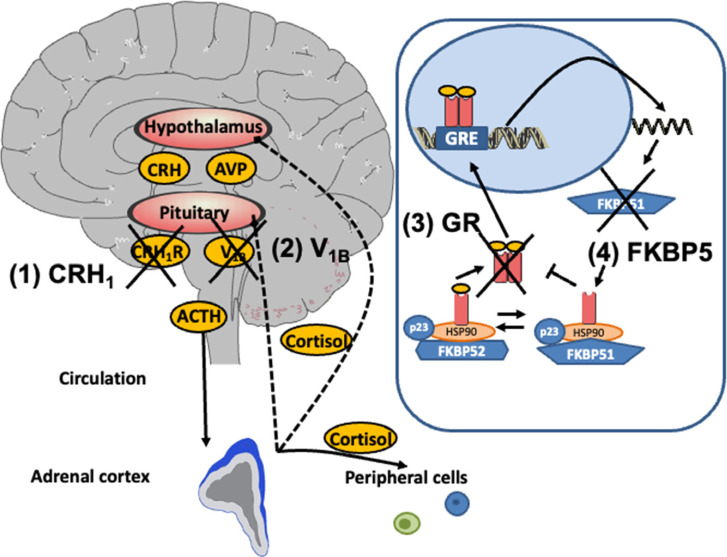
Major depressive disorder (MDD) is a stress-related mental disorder with a lifetime prevalence of 20% and, thus, is one of the most prevalent mental health disorders worldwide. Many studies with a large number of patients support the notion that abnormalities of the hypothalamus-pituitaryadrenal (HPA) axis are crucial for the development of MDD. Therefore, a number of strategies and drugs have been investigated to target different components of the HPA axis: 1) corticotrophinreleasing hormone (CRH) 1 receptor antagonists; 2) vasopressin V1B receptor antagonists, 3) glucocorticoid receptor antagonists, and 4) FKBP5 antagonists. Until now, V1B receptor antagonists and GR antagonists have provided the most promising results. Preclinical data also support antagonists of FKBP5, which seem to be partly responsible for the effects exerted by ketamine. However, as HPA axis alterations occur only in a subset of patients, specific treatment approaches that target only single components of the HPA axis will be effective only in this subset of patients. Companion tests that measure the function of the HPA axis and identify patients with an impaired HPA axis, such as the dexamethasone-corticotrophin-releasing hormone (dex-CRH) test or the molecular dexamethasonesuppression (mDST) test, may match the patient with an effective treatment to enable patient-tailored treatments in terms of a precision medicine approach.
Overview
CoChat Summary
TL;DR
This narrative review argues that HPA axis abnormalities are robustly documented in MDD but occur only in a subset of patients, so treatments targeting single HPA axis components will likely require companion tests for patient selection. It summarizes clinical and preclinical evidence for CRH1, V1B, GR, and FKBP5 antagonists, with V1B antagonists and mifepristone showing the most promising results to date.
Key findings
- MDD has a lifetime prevalence of around 20% and heritability of around 40%; more than 50% of patients fail the first antidepressant prescribed, and about 30% do not respond after several treatment attempts. HPA axis hyperactivity with impaired negative feedback is robustly found in MDD, but not all patients with MDD display HPA axis dysfunction.
- A meta-analysis of over 16 randomized controlled trials and 7 open-label trials with 2972 subjects found a significant difference in efficacy across HPA-axis-targeting medications versus controls; subgroup analyses showed significant differences favoring the GR antagonist mifepristone and V1B receptor antagonists.
- V1B antagonist trials were mixed: SSR149415 at 250 mg, but not 100 mg, led to greater HDRS reduction after 8 weeks, though the trial failed because the escitalopram comparator did not achieve significant HDRS reduction; another trial with 100 mg and 250 mg showed no significant improvement versus placebo; doses above 250 mg significantly reduced cortisol response. ABT-436 showed favorable effects on 2 of 5 MASQ subscales but no significant HDRS effect; TS-121 produced a larger MADRS reduction than placebo after 6 weeks, but the effect was not statistically significant.
- Mifepristone trials (4 double-blind, 2 open-label) suggested significant reduction in psychotic symptoms, the primary outcome, but depressive symptoms were secondary and often not significantly improved versus placebo; a combined analysis of five placebo-controlled trials (cases n = 833, placebo n = 627) found significant psychotic symptom reduction when plasma concentrations were within the therapeutic range (about 1600 ng/ml, equating to around 1200 mg/day). CRH1 antagonist R121919 reduced HDRS but was withdrawn for liver enzyme elevations; CP-316,311 failed to improve depressive symptoms; FKBP5 antagonists SAFit1 and SAFit2 improved stress-coping and neuroendocrine feedback in preclinical models but have not yet been tested in clinical samples.
Methods
- Narrative review; no primary data, systematic search strategy, or meta-analysis conducted by the author is described.
- Synthesizes preclinical and clinical literature on the HPA axis in MDD, including trials of CRH1 receptor antagonists, V1B receptor antagonists, GR antagonists, and FKBP5 antagonists, as well as HPA axis tests such as the DST, dex-CRH test, and molecular DST (mDST).
- Main analysis is a qualitative synthesis of cited studies, reporting selected trial outcomes and meta-analytic findings from prior work.
Limitations
- Stated: HPA axis alterations occur only in a subset of MDD patients; specific HPA-axis-targeting compounds improve depressive symptoms only in a certain proportion of patients; dex-CRH findings are heterogeneous with modest effect sizes; DST sensitivity is only 20–50%; mifepristone trials were often shorter than usual trials and depressive symptoms were secondary outcomes; FKBP5 antagonists have not yet been tested in clinical samples.
- Evident: as a narrative review, it does not describe a systematic search strategy, risk-of-bias assessment, or quantitative synthesis, so conclusions rely on selected cited studies.
- Evident: no primary data or new experimental results are presented.
Model-written summary. Check it against the paper before relying on it.
Integrity signals
Registry
Cites
Statistics
Figures
Verification
Claims the paper makes
34 Valid · 1 Not valid · 29 Not checked · 8 Own results and interpretations
The sources with a verdict support this claim; the rest weren’t checked yet, have no full text we could read, or their verdicts aren’t rated yet.
In the paper
“Numerous clinical and preclinical studies have robustly observed FKBP5/FKBP51 to be a central mediator of childhood adversity and HPA axis dysfunction and other sequelae [108-110].”
§ The HPA Axis as Target for Depression > FKBP5 ANTAGONISTS AND KETAMINE
What the sources say
- Not checked — no full text of the sourcecites [108] Matosin N. Halldorsdottir T. Binder E.B. Understanding the molecular mechanisms underpinning gene by environment interactions in psychiatric disorders: The FKBP5 Model. Biol. Psychiatry 2018 83 10 821 830 10.1016/j.biopsych.2018.01.021 29573791 source
- Not checked — no full text of the sourcecites [109] Martins J. Yusupov N. Binder E.B. Brückl T.M. Czamara D. Early adversity as the prototype gene × environment interaction in mental disorders? Pharmacol. Biochem. Behav. 2022 215 173371 10.1016/j.pbb.2022.173371 35271857 source
- Supportedcites [110] Klengel T. Mehta D. Anacker C. Rex-Haffner M. Pruessner J.C. Pariante C.M. Pace T.W.W. Mercer K.B. Mayberg H.S. Bradley B. Nemeroff C.B. Holsboer F. Heim C.M. Ressler K.J. Rein T. Binder E.B. Allele-specific FKBP5 DNA demethylation mediates gene–childhood trauma interactions. Nat. Neurosci. 2013 16 1 33 41 10.1038/nn.3275 23201972 PMC4136922 source
The Abstract describes FKBP5 as an important regulator of the stress hormone system and reports childhood trauma–dependent changes linked to long-term stress-hormone dysregulation and effects on immune cells and brain areas. It also cites prior human findings on FKBP5 and childhood trauma; the Discussion points to supporting rodent models. Together, these passages support the broad clinical and preclinical characterization in the claim. (LLM, conf=0.87)
boostedstates a cause- Asserted: passes — The authors put it forward as true.
- Checkable: passes — It can be checked against evidence.
- Load-bearing: passes — The paper’s conclusions depend on it.
- Based: passes — The paper gives a reason why it holds.
The cited sources support only part of this claim — read each source’s verdict below.
In the paper
“Similar effects were observed in stress-coping models in mice, where FKBP51 was required for stress-coping induced by paroxetine and amitriptyline [136].”
§ The HPA Axis as Target for Depression > FKBP5 ANTAGONISTS AND KETAMINE
What the sources say
- Partly supportedcites [136] Gassen N.C. Hartmann J. Zannas A.S. Kretzschmar A. Zschocke J. Maccarrone G. Hafner K. Zellner A. Kollmannsberger L.K. Wagner K.V. Mehta D. Kloiber S. Turck C.W. Lucae S. Chrousos G.P. Holsboer F. Binder E.B. Ising M. Schmidt M.V. Rein T. FKBP51 inhibits GSK3β and augments the effects of distinct psychotropic medications. Mol. Psychiatry 2016 21 2 277 289 10.1038/mp.2015.38 25849320 sourceExperimental — accuracy not yet measured
The section on psychotropic-drug effects in mice says FKBP51 deletion attenuated paroxetine’s effect on depression-like behavior after stress, supporting a role for FKBP51 but not showing that it was strictly required. Our copy does not report amitriptyline-induced stress-coping in mice; amitriptyline appears only in a reference about rat astrocytes. Page numbers are unavailable for the deciding passages. (LLM, conf=0.88)
plainstates a cause- Asserted: passes — The authors put it forward as true.
- Checkable: passes — It can be checked against evidence.
- Load-bearing: unclear — It is unclear whether the paper’s conclusions depend on it.
- Based: passes — The paper gives a reason why it holds.
- Partly supported
The cited sources support only part of this claim — read each source’s verdict below.
In the paper
“SAFit1 and SAFit2 achieved an improvement in stress-coping behavior and neuroendocrine feedback in preclinical models [125, 126].”
§ The HPA Axis as Target for Depression > FKBP5 ANTAGONISTS AND KETAMINE
What the sources say
- Partly supportedcites [125] Kolos J.M. Voll A.M. Bauder M. Hausch F. FKBP Ligands—Where We Are and Where to Go? Front. Pharmacol. 2018 9 1425 10.3389/fphar.2018.01425 30568592 PMC6290070 sourceExperimental — accuracy not yet measured
The “Pharmacological Studies with SAFit2” section reports reduced anxiety-related behavior in mice after SAFit2 treatment, which supports a related preclinical behavioral effect. The “FKBP51” section attributes improved stress-coping behavior to FKBP51-deficient mice, not SAFit treatment. Our copy does not report improved neuroendocrine feedback from either SAFit1 or SAFit2, and describes SAFit1 primarily as a ligand for cellular experiments. (LLM, conf=0.86)
- Not checked — no full text of the sourcecites [126] Gaali S. Kirschner A. Cuboni S. Hartmann J. Kozany C. Balsevich G. Namendorf C. Fernandez-Vizarra P. Sippel C. Zannas A.S. Draenert R. Binder E.B. Almeida O.F.X. Rühter G. Uhr M. Schmidt M.V. Touma C. Bracher A. Hausch F. Selective inhibitors of the FK506-binding protein 51 by induced fit. Nat. Chem. Biol. 2015 11 1 33 37 10.1038/nchembio.1699 25436518 source
plainstates a cause- Asserted: passes — The authors put it forward as true.
- Checkable: passes — It can be checked against evidence.
- Load-bearing: passes — The paper’s conclusions depend on it.
- Based: passes — The paper gives a reason why it holds.
- Partly supported
The cited sources support only part of this claim — read each source’s verdict below.
In the paper
“In fact, sensitivity to identify alterations of the HPA axis could be increased with a successful classification of depressed patients up to 80% [56, 57].”
§ The HPA Axis as Target for Depression > MEASURING THE HPA AXIS ACTIVITY
What the sources say
- Partly supportedcites [56] Bardeleben U. Holsboer F. Cortisol response to a combined dexamethasone-human corticotrophin-releasing hormone challenge in patients with depression. J. Neuroendocrinol. 1989 1 6 485 488 10.1111/j.1365-2826.1989.tb00150.x 19210420 sourceExperimental — accuracy not yet measured
The DEX-CRH test results and Discussion report increased cortisol responses in depressed patients, including those not identified as DST nonsuppressors, supporting improved detection of HPA-axis disturbance. The paper does not report an 80% successful-classification rate or a formal sensitivity estimate. (LLM, conf=0.84)
- Not checked — no full text of the sourcecites [57] Heuser I. Yassouridis A. Holsboer F. The combined dexamethasone/CRH test: A refined laboratory test for psychiatric disorders. J. Psychiatr. Res. 1994 28 4 341 356 10.1016/0022-3956(94)90017-5 7877114 source
hedgedstates a cause- Asserted: passes — The authors put it forward as true.
- Checkable: passes — It can be checked against evidence.
- Load-bearing: passes — The paper’s conclusions depend on it.
- Based: passes — The paper gives a reason why it holds.
- Partly supported
The cited sources support only part of this claim — read each source’s verdict below.
In the paper
“The first test to detect HPA axis alterations was the dexamethasone suppression test (DST), which identifies an insufficient suppression of cortisol following dexamethasone intake [48].”
§ The HPA Axis as Target for Depression > MEASURING THE HPA AXIS ACTIVITY
What the sources say
- Partly supportedcites [48] Carroll B.J. Martin F.I.R. Davies B. Resistance to suppression by dexamethasone of plasma 11-O.H.C.S. levels in severe depressive illness. BMJ 1968 3 5613 285 287 10.1136/bmj.3.5613.285 4385601 PMC1986248 sourceExperimental — accuracy not yet measured
The Subjects and Methods and Results sections describe measuring plasma 11-hydroxycorticosteroids after dexamethasone and finding insufficient suppression in some patients with severe depression. The paper does not establish that the DST was the first test to detect HPA-axis alterations, and it reports 11-hydroxycorticosteroids rather than specifically cortisol. Page numbers are unavailable in our copy. (LLM, conf=0.86)
plain- Asserted: passes — The authors put it forward as true.
- Checkable: passes — It can be checked against evidence.
- Load-bearing: unclear — It is unclear whether the paper’s conclusions depend on it.
- Based: passes — The paper gives a reason why it holds.
- Partly supported
41 more claims · 16 with their cited sources checked
Create a free account to see all 72 claims and to verify the 3 references still open.
- It may state two separate claims as one. 24
- Probably not a substantial claim. 3
Citations
Cites
Protective and Damaging Effects of Stress Mediators
McEwen, B. S. (1998) · New England Journal of Medicine · doi:10.1056/nejm199801153380307 · Cited by 6,733 · cited 1×
“The regulation of these negative feedback loops is crucial for an adaptive stress response [46].”
BackgroundVos, T., Barber, R. M., Bell, B., Bertozzi-Villa, A., Biryukov, S., Bolliger, I., Charlson, F., Davis, A., Degenhardt, L., Dicker, D., et al. (2015) · The Lancet · doi:10.1016/s0140-6736(15)60692-4 · Cited by 6,414
Physiology and neurobiology of stress and adaptation: central role of the brain
McEwen, B. S. (2007) · Physiological Reviews · doi:10.1152/physrev.00041.2006 · Cited by 5,429 · cited 1×
“FKBP5 is a crucial moderator of the hypothalamic-pituitary-adrenal (HPA) axis function, which is responsible for the fight-or-flight response [27].”
BackgroundStress and the brain: from adaptation to disease
de Kloet, E. R., Joëls, M., & Holsboer, F. (2005) · Nature Reviews Neuroscience · doi:10.1038/nrn1683 · Cited by 4,621 · cited 1×
“A wealth of data report hyperactivity of the HPA axis with impaired sensitivity to negative feedback regulation in MDD [36, 74, 75], particularly in MDD with psychotic features [38, 76, 77].”
BackgroundVale, W., Spiess, J., Rivier, C., & Rivier, J. (1981) · Science · doi:10.1126/science.6267699 · Cited by 3,965
The size and burden of mental disorders and other disorders of the brain in Europe 2010
Wittchen, H. U., Jacobi, F., Rehm, J., Gustavsson, A., Svensson, M., Jönsson, B., Olesen, J., Allgulander, C., Alonso, J., Faravelli, C., et al. (2011) · European Neuropsychopharmacology · doi:10.1016/j.euroneuro.2011.07.018 · Cited by 3,754 · cited 1×
“These non-sufficient treatment options lead to high rates of early retirement and sick leave [13].”
BackgroundGenetic Epidemiology of Major Depression: Review and Meta-Analysis
Sullivan, P. F., Neale, M. C., & Kendler, K. S. (2000) · American Journal of Psychiatry · doi:10.1176/appi.ajp.157.10.1552 · Cited by 3,431 · cited 1×
“There is a robust heritability of around 40% [19].”
BackgroundHeim, C., & Nemeroff, C. B. (2001) · Biological Psychiatry · doi:10.1016/s0006-3223(01)01157-x · Cited by 2,791 · cited 1×
“Early-life stress, such as physical, sexual, or emotional childhood trauma, has been generally associated with MDD [23, 24], but the increase of MDD risk is also moderated by genetic variants, for example, by FKBP5 variants [25], encoding the FK 506 binding protein 51 or FKBP51, a co-chaperone of…”
BackgroundOtte, C., Gold, S. M., Penninx, B. W., Pariante, C. M., Etkin, A., Fava, M., Mohr, D. C., & Schatzberg, A. F. (2016) · Nature Reviews Disease Primers · doi:10.1038/nrdp.2016.65 · Cited by 2,269
Carroll, B. J. (1981) · Archives of General Psychiatry · doi:10.1001/archpsyc.1981.01780260017001 · Cited by 2,243 · cited 1×
“An insufficient cortisol suppression was repeatedly found in patients suffering from MDD [49-51].”
Background
Cited by
He, Y., Wang, K., Su, N., Yuan, C., Zhang, N., Hu, X., Fu, Y., & Zhao, F. (2024) · Journal of Cellular and Molecular Medicine · doi:10.1111/jcmm.70099 · Cited by 88
“143 Notably, overactivation of the HPA axis is one of the causes of depression, and gut microbiota dysbiosis can result in the production of different mediators, such as pro-inflammatory cytokines and microbial antigens, which activate the HPA axis across the BBB. 144 Furthermore, gut microbiota dysbiosis increases pe…”
BackgroundInfluentialOn the role of epigenetic modifications of HPA axis in posttraumatic stress disorder and resilience
Khan, Z., Messiri, N. E., Iqbal, E., Hassan, H., Tanweer, M. S., Sadia, S. R., Taj, M., Zaidi, U., Yusuf, K., Syed, N. I., et al. (2025) · Journal of Neurophysiology · doi:10.1152/jn.00345.2024 · Cited by 32
New insights into anti-depression effects of bioactive phytochemicals
Zhao, R., Wang, J., Chung, S. K., & Xu, B. (2024) · Pharmacological Research · doi:10.1016/j.phrs.2024.107566 · Cited by 32
Advances in biosensors for major depressive disorder diagnostic biomarkers
Dong, T., Yu, C., Mao, Q., Han, F., Yang, Z., Yang, Z., Pires, N. M. M., Wei, X., Jing, W., Lin, Q., et al. (2024) · Biosensors and Bioelectronics · doi:10.1016/j.bios.2024.116291 · Cited by 27
The protective role of ginsenoside Rg3 in heart diseases and mental disorders
Shi, L., Luo, J., Wei, X., Xu, X., & Tu, L. (2024) · Frontiers in Pharmacology · doi:10.3389/fphar.2024.1327033 · Cited by 21
“Various mental disorders have been shown to trigger the activation of the HPA axis (Sur and Lee, 2022b; Emudainohwo et al., 2023; Menke, 2024).”
BackgroundGuo, Z., Long, T., Yao, J., Li, Y., Xiao, L., & Chen, M. (2024) · Frontiers in Pharmacology · doi:10.3389/fphar.2024.1337876 · Cited by 30
“One prominent feature of depression is the dysfunction of the hypothalamic-pituitary-adrenal (HPA) axis (Menke, 2023).”
BackgroundZhao, J., Jia, H., Ma, P., Zhu, D. Y., & Fang, Y. (2025) · Pharmacological Research · doi:10.1016/j.phrs.2025.107717 · Cited by 21
Singhal, G., Singhal, S., & Baune, B. T. (2025) · Neuroprotection/Neuroprotection (Chichester, England. Print) · doi:10.1002/nep3.70009 · Cited by 27
“71 78 Chronic stress exacerbates HPA axis dysregulation, resulting in prolonged exposure to glucocorticoids, which can damage hippocampal neurons and further contribute to depressive symptoms.”
Mechanistic intersections between migraine and major depressive disorder
Johnson, M., Filali, Y., Adegboyo, A., Eberle, M., Townsend, A., Hussien, Y., Marcinkiewcz, C. A., & Hultman, R. C. (2025) · The Journal of Headache and Pain · doi:10.1186/s10194-025-02097-x · Cited by 17
“In MDD, extensive studies have investigated a role for HPA-axis in the development of pathology relating to its impact on neuroplasticity, neurotransmitter systems, immune response, metabolism, oxidation, and gut microbiota [284, 339– 341].”
Chronic stress, gut microbiota, and immunity: interconnections and implications for health
Jia, H., Guo, X., Wei, Y., Can, C., He, N., Zhang, H., Yang, X., Wu, H., Liu, W., & Ma, D. (2025) · Molecular and Cellular Biochemistry · doi:10.1007/s11010-025-05376-y · Cited by 15
“ACTH acts on the adrenal glands, triggering the release of cortisol, which influences the body through multiple pathways [265].”
Is There such a Thing as Post-Viral Depression?: Implications for Precision Medicine
Park, E., Shin, C. Y., Jeon, S. J., & Ham, B. (2024) · Biomolecules & Therapeutics · doi:10.4062/biomolther.2024.170 · Cited by 14
“Research has shown that infections can alter the secretion patterns of AVP and oxytocin, both of which can influence mood and social behavior (Jiang et al ., 2023; Menke, 2024).”
BackgroundCurrent evidence on immune-driven depression
Wessa, C., Simon, M. C. P., & Picker, L. D. (2025) · Current Opinion in Psychiatry · doi:10.1097/yco.0000000000001047 · Cited by 21
Bose, M. M., Govindula, A., Nampoothiri, M., Arora, D. S., & Mudgal, J. (2025) · Pharmacological Reports · doi:10.1007/s43440-025-00806-6 · Cited by 19
“The HPA axis and the kynurenine pathway (KP) are intricately connected in TRD. Stress activates the HPA axis, leading to elevated glucocorticoid levels, which influence kynurenine metabolism by upregu - lating enzymes such as indoleamine 2,3-dioxygenase (IDO) [52 ].”
Li, W., Yang, L., Chen, H., Miao, J., Wang, Y., Zhou, C., Chen, Y., Kong, Z., Shen, C., Wu, J., et al. (2024) · Metabolic Brain Disease · doi:10.1007/s11011-024-01461-1 · Cited by 14
“However, when the HPA axis is dysfunc - tional, such as excessive activation or insufficient inhibition, it may lead to the occurrence of depression (Menke 2024).”
Liu, S., Xin, R., Zhang, X., & Han, L. (2025) · ACS Applied Materials & Interfaces · doi:10.1021/acsami.5c02334 · Cited by 12
The Potential Relationship Between Low Back Pain and Depression: A Comprehensive Review
Cao, L., Deng, B., Wang, X., Fang, T., Umoh, K., Liu, L., Qian, J., & Liu, F. (2025) · Brain and Behavior · doi:10.1002/brb3.71026 · Cited by 14
“This negative feedback helps to terminate the stress response once the stressor has been removed, thereby maintaining HPA axis homeostasis (Menke 2024).”
Marano, G., Anesini, M. B., Milintenda, M., Acanfora, M., Calderoni, C., Bardi, F., Lisci, F. M., Brisi, C., Traversi, G., Mazza, O., et al. (2025) · Pediatric Reports · doi:10.3390/pediatric17030065 · Cited by 11
“The hypothalamus plays a role in coordinating physiological responses to emotions: it regulates autonomic functions such as heart rate, blood pressure, and hormone release through the hypothalamic–pituitary–adrenal axis [49,50].”
Zhang, L., Luo, Y., Wei, T., Wang, D., He, Z., Lan, L., & Zeng, F. (2025) · CNS Neuroscience & Therapeutics · doi:10.1111/cns.70625 · Cited by 17
“Patients with depression often exhibit hyperactivity of the HPA axis, characterized by elevated levels of HPA axis-related hormones such as corticotropin-releasing hormone, adrenocortico-tropic hormone, and cortisol [80].”
Biomarker-Guided Tailored Therapy in Major Depression
Perna, G., Spiti, A., Torti, T., Daccò, S., & Caldirola, D. (2024) · Advances in experimental medicine and biology · doi:10.1007/978-981-97-4402-2_19 · Cited by 11
Fan, Y., He, D., Lin, C., & Chen, G. (2025) · Scientific Reports · doi:10.1038/s41598-025-85177-x · Cited by 11
Dorothy, P. D. A., & Rajan, K. E. (2025) · Frontiers in Neuroscience · doi:10.3389/fnins.2025.1518046 · Cited by 10
“Previous studies have documented that Crh predominantly acts through Crh receptors ( Crhr1/ Crhr2 ) to produce anxiety/depression-like behaviors (Bakshi et al., 2002; Paretkar and Dimitrov, 2018) and its antagonist resilience stress (Holsboer and Ising, 2008; Menke, 2024).”
Epigenetic changes caused by early life stress in the pathogenesis of depression
Bi, H., Jin, J., Sun, M., Chen, M., Li, X., & Wang, Y. (2025) · European Journal of Pharmacology · doi:10.1016/j.ejphar.2025.177671 · Cited by 10
Aw, T. B. H., & Zainal, N. H. (2025) · Brain Behavior & Immunity - Health · doi:10.1016/j.bbih.2025.101122 · Cited by 8
“More-over, elevated IL-6 has been shown to disrupt hypothalamic-pituitary-adrenal (HPA) axis regulation and affect levels of cortisol secretion (Cheiran Pereira et al., 2022; Menke, 2024), inducing somatic symptoms such as appetite changes and disrupted sleep (Chu et al., 2019; Jokela et al., 2016).”
Molecular Mechanisms of Emerging Antidepressant Strategies: From Ketamine to Neuromodulation
Kowalczyk, M., Aebisher, D., Szpara, J., Czech, S., Bartusik‐Aebisher, D., & Henrykowska, G. A. (2025) · International Journal of Molecular Sciences · doi:10.3390/ijms27010344 · Cited by 12
“Dysregulation of this pathway leads to hippocampal neuronal atrophy, impaired neuroplasticity, and increased vulnerability to the development of depression [13,14].”
Discovering a new paradigm: Gut microbiota as a central modulator of sexual health
Marano, G., Anesini, M. B., Milintenda, M., Acanfora, M., d’Abate, C., Lisci, F. M., Pirona, I., Traversi, G., Pola, R., Gaetani, E., et al. (2025) · World Journal of Gastrointestinal Pathophysiology · doi:10.4291/wjgp.v16.i3.107823 · Cited by 7
Kovářová, V., Bordes, J., Mitra, S., Narayan, S. V., Springer, M., Brix, L. M., Deussing, J. M., & Schmidt, M. V. (2024) · Neuropsychopharmacology · doi:10.1038/s41386-024-02008-9 · Cited by 6
Fatty acid binding proteins and their involvement in anxiety and mood disorders
Jones, M., Uzuneser, T. C., & Laviolette, S. R. (2025) · Neurobiology of Disease · doi:10.1016/j.nbd.2025.106952 · Cited by 6
“Chronic HPA axis hyperactivity and prolonged cortisol elevations are common features in anxiety and depressive disorders, associated with mood dysregulation and emotional instability (Amasi-Hartoonian et al., 2022; Chronister et al., 2021; Menke, 2024).”
K.S.V., A. B. G., Verma, A. K., Shreha, S. A., Sinha, S. S., Boyina, R., & Kosanam, S. (2026) · Psychiatry Research · doi:10.1016/j.psychres.2026.117120 · Cited by 12
Jiang, N., Ma, S., Zu, P., Zhang, L., Xu, M., Bian, J.-F., Xu, J., Luo, W. P., Wang, H., Zhu, D., et al. (2025) · Biological Psychiatry · doi:10.1016/j.biopsych.2025.03.020 · Cited by 7
Li, Y., Zhang, S., Li, C., Shen, J., Cao, P., Sun, Y., Xiuyun, M., & An, B. (2025) · Journal of Affective Disorders · doi:10.1016/j.jad.2025.119885 · Cited by 13
Malaei, B., Farajdokht, F., Mohaddes, G., Mansouri, B., Hamidi, N., & Alipour, M. R. (2025) · Journal of Cellular and Molecular Medicine · doi:10.1111/jcmm.70770 · Cited by 5
“Therefore, addressing the aberrations of HPA axis activity is regarded as a promising approach for the development of novel antidepressant medications [35].”
Ren, N., Zhang, X., Yu, Z., Che, Y., Zhang, Y., Song, M., & Mao, H. (2026) · Neuropsychiatric Disease and Treatment · doi:10.2147/ndt.s585611 · Cited by 6
Connecting the dots: sex, depression, and musculoskeletal health
Newman, M. S., Donahue, H. J., & Neigh, G. N. (2024) · Journal of Clinical Investigation · doi:10.1172/jci180072 · Cited by 8
Yao, Y., Guo, D., Liu, F., & Han, Y. (2024) · Stress and Brain · doi:10.26599/sab.2023.9060007 · Cited by 5
“Until now, V1B receptor antagonists and glucocorticoid receptor antagonists have yielded the most promising results [82].”
Role of the cAMP-PKA-CREB pathway in depression: mechanisms and therapeutic implications
Liu, Z., Wenling, P., Xueling, D., Huo, Q., Zeping, Z., & Yaxuan, S. (2025) · Brain Research · doi:10.1016/j.brainres.2025.149895 · Cited by 7
Tran, S. H., Zhang, S., Lee, H., Hitayezu, E., Nguyen, U. T. T., Lee, S., Kang, S. W., Park, K., Kim, S. H., Kwon, H. C., et al. (2025) · Phytomedicine · doi:10.1016/j.phymed.2025.157581 · Cited by 4
Cheng, C.-Z., Xie, M.-Z., Tian, Y., Qiao, W.-Q., Yu, Z.-Y., Wang, S., & Yun, F. (2026) · Frontiers in Neuroscience · doi:10.3389/fnins.2025.1670273 · Cited by 7
“ACTH then stimulates the adrenal cortex to synthesize and release glucocorticoids, such as cortisol (Menke, 2024; Knezevic et al., 2023).”
Non-invasive wearable electrochemical biosensors for personalized applications in health management
Kang, X., Luo, A., Khan, N. A., Zhang, T., Ma, X., Zhao, Z., Tang, Y., Wang, W., Dai, K., Liang, A., et al. (2026) · Sensors International · doi:10.1016/j.sintl.2026.100381 · Cited by 5
Hwang, D.-J., & Cho, J. (2025) · Medicine & Science in Sports & Exercise · doi:10.1249/mss.0000000000003672 · Cited by 4
Qin, L., Zhao, B., Kang, M., Mao, T., Da, W., Che, Y., Wang, H., Li, Y., Feng, J., Gou, Y., et al. (2025) · The journal of nutrition health & aging · doi:10.1016/j.jnha.2025.100647 · Cited by 6
From molecules to meaning: unpacking the antidepressant mechanisms of psychedelic drugs
Acero, V. P., Flatt, T. A., Gooch, P. M., Gaughan, S. J., Levin, A. W., & Davis, A. K. (2025) · Expert Review of Clinical Pharmacology · doi:10.1080/17512433.2025.2515866 · Cited by 4
Wang, J., Duan, L., Duan, X., Chen, L., & Chen, Z. (2025) · Frontiers in Nutrition · doi:10.3389/fnut.2025.1676763 · Cited by 4
He, D., Guo, S.-Y., Yang, Y.-C., Wang, H., Zhang, Y., Mo, X., Liu, L., Qin, Z., & Xie, P. (2025) · Translational Psychiatry · doi:10.1038/s41398-025-03761-1 · Cited by 6
“…(e.g., childhood trauma) exacerbate hypothalamic-pituitary-adrenal (HPA) axis dysregulation through epigenetic modi fi cations (e.g., FKBP5 demethylation), while gut-brain axis disruption ampli fi es central in fl ammation via microbial metabolites (e.g., butyrate) and vagal signaling [9, 10].”
Bertollo, A. G., Puntel, C. F., Rievers, H. F. B., Brunhara, E. G. S., & Ignácio, Z. M. (2026) · Neuroscience · doi:10.1016/j.neuroscience.2026.01.008 · Cited by 5
Aquaporin-4 Dysfunction in Depression: From Pathogenic Mechanisms to Novel Therapeutic Targeting
Xie, X., Li, H., Chang, Y., Ji, M., Wang, M., Hu, J., & Sheng, H. (2026) · International Journal of Molecular Sciences · doi:10.3390/ijms27031233 · Cited by 6
“The pathogenesis of depression is intricately linked to dysregulation of the hypothalamic– pituitary–adrenal (HPA) axis, in which the key neural circuit formed by the prefrontal cortex (PFC) and the basolateral amygdala (BLA) plays a central role [130,131].”
Li, S., Wu, P., Wang, Y. L., Wang, D., Qian, H., & Zhang, D. (2026) · Journal of Ethnopharmacology · doi:10.1016/j.jep.2026.121308 · Cited by 3
Wu, X., Wu, W., Teng, Y., Yang, D., & Yang, H. (2026) · British Journal of Pharmacology · doi:10.1111/bph.70341 · Cited by 4
RetractedRecent developments in imaging transcriptomics for psychiatric disorders
Liu, J., Ma, X., Xu, W., Zhang, X., Liang, F., Li, J., & Dou, Y. (2026) · Psychoradiology · doi:10.1093/psyrad/kkag010 · Cited by 4
“Mental disorders not only lead to reduced quality of life and impaired social functioning but also significantly increase the risk of suicide and substance misuse (Onaemo et al. , 2022 , 2024 ).”
Predicting Depression Among Chinese Patients with Narcolepsy Type 1: A Machine-Learning Approach
Wang, M., Wang, H., Feng, Z., Wu, S. T., Li, B., Han, F., & Xiao, F. (2024) · Nature and Science of Sleep · doi:10.2147/nss.s468748 · Cited by 4
Kytikovа, O. Y., Antonyuk, M. V., Novgorodtseva, T. P., & Gvozdenko, T. A. (2024) · Russian Journal of Cardiology · doi:10.15829/1560-4071-2024-5945 · Cited by 3
He, Q., Wen, Y., Long, C., Lin, D., Lu, F., Zhong, M., Lin, W., Huang, S., Hua, S., Hua, F., et al. (2025) · Lipids in Health and Disease · doi:10.1186/s12944-025-02724-1 · Cited by 4
“…states may exacerbate metabolic dysregulation through inflammatory activation and hypothalamic‒pituitary‒adrenal (HPA) axis dysfunction, whereas metabolic abnormalities can reciprocally induce depressive symptoms via neuroendocrine pathways, establishing a vicious pathophysiological cycle [11– 14].”
Exploring the role of adipocytokines in obesity associated depression
Keswani, R., Thorat, V. G., Patil, C. R., & Bhatt, S. (2025) · Drug Discovery Today · doi:10.1016/j.drudis.2025.104509 · Cited by 3
Effects of heat environments on depressive disorders: Neurogenesis-mediated mechanisms
Kong, M.-H., Li, Q., & Chen, X. (2025) · Journal of Thermal Biology · doi:10.1016/j.jtherbio.2025.104304 · Cited by 3
Unraveling the molecular pathways linking polystyrene exposure and depression
Murthy, M. K. (2025) · Environmental Science and Pollution Research · doi:10.1007/s11356-025-37184-8 · Cited by 3
“…biological phenotype of depression that consists of hypercortisolemia, failure to downregulate the negative feedback loop, and changes in corticotropin-releasing hormone (CRH) and glucocorticoid receptor (GR) expression in the brain (Par-iante And Lightman 2008; Juruena et al. 2017; Menke 2024).”
Fan, X., Wang, Z., Sun, L., Qin, Y., Liu, Y., Wu, S., & Du, L. (2025) · Molecular Neurobiology · doi:10.1007/s12035-025-05527-8 · Cited by 3
“In contrast, in CUS, the HPA axis is hyperactivated, whereas in PTSD, the HPA axis tends to be in an inhibited state [54, 55].”
Acute stress induces changes in epigenome-wide DNA methylation
Zillich, L., Czernin, N. S., Salvador, Ó. C., Hummel, E. M., Pauli, P., Reif, A., Deckert, J., Domschke, K., & Schiele, M. A. (2025) · Neuropsychopharmacology · doi:10.1038/s41386-025-02289-8 · Cited by 7
“For instance, a subgroup of patients with major depressive disorder appears to be characterized by impaired HPA axis functioning and thus might bene fi t from pharmacological treatments targeting the HPA axis [4].”
Li, J., Chen, J., Luo, Y., Li, Y., Cheng, X., & Xie, Y. (2026) · Ecotoxicology and Environmental Safety · doi:10.1016/j.ecoenv.2026.119716 · Cited by 2
Zhang, X., Wu, L., Hua, D., Zhang, B., Wang, X., Li, L., Wang, Y., & Zhu, J. (2026) · Molecular Neurobiology · doi:10.1007/s12035-026-05779-y · Cited by 2
Ni, Y., Zhang, W., Sun, P., Xu, Y., & Zhang, Q. (2026) · Journal of Food Bioactives · doi:10.26599/jfb.2026.95033436 · Cited by 4
Asoprisnil as a Novel Ligand Interacting with Stress-Associated Glucocorticoid Receptor
Ejiohuo, O., Bajia, D., Pawlak, J., & Szczepankiewicz, A. (2024) · Biomedicines · doi:10.3390/biomedicines12122745 · Cited by 5
Qi, Z., Qin, L., Gao, M., Yang, R., Liu, C., Wang, N., Li, W., Huang, Y., Wu, L., & Liu, T. (2025) · Journal of Traditional Chinese Medical Sciences · doi:10.1016/j.jtcms.2025.05.002 · Cited by 3
Tian, M., Yi, S., Zhao, L., Li, L., Fang, L., & Ru, Q. (2025) · Pharmacological Research - Reports · doi:10.1016/j.prerep.2025.100035 · Cited by 1
Pan, J., Liu, J., Fan, Q., Gao, S., Yu, L., & Zhang, L. (2025) · Frontiers in Pharmacology · doi:10.3389/fphar.2025.1606445 · Cited by 1
“A substantial amount of clinical and basic research has indicated signi fi cant associations between alterations in HPA axis hormone dynamics and depression (Menke, 2024).”
Olia, J. B. H., Nikanfar, M., Avci, Ç. B., Khalilnezhad, A., Shahriyari, E., & Nourazarian, A. (2025) · Brain Research · doi:10.1016/j.brainres.2025.149826 · Cited by 1
Tiwari, A. K., & Mohanty, B. (2025) · International Journal of Peptide Research and Therapeutics · doi:10.1007/s10989-025-10764-5 · Cited by 2
“The importance of NTS in maintaining intestinal barrier function and reducing endotoxemia, alone or in combination with supplements in response to LPS, has been highlighted in several studies (Babu and Mohanty 2023, 2024; Brun et al. 2005).”
Zhou, Y., Yu, J., Qi, L., Tan, H., & Xiao, J. (2025) · Journal of Affective Disorders · doi:10.1016/j.jad.2025.120523 · Cited by 3
Li, X., Ouyang, G., Li, Y., Qu, L., Hu, J., Gu, L., Deng, Q., Sun, G., & Xing, J. (2025) · Neurobiology of Disease · doi:10.1016/j.nbd.2025.107180 · Cited by 1
Xie, L., Zhang, X., Xue, F., Gao, Y., Guo, J., Zhu, H., & Liu, X. (2026) · Molecular Nutrition & Food Research · doi:10.1002/mnfr.70327 · Cited by 1
“HPA axis dysfunction was a prevalent occurrence in individuals diagnosed with depression, characterised by elevated levels of CORT, augmented CRH and ACTH, as well as an imbalance in the negative feedback regulation of the HPA axis [38, 39].”
Zuo, Z., Chen, X., Huang, J., Li, H., Li, G., Zhu, J., Wang, P., Du, S., Zhou, J., & Du, F. (2026) · Frontiers in Neuroscience · doi:10.3389/fnins.2026.1789272 · Cited by 1
“…caused by various interrelated neurobiological mechanisms, such as the dysregulation of neurotransmitters in the serotonin and dopamine systems (Nutt, 2008), structural atrophy in the limbic circuits that regulate mood (Banasr et al., 2011), and impaired function of the HPA axis (Menke, 2024).”
Shao, X., Huangfu, M., Wang, N., Zhang, Q., Zhao, M., Xie, W., Zhang, C., & Ma, T. (2026) · Frontiers in Pharmacology · doi:10.3389/fphar.2026.1735895 · Cited by 1
“Elevated cortisol levels are positively correlated with depression severity and are particularly pronounced in melancholic depression (Menke, 2024).”
Sun, Y., Cheng, Y., Guo, Y., Guo, Y., & Sa, Y. (2026) · Current Opinion in Pharmacology · doi:10.1016/j.coph.2026.102634 · Cited by 1
Dou, F., Li, Y., Lv, W., Sun, Y., Li, M., Li, B., Wang, Y., & Yu, W. (2026) · Food & Function · doi:10.1039/d6fo00143b · Cited by 1
Liu, J., Sun, M., Wang, F., Gao, H., Lu, Y., Ma, H., Shang, R., Zhong, X., Yi, Y., Yu, X., et al. (2026) · Phytomedicine · doi:10.1016/j.phymed.2026.158397 · Cited by 1
Cascino, G., Carfagno, M., Ceres, R., Barone, E., Landolfi, L., Giorno, C. D., Monteleone, P., & Monteleone, A. M. (2025) · Psychoneuroendocrinology · doi:10.1016/j.psyneuen.2025.107531 · Cited by 2
“…anxiety disorders) were entered as covariate because BMI and illness duration differed between either the two diagnostic groups and groups divided on the basis of alexithymia levels; moreover, affective disorders have a known impact on HPA axis functioning (Tafet and Nemeroff, 2020; Menke, 2024).”
Agorastos, A. (2024) · Current Neuropharmacology · doi:10.2174/1570159x2205231107115145
Li, Z., Kong, W., Park, H. Y., Koo, S. J., Bang, M., Park, J. T., Lee, E. M., & An, S. K. (2024) · Stress and Health · doi:10.1002/smi.3401 · Cited by 5
The CRF/Urocortin systems as therapeutic targets for alcohol use disorders
Favoretto, C. A., Bertagna, N. B., Miguel, T. T., & Quadros, I. M. (2024) · International review of neurobiology · doi:10.1016/bs.irn.2024.08.002 · Cited by 1
RAZLAN, N. A. D. B., Капитонова, М. Ю., Talip, S. B., RAMLI, N., Brohi, I. B., Tin Myo, N. W. E., Alyautdin, R. N., & Alyautdin, R. N. (2024) · Avicenna Bulletin · doi:10.25005/2074-0581-2024-26-3-407-416
Ginsenosides for depression treatment: From benchside to bedside
Xie, J., Zhu, F., Zhao, Y., Wang, Y., Matsabisa, M. G., Chabalala, H. P., Braga, F. C., & Tang, M. (2025) · Journal of Traditional Chinese Medical Sciences · doi:10.1016/j.jtcms.2025.03.007 · Cited by 2
Qifuyin alleviates anxiety and depression in 3×Tg-AD mice by modulating neuroendocrine function
Yu, T., Yu, Y., Zhao, J., Li, H., Lu, H., Li, Y., Peng, Y., Wang, S., Wei, W., & Cheng, X. (2025) · Frontiers in Psychiatry · doi:10.3389/fpsyt.2025.1554866
Overexpression of Hspa1b in the mouse hippocampus may be associated with major depressive disorder
Zhao, X., Shang, Y., Zhu, W., Wareesawetsuwan, N., Zhu, L., Li, C., Chen, J., & Bi, Y. (2025) · Behavioral and Brain Functions · doi:10.1186/s12993-025-00309-7 · Cited by 2
“Oxytocin is an endogenous peptide that modulates the hypothalamic-pituitary-adrenal (HPA) axis and central immune responses and has been identified as a promising pathway in the pathophysiology of depression [77–80].”
Cui, P., Yang, S., Zhou, J., Xuekelaiti, Z., Liu, Y., Luo, G., & Zhang, X. (2025) · European Archives of Psychiatry and Clinical Neuroscience · doi:10.1007/s00406-025-02166-x
“The mechanism underlying this association may be multifaceted [36].”
González‐Castro, T. B., de Dios, J. A., Hernández-Vicencio, J. L., Pérez-Ramírez, D., Juárez-Rojop, I. E., Hernández‐Díaz, Y., Genis-Mendoza, A. D., Tovilla-Zárate, C. A., & López‐Narváez, M. L. (2025) · European Journal of Trauma & Dissociation · doi:10.1016/j.ejtd.2025.100629
Establishment and investigation of a surgical model of hypothyroidism in Wistar rats
Wang, Y., Zhu, J., Yu, F., Gao, H., Fu, Y., Chu, C., Yu, C., Li, Z., Xiao, L. I. U., Wang, M., et al. (2026) · PLoS ONE · doi:10.1371/journal.pone.0340302
“Altered GABAergic signaling and Hypothalamic-Pituitary-Thyroid (HPT) axis dysfunction may further disrupt emotional and stress responses [60,61].”
Marine-Derived Natural Bioactives to Identify and Improve Depression
Schrimpf, B., Pathak, S., Nadar, R. M., Dhanasekaran, M., Ilango, K., & Kumari, S. D. C. (2026) · Nutritional neurosciences · doi:10.1007/978-981-95-5791-2_8
Pharmacological treatment of adolescent depression: Current advances and future perspectives
Li, Y., Wang, F., Chen, G., & Zhai, S. (2025) · Letters in Drug Design & Discovery · doi:10.1016/j.lddd.2026.100278 · Cited by 3
Natural synergistic interventions for depression: Voluntary wheel running and flavonoids
Kong, D., Li, D., Duan, Y., Chen, Y., & Li, T. (2026) · Behavioural Brain Research · doi:10.1016/j.bbr.2026.116088
Corticotropin-releasing hormone (CRH)
Nicolaides, N. C., Hatziagapiou, K., & Chrousos, G. P. (2026) · Elsevier eBooks · doi:10.1016/b978-0-443-13825-6.00315-0
Xavier, R., Rigotti, M., Oliveira, R. L., Finger, L. F., Pujol, L. N., Sousa, F. S. S., Lanius, S. L., Collares, T. V., Seixas, F. K., Branco, C. S., et al. (2026) · Neurochemical Research · doi:10.21203/rs.3.rs-8950236/v1
Kazi, M. A. I., Sarfraz, M., Ahmad, S., Gvazava, Q., Qureshi, I., Lominadze, Z., & Tavadze, M. (2026) · Gastroenterología y Hepatología · doi:10.1016/j.gastrohep.2026.502712
Burek, J., Alpheis, S., Sinke, C., Krüger, T. H. C., Großbach, M., Scholz, D. S., Worschech, F., Lee, A., & ALTENMÜLLER, E. O. (2026) · Tremor and Other Hyperkinetic Movements · doi:10.5334/tohm.1161
Afzal, A., Imdad, A., Hussain, I., Ansari, Z. K., Zahid, A., Javed, S., Ashfaq, N., & Iqbal, K. (2025) · doi:10.61748/apit.2025/13
Depression and antidepressant drugs: Beyond a purely neurotransmitter approach
Contreras, C. M., & Gutiérrez-García, A. G. (2026) · World Journal of Psychiatry · doi:10.5498/wjp.v16.i4.115720
Drivers and Consequences of Family Violence
Campbell, J. C., & Pokharel, B. (2026) · Springer eBooks · doi:10.1007/978-3-032-06072-3_3
Insights into Dysregulated GABAergic Synapses and Depression: A Complex and Evolving Relationship
Arslan, A. (2026) · Advances in experimental medicine and biology · doi:10.1007/978-981-95-6872-7_17
Anastasia, A., Ushakova, V. M., Ольга, А., Zorkina, Y., Zubkov, E. A., Vadim, M., Chekhonin, V. P., & Анна, М. (2026) · Neuroscience & Biobehavioral Reviews · doi:10.1016/j.neubiorev.2026.106718
Wei, Y., Liu, L., Gao, A., Ji, X., Kang, Q., Ding, X., Guo, J., Wang, Z., Da, J., Zhang, L., et al. (2026) · Neuropharmacology · doi:10.1016/j.neuropharm.2026.110997
Zhu, J., Huang, Y., Yuan, J., 杜来玲, Huang, L., Li, X., & 齐伟翠 (2026) · Journal of Psychosomatic Obstetrics & Gynecology · doi:10.1080/0167482x.2026.2666107 · Cited by 5
McNamee, M., Mistry‐Patel, S., Peoples, S. G., & Brooker, R. J. (2026) · Archives of Women s Mental Health · doi:10.1007/s00737-026-01707-0
“Of particular interest, HPA axis dysfunction and heightened distress are also linked to increased symptoms of depression (Menke 2024).”
Research advances on estrogen deficiency leading to depression
Wang, C., Chang, Y., & Sheng, H. (2026) · Translational Neuroscience · doi:10.1515/tnsci-2025-0399 · Cited by 1
“Hyperactivity of the HPA axis is a well-established feature of depression [36, 37].”
Metadata
- Authors
- Menke, A.
- Affiliations
- Ludwig-Maximilians-Universität München (DE)
- Corresponding author
- Menke, Andreas
- ORCID
- Menke, Andreas
- Venue
- Current Neuropharmacology
- Publisher
- Bentham Science Publishers Ltd.
- Published
- 2024-05
- Volume
- 22
- Issue
- 5
- Pages
- 904-915
- ISSN
- 1570-159X (ISSN-L)
- PMC
- PMC10845091
- OpenAlex
- W4385827296
- Cited by
- 131
- References
- 142
- Citations by year
- 2026: 63 · 2025: 50 · 2024: 18
- FWCI
- 24.35
- Type
- journal article
- Language
- en
- Open access
- green
- www.ncbi.nlm.nih.gov
- Licence
- cc-by
- Locations
- Current Neuropharmacology (publishedVersion)
- PubMed Central (publishedVersion, cc-by)
- PubMed (publishedVersion)
- Topics
- Life Sciences › Neuroscience › Behavioral Neuroscience › Stress Responses and Cortisol
- Health Sciences › Medicine › Pharmacology (medical) › Treatment of Major Depression
- Life Sciences › Neuroscience › Cellular and Molecular Neuroscience › Neuropeptides and Animal Physiology
- Keywords
- major depressive disorder, hypothalamic-pituitary-adrenal axis, HPA axis dysregulation, glucocorticoid receptor antagonist, ketamine, precision medicine, stress-related disorders
- MeSH terms
- Corticotropin-Releasing Hormone, Depression, Major Depressive Disorder, Humans, Hypothalamo-Hypophyseal System, Pituitary-Adrenal System
About these checks
Registry, retraction, Cites and statistics results are computed, not judged, with one exception: a printed reference that no index lists is read once by a model before it counts as a citation error. Claims are extracted by a model and kept only when their quote appears verbatim in the text; each cited source is then checked, with a model’s help, for whether it says what the claim relies on. Those verdicts can be wrong — read the claim’s quote and the cited source before relying on one.
The claim verdicts this report counts are experimental: their accuracy is not yet measured.
A language model drew the claims from the paper on 2026-10-10, under version 3 of the claim definition (model deepseek-v4.1-flash, prompt extract-v3).
A second model labelled each claim on 2026-10-10 (model jev-1.13-20260917, definition revision gold-guideline-v0.2).
Cited sources are checked with a language model’s help (gpt-6-sol).
Statistics and arithmetic are recomputed, not judged.
Confidence bands are shown only for fields calibrated on our annotated test set. None is calibrated yet, so no band is shown.
What counts as a claim ›How we measure confidence ›How we check this ›
Are you an author, or do you see a problem with this page? Request a review
Data sources
Bibliographic data: Semantic Scholar, OpenAlex, Crossref.
Contains information from the Semantic Scholar Academic Graph Datasets, made available under the ODC Attribution License (ODC-BY 1.0).
Semantic Scholar’s data is described in: Kinney, R., et al. (2023). The Semantic Scholar Open Data Platform. arXiv:2301.10140.
