

The HPA Axis as Target for Depression
Open accessThe DOI matches its Crossref record; 140 of the 142 references it cites were found in a registry or an index; 42 of the 101 sources its claims cite were checked for support.
Abstract
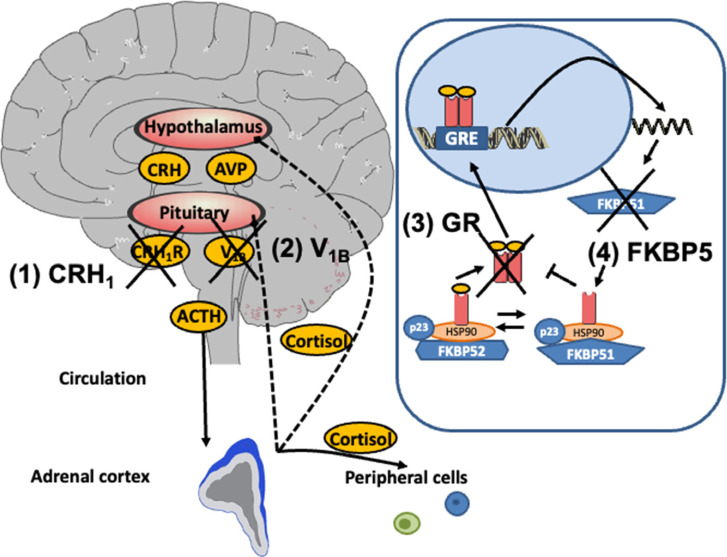
Major depressive disorder (MDD) is a stress-related mental disorder with a lifetime prevalence of 20% and, thus, is one of the most prevalent mental health disorders worldwide. Many studies with a large number of patients support the notion that abnormalities of the hypothalamus-pituitaryadrenal (HPA) axis are crucial for the development of MDD. Therefore, a number of strategies and drugs have been investigated to target different components of the HPA axis: 1) corticotrophinreleasing hormone (CRH) 1 receptor antagonists; 2) vasopressin V1B receptor antagonists, 3) glucocorticoid receptor antagonists, and 4) FKBP5 antagonists. Until now, V1B receptor antagonists and GR antagonists have provided the most promising results. Preclinical data also support antagonists of FKBP5, which seem to be partly responsible for the effects exerted by ketamine. However, as HPA axis alterations occur only in a subset of patients, specific treatment approaches that target only single components of the HPA axis will be effective only in this subset of patients. Companion tests that measure the function of the HPA axis and identify patients with an impaired HPA axis, such as the dexamethasone-corticotrophin-releasing hormone (dex-CRH) test or the molecular dexamethasonesuppression (mDST) test, may match the patient with an effective treatment to enable patient-tailored treatments in terms of a precision medicine approach.
Overview
CoChat Summary
TL;DR
This narrative review argues that HPA axis abnormalities are robustly documented in MDD but occur only in a subset of patients, so treatments targeting single HPA axis components will likely require companion tests for patient selection. It summarizes clinical and preclinical evidence for CRH1, V1B, GR, and FKBP5 antagonists, with V1B antagonists and mifepristone showing the most promising results to date.
Key findings
- MDD has a lifetime prevalence of around 20% and heritability of around 40%; more than 50% of patients fail the first antidepressant prescribed, and about 30% do not respond after several treatment attempts. HPA axis hyperactivity with impaired negative feedback is robustly found in MDD, but not all patients with MDD display HPA axis dysfunction.
- A meta-analysis of over 16 randomized controlled trials and 7 open-label trials with 2972 subjects found a significant difference in efficacy across HPA-axis-targeting medications versus controls; subgroup analyses showed significant differences favoring the GR antagonist mifepristone and V1B receptor antagonists.
- V1B antagonist trials were mixed: SSR149415 at 250 mg, but not 100 mg, led to greater HDRS reduction after 8 weeks, though the trial failed because the escitalopram comparator did not achieve significant HDRS reduction; another trial with 100 mg and 250 mg showed no significant improvement versus placebo; doses above 250 mg significantly reduced cortisol response. ABT-436 showed favorable effects on 2 of 5 MASQ subscales but no significant HDRS effect; TS-121 produced a larger MADRS reduction than placebo after 6 weeks, but the effect was not statistically significant.
- Mifepristone trials (4 double-blind, 2 open-label) suggested significant reduction in psychotic symptoms, the primary outcome, but depressive symptoms were secondary and often not significantly improved versus placebo; a combined analysis of five placebo-controlled trials (cases n = 833, placebo n = 627) found significant psychotic symptom reduction when plasma concentrations were within the therapeutic range (about 1600 ng/ml, equating to around 1200 mg/day). CRH1 antagonist R121919 reduced HDRS but was withdrawn for liver enzyme elevations; CP-316,311 failed to improve depressive symptoms; FKBP5 antagonists SAFit1 and SAFit2 improved stress-coping and neuroendocrine feedback in preclinical models but have not yet been tested in clinical samples.
Methods
- Narrative review; no primary data, systematic search strategy, or meta-analysis conducted by the author is described.
- Synthesizes preclinical and clinical literature on the HPA axis in MDD, including trials of CRH1 receptor antagonists, V1B receptor antagonists, GR antagonists, and FKBP5 antagonists, as well as HPA axis tests such as the DST, dex-CRH test, and molecular DST (mDST).
- Main analysis is a qualitative synthesis of cited studies, reporting selected trial outcomes and meta-analytic findings from prior work.
Limitations
- Stated: HPA axis alterations occur only in a subset of MDD patients; specific HPA-axis-targeting compounds improve depressive symptoms only in a certain proportion of patients; dex-CRH findings are heterogeneous with modest effect sizes; DST sensitivity is only 20–50%; mifepristone trials were often shorter than usual trials and depressive symptoms were secondary outcomes; FKBP5 antagonists have not yet been tested in clinical samples.
- Evident: as a narrative review, it does not describe a systematic search strategy, risk-of-bias assessment, or quantitative synthesis, so conclusions rely on selected cited studies.
- Evident: no primary data or new experimental results are presented.
Model-written summary. Check it against the paper before relying on it.
Integrity signals
Registry
Cites
Statistics
Figures
Verification
Claims the paper makes
34 Valid · 1 Not valid · 29 Not checked · 8 Own results and interpretations
The sources with a verdict support this claim; the rest weren’t checked yet, have no full text we could read, or their verdicts aren’t rated yet.
In the paper
“Numerous clinical and preclinical studies have robustly observed FKBP5/FKBP51 to be a central mediator of childhood adversity and HPA axis dysfunction and other sequelae [108-110].”
§ The HPA Axis as Target for Depression > FKBP5 ANTAGONISTS AND KETAMINE
What the sources say
- Not checked — no full text of the sourcecites [108] Matosin N. Halldorsdottir T. Binder E.B. Understanding the molecular mechanisms underpinning gene by environment interactions in psychiatric disorders: The FKBP5 Model. Biol. Psychiatry 2018 83 10 821 830 10.1016/j.biopsych.2018.01.021 29573791 source
- Not checked — no full text of the sourcecites [109] Martins J. Yusupov N. Binder E.B. Brückl T.M. Czamara D. Early adversity as the prototype gene × environment interaction in mental disorders? Pharmacol. Biochem. Behav. 2022 215 173371 10.1016/j.pbb.2022.173371 35271857 source
- Supportedcites [110] Klengel T. Mehta D. Anacker C. Rex-Haffner M. Pruessner J.C. Pariante C.M. Pace T.W.W. Mercer K.B. Mayberg H.S. Bradley B. Nemeroff C.B. Holsboer F. Heim C.M. Ressler K.J. Rein T. Binder E.B. Allele-specific FKBP5 DNA demethylation mediates gene–childhood trauma interactions. Nat. Neurosci. 2013 16 1 33 41 10.1038/nn.3275 23201972 PMC4136922 source
The Abstract describes FKBP5 as an important regulator of the stress hormone system and reports childhood trauma–dependent changes linked to long-term stress-hormone dysregulation and effects on immune cells and brain areas. It also cites prior human findings on FKBP5 and childhood trauma; the Discussion points to supporting rodent models. Together, these passages support the broad clinical and preclinical characterization in the claim. (LLM, conf=0.87)
boostedstates a cause- Asserted: passes — The authors put it forward as true.
- Checkable: passes — It can be checked against evidence.
- Load-bearing: passes — The paper’s conclusions depend on it.
- Based: passes — The paper gives a reason why it holds.
The cited sources support only part of this claim — read each source’s verdict below.
In the paper
“Similar effects were observed in stress-coping models in mice, where FKBP51 was required for stress-coping induced by paroxetine and amitriptyline [136].”
§ The HPA Axis as Target for Depression > FKBP5 ANTAGONISTS AND KETAMINE
What the sources say
- Partly supportedcites [136] Gassen N.C. Hartmann J. Zannas A.S. Kretzschmar A. Zschocke J. Maccarrone G. Hafner K. Zellner A. Kollmannsberger L.K. Wagner K.V. Mehta D. Kloiber S. Turck C.W. Lucae S. Chrousos G.P. Holsboer F. Binder E.B. Ising M. Schmidt M.V. Rein T. FKBP51 inhibits GSK3β and augments the effects of distinct psychotropic medications. Mol. Psychiatry 2016 21 2 277 289 10.1038/mp.2015.38 25849320 sourceExperimental — accuracy not yet measured
The section on psychotropic-drug effects in mice says FKBP51 deletion attenuated paroxetine’s effect on depression-like behavior after stress, supporting a role for FKBP51 but not showing that it was strictly required. Our copy does not report amitriptyline-induced stress-coping in mice; amitriptyline appears only in a reference about rat astrocytes. Page numbers are unavailable for the deciding passages. (LLM, conf=0.88)
plainstates a cause- Asserted: passes — The authors put it forward as true.
- Checkable: passes — It can be checked against evidence.
- Load-bearing: unclear — It is unclear whether the paper’s conclusions depend on it.
- Based: passes — The paper gives a reason why it holds.
- Partly supported
The cited sources support only part of this claim — read each source’s verdict below.
In the paper
“SAFit1 and SAFit2 achieved an improvement in stress-coping behavior and neuroendocrine feedback in preclinical models [125, 126].”
§ The HPA Axis as Target for Depression > FKBP5 ANTAGONISTS AND KETAMINE
What the sources say
- Partly supportedcites [125] Kolos J.M. Voll A.M. Bauder M. Hausch F. FKBP Ligands—Where We Are and Where to Go? Front. Pharmacol. 2018 9 1425 10.3389/fphar.2018.01425 30568592 PMC6290070 sourceExperimental — accuracy not yet measured
The “Pharmacological Studies with SAFit2” section reports reduced anxiety-related behavior in mice after SAFit2 treatment, which supports a related preclinical behavioral effect. The “FKBP51” section attributes improved stress-coping behavior to FKBP51-deficient mice, not SAFit treatment. Our copy does not report improved neuroendocrine feedback from either SAFit1 or SAFit2, and describes SAFit1 primarily as a ligand for cellular experiments. (LLM, conf=0.86)
- Not checked — no full text of the sourcecites [126] Gaali S. Kirschner A. Cuboni S. Hartmann J. Kozany C. Balsevich G. Namendorf C. Fernandez-Vizarra P. Sippel C. Zannas A.S. Draenert R. Binder E.B. Almeida O.F.X. Rühter G. Uhr M. Schmidt M.V. Touma C. Bracher A. Hausch F. Selective inhibitors of the FK506-binding protein 51 by induced fit. Nat. Chem. Biol. 2015 11 1 33 37 10.1038/nchembio.1699 25436518 source
plainstates a cause- Asserted: passes — The authors put it forward as true.
- Checkable: passes — It can be checked against evidence.
- Load-bearing: passes — The paper’s conclusions depend on it.
- Based: passes — The paper gives a reason why it holds.
- Partly supported
The cited sources support only part of this claim — read each source’s verdict below.
In the paper
“In fact, sensitivity to identify alterations of the HPA axis could be increased with a successful classification of depressed patients up to 80% [56, 57].”
§ The HPA Axis as Target for Depression > MEASURING THE HPA AXIS ACTIVITY
What the sources say
- Partly supportedcites [56] Bardeleben U. Holsboer F. Cortisol response to a combined dexamethasone-human corticotrophin-releasing hormone challenge in patients with depression. J. Neuroendocrinol. 1989 1 6 485 488 10.1111/j.1365-2826.1989.tb00150.x 19210420 sourceExperimental — accuracy not yet measured
The DEX-CRH test results and Discussion report increased cortisol responses in depressed patients, including those not identified as DST nonsuppressors, supporting improved detection of HPA-axis disturbance. The paper does not report an 80% successful-classification rate or a formal sensitivity estimate. (LLM, conf=0.84)
- Not checked — no full text of the sourcecites [57] Heuser I. Yassouridis A. Holsboer F. The combined dexamethasone/CRH test: A refined laboratory test for psychiatric disorders. J. Psychiatr. Res. 1994 28 4 341 356 10.1016/0022-3956(94)90017-5 7877114 source
hedgedstates a cause- Asserted: passes — The authors put it forward as true.
- Checkable: passes — It can be checked against evidence.
- Load-bearing: passes — The paper’s conclusions depend on it.
- Based: passes — The paper gives a reason why it holds.
- Partly supported
The cited sources support only part of this claim — read each source’s verdict below.
In the paper
“The first test to detect HPA axis alterations was the dexamethasone suppression test (DST), which identifies an insufficient suppression of cortisol following dexamethasone intake [48].”
§ The HPA Axis as Target for Depression > MEASURING THE HPA AXIS ACTIVITY
What the sources say
- Partly supportedcites [48] Carroll B.J. Martin F.I.R. Davies B. Resistance to suppression by dexamethasone of plasma 11-O.H.C.S. levels in severe depressive illness. BMJ 1968 3 5613 285 287 10.1136/bmj.3.5613.285 4385601 PMC1986248 sourceExperimental — accuracy not yet measured
The Subjects and Methods and Results sections describe measuring plasma 11-hydroxycorticosteroids after dexamethasone and finding insufficient suppression in some patients with severe depression. The paper does not establish that the DST was the first test to detect HPA-axis alterations, and it reports 11-hydroxycorticosteroids rather than specifically cortisol. Page numbers are unavailable in our copy. (LLM, conf=0.86)
plain- Asserted: passes — The authors put it forward as true.
- Checkable: passes — It can be checked against evidence.
- Load-bearing: unclear — It is unclear whether the paper’s conclusions depend on it.
- Based: passes — The paper gives a reason why it holds.
- Partly supported
41 more claims · 16 with their cited sources checked
Create a free account to see all 72 claims and to verify the 2 references still open.
- It may state two separate claims as one. 24
- Probably not a substantial claim. 3
Citations
Cites
Protective and Damaging Effects of Stress Mediators
McEwen, B. S. (1998) · New England Journal of Medicine · doi:10.1056/nejm199801153380307 · Cited by 6,733 · cited 1×
“The regulation of these negative feedback loops is crucial for an adaptive stress response [46].”
BackgroundVos, T., Barber, R. M., Bell, B., Bertozzi-Villa, A., Biryukov, S., Bolliger, I., Charlson, F., Davis, A., Degenhardt, L., Dicker, D., et al. (2015) · The Lancet · doi:10.1016/s0140-6736(15)60692-4 · Cited by 6,414
Physiology and neurobiology of stress and adaptation: central role of the brain
McEwen, B. S. (2007) · Physiological Reviews · doi:10.1152/physrev.00041.2006 · Cited by 5,429 · cited 1×
“FKBP5 is a crucial moderator of the hypothalamic-pituitary-adrenal (HPA) axis function, which is responsible for the fight-or-flight response [27].”
BackgroundStress and the brain: from adaptation to disease
de Kloet, E. R., Joëls, M., & Holsboer, F. (2005) · Nature Reviews Neuroscience · doi:10.1038/nrn1683 · Cited by 4,621 · cited 1×
“A wealth of data report hyperactivity of the HPA axis with impaired sensitivity to negative feedback regulation in MDD [36, 74, 75], particularly in MDD with psychotic features [38, 76, 77].”
BackgroundVale, W., Spiess, J., Rivier, C., & Rivier, J. (1981) · Science · doi:10.1126/science.6267699 · Cited by 3,965
The size and burden of mental disorders and other disorders of the brain in Europe 2010
Wittchen, H. U., Jacobi, F., Rehm, J., Gustavsson, A., Svensson, M., Jönsson, B., Olesen, J., Allgulander, C., Alonso, J., Faravelli, C., et al. (2011) · European Neuropsychopharmacology · doi:10.1016/j.euroneuro.2011.07.018 · Cited by 3,754 · cited 1×
“These non-sufficient treatment options lead to high rates of early retirement and sick leave [13].”
BackgroundGenetic Epidemiology of Major Depression: Review and Meta-Analysis
Sullivan, P. F., Neale, M. C., & Kendler, K. S. (2000) · American Journal of Psychiatry · doi:10.1176/appi.ajp.157.10.1552 · Cited by 3,431 · cited 1×
“There is a robust heritability of around 40% [19].”
BackgroundHeim, C., & Nemeroff, C. B. (2001) · Biological Psychiatry · doi:10.1016/s0006-3223(01)01157-x · Cited by 2,791 · cited 1×
“Early-life stress, such as physical, sexual, or emotional childhood trauma, has been generally associated with MDD [23, 24], but the increase of MDD risk is also moderated by genetic variants, for example, by FKBP5 variants [25], encoding the FK 506 binding protein 51 or FKBP51, a co-chaperone of…”
BackgroundOtte, C., Gold, S. M., Penninx, B. W., Pariante, C. M., Etkin, A., Fava, M., Mohr, D. C., & Schatzberg, A. F. (2016) · Nature Reviews Disease Primers · doi:10.1038/nrdp.2016.65 · Cited by 2,269
Carroll, B. J. (1981) · Archives of General Psychiatry · doi:10.1001/archpsyc.1981.01780260017001 · Cited by 2,243 · cited 1×
“An insufficient cortisol suppression was repeatedly found in patients suffering from MDD [49-51].”
BackgroundThe Corticosteroid Receptor Hypothesis of Depression
Holsboer, F. (2000) · Neuropsychopharmacology · doi:10.1016/s0893-133x(00)00159-7 · Cited by 2,181 · cited 3×
“Alterations in the HPA axis are robustly found in MDD [33, 34], mostly in terms of HPA axis hyperactivity due to an impaired sensitivity to negative feedback regulation [35, 36].”
BackgroundRisks of all-cause and suicide mortality in mental disorders: a meta-review
Chesney, E., Goodwin, G. M., & Fazel, S. (2014) · World Psychiatry · doi:10.1002/wps.20128 · Cited by 2,115 · cited 1×
“Patients with MDD have a twofold increased mortality and a reduced life expectancy of 7-14 years [5, 6].”
BackgroundTHE EFFECTS OF STRESSFUL LIFE EVENTS ON DEPRESSION
Kessler, R. C. (1997) · Annual Review of Psychology · doi:10.1146/annurev.psych.48.1.191 · Cited by 2,111 · cited 1×
“…to early-life stress, aversive stressful events later in life increase the risk of developing MDD. Aversive events, such as loss of employment, financial insecurity, life-threatening or chronic health problems, bereavement, and separation, often occur in the year preceding the MDD onset [30].”
BackgroundThe role of the hypothalamic-pituitary-adrenal axis in neuroendocrine responses to stress
Smith, S. M., & Vale, W. W. (2006) · Dialogues in Clinical Neuroscience · doi:10.31887/dcns.2006.8.4/ssmith · Cited by 1,948 · cited 1×
“A wealth of data report hyperactivity of the HPA axis with impaired sensitivity to negative feedback regulation in MDD [36, 74, 75], particularly in MDD with psychotic features [38, 76, 77].”
BackgroundNMDAR inhibition-independent antidepressant actions of ketamine metabolites
Zanos, P., Moaddel, R., Morris, P. J., Georgiou, P., Fischell, J., Elmer, G. I., Alkondon, M., Yuan, P., Pribut, H. J., Singh, N. S., et al. (2016) · Nature · doi:10.1038/nature17998 · Cited by 1,609 · cited 1×
“While there are two active enantiomers of ketamine, R-ketamine and S-ketamine, with both exerting antidepressive effects [133, 134], a nasal spray form of S-ketamine was approved by the Food and Drug Administration (FDA) in the USA and by the European Medicines Agency (EMA) in Europe in 2019 [18].”
BackgroundAllele-specific FKBP5 DNA demethylation mediates gene–childhood trauma interactions
Klengel, T., Mehta, D., Anacker, C., Rex-Haffner, M., Pruessner, J. C., Pariante, C. M., Pace, T. W. W., Mercer, K. B., Mayberg, H. S., Bradley, B., et al. (2013) · Nature Neuroscience · doi:10.1038/nn.3275 · Cited by 1,447 · cited 1×
“Numerous clinical and preclinical studies have robustly observed FKBP5/FKBP51 to be a central mediator of childhood adversity and HPA axis dysfunction and other sequelae [108-110].”
BackgroundThe increasing burden of depression
Briley, M., & Lépine (2011) · Neuropsychiatric Disease and Treatment · doi:10.2147/ndt.s19617 · Cited by 1,211
Glucocorticoid receptors in major depression: relevance to pathophysiology and treatment
Pariante, C. M., & Miller, A. H. (2001) · Biological Psychiatry · doi:10.1016/s0006-3223(00)01088-x · Cited by 1,147 · cited 2×
“To reinstate homeostasis after stress response, negative feedback mechanisms are activated; cortisol binds to GR of the pituitary, the hippocampus, and the PVN, and inhibits the further release of CRH [43, 44].”
BackgroundPhysiology and pharmacology of corticotropin-releasing factor.
Owens, M. J., & Nemeroff, C. B. (1991) · Pharmacological Reviews · doi:10.1016/s0031-6997(25)06673-6 · Cited by 1,142 · cited 1×
“In preclinical models, behavioral effects that resemble the symptoms of depression and anxiety could be provoked by central injection of CRH [99, 100].”
BackgroundStetler, C., & Miller, G. E. (2011) · Psychosomatic Medicine · doi:10.1097/psy.0b013e31820ad12b · Cited by 1,123 · cited 3×
“Alterations in the HPA axis are robustly found in MDD [33, 34], mostly in terms of HPA axis hyperactivity due to an impaired sensitivity to negative feedback regulation [35, 36].”
BackgroundResultBupropion-SR, Sertraline, or Venlafaxine-XR after Failure of SSRIs for Depression
Rush, A. J., Trivedi, M. H., Wisniewski, S. R., Stewart, J. W., Nierenberg, A. A., Thase, M. E., Ritz, L., Biggs, M. M., Warden, D., Luther, J. F., et al. (2006) · New England Journal of Medicine · doi:10.1056/nejmoa052963 · Cited by 1,033 · cited 1×
“25, 83233 Bernau am Chiemsee, Germany; and Department of Psychiatry and Psychotherapy, University Hospital, Ludwig Maximilian University of Munich, Munich, Germany; E-mail: a.menke@medicalpark.de [9].”
BackgroundBinder, E. B., Salyakina, D., Lichtner, P., Wochnik, G. M., Ising, M., Pütz, B., Papiol, S., Seaman, S., Lucae, S., Kohli, M. A., et al. (2004) · Nature Genetics · doi:10.1038/ng1479 · Cited by 977 · cited 1×
“After the discovery of FKBP51 as a major stress regulator and its association with depression recurrence and response to antidepressant treatment [107], it has been extensively studied [108].”
BackgroundBinder, E. B. (2009) · Psychoneuroendocrinology · doi:10.1016/j.psyneuen.2009.05.021 · Cited by 968 · cited 2×
“…or emotional childhood trauma, has been generally associated with MDD [23, 24], but the increase of MDD risk is also moderated by genetic variants, for example, by FKBP5 variants [25], encoding the FK 506 binding protein 51 or FKBP51, a co-chaperone of the heat-shock protein 90 (hsp90) [26].”
BackgroundPenninx, B. W., Milaneschi, Y., Lamers, F., & Vogelzangs, N. (2013) · BMC Medicine · doi:10.1186/1741-7015-11-129 · Cited by 839 · cited 1×
“This excess mortality is not only due to suicide, but is also explained by the onset or worsening of somatic disorders, such as heart disease, metabolic syndrome, diabetes mellitus, cancer, or stroke [7].”
BackgroundZobel, A. W., Nickel, T., Künzel, H. E., Ackl, N., Sonntag, A., Ising, M., & Holsboer, F. (2000) · Journal of Psychiatric Research · doi:10.1016/s0022-3956(00)00016-9 · Cited by 705 · cited 1×
“A clinical trial that investigated the CRH 1 receptor antagonist R121919 revealed a significant reduction in the HRDS in patients with MDD [101].”
BackgroundThe combined dexamethasone/CRH test: A refined laboratory test for psychiatric disorders
Heuser, I., Yassouridis, A., & Holsboer, F. (1994) · Journal of Psychiatric Research · doi:10.1016/0022-3956(94)90017-5 · Cited by 662 · cited 2×
“In fact, sensitivity to identify alterations of the HPA axis could be increased with a successful classification of depressed patients up to 80% [56, 57].”
BackgroundMethodHolsboer, F. (1999) · Journal of Psychiatric Research · doi:10.1016/s0022-3956(98)90056-5 · Cited by 654 · cited 3×
“In preclinical models, behavioral effects that resemble the symptoms of depression and anxiety could be provoked by central injection of CRH [99, 100].”
BackgroundMajor Depression and Its Recurrences: Life Course Matters
Monroe, S. M., & Harkness, K. L. (2022) · Annual Review of Clinical Psychology · doi:10.1146/annurev-clinpsy-072220-021440 · Cited by 608 · cited 1×
“The Global Burden of Disease study estimated that MDD is one of the three most disabling conditions worldwide [2, 3], and according to the World Health Organization, MDD will be the leading cause of disease burden worldwide by 2030 [4].”
BackgroundStress, hypercortisolism and corticosteroid receptors in depression: implicatons for therapy
Holsboer, F. (2001) · Journal of Affective Disorders · doi:10.1016/s0165-0327(00)00352-9 · Cited by 575 · cited 2×
“Preclinical and clinical evidence clearly supports the CRH excess production in the development of MDD [35, 97, 98].”
BackgroundThe Dexamethasone Suppression Test for Diagnosis and Prognosis in Psychiatry: Commentary and Review
Arana, G. W. (1985) · Archives of General Psychiatry · doi:10.1001/archpsyc.1985.01790350067012 · Cited by 526
Recent developments and current controversies in depression
Ebmeier, K. P., Donaghey, C., & Steele, J. D. (2006) · The Lancet · doi:10.1016/s0140-6736(06)67964-6 · Cited by 434 · cited 1×
“Major depressive disorder (MDD) is a widespread disease with a lifetime prevalence of around 20% [1].”
BackgroundIonescu, D. F., Fu, D.-J., Qiu, X., Lane, R., Lim, P., Kasper, S., Hough, D., Drevets, W. C., Manji, H., & Canuso, C. M. (2021) · International Journal of Neuropsychopharmacology · doi:10.1093/ijnp/pyaa068 · Cited by 418 · cited 2×
“This discovery led to the approval of a nasal spray form of esketamine that is supposed to provide relief in patients with TRD [18].”
BackgroundPsychoneuroimmunology of early-life stress: the hidden wounds of childhood trauma?
Danese, A., & J Lewis, S. (2017) · Neuropsychopharmacology · doi:10.1038/npp.2016.198 · Cited by 393 · cited 1×
“In fact, childhood trauma may lead to an increase in HPA axis sensitivity and, thus, to a heightened response to subsequent stressors [28, 29].”
BackgroundAguilera, G., & Rabadan-Diehl, C. (2000) · Regulatory Peptides · doi:10.1016/s0167-0115(00)00196-8 · Cited by 375 · cited 2×
“AVP exerts its effects through 3 G-protein coupled receptor subtypes, V 1A , V 1B , and V 2 [81], while V 1B is expressed in the majority of ACTH-secreting cells in the anterior pituitary and, thus, regulates the HPA axis activity by AVP [80].”
BackgroundDST Studies in Psychotic Depression: A Meta-Analysis
Nelson, J. C., & Davis, J. M. (1997) · American Journal of Psychiatry · doi:10.1176/ajp.154.11.1497 · Cited by 356
Zobel, A. W., Nickel, T., Sonntag, A., Uhr, M., Holsboer, F., & Ising, M. (2001) · Journal of Psychiatric Research · doi:10.1016/s0022-3956(01)00013-9 · Cited by 354
Epigenetics of Stress-Related Psychiatric Disorders and Gene × Environment Interactions
Klengel, T., & Binder, E. B. (2015) · Neuron · doi:10.1016/j.neuron.2015.05.036 · Cited by 353 · cited 1×
“However, the development of MDD also substantially depends on gene x environmental interactions [20-22].”
BackgroundPeripheral blood gene expression: it all boils down to the RNA collection tubes
Menke, A., Rex-Haffner, M., Klengel, T., Binder, E. B., & Mehta, D. (2012) · BMC Research Notes · doi:10.1186/1756-0500-5-1 · Cited by 351 · cited 1×
“After blood sampling at 6 pm, dexamethasone was administered, and three hours later, blood was sampled again for measurement of cortisol, ACTH, differential blood count, and gene expression signatures [47, 67, 68].”
MethodSelf-citationIsing, M., Horstmann, S., Kloiber, S., Lucae, S., Binder, E. B., Kern, N., Künzel, H. E., Pfennig, A., Uhr, M., & Holsboer, F. (2007) · Biological Psychiatry · doi:10.1016/j.biopsych.2006.07.039 · Cited by 341 · cited 3×
“An increased cortisol response to the dex-CRH test in patients at remission predicted an increased risk of relapse [60-62] as well as a higher risk of suicide attempt or suicide completion [63, 64].”
BackgroundHashimoto, K. (2019) · Psychiatry and Clinical Neurosciences · doi:10.1111/pcn.12902 · Cited by 335 · cited 1×
“The glutamatergic modulator ketamine has been extensively studied for two decades and robust antidepressive effects have been documented that occur in a matter of minutes after administration and persist long after drug excretion [132].”
BackgroundAn open label trial of C-1073 (mifepristone) for psychotic major depression*
Belanoff, J. K., Rothschild, A. J., Cassidy, F., DeBattista, C., Baulieu, E.-E., Schold, C., & Schatzberg, A. F. (2002) · Biological Psychiatry · doi:10.1016/s0006-3223(02)01432-4 · Cited by 320
Knorr, U., Vinberg, M., Kessing, L. V., & Wetterslev, J. (2010) · Psychoneuroendocrinology · doi:10.1016/j.psyneuen.2010.04.001 · Cited by 317 · cited 1×
“Alterations in the HPA axis are robustly found in MDD [33, 34], mostly in terms of HPA axis hyperactivity due to an impaired sensitivity to negative feedback regulation [35, 36].”
BackgroundThe Dexamethasone Suppression Test and Suicide Prediction
Coryell, W., & Schlesser, M. (2001) · American Journal of Psychiatry · doi:10.1176/appi.ajp.158.5.748 · Cited by 304
Rapid Reversal of Psychotic Depression Using Mifepristone
Belanoff, J. K., Flores, B. H., Kalezhan, M., Sund, B., & Schatzberg, A. F. (2001) · Journal of Clinical Psychopharmacology · doi:10.1097/00004714-200110000-00009 · Cited by 282
Resistance to Suppression by Dexamethasone of Plasma 11-O.H.C.S. Levels in Severe Depressive Illness
Carroll, B. J., Martin, F. I. R., & Davies, B. (1968) · BMJ · doi:10.1136/bmj.3.5613.285 · Cited by 279 · cited 1×
“The first test to detect HPA axis alterations was the dexamethasone suppression test (DST), which identifies an insufficient suppression of cortisol following dexamethasone intake [48].”
BackgroundHypothalamic–pituitary–adrenal axis and stress
(2020) · Handbook of Clinical Neurology · doi:10.1016/b978-0-444-64123-6.00004-7 · Cited by 279
Self-citationZimmermann, P., Brückl, T., Nocon, A., Pfister, H., Binder, E. B., Uhr, M., Lieb, R., Moffitt, T. E., Caspi, A., Holsboer, F., et al. (2011) · American Journal of Psychiatry · doi:10.1176/appi.ajp.2011.10111577 · Cited by 262 · cited 1×
“…or emotional childhood trauma, has been generally associated with MDD [23, 24], but the increase of MDD risk is also moderated by genetic variants, for example, by FKBP5 variants [25], encoding the FK 506 binding protein 51 or FKBP51, a co-chaperone of the heat-shock protein 90 (hsp90) [26].”
BackgroundBinneman, B., Feltner, D., Kolluri, S., Shi, Y., Qiu, R., & Stiger, T. (2008) · American Journal of Psychiatry · doi:10.1176/appi.ajp.2008.07071199 · Cited by 254 · cited 1×
“Another CRH1 receptor antagonist, CP-316,311, could not achieve a significant improvement of depressive symptoms compared to placebo [102].”
BackgroundAntidepressant Potential of (R)-Ketamine in Rodent Models: Comparison with (S)-Ketamine
Fukumoto, K., Toki, H., Iijima, M., Hashihayata, T., Yamaguchi, J.-I., Hashimoto, K., & Chaki, S. (2017) · The Journal of Pharmacology and Experimental Therapeutics · doi:10.1124/jpet.116.239228 · Cited by 252 · cited 1×
“While there are two active enantiomers of ketamine, R-ketamine and S-ketamine, with both exerting antidepressive effects [133, 134], a nasal spray form of S-ketamine was approved by the Food and Drug Administration (FDA) in the USA and by the European Medicines Agency (EMA) in Europe in 2019 [18].”
BackgroundHormonal Treatments for Major Depressive Disorder: State of the Art
Dwyer, J. B., Aftab, A., Radhakrishnan, R., Widge, A., Rodriguez, C. I., Carpenter, L. L., Nemeroff, C. B., McDonald, W. M., Kalin, N. H., & APA Council of Research Task Force on Novel Biomarkers and Treatments (2020) · American Journal of Psychiatry · doi:10.1176/appi.ajp.2020.19080848 · Cited by 252
Selective inhibitors of the FK506-binding protein 51 by induced fit
Gaali, S., Kirschner, A., Cuboni, S., Hartmann, J., Kozany, C., Balsevich, G., Namendorf, C., Fernandez-Vizarra, P., Sippel, C., Zannas, A. S., et al. (2015) · Nature Chemical Biology · doi:10.1038/nchembio.1699 · Cited by 245 · cited 2×
“They achieved selectivity by an induced fit mechanism [125, 126].”
BackgroundMortality and life expectancy in persons with severe unipolar depression
Laursen, T. M., Musliner, K. L., Benros, M. E., Vestergaard, M., & Munk-Olsen, T. (2016) · Journal of Affective Disorders · doi:10.1016/j.jad.2015.12.067 · Cited by 245 · cited 1×
“Patients with MDD have a twofold increased mortality and a reduced life expectancy of 7-14 years [5, 6].”
BackgroundIs the HPA Axis as Target for Depression Outdated, or Is There a New Hope?
Menke, A. (2019) · Frontiers in Psychiatry · doi:10.3389/fpsyt.2019.00101 · Cited by 240 · cited 2×
“1 ) [15, 78].”
BackgroundSelf-citationRuhé, H. G., Huyser, J., Swinkels, J. A., & Schene, A. H. (2006) · The Journal of Clinical Psychiatry · doi:10.4088/jcp.v67n1203 · Cited by 230 · cited 1×
“Although numerous effective antide-pressants exist, more than 50% of patients fail to respond to the first antidepressant they are prescribed [8], and about 30% do not respond even after several treatment attempts *Address correspondence to this author at the Department of Psychosomatic Medicine…”
BackgroundMatosin, N., Halldorsdottir, T., & Binder, E. B. (2018) · Biological Psychiatry · doi:10.1016/j.biopsych.2018.01.021 · Cited by 226 · cited 4×
“Therefore, FKBP5 antagonism, at least for certain patient groups, may be a suitable treatment approach [108].”
BackgroundInfluentialCortisol Circadian Rhythm Alterations in Psychotic Major Depression
Keller, J., Flores, B., Gomez, R. G., Solvason, H. B., Kenna, H., Williams, G. H., & Schatzberg, A. F. (2006) · Biological Psychiatry · doi:10.1016/j.biopsych.2005.10.014 · Cited by 217 · cited 1×
“A wealth of data report hyperactivity of the HPA axis with impaired sensitivity to negative feedback regulation in MDD [36, 74, 75], particularly in MDD with psychotic features [38, 76, 77].”
BackgroundKuhlman, K. R., Chiang, J. J., Horn, S., & Bower, J. E. (2017) · Neuroscience & Biobehavioral Reviews · doi:10.1016/j.neubiorev.2017.05.020 · Cited by 208 · cited 1×
“In fact, childhood trauma may lead to an increase in HPA axis sensitivity and, thus, to a heightened response to subsequent stressors [28, 29].”
BackgroundCorticosteroid Receptor Function Is Decreased in Depressed Patients
Modell, S., Yassouridis, A., Huber, J., & Holsboer, F. (2008) · Neuroendocrinology · doi:10.1159/000127275 · Cited by 204 · cited 1×
“Several studies could replicate these findings [58-60]; however, others could not [52, 53].”
Mineralocorticoid Receptor Function in Major Depression
Young, E. A., Lopez, J. F., Murphy-Weinberg, V., Watson, S. J., & Akil, H. (2003) · Archives of General Psychiatry · doi:10.1001/archpsyc.60.1.24 · Cited by 204 · cited 1×
“In addition to the GR, mineralocorticoid receptors (MR) bind cortisol [45].”
BackgroundClinical and Biological Effects of Mifepristone Treatment for Psychotic Depression
Flores, B. H., Kenna, H., Keller, J., Solvason, H. B., & Schatzberg, A. F. (2006) · Neuropsychopharmacology · doi:10.1038/sj.npp.1300884 · Cited by 203
Kunugi, H., Ida, I., Owashi, T., Kimura, M., Inoue, Y., Nakagawa, S., Yabana, T., Urushibara, T., Kanai, R., Aihara, M., et al. (2006) · Neuropsychopharmacology · doi:10.1038/sj.npp.1300868 · Cited by 200
Menke, A., Arloth, J., Pütz, B., Weber, P., Klengel, T., Mehta, D., Gonik, M., Rex-Haffner, M., Rubel, J., Uhr, M., et al. (2012) · Neuropsychopharmacology · doi:10.1038/npp.2011.331 · Cited by 177 · cited 3×
“The mDST was able to identify HPA axis alterations in MDD [67], job-related exhaustion [69], anx-ious depression and childhood trauma [70], chronic stress [31], and healthy females compared to healthy men [71].”
BackgroundMethodSelf-citationDon’t stress about CRF: assessing the translational failures of CRF1antagonists
Spierling, S. R., & Zorrilla, E. P. (2017) · Psychopharmacology · doi:10.1007/s00213-017-4556-2 · Cited by 170 · cited 1×
“Additional trials that administered CRH 1 receptor antagonists in patients with MDD and anxiety disorders also failed to improve depressive or anxious symptoms [103].”
BackgroundDeBattista, C., Belanoff, J., Glass, S., Khan, A., Horne, R. L., Blasey, C., Carpenter, L. L., & Alva, G. (2006) · Biological Psychiatry · doi:10.1016/j.biopsych.2006.05.034 · Cited by 162 · cited 1×
“4 double-blind [89-92] and 2 open-label trials [93, 94] suggested a significant reduction in psychotic symptoms, which was the primary outcome of these trials.”
Backgroundvon Bardeleben, U., & Holsboer, F. (1989) · Journal of Neuroendocrinology · doi:10.1111/j.1365-2826.1989.tb00150.x · Cited by 161 · cited 2×
“In fact, sensitivity to identify alterations of the HPA axis could be increased with a successful classification of depressed patients up to 80% [56, 57].”
BackgroundMethodEpigenetic alterations in depression and antidepressant treatment
Menke, A., & Binder, E. B. (2014) · Dialogues in Clinical Neuroscience · doi:10.31887/dcns.2014.16.3/amenke · Cited by 161 · cited 1×
“However, the development of MDD also substantially depends on gene x environmental interactions [20-22].”
BackgroundSelf-citationSchwandt, M. L., Cortes, C. R., Kwako, L. E., George, D. T., Momenan, R., Sinha, R., Grigoriadis, D. E., Pich, E. M., Leggio, L., & Heilig, M. (2016) · Neuropsychopharmacology · doi:10.1038/npp.2016.61 · Cited by 159 · cited 1×
“A study that investigated the CRH 1 receptor antagonist GSK561679/Verucerfont attenuated the response of the HPA axis to social stressors and the amygdala response to negative affective stimuli in anxious, alcohol-dependent women [104].”
BackgroundFKBP Ligands—Where We Are and Where to Go?
Kolos, J. M., Voll, A. M., Bauder, M., & Hausch, F. (2018) · Frontiers in Pharmacology · doi:10.3389/fphar.2018.01425 · Cited by 158 · cited 2×
“They achieved selectivity by an induced fit mechanism [125, 126].”
BackgroundOrmel, J., Oldehinkel, A. J., Nolen, W. A., & Vollebergh, W. (2004) · Archives of General Psychiatry · doi:10.1001/archpsyc.61.4.387 · Cited by 154 · cited 1×
“Disturbing findings show that even remitted patients still suffer from a functional impairment [12].”
BackgroundAppelhof, B. C., Huyser, J., Verweij, M., Brouwer, J. P., van Dyck, R., Fliers, E., Hoogendijk, W. J. G., Tijssen, J. G. P., Wiersinga, W. M., & Schene, A. H. (2006) · Biological Psychiatry · doi:10.1016/j.biopsych.2005.09.008 · Cited by 154 · cited 1×
“An increased cortisol response to the dex-CRH test in patients at remission predicted an increased risk of relapse [60-62] as well as a higher risk of suicide attempt or suicide completion [63, 64].”
BackgroundInflammation and neuronal plasticity: a link between childhood trauma and depression pathogenesis
Cattaneo, A., Macchi, F., Plazzotta, G., Veronica, B., Bocchio-Chiavetto, L., Riva, M. A., & Pariante, C. M. (2015) · Frontiers in Cellular Neuroscience · doi:10.3389/fncel.2015.00040 · Cited by 152
Glucocorticoid Receptor Function In Vitro in Patients with Major Depression
Pariante, C. M. (2004) · Stress · doi:10.1080/10253890500069650 · Cited by 147 · cited 2×
“To reinstate homeostasis after stress response, negative feedback mechanisms are activated; cortisol binds to GR of the pituitary, the hippocampus, and the PVN, and inhibits the further release of CRH [43, 44].”
BackgroundWatson, S., Gallagher, P., Porter, R. J., Smith, M. S., Herron, L. J., Bulmer, S., Young, A. H., & Ferrier, I. N. (2012) · Biological Psychiatry · doi:10.1016/j.biopsych.2012.05.029 · Cited by 145 · cited 1×
“4 double-blind [89-92] and 2 open-label trials [93, 94] suggested a significant reduction in psychotic symptoms, which was the primary outcome of these trials.”
BackgroundArloth, J., Bogdan, R., Weber, P., Frishman, G., Menke, A., Wagner, K. V., Balsevich, G., Schmidt, M. V., Karbalai, N., Czamara, D., et al. (2015) · Neuron · doi:10.1016/j.neuron.2015.05.034 · Cited by 142
Self-citationMolecular neurobiology and pharmacology of the Vasopressin/Oxytocin receptor family
Burbach, J. P. H., Burbach, H., Adan, R. A. H., Lolait, S. J., van Leeuwen, F. W., Mezey, É., Palkovits, M., & Barberis, C. (1995) · Cellular and Molecular Neurobiology · doi:10.1007/bf02071318 · Cited by 134 · cited 1×
“AVP exerts its effects through 3 G-protein coupled receptor subtypes, V 1A , V 1B , and V 2 [81], while V 1B is expressed in the majority of ACTH-secreting cells in the anterior pituitary and, thus, regulates the HPA axis activity by AVP [80].”
BackgroundStress-responsive FKBP51 regulates AKT2-AS160 signaling and metabolic function
Balsevich, G., Häusl, A. S., Meyer, C. W., Karamihalev, S., Feng, X., Pöhlmann, M. L., Dournes, C., Uribe-Marino, A., Santarelli, S., Labermaier, C., et al. (2017) · Nature Communications · doi:10.1038/s41467-017-01783-y · Cited by 134 · cited 1×
“In addition, SAFit1 and SAFit2 could also improve metabolic function and glucose homeostasis [127].”
BackgroundHPA axis genetic variation, cortisol and psychosis in major depression
Schatzberg, A. F., Keller, J., Tennakoon, L., Lembke, A., Williams, G., Kraemer, F. B., Sarginson, J. E., Lazzeroni, L. C., & Murphy, G. M. (2014) · Molecular Psychiatry · doi:10.1038/mp.2013.129 · Cited by 131 · cited 1×
“A wealth of data report hyperactivity of the HPA axis with impaired sensitivity to negative feedback regulation in MDD [36, 74, 75], particularly in MDD with psychotic features [38, 76, 77].”
BackgroundHartmann, J., Bajaj, T., Klengel, C., Chatzinakos, C., Ebert, T., Dedic, N., McCullough, K. M., Lardenoije, R., Joëls, M., Meijer, O. C., et al. (2021) · Cell Reports · doi:10.1016/j.celrep.2021.109185 · Cited by 119 · cited 1×
“The effects of FKBP51 could also be influenced by manipulating the mineralocorticoid receptor (MR); pharmacological inhibition of MR produced a decrease in FKBP51 and damp-ened the stress-induced increase in glucocorticoids [129].”
BackgroundStress-induced mechanisms in mental illness: A role for glucocorticoid signalling
Cattaneo, A., & Riva, M. A. (2016) · The Journal of Steroid Biochemistry and Molecular Biology · doi:10.1016/j.jsbmb.2015.07.021 · Cited by 118 · cited 1×
“In addition, an altered expression of the HPA axis-modulating components, FKBP51 and SGK1 [137, 138], was observed following ketamine administration [139].”
BackgroundQi, X., Kamphuis, W., Wang, S., Wang, Q., Lucassen, P. J., Zhou, J., & Swaab, D. F. (2012) · Psychoneuroendocrinology · doi:10.1016/j.psyneuen.2012.09.014 · Cited by 110 · cited 1×
“Arginine-vasopressin (AVP), another hypothalamic peptide, is produced in the PVN and the supraoptic nucleus, and then released from the median eminence in the posterior pituitary or into the hypophyseal portal system, like CRH [39, 40].”
BackgroundMeynen, G., Unmehopa, U. A., van Heerikhuize, J. J., Hofman, M. A., Swaab, D. F., & Hoogendijk, W. J. G. (2006) · Biological Psychiatry · doi:10.1016/j.biopsych.2005.12.010 · Cited by 108 · cited 1×
“Studies have found increased AVP concentrations in plasma and in brain regions, such as PVN, the supraoptic nucleus, and the suprachiasmatic nucleus of patients suffering from MDD [83].”
BackgroundBlood biomarkers and treatment response in major depression
Mora, C., Zonca, V., Riva, M. A., & Cattaneo, A. (2018) · Expert Review of Molecular Diagnostics · doi:10.1080/14737159.2018.1470927 · Cited by 107 · cited 1×
“Ad-ditionally, there are no genetic markers or biomarkers that reliably match patients with effective treatment options [14-16].”
BackgroundSinclair, D., Fillman, S. G., Webster, M. J., & Weickert, C. S. (2013) · Scientific Reports · doi:10.1038/srep03539 · Cited by 102 · cited 1×
“In addition, FKBP5 was associated with MDD [111], bipolar disorder [112], schizophrenia [113], posttraumatic stress disorder [114, 115], attention deficit hyperactivity disorder (ADHD) [116], chronic pain [117, 118] and metabolic dysfunction, insulin resistance and obesity [119, 120].”
BackgroundZhao, J., Verwer, R. W. H., Gao, S.-F., Qi, X.-R., Lucassen, P. J., Kessels, H. W., & Swaab, D. F. (2018) · Journal of Psychiatric Research · doi:10.1016/j.jpsychires.2018.04.020 · Cited by 102 · cited 1×
“Numerous evidences link glutamatergic alterations to the development of MDD [130, 131].”
BackgroundThe prospect of FKBP51 as a drug target
Schmidt, M. V., Paez‐Pereda, M., Holsboer, F., & Hausch, F. (2012) · ChemMedChem · doi:10.1002/cmdc.201200137 · Cited by 99 · cited 1×
“Several preclinical studies with models of depression or anxiety have consistently observed protective effects of FKBP5 knock-out or knock-down on HPA axis function or stress-coping behavior [122].”
BackgroundKadriu, B., Greenwald, M., Henter, I. D., Gilbert, J. R., Kraus, C., Park, L. T., & Zarate, C. A. (2021) · International Journal of Neuropsychopharmacology · doi:10.1093/ijnp/pyaa087 · Cited by 99 · cited 2×
“Just recently, the glutamatergic modulator ketamine was discovered as a new treatment option for MDD, which exerts antidepressant effects in minutes to hours that persist long after drug excretion [17].”
BackgroundDunlop, B. W., Binder, E. B., Iosifescu, D., Mathew, S. J., Neylan, T. C., Pape, J. C., Carrillo-Roa, T., Green, C., Kinkead, B., Grigoriadis, D., et al. (2017) · Biological Psychiatry · doi:10.1016/j.biopsych.2017.06.024 · Cited by 96
Rotondo, F., Butz, H., Syro, L. V., Yousef, G. M., Di Ieva, A., Restrepo, L. M., Quintanar-Stephano, A., Berczi, I., & Kovacs, K. (2016) · Pituitary · doi:10.1007/s11102-015-0703-0 · Cited by 93 · cited 1×
“AVP supports ACTH secretion in combination with CRH, which seems to be of interest in states of chronic stress [42].”
BackgroundDIAGNOSTIC VALUE OF DEXAMETHASONE SUPPRESSION TEST IN DEPRESSION
Holsboer, F., Bender, W., Benkert, O., Klein, H. E., & Schmauss, M. (1980) · The Lancet · doi:10.1016/s0140-6736(80)92755-5 · Cited by 90 · cited 1×
“However, the DST achieved only a modest sensitivity between 20 and 50% to detect MDD [52, 53], and thus is not employed in standard clinical care [51, 54, 55].”
BackgroundRegulation of Pituitary Vasopressin V1b Receptor mRNA during Stress in the Rat
Rabadan‐Diehl, C., Lolait, S. J., & Aguilera, G. (1995) · Journal of Neuroendocrinology · doi:10.1111/j.1365-2826.1995.tb00734.x · Cited by 86 · cited 1×
“Chronic stress increases AVP-containing neurons in the PVN [82] and increases V 1B receptor expression in the pituitary [82].”
BackgroundGriebel, G., Beeské, S., & Stahl, S. M. (2012) · The Journal of Clinical Psychiatry · doi:10.4088/jcp.12m07804 · Cited by 81 · cited 1×
“Clinical trials have been conducted with 3 different V 1B receptor antagonists for the treatment of MDD: the compound with the largest clinical database Sanofi's SSR149415/nelivaptan [86], AbbVie’s ABT-436 [87], and Taisho Pharmaceutical’s TS-121 [88].”
MethodIdentification of dynamic glucocorticoid-induced methylation changes at the FKBP5 locus
Wiechmann, T., Röh, S., Sauer, S., Czamara, D., Arloth, J., Ködel, M., Beintner, M., Knop, L., Menke, A., Binder, E. B., et al. (2019) · Clinical Epigenetics · doi:10.1186/s13148-019-0682-5 · Cited by 81 · cited 1×
“In addition, we found that the methylation status of the FKBP5 locus moderated the dynamic changes following GR activation, and was associated with early and current life stress [73].”
BackgroundSelf-citationFKBP51 and the molecular chaperoning of metabolism
Smedlund, K., Sánchez, E. R., & Hinds, T. D. (2021) · Trends in Endocrinology and Metabolism · doi:10.1016/j.tem.2021.08.003 · Cited by 81 · cited 1×
“In addition, FKBP5 was associated with MDD [111], bipolar disorder [112], schizophrenia [113], posttraumatic stress disorder [114, 115], attention deficit hyperactivity disorder (ADHD) [116], chronic pain [117, 118] and metabolic dysfunction, insulin resistance and obesity [119, 120].”
BackgroundBlock, T. S., Kushner, H., Kalin, N., Nelson, C., Belanoff, J., & Schatzberg, A. (2018) · Biological Psychiatry · doi:10.1016/j.biopsych.2018.01.008 · Cited by 78 · cited 1×
“In fact, a recent combined analysis of the data from five placebo-controlled trials with cases n = 833 and placebo n = 627 observed patients to gain a significant reduction in psychotic symptoms if they had plasma concentrations within the therapeutic range [96].”
BackgroundHNRC, Tatro, E. T., Everall, I. P., Masliah, E., Hult, B. J., Lucero, G., Chana, G., Soontornniyomkij, V., & Achim, C. L. (2009) · Journal of Neuroimmune Pharmacology · doi:10.1007/s11481-009-9146-6 · Cited by 75 · cited 1×
“In addition, FKBP5 was associated with MDD [111], bipolar disorder [112], schizophrenia [113], posttraumatic stress disorder [114, 115], attention deficit hyperactivity disorder (ADHD) [116], chronic pain [117, 118] and metabolic dysfunction, insulin resistance and obesity [119, 120].”
BackgroundTargeting FKBP isoforms with small-molecule ligands
Blackburn, E. A., & Walkinshaw, M. D. (2011) · Current Opinion in Pharmacology · doi:10.1016/j.coph.2011.04.007 · Cited by 73 · cited 1×
“The drug discovery was difficult because all known ligands could not differentiate between FKPB51 and the opposing homolog FKBP52 [123, 124].”
BackgroundBA11 FKBP5 expression levels correlate with dendritic spine density in postmortem PTSD and controls
Young, K. A., Thompson, P. M., Cruz, D. A., Williamson, D. E., & Selemon, L. D. (2015) · Neurobiology of Stress · doi:10.1016/j.ynstr.2015.07.002 · Cited by 72 · cited 1×
“In addition, FKBP5 was associated with MDD [111], bipolar disorder [112], schizophrenia [113], posttraumatic stress disorder [114, 115], attention deficit hyperactivity disorder (ADHD) [116], chronic pain [117, 118] and metabolic dysfunction, insulin resistance and obesity [119, 120].”
BackgroundDex/CRH test cortisol response in outpatients with major depression and matched healthy controls
Carpenter, L. L., Ross, N. S., Tyrka, A. R., Anderson, G. M., Kelly, M., & Price, L. H. (2009) · Psychoneuroendocrinology · doi:10.1016/j.psyneuen.2009.03.009 · Cited by 70 · cited 2×
“Several studies could replicate these findings [58-60]; however, others could not [52, 53].”
BackgroundBortsov, A. V., Smith, J. E., Diatchenko, L., Soward, A. C., Ulirsch, J. C., Rossi, C., Swor, R. A., Hauda, W. E., Peak, D. A., Jones, J. S., et al. (2013) · Pain · doi:10.1016/j.pain.2013.04.037 · Cited by 69 · cited 1×
“In addition, FKBP5 was associated with MDD [111], bipolar disorder [112], schizophrenia [113], posttraumatic stress disorder [114, 115], attention deficit hyperactivity disorder (ADHD) [116], chronic pain [117, 118] and metabolic dysfunction, insulin resistance and obesity [119, 120].”
BackgroundLeistner, C., & Menke, A. (2018) · Psychoneuroendocrinology · doi:10.1016/j.psyneuen.2018.01.023 · Cited by 69 · cited 5×
“Thus, a companion test would be needed to identify the patients who would benefit from these compounds, such as the dex-CRH test or the modified molecular mDST [15, 36, 47, 67, 84].”
BackgroundMethodInfluentialSelf-citationGxE effects of FKBP5 and traumatic life events on PTSD: A meta-analysis
Hawn, S. E., Sheerin, C. M., Lind, M. J., Hicks, T. A., Marraccini, M. E., Bountress, K., Bacanu, S.-A., Nugent, N. R., & Amstadter, A. B. (2019) · Journal of Affective Disorders · doi:10.1016/j.jad.2018.09.058 · Cited by 68 · cited 1×
“In addition, FKBP5 was associated with MDD [111], bipolar disorder [112], schizophrenia [113], posttraumatic stress disorder [114, 115], attention deficit hyperactivity disorder (ADHD) [116], chronic pain [117, 118] and metabolic dysfunction, insulin resistance and obesity [119, 120].”
BackgroundSimpson, G. M., Sheshai, A. E., Loza, N., Kingsbury, S. J., Fayek, M., Rady, A., & Fawzy, W. (2005) · The Journal of Clinical Psychiatry · doi:10.4088/jcp.v66n0509 · Cited by 63 · cited 1×
“4 double-blind [89-92] and 2 open-label trials [93, 94] suggested a significant reduction in psychotic symptoms, which was the primary outcome of these trials.”
BackgroundFKBP51 inhibits GSK3β and augments the effects of distinct psychotropic medications
Gassen, N. C., Hartmann, J., Zannas, A. S., Kretzschmar, A., Zschocke, J., Maccarrone, G., Hafner, K., Zellner, A., Kollmannsberger, L. K., Wagner, K. V., et al. (2016) · Molecular Psychiatry · doi:10.1038/mp.2015.38 · Cited by 62
Blasey, C. M., DeBattista, C., Roe, R., Block, T., & Belanoff, J. K. (2009) · Contemporary Clinical Trials · doi:10.1016/j.cct.2009.03.001 · Cited by 61 · cited 1×
“Interestingly, it was observed that the effectiveness of mifepristone could be optimized when plasma concentrations of about 1600 ng/ml were reached, which equates to around 1200 mg/day [95].”
BackgroundFKBP5 Gene Expression Predicts Antidepressant Treatment Outcome in Depression
Ising, M., Maccarrone, G., Brückl, T., Scheuer, S., Hennings, J., Holsboer, F., Turck, C. W., Uhr, M., & Lucae, S. (2019) · International Journal of Molecular Sciences · doi:10.3390/ijms20030485 · Cited by 60 · cited 1×
“Recently, an increased FKBP5 mRNA expression was associated with HPA axis dysfunction and worse response to antide-pressants in patients suffering from MDD [121].”
BackgroundThe Chemical Biology of Immunophilin Ligands
Gaali, S., Gopalakrishnan, R., Wang, Y., Kozany, C., & Hausch, F. (2011) · Current Medicinal Chemistry · doi:10.2174/092986711798194342 · Cited by 58 · cited 1×
“The drug discovery was difficult because all known ligands could not differentiate between FKPB51 and the opposing homolog FKBP52 [123, 124].”
BackgroundChildhood trauma dependent anxious depression sensitizes HPA axis function
Menke, A., Lehrieder, D., Fietz, J., Leistner, C., Wurst, C., Stonawski, S., Reitz, J., Lechner, K., Busch, Y., Weber, H., et al. (2018) · Psychoneuroendocrinology · doi:10.1016/j.psyneuen.2018.07.025 · Cited by 55 · cited 1×
“The mDST was able to identify HPA axis alterations in MDD [67], job-related exhaustion [69], anx-ious depression and childhood trauma [70], chronic stress [31], and healthy females compared to healthy men [71].”
BackgroundSelf-citationStructure-Based Design of High-Affinity Macrocyclic FKBP51 Inhibitors
Bauder, M., Meyners, C., Purder, P. L., Merz, S., Sugiarto, W. O., Voll, A. M., Heymann, T., & Hausch, F. (2021) · Journal of Medicinal Chemistry · doi:10.1021/acs.jmedchem.0c02195 · Cited by 53 · cited 1×
“Just recently, the first macrocyclic FKBP51-selective ligands to stabilize the active conformation were designed and synthesized [128].”
BackgroundSchatzberg, A. F. (2015) · The World Journal of Biological Psychiatry · doi:10.3109/15622975.2014.916414 · Cited by 51 · cited 2×
“CRH binds to the corticotrophin-releasing hormone 1 (CRH 1 ) and CRH 2 receptors in the anterior pituitary, and activates the secretion of adrenocorticotropic hormone (ACTH) into the systemic circulation [37, 38].”
BackgroundQi, C.-C., Zhang, Z., Fang, H., Liu, J., Zhou, N., Ge, J.-F., Chen, F.-H., Xiang, C.-B., & Zhou, J.-N. (2015) · International Journal of Neuropsychopharmacology · doi:10.1093/ijnp/pyu006 · Cited by 50 · cited 1×
“Arginine-vasopressin (AVP), another hypothalamic peptide, is produced in the PVN and the supraoptic nucleus, and then released from the median eminence in the posterior pituitary or into the hypophyseal portal system, like CRH [39, 40].”
BackgroundRetinoic acid and depressive disorders: Evidence and possible neurobiological mechanisms
Hu, P., van Dam, A., Wang, Y., Lucassen, P. J., & Zhou, J.-N. (2020) · Neuroscience & Biobehavioral Reviews · doi:10.1016/j.neubiorev.2020.02.013 · Cited by 50
Hu, P., Maita, I., Phan, M. L., Gu, E., Kwok, C., Dieterich, A., Gergues, M. M., Yohn, C. N., Wang, Y., Zhou, J.-N., et al. (2020) · Translational Psychiatry · doi:10.1038/s41398-020-01070-3 · Cited by 49 · cited 1×
“Early-life stress, such as physical, sexual, or emotional childhood trauma, has been generally associated with MDD [23, 24], but the increase of MDD risk is also moderated by genetic variants, for example, by FKBP5 variants [25], encoding the FK 506 binding protein 51 or FKBP51, a co-chaperone of…”
BackgroundHamoda, H. M., & Osser, D. N. (2008) · Harvard Review of Psychiatry · doi:10.1080/10673220802277904 · Cited by 47
Gene expression alterations in bipolar disorder postmortem brains
Chen, H., Wang, N., Zhao, X., Ross, C. A., O’Shea, K. S., & McInnis, M. G. (2013) · Bipolar Disorders · doi:10.1111/bdi.12039 · Cited by 46 · cited 1×
“In addition, FKBP5 was associated with MDD [111], bipolar disorder [112], schizophrenia [113], posttraumatic stress disorder [114, 115], attention deficit hyperactivity disorder (ADHD) [116], chronic pain [117, 118] and metabolic dysfunction, insulin resistance and obesity [119, 120].”
BackgroundDunlop, B. W., Rothbaum, B. O., Binder, E. B., Duncan, E., Harvey, P. D., Jovanovic, T., Kelley, M. E., Kinkead, B., Kutner, M., Iosifescu, D. V., et al. (2014) · Trials · doi:10.1186/1745-6215-15-240 · Cited by 45 · cited 1×
“The same compound was further investigated in a double-blind, randomized and placebo-controlled trial with women suffering from post-traumatic stress disorder (PTSD) [105, 106].”
BackgroundMolecular profile of dissociative drug ketamine in relation to its rapid antidepressant action
Ficek, J., Zygmunt, M., Piechota, M., Hoinkis, D., Rodriguez Parkitna, J., Przewlocki, R., & Korostynski, M. (2016) · BMC Genomics · doi:10.1186/s12864-016-2713-3 · Cited by 42 · cited 1×
“In addition, an altered expression of the HPA axis-modulating components, FKBP51 and SGK1 [137, 138], was observed following ketamine administration [139].”
BackgroundCortisol responses to combined dexamethasone/CRH test in outpatients with a major depressive episode
Gervasoni, N., Bertschy, G., Osiek, C., Perret, G., Denis, R., Golaz, J., Rossier, M. F., Bondolfi, G., & Aubry, J.-M. (2004) · Journal of Psychiatric Research · doi:10.1016/j.jpsychires.2004.04.008 · Cited by 41 · cited 2×
“Several studies could replicate these findings [58-60]; however, others could not [52, 53].”
BackgroundMenke, A. (2018) · Pharmacogenomics and Personalized Medicine · doi:10.2147/pgpm.s146110 · Cited by 41 · cited 4×
“To match the patient with the right treatment approach in terms of an individualized treatment, it is necessary to apply tests that assess the function of the HPA axis, such as the dex-CRH test or the molecular DST [14, 47].”
BackgroundMethodInfluentialSelf-citationStress impairs response to antidepressants via HPA axis and immune system activation
Menke, A., Nitschke, F., Hellmuth, A., Helmel, J., Wurst, C., Stonawski, S., Blickle, M., Weiß, C., Weber, H., Hommers, L., et al. (2021) · Brain, Behavior, and Immunity · doi:10.1016/j.bbi.2020.12.033 · Cited by 40 · cited 2×
“The mDST was able to identify HPA axis alterations in MDD [67], job-related exhaustion [69], anx-ious depression and childhood trauma [70], chronic stress [31], and healthy females compared to healthy men [71].”
BackgroundSelf-citationKatz, D. A., Locke, C., Greco, N., Liu, W., & Tracy, K. A. (2017) · Brain and Behavior · doi:10.1002/brb3.628 · Cited by 37 · cited 1×
“Clinical trials have been conducted with 3 different V 1B receptor antagonists for the treatment of MDD: the compound with the largest clinical database Sanofi's SSR149415/nelivaptan [86], AbbVie’s ABT-436 [87], and Taisho Pharmaceutical’s TS-121 [88].”
MethodTranscriptional regulation of corticotropin-releasing hormone gene in stress response
Zhou, J.-N., & Fang, H. (2018) · IBRO Reports · doi:10.1016/j.ibror.2018.08.003 · Cited by 36 · cited 1×
“Preclinical and clinical evidence clearly supports the CRH excess production in the development of MDD [35, 97, 98].”
BackgroundMenke, A., Arloth, J., Best, J., Namendorf, C., Gerlach, T., Czamara, D., Lucae, S., Dunlop, B. W., Crowe, T. M., Garlow, S. J., et al. (2016) · Psychoneuroendocrinology · doi:10.1016/j.psyneuen.2016.04.003 · Cited by 35 · cited 2×
“However, we recently observed that the readouts of the dex-CRH test are substantially dependent on the plasma concentrations; therefore, the factors that influence the plasma concentrations do also influence the readout of the dex-CRH test [65].”
BackgroundResultSelf-citationVasopressin V1B receptor antagonists as potential antidepressants
Chaki, S. (2021) · International Journal of Neuropsychopharmacology · doi:10.1093/ijnp/pyab013 · Cited by 34 · cited 1×
“( A higher resolution/colour version of this figure is available in the electronic copy of the article ). blood-brain-barrier [84, 85].”
BackgroundDing, Y., Wei, Z., Yan, H., & Guo, W. (2021) · Frontiers in Pharmacology · doi:10.3389/fphar.2021.732157 · Cited by 34 · cited 4×
“The analysis of subgroups resulted in a significant difference favoring the GR antagonist mifepristone and vaso-pressin 1B (V 1B ) receptor antagonists [79].”
BackgroundInfluentialCRHR1 Antagonists as Novel Treatment Strategies
Holsboer, F. (2001) · CNS Spectrums · doi:10.1017/s1092852900002133 · Cited by 30 · cited 1×
“Preclinical and clinical evidence clearly supports the CRH excess production in the development of MDD [35, 97, 98].”
BackgroundBinder, E. B. (2017) · European Journal of Psychotraumatology · doi:10.1080/20008198.2017.1412745 · Cited by 29
Anderzhanova, E., Hafner, K., Genewsky, A. J., Soliman, A., Pöhlmann, M. L., Schmidt, M. V., Blum, R., Wotjak, C. T., & Gassen, N. C. (2020) · Neurobiology of Stress · doi:10.1016/j.ynstr.2020.100239 · Cited by 29 · cited 2×
“Interestingly, the S-ketamine-evoked mature mBDNF secretion is strongly dependent on the expression of FKBP51, and in FKBP51 know-out mice, the S-ketamine-induced antidepressive effects were blunted [135].”
BackgroundYang, J. Z., Kang, C. Y., Yuan, J., Zhang, Y., Wei, Y. J., Xu, L., Zhou, F., & Fan, X. (2021) · Psychoneuroendocrinology · doi:10.1016/j.psyneuen.2021.105432 · Cited by 29
Wu, X., Balesar, R. A., Lü, J., Farajnia, S., Zhu, Q., Huang, M., Bao, A., & Swaab, D. F. (2017) · Brain Structure and Function · doi:10.1007/s00429-017-1442-y · Cited by 29
Menke, A., Arloth, J., Gerber, M., Rex-Haffner, M., Uhr, M., Holsboer, F., Binder, E. B., Holsboer-Trachsler, E., & Beck, J. (2014) · Psychoneuroendocrinology · doi:10.1016/j.psyneuen.2014.02.013 · Cited by 28 · cited 1×
“The mDST was able to identify HPA axis alterations in MDD [67], job-related exhaustion [69], anx-ious depression and childhood trauma [70], chronic stress [31], and healthy females compared to healthy men [71].”
BackgroundSelf-citationKamiya, M., Sabia, H. D., Marella, J., Fava, M., Nemeroff, C. B., Umeuchi, H., Iijima, M., Chaki, S., & Nishino, I. (2020) · Journal of Psychiatric Research · doi:10.1016/j.jpsychires.2020.05.017 · Cited by 28
Rampp, C., Eichelkraut, A., Best, J., Czamara, D., Rex‐Haffner, M., Uhr, M., Binder, E. B., & Menke, A. (2018) · Journal of Psychiatric Research · doi:10.1016/j.jpsychires.2017.12.020 · Cited by 28 · cited 1×
“The mDST was able to identify HPA axis alterations in MDD [67], job-related exhaustion [69], anx-ious depression and childhood trauma [70], chronic stress [31], and healthy females compared to healthy men [71].”
BackgroundSelf-citationLobo, J. J., Ayoub, L. J., Moayedi, M., & Linnstaedt, S. D. (2022) · Scientific Reports · doi:10.1038/s41598-022-10411-9 · Cited by 28 · cited 1×
“In addition, FKBP5 was associated with MDD [111], bipolar disorder [112], schizophrenia [113], posttraumatic stress disorder [114, 115], attention deficit hyperactivity disorder (ADHD) [116], chronic pain [117, 118] and metabolic dysfunction, insulin resistance and obesity [119, 120].”
BackgroundGiakoumatos, C. I., & Osser, D. (2019) · Harvard Review of Psychiatry · doi:10.1097/hrp.0000000000000197 · Cited by 27 · cited 1×
“These cases are often grouped under the term treatment-resistant depression (TRD), which is mostly defined as an MDD that persists after two adequate trials with antidepressants [10].”
BackgroundEarly adversity as the prototype gene × environment interaction in mental disorders?
Martins, J., Yusupov, N., Binder, E. B., Brückl, T. M., & Czamara, D. (2022) · Pharmacology Biochemistry and Behavior · doi:10.1016/j.pbb.2022.173371 · Cited by 22
Hypothalamic stress systems in mood disorders
(2021) · Handbook of Clinical Neurology · doi:10.1016/b978-0-12-819973-2.00003-4 · Cited by 15 · cited 2×
“( A higher resolution/colour version of this figure is available in the electronic copy of the article ). blood-brain-barrier [84, 85].”
BackgroundHennings, J. M., Ising, M., Uhr, M., Holsboer, F., & Lucae, S. (2022) · Frontiers in Psychiatry · doi:10.3389/fpsyt.2022.937582 · Cited by 13 · cited 1×
“An increased cortisol response to the dex-CRH test in patients at remission predicted an increased risk of relapse [60-62] as well as a higher risk of suicide attempt or suicide completion [63, 64].”
BackgroundStrączkowski, M., Stefanowicz, M., Matulewicz, N., Nikołajuk, A., & Karczewska‐Kupczewska, M. (2022) · Endocrine · doi:10.1007/s12020-022-03018-7 · Cited by 10 · cited 1×
“In addition, FKBP5 was associated with MDD [111], bipolar disorder [112], schizophrenia [113], posttraumatic stress disorder [114, 115], attention deficit hyperactivity disorder (ADHD) [116], chronic pain [117, 118] and metabolic dysfunction, insulin resistance and obesity [119, 120].”
BackgroundKim, H. J., & Jin, H. J. (2021) · Behavioural Brain Research · doi:10.1016/j.bbr.2021.113508 · Cited by 6 · cited 1×
“In addition, FKBP5 was associated with MDD [111], bipolar disorder [112], schizophrenia [113], posttraumatic stress disorder [114, 115], attention deficit hyperactivity disorder (ADHD) [116], chronic pain [117, 118] and metabolic dysfunction, insulin resistance and obesity [119, 120].”
BackgroundNierenberg, A. A. (1988) · JAMA · doi:10.1001/jama.1988.03720110061036 · Cited by 6 · cited 2×
“However, the DST achieved only a modest sensitivity between 20 and 50% to detect MDD [52, 53], and thus is not employed in standard clinical care [51, 54, 55].”
Background
Cited by
He, Y., Wang, K., Su, N., Yuan, C., Zhang, N., Hu, X., Fu, Y., & Zhao, F. (2024) · Journal of Cellular and Molecular Medicine · doi:10.1111/jcmm.70099 · Cited by 88
“143 Notably, overactivation of the HPA axis is one of the causes of depression, and gut microbiota dysbiosis can result in the production of different mediators, such as pro-inflammatory cytokines and microbial antigens, which activate the HPA axis across the BBB. 144 Furthermore, gut microbiota dysbiosis increases pe…”
BackgroundInfluentialOn the role of epigenetic modifications of HPA axis in posttraumatic stress disorder and resilience
Khan, Z., Messiri, N. E., Iqbal, E., Hassan, H., Tanweer, M. S., Sadia, S. R., Taj, M., Zaidi, U., Yusuf, K., Syed, N. I., et al. (2025) · Journal of Neurophysiology · doi:10.1152/jn.00345.2024 · Cited by 32
New insights into anti-depression effects of bioactive phytochemicals
Zhao, R., Wang, J., Chung, S. K., & Xu, B. (2024) · Pharmacological Research · doi:10.1016/j.phrs.2024.107566 · Cited by 32
Advances in biosensors for major depressive disorder diagnostic biomarkers
Dong, T., Yu, C., Mao, Q., Han, F., Yang, Z., Yang, Z., Pires, N. M. M., Wei, X., Jing, W., Lin, Q., et al. (2024) · Biosensors and Bioelectronics · doi:10.1016/j.bios.2024.116291 · Cited by 27
The protective role of ginsenoside Rg3 in heart diseases and mental disorders
Shi, L., Luo, J., Wei, X., Xu, X., & Tu, L. (2024) · Frontiers in Pharmacology · doi:10.3389/fphar.2024.1327033 · Cited by 21
“Various mental disorders have been shown to trigger the activation of the HPA axis (Sur and Lee, 2022b; Emudainohwo et al., 2023; Menke, 2024).”
Background
Metadata
- Authors
- Menke, A.
- Affiliations
- Ludwig-Maximilians-Universität München (DE)
- Corresponding author
- Menke, Andreas
- ORCID
- Menke, Andreas
- Venue
- Current Neuropharmacology
- Publisher
- Bentham Science Publishers Ltd.
- Published
- 2024-05
- Volume
- 22
- Issue
- 5
- Pages
- 904-915
- ISSN
- 1570-159X (ISSN-L)
- PMC
- PMC10845091
- OpenAlex
- W4385827296
- Cited by
- 131
- References
- 142
- Citations by year
- 2026: 63 · 2025: 50 · 2024: 18
- FWCI
- 24.35
- Type
- journal article
- Language
- en
- Open access
- green
- www.ncbi.nlm.nih.gov
- Licence
- cc-by
- Locations
- Current Neuropharmacology (publishedVersion)
- PubMed Central (publishedVersion, cc-by)
- PubMed (publishedVersion)
- Topics
- Life Sciences › Neuroscience › Behavioral Neuroscience › Stress Responses and Cortisol
- Health Sciences › Medicine › Pharmacology (medical) › Treatment of Major Depression
- Life Sciences › Neuroscience › Cellular and Molecular Neuroscience › Neuropeptides and Animal Physiology
- Keywords
- major depressive disorder, hypothalamic-pituitary-adrenal axis, HPA axis dysregulation, glucocorticoid receptor antagonist, ketamine, precision medicine, stress-related disorders
- MeSH terms
- Corticotropin-Releasing Hormone, Depression, Major Depressive Disorder, Humans, Hypothalamo-Hypophyseal System, Pituitary-Adrenal System
About these checks
Registry, retraction, Cites and statistics results are computed, not judged, with one exception: a printed reference that no index lists is read once by a model before it counts as a citation error. Claims are extracted by a model and kept only when their quote appears verbatim in the text; each cited source is then checked, with a model’s help, for whether it says what the claim relies on. Those verdicts can be wrong — read the claim’s quote and the cited source before relying on one.
The claim verdicts this report counts are experimental: their accuracy is not yet measured.
A language model drew the claims from the paper on 2026-10-10, under version 3 of the claim definition (model deepseek-v4.1-flash, prompt extract-v3).
A second model labelled each claim on 2026-10-10 (model jev-1.13-20260917, definition revision gold-guideline-v0.2).
Cited sources are checked with a language model’s help (gpt-6-sol).
Statistics and arithmetic are recomputed, not judged.
Confidence bands are shown only for fields calibrated on our annotated test set. None is calibrated yet, so no band is shown.
What counts as a claim ›How we measure confidence ›How we check this ›
Are you an author, or do you see a problem with this page? Request a review
Data sources
Bibliographic data: Semantic Scholar, OpenAlex, Crossref.
Contains information from the Semantic Scholar Academic Graph Datasets, made available under the ODC Attribution License (ODC-BY 1.0).
Semantic Scholar’s data is described in: Kinney, R., et al. (2023). The Semantic Scholar Open Data Platform. arXiv:2301.10140.
