

Prevalence and Predictors of Self-Medication Practices in India: A Systematic Literature Review and Meta-Analysis
Open accessThe DOI matches its Crossref record; 27 of the 27 references it cites were found in a registry or an index; none of the 10 sources its claims cite is checked for support yet.
Abstract
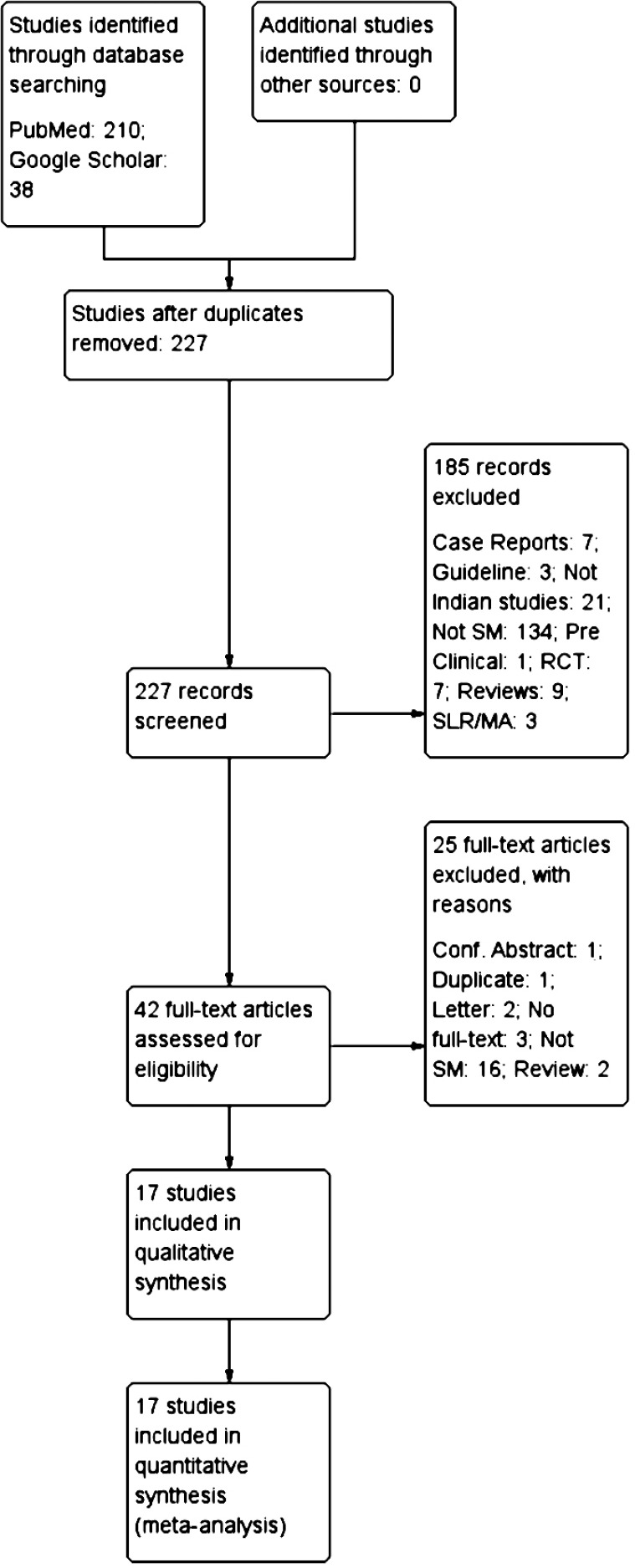
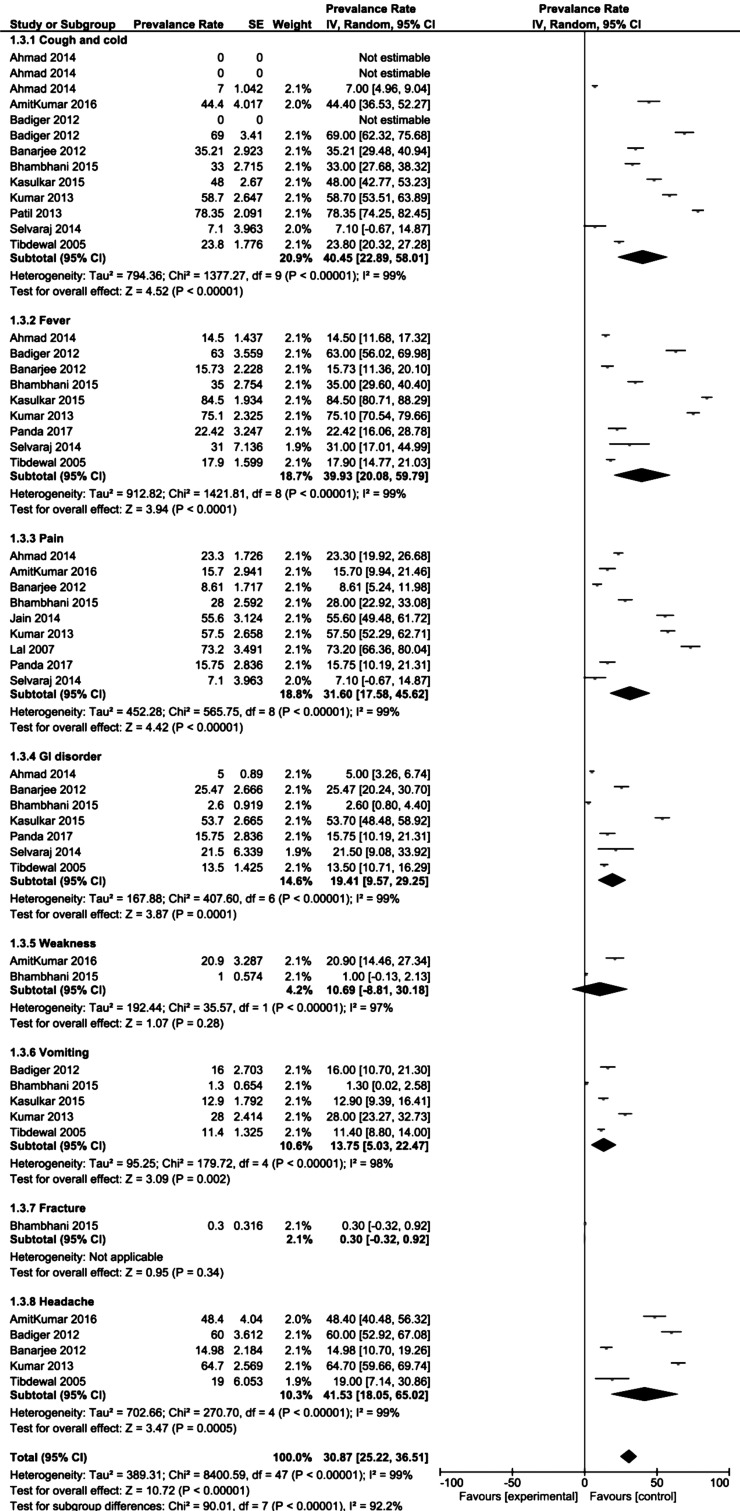
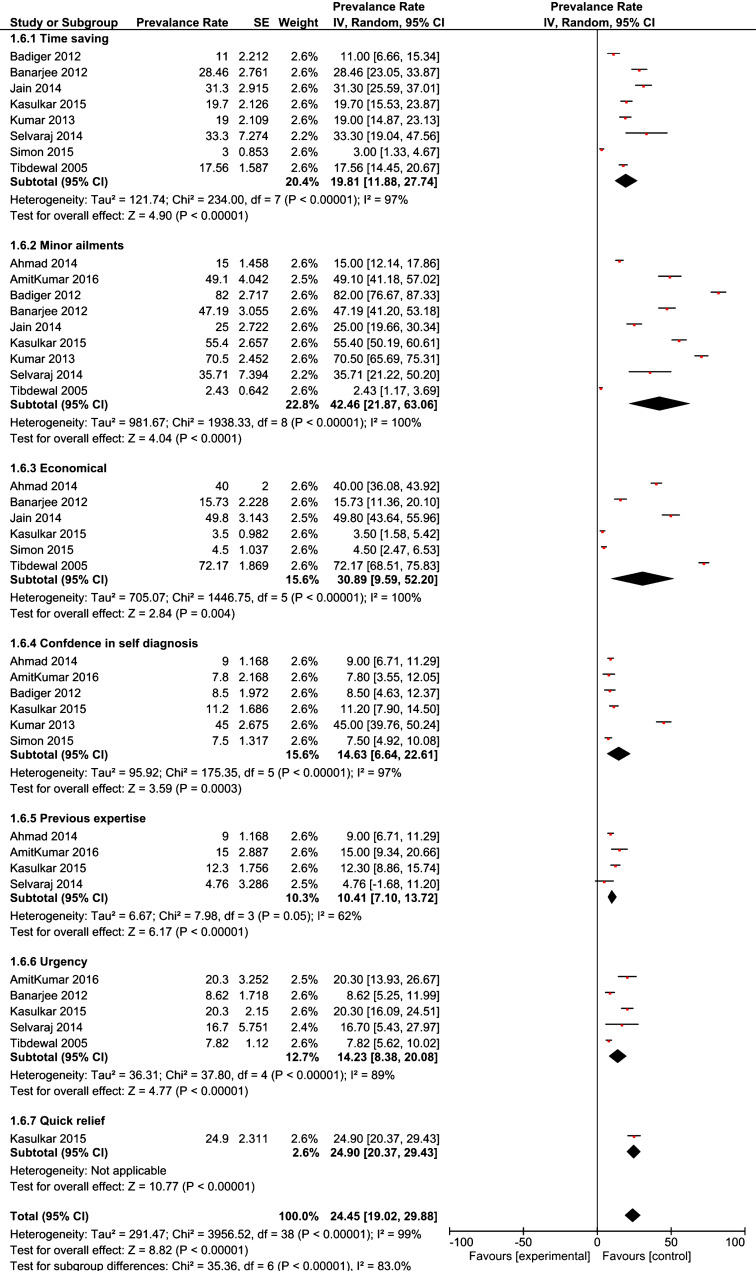
Of 248 articles, a total of 17 articles comprising of 10,248 participants were included in the meta-analysis. Overall, the mean prevalence of SM practices in India was observed to be 53.57%. Familiarity with the medication appears to be a major reason to practice SM (PR: 30.45; 95% Confidence Interval [CI]: 17.08-43.82; 6 studies), and the practice was noticed more among individuals from a middle-lower class family with a prevalence rate of 26.31 (95%CI: 2.02-50.60; P<0.0001). Minor ailments were the primary reason for practicing SM (PR: 42.46; 95%CI: 21.87-63.06).
Overview
CoChat Summary
TL;DR
This systematic review and meta-analysis found that self-medication is common in India, with a pooled prevalence of 53.57% across 17 cross-sectional studies and 10,248 participants. The most frequent drivers and patterns were familiarity with medicines, minor ailments, and use of NSAIDs/anti-allergy drugs, with high heterogeneity across analyses.
Key findings
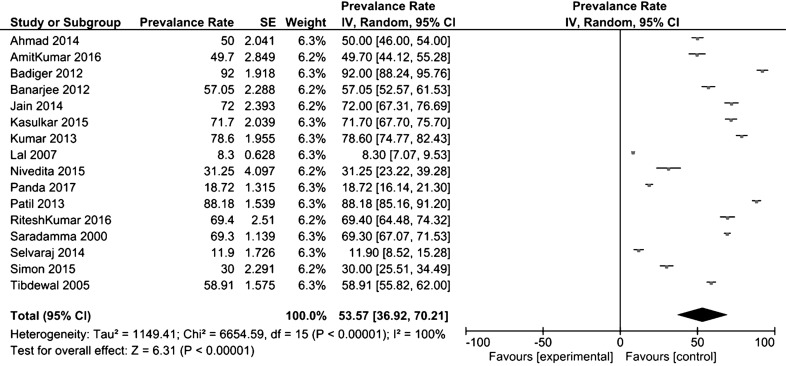
- Of 248 articles screened, 17 studies with 10,248 participants were included; the pooled prevalence of self-medication was 53.57% (95% CI: 36.92–70.21) based on 16 studies with 9,936 participants, and heterogeneity was very high (I² = 100%; P<0.0001).
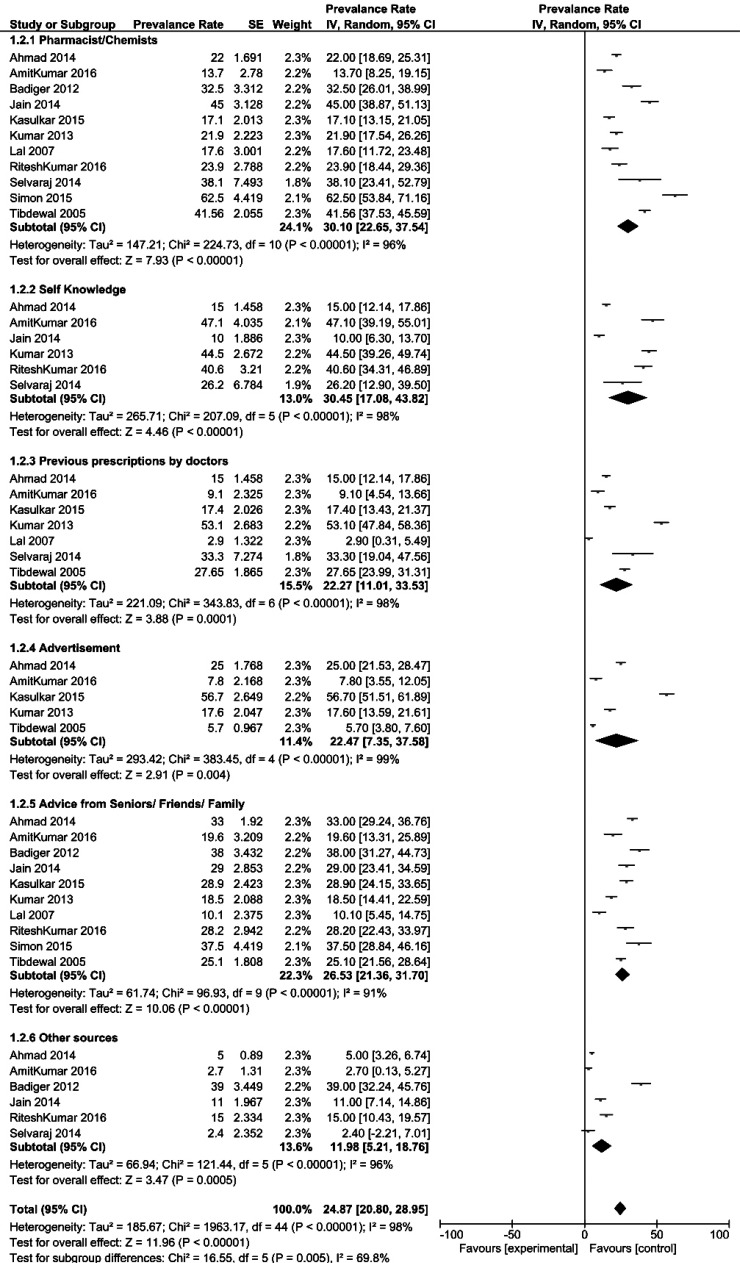
- The most common reported source/reason was familiarity with the medication (PR: 30.45; 95% CI: 17.08–43.82; 6 studies), followed by pharmacists at the pharmacy (PR: 30.10; 95% CI: 22.65–37.54; 11 studies).
- Among indications, headache was most common (PR: 41.53; 95% CI: 18.05–65.02; 5 studies), followed by cough/cold (PR: 40.45; 95% CI: 22.89–58.01; 10 studies) and fever (PR: 39.93; 95% CI: 20.08–59.79; 9 studies).
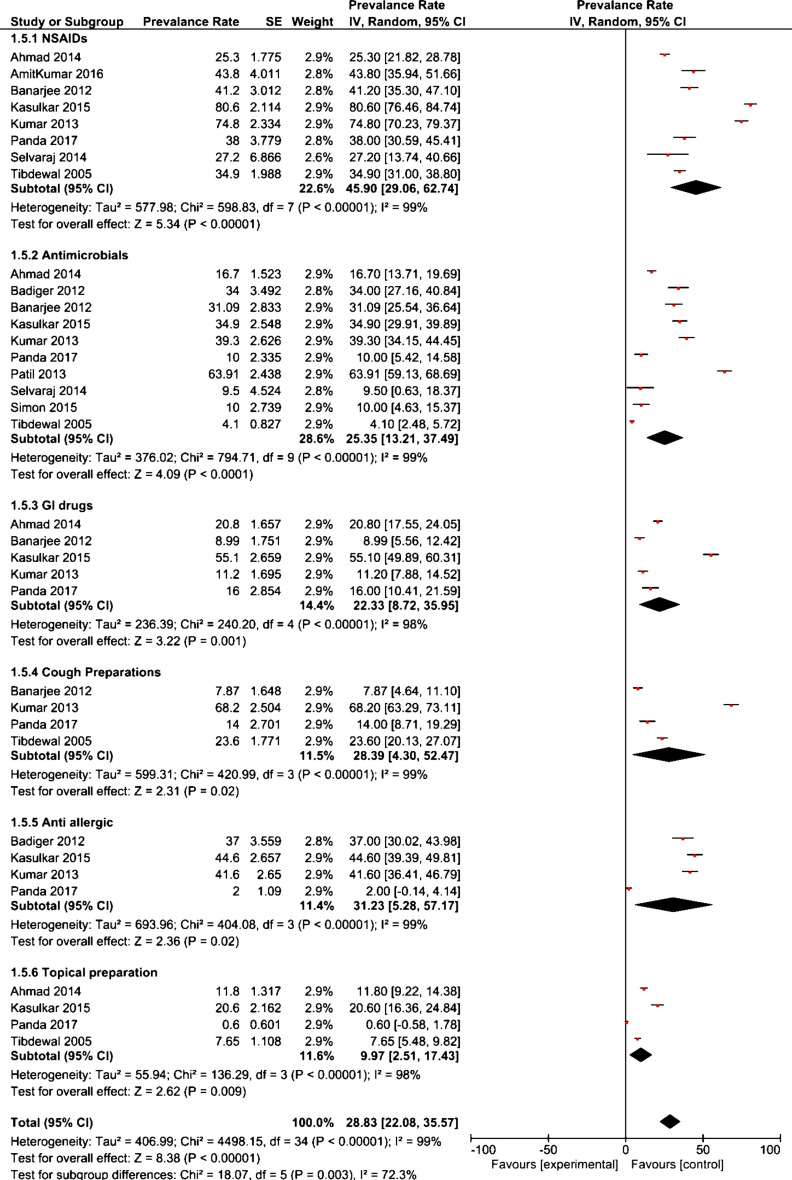
- The most self-practiced medication class was NSAIDs (PR: 45.90; 95% CI: 29.06–62.74; 8 studies), followed by anti-allergic medications (PR: 31.23; 95% CI: 5.28–57.17; 4 studies).
Methods
- Systematic review and meta-analysis of peer-reviewed studies conducted in India; databases searched were PubMed/Medline and Cochrane Library, with no language, date, or publication-format restrictions.
- Included studies were cross-sectional and assessed prevalence and/or predictors of self-medication; 2 independent reviewers screened, extracted data, and resolved disagreements with a third reviewer.
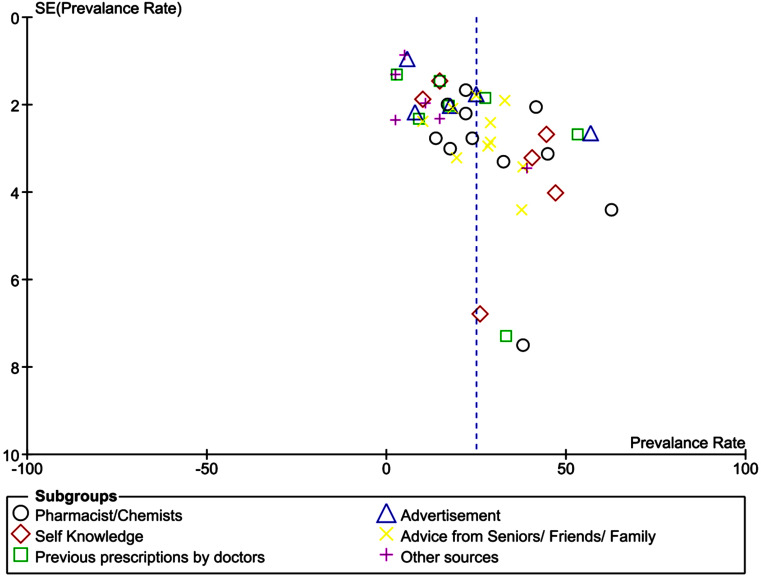
- Meta-analysis used RevMan 5.3; pooled prevalence rates and 95% CIs were calculated, heterogeneity was assessed with I², and publication bias was examined using funnel plots plus Begg’s and Egger’s tests.
Limitations
- Stated in the paper: only cross-sectional studies were included, only studies conducted in India were included, and not all electronic scientific databases were searched.
- Evident from the text: many pooled estimates had very high heterogeneity (often I² = 96%–100%), so the authors explicitly caution interpretation of the prevalence result.
Model-written summary. Check it against the paper before relying on it.
Integrity signals
Registry
Cites
Statistics
Figures
Verification
Claims the paper makes
0 Valid · 0 Not valid · 9 Not checked · 29 Own results and interpretations
A result the paper reports from its own data — it cites no other source for it, so there is none to check. The quote shows it is in the paper.
In the paper
“Overall, the mean prevalence of SM practices in India was observed to be 53.57%.”
- Also stated in: § Prevalence of Self-medication Practices · plain
“A meta-analysis of 16 studies with 9936 participants revealed that 4714 participants practiced self-medication with a prevalence rate of 53.57 (95% Confidence Interval: 36.92-70.21; Fig. 2).”
- Also stated in: § DISCUSSION Despite ongoing awareness and public health campaigns, SM remains a global public health concern in India. SM practices may lead to drug resistance, unwanted side-effects and may even lead to death in some cases. One of the main reasons for high SM practice in India is the lack of regulation on OTC drugs and non-adherence to the rational drug use practice and policies [1]. The current review analysed 17 studies involving 10,248 participants for pooled estimation of the prevalence of SM in India and it ranged from 8.3% to 92% with a pooled prevalence of 53.57% [4, 7, 8, 18-23]. Contributing factors for the disparities in SM practices across India might be due to variations in cultural, socio-economic, health and development status [4]. A recent systematic review conducted in Ethiopia by Sisay M et al., revealed pool prevalence of 44%, while the prevalence of this meta-analysis was higher when compared to their results [10]. However, these results were similar to the findings of a systematic review conducted by Alhomoud et al. which stated that the range of the prevalence of SM practices in the case of antibiotics varied from 19% to 82% in the Middle Eastern population [24]. The practices of SM in Lower-Middle Income countries like India are very high, and they have almost doubled since the last decade [25]. SM practices are considered almost minimal in western countries like Europe as they have strict regulations on OTC medication, which should be adopted by other countries, including India [26]. Interestingly, undergraduate medical students were more prone (92%) to practice SM as revealed in a study conducted by Badiger et al., in 2012 and the possible reasons for such behaviour were related to their level of knowledge, confidence in self-diagnosis, storage of leftover medication and intention to avoid the cost of physician [7]. SM practices contribute to various adverse consequences such as drug interactions, serious side-effects, drug resistance, delayed diagnosis, irrational drug use, increase in direct and indirect medical costs [27]. A study conducted in Mexico inferred that 26.7% of the adverse drug reactions reported in elderly patients were due to SM [28]. Among all the included studies, pharmacy was the primary source of information about the medications, which led individuals to practice SM [29], followed by advice from the family and friends. In addition, a systematic review conducted by Limaye D et al. also found that pharmacists were the primary sources of information on SM [5]. The pharmacists should be informed that at times, patients might mislead the information supplied that was provided, as a source of self-medication practices. Moreover, there should be a strict regulation of scheduled H drugs in India to prevent SM practices [30]. Surprisingly, advertisements promoting the use of medication on media contributed to the least proportion as a source of information for the practice of SM [29]. The majority of the participants practising SM in the studies were from a lower socio-economic class followed by a higher socio-economic class, and the possible reason behind this finding might be the economical concerns for lower socio-economic class people; while, people belonging to a higher socio-economic class might have shortage of time [30]. In this regard, the pharmacist can also play an essential role in minimizing SM practices by counselling people of all socioeconomic classes, especially the lower and upper classes [31]. People should be made aware regarding the adverse impacts of SM on health such as prolonged illness, under-diagnoses and increased health care expenditure, especially in a country like India where most of the health care cost is expensive [32]. Cold and cough are the prevalent conditions where most of the study participants practiced SM in the current study. Many studies have reported people using antibiotics for treating cold and cough, which are of no benefit [5, 10]. These findings for the most commonly used drugs for SM practice are different from a systematic review conducted by Sisay et al. where they reported that analgesics were the most frequently used drugs associated with SM practices. This study found that minor ailments were the most common reason for practising SM among the Indian population; while, Sisay et al., reported that the common cause of SM practices among people of Ethiopia was due to a previous experience [10]. The prevalence of SM practices in India can be reversed by enforcing the laws, forming and implementing the national plan and also providing strict directions to pharmacists to dispense drugs only upon presentation of a prescription. There are some limitations for this study such as restricting articles, which are cross-sectional in nature, limiting studies that were conducted only in India and most importantly not including other electronic scientific databases for searching the relevant articles. · plain
“The current review analysed 17 studies involving 10,248 participants for pooled estimation of the prevalence of SM in India and it ranged from 8.3% to 92% with a pooled prevalence of 53.57% [4, 7, 8, 18-23].”
§ Prevalence and Predictors of Self-Medication Practices in India: A Systematic Literature Review and Meta-Analysis > Abstract > Results
plainn = 4,714- Asserted: passes — The authors put it forward as true.
- Checkable: passes — It can be checked against evidence.
- Load-bearing: passes — The paper’s conclusions depend on it.
- Based: passes — The paper gives a reason why it holds.
- Rests on an assumption not shown here.
- Also stated in: § Prevalence of Self-medication Practices · plain
A result the paper reports from its own data — it cites no other source for it, so there is none to check. The quote shows it is in the paper.
In the paper
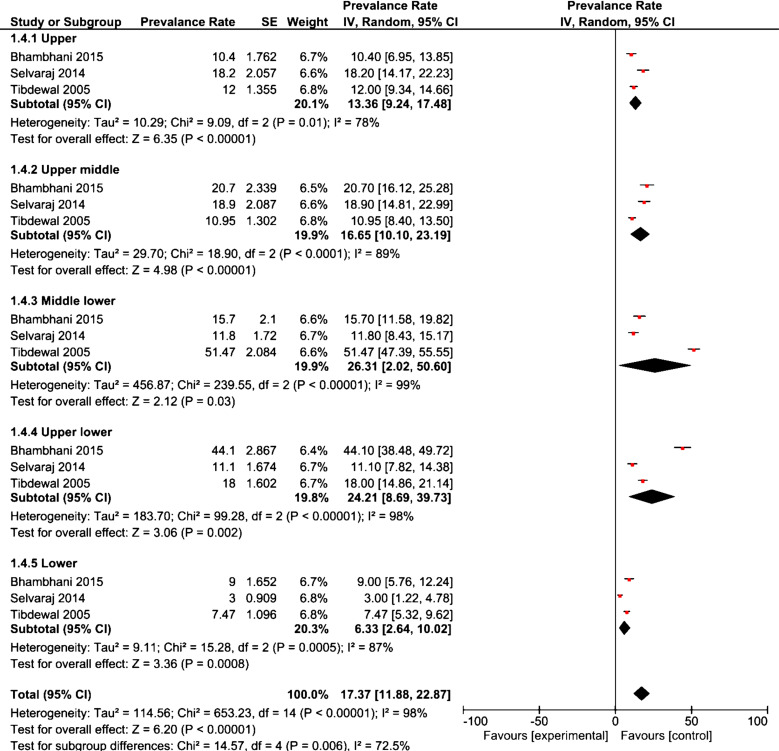
“The least prevalence was observed among people with lower-income (PR: 6.33; 95%CI 2.64-10.02; I2 = 87%; P=0.0005; Fig. 4).”
§ Prevalence and Predictors of Self-Medication Practices in India: A Systematic Literature Review and Meta-Analysis > RESULTS > Socio-economic Factors
plainstates an associationn = 1,227 ·- Asserted: passes — The authors put it forward as true.
- Checkable: passes — It can be checked against evidence.
- Load-bearing: unclear — It is unclear whether the paper’s conclusions depend on it.
- Based: passes — The paper gives a reason why it holds.
A result the paper reports from its own data — it cites no other source for it, so there is none to check. The quote shows it is in the paper.
In the paper
“The least self-practiced medicines were the topical preparations (PR: 9.97; 95%CI: 2.51-17.43; 4 studies; I2 = 99%; P<0.0001; Fig. 6).”
§ Prevalence and Predictors of Self-Medication Practices in India: A Systematic Literature Review and Meta-Analysis > RESULTS > Type of Medication
plain- Asserted: passes — The authors put it forward as true.
- Checkable: passes — It can be checked against evidence.
- Load-bearing: unclear — It is unclear whether the paper’s conclusions depend on it.
- Based: passes — The paper gives a reason why it holds.
In the paper
“Surprisingly, advertisements promoting the use of medication on media contributed to the least proportion as a source of information for the practice of SM [29].”
§ Prevalence and Predictors of Self-Medication Practices in India: A Systematic Literature Review and Meta-Analysis > DISCUSSION Despite ongoing awareness and public health campaigns, SM remains a global public health concern in India. SM practices may lead to drug resistance, unwanted side-effects and may even lead to death in some cases. One of the main reasons for high SM practice in India is the lack of regulation on OTC drugs and non-adherence to the rational drug use practice and policies [1]. The current review analysed 17 studies involving 10,248 participants for pooled estimation of the prevalence of SM in India and it ranged from 8.3% to 92% with a pooled prevalence of 53.57% [4, 7, 8, 18-23]. Contributing factors for the disparities in SM practices across India might be due to variations in cultural, socio-economic, health and development status [4]. A recent systematic review conducted in Ethiopia by Sisay M et al., revealed pool prevalence of 44%, while the prevalence of this meta-analysis was higher when compared to their results [10]. However, these results were similar to the findings of a systematic review conducted by Alhomoud et al. which stated that the range of the prevalence of SM practices in the case of antibiotics varied from 19% to 82% in the Middle Eastern population [24]. The practices of SM in Lower-Middle Income countries like India are very high, and they have almost doubled since the last decade [25]. SM practices are considered almost minimal in western countries like Europe as they have strict regulations on OTC medication, which should be adopted by other countries, including India [26]. Interestingly, undergraduate medical students were more prone (92%) to practice SM as revealed in a study conducted by Badiger et al., in 2012 and the possible reasons for such behaviour were related to their level of knowledge, confidence in self-diagnosis, storage of leftover medication and intention to avoid the cost of physician [7]. SM practices contribute to various adverse consequences such as drug interactions, serious side-effects, drug resistance, delayed diagnosis, irrational drug use, increase in direct and indirect medical costs [27]. A study conducted in Mexico inferred that 26.7% of the adverse drug reactions reported in elderly patients were due to SM [28]. Among all the included studies, pharmacy was the primary source of information about the medications, which led individuals to practice SM [29], followed by advice from the family and friends. In addition, a systematic review conducted by Limaye D et al. also found that pharmacists were the primary sources of information on SM [5]. The pharmacists should be informed that at times, patients might mislead the information supplied that was provided, as a source of self-medication practices. Moreover, there should be a strict regulation of scheduled H drugs in India to prevent SM practices [30]. Surprisingly, advertisements promoting the use of medication on media contributed to the least proportion as a source of information for the practice of SM [29]. The majority of the participants practising SM in the studies were from a lower socio-economic class followed by a higher socio-economic class, and the possible reason behind this finding might be the economical concerns for lower socio-economic class people; while, people belonging to a higher socio-economic class might have shortage of time [30]. In this regard, the pharmacist can also play an essential role in minimizing SM practices by counselling people of all socioeconomic classes, especially the lower and upper classes [31]. People should be made aware regarding the adverse impacts of SM on health such as prolonged illness, under-diagnoses and increased health care expenditure, especially in a country like India where most of the health care cost is expensive [32]. Cold and cough are the prevalent conditions where most of the study participants practiced SM in the current study. Many studies have reported people using antibiotics for treating cold and cough, which are of no benefit [5, 10]. These findings for the most commonly used drugs for SM practice are different from a systematic review conducted by Sisay et al. where they reported that analgesics were the most frequently used drugs associated with SM practices. This study found that minor ailments were the most common reason for practising SM among the Indian population; while, Sisay et al., reported that the common cause of SM practices among people of Ethiopia was due to a previous experience [10]. The prevalence of SM practices in India can be reversed by enforcing the laws, forming and implementing the national plan and also providing strict directions to pharmacists to dispense drugs only upon presentation of a prescription. There are some limitations for this study such as restricting articles, which are cross-sectional in nature, limiting studies that were conducted only in India and most importantly not including other electronic scientific databases for searching the relevant articles.
What the sources say
- Not matchedcites [29] Jain S. Concept of self-medication: A review. Int. J. Pharm. Biol. Arch. 2011 2 3 831 836
We searched by its title and found no matching paper.
plain- Asserted: passes — The authors put it forward as true.
- Checkable: passes — It can be checked against evidence.
- Load-bearing: unclear — It is unclear whether the paper’s conclusions depend on it.
- Based: passes — The paper gives a reason why it holds.
- Not matched
A result the paper states — it cites no source for it, so there is none to check. The quote shows it is in the paper.
In the paper
“The majority of the participants practising SM in the studies were from a lower socio-economic class followed by a higher socio-economic class”
§ Prevalence and Predictors of Self-Medication Practices in India: A Systematic Literature Review and Meta-Analysis > DISCUSSION Despite ongoing awareness and public health campaigns, SM remains a global public health concern in India. SM practices may lead to drug resistance, unwanted side-effects and may even lead to death in some cases. One of the main reasons for high SM practice in India is the lack of regulation on OTC drugs and non-adherence to the rational drug use practice and policies [1]. The current review analysed 17 studies involving 10,248 participants for pooled estimation of the prevalence of SM in India and it ranged from 8.3% to 92% with a pooled prevalence of 53.57% [4, 7, 8, 18-23]. Contributing factors for the disparities in SM practices across India might be due to variations in cultural, socio-economic, health and development status [4]. A recent systematic review conducted in Ethiopia by Sisay M et al., revealed pool prevalence of 44%, while the prevalence of this meta-analysis was higher when compared to their results [10]. However, these results were similar to the findings of a systematic review conducted by Alhomoud et al. which stated that the range of the prevalence of SM practices in the case of antibiotics varied from 19% to 82% in the Middle Eastern population [24]. The practices of SM in Lower-Middle Income countries like India are very high, and they have almost doubled since the last decade [25]. SM practices are considered almost minimal in western countries like Europe as they have strict regulations on OTC medication, which should be adopted by other countries, including India [26]. Interestingly, undergraduate medical students were more prone (92%) to practice SM as revealed in a study conducted by Badiger et al., in 2012 and the possible reasons for such behaviour were related to their level of knowledge, confidence in self-diagnosis, storage of leftover medication and intention to avoid the cost of physician [7]. SM practices contribute to various adverse consequences such as drug interactions, serious side-effects, drug resistance, delayed diagnosis, irrational drug use, increase in direct and indirect medical costs [27]. A study conducted in Mexico inferred that 26.7% of the adverse drug reactions reported in elderly patients were due to SM [28]. Among all the included studies, pharmacy was the primary source of information about the medications, which led individuals to practice SM [29], followed by advice from the family and friends. In addition, a systematic review conducted by Limaye D et al. also found that pharmacists were the primary sources of information on SM [5]. The pharmacists should be informed that at times, patients might mislead the information supplied that was provided, as a source of self-medication practices. Moreover, there should be a strict regulation of scheduled H drugs in India to prevent SM practices [30]. Surprisingly, advertisements promoting the use of medication on media contributed to the least proportion as a source of information for the practice of SM [29]. The majority of the participants practising SM in the studies were from a lower socio-economic class followed by a higher socio-economic class, and the possible reason behind this finding might be the economical concerns for lower socio-economic class people; while, people belonging to a higher socio-economic class might have shortage of time [30]. In this regard, the pharmacist can also play an essential role in minimizing SM practices by counselling people of all socioeconomic classes, especially the lower and upper classes [31]. People should be made aware regarding the adverse impacts of SM on health such as prolonged illness, under-diagnoses and increased health care expenditure, especially in a country like India where most of the health care cost is expensive [32]. Cold and cough are the prevalent conditions where most of the study participants practiced SM in the current study. Many studies have reported people using antibiotics for treating cold and cough, which are of no benefit [5, 10]. These findings for the most commonly used drugs for SM practice are different from a systematic review conducted by Sisay et al. where they reported that analgesics were the most frequently used drugs associated with SM practices. This study found that minor ailments were the most common reason for practising SM among the Indian population; while, Sisay et al., reported that the common cause of SM practices among people of Ethiopia was due to a previous experience [10]. The prevalence of SM practices in India can be reversed by enforcing the laws, forming and implementing the national plan and also providing strict directions to pharmacists to dispense drugs only upon presentation of a prescription. There are some limitations for this study such as restricting articles, which are cross-sectional in nature, limiting studies that were conducted only in India and most importantly not including other electronic scientific databases for searching the relevant articles.
plainstates an association- Asserted: passes — The authors put it forward as true.
- Checkable: passes — It can be checked against evidence.
- Load-bearing: unclear — It is unclear whether the paper’s conclusions depend on it.
- Based: passes — The paper gives a reason why it holds.
- Rests on an assumption not shown here.
14 more claims
Create a free account to see all 38 claims and to verify the 7 references still open.
- It may state two separate claims as one. 18
- Probably not a substantial claim. 3
Claims other papers make about this one
Each is checked against this paper’s own text: does it say what the citing paper says it does?
The source backs part of the claim, not all of it — or backs it for a different population, condition or comparison.
In the citing paper
“Moreover, young individuals, particularly students, are oriented towards self-medication owing to their higher educational attainment and easy access to online medication information.”
From Prevalence and patterns of self-medication practices in India: A systematic review and meta-analysis (2025) · cites this paper as [2]
Experimental — accuracy not yet measuredThe source backs part of the claim, not all of it — or backs it for a different population, condition or comparison.
In the citing paper
“aligning with global patterns and supporting findings from various preceding studies.2,34, 35, 36”
From Prevalence and patterns of self-medication practices in India: A systematic review and meta-analysis (2025) · cites this paper as [2]
Experimental — accuracy not yet measuredThe source backs part of the claim, not all of it — or backs it for a different population, condition or comparison.
In the citing paper
“Despite these challenges, self-medication can be beneficial when practiced responsibly. It provides quick relief for minor conditions, reduces healthcare burdens, and promotes patient autonomy and access to treatment, especially in regions with limited healthcare infrastructure.2”
From Prevalence and patterns of self-medication practices in India: A systematic review and meta-analysis (2025) · cites this paper as [2]
Experimental — accuracy not yet measuredThe source backs part of the claim, not all of it — or backs it for a different population, condition or comparison.
In the citing paper
“Additionally, with the rapid growth of social media and online information sources in recent years, the easy accessibility of health-related content on the internet has influenced many individuals to seek advice online rather than consulting healthcare professionals.2,4”
From Prevalence and patterns of self-medication practices in India: A systematic review and meta-analysis (2025) · cites this paper as [2]
Experimental — accuracy not yet measuredThe source backs part of the claim, not all of it — or backs it for a different population, condition or comparison.
In the citing paper
“Although a meta-analysis on self-medication in India was conducted,2 it was restricted to limited databases and studies up to 2017, necessitating a revision of prevalence data.”
From Prevalence and patterns of self-medication practices in India: A systematic review and meta-analysis (2025) · cites this paper as [2]
Experimental — accuracy not yet measured
2 more claims about this paper
Create a free account to see every claim other papers make about this one.
Self-check
Percentages, sums and reported differences re-computed from the paper’s own numbers.
Each contradiction between two passages listed here was confirmed by an independent check.
Rated minor: it would not touch a result — a value no result rests on, a p-value that stays on the same side of the significance level, or a conflict that is clerical, resolved elsewhere in the paper, or outside its own findings.
In the paper
§ Prevalence and Predictors of Self-Medication Practices in India: A Systematic Literature Review and Meta-Analysis > RESULTS > Socio-economic Factors
“A pooled analysis of 3 studies with 1227 participants revealed that self-medication practice was more common among people with middle-lower level families with a prevalence of 26.31 (95%CI: 2.02-50.60; I2 = 99%; P<0.0001; Fig. 4) followed by upper-lower level families (PR: 24.21; 95%CI 8.69-39.73; I2 = 98%; P<0.0001; Fig. 4).”
§ Prevalence and Predictors of Self-Medication Practices in India: A Systematic Literature Review and Meta-Analysis > DISCUSSION
“The majority of the participants practising SM in the studies were from a lower socio-economic class followed by a higher socio-economic class, and the possible reason behind this finding might be the economical concerns for lower socio-economic class people; while, people belonging to a higher socio-economic class might have shortage of time [30].”
Citations
Cites
Self-medication with Antimicrobial Drugs in Europe
Grigoryan, L., Haaijer-Ruskamp, F. M., Burgerhof, J. G. M., Mechtler, R., Deschepper, R., Tambic-Andrasevic, A., Andrajati, R., Monnet, D. L., Cunney, R., Di Matteo, A., et al. (2006) · Emerging Infectious Diseases · doi:10.3201/eid1203.050992 · Cited by 585
Risks of Self-Medication Practices
Ruiz, M. (2010) · Current Drug Safety · doi:10.2174/157488610792245966 · Cited by 506 · cited 1×
“SM practices contribute to various adverse consequences such as drug interactions, serious side-effects, drug resistance, delayed diagnosis, irrational drug use, increase in direct and indirect medical costs [27].”
BackgroundAlhomoud, F., Aljamea, Z., Almahasnah, R., Alkhalifah, K., Basalelah, L., & Alhomoud, F. K. (2017) · International Journal of Infectious Diseases · doi:10.1016/j.ijid.2017.01.014 · Cited by 331 · cited 1×
“which stated that the range of the prevalence of SM practices in the case of antibiotics varied from 19% to 82% in the Middle Eastern population [24].”
BackgroundSelf-medication with Antibiotics in WHO Southeast Asian Region: A Systematic Review
Nepal, G., & Bhatta, S. (2018) · Cureus · doi:10.7759/cureus.2428 · Cited by 272 · cited 1×
“Besides, SM of antimicrobials and NSAIDs can lead to drug resistance and make individuals prone to hepatic and renal dysfunction [6].”
BackgroundPerceptions and Practices of Self-Medication among Medical Students in Coastal South India
Kumar, N., Kanchan, T., Unnikrishnan, B., Rekha, T., Mithra, P., Kulkarni, V., Papanna, M. K., Holla, R., & Uppal, S. (2013) · PLoS ONE · doi:10.1371/journal.pone.0072247 · Cited by 270 · cited 3×
“Kumar 2013 Cross-sectional study 2 months OTC medication Undergraduate medical students [20]”
BackgroundSelf-medication patterns among medical students in South India
Badiger, S. (2012) · Australasian Medical Journal · doi:10.4066/amj.2012.1007 · Cited by 218
Banerjee, I., & Bhadury, T. (2012) · Journal of Postgraduate Medicine · doi:10.4103/0022-3859.97175 · Cited by 200 · cited 3×
“Banarjee 2012 Cross-sectional study single day OTC medication undergraduate medical students [21]”
BackgroundThe private health sector in India
Sengupta, A., & Nundy, S. (2005) · BMJ · doi:10.1136/bmj.331.7526.1157 · Cited by 198
The quality of private pharmacy services in low and middle-income countries: A systematic review
Smith, F. (2009) · Pharmacy World & Science · doi:10.1007/s11096-009-9294-z · Cited by 189 · cited 1×
“The practices of SM in LowerMiddle Income countries like India are very high, and they have almost doubled since the last decade [25].”
BackgroundPrevalence of self-medication practices and its associated factors in Urban Puducherry, India
S, G., Selvaraj, K., & Ramalingam, A. (2014) · Perspectives in Clinical Research · doi:10.4103/2229-3485.124569 · Cited by 185 · cited 3×
“Selvaraj 2014 Cross-sectional study 2 months Any medicine Field practisers [19]”
Background
Research works printed but not linked: 2
- [5]Limaye D. Limaye V. Krause G. Fortwengel G. A systematic review of the literature to assess self-medication practices. Ann. Med. Health Sci. Res. 2017
- [29]Jain S. Concept of self-medication: A review. Int. J. Pharm. Biol. Arch. 2011 2 3 831 836
Cited by
The Capability of ChatGPT in Predicting and Explaining Common Drug-Drug Interactions
Juhi, A., Pipil, N., Santra, S., Mondal, S., Behera, J. K., & Mondal, H. (2023) · Cureus · doi:10.7759/cureus.36272 · Cited by 128
“This encourages self-medication or taking suggestions from non-physician healthcare providers [4,5].”
Self-medication practices to prevent or manage COVID-19: A systematic review
Quincho-Lopez, A., Benites-Ibarra, C. A., Hilario-Gómez, M. M., Quijano-Escate, R., & Taype-Rondán, Á. (2021) · PLoS ONE · doi:10.1371/journal.pone.0259317 · Cited by 136
“Three systematic reviews conducted in Iran [23], Ethiopia [25], and India [24]; reported a prevalence of 53%, 44%, and 53.6%, respectively; for a recall period that ranged from a single day to 6 months.”
BackgroundInfluentialYu, Z., Liu, J., Tang, P. K., Hu, H., & Ung, C. O. L. (2023) · Frontiers in Public Health · doi:10.3389/fpubh.2023.1184882 · Cited by 94
The scenario of self-medication practices during the covid-19 pandemic; a systematic review
Shrestha, A. B., Aryal, M., Magar, J. R., Shrestha, S., Hossainy, L., & Rimti, F. H. (2022) · Annals of Medicine and Surgery · doi:10.1016/j.amsu.2022.104482 · Cited by 76
“The methods used to quantify self-medication [5], demographic variables [4,5,28], and across different nations and circumstances [29 – 31] all influence the prevalence of self-medication.”
InfluentialRay, I., Bardhan, M., Hasan, M. M., Sahito, A. M., Khan, E. I., Patel, S. Y., Jani, I., Bhatt, P. K., Sp, R., & Swed, S. (2022) · Annals of Medicine and Surgery · doi:10.1016/j.amsu.2022.103797 · Cited by 53
“The prevalence of self-medication varies from 8.3% to 93% among the population of India [2].”
InfluentialSharma, M. G., & Popli, H. (2023) · Cureus · doi:10.7759/cureus.33751 · Cited by 47
Prevalence of self-medication in Ghana: a systematic review and meta-analysis
Opoku, R., Dwumfour-Asare, B., Agrey-Bluwey, L., Appiah, N. E., Ackah, M., Acquah, F., Asenso, P. F., & Issaka, A.-A. (2023) · BMJ Open · doi:10.1136/bmjopen-2022-064627 · Cited by 30
Juneja, K., Chauhan, A., Shree, T., Roy, P., Bardhan, M., Ahmad, A., Pawaiya, A. S., & Anand, A. (2024) · SAGE Open Medicine · doi:10.1177/20503121241240507 · Cited by 47
“Other studies also found that the pharmacies and prior prescriptions were major sources of SM. 5,9,13 Also, print and electronic media were sources for SM. 5,20 All these findings reveal a need to strengthen the drug procurement laws and educate the population regarding the various detrimental…”
BackgroundChoudhary, N., Lahiri, K., & Singh, M. (2020) · Dermatologic Therapy · doi:10.1111/dth.14696 · Cited by 28
Tingkat Pengetahuan Masyarakat Tentang Swamedikasi yang Rasional di Lamongan
Octavia, D. R. (2019) · Jurnal Surya · doi:10.38040/js.v11i03.54 · Cited by 22
Das, S., Gnanavel, P., Smanla, S., Saikia, A. M., Mishra, S. K., Khare, S., Murugan, S. A., Prakash, V. N., Roychoudhury, P., Ahmad, I., et al. (2025) · Scientific Reports · doi:10.1038/s41598-024-84627-2 · Cited by 56
Ge, P., Zhang, Z.-W., Zhang, J.-Z., Lyu, K., Niu, Y., Tong, Y.-T., Xiong, P., Ling, R., Li, Q., Yu, W., et al. (2023) · Frontiers in Pharmacology · doi:10.3389/fphar.2023.1072917 · Cited by 17
Chaudhary, V., Kumari, S., Khurana, N., Azharuddin, M., Singh, A. P., Devi, V., Dhir, D., & Pal, B. (2024) · Pharmacoepidemiology and Drug Safety · doi:10.1002/pds.5791 · Cited by 10
Prevalence and patterns of self-medication practices in India: A systematic review and meta-analysis
Chaudhary, V., Kumari, S., Sharma, B., Ahuja, C., Kishore, H., & Pal, B. (2025) · Medical Journal Armed Forces India · doi:10.1016/j.mjafi.2024.11.008 · Cited by 11
Puvvada, R. K., Gupta, S., Tang, C. Y., Althubyani, A. N., Jois, M., Higgs, P., Ramesh, M., & Thomas, J. (2020) · Metabolism Open · doi:10.1016/j.metop.2020.100073 · Cited by 10
“Self-medication practices are common across India as evident from a meta-analysis by Rashid and colleagues [10] which reported that the prevalence of self-medication practices ranged from8.”
BackgroundSelf-Medication Practice in Mexico
Ortiz, M. I., Flores-Ceron, K. I., & Muñoz‐Pérez, V. M. (2022) · The Senior Care Pharmacist · doi:10.4140/tcp.n.2022.266 · Cited by 13
Atem, T. D., Singh, R., Newbury-Birch, D., Pal, B., & Chaudhary, V. (2025) · BMC Pediatrics · doi:10.1186/s12887-025-05676-8 · Cited by 8
“A recent meta-analysis published in 2024 [11] showed that 64.4% of people in India practice self-medication, which is higher than the 53.6% reported in a 2020 meta-analysis [12].”
InfluentialJohnbasha, A. F., Tamilchelvan, V., & Kumar, S. (2022) · Journal of Research and Health · doi:10.32598/jrh.12.5.2018.1 · Cited by 8
Joseph, N., Colaco, S. M., Fernandes, R. V., Krishna, S. G., & Veetil, S. I. (2022) · Current Drug Safety · doi:10.2174/1574886317666220513101349 · Cited by 8
Octavia, D. R., Utami, P., & Yuliastuti, F. (2023) · Pharmacy Education · doi:10.46542/pe.2023.232.149155 · Cited by 11
Brief Overview on Over-the-Counter Medicine and their Impact on Community Health
Ahmed, R., Divya, A., Ramyarani, G., Khair, U., & Das, J. (2022) · Indian Journal of Pharmacy Practice · doi:10.5530/ijopp.15.2.14 · Cited by 9
Sulistyaningrum, I. H., Santoso, A., Fathnin, F. H., et al. (2022) · Pharmacon Jurnal Farmasi Indonesia · doi:10.23917/pharmacon.v19i1.17699 · Cited by 5
Turan, S. (2024) · Cureus · doi:10.7759/cureus.72319 · Cited by 10
“In a meta-analysis from India, the prevalence of SM was 53.6% [11].”
BackgroundInfluentialAlHarthi, M. S., Alsulami, F. T., Fathelrahman, A. I., Algarni, M. A., Alorfi, N. M., & Alzahrani, M. S. (2025) · Healthcare · doi:10.3390/healthcare13050472 · Cited by 7
“This pattern of behavior is not unique to Saudi Arabia and has been observed in other parts of the world, where public education efforts on the risks of OTC misuse are still lacking [28].”
Raj, N., Joy, T. M., Olickal, J. J., & Thankappan, K. R. (2024) · Clinical Epidemiology and Global Health · doi:10.1016/j.cegh.2024.101656 · Cited by 6
Systematic review of the selfmedication practice among medical students across South Asian countries
Shahid, S., Zulfiqar, K., Butt, K., Yousaf, I., Shabbir, A., Zaheer, E., Fatima, N., Amjad, U., Majeed, A., Ali, W., et al. (2024) · Medical Science · doi:10.54905/disssi.v28i145.e23ms3314 · Cited by 13
“Just a small percentage of SM practitioners acknowledged obtaining their information from outside sources (Rashid et al., 2020).”
BackgroundBheemesh, S., Deepthi, R., Sangeetha, M. D., Kumbhar, S., Athani, S. B., & Anil, N. S. (2025) · International Journal of Adolescent Medicine and Health · doi:10.1515/ijamh-2024-0157 · Cited by 3
Choudhary, R. P., & Siddalingegowda, S. M. (2024) · Frontiers in Health Services · doi:10.3389/frhs.2024.1399621 · Cited by 10
“Pharmacists play an important role in reducing self-medication by consulting and educating patients (65).”
BackgroundMishra, P., More, S., GUPTA, K., RASTOGI, D., & VIGNAN, N. (2024) · Asian Journal of Pharmaceutical and Clinical Research · doi:10.22159/ajpcr.2024.v17i5.50491 · Cited by 3
A automedicação da população mundial: uma revisão integrativa
de Menezes, A. S., Bonanni, I. A., Souza, M. D. S. G. C., Carneiro, S. V. G., Alves, S. M., de Oliveira, T. A., & de Souza, M. B. R. (2021) · Research Society and Development · doi:10.33448/rsd-v10i10.18660 · Cited by 3
Self-Medication Among Elderly: Evidence Synthesis and a Systematic Review of the Literature
Hussain, R., Loh, Z. C., Shakeel, S., Ong, S. C., & Babar, Z.-U.-D. (2023) · Springer eBooks · doi:10.1007/978-3-030-64477-2_142 · Cited by 4
Easwaran, V., Anthoor, S. P., Orayj, K. M., Mantargi, M. J. S., Dinakaran, M., Nagarajan, A., Harini, V. S., Venkatesan, K., Khan, N. A., Alavudeen, S. S., et al. (2025) · Scientific Reports · doi:10.1038/s41598-025-33585-4 · Cited by 8
Kanougiya, S., Bhaskarpandi, S., Surendhar, A., Dharani, R., Swetha, R., Dhanush, M., Oviya, V., & Vishali, B. (2026) · BMC Health Services Research · doi:10.1186/s12913-026-14114-z · Cited by 5
Ram, D., Bheemaraju, S. P., & Alammar, M. A. (2022) · Indian Journal of Psychological Medicine · doi:10.1177/02537176221098329 · Cited by 2
Assessment of Self-Medication Practices among Pregnant Women
Zenhom, S. Z., El-Feshawy, N. I., & Elsayed, H. M. (2022) · Mansoura Nursing Journal · doi:10.21608/mnj.2022.295563 · Cited by 2
Shaji, S. M., Issac, J. S., Girija, P., Arjun, D. S., Siddik, A. J., & Ashmi, A. (2023) · International Journal of Medical and Oral Research · doi:10.4103/ijmo.ijmo_22_22 · Cited by 2
Responsible consumption of medicines: a cross-sectional qualitative exploration
Kaladharan, S., Manayath, D., Rejikumar, G., & Madhavan, V. (2025) · Global Health Journal · doi:10.1016/j.glohj.2025.02.005 · Cited by 2
Suryavanshi, A. K. S., Thomas, S., Singh, S., Patel, R., Bhatt, V., & Pandey, S. (2025) · Journal of Health Organization and Management · doi:10.1108/jhom-02-2025-0107 · Cited by 3
Prevalence and Pattern of Self-medication with Alternative Medicine
Gondivkar, S. M., Sarode, S. C., Gadbail, A. R., et al. (2021) · Nigerian Journal of Clinical Practice · doi:10.4103/njcp.njcp_557_20 · Cited by 2
Tila, S., Shams, H., Jamil, M., Sajawal, A., Javed, N., Shuja, M. I., & Khalid, S. (2023) · International Journal of Health Sciences · doi:10.53730/ijhs.v7ns1.14327 · Cited by 4
Automedicação no contexto de COVID-19, os perigos da prática e fatores associados
Dantas, F. S. E., Coutinho, V. E. A., Carolino, R. D. A., et al. (2023) · Research Society and Development · doi:10.33448/rsd-v12i6.42039 · Cited by 2
PANIGRAHY, S., Dass, D., Pandey, S. K., & Sheena, D. (2024) · International Journal of Pharmacy and Pharmaceutical Sciences · doi:10.22159/ijpps.2024v16i6.50520 · Cited by 2
“A meta-analysis of self-medication shows its prevalence at 53.5% in India [7].”
BackgroundInfluentialEco-pharmacology: awareness and practice of drug disposal among medical students
Narasimhaiah, M. G., JAMES, A. E., & Kalaburgi, R. A. (2020) · International Journal of Basic & Clinical Pharmacology · doi:10.18203/2319-2003.ijbcp20202931 · Cited by 1
“57% with NSAID’s and anti-allergic drugs most frequently utilized for headache and cold.(7) In addition, in a country like India which has no particular definition for over the counter drugs in its laws, the control on drugs that can be bought by the common man DOI: http://dx.”
BackgroundSelf-medication and masking of early cancer symptoms: is there a role for pharmacist?
Khatiwada, A. P., Shrestha, S., Ozaki, A., Shrestha, R., & Bhuvan, K. C. (2021) · Research in Social and Administrative Pharmacy · doi:10.1016/j.sapharm.2021.05.008 · Cited by 1
Sharma, D., & Goel, N. K. (2022) · Healthline · doi:10.51957/healthline_330_2022 · Cited by 2
KNOWLEDGE, ATTITUDE AND PRACTICE OF SELF-MEDICATION AMONG PEOPLE OF CENTRAL MONROVIA, LIBERIA
Ogwuche, P. A., Adepoju, A. O., & Bah, A. F. (2023) · Malaysian Mental Health Journal · doi:10.26480/mmhj.02.2023.39.45 · Cited by 1
Burma, A., Panigrahi, O. P., Panigrahi, A., Kumar, D., & Patankar, A. (2025) · Clinical Epidemiology and Global Health · doi:10.1016/j.cegh.2025.102013 · Cited by 2
Alhabs, G., Altulaihi, B. A., Alenezi, F., Mandoorah, J., Almuslamani, R., Alhelal, R., & Alyahya, S. (2025) · Journal of Family Medicine and Primary Care · doi:10.4103/jfmpc.jfmpc_1466_24 · Cited by 4
Samannodi, M. S., Alwafi, H. H., Muglan, J., Tawakul, A. A., Algahtani, R. M., Almoallim, H. M., Alghamdi, I. A., Obaid, M. S., Alkhotani, A. M. A., Alhazmi, A. S. H., et al. (2025) · Tropical Medicine and Infectious Disease · doi:10.3390/tropicalmed10080207 · Cited by 5
“A sensitivity analysis was performed by excluding the studies with the smallest sample size ( 25% of the total sample) [25,26] to check the robustness of the findings.”
Karimi, K., Azizpour, Y., Shafaati, M., Rajabi, E., Zare, M., Seifi, A., Tabatabaei‐Malazy, O., Akbarpour, S., & Khalafehnilsaz, M. (2025) · Journal of Health Population and Nutrition · doi:10.1186/s41043-025-01053-4 · Cited by 4
“In the U.S., for example, it made up 42% [7]; in India, 55% [8]; in Indonesia, 91%; in Ghana, 46.6% [9]; in Ethiopia, 46.14% [10]; in Afghanistan, 73.2% [11]; and 61.6% [12] and 83% [13] among Iranian children and elderly populations.”
InfluentialPrevalence and patterns of self-medication in Pakistan: a systematic review and meta-analysis
Saifullah, M., Sharafi, S., & Gheshlagh, R. G. (2025) · BMC Public Health · doi:10.1186/s12889-025-25978-x · Cited by 11
“These findings indicate that self-medication has become a normalized and widely accepted practice among university students, particularly in health-related fields [10, 79].”
Pharmacists’ role in promoting responsible self-medication: an assessment of knowledge and attitudes
Ansari, N., & Dadhich, A. (2025) · International Journal of Pharmacy Practice · doi:10.1093/ijpp/riaf134 · Cited by 2
Assessment of Self-Medication Behaviour in Response to Dental Pain in Two Populations, France
Texier, L. L., Savanovitch, C., Nicolas, E., & Cousson, P.-Y. (2026) · International Dental Journal · doi:10.1016/j.identj.2026.109418
Muppa, T. D. L., Kumar, E. P., sulaiman, G. M., & Monika, P. (2022) · International Journal of Pharmaceutical Sciences Review and Research · doi:10.47583/ijpsrr.2022.v76i01.010 · Cited by 1
“5 percent.(12) Advertisements in the media and on the internet, particularly in nations like India, are the primary causes.”
BackgroundOctavia, D. R., Negara, S. B. S. M. K., & Utami, P. R. (2023) · Pharmacy Education · doi:10.46542/pe.2023.232.9297 · Cited by 2
Savani, N. M., Kansagara, T., Chauhan, M., et al. (2023) · Journal of Health Promotion and Behavior · doi:10.26911/thejhpb.2023.08.04.04 · Cited by 1
“Familiarity with medication appears to be a major reason to practice self-medication (Rashid et al., 2019).”
BackgroundA Growing Concern: The Prevalence of Self-Medication in Pediatric Healthcare in India
Pathan, S. R., Bhende, V. V., Sharma, K. B., Patel, V. A., Gangoda, D. M., & Sharma, T. S. (2024) · Cureus · doi:10.7759/cureus.53807 · Cited by 2
Kollo, N. B., Bamba, A., Condé, A. S., et al. (2024) · European Scientific Journal ESJ · doi:10.19044/esj.2024.v20n9p236 · Cited by 1
Factors Affecting Proper Self-Medication Behavior of Gastritis Drugs
Hidayati, I. R., Almadani, M. Y., & Yunita, S. L. (2022) · KnE Medicine · doi:10.18502/kme.v2i3.11923 · Cited by 1
Self-medication Among Elderly: Evidence Synthesis and a Systematic Review of the Literature
Hussain, R., Loh, Z. C., Shakeel, S., Chin, O. S., & Babar, Z.-U.-D. (2023) · Springer eBooks · doi:10.1007/978-3-030-50247-8_142-1 · Cited by 3
Gammulle, K. A., & Premarathne, S. M. (2024) · medRxiv · doi:10.1101/2024.11.29.24318207 · Cited by 1
Visited India? Metronidazole may not cure your Giardia infection
Tipu, J. H., Mørch, K., & Hanevik, K. (2025) · Expert Review of Anti-infective Therapy · doi:10.1080/14787210.2025.2592292 · Cited by 1
“This widespread accessibility is driven by a culture of self-medication practices relying on prior experience to manage gastrointestinal symptoms, coupled with weak regulatory enforcement [11].”
Shalini, A. (2021) · GLOBAL JOURNAL FOR RESEARCH ANALYSIS · doi:10.36106/gjra/5205499
Kiranmayee, A. (2021) · Journal of Pharmaceutical Research & Reports · doi:10.47363/jprsr/2021(2)111
Studi Kuantitatif Gambaran Swamedikasi Mahasiswa Kesehatan di Kota Medan
Effendi, K., Nathasya, D. A., Fadilah, S. Q. N., et al. (2023) · Jurnal Kolaboratif Sains · doi:10.56338/jks.v6i7.3790
A Study on Self Medication Practices During Covid-19 Pandemic
Shamsi, J., Eram, U., Khalique, N., & Khalil, S. (2023) · Indian Journal of Public Health Research & Development · doi:10.37506/ijphrd.v14i4.19784
Afshar, M. K., Afshar, M. K., Abbaszadeh, E., & Molaei, B. M. (2023) · Pesquisa Brasileira em Odontopediatria e Clínica Integrada · doi:10.1590/pboci.2024.005
“Familiarity with medicines was the main reason for self-medication in India [25].”
BackgroundResultRevisión Bibliográfica sobre Automedicación con Antiinflamatorios no Esteroideos en la Población
Prado, R. E. S., Quezada, T. D. C. N., Torres, F. B. D., Prado, R. G. S., & Vélez, Y. F. J. (2024) · Ciencia Latina Revista Científica Multidisciplinar · doi:10.37811/cl_rcm.v8i1.9425 · Cited by 8
Brice, K. N., Aboubakar, B., Aboubacar, C., et al. (2024) · European Scientific Journal ESJ · doi:10.19044/esipreprint.2.2024.p511
Banerjee, K., Banerjee, M. B., & Ghosh, A. (2024) · Asian Journal of Pharmaceutical and Clinical Research · doi:10.22159/ajpcr.2024.v17i6.50827
Over-the-counter cosmeceuticals: Exploring usage patterns and attitudes among Indians
Bhatnagar, A., Oberoi, B., Thayumanavan, T., & Ayub, A. (2024) · Cosmoderma · doi:10.25259/csdm_76_2024 · Cited by 1
Ansari, N., & Dadhich, A. (2024) · Archives of Medicine and Health Sciences · doi:10.4103/amhs.amhs_249_23 · Cited by 2
Traulsen, J. M., & Krska, J. (2024) · Wiley eBooks · doi:10.1002/9781119911685.ch52
Nayak, A., & Anitha, C. T. (2024) · The Indian Journal of Occupational Therapy · doi:10.4103/ijoth.ijoth_13_24
Tripathi, R. K., Bhilwade, S. K., Jalgaonkar, S. V., Kumar, D., & Gitte, P. T. (2025) · Perspectives in Clinical Research · doi:10.4103/picr.picr_162_24
Sultana, S., Muntasir, I., & Alam, M. A. (2025) · medRxiv · doi:10.1101/2025.06.29.25330523
Consumer attitude and purchase intentions towards pharmaceutical products for self-medication
Ansari, N., Dadhich, A., & Ajmera, P. (2025) · International Journal of Pharmaceutical and Healthcare Marketing · doi:10.1108/ijphm-05-2025-0065 · Cited by 1
Chakraborty, A., Babu, K., Chandrashekhar, S., & Maiya, K. (2025) · Hospital Pharmacology - International Multidisciplinary Journal · doi:10.5937/hpimj2503716c
Antony, A., Surendran, P., Sandhya, G. I., Kumar, A. S., Gouri, M., Prasenan, N., Swedha, K., & Pillai, A. S. (2026) · Current Medical Issues · doi:10.4103/cmi.cmi_84_25
Kanungo, S., Pahari, S., Paul, A., Talukdar, R., Biswas, S., Chatterjee, S., Barman, D., Chakraborty, D., Ghosh, P., Karmakar, B. C., et al. (2026) · Scientific Reports · doi:10.1038/s41598-026-42042-9 · Cited by 2
“This matches findings from other parts of India, where people often turn to informal providers who frequently misuse antibiotics and anti-diarrheal 30,31 .”
Fertu, I. D., Dumitru, C. N., Iacob, A., Tudor, M., Ștefan, C. S., & Tudor, S. S. (2026) · Electronic Journal of General Medicine · doi:10.29333/ejgm/18704
“Non-steroidal anti-inflammatory drugs (NSAIDs) and anti-allergens are the most commonly used self-medication drugs used, followed by headache, cold, and cough medications [17].”
InfluentialAaron, S., Bondia, A., Patel, I., et al. (2026) · Annals of Indian Academy of Neurology · doi:10.4103/aian.aian_1225_25
“A systematic review and meta‑analysis by Rashid et al. [24] reported a high prevalence of self‑medication (53.57%), with headache as a common indication and NSAIDs among the most frequently used drugs.”
InfluentialDube, M., Pawar, N., Damle, V., et al. (2026) · Indian Journal of Community and Family Medicine · doi:10.4103/ijcfm.ijcfm_86_24
Ravinabahen, P., & Kinner, P. (2026) · Healthline · doi:10.51957/healthline_827_2026
“In India, reported prevalence varies widely across studies due to differences in methodology, study [12,13] populations, and operational definitions.”
Prevalencia y determinantes de la automedicación en la población urbana de Riobamba, Ecuador
Alulema, A. G. M. (2026) · INNOVATE Research Journal · doi:10.65133/irj.v1.n2.2025/a7 · Cited by 1
Nayak, D., Varanasi, R., Janardhanan, R., Tandon, S., & Pati, S. (2026) · Indian Journal of Community Medicine · doi:10.4103/ijcm.ijcm_13_26
“Self‑medication is a growing concern in India, with a meta‑analysis by Rashid et al. [17] reporting a mean prevalence of 53.6%.”
InfluentialSelf-medication practices in the Santhal community: insights into knowledge, practices and attitudes
Y, S. S. T., S, K. S. K. S. B., Mahato, S. K., Kumari, K., Shukla, M., Jahan, K. A., & Singh, H. (2026) · Considerations in Medicine · doi:10.1136/conmed-2026-000056
Hojjati, M. H., Hamzei, A., & Moghaddam, M. B. (2025) · Journal of Torbat Heydariyeh University of Medical Sciences · doi:10.66224/jmsthums.13.4.37
Sone, Y. P., Awan, H., & Mustafa, M. (2026) · Journal of Evaluation in Clinical Practice · doi:10.1111/jep.70662
Metadata
- Authors
- Rashid, M., Chhabra, M., Kashyap, A., Undela, K., & Gudi, S. K.
- Affiliations
- Adichunchanagiri University (IN)
- Indo Soviet Friendship College of Pharmacy (IN)
- Department of Pharmacy Practice, Sarada Vilas College of Pharmacy, Mysuru, Karnataka 570004, India
- JSS Academy of Higher Education and Research (IN)
- University of Manitoba (CA)
- Corresponding author
- Chhabra, Manik
- Venue
- Current Clinical Pharmacology
- Publisher
- Bentham Science Publishers Ltd.
- Published
- 2020-10-14
- Volume
- 15
- Issue
- 2
- Pages
- 90-101
- ISSN
- 1574-8847 (ISSN-L)
- PMC
- PMC7579319
- OpenAlex
- W2990002554
- Semantic Scholar
- 0010e78ccab085becdce3afd849ee1a40cdd830a
- Cited by
- 94
- References
- 27
- Citations by year
- 2026: 14 · 2025: 19 · 2024: 21 · 2023: 18 · 2022: 12 · 2021: 6 · 2020: 3
- FWCI
- 0.62
- Type
- journal article
- Language
- en
- Open access
- hybrid
- doi.org
- Locations
- Current Clinical Pharmacology (publishedVersion, cc-by)
- PubMed Central (publishedVersion, cc-by-nc)
- PubMed (publishedVersion)
- Topics
- Health Sciences › Medicine › Infectious Diseases › Antibiotic Use and Resistance
- Health Sciences › Health Professions › Pharmacy › Pharmacy and Medical Practices
- Health Sciences › Medicine › Public Health, Environmental and Occupational Health › Pharmaceutical Quality and Counterfeiting
- Keywords
- self-medication, prevalence, predictive factors, India, minor ailments, headache, nonsteroidal anti-inflammatory drugs, cough and cold, socioeconomic status, self-diagnosis
- MeSH terms
- Anti-Inflammatory Agents, Non-Steroidal, Common Cold, Cough, Headache, Humans, India, Self Medication, Prevalence, Anti-Allergic Agents
About these checks
Registry, retraction, Cites and statistics results are computed, not judged, with one exception: a printed reference that no index lists is read once by a model before it counts as a citation error. Claims are extracted by a model and kept only when their quote appears verbatim in the text; each cited source is then checked, with a model’s help, for whether it says what the claim relies on. Those verdicts can be wrong — read the claim’s quote and the cited source before relying on one.
A language model drew the claims from the paper on 2026-10-11, under version 3 of the claim definition (model deepseek-v4.1-flash, prompt extract-v3).
A second model labelled each claim on 2026-10-11 (model jev-1.13-20260917, definition revision gold-guideline-v0.2).
Statistics and arithmetic are recomputed, not judged.
Confidence bands are shown only for fields calibrated on our annotated test set. None is calibrated yet, so no band is shown.
What counts as a claim ›How we measure confidence ›How we check this ›
Are you an author, or do you see a problem with this page? Request a review
Data sources
Bibliographic data: Semantic Scholar, OpenAlex, Crossref.
Contains information from the Semantic Scholar Academic Graph Datasets, made available under the ODC Attribution License (ODC-BY 1.0).
Semantic Scholar’s data is described in: Kinney, R., et al. (2023). The Semantic Scholar Open Data Platform. arXiv:2301.10140.
