

Enhancing the Emotional and Social Skills of the Youth to Promote their Wellbeing and Positive Development: A Systematic Review of Universal School-based Randomized Controlled Trials
Open accessThe DOI matches its Crossref record; 75 of the 76 references it cites were found in a registry or an index.
Abstract
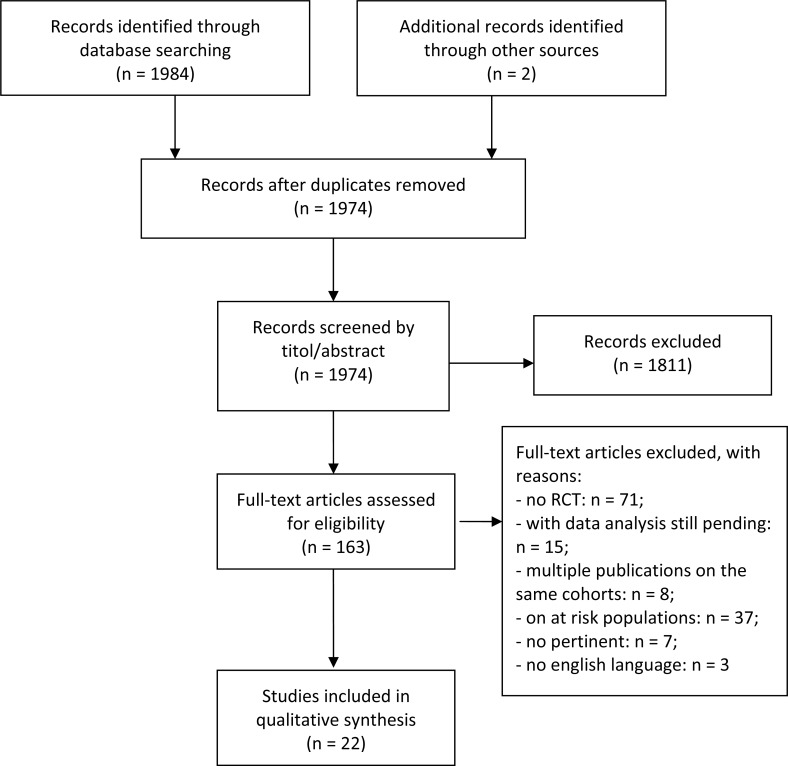
Background: The acquisition of social and emotional skills is associated with positive youth development, character education, healthy lifestyle behaviours, reduction in depression and anxiety, conduct disorders, violence, bullying, conflict, and anger. School-based interventions aimed to enhance these skills go beyond a problem-focused approach to embrace a more positive view of health; they could also improve the youth’s wellbeing. Aim: To describe the main features and to establish the effectiveness of universal school-based RCTs for children and the youth, aimed to promote their psychosocial wellbeing, positive development, healthy lifestyle behaviours and/or academic performance by improving their emotional and social skills. Methods: Systematic review by searching for relevant papers in PubMed/Medline with the following key words: “mental health” OR “wellbeing” OR “health promotion” OR “emotional learning” OR “social learning” OR “emotional and social learning” OR “positive youth development” OR “life skills” OR “life skills training” AND “school”. Interval was set from January 2000 to April 2014. Results: 1,984 papers were identified through the search. Out of them 22 RCTs were included. While most interventions were characterized by a whole-school approach and SAFE practices, few studies only used standardized measures to assess outcomes, or had collected follow-up data after ≥ 6 months. The results of all these trials were examined and discussed. Conclusion: Universal school-based RCTs to enhance emotional and social skills showed controversial findings, due to some methodological issues mainly. Nevertheless they show promising outcomes that are relatively far-reaching for children and youth wellbeing and therefore are important in the real world.
Overview
The claims and statistics of this paper haven’t been checked yet.
Free: it reads the open-access text and checks the first 5 claims that cite a source we can check. Create a free account to check every claim.
Integrity signals
Registry
Cites
Statistics
Figures
Verification
Claims the paper makes
The claims and statistics of this paper haven’t been checked yet.
Free: it reads the open-access text and checks the first 5 claims that cite a source we can check. Create a free account to check every claim.
Self-check
Percentages, sums and reported differences re-computed from the paper’s own numbers.
The self-check needs the paper’s full text.
Citations
Cites
Durlak, J. A., Weissberg, R. P., Dymnicki, A. B., Taylor, R. D., & Schellinger, K. B. (2011) · Child Development · doi:10.1111/j.1467-8624.2010.01564.x · Cited by 10,854 · cited 16×
“Research shows that mental health promotion is most effective when it takes place early in a persons’ life: therefore school is a favourable implementation setting for these programmes [1-4, 8-10].”
BackgroundResultInfluentialA Handbook of Child Psychology
(1932) · Nature · doi:10.1038/130331a0 · Cited by 10,101
Development and psychometric evaluation of the Resilience Scale.
Wagnild, G. M., & Young, H. M. (1993) · PubMed · Cited by 5,960
Greenberg, M. T., Weissberg, R. P., O'Brien, M. U., Zins, J. E., Fredericks, L., Resnik, H., & Elias, M. J. (2003) · American Psychologist · doi:10.1037/0003-066x.58.6-7.466 · Cited by 2,147 · cited 10×
“ticipatory ways whereby everyone, driven by common purposes, can give their own contribution from different points of view and roles, with continuous implementation for more than one year [18-20].”
BackgroundResultInfluentialCatalano, R. F., Berglund, M. L., Ryan, J. A. M., Lonczak, H. S., & Hawkins, J. D. (2004) · The ANNALS of the American Academy of Political and Social Science · doi:10.1177/0002716203260102 · Cited by 1,924 · cited 10×
“As already emphasized by other authors [9, 10, 12, 18, 41], the SAFE practices (Sequential, Active, Focused, Ex-”
BackgroundResultInfluentialBest Practices in School Psychology IV
Thomas, A., Grimes, J., & McKevitt, B. C. (1995) · Medical Entomology and Zoology · Cited by 1,332
Promoting Social and Emotional Learning: Guidelines for Educators
Elias, M. J. (1997) · Cited by 1,155
Mental health promotion and problem prevention in schools: what does the evidence say?
Weare, K., & Nind, M. (2011) · Health Promotion International · doi:10.1093/heapro/dar075 · Cited by 1,000 · cited 9×
“Research shows that mental health promotion is most effective when it takes place early in a persons’ life: therefore school is a favourable implementation setting for these programmes [1-4, 8-10].”
BackgroundResultInfluentialBotvin, G. J. (1995) · JAMA: The Journal of the American Medical Association · doi:10.1001/jama.1995.03520380042033 · Cited by 974 · cited 1×
“LST is focused on teaching social resistance skills or a set of general life skills, either alone or in combination, and it can produce durable prevention effects [29, 32-34].”
BackgroundPrimary prevention mental health programs for children and adolescents: A meta-analytic review
Durlak, J. A., & Wells, A. M. (1997) · American Journal of Community Psychology · doi:10.1023/a:1024654026646 · Cited by 963 · cited 3×
“Collectively, these findings build on the positive results reported by other systematic reviews examining the promotion of positive development and wellbeing of children and teenagers in schools [9-12, 18, 22, 41].”
BackgroundResult
Research works printed but not linked: 3
- Frankenburg W Early identification of children at risk: Resiliency factors in prediction 5th International Conference 1987 Denver: University of Colorado
- Damon W Bonk KC Menon J Youth sense of purpose What are the key indicators of positive youth development? A innovative session. Meeting of the Society for Research on Adolescence, Baltimore: Maryland 2004
- Collaborative for academic, social, and emotional learning. safe and sound: An educational leader’s guide to evidence-based social and emotional learning (SEL) programs 2005 Chicago, IL Illinois Edition
Cited by
Items 101–170 of 170
Raines, J. C. (2019) · Oxford University Press eBooks · doi:10.1093/oso/9780190886578.003.0004 · Cited by 4
Díaz-Ramos, N., Alvarez, C., & Debnam, K. J. (2021) · Hispanic Health Care International · doi:10.1177/1540415320985588 · Cited by 4
Ajayan, S., Gouri, H., Menon, R., Gutjahr, G., & Nedungadi, P. (2021) · Lecture notes in networks and systems · doi:10.1007/978-981-16-4016-2_56 · Cited by 3
Corominas, M. (2021) · Childhood Vulnerability Journal · doi:10.1007/s41255-021-00022-3 · Cited by 7
Schoolchildren’s Experience of Engaging in A Lust for Life Schools Programme
Hoctor, E., Murphy, E., Connaughton, L., O’Connor, M., McHugh, L., McCarron, H., Breen, J., & O’Reilly, G. (2022) · Journal of Research in Childhood Education · doi:10.1080/02568543.2022.2134235 · Cited by 3
“Previous systematic reviews have found positive outcomes of school-based programmes, both from targeted programmes to prevent or reduce mental health difficulties (Calear & Christensen, 2010) and from universal programmes promoting well-being (Dray et al., 2017; Sancassiani et al., 2015).”
BackgroundZhang, Y., Liu, Q., & Razza, R. A. (2024) · Children and Youth Services Review · doi:10.1016/j.childyouth.2024.107553 · Cited by 7
Kalogeratos, G., Anastasopoulou, E. E., Tseremegklis, C., & Avramidi, E. (2024) · Technium Education and Humanities · doi:10.47577/teh.v8i.10711 · Cited by 4
“Furthermore, interventions targeted at improving emotional and social skills in young individuals can foster their psychological and social well-being and growth (Sancassiani et al., 2015).”
BackgroundEffectiveness of Assertive Training in Developing Social-Emotional Competencies among Adolescents
Asif, S. (2021) · Pakistan Social Sciences Review · doi:10.35484/pssr.2021(5-iv)05 · Cited by 10
“Nix, Bierman,. Sancassiani et al (2015) concluded that development of social and emotional skills leads towards positive development and wellbeing among youth.”
BackgroundMao, P., Peng, L., Yuwen, W., Liu, D., Yan, F., Chen, Y., Long, Y., & Hash, J. B. (2022) · Frontiers in Psychiatry · doi:10.3389/fpsyt.2022.870349 · Cited by 5
Rebanal, J., Tuyor, J., Dalid, S. K., Rico, M. G., Eyas, L., & Huliganga, H. J. (2025) · Psychology and Education A Multidisciplinary Journal · doi:10.70838/pemj.340703 · Cited by 2
Efficacy of non-pharmacological treatments in pediatric MASLD: a review of the literature
Mosca, A., Braghini, M. R., Pietrobattista, A., Alisi, A., & Vania, A. (2025) · Frontiers in Nutrition · doi:10.3389/fnut.2025.1667377 · Cited by 2
Lv, C., Wang, Z., Cui, H., Zhang, K., Wang, X., Wang, X., Alsudais, T. A., & Duan, S. (2025) · Frontiers in Psychology · doi:10.3389/fpsyg.2025.1712176 · Cited by 3
Berger, U., Silverman, W. K., & Lebowitz, E. R. (2025) · Emerging Adulthood · doi:10.1177/21676968251410272 · Cited by 2
“A systematic review of randomized controlled testing of school-based intervention programs was conducted by Sancassiani et al. (2015).”
Aoun, J., Spodenkiewicz, M., & Marimoutou, C. (2024) · Frontiers in Child and Adolescent Psychiatry · doi:10.3389/frcha.2024.1367075 · Cited by 4
A systematic review of psychological well-being interventions for child victims of school violence
Cascales-Martínez, A., Pina, D., López-López, R., Puente-López, E., Ros, P. L., Jurado, M. D. M. M., & Fuentes, M. D. C. P. (2024) · Children and Youth Services Review · doi:10.1016/j.childyouth.2024.108116 · Cited by 7
Sperling, J. B., Gray, M., Lee, V., Schmid, L., & Malinowski, N. (2025) · American Journal of Evaluation · doi:10.1177/10982140251322761 · Cited by 3
“…commonly used to understand child development impacts of classroom interventions (Cipriano et al., 2023; Durlak et al., 2011; Finn & Achilles, 1990; Sancassiani et al., 2015; individuals based on random assignment from access to potentially bene fi cial treatments offered by community partners…”
My Health Diary, a School-Based Well-Being Program: A Randomized Controlled Study
Rabaglietti, E., Molinengo, G., Roggero, A., Ermacora, A., Marinaro, L. M., & Beccaria, F. (2021) · Adolescents · doi:10.3390/adolescents1010003 · Cited by 6
“The most promising interventions seem to be those that promote boys’ and girls’ life-skills and socio-emotional skills [14,17,23,29,92,93] and that use interactive methods to transmit content [87,94,95].”
BackgroundWhat Works in School-Based Interventions? A Systematic Review of Evaluation Research
McGuire, J., Evans, E., & Kane, E. (2021) · Springer eBooks · doi:10.1007/978-3-030-76363-3_5 · Cited by 2
Student development of social capabilities and life skills: a mixed-methods study from Pakistan
Ansari, A. N. (2024) · Cambridge Journal of Education · doi:10.1080/0305764x.2024.2406426 · Cited by 13
“Considering these findings and as suggested by consolidated evidence (Ansari & Rizvi, 2023; Cabus et al., 2021; Sancassiani et al., 2015; Siddiqui & Ventista, 2018; Smithers et al., 2018), it is evident that a balanced approach to education is essential.”
Unlocking Eudaimonic Well-Being: Assessing the Impact of Adolescent Social Cognitive Skills Training
Jacob, L., & Reddy, K. J. (2024) · Advances in medical technologies and clinical practice book series · doi:10.4018/979-8-3693-1265-0.ch021 · Cited by 2
Elias, J. K., Sahithya, B. R., & Paviyazhini, K. S. (2025) · Discover Psychology · doi:10.1007/s44202-025-00409-5 · Cited by 4
“Teaching life skills such as stress management, emotion regulation, social skills, active problem-solving, and interpersonal communication can significantly improve psychological well-being in young women [54, 55, 56].”
Lan, B., Sam, R., Keo, V., & Rouet, W. (2025) · Journal of Social Knowledge Education (JSKE) · doi:10.37251/jske.v6i3.1861 · Cited by 1
“Collectively, these interwoven factors demonstrate that academic adjustment is not merely an individual psychological trait but a socially embedded process shaped by institutional responsiveness, peer networks, and students’ psychological resilience [59].”
InfluentialLee, D., Nkosi, Z., Nyakonda, C. N., Barkley, C., Dallos, A., Merrill, K. G., & Malotana, M. (2025) · South African Health Review · doi:10.61473/001c.141588 · Cited by 1
Theroux, B. M., Eggins, E., Paynter, J. M., Dawe, S., & Williams, K. E. (2025) · Clinical Child and Family Psychology Review · doi:10.1007/s10567-025-00547-1 · Cited by 3
“…al., 2022), sport (Contreras-Osorio et al., 2021), exercise (Xue et al., 2019), physical activity (Alvarez-Bueno et al., 2017), music training (Román-Caballero et al., 2022), exergaming/virtual reality/immersive gaming (Costa et al., 2019), and social or peer competence (Sancassiani et al., 2015).”
Innovative work behaviors: role of climate, meaningfulness and employee status
Singh, B., Solansky, S. T., Stringer, D. Y., & Singh, S. (2025) · Organization Management Journal · doi:10.1108/omj-12-2024-2394 · Cited by 2
Krüger, J. A., Schön, S.-M., & Daseking, M. (2026) · Zeitschrift für Psychologie · doi:10.1027/2151-2604/a000623 · Cited by 1
Pío, M. J. S., Clotas, C., Espelt, A., López, M. J., Bosque‐Prous, M., Juárez, O., & Bartrolí, M. (2023) · Public Health · doi:10.1016/j.puhe.2023.01.011 · Cited by 9
PELATIHAN KETERAMPILAN HIDUP SEHAT DALAM MENINGKATKAN KETERAMPILAN PSIKOSOSIALREMAJA
Penyami, Y., & Nofianto, N. (2024) · JMM (Jurnal Masyarakat Mandiri) · doi:10.31764/jmm.v8i1.20090 · Cited by 1
“Program promosi berbasis keterampilan hidup menjadi intervensi yang bermanfaat untuk pencegahan perilaku berisiko di masa remaja (Giannotta & Weichold, 2016; Sancassiani et al., 2015).”
BackgroundDeveloping life skills through athletics in the framework of positive youth development
Marheni, E., Purnomo, E., Suardika, I. K., Oktadinata, A., Gumilar, A., & Jermaina, N. (2024) · doi:10.56984/8zg020cmd94 · Cited by 4
The Promise of Digital Wellness to Promote Youth Well-Being and Healthy Communities
Laffier, J., Rehman, A., & Westley, M. (2025) · IntechOpen eBooks · doi:10.5772/intechopen.1008817 · Cited by 4
Gómez‐Baya, D., de Matos, M. G., & Wiium, N. (2025) · BMC Psychology · doi:10.1186/s40359-025-03149-2 · Cited by 1
“Multi-component interventions, by integrating PYD and social and emotional skills for resilience, from a universal and youth-participatory approach connected with the community needs and characteristics, should be specially recommended [89, 90].”
Merkle, N., Ullrich, J., Gfrörer, T., & Brown, R. C. (2021) · Kindheit und Entwicklung · doi:10.1026/0942-5403/a000360 · Cited by 1
Tobacco Prevention Using Social Skills Education and Puppet Scripts in an After-School Program
Greenman, S., Rhodes, D. L., Gisi, T., Baer, H., Heman, P., & Cox, C. (2021) · Journal of Youth Development · doi:10.5195/jyd.2021.941 · Cited by 1
Maddah, D., Kabakian‐Khasholian, T., Zeidan, R. K., Elsaady, N., Alami, N. H., & Salameh, P. (2020) · Research Square · doi:10.21203/rs.3.rs-60870/v1 · Cited by 2
Septariana, F., & Hastuti, D. P. (2019) · Journal of Family Sciences · doi:10.29244/jfs.4.1.26-40 · Cited by 3
Volstad, C. (2019) · DalSpace (Dalhousie University) · Cited by 1
Programa competências integradas: perceção dos professores e psicólogos
Gaspar, T., Cerqueira, A., Branquinho, C., & de Matos, M. G. (2019) · Revista Brasileira de Terapias Cognitivas · doi:10.5935/1808-5687.20190020 · Cited by 1
Association Between Work and Common Mental Disorders in School Adolescents: The ERICA Study
dos Santos, D. B., Mediano, M. F. F., Rodrigues, L. F., Júnior, B. D. S., Lorenzo, A. D., & Kuschnir, M. C. C. (2020) · Clinics · doi:10.6061/clinics/2020/e1794
“sports participation and positive development strategies) involving not only students but also school staff and parents may increase the psychosocial health, wellbeing, and quality of life of students and decrease school dropout rates (37,38).”
BackgroundKarimi, A., Karsazi, H., Mehrabadi, A. F., & Abdolpour, G. (2021) · Shenakht Journal of Psychology and Psychiatry · doi:10.32598/shenakht.8.1.106
Desafios da COVID-19 na educação: o cuidado e educação
de Brito, A. F., & Sant’Ana, C. A. (2021) · doi:10.29327/558730.1-28
Màk, G., Fortier, A., Fowler, H. S., Bobadilla, A., & Rae, J. (2022) · Canadian Journal of Community Mental Health · doi:10.7870/cjcmh-2022-023
“These outcomes include positive social behaviours, academic achievement, fewer conduct problems, and less emotional distress and substance abuse (Taylor et al., 2017; Sancassiani et al., 2015; Corcoran et al., 2018).”
BackgroundSantana, L. S. B., Moura, B., da Silva, V. P., de Souza, F. K. B., Gouveia, J. D. R., & Lopes, L. D. S. (2022) · Revista Científica FESA · doi:10.56069/2676-0428.2022.217
La scuola tra prevenzione delle dipendenze e promozione della salute
Zunino, A. (2023) · PSICOLOGIA DELLA SALUTE · doi:10.3280/pds2023-001006
Levensvaardigheden voor studenten
Slotboom, S., & Gravesteijn, C. (2020) · Tijdschrift voor Hoger Onderwijs · doi:10.59532/tvho.v38i2.13346 · Cited by 2
Redelfs, A. H., Smith, M., Merrill, J. A., Grimsley, S., Jenkins, H. E., Tederick, J. S., Butler, A. G., Dueck, K., Thomas, M. E., Perez, D. A., et al. (2023) · Frontiers in Public Health · doi:10.3389/fpubh.2023.1067454
Short-Term Residential Yoga Module Development for Bio-Psycho-Social Health Among Adolescents
Choukse, A., Ram, A., & Nagendra, H. R. (2022) · Journal of Yoga and Physiotherapy · doi:10.19080/jyp.2022.09.555766
A Systematic Review of Psychological Well-Being Interventions for Child Victims of School ViolencePreprint
Cascales-Martínez, A., Pina, D., Lopez, R. L., Puente-López, E., Ros, P. L., Jurado, M. D. M. M., & Fuentes, M. D. C. P. (2024) · SSRN Electronic Journal · doi:10.2139/ssrn.4841956
Hennessey, A., MacQuarrie, S., & Petersen, K. (2024) · Research Square · doi:10.21203/rs.3.rs-4767897/v1
Emotieregulatie trainen binnen een schoolse context
Volkaert, B., Wante, L., Boelens, E., Weymeis, H., & Braet, C. (2024) · doi:10.1007/978-90-368-3041-6_7
Yunus, A., Rusmiyati, S. N., Shafie, A. A. H., & Baharudin, D. F. (2025) · IGI Global eBooks · doi:10.4018/979-8-3693-8392-6.ch008
Self-Development in Group Therapy with Neurodivergent Youth
Hull, K. B., & Steen, S. (2025) · International Journal of Group Psychotherapy · doi:10.1080/00207284.2025.2484176
“Self-development creates the potential for increased intersectionality, for as one develops internally related to themes of self-awareness and understanding, regulation, and self-acceptance, a natural outflow is toward others and community (Sancassiani et al., 2015).”
Fostering Leadership in Children With Disabilities: Insights From Adult Leaders With Disabilities
Cousik, R., & Mishra, P. (2025) · Psychology in the Schools · doi:10.1002/pits.23575
“…indicate that interventions aimed at fostering leadership ‐ related skills, such as emotional intelligence and social abilities, have yielded promising results in bolstering well ‐ being, positive development, and healthy lifestyle choices among youth (Durlak et al. 2010; Sancassiani et al. 2015).”
‘A journey towards rightsland’: An intervention to foster school inclusion
Valbusa, I., Donati, M. A., Nota, L., Santilli, S., Primi, C., & Ginevra, M. C. (2025) · Journal of Applied Developmental Psychology · doi:10.1016/j.appdev.2025.101815
Marsiglia, F. F., Huang, C.-K., Williams, J. H., Munyuwiny, S., Makunyane, L., Molobe, I. D., Freeman, R. J., Kulis, S., Ogbonnaya, I. N., & Lightfoot, E. (2025) · Substance Use & Addiction Journal · doi:10.1177/29767342251350757 · Cited by 1
“40 45-47 The skills addressed by kiR play an essential role in the healthy psychological adjustment and psychosocial development during adolescence, 48 a critical stage in susceptibility to negative peer social influences.”
Ekornes, S. M., Holen, S., Ingul, J. M., Neumer, S., Adolfsen, F., & Bania, E. V. (2025) · Frontiers in Psychology · doi:10.3389/fpsyg.2025.1601780
Santos, M. F., Gómez‐Baya, D., Simões, C., Grazzani, I., & Lebre, P. (2025) · Child Indicators Research · doi:10.1007/s12187-025-10277-z · Cited by 1
“The literature suggests that SEL competencies are essential for positive development and that both family and school environments play a significant role in shaping these competencies (Cefai et al., 2021; Greenberg, 2023; Ikesako & Miyamoto, 2015); Ma et al., 2023; Sancassiani et al., 2015).”
Ogunlowo, S. O., Ogueri, D., & Vadim, M. (2025) · doi:10.2196/preprints.83988
Neufeld, C. B., Ferreira, I. M. F., Rebessi, I. P., & Brust-Renck, P. G. (2025) · Cognitive Therapy and Research · doi:10.1007/s10608-025-10681-3
Piko, B. F. (2025) · Psychiatry International · doi:10.3390/psychiatryint7010007
“The acquisition of social and communication skills is strongly associated with positive youth development; thus, intervention should incorporate these skills [53].”
The Organizational Well-Being Inventory
Scardamalia, K. M., Charlot‐Swilley, D., Trainor, K. M., Morgan, O., & Hoover, S. (2026) · Psychiatric Services · doi:10.1176/appi.ps.20250494
Salque, C., Darlington-Bernard, A., Carrouel, F., & Darlington, E. (2026) · BMC Public Health · doi:10.1186/s12889-026-27223-5
“Despite the use of validated instruments, the tools employed may lack sensitivity to detect subtle, short-term changes, especially when change is diffuse, context-dependent, or cumulative [40, 41].”
Schools Promoting Social and Life Skills among Secondary School Students in Pakistan
Ansari, A. N. (2025) · UMT Education Review · doi:10.32350/uer.82.01
“…interventions shows that schools often overlook psycho-social and emotional learning which create momentum for whole-school approaches to involve teachers and parents in nurturing students’ behaviour and wellbeing inside and outside the school (Ansari & Rizvi, 2023; Sancassiani et al., 2015).”
Social Functioning Within and Between Sexes in Children/Adolescents with ADHD: A Scoping Review
Smart, I., Silk, T. J., McKay, E., Scorgie, T., Sajjad, A., & Seymour, M. (2026) · Adolescent Research Review · doi:10.1007/s40894-026-00288-4 · Cited by 2
Youth Empowered Self-Care: a direct-to-participant intervention to promote mental well-being
D’Agostino, E. M., Pulgaron, E. R., Neshteruk, C., Brown‐Lowery, C., Abbot‐Grimes, P., Fadika, T., Mm, W., Sato, J., Cooper, M., Hansen, E., et al. (2026) · BMC Public Health · doi:10.1186/s12889-026-28143-0
“The status quo as it pertains to improving youth mental well-being has been to target individual-level factors such as coping skills, problem-solving abilities, and communication capability [37, 38].”
Peng, S., Wang, X., Zhang, Z., & Dang, J. (2026) · The Educational and Developmental Psychologist · doi:10.1080/20590776.2026.2693465
Vasiou, A., & Smaropoulou, C. (2026) · European Journal of Psychology of Education · doi:10.1007/s10212-026-01174-2
“Primary school represents a critical developmental period during which children experience substantial cognitive, emotional, and social growth (Sancassiani et al., 2015).”
Kanyama, A., & Lyakurwa, S. E. (2026) · Health Education · doi:10.1108/he-06-2025-0082
Yıldız, M. (2026) · Erzincan Üniversitesi Eğitim Fakültesi Dergisi · doi:10.17556/erziefd.1801682
Hossain, S., Strnadová, I., & Danker, J. (2026) · Children and Youth Services Review · doi:10.1016/j.childyouth.2026.109290
(2016) · PubMed Central · Cited by 49
Metadata
- Authors
- Sancassiani, F., Pintus, E., Holte, A., Paulus, P., Moro, M. F., Cossu, G., Angermeyer, M. C., Carta, M. G., & Lindert, J.
- Affiliations
- University of Cagliari (IT)
- Norwegian Institute of Public Health (NO)
- Leuphana University of Lüneburg (DE)
- Brandeis University (US)
- Corresponding author
- Sancassiani, Federica
- ORCID
- Venue
- Clinical Practice & Epidemiology in Mental Health
- Publisher
- Bentham Science Publishers Ltd.
- Published
- 2015-02-26
- Volume
- 11
- Issue
- 1
- Pages
- 21-40
- ISSN
- 1745-0179 (ISSN-L)
- PMC
- PMC4378066
- OpenAlex
- W2113845072
- Cited by
- 171
- References
- 76
- Citations by year
- 2026: 11 · 2025: 32 · 2024: 19 · 2023: 16 · 2022: 14 · 2021: 23 · 2020: 10 · 2019: 17 · 2018: 8 · 2017: 7 · 2016: 7 · 2015: 7
- FWCI
- 4.31
- Type
- journal article
- Language
- en
- Open access
- hybrid
- doi.org
- Locations
- Clinical Practice and Epidemiology in Mental Health (publishedVersion, cc-by)
- Europe PMC (PubMed Central) (publishedVersion, cc-by-nc)
- PubMed Central (publishedVersion, cc-by-nc)
- PubMed (publishedVersion)
- Multilingual Matters (Channel View Publications) (publishedVersion, cc-by)
- NORA - Norwegian Open Research Archives (submittedVersion, other-oa)
- UNICA IRIS Institutional Research Information System (University of Cagliari) (submittedVersion, other-oa)
- UNICA IRIS Institutional Research Information System (University of Cagliari) (submittedVersion)
- Topics
- Social Sciences › Education › Social Skills and Education
- Social Sciences › Psychology › Developmental and Educational Psychology › Youth Development and Social Support
- Social Sciences › Education › Early Childhood Education and Development
- Keywords
- socioemotional skills, positive youth development, school-based intervention, universal interventions, psychosocial well-being, life skills training, emotional learning, social learning, whole-school approach, safe practice, academic performance, healthy lifestyle behaviours, youth mental health
About these checks
Registry, retraction, Cites and statistics results are computed, not judged, with one exception: a printed reference that no index lists is read once by a model before it counts as a citation error. Claims are extracted by a model and kept only when their quote appears verbatim in the text; each cited source is then checked, with a model’s help, for whether it says what the claim relies on. Those verdicts can be wrong — read the claim’s quote and the cited source before relying on one.
Statistics and arithmetic are recomputed, not judged.
Confidence bands are shown only for fields calibrated on our annotated test set. None is calibrated yet, so no band is shown.
What counts as a claim ›How we measure confidence ›How we check this ›
Are you an author, or do you see a problem with this page? Request a review
Data sources
Bibliographic data: Semantic Scholar, OpenAlex, Crossref.
Contains information from the Semantic Scholar Academic Graph Datasets, made available under the ODC Attribution License (ODC-BY 1.0).
Semantic Scholar’s data is described in: Kinney, R., et al. (2023). The Semantic Scholar Open Data Platform. arXiv:2301.10140.
