

Enhancing the Emotional and Social Skills of the Youth to Promote their Wellbeing and Positive Development: A Systematic Review of Universal School-based Randomized Controlled Trials
Open accessThe DOI matches its Crossref record; 75 of the 76 references it cites were found in a registry or an index.
Abstract
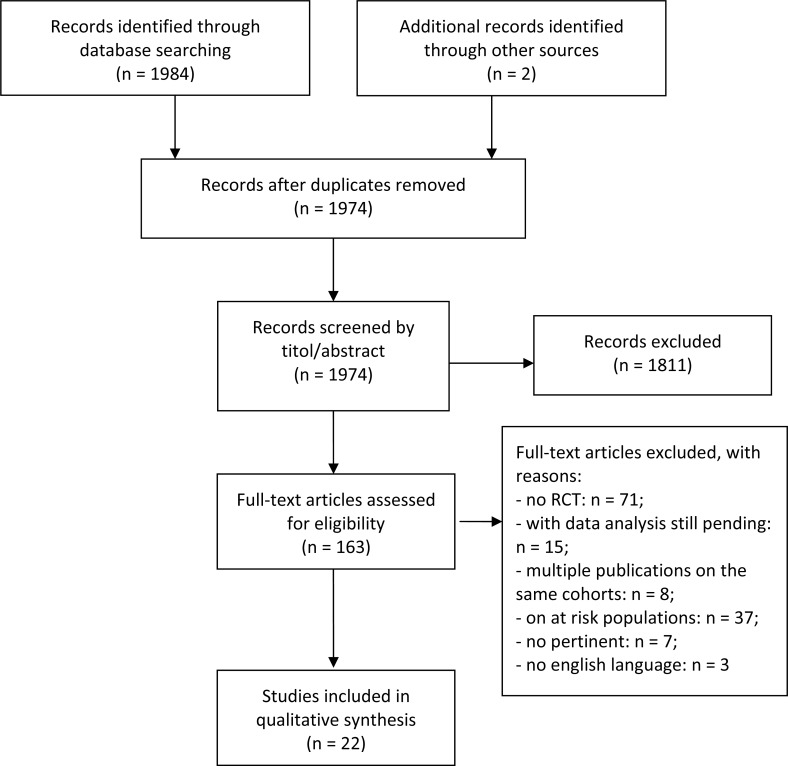
Background: The acquisition of social and emotional skills is associated with positive youth development, character education, healthy lifestyle behaviours, reduction in depression and anxiety, conduct disorders, violence, bullying, conflict, and anger. School-based interventions aimed to enhance these skills go beyond a problem-focused approach to embrace a more positive view of health; they could also improve the youth’s wellbeing. Aim: To describe the main features and to establish the effectiveness of universal school-based RCTs for children and the youth, aimed to promote their psychosocial wellbeing, positive development, healthy lifestyle behaviours and/or academic performance by improving their emotional and social skills. Methods: Systematic review by searching for relevant papers in PubMed/Medline with the following key words: “mental health” OR “wellbeing” OR “health promotion” OR “emotional learning” OR “social learning” OR “emotional and social learning” OR “positive youth development” OR “life skills” OR “life skills training” AND “school”. Interval was set from January 2000 to April 2014. Results: 1,984 papers were identified through the search. Out of them 22 RCTs were included. While most interventions were characterized by a whole-school approach and SAFE practices, few studies only used standardized measures to assess outcomes, or had collected follow-up data after ≥ 6 months. The results of all these trials were examined and discussed. Conclusion: Universal school-based RCTs to enhance emotional and social skills showed controversial findings, due to some methodological issues mainly. Nevertheless they show promising outcomes that are relatively far-reaching for children and youth wellbeing and therefore are important in the real world.
Overview
The claims and statistics of this paper haven’t been checked yet.
Free: it reads the open-access text and checks the first 5 claims that cite a source we can check. Create a free account to check every claim.
Integrity signals
Registry
Cites
Statistics
Figures
Verification
Claims the paper makes
The claims and statistics of this paper haven’t been checked yet.
Free: it reads the open-access text and checks the first 5 claims that cite a source we can check. Create a free account to check every claim.
Self-check
Percentages, sums and reported differences re-computed from the paper’s own numbers.
The self-check needs the paper’s full text.
Citations
Cites
Durlak, J. A., Weissberg, R. P., Dymnicki, A. B., Taylor, R. D., & Schellinger, K. B. (2011) · Child Development · doi:10.1111/j.1467-8624.2010.01564.x · Cited by 10,854 · cited 16×
“Research shows that mental health promotion is most effective when it takes place early in a persons’ life: therefore school is a favourable implementation setting for these programmes [1-4, 8-10].”
BackgroundResultInfluentialA Handbook of Child Psychology
(1932) · Nature · doi:10.1038/130331a0 · Cited by 10,101
Development and psychometric evaluation of the Resilience Scale.
Wagnild, G. M., & Young, H. M. (1993) · PubMed · Cited by 5,960
Greenberg, M. T., Weissberg, R. P., O'Brien, M. U., Zins, J. E., Fredericks, L., Resnik, H., & Elias, M. J. (2003) · American Psychologist · doi:10.1037/0003-066x.58.6-7.466 · Cited by 2,147 · cited 10×
“ticipatory ways whereby everyone, driven by common purposes, can give their own contribution from different points of view and roles, with continuous implementation for more than one year [18-20].”
BackgroundResultInfluentialCatalano, R. F., Berglund, M. L., Ryan, J. A. M., Lonczak, H. S., & Hawkins, J. D. (2004) · The ANNALS of the American Academy of Political and Social Science · doi:10.1177/0002716203260102 · Cited by 1,924 · cited 10×
“As already emphasized by other authors [9, 10, 12, 18, 41], the SAFE practices (Sequential, Active, Focused, Ex-”
BackgroundResultInfluentialBest Practices in School Psychology IV
Thomas, A., Grimes, J., & McKevitt, B. C. (1995) · Medical Entomology and Zoology · Cited by 1,332
Promoting Social and Emotional Learning: Guidelines for Educators
Elias, M. J. (1997) · Cited by 1,155
Mental health promotion and problem prevention in schools: what does the evidence say?
Weare, K., & Nind, M. (2011) · Health Promotion International · doi:10.1093/heapro/dar075 · Cited by 1,000 · cited 9×
“Research shows that mental health promotion is most effective when it takes place early in a persons’ life: therefore school is a favourable implementation setting for these programmes [1-4, 8-10].”
BackgroundResultInfluentialBotvin, G. J. (1995) · JAMA: The Journal of the American Medical Association · doi:10.1001/jama.1995.03520380042033 · Cited by 974 · cited 1×
“LST is focused on teaching social resistance skills or a set of general life skills, either alone or in combination, and it can produce durable prevention effects [29, 32-34].”
BackgroundPrimary prevention mental health programs for children and adolescents: A meta-analytic review
Durlak, J. A., & Wells, A. M. (1997) · American Journal of Community Psychology · doi:10.1023/a:1024654026646 · Cited by 963 · cited 3×
“Collectively, these findings build on the positive results reported by other systematic reviews examining the promotion of positive development and wellbeing of children and teenagers in schools [9-12, 18, 22, 41].”
BackgroundResult
Research works printed but not linked: 3
- Frankenburg W Early identification of children at risk: Resiliency factors in prediction 5th International Conference 1987 Denver: University of Colorado
- Damon W Bonk KC Menon J Youth sense of purpose What are the key indicators of positive youth development? A innovative session. Meeting of the Society for Research on Adolescence, Baltimore: Maryland 2004
- Collaborative for academic, social, and emotional learning. safe and sound: An educational leader’s guide to evidence-based social and emotional learning (SEL) programs 2005 Chicago, IL Illinois Edition
Cited by
APA dictionary of psychology (2nd ed.).
(2015) · American Psychological Association eBooks · doi:10.1037/14646-000 · Cited by 574
Dray, J., Bowman, J., Campbell, E., Freund, M., Wolfenden, L., Hodder, R. K., McElwaine, K., Tremain, D., Bartlem, K., Bailey, J., et al. (2017) · Journal of the American Academy of Child & Adolescent Psychiatry · doi:10.1016/j.jaac.2017.07.780 · Cited by 566
Interventions on Bullying and Cyberbullying in Schools: A Systematic Review
Cantone, E., Piras, A. P., Vellante, M., Preti, A., Daníelsdóttir, S., D’Aloja, E., Lesinskiene, S., Angermeyer, M. C., Carta, M. G., & Bhugra, D. (2015) · Clinical Practice & Epidemiology in Mental Health · doi:10.2174/1745017901511010058 · Cited by 366
Self-citationSchool as ideal setting to promote health and wellbeing among young people
Pulimeno, M., Piscitelli, P., Colazzo, S., Colao, A., & Miani, A. (2020) · Health Promotion Perspectives · doi:10.34172/hpp.2020.50 · Cited by 299
Positive mental health literacy: development and validation of a measure among Norwegian adolescents
Bjørnsen, H. N., Eilertsen, M. B., Ringdal, R., Espnes, G. A., & Moksnes, U. K. (2017) · BMC Public Health · doi:10.1186/s12889-017-4733-6 · Cited by 168
“In promoting mental health, there has been a shift from a problem-focused approach emphasizing the prevention of psychological distress and viewing mentally negative conditions as illnesses toward a greater focus on resources contributing to positive development and wellbeing [31].”
BackgroundFernández-Herrero, J., & Lorenzo, G. (2019) · Education and Information Technologies · doi:10.1007/s10639-019-10050-0 · Cited by 172
Mackenzie, K., & Williams, C. (2018) · BMJ Open · doi:10.1136/bmjopen-2018-022560 · Cited by 131
“Common issues include a lack of active intervention controls;(21) studies’ operationalisation and measurements of ‘resilience’ lacking homogeneity(22); that weak programme fidelity and treatment dosage impacts outcomes(11); and that there is insufficient use of validated, standardised measures and long-term follow-up.…”
BackgroundWhat do we know about preventing school violence? A systematic review of systematic reviews
Lester, S., Lawrence, C., & Ward, C. L. (2017) · Psychology Health & Medicine · doi:10.1080/13548506.2017.1282616 · Cited by 152
“%) sancassiani et al. (2015) U (3; 100”
A Systematic Review of School-Based Alcohol and other Drug Prevention Programs
Agabio, R., Trincas, G., Floris, F., Mura, G., Sancassiani, F., & Angermeyer, M. C. (2015) · Clinical Practice and Epidemiology in Mental Health · doi:10.2174/1745017901511010102 · Cited by 120
Self-citationDariotis, J. K., Mirabal‐Beltran, R., Cluxton‐Keller, F., Gould, L. F., Greenberg, M. T., & Mendelson, T. (2016) · Psychology in the Schools · doi:10.1002/pits.21979 · Cited by 117
Gamifying CBT to deliver emotional health treatment to young people on smartphones
Christie, G. I., Shepherd, M., Merry, S. N., Hopkins, S., Knightly, S., & Stasiak, K. (2019) · Internet Interventions · doi:10.1016/j.invent.2019.100286 · Cited by 81
Melendez-Torres, G. J., Hewitt, G., Hallingberg, B., Anthony, R., Collishaw, S., Hall, J., Murphy, S., & Moore, G. (2019) · Health and Quality of Life Outcomes · doi:10.1186/s12955-019-1204-z · Cited by 75
Age-Specific Life Skills Education in School: A Systematic Review
Kirchhoff, E., & Keller, R. (2021) · Frontiers in Education · doi:10.3389/feduc.2021.660878 · Cited by 131
Social and emotional learning in primary schools: A review of the current state of evidence
Wigelsworth, M., Verity, L., Mason, C., Qualter, P., & Humphrey, N. (2021) · British Journal of Educational Psychology · doi:10.1111/bjep.12480 · Cited by 155
Physical Activity Interventions in Schools for Improving Lifestyle in European Countries
Mura, G., Rocha, N. B. F., Helmich, I., Budde, H., Machado, S., Wegner, M., Nardi, A. E., Arias-Carrión, O., Vellante, M., Baum, A., et al. (2015) · Clinical Practice & Epidemiology in Mental Health · doi:10.2174/1745017901511010077 · Cited by 74
“School-based interventions are worldwide aimed to promote children’s wellbeing [3], and to avoid the risk of mental disorders and the stigmatization of those affected [4].”
BackgroundSelf-citationChu, J. J., Khan, M. H., Jahn, H. J., & Kraemer, A. (2016) · BMC Public Health · doi:10.1186/s12889-016-3003-3 · Cited by 105
“Research shows that mental health promotion is most effective when it takes place early in a person’s life, school-based interventions with a whole setting approach that embrace a more positive view of health can promote health and positive development of youth [10].”
BackgroundWhat is needed to eradicate the depression epidemic, and why
Ormel, J., Cuijpers, P., Jorm, A., & Schoevers, R. A. (2020) · Mental Health & Prevention · doi:10.1016/j.mhp.2019.200177 · Cited by 67
Fernandes, M. D. S. V., Mendonça, C. R., da Silva, T. M. V., Noll, P. R. E. S., de Abreu, L. C., & Noll, M. A. (2023) · Scientific Reports · doi:10.1038/s41598-023-33584-3 · Cited by 97
Haugan, J. A., Frostad, P., & Mjaavatn, P.-E. (2019) · Social Psychology of Education · doi:10.1007/s11218-019-09527-0 · Cited by 67
Positive Youth Development in the Context of Climate Change: A Systematic Review
Pereira, T., & Freire, T. (2021) · Frontiers in Psychology · doi:10.3389/fpsyg.2021.786119 · Cited by 73
“We found that published reviews on PYD have not identified studies related to climate change (Catalano et al., 2002, 2019; Roth and Brooks-Gunn, 2003; Lapalme et al., 2014; Sancassiani et al., 2015; Ciocanel et al., 2017; Franco and Rodrigues, 2018; García-Poole et al., 2019; Waid and Uhrich, 2019).”
BackgroundSanchez, R., Brown, E., Kocher, K., & DeRosier, M. (2017) · Games for Health Journal · doi:10.1089/g4h.2015.0108 · Cited by 50
Promoting emotional health, well-being, and resilience in primary schools
Banerjee, R. A., McLaughlin, C., Cotney, J., Roberts, L. B., & Peereboom, C. (2016) · Digital Education Resource Archive (University College London) · Cited by 70
Hernández, J. G., López, M. G., Perez-Turpin, J. A., Muñoz-Villena, A. J., & Andreu-Cabrera, E. (2019) · International Journal of Environmental Research and Public Health · doi:10.3390/ijerph16224525 · Cited by 60
“Other previous works offered similar results, associating psychological well-being with self-oriented perfectionism (to grow on the own perfectionist beliefs), behavioral imbalances, and psychological discomfort alongside prescribed social perfectionism (to grow from what others dictate) [21,24,39,43,45,52].”
BackgroundResultChiumento, A., Mukherjee, I., Chandna, J., Dutton, C., Rahman, A., & Bristow, K. (2018) · BMC Public Health · doi:10.1186/s12889-018-5661-9 · Cited by 65
Zheng, L. R., Oberle, C., Hawkes-Robinson, W. A., & Daniau, S. (2021) · Simulation & Gaming · doi:10.1177/10468781211031283 · Cited by 71
“By using the gaming medium to teach social skills, we may improve upon the standard lecture model, which is limited by time constraints of the traditional class period and student disengagement (DeRosier & Thomas, 2018; Merrell & Gimpel, 2014; Read & Shortell, 2011; Sancassiani et al., 2015).”
MethodJaureguizar, J., Garaigordobil, M., & Bernarás, E. (2018) · School Mental Health · doi:10.1007/s12310-018-9268-1 · Cited by 61
“In the Same Storm, but Not on the Same Boat”: Children Grief During the COVID-19 Pandemic
Albuquerque, S., & dos Santos, A. R. D. O. (2021) · Frontiers in Psychiatry · doi:10.3389/fpsyt.2021.638866 · Cited by 47
Tancred, T., Paparini, S., Meléndez‐Torres, G. J., Fletcher, A., Thomas, J., Campbell, R. M., & Bonell, C. P. (2018) · Systematic Reviews · doi:10.1186/s13643-018-0886-3 · Cited by 45
“From other studies and reviews specific to interventions that emphasised social-emotional learning (which represents the majority of interventions included in our review), identified moderating factors include universal versus targeted interventions, the influence of the overall risk level of a school, the quality of…”
BackgroundEncounters with adversity: A framework for understanding resilience in later life
Manning, L. K., & Bouchard, L. (2019) · Aging & Mental Health · doi:10.1080/13607863.2019.1594162 · Cited by 47
“While existing research has indicated that various forms of training and enhancement of life skills strategies has positive effects on well-being (Sancassiani et al., 2015), little data exists demonstrating the effectiveness of resilience building programs and interventions for older adults.”
BackgroundMental health promotion: a narrative review of emerging trends
Sharma, A., Sharma, S. D., & Sharma, M. (2017) · Current Opinion in Psychiatry · doi:10.1097/yco.0000000000000347 · Cited by 41
Social Values and Life Skills as Predictors of Organizational Culture: A Study on Teachers
Bolat, Y., & Korkmaz, C. (2021) · SAGE Open · doi:10.1177/21582440211023179 · Cited by 30
“…the heart of “decision making, problem-solving, creative thinking, critical thinking, effective communication, interpersonal relationship skills, self-awareness, empathy, coping with emotions and coping with stress” are one of a series of basic skills shows that (Sancassiani et al., 2015, p. 22).”
BackgroundCarta, M. G., Fiandra, T. D., Rampazzo, L., Contu, P., & Preti, A. (2015) · Clinical Practice and Epidemiology in Mental Health · doi:10.2174/1745017901511010016 · Cited by 50
Self-citationSingh, N., Ghayour‐Minaie, M., Skvarc, D., & Toumbourou, J. W. (2019) · Journal of Youth and Adolescence · doi:10.1007/s10964-019-00992-6 · Cited by 41
Zbukvic, I., McKay, S., Cooke, S., Anderson, R., Pilkington, V., McGillivray, L., Bailey, A. P., Purcell, R., & Tye, M. (2023) · Adolescent Research Review · doi:10.1007/s40894-023-00211-1 · Cited by 40
“Lik-wise for anxiety, there was some evidence for effectiveness of universal programs short term (Ferreira-Vorkapic, 2015) while others found no effect (Bastounis, 2016; Sancassiani, 2015).”
InfluentialDefining Life Skills in health promotion at school: a scoping review
Darlington-Bernard, A., Salque, C., Masson, J., Darlington, E., de Carvalho, G. S., & Carrouel, F. (2023) · Frontiers in Public Health · doi:10.3389/fpubh.2023.1296609 · Cited by 43
Ndetei, D. M., Mutiso, V., Gitonga, I., Agudile, E. P., Tele, A., Birech, L., Musyimi, C. W., & McKenzie, K. J. (2018) · Early Intervention in Psychiatry · doi:10.1111/eip.12745 · Cited by 31
Applying Emotional Literacy in Comprehensive Sex Education for Young People
Seiler-Ramadas, R., Grabovac, I., Winkler, R., & Dorner, T. E. (2021) · American Journal of Sexuality Education · doi:10.1080/15546128.2021.1932657 · Cited by 35
Takizawa, Y., Bambling, M., Matsumoto, Y., Ishimoto, Y., & Edirippulige, S. (2023) · Frontiers in Education · doi:10.3389/feduc.2023.1228269 · Cited by 61
Haddad, M., Pinfold, V., Ford, T. J., Walsh, B., & Tylee, A. T. (2018) · International Journal of Nursing Studies · doi:10.1016/j.ijnurstu.2018.04.004 · Cited by 37
Effective interventions targeting the mental health of children and young adults: A scoping review
Bjerre, N., Lillefjell, M., Magnus, E., & Anthun, K. S. (2020) · Scandinavian Journal of Public Health · doi:10.1177/1403494820901406 · Cited by 21
“this is essential, since the relationship between social environments and the individual has been found to be interdependent [10], and different social levels can therefore form and influence mental health.”
BackgroundResultInfluentialAn Association Between Montessori Education in Childhood and Adult Wellbeing
Lillard, A. S., Meyer, M. J., Vasc, D., & Fukuda, E. (2021) · Frontiers in Psychology · doi:10.3389/fpsyg.2021.721943 · Cited by 21
Effectiveness of the Mantente REAL Program for Preventing Alcohol Use in Spanish Adolescents
Cutrín, O., Kulis, S., Maneiro, L., Fadden, I. M., Navas, M. P., Alarcón, D., Fraguela, J. A. G., Villalba, C., & Marsiglia, F. F. (2020) · Psychosocial Intervention · doi:10.5093/pi2020a19 · Cited by 29
Chuecas, M. J., Alfaro, J., Benavente, M., & Ditzel, A. L. (2022) · Review of Education · doi:10.1002/rev3.3345 · Cited by 29
Integrating Children with Psychiatric Disorders in the Classroom: A Systematic Review
Cossu, G., Cantone, E., Pintus, M., Cadoni, M., Pisano, A., Otten, R., Kuijpers, R., Pintus, E., Sancassiani, F., Moro, M. F., et al. (2015) · Clinical Practice and Epidemiology in Mental Health · doi:10.2174/1745017901511010041 · Cited by 26
Self-citationThrouvala, M. A., Griffiths, M. D., Rennoldson, M., & Kuss, D. J. (2021) · Frontiers in Education · doi:10.3389/feduc.2021.648512 · Cited by 19
Socio-emotional competencies for sustainable development: An exploratory review
Arbués, E., Abad-Villaverde, B., Costa-París, A., Balaguer, Á., Conesa-Lareo, M.-D., & Beltramo, C. (2025) · Education Sciences · doi:10.3390/educsci15070831 · Cited by 18
Varshney, D. (2022) · International Journal of Productivity and Performance Management · doi:10.1108/ijppm-06-2021-0348 · Cited by 21
Ansari, A. N., & Rizvi, N. F. (2023) · Review of Education · doi:10.1002/rev3.3404 · Cited by 26
Social and Emotional Modes of Learning Within Digital Ecosystems: Emerging Research Agendas
Erstad, O., Černochová, M., Knezek, G., Furuta, T., Takami, K., & Liang, C. (2024) · Technology Knowledge and Learning · doi:10.1007/s10758-024-09775-w · Cited by 33
“…emotional skills has increased steadily, as evidenced by the growing number of studies on this topic and the development of appropriate measurement instruments, as shown in several reviews of the literature (Halle & Darling-Churchill, 2016; Martinez-Yarza et al., 2023; Sancassiani et al., 2015).”
Bartrolí, M., Angulo-Brunet, A., Bosque‐Prous, M., Clotas, C., & Espelt, A. (2022) · Education Sciences · doi:10.3390/educsci12070489 · Cited by 26
Development of Effective Learning Strategies to Improve Social-Emotional Skills in Early Childhood
Bagea, I., Ausat, A. M. A., Kurniawan, D. R., Kraugusteeliana, K., & Azzaakiyyah, H. K. (2023) · Journal on Education · doi:10.31004/joe.v5i4.2474 · Cited by 27
Tennis enhances well-being in university students
Yazıcı, A. B., Gul, M. O., Yazıcı, E., & Gül, G. K. (2016) · Mental Illness · doi:10.4081/mi.2016.6510 · Cited by 30
Rickard, E., Brosnan, E., O’Laoide, A., Wynne, C., Keane, M., McCormack, M., & MacSharry, J. A. (2016) · Clinical Child Psychology and Psychiatry · doi:10.1177/1359104515603216 · Cited by 20
“There is also a growing number of reviews of schoolbased emotional and social learning interventions for internalising problems (Cooper & Jacobs, 2011; Durlak, Weissberg, Dymnicki, Taylor, & Schellinger, 2011; Sancassiani et al., 2015).”
BackgroundCorominas, M., González‐Carrasco, M., & Casas, F. (2021) · Psicologí a Educativa · doi:10.5093/psed2021a7 · Cited by 20
“the actions of classmates, it may be relevant to promote interventions targeting social and emotional competences and attitudes about oneself, others and the school, which will be based around creating a positive school climate and a safe school environment (Cheney et al., 2014; Kutsyuruba et al., 2015; Sancassiani et…”
BackgroundMasson, J., Darlington-Bernard, A., & Darlington, E. (2024) · Journal of Epidemiology and Population Health · doi:10.1016/j.jeph.2024.202748 · Cited by 15
Palomino-Flores, P., & Almenara, C. A. (2019) · Revista Digital de Investigación en Docencia Universitaria · doi:10.19083/ridu.2019.840 · Cited by 13
“En tal sentido, la IE es considerada una de las habilidades clave para el desarrollo positivo y el bienestar de los jóvenes porque permite la adaptación efectiva del individuo frente a las demandas y retos de la vida diaria (Sancassiani et al., 2015).”
BackgroundTsavou, E., & Petkari, E. (2019) · Substance Use & Misuse · doi:10.1080/10826084.2019.1663359 · Cited by 13
“Evidence from intervention programs that target emotional learning to prevent drug misuse seems to reinforce this idea (Sancassiani et al., 2015).”
BackgroundWu, W., Lee, M., & Chang, Y. (2023) · Children and Youth Services Review · doi:10.1016/j.childyouth.2023.107212 · Cited by 12
Hennessey, A., MacQuarrie, S., & Petersen, K. J. (2024) · BMC Psychology · doi:10.1186/s40359-024-02196-5 · Cited by 21
Universal Mental Health Promotion and Prevention Programs for Students
Conley, C. S., & Durlak, J. A. (2017) · Springer eBooks · doi:10.1007/978-3-319-59123-0_12 · Cited by 17
Todesco, M., Breman, J., Haryanto, N. N., Kok, G., & Massar, K. (2023) · Frontiers in Public Health · doi:10.3389/fpubh.2023.1254717 · Cited by 24
Kates, M. S., & LaFreniere, L. S. (2025) · Education Sciences · doi:10.3390/educsci15091225 · Cited by 21
Carta, M. G., Atzeni, M., Perra, A., Mela, Q., Piras, M., Testa, G., Orrù, G., & Kirilov, I. (2019) · Clinical Practice and Epidemiology in Mental Health · doi:10.2174/1745017901915010010 · Cited by 9
Self-citationGinevra, M. C., Santilli, S., Maggio, I. D., & Nota, L. (2020) · European Journal of Developmental Psychology · doi:10.1080/17405629.2020.1733961 · Cited by 9
Lan, L., Liu, W., Liu, C., Wang, H., Wang, M., Abbey, C., Singh, M. K., Rozelle, S., She, X., & Tong, L. (2024) · Journal of Adolescent Health · doi:10.1016/j.jadohealth.2024.05.024 · Cited by 8
van de Sande, M. C., Kocken, P., Diekstra, R. F. W., Reis, R., Gravesteijn, C., & Fekkes, M. (2023) · Frontiers in Education · doi:10.3389/feduc.2023.1225103 · Cited by 18
Teacher perspectives on enhancing wellbeing education through integrating arts‐based practices
Moar, S., Burke, K., & Watson, M. (2024) · British Educational Research Journal · doi:10.1002/berj.4029 · Cited by 15
“Most studies investigating successful programmes found adopting the SAFE (sequenced, active, focused and explicit) criteria to be a driving factor for success (Durlak et al., 2011; Sancassiani et al., 2015; Weare & Nind, 2011).”
BackgroundJones, T. M., Kim, B. E., Fleming, C. B., Deng, J., Duane, A. M., Gavin, A. R., & Shapiro, V. B. (2025) · Review of Educational Research · doi:10.3102/00346543241310184 · Cited by 15
“Despite the promising evidence that many SEL programs are efficacious (Corcoran et al., 2018; Durlak et al., 2011; Sancassiani et al., 2015; Taylor et al., 2017), questions remain as to whether the available evidence of efficacy is generalizable to youth who have been racialized 1 into specific…”
Risk and protective factors associated with depression among adolescents
Adabla, S., & Nabors, L. (2022) · Current Psychology · doi:10.1007/s12144-022-04075-x · Cited by 9
Schüller, I., Wergin, V. V., & Mess, F. (2025) · Frontiers in Psychology · doi:10.3389/fpsyg.2025.1484943 · Cited by 8
Madsen, K. R., Damsgaard, M. T., Petersen, K. J., Qualter, P., & Holstein, B. E. (2025) · BMC Public Health · doi:10.1186/s12889-025-22947-2 · Cited by 11
“School-based interventions may be a feasible way to combat loneliness by developing close relationships between students, facilitating social skills training in schools, and / or preventing bullying [59, 60].”
Muser, J., Whitten, T., Virgara, J. L., Connell, N. M., & Tzoumakis, S. (2025) · International Journal of Behavioral Development · doi:10.1177/01650254251361872 · Cited by 10
“…systematic reviews have been conducted to evaluate the effectiveness of school-based SEL programs more broadly (Boncu et al., 2017; Clarke et al., 2021; Durlak et al., 2011; Pérez-Clark et al., 2023; Sancassiani et al., 2015; Sklad et al., 2012; van de Sande et al., 2019; Wigelsworth et al., 2016).”
Darmiany, D., Gunayasa, I. B. K., Asrin, A., & Maulyda, M. A. (2022) · Jurnal Ilmiah Sekolah Dasar · doi:10.23887/jisd.v6i2.44332 · Cited by 11
“Likewise, excessive talking such as liking to chat or controlling discussion without direction seems as harmless as aggression (Damanik & Setiawan, 2016; Sancassiani et al., 2015; Tetono et al., 2018).”
Nielsen, T., Pontoppidan, M., Pettersson, M., Donstrup, C., Kreiner, S., & Rayce, S. B. (2023) · PLoS ONE · doi:10.1371/journal.pone.0291420 · Cited by 7
Devassy, S. M., Scaria, L., Metzger, J. W., Thampi, K., Jose, J., & Joseph, B. (2023) · Scientific Reports · doi:10.1038/s41598-023-45035-0 · Cited by 10
Moreno, E. M., Montero, A., & Crespo, J. M. A. (2024) · Anales de Psicología · doi:10.6018/analesps.488251 · Cited by 25
Jahanbin, I., Bazrafshan, M.-R., Akbari, K., Rahmati, M., & Ghadakpour, S. (2017) · Jundishapur Journal of Chronic Disease Care · doi:10.5812/jjcdc.13798 · Cited by 6
Beckman, L. J., & Hellström, L. (2021) · International Journal of Environmental Research and Public Health · doi:10.3390/ijerph182010694 · Cited by 24
“Specific emotional, cognitive, behavioral, and resilience skills play a vital part in adolescents’ personal and social success [21,22], and although there is some ambiguity in the results of life skills interventions [23], children and adolescents with psychosocial skills show more positive mental health and wellbeing…”
BackgroundSocial Validity in Spain of the Mantente REAL Prevention Program for Early Adolescents
Cutrín, O., Fadden, I. M., Marsiglia, F. F., & Kulis, S. (2022) · Journal of Prevention · doi:10.1007/s10935-022-00701-3 · Cited by 9
“Therefore, anticipating these situations, teaching resistance strategies to substance offers, and promoting socioemotional skills to face risky situations, can effectively prevent later adolescent involvement in substance use and/or other unhealthy behaviors (Sancassiani et al., 2015).”
BackgroundThe Role of Peer Pressure in Adolescents’ Risky Behaviors
Libisch, C., Marsiglia, F. F., Kulis, S., Cutrín, O., Fraguela, J. A. G., & Ruiz, P. (2022) · Springer eBooks · doi:10.1007/978-3-031-06908-6_8 · Cited by 13
Setia, S., Furtner, D., Bendahmane, M., & Tichy, M. L. (2022) · JMIR Research Protocols · doi:10.2196/38463 · Cited by 10
“We decided to adopt an RWD design because RCTs on universal social and emotional learning programs have shown controversial findings [69], as often digital interventions show meaningful improvements only when tested under strictly controlled research settings [70].”
Review of international programs fighting against drugs
Göçmen, A., Derin, N., Metin, A., Öztürk, M. E., & Kariper, İ. A. (2020) · Journal of Substance Use · doi:10.1080/14659891.2020.1808722 · Cited by 9
“…and Páez (2018) School Discussion 1 Drug Newton et al. (2017) School Meta Analysis 1 Alcohol Lee et al. (2016) School Meta Analysis 3 Alcohol/Drug Sancassiani et al. (2015) School Discussion 1 General Durand et al. (2016) Social Discussion 1 Alcohol Lize et al. (2017) School Meta Analysis 2 Drug…”
BackgroundEvidence review: The primary prevention of mental health conditions
VicHealth (2020) · doi:10.37309/2020.po906 · Cited by 13
Ramos, A. C., & Landa–Blanco, M. (2021) · International Journal of Environmental Research and Public Health · doi:10.3390/ijerph182211807 · Cited by 6
Shek, D. T. L., & Israelashvili, M. (2023) · Advances in prevention science · doi:10.1007/978-3-031-26700-0_10 · Cited by 8
Ward, B., Buykx, P., Munro, G. D., & Wiggers, J. H. (2016) · BMJ Open · doi:10.1136/bmjopen-2015-010904 · Cited by 5
Arat, G., & Wong, W.-C. (2019) · China Journal of Social Work · doi:10.1080/17525098.2019.1700341 · Cited by 5
“The results of research in the areas of personal skills, peer support and social skills (Anyon, Ong, and Whitaker 2014; Matlin, Molock, and Tebes 2011; Sancassiani et al. 2015) indicate that they could potentiate positive outcomes for the promotion of the mental health of young people from diverse ethnic backgrounds.”
BackgroundRole of Social Skills in Predicting the Students' Sense of Coherence and Quality of School Life
Saneie, E., & Raeisoon, M. (2020) · Quarterly Journal of Child Mental Health · doi:10.29252/jcmh.7.2.9 · Cited by 11
Ahmed, S. K., Dabrowski, A., Dix, K., & Carslake, T. (2023) · ACEReSearch Repository (Australian Council for Educational Research) · doi:10.37517/978-1-74286-714-4 · Cited by 7
Ward-Seidel, A. R., Rimm‐Kaufman, S. E., Bell, B. A., & Sandilos, L. E. (2025) · Journal of Applied Developmental Psychology · doi:10.1016/j.appdev.2025.101834 · Cited by 4
Oros, L. B., Chemisquy, S. N., & Vargas-Rubilar, J. A. (2024) · Interpersona An International Journal on Personal Relationships · doi:10.5964/ijpr.9715 · Cited by 4
“In addition, an adequate development of social skills has been associated with better physical and mental health (Sancassiani et al., 2015; Segrin, 2019).”
BackgroundCorso, C. B., Shin, S. H., Darnell, A., Kliewer, W. L., & Winter, M. A. (2025) · Trauma Violence & Abuse · doi:10.1177/15248380241296475 · Cited by 4
“This is especially problematic given the associations between social-emotional skills and mental health (Sancassiani et al., 2015; van de Sande et al., 2023).”
School-level disadvantage and failed cessation treatment among adolescent smokers
Horn, K. A., Ali, M., Gray, T. R., Anesetti‐Rothermel, A., & Branstetter, S. A. (2018) · Tobacco Prevention & Cessation · doi:10.18332/tpc/87074 · Cited by 4
Appiah, F., Salihu, T., Oppong, Y., Acheampong, H. Y., Fenteng, J. O. D., Darteh, A. O., Takyi, M., Ayerakwah, P. A., Boakye, K., & Ameyaw, E. K. (2022) · BioMed Research International · doi:10.1155/2022/4785238 · Cited by 5
“Student truancy has been linked to a variety of negative health consequences, including suicidal behavior, substance abuse (alcohol, nicotine, and marijuana), criminality, and delinquent behavior [5 – 8].”
Sancassiani, F., Romano, F., & Preti, A. (2019) · Clinical Practice and Epidemiology in Mental Health · doi:10.2174/1745017901915010008 · Cited by 4
Self-citationSabinsky, M. S., Bonde, A. H., Stjernqvist, N. W., Jessen-Klixbüll, E., Maindal, H. T., & Tetens, I. (2018) · Journal of Food and Nutrition Research · doi:10.12691/jfnr-6-9-10 · Cited by 6
“The school has been recognised as an important setting for health promotion as children spend around 40-50% of their waking hours at school, and all school-aged children of diverse ethnic and socio-economic groups are reached [8,9].”
BackgroundEvidence of impact underpinning Life Education Programs
Dix, K., Ahmed, S. K., Carslake, T., & Sniedze-Gregory, S. (2021) · ACEReSearch Repository (Australian Council for Educational Research) · doi:10.37517/978-1-74286-643-7 · Cited by 5
Sadiq, U., Irfan, A., Baig, K. B., & Flesia, L. (2026) · Adolescents · doi:10.3390/adolescents6020027 · Cited by 8
“In these contexts, structured life skills programs can enhance resilience, emotional regulation, and adaptive coping, contributing to improved educational, social, and occupational outcomes [34–36].”
Lesinskienė, S., Karalienė, V., Pociūtė, K., & Šambaras, R. (2024) · Journal of Clinical Medicine · doi:10.3390/jcm13072032 · Cited by 3
Viner, R., Michalopoulou, S., Hudson, L. D., Hope, S., Lloyd-Houldey, O., Sundaram, N., Scott, S., Nicholls, D., & Bonell, C. P. (2025) · Public Health Research · doi:10.3310/ffhr7745 · Cited by 6
Metadata
- Authors
- Sancassiani, F., Pintus, E., Holte, A., Paulus, P., Moro, M. F., Cossu, G., Angermeyer, M. C., Carta, M. G., & Lindert, J.
- Affiliations
- University of Cagliari (IT)
- Norwegian Institute of Public Health (NO)
- Leuphana University of Lüneburg (DE)
- Brandeis University (US)
- Corresponding author
- Sancassiani, Federica
- ORCID
- Venue
- Clinical Practice & Epidemiology in Mental Health
- Publisher
- Bentham Science Publishers Ltd.
- Published
- 2015-02-26
- Volume
- 11
- Issue
- 1
- Pages
- 21-40
- ISSN
- 1745-0179 (ISSN-L)
- PMC
- PMC4378066
- OpenAlex
- W2113845072
- Cited by
- 171
- References
- 76
- Citations by year
- 2026: 11 · 2025: 32 · 2024: 19 · 2023: 16 · 2022: 14 · 2021: 23 · 2020: 10 · 2019: 17 · 2018: 8 · 2017: 7 · 2016: 7 · 2015: 7
- FWCI
- 4.31
- Type
- journal article
- Language
- en
- Open access
- hybrid
- doi.org
- Locations
- Clinical Practice and Epidemiology in Mental Health (publishedVersion, cc-by)
- Europe PMC (PubMed Central) (publishedVersion, cc-by-nc)
- PubMed Central (publishedVersion, cc-by-nc)
- PubMed (publishedVersion)
- Multilingual Matters (Channel View Publications) (publishedVersion, cc-by)
- NORA - Norwegian Open Research Archives (submittedVersion, other-oa)
- UNICA IRIS Institutional Research Information System (University of Cagliari) (submittedVersion, other-oa)
- UNICA IRIS Institutional Research Information System (University of Cagliari) (submittedVersion)
- Topics
- Social Sciences › Education › Social Skills and Education
- Social Sciences › Psychology › Developmental and Educational Psychology › Youth Development and Social Support
- Social Sciences › Education › Early Childhood Education and Development
- Keywords
- socioemotional skills, positive youth development, school-based intervention, universal interventions, psychosocial well-being, life skills training, emotional learning, social learning, whole-school approach, safe practice, academic performance, healthy lifestyle behaviours, youth mental health
About these checks
Registry, retraction, Cites and statistics results are computed, not judged, with one exception: a printed reference that no index lists is read once by a model before it counts as a citation error. Claims are extracted by a model and kept only when their quote appears verbatim in the text; each cited source is then checked, with a model’s help, for whether it says what the claim relies on. Those verdicts can be wrong — read the claim’s quote and the cited source before relying on one.
Statistics and arithmetic are recomputed, not judged.
Confidence bands are shown only for fields calibrated on our annotated test set. None is calibrated yet, so no band is shown.
What counts as a claim ›How we measure confidence ›How we check this ›
Are you an author, or do you see a problem with this page? Request a review
Data sources
Bibliographic data: Semantic Scholar, OpenAlex, Crossref.
Contains information from the Semantic Scholar Academic Graph Datasets, made available under the ODC Attribution License (ODC-BY 1.0).
Semantic Scholar’s data is described in: Kinney, R., et al. (2023). The Semantic Scholar Open Data Platform. arXiv:2301.10140.
