

Zinc Lozenges May Shorten the Duration of Colds: A Systematic Review
Open accessThe DOI matches its Crossref record; 61 of the 61 references it cites were found in a registry or an index.
Abstract
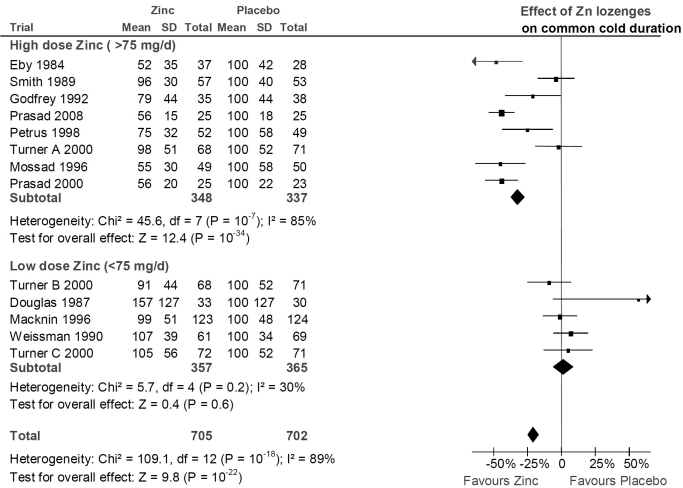
BACKGROUND: A number of controlled trials have examined the effect of zinc lozenges on the common cold but the findings have diverged. The purpose of this study was to examine whether the total daily dose of zinc might explain part of the variation in the results. METHODS: The Medline, Scopus and Cochrane Central Register of Controlled Trials data bases were searched for placebocontrolled trials examining the effect of zinc lozenges on common cold duration. Two methods were used for analysis: the P-values of the trials were combined by using the Fisher method and the results of the trials were pooled by using the inverse-variance method. Both approaches were used for all the identified trials and separately for the low zinc dose and the high zinc dose trials. RESULTS: Thirteen placebo-controlled comparisons have examined the therapeutic effect of zinc lozenges on common cold episodes of natural origin. Five of the trials used a total daily zinc dose of less than 75 mg and uniformly found no effect. Three trials used zinc acetate in daily doses of over 75 mg, the pooled result indicating a 42% reduction in the duration of colds (95% CI: 35% to 48%). Five trials used zinc salts other than acetate in daily doses of over 75 mg, the pooled result indicating a 20% reduction in the duration of colds (95% CI: 12% to 28%). CONCLUSIONS: This study shows strong evidence that the zinc lozenge effect on common cold duration is heterogeneous so that benefit is observed with high doses of zinc but not with low doses. The effects of zinc lozenges should be further studied to determine the optimal lozenge compositions and treatment strategies.
Overview
The claims and statistics of this paper haven’t been checked yet.
Free: it reads the open-access text and checks the first 5 claims that cite a source we can check. Create a free account to check every claim.
Integrity signals
Registry
Cites
Statistics
Figures
Verification
Claims the paper makes
The claims and statistics of this paper haven’t been checked yet.
Free: it reads the open-access text and checks the first 5 claims that cite a source we can check. Create a free account to check every claim.
Claims other papers make about this one
Each is checked against this paper’s own text: does it say what the citing paper says it does?
The source backs part of the claim, not all of it — or backs it for a different population, condition or comparison.
In the citing paper
“The duration and severity of common cold symptoms can be reduced by zinc supplementation in children when taken within 24 h of symptom onset [108].”
From Immune function and micronutrient requirements change over the life course (2018) · cites this paper as [108]
Experimental — accuracy not yet measuredIn the citing paper
“Three trials used zinc acetate in daily doses of >75 mg; the pooled results showed a 42% reduction in the duration of colds.”
From Discovery of Human Zinc Deficiency: Its Impact on Human Health and Disease (2013) · cites this paper as [63]
In the citing paper
“Five of the trials used a total daily zinc dose of <75 mg and uniformly found no effect.”
From Discovery of Human Zinc Deficiency: Its Impact on Human Health and Disease (2013) · cites this paper as [63]
In the citing paper
“Five trials used zinc salts rather than acetate in daily doses of >75 mg; the pooled results showed a 20% reduction in the duration of common colds.”
From Discovery of Human Zinc Deficiency: Its Impact on Human Health and Disease (2013) · cites this paper as [63]
Self-check
Percentages, sums and reported differences re-computed from the paper’s own numbers.
The self-check needs the paper’s full text.
Citations
Cites
2 retracted
Singh, M., & Das, R. R. (2013) · Cochrane Database of Systematic Reviews · doi:10.1002/14651858.cd001364.pub4 · Cited by 237
RetractedSingh, M., & Das, R. R. (2011) · Cochrane Database of Systematic Reviews · doi:10.1002/14651858.cd001364.pub3 · Cited by 86
RetractedMeasuring inconsistency in meta-analyses
Higgins, J. P. T., Thompson, S. G., Deeks, J. J., & Altman, D. G. (2003) · BMJ · doi:10.1136/bmj.327.7414.557 · Cited by 63,139
Surrogate End Points in Clinical Trials: Are We Being Misled?
Fleming, T. R., & DeMets, D. L. (1996) · Annals of Internal Medicine · doi:10.7326/0003-4819-125-7-199610010-00011 · Cited by 1,651 · cited 1×
“However, the fundamental questions in evaluating a potential treatment should be efficacy, safety and cost, whereas biological explanations and the effects on surrogate outcomes should be secondary issues [16-18].”
BackgroundSystematic Review: Why sources of heterogeneity in meta-analysis should be investigated
Thompson, S. G. (1994) · BMJ · doi:10.1136/bmj.309.6965.1351 · Cited by 1,017 · cited 1×
“Faced with heterogeneous results, the main focus of the reviewers should be on trying to understand the sources of the heterogeneity [49].”
BackgroundZinc in Human Health: Effect of Zinc on Immune Cells
Prasad, A. S. (2008) · Molecular Medicine · doi:10.2119/2008-00033.prasad · Cited by 922 · cited 1×
“Zinc has various effects on the immune system and its deficiency increases the risk of infections [1,2].”
BackgroundVitamin C for preventing and treating the common cold
Hemilä, H., & Chalker, E. (2013) · Cochrane Database of Systematic Reviews · doi:10.1002/14651858.cd000980.pub4 · Cited by 869
Self-citationZINC AND THE RISK FOR INFECTIOUS DISEASE
Walker, C. F., & Black, R. E. (2004) · Annual Review of Nutrition · doi:10.1146/annurev.nutr.23.011702.073054 · Cited by 491 · cited 3×
“However, it is possible that benefits of zinc tablets [2-4] are caused by particularly low initial zinc intakes of the participants, whereas the effects of zinc lozenges may be caused by local effects in the oral cavity.”
BackgroundBalk, E. M. (2002) · JAMA · doi:10.1001/jama.287.22.2973 · Cited by 478 · cited 1×
“However, such a statement is invalid, because a large meta-analysis of controlled trials found no association between double blinding and the effect of intervention [51].”
BackgroundCombining Independent Tests of Significance*
Birnbaum, A. (1954) · Journal of the American Statistical Association · doi:10.1080/01621459.1954.10483521 · Cited by 377
Research works printed but not linked: 1
- Review Manager (RevMan) [Computer program]. Version 5.1. Copenhagen: The Nordic Cochrane Centre, The Cochrane Collaboration http://ims.cochrane.org/revman 2011
Cited by
A Review of Micronutrients and the Immune System–Working in Harmony to Reduce the Risk of Infection
Gombart, A. F., Pierre, A., & Maggini, S. (2020) · Nutrients · doi:10.3390/nu12010236 · Cited by 1,358
“The duration of the common cold may be reduced in adults and children after administration of zinc >75 mg/day, but not at lower doses; the type of zinc salt used can also have an effect, with greater benefits with zinc acetate compared with other zinc salts (mostly high-quality studies) [219].”
BackgroundDiscovery of Human Zinc Deficiency: Its Impact on Human Health and Disease
Prasad, A. S. (2013) · Advances in Nutrition · doi:10.3945/an.112.003210 · Cited by 919
“In another meta-analysis, 13 placebo-controlled studies examined the therapeutic effect of zinc lozenges on common cold symptoms (63) .”
BackgroundThe Role of Zinc in Antiviral Immunity
Read, S. A., Obeid, S., Ahlenstiel, C., & Ahlenstiel, G. (2019) · Advances in Nutrition · doi:10.1093/advances/nmz013 · Cited by 749
“Upon examining only the relevant studies where high doses of ionic zinc were used, a clear reduction in cold duration of 42% was calculated (109).”
BackgroundImmune function and micronutrient requirements change over the life course
Maggini, S., Pierre, A., & Calder, P. C. (2018) · Nutrients · doi:10.3390/nu10101531 · Cited by 710
“Zinc Decreased lymphocyte number and function, particularly T cells, increased thymic atrophy, altered cytokine production that contributes to oxidative stress and inflammation [14] Increased bacterial, viral and fungal infections (particularly diarrhea and pneumonia) [71] and diarrheal and respiratory morbidity [49]…”
BackgroundZinc and respiratory tract infections: Perspectives for COVID‑19 (Review)
Skalny, A., Rink, L., Ajsuvakova, O., Aschner, M., Gritsenko, V., Alekseenko, S., Svistunov, A., Petrakis, D., Spandidos, D., Aaseth, J., et al. (2020) · International Journal of Molecular Medicine · doi:10.3892/ijmm.2020.4575 · Cited by 435
“…of meta-analysis demonstrated that Zn supplementation in the dose >75 mg/day significantly reduced duration of common colds (68), with Zn acetate being the most effective form (69). certain studies also revealed the association between Zn status and respiratory syncytial virus (RSV) infection.”
The Role of Minerals in the Optimal Functioning of the Immune System
Weyh, C., Krüger, K., Peeling, P., & Castell, L. (2022) · Nutrients · doi:10.3390/nu14030644 · Cited by 327
“With regard to clinical efficacy, the results of a meta-analysis suggested that Zn supplementation at a dose of >75 mg/day significantly reduced the duration of colds [67].”
ResultAlexander, J., Tinkov, A., Strand, T. A., Alehagen, U., Skalny, A., & Aaseth, J. (2020) · Nutrients · doi:10.3390/nu12082358 · Cited by 249
Singh, M., & Das, R. R. (2013) · Cochrane Database of Systematic Reviews · doi:10.1002/14651858.cd001364.pub4 · Cited by 237
RetractedCarlucci, P. M., Ahuja, T., Petrilli, C., Rajagopalan, H., Jones, S., & Rahimian, J. (2020) · Journal of Medical Microbiology · doi:10.1099/jmm.0.001250 · Cited by 198
Kaur, K., Gupta, R., Saraf, S. A., & Saraf, S. K. (2014) · Comprehensive Reviews in Food Science and Food Safety · doi:10.1111/1541-4337.12067 · Cited by 197
“The benefit is observed with high doses of zinc but not with low doses (Hemila 2011).”
BackgroundBarrea, L., Muscogiuri, G., Frias-Toral, E., Laudisio, D., Pugliese, G., Castellucci, B., Garcia-Velasquez, E., Savastano, S., & Colao, A. (2021) · Critical Reviews in Food Science and Nutrition · doi:10.1080/10408398.2020.1792826 · Cited by 195
“Indeed, in a systematic review, Hemila et al. showed that the duration of the common cold may be reduced in children and adults after supplementation of zinc >75mg/day, but not at lower doses (Hemila 2011).”
BackgroundMyth Busters: Dietary Supplements and COVID-19
Adams, K. K., Baker, W. L., & Sobieraj, D. M. (2020) · Annals of Pharmacotherapy · doi:10.1177/1060028020928052 · Cited by 171
Science, M., Johnstone, J., Roth, D. E., Guyatt, G., & Loeb, M. (2012) · Canadian Medical Association Journal · doi:10.1503/cmaj.111990 · Cited by 157
“In this group of 3 zinc acetate trials, colds were, on average, 42% shorter in the zinc lozenge groups compared with the placebo groups [10].”
BackgroundMethodResultInfluentialZinc and gastrointestinal disease
Skrovanek, S. (2014) · World Journal of Gastrointestinal Pathophysiology · doi:10.4291/wjgp.v5.i4.496 · Cited by 149
Dietary Supplements and Nutraceuticals under Investigation for COVID-19 Prevention and Treatment
Lordan, R., Rando, H. M., & Greene, C. S. (2021) · mSystems · doi:10.1128/msystems.00122-21 · Cited by 146
Hemilä, H. (2017) · JRSM Open · doi:10.1177/2054270417694291 · Cited by 123
“Zinc doses of 100 to 150mg/day have been administered for certain patient groups for months with few adverse effects.(2,10,35,36) Therefore, a zinc dose of some 80mg/day for 1–2 weeks starting at the early symptoms of the common cold is unlikely to cause long-term adverse effects.”
BackgroundMethodResultInfluentialSelf-citationDysgeusia in COVID-19: Possible Mechanisms and Implications
Lozada-Nur, F., Chainani-Wu, N., Fortuna, G., & Sroussi, H. (2020) · Oral Surgery, Oral Medicine, Oral Pathology and Oral Radiology · doi:10.1016/j.oooo.2020.06.016 · Cited by 120
Micronutrients as immunomodulatory tools for COVID-19 management
Gasmi, A., Tippairote, T., Mujawdiya, P. K., Peana, M., Menzel, A., Dadar, M., Benahmed, A. G., & Bjørklund, G. (2020) · Clinical Immunology · doi:10.1016/j.clim.2020.108545 · Cited by 122
“pneumonia [77,107,138,145,146] • increased serum Zn levels and the number of Tcells in nursing home elderly [147]”
COVID-19 Pandemic: Can Maintaining Optimal Zinc Balance Enhance Host Resistance?
Razzaque, M. S. (2020) · The Tohoku Journal of Experimental Medicine · doi:10.1620/tjem.251.175 · Cited by 112
Understanding How Minerals Contribute to Optimal Immune Function
Ştefanache, A., Lungu, I. I., Butnariu, I.-A., Călin, G., Guțu, C., Marcu, C., Grierosu, C., Goroftei, E. R. B., Duceac, L.-D., Dabija, M. G., et al. (2023) · Journal of Immunology Research · doi:10.1155/2023/3355733 · Cited by 124
“Regarding clinical effectiveness, a meta-analysis ’ s fi ndings revealed that Zn supplementation at a level > 75 mg/day considerably shortened the length of colds [84].”
BackgroundA combination of high-dose vitamin C plus zinc for the common cold
Maggini, S., Beveridge, S., & Suter, M. (2012) · Journal of International Medical Research · doi:10.1177/147323001204000104 · Cited by 70
The Implications of Zinc Therapy in Combating the COVID-19 Global Pandemic
Samad, N., Sodunke, T. E., Abubakar, A. R., Jahan, I., Sharma, P., Islam, S., Dutta, S., & Haque, M. (2021) · Journal of Inflammation Research · doi:10.2147/jir.s295377 · Cited by 73
Hunter, J., Arentz, S., Goldenberg, J. Z., Yang, G., Beardsley, J., Myers, S. P., Mertz, D., & Leeder, S. (2021) · BMJ Open · doi:10.1136/bmjopen-2020-047474 · Cited by 79
Enhancing innate immunity against virus in times of COVID-19: Trying to untangle facts from fictions
Larenas‐Linnemann, D. E., Rodríguez‐Pérez, N., Arias‐Cruz, A., Blandón-Vijil, M. V., Del-Rio-Navarro, B. E., Estrada-Cardona, A., Gereda, J. E., Luna-Pech, J. A., Navarrete-Rodriguez, E. M., Onuma‐Takane, E., et al. (2020) · World Allergy Organization Journal · doi:10.1016/j.waojou.2020.100476 · Cited by 66
“However, it is important to avoid over-administration due to the risk of copper deficiency.(80)”
InfluentialHemilä, H., Fitzgerald, J. T., Petrus, E. J., & Prasad, A. S. (2017) · Open Forum Infectious Diseases · doi:10.1093/ofid/ofx059 · Cited by 56
“Previous searches of the literature [1, 2, 5] identified 3 trials that meet these selection criteria [11–13].”
BackgroundMethodSelf-citationVitamins C., D and zinc: Synergistic roles in immune function and infections
Maggini, S., Maldonado, P., Cardim, P., Newball, C. F., & Sota Latino, E. R. (2017) · Vitamins & Minerals · doi:10.4172/2376-1318.1000167 · Cited by 51
“Zinc reduces the duration and severity of common cold symptoms in children and adults when administered in form of lozenges and taken within 24 hours of onset of symptoms [88].”
BackgroundWishart, K. (2017) · Vitamins & Minerals · doi:10.4172/2376-1318.1000166 · Cited by 62
“Likewise, zinc lozenges may also shorten the duration of a cold by almost 3 days [76], with the greatest effect for high doses of zinc [77], and improve the recovery rate in common cold patients [78].”
BackgroundLordan, R. (2021) · Nutrients · doi:10.3390/nu13030740 · Cited by 51
Hemilä, H., & Chalker, E. (2015) · BMC Family Practice · doi:10.1186/s12875-015-0237-6 · Cited by 51
“In contrast, three trials with high doses of zinc, >75 mg/day, as zinc acetate lozenges, consistently found that colds were shortened by a mean of 42% [11].”
BackgroundInfluentialSelf-citationArentz, S., Hunter, J., Yang, G., Goldenberg, J. Z., Beardsley, J., Myers, S. P., Mertz, D., & Leeder, S. (2020) · Advances in Integrative Medicine · doi:10.1016/j.aimed.2020.07.009 · Cited by 55
“Unlike an earlier review in 2000 of seven RCTs with adult participants and one RCT with children [59], an updated 2011 systematic review of 13 RCTs found a dose-dependent effect of zinc lozenges compared to placebo controls for reduced duration of common colds in adults [60].”
Zinc acetate lozenges for treating the common cold: an individual patient data meta‐analysis
Hemilä, H., Petrus, E. J., Fitzgerald, J. T., & Prasad, A. S. (2016) · British Journal of Clinical Pharmacology · doi:10.1111/bcp.13057 · Cited by 46
“However, 3 high-dose (>75 mg/d) zinc acetate trials produced a 42% reduction in the duration of colds on average, and 5 high-dose zinc gluconate trials found a 20% reduction in cold duration on average [2].”
BackgroundMethodResultSelf-citationGutiérrez-Rodelo, C., Salinas, R. A., Armenta-Jaime, E., Armenta, S., Galdámez‐Martínez, A., Castillo-Blum, S. E., la Vega, H. A., Grace, A. N., Aguilar-Salinas, C. A., Rodelo, J. G., et al. (2022) · Coordination Chemistry Reviews · doi:10.1016/j.ccr.2021.214402 · Cited by 54
“15 (C12H22O14Zn), and lastly, zinc citrate (C12H10O14Zn3) for the common cold [153].”
BackgroundRole of different types of nanomaterials against diagnosis, prevention and therapy of COVID-19
Ghaemi, F., Amiri, A., Bajuri, M. Y., Yuhana, N. Y., & Феррара, М. (2021) · Sustainable Cities and Society · doi:10.1016/j.scs.2021.103046 · Cited by 42
“Zn acetate was the best form (Hemilä, 2011).”
Investigate Oral Zinc as a Prophylactic Treatment for Those at Risk for COVID-19
McPherson, S. W., KEUNEN, J. E. E., Bird, A. C., Chew, E. Y., & van Kuijk, F. J. G. M. (2020) · American Journal of Ophthalmology · doi:10.1016/j.ajo.2020.04.028 · Cited by 40
Singh, M., & Das, R. R. (2015) · Cochrane Database of Systematic Reviews · doi:10.1002/14651858.cd001364.pub5 · Cited by 42
The diagnosis and management of respiratory viral infections in cystic fibrosis
Flight, W. G., & Jones, A. M. (2017) · Expert Review of Respiratory Medicine · doi:10.1080/17476348.2017.1288102 · Cited by 33
“From a low-tech approach, zinc supplementation has been found to have a modest effect in reducing the duration of the common cold [75].”
BackgroundHemilä, H. (2017) · BMC Medical Research Methodology · doi:10.1186/s12874-017-0356-y · Cited by 27
“The Mossad [9] data set was no longer available and it was regenerated from the published survival curves as described previously [12] (Additional file 2).”
BackgroundMethodSelf-citationZinc acetate lozenges for the treatment of the common cold: a randomised controlled trial
Hemilä, H., Haukka, J. K., Alho, M., Vahtera, J., & Mika Kivimaki, B. (2020) · BMJ Open · doi:10.1136/bmjopen-2019-031662 · Cited by 27
Self-citationГромова, О. А., & Torshin, I. Y. (2020) · Russian Journal of Preventive Medicine · doi:10.17116/profmed202023031131 · Cited by 28
Divalent Metal Uptake and the Role of ZIP8 in Host Defense Against Pathogens
Samuelson, D. R., Haq, S., & Knoell, D. L. (2022) · Frontiers in Cell and Developmental Biology · doi:10.3389/fcell.2022.924820 · Cited by 26
“…of immune function is further supported by the significant reduction in the incidence of respiratory infections, diarrhea, and bacterial infections in infants, children, adults, and sickle cell disease patients following Zn supplementation (Sazawal et al., 1998; Prasad et al., 1999; Hemilä, 2011).”
BackgroundZinc in House Dust: Speciation, Bioaccessibility, and Impact of Humidity
Beauchemin, S., Rasmussen, P. E., MacKinnon, T., Chénier, M., & Boros, K. (2014) · Environmental Science & Technology · doi:10.1021/es5018587 · Cited by 23
Viral Upper Respiratory Infection
Barrett, B. P. (2017) · Elsevier eBooks · doi:10.1016/b978-0-323-35868-2.00018-9 · Cited by 28
Can CAM treatments be evidence‐based?
Louhiala, P., & Hemilä, H. (2014) · Focus on Alternative and Complementary Therapies · doi:10.1111/fct.12110 · Cited by 20
Self-citationZinc for prevention and treatment of the common cold
Nault, D., Machingo, T. A., Shipper, A. G., Antiporta, D. A., Hamel, C., Nourouzpour, S., Konstantinidis, M., Phillips, E., Lipski, E. A., & Wieland, L. S. (2024) · Cochrane Database of Systematic Reviews · doi:10.1002/14651858.cd014914.pub2 · Cited by 18
Rerksuppaphol, S., & Rerksuppaphol, L. (2013) · Paediatrics and International Child Health · doi:10.1179/2046905513y.0000000064 · Cited by 18
Dietary Supplements in Children
Smolinske, S. C. (2017) · Pediatric Clinics of North America · doi:10.1016/j.pcl.2017.09.001 · Cited by 14
Hemilä, H. (2016) · Journal of Clinical Epidemiology · doi:10.1016/j.jclinepi.2016.03.020 · Cited by 12
Self-citationHemilä, H., Chalker, E., & Tukiainen, J. (2022) · Frontiers in Pharmacology · doi:10.3389/fphar.2022.817522 · Cited by 11
“…of the participants and the contexts of the trials are described in the trial reports (Mossad et al., 1996; Petrus et al., 1998; Prasad et al., 2000; Prasad et al., 2008), and were summarized in previous analyses (Hemilä, 2011; Hemilä et al., 2016; Hemilä, 2017; Hemilä et al., 2017).”
BackgroundMethodInfluentialSelf-citationExercise, nutrition and immunity
Gleeson, M. (2013) · Elsevier eBooks · doi:10.1533/9780857095749.4.652 · Cited by 15
Pharmaceutical Lozenges: Recent Trends and Developments with an Update on Research and Patents
Kumar, R., Kulkarni, M. P., Sharma, A., Tanwar, S., Vandana, P. B., Wadhwa, S., Singh, G., & Kumar, P. (2021) · Recent Advances in Drug Delivery and Formulation · doi:10.2174/2667387816666211231103759 · Cited by 9
Zinc Supplementation Associated With a Decrease in Mortality in COVID-19 Patients: A Meta-Analysis
Rheingold, S. Z., Raval, C., Gordon, A. M., & Hardigan, P. C. (2023) · Cureus · doi:10.7759/cureus.40231 · Cited by 9
“Zinc has been recognized as therapeutic against other upper respiratory pathogens, such as the common cold [12-14].”
BackgroundCommon Cold Treatment Using Zinc
Hemilä, H. (2015) · JAMA · doi:10.1001/jama.2015.8174 · Cited by 8
Self-citationRowland, A., Edwards, S., Prieto-Bellver, G., Menz, B. D., Rowland, A., Cornelisse, E., Karapetis, C. S., Wallen, M. P., & Hopkins, A. M. (2026) · Journal of the International Society of Sports Nutrition · doi:10.1080/15502783.2026.2630487 · Cited by 7
“Several meta-analyses suggest that zinc supplementa - tion, when initiated early in the course of a cold, may reduce symptom duration by up to 42% [140].”
Micronutrients availability, immune response, and COVID-19
Fisenko, А. P., & Makarova, S. G. (2020) · Russian Pediatric Journal · doi:10.18821/1560-9561-2020-23-3-183-190 · Cited by 5
Deuster, P. A., Hodgson, A. B., Stear, S. J., Burke, L. M., & Castell, L. M. (2013) · British Journal of Sports Medicine · doi:10.1136/bjsports-2013-092699 · Cited by 6
Felice, F., Moschini, R., Cappiello, M., Sardelli, G., Mosca, R., Piazza, L., & Balestri, F. (2024) · Nutrients · doi:10.3390/nu16173008 · Cited by 8
“It is generally argued that the use of supplementation with micronutrients can represent a real benefit mainly for athletes, continuously engaged in prolonged and intense training programs.”
BackgroundZinc lozenges may shorten common cold duration
Hemilä, H. (2012) · Expert Review of Respiratory Medicine · doi:10.1586/ers.12.30 · Cited by 4
“1586/ERS.12.30www.expert-reviews.com Letter to the Editor Harri Hemilä Department of Public Health, University of Helsinki, POB 41, Helsinki, FIN-00014, Finland Tel.”
Self-citationZinc for prevention and treatment of the common cold
Wieland, L. S., Hamel, C., Konstantinidis, M., Nourouzpour, S., Shipper, A. G., & Lipski, E. A. (2021) · Cochrane Database of Systematic Reviews · doi:10.1002/14651858.cd014914 · Cited by 3
Hamed, S. A. (2023) · World Journal of Otorhinolaryngology · doi:10.5319/wjo.v10.i2.4 · Cited by 3
Review of nutritional component, phytochemistry and applications of Phyllanthus amarus
Falade, V. A., Oladoye, S. O., Ayodele, E. T., & Adeeyo, A. O. (2025) · Phytochemistry Reviews · doi:10.1007/s11101-025-10097-7 · Cited by 6
Complementary and Alternative Medicine (CAM) and Its Relationship to Western Medicine
Louhiala, P. (2017) · Springer eBooks · doi:10.1007/978-94-017-8688-1_47 · Cited by 3
Park, H. W., Lee, S. Y., & An, S. H. (2021) · Korean Journal of Clinical Pharmacy · doi:10.24304/kjcp.2021.31.2.136 · Cited by 4
PURLs: Zinc for the common cold--not if, but when.
Rao, G., & Rowland, K. (2011) · PubMed Central · Cited by 3
Shortcomings in the Cochrane review on zinc for the common cold (2024)
Hemilä, H., & Chalker, E. (2024) · Frontiers in Medicine · doi:10.3389/fmed.2024.1470004 · Cited by 2
Self-citationThornthwaite, J. T. (2021) · ACTA SCIENTIFIC MICROBIOLOGY · doi:10.31080/asmi.2020.04.0760 · Cited by 2
Pharmacological Properties of Zinc Drugs
Zaychenko, G. V., Горчакова, Н. А., Shumeiko, O. V., Klymenko, O., & Doroshenko, G. I. (2021) · Ukraïnsʹkij žurnal medicini bìologìï ta sportu · doi:10.26693/jmbs06.03.037 · Cited by 6
“Прийом препарату цинку, що містить гідратований сульфат цинку, показав ефективність при монотерапії звичайних вугрів та облисіння, а також при лікуванні трофічних виразок в умовах включення його в традиційну комплексну фармакотерапію [41, 42].”
Moss, J. (2023) · Frontiers in Pharmacology · doi:10.3389/fphar.2023.1152305 · Cited by 2
“The effect of zinc lozenges on reducing the duration of the common cold is well-established (Hemilä, 2011), but it is not clear how different cold durations are affected by the lozenges.”
BackgroundBalasubramanian, A., Holbrook, J. T., Canning, B. J., Que, L. G., Castro, M., Make, B. J., Rogers, L., Busk, M. F., Rea, A., McCook‐Veal, A. A., et al. (2023) · ERJ Open Research · doi:10.1183/23120541.00678-2022 · Cited by 2
Cardinale, F., Barattini, D. F., Centi, A., Giuntini, G., Bordea, M. M., Herteg, D., Barattini, L., Monaco, M., & Matei, C. R. (2025) · Children · doi:10.3390/children12030345 · Cited by 2
“Additionally, other substances, including honey, propolis, and micronutrients such as zinc, are currently used as dietary supplements (DSs) in clinical practice for pulmonary diseases and are supported by a substantial body of the literature [11–13].”
Shortcomings in the Cochrane review on zinc and the common cold by Nault et al. (2024)
Hemilä, H. (2024) · Työväentutkimus Vuosikirja · doi:10.5281/zenodo.13762569 · Cited by 1
Self-citationShould zinc be used for COVID-19 prophylaxis or treatment? A rapid review
Gbinigie, O. A., & Akyea, R. K. (2020) · Wellcome Open Research · doi:10.12688/wellcomeopenres.16173.1 · Cited by 1
Evidências de suporte nutricional em pacientes com diagnóstico da COVID-19
Ferreira, M. M. A., Donato, N., & de Melo, M. F. F. T. (2020) · Research Society and Development · doi:10.33448/rsd-v9i9.6714 · Cited by 1
Treatment of SARS-CoV-2 (COVID-19): A safety perspective
Davis, J. S., Umeh, U. S., & Saba, R. (2021) · World Journal of Pharmacology · doi:10.5497/wjp.v10.i1.1 · Cited by 1
COVID-19 HASTALIĞINI ÖNLEMEDE KULLANILAN TAKVİYE EDİCİ GIDALAR VE SAĞLIK ÜZERİNE ETKİLERİ
Çağındı, Ö., YEYİNLİ, N., İNCE, C., Dedeoğlu, M., & Köse, E. (2022) · GIDA / THE JOURNAL OF FOOD · doi:10.15237/gida.gd21146 · Cited by 5
Acute upper respiratory tract infections and its management
FAAAAI, M. J. D. R., & Mináriková, D. (2021) · Pediatrie pro praxi · doi:10.36290/ped.2021.007 · Cited by 1
Zinc lozenges and vitamin C for the common cold are not examples of placebo effect in action
Hemilä, H. (2015) · Journal of Clinical Epidemiology · doi:10.1016/j.jclinepi.2015.05.012 · Cited by 1
Self-citationSinkin imeskely voi lyhentää virusten aiheuttamaa yskää lähes puolella
Hemilä, H. (2015) · Työväentutkimus Vuosikirja
Self-citationSoğuk Algınlığının Tedavisi ve Korunmasına Güncel Bir Bakış
MURATDAĞI, G., OTURAK, G., & Ekerbiçer, H. Ç. (2020) · Sakarya Medical Journal · doi:10.31832/smj.748674 · Cited by 1
Oğuzhan, G. E., Ökçün, S., KURNAZ, M., Kockaya, G., Şen, S., Kaplan, B. K., & Şaylan, M. (2021) · Journal of Pharmaceutical Health Services Research · doi:10.1093/jphsr/rmab034
Pardo, S. S., Matallana, R. A. M., Gomez, D., Feria, S., Ramirez, L. M., & Santamaria, Y. (2021) · Infectio · doi:10.22354/in.v26i1.990
Hemilä, H. (2015) · Työväentutkimus Vuosikirja · doi:10.13140/2.1.2586.9601
Self-citationComplementary and Alternative Medicine (CAM) and Its Relationship to Western Medicine
Louhiala, P. (2015) · Springer eBooks · doi:10.1007/978-94-017-8706-2_47-1
Chiu, P. K.-L., Yau, E. F.-W., & Cheung, C. (2022) · Natural Product Communications · doi:10.1177/1934578x221105688
Dietary Supplements and Nutraceuticals Under Investigation for COVID-19 Prevention and Treatment.Preprint
Lordan, R., Rando, H. M., & Greene, C. S. (2021) · PubMed Central · Cited by 5
Zinc for the Common Cold: Is It Worth a Try?
SROCZYŃSKA, M., LUCHOWSKA, A., & ŻACZEK, A. (2023) · Journal of Education Health and Sport · doi:10.12775/jehs.2023.13.03.010
Orthomolekulare Therapieoptionen mit Mikronährstoffen bei viralen Atemwegserkrankungen
Passarge, M., & Schütz, B. (2024) · Springer eBooks · doi:10.1007/978-3-662-67508-3_15
Gandhi, B. (2025) · International Journal for Research in Applied Science and Engineering Technology · doi:10.22214/ijraset.2025.73391
Supplements' impact on immunity and COVID-19
Bajpai, S., Khan, S., Raza, M., & Andriyas, E. A. (2025) · International Journal of Community Medicine and Public Health · doi:10.18203/2394-6040.ijcmph20253724
Zinc Lozenges May Shorten the Duration of Colds: A Systematic Review
Hemilä, H. (2011) · Zenodo (CERN European Organization for Nuclear Research) · doi:10.5281/zenodo.18340773
Self-citation
Metadata
- Authors
- Hemilä, H.
- Affiliations
- University of Helsinki (FI)
- Corresponding author
- Hemilä, Harri
- ORCID
- Hemilä, Harri
- Venue
- The Open Respiratory Medicine Journal
- Publisher
- Bentham Science Publishers Ltd.
- Published
- 2011-06-23
- Volume
- 05
- Issue
- 1
- Pages
- 51-58
- ISSN
- 1874-3064 (ISSN-L)
- PMC
- PMC3136969
- OpenAlex
- W1568841878
- Cited by
- 89
- References
- 60
- Citations by year
- 2026: 1 · 2025: 4 · 2024: 5 · 2023: 6 · 2022: 6 · 2021: 15 · 2020: 18 · 2019: 1 · 2018: 1 · 2017: 9 · 2016: 2 · 2015: 7 · 2014: 4 · 2013: 5 · 2012: 3
- FWCI
- 1.06
- Type
- journal article
- Language
- en
- Open access
- hybrid
- doi.org
- Locations
- The Open Respiratory Medicine Journal (publishedVersion, cc-by)
- PubMed Central (publishedVersion, cc-by-nc)
- PubMed (publishedVersion)
- Työväentutkimus Vuosikirja (submittedVersion)
- Topics
- Health Sciences › Medicine › Complementary and alternative medicine › Herbal Medicine Research Studies
- Health Sciences › Nursing › Nutrition and Dietetics › Trace Elements in Health
- Health Sciences › Medicine › Epidemiology › Respiratory viral infections research
- Keywords
- zinc lozenges, common cold, cold duration, zinc acetate, zinc salts, dose-response relationship
About these checks
Registry, retraction, Cites and statistics results are computed, not judged, with one exception: a printed reference that no index lists is read once by a model before it counts as a citation error. Claims are extracted by a model and kept only when their quote appears verbatim in the text; each cited source is then checked, with a model’s help, for whether it says what the claim relies on. Those verdicts can be wrong — read the claim’s quote and the cited source before relying on one.
Statistics and arithmetic are recomputed, not judged.
Confidence bands are shown only for fields calibrated on our annotated test set. None is calibrated yet, so no band is shown.
What counts as a claim ›How we measure confidence ›How we check this ›
Are you an author, or do you see a problem with this page? Request a review
Data sources
Bibliographic data: Semantic Scholar, OpenAlex, Crossref.
Contains information from the Semantic Scholar Academic Graph Datasets, made available under the ODC Attribution License (ODC-BY 1.0).
Semantic Scholar’s data is described in: Kinney, R., et al. (2023). The Semantic Scholar Open Data Platform. arXiv:2301.10140.
