

Theories Predicting End-User Acceptance of Telemedicine Use: Systematic Review
Open accessPublished version of a preprint
The DOI matches its Crossref record; 82 of the 82 references it cites were found in a registry or an index.
Abstract
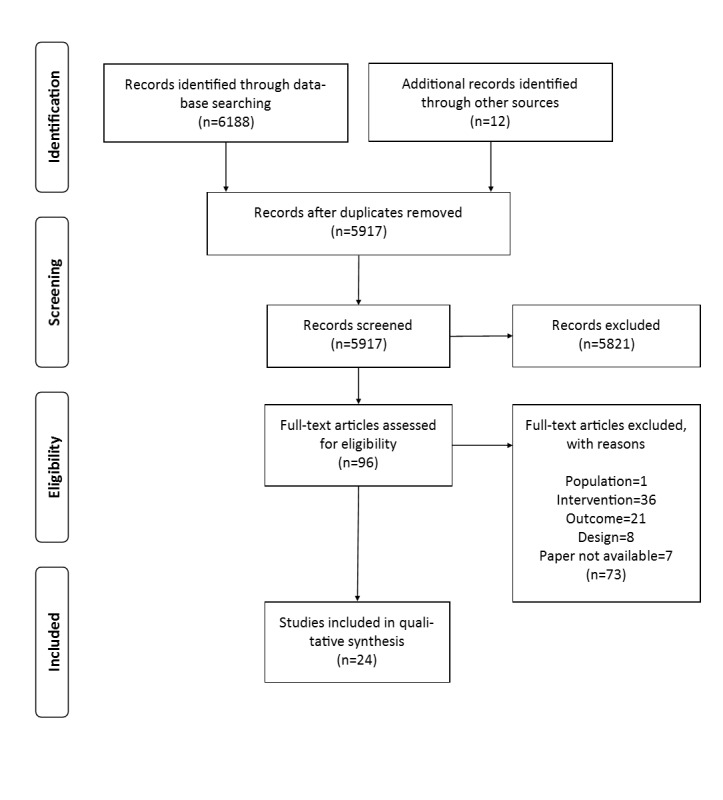
BACKGROUND: Only a few telemedicine applications have made their way into regular care. One reason is the lack of acceptance of telemedicine by potential end users. OBJECTIVE: The aim of this systematic review was to identify theoretical predictors that influence the acceptance of telemedicine. METHODS: An electronic search was conducted in PubMed and PsycINFO in June 2018 and supplemented by a hand search. Articles were identified using predefined inclusion and exclusion criteria. In total, two reviewers independently assessed the title, abstract, and full-text screening and then individually performed a quality assessment of all included studies. RESULTS: Out of 5917 potentially relevant titles (duplicates excluded), 24 studies were included. The Axis Tool for quality assessment of cross-sectional studies revealed a high risk of bias for all studies except for one study. The most commonly used models were the Technology Acceptance Model (n=11) and the Unified Theory of Acceptance and Use of Technology (n=9). The main significant predictors of acceptance were perceived usefulness (n=11), social influences (n=6), and attitude (n=6). The results show a superiority of technology acceptance versus original behavioral models. CONCLUSIONS: The main finding of this review is the applicability of technology acceptance models and theories on telemedicine adoption. Characteristics of the technology, such as its usefulness, as well as attributes of the individual, such as his or her need for social support, inform end-user acceptance. Therefore, in the future, requirements of the target group and the group's social environment should already be taken into account when planning telemedicine applications. The results support the importance of theory-guided user-centered design approaches to telemedicine development.
Overview
The claims and statistics of this paper haven’t been checked yet.
Free: it reads the open-access text and checks the first 5 claims that cite a source we can check. Create a free account to check every claim.
Integrity signals
Registry
Cites
Statistics
Figures
Verification
Claims the paper makes
The claims and statistics of this paper haven’t been checked yet.
Free: it reads the open-access text and checks the first 5 claims that cite a source we can check. Create a free account to check every claim.
Claims other papers make about this one
Each is checked against this paper’s own text: does it say what the citing paper says it does?
The source backs part of the claim, not all of it — or backs it for a different population, condition or comparison.
In the citing paper
“Compared with other traditional behavioral theories (eg, Theory of Planned Behavior, Health Belief Model), the UTAUT seems to have stronger explanatory power for understanding people’s intentions to use telehealth [11].”
From Applying the Unified Theory of Acceptance and Use of Technology to Identify Factors Associated With Intention to Use Teledelivered Supportive Care Among Recently Diagnosed Breast Cancer Survivors During COVID-19 in Hong Kong: Cross-Sectional Survey (2024) · cites this paper as [11]
Experimental — accuracy not yet measuredThe source backs part of the claim, not all of it — or backs it for a different population, condition or comparison.
In the citing paper
“Acceptance, describing attitudes toward and perception of a service or product and their relation to its adaptation (Venkatesh et al., 2003), has been shown to influence actual uptake of new digital interventions, both in industry (Venkatesh et al., 2003) and in (mental) health care (Harst et al., 2019; Philippi et al., 2021; Sora et al., 2021) settings.”
From How to promote usage of telehealth interventions for farmers' mental health? A qualitative study on supporting and hindering aspects for acceptance and satisfaction with a personalized telephone coaching for depression prevention (2023) · cites this paper as Harst et al., 2019
Experimental — accuracy not yet measured
Self-check
Percentages, sums and reported differences re-computed from the paper’s own numbers.
The self-check needs the paper’s full text.
Citations
Cites
Preferred Reporting Items for Systematic Reviews and Meta-Analyses: the PRISMA statement
Moher, D., Liberati, A., Tetzlaff, J., Altman, D. G., & for the PRISMA Group (2009) · BMJ · doi:10.1136/bmj.b2535 · Cited by 83,823
Perceived usefulness, perceived ease of use, and user acceptance of information technology
Davis, F. D. (1989) · MIS Quarterly · doi:10.2307/249008 · Cited by 68,483 · cited 3×
“Although in the TAM, acceptance is defined as “actual system use” [26], in the UTAUT, it is defined as “use behavior” [28].”
BackgroundMethodUser Acceptance of Information Technology: Toward A Unified View1
Venkatesh, V., Morris, M. G., Davis, G. B., & Davis, F. D. (2003) · MIS Quarterly · doi:10.2307/30036540 · Cited by 45,035 · cited 6×
“Although in the TAM, acceptance is defined as “actual system use” [26], in the UTAUT, it is defined as “use behavior” [28].”
BackgroundMethodInfluentialPreferred reporting items for systematic reviews and meta-analyses: the PRISMA Statement.
(2009) · PubMed Central · Cited by 44,859
(1975) · PhilPapers (PhilPapers Foundation) · Cited by 36,737
A Theoretical Extension of the Technology Acceptance Model: Four Longitudinal Field Studies
Venkatesh, V., & Davis, F. D. (2000) · Management Science · doi:10.1287/mnsc.46.2.186.11926 · Cited by 23,066 · cited 5×
“Contradictory to that, the TAM still has the highest amount of variance explained among all the models included in this review: A median R² of 0.68 is achieved by the TAM, compared with an R² of 0.59 for the UTAUT.”
MethodInfluential(1985) · Medical Entomology and Zoology · Cited by 19,180
From Intentions to Actions: A Theory of Planned Behavior
Ajzen, I. (1985) · Action Control · doi:10.1007/978-3-642-69746-3_2 · Cited by 19,057 · cited 8×
“Effect strength and significanceaComponents of the model or theory with significant explanatory power Theoretical model or theoryAuthor (year); Journal Health care provider Original Technology Acceptance Model: PU: ORg 5.28h (95% CI 3.14 to 10.01); PEOU: OR 1.93i (95% CI 1.11 PUe (TAM); PEOUf (TAM); Extended TAM: Comp…”
BackgroundInfluentialHistorical Origins of the Health Belief Model
Rosenstock, I. M. (1974) · Health Education Monographs · doi:10.1177/109019817400200403 · Cited by 6,116 · cited 1×
“The oldest yet still widely used model for health behavior change is the Health Belief Model (HBM) that focuses on the individual assessment of vulnerability, outcomes and costs of behavior change, and external cues toward behavior change [20].”
MethodCochrane Handbook for Systematic Reviews of Interventions
Tarsilla, M. (2010) · Journal of MultiDisciplinary Evaluation · doi:10.56645/jmde.v6i14.284 · Cited by 5,178
Research works printed but not linked: 4
- Atlas of eHealth country profiles. The use of eHealth in support of universal health coverage 2015 Global Observatory for eHealth 2015 Geneva, Switzerland World Health Organisation (WHO)
- Global diffusion of eHealth. Making universal health coverage achievable Global Observatory for eHealth 2015 Geneva, Switzerland World Health Organisation (WHO)
- Hastall M Dockweiler C Mühlhaus J Achieving end user acceptance: Building blocks for an evidence-based user-centered framework for health technology development and assessment 2017 11th International Conference on Universal Access in Human-Computer Interaction UAHCI July 9–14, 2017 Vancouver, BC, Canada Cham, Switzerland Springer 13 25
- Field A Discovering Statistics Using IBM SPSS Statistics: North American Edition 2018 Los Angeles Sage Publications Ltd 1025
Cited by
Items 201–300 of 375
Boschetti, A., Maida, E., Dini, M., Tacchini, M., Gamberini, G., Comi, G., & Leocani, L. (2024) · Journal of Clinical Medicine · doi:10.3390/jcm13071916 · Cited by 5
“Moreover, a recent systematic review aimed to identify theoretical predictors influencing the acceptance of telemedicine and found that factors such as perceived usefulness of a technology and individual need for social support significantly impact end-user acceptance [70].”
BackgroundExtension of an adoption model to evaluate autonomous vehicles acceptance
Farzin, I., Mamdoohi, A. R., & Ciari, F. (2024) · Scientia Iranica · doi:10.24200/sci.2024.59358.6195 · Cited by 5
“Knowing the potential users’ perspective can help a further growth of the technology, facilitates its implementation and lead to a better evaluation and prediction of the users’ responses and, hence, results in an optimal design and effective future development and planning and development [14].”
BackgroundWhy tele-consult? Role of affordability and accessibility in teleconsultation adoption
Kulkarni, G. R., Aashish, K., & Saurabh, P. (2025) · International Journal of Pharmaceutical and Healthcare Marketing · doi:10.1108/ijphm-08-2024-0083 · Cited by 5
Telehealth Readiness Assessment of Perinatal Nurses
Talmont, E., & Vitale, T. R. (2022) · Nursing for Women s Health · doi:10.1016/j.nwh.2022.01.004 · Cited by 5
Ghafari, S. F., Mahdizadeh, J., Valinejadi, A., Mehraeen, E., Mohammadpour, A., Bouraghi, H., & Kahouei, M. (2019) · AIMS Public Health · doi:10.3934/publichealth.2019.4.514 · Cited by 5
“This technology offers another strategy for giving healthcare services benefits crosswise over various topographical areas [1], and is utilized for advancing and encouraging the openness of health care services to individuals who don’t have access to such services in their private areas [2–4].”
BackgroundPre- and Post-Redesign Usability Assessment of a Telemedicine Interface Based on Subjective Metrics
Campbell, J. L., & Monkman, H. (2022) · Studies in health technology and informatics · doi:10.3233/shti220204 · Cited by 5
Verfürth, M. (2020) · Research Square · doi:10.21203/rs.3.rs-60425/v1 · Cited by 5
“Facilitators The degree to which the HCP believes that organizational and technical resources and environment exist to support the implementation and use of the system [28,74].”
BackgroundThink-aloud usability testing of an app to increase physical activityPreprint
Fischer, T., Reinhardt, G., Stumpf, P., Schwarz, P. E. H., & Harst, L. (2019) · Research Square · doi:10.21203/rs.2.17034/v2 · Cited by 5
Self-citationIoannidi, O. M., & Zoulias, E. (2025) · Studies in health technology and informatics · doi:10.3233/shti250709 · Cited by 4
Nuampa, S., Payakkaraung, S., Srimoragot, M., Silavong, L., Sudphet, M., & Souksavath, S. (2025) · Journal of Advanced Nursing · doi:10.1111/jan.70010 · Cited by 4
“The Technology Acceptance Model elucidates this relationship by highlighting perceived usefulness and perceived ease of use as fundamental determinants of technology acceptance (Harst et al. 2019).”
Green, N., Tappin, D., & Bentley, T. A. (2025) · Applied Ergonomics · doi:10.1016/j.apergo.2025.104641 · Cited by 4
TELEMEDICINA: AVANÇOS, DESAFIOS, EVOLUÇÃO E BENEFÍCIOS
Júnior, R. R. P. (2025) · INTERNATIONAL INTEGRALIZE SCIENTIFIC · doi:10.63391/nqgxy274 · Cited by 4
Health 4.0 and its Potential Adoption and Contribution to the Mexican Health System
Álvarez-Castañón, L. D. C., Arroyo, P. E., Contreras-Cruz, M. A., & Villaseñor‐Mora, C. (2022) · Portland International Conference on Management of Engineering and Technology (PICMET) · doi:10.23919/picmet53225.2022.9882603 · Cited by 4
“However, as described previously, substituting a paternalistic patient-doctor relationship for online and monitoring is expected to increase the non-compliance with medical treatment [63].”
BackgroundMobile Health and Telemedicine for Tropical Diseases
Ogwu, M. C., & Izah, S. C. (2025) · Health information science · doi:10.1007/978-3-031-82622-1_8 · Cited by 4
Reifegerste, D., Wagner, A., Huber, L., & Fastuca, M. (2025) · JMIR Formative Research · doi:10.2196/59829 · Cited by 4
“…these 2 worlds and systemize the content of the interviews and focus groups against the background of theories like the unified theory of acceptance and use of technology and similar theories [28] as well as known consumer needs for products in digital environments (Multimedia Appendices 4 and 5).”
Alsharabi, M., Alshamrani, M., ALhabanji, F., Alqarni, A., Alharbi, M., Alzahrani, K., & Aqeli, A. (2023) · International Journal of Medical Science and Clinical Research Studies · doi:10.47191/ijmscrs/v3-i12-53 · Cited by 4
Medical teleconsultation from the patient’s perspective. A demographic segmentation
Arenas-Gaitán, J., Ramírez-Correa, P., Chaves, P. L., & Callarisa-Fiol, L. J. (2025) · The European Journal of Health Economics · doi:10.1007/s10198-024-01753-4 · Cited by 5
“Our findings demonstrate that this was a prudent choice, as the explained variance in our study (0.607 for Behavioural Intention and 0.521 for Use of Teleconsulta-tion) is comparable or greater than in most prior studies on the topic [34].”
InfluentialBorchers, P., Pfisterer, D., Scherpf, M., Voigt, K., & Bergmann, A. (2023) · PLoS ONE · doi:10.1371/journal.pone.0282527 · Cited by 5
Offshore telemedicine emergency service: a 1-year experience
Mastella, G., Darstein, L., Raufhake, C., Schneider, V. S., Corletto, A., Buiatti, A., Müller, A., Hahn, F., Gondert, M., Gerdes, H., et al. (2021) · Journal of Public Health · doi:10.1007/s10389-021-01511-3 · Cited by 4
Aminoff, H., Meijer, S., Groth, K., & Arnelo, U. (2021) · JMIR Human Factors · doi:10.2196/30867 · Cited by 4
“The concept of technology acceptance is widely used in telemedicine research [26] but originated in information systems research [34], where behavioral theory and methodologies have generated a large body of research about how users’ attitudes toward a technology influence subsequent adoption and use [35].”
BackgroundZahed, K., Smith, A., McDonald, A. D., & Sasangohar, F. (2022) · IISE Transactions on Occupational Ergonomics and Human Factors · doi:10.1080/24725838.2022.2094502 · Cited by 5
“Previous researchers (e.g., Cho, 2016; Harst et al., 2019) have posited that individual perceptions of their health or the usefulness of a behavior/intervention may change with time, which will ultimately affect whether they actually perform the behavior.”
BackgroundUser Acceptance of Telemedicine Applications in Indonesia
Islami, Q. N., Yasirandi, R., & Utomo, R. G. (2022) · International Conference on Software Engineering and Information Technology (ICoSEIT) · doi:10.1109/icoseit55604.2022.10030002 · Cited by 4
Verfürth, M. (2020) · doi:10.21203/rs.3.rs-77065/v1 · Cited by 4
Videoconferencing psychotherapy: determining acceptance, drivers and barriers of use
Nurtsch, A., Jahre, L. M., Krakowczyk, J. B., Robitzsch, A., Teufel, M., & Bäuerle, A. (2025) · Frontiers in Digital Health · doi:10.3389/fdgth.2025.1634013 · Cited by 3
“…(PE), referring to the perceived bene fi ts of the technology; effort expectancy (EE), denoting its perceived ease of use; and social in fl uence (SI), re fl ecting the impact of the user ’ s personal environment (including family or healthcare providers) on the use of tele-psychotherapy (45, 49, 50).”
Aufenberg, B., Offermann, J., Pauge, S., Ziefle, M., & Greiner, W. (2025) · BMC Geriatrics · doi:10.1186/s12877-025-06786-9 · Cited by 3
“In this article, telemedicine is understood as patient-centered health-care services delivered with the involvement of healthcare providers using information and communications technologies [14, 15].”
Patients’ Intentions to Use Telemedicine for Ophthalmic Medical Care During the COVID-19 Pandemic
Tsatsos, M., Rodafinos, A., Athanasiadis, I. K., & Mavropoulou, D. (2024) · Cureus · doi:10.7759/cureus.54709 · Cited by 5
Frankowska, A., Walkowiak, M. P., & Walkowiak, D. (2025) · Telemedicine Journal and e-Health · doi:10.1089/tmj.2024.0296 · Cited by 3
“By incorporating the specific needs and social contexts of the target demographic, tailored telehealth applications can be devised, 25 a necessity currently overlooked within Poland ’ s telehealth landscape.”
Lee, D. C., & Gefen, D. (2022) · ACM SIGMIS Database the DATABASE for Advances in Information Systems · doi:10.1145/3571823.3571828 · Cited by 3
“Such issues of demographics complicate telemedicine adoption (Harst et al., 2019; Ronis et al., 2017; Van Velsen et al., 2015), in part because vulnerable populations who lack adequate access to resources, including technology, due to geographic location, income level, education level, race, ethnicity, or physical cap…”
BackgroundAcceptance of a digital therapy recommender system for psoriasis
Graf, L., Tesch, F., Gräßer, F., Harst, L., Siegels, D., Schmitt, J. M., & Abraham, S. (2023) · BMC Medical Informatics and Decision Making · doi:10.1186/s12911-023-02246-9 · Cited by 3
“The former also breaches the subject of experience with technology [20].”
BackgroundInfluentialSelf-citationHadzic, M., Eichler, S., Völler, H., Salzwedel, A., & ReMove-It, A. S. F. D. A. (2022) · B&G Bewegungstherapie und Gesundheitssport · doi:10.1055/a-1714-3629 · Cited by 3
Gulbransen-Diaz, N., Yoo, S., & Wang, A. P. (2023) · International Journal of Environmental Research and Public Health · doi:10.3390/ijerph20021164 · Cited by 3
Hasan, M. M., Rafferty, M. R., Tawfik, S., Tawfik, A., Beestrum, M., Smith, J. D., Hirschhorn, L. R., Roth, E. J., & Woods, D. M. (2023) · JMIR Research Protocols · doi:10.2196/47009 · Cited by 3
“Data extraction will be conducted based on Multimedia Appendix 1 [1,2,5-42 5-42 , 57-59 57-59] forms.”
Düvel, J. A., Baumgartner, A., Grosser, J., Kreimeier, S., Elkenkamp, S., & Greiner, W. (2023) · Professional Case Management · doi:10.1097/ncm.0000000000000701 · Cited by 3
“Moreover, acceptance research to date has focused almost entirely on aspects of technology acceptance and, accordingly, on the implementation of digital or technical elements in health care (Harst et al., 2019; Heinsch et al., 2021; Nadal et al., 2020).”
BackgroundVerfürth, M. (2020) · Research Square · doi:10.21203/rs.3.rs-60425/v2 · Cited by 3
An investigation of ICT-based malaria intervention framework for rural communities
Mbunge, E. (2022) · DUT Open Scholar (Durban University of Technology) · doi:10.51415/10321/4778 · Cited by 3
Yeung, N. C. Y., Lau, S. T. Y., Mak, W. W. S., Cheng, C., Chan, E. Y. Y., Siu, J. Y. M., & Cheung, P. S. Y. (2024) · JMIR Cancer · doi:10.2196/51072 · Cited by 2
“Different theoretical models have been applied to explore intentions to use telehealth among general healthy populations and patient populations outside the COVID-19 context [11].”
BackgroundMethodInfluentialTraulsen, P., Kitschke, L., & Steinhäuser, J. (2024) · JMIR Aging · doi:10.2196/47072 · Cited by 2
“New applications cannot be implemented if there is no acceptance from the nursing staff [29,32,33].”
BackgroundZadegan, M. A., Aromaa, E., Sahlström, R., Montonen, T., Eriksson, P., & Leinonen, V. (2025) · Home Health Care Management & Practice · doi:10.1177/10848223251324598 · Cited by 2
Chen, J., Chen, X., Tang, Z., Lei, L., Zhan, Y., Liu, S., Zhou, H., Wan, J., Chen, Z., Wu, Y., et al. (2025) · Public Health · doi:10.1016/j.puhe.2025.105891 · Cited by 2
Celleri, M., Klajner, F., Cremades, F. C., Garay, C. J., Etchevers, M. J., & Osma, J. (2025) · Journal of Clinical Psychology · doi:10.1002/jclp.70037 · Cited by 2
“In this process, it is essential to incorporate end ‐ user feedback (Harst et al. 2021), as usability is a prerequisite and predictor for the further dissemination and implementation (Harst et al. 2019).”
Aschauer, W., Nemetz, F., Etter, C., Krutter, S., Osterbrink, J., & Kutschar, P. (2025) · CIN Computers Informatics Nursing · doi:10.1097/cin.0000000000001320 · Cited by 2
Ngowroongrueng, W., Suwannaphisit, S., Malaikritsanachalee, C., Thaveepunsan, S., Chaitantipongse, S., TEERAGANANAN, T., Imsakul, K., Puntumabumrung, S., & Prasittichok, K. (2026) · Journal of Medical Internet Research · doi:10.2196/86918 · Cited by 2
“Previous studies [8,9] have shown that telemedicine can maintain patient safety and satisfaction while reducing health care costs and alleviating clinic overcrowding.”
Schöneburg, C., Uphoff, I., Thußbas, A., Willinger, L., Oberhoffer, R. M., Ewert, P., & Müller, J. (2026) · Journal of Cardiovascular Development and Disease · doi:10.3390/jcdd13050199 · Cited by 3
“Prior research indicates that perceived usefulness, social influences, and user attitudes are important predictors of technology acceptance [46].”
Lezcano, M., Landuzzi, M. G., Pasini, M., Laezza, L., & Vacondio, M. (2026) · Journal of Technology in Behavioral Science · doi:10.1007/s41347-026-00670-y · Cited by 2
The Factors that Influence Patients' Use of Telecare System in Taiwan
Lai, Y.-H., & Huang, F.-F. (2019) · International Conference on Computational Biology and Bioinformatics (ICCBB) · doi:10.1145/3365966.3365973 · Cited by 2
“Perceived ease of use is the degree to which a patient believes that using the telecare systems would be free of effort [8].”
BackgroundMethodInfluentialRodríguez‐Rodríguez, I., Rodríguez, J., & Campo-Valera, M. (2023) · UMA Editorial eBooks · doi:10.24310/mumaedmumaed.5 · Cited by 2
Physical and internet medical system: Service quality and management mode analysis
Meng, F., Qing, D., Zhang, Y., & Wang, X. (2024) · Computers & Industrial Engineering · doi:10.1016/j.cie.2024.110539 · Cited by 2
Ezinne, N. E., Koomson, I., Anyasodor, A. E., Antwi-Adjei, E. K., Bhattarai, D., Armitage, J. A., & Osuagwu, U. L. (2025) · Health Science Reports · doi:10.1002/hsr2.70420 · Cited by 2
“For example, Rogers argues that innovations that are compatible with their environment are more easily adopted than those that are not suitable to past experiences of the adoption units [31].”
Lee, W.-J., & Shin, S. (2025) · International Journal of Health Care Quality Assurance · doi:10.1108/ijhcqa-12-2024-0116 · Cited by 3
Grosser, F., Herrmann, S., Bretschneider, M. P., Timpel, P., Schildt, J., Bentrup, M., & Schwarz, P. E. H. (2022) · Journal of Diabetes Science and Technology · doi:10.1177/19322968221075333 · Cited by 2
“45 On this point, the difficulty of defining “digital literacy” (see inclusion criteria of Table 1) appears.”
BackgroundSchlieter, H., Harst, L., Otto, L., Richter, P., Timpel, P., Knapp, A., & Wollschlaeger, B. (2022) · Springer eBooks · doi:10.1007/978-3-658-35691-0_9 · Cited by 2
Self-citationTranscending telemedicine: exploring telemedicine adoption perspectives of physicians
Naga, J. F., & Sison, R. C. (2025) · International Journal of Public Health Science (IJPHS) · doi:10.11591/ijphs.v14i1.24551 · Cited by 2
Aligning practitioner's perception: Empowering MAST framework for evaluating telemedicine services
Parvez, A., Saleem, J., Bhatti, M. A., Hasan, A., Mahmood, A., Ali, Z., & Tauqeer, T. (2024) · Digital Health · doi:10.1177/20552076241297317 · Cited by 2
Eze, C. E., Dorsch, M. P., Coe, A. B., Lester, C. A., Buis, L. R., & Farris, K. B. (2024) · JMIR Formative Research · doi:10.2196/56954 · Cited by 2
“This could be because of the simplicity of making and answering calls as easy-to-use technology is a required feature of digital services [13,39].”
Farmaki, A., Kyrou, D., Sountoulides, P., Spyrou, S., Bonotis, P., Plomariti, C. S., Leclercq, V., Schmitt, T., Karamanidou, C., & Natsiavas, P. (2025) · Studies in health technology and informatics · doi:10.3233/shti250343 · Cited by 2
Alfuraydan, M. M. (2021) · Cronfa (Swansea University) · doi:10.23889/suthesis.58840 · Cited by 2
Technology Continuance in Health : Development and Application of New Measurement Models
Ries, T. (2025) · EPub Bayreuth (University of Bayreuth) · doi:10.15495/epub_ubt_00008183 · Cited by 2
Digital technologies to support mental health among young people
Metsäranta, K. (2023) · UTUPub (University of Turku) · Cited by 2
Urrutia, C. F., Medina, J. C., Contreras-Higuera, W., & Estapé, T. (2026) · Cancer Medicine · doi:10.1002/cam4.71538 · Cited by 1
“Like custom surveying, this diversity in terminology illustrates the complexity of assessing technology acceptance [43, 46].”
Helms, Y. B., Stein, M. L., Hamdiui, N., van der Meer, A., Ferreira, J. A., Crutzen, R., Timen, A., & Kretzschmar, M. (2024) · PLOS Digital Health · doi:10.1371/journal.pdig.0000425 · Cited by 1
Managerial practices for app-based primary care telemedicine service acceptance in South Africa
van Tonder, G., Preez, R. D., & Pentz, C. D. (2024) · South African Journal of Business Management · doi:10.4102/sajbm.v55i1.4667 · Cited by 1
Amelia, R., & Simanjuntak, M. (2024) · Malaysian journal of consumer and family economics/Malaysian Journal of Consumer and Family Economics · doi:10.60016/majcafe.v33.05 · Cited by 1
Mehta, S., Barua, U., Nugent, M., Hansen, K., Sondhi, L., Upper, R., Wolfe, D. L., Roh, E., Sequeira, K., Teasell, R. W., et al. (2025) · Journal of Rehabilitation Medicine · doi:10.2340/jrm.v57.40898 · Cited by 1
Butz, B., & Karnowski, V. (2025) · European Journal of Health Communication · doi:10.47368/ejhc.2025.301 · Cited by 1
Interorganizational Knowledge Sharing in Teleconsultations: Analyzing Physicians' Engagement
Neft, F., Kappler, K. E., & Smolnik, S. (2025) · International Journal of Knowledge Management · doi:10.4018/ijkm.379725 · Cited by 1
Uso de telemedicina en pacientes de un hospital del Seguro Social de Salud del Norte del Perú
Cruz, L. M. V., Espino, M. A. R., Moreno, A. Z., Linares-Reyes, E., & Reluz, C. G. C. (2025) · REVISTA PERUANA DE CIENCIAS DE LA SALUD · doi:10.37711/rpcs.2025.7.3.5 · Cited by 1
Telemedicina en la era digital: evaluación de la educación como clave para la adopción
Joaquín, V. S. (2025) · Revista Médica Basadrina · doi:10.33326/26176068.2025.1.2114 · Cited by 1
Sá, G., Bönecker, M., Matos, A., Garrido, D., Fettermann, D. C., & Haddad, A. E. (2025) · Education for Health · doi:10.62694/efh.2025.369 · Cited by 1
Liu, K. N., Yang, Y., Song, Z., Li, H., Yanli, L., Zhang, K., Wu, X., Hou, Z., & Wang, Y. (2026) · JMIR Human Factors · doi:10.2196/78457 · Cited by 1
“Consequently, researchers turned to behavioral frameworks, such as the unified theory of acceptance and use of technology (UTAUT) [18], the technology acceptance model (TAM) [19], and the theory of planned behavior [20].”
Petit, P., Nübel, J., Hoffmann, M., Butter, C., Heinze, M., Ignatyev, Y., Haase‐Fielitz, A., Vuillerme, N., & Muehlensiepen, F. (2026) · PLOS Digital Health · doi:10.1371/journal.pdig.0001359 · Cited by 1
“Historically, theoretical models such as Rogers’ Diffusion of Innovation Theory, the Technology Acceptance Model (TAM), and the Unified Theory of Acceptance and Use of Technology (UTAUT-II) have been employed to explain the adoption of digital health interventions [18].”
Wu, Q. (2026) · Patient Education and Counseling · doi:10.1016/j.pec.2026.109674 · Cited by 1
Chen, H., Chen, S., Zhou, Y., Wang, M., Wu, Y.-Q., & Wu, C. (2026) · BMC Public Health · doi:10.1186/s12889-026-27678-6 · Cited by 1
Kaboth, P., Harst, L., Schmitt, J. M., & Scheibe, M. (2026) · Interactive Journal of Medical Research · doi:10.2196/91603 · Cited by 1
“Furthermore, comparability of results of different instruments is more feasible when they are based on the same theoretically sound dimensions [63].”
Self-citationDandi, M. (2026) · Health Economics Insights Journal · doi:10.55942/heij.v1i1.1854 · Cited by 1
“Together, these constructs provide a richer explanation of continuance intention than technology acceptance variables alone (Harst et al., 2019; Venkatesh et al., 2012).”
Man, S. S., Wu, X., Chiu, K. T., Ma, Q., & Chan, A. H. S. (2026) · Disability and Rehabilitation Assistive Technology · doi:10.1080/17483107.2026.2716566 · Cited by 1
Kurniawan, S. K. A., & Bernarto, I. (2026) · Jurnal Aplikasi Bisnis dan Manajemen · doi:10.17358/jabm.12.3.883 · Cited by 1
Telemedicine in Covid-19: Challenges and Opportunities
Masood, I., Baneen, U., & Nivedita (2021) · Asian Journal of Research in Medical and Pharmaceutical Sciences · doi:10.9734/ajrimps/2021/v10i230160 · Cited by 1
“This setting up a telemedicine unit is difficult as there is a lack of experts in healthcare sector and most of the doctors are not aware about the nuances of modern technology and find difficulty in use of modern gadgets [7,8].”
BackgroundEichler, S., Carnarius, S., Steiger, E., & von Stillfried, D. (2022) · Dialogues in Health · doi:10.1016/j.dialog.2022.100021 · Cited by 1
Yip, M. Y. T., Wang, Z., Gutiérrez, L., Foo, V. H. X., Lim, J., Lim, G., Gunasekeran, D. V., Wong, T. Y., & Ting, D. S. W. (2022) · Royal Society of Chemistry eBooks · doi:10.1039/9781839165498-00305 · Cited by 1
Liekefett, L., Rumpf, H., & Bischof, G. (2023) · Suchttherapie · doi:10.1055/a-2109-2282 · Cited by 1
“Subst Use Misuse 2020; 55: 851–859 [5] Harst L, Lantzsch H, Scheibe M.”
BackgroundShang, Y., Kim, J. B. (. B., & Shin, S. I. (2023) · Hawaii International Conference on System Sciences (HICSS) · doi:10.24251/hicss.2023.413 · Cited by 1
Liu, X., Sengupta, A., & Xu, D. (2024) · Hawaii International Conference on System Sciences (HICSS) · doi:10.24251/hicss.2024.426 · Cited by 1
Marjoto, M. A., Hasyim, & Ruswanti, E. (2023) · International Journal of Nursing and Health Services (IJNHS) · Cited by 1
Serhal, E. (2020) · TSpace (University of Toronto) · Cited by 1
Villasís, D. L. E. (2022) · Universidad Peruana Cayetano Heredia Institutional Repository · Cited by 1
Elston, D. M. (2019) · Journal of the American Academy of Dermatology · doi:10.1016/j.jaad.2019.07.054
Smart Homes – Intelligente Systeme im häuslichen Umfeld
Harst, L., & Wollschlaeger, B. (2020) · ergopraxis · doi:10.1055/a-1236-9770
Self-citationAceptación de la teleoftalmología: una revisión sistemática de la literatura científica
Ansón, A. C. (2020) · LA Referencia (Red Federada de Repositorios Institucionales de Publicaciones Científicas)
Think-aloud usability testing of an app to increase physical activityPreprint
Fischer, T., Reinhardt, G., Stumpf, P., Schwarz, P. E. H., & Harst, L. (2019) · Research Square · doi:10.21203/rs.2.17034/v1
“Acceptance is, in itself, a function of several perceived characteristics of the technology, of which ease of use and perceived usefulness have proven to be of vital importance [14].”
BackgroundSelf-citationTelemedicine use Amongst Homeopaths and Naturopaths in Ontario, Canada
Brulé, D. (2020) · TSpace (University of Toronto)
Sektorenübergreifende Zuweisungskommunikation zwischen Arztpraxen und Kliniken
Kotovnykova, T., Rossmann, C., & Reifegerste, D. (2021) · Springer eBooks · doi:10.1007/978-3-658-32884-9_6
Polarización del territorio poblano, México
Becerra, V. C. (1997) · Revista interamericana de planificación
Data-Driven Operations Management
Li, M. (2021) · Deep Blue (University of Michigan) · doi:10.7302/1520
Gantz, C. E., Stehr, M. F., & Gefen, D. (2020) · iDEA - Drexel University Institutional Repository · doi:10.17918/00000240
Technological innovation in health care: a holistic approach to telemedicine adoption (Preprint)Preprint
Schmitz, A., Díaz‐Martín, A. M., & Guillén, M. J. Y. (2022) · doi:10.2196/preprints.37670
Smart Homes – Intelligente Systeme im häuslichen Umfeld
Harst, L., & Wollschlaeger, B. (2020) · physiopraxis · doi:10.1055/a-1300-6497
Self-citationCOVID-19 PANDEMİSİNDE KADIN SAĞLIĞINDA TELE-TIBBIN KULLANIMI
Melis, A. V. C. I., DEMİR, E., & Öter, E. G. (2022) · DergiPark (Istanbul University)
Wersényi, G., & Tollár, J. (2023) · Springer proceedings in business and economics · doi:10.1007/978-981-19-8485-3_20
Metadata
- Authors
- Harst, L., Lantzsch, H., & Scheibe, M.
- Affiliations
- University Hospital Carl Gustav Carus (DE)
- Technische Universität Dresden (DE)
- Corresponding author
- Harst, Lorenz
- Venue
- Journal of Medical Internet Research
- Publisher
- JMIR Publications Inc.
- Published
- 2019-05-21
- Volume
- 21
- Issue
- 5
- Pages
- e13117
- ISSN
- 1438-8871 (ISSN-L)
- PMC
- PMC6547771
- OpenAlex
- W2927203543
- Cited by
- 320
- References
- 81
- Citations by year
- 2026: 30 · 2025: 42 · 2024: 40 · 2023: 54 · 2022: 52 · 2021: 58 · 2020: 31 · 2019: 12
- FWCI
- 6.25
- Type
- journal article
- Language
- en
- Open access
- gold
- doi.org
- Licence
- cc-by
- Locations
- Journal of Medical Internet Research (publishedVersion, cc-by)
- PubMed Central (publishedVersion, cc-by)
- PubMed (publishedVersion)
- Funders
- Freistaat Sachsen
- European Social Fund (100310385)
- Topics
- Health Sciences › Medicine › Public Health, Environmental and Occupational Health › Telemedicine and Telehealth Implementation
- Social Sciences › Decision Sciences › Information Systems and Management › Technology Adoption and User Behaviour
- Health Sciences › Medicine › Geriatrics and Gerontology › Technology Use by Older Adults
- Keywords
- telemedicine, end-user acceptance, technology acceptance model, UTAUT, perceived usefulness, social influence, user attitudes, technology adoption, user-centered design, social support
- MeSH terms
- Cross-Sectional Studies, Female, Humans, Male, Patient Compliance, Telemedicine
About these checks
Registry, retraction, Cites and statistics results are computed, not judged, with one exception: a printed reference that no index lists is read once by a model before it counts as a citation error. Claims are extracted by a model and kept only when their quote appears verbatim in the text; each cited source is then checked, with a model’s help, for whether it says what the claim relies on. Those verdicts can be wrong — read the claim’s quote and the cited source before relying on one.
Statistics and arithmetic are recomputed, not judged.
Confidence bands are shown only for fields calibrated on our annotated test set. None is calibrated yet, so no band is shown.
What counts as a claim ›How we measure confidence ›How we check this ›
Are you an author, or do you see a problem with this page? Request a review
Data sources
Bibliographic data: Semantic Scholar, OpenAlex, Crossref.
Contains information from the Semantic Scholar Academic Graph Datasets, made available under the ODC Attribution License (ODC-BY 1.0).
Semantic Scholar’s data is described in: Kinney, R., et al. (2023). The Semantic Scholar Open Data Platform. arXiv:2301.10140.
