

Theories Predicting End-User Acceptance of Telemedicine Use: Systematic Review
Open accessPublished version of a preprint
The DOI matches its Crossref record; 82 of the 82 references it cites were found in a registry or an index.
Abstract
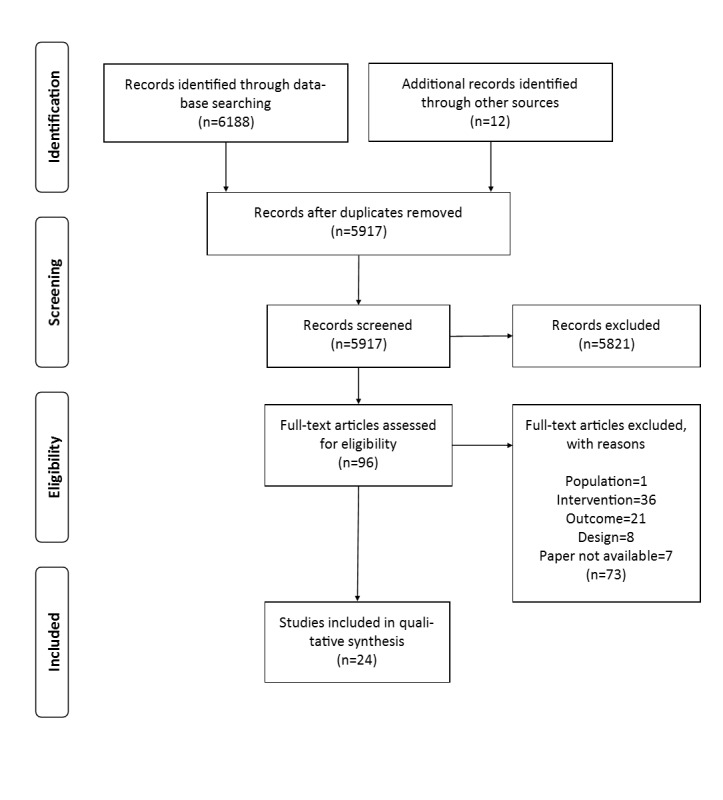
BACKGROUND: Only a few telemedicine applications have made their way into regular care. One reason is the lack of acceptance of telemedicine by potential end users. OBJECTIVE: The aim of this systematic review was to identify theoretical predictors that influence the acceptance of telemedicine. METHODS: An electronic search was conducted in PubMed and PsycINFO in June 2018 and supplemented by a hand search. Articles were identified using predefined inclusion and exclusion criteria. In total, two reviewers independently assessed the title, abstract, and full-text screening and then individually performed a quality assessment of all included studies. RESULTS: Out of 5917 potentially relevant titles (duplicates excluded), 24 studies were included. The Axis Tool for quality assessment of cross-sectional studies revealed a high risk of bias for all studies except for one study. The most commonly used models were the Technology Acceptance Model (n=11) and the Unified Theory of Acceptance and Use of Technology (n=9). The main significant predictors of acceptance were perceived usefulness (n=11), social influences (n=6), and attitude (n=6). The results show a superiority of technology acceptance versus original behavioral models. CONCLUSIONS: The main finding of this review is the applicability of technology acceptance models and theories on telemedicine adoption. Characteristics of the technology, such as its usefulness, as well as attributes of the individual, such as his or her need for social support, inform end-user acceptance. Therefore, in the future, requirements of the target group and the group's social environment should already be taken into account when planning telemedicine applications. The results support the importance of theory-guided user-centered design approaches to telemedicine development.
Overview
The claims and statistics of this paper haven’t been checked yet.
Free: it reads the open-access text and checks the first 5 claims that cite a source we can check. Create a free account to check every claim.
Integrity signals
Registry
Cites
Statistics
Figures
Verification
Claims the paper makes
The claims and statistics of this paper haven’t been checked yet.
Free: it reads the open-access text and checks the first 5 claims that cite a source we can check. Create a free account to check every claim.
Claims other papers make about this one
Each is checked against this paper’s own text: does it say what the citing paper says it does?
The source backs part of the claim, not all of it — or backs it for a different population, condition or comparison.
In the citing paper
“Compared with other traditional behavioral theories (eg, Theory of Planned Behavior, Health Belief Model), the UTAUT seems to have stronger explanatory power for understanding people’s intentions to use telehealth [11].”
From Applying the Unified Theory of Acceptance and Use of Technology to Identify Factors Associated With Intention to Use Teledelivered Supportive Care Among Recently Diagnosed Breast Cancer Survivors During COVID-19 in Hong Kong: Cross-Sectional Survey (2024) · cites this paper as [11]
Experimental — accuracy not yet measuredThe source backs part of the claim, not all of it — or backs it for a different population, condition or comparison.
In the citing paper
“Acceptance, describing attitudes toward and perception of a service or product and their relation to its adaptation (Venkatesh et al., 2003), has been shown to influence actual uptake of new digital interventions, both in industry (Venkatesh et al., 2003) and in (mental) health care (Harst et al., 2019; Philippi et al., 2021; Sora et al., 2021) settings.”
From How to promote usage of telehealth interventions for farmers' mental health? A qualitative study on supporting and hindering aspects for acceptance and satisfaction with a personalized telephone coaching for depression prevention (2023) · cites this paper as Harst et al., 2019
Experimental — accuracy not yet measured
Self-check
Percentages, sums and reported differences re-computed from the paper’s own numbers.
The self-check needs the paper’s full text.
Citations
Cites
Preferred Reporting Items for Systematic Reviews and Meta-Analyses: the PRISMA statement
Moher, D., Liberati, A., Tetzlaff, J., Altman, D. G., & for the PRISMA Group (2009) · BMJ · doi:10.1136/bmj.b2535 · Cited by 83,823
Perceived usefulness, perceived ease of use, and user acceptance of information technology
Davis, F. D. (1989) · MIS Quarterly · doi:10.2307/249008 · Cited by 68,483 · cited 3×
“Although in the TAM, acceptance is defined as “actual system use” [26], in the UTAUT, it is defined as “use behavior” [28].”
BackgroundMethodUser Acceptance of Information Technology: Toward A Unified View1
Venkatesh, V., Morris, M. G., Davis, G. B., & Davis, F. D. (2003) · MIS Quarterly · doi:10.2307/30036540 · Cited by 45,035 · cited 6×
“Although in the TAM, acceptance is defined as “actual system use” [26], in the UTAUT, it is defined as “use behavior” [28].”
BackgroundMethodInfluentialPreferred reporting items for systematic reviews and meta-analyses: the PRISMA Statement.
(2009) · PubMed Central · Cited by 44,859
(1975) · PhilPapers (PhilPapers Foundation) · Cited by 36,737
A Theoretical Extension of the Technology Acceptance Model: Four Longitudinal Field Studies
Venkatesh, V., & Davis, F. D. (2000) · Management Science · doi:10.1287/mnsc.46.2.186.11926 · Cited by 23,066 · cited 5×
“Contradictory to that, the TAM still has the highest amount of variance explained among all the models included in this review: A median R² of 0.68 is achieved by the TAM, compared with an R² of 0.59 for the UTAUT.”
MethodInfluential(1985) · Medical Entomology and Zoology · Cited by 19,180
From Intentions to Actions: A Theory of Planned Behavior
Ajzen, I. (1985) · Action Control · doi:10.1007/978-3-642-69746-3_2 · Cited by 19,057 · cited 8×
“Effect strength and significanceaComponents of the model or theory with significant explanatory power Theoretical model or theoryAuthor (year); Journal Health care provider Original Technology Acceptance Model: PU: ORg 5.28h (95% CI 3.14 to 10.01); PEOU: OR 1.93i (95% CI 1.11 PUe (TAM); PEOUf (TAM); Extended TAM: Comp…”
BackgroundInfluentialHistorical Origins of the Health Belief Model
Rosenstock, I. M. (1974) · Health Education Monographs · doi:10.1177/109019817400200403 · Cited by 6,116 · cited 1×
“The oldest yet still widely used model for health behavior change is the Health Belief Model (HBM) that focuses on the individual assessment of vulnerability, outcomes and costs of behavior change, and external cues toward behavior change [20].”
MethodCochrane Handbook for Systematic Reviews of Interventions
Tarsilla, M. (2010) · Journal of MultiDisciplinary Evaluation · doi:10.56645/jmde.v6i14.284 · Cited by 5,178
Research works printed but not linked: 4
- Atlas of eHealth country profiles. The use of eHealth in support of universal health coverage 2015 Global Observatory for eHealth 2015 Geneva, Switzerland World Health Organisation (WHO)
- Global diffusion of eHealth. Making universal health coverage achievable Global Observatory for eHealth 2015 Geneva, Switzerland World Health Organisation (WHO)
- Hastall M Dockweiler C Mühlhaus J Achieving end user acceptance: Building blocks for an evidence-based user-centered framework for health technology development and assessment 2017 11th International Conference on Universal Access in Human-Computer Interaction UAHCI July 9–14, 2017 Vancouver, BC, Canada Cham, Switzerland Springer 13 25
- Field A Discovering Statistics Using IBM SPSS Statistics: North American Edition 2018 Los Angeles Sage Publications Ltd 1025
Cited by
Chao, C.-M. (2019) · Frontiers in Psychology · doi:10.3389/fpsyg.2019.01652 · Cited by 1,041
Malliaras, P., Merolli, M., Williams, C. M., Caneiro, J. P., Haines, T., & Barton, C. (2021) · Musculoskeletal Science and Practice · doi:10.1016/j.msksp.2021.102340 · Cited by 213
“The online survey was developed by members of the research team (PM, CB, MM, CW, TH), and informed by previous research related to potential barriers and enablers of telehealth adoption (Dorsey and Topol, 2016; Cottrell and Russell, 2020; Harst et al., 2019; Fernandes et al., 2020).”
Rouidi, M., Elouadi, A. E., Hamdoune, A., Choujtani, K., & Chati, A. (2022) · Informatics in Medicine Unlocked · doi:10.1016/j.imu.2022.101008 · Cited by 202
E-health for the future. Managerial perspectives using a multiple case study approach
Biancone, P., Secinaro, S. F., Marseglia, G. R., & Calandra, D. (2021) · Technovation · doi:10.1016/j.technovation.2021.102406 · Cited by 153
Online Communities as a Driver for Patient Empowerment: Systematic Review
Johansson, V., Íslind, A. S., Lindroth, T., Angenete, E., & Gellerstedt, M. (2021) · Journal of Medical Internet Research · doi:10.2196/19910 · Cited by 151
Octavius, G. S., & Antonio, F. (2021) · International Journal of Telemedicine and Applications · doi:10.1155/2021/6698627 · Cited by 138
“[91] stated in a systematic review that acceptance or rejection of innovation is a dynamic process, especially when changes in health behaviour or the adoption of mHealth applications on smartphones are involved.”
BackgroundJacob, C., Sánchez-Vázquez, A., & Ivory, C. J. (2020) · JMIR mhealth and uhealth · doi:10.2196/18072 · Cited by 129
“Although it is sometimes claimed that it is simplicity that makes such frameworks useful [124], even in the health care context [91,125,126], our conclusions are aligned with the findings of researchers’ critical frameworks such as TAM and UTAUT for overemphasizing individual user beliefs and…”
ResultSaigí-Rubió, F., do Nascimento, I. J. B., Robles, N., Ivanovska, K., Katz, C., Muscat, N. A., & Novillo-Ortiz, D. (2022) · Journal of Medical Internet Research · doi:10.2196/40877 · Cited by 129
“…assessed through research informed by the technology acceptance model [69], unified theory of acceptance and use of technology [70], theory of planned behavior [71], and theory of organization and environment [72] and so too must the reliability, usefulness, and ease of use of technologies [73].”
Jiang, Y., Liu, F., Guo, J., Sun, P., Chen, Z., Li, J., Cai, L., Zhao, H., Gao, P., Ding, Z., et al. (2020) · Journal of Medical Internet Research · doi:10.2196/17089 · Cited by 126
“The results of the systematic review showed that the technology acceptance theory and its basic behavior theory could be applied to the acceptance research of telemedicine [49].”
BackgroundMusetti, A., Manari, T., Dioni, B., Raffin, C., Bravo, G., Mariani, R., Esposito, G., Dimitriou, D., Plazzi, G., Franceschini, C., et al. (2021) · Journal of Personalized Medicine · doi:10.3390/jpm11090894 · Cited by 118
“Note: Yes = Y; No = N; Don’t know = na; Items 13 and 19 are score reversed (see [60]).”
BackgroundTheories Informing eHealth Implementation: Systematic Review and Typology Classification
Heinsch, M., Wyllie, J., Carlson, J., Wells, H., Tickner, C., & Kay-Lambkin, F. (2021) · Journal of Medical Internet Research · doi:10.2196/18500 · Cited by 114
“…calls into question whether theories currently being used to inform and explain the eHealth implementation adequately address the multiple and complex factors that influence the implementation process, and highlights the need for more dynamic, multilevel models of eHealth implementation [21,23,87].”
BackgroundSchorr, E. N., Gepner, A. D., Dolansky, M. A., Forman, D. E., Park, L. G., Petersen, K., Still, C. H., Wang, T. Y., & Wenger, N. K. (2021) · Circulation Cardiovascular Quality and Outcomes · doi:10.1161/hcq.0000000000000103 · Cited by 108
Cannavacciuolo, L., Capaldo, G., & Ponsiglione, C. (2022) · Technovation · doi:10.1016/j.technovation.2022.102550 · Cited by 90
Digital disparities: designing telemedicine systems with a health equity aim
Samuels‐Kalow, M. E., Jaffe, T. A., & Zachrison, K. S. (2021) · Emergency Medicine Journal · doi:10.1136/emermed-2020-210896 · Cited by 91
“16 Consideration of the various categories of telehealth programmes may thus inform tailored strategies to optimise use and ultimately reduce disparities.”
BackgroundNiknejad, N., Ismail, W., Bahari, M., & Nazari, B. (2021) · Archives of Physical Medicine and Rehabilitation · doi:10.1016/j.apmr.2020.12.014 · Cited by 86
Exploring telemental health practice before, during, and after the COVID-19 pandemic
Zhu, D., Paige, S. R., Slone, H., Gutierrez, A., Lutzky, C., Hedriana, H., Barrera, J. F., Ong, T., & Bunnell, B. E. (2024) · Journal of Telemedicine and Telecare · doi:10.1177/1357633x211025943 · Cited by 73
“20,21 They report that simplicity and ease of use are among the most important features of adopting telemedicine, next to Health Insurance Portability and Accountability Act (HIPAA) compliance and low cost of service.”
BackgroundNew Concepts and Technological Resources in Patient Education and Asthma Self-Management
Poowuttikul, P., & Seth, D. (2020) · Clinical Reviews in Allergy & Immunology · doi:10.1007/s12016-020-08782-w · Cited by 79
“Patient satisfaction, perceived usefulness, and social influences are key factors of how well the telemedicine modality is adopted [11].”
BackgroundMaghsoudi, M., & Nezafati, N. (2023) · Telematics and Informatics Reports · doi:10.1016/j.teler.2023.100070 · Cited by 79
“User acceptance is fundamental to implementing information system projects as a whole [ 14 , 24 ].”
BackgroundAcceptance of Technologies for Aging in Place: A Conceptual Model
Jaschinski, C., Allouch, S. B., Peters, O., Cachucho, R., & van Dijk, J. A. G. M. (2021) · Journal of Medical Internet Research · doi:10.2196/22613 · Cited by 80
“Although TAM and UTAUT are popular choices in the field of eHealth [18], we chose TPB as a theoretical foundation for several reasons.”
Telemedicine Acceptance Among Older Adult Patients With Cancer: Scoping Review
Pang, N.-Q., Lau, J., Fong, S.-Y., Wong, C. Y.-H., & Tan, K.-K. (2022) · Journal of Medical Internet Research · doi:10.2196/28724 · Cited by 75
“A comprehensive review [12] illustrated the applicability of technology acceptance models with respect to telemedicine acceptance; one of the most frequently utilized [12,13] theoretical models identified was the Unified Theory of Acceptance and Use of Technology (UTAUT) [11].”
BackgroundMethodInfluentialSchretzlmaier, P., Hecker, A., & Ammenwerth, E. (2022) · JMIR Human Factors · doi:10.2196/34918 · Cited by 75
“In health informatics, the Technology Acceptance Model (TAM), UTAUT, and UTAUT2 have proven to be suitable models for acceptance research [28-30].”
BackgroundGhimire, S., Martínez, S., Hartvigsen, G., & Gerdes, M. W. (2022) · International Journal of Medical Informatics · doi:10.1016/j.ijmedinf.2022.104964 · Cited by 72
Bunnell, B. E., Barrera, J. F., Paige, S. R., Turner, D., & Welch, B. M. (2020) · International Journal of Environmental Research and Public Health · doi:10.3390/ijerph17228525 · Cited by 73
“Facilitating conditions are infrastructural features that support the utilization of telemedicine in healthcare systems and organizations [31].”
BackgroundInfluentialSynthesis of the Evidence on What Works for Whom in Telemental Health: Rapid Realist Review
Schlief, M., Saunders, K. R. K., Appleton, R., Barnett, P., Juan, N. V. S., Foye, U., Olive, R. R., Machin, K., Shah, P., Chipp, B., et al. (2022) · Interactive Journal of Medical Research · doi:10.2196/38239 · Cited by 72
“6), in keeping with previous research on the acceptability of telemedicine by service users [163].”
Factors influencing the acceptance of telemedicine in the Philippines
Ong, A. K. S., Kurata, Y. B., Castro, S. A. D. G., Leon, J. P. B. D., Rosa, H. V. D., & Tomines, A. P. J. (2022) · Technology in Society · doi:10.1016/j.techsoc.2022.102040 · Cited by 71
Ghaddar, S. F., Vatcheva, K. P., Alvarado, S. G., & Mykyta, L. (2020) · Journal of Medical Internet Research · doi:10.2196/21012 · Cited by 66
“First, it is important to strengthen the evidence on the causal pathways leading to telehealth adoption by incorporating longitudinal research designs [9].”
BackgroundMethodDang, Y., Guo, S., Guo, X., Wang, M., & Xie, K. (2021) · JMIR mHealth and uHealth · doi:10.2196/19594 · Cited by 55
“Interaction Effect of Social Support Social support has been assumed to be an important factor in improving the acceptance of telemedicine, but this assumption needs more empirical testing [85].”
BackgroundDeterminant Factors of Public Acceptance of Stress Management Apps: Survey Study
Apolinário-Hagen, J., Hennemann, S., Fritsche, L., Drüge, M., & Breil, B. (2019) · JMIR Mental Health · doi:10.2196/15373 · Cited by 63
“Our main results substantiate research evidence on the key role of attitudes in shaping eHealth and mHealth service acceptance in particular [58,63,98].”
Telemedicine: Embracing virtual care during COVID-19 pandemic
Garg, S., Gangadharan, N., Bhatnagar, N., Singh, M., Raina, S., & Galwankar, S. C. (2020) · Journal of Family Medicine and Primary Care · doi:10.4103/jfmpc.jfmpc_918_20 · Cited by 63
“Age, gender, education, socioeconomic determinants, digital literacy, and social environment are key parameters to consider.[25-27] Computer literacy, linguistic barriers between the provider and patient, and unawareness of the existence of services can lead to failure in adopting telemedicine in community.”
Telehealth Use for Enhancing the Health of Rural Older Adults: A Systematic Mixed Studies Review
Rush, K. L., Singh, S., Seaton, C. L., Burton, L., Li, E., Jones, C., Davis, J. C., Hasan, K., Kern, B., & Janke, R. (2021) · The Gerontologist · doi:10.1093/geront/gnab141 · Cited by 62
Liu, L., & Shi, L. (2021) · Journal of Medical Internet Research · doi:10.2196/25978 · Cited by 60
“Systematic reviews have revealed that the technology acceptance model (TAM) was the most commonly used model to examine users’ acceptance of health information technologies including telemedicine [19-21].”
Hynie, M., Jaimes, A., Oda, A., Rivest‐Beauregard, M., Gonzalez, L. P., Ives, N. G., Ahmad, F., Kuo, B. C. H., Arya, N., Bokore, N., et al. (2022) · International Journal of Environmental Research and Public Health · doi:10.3390/ijerph19095001 · Cited by 58
“However, most virtual health initiatives are not sustained because of a lack of research on user needs, goals, and perceptions [17,18], and fail to address accessibility barriers for disadvantaged patients [42].”
BackgroundRamírez-Correa, P., Ramírez-Rivas, C., Alfaro-Peréz, J., & Mariano, A. M. (2020) · Symmetry · doi:10.3390/sym12101593 · Cited by 59
“In general, these studies indicate that technology acceptance models perform better than behavioral models when it comes to telemedicine acceptance [14,22,23].”
BackgroundTelehealth Business Models and Their Components: Systematic Review
Velayati, F., Ayatollahi, H., Hemmat, M., & Dehghan, R. (2021) · Journal of Medical Internet Research · doi:10.2196/33128 · Cited by 54
“It should be noted that the term telehealth includes telemedicine, eHealth, and mobile health (mHealth), and these terms are sometimes used interchangeably [1,5,11,12].”
BackgroundWhat Drives People’s Behavioral Intention Toward Telemedicine? An Emerging Economy Perspective
Hossain, M. A., Amin, R., Masud, A. A., Hossain, M. I., Hossen, M. A., & Hossain, M. K. (2023) · SAGE Open · doi:10.1177/21582440231181394 · Cited by 54
“Furthermore, Harst et al. (2019) suggested that when compared to the TAM, UTAUT performs better in explaining telemedicine acceptability to patients and takes into account additional antecedents of acceptance.”
Updates in deep learning research in ophthalmology
Ng, W. Y., Zhang, S., Wang, Z., Ong, C., Gunasekeran, D. V., Lim, G. Y. S., Zheng, F., Tan, S. C. Y., Tan, G. S. W., Rim, T. H., et al. (2021) · Clinical Science · doi:10.1042/cs20210207 · Cited by 56
Schlieter, H., Kählig, M., Hickmann, E., Fürstenau, D., Sunyaev, A., Richter, P., Breitschwerdt, R., Thielscher, C., Gersch, M., Maaß, W., et al. (2023) · Bundesgesundheitsblatt - Gesundheitsforschung - Gesundheitsschutz · doi:10.1007/s00103-023-03804-2 · Cited by 52
“So konnte nachgewiesen werden, dass neben tra-ditionellen klinischen Parametern als Wirksamkeitsmaß einer digitalen Inter-ventionauchdieAkzeptanz,diesubjektiv wahrgenommene Nützlichkeit sowie die Bedienbarkeit für PatientInnen wichtige Faktoren für eine langfristige Nutzung darstellen [13, 14]”
BackgroundSchmalz, O., Jacob, C., Ammann, J., Liss, B., Iivanainen, S., Kammermann, M., Koivunen, J., Klein, A., & Popescu, R. A. (2020) · Journal of Medical Internet Research · doi:10.2196/18655 · Cited by 50
“The TAM was selected for its simplicity and for being one of the most commonly used frameworks for assessing user acceptance of new technologies in general health care [33-36] and, specifically, mobile health [37].”
Impact of telemedicine on assisted reproduction treatment in the public health system
Hernández, C. A. M., Simbron, C. J. V., Cordero, J., López, E., Plaza, J. Ó. G., & Albi, M. (2019) · Journal of Healthcare Quality Research · doi:10.1016/j.jhqr.2019.08.004 · Cited by 52
McIntyre, M., Robinson, L. R., & Mayo, A. L. (2020) · American Journal of Physical Medicine & Rehabilitation · doi:10.1097/phm.0000000000001453 · Cited by 50
“Cultural acceptance of telehealth services among providers has been challenging in general owing to the changes required for successful adoption.(10) However, in the current pandemic environment, there is a greater need for ways to address patient needs without face to face visits.”
BackgroundWangler, J., & Janský, M. (2021) · Wiener Medizinische Wochenschrift · doi:10.1007/s10354-021-00814-0 · Cited by 49
Investigating Factors Impelling the Adoption of e-Health: A Perspective of African Expats in China
Khan, I., Xitong, G., Ahmad, Z., & Shahzad, F. (2019) · SAGE Open · doi:10.1177/2158244019865803 · Cited by 48
Knop, M., Mueller, M., Kaiser, S., & Rester, C. (2024) · Journal of Advanced Nursing · doi:10.1111/jan.16178 · Cited by 47
Hayotte, M., Thérouanne, P., Gray, L., Corrion, K., & d’Arripe-Longueville, F. (2020) · Journal of Medical Internet Research · doi:10.2196/16520 · Cited by 45
“The UTAUT model can be considered as a relevant framework for assessing the acceptability of eHealth, particularly for patient-centered assessment [20].”
BackgroundMethodGlassman, J. R., Humphreys, K. L., Yeung, S. Y., Smith, M., Jauregui, A., Milstein, A. S., & Sanders, L. (2021) · Journal of Medical Internet Research · doi:10.2196/19461 · Cited by 43
“In addition, the literature on the acceptability of health- and behavior-related technology, such as wearables, telemedicine, and mobile health apps, emphasizes that individual sociodemographic factors such as age, gender, and income also play important roles and should be considered in any early technology-based inte…”
BackgroundWangler, J., & Janský, M. (2022) · Bundesgesundheitsblatt - Gesundheitsforschung - Gesundheitsschutz · doi:10.1007/s00103-022-03608-w · Cited by 42
“Mit Blick auf eine weitere Optimierung heben Ärzt*innen mit DiGAErfahrungaufdie StärkungvonmotivationsförderlicherAnwenderfreundlichkeit ab, sodass eine unkomplizierte Bedienbarkeit auch für nicht digitalaffine oder kognitiv eingeschränkte Patient*innen gewährleistet ist [24, 35].”
BackgroundTrust transfer effects and associated risks in telemedicine adoption
Kuen, L., Schürmann, F., Westmattelmann, D., Hartwig, S., Tzafrir, S. S., & Schewe, G. (2023) · Electronic Markets · doi:10.1007/s12525-023-00657-0 · Cited by 43
“These results have shown that the models are transferable to the telemedicine context and that the factors identified in these models are important determinants of intention to use (for an overview see Harst et al., 2019).”
BackgroundResultInfluentialAssessing the telemedicine acceptance for adults in Brazil
Serrano, K. M., Mendes, G. H. D. S., Lizarelli, F. L., & Ganga, G. M. D. (2020) · International Journal of Health Care Quality Assurance · doi:10.1108/ijhcqa-06-2020-0098 · Cited by 42
Usefulness of a Lifestyle Intervention in Patients With Cardiovascular Disease
Broers, E., Gavidia‐Bovadilla, G., Wetzels, M., Ribas, V. J., Ayoola, I., Piera-Jiménez, J., Widdershoven, J. W. M. G., & Habibović, M. (2019) · The American Journal of Cardiology · doi:10.1016/j.amjcard.2019.10.041 · Cited by 41
“As previous research has shown, devices that are already familiar for end-users predict a higher acceptance and utility rate.(22) Another explanation could be the fact that current study focuses on multiple lifestyle behaviors.”
BackgroundMueller, M., Knop, M., Niehaves, B., & Adarkwah, C. C. (2020) · JMIR Medical Informatics · doi:10.2196/20813 · Cited by 35
“A crucial factor for this is the users’ acceptance of the technology in play [22,23].”
BackgroundWillems, L. M., Balcik, Y., Noda, A. H., Siebenbrodt, K., Leimeister, S., McCoy, J., Kienitz, R., Kiyose, M., Reinecke, R., Schäfer, J.-H., et al. (2020) · Epilepsy & Behavior · doi:10.1016/j.yebeh.2020.107483 · Cited by 40
“The request of a telemedicine visit was significantly associated with medical-need urgency and a high SARS-CoV-2 subjective threat level, in keeping with other reports highlighting personal needs and other intrinsic motivational aspects (such as fear) as important factors for telemedicine acceptance [31,32].”
Non-use of telemedicine: A scoping review
Reinhardt, G., Schwarz, P. E., & Harst, L. (2021) · Health Informatics Journal · doi:10.1177/14604582211043147 · Cited by 33
Self-citationEsber, A., Teufel, M., Jahre, L. M., der Schmitten, J. I., Skoda, E., & Bäuerle, A. (2023) · Digital Health · doi:10.1177/20552076221149317 · Cited by 39
“The UTAUT combines key aspects of eight established research models.(34) One of these models is the widely known and acclaimed technology acceptance model (TAM) by Davis et al.”
MethodAccess to Virtual Mental Healthcare and Support for Refugee and Immigrant Groups: A Scoping Review
Hynie, M., Oda, A., Calaresu, M., Kuo, B. C. H., Ives, N. G., Jaimes, A., Bokore, N., Beukeboom, C., Ahmad, F., Arya, N., et al. (2023) · Journal of Immigrant and Minority Health · doi:10.1007/s10903-023-01521-1 · Cited by 39
“Many studies did not explore or explain drop-out rates or the uptake of the intervention among possible participants, making it difficult to evaluate who found the interventions inaccessible or unacceptable [79].”
BackgroundSystematic Review of Telehealth Cost Minimization for Patients and Health Systems in Otolaryngology
Cabrera, C. I., Ning, A. Y., Cai, Y., & D’Anza, B. (2020) · The Laryngoscope · doi:10.1002/lary.29321 · Cited by 38
Santos-Jaén, J. M., León-Gómez, A., Valls Martínez, M. D. C., & Llorente Muñoz, V. (2025) · Education and Information Technologies · doi:10.1007/s10639-025-13712-4 · Cited by 21
“Several studies have shown that individuals’ perception of technology influences its acceptance and use (Harst et al., 2019; Wil - liams et al., 2015).”
Understanding Adherence to Digital Health Technologies: Systematic Review of Predictive Factors
Figueiredo, T., Alcântara, L., Carrilho, J., Paúl, C., & Costa, E. M. (2025) · Journal of Medical Internet Research · doi:10.2196/77362 · Cited by 36
“The most frequently cited was the UTAUT (n=5; [55,56,76,86,94]), followed by the technology readiness and acceptance model (TRAM; n=2; [46,47]), HBM (n=2; [56,76]), theoretical framework of acceptability (TFA; n=1; [43]), PMT (n=1; [56]), technology readiness (TR; n=1; [56]), SCT (n=1; [56]), TAM…”
InfluentialTechnology-Assisted Home Care for People With Dementia and Their Relatives: Scoping Review
Palmdorf, S., Stark, A. L., Nadolny, S., Eliaß, G., Karlheim, C., Kreisel, S. H., Gruschka, T., Trompetter, E., & Dockweiler, C. (2021) · JMIR Aging · doi:10.2196/25307 · Cited by 36
“A broad evidence base about the benefits and risks of technologies for users is crucial to promote their acceptance and therefore achieve a transition of technologies from research into the daily lives of people with dementia and their relatives [47].”
BackgroundDrivers and barriers of patients’ acceptance of video consultation in cancer care
Nurtsch, A., Teufel, M., Jahre, L. M., Esber, A., Rausch, R., Tewes, M., Schöbel, C., Palm, S., Schüler, M., Schadendorf, D., et al. (2024) · Digital Health · doi:10.1177/20552076231222108 · Cited by 37
“26 – 28 SI describes the degree to which the user ’ s environment (e.g., doctors) is of the opinion that telemedicine should be used.”
BackgroundWhitworth, K., Donnellan-Fernandez, R. E., & Fleet, J. (2023) · Women and Birth · doi:10.1016/j.wombi.2023.08.008 · Cited by 35
Arensman, R. M., Kloek, C. J. J., Pisters, M. F., Koppenaal, T., Ostelo, R., & Veenhof, C. (2022) · JMIR Human Factors · doi:10.2196/35316 · Cited by 34
“This is further supported by previous findings that the diagnosis of the patient does not seem to significantly impact the acceptance of mHealth apps during treatment [20].”
BackgroundResultSabbir, M. M., Taufique, K. M. R., & Nomi, M. (2021) · Health Marketing Quarterly · doi:10.1080/07359683.2021.1986988 · Cited by 33
“Second, user acceptance of telemedicine should be studied by combining relevant theories (Harst et al., 2019).”
BackgroundMethodInfluentialTelemedicine Use across Medical Specialties and Diagnoses
Hsiao, V., Chandereng, T., Huebner, J. A., Kunstman, D., Flood, G. E., Tevaarwerk, A. J., & Schneider, D. F. (2023) · Applied Clinical Informatics · doi:10.1055/s-0043-1762595 · Cited by 32
Schürmann, F., Westmattelmann, D., & Schewe, G. (2025) · JMIR Formative Research · doi:10.2196/54777 · Cited by 30
“Relatedly, perceived usefulness and ease of use have also been found to influence telemedicine adoption substantially [22].”
Adoption of video consultations during the COVID-19 pandemic
Pereira, F. V., Tavares, J., & Oliveira, T. (2023) · Internet Interventions · doi:10.1016/j.invent.2023.100602 · Cited by 30
“UTAUT is frequently used in health care (Harst et al., 2019).”
Bahari, G., Mutambik, I., Almuqrin, A., & Alharbi, Z. H. (2024) · Risk Management and Healthcare Policy · doi:10.2147/rmhp.s469324 · Cited by 30
Vereenooghe, L., Trussat, F., & Baucke, K. (2021) · Journal of Mental Health Research in Intellectual Disabilities · doi:10.1080/19315864.2021.1929597 · Cited by 31
“, 2003) are the two most commonly used models to investigate which factors contribute to users’ attitudes toward and acceptance of digital health interventions and to examine how they affect the actual use and implementation of such interventions (Harst et al., 2019).”
BackgroundStoppok, P., Teufel, M., Jahre, L. M., Rometsch, C., Müßgens, D., Bingel, U., Skoda, E., & Bäuerle, A. (2022) · JMIR Formative Research · doi:10.2196/37682 · Cited by 29
“One way to increase acceptance is to involve the target group in the development process of eHealth interventions [35].”
BackgroundCai, Z., He, H., Huo, W., & Xu, X. (2023) · International Journal of Human-Computer Interaction · doi:10.1080/10447318.2023.2291616 · Cited by 29
“More and more studies on technology use have emphasized the importance of understanding users ’ characteristics, such as their social, psychological, and cultural characteristics (Harst et al., 2019; Wade et al., 2017).”
Harst, L., Wollschlaeger, B., Birnstein, J., Fuchs, T., & Timpel, P. (2021) · International Journal of Integrated Care · doi:10.5334/ijic.5529 · Cited by 29
Self-citationThe Symbiosis of Virtual Reality Exposure Therapy and Telemental Health: A Review
Ong, T., Wilczewski, H., Soni, H., Nisbet, Q., Paige, S. R., Barrera, J. F., Welch, B. M., & Bunnell, B. E. (2022) · Frontiers in Virtual Reality · doi:10.3389/frvir.2022.848066 · Cited by 28
“A systematic review found that mental health providers are accepting of telemedicine costs if they believe the technology will improve patient outcomes (Harst et al., 2019).”
BackgroundGetting Connected to M-Health Technologies through a Meta-Analysis
Calegari, L. P., Tortorella, G. L., & Fettermann, D. C. (2023) · International Journal of Environmental Research and Public Health · doi:10.3390/ijerph20054369 · Cited by 28
Du, Y., Dennis, B., Rhodes, S. L., Sia, M., Ko, J., Jiwani, R., & Wang, J. (2020) · JMIR Diabetes · doi:10.2196/21183 · Cited by 27
“The TAM, an information technology framework created to understand how users accept and use technology, has been widely utilized as a way to assess health technology usage, especially in the rapid evolution of health technology within the health care system [25,31-34].”
BackgroundWu, T.-C., & Ho, C. B. (2023) · International Journal of Environmental Research and Public Health · doi:10.3390/ijerph20043504 · Cited by 28
“In addition to the target group itself, the group’s social environment should be taken into account because potential users can be influenced by others’ opinions and behaviors [35].”
BackgroundVanDeWiele, M. D., Hastings, A. M., Evans, M. D., O’Connell, M., & Flynn, P. M. (2023) · Journal of Telemedicine and Telecare · doi:10.1177/1357633x231182405 · Cited by 27
Data Mining of the Reviews from Online Private Doctors
Liu, J., Zhang, W., Xiao-yan, J., & Zhou, Y. (2019) · Telemedicine Journal and e-Health · doi:10.1089/tmj.2019.0159 · Cited by 27
Broffman, L., Harrison, S., Zhao, M., Goldman, A., Patnaik, I., & Zhou, M. (2023) · Telemedicine and e-Health · doi:10.1089/tmj.2022.0058 · Cited by 26
“19 One recent review 20 examines multiple studies that apply various theoretical frameworks to explain why patients do or do not adopt telehealth.”
Predicting pediatric healthcare provider use of virtual reality using a technology acceptance model
Wang, E., Kennedy, K. M., Zhang, L., Qian, D., Forbes, T., Zuniga‐Hernandez, M., Li, B. S.-K., Domingue, B. W., & Caruso, T. J. (2023) · JAMIA Open · doi:10.1093/jamiaopen/ooad076 · Cited by 26
Wangler, J., & Janský, M. (2020) · Prävention und Gesundheitsförderung · doi:10.1007/s11553-020-00797-7 · Cited by 25
Postsurgical Remote Patient Monitoring Outcomes and Perceptions: A Mixed-Methods Assessment
Spaulding, A., Loomis, E. A., Brennan, E. A., Klein, D., Pierson, K. E., Willford, R., Hallbeck, M. S., & Reisenauer, J. S. (2022) · Mayo Clinic Proceedings Innovations Quality & Outcomes · doi:10.1016/j.mayocpiqo.2022.09.005 · Cited by 25
Exploring Telemedicine Usage Intention Using Technology Acceptance Model and Social Capital Theory
Kung, L.-H., Yan, Y., & Kung, C.-M. (2024) · Healthcare · doi:10.3390/healthcare12131267 · Cited by 25
“These factors are widely acknowledged as crucial in promoting telemedicine adoption across diverse healthcare settings [11,12].”
BackgroundAn empirically sound telemedicine taxonomy – applying the CAFE methodology
Harst, L., Otto, L., Timpel, P., Richter, P., Lantzsch, H., Wollschlaeger, B., Winkler, K., & Schlieter, H. (2021) · Journal of Public Health · doi:10.1007/s10389-021-01558-2 · Cited by 25
“…growing attention, currently available solutions are often still in an infant stage and have not matured to reach regular care (Huang et al. 2017; Harst et al. 2019b), as barriers for the implementation of telemedicine applications are diverse, originating from a lack of technology acceptance by…”
BackgroundSelf-citationAl‐Emran, M., Al-Qaysi, N., Al-Sharafi, M. A., Alhadawi, H. S., Ansari, H., Arpacı, İ., & Ali, N. B. (2024) · International Journal of Human-Computer Interaction · doi:10.1080/10447318.2024.2410536 · Cited by 24
Determinants of Telehealth Adoption Among Older Adults: Cross-Sectional Survey Study
Tan, S., Yap, Y.-Y., Tan, S., & Wong, C. K. (2025) · JMIR Aging · doi:10.2196/60936 · Cited by 24
“For the adoption of health-related technologies, the TAM and the unified theory of acceptance and use of technology have emerged as 2 prominent models, as demonstrated in studies by Harst et al [27], Heinsch et al [28], Rouidi et al [29], and Lin et al [18].”
Acceptance of Digital Technology Among Nursing Staff in Geriatric Long-Term Care: Systematic Review
Iseni, J., Swoboda, W. J., Houben, D., & Hilla, R. (2025) · JMIR Nursing · doi:10.2196/82223 · Cited by 23
Nissinen, S. P., Pesonen, S. H., Toivio, P., & Sormunen, E. (2024) · Digital Health · doi:10.1177/20552076241242668 · Cited by 23
“38 Therefore, the study bene fi ted from the widely recognised TAM model 28 that was well suited to this study as well as facilitating the comparability of the research fi ndings with similar studies.”
ResultThe development of an instrument to predict patients’ adoption of mHealth in the developing world
Addotey-Delove, M., Scott, R. E., & Mars, M. (2022) · Informatics in Medicine Unlocked · doi:10.1016/j.imu.2022.100898 · Cited by 23
“Consequently, a prerequisite for the successful adoption of a new technology in healthcare depends on properly understanding the full spectrum of factors that may impact adoption among potential users in prevailing circumstances [20,41].”
BackgroundNeumann, A., König, H., Bokermann, J., & Hajek, A. (2023) · JMIR Mental Health · doi:10.2196/46148 · Cited by 22
“The Unified Theory of Acceptance and Use of Technology (UTAUT) [23] was thereby one of the most frequently used theories to predict patient acceptance of telemedicine [29].”
MethodWangler, J., & Janský, M. (2020) · Prävention und Gesundheitsförderung · doi:10.1007/s11553-020-00769-x · Cited by 22
Wangler, J., & Janský, M. (2023) · European Journal of General Practice · doi:10.1080/13814788.2023.2186396 · Cited by 21
Knop, M., Mueller, M., & Niehaves, B. (2021) · Journal of Medical Internet Research · doi:10.2196/28151 · Cited by 21
“In this regard, our results may be used to expand or contextualize theories concerning technological adoption used for telemedicine [47], such as the Technology Acceptance Model or the unified theory of acceptance and use of technology.”
BackgroundHartono, I. K., Della, T. K., Kawi, Y. A., & Yuniarty, Y. (2021) · IOP Conference Series Earth and Environmental Science · doi:10.1088/1755-1315/794/1/012079 · Cited by 21
“The use of the UTAUT research method in this study, which was developed into UTAUT2[21],used more to explain the acceptance of mobile telemedicine application users due to the social influence variable[22].”
BackgroundMethodEmezue, C., Enriquez, M., Dougherty, D. S., Bullock, L., & Bloom, T. (2021) · Journal of Adolescence · doi:10.1016/j.adolescence.2021.08.012 · Cited by 21
Tan, Y. R., Tan, M. P., Khor, M. M., Hoh, H. B., Saedon, N. I., Hasmukharay, K., Tan, K. M., Chin, A., Kamaruzzaman, S. B., Ong, T. I. W., et al. (2022) · Postgraduate Medicine · doi:10.1080/00325481.2021.2004792 · Cited by 22
Wulandari, H., Lazuardi, L., Majid, N., Yokota, F., Sanjaya, G. Y., Dewi, T. S., Meliala, A., Islam, R., & Nakashima, N. (2023) · Applied Sciences · doi:10.3390/app13031623 · Cited by 20
Wilczewski, H., Paige, S. R., Ong, T., Soni, H., Barrera, J. F., Welch, B. M., & Bunnell, B. E. (2022) · JMIR Formative Research · doi:10.2196/39634 · Cited by 20
“However, the effect of facilitating conditions (ie, the amount of support, resources, and training available from one’s organization to effectively practice their specialty via telemedicine) on this relation has received limited attention [24,31].”
BackgroundMethodResultInfluentialMüller, A., Haneke, H., Kirchberger, V., Mastella, G., Dommasch, M., Merle, U., Heinze, O., Siegmann, A., Spinner, C. D., Buiatti, A., et al. (2021) · Journal of Public Health · doi:10.1007/s10389-021-01655-2 · Cited by 19
Rhoon, L. V., McSharry, J., & Byrne, M. (2021) · British Journal of Health Psychology · doi:10.1111/bjhp.12569 · Cited by 19
Chan, Z. Y., Lim, C. F., Leow, J. L., Chium, F. Y., Lim, S. W., Tong, C. H. M., Zhou, J. J. X., Tsi, M. M. Y., Tan, R. S. Y. C., & Chew, L. S. T. (2022) · Proceedings of Singapore Healthcare · doi:10.1177/20101058221104578 · Cited by 20
Geiger, S., Steinbach, J., Skoda, E., Jahre, L. M., Rentrop, V., Kocol, D., Jansen, C., Schüren, L. C., Niedergethmann, M., Teufel, M., et al. (2022) · Obesity Facts · doi:10.1159/000527914 · Cited by 19
Metadata
- Authors
- Harst, L., Lantzsch, H., & Scheibe, M.
- Affiliations
- University Hospital Carl Gustav Carus (DE)
- Technische Universität Dresden (DE)
- Corresponding author
- Harst, Lorenz
- Venue
- Journal of Medical Internet Research
- Publisher
- JMIR Publications Inc.
- Published
- 2019-05-21
- Volume
- 21
- Issue
- 5
- Pages
- e13117
- ISSN
- 1438-8871 (ISSN-L)
- PMC
- PMC6547771
- OpenAlex
- W2927203543
- Cited by
- 320
- References
- 81
- Citations by year
- 2026: 30 · 2025: 42 · 2024: 40 · 2023: 54 · 2022: 52 · 2021: 58 · 2020: 31 · 2019: 12
- FWCI
- 6.25
- Type
- journal article
- Language
- en
- Open access
- gold
- doi.org
- Licence
- cc-by
- Locations
- Journal of Medical Internet Research (publishedVersion, cc-by)
- PubMed Central (publishedVersion, cc-by)
- PubMed (publishedVersion)
- Funders
- Freistaat Sachsen
- European Social Fund (100310385)
- Topics
- Health Sciences › Medicine › Public Health, Environmental and Occupational Health › Telemedicine and Telehealth Implementation
- Social Sciences › Decision Sciences › Information Systems and Management › Technology Adoption and User Behaviour
- Health Sciences › Medicine › Geriatrics and Gerontology › Technology Use by Older Adults
- Keywords
- telemedicine, end-user acceptance, technology acceptance model, UTAUT, perceived usefulness, social influence, user attitudes, technology adoption, user-centered design, social support
- MeSH terms
- Cross-Sectional Studies, Female, Humans, Male, Patient Compliance, Telemedicine
About these checks
Registry, retraction, Cites and statistics results are computed, not judged, with one exception: a printed reference that no index lists is read once by a model before it counts as a citation error. Claims are extracted by a model and kept only when their quote appears verbatim in the text; each cited source is then checked, with a model’s help, for whether it says what the claim relies on. Those verdicts can be wrong — read the claim’s quote and the cited source before relying on one.
Statistics and arithmetic are recomputed, not judged.
Confidence bands are shown only for fields calibrated on our annotated test set. None is calibrated yet, so no band is shown.
What counts as a claim ›How we measure confidence ›How we check this ›
Are you an author, or do you see a problem with this page? Request a review
Data sources
Bibliographic data: Semantic Scholar, OpenAlex, Crossref.
Contains information from the Semantic Scholar Academic Graph Datasets, made available under the ODC Attribution License (ODC-BY 1.0).
Semantic Scholar’s data is described in: Kinney, R., et al. (2023). The Semantic Scholar Open Data Platform. arXiv:2301.10140.
