

Theories Predicting End-User Acceptance of Telemedicine Use: Systematic Review
Open accessPublished version of a preprint
The DOI matches its Crossref record; 82 of the 82 references it cites were found in a registry or an index.
Abstract
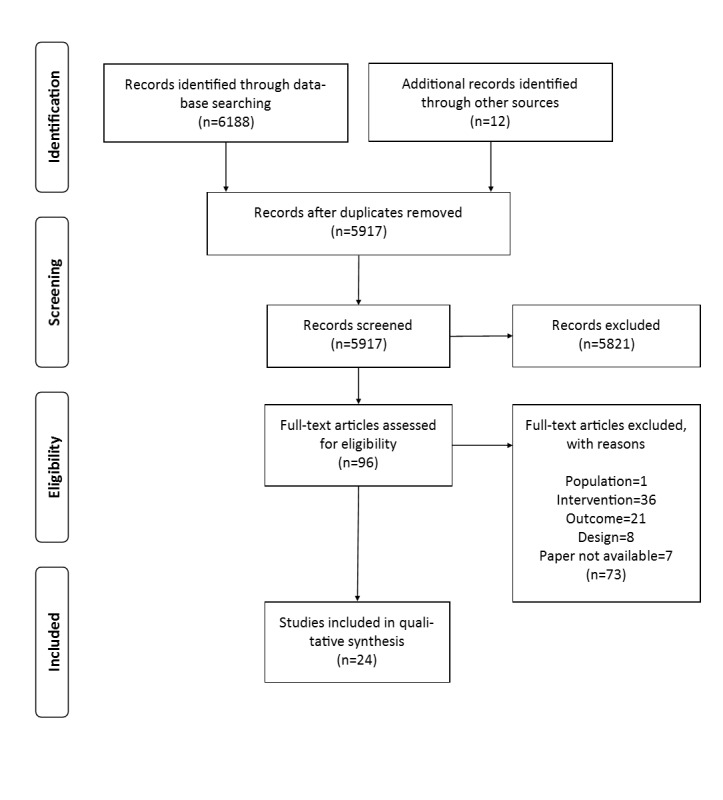
BACKGROUND: Only a few telemedicine applications have made their way into regular care. One reason is the lack of acceptance of telemedicine by potential end users. OBJECTIVE: The aim of this systematic review was to identify theoretical predictors that influence the acceptance of telemedicine. METHODS: An electronic search was conducted in PubMed and PsycINFO in June 2018 and supplemented by a hand search. Articles were identified using predefined inclusion and exclusion criteria. In total, two reviewers independently assessed the title, abstract, and full-text screening and then individually performed a quality assessment of all included studies. RESULTS: Out of 5917 potentially relevant titles (duplicates excluded), 24 studies were included. The Axis Tool for quality assessment of cross-sectional studies revealed a high risk of bias for all studies except for one study. The most commonly used models were the Technology Acceptance Model (n=11) and the Unified Theory of Acceptance and Use of Technology (n=9). The main significant predictors of acceptance were perceived usefulness (n=11), social influences (n=6), and attitude (n=6). The results show a superiority of technology acceptance versus original behavioral models. CONCLUSIONS: The main finding of this review is the applicability of technology acceptance models and theories on telemedicine adoption. Characteristics of the technology, such as its usefulness, as well as attributes of the individual, such as his or her need for social support, inform end-user acceptance. Therefore, in the future, requirements of the target group and the group's social environment should already be taken into account when planning telemedicine applications. The results support the importance of theory-guided user-centered design approaches to telemedicine development.
Overview
The claims and statistics of this paper haven’t been checked yet.
Free: it reads the open-access text and checks the first 5 claims that cite a source we can check. Create a free account to check every claim.
Integrity signals
Registry
Cites
Statistics
Figures
Verification
Claims the paper makes
The claims and statistics of this paper haven’t been checked yet.
Free: it reads the open-access text and checks the first 5 claims that cite a source we can check. Create a free account to check every claim.
Claims other papers make about this one
Each is checked against this paper’s own text: does it say what the citing paper says it does?
The source backs part of the claim, not all of it — or backs it for a different population, condition or comparison.
In the citing paper
“Compared with other traditional behavioral theories (eg, Theory of Planned Behavior, Health Belief Model), the UTAUT seems to have stronger explanatory power for understanding people’s intentions to use telehealth [11].”
From Applying the Unified Theory of Acceptance and Use of Technology to Identify Factors Associated With Intention to Use Teledelivered Supportive Care Among Recently Diagnosed Breast Cancer Survivors During COVID-19 in Hong Kong: Cross-Sectional Survey (2024) · cites this paper as [11]
Experimental — accuracy not yet measuredThe source backs part of the claim, not all of it — or backs it for a different population, condition or comparison.
In the citing paper
“Acceptance, describing attitudes toward and perception of a service or product and their relation to its adaptation (Venkatesh et al., 2003), has been shown to influence actual uptake of new digital interventions, both in industry (Venkatesh et al., 2003) and in (mental) health care (Harst et al., 2019; Philippi et al., 2021; Sora et al., 2021) settings.”
From How to promote usage of telehealth interventions for farmers' mental health? A qualitative study on supporting and hindering aspects for acceptance and satisfaction with a personalized telephone coaching for depression prevention (2023) · cites this paper as Harst et al., 2019
Experimental — accuracy not yet measured
Self-check
Percentages, sums and reported differences re-computed from the paper’s own numbers.
The self-check needs the paper’s full text.
Citations
Cites
Preferred Reporting Items for Systematic Reviews and Meta-Analyses: the PRISMA statement
Moher, D., Liberati, A., Tetzlaff, J., Altman, D. G., & for the PRISMA Group (2009) · BMJ · doi:10.1136/bmj.b2535 · Cited by 83,823
Perceived usefulness, perceived ease of use, and user acceptance of information technology
Davis, F. D. (1989) · MIS Quarterly · doi:10.2307/249008 · Cited by 68,483 · cited 3×
“Although in the TAM, acceptance is defined as “actual system use” [26], in the UTAUT, it is defined as “use behavior” [28].”
BackgroundMethodUser Acceptance of Information Technology: Toward A Unified View1
Venkatesh, V., Morris, M. G., Davis, G. B., & Davis, F. D. (2003) · MIS Quarterly · doi:10.2307/30036540 · Cited by 45,035 · cited 6×
“Although in the TAM, acceptance is defined as “actual system use” [26], in the UTAUT, it is defined as “use behavior” [28].”
BackgroundMethodInfluentialPreferred reporting items for systematic reviews and meta-analyses: the PRISMA Statement.
(2009) · PubMed Central · Cited by 44,859
(1975) · PhilPapers (PhilPapers Foundation) · Cited by 36,737
A Theoretical Extension of the Technology Acceptance Model: Four Longitudinal Field Studies
Venkatesh, V., & Davis, F. D. (2000) · Management Science · doi:10.1287/mnsc.46.2.186.11926 · Cited by 23,066 · cited 5×
“Contradictory to that, the TAM still has the highest amount of variance explained among all the models included in this review: A median R² of 0.68 is achieved by the TAM, compared with an R² of 0.59 for the UTAUT.”
MethodInfluential(1985) · Medical Entomology and Zoology · Cited by 19,180
From Intentions to Actions: A Theory of Planned Behavior
Ajzen, I. (1985) · Action Control · doi:10.1007/978-3-642-69746-3_2 · Cited by 19,057 · cited 8×
“Effect strength and significanceaComponents of the model or theory with significant explanatory power Theoretical model or theoryAuthor (year); Journal Health care provider Original Technology Acceptance Model: PU: ORg 5.28h (95% CI 3.14 to 10.01); PEOU: OR 1.93i (95% CI 1.11 PUe (TAM); PEOUf (TAM); Extended TAM: Comp…”
BackgroundInfluentialHistorical Origins of the Health Belief Model
Rosenstock, I. M. (1974) · Health Education Monographs · doi:10.1177/109019817400200403 · Cited by 6,116 · cited 1×
“The oldest yet still widely used model for health behavior change is the Health Belief Model (HBM) that focuses on the individual assessment of vulnerability, outcomes and costs of behavior change, and external cues toward behavior change [20].”
MethodCochrane Handbook for Systematic Reviews of Interventions
Tarsilla, M. (2010) · Journal of MultiDisciplinary Evaluation · doi:10.56645/jmde.v6i14.284 · Cited by 5,178
Greenhalgh, T., Wherton, J., Papoutsi, C., Lynch, J., Hughes, G., A'Court, C., Hinder, S., Fahy, N., Procter, R., & Shaw, S. (2017) · Journal of Medical Internet Research · doi:10.2196/jmir.8775 · Cited by 2,887 · cited 1×
“The individual end user, on whom this study focuses, according to the NASSS framework, interacts with the organizational and societal context and is constrained by his or her medical status, as well as technological features [32].”
BackgroundSchwarzer, R. (2008) · Applied Psychology · doi:10.1111/j.1464-0597.2007.00325.x · Cited by 2,569
Eysenbach, G. (2001) · Journal of Medical Internet Research · doi:10.2196/jmir.3.2.e20 · Cited by 2,449
Development of a critical appraisal tool to assess the quality of cross-sectional studies (AXIS)
Downes, M. J., Brennan, M. L., Williams, H. C., & Dean, R. S. (2016) · BMJ Open · doi:10.1136/bmjopen-2016-011458 · Cited by 2,376 · cited 2×
“Quality assessment was conducted using the Appraisal Tool for Cross-Sectional Studies (AXIS Tool) for quantitative studies [41].”
BackgroundMethodImplementing, Embedding, and Integrating Practices: An Outline of Normalization Process Theory
May, C., & Finch, T. (2009) · Sociology · doi:10.1177/0038038509103208 · Cited by 2,115 · cited 2×
“The Normalization Process Theory can be helpful in this endeavor, as it proposes a nonlinear understanding of acceptance [31].”
BackgroundKarnowski, V., & Kümpel, A. S. (2016) · Schlüsselwerke der Medienwirkungsforschung · doi:10.1007/978-3-658-09923-7_9 · Cited by 1,311
The literature review of technology adoption models and theories for the novelty technology
Lai, P. (2017) · Journal of Information Systems and Technology Management · doi:10.4301/s1807-17752017000100002 · Cited by 1,062 · cited 1×
“Lai gives a comprehensive review on existing technology acceptance models and theories [35].”
BackgroundHealth behavior models in the age of mobile interventions: are our theories up to the task?
Riley, W. T., Rivera, D. E., Atienza, A. A., Nilsen, W., Allison, S. M., & Mermelstein, R. (2011) · Translational Behavioral Medicine · doi:10.1007/s13142-011-0021-7 · Cited by 978 · cited 2×
“Such theories should, according to the authors, include features and attributes of the technology as well as characteristics of the end users [15].”
BackgroundConstruct Validation of the Health Belief Model
Cummings, K. M., Jette, A. M., & Rosenstock, I. M. (1978) · Health Education Monographs · doi:10.1177/109019817800600406 · Cited by 975
What Is Telemedicine? A Collection of 104 Peer-Reviewed Perspectives and Theoretical Underpinnings
Sood, S., Mbarika, V., Jugoo, S., Dookhy, R., Doarn, C. R., Prakash, N., & Merrell, R. C. (2007) · Telemedicine and e-Health · doi:10.1089/tmj.2006.0073 · Cited by 627 · cited 2×
“Evidence synthesis of theoretical predictors can be found solely for the acceptance of health information systems, such as eHealth records [36], yet it is not found for telemedicine defined as narrow as it is defined by Sood et al [4].”
BackgroundBashshur, R., Shannon, G., Krupinski, E., & Grigsby, J. (2011) · Telemedicine and e-Health · doi:10.1089/tmj.2011.0103 · Cited by 490 · cited 2×
“Although it was intended beforehand to study acceptance relative to broader categories of telemedicine applications [39], the sometimes quite generic terms used in the included studies do not allow for such a nuanced analysis.”
BackgroundKim, J., & Park, H.-A. (2012) · Journal of Medical Internet Research · doi:10.2196/jmir.2143 · Cited by 475 · cited 1×
“The Health Information Technology Acceptance Model proposed by Kim et al in 2012 can serve as suitable model [77].”
MethodBeyond usability: Designing effective technology implementation systems to promote patient safety
Karsh, B.-T. (2004) · Quality and Safety in Health Care · doi:10.1136/qshc.2004.010322 · Cited by 414
A Review of Telehealth Service Implementation Frameworks
Van Dyk, L. (2014) · International Journal of Environmental Research and Public Health · doi:10.3390/ijerph110201279 · Cited by 300 · cited 1×
“Nevertheless, although being used for over 50 years now [6], telemedicine still does not mostly overcome the pilot project stage [7] and therefore never prevails in regular care [8,9].”
BackgroundGagnon, M. P., Orruño, E., Asua, J., Abdeljelil, A. B., & Emparanza, J. (2012) · Telemedicine and e-Health · doi:10.1089/tmj.2011.0066 · Cited by 299 · cited 3×
“Along with the concrete telemedicine application, a target disease or medical condition for which telemedicine was supposed to be used was also not stated in 8 of the included studies [42-44,50-52,57,61].”
BackgroundMethodDeterminants of the intention to use e-Health by community dwelling older people
de Veer, A. J. E., Peeters, J. M., Brabers, A. E., Schellevis, F. G., Rademakers, J. J. J., & Francke, A. L. (2015) · BMC Health Services Research · doi:10.1186/s12913-015-0765-8 · Cited by 298 · cited 6×
“Along with the concrete telemedicine application, a target disease or medical condition for which telemedicine was supposed to be used was also not stated in 8 of the included studies [42-44,50-52,57,61].”
BackgroundMethodInfluentialMobile, social, and wearable computing and the evolution of psychological practice.
Morris, M. E., & Aguilera, A. (2012) · Professional Psychology: Research and Practice · doi:10.1037/a0029041 · Cited by 298
Hennemann, S., Beutel, M. E., & Zwerenz, R. (2017) · Journal of Health Communication · doi:10.1080/10810730.2017.1284286 · Cited by 274 · cited 3×
“Along with the concrete telemedicine application, a target disease or medical condition for which telemedicine was supposed to be used was also not stated in 8 of the included studies [42-44,50-52,57,61].”
BackgroundMethodZhang, X., Han, X., Dang, Y., Meng, F., Guo, X., & Lin, J. (2017) · Informatics for Health and Social Care · doi:10.1080/17538157.2016.1200053 · Cited by 241 · cited 3×
“From a patient perspective, usefulness is achieved when, for example, telemedicine use improves quality of life or makes the care process more convenient for the patient [48].”
BackgroundMethodGreenhalgh, T., Wherton, J., Papoutsi, C., Lynch, J., Hughes, G., A’Court, C., Hinder, S., Procter, R., & Shaw, S. (2018) · BMC Medicine · doi:10.1186/s12916-018-1050-6 · Cited by 232 · cited 1×
“Applying the NASSS framework, Greenhalgh et al find the complex interactions among the 6 levels, especially the organizations and the wider policy system, to be severely hindering telemedicine implementation [79].”
MethodDou, K., Yu, P., Deng, N., Liu, F., Guan, Y., Li, Z., Ji, Y., Du, N., Lu, X., & Duan, H. (2017) · JMIR mHealth and uHealth · doi:10.2196/mhealth.7886 · Cited by 231 · cited 2×
“A total of 6 studies focused on mobile apps [46-48,53,54,63], whereas 3 were concerned with applications based on internet devices, such as Web-based aftercare [29,44,55].”
BackgroundInfluentialOlder Adults' Perceptions of Home Telehealth Services
Cimperman, M., Brenčič, M. M., Trkman, P., & Stanonik, M. D. L. (2013) · Telemedicine and e-Health · doi:10.1089/tmj.2012.0272 · Cited by 228 · cited 1×
“In a qualitative study by Cimperman et al, cost of the technology in use was mentioned as a major concern of older adults [74], which may appeal to funding agencies, such as insurance companies, to provide financial support.”
BackgroundCervical Cancer Screening Barriers and Risk Factor Knowledge Among Uninsured Women
Akinlotan, M., Bolin, J. N., Helduser, J., Ojinnaka, C., Lichorad, A., & McClellan, D. (2017) · Journal of Community Health · doi:10.1007/s10900-017-0316-9 · Cited by 223 · cited 1×
“Telemedicine, as well as every other digital health technology, comes with the promise of changing care delivery for the better, be it by reaching traditionally underserved regions [1] or populations [2] or by enhancing patient-provider communication to facilitate shared decision making [3].”
BackgroundZhang, M., Luo, M., Nie, R., & Zhang, Y. (2017) · International Journal of Medical Informatics · doi:10.1016/j.ijmedinf.2017.09.016 · Cited by 208 · cited 1×
“It can be applied, in combination with other theories, to explain user’s acceptance of wearables [21], which suggests transferability to telemedicine.”
BackgroundBeyond pilotitis: taking digital health interventions to the national level in China and Uganda
Huang, F., Blaschke, S., & Lucas, H. (2017) · Globalization and Health · doi:10.1186/s12992-017-0275-z · Cited by 182
Acceptance Factors of Mobile Apps for Diabetes by Patients Aged 50 or Older: A Qualitative Study
Scheibe, M., Reichelt, J., Bellmann, M., & Kirch, W. (2015) · Medicine 2.0 · doi:10.2196/med20.3912 · Cited by 180 · cited 1×
“Scheibe et al show that design features, such as simple, intuitive menus, large icons and high color contrasts, are especially important for older users [70].”
BackgroundSelf-citationUnderstanding Older People’s Readiness for Receiving Telehealth: Mixed-Method Study
(2018) · doi:10.2196/jmir.8407 · Cited by 159 · cited 1×
“The authors conclude the need for easily available sources for technological support in case of problems with technology use [65].”
BackgroundJang-Jaccard, J., Nepal, S., Alem, L., & Li, J. (2014) · Telemedicine and e-Health · doi:10.1089/tmj.2013.0189 · Cited by 145 · cited 1×
“Telemedicine, as well as every other digital health technology, comes with the promise of changing care delivery for the better, be it by reaching traditionally underserved regions [1] or populations [2] or by enhancing patient-provider communication to facilitate shared decision making [3].”
BackgroundIntention to Use mHealth in Older Adults With Heart Failure
Cajita, M. I., Hodgson, N. A., Budhathoki, C., & Han, H.-R. (2017) · Journal of Cardiovascular Nursing · doi:10.1097/jcn.0000000000000401 · Cited by 135 · cited 6×
“There was no other theory or model used alone, except for the TAM or the UTAUT, the Theory of Interpersonal Behavior (TIB) being one of the remaining, which was used in combination with others most often—3 times [53,56,59].”
BackgroundMethodInfluentialFactors influencing the acceptance of telemedicine for diabetes management
Rho, M. J., Kim, H. S., Chung, K., & Choi, I. Y. (2015) · Cluster Computing · doi:10.1007/s10586-014-0356-1 · Cited by 133 · cited 5×
“It mostly covers the degree of training it would take, both patients and health care professionals, to understand and learn how to use the telemedicine application in question [55,56], and it is sometimes used synonymously with effort expectation [45].”
BackgroundMethodInfluentialFactors influencing the adoption of health information technologies: a systematic review
Garavand, A., Mohseni, M., Asadi, H., Etemadi, M., Moradi-Joo, M., & Moosavi, A. (2016) · Electronic physician · doi:10.19082/2713 · Cited by 131 · cited 1×
“Evidence synthesis of theoretical predictors can be found solely for the acceptance of health information systems, such as eHealth records [36], yet it is not found for telemedicine defined as narrow as it is defined by Sood et al [4].”
BackgroundZailani, S. H. M., Gilani, M. S., Nikbin, D., & Iranmanesh, M. (2014) · Journal of Medical Systems · doi:10.1007/s10916-014-0111-4 · Cited by 128 · cited 1×
“In addition, the authors stress the importance of the existing health culture as a mediator between individual technology assessment and telemedicine acceptance [80].”
BackgroundHennemann, S., Beutel, M. E., & Zwerenz, R. (2016) · Journal of Medical Internet Research · doi:10.2196/jmir.6003 · Cited by 121 · cited 6×
“It mostly covers the degree of training it would take, both patients and health care professionals, to understand and learn how to use the telemedicine application in question [55,56], and it is sometimes used synonymously with effort expectation [45].”
BackgroundMethodInfluentialDeveloping a Questionnaire to Measure Perceived Attributes of eHealth Innovations
Atkinson, N. L. (2007) · American Journal of Health Behavior · doi:10.5993/ajhb.31.6.6 · Cited by 115
Hossain, N., Yokota, F., Sultana, N., & Ahmed, A. (2018) · Telemedicine Journal and e-Health · doi:10.1089/tmj.2018.0039 · Cited by 114 · cited 3×
“Along with the concrete telemedicine application, a target disease or medical condition for which telemedicine was supposed to be used was also not stated in 8 of the included studies [42-44,50-52,57,61].”
BackgroundMethodVanneste, D., Vermeulen, B., & Declercq, A. (2013) · BMC Medical Informatics and Decision Making · doi:10.1186/1472-6947-13-129 · Cited by 111 · cited 5×
“questionnaire for the applied theory or model [29].”
BackgroundMethodInfluentialKoivumäki, T., Pekkarinen, S., Lappi, M., Väisänen, J., Juntunen, J., & Pikkarainen, M. A. (2017) · Journal of Medical Internet Research · doi:10.2196/jmir.7821 · Cited by 111 · cited 1×
“They found no significant influence of performance expectancy on the adoption of digital preventive services [69].”
BackgroundOrruño, E., Gagnon, M. P., Asua, J., & Abdeljelil, A. B. (2011) · Journal of Telemedicine and Telecare · doi:10.1258/jtt.2011.101101 · Cited by 105 · cited 15×
“There was no other theory or model used alone, except for the TAM or the UTAUT, the Theory of Interpersonal Behavior (TIB) being one of the remaining, which was used in combination with others most often—3 times [53,56,59].”
BackgroundMethodInfluentialZHANG, H., COCOSILA, M., & ARCHER, N. (2010) · CIN: Computers, Informatics, Nursing · doi:10.1097/ncn.0b013e3181c0474a · Cited by 98 · cited 2×
“A total of 6 studies focused on mobile apps [46-48,53,54,63], whereas 3 were concerned with applications based on internet devices, such as Web-based aftercare [29,44,55].”
BackgroundMethodHealthcare professional acceptance of telemonitoring for chronic care patients in primary care
Asua, J., Orruño, E., Reviriego, E., & Gagnon, M. P. (2012) · BMC Medical Informatics and Decision Making · doi:10.1186/1472-6947-12-139 · Cited by 95 · cited 6×
“There was no other theory or model used alone, except for the TAM or the UTAUT, the Theory of Interpersonal Behavior (TIB) being one of the remaining, which was used in combination with others most often—3 times [53,56,59].”
BackgroundMethodInfluentialDETERMINANTS OF THE INTENTION TO USE TELEMEDICINE: EVIDENCE FROM PRIMARY CARE PHYSICIANS
Saigi-Rubió, F., Jiménez-Zarco, A., & Torrent-Sellens, J. (2016) · International Journal of Technology Assessment in Health Care · doi:10.1017/s0266462316000015 · Cited by 85 · cited 13×
“Along with the concrete telemedicine application, a target disease or medical condition for which telemedicine was supposed to be used was also not stated in 8 of the included studies [42-44,50-52,57,61].”
BackgroundMethodInfluentialJen, W.-Y., & Hung, M.-C. (2010) · Telemedicine and e-Health · doi:10.1089/tmj.2009.0093 · Cited by 79 · cited 11×
“Effect strength and significanceaComponents of the model or theory with significant explanatory power Theoretical model or theoryAuthor (year); Journal Health care provider Original Technology Acceptance Model: PU: ORg 5.28h (95% CI 3.14 to 10.01); PEOU: OR 1.93i (95% CI 1.11 PUe (TAM); PEOUf (TAM); Extended TAM: Comp…”
BackgroundMethodInfluentialPeeters, J. M., de Veer, A. J., van der Hoek, L., & Francke, A. L. (2012) · Journal of Clinical Nursing · doi:10.1111/j.1365-2702.2012.04173.x · Cited by 77 · cited 3×
“Such processes cannot be captured with a cross-sectional study that, by nature, only covers 1 point in time [62].”
BackgroundMethodSerrano, C., & Karahanna, E. (2016) · MIS Quarterly · doi:10.25300/misq/2016/40.3.04 · Cited by 71
The fitness of apps: a theory-based examination of mobile fitness app usage over 5 months
Herrmann, L. K., & Kim, J. (2017) · mHealth · doi:10.21037/mhealth.2017.01.03 · Cited by 71 · cited 1×
“The TPB is applicable to the use of fitness apps [25].”
MethodDeveloping a questionnaire to measure perceived attributes of eHealth innovations.
Atkinson, N. L. (2008) · PubMed · doi:10.5555/ajhb.2007.31.6.612 · Cited by 67 · cited 3×
“The Diffusion of Innovations Theory by Rogers was used to explain acceptance far less (3 times), yet it still reaches a median R² of 0.57, which is, in part, because of the fact it was once used in combination with the TAM [56].”
MethodInfluentialA systematic review of research methodology in telemedicine studies
Whitten, P., Johannessen, L. K., Soerensen, T., Gammon, D., & Mackert, M. (2007) · Journal of Telemedicine and Telecare · doi:10.1258/135763307781458976 · Cited by 67
Effective Components for Nutrition Interventions: A Review and Application of the Literature
Sahay, T. B., Ashbury, F. D., Roberts, M., & Rootman, I. (2006) · Health Promotion Practice · doi:10.1177/1524839905278626 · Cited by 62 · cited 1×
“When structuring this holistic approach by studying individual, social, environmental, and technological factors of acceptance they recur on behavioral models of acceptance that have been proven to be effective in predicting behavior change in all sorts of health interventions—for example, by Sahay et al [19].”
BackgroundTheoretical frameworks in telemedicine research
Wade, V., Gray, L., & Carati, C. (2017) · Journal of Telemedicine and Telecare · doi:10.1177/1357633x15626650 · Cited by 55 · cited 1×
“There is scarce evidence on which theory or model of technology acceptance or health behavior change is best suited to explain the acceptance and therefore use of telemedicine, as defined above [33,34].”
BackgroundSaigí-Rubió, F., Torrent-Sellens, J., & Jiménez-Zarco, A. (2014) · Implementation Science · doi:10.1186/s13012-014-0128-6 · Cited by 53
Boonstra, A., & Van Offenbeek, M. (2010) · Information Systems Journal · doi:10.1111/j.1365-2575.2010.00358.x · Cited by 50 · cited 1×
“Nevertheless, although being used for over 50 years now [6], telemedicine still does not mostly overcome the pilot project stage [7] and therefore never prevails in regular care [8,9].”
BackgroundA framework for the design of user-centred teleconsulting systems
Esser, P. E., & Goossens, R. H. (2009) · Journal of Telemedicine and Telecare · doi:10.1258/jtt.2008.080601 · Cited by 49 · cited 1×
“However, telemedicine entails changes in patient-provider communication, patient assessment, and engagement [13,14].”
BackgroundMonthuy-Blanc, J., Bouchard, S., Maïano, C., & Séguin, M. (2013) · Transcultural Psychiatry · doi:10.1177/1363461513487665 · Cited by 46 · cited 1×
“They show that whether psychotherapists are willing to use telepsychotherapy is predicted only by whether they find it useful [68].”
BackgroundOtto, L., Harst, L., Schlieter, H., Wollschlaeger, B., Richter, P., & Timpel, P. (2018) · Proceedings of the 11th International Joint Conference on Biomedical Engineering Systems and Technologies · doi:10.5220/0006651005330539 · Cited by 45 · cited 2×
“The term telemedicine is used ambiguously and partly synonymously with others [5].”
BackgroundSelf-citationTelemedicine: Issues and implications
Singh, G., O'Donoghue, J., & Soon, C. K. (2002) · Technology and Health Care · doi:10.3233/thc-2002-10101 · Cited by 41 · cited 1×
“Nevertheless, although being used for over 50 years now [6], telemedicine still does not mostly overcome the pilot project stage [7] and therefore never prevails in regular care [8,9].”
BackgroundExploring Key Factors in the Choice of e-Health Using an Asthma Care Mobile Service Model
Lin, S.-P., & Yang, H.-Y. (2009) · Telemedicine and e-Health · doi:10.1089/tmj.2009.0047 · Cited by 39 · cited 4×
“However, in some of the proposed SEMs, it was circumvented in favor of direct effects of perceived usefulness [46] and perceived ease of use [49].”
BackgroundMethodInfluentialKuhn, E. R., Crowley, J. J., Hoffman, J. E., Eftekhari, A., Ramsey, K. M., Owen, J. E., Reger, G. M., & Ruzek, J. I. (2015) · Professional Psychology Research and Practice · doi:10.1037/pro0000051 · Cited by 38 · cited 4×
“Intention to use telemedicine (or synonyms such as behavioral intention) was used 19 times, probably as only 2 studies reported actual use of their application [54,61], the actual dependent variable in the TAM.”
BackgroundMethodInfluentialIfinedo, P. (2017) · International Journal of Health Policy and Management · doi:10.15171/ijhpm.2017.96 · Cited by 37 · cited 1×
“For the implementation of Health Information Systems, Ifinedo finds factors influencing Canadian nurses’ acceptance to go way beyond technical features [17].”
BackgroundSpaulding, R. J., Russo, T., Cook, D. J., & Doolittle, G. C. (2005) · Journal of Telemedicine and Telecare · doi:10.1258/1357633054461903 · Cited by 35 · cited 4×
“Along with the concrete telemedicine application, a target disease or medical condition for which telemedicine was supposed to be used was also not stated in 8 of the included studies [42-44,50-52,57,61].”
BackgroundInfluentialInternet Services for Communicating With the General Practice: Barely Noticed and Used by Patients
Huygens, M. W., Vermeulen, J., Friele, R. D., van Schayck, O. C., de Jong, J. D., & de Witte, L. P. (2015) · interactive Journal of Medical Research · doi:10.2196/ijmr.4245 · Cited by 34 · cited 3×
“Along with the concrete telemedicine application, a target disease or medical condition for which telemedicine was supposed to be used was also not stated in 8 of the included studies [42-44,50-52,57,61].”
BackgroundDutch Nurses’ Willingness to Use Home Telehealth: Implications for Practice and Education
van Houwelingen, C. T. M., Barakat, A., Best, R., Boot, W. R., Charness, N., & Kort, H. S. M. (2015) · Journal of Gerontological Nursing · doi:10.3928/00989134-20141203-01 · Cited by 29 · cited 7×
“Along with the concrete telemedicine application, a target disease or medical condition for which telemedicine was supposed to be used was also not stated in 8 of the included studies [42-44,50-52,57,61].”
BackgroundMethodInfluentialJun, S., Plint, A. C., Campbell, S., Curtis, S. J., Sabir, K., & Newton, A. S. (2017) · Academic Emergency Medicine · doi:10.1111/acem.13325 · Cited by 25 · cited 1×
“If any insights can be gained from the few studies analyzing acceptance of a certain type of application, it is that acceptance is less of an issue when the basic device used is already familiar to the end user from everyday life, such as mobile phones or Web portals [72].”
BackgroundCosta, C. R., Iglesias, M. J. F., Anido, L., Carballa, M. G., & Valladares‐Rodríguez, S. (2017) · PeerJ · doi:10.7717/peerj.2845 · Cited by 24
James, S., Perry, L., Gallagher, R. D., & LOWE, J. M. (2016) · Journal of Diabetes Science and Technology · doi:10.1177/1932296816646798 · Cited by 19 · cited 4×
“A total of 8 studies dealt with the acceptance of telemedicine applications for chronic diseases, such as diabetes [45,58].”
BackgroundMethodInfluentialBerg, M., Lindén, K., Adolfsson, A., Sparud‐Lundin, C., & Ranerup, A. (2018) · Journal of Medical Internet Research · doi:10.2196/jmir.9665 · Cited by 19 · cited 1×
“Social influence, when phrased positively, can be understood as social support, and it was uncovered to be an important factor in technology acceptance, for example, for Web-based interventions for pregnant women by Berg et al [66].”
BackgroundGeneral practitioners and neurotelemedicine.
Araújo, M. T., Paiva, T., Jesuíno, J. C., & Magalhães, M. (2000) · PubMed · Cited by 15
Dockweiler, C., Kupitz, A., & Hornberg, C. (2018) · Das Gesundheitswesen · doi:10.1055/s-0043-119287 · Cited by 12 · cited 5×
“A total of 4 more applications targeted certain diseases [49,58-60].”
BackgroundMethodInfluentialAngelis, G. D., Davies, B., KING, J. A. C., Wells, G. A., & Brosseau, L. (2017) · Digital Health · doi:10.1177/2055207617700520 · Cited by 9 · cited 1×
“De Angelis et al can even show that health care providers are willing to disseminate health information via Facebook, mainly as the Social Network is easy to use [71].”
BackgroundBringing Care Home: How Telemonitoring Can Expand Population Health Management Beyond the Hospital
Aguilar, K. M., Campbell, R. S., Fiester, A., Simpson, R. L., & Hertel, C. (2014) · Nursing Administration Quarterly · doi:10.1097/naq.0000000000000029 · Cited by 7 · cited 1×
“However, telemedicine entails changes in patient-provider communication, patient assessment, and engagement [13,14].”
BackgroundAbramson, E. L., Silver, M. D., & Kaushal, R. (2014) · The Joint Commission Journal on Quality and Patient Safety · doi:10.1016/s1553-7250(14)40058-8 · Cited by 7 · cited 1×
“the influence of mid- and long-term use of an innovation [78].”
BackgroundBoessen, A., Vermeulen, J., & de Witte, L. (2017) · Patient Preference and Adherence · doi:10.2147/ppa.s135022 · Cited by 6 · cited 1×
“However, they contradict those presented by Boessen et al, who state that intrinsic motivation to use a self-management tool trumps the perception of others, which serves as extrinsic motivation [67].”
ResultChapter 2.2 - General Practitioners and Neurotelemedicine
Madalena, T. A., Teresa, P., Jorge, C. J., & Manuela, M. A. E. (2000) · Studies in health technology and informatics · doi:10.3233/978-1-60750-922-6-45 · Cited by 1
Research works printed but not linked: 4
- Atlas of eHealth country profiles. The use of eHealth in support of universal health coverage 2015 Global Observatory for eHealth 2015 Geneva, Switzerland World Health Organisation (WHO)
- Global diffusion of eHealth. Making universal health coverage achievable Global Observatory for eHealth 2015 Geneva, Switzerland World Health Organisation (WHO)
- Hastall M Dockweiler C Mühlhaus J Achieving end user acceptance: Building blocks for an evidence-based user-centered framework for health technology development and assessment 2017 11th International Conference on Universal Access in Human-Computer Interaction UAHCI July 9–14, 2017 Vancouver, BC, Canada Cham, Switzerland Springer 13 25
- Field A Discovering Statistics Using IBM SPSS Statistics: North American Edition 2018 Los Angeles Sage Publications Ltd 1025
Cited by
Chao, C.-M. (2019) · Frontiers in Psychology · doi:10.3389/fpsyg.2019.01652 · Cited by 1,041
Malliaras, P., Merolli, M., Williams, C. M., Caneiro, J. P., Haines, T., & Barton, C. (2021) · Musculoskeletal Science and Practice · doi:10.1016/j.msksp.2021.102340 · Cited by 213
“The online survey was developed by members of the research team (PM, CB, MM, CW, TH), and informed by previous research related to potential barriers and enablers of telehealth adoption (Dorsey and Topol, 2016; Cottrell and Russell, 2020; Harst et al., 2019; Fernandes et al., 2020).”
Rouidi, M., Elouadi, A. E., Hamdoune, A., Choujtani, K., & Chati, A. (2022) · Informatics in Medicine Unlocked · doi:10.1016/j.imu.2022.101008 · Cited by 202
E-health for the future. Managerial perspectives using a multiple case study approach
Biancone, P., Secinaro, S. F., Marseglia, G. R., & Calandra, D. (2021) · Technovation · doi:10.1016/j.technovation.2021.102406 · Cited by 153
Online Communities as a Driver for Patient Empowerment: Systematic Review
Johansson, V., Íslind, A. S., Lindroth, T., Angenete, E., & Gellerstedt, M. (2021) · Journal of Medical Internet Research · doi:10.2196/19910 · Cited by 151
Metadata
- Authors
- Harst, L., Lantzsch, H., & Scheibe, M.
- Affiliations
- University Hospital Carl Gustav Carus (DE)
- Technische Universität Dresden (DE)
- Corresponding author
- Harst, Lorenz
- Venue
- Journal of Medical Internet Research
- Publisher
- JMIR Publications Inc.
- Published
- 2019-05-21
- Volume
- 21
- Issue
- 5
- Pages
- e13117
- ISSN
- 1438-8871 (ISSN-L)
- PMC
- PMC6547771
- OpenAlex
- W2927203543
- Cited by
- 320
- References
- 81
- Citations by year
- 2026: 30 · 2025: 42 · 2024: 40 · 2023: 54 · 2022: 52 · 2021: 58 · 2020: 31 · 2019: 12
- FWCI
- 6.25
- Type
- journal article
- Language
- en
- Open access
- gold
- doi.org
- Licence
- cc-by
- Locations
- Journal of Medical Internet Research (publishedVersion, cc-by)
- PubMed Central (publishedVersion, cc-by)
- PubMed (publishedVersion)
- Funders
- Freistaat Sachsen
- European Social Fund (100310385)
- Topics
- Health Sciences › Medicine › Public Health, Environmental and Occupational Health › Telemedicine and Telehealth Implementation
- Social Sciences › Decision Sciences › Information Systems and Management › Technology Adoption and User Behaviour
- Health Sciences › Medicine › Geriatrics and Gerontology › Technology Use by Older Adults
- Keywords
- telemedicine, end-user acceptance, technology acceptance model, UTAUT, perceived usefulness, social influence, user attitudes, technology adoption, user-centered design, social support
- MeSH terms
- Cross-Sectional Studies, Female, Humans, Male, Patient Compliance, Telemedicine
About these checks
Registry, retraction, Cites and statistics results are computed, not judged, with one exception: a printed reference that no index lists is read once by a model before it counts as a citation error. Claims are extracted by a model and kept only when their quote appears verbatim in the text; each cited source is then checked, with a model’s help, for whether it says what the claim relies on. Those verdicts can be wrong — read the claim’s quote and the cited source before relying on one.
Statistics and arithmetic are recomputed, not judged.
Confidence bands are shown only for fields calibrated on our annotated test set. None is calibrated yet, so no band is shown.
What counts as a claim ›How we measure confidence ›How we check this ›
Are you an author, or do you see a problem with this page? Request a review
Data sources
Bibliographic data: Semantic Scholar, OpenAlex, Crossref.
Contains information from the Semantic Scholar Academic Graph Datasets, made available under the ODC Attribution License (ODC-BY 1.0).
Semantic Scholar’s data is described in: Kinney, R., et al. (2023). The Semantic Scholar Open Data Platform. arXiv:2301.10140.
