

A Virtual Counseling Application Using Artificial Intelligence for Communication Skills Training in Nursing Education: Development Study
Open accessPublished version of a preprint
The DOI matches its Crossref record; 36 of the 36 references it cites were found in a registry or an index.
Abstract
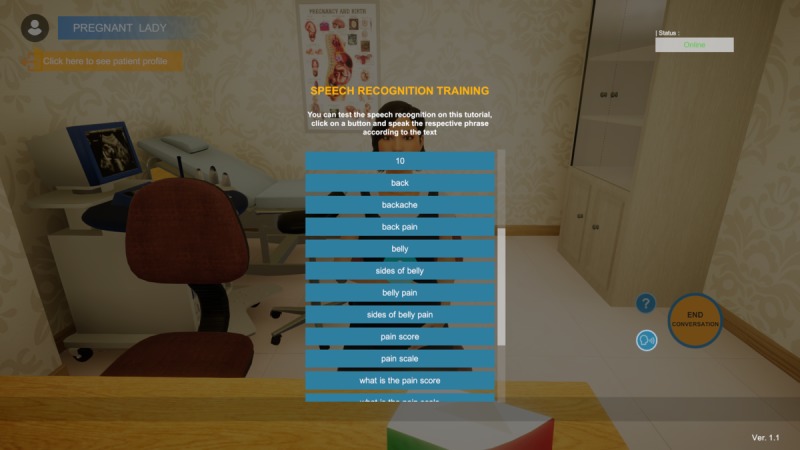
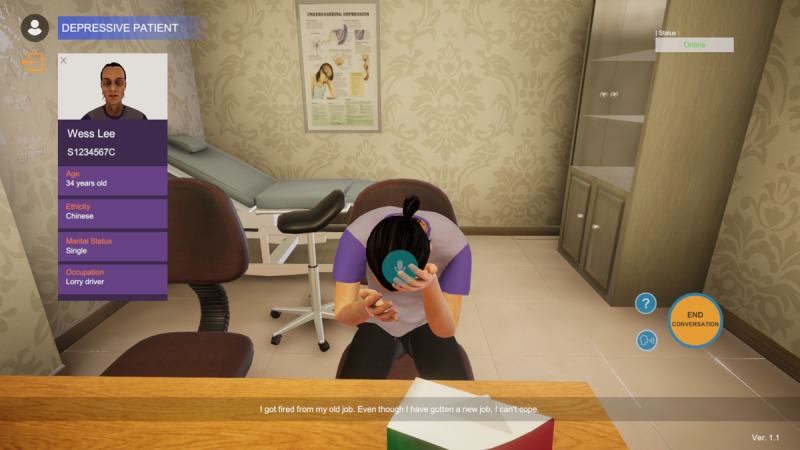
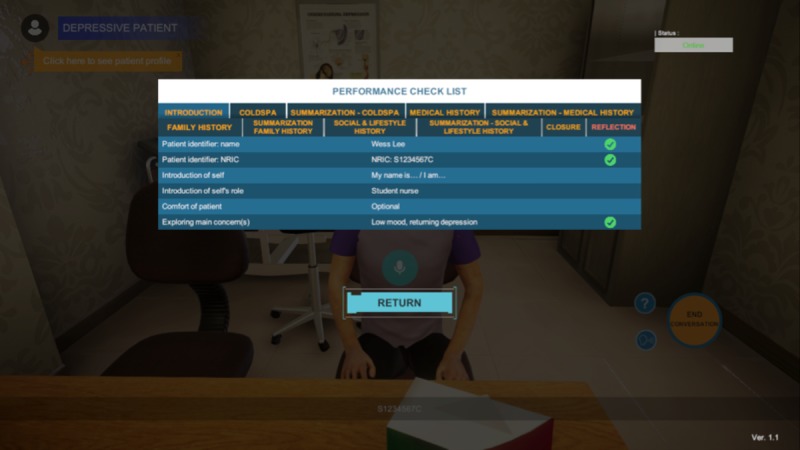
Background: The ability of nursing undergraduates to communicate effectively with health care providers, patients, and their family members is crucial to their nursing professions as these can affect patient outcomes. However, the traditional use of didactic lectures for communication skills training is ineffective, and the use of standardized patients is not time- or cost-effective. Given the abilities of virtual patients (VPs) to simulate interactive and authentic clinical scenarios in secured environments with unlimited training attempts, a virtual counseling application is an ideal platform for nursing students to hone their communication skills before their clinical postings. Objective: The aim of this study was to develop and test the use of VPs to better prepare nursing undergraduates for communicating with real-life patients, their family members, and other health care professionals during their clinical postings. Methods: The stages of the creation of VPs included preparation, design, and development, followed by a testing phase before the official implementation. An initial voice chatbot was trained using a natural language processing engine, Google Cloud’s Dialogflow, and was later visualized into a three-dimensional (3D) avatar form using Unity 3D. Results: The VPs included four case scenarios that were congruent with the nursing undergraduates’ semesters’ learning objectives: (1) assessing the pain experienced by a pregnant woman, (2) taking the history of a depressed patient, (3) escalating a bleeding episode of a postoperative patient to a physician, and (4) showing empathy to a stressed-out fellow final-year nursing student. Challenges arose in terms of content development, technological limitations, and expectations management, which can be resolved by contingency planning, open communication, constant program updates, refinement, and training. Conclusions: The creation of VPs to assist in nursing students’ communication skills training may provide authentic learning environments that enhance students’ perceived self-efficacy and confidence in effective communication skills. However, given the infancy stage of this project, further refinement and constant enhancements are needed to train the VPs to simulate real-life conversations before the official implementation.
Overview
The claims and statistics of this paper haven’t been checked yet.
Free: it reads the open-access text and checks the first 5 claims that cite a source we can check. Create a free account to check every claim.
Integrity signals
Registry
Cites
Statistics
Figures
Verification
Claims the paper makes
The claims and statistics of this paper haven’t been checked yet.
Free: it reads the open-access text and checks the first 5 claims that cite a source we can check. Create a free account to check every claim.
Claims other papers make about this one
Each is checked against this paper’s own text: does it say what the citing paper says it does?
The source backs part of the claim, not all of it — or backs it for a different population, condition or comparison.
In the citing paper
“Additionally, educational chatbots offer the potential to enhance self-confidence and communication skills, particularly for students facing challenges in social communication, highlighting its value as a conversational interface that simulates human interactions and fosters a sense of companionship among students [93,94].”
From Assessing Health Students' Attitudes and Usage of ChatGPT in Jordan: Validation Study (2023) · cites this paper as [94]
Experimental — accuracy not yet measuredThe source backs part of the claim, not all of it — or backs it for a different population, condition or comparison.
In the citing paper
“Additionally, with the rapid advancements in nursing research and the advent of new diseases and medications, nursing professionals are challenged to quickly adapt to evolving medical knowledge, make accurate decisions in real-case scenarios, and master complex nursing skills (1, 17, 26–28).”
From Digital affordances of AI chatbots in nursing education: a systematic review of learning gains and gaps in the evidence (2026) · cites this paper as [17]
Experimental — accuracy not yet measuredThe source backs part of the claim, not all of it — or backs it for a different population, condition or comparison.
In the citing paper
“Shorey et al. (17) found that simulating patient interaction scenarios with AI chatbots helped nursing students strengthen their communication skills.”
From Digital affordances of AI chatbots in nursing education: a systematic review of learning gains and gaps in the evidence (2026) · cites this paper as [17]
Experimental — accuracy not yet measuredThe cited source says what the claim attributes to it.
In the citing paper
“Conversational agents have been demonstrated to supplement and advance education in various forms, such as providing assessment of learners work (Maryadi et al., 2017), increasing peer dialogue (Wang et al., 2020), providing a context for education, for example in coordinating role-play in healthcare education (Shorey et al., 2019), and answering student queries (Gonda & Chu, 2019).”
From Pedagogical AI conversational agents in higher education: a conceptual framework and survey of the state of the art (2025) · cites this paper as Shorey et al., 2019
The cited source says what the claim attributes to it.
In the citing paper
“Early educational research suggests that AI-generated virtual patients may improve learners’ engagement [8, 9], provide unlimited practice opportunities [10–12], and support consistent exposure to rare or sensitive clinical presentations.”
From Utilizing generative artificial intelligence to create simulated patient for history taking in gynecology (2026) · cites this paper as [8]
Self-check
Percentages, sums and reported differences re-computed from the paper’s own numbers.
The self-check needs the paper’s full text.
Citations
Cites
Self-efficacy: the exercise of control
(1997) · Choice Reviews Online · doi:10.5860/choice.35-1826 · Cited by 24,281
Explanation in artificial intelligence: Insights from the social sciences
Miller, T. (2019) · Artificial Intelligence · doi:10.1016/j.artint.2018.07.007 · Cited by 5,302
Self-Regulated Learning and Academic Achievement: An Overview
Zimmerman, B. J. (1990) · Educational Psychologist · doi:10.1207/s15326985ep2501_2 · Cited by 3,687 · cited 1×
“Apart from the acquisition of clinical knowledge and skills, VPs also provide students with opportunities for self-directed learning [24], which leads to reflection [25] and self-driven change [26,27].”
Impact of conceptions of ability on self-regulatory mechanisms and complex decision making.
Wood, R. E., & Bandura, A. (1989) · Journal of Personality and Social Psychology · doi:10.1037//0022-3514.56.3.407 · Cited by 1,555 · cited 1×
“an individual’s confidence about one’s ability to carry out a behavior effectively, and this influences one’s motivation and efforts in performing a specific task, individual goal setting, and perspective [31].”
BackgroundReflective Learning: Key to Learning from Experience
Boyd, E. M., & Fales, A. W. (1983) · Journal of Humanistic Psychology · doi:10.1177/0022167883232011 · Cited by 904 · cited 1×
“Apart from the acquisition of clinical knowledge and skills, VPs also provide students with opportunities for self-directed learning [24], which leads to reflection [25] and self-driven change [26,27].”
Assessing Competence in Communication and Interpersonal Skills: The Kalamazoo II Report
Duffy, F. D., Gordon, G. H., Whelan, G., Cole-Kelly, K., & Frankel, R. (2004) · Academic Medicine · doi:10.1097/00001888-200406000-00002 · Cited by 665 · cited 1×
“Effective communication between nurses and patients involving nurses’ abilities to explain, listen, and empathize is necessary for successful outcomes in individualized patient care [5,6].”
BackgroundVirtual patients: a critical literature review and proposed next steps
Cook, D. A., & Triola, M. M. (2009) · Medical Education · doi:10.1111/j.1365-2923.2008.03286.x · Cited by 624 · cited 1×
“Reviews evaluating the effectiveness of VPs in medical education [17,20] have reported VPs as a cost-effective tool and as successful in facilitating clinical reasonings, communication skills, and ethical reasonings among students when used as an alternative or supplementary tool to existing…”
A Guide to Authentic e-Learning
Herrington, J., Reeves, T. C., & Oliver, R. (2009) · Routledge eBooks · doi:10.4324/9780203864265 · Cited by 595 · cited 2×
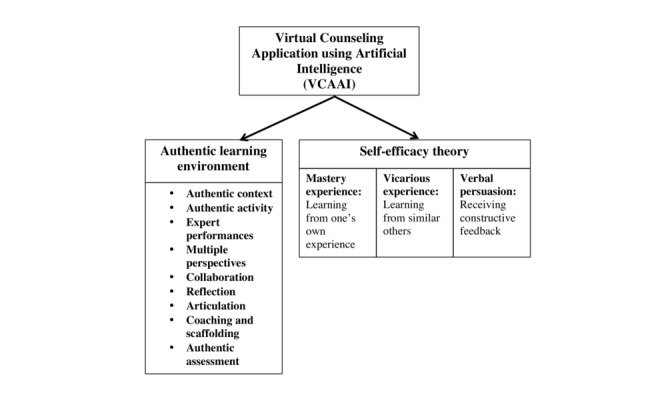
“The theoretical frameworks that guided this study are Bandura’s self-efficacy theory [29] and Herrington et al’s [30] authentic learning concept.”
BackgroundMethodInterprofessional communication in healthcare: An integrative review
Foronda, C., MacWilliams, B., & McArthur, E. (2016) · Nurse Education in Practice · doi:10.1016/j.nepr.2016.04.005 · Cited by 588 · cited 1×
“Poor communication skills have been directly related to high turnover rates; low morale among nurses [2,3]; and poor patient outcomes such as medical errors, poor adherence to the treatment plans, and lower patient care satisfaction [4].”
Communication in Nursing Practice
Kourkouta, L., & Papathanasiou, I. (2014) · Materia Socio Medica · doi:10.5455/msm.2014.26.65-67 · Cited by 409 · cited 1×
“Effective communication between nurses and patients involving nurses’ abilities to explain, listen, and empathize is necessary for successful outcomes in individualized patient care [5,6].”
Cited by
Items 101–200 of 279
Luo, X. (2022) · Wireless Communications and Mobile Computing · doi:10.1155/2022/4922675 · Cited by 13
“Technology in virtual worlds has almost reached the level of international roaming in the US [4].”
BackgroundWestendorp, J., van Vliet, L. M., Meeuwis, S. H., Hartman, T. O., Sanders, A. R. J., Jutten, E., Dirven, M., Peerdeman, K. J., & Evers, A. W. M. (2024) · BMC Medical Education · doi:10.1186/s12909-024-05671-0 · Cited by 14
“Second, a well-known problem of VR is that it remains difficult to be authentic (i.e. to what extent the virtual patient reacts like a real patient) due to technical challenges [23, 40, 41].”
BackgroundQutishat, M., Alhadidi, M. M. B., Shakman, L., Alshdefat, A., Ghunaimi, A.-A. A., & Al-Barwani, S. S. (2025) · Teaching and learning in nursing · doi:10.1016/j.teln.2025.05.016 · Cited by 14
Güngören, Ö. C., Erdoğan, D. G., & Horzum, M. B. (2026) · BMC Psychology · doi:10.1186/s40359-026-03977-w · Cited by 17
Assessment of communication skills in health professions education; Ottawa 2024 consensus statement
Gilligan, C., Bujnowska–Fedak, M. M., Essers, G. T. J. M., Frerichs, W., Brinke, D. J.-T., Perron, N. J., Kiessling, C., Pype, P. F., Tsimtsiou, Z., Nuland, M. V., et al. (2024) · Medical Teacher · doi:10.1080/0142159x.2024.2413021 · Cited by 11
Lilobot: A Cognitive Conversational Agent to Train Counsellors at Children’s Helplines
Grundmann, S., Owayyed, M. A., Bruijnes, M., Vroonhof, E., & Brinkman, W. (2025) · Journal of Medical Systems · doi:10.1007/s10916-024-02121-8 · Cited by 12
“As pointed out earlier, conversational agents designed for training communication skills can provide a safe learning environment, facilitate the development of communication skills [21], and enhance students’ self-efficacy[37].”
Inteligência artificial e enfermagem: reflexão sobre o uso de tecnologias no processo de cuidar
Aydoğdu, A. L. F. (2022) · Revista de Enfermagem da UFJF · doi:10.34019/2446-5739.2020.v6.37017 · Cited by 12
Chang, C., Hwang, G., Tu, Y., Lai, C., & Huang, B. (2022) · Interactive Learning Environments · doi:10.1080/10494820.2022.2160469 · Cited by 12
“For example, nursing sta ff ’ s communication and con fi dence would be improved e ff ectively through the interaction of SPs or VPs (Peddle et al., 2016; Shorey et al., 2019, 2020).”
Chen, X., Liu, S., Tao, Z., Ou, Y., & Xiao, Y. (2022) · BMC Medical Education · doi:10.1186/s12909-022-03318-6 · Cited by 11
“…management platform, the visualization platform integrates the characteristic teaching modules such as open classes, resource databases, micro-course recordings, learning circles, teaching evaluations and learning analyses, which have obvious advantages in teaching process management [14, 15].”
BackgroundKim, J., Won, J., & Lee, Y. (2025) · Nurse Education in Practice · doi:10.1016/j.nepr.2025.104536 · Cited by 10
Kowitlawakul, Y., Tan, J. J. M., Suebnukarn, S., Nguyen, H. D., Poo, D. C. C., Chai, J., Kamala, D. M., & Wang, W. (2024) · CIN: Computers, Informatics, Nursing · doi:10.1097/cin.0000000000001103 · Cited by 10
Kim, C., Austin, R. R., Wurtz, R. M., Delaney, C. W., & Rajamani, S. (2025) · JMIR Nursing · doi:10.2196/84242 · Cited by 15
Zeng, Q., Zhu, J. Y., Wang, Y., Su, S., & Huang, Y. (2026) · BMC Medical Education · doi:10.1186/s12909-026-08685-y · Cited by 10
“Repeated practice with AI-based communication tools may elevate students’ expectations for naturalistic interaction, thereby increasing AI_1’s influence as a network hub [44, 45].”
Artificial Intelligence in Nursing Education: Challenges and Opportunities in the Chinese Context
Jiang, Y. (2024) · Open Journal of Social Sciences · doi:10.4236/jss.2024.1211004 · Cited by 12
“Personalized learning experiences and real-time feedback enable artificial intelligence to assist students acquire the critical thinking abilities needed in demanding healthcare settings (Shorey et al., 2019).”
Halmambetova, E., Nilsson, E., Fagerström, C., Thulesius, H. O., Axelsson, C., Aidemark, J., & Harstäde, C. W. (2025) · Scandinavian Journal of Primary Health Care · doi:10.1080/02813432.2025.2511067 · Cited by 8
“…such as virtual patients, may create authentic learning environments that enhance nurses’ perceived self-efficacy and confidence in telemedicine [41]. system usability has been shown to be important for the successful adoption of telemedicine [42]. the nurses in the present study wished for an…”
Zeng, Q., Zhu, J., Qin, Y., Su, S., & Huang, X. (2025) · Nurse Education Today · doi:10.1016/j.nedt.2025.106899 · Cited by 13
Shi, J. C., Li, X., Ning, Y., Kong, W., Guo, W., Ma, T., Yang, N., Lu, J., Guo, Y., Liu, L., et al. (2025) · BMC Medical Education · doi:10.1186/s12909-025-08324-y · Cited by 11
“A study by Shorey et al. [10], which developed virtual patients and tested the use of them on nursing undergraduates, found the creation of virtual patients to assist in nursing students’ communication skills training may provide authentic learning environments that enhance students’ perceived…”
Lan, Y., Chen, W., Wang, Y., & Chang, Y. (2023) · International Journal of Psychology · doi:10.1002/ijop.12898 · Cited by 10
Hong, H., & Shin, S. (2024) · Journal of Medicine and Life Science · doi:10.22730/jmls.2024.21.3.92 · Cited by 10
The Impact of ChatGPT on Higher Education
Rai, N. K., Bansal, A., Arpita, A., Arya, M., & Shekhar, R. (2024) · International Journal of Computer Applications · doi:10.5120/ijca2024923998 · Cited by 9
Maj, A., Makowska, M., & Sacharczuk, K. (2025) · Applied Nursing Research · doi:10.1016/j.apnr.2025.151919 · Cited by 9
The Usability of Neurological Occupational Therapy Case Studies Generated by ChatGPT
Lee, S.-A., & Park, J. (2025) · Healthcare · doi:10.3390/healthcare13111341 · Cited by 7
“In more complex areas, fine-tuning with curated datasets can improve content reliability [24].”
Daryanto, T., Stil, S., Ding, X., Manesh, D., Lee, S. W., Lee, T., Lunn, S. J., Rodriguez, S. L., Brown, C., & Rho, E. H. R. (2025) · IEEE Symposium on Visual Languages and Human-Centric Computing (VL/HCC) · doi:10.1109/vl-hcc65237.2025.00029 · Cited by 7
“However, existing research has largely focused on general communication training [15]–[20] and standard interview preparation [12], [21]–[28], leaving the domain of technical interview preparation underexplored.”
Yang, Y., Wang, H., Du, K., Wang, X., Zhao, J., Han, D. H., Yang, Y., & Zang, S. (2025) · BMC Nursing · doi:10.1186/s12912-025-03453-7 · Cited by 6
Akyön, Ş. H., & Akyön, F. Ç. (2025) · Ankara Medical Journal · doi:10.5505/amj.2025.63373 · Cited by 6
Malkawi, N. A. A., & Krishan, T. M. (2022) · World Journal of English Language · doi:10.5430/wjel.v13n1p312 · Cited by 6
Liu, Z., Zhang, Q., & Liu, W. (2024) · Heliyon · doi:10.1016/j.heliyon.2024.e28473 · Cited by 7
Semple, C. J., O’Neill, C., Sheehan, S., McCance, T., Drury, A., & Hanna, J. R. (2024) · Journal of Medical Internet Research · doi:10.2196/65619 · Cited by 8
“With technological advances, there is an opportunity to use artificial intelligence and machine learning to generate natural language within the context of simulated virtual patients, enabling interaction with professional learners for the development of communication skills [67].”
Implementation of Artificial Intelligence in nursing education: Α Νarrative Review
Κουκά, Α., Giannelou, E., Konstantinidis, K., & Apostolakis, I. (2025) · Health & Research Journal · doi:10.12681/healthresj.36795 · Cited by 6
“23,28 Certain endpoints were consistent in all studies, showing only minor differences, and were mostly focused on students’ overall learning experience.”
Kaya, A., & Yıldız, G. N. (2025) · Nursing Outlook · doi:10.1016/j.outlook.2025.102609 · Cited by 5
Dikmen, M., & Elmalı, F. (2026) · Journal of Nursing Management · doi:10.1155/jonm/6154880 · Cited by 5
Optimization of potential targets for antidepressant Chinese medicines: AI and multi-omics methods
Lei, C., Chen, Z., Ma, C., Xie, L., Wu, D., Chen, J., & Chen, J. (2026) · Chinese Medicine · doi:10.1186/s13020-025-01320-w · Cited by 5
Educational Applications of AI-Based Chatbots in Nursing: A Scoping Review
Fernandes, F., Encarnação, R., Alves, J., Pais-Vieira, C., de Lima, S. B. S., & Alves, P. (2026) · Nursing Reports · doi:10.3390/nursrep16030087 · Cited by 7
“Gains in skills and competency development (n = 14) [33,40], as well as improvements in clinical reasoning and critical thinking (n = 9), were more commonly associated with simulation-based and case-oriented applications [28,33].”
InfluentialKoivisto, J., Havola, S., Mäkinen, H., & Haavisto, E. (2022) · Springer eBooks · doi:10.1007/978-3-031-09687-7_10 · Cited by 6
AI in Communication Technology and Innovation of AR/VR in Communication
Ramya, R., & Ramamoorthy, S. (2024) · Advances in linguistics and communication studies · doi:10.4018/979-8-3693-3579-6.ch001 · Cited by 8
Eghtedar, S., Soheili, A., & Nemati, S. (2023) · Nursing and Midwifery Journal · doi:10.61186/unmf.21.9.708 · Cited by 5
Ogilvie, L., Prescott, J., Hanley, T., & Carson, J. F. (2021) · Advances in psychology, mental health, and behavioral studies (APMHBS) book series · doi:10.4018/978-1-7998-7991-6.ch013 · Cited by 5
Training Counselors Using Virtual Reality
Holmes, C. M., Tariq, F., Heyward, K., & Hall, D. (2023) · Journal of Technology in Counselor Education and Supervision · doi:10.61888/2692-4129.1021 · Cited by 7
Yan, X., Wang, Z., Chen, O., & Guo, Y. (2026) · Nurse Education Today · doi:10.1016/j.nedt.2026.107217 · Cited by 4
Yang, Z., Zhang, F., Li, X., Mao, D., Lu, R., Zhang, L., Zhang, X., Feng, R., Zhang, L., & Wang, N. (2025) · JBI Evidence Synthesis · doi:10.11124/jbies-24-00165 · Cited by 5
Anwar, S., Yusuf, S., Kada, M. K. R., & Farawansah, F. (2026) · JMIR AI · doi:10.2196/79551 · Cited by 4
“These technologies were primarily used in nursing education to support collaborative learning, simulation-based training, and communication skill development, particularly in pediatric and remote learning contexts [16,22,31].”
InfluentialNursing Students’ Knowledge and Attitudes Regarding Artificial Intelligence
Kadhim, J. J., & Alkhaqani, A. L. (2026) · The Malaysian Journal of Nursing · doi:10.31674/mjn.2026.v17i03.006 · Cited by 4
Development and Validation of Conversational Agent to Pregnancy Safe-education
Montenegro, J. L. Z., da Costa, C. A., Righi, R. D. R., Farias, E. R., & Matté, L. B. (2023) · Journal of Medical Systems · doi:10.1007/s10916-022-01903-2 · Cited by 7
“The effect of a preconception care outreach strategy: the Healthy Pregnancy 4 All study [22] 2019 Preconception Care Feedpal: Understanding Opportunities for Chatbots in Breastfeeding Education of Women in India [23] 2019 Breastfeeding Preconception Care: A Technology-Based Model for Delivery in the Primary Care Setti…”
Kim, K., Chun, C., & Moon, S. (2023) · Bioengineering · doi:10.3390/bioengineering10050615 · Cited by 4
Gellert, G. A. (2023) · PubMed Central · Cited by 4
A Knowledge Graph-based Learning Assistance Systems for Industrial Maintenance
Kohl, L., & Ansari, F. (2024) · Procedia CIRP · doi:10.1016/j.procir.2024.08.305 · Cited by 4
Keshtkaran, Z., Dadgar, F., Karimian, Z., Raesi, R., & kavoosi, J. (2025) · Journal of Education and Health Promotion · doi:10.4103/jehp.jehp_1133_23 · Cited by 6
“[10,11] [12-14] Therefore, establishing effective communication between nurses and patients is essential for successful progress in patient care, and teaching communication skills can foster empathy among nurses and other healthcare team members.”
Martínez‐Vázquez, S., Peinado‐Molina, R. A., Hernández‐Martínez, A., & Martínez‐Galiano, J. M. (2025) · Clinical Simulation in Nursing · doi:10.1016/j.ecns.2025.101699 · Cited by 4
Sehgal, N. K. R., Kambhamettu, H., Chang, A., Zhu, A., Ungar, L., & Guntuku, S. C. (2025) · ACM Conference on Computer Supported Cooperative Work (CSCW) · doi:10.1145/3715070.3749250 · Cited by 8
“Similarly, other work has used avatar-based patients for nursing communication training and chatbot-based modules to improve exam scores on standardized medical interviewing exams [18, 22].”
Han, K. S., Lee, S. Y., & Shin, J. (2023) · Korean Journal of Stress Research · doi:10.17547/kjsr.2023.31.4.149 · Cited by 4
Improving Senior High School Students’ English-Speaking Skill Through Blended Learning Method
Ninsiana, W., Aderlaepe, A., & Huda, M. (2024) · Ta dib · doi:10.31958/jt.v27i1.10718 · Cited by 3
Yiğit, D., & Açıkgöz, A. (2024) · Genel Tıp Dergisi · doi:10.54005/geneltip.1561529 · Cited by 4
Bowers, P. J., Ryan, T., Graydon, K., Lau, J. H., & Tomlin, D. (2025) · Interactive Technology and Smart Education · doi:10.1108/itse-02-2025-0036 · Cited by 3
Yu, Y., Cao, L., Sun, H., Sun, S., Wang, K., Xiao, Y., Luo, H.-Y., Liu, B., Li, J., Wang, L., et al. (2025) · Journal of Craniofacial Surgery · doi:10.1097/scs.0000000000011758 · Cited by 3
Deng, J., Tan, Y., Chen, J., Guo, X., Wang, X., & Xie, C. (2025) · BMC Medical Education · doi:10.1186/s12909-025-08450-7 · Cited by 5
“Four studies [3, 15, 23, 25] assessed the learning outcomes immediately after participants completed virtual simulation training.”
InfluentialAktura, S. Ç., & Dertli, S. (2026) · İzmir Katip Çelebi Üniversitesi Sağlık Bilimleri Fakültesi Dergisi · doi:10.61399/ikcusbfd.1640227 · Cited by 3
Borromeo, A. S., Soyosa, M. D., Mendoza, J. P. E., Yambao, M. J. C., & Wider, W. (2026) · Clinical Simulation in Nursing · doi:10.1016/j.ecns.2026.101911 · Cited by 3
Artificial intelligence in pediatric nursing and its education: A systematic review
Loutfy, A., Elzeiny, A., Foster, M., Alkubati, S. A., Sarman, A., Tuncay, S., Zoromba, M. A., El‐Monshed, A. H., Elzieny, A. A., & Magdi, H. M. (2026) · Journal of Pediatric Nursing · doi:10.1016/j.pedn.2026.03.027 · Cited by 3
Manzanares, M. C. S., Martín, M. Á. M., Llamazares, M. D. C. E., Huerta, J. H. O., Santamaría-Vázquez, M., Val, E. M., Sánchez, R. M., González, Á. A., Díez-Pastor, J.-F., & Arribas, S. R. (2024) · Universidad de Burgos eBooks · doi:10.36443/9788418465802 · Cited by 3
Kishimoto, M., Kaneko, Y., Wakui‐Kimura, A., Tachibana, Y., Sato, F., Kikuchi, T., Matsushita, Y., Hashiguchi, M., Imai, Y., Sakanaya, E., et al. (2025) · BMC Medical Education · doi:10.1186/s12909-025-06821-8 · Cited by 3
“In some training programs using role-playing, professionally trained actors, actual patients, instructors, or even virtual patients (avatars) play the role of patients [15, 32–34].”
Ethical and Legal Challenges in the Use of Robotics for Critical Surgical Interventions
Vashisht, N., Goyal, W., Choudhary, S., Jayakumar, S. S., Patil, S., Mohapatra, C. K., & Kotagiri.Srividya, A. M. S. (2024) · Seminars in Medical Writing and Education · doi:10.56294/mw2024501 · Cited by 3
Maeda‐Minami, A., Yoshino, T., Yumoto, T., Sato, K., Sagara, A., Inaba, K., Kominato, H., Kimura, T., Takishita, T., Watanabe, G., et al. (2023) · BMC Medical Informatics and Decision Making · doi:10.1186/s12911-023-02230-3 · Cited by 6
“Technologies GmbH), but healthcare-related research with these two systems has focused on systems targeting patients [36–40] or on improving communication skills of medical professionals [40].”
BackgroundSistematic review research on artificial intelligence in the counseling profession
Ardimen, A., Dasril, D., Tas’adi, R., Yulitri, R., Ramadhani, D. S., & Rozalina, D. (2023) · AIP conference proceedings · doi:10.1063/5.0148809 · Cited by 5
Welcome to the Metaverse: Virtual Reality in Nursing Professional Development
Coughlin, V., Bolanos, G., Moran, L., Jacob, A., Stanislaus, M. R., & Maydick-Youngberg, D. (2024) · Journal for Nurses in Professional Development · doi:10.1097/nnd.0000000000001073 · Cited by 3
Investigating the Use of Generative ai in M&S Education
Leathrum, J. F., Shen, Y., & Sosonkina, M. (2024) · Winter Simulation Conference · doi:10.1109/wsc63780.2024.10838805 · Cited by 3
“Chatbots have also shown benefit in collaborative student interactions (Tegos et al. 2015) and in improving communication skills (Shorey et al. 2019).”
Gao, L., Zhang, L., Zhang, Y., Wu, M., Xu, J., & Lu, D. (2026) · BMC Medical Education · doi:10.1186/s12909-026-09219-2 · Cited by 4
“Early educational research suggests that AI-generated virtual patients may improve learners’ engagement [8, 9], provide unlimited practice opportunities [10–12], and support consistent exposure to rare or sensitive clinical presentations.”
Wei, S., Wei, W., & Zou, G. (2026) · Frontiers in Medicine · doi:10.3389/fmed.2026.1832598 · Cited by 2
“Several studies have utilized AI chatbots in various methods to assess the quality of nursing education (25), such as Han et al. (16), who employed AI chatbots for assessing skills in electronic fetal monitoring, and Shorey et al. (17), who used AI chatbots in patient communication simulations.”
InfluentialKanbakan, A., Berikol, G. B., İlhan, B., Altıntaş, E., & Doğanay, F. (2026) · BMC Medical Education · doi:10.1186/s12909-025-08539-z · Cited by 2
“In educational contexts, AI-based systems have been reported to enhance communication training by offering instant feedback and guiding students through structured learning experiences [21, 22].”
Ferguson, M., Englund, H. M., & Habeck, J. (2026) · Journal of Professional Nursing · doi:10.1016/j.profnurs.2026.02.012 · Cited by 2
Hesse, J., Johnson, A., Dunsmore, S., & Streff, C. (2026) · Journal of Professional Nursing · doi:10.1016/j.profnurs.2026.04.015 · Cited by 2
Humanization and Communication Skills: A Cross-Sectional Study in Spanish Nursing Students
Ana, P. G.-D. S., Serna-Menor, A., Martínez-García, A., Moreno-Sánchez, R., Ruíz-Núñez, C., García-Notario, A. I., Hervás-Pérez, J. P., & Herrera‐Peco, I. (2026) · Nursing Reports · doi:10.3390/nursrep16050171 · Cited by 2
“This association supports previous evidence indicating that relational skills are not merely complementary but foundational to effective nursing practice [20,28].”
Alhumaidi, B. N., & Alharbi, T. A. F. (2026) · Healthcare · doi:10.3390/healthcare14101407 · Cited by 2
“AI technologies can also transform health education delivery by enabling adaptive, personalized educational experiences [18,19].”
Artificial intelligence generated virtual patients in health professions education: a scoping review
Fang, E., Boon, Y., Ho, J. Y., Tey, N., & Low, M. (2026) · BMC Medical Education · doi:10.1186/s12909-026-10028-w · Cited by 2
“…limitations centered around unrealistic dialog, especially due to virtual patients having a limited range of responses and related difficulty in adapting to the context of the conversation [4, 48, 77, 99, 112], with rule-based dialog systems using scripted responses laboriously crafted by humans.”
Hemşirelik Bakımında İnovatif Yaklaşımlar: Bilişim, Yapay Zekâ ve Robot Teknolojileri
Koyuncu, N. E., KÜÇÜKKÖSELER, A. D., & Sayar, S. (2026) · Journal of Health Sciences and Technologies · doi:10.32739/hst.2026.3.2.41 · Cited by 4
Artificial intelligence (AI) in nursing education: An evolutionary concept analysis
Araújo, A. A. C., Gardim, L., Pramila‐Savukoski, S., Mendes, I. A. C., & Mikkonen, K. (2026) · Nurse Education Today · doi:10.1016/j.nedt.2026.107425 · Cited by 4
Jeon, H. (2024) · Asia-pacific Journal of Convergent Research Interchange · doi:10.47116/apjcri.2024.02.54 · Cited by 2
Manzanares, M. C. S., Martín, M. Á. M., Llamazares, M. D. C. E., Huerta, J. H. O., Santamaría-Vázquez, M., Val, E. M., Sánchez, R. M., González, Á. A., Díez-Pastor, J.-F., & Arribas, S. R. (2024) · Universidad de Burgos eBooks · doi:10.36443/9788418465819 · Cited by 2
Impact and implications of AI methods and tools for the future of education
(2024) · Frontiers research topics · doi:10.3389/978-2-8325-5013-7 · Cited by 2
Altun, E., & Seferoğlu, S. S. (2024) · İnönü Üniversitesi Eğitim Fakültesi Dergisi · doi:10.17679/inuefd.1397735 · Cited by 2
SUN'IY INTELLEKTNING OLIY TA'LIM SIFATI VA SAMARADORLIGIGA TA'SIRI
Utkirov, A. (2024) · Ижтимоий-гуманитар фанларнинг долзарб муаммолари / Актуальные проблемы социально-гуманитарных наук / Actual Problems of Humanities and Social Sciences · doi:10.47390/spr1342v4i9y2024n52 · Cited by 2
Bowen-Withington, J. (2025) · Springer eBooks · doi:10.1007/978-981-96-6001-8_8 · Cited by 2
Tohyama, M., Momosaki, R., Tora, K., & Okuhara, T. (2025) · Cureus · doi:10.7759/cureus.78582 · Cited by 1
“For instance, the efficacy of avatars in training and evaluating communication skills was investigated among healthcare professionals [12,13].”
A comparative study on using artificial intelligence technologies in the nursing domain
Aqel, D., Dahoud, A. A., Murad, A. R. A., & Abdalgani, D. (2025) · AIP conference proceedings · doi:10.1063/5.0271752 · Cited by 2
Paul, L. (2025) · Medical Research Archives · doi:10.18103/mra.v13i7.6786 · Cited by 1
Mut, N. A. I. C., Azmi, N. A., Sukri, N. A. M., Kamal, M. I. M., Ahmad, R. B., Yahya, N. A., Fadzil, M. S. A., Wahid, N. A., Izzuan, H. S., & Shuib, L. M. (2025) · Journal of medical imaging and radiation sciences · doi:10.1016/j.jmir.2025.102124 · Cited by 1
Li, K., Lin, Y., Li, Y., Huang, M. H., Yang, L., Sun, P., Liang, X., & Ni, C. (2025) · Psychology Health & Medicine · doi:10.1080/13548506.2025.2578419 · Cited by 2
Yusuf, H., Money, A., & Daylamani-Zad, D. (2026) · Educational Technology Research and Development · doi:10.1007/s11423-026-10634-x · Cited by 1
Jacob, S., Samuel, S., Antony, G., Hua, S., & Antony, N. (2026) · International Journal of Mental Health Nursing · doi:10.1111/inm.70307 · Cited by 1
“…programs provided platforms to offer diverse learning experiences tailored to teach the nursing process through interaction with virtual patients, followed by feedback on learners' diagnostic decisions and actions taken (Choi et al. 2020; Shorey et al. 2020, 2019, 2023; Sunnqvist et al. 2016).”
Hajjo, R., Abusara, O. H., Sabbah, D. A., Zidan, R., & Bardaweel, S. K. (2026) · Journal of the American Pharmacists Association · doi:10.1016/j.japh.2026.103490 · Cited by 1
Yang, J., Wang, R., Guo, F., & Chen, Y. (2026) · Frontiers in Medicine · doi:10.3389/fmed.2026.1893231 · Cited by 1
“Previous research has indicated that the integration of AI-generated feedback into complex clinical decision-making training facilitates the identification of cognitive blind spots by learners (9).”
Tuncer, G. Z., Duman, Z. Ç., & Kilinçkaya, B. (2026) · Issues in Mental Health Nursing · doi:10.1080/01612840.2026.2710861 · Cited by 1
“…to standardised patients, and despite a few minor limitations, AI-based virtual patients provide safe learning environments and feedback in nursing education, offering extensive opportunities for repeated practice without adverse consequences for real or standardised patients (Shorey et al., 2019).”
Artificial Intelligence in Nursingq
(2022) · doi:10.55162/mcms.03.082 · Cited by 1
Dias, J. M., Halimi, A., Ghorbani, S. S., Jarrahi, A. M., & Al-Marzouqi, A. (2023) · Eastern Journal of Healthcare · doi:10.31557/ejhc.2023.3.1.51-57 · Cited by 1
Intelligens szimulációk a nyelvtanulásban: Az AI-vezérelt pedagógia hatékonysága
Fekete, T., & Porkoláb, Á. (2023) · Eruditio-Educatio · doi:10.36007/eruedu.2023.4.003-017 · Cited by 1
KOMUNIKASI DALAM LINGKUNGAN PEMBELAJARAN ONLINE: SEBUAH STUDI BIBLIOMETRIK
Nuryadin, A. (2023) · Communications · doi:10.21009/communications.5.1.4 · Cited by 1
Emotional intelligence and leadership orientations among university students
Akın, R., & Terzioğlu, F. (2024) · DergiPark (Istanbul University) · Cited by 1
New Perspectives on the Contribution of ChatGPT With AI in the Modern Era
Ayyaswamy, K., Naren, A. K., & Anthony Raj, A. (2024) · Advances in knowledge acquisition, transfer, and management book series/Advances in knowledge acquisition, transfer and management book series · doi:10.4018/979-8-3693-4496-5.ch013 · Cited by 1
Costa, C. J. D. L., Soares, J. D. O., & Pontes, A. N. (2025) · Revista Multidisciplinar do Nordeste Mineiro · doi:10.61164/rmnm.v10i1.4050 · Cited by 1
Bermejo-Franco, A., Martínez‐Caro, L., Medina-Sampedro, M., Rubio-Martínez, L., Ucero‐Lozano, R., & Gaviña-Barroso, M. I. (2023) · Research Square · doi:10.21203/rs.3.rs-2831903/v1 · Cited by 1
Hosters, B., Warmer, S., Hölzgen, T., Schramm, J., Tapp-Herrenbrück, M., Reinshagen, J., Majjouti, K., Arzideh, K., Idrissi-Yaghir, A., Bures, D., et al. (2026) · doi:10.2196/preprints.95359 · Cited by 1
Metadata
- Authors
- Shorey, S., Ang, E., Yap, J., Ng, E. D., Lau, S. T., & Chui, C. K.
- Affiliations
- National University of Singapore (SG)
- Corresponding author
- Shorey, Shefaly
- Venue
- Journal of Medical Internet Research
- Publisher
- JMIR Publications Inc.
- Published
- 2019-10-29
- Volume
- 21
- Issue
- 10
- Pages
- e14658
- ISSN
- 1438-8871 (ISSN-L)
- PMC
- PMC6913997
- OpenAlex
- W2971301364
- Cited by
- 238
- References
- 35
- Citations by year
- 2026: 48 · 2025: 52 · 2024: 43 · 2023: 43 · 2022: 28 · 2021: 14 · 2020: 9 · 2019: 1
- FWCI
- 8.91
- Type
- journal article
- Language
- en
- Open access
- gold
- doi.org
- Licence
- cc-by
- Locations
- Journal of Medical Internet Research (publishedVersion, cc-by)
- Europe PMC (PubMed Central) (publishedVersion, cc-by)
- PubMed Central (publishedVersion, cc-by)
- PubMed (publishedVersion)
- National University of Singapore (submittedVersion, cc-by)
- Funders
- Ministry of Education, India
- Topics
- Social Sciences › Education › Simulation-Based Education in Healthcare
- Health Sciences › Medicine › Health Informatics › Artificial Intelligence in Healthcare and Education
- Social Sciences › Education › Innovations in Medical Education
- Keywords
- virtual patients, online counseling, nursing communication skills, nursing education, chatbots, natural language processing, Dialogflow, 3D avatars, Unity game engine, clinical simulation, empathy, pain assessment, patient history taking, self-efficacy
- MeSH terms
- Virtual Reality, Artificial Intelligence, Clinical Competence, Communication, Counseling, Education, Nursing, Female, Humans
About these checks
Registry, retraction, Cites and statistics results are computed, not judged, with one exception: a printed reference that no index lists is read once by a model before it counts as a citation error. Claims are extracted by a model and kept only when their quote appears verbatim in the text; each cited source is then checked, with a model’s help, for whether it says what the claim relies on. Those verdicts can be wrong — read the claim’s quote and the cited source before relying on one.
Statistics and arithmetic are recomputed, not judged.
Confidence bands are shown only for fields calibrated on our annotated test set. None is calibrated yet, so no band is shown.
What counts as a claim ›How we measure confidence ›How we check this ›
Are you an author, or do you see a problem with this page? Request a review
Data sources
Bibliographic data: Semantic Scholar, OpenAlex, Crossref.
Contains information from the Semantic Scholar Academic Graph Datasets, made available under the ODC Attribution License (ODC-BY 1.0).
Semantic Scholar’s data is described in: Kinney, R., et al. (2023). The Semantic Scholar Open Data Platform. arXiv:2301.10140.
