

A Virtual Counseling Application Using Artificial Intelligence for Communication Skills Training in Nursing Education: Development Study
Open accessPublished version of a preprint
The DOI matches its Crossref record; 36 of the 36 references it cites were found in a registry or an index.
Abstract
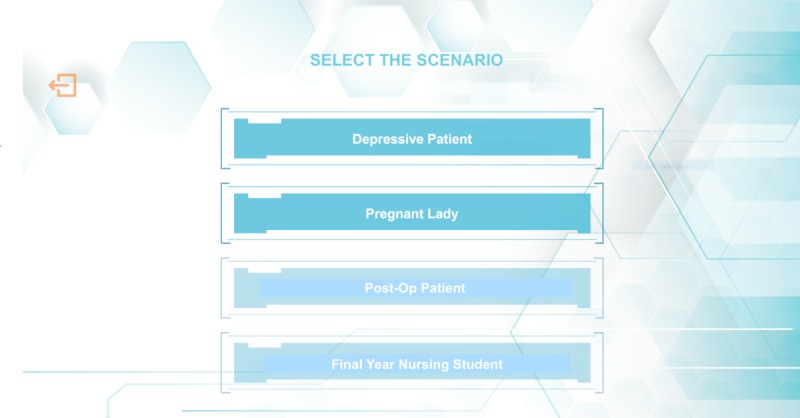
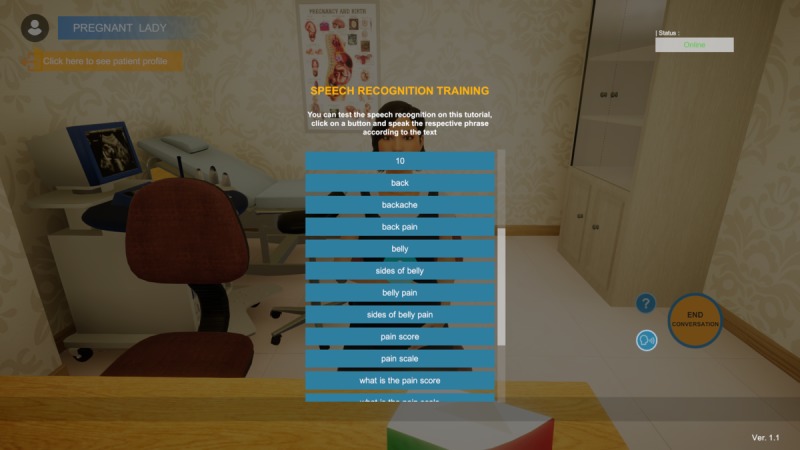
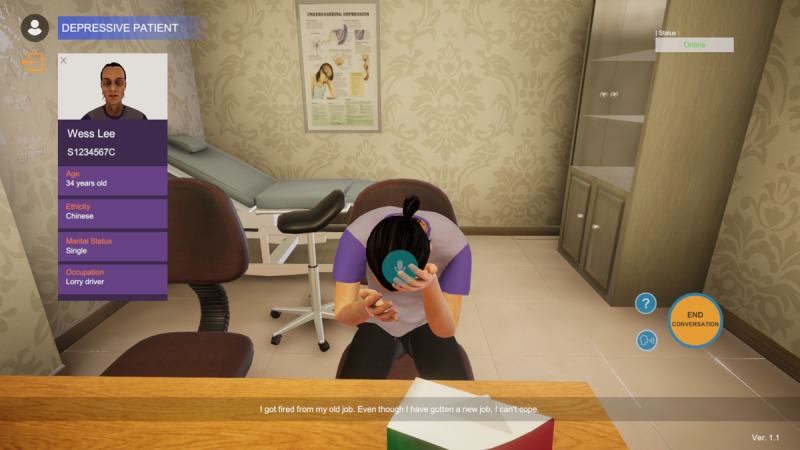
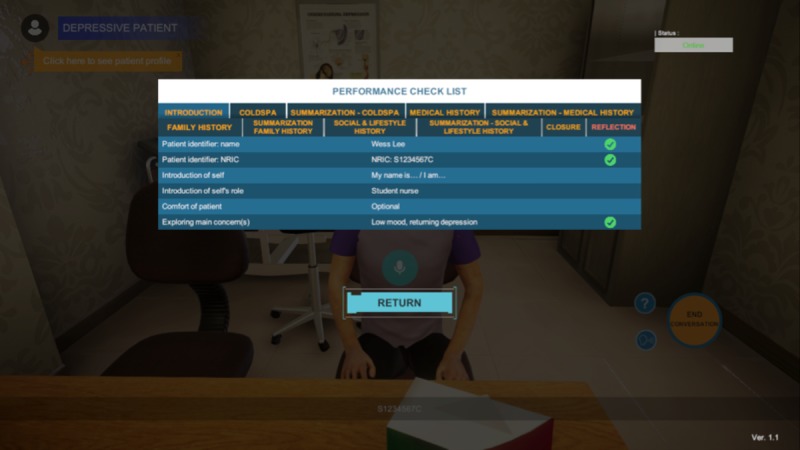
Background: The ability of nursing undergraduates to communicate effectively with health care providers, patients, and their family members is crucial to their nursing professions as these can affect patient outcomes. However, the traditional use of didactic lectures for communication skills training is ineffective, and the use of standardized patients is not time- or cost-effective. Given the abilities of virtual patients (VPs) to simulate interactive and authentic clinical scenarios in secured environments with unlimited training attempts, a virtual counseling application is an ideal platform for nursing students to hone their communication skills before their clinical postings. Objective: The aim of this study was to develop and test the use of VPs to better prepare nursing undergraduates for communicating with real-life patients, their family members, and other health care professionals during their clinical postings. Methods: The stages of the creation of VPs included preparation, design, and development, followed by a testing phase before the official implementation. An initial voice chatbot was trained using a natural language processing engine, Google Cloud’s Dialogflow, and was later visualized into a three-dimensional (3D) avatar form using Unity 3D. Results: The VPs included four case scenarios that were congruent with the nursing undergraduates’ semesters’ learning objectives: (1) assessing the pain experienced by a pregnant woman, (2) taking the history of a depressed patient, (3) escalating a bleeding episode of a postoperative patient to a physician, and (4) showing empathy to a stressed-out fellow final-year nursing student. Challenges arose in terms of content development, technological limitations, and expectations management, which can be resolved by contingency planning, open communication, constant program updates, refinement, and training. Conclusions: The creation of VPs to assist in nursing students’ communication skills training may provide authentic learning environments that enhance students’ perceived self-efficacy and confidence in effective communication skills. However, given the infancy stage of this project, further refinement and constant enhancements are needed to train the VPs to simulate real-life conversations before the official implementation.
Overview
The claims and statistics of this paper haven’t been checked yet.
Free: it reads the open-access text and checks the first 5 claims that cite a source we can check. Create a free account to check every claim.
Integrity signals
Registry
Cites
Statistics
Figures
Verification
Claims the paper makes
The claims and statistics of this paper haven’t been checked yet.
Free: it reads the open-access text and checks the first 5 claims that cite a source we can check. Create a free account to check every claim.
Claims other papers make about this one
Each is checked against this paper’s own text: does it say what the citing paper says it does?
The source backs part of the claim, not all of it — or backs it for a different population, condition or comparison.
In the citing paper
“Additionally, educational chatbots offer the potential to enhance self-confidence and communication skills, particularly for students facing challenges in social communication, highlighting its value as a conversational interface that simulates human interactions and fosters a sense of companionship among students [93,94].”
From Assessing Health Students' Attitudes and Usage of ChatGPT in Jordan: Validation Study (2023) · cites this paper as [94]
Experimental — accuracy not yet measuredThe source backs part of the claim, not all of it — or backs it for a different population, condition or comparison.
In the citing paper
“Additionally, with the rapid advancements in nursing research and the advent of new diseases and medications, nursing professionals are challenged to quickly adapt to evolving medical knowledge, make accurate decisions in real-case scenarios, and master complex nursing skills (1, 17, 26–28).”
From Digital affordances of AI chatbots in nursing education: a systematic review of learning gains and gaps in the evidence (2026) · cites this paper as [17]
Experimental — accuracy not yet measuredThe source backs part of the claim, not all of it — or backs it for a different population, condition or comparison.
In the citing paper
“Shorey et al. (17) found that simulating patient interaction scenarios with AI chatbots helped nursing students strengthen their communication skills.”
From Digital affordances of AI chatbots in nursing education: a systematic review of learning gains and gaps in the evidence (2026) · cites this paper as [17]
Experimental — accuracy not yet measuredThe cited source says what the claim attributes to it.
In the citing paper
“Conversational agents have been demonstrated to supplement and advance education in various forms, such as providing assessment of learners work (Maryadi et al., 2017), increasing peer dialogue (Wang et al., 2020), providing a context for education, for example in coordinating role-play in healthcare education (Shorey et al., 2019), and answering student queries (Gonda & Chu, 2019).”
From Pedagogical AI conversational agents in higher education: a conceptual framework and survey of the state of the art (2025) · cites this paper as Shorey et al., 2019
The cited source says what the claim attributes to it.
In the citing paper
“Early educational research suggests that AI-generated virtual patients may improve learners’ engagement [8, 9], provide unlimited practice opportunities [10–12], and support consistent exposure to rare or sensitive clinical presentations.”
From Utilizing generative artificial intelligence to create simulated patient for history taking in gynecology (2026) · cites this paper as [8]
Self-check
Percentages, sums and reported differences re-computed from the paper’s own numbers.
The self-check needs the paper’s full text.
Citations
Cites
Self-efficacy: the exercise of control
(1997) · Choice Reviews Online · doi:10.5860/choice.35-1826 · Cited by 24,281
Explanation in artificial intelligence: Insights from the social sciences
Miller, T. (2019) · Artificial Intelligence · doi:10.1016/j.artint.2018.07.007 · Cited by 5,302
Self-Regulated Learning and Academic Achievement: An Overview
Zimmerman, B. J. (1990) · Educational Psychologist · doi:10.1207/s15326985ep2501_2 · Cited by 3,687 · cited 1×
“Apart from the acquisition of clinical knowledge and skills, VPs also provide students with opportunities for self-directed learning [24], which leads to reflection [25] and self-driven change [26,27].”
Impact of conceptions of ability on self-regulatory mechanisms and complex decision making.
Wood, R. E., & Bandura, A. (1989) · Journal of Personality and Social Psychology · doi:10.1037//0022-3514.56.3.407 · Cited by 1,555 · cited 1×
“an individual’s confidence about one’s ability to carry out a behavior effectively, and this influences one’s motivation and efforts in performing a specific task, individual goal setting, and perspective [31].”
BackgroundReflective Learning: Key to Learning from Experience
Boyd, E. M., & Fales, A. W. (1983) · Journal of Humanistic Psychology · doi:10.1177/0022167883232011 · Cited by 904 · cited 1×
“Apart from the acquisition of clinical knowledge and skills, VPs also provide students with opportunities for self-directed learning [24], which leads to reflection [25] and self-driven change [26,27].”
Assessing Competence in Communication and Interpersonal Skills: The Kalamazoo II Report
Duffy, F. D., Gordon, G. H., Whelan, G., Cole-Kelly, K., & Frankel, R. (2004) · Academic Medicine · doi:10.1097/00001888-200406000-00002 · Cited by 665 · cited 1×
“Effective communication between nurses and patients involving nurses’ abilities to explain, listen, and empathize is necessary for successful outcomes in individualized patient care [5,6].”
BackgroundVirtual patients: a critical literature review and proposed next steps
Cook, D. A., & Triola, M. M. (2009) · Medical Education · doi:10.1111/j.1365-2923.2008.03286.x · Cited by 624 · cited 1×
“Reviews evaluating the effectiveness of VPs in medical education [17,20] have reported VPs as a cost-effective tool and as successful in facilitating clinical reasonings, communication skills, and ethical reasonings among students when used as an alternative or supplementary tool to existing…”
A Guide to Authentic e-Learning
Herrington, J., Reeves, T. C., & Oliver, R. (2009) · Routledge eBooks · doi:10.4324/9780203864265 · Cited by 595 · cited 2×
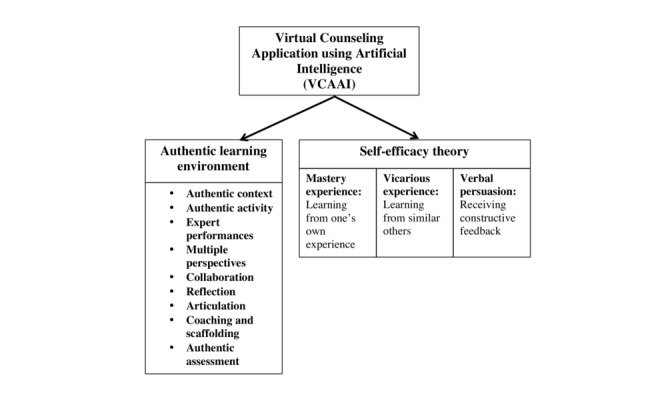
“The theoretical frameworks that guided this study are Bandura’s self-efficacy theory [29] and Herrington et al’s [30] authentic learning concept.”
BackgroundMethodInterprofessional communication in healthcare: An integrative review
Foronda, C., MacWilliams, B., & McArthur, E. (2016) · Nurse Education in Practice · doi:10.1016/j.nepr.2016.04.005 · Cited by 588 · cited 1×
“Poor communication skills have been directly related to high turnover rates; low morale among nurses [2,3]; and poor patient outcomes such as medical errors, poor adherence to the treatment plans, and lower patient care satisfaction [4].”
Communication in Nursing Practice
Kourkouta, L., & Papathanasiou, I. (2014) · Materia Socio Medica · doi:10.5455/msm.2014.26.65-67 · Cited by 409 · cited 1×
“Effective communication between nurses and patients involving nurses’ abilities to explain, listen, and empathize is necessary for successful outcomes in individualized patient care [5,6].”
Cited by
Items 201–279 of 279
Hemşirelik Bakımında Yenilikçi Teknolojiler
Çetin, B., & EROĞLU, N. (2020) · DergiPark (Istanbul University)
La Théorie Interprétative à L’heure de la Traduction Communautaire en Afrique
Sambou, A., Ferreira, A. M. D. A., & Gorovitz, S. (2021) · Belas Infiéis · doi:10.26512/belasinfieis.v10.n4.2021.36795
Shorey, S., Ang, E. N. K., Yap, J. Y. G., Ng, E. D., Lau, S. T., & Chui, C. (2019) · doi:10.2196/preprints.17064
Self-citationHunter, J. F., Schueller, S. M., Walsh, L. C., & Chan, C. (2023) · Frontiers research topics · doi:10.3389/978-2-8325-3790-9
ENHANCING COLLEGE ENGLISH LEARNING WITH VIRTUAL REALITY AND AI TECHNOLOGIES
Zaman, A., Amada, A., Rehman, A., Ali, A., Majeed, M., Khan, S. R., & Saleem, H. (2024) · doi:10.53555/jptcp.v31i3.5174
An Intelligent Semantic Vector Search Model for Grading and Assessing Students
Kgosietsile, T., & Okike, E. U. (2023) · International Conference on Sustainable Technology and Engineering (i-COSTE) · doi:10.1109/i-coste60462.2023.10500811
“…learners to self-study and dataset plays a vital role [19] in coordinating systems behaviors [6], It requires skills and data quality awareness for data-intensive analysis and knowledge-based management [12] which can be a challenging task, however, it still does not replace human beings [13],[7].”
BackgroundJuwita, R., Joshua, W., & Zani, B. N. (2024) · Journal of World Future Medicine Health and Nursing · doi:10.70177/health.v2i3.1045
“This study expands previous knowledge by presenting an innovative approach to communication skills training for gerontology nurses (Shorey et al., 2019).”
BackgroundAge management and intergenerational education in health. Artificial intelligence and virtual
Marone, F., & Navarra, M. (2024) · Form re - Open Journal per la formazione in rete · doi:10.36253/form-15987
“Tali scenari clinici realistici alimentati dall ’ intelligenza artificiale possono aiutare i discenti ad affinare le proprie capacità diagnostiche e decisionali (Shorey et al., 2019).”
BackgroundYamasaki, A., Yoneda, S., 中林, 浩., Yonezawa, T., & Yamada, Y. (2025) · Lecture notes in educational technology · doi:10.1007/978-981-96-4952-5_5
Haigh, D. R. (2025) · Digital USD (University of San Diego) · doi:10.22371/05.2025.009
Dănilă, A.-M., Gurzu, I. L., Novac, B., Novac, O., Petroaie, A. D., Ciobica, A., Vâță, I., Dăscălescu, G., & Gurzu, B. (2025) · BRAIN BROAD RESEARCH IN ARTIFICIAL INTELLIGENCE AND NEUROSCIENCE · doi:10.70594/brain/16.2/10
The Use of Artificial Intelligence in Nursing Science: Emerging Trends Through Bibliometric Analysis
Çetin, S. B., & Cebeci, F. (2025) · CIN Computers Informatics Nursing · doi:10.1097/cin.0000000000001340
Navigating Clinical Shock: Facilitating Nursing Students’ Smooth Transition to the Workplace
Huang, M.-S., Lin, Y.-C., Yang, W.-L., Chien, Y.-Y., Lin, M. L., Lin, S.-J., Ku, Y.-C., Peng, M.-C., Chen, I., Chiu, H.-H., et al. (2025) · International Journal of Studies in Nursing · doi:10.20849/ijsn.v10i2.1516
Lunitsyna, Y. V., Ивановна, Т. С., Ozherelev, P. R., kizi, T. K. F., Kholboeva, N. A., & Stuzhuk, A. S. (2025) · Современные проблемы науки и образования · doi:10.17513/spno.34155
Lajane, H., allioui, W., Gouifrane, R., Arai, M., Idrissi, W. E. M. E., Lamiri, A., Abidi, O., Chemsi, G., & Radid, M. (2025) · doi:10.2196/preprints.82466
Kim, M.-R., & Hong, B. S. (2025) · Journal of Digital Contents Society · doi:10.9728/dcs.2025.26.8.2131
ChatGPT’nin İç Hastalıkları Hemşireliği Eğitimine Yansımaları
Polat, G., Özkütük, N., Orgun, F., & Avdal, E. Ü. (2025) · Celal Bayar Üniversitesi Sağlık Bilimleri Enstitüsü Dergisi · doi:10.34087/cbusbed.1529169
Liu, C., Wang, D., Hwang, G., Tu, Y., Wang, Y., & Su, Y. (2025) · Interactive Learning Environments · doi:10.1080/10494820.2025.2556806
“Communication is not only a core of nursing education but also reflects fundamental values and is often regarded as an inherent skill (Mallow & Gilje, 1999; Shorey et al., 2019).”
Conversational LLMs Video Avatar Training for Healthcare Students
Panzer, G., Doğan, G., Ford, S. H., & Vaughn, J. (2025) · Lecture notes in networks and systems · doi:10.1007/978-3-032-05802-7_9
Zhang, H., Chen, X., Huang, R., Guo, Y., Yang, X., & Zhang, B. (2025) · Research Square · doi:10.21203/rs.3.rs-7503029/v1
Padilla, E. A. J., Pardo, X. M., Vazquez, O., Andeane, P. O., Álvarez-Gómez, R. M., & Estapé, T. (2025) · PSICUMEX · doi:10.36793/psicumex.v15i1.710
Learning about AI, learning with AI
Galliano, C., Norton, A., & Lo, S. (2025) · ASCILITE Publications · doi:10.65106/apubs.2025.2627
Gu, K., Pan, H., Dong, M., Chen, X., & Yuan, H. (2025) · Frontiers in Medicine · doi:10.3389/fmed.2025.1670126
Chen, X., Liu, S., 陶子荣, Ou, Y., & Xiao, Y. (2022) · Figshare · doi:10.6084/m9.figshare.19498507
Maeda‐Minami, A., Yoshino, T., Yumoto, T., Sato, K., Sagara, A., Inaba, K., Kominato, H., Kimura, T., Takishita, T., Watanabe, G., et al. (2024) · Figshare · doi:10.6084/m9.figshare.26604052
Maeda‐Minami, A., Yoshino, T., Yumoto, T., Sato, K., Sagara, A., Inaba, K., Kominato, H., Kimura, T., Takishita, T., Watanabe, G., et al. (2024) · Figshare · doi:10.6084/m9.figshare.26604055
Maeda‐Minami, A., Yoshino, T., Yumoto, T., Sato, K., Sagara, A., Inaba, K., Kominato, H., Kimura, T., Takishita, T., Watanabe, G., et al. (2024) · Figshare · doi:10.6084/m9.figshare.26604049
Chen, X., Liu, S., 陶子荣, Ou, Y., & Xiao, Y. (2022) · Figshare · doi:10.6084/m9.figshare.19498513
Editoriale.: Tra umanità e tecnologie: riflessioni e prospettive per nuovo welfare inclusivo
Amatori, G., Giaconi, C., & Roig-Vila, R. (2024) · Medical Humanities & Medicina Narrativa - MHMN · doi:10.53136/97912218161671
Maeda‐Minami, A., Yoshino, T., Yumoto, T., Sato, K., Sagara, A., Inaba, K., Kominato, H., Kimura, T., Takishita, T., Watanabe, G., et al. (2024) · Figshare · doi:10.6084/m9.figshare.26604058
Chen, X., Liu, S., 陶子荣, Ou, Y., & Xiao, Y. (2022) · Figshare · doi:10.6084/m9.figshare.19498510
Flathmann, M. (2024) · Hochschulschriftenserver Ostfalia Hochschule
Sánchez, R. M. (2022) · Repositorio Institucional de la Universidad de Burgos (University of Burgos)
Pacientova uporaba virtualne resničnosti v perioperativni zdravstveni negi
Nastran, A. (2025) · Repository of the University of Primorsk (University of Primorska)
Theory–Practice Gap Among Saudi Nursing Students and Interns: A Quantitative Study
Yaghmour, S. M., Almalki, B., Almaghrabi, F., Alshehri, F., & Alshehri, J. (2025) · Perspectives In Psychiatric Care · doi:10.1155/ppc/2999678
“Ultimately, these reforms would strengthen the preparedness and competence of nursing graduates, contributing to safer and high-quality healthcare delivery across the country [12].”
Kim, S. H. (2025) · Asia-pacific Journal of Convergent Research Interchange · doi:10.47116/apjcri.2025.12.05
The Role of Artificial Intelligence in Scientific Research: University of Petra as a Case Study
Aburub, F. A. F., Abdel‐Rahem, R. A., Hadi, W. M., & Al-Remawi, M. M. (2026) · Springer eBooks · doi:10.1007/978-3-031-99068-7_13
Chicaiza, R. D. P. P., Quistanchala, J. M. M., Rosas, O. K. C., Manobanda, E. A. L., Solís, L. F. V., Ayala, V. G. J., Villacis, L. P. Q., & Pérez, G. P. L. (2026) · Ibero-American Journal of Health Science Research · doi:10.56183/iberojhr.v6i1.883
Al-Wani, M. M., & Awad, S. D. (2026) · Lecture notes in networks and systems · doi:10.1007/978-981-96-7526-5_36
Avinash, M. N., & Muthu, P. (2026) · doi:10.2196/preprints.92212
López-Oliva, J., Vargas-Chaves, I., & Campo-Chavarro, N. (2026) · Index de Enfermería · doi:10.58807/indexenferm20268078
Turner, L., Mahtani, A. U., Mracek, D. L., & Koutroulis, I. (2026) · Academic Medicine · doi:10.1093/acamed/wvag064
Kaba, A., Shimray, S. R., Zaitoun, E. A., & Refae, G. A. E. (2026) · Open Information Science · doi:10.1515/opis-2025-0038
“Shorey et al. (2019) used a virtual patient chatbot to improve the nursing students ’ communication skills, showing the compliance of chatbot technology to di ff erent learning objectives.”
Krämer, M., & Kramer, T. (2026) · Policy Politics & Nursing Practice · doi:10.1177/15271544251404041
“…health-care, where both technical and interpersonal skills impact patient outcomes, the empathy and communication skills of older professionals play a pivotal role in enhancing patient satisfaction and recovery (AlOmari, 2021; Rider & Keefer, 2006; Sancho-Cantus et al., 2023; Shorey et al., 2019).”
Marashi, M. (2025) · Scholar Commons (University of South Carolina)
Eshah, N. F., Rayan, A., Khalifeh, A. H., Omar, H., Alhasanat, E., Alrawashda, A., & Jafer, L. (2026) · Studies in systems, decision and control · doi:10.1007/978-3-032-15739-3_50
P, M. J. A., Madhesh Kumar, M., Vayshak, K., V, & Surendhar, A. (2026) · INDIAN JOURNAL OF ALLIED HEALTH SCIENCE · doi:10.66159/ijahs.2026.2106
Englar, R. E., & Brett, T. G. (2026) · Journal of Veterinary Medical Education · doi:10.3138/jvme-2025-0158
Wang, S., Yan, H., Yang, Z., Liu, Y., Zhang, T., Tang, Y., & Luo, Y. (2026) · JMIR Serious Games · doi:10.2196/81799
“First, as key providers of perioperative care, health care professionals act as a bridge between technology and patients in VR interventions [83].”
Fang, S., Wen, H., & Zhou, M. (2026) · Progress in Medical Education · doi:10.61189/355565lnuowp
Aydoğan, S., Ergezen, F. D., Kok, A. Y., & Bozkurt, S. A. (2026) · Nurse Education Today · doi:10.1016/j.nedt.2026.107276
Toofaninejad, E., Shapoori, S., & Nobakht, M. (2026) · Journal of Medical Education Development · doi:10.66224/edcj.19.2.131
“Researchers must clearly define the operational constraints of their methods and provide the grounding datasets needed to assess reproducibility and educational safety [6].”
A Bibliometrics Analysis of Online-Counselling over Two Decades (2007-2026)
Lee, J. K. S., & Tan, J. S. (2026) · International Journal of Academic Research in Business and Social Sciences · doi:10.6007/ijarbss/v16-i7/28615
Solechan, A., Sukmawati, E., & Maharani, K. (2026) · JURNAL ILMIAH SAINS TEKNOLOGI DAN INFORMASI · doi:10.59024/jiti.v4i3.2240
Khalil, A. I., Aldehani, R. F., Aljahdali, S. A., Almehemadi, W., & Alharthi, M. M. (2026) · Frontiers in Health Services · doi:10.3389/frhs.2026.1847509
“Furthermore, few studies have examined the combined effects of simulation-based training on both therapeutic communication and psychiatric history-taking skills in psychiatric nursing practice (16).”
Research Progress on Nurses’ Digital Competence: A Scoping Review
周, 霞. (2026) · Nursing Science · doi:10.12677/ns.2026.157233
James Raj, K., & Sharmila, J. (2026) · BMC Nursing · doi:10.1186/s12912-026-05192-9
“The available evidence demonstrates improvements in communication confidence, learner engagement, self-efficacy, communication performance, and educational satisfaction across a range of learning environments [9, 12, 17, 21, 22, 24, 25].”
InfluentialNa, K., & Jeong, Y. (2026) · The Journal of Academic Librarianship · doi:10.1016/j.acalib.2026.103328
Huang, C., Zeng, Q., Zhu, J., Wang, Y., & Huang, X. (2026) · Frontiers in Public Health · doi:10.3389/fpubh.2026.1889617
“(2) Simulation-based interactive courses addressing humanoid-AI fear Simulation-based familiarization with humanoid AI may be evaluated because humanoid-AI fear was statistically prominent and simulation has supported communication-skills training in nursing education (32).”
On AI’s role in training professionals in assisted reproductive technology
Zheng, Y., Wang, Q., Chen, X., Xu, L., & Xu, X. (2026) · Frontiers in Artificial Intelligence · doi:10.3389/frai.2026.1856714
“ChatGPT-assisted Problem-Based Learning (PBL) has been associated with improved knowledge assessments (Hui et al., 2025), and virtual patient simulations have been shown to enhance nursing communication and self-efficacy (Shorey et al., 2019; Simms, 2025).”
Diri, R. M. (2026) · Indian Journal of Pharmaceutical Education and Research · doi:10.5530/ijper.20262970
Akbari, N. A., Faheemullah, F., & Muhabat, S. (2026) · Afghan Medical Journal · doi:10.70194/6ty9z150
Barbosa, A. K., & Lima, W. T. (2025) · Puçá: Revista de Comunicação e Cultura na Amazônia
Role of Nursing in Presence of Digital Applications in Health Facilities
Manar.I.Alziqarti, F. A. A. (2025) · Evolutionary Studies in Imaginative Culture
Artificial Intelligence and Patient Safety Culture in a Hospital Pharmacy Setting
Abdallah, W., Mcnally, M., Al-Abdulrazzaq, M., Mousa, T., & Abdallah, S. (2026) · Studies in systems, decision and control · doi:10.1007/978-3-032-27683-4_120
Nardo, M. D., Innocenzi, P. M., & Pensieri, C. (2024) · Medical Humanities & Medicina Narrativa - MHMN · doi:10.53136/97912218161678
Synergy of Artificial Intelligence in Facilitating English Language Learning
Razaq, R. (2026) · Liberal Journal of Language & Literature Review
(2026) · Issues in Information Systems · doi:10.48009/2_iis_2026_122
AI Agent-Enabled Virtual Simulations Education Reform: A systematic review and the CIE framework
Yu, R. (2026) · Artificial Intelligence and Societal Development · doi:10.66267/aisd.01.01.0001
Recalibrating Nursing Education: A Call to Action for Moving from Pedagogy to Andragogy
Porter-O’Grady, T., Malloch, K., & Scott, K. (2026) · Nursing Education Perspectives · doi:10.1097/01.nep.0000000000001589
Alfouzan, A. A., Alsadoun, A. S., Alharbi, F., Aloudah, A. N., Alghamdi, Y. A., & Aldhamri, Y. (2026) · JOURNAL OF CLINICAL AND DIAGNOSTIC RESEARCH · doi:10.7860/jcdr/2026/92145.24622
Deng, Y. (2026) · International Conference on Intelligent Education and Computer Technology (IECT) · doi:10.1145/3845354.3845545
“Existing research demonstrates that artificial intelligence not only optimizes the allocation of teaching resources but also enhances personalized support during the nursing learning process [5].”
Tian, X., Guo, T., Quan, P., Fu, J., Zhang, K. L., & Liu, Y. (2026) · Counselling and Psychotherapy Research · doi:10.1002/capr.70244
Strategies to incorporate AI in nursing practice.
Hernández, F. J. H. (2024) · Deposito de Investigacion Universidad de Sevilla (University of Seville)
Shaleah, A. Z. M., Biswas, R. K., Rony, M. K. K., Khatun, M. T., Akhter, S., Najnin, M. B., Biswas, S., & Alharrasi, M. (2026) · Journal of Nursing Management · doi:10.1155/jonm/8272597
Hemşirelikte Yapay Zekâ ve Etik: Mahremiyet, Algoritmik Önyargı ve İnsan Denetimi
Yıldız, N., & Altınbaş, Y. (2026) · Özgür Yayınları eBooks · doi:10.58830/ozgur.pub1577.c6485
Yapay Zekâ Çağında Hemşirelik: Dijital Dönüşüm ve Bakım Uygulamaları
Altınbaş, Y. (2026) · Özgür Yayınları eBooks · doi:10.58830/ozgur.pub1577
Gönenç, İ. M., Çetinkaya, Ş. Ş., Sözbir, Ş. Y., Dikmen, H. A., & Türkoğlu, B. (2026) · Nurse Education in Practice · doi:10.1016/j.nepr.2026.105011
Metadata
- Authors
- Shorey, S., Ang, E., Yap, J., Ng, E. D., Lau, S. T., & Chui, C. K.
- Affiliations
- National University of Singapore (SG)
- Corresponding author
- Shorey, Shefaly
- Venue
- Journal of Medical Internet Research
- Publisher
- JMIR Publications Inc.
- Published
- 2019-10-29
- Volume
- 21
- Issue
- 10
- Pages
- e14658
- ISSN
- 1438-8871 (ISSN-L)
- PMC
- PMC6913997
- OpenAlex
- W2971301364
- Cited by
- 238
- References
- 35
- Citations by year
- 2026: 48 · 2025: 52 · 2024: 43 · 2023: 43 · 2022: 28 · 2021: 14 · 2020: 9 · 2019: 1
- FWCI
- 8.91
- Type
- journal article
- Language
- en
- Open access
- gold
- doi.org
- Licence
- cc-by
- Locations
- Journal of Medical Internet Research (publishedVersion, cc-by)
- Europe PMC (PubMed Central) (publishedVersion, cc-by)
- PubMed Central (publishedVersion, cc-by)
- PubMed (publishedVersion)
- National University of Singapore (submittedVersion, cc-by)
- Funders
- Ministry of Education, India
- Topics
- Social Sciences › Education › Simulation-Based Education in Healthcare
- Health Sciences › Medicine › Health Informatics › Artificial Intelligence in Healthcare and Education
- Social Sciences › Education › Innovations in Medical Education
- Keywords
- virtual patients, online counseling, nursing communication skills, nursing education, chatbots, natural language processing, Dialogflow, 3D avatars, Unity game engine, clinical simulation, empathy, pain assessment, patient history taking, self-efficacy
- MeSH terms
- Virtual Reality, Artificial Intelligence, Clinical Competence, Communication, Counseling, Education, Nursing, Female, Humans
About these checks
Registry, retraction, Cites and statistics results are computed, not judged, with one exception: a printed reference that no index lists is read once by a model before it counts as a citation error. Claims are extracted by a model and kept only when their quote appears verbatim in the text; each cited source is then checked, with a model’s help, for whether it says what the claim relies on. Those verdicts can be wrong — read the claim’s quote and the cited source before relying on one.
Statistics and arithmetic are recomputed, not judged.
Confidence bands are shown only for fields calibrated on our annotated test set. None is calibrated yet, so no band is shown.
What counts as a claim ›How we measure confidence ›How we check this ›
Are you an author, or do you see a problem with this page? Request a review
Data sources
Bibliographic data: Semantic Scholar, OpenAlex, Crossref.
Contains information from the Semantic Scholar Academic Graph Datasets, made available under the ODC Attribution License (ODC-BY 1.0).
Semantic Scholar’s data is described in: Kinney, R., et al. (2023). The Semantic Scholar Open Data Platform. arXiv:2301.10140.
