

The DOI matches its Crossref record; 109 of the 109 references it cites were found in a registry or an index.
Machine Learning and Natural Language Processing in Mental Health: Systematic Review
Open accessPublished version of a preprint
Abstract
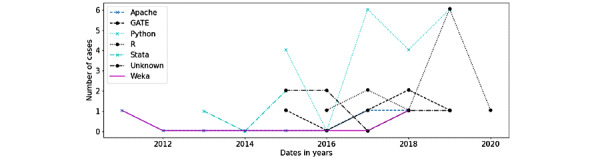
BACKGROUND: Machine learning systems are part of the field of artificial intelligence that automatically learn models from data to make better decisions. Natural language processing (NLP), by using corpora and learning approaches, provides good performance in statistical tasks, such as text classification or sentiment mining. OBJECTIVE: The primary aim of this systematic review was to summarize and characterize, in methodological and technical terms, studies that used machine learning and NLP techniques for mental health. The secondary aim was to consider the potential use of these methods in mental health clinical practice. METHODS: This systematic review follows the PRISMA (Preferred Reporting Items for Systematic Review and Meta-analysis) guidelines and is registered with PROSPERO (Prospective Register of Systematic Reviews; number CRD42019107376). The search was conducted using 4 medical databases (PubMed, Scopus, ScienceDirect, and PsycINFO) with the following keywords: machine learning, data mining, psychiatry, mental health, and mental disorder. The exclusion criteria were as follows: languages other than English, anonymization process, case studies, conference papers, and reviews. No limitations on publication dates were imposed. RESULTS: A total of 327 articles were identified, of which 269 (82.3%) were excluded and 58 (17.7%) were included in the review. The results were organized through a qualitative perspective. Although studies had heterogeneous topics and methods, some themes emerged. Population studies could be grouped into 3 categories: patients included in medical databases, patients who came to the emergency room, and social media users. The main objectives were to extract symptoms, classify severity of illness, compare therapy effectiveness, provide psychopathological clues, and challenge the current nosography. Medical records and social media were the 2 major data sources. With regard to the methods used, preprocessing used the standard methods of NLP and unique identifier extraction dedicated to medical texts. Efficient classifiers were preferred rather than transparent functioning classifiers. Python was the most frequently used platform. CONCLUSIONS: Machine learning and NLP models have been highly topical issues in medicine in recent years and may be considered a new paradigm in medical research. However, these processes tend to confirm clinical hypotheses rather than developing entirely new information, and only one major category of the population (ie, social media users) is an imprecise cohort. Moreover, some language-specific features can improve the performance of NLP methods, and their extension to other languages should be more closely investigated. However, machine learning and NLP techniques provide useful information from unexplored data (ie, patients' daily habits that are usually inaccessible to care providers). Before considering It as an additional tool of mental health care, ethical issues remain and should be discussed in a timely manner. Machine learning and NLP methods may offer multiple perspectives in mental health research but should also be considered as tools to support clinical practice.
Overview
The claims and statistics of this paper haven’t been checked yet.
Run the check — free, no account needed. It reads the open-access text and checks the sources it cites.
Integrity signals
Registry
Cites
Statistics
Figures
Verification
Claims the paper makes
The claims and statistics of this paper haven’t been checked yet.
Run the check — free, no account needed. It reads the open-access text and checks the sources it cites.
Self-check
Percentages, sums and reported differences re-computed from the paper’s own numbers.
The self-check needs the paper’s full text.
Citations
Cites
Shamseer, L., Moher, D., Clarke, M., Ghersi, D., Liberati, A., Petticrew, M., Shekelle, P., Stewart, L. A., & the PRISMA-P Group (2015) · BMJ · doi:10.1136/bmj.g7647 · Cited by 13,120
Foundations of statistical natural language processing
Manning, C. D., & Schütze, H. (1999) · Cited by 9,816
Insel, T., Cuthbert, B., Garvey, M., Heinssen, R., Pine, D. S., Quinn, K., Sanislow, C., & Wang, P. (2010) · American Journal of Psychiatry · doi:10.1176/appi.ajp.2010.09091379 · Cited by 7,067 · cited 2×
“The former includes data on genetics and neuroscience in its classification of mental health disorders, whereas the latter is solely based on clinical data [107].”
An introduction to latent semantic analysis
Landauer, T. K., Foltz, P. W., & Laham, D. (1998) · Discourse Processes · doi:10.1080/01638539809545028 · Cited by 4,880 · cited 1×
“…new matrix represent aggregates of words and aggregates of documents where each dimension is not interpretable per se, but when words or documents are represented as vectors in this new latent system of coordinates, the scalar product of vectors can be used as a semantic relatedness measure [34].”
Artificial intelligence in healthcare: past, present and future
Jiang, F., Jiang, Y., Zhi, H., Dong, Y., Li, H., Ma, S., Wang, Y., Dong, Q., Shen, H., & Wang, Y. (2017) · Stroke and Vascular Neurology · doi:10.1136/svn-2017-000101 · Cited by 4,837 · cited 1×
“Indeed, ML is widely used in critical disease models in cardiology, neurology, and diabetes research [6] to automatically identify heart disease risk factors [7], to classify primary progressive aphasia subtypes [8], and for the characterization and diagnosis of cognitive impairments [9], diabetes,…”
Harris, Z. S. (1954) · WORD · doi:10.1080/00437956.1954.11659520 · Cited by 4,807
Motivational Interviewing: Helping People Change
Tober, G. (2013) · Alcohol and Alcoholism · doi:10.1093/alcalc/agt010 · Cited by 4,267
Deo, R. C. (2015) · Circulation · doi:10.1161/circulationaha.115.001593 · Cited by 3,466 · cited 1×
“At the same time, even though thousands of papers have been published using medical data, very few have made meaningful contributions to clinical practices [111].”
Machine Learning Applications in Cancer Prognosis and Prediction
Kourou, K., Exarchos, T. P., Exarchos, K. P., Karamouzis, M. V., & Fotiadis, D. I. (2015) · Computational and Structural Biotechnology Journal · doi:10.1016/j.csbj.2014.11.005 · Cited by 3,338
A few useful things to know about machine learning
Domingos, P. (2012) · Communications of the ACM · doi:10.1145/2347736.2347755 · Cited by 3,326
Research works printed but not linked: 7
- GauthierEBrissonLLencaPRagusaSBreast Cancer Risk Score: a Data Mining Approach to Improve ReadabilityThe International Conference on Data Mining2011CDM'11June 23-27, 2011Las Vegas, United States1521
- GauthierEBrissonLLencaPClavel-ChapelonFRagusaSChallenges to Building a Platform for a Breast Cancer Risk ScoreSixth International Conference on Research Challenges in Information Science201205RCIS'12June 1-7, 2012Valencia, Spain
- Bughin, J, 2017, McKinsey Global Institute, 80
- Hays, DG, 1967, Introduction to Computational Linguistics, Mathematical Linguistics and Automatic Language Processing
- Chollet, F, 2017, Deep Learning with Python
- Sarasohn-Kahn, J, 2008, Technical report, California HealthCare Foundation
- Ross, J, 2015, Stud Health Technol Inform, 216, 736
Cited by
Sorted by citations
Items 301–400 of 577
Quillivic, R., Auxéméry, Y., Gayraud, F., Dayan, J., & Mesmoudi, S. (2025) · Journal of the American Medical Informatics Association · doi:10.1093/jamia/ocaf075 · Cited by 3
Case Identification of Depression in Inpatient Electronic Medical Records: Scoping Review
Grothman, A., Ma, W. J., Tickner, K. G., Martin, E. A., Southern, D. A., & Quan, H. (2024) · JMIR Medical Informatics · doi:10.2196/49781 · Cited by 2
Yuan, Y., Liu, Z., Miao, W., & Tian, X. (2024) · Frontiers in Psychiatry · doi:10.3389/fpsyt.2024.1439720 · Cited by 4
Trends in AI for Disease and Diagnostic Prediction: A Healthcare Perspective
Mishra, S. K., Chhetri, T., Balakrishnan, A., Roy, S., Gurung, K., Praba, J. J., & Georrge, J. J. (2025) · Information systems engineering and management · doi:10.1007/978-3-031-84404-1_5 · Cited by 2
Kohli, M., Juneja, M., Gupta, M., Kar, A. K., Sairam, S., Prakash, V. G., & Prathosh, A. P. (2025) · Biomedical Signal Processing and Control · doi:10.1016/j.bspc.2025.108034 · Cited by 3
The Role of Digital Technology in Youth Suicide Prevention
Kenny, B., Robinson, J., & Núñez, D. (2025) · Depression and personality · doi:10.1007/978-3-031-96037-6_8 · Cited by 3
Sreela, B., Hema, R., Alapati, P. R., Othman, N. A., Sathishkumar, P., & Rao, V. S. (2025) · Global Conference in Emerging Technology (GINOTECH) · doi:10.1109/ginotech63460.2025.11076758 · Cited by 2
“To overcome these challenges with understanding natural language, new developments in Artificial Intelligence (AI) propose newer and better algorithms for interpretation [5].”
AI-Driven Behavioral Analysis of Aggression in Indian Tribal Adolescents
P, A. K. M., Menon, P., & Namitha, K. (2025) · doi:10.1109/iccsp64183.2025.11089294 · Cited by 2
“Another systematic review details the application of ML and NLP in extracting symptoms, classifying the severity of illness, comparing therapy effectiveness, and providing psychological insights using medical records and social media [29].”
Speech and Language Markers as Longitudinal Predictors of Youth Mental Health: A Systematic Review
Silva, M. S., Ahrens, J., Meister, F., & Palaniyappan, L. K. (2025) · Early Intervention in Psychiatry · doi:10.1111/eip.70102 · Cited by 2
“Recent advances in machine learning and NLP present promising opportunities for mental health prediction (Glaz et al. 2021); however, only three of the reviewed studies used NLP or advanced machine learning models (Agurto et al. 2020; Bedi et al. 2015; Corcoran et al. 2018), all of which focused on…”
Evaluation of AI-based mental health interventions using the grey relational analysis
Anjum, R., Daud, S., Bhatti, G. A., & Saddique, F. (2025) · Grey Systems Theory and Application · doi:10.1108/gs-03-2025-0031 · Cited by 2
Language of change in online narratives of recovery from disordered gaming
Kavvadias, S., Schivinski, B., Arachchilage, N. A. G., Brown, T., & Stavropoulos, V. (2026) · Scientific Reports · doi:10.1038/s41598-025-33991-8 · Cited by 3
“To better understand sufferers’ experiences and recovery journeys, we center the uncensored voices of people seeking help in their own peer-support communities 3,14,15,20 )?”
Artificial Intelligence-generated Feedback as a Training Tool for Enhancing Psychotherapy Skill
Young, J. N., Schruff, M. A., Mudryk, E. P., & Bentley, J. P. (2026) · Journal of Technology in Behavioral Science · doi:10.1007/s41347-026-00603-9 · Cited by 2
Huang, X., Goh, H. H., He, T., Zhang, D.-D., Dai, W., Kurniawan, T. A., Goh, K. C., Wong, H. Y., Islam, M. T., & Liang, X. (2026) · Journal of Chinese Integrative Medicine · doi:10.1016/j.joim.2026.02.004 · Cited by 2
Digital mental health needs a purpose-driven approach
Househ, M. S., Shah, H. A., Tariq, Z. U. A., Hassan, D. A., Khalifa, M., Schneider, J., Hamdi, M., Abd-Alrazaq, A. A., Ahmad, A., Solaiman, B., et al. (2026) · Nature Human Behaviour · doi:10.1038/s41562-025-02380-6 · Cited by 3
“Lastly, data heterogeneity, resulting from combining various types of data—such as imaging, electronic health records and social media—requires specialized analytical approaches to ensure results are clinically meaningful 138 .”
Khalid, M. U., Nauman, M. M., Rehman, S. U., Zaini, J., AlSagri, H. S., & Shafqat, S. N. (2026) · Expert Systems with Applications · doi:10.1016/j.eswa.2026.131771 · Cited by 2
Artificial intelligence in the psychologist’s toolkit: Psypilot as a case study
Roca, P., Zangri, R. M., Rodriguez-Fernandez, G., Sanchez-Pedreño, M., & del Valle, E. P. G. (2026) · Frontiers in Psychology · doi:10.3389/fpsyg.2026.1775464 · Cited by 4
An, Y., Hou, N., & Lv, Z. (2026) · Wiley Interdisciplinary Reviews Data Mining and Knowledge Discovery · doi:10.1002/widm.70084 · Cited by 3
“…to prevailing techniques widely used today in computer vision (Mochida et al. 2019), audio analysis (L. Deng and Li 2013), natural language processing (Le Glaz et al. 2021), robot control (Aparanji et al. 2017), manufacturing (Dogan and Birant 2021), medical diagnosis (Arun Bhavsar et al. 2021).”
Pangsrisomboon, P., Pyae, A., Thawitsri, N., & Liulak, S. (2022) · Communications in computer and information science · doi:10.1007/978-3-031-14832-3_4 · Cited by 2
Violence Detection with Machine Learning: A Sociodemographic Approach
Ensarı, T., ENSARİ, B., & Dağtekin, M. (2023) · European Journal of Science and Technology · doi:10.31590/ejosat.1225896 · Cited by 2
U.S. Newspaper Coverage of Lung Cancer Screening From 2010 to 2022
Zippi, Z. D., Cortopassi, I. O., Johnson, E., McDermott, S., Mergo, P. J., Petranović, M., Price, M. C., Stowell, J. T., & Little, B. P. (2023) · American Journal of Roentgenology · doi:10.2214/ajr.23.29066 · Cited by 2
Pool-Cen, J. M., Carlos, H., Hernández-Chan, G., & Siordia, O. S. (2023) · Healthcare · doi:10.3390/healthcare11071057 · Cited by 5
“For depression, for example, there exist multidisciplinary solutions that use demographic and genetic information to improve antidepressant treatments [15], or applications based on Natural Language Processing (NLP) that successfully detect depression [16–18].”
BackgroundSantos, E., Lattari, L. G., Coelho, M., & Castro, B. (2024) · Congresso Brasileiro de Inteligência Computacional (CBIC) · doi:10.21528/cbic2023-061 · Cited by 2
Linguistic Harmony in Diversity: Lemmatizing Rojak Malay for Global Communication
Yong, J. Z. H., Koh, J. Y., Liew, J. X., & Tan, C. W. (2024) · International Conference on Digital Transformation and Applications (ICDXA) · doi:10.1109/icdxa61007.2024.10470819 · Cited by 2
“Lemmatization is a fundamental NLP technique involving the reduction of words to their basic or root forms [7], [8].”
BackgroundAfşin, Y., & Temizel, T. T. (2024) · Lecture notes in computer science · doi:10.1007/978-3-031-58226-4_1 · Cited by 1
Mental Health Detection using Machine Learning
Naidu, P. B., Ruchitha, M. M. C., Yaswanth, P., Harika, B., Prabhu, P., & Sree, G. V. D. (2024) · International Journal of Innovative Science and Research Technology (IJISRT) · doi:10.38124/ijisrt/ijisrt24apr701 · Cited by 2
Nasreen Taj, M. B., & S, G. G. (2024) · International Conference on Distributed Computing and Electrical Circuits and Electronics (ICDCECE) · doi:10.1109/icdcece60827.2024.10548960 · Cited by 2
“Enabling this comprehension is made possible by modern Natural Language Processing (NLP) methods, which can analyze huge volumes of unstructured feedback data in a systematic design [3].”
BackgroundMazur, M., & Krukow, P. (2024) · Current Problems of Psychiatry · doi:10.12923/2353-8627/2024-0013 · Cited by 2
Amirian, S., Kekre, A., Loganathan, B. J., Chavan, V., Kandula, P., Littlefield, N. G., Franco, J. R., Tafti, A. P., & Ebuenyi, I. D. (2024) · Cambridge Prisms Global Mental Health · doi:10.1017/gmh.2024.114 · Cited by 2
Bernal-Salcedo, J., Álvarez, C. V., Tabares, M. T., Rendón, S. M., Gonzáles-Martínez, G., & Castaño-Ramírez, O. M. (2025) · Current Psychology · doi:10.1007/s12144-025-07373-2 · Cited by 2
“This ability to learn from data and adapt to new situations makes machine learning a powerful tool in a variety of applications, including predicting outcomes of interest in fields like mental health (Le Glaz et al., 2021).”
Hutahaean, J., & Simon, K. (2025) · International Petroleum Technology Conference · doi:10.2523/iptc-24706-ms · Cited by 2
Exploring mental health literacy on twitter: A machine learning approach
Lien, Y., Feng, H., Tseng, Y., Chen, C.-H., & Tseng, W.-H. (2025) · Journal of Affective Disorders · doi:10.1016/j.jad.2025.04.097 · Cited by 2
Al-Kershi, L., Al-Tamimi, A., & Azzeh, M. (2025) · Network Modeling Analysis in Health Informatics and Bioinformatics · doi:10.1007/s13721-025-00527-z · Cited by 2
Automated Trauma Detection by Using Machine Learning
Qaisar, B. S., Shahid, M. A., Ashraf, S., Adnan, M., Azeem, M. M., Ali, M., & Nauman, M. (2025) · doi:10.38124/ijisrt/25aug1009 · Cited by 2
Isacsson, N. H., Gómez-Zaragozá, L., Abdesslem, F. B., Boman, M., & Kaldo, V. (2025) · Internet Interventions · doi:10.1016/j.invent.2025.100879 · Cited by 2
“…recent review found that most of the literature of NLP in mental health does not concern using text for predicting treatment outcome, but rather on predicting diagnose, categorizing texts (emotional content, or therapeutic processes) and evaluating links to concurrent symptoms (Glaz et al., 2021).”
Ahmad, S. R., Tarabochia, A. D., Budahn, L., LeMahieu, A., Anderson, B. K., Vashistha, K., Karnatovskaia, L. V., & Gajic, O. (2022) · Frontiers in Medicine · doi:10.3389/fmed.2022.826169 · Cited by 2
Singh, C., Gangwar, M., & Kumar, U. (2022) · International Journal on Recent and Innovation Trends in Computing and Communication · doi:10.17762/ijritcc.v10i11.5786 · Cited by 2
Natural Language Processing – Finding the Missing Link for Oncologic Data, 2022
Krauze, A. V., & Camphausen, K. A. (2022) · International Journal of Bioinformatics and Intelligent Computing · doi:10.61797/ijbic.v1i1.140 · Cited by 2
A Study of Machine Learning Models for Predicting Mental Health Through Text Analysis
Kadam, D., & Reddy, K. T. V. (2023) · DMIHER International Conference on Artificial Intelligence in Healthcare, Education and Industry (IDICAIHEI) · doi:10.1109/idicaiei58380.2023.10406845 · Cited by 2
Siswanto, V. G. A., & Overbeek, M. V. (2024) · AIP conference proceedings · doi:10.1063/5.0235496 · Cited by 3
Psychotherapy is Not One Thing: Simultaneous Modeling of Different Therapeutic Approaches
Mehta, M., Caperton, D. D., Axford, K., Weitzman, L. M., Atkins, D. C., Srikumar, V., & Imel, Z. E. (2022) · Workshop on Computational Linguistics and Clinical Psychology (CLPsych) · doi:10.18653/v1/2022.clpsych-1.5 · Cited by 2
Chapter 8. Personalized Medicine in Psychiatry
Perna, G., Alciati, A., & Nemeroff, C. B. (2024) · American Psychiatric Association Publishing eBooks · doi:10.1176/appi.books.9781615375523.as08 · Cited by 2
Fu, G., Qi, H., Zhao, Q. Q., Song, C., Zhai, W., Luo, D., Liu, S., Yu, Y. J., Wang, F., Zou, H., et al. (2023) · Research Square · doi:10.21203/rs.3.rs-3355484/v1 · Cited by 3
Tresner‐Kirsch, D., Yinka-Banjo, C., Akinyemi, M., & Ajayi, O. O. (2023) · doi:10.2196/preprints.51954 · Cited by 2
A PSO‐Based Hybrid Cardiovascular Disease Prediction for Using Artificial Flora Algorithm
Aggarwal, R., Singh, G., & Aggarwal, E. (2024) · doi:10.1002/9781394287420.ch12 · Cited by 2
Scherbakov, D., Hubig, N., Lenert, L. A., Alekseyenko, A. V., & Obeid, J. S. (2024) · doi:10.2196/preprints.67192 · Cited by 2
A Methodological Review of Artificial Intelligence Technology Application in Mental Health DisordersPreprint
Muslehat, A. A., Okodeh, S. O., Aguda, O. E., & Nwoye, E. (2025) · Preprints.org · doi:10.20944/preprints202505.2312.v1 · Cited by 1
Unraveling Tortured Phrases in the Scientific Literature through the Lens of TalbotsPreprint
Nguyen, T. H., Tran, T. Q., Hai, P. H., & Tan, N. H. (2023) · Research Square · doi:10.21203/rs.3.rs-3622785/v1 · Cited by 2
Cosic, K., Kuljanac, A., & Palermo, S. (2026) · Frontiers in psychology · doi:10.3389/fpsyg.2026.1821242 · Cited by 3
Importance of mental readiness in highly stressful professions
Faculty of Electrical Engineering and Computing, U. O. Z., Ćosić, K., Kopilaš, V., University of Zagreb Faculty of Croatian Studies, Z., Jovanović, T., & Department of Psychiatry and Behavioral Neurosciences, W. S. U. S. O. M. (2025) · Psychiatria Danubina · doi:10.24869/psyd.2025.132 · Cited by 1
“…the prediction of human mental readiness and performance by analyzing complex patterns of large neu- ro-psycho-physiological datasets, considering operational context and human performance during startle operations (Chen et al., 2022; Garriga et al., 2022; Le Glaz et al., 2021; Sabry et al., 2022).”
A Case Study: Disease Code (ICD-10) Classification in Turkish Medical Summary Dataset
Özsönmez, D. B., & Acarman, T. (2023) · Lecture notes in networks and systems · doi:10.1007/978-981-99-1726-6_41 · Cited by 1
Countering flaws in algorithm design and applications: a Delphi study
Gokhale, A. A. (2024) · AI & Society · doi:10.1007/s00146-024-02124-6 · Cited by 1
Assessment and Intervention for Children with Autism: Are AI Technology Interventions Effective?
Shen, Y.-B., Yu, X., & Liao, X.-L. (2024) · International Conference on Educational Technology (ICET) · doi:10.1109/icet62460.2024.10869182 · Cited by 1
“Finally, AI can help patients avoid stigma, leading to increased self-exposure behaviors [19].”
Mental Distress in English Posts from r/AmITheAsshole Subreddit Community with Language Models
Guan, Q. (2025) · Corpus-based Studies across Humanities · doi:10.1515/csh-2025-0006 · Cited by 1
Using Semantic Pattern Method for Evaluating Foreign Language Texts of Mineral Resources Profile
Евгеньевна, М. Ю. (2025) · XLinguae · doi:10.18355/xl.2025.18.02.06 · Cited by 1
Hemmo, M., Akhtar, A., Kohrt, B. A., Pedersen, G. A., Alkamel, A. F., Martin-Söelch, C., Schafer, A., Spaaij, J., Bryant, R. A., & Morina, N. (2025) · Cambridge Prisms Global Mental Health · doi:10.1017/gmh.2025.10023 · Cited by 1
“Application of artificial intelligence and natural language processing show promise for automated assessment and feedback (Le Glaz et al., 2021; Malgar-oli et al., 2023).”
Holistix: A Dataset for Holistic Wellness Dimensions Analysis in Mental Health Narratives
Shakeel, H., Ahmad, T., & Saxena, C. (2025) · IEEE International Conference on Data Engineering Workshops (ICDEW) · doi:10.1109/icdew67478.2025.00031 · Cited by 1
“Studies have demonstrated the potential of AI and NLP techniques to analyze social media content, enabling monitoring of mental health indicators across diverse populations [6], [7].”
Garbage Detection Using Deep Learning Methods (GD-DLM)
Azeem, M. M., Mehdi, S. A., Shahid, M. A., Hussain, M., Adnan, M., Spogmai, & Qaisar, B. S. (2025) · doi:10.38124/ijisrt/25sep396 · Cited by 1
Intelligent Assessment of College Students' Mental Health based on Hybrid Decision Tree Algorithm
Yu, X. (2025) · International Conference on Intelligent Computing and Knowledge Extraction (ICICKE) · doi:10.1109/icicke65317.2025.11136440 · Cited by 1
“Le Glaz et al. (2021) [17] wrote an extensive Systematic Review on Machine Learning and Natural Language Processing in Mental Health.”
Unsupervised Learning for Detection of Cognitive Distortions in Patient Narratives
Bobo, S., & Kolonin, A. G. (2025) · Studies in computational intelligence · doi:10.1007/978-3-032-07690-8_43 · Cited by 1
Applications of artificial intelligence in tooth extraction: A systematic review
Hamada, M., Nomura, R., Akitomo, T., Kusaka, S., Iwamoto, Y., Yamamoto, S., Ogaya, Y., & Nakano, K. (2025) · Journal of Dental Sciences · doi:10.1016/j.jds.2025.10.007 · Cited by 1
Bu, W., Wu, X., Wang, C., & Cai, Y. (2025) · Frontiers in Pharmacology · doi:10.3389/fphar.2025.1669995 · Cited by 1
Risk Analysis of Mental Health Using Chatbot Based on Text Detection Model
Nagaraju, M., Kakulapati, V., Vaishnavi, P., Neha, A. N. S. V., & Vaishnavi, M. (2025) · Lecture notes in electrical engineering · doi:10.1007/978-981-95-0269-1_165 · Cited by 1
Han, W., Gong, F., Wu, P., Wang, C., Ma, W., Wang, P., Yang, S., Wendong, N., & Yang, M. (2025) · Ocean Engineering · doi:10.1016/j.oceaneng.2025.122986 · Cited by 2
Enhancing University Student Mental Health Through AI-Driven Personalized Bibliotherapy
Bakon, K. A., Subramaniam, T., Raya, L. B., Sauid, Z. B., & Elias, N. F. (2025) · doi:10.1109/iceei68459.2025.11331190 · Cited by 1
“Pre-training models including GPT and BERT have showcased remarkable performance using emotion and contextual understanding of language to support effective mental health intervention [12].”
Dinsa, E. F., Das, M. K., & Urgessa, T. (2026) · Discover Applied Sciences · doi:10.1007/s42452-026-08318-5 · Cited by 2
Understanding mental health discourse on Reddit with transformers and explainability
Rodríguez, I. S., Bianchi, J., Pinelli, F., Panizza, F., Ricciardi, E., Pietrini, P., & Petrocchi, M. (2026) · Scientific Reports · doi:10.1038/s41598-026-35918-3 · Cited by 5
Harnessing artificial intelligence to capture online mental health stigma: A scoping review
Wright, E., Fisch, C. T., Goldman, H. H., Dixon, L. B., & Amsalem, D. (2026) · Psychiatry Research · doi:10.1016/j.psychres.2026.116999 · Cited by 1
Marafino, B. J., Kline‐Simon, A. H., Stavers-Sosa, I., Cronkite, D., Gerstley, L. D., Durojaiye, C., Kelley, A. M., Kiel, L. M., Ramaprasan, A., Carrell, D., et al. (2026) · BMC Psychiatry · doi:10.1186/s12888-026-07846-z · Cited by 2
“In fact, numerous studies demonstrate the utility of NLP-based prediction models for various psychiatric conditions [9, 10].”
Mental health-aware sentiment analysis using a hybrid quantum–classical approach
Rawat, K. S., Pandey, G. S., & Sharma, T. K. (2026) · The Journal of Supercomputing · doi:10.1007/s11227-026-08281-3 · Cited by 2
A Voice-Controlled Robotic System Using ChatGPT for Intuitive Human-Robot Interaction
Cortés, F., Chicaiza, F. A., Pilco, A., Moya, V., Gatica, G., & Vásconez, J. P. (2026) · Communications in computer and information science · doi:10.1007/978-3-032-16761-3_28 · Cited by 1
Shankhwar, N., Ünal, A., & Singh, S. (2026) · Elsevier eBooks · doi:10.1016/b978-0-443-26466-5.00012-x · Cited by 1
Rohei, M. S., Varathan, K. D., Shivakumara, P., & Anuar, N. B. (2026) · PeerJ Computer Science · doi:10.7717/peerj-cs.3559 · Cited by 1
On the Effectiveness of Radio Environmental Map Prediction Through Image-Based Deep Learning
Hosseinzadeh, M., Barbiroli, M., Vitucci, E. M., Degli‐Esposti, V., & Fuschini, F. (2026) · IEEE Transactions on Antennas and Propagation · doi:10.1109/tap.2026.3676109 · Cited by 3
“In recent years, ML has demonstrated remarkable success in fields such as computer vision (object detection or recognition), natural language processing, and biomedical analysis [32], [33], [34].”
Saarikivi, J., Hjellvik, V., Tiihonen, J., Lähteenvuo, M., Taipale, H. T., Odsbu, I., & Lieslehto, J. (2026) · Schizophrenia Research · doi:10.1016/j.schres.2026.03.013 · Cited by 1
Transforming depression research: The role of artificial intelligence and computational modelling
Somkuwar, S. S., Hussain, U., Sahu, D. C., Sheikh, D. M. T., Sheikh, S. M., Gautam, M. M., Meshram, S. S., & Belgamwar, V. S. (2026) · In Silico Research in Biomedicine · doi:10.1016/j.insi.2026.100492 · Cited by 1
Natural Language Processing Applied to Psychiatric Clinical Notes: Scoping Review
Rao, S., Chen, X. R., Deng, G., Xie, J., Jiang, T., Li, T., Zhang, Y., & Jiang, H. (2026) · JMIR Medical Informatics · doi:10.2196/91249 · Cited by 2
“…reviews do not incorporate the recent breakthroughs, such as the development and application of attention mechanisms, transformers, and pretrained LLMs. Reviews such as Le Glaz et al [19] primarily focus on traditional NLP and machine learning (ML) techniques applied across mental health domains.”
Artificial intelligence (AI) literature in patents: a global landscape
Priyanka, P., Azad, S., & Chakravarty, R. (2021) · Library Hi Tech News · doi:10.1108/lhtn-09-2021-0062 · Cited by 1
Classification of Construction Accident Court Cases Via Natural Language Processing in Hong Kong
Li, R. Y. M., Li, H. C. Y., Tang, B., & Au, W. C. (2022) · Springer eBooks · doi:10.1007/978-981-19-0737-1_5 · Cited by 1
Understanding the Patients’ Adoption and Usage of AI Solution in Mental Health: A Scoping Review
Nguyen, N., Labonté-LeMoyne, É., Grégoire, Y., Radanielina-Hita, M. L., & Sénécal, S. (2022) · Communications in computer and information science · doi:10.1007/978-3-031-19682-9_85 · Cited by 1
An effective hybrid automated Chinese scoring system for medical education
Sun, R., Li, X., Shen, J., & Jin, W. (2023) · Expert Systems with Applications · doi:10.1016/j.eswa.2023.121114 · Cited by 1
Campos, J. R., Machado, R., & Vieira, M. P. A. (2023) · Latin-American Symposium on Dependable Computing · doi:10.1145/3615366.3615423 · Cited by 1
Exploring Emotion and Sentiment Landscape of Depression: A Multimodal Analysis Approach
Anekar, D., Deshpande, Y. D., Suryawanshi, R. S., Waman, R., Divekar, V., & Salunke, R. (2023) · IEEE Global Conference for Advancement in Technology (GCAT) · doi:10.1109/gcat59970.2023.10353344 · Cited by 1
“Aziliz Le Glaz et al., [7] have proposed a systematic review's major objective was to express, in both procedural and practical terms, the research that employed ML and NLP approaches for psychological health.”
BackgroundAnekar, Y. D. D. (2024) · Journal of Electrical Systems · doi:10.52783/jes.781 · Cited by 1
“Taylor C Ryan et al., (2021)[25] have proposed a systematic review with the primary objective of elucidating and defining, both operationally and practically, research utilizing Machine Learning (ML) and Natural Language Processing (NLP) approaches for psychological health.”
BackgroundSchneider, P., Mikołajewski, D., Bryniarska, A., Igraś-Cybulska, M., Cybulski, A., Marcinowicz, W., Janiszewski, M., & Kawala‐Sterniuk, A. (2024) · Progress in Applied Electrical Engineering (PAEE) · doi:10.1109/paee63906.2024.10701433 · Cited by 2
Artificial intelligence: Blessing or curse?
Briganti, G. (2024) · Elsevier eBooks · doi:10.1016/b978-0-443-23655-6.00005-8 · Cited by 1
AI and Its Importance in the Development of the Luxury Market
Ellahi, A. (2025) · Advances in marketing, customer relationship management, and e-services book series · doi:10.4018/979-8-3693-8542-5.ch016 · Cited by 1
Considerations and Challenges When Using Clinical and Vital Record Review for Suicide Research
Arias, S. A., Gaudiano, B. A., Epstein-Lubow, G., Zylberfuden, S., & Weinstock, L. (2025) · Journal of patient safety · doi:10.1097/pts.0000000000001325 · Cited by 1
Rapisarda, F., Lanovaz, M. J., Guay, S., & Geoffrion, S. (2025) · International Journal of Mental Health · doi:10.1080/00207411.2025.2486084 · Cited by 1
Ghiloufi, H., Merveille, N., & Mellouli, S. (2025) · Springer eBooks · doi:10.1007/978-3-031-82896-6_7 · Cited by 1
Merayo, N., Lanchares, A. A., & González‐Sanguino, C. (2025) · IEEE Transactions on Affective Computing · doi:10.1109/taffc.2025.3568074 · Cited by 1
“On the one hand, the application of these techniques in these contexts has mainly focused on the detection of mental disorders [17], [18], rather than assessing its impact on society, using clinical samples of diagnosed individuals or social network users [19].”
Singh, N. T., Aryan, A., Dhiman, R., & Rana, M. (2025) · International Conference on Intelligent Communication Technologies and Virtual Mobile Networks (ICICV) · doi:10.1109/icicv64824.2025.11085533 · Cited by 2
Text Mining and Natural Language Processing for Health Informatics
Anoop, V. S. (2021) · Advances in medical technologies and clinical practice book series · doi:10.4018/978-1-7998-7188-0.ch008 · Cited by 1
Tri-model ensemble with Grid Search optimization for Bipolar Disorder Diagnosis
Zain, S. M., & Mumtaz, W. (2022) · International Conference on Frontiers of Information Technology (FIT) · doi:10.1109/fit57066.2022.00015 · Cited by 1
Magoč, T., Everson, R., & Harle, C. A. (2023) · Journal of Clinical and Translational Science · doi:10.1017/cts.2023.575 · Cited by 1
Digital Interventions for Mental Health Problems
Zhang, H., & Fu, G. (2023) · International Journal of Managerial Studies and Research · doi:10.20431/2349-0349.1108007 · Cited by 1
“…shown that when people think they are talking to a computer rather than a real clinician, they have less fear of self-disclosure, less impression management behavior, are more likely to express the severity of their emotions, and are more willing to self-disclosure (Le Glaz Aziliz et al., 2021).”
Health Data Science and Semantic Technologies
Ayatollahi, H. (2022) · doi:10.1002/9781119865339.ch12 · Cited by 1
Liu, Y. (2023) · Research Square · doi:10.21203/rs.3.rs-2910523/v1 · Cited by 1
Quillivic, R., Gayraud, F., Auxéméry, Y., Vanni, L., Peschanski, D., Eustache, F., Dayan, J., & Mesmoudi, S. (2023) · Research Square · doi:10.21203/rs.3.rs-3747882/v1 · Cited by 1
Stammers, M., Ramgopal, B., Obeng, A., Vyas, A., Nouraei, S. A. R., Metcalf, C., Batchelor, J., Shepherd, J., & Gwiggner, M. (2024) · Research Square · doi:10.21203/rs.3.rs-4249448/v1 · Cited by 1
Novoa-Laurentiev, J., Curtin-Bowen, M., Pullman, A., Song, W., Syrowatka, A., Chen, J., Sainlaire, M., CHANG, F. Y., Gray, K., Panta, P., et al. (2024) · doi:10.2196/preprints.63720 · Cited by 1
Metadata
- Authors
- Le Glaz, A., Haralambous, Y., Kim-Dufor, D.-H., Lenca, P., Billot, R., Ryan, T. C., Marsh, J., DeVylder, J., Walter, M., Berrouiguet, S., & Lemey, C.
- Affiliations
- Centre National de la Recherche Scientifique (FR)
- Centre Hospitalier Régional Universitaire de Brest (FR)
- Johns Hopkins University (US)
- Fordham University (US)
- Université de Bretagne Occidentale (FR)
- Corresponding author
- Lemey, Christophe
- ORCID
- Venue
- Journal of Medical Internet Research
- Publisher
- JMIR Publications Inc.
- Published
- 2021-05-04
- Volume
- 23
- Issue
- 5
- Pages
- e15708
- ISSN
- 1438-8871 (ISSN-L)
- PMC
- PMC8132982
- OpenAlex
- W3089862415
- Cited by
- 576
- References
- 109
- Citations by year
- 2026: 102 · 2025: 155 · 2024: 144 · 2023: 105 · 2022: 57 · 2021: 13
- FWCI
- 7.06
- Type
- journal article
- Language
- en
- Open access
- gold
- doi.org
- Licence
- cc-by
- Locations
- Journal of Medical Internet Research (publishedVersion, cc-by)
- PubMed Central (publishedVersion, cc-by)
- PubMed (publishedVersion)
- HAL (submittedVersion, cc-by)
- DOAJ (DOAJ: Directory of Open Access Journals) (submittedVersion, cc-by-sa)
- Oskar-Bordeaux (Universite de Bordeaux) (submittedVersion, cc-by)
- Funders
- Agence Nationale de la Recherche (ANR-18-RHUS-0014, ANR18)
- Topics
- Social Sciences › Psychology › Social Psychology › Mental Health via Writing
- Health Sciences › Health Professions › Health Information Management › Artificial Intelligence in Healthcare
- Physical Sciences › Computer Science › Artificial Intelligence › Sentiment Analysis and Opinion Mining
- Keywords
- machine learning, natural language processing, mental health, mental illness, symptom extraction, treatment effectiveness, social media, electronic health records, clinical practice, artificial intelligence in psychiatry, language-specific features, nosography, clinical decision support
- MeSH terms
- Machine Learning, Data Management, Artificial Intelligence, Humans, Mental Health, Natural Language Processing
About these checks
Registry, retraction, Cites and statistics results are computed, not judged, with one exception: a printed reference that no index lists is read once by a model before it counts as a citation error. Claims are extracted by a model and kept only when their quote appears verbatim in the text; each cited source is then checked, with a model’s help, for whether it says what the claim relies on. Those verdicts can be wrong — read the claim’s quote and the cited source before relying on one.
Statistics and arithmetic are recomputed, not judged.
Confidence bands are shown only for fields calibrated on our annotated test set. None is calibrated yet, so no band is shown.
What counts as a claim ›How we measure confidence ›How we check this ›
Are you an author, or do you see a problem with this page? Request a review
