

The DOI matches its Crossref record; 109 of the 109 references it cites were found in a registry or an index.
Machine Learning and Natural Language Processing in Mental Health: Systematic Review
Open accessPublished version of a preprint
Abstract
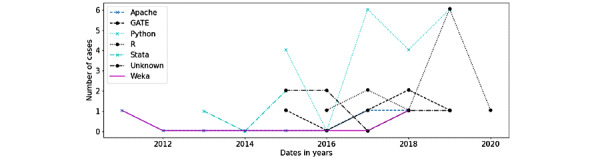
BACKGROUND: Machine learning systems are part of the field of artificial intelligence that automatically learn models from data to make better decisions. Natural language processing (NLP), by using corpora and learning approaches, provides good performance in statistical tasks, such as text classification or sentiment mining. OBJECTIVE: The primary aim of this systematic review was to summarize and characterize, in methodological and technical terms, studies that used machine learning and NLP techniques for mental health. The secondary aim was to consider the potential use of these methods in mental health clinical practice. METHODS: This systematic review follows the PRISMA (Preferred Reporting Items for Systematic Review and Meta-analysis) guidelines and is registered with PROSPERO (Prospective Register of Systematic Reviews; number CRD42019107376). The search was conducted using 4 medical databases (PubMed, Scopus, ScienceDirect, and PsycINFO) with the following keywords: machine learning, data mining, psychiatry, mental health, and mental disorder. The exclusion criteria were as follows: languages other than English, anonymization process, case studies, conference papers, and reviews. No limitations on publication dates were imposed. RESULTS: A total of 327 articles were identified, of which 269 (82.3%) were excluded and 58 (17.7%) were included in the review. The results were organized through a qualitative perspective. Although studies had heterogeneous topics and methods, some themes emerged. Population studies could be grouped into 3 categories: patients included in medical databases, patients who came to the emergency room, and social media users. The main objectives were to extract symptoms, classify severity of illness, compare therapy effectiveness, provide psychopathological clues, and challenge the current nosography. Medical records and social media were the 2 major data sources. With regard to the methods used, preprocessing used the standard methods of NLP and unique identifier extraction dedicated to medical texts. Efficient classifiers were preferred rather than transparent functioning classifiers. Python was the most frequently used platform. CONCLUSIONS: Machine learning and NLP models have been highly topical issues in medicine in recent years and may be considered a new paradigm in medical research. However, these processes tend to confirm clinical hypotheses rather than developing entirely new information, and only one major category of the population (ie, social media users) is an imprecise cohort. Moreover, some language-specific features can improve the performance of NLP methods, and their extension to other languages should be more closely investigated. However, machine learning and NLP techniques provide useful information from unexplored data (ie, patients' daily habits that are usually inaccessible to care providers). Before considering It as an additional tool of mental health care, ethical issues remain and should be discussed in a timely manner. Machine learning and NLP methods may offer multiple perspectives in mental health research but should also be considered as tools to support clinical practice.
Overview
The claims and statistics of this paper haven’t been checked yet.
Run the check — free, no account needed. It reads the open-access text and checks the sources it cites.
Integrity signals
Registry
Cites
Statistics
Figures
Verification
Claims the paper makes
The claims and statistics of this paper haven’t been checked yet.
Run the check — free, no account needed. It reads the open-access text and checks the sources it cites.
Self-check
Percentages, sums and reported differences re-computed from the paper’s own numbers.
The self-check needs the paper’s full text.
Citations
Cites
Shamseer, L., Moher, D., Clarke, M., Ghersi, D., Liberati, A., Petticrew, M., Shekelle, P., Stewart, L. A., & the PRISMA-P Group (2015) · BMJ · doi:10.1136/bmj.g7647 · Cited by 13,120
Foundations of statistical natural language processing
Manning, C. D., & Schütze, H. (1999) · Cited by 9,816
Insel, T., Cuthbert, B., Garvey, M., Heinssen, R., Pine, D. S., Quinn, K., Sanislow, C., & Wang, P. (2010) · American Journal of Psychiatry · doi:10.1176/appi.ajp.2010.09091379 · Cited by 7,067 · cited 2×
“The former includes data on genetics and neuroscience in its classification of mental health disorders, whereas the latter is solely based on clinical data [107].”
An introduction to latent semantic analysis
Landauer, T. K., Foltz, P. W., & Laham, D. (1998) · Discourse Processes · doi:10.1080/01638539809545028 · Cited by 4,880 · cited 1×
“…new matrix represent aggregates of words and aggregates of documents where each dimension is not interpretable per se, but when words or documents are represented as vectors in this new latent system of coordinates, the scalar product of vectors can be used as a semantic relatedness measure [34].”
Artificial intelligence in healthcare: past, present and future
Jiang, F., Jiang, Y., Zhi, H., Dong, Y., Li, H., Ma, S., Wang, Y., Dong, Q., Shen, H., & Wang, Y. (2017) · Stroke and Vascular Neurology · doi:10.1136/svn-2017-000101 · Cited by 4,837 · cited 1×
“Indeed, ML is widely used in critical disease models in cardiology, neurology, and diabetes research [6] to automatically identify heart disease risk factors [7], to classify primary progressive aphasia subtypes [8], and for the characterization and diagnosis of cognitive impairments [9], diabetes,…”
Harris, Z. S. (1954) · WORD · doi:10.1080/00437956.1954.11659520 · Cited by 4,807
Motivational Interviewing: Helping People Change
Tober, G. (2013) · Alcohol and Alcoholism · doi:10.1093/alcalc/agt010 · Cited by 4,267
Deo, R. C. (2015) · Circulation · doi:10.1161/circulationaha.115.001593 · Cited by 3,466 · cited 1×
“At the same time, even though thousands of papers have been published using medical data, very few have made meaningful contributions to clinical practices [111].”
Machine Learning Applications in Cancer Prognosis and Prediction
Kourou, K., Exarchos, T. P., Exarchos, K. P., Karamouzis, M. V., & Fotiadis, D. I. (2015) · Computational and Structural Biotechnology Journal · doi:10.1016/j.csbj.2014.11.005 · Cited by 3,338
A few useful things to know about machine learning
Domingos, P. (2012) · Communications of the ACM · doi:10.1145/2347736.2347755 · Cited by 3,326
Research works printed but not linked: 7
- GauthierEBrissonLLencaPRagusaSBreast Cancer Risk Score: a Data Mining Approach to Improve ReadabilityThe International Conference on Data Mining2011CDM'11June 23-27, 2011Las Vegas, United States1521
- GauthierEBrissonLLencaPClavel-ChapelonFRagusaSChallenges to Building a Platform for a Breast Cancer Risk ScoreSixth International Conference on Research Challenges in Information Science201205RCIS'12June 1-7, 2012Valencia, Spain
- Bughin, J, 2017, McKinsey Global Institute, 80
- Hays, DG, 1967, Introduction to Computational Linguistics, Mathematical Linguistics and Automatic Language Processing
- Chollet, F, 2017, Deep Learning with Python
- Sarasohn-Kahn, J, 2008, Technical report, California HealthCare Foundation
- Ross, J, 2015, Stud Health Technol Inform, 216, 736
Cited by
Sorted by citations
Alqahtani, T., Badreldin, H. A., Alrashed, M., Alshaya, A. I., Alghamdi, S. S., bin Saleh, K., Alowais, S. A., Alshaya, O. A., Rahman, I., Al Yami, M. S., et al. (2023) · Research in Social and Administrative Pharmacy · doi:10.1016/j.sapharm.2023.05.016 · Cited by 565
Machine learning-based approach: global trends, research directions, and regulatory standpoints
Pugliese, R., Regondi, S., & Marini, R. (2021) · Data Science and Management · doi:10.1016/j.dsm.2021.12.002 · Cited by 425
Large Language Models for Mental Health Applications: Systematic Review
Guo, Z., Lai, A., Thygesen, J. H., Farrington, J., Keen, T., & Li, K. (2024) · JMIR Mental Health · doi:10.2196/57400 · Cited by 269
“The existing literature includes a review of the application of machine learning and NLP in mental health [47], analyses of LLMs in medicine [32], and a scoping review of LLMs in mental health.”
BackgroundMethodTimmons, A. C., Duong, J. B., Simo Fiallo, N., Lee, T., Vo, H. P. Q., Ahle, M. W., Comer, J. S., Brewer, L. C., Frazier, S. L., & Chaspari, T. (2023) · Perspectives on Psychological Science · doi:10.1177/17456916221134490 · Cited by 263
Modern views of machine learning for precision psychiatry
Chen, Z. S., Kulkarni, P., Galatzer‐Levy, I. R., Bigio, B., Nasca, C., & Zhang, Y. (2022) · Patterns · doi:10.1016/j.patter.2022.100602 · Cited by 241
“Language is not only one of the primary expressions of human behavior that carries a variety of implicit and explicit markers relevant to mental health [193, 194], but also more abundantly available compared to speech data.”
BackgroundBenefits and Risks of AI in Health Care: Narrative Review
Chustecki, M. (2024) · Interactive Journal of Medical Research · doi:10.2196/53616 · Cited by 208
“Le Glaz et al [32] mentions that in recent years, NLP models have been used to track mental self-disclosure on Twitter, forecast suicide risk online, and identify suicidal thoughts in clinical notes.”
Shaik, T., Tao, X., Li, L., Xie, H., & Velasquez, J. D. (2023) · Information Fusion · doi:10.1016/j.inffus.2023.102040 · Cited by 228
“NLP techniques contribute to patient risk assessment by analyzing clinical narratives and extracting relevant information related to patient history, comorbidities, and lifestyle factors [127].”
BackgroundKhoo, L. S., McNaney, R., Lim, M. K., & McNaney, R. (2024) · Sensors · doi:10.3390/s24020348 · Cited by 190
Machine Learning Techniques in Adaptive and Personalized Systems for Health and Wellness
Oyebode, O., Fowles, J. R., Steeves, D., & Orji, R. (2022) · International Journal of Human-Computer Interaction · doi:10.1080/10447318.2022.2089085 · Cited by 166
“…as disease management (Martin-Isla et al., 2020; Mlodzinski et al., 2020; Thomsen et al., 2020; Zhu et al., 2021), health surveillance (Gupta & Katarya, 2020), mental health (Cho et al., 2019; Le Glaz et al., 2021; Shatte et al., 2019), and other health-related issues (e.g., Qian et al., 2021).”
BackgroundChemnad, K., & Othman, A. (2024) · Frontiers in Artificial Intelligence · doi:10.3389/frai.2024.1349668 · Cited by 140
Data Augmentation and Deep Learning Methods in Sound Classification: A Systematic Review
Abayomi‐Alli, O., Damaševičius, R., Qazi, A., Adedoyin-Olowe, M., & Misra, S. (2022) · Electronics · doi:10.3390/electronics11223795 · Cited by 159
Dergaa, I., Saad, H. B., Omri, A. E., Glenn, J. M., Clark, C. C. T., Washif, J. A., Guelmami, N., Hammouda, O., Al-Horani, R., Reynoso-Sánchez, L. F., et al. (2023) · Biology of Sport · doi:10.5114/biolsport.2024.133661 · Cited by 133
“including nutrition [18], mental health [19, 20], and fitness [4, 21].”
BackgroundAlhuwaydi, A. M. (2024) · Risk Management and Healthcare Policy · doi:10.2147/rmhp.s461562 · Cited by 158
Artificial intelligence, machine learning, and deep learning for clinical outcome prediction
Pettit, R. W., Fullem, R. L., Cheng, C., & Amos, C. I. (2021) · Emerging Topics in Life Sciences · doi:10.1042/etls20210246 · Cited by 142
Artificial intelligence and suicide prevention: A systematic review
Lejeune, A., Glaz, A. L., Perron, P.-A., Sebti, J., Baca‐García, E., Walter, M., Lemey, C., & Berrouiguet, S. (2022) · European Psychiatry · doi:10.1192/j.eurpsy.2022.8 · Cited by 123
“AI raises ethical concerns within the medical community [44,45], especially regarding the use of data, the place of the practitioner in care, and ethical and medico-legal responsibility.”
BackgroundArowosegbe, A., & Oyelade, T. (2023) · International Journal of Environmental Research and Public Health · doi:10.3390/ijerph20021514 · Cited by 101
“This research validates the results of a previous systematic reviews by [56], which concluded that NLP can be used in detecting and treating mental health issues including suicide and self-harm.”
ResultHossain, M. I., Maruf, M. H., Khan, M. A. R., Prity, F. S., Fatema, S., Ejaz, M. S., & Khan, M. A. S. (2023) · Iran Journal of Computer Science · doi:10.1007/s42044-023-00148-7 · Cited by 91
“Inmanymedical applications, such as medical image analysis [7–10], language processing [11, 12], and tumor or cancer cell detection [13–17], ML methods can assist clinical management, and professionals explore excellent performance.”
BackgroundFallah, A., & Aghdam, M. M. (2023) · Engineering With Computers · doi:10.1007/s00366-023-01799-7 · Cited by 86
Applications of Artificial Intelligence to Obesity Research: Scoping Review of Methodologies
An, R., Shen, J., & Xiao, Y. (2022) · Journal of Medical Internet Research · doi:10.2196/40589 · Cited by 90
“Early NLP models primarily adopted recurrent neural network (RNN) architecture, demonstrating broad applicability to various NLP tasks such as sentiment analysis, text summarization, language translation, and speech recognition [74,132].”
Systematic reviews of machine learning in healthcare: a literature review
Kolasa, K., Admassu, B. Y., Hołownia-Voloskova, M. E., Kędzior, K. J., Poirrier, J., & Perni, S. (2023) · Expert Review of Pharmacoeconomics & Outcomes Research · doi:10.1080/14737167.2023.2279107 · Cited by 92
Terra, M., Baklola, M. I., Ali, S. A. A., & El-Bastawisy, K. (2023) · The Egyptian Journal of Neurology Psychiatry and Neurosurgery · doi:10.1186/s41983-023-00681-z · Cited by 88
Large Language Models in Neurology Research and Future Practice
Romano, M. F., Shih, L. C., Paschalidis, I. C., Au, R., & Kolachalama, V. B. (2023) · Neurology · doi:10.1212/wnl.0000000000207967 · Cited by 74
Artificial Intelligence in Psychiatry: A Review of Biological and Behavioral Data Analyses
BAYDİLİ, I., Taşçı, B., & Taşçı, G. (2025) · Diagnostics · doi:10.3390/diagnostics15040434 · Cited by 85
Cheap, Quick, and Rigorous: Artificial Intelligence and the Systematic Literature Review
Atkinson, C. F. (2023) · Social Science Computer Review · doi:10.1177/08944393231196281 · Cited by 87
“If data is input that is noisy, incomplete, or has been extracted through processes that have introduced selective biases, then the results themselves may be erroneous (Le Glaz et al., 2021).”
BackgroundMethodMartínez-Millana, A., Saez-Saez, A., Tornero-Costa, R., Muscat, N. A., Traver, V., & Novillo-Ortiz, D. (2022) · International Journal of Medical Informatics · doi:10.1016/j.ijmedinf.2022.104855 · Cited by 75
Zafar, F., Alam, L. F., Vivas, R. R., Wang, J., Whei, S. J., Mehmood, S., Sadeghzadegan, A., Lakkimsetti, M., & Nazir, Z. (2024) · Cureus · doi:10.7759/cureus.56472 · Cited by 83
“Precision medicine, which predicts treatment response and personalizes therapeutic interventions for individuals, is another potential application of the former [52].”
BackgroundNatural language processing in clinical neuroscience and psychiatry: A review
Crema, C., Attardi, G., Sartiano, D., & Redolfi, A. (2022) · Frontiers in Psychiatry · doi:10.3389/fpsyt.2022.946387 · Cited by 77
“Other reviews do not present the breakthroughs of the last 4–5 years (attention mechanism, transformers, BERT-models, etc.), either because they are relatively old (11–13), or because they present the current state-of-the-art at a high level (14–17).”
BackgroundPourkeyvan, A., Safa, R., & Sorourkhah, A. (2024) · IEEE Access · doi:10.1109/access.2024.3366653 · Cited by 71
“Automated systems for detecting mental health issues have been developed to analyze textual data, with NLP and transformer models being utilized to identify patterns [7].”
BackgroundMethodIntellectual Disability and Technology: An Artificial Intelligence Perspective and Framework
Almufareh, M. F., Tehsin, S., Humayun, M., & Kausar, S. (2023) · Journal of Disability Research · doi:10.57197/jdr-2023-0055 · Cited by 67
“This can help to identify symptoms, history or distinct markers associated with ID (de la Fuente Garcia et al., 2020; Le Glaz et al., 2021; Ratana et al., 2023).”
BackgroundNatural Language Processing: from Bedside to Everywhere
Aramaki, E., Wakamiya, S., Yada, S., & Nakamura, Y. (2022) · Yearbook of Medical Informatics · doi:10.1055/s-0042-1742510 · Cited by 59
“In psychiatry, NLP can be used for IE from unstructured EHR and speech analysis on patient speech data [63, 64].”
Gholipour, M., Khajouei, R., Amiri, P., Hajesmaeel‐Gohari, S., & Ahmadian, L. (2023) · BMC Bioinformatics · doi:10.1186/s12859-023-05480-0 · Cited by 57
“Sheikhalishahi et al. [28] carried out a comprehensive overview of the development and uptake of NLP methods in open-text clinical notes related to chronic diseases, including an examination of the challenges of using NLP methods to extract terms from clinical narratives.”
MethodScreening for Depression Using Natural Language Processing: Literature Review
Teferra, B. G., Rueda, A., Pang, H. Y. M., Valenzano, R., Samavi, R., Krishnan, S., & Bhat, V. (2024) · Interactive Journal of Medical Research · doi:10.2196/55067 · Cited by 65
Textual emotion detection in health: Advances and applications
Saffar, A. H., Mann, T. K., & Ofoghi, B. (2022) · Journal of Biomedical Informatics · doi:10.1016/j.jbi.2022.104258 · Cited by 48
AI in Mental Health: A Review of Technological Advancements and Ethical Issues in Psychiatry
Poudel, U., Jakhar, S., Prakash, M., & Nepal, A. (2025) · Issues in Mental Health Nursing · doi:10.1080/01612840.2025.2502943 · Cited by 58
AI Techniques and Applications for Online Social Networks and Media: Insights From BERTopic Modeling
Nedungadi, P., Veena, G., Tang, K., Menon, R. R. K., & Raghu Raman, R. (2025) · IEEE Access · doi:10.1109/access.2025.3543795 · Cited by 51
“Maintaining privacy while leveraging social media data for health monitoring is crucial to protecting user rights and building trust in AI systems [84], [88].”
Machine learning applied to electronic health record data in home healthcare: A scoping review
Hobensack, M., Song, J., Scharp, D., Bowles, K. H., & Topaz, M. (2022) · International Journal of Medical Informatics · doi:10.1016/j.ijmedinf.2022.104978 · Cited by 49
Methodologies for Monitoring Mental Health on Twitter: Systematic Review
Cara, N. H. D., Maggio, V., Davis, O. S. P., & Haworth, C. M. A. (2023) · Journal of Medical Internet Research · doi:10.2196/42734 · Cited by 46
Manole, A., Cârciumaru, R., Brînzaș, R., & Manole, F. (2024) · Information · doi:10.3390/info15120768 · Cited by 52
AI in Healthcare: medical and socio-economic benefits and challengesPreprint
Shaheen, M. Y. (2021) · doi:10.14293/s2199-1006.1.sor-.pprqni1.v1 · Cited by 43
“NLP models have been used to detect suicidal thoughts in clinical notes, forecast suicide risk online, and mine for psychiatric self-disclosure on Twitter in recent years (Le Glaz et al., 2021).”
MethodApplications of Large Language Models in the Field of Suicide Prevention: Scoping Review
Holmes, G., Tang, B., Gupta, S., Venkatesh, S., Christensen, H. M., & Whitton, A. E. (2024) · Journal of Medical Internet Research · doi:10.2196/63126 · Cited by 54
Natural Language Processing Methods and Bipolar Disorder: Scoping Review
Harvey, D., Lobban, F. A., Rayson, P., Warner, A., & Jones, S. H. (2022) · JMIR Mental Health · doi:10.2196/35928 · Cited by 40
Song, J., Ojo, M., Bowles, K. H., McDonald, M. V., Cato, K., Rossetti, S. C., Adams, V., Chae, S., Hobensack, M., Kennedy, E. E., et al. (2022) · Nursing Research · doi:10.1097/nnr.0000000000000586 · Cited by 41
“Several recent systematic reviews support the influence of NLP on a diverse range of medical fields, such as mental health (Le Glaz et al., 2021) and radiology (Sorin et al., 2020).”
BackgroundDiagnostic and Management Performance of ChatGPT in Obstetrics and Gynecology
Allahqoli, L., Ghiasvand, M. M., Mazidimoradi, A., Salehiniya, H., & Alkatout, İ. (2023) · Gynecologic and Obstetric Investigation · doi:10.1159/000533177 · Cited by 40
“A new approach to NLP based on statistical methods emerged in the 1990s, when personal computers became widely accessible and more powerful [7].”
MethodChallenges and standardisation strategies for sensor-based data collection for digital phenotyping
Alam, N. B., Surani, M., Das, C. K., Giacco, D., Singh, S. P., & Jilka, S. (2025) · Communications Medicine · doi:10.1038/s43856-025-01013-3 · Cited by 41
Bhattacharya, M., Roy, S., Chattopadhyay, S., Das, A. K., & Shetty, S. S. (2022) · Security and Privacy · doi:10.1002/spy2.275 · Cited by 42
Nissar, G., Khan, R. A., Mushtaq, S., Lone, S. A., & Moon, A. H. (2024) · Multimedia Tools and Applications · doi:10.1007/s11042-024-18580-7 · Cited by 42
RetractedFederated learning meets remote sensing
Moreno‐Álvarez, S., Paoletti, M. E., Sanchez‐Fernandez, A. J., Rico‐Gallego, J., Han, L., & Haut, J. M. (2024) · Expert Systems with Applications · doi:10.1016/j.eswa.2024.124583 · Cited by 46
Natural language processing for clinical notes in dentistry: A systematic review
Pethani, F., & Dunn, A. G. (2023) · Journal of Biomedical Informatics · doi:10.1016/j.jbi.2023.104282 · Cited by 42
Analyzing Narratives of Patient Experiences: A BERT Topic Modeling Approach
Osváth, M., Yang, Z. G., & Kósa, K. (2023) · Acta Polytechnica Hungarica · doi:10.12700/aph.20.7.2023.7.9 · Cited by 42
The Role of Artificial Intelligence in Mental Health: A Review
Shimada, K. (2023) · Science Insights · doi:10.15354/si.23.re820 · Cited by 44
Large Language Models and Text Embeddings for Detecting Depression and Suicide in Patient Narratives
Lho, S. K., Park, S. C., Lee, H., Oh, D. Y., Kim, H., Jang, S., Jung, H. Y., Yoo, S. Y., Park, S. M., & Lee, J. (2025) · JAMA Network Open · doi:10.1001/jamanetworkopen.2025.11922 · Cited by 36
Natural Language Processing and Psychosis: On the Need for Comprehensive Psychometric Evaluation
Cohen, A. S., Rodriguez, Z. B., Warren, K. K., Cowan, T., Masucci, M. D., Granrud, O. E., Holmlund, T. B., Chandler, C., Foltz, P. W., & Strauss, G. P. (2022) · Schizophrenia Bulletin · doi:10.1093/schbul/sbac051 · Cited by 38
Yee, T. S., Shrifan, N. H. M. M., Al-Gburi, A. J. A., Isa, N. A. M., & Akbar, M. F. (2022) · IEEE Access · doi:10.1109/access.2022.3197291 · Cited by 37
“real-world applications such as biomedical [34]–[37], image processing [38]–[40], and language processing [41]–[43].”
BackgroundDetecting depression tendency with multimodal features
Zhang, H., Wang, H., Han, S. Y., Li, W., & Zhuang, L. (2023) · Computer Methods and Programs in Biomedicine · doi:10.1016/j.cmpb.2023.107702 · Cited by 34
Sharma, G., Yaffe, M. J., Ghadiri, P., Gandhi, R., Pinkham, L., Gore, G., & Abbasgholizadeh-Rahimi, S. (2025) · JMIR Mental Health · doi:10.2196/70438 · Cited by 38
Ortiz-Garcés, I., Govea, J., Andrade, R., & Villegas-Ch, W. E. (2024) · Applied Sciences · doi:10.3390/app14051737 · Cited by 33
Villarreal‐Zegarra, D., Reátegui-Rivera, C. M., García-Serna, J., Quispe-Callo, G., Lázaro-Cruz, G., Centeno-Terrazas, G., Gálvez-Arévalo, R. A., Escobar-Agreda, S., Rodríguez, A. D., & Finkelstein, J. (2024) · JMIR Mental Health · doi:10.2196/59560 · Cited by 38
“Previously, other systematic reviews, such as those conducted by Le Glaz et al [19] and Zhang et al [20], analyzed the impact of NLP on mental health.”
MethodEvaluating Large Language Models in extracting cognitive exam dates and scores
Zhang, H., Jethani, N., Jones, S., Genes, N. G., Major, V. J., Jaffe, I. S., Cardillo, A. B., Heilenbach, N., Ali, N. F., Bonanni, L. J., et al. (2024) · PLOS Digital Health · doi:10.1371/journal.pdig.0000685 · Cited by 33
“Information extraction involves the retrieval of specific bits of information from unstructured clinical notes, a task historically handled by rule-based systems [24,25] [26] [27] [28] [29] [30] or language models explicitly trained on datasets annotated by human experts [31] [32] [33] [34] [35] [36].”
Li, T. M. H., Chen, J., Law, F., Li, C.-T., Chan, N. Y., Chan, J. W. Y., Chau, S. W. H., Liu, Y., Li, S. X., Zhang, J., et al. (2023) · JMIR Medical Informatics · doi:10.2196/50221 · Cited by 46
“Natural language processing (NLP) and machine learning (ML) have been used to detect suicide risk [18,19].”
BackgroundMethodSim, J.-A., Huang, X., Horan, M. R., Baker, J. N., & Huang, I. (2024) · Expert Review of Pharmacoeconomics & Outcomes Research · doi:10.1080/14737167.2024.2322664 · Cited by 39
Jung, S., Murthy, D., Bataineh, B. S., Loukas, A., & Wilkinson, A. V. (2024) · Journal of Medical Internet Research · doi:10.2196/55591 · Cited by 31
“Natural language processing techniques are instrumental in mining textual data from web-based health forums, social media platforms, and patient-generated content [41].”
Explainable artificial intelligence systems for predicting mental health problems in autistics
Atlam, E.-S., Rokaya, M., Masud, M., Meshref, H., Alotaibi, R. S., Almars, A. M., Assiri, M., & Gad, I. (2025) · Alexandria Engineering Journal · doi:10.1016/j.aej.2024.12.120 · Cited by 43
Bauer, B. W., Norel, R., Leow, A., Rached, Z. A., Wen, B., & Cecchi, G. (2024) · JMIR Mental Health · doi:10.2196/57234 · Cited by 39
“The use of natural language processing (NLP) with machine learning (ML) to gain new insights into mental health topics has increased dramatically over the last decade [10].”
BackgroundMethodMezzi, R., Yahyaoui, A., Krir, M. W., Boulila, W., & Koubâa, A. (2022) · Sensors · doi:10.3390/s22030846 · Cited by 30
An effective approach for early liver disease prediction and sensitivity analysis
Khan, M. A. R., Afrin, F., Prity, F. S., Ahammad, I., Fatema, S., Prosad, R., Hasan, M. K., Uddi̇n, M., & Salehin, Z. U. (2023) · Iran Journal of Computer Science · doi:10.1007/s42044-023-00138-9 · Cited by 29
“medical image analysis [2–5], languageprocessing [6, 7], and tumor or cancer cell detection [8–12].”
BackgroundMsosa, Y. J., Grauslys, A., Zhou, Y., Wang, T., Buchan, I. E., Langan, P., Foster, S., Walker, M., Pearson, M. G., Folarin, A., et al. (2023) · IEEE Journal of Biomedical and Health Informatics · doi:10.1109/jbhi.2023.3312011 · Cited by 29
“Such NLP tools and methods can support mental health research and care delivery in clinical practice [24].”
MethodApplication of Machine Learning in FPGA EDA Tool Development
Goswami, P., & Bhatia, D. K. (2023) · IEEE Access · doi:10.1109/access.2023.3322358 · Cited by 30
“ML has seen its applications in various domains like image recognition [7], [8], natural language processing [9], [10], [11], audio and signal processing [12], [13], [14], etc.”
BackgroundRevolutionizing Healthcare Platforms: The Impact of AI on Patient Engagement and Treatment Efficacy
Manishkumar, P. B. D. (2024) · International Journal of Science and Research (IJSR) · doi:10.21275/sr24201070211 · Cited by 29
War, emotions, mental health, and artificial intelligence
Ćosić, K., Kopilaš, V., & Jovanović, T. (2024) · Frontiers in Psychology · doi:10.3389/fpsyg.2024.1394045 · Cited by 58
“The predictive AI-based methods which can recognize potential chronic psychopathology early enough compared to traditional reactive psychiatry is example of more proactive and preventive type of medicine (Ćosić et al., 2020a,b, 2021; Bertl et al., 2022).”
MethodScherbakov, D., Hubig, N., Lenert, L. A., Alekseyenko, A. V., & Obeid, J. S. (2024) · JMIR Mental Health · doi:10.2196/67192 · Cited by 34
Accuracy of Large Language Models for Literature Screening in Thoracic Surgery: Diagnostic Study
Dai, Z.-Y., Wang, F., Shen, C., Ji, Y.-L., Li, Z.-Y., Wang, Y., & Pu, Q. (2025) · Journal of Medical Internet Research · doi:10.2196/67488 · Cited by 39
“While machine learning has shown promise in streamlining literature retrieval, its accuracy often falls short of desired standards [7-9].”
Keikha, A. (2022) · Soft Computing · doi:10.1007/s00500-022-06995-z · Cited by 29
“GHFNs can be used in various fields, such as mechanism design, performance evaluation of employees/organizations/companies, future studies, stock markets, future markets, supply chain, society networks, cosmology, medical diagnostic and telemedicine (Glaz et al. 2021), decision making, and planning.”
BackgroundMental Health Analysis of Employees using Machine Learning Techniques
Sujal, B. H., Neelima, K., Chandrasekaran, D., Bhuvanashree, P., Duraipandian, K., Rajan, S., & Sathiyanarayanan, M. (2022) · International Conference on Communication Systems & Networks (COMSNETS) · doi:10.1109/comsnets53615.2022.9668526 · Cited by 31
Weisenburger, R. L., Mullarkey, M. C., Labrada, J., Labrousse, D., Yang, M. Y., Huff, A. J., Hsu, K. J., Ugail, H., Shumake, J., & Beevers, C. G. (2024) · Journal of Affective Disorders · doi:10.1016/j.jad.2024.01.212 · Cited by 31
Chadaga, K., Prabhu, S., Sampathila, N., Chadaga, R., Bhat, D., Sharma, A., & Swathi, K. S. (2024) · SLAS TECHNOLOGY · doi:10.1016/j.slast.2024.100129 · Cited by 28
Dhanda, S. S., Panwar, D., Lin, C., Sharma, T. K., Rastogi, D., Bindewari, S., Singh, A. M., Li, Y., Agarwal, N. K., & Agarwal, S. (2025) · Journal Of Big Data · doi:10.1186/s40537-025-01201-x · Cited by 35
Applications of Speech Analysis in Psychiatry
Dikaios, K., Rempel, S., Dumpala, S. H., Oore, S., Kiefte, M., & Uher, R. (2023) · Harvard Review of Psychiatry · doi:10.1097/hrp.0000000000000356 · Cited by 31
“U zation is no longer often used, word frequencies can contribute to classifying disorders through newer methods such as natural language processing.(81) Multifaceted semantic features have been shown to differentiate among psychotic illnesses.”
BackgroundArtificial Intelligence for the development of qualitative studies
Gamboa, A. J. P., & Díaz‐Guerra, D. D. (2023) · LatIA · doi:10.62486/latia20234 · Cited by 31
Yang, L., Wang, T., Zhang, J., Kang, S., Xu, S., & Wang, K. (2024) · BMC Medical Imaging · doi:10.1186/s12880-024-01218-3 · Cited by 29
Ibrahim, S. T., Li, M., Patel, J., & Katapally, T. R. (2025) · Computers in Biology and Medicine · doi:10.1016/j.compbiomed.2025.109859 · Cited by 34
LSTM-assisted optical fiber interferometric sensing: breaking the limitation of free spectral range
Hu, J., Zhang, S., Cai, M., Ma, M., Li, S., Chen, H., & Yang, S. (2025) · Light Science & Applications · doi:10.1038/s41377-025-02008-4 · Cited by 26
Public Attitudes Toward Anxiety Disorder on Sina Weibo: Content Analysis
Zhu, J., Li, Z., Zhang, X., Zhang, Z., & Hu, B. (2023) · Journal of Medical Internet Research · doi:10.2196/45777 · Cited by 29
“For more research on the application of text analysis and natural language processing methods in health care, see [53,54].”
Innovative deep learning techniques for monitoring aggressive behavior in social media posts
Han, H., Asif, M., Awwad, E. M., Sarhan, N. M., Ghadi, Y. Y., & Xu, B. (2024) · Journal of Cloud Computing Advances Systems and Applications · doi:10.1186/s13677-023-00577-6 · Cited by 36
Romagnoli, A., Ferrara, F., Langella, R., & Zovi, A. (2024) · Pharmaceutical Research · doi:10.1007/s11095-024-03685-3 · Cited by 28
AI Quality Standards in Health Care: Rapid Umbrella Review
Kuziemsky, C. E., Chrimes, D., Minshall, S. R., Mannerow, M., & Lau, F. (2024) · Journal of Medical Internet Research · doi:10.2196/54705 · Cited by 30
Large Language Models in Psychiatry: Current Applications, Limitations, and Future Scope
Liu, Z., Bao, Y., Zeng, S., Qian, R., Deng, M., Gu, A., Li, J., Wang, W., Cai, W., Li, W., et al. (2024) · Big Data Mining and Analytics · doi:10.26599/bdma.2024.9020046 · Cited by 25
Allen, K. S., Hood, D. R., Cummins, J., Kasturi, S., Mendonca, E. A., & Vest, J. R. (2023) · JAMIA Open · doi:10.1093/jamiaopen/ooad024 · Cited by 25
“NLP has been successfully applied to clinical conditions including cancer,(13) cardiovascular issues,(14) and mental health.(15) Nevertheless, the use of NLP to identify social factors may pose greater challenges.”
MethodLanguage as a Window Into the Altered State of Consciousness Elicited by Psychedelic Drugs
Tagliazucchi, E. (2022) · Frontiers in Pharmacology · doi:10.3389/fphar.2022.812227 · Cited by 25
Large Language Models for Mental Health Applications: Systematic Review (Preprint)Preprint
Guo, Z., Lai, A. G., Thygesen, J. H., Farrington, J., Keen, T., & Li, K. (2024) · doi:10.2196/preprints.57400 · Cited by 30
“The existing literature includes a review of the application of ML and NLP in mental health [47], analyses of LLMs in medicine[32], and a scoping review of LLMs in mental health.”
BackgroundMethodQuillivic, R., Gayraud, F., Auxéméry, Y., Vanni, L., Peschanski, D., Eustache, F., Dayan, J., & Mesmoudi, S. (2024) · Scientific Reports · doi:10.1038/s41598-024-61557-7 · Cited by 24
Incorporation of artificial intelligence into nursing research: A scoping review
Yasin, Y. M., Al‐Hamad, A., Metersky, K., & Kehyayan, V. (2025) · International Nursing Review · doi:10.1111/inr.13013 · Cited by 21
“These capabilities are part of a growing trend where natural language processing and machine learning are leveraged to analyze large and complex data sets, offering innovative approaches for deriving valuable insights (Le Glaz et al., 2021).”
Gulf Countries’ Citizens’ Acceptance of COVID-19 Vaccines—A Machine Learning Approach
Alabrah, A. A., Alawadh, H. M., Okon, O. D., Meraj, T., & Rauf, H. T. (2022) · Mathematics · doi:10.3390/math10030467 · Cited by 23
Liu, Z., Peach, R. L., Lawrance, E., Noble, A., Ungless, M. A., & Barahona, M. (2021) · Frontiers in Digital Health · doi:10.3389/fdgth.2021.779091 · Cited by 24
Predicting Depression in Canada by Automatic Filling of Beck’s Depression Inventory Questionnaire
Skaik, R., & Inkpen, D. Z. (2022) · IEEE Access · doi:10.1109/access.2022.3208470 · Cited by 23
Natural Language Processing for Depression Prediction on Sina Weibo: Method Study and Analysis
Zhang, Z., Zhu, J., Guo, Z., Zhang, Y., Li, Z., & Hu, B. (2024) · JMIR Mental Health · doi:10.2196/58259 · Cited by 26
“With the rapid development of natural language processing (NLP) and deep learning, many scholars have explored applying these technologies to depression detection tasks on social media [20].”
BackgroundTaiwo, O., & Al‐Bander, B. (2025) · Cognitive Computation and Systems · doi:10.1049/ccs2.12116 · Cited by 27
Wright-Berryman, J. L., Cohen, J., Haq, A., Black, D. P., & Pease, J. L. (2023) · Frontiers in Psychiatry · doi:10.3389/fpsyt.2023.1143175 · Cited by 22
“Natural language processing (NLP) and machine learning (ML) have expanded how mental health conditions can be identified (5, 6).”
BackgroundDepression clinical detection model based on social media: a federated deep learning approach
Liu, Y. (2023) · The Journal of Supercomputing · doi:10.1007/s11227-023-05754-7 · Cited by 24
“Not surprisingly, the common problem is that researchers use datasets that are small or too specific [7].”
Zheng, C., Tao, Y., Zhang, J., Xun, L., Li, T., & Yan, Q. Y. (2024) · Neurocomputing · doi:10.1016/j.neucom.2024.127700 · Cited by 25
Explainable Predictive Model for Suicidal Ideation During COVID-19: Social Media Discourse Study
Bouktif, S., Khanday, A. M. U. D., & Ouni, A. (2025) · Journal of Medical Internet Research · doi:10.2196/65434 · Cited by 21
Metadata
- Authors
- Le Glaz, A., Haralambous, Y., Kim-Dufor, D.-H., Lenca, P., Billot, R., Ryan, T. C., Marsh, J., DeVylder, J., Walter, M., Berrouiguet, S., & Lemey, C.
- Affiliations
- Centre National de la Recherche Scientifique (FR)
- Centre Hospitalier Régional Universitaire de Brest (FR)
- Johns Hopkins University (US)
- Fordham University (US)
- Université de Bretagne Occidentale (FR)
- Corresponding author
- Lemey, Christophe
- ORCID
- Venue
- Journal of Medical Internet Research
- Publisher
- JMIR Publications Inc.
- Published
- 2021-05-04
- Volume
- 23
- Issue
- 5
- Pages
- e15708
- ISSN
- 1438-8871 (ISSN-L)
- PMC
- PMC8132982
- OpenAlex
- W3089862415
- Cited by
- 576
- References
- 109
- Citations by year
- 2026: 102 · 2025: 155 · 2024: 144 · 2023: 105 · 2022: 57 · 2021: 13
- FWCI
- 7.06
- Type
- journal article
- Language
- en
- Open access
- gold
- doi.org
- Licence
- cc-by
- Locations
- Journal of Medical Internet Research (publishedVersion, cc-by)
- PubMed Central (publishedVersion, cc-by)
- PubMed (publishedVersion)
- HAL (submittedVersion, cc-by)
- DOAJ (DOAJ: Directory of Open Access Journals) (submittedVersion, cc-by-sa)
- Oskar-Bordeaux (Universite de Bordeaux) (submittedVersion, cc-by)
- Funders
- Agence Nationale de la Recherche (ANR-18-RHUS-0014, ANR18)
- Topics
- Social Sciences › Psychology › Social Psychology › Mental Health via Writing
- Health Sciences › Health Professions › Health Information Management › Artificial Intelligence in Healthcare
- Physical Sciences › Computer Science › Artificial Intelligence › Sentiment Analysis and Opinion Mining
- Keywords
- machine learning, natural language processing, mental health, mental illness, symptom extraction, treatment effectiveness, social media, electronic health records, clinical practice, artificial intelligence in psychiatry, language-specific features, nosography, clinical decision support
- MeSH terms
- Machine Learning, Data Management, Artificial Intelligence, Humans, Mental Health, Natural Language Processing
About these checks
Registry, retraction, Cites and statistics results are computed, not judged, with one exception: a printed reference that no index lists is read once by a model before it counts as a citation error. Claims are extracted by a model and kept only when their quote appears verbatim in the text; each cited source is then checked, with a model’s help, for whether it says what the claim relies on. Those verdicts can be wrong — read the claim’s quote and the cited source before relying on one.
Statistics and arithmetic are recomputed, not judged.
Confidence bands are shown only for fields calibrated on our annotated test set. None is calibrated yet, so no band is shown.
What counts as a claim ›How we measure confidence ›How we check this ›
Are you an author, or do you see a problem with this page? Request a review
