

Risks and Benefits of Web-Based Patient Narratives: Systematic Review
Open accessThe DOI matches its Crossref record; 51 of the 51 references it cites were found in a registry or an index.
Abstract
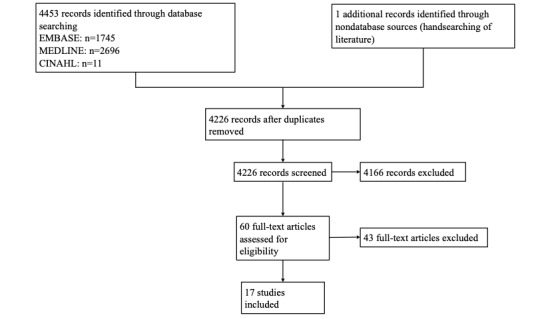
Background: Patient narratives are illustrative, individual accounts of patients’ experiences with certain health conditions. Web-based patient narratives have become widely available on the internet and in social media, as part of electronically available patient decision aids or Web-based databases. In recent years, the role of patient narratives as a source of information, insight, and support for both health care users and providers has increasingly been emphasized. Although the potential impact of patient stories has high immediate plausibility, it is of interest to know if this impact can be captured in quantitative studies. Objective: This review aimed to evaluate whether research-generated Web-based patient narratives have quantifiable risks or benefits for (potential) patients, relatives, or health care professionals. Methods: We searched the following databases from August 2017 to March 2019: Medical Literature Analysis and Retrieval System Online, PsycInfo, Sociological Abstracts, Web of Science, and EMBASE. Titles and abstracts of the retrieved studies were reviewed and assessed for the inclusion and exclusion criteria. Papers were included if they studied the following: (1) (potential) patients, relatives, or health care professionals; (2) the effects of Web-based patient narratives that were generated scientifically (eg, through qualitative research methods); and (3) were quantitative studies. Furthermore, 2 authors independently performed an assessment of the quality of the included studies using a validated checklist. Results: Of 4226 documents, 17 studies met the inclusion criteria. The studies investigated 10 different sources of Web-based patient narratives. Sample sizes ranged from 23 to 2458. The mean score of the quality assessment was 82.6 (range 61-100). Effects regarding five different purposes were identified as follows: provide information, engage, model behavior, persuade, and comfort. We found positive effects in every category and negative effects in one category (persuade). Several of the reported effects are rather small or were identified under specific experimental conditions. Conclusions: Patient narratives seem to be a promising means to support users in improving their understanding of certain health conditions and possibly to provide emotional support and have an impact on behavioral changes. There is limited evidence for beneficial effects on some outcomes. However, narratives are characterized by considerable heterogeneity and the investigated outcomes are hardly comparable with each other, which makes the overall judgment difficult. As there are numerous possible measures and purposes of narratives, quantifying the impact of Web-based patient narratives remains a challenge. Future research is needed to define the optimal standards for quantitative approaches to narrative-based interventions.
Overview
The claims and statistics of this paper haven’t been checked yet.
Free: it reads the open-access text and checks the first 5 claims that cite a source we can check. Create a free account to check every claim.
Integrity signals
Registry
Cites
Statistics
Figures
Verification
Claims the paper makes
The claims and statistics of this paper haven’t been checked yet.
Free: it reads the open-access text and checks the first 5 claims that cite a source we can check. Create a free account to check every claim.
Claims other papers make about this one
Each is checked against this paper’s own text: does it say what the citing paper says it does?
The cited source says what the claim attributes to it.
In the citing paper
“A recent review argues furthermore that patient narratives can have several benefits for patients and healthcare professionals in providing health-related information (Drewniak et al., 2020).”
From Using Personas in the development of eHealth interventions for chronic pain: A scoping review and narrative synthesis (2023) · cites this paper as Drewniak et al., 2020
Self-check
Percentages, sums and reported differences re-computed from the paper’s own numbers.
The self-check needs the paper’s full text.
Citations
Cites
Preferred Reporting Items for Systematic Reviews and Meta-Analyses: the PRISMA statement
Moher, D., Liberati, A., Tetzlaff, J., Altman, D. G., & for the PRISMA Group (2009) · BMJ · doi:10.1136/bmj.b2535 · Cited by 83,823
Preferred Reporting Items for Systematic Reviews and Meta-Analyses: The PRISMA Statement
Moher, D., Liberati, A., Tetzlaff, J., Altman, D. G., & The PRISMA Group (2009) · PLoS Medicine · doi:10.1371/journal.pmed.1000097 · Cited by 64,042 · cited 1×
“This review was conducted in accordance with the Preferred Reporting Items for Systematic Reviews and Meta-Analysis guidelines [21].”
Wang, G., Ma, R., Qiao, G., Wada, K., Aizawa, Y., & Satoh, T. (2015) · Integrative Medicine International · doi:10.1159/000368408 · Cited by 18,657
Bundesgesundheitsblatt - Gesundheitsforschung - Gesundheitsschutz
(2013) · Bundesgesundheitsblatt - Gesundheitsforschung - Gesundheitsschutz · doi:10.1007/103.1437-1588 · Cited by 11,796
Decision aids for people facing health treatment or screening decisions
Stacey, D., Légaré, F., Lewis, K., Barry, M. J., Bennett, C. L., Eden, K. B., Holmes-Rovner, M., Llewellyn-Thomas, H., Lyddiatt, A., Thomson, R., et al. (2017) · Cochrane Database of Systematic Reviews · doi:10.1002/14651858.cd001431.pub5 · Cited by 6,685 · cited 1×
“Decision aids are evidence-based tools with an aim to support patients in a value-sensitive way to make specific health care choices [46].”
BackgroundHigh-quality health systems in the Sustainable Development Goals era: time for a revolution
Kruk, M. E., Gage, A. D., Arsenault, C., Jordan, K., Leslie, H. H., Roder-DeWan, S., Adeyi, O., Barker, P., Daelmans, B., Doubova, S. V., et al. (2018) · The Lancet Global Health · doi:10.1016/s2214-109x(18)30386-3 · Cited by 4,057 · cited 2×
“Although quantitative data about patient experiences are essential measures for the accountability and improvement of health care systems, they fall short of capturing a more comprehensive picture of how patients experience health care encounters or illnesses [1,2].”
BackgroundAGREE II: advancing guideline development, reporting and evaluation in health care
Brouwers, M. C., Kho, M. E., Browman, G. P., Burgers, J. S., Cluzeau, F., Feder, G., Fervers, B., Graham, I. D., Grimshaw, J., Hanna, S. E., et al. (2010) · Canadian Medical Association Journal · doi:10.1503/cmaj.090449 · Cited by 3,790
Charnock, D., Shepperd, S., Needham, G., & Gann, R. (1999) · Journal of Epidemiology and Community Health · doi:10.1136/jech.53.2.105 · Cited by 3,329 · cited 1×
“Several quality measures to evaluate the quality of Web-based health information are available [42,43].”
BackgroundAppraising the Evidence: Reviewing Disparate Data Systematically
Hawker, S., Payne, S., Kerr, C., Hardey, M., & Powell, J. (2002) · Qualitative Health Research · doi:10.1177/1049732302238251 · Cited by 1,216 · cited 1×
“Therefore, 2 authors (DD and AG) independently performed an assessment of the quality of the included studies using the checklist proposed by Hawker et al [22].”
MethodRevisiting the Quantitative-Qualitative Debate: Implications for Mixed-Methods Research
Sale, J. E. M., Lohfeld, L. H., & Brazil, K. (2002) · Quality and Quantity · doi:10.1023/a:1014301607592 · Cited by 1,082 · cited 2×
“The foundations of the qualitative paradigm are interpretivism and constructivism, where multiple socially constructed realities are investigated [48,49].”
Background
Research works printed but not linked: 1
- World Health Organization European Health Report 2018: More Than Numbers - Evidence for All 2018 Copenhagen, Denmark World Health Organization. Regional Office for Europe
Cited by
Bartels, S. L., Taygar, A. S., Johnsson, S. I., Petersson, S., Flink, I., Boersma, K., McCracken, L. M., & Wicksell, R. K. (2023) · Internet Interventions · doi:10.1016/j.invent.2023.100619 · Cited by 46
“A recent review argues furthermore that patient narratives can have several benefits for patients and healthcare professionals in providing health-related information (Drewniak et al., 2020).”
BackgroundSpitale, G., Biller‐Andorno, N., & Germani, F. (2021) · Journal of Medical Internet Research · doi:10.2196/34385 · Cited by 44
“In this context, complement as much as possible narratives based on data and scientific evidence with personal narratives (still backed up by science), as they are easier to relate to and can be more effective [29].”
BackgroundSelf-citationBrewster, G. S., Wang, D., McPhillips, M., Epps, F. R., & Yang, I. H. (2022) · Clinical Gerontologist · doi:10.1080/07317115.2022.2139655 · Cited by 38
“Three reviewers (G.B., I.Y., and D.W.) used Hawker’s checklist, a validated appraisal tool designed to systematically evaluate and assess methodological rigor (Drewniak et al., 2020; Hawker et al., 2002).”
MethodArnold, D., Gläßel, A., Böttger, T., Sarma, N., Bethmann, A., & Narimani, P. (2022) · International Journal of Environmental Research and Public Health · doi:10.3390/ijerph19159336 · Cited by 40
“Drewniak, D.; Glässel, A.; Hodel, M.; Biller-Andorno, N. Risks and benefits of web-based patient narratives: Systematic review.”
BackgroundNarrative Health Analytics: Integrating Empathy, Data, and Ethics in Patient-Centered Healthcare
Atento, R. G., Quinto, L., Espelita, C. A. M. H., & Juan, F. M. Z. S. (2025) · International Journal of Health & Business Analytics · doi:10.65166/yxgx8e59 · Cited by 37
“…— can be systematically analyzed to produce valid insights into healthcare quality and experience (Boylan et al., 2020; Nembhard et al., 2023; Zakkar & Lizotte, 2021; Alkhnbashi et al., 2024; Shah et al., 2019; Stokes et al., 2021; James et al., 2017; Navarro et al., 2021; Drewniak et al., 2020).”
Walsh, J., Cave, J. A. K., & Griffiths, F. E. (2024) · Journal of Medical Internet Research · doi:10.2196/54321 · Cited by 27
“Patient narrative is already recognized as a tool that can help patients, clinicians, and researchers [22,23].”
Patient narratives – a still undervalued resource for healthcare improvement
Spitale, G., Gläßel, A., Fang, M. T., Dorey, C. M., & Biller‐Andorno, N. (2023) · Swiss Medical Weekly · doi:10.57187/smw.2023.40022 · Cited by 29
Self-citationShah, A. M., Muhammad, W., Lee, K. Y., & Naqvi, R. A. (2021) · International Journal of Environmental Research and Public Health · doi:10.3390/ijerph182111226 · Cited by 25
Holden, A. C. L., Nanayakkara, S., Skinner, J. C., Spallek, H., & Sohn, W. (2021) · BMC Public Health · doi:10.1186/s12889-020-10078-9 · Cited by 24
“Recent research exploring the use of patient narratives in healthcare more broadly found that the use of narratives in healthcare were potentially supportive to other patients, enhancing of patient empowerment and had the power to educate and inform both patients and healthcare practitioners [8].”
BackgroundKısa, S., & Kısa, A. (2025) · BMC Public Health · doi:10.1186/s12889-025-22209-1 · Cited by 18
Walsh, J., Dwumfour, C., Cave, J. A. K., & Griffiths, F. E. (2022) · BMC Medical Research Methodology · doi:10.1186/s12874-022-01610-z · Cited by 19
“Other use areas included assessing the opportunities, benefits, challenges and limitations that using SGOPE data might offer healthcare providers and researchers [23, 25, 36, 37, 42, 45, 52, 57, 62, 64, 71, 73].”
BackgroundInfluentialPositive impact of a co-designed digital resource for women with early menopause
Yeganeh, L., Boyle, J. A., Johnston‐Ataata, K., Flore, J., Hickey, M., Kokanović, R., Teede, H. J., & Vincent, A. J. (2022) · Menopause The Journal of The North American Menopause Society · doi:10.1097/gme.0000000000001972 · Cited by 18
“A systematic review of online patient narratives indicated benefits in regard to improving consumer understanding, providing emotional support, and impacting behavioral change.(13) The Internet was perceived as the best or second best source of information by Australian women with EM.”
BackgroundMoving forward: Implementing health psychology research to improve patient acceptance of biosimilars
Gasteiger, C., & Petrie, K. J. (2022) · Research in Social and Administrative Pharmacy · doi:10.1016/j.sapharm.2022.03.009 · Cited by 15
Mahmood, S., Law, S., & Bombard, Y. (2021) · Clinical Genetics · doi:10.1111/cge.14024 · Cited by 14
“To assign a numerical score for each section and to calculate a scaled overall score, we referred to Drewniak et al.18 scoring approach.”
MethodBeahm, J. D., Landry, C. A., McCall, H. C., Carleton, R. N., & Hadjistavropoulos, H. D. (2022) · International Journal of Environmental Research and Public Health · doi:10.3390/ijerph19084744 · Cited by 11
“Qualitative and quantitative evidence suggests case stories can provide information, model behavior, increase knowledge and confidence, improve personal health, and provide a sense of comfort [58].”
BackgroundCancer survival stories: Perception, creation, and potential use case
Canella, C., Inderbitzin, M., Oehler, M., Witt, C. M., & Barth, J. (2023) · Health Expectations · doi:10.1111/hex.13760 · Cited by 11
“In contrast, many online platforms are free and easily accessible for most people, which makes them a potentially easily applicable tool for patient information and education.(4,8,16,18,19) The application of a co‐creative citizen science approach helped to identify the relevant characteristics of the cancer survival…”
BackgroundInfluentialHadjistavropoulos, H. D., Hill, T. G., Philipp-Muller, A. E., Dear, B. F., & Titov, N. (2023) · Internet Interventions · doi:10.1016/j.invent.2023.100692 · Cited by 12
“Client stories have the potential to enhance treatment engagement and outcomes through the use of real stories from other clients or based on a synthesis of client experiences and reflections (Drewniak et al., 2020; Shaffer and Zikmund-Fisher, 2013).”
BackgroundDuong, V., Bunzli, S., Callahan, L. F., de Jong, C. B., Hunter, D. J., Kim, J. S., & Mobasheri, A. (2024) · Osteoarthritis and Cartilage Open · doi:10.1016/j.ocarto.2024.100471 · Cited by 11
“The main purposes of web-based videos include: providing information, engaging, modelling behaviour, persuading, and providing comfort [23].”
BackgroundInfluentialThe persuasive effects of narratives: a systematic review of reviews
Ma, Z., & Nan, X. (2025) · Annals of the International Communication Association · doi:10.1093/anncom/wlaf007 · Cited by 8
Lamprell, K., Pulido, D. F., Arnolda, G., Owais, S. S., Easpaig, B. N. G., Tran, Y., Liauw, W., & Braithwaite, J. (2023) · BMJ Open · doi:10.1136/bmjopen-2022-068073 · Cited by 8
Versorgungs-Report. Leitlinien – Evidenz für die Praxis
Günster, C., Klauber, J., Klemperer, D., Nothacker, M. J., Robra, B.-P., Schmuker, C., Andres, E., & KG, M. M. W. V. M. &. C. (2023) · Medizinisch Wissenschaftliche Verlagsgesellschaft eBooks · doi:10.32745/9783954668007 · Cited by 9
Francis‐Coad, J., Edgar, D. W., Bulsara, C., Barrett-Lennard, A., Owen, K., Fletcher, D., Wood, F. M., & Hill, A. (2021) · Patient Experience Journal · doi:10.35680/2372-0247.1544 · Cited by 9
Sippel, A., Scheiderbauer, J., Eklund, D., Arnade, S., Schmidt, S., Kleiter, I., Morrison, R., Kofahl, C., & Heesen, C. (2022) · BMC Neurology · doi:10.1186/s12883-022-02663-9 · Cited by 8
“However, using patient experiences may also cause biases in the process of decision-making, since the information format may be randomly generated, unbalanced, taken from a situational context and possibly inaccurate with respect to scientific evidence [22, 23, 46, 47].”
BackgroundInfluentialSippel, A., Riemann-Lorenz, K., Pöttgen, J., Wiedemann, R., Drixler, K., Bitzer, E. M., Holmberg, C., Lezius, S., & Heesen, C. (2022) · BMC Medical Informatics and Decision Making · doi:10.1186/s12911-022-01968-6 · Cited by 6
“Currently, there is limited but increasing research looking at the potential impact of websites presenting individual patient experiences [8], since patient experiences are increasingly exchanged between patients and more frequently incorporated into health information websites [9].”
BackgroundHadjistavropoulos, H. D., Reiser, S. J., Beahm, J. D., McCall, H. C., Dena, I., Phillips, A. R., Scheltgen, M., Sekhar, S., Cox, M., Cramm, H. A., et al. (2023) · JMIR Formative Research · doi:10.2196/51088 · Cited by 7
“Stories have been found to help improve client understanding, enhance support, and potentially impact behavioral change [42].”
Background“Their Whole Lives Are Going To Change”: A Photo-Elicitation Study of Rectal Cancer Survivorship
Rivard, S. J., Vitous, C. A., Bamdad, M. C., Varlamos, C. J., Duby, A. A., & Suwanabol, P. A. (2022) · Diseases of the Colon & Rectum · doi:10.1097/dcr.0000000000002474 · Cited by 6
Kalch, A., Albani, A. R., Küchler, C., Bilandzić, H., Fischer, S., & Kirchberger, I. (2022) · PEC Innovation · doi:10.1016/j.pecinn.2022.100103 · Cited by 5
“enhancing recall and engagement with health information [26,27], providing emotional support and role models [27], or increasing intentions for different types of health behavior [28,29].”
BackgroundBarnacoat, J. M., Lewis, J., Stewart, K., Mohammad, S. S., & Paget, S. (2024) · Disability and Rehabilitation · doi:10.1080/09638288.2024.2397078 · Cited by 5
“Testimonials can significantly influence treatment decisions and offer several benefits like improved understanding, emotional support, and promotion of behavioural change [28].”
Lamprell, K., Pulido, D. F., Tran, Y., Easpaig, B. N. G., Liauw, W., Arnolda, G., & Braithwaite, J. (2021) · JMIR Research Protocols · doi:10.2196/25056 · Cited by 5
“Quantitative approaches to analyzing unstructured text are emerging; however, as yet, there is little consensus on optimal strategies [12,46].”
BackgroundEvaluating YouTube as a source of information on hemifacial spasm
Po, K., Sy, A. J. R., & Jamora, R. D. G. (2025) · Clinical Parkinsonism & Related Disorders · doi:10.1016/j.prdoa.2025.100311 · Cited by 4
“People generally remember stories more effectively as they are deemed more relatable than they do statistical information presented in graphs or numbers [11].”
Schultze, M., Breuning, M., von der Heyde, M., Kaiser, M., Müller‐Nordhorn, J., & Holmberg, C. (2021) · Patient Education and Counseling · doi:10.1016/j.pec.2021.10.028 · Cited by 4
Gläßel, A., & Hippold, I. (2024) · Frontiers in Rehabilitation Sciences · doi:10.3389/fresc.2024.1424370 · Cited by 4
“Insights into subjective experiences of life and illness through narratives of patients and relatives can trigger re fl ection processes in students of health professions and support them in developing their professional self-image (32 – 34).”
BackgroundAdebayo, A. L., Rowan, K. E., Sanchorawala, V., Boedicker, M. N., & Boedicker, D. D. (2023) · MedEdPublish · doi:10.12688/mep.19631.1 · Cited by 3
Gläßel, A. (2024) · Springer Reference Pflege, Therapie, Gesundheit · doi:10.1007/978-3-662-65420-0_21-1 · Cited by 3
Narrativas: o que aprendemos sobre métodos online durante a pandemia?
Germani, A. C. C. G., Conceição, M. I. G., Cabral, I. E., Oliva, I. L., Bastos, D. F., & de Souza, A. R. N. D. (2022) · New Trends in Qualitative Research · doi:10.36367/ntqr.10.2022.e526 · Cited by 6
Wahidin, W., & Mokodenseho, S. (2023) · The Eastasouth Journal of Social Science and Humanities · doi:10.58812/esssh.v1i01.146 · Cited by 3
Price, J. A. B., Gregory, J., McCall, H. C., Landry, C. A., Beahm, J. D., & Hadjistavropoulos, H. D. (2024) · JMIR Formative Research · doi:10.2196/64454 · Cited by 4
“Client perceptions of case stories in health care services [18,24,25] and in ICBT programs are generally positive [17-20], but clients often suggest stories could be improved.”
Backgroundvan de Graaf, D. L., van der Lee, M. L., Smeets, T., Trompetter, H. R., & Mols, F. (2025) · JMIR Cancer · doi:10.2196/64983 · Cited by 2
“However, patient experiences shared by individual users may contain unbalanced information or misinformation [35].”
The Use of Online Data Sources in a Qualitative Analysis Learning Project
Winstead, S. R., & Alterio, C. J. (2021) · The Qualitative Report · doi:10.46743/2160-3715/2021.4695 · Cited by 2
“Other researchers (Drewniak et al., 2020) noted that although unsolicited narratives may be rich data sources of patient experiences, that the actual benefits of patients engaging in online narration may be difficult to quantify.”
BackgroundWhat's trending: An analysis of posts by TikTok users undergoing orthodontic treatment
Murray, C., Riordan, D., Murray, D. M., & Singh, P. (2022) · BDJ In Practice · doi:10.1038/s41404-022-1710-2 · Cited by 1
Bannor, R., Xu, R., Kalinowski, J., Leahey, T. M., Caspi, C. E., Idiong, C. I., Goetz, J. M., & Pagoto, S. (2025) · International Journal of Environmental Research and Public Health · doi:10.3390/ijerph22060918 · Cited by 1
“Social media platforms, patient blogs, and other patient forums may increase the impact of patient narratives given their reach, and they are being increasingly used by patients to learn not only about their health condition but to hear directly from patients living with the condition [48].”
Murakami, C., Kinoshita, M., Sakai, Y., & Tanaka, K. (2026) · International Journal of Obstetric Anesthesia · doi:10.1016/j.ijoa.2026.104888 · Cited by 1
YouTube as a Source of Patient Information for Malignant and Benign Primary Bone Tumors
Guirguis, P. G., Youssef, M. P., Punreddy, A., Botros, M., Raiford, M. E., & McDowell, S. (2026) · Journal of Cancer Education · doi:10.1007/s13187-026-02854-9 · Cited by 1
From Metrics to Meaning: LLM-Driven Lifestyle Intelligence for Personalized Obesity Prevention
Kim, H., & Kim, H. (2026) · IntechOpen eBooks · doi:10.5772/intechopen.1014980 · Cited by 1
Salam, M., Dhaybe, S. E., Ghannam, L., Serhan, M., & Hassan, M. (2026) · JMIR Research Protocols · doi:10.2196/89474 · Cited by 1
“Patient testimonials can improve the understanding of certain health conditions and provide emotional connection, yet they are relatively lengthier and limited by the considerable heterogeneity of the audience [19].”
Budimir, S., Kuška, M., Spiliopoulou, M., Schlee, W., Pryss, R. C., Andersson, G., Goedhart, H., Harrison, S., Vesala, M., Hegde, G., et al. (2020) · JMIR Formative Research · doi:10.2196/21444 · Cited by 1
Zhao, J., Harvey, G., Vandyk, A. D., Huang, M., & Gifford, W. (2023) · Interdisciplinary Nursing Research · doi:10.1097/nr9.0000000000000038 · Cited by 1
“Drewniak et al 42 concluded in their systematic review that web-based patient narratives are likely to improve users ’ understanding of health conditions and impact behavior change.”
BackgroundHealth Preserving Practices of Russians with Post-COVID-19 Syndrome
Barg, A. О. (2023) · ЗДОРОВЬЕ НАСЕЛЕНИЯ И СРЕДА ОБИТАНИЯ - ЗНиСО / PUBLIC HEALTH AND LIFE ENVIRONMENT · doi:10.35627/2219-5238/2023-31-10-28-35 · Cited by 1
Examining the Experience of People Aging with Scoliosis: A Narrative Analysis
Pan, Q. (2023) · Open Access Victoria University of Wellington | Te Herenga Waka (Figshare) · doi:10.26686/wgtn.24131118 · Cited by 1
Validation of the German eHealth Impact Questionnaire for online health information usersPreprint
Sippel, A., Riemann-Lorenz, K., Pöttgen, J., Wiedemann, R., Drixler, K., Bitzer, E. M., Holmberg, C., Lezius, S., & Heesen, C. (2022) · Research Square · doi:10.21203/rs.3.rs-1547193/v1
Kalch, A., Küchler, C., Albani, A. R., Bilandzić, H., Fischer, S., & Kirchberger, I. (2022) · Frontiers in Communication · doi:10.3389/fcomm.2022.990819 · Cited by 1
“Only two systematic reviews have included aspects of hedonic well-being (Rennick-Egglestone et al., 2019b; Drewniak et al., 2020).”
Existential narratives: Increasing psychological wellbeing through story
Das, E., Kalch, A., & van Krieken, K. (2023) · Frontiers research topics · doi:10.3389/978-2-8325-1407-8
Leitlinien zur Förderung der Patientenbeteiligung und -information
Schaefer, C., & Hübner, J. (2023) · Medizinisch Wissenschaftliche Verlagsgesellschaft eBooks · doi:10.32745/9783954668007-13
Rahmatian, A., Jamshidbeigi, Y., Molavi, A., & Salimi, E. (2023) · Archives of Neuroscience · doi:10.5812/ans-137636
The Impact of Narratives on Healthcare Decision-Making in Online Discourse
Almaya, Z., & Mould, T. (2024) · American Journal of Undergraduate Research · doi:10.33697/ajur.2024.104
Melanoma Survivor Narratives: Stories that Matter
Suganthan, P., & Banerjee, S. C. (2024) · doi:10.22186/jyi.27.7.1.1
Lakhan, S. E. (2025) · Cureus · doi:10.7759/cureus.84450
“…and caregivers actually engage with PDTs. Increasingly, online platforms such as Reddit (Reddit Inc., San Francisco, California, United States) serve as informal yet deeply informative repositories of organically generated, user-initiated narratives reflecting real-world therapeutic journeys [3].”
Gläßel, A. (2025) · Springer Reference Pflege, Therapie, Gesundheit · doi:10.1007/978-3-662-65435-4_21
Preuhs, K., van Keulen, H. M., Pronk, J., Rijnders, M. E. B., Wils, A., Nieuwenhuijze, M. J., Abouri, N., & van Empelen, P. (2025) · JMIR Formative Research · doi:10.2196/75391
“Moreover, the desire for stories of others aligns with findings elsewhere, where narratives not only improve knowledge and confidence but also improve the perceived relevance and supportiveness of health information [63].”
Dentists’ knowledge and attitudes towards people living with HIV/AIDS in China
Le, D., Wang, H., & Xing, H. (2025) · AIDS Care · doi:10.1080/09540121.2025.2591806
“This result indicated that patient narratives, a tool for people-centered health system education (Socal, 2020), seem to be a promising means for improving dentists’ understanding of HIV/AIDS and might have an impact on their behavioral changes (Drewniak et al., 2020).”
Sippel, A., Riemann-Lorenz, K., Pöttgen, J., Wiedemann, R., Drixler, K., Bitzer, E. M., Holmberg, C., Lezius, S., & Heesen, C. (2022) · Figshare · doi:10.6084/m9.figshare.20501849
Sippel, A., Scheiderbauer, J., Eklund, D., Arnade, S., Schmidt, S., Kleiter, I., Morrison, R., Kofahl, C., & Heesen, C. (2022) · Figshare · doi:10.6084/m9.figshare.19625535
Sippel, A., Scheiderbauer, J., Eklund, D., Arnade, S., Schmidt, S., Kleiter, I., Morrison, R., Kofahl, C., & Heesen, C. (2022) · Figshare · doi:10.6084/m9.figshare.19625538
Sippel, A., Riemann-Lorenz, K., Pöttgen, J., Wiedemann, R., Drixler, K., Bitzer, E. M., Holmberg, C., Lezius, S., & Heesen, C. (2022) · Figshare · doi:10.6084/m9.figshare.20501843
Sippel, A., Scheiderbauer, J., Eklund, D., Arnade, S., Schmidt, S., Kleiter, I., Morrison, R., Kofahl, C., & Heesen, C. (2022) · Figshare · doi:10.6084/m9.figshare.19625541
Sippel, A., Riemann-Lorenz, K., Pöttgen, J., Wiedemann, R., Drixler, K., Bitzer, E. M., Holmberg, C., Lezius, S., & Heesen, C. (2022) · Figshare · doi:10.6084/m9.figshare.20501846
Sippel, A., Scheiderbauer, J., Eklund, D., Arnade, S., Schmidt, S., Kleiter, I., Morrison, R., Kofahl, C., & Heesen, C. (2022) · Figshare · doi:10.6084/m9.figshare.19625532
Beahm, J. D. (2023) · oURspace (University of Regina) · doi:10.82465/4793
Gregory, J. (2023) · oURspace (University of Regina) · doi:10.82465/1278 · Cited by 1
Online Discourse of Deep Brain Stimulation for Movement Disorders: A Content Analysis of Reddit
Grafton, P., Spinelli, R., Morris, D. R., & Pilitsis, J. G. (2026) · Neuromodulation Technology at the Neural Interface · doi:10.1016/j.neurom.2025.12.003
Schoenroth, H. (2026) · cIRcle (University of British Columbia) · doi:10.14288/1.0452819
Gläßel, A., Kunze, K., & Clasemann, F. (2026) · Springer eBooks · doi:10.1007/978-3-032-23222-9_6
Veerhuis, N., Randle, M., & Traynor, V. (2026) · CoDesign · doi:10.1080/15710882.2026.2705853
Wang, C., Liu, Z., Zhang, M., Feng, C., Cao, Y., Yu, G., Liu, B., Wang, H., & Liu, P. (2026) · Scientific Reports · doi:10.1038/s41598-026-67814-1
Body Mass Index in Clinical Practice
McFarlane, S. I. (2026) · Directory of Open access Books (OAPEN Foundation)
Yu, L., Wei, H., & Zhang, Y. (2026) · Frontiers in Digital Health · doi:10.3389/fdgth.2026.1880030
Kahve, Y., Azarsiz, Y. D., Aydin, S., Aydın, T., Gürhan, U., & Kahve, A. C. (2026) · Frontiers in Psychology · doi:10.3389/fpsyg.2026.1926382
“In recent years, the use of social media data in health research has increased substantially, and online patient narratives have been shown to provide valuable insights that complement traditional clinical assessments (Farsi et al., 2022; Drewniak et al., 2020).”
From Experience to Evidence:When Digital Abortion Stories Become Health Communication
Fernandez, J. (2026) · Rainbow Journal of Literature Linguistics and Cultural Studies · doi:10.15294/rainbow.v15i3.64101
Metadata
- Authors
- Drewniak, D., Glässel, A., Hodel, M., & Biller-Andorno, N.
- Affiliations
- University of Zurich (CH)
- Corresponding author
- Drewniak, Daniel
- Venue
- Journal of Medical Internet Research
- Publisher
- JMIR Publications Inc.
- Published
- 2020-03-26
- Volume
- 22
- Issue
- 3
- Pages
- e15772
- ISSN
- 1438-8871 (ISSN-L)
- PMC
- PMC7146251
- OpenAlex
- W3013322000
- Cited by
- 70
- References
- 51
- Citations by year
- 2026: 9 · 2025: 8 · 2024: 9 · 2023: 14 · 2022: 21 · 2021: 8 · 2020: 1
- FWCI
- 2.10
- Type
- journal article
- Language
- en
- Open access
- gold
- doi.org
- Licence
- cc-by
- Locations
- Journal of Medical Internet Research (publishedVersion, cc-by)
- PubMed Central (publishedVersion, cc-by)
- PubMed (publishedVersion)
- Zurich Open Repository and Archive (University of Zurich) (acceptedVersion, cc-by)
- Zürcher Hochschule für Angewandte Wissenschaften digital collection (Zurich University of Applied Sciences) (submittedVersion, cc-by-nc-nd)
- DOAJ (DOAJ: Directory of Open Access Journals) (submittedVersion, cc-by-sa)
- Repository for Publications and Research Data (ETH Zurich) (submittedVersion, cc-by)
- Zurich Open Repository and Archive (University of Zurich) (submittedVersion, cc-by)
- ETH Zürich Research Collection (cc-by)
- Zurich Open Repository and Archive (University of Zurich)
- Topics
- Health Sciences › Health Professions › General Health Professions › Health Literacy and Information Accessibility
- Social Sciences › Communication › Media Influence and Health
- Social Sciences › Health › Social Media in Health Education
- Keywords
- patient narratives, patient decision aids, health information, emotional support, behavior change, persuasion, patient engagement, healthcare workers, relatives, benefits and risks
- MeSH terms
- Humans, Outcome Assessment, Health Care, Risk Assessment, Internet
About these checks
Registry, retraction, Cites and statistics results are computed, not judged, with one exception: a printed reference that no index lists is read once by a model before it counts as a citation error. Claims are extracted by a model and kept only when their quote appears verbatim in the text; each cited source is then checked, with a model’s help, for whether it says what the claim relies on. Those verdicts can be wrong — read the claim’s quote and the cited source before relying on one.
Statistics and arithmetic are recomputed, not judged.
Confidence bands are shown only for fields calibrated on our annotated test set. None is calibrated yet, so no band is shown.
What counts as a claim ›How we measure confidence ›How we check this ›
Are you an author, or do you see a problem with this page? Request a review
Data sources
Bibliographic data: Semantic Scholar, OpenAlex, Crossref.
Contains information from the Semantic Scholar Academic Graph Datasets, made available under the ODC Attribution License (ODC-BY 1.0).
Semantic Scholar’s data is described in: Kinney, R., et al. (2023). The Semantic Scholar Open Data Platform. arXiv:2301.10140.
